Plant Profile & Key Characteristics
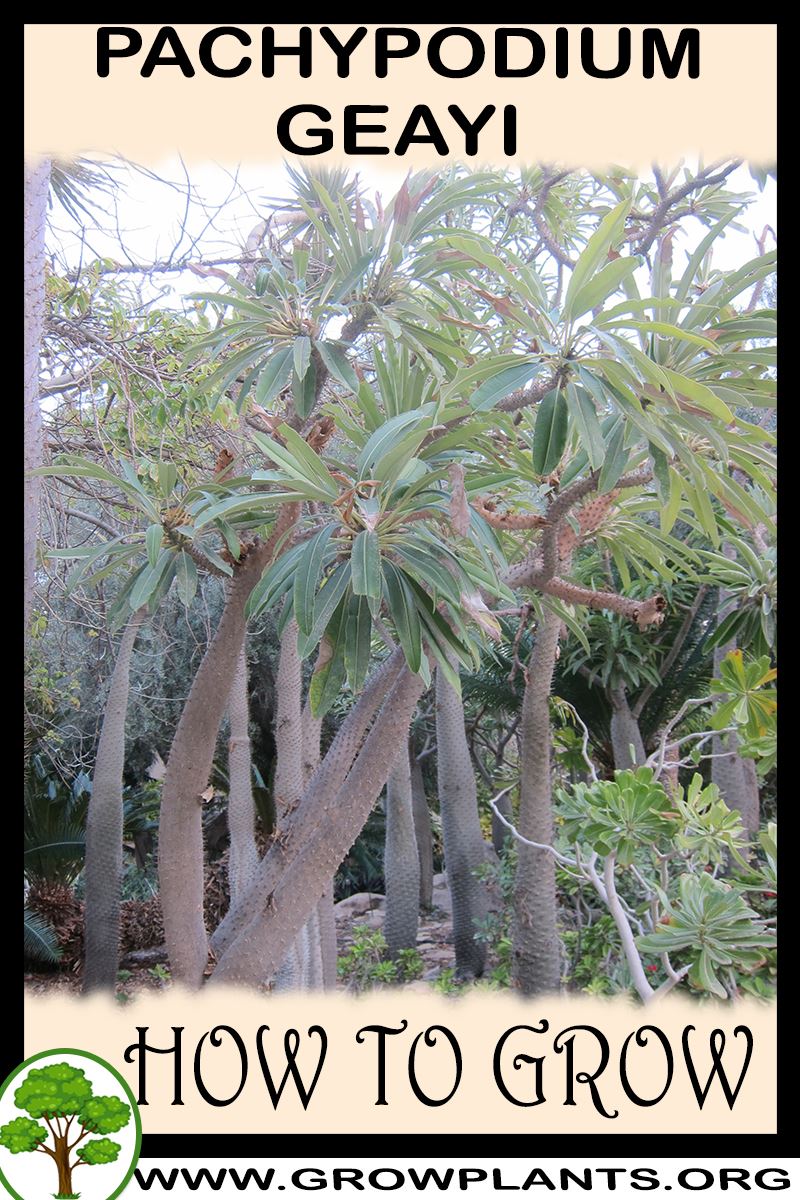
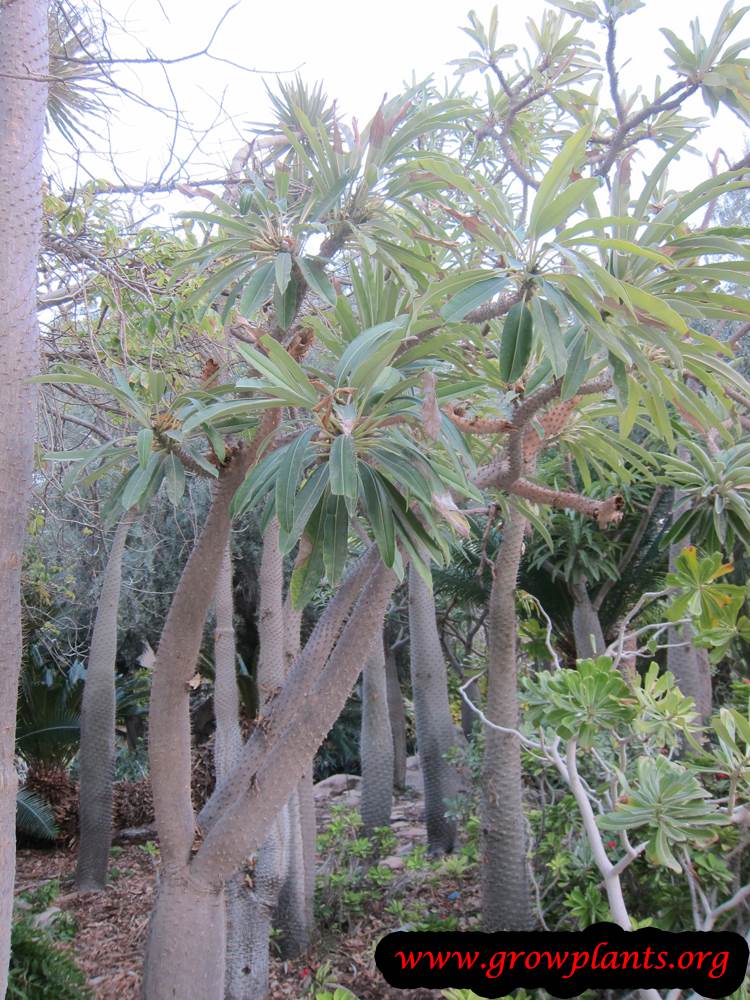
Overview: A succulent, spiny shrub of the genus Pachypodium (Madagascar palm) reaching 1-1.5 m, with a bottle-shaped, water-storing stem topped by leaves. It is a deciduous, drought-tolerant ornamental grown for its form and fragrant white flowers.
Quick Specifications
| Specification | Attribute |
|---|---|
| Plant Type / Life Cycle | Perennial (succulent shrub/small tree) |
| Foliage Type | Deciduous |
| Mature Size | 1-1.5 m (40-60 in) tall |
| Growth Rate | Moderate to slow |
| Toxicity | Toxic – milky sap is poisonous (Apocynaceae); stems are spiny |
| Hardiness | USDA zones 10b-12 |
Growth Form & Structure
- Height & Spread: 1-1.5 m (40-60 in) tall; well suited to long-term container growing.
- Growth Habit & Form: Swollen, caudex-like stem armed with thorns and topped by leaves; can be pruned into tree or shrub form.
- Lifespan & Maturity: Long-lived, slow-maturing succulent.
Anatomy & Physical Features
- Trunk & Bark: Thick brown, thorn-covered stem, wider at the base like a bottle with a long neck.
- Leaves & Foliage: Green, elliptic leaves, with or without a pointed tip, clustered near the stem tips.
- Flower Characteristics: White five-petalled flowers, sometimes merged toward the centre.
Primary Uses & Landscape Value
- Functional & Ornamental Roles: Sculptural, drought-tolerant ornamental and container/specimen plant; not suited to indoor growing.
Care Guide: Planting, Soil & Watering
Overview: The Madagascar palm is a caudex-forming succulent that thrives in full sun to light shade in warm, frost-free conditions, storing water in its swollen, spiny stem. It demands sharply draining, gritty soil and only light watering, as it is very drought tolerant and rots readily in wet ground.
Quick Care Requirements
| Requirement | Ideal Condition |
|---|---|
| Planting Season | In spring as the weather warms; year-round in frost-free zones |
| Growth Rate | Slow to moderate |
| Soil Type | Gritty, sharply draining cactus/succulent mix |
| Water Need | Low; let the soil dry out between waterings |
Planting & Establishment
- Best Planting Season: Plant in spring once the soil has warmed; in frost-free zones (zone 11+) it can be planted through much of the year. It tolerates no more than light frost, so avoid planting into cold, wet ground.
- How to Plant:
- Hole Preparation: Dig a hole only slightly wider than the root ball; the plant is shallow-rooted and needs no deep preparation.
- Soil Amendments: Mix in coarse sand, grit or perlite to guarantee fast drainage, and avoid rich, moisture-holding matter that encourages rot.
- Planting Depth: Set the caudex so the root collar sits at soil level; never bury the swollen stem base.
- Growth Speed & Expectations: A slow-to-moderate grower reaching about 1-1.5 m over many years.
Soil, Watering & Drainage Care
- Soil Mix & Drainage Needs: Needs an open, very free-draining medium; in pots use a cactus mix with extra grit and always a drainage hole to prevent root rot.
- Watering Schedule & Technique:
- Young / Newly Planted: Water lightly but regularly to settle the roots, always letting the surface dry first.
- Established: Water deeply but infrequently, allowing the soil to dry out well between soakings.
- Seasonal Adjustments: A little more in summer heat; keep nearly dry in winter when growth stops and the leaves drop.
Climate, Light & Hardiness
Madagascar Palm is a drought-tolerant succulent suited to subtropical, Mediterranean, and desert climates, needing full sun to half shade. It is a warm-climate plant, hardy only through USDA zones 10b–12, and its own care data specifies it tolerates no more than light frost.
Quick Climate Specifications
| Climate Zones | Subtropical, Mediterranean, Desert |
|---|---|
| USDA Hardiness Zones | 10b–12 |
| Frost Tolerance | Very Low |
| Light Conditions | Full Sun / Half Shade |
Sunlight & Light Exposure
Optimal Light Setup
Full sun is ideal for this succulent's thick, water-storing stem; half shade is tolerated but full sun keeps growth compact and healthy.
Temperature Extremes & Hardiness
USDA Hardiness & Regional Limits
Hardy only through USDA zones 10b–12 - this is a warm-climate succulent, not suited to outdoor winters in cooler zones without protection or container culture.
Cold Damage & Winter Protection
The plant's own care notes specify it tolerates "no more than light frost"; anything beyond a brief, light frost risks serious damage to the fleshy, water-storing stem.
Frost Sensitivity
Very frost-sensitive; growers outside zone 10b should treat it as a container/greenhouse plant that summers outdoors and comes in before any hard frost.
Wind, Humidity & Microclimate
Dry-Air Tolerance
Well adapted to hot, dry, low-humidity conditions consistent with its desert and dry-subtropical native range; excess winter moisture combined with cold is more dangerous than dry heat.
Growing in Pots, Balconies & Indoors
The Madagascar palm is a spiny, tree-like succulent with a swollen trunk. The grower does not class it as a houseplant, but like other caudex succulents it can grow on a very bright, sunny windowsill, and it thrives in a hot, sunny patio pot.
Quick Details
- Container Size: A snug pot suits it – succulents like this prefer not to be over-potted
- Indoor Suitability: Not a true houseplant, but tolerates a very bright, sunny window
- Best Spot: Full sun to part shade – as bright as possible
- Soil & Drainage: Cactus/succulent mix with sharp drainage
- Watering in Pots: Small amounts; let it dry thoroughly between waterings, and keep dry in winter dormancy
Indoors & On the Windowsill
- Bright window only: The grower does not rate it as a houseplant, but as a succulent it can hold on a very sunny sill with strong direct light; in dim rooms it stretches and weakens.
- Overwintering: Frost-tender, so in cold climates keep it potted and bring it into a bright, warm, dry spot for winter.
- Safety: The trunk is sharply spined and the milky sap is toxic and irritant – site it away from children and pets and handle with care.
On a Balcony or Patio
- Light & heat: Loves a hot, sunny balcony and reflected wall heat; its drought tolerance forgives missed waterings. Bring under cover before cold, wet weather.
Choosing the Pot, Soil & Long-Term Care
- Pot & drainage: A pot with strong drainage holes and no standing water; a gritty base layer helps water run through.
- Cactus mix: A free-draining cactus/succulent mix is essential.
- Feeding: Feed lightly only in the growing season.
- Repotting: Refresh the top of the mix and pot on every couple of years; for perennials, lightly prune the root ball and top growth when you do.
Fertilizing & Feeding
A light feeder overall: this slow-growing succulent needs only occasional, low-nitrogen feeding while actively in leaf during warm weather, with none through its cooler dormant rest.
Quick Fertilizing Specs
| Feeding Level | Light feeder |
|---|---|
| Main Nutrient Priority | Low-nitrogen and minimal, in keeping with a slow-growing succulent |
| Best Feeding Period | The warm active growing season only, while the plant is in leaf |
| Organic Options | Not typically needed; a diluted succulent or cactus fertilizer is more common than organic amendments |
| Micronutrients | Rarely needed; usually supplied by a complete succulent fertilizer if used |
| Soil pH | Tolerates a wide range in fast-draining, gritty soil |
| Reduce/Stop Feeding | Stop feeding through the cooler, dormant season, especially if leaves drop |
Feeding by Growth Stage
Active warm-season growth
Support steady growth of the trunk and leaf canopy during the plant’s active season.
| Nutrient direction | A light, low-nitrogen feeding suits this slow-to-moderate growing succulent. |
|---|---|
| Timing | During the warm active growing season while the plant is in leaf. |
| Frequency | An occasional light feeding through the growing season is generally enough. |
| Fertilizer types | A diluted balanced fertilizer formulated for succulents or cacti, used sparingly, A slow-release, low-nitrogen product worked lightly into fast-draining soil |
| Precautions | Let soil dry between waterings before feeding; this plant’s sap and spines make careful handling important, and excess moisture with feeding invites rot at the base. |
Cool-season dormant rest
Let the plant rest through its cooler, often leafless dormant period without encouraging vulnerable new growth.
| Nutrient direction | None – withhold fertilizer while the plant is dormant. |
|---|---|
| Timing | Through the cooler part of the year, when the plant may drop leaves and growth stalls. |
| Frequency | No feeding at this stage. |
| Fertilizer types | No feeding at this stage – allow the plant to rest through its dormant period |
| Precautions | Do not fertilize during dormancy; feeding combined with cooler, wetter conditions raises the risk of stem and root rot, and this plant tolerates only the lightest frost at most. |
Nutrient Deficiency Signs & Corrections
The base of the stem or trunk softens, discolors, or smells musty, with wilting above.
| Possible causes | overwatering, poorly drained soil, feeding during the cool, dormant season |
|---|---|
| Appears first on | the base of the trunk and roots |
| What to check | soil drainage and container drainage holes, recent watering frequency, whether feeding happened during dormancy |
| Possible correction | Improve drainage, let soil dry fully between watering, and hold off feeding until active growth is clearly underway again. |
New growth comes in unusually soft or stretched rather than sturdy and compact.
| Possible causes | too much nitrogen feeding, insufficient light causing stretched growth, overwatering encouraging soft tissue |
|---|---|
| Appears first on | newest growth at the crown |
| What to check | recent feeding strength and frequency, light exposure, watering routine |
| Possible correction | Cut back to a lighter, low-nitrogen feeding and confirm the plant gets plenty of direct light. |
Leaf tips or margins brown and look scorched, most noticeably on container-grown plants.
| Possible causes | mineral salt buildup from fertilizer or hard water, infrequent flushing of the container soil, overly strong feeding |
|---|---|
| Appears first on | leaf tips and margins |
| What to check | how long since the container soil was last flushed with water, feeding strength used, water source |
| Possible correction | Flush the container soil thoroughly with water and reduce feeding strength going forward. |
Pruning, Training & Seasonal Maintenance
Pachypodium geayi is a slow-to-medium growing, thorny, swollen-stemmed succulent that naturally grows as a single unbranched trunk. Unlike most cacti, it does tolerate deliberate tip-cutting: removing the single growing point forces the plant to branch from below the cut, which is the tool used to decide whether a specimen develops as a single ‘tree-form’ trunk or a multi-stemmed ‘shrub’. Winter, during its slower growth phase, is the safest time to cut, and any structural cut is a one-way, size-and-form decision rather than routine maintenance.
Quick Pruning & Maintenance Specs
| Pruning Tolerance | Low – limited to deliberate, infrequent structural cuts |
| Primary Pruning Window | Winter |
| Typical Frequency | Rare – at most one shaping decision every few years |
| Main Objective | Choose/control single-trunk vs branched form; remove damage |
| Young Plant Priority | Leave the single growing tip intact unless branching is specifically wanted |
| Mature Plant Priority | Remove only damaged or rotten tissue; branch selectively if desired |
| Best Tool Type | Sterile grafting/utility knife |
| Avoid Heavy Pruning During | The dormant/cool season when wounds heal slowly, and any time the plant is stressed by cold or drought |
Pruning by Plant Age & Size
Newly Established
Do not cut a young plant’s single growing tip – it needs that apical point to build trunk height and caudex bulk first.
Young / Formative
No structural training is required to keep it as a single trunk (its default habit); a branched, multi-stemmed ‘shrub’ form is only produced deliberately by topping the growing point once the plant has reached a reasonable size.
Mature / Established
Leave an established single-trunk specimen alone unless a branched form is wanted; otherwise limit cuts to removing damaged, rotten or frost-hit tissue.
Structural Pruning & Training
Topping (removing the single growing tip) is the one structural technique that applies: it breaks apical dominance and triggers branching from just below the cut, turning a single ‘tree-form’ trunk into a multi-headed ‘shrub’ form. This is a deliberate, permanent design choice, not a routine seasonal cut, and should only be done on an already well-established plant.
Special Growth to Remove
- Any soft, rotten or blackened stem tissue – cut back into clean tissue promptly to stop rot spreading in this succulent stem
- Damaged or frost-injured leaf and stem tips
Container & Small-Space Pruning
In a container, avoid topping purely for height control unless a branched form is actually wanted, since the resulting multi-stem growth needs more space; container specimens are also slower to recover from cuts due to more limited root reserves, so time any structural cut for the start of the growing season.
Tools
- Sterile, sharp grafting or utility knife for the single topping cut or removing rot
- Thick gloves for handling – the stem is thorny
Tool Hygiene & Disease Risk
High-risk: succulent stem tissue is vulnerable to rot organisms entering through fresh cuts, so use a sterile blade, cut in dry conditions, and let the wound callus/dry before any watering reaches it.
Cut Placement & Technique
Make a single clean, level cut straight across the stem when topping, well above the desired branch point; when removing rot, cut back into fully firm, healthy tissue rather than trimming only the visibly affected part.
Heavy Pruning & Rejuvenation
This species does not tolerate routine hard/rejuvenation pruning the way a shrub does – a topping cut is a single deliberate event, not a repeatable renewal technique, and repeated heavy cutting is not appropriate for its caudiciform growth habit.
Post-Pruning Care
Let any cut surface dry and callus for several days before resuming normal watering, and keep the plant on the dry side while it heals. Note the plant’s sap is a recorded toxicity risk – avoid skin/eye contact and wash tools and hands after cutting.
Common Pruning Mistakes
- Topping a young, still-establishing plant before it has built adequate trunk/caudex reserves
- Cutting or watering heavily right after a cut, inviting rot into the fresh wound
- Handling the toxic, thorny stem without gloves or eye protection
When NOT to Prune
Avoid cutting during cold, wet or otherwise stressful conditions, when wound healing is slow and rot risk is highest; also avoid cutting a plant that is already drought-stressed or recently transplanted.
Recommended Tools (by task)
- grafting_knife – the single clean topping cut or rot removal on this succulent stem, where a sterile precise blade minimizes rot entry
Propagation Guide
Pachypodium geayi is most commonly and reliably grown from seed, which produces plants with the well-formed, characteristically swollen caudex (bottle-shaped base) that makes this species desirable; stem cuttings are possible but typically fail to develop the same caudex and can be prone to rot. Seed propagation requires warmth and careful moisture control, making overall difficulty moderate.
Quick Propagation Specs
| Best Propagation Method | Seed |
| Alternative Methods | Stem cuttings (less common; caudex does not form the same way) |
| Propagation Difficulty | Moderate |
| Seed True-to-Type | Usually true-to-type |
| Vegetative True-to-Type | Yes |
| Best Propagation Season | Winter to spring, aligning with the plant’s normal planting season |
Growing from Seed
Germination Conditions
Use a well-drained, gritty succulent mix kept lightly moist, with warm conditions; take care not to overwater, as seedlings are prone to rot like the mature plant.
Seedling Care
Grow seedlings in full sun to half shade with sparing water, allowing the mix to dry between waterings once established, consistent with this species’ general drought-tolerant, well-drained-soil needs.
Stem Cuttings
Cuttings can be taken but are less reliable than seed for this species, since rooted cuttings generally do not develop the swollen, bottle-shaped caudex that seed-grown plants form at the base. The stem exudes an irritant, toxic sap and carries thorns, so use gloves and let cut ends callus in a dry, shaded spot for several days before inserting into a very well-drained succulent mix to reduce the risk of rot.
Bloom & Flower Guide
Quick Details
- Bloom Season: Spring into summer
- Time to First Bloom: Rarely flowers until well grown and mature – it needs age, size and strong light
- Flower Appearance: White, five-petalled flowers at the top of the stem
- Edibility: Not edible – the milky sap is toxic and can irritate skin and eyes
Detailed Blooming Overview
The Madagascar palm is not a true palm but a spiny, bottle-stemmed succulent. When mature and grown in strong light, it can crown its stem with clusters of white, five-petalled flowers in the warmer months, though flowering is uncommon on younger container plants. It belongs to the same family as oleander and frangipani, and shares their milky, irritant sap.
Flower Characteristics
- White flowers with five petals, sometimes fused toward the centre.
- Carried at the very top of the tall, leafy stem.
- Seen mainly on mature, well-lit specimens.
Bloom Care & Thinning
- Safety: The milky sap is toxic if eaten and can irritate skin and eyes – handle with care.
- Managing the bloom: No thinning is needed; give it maximum light and warmth to encourage the rare flowering.
Pests, Diseases & Troubleshooting
Overview: Pachypodium (the tall, silvery-leaved geayi) is a spiny caudiciform succulent from the dogbane family and, kept warm and dry, has few pests. Its dangerous problems are fungal and bacterial rots triggered by cold, wet soil, plus spider mites and mealybugs on the growing tips. This tall tree-form species carries fine leaves that spider mites favour, so watch the foliage in hot, dry spells. Respect its winter dormancy – much leaf drop and ‘trouble’ is simply the plant resting.
Quick Troubleshooting Overview
| Issue / Pest | Main Symptom | Primary Solution |
|---|---|---|
| Stem / root rot | Soft, blackening, foul-smelling base or caudex; collapse | Keep warm & dry; cut to firm tissue; dust with fungicide |
| Spider mites | Fine stippling and webbing on new leaves in dry heat | Raise humidity; horticultural oil |
| Mealybugs | White cottony tufts at growth tips and spine bases | Alcohol swab; systemic for roots |
| Scale | Brown bumps on stem, sticky honeydew | Scrape off; horticultural oil |
| Leaf drop | Yellowing and shedding of leaves | Usually normal dormancy – reduce water |
| Sunburn / cold damage | Scorched or blackened soft tissue | Acclimatise to sun; protect from cold below ~10 °C |
Common Pests & Management
- Spider mites (Tetranychus / Oligonychus spp.):
- Symptoms: Fine pale stippling and a dull, sandblasted look on the leaves and soft new growth, with faint webbing near the crown in hot, dry conditions; badly hit leaves yellow and fall.
- Prevention & Control: Raise humidity around the plant and rinse the foliage periodically. Introduce predatory mites under cover, or spray horticultural oil / insecticidal soap on the leaves and growing point, repeating every 5–7 days; keep oil off the plant in fierce midday sun.
- Mealybugs (Pseudococcus / Planococcus spp.):
- Symptoms: White cottony tufts clustered at the growing tip, in leaf axils, around spine bases, and on the roots; growth stalls, new leaves distort, and honeydew and sooty mould appear.
- Prevention & Control: Dab colonies with a cotton bud of rubbing alcohol and follow with insecticidal soap or oil. For root mealybugs, wash and treat the root ball at repotting or use a systemic drench. Inspect the crown regularly, where they love to hide among the spines.
- Scale insects (Coccus / Aspidiotus spp.):
- Symptoms: Small brown, tan, or grey immobile bumps on the trunk and leaf midribs, sometimes with honeydew and sooty mould; heavy infestations sap vigour.
- Prevention & Control: Scrape off with a soft brush or thumbnail and treat with horticultural oil, working it around the spines and stem. Repeat every 1–2 weeks and isolate infested plants; a systemic helps with hard-to-reach populations.
- Aphids (Aphis / Myzus spp.):
- Symptoms: Soft green or black insects on the tender new leaves and any flower buds, causing sticky, curled, distorted growth, mostly during the active growing flush.
- Prevention & Control: Rinse off with water and wipe survivors. Insecticidal soap or a light oil deals with larger colonies; encourage predators outdoors and check tips regularly during spring growth.
Diseases & Fungal Issues
- Stem, root, and caudex rot (Pythium / Phytophthora / Fusarium; bacterial soft rot Erwinia):
- Symptoms: The genus’s most lethal problem: soft, water-soaked, blackening tissue at the base, roots, or caudex, often foul-smelling, spreading upward until the plant collapses – almost always from cold combined with wet soil or water pooling in the crown.
- Treatment & Management: Keep the plant warm, in a very free-draining mineral mix, and water only when warm and actively growing; keep it bone-dry through cool dormancy. At the first soft spot, cut back to clean, firm tissue, dust the wound with sulfur or a fungicide, and keep it dry and airy; salvage firm cuttings if the base is lost.
- Fungal leaf spot / anthracnose (Colletotrichum, Cercospora):
- Symptoms: Brown or black spots and blotches on leaves that stay wet in humid, still, cool conditions; largely cosmetic but a warning that the plant is too damp or cold.
- Treatment & Management: Water at the base, keep foliage dry, and improve air movement and warmth. Remove badly spotted leaves; a copper fungicide can be used if spotting is severe, though better culture usually resolves it.
- Sooty mould (secondary):
- Symptoms: A black film over stem and leaves wherever mealybugs, scale, or aphids have dripped honeydew; it shades the plant rather than infecting it.
- Treatment & Management: Control the sap-sucking pests first, then wipe off the black coating with a damp cloth. It does not return once the honeydew source is gone.
Growing Difficulties & Abiotic Problems
- Cold-and-wet rot (the killer combination)
- Cause & Symptoms: Soft, collapsing tissue and sudden death when the plant is watered in cool weather or left in soggy soil below its comfort range – the underlying driver of most fatal rots.
- Correction Strategy: Treat warmth and dryness as inseparable: water freely only in warm active growth and stop almost entirely in cool dormancy, keeping the plant above roughly 10–12 °C. Use a gritty, mineral, sharply draining mix and never let pots stand in water.
- Dormancy leaf drop (mistaken for illness)
- Cause & Symptoms: Leaves yellow and shed, often completely, as days shorten or temperatures fall, alarming growers into over-watering a resting plant.
- Correction Strategy: Recognise this as normal deciduous behaviour: reduce or stop watering, keep the plant warm and bright, and wait – fresh leaves flush from the tips when growth resumes. Do not water or feed to force leaves back.
- Sunburn
- Cause & Symptoms: Bleached white or brown scorched patches on the trunk or leaves after a sudden move into intense sun from lower light, or against hot glass.
- Correction Strategy: Acclimatise gradually to full sun over two to three weeks and provide light shade in the harshest midday heat, especially for seedlings and recently moved plants.
- Toxic sap & spines (handling caution)
- Cause & Symptoms: The milky sap is toxic if ingested and can irritate skin and eyes, and the sharp spines can injure – a safety issue rather than a disease (as the source notes toxicity and spines).
- Correction Strategy: Wear gloves and eye protection when handling or pruning, keep away from children and pets, and wash off any sap contact. This needs care, not treatment.
What Helps – Products & Tools
Keep it simple: rubbing alcohol and insecticidal soap / horticultural oil for mites, mealybugs, scale, and aphids, with a systemic as backup for root mealybugs. For the rots that actually threaten the plant, the real tools are a gritty mineral succulent mix, warmth, a sulfur or copper fungicide dust for cut surfaces, and disciplined dry-season watering. Handle with thick gloves for the spines and toxic sap.