

Plant Profile & Key Characteristics
Overview: An evergreen succulent of the genus Pachyphytum (sometimes sold as ‘hens and chicks’) forming rosettes 15-30 cm across of thick, pastel leaves. It is a slow-growing, drought-tolerant ornamental well suited to containers and windowsills.
Quick Specifications
| Specification | Attribute |
|---|---|
| Plant Type / Life Cycle | Perennial succulent |
| Foliage Type | Evergreen |
| Mature Size | 15-30 cm (6-12 in) |
| Growth Rate | Slow |
| Hardiness | USDA zone 9+ |
Growth Form & Structure
- Height & Spread: Compact rosettes 15-30 cm (6-12 in) across; ideal for shallow pots and dish gardens.
- Growth Habit & Form: Low, clump-forming succulent producing offsets around the parent rosette.
- Lifespan & Maturity: Slow-growing perennial; readily propagated from leaves and offsets.
Anatomy & Physical Features
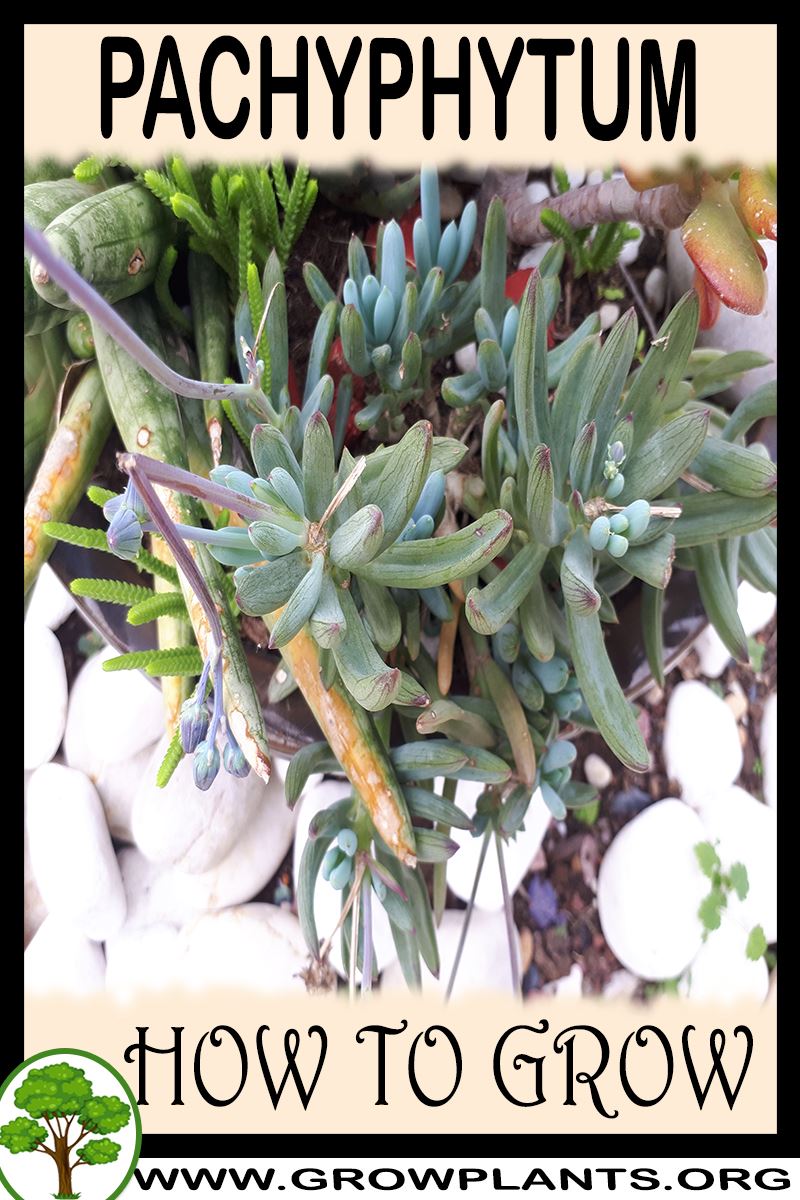
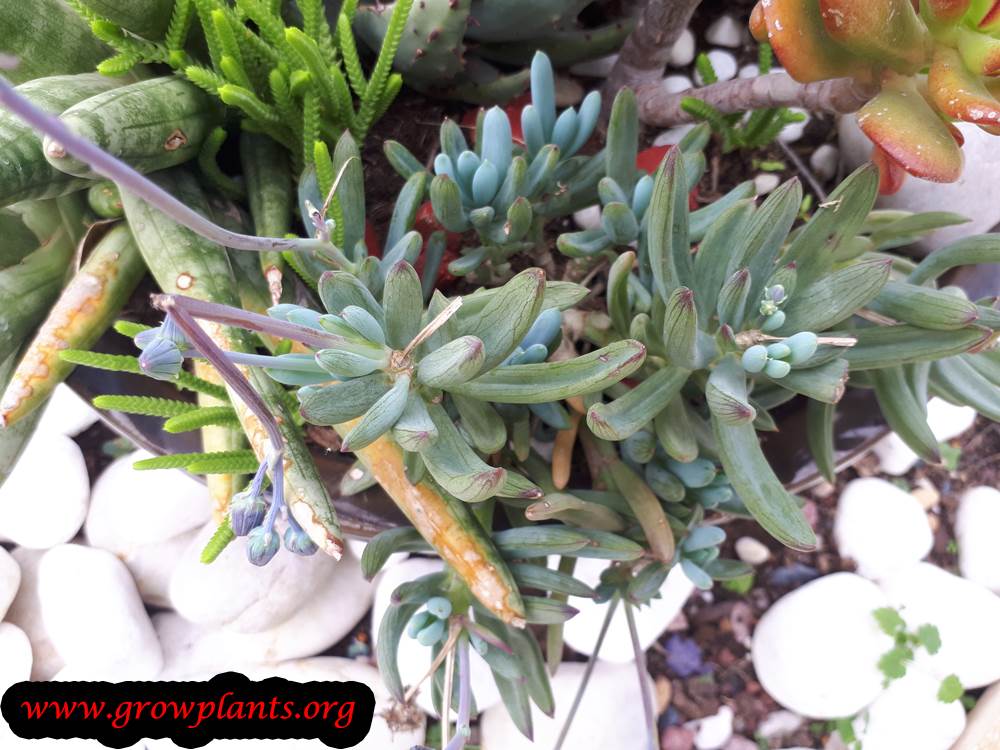
- Leaves & Foliage: Thick, fleshy, elliptic leaves with a pointed tip, often chalky white, yellow or flushed red, sometimes multi-coloured.
- Flower Characteristics: Bell-like flowers in white, yellow, red or mixed tones carried on arching stems.
Primary Uses & Landscape Value
- Functional & Ornamental Roles: Drought-tolerant ornamental for rockeries, succulent bowls and windowsills; grown indoors as a houseplant.
Care Guide: Planting, Soil & Watering
Overview: Pachyphytum is a plump-leaved succulent that wants bright light and a gritty, sharply draining soil. It stores water in its leaves, so it needs very little watering and must be allowed to dry out fully between waterings.
Quick Care Requirements
| Requirement | Ideal Condition |
|---|---|
| Planting Season | Spring to summer (warm season) |
| Growth Rate | Slow |
| Soil Type | Gritty, sandy, sharply well-draining (cactus / succulent mix) |
| Water Need | Low – let the soil dry out fully between waterings |
Planting & Establishment
- Best Planting Season: Plant in the warm season, spring to summer, when the plant is in active growth.
- How to Plant:
- Hole Preparation: Dig a shallow hole just a little larger than the root ball; these succulents have modest, shallow root systems.
- Soil Amendments: Keep the mix lean and gritty – add coarse sand, perlite or pumice for drainage rather than rich organic matter.
- Planting Depth: Set the plant so the base of the rosette sits at soil level; keep the lower leaves above the soil and never bury the stem, which rots easily.
- Growth Speed & Expectations: Growth is slow, so it stays compact; there is no need to rush it with heavy feeding or watering.
Soil, Watering & Drainage Care
- Soil Mix & Drainage Needs: Use a gritty cactus/succulent mix with excellent drainage; sharp drainage is the key to preventing rot, so make sure containers have drainage holes.
- Watering Schedule & Technique:
- Young / Newly Planted: Water sparingly to help it settle, letting the soil dry between waterings.
- Established: Soak the soil, then let it dry out completely before watering again; water infrequently.
- Seasonal Adjustments: Keep it nearly dry through winter (especially where frost is possible) and water a little more during the warm growing season.
Climate, Light & Hardiness
Pachyphytum succulents suit mediterranean, desert, subtropical, temperate, and tropical climates with full sun to full shade, and they are drought-tolerant once established. Cold tolerance varies by species and growing conditions, but the genus is generally listed as hardy from about USDA zone 9 upward.
Quick Climate Specifications
| Climate Zones | Mediterranean, desert, subtropical, temperate, tropical |
|---|---|
| USDA Hardiness Zones | 9+ |
| Frost Tolerance | Low to Moderate |
| Light Conditions | Full Sun to Full Shade |
Sunlight & Light Exposure
Optimal Light Setup
Adaptable across full sun, half shade, and full shade, though the strongest leaf coloring typically develops with more direct light.
Temperature Extremes & Hardiness
USDA Hardiness & Regional Limits
Reliable as a permanent outdoor plant from about zone 9 upward; because cold tolerance varies by species, cultivar, and growing conditions, gardeners in marginal zones should treat any given plant cautiously until its performance through a winter is confirmed.
Cold Damage & Winter Protection
The site data notes it can survive frost but performs better without it - occasional light frost is tolerated, but the rosettes and leaves are better protected from prolonged freezing, especially when wet.
Frost Sensitivity
Frost tolerance is limited and combined cold-plus-moisture is the greater risk; keep soil on the dry side heading into cold weather.
Wind, Humidity & Microclimate
Dry-Air Tolerance
Well adapted to dry air, consistent with its succulent, drought-tolerant habit.
Microclimate Recommendations
A dry, well-drained, sun-exposed microclimate minimizes the combined cold-and-wet conditions that succulents tolerate poorly.
Growing in Pots, Balconies & Indoors
Pachyphytum is a compact, chubby-leaved succulent the grower rates as a good houseplant – it grows happily in a small pot on a bright windowsill or on a sunny patio.
Quick Details
- Container Size: A small, shallow, well-drained pot
- Indoor Suitability: A good houseplant given bright light
- Best Spot: Bright light – a sunny windowsill indoors, sun to light shade outside
- Soil & Drainage: Gritty, sharply drained succulent mix
- Watering in Pots: Sparingly; let it dry out between waterings
Indoors & On the Windowsill
- A good houseplant: Grow it on the brightest windowsill you have; strong light keeps the rosettes tight and colourful, while poor light makes it stretch. A ready-made cactus and succulent soil mix provides that structure without mixing it yourself.
- Watering: Water sparingly and let the mix dry out – the fleshy leaves store their own water and rot if kept wet.
On a Balcony or Patio
- Sun and shelter: Sun to light shade outdoors; shelter it from prolonged rain so the mix does not stay soggy.
- Watering: Let pots dry out well between waterings, even in warm weather.
Choosing the Pot, Soil & Long-Term Care
- Pot & drainage: A small, well-drained pot; never leave it standing in water.
- Potting mix: Gritty, sharply drained succulent or cactus mix.
- Feeding: Feed lightly and occasionally in the growing season – succulents need little.
- Repotting: Repot every couple of years into fresh gritty mix; pot up offsets to make new plants.
Fertilizing & Feeding
Pachyphytum stores water and nutrients in its plump leaves and grows best on minimal, well-timed feeding rather than a regular fertilizing routine.
Quick Fertilizing Specs
| Feeding Level | Light feeder; overfeeding causes weak, stretched rosettes |
|---|---|
| Main Nutrient Priority | Low-nitrogen feeding that keeps rosettes compact and firm |
| Best Feeding Period | Warm months during active leaf and offset growth |
| Organic Options | A very light topdressing of well-aged compost, kept away from the leaf rosette |
| Reduce/Stop Feeding | Stop entirely once growth slows for the cooler, resting part of the year |
Feeding by Growth Stage
Active Growth
Support compact rosette and offset development during the warm growing season.
| Nutrient direction | A dilute, low-nitrogen succulent-formulated feed that keeps growth tight and well-colored rather than soft. |
|---|---|
| Timing | Warm months when the plant is actively forming new leaves and offsets. |
| Frequency | A few light feedings spread across the active growing season. |
| Fertilizer types | A cactus/succulent-specific fertilizer diluted well below general houseplant strength, applied to the soil and kept off the leaves. |
| Precautions | Keep feeding light – excess nitrogen produces loose, stretched rosettes with poor leaf color and weaker drought tolerance. |
Dormant Rest
Support the plant’s natural slowdown by withholding fertilizer entirely.
| Nutrient direction | None – withhold fertilizer during the dormant or resting period. |
|---|---|
| Timing | Cooler months when growth stops and the plant is resting. |
| Frequency | No feeding at this stage. |
| Fertilizer types | No feeding at this stage; resume only once new leaf and offset growth restarts. |
| Precautions | Do not fertilize during dormancy; feeding a resting succulent can cause weak, stretched growth or root stress. |
Nutrient Deficiency Signs & Corrections
Leaves shrivel, soften, or drop from the rosette base even though the plant is being watered.
| Possible causes | Root rot from overwatering or poorly drained soil, Nitrogen excess weakening tissue and increasing disease risk, Insufficient light for the season |
|---|---|
| Appears first on | Lower and older leaves first |
| What to check | Soil drainage and recent watering frequency, Roots for rot when checking the pot, Amount of direct sun the plant receives |
| Possible correction | Improve drainage, let soil dry between waterings, and reduce fertilizer strength or frequency. |
New growth forms loose, elongated rosettes with pale color instead of tight, colorful ones.
| Possible causes | Insufficient light causing the plant to stretch, Over-fertilizing, especially with a nitrogen-heavy product, Feeding attempted during the dormant season |
|---|---|
| Appears first on | Newest rosette growth |
| What to check | Light exposure relative to the plant’s needs, Timing and strength of recent feedings, Season and current growth activity |
| Possible correction | Increase light exposure and hold off on fertilizer until strong, well-lit active growth resumes. |
Leaves show a pale, mottled yellowing pattern rather than their normal even color.
| Possible causes | Iron deficiency linked to alkaline or waterlogged soil, Root stress from compacted or poorly drained potting mix, Cold soil temperatures limiting nutrient uptake |
|---|---|
| Appears first on | Newer leaves |
| What to check | Soil pH and drainage, Root condition when checking the pot, Recent temperature extremes |
| Possible correction | Improve drainage, correct pH if alkaline, and apply a chelated iron product per its label if the pattern persists. |
Pruning, Training & Seasonal Maintenance
Pachyphytum is a rosette-forming leaf succulent with no woody structure and no seasonal fruiting-wood logic – “pruning” here is really routine grooming plus, occasionally, a rejuvenation cut for a rosette that has stretched. It tolerates light maintenance year-round: removing spent lower leaves and old flower stalks is fine at any time, while a harder cut (beheading a leggy rosette to reroot it) is best timed to the active growing season so the cut heals and reroots quickly rather than sitting exposed.
Quick Pruning & Maintenance Specs
| Pruning Tolerance | Low routine grooming, Moderate for rejuvenation cuts (regrows well from a cut stem) |
| Primary Pruning Window | Any time for old-leaf and spent-stalk removal; active growing season for a rejuvenation cut |
| Typical Frequency | Ongoing light grooming; rejuvenation only when a rosette becomes stretched/leggy |
| Main Objective | Remove spent leaves/flower stalks and, if needed, restart an etiolated rosette |
| Young Plant Priority | Grooming only – remove dried lower leaves as they appear |
| Mature Plant Priority | Grooming plus watching for a stretched stem that needs beheading and rerooting |
| Best Tool Type | Sterile precision snips or a grafting knife for a clean, disease-free cut |
| Avoid Heavy Pruning During | Winter dormancy/low light, when cut wounds callus slowly and reroot poorly |
Pruning by Plant Age & Size
Newly Established
Grooming only – remove any leaves that dried or were damaged in transplanting; no cutting back of the rosette itself.
Young / Formative
No structural training applies to a rosette succulent; the only relevant action is removing spent lower leaves as they naturally dry.
Mature / Established
Ongoing removal of old leaves and spent flower stalks; if the rosette has stretched and thinned from insufficient light, this is the point to consider a rejuvenation (behead-and-reroot) cut.
Special Growth to Remove
- Old, dried, or shriveled lower leaves – remove regularly; left in place they can trap moisture and invite pests such as mealybugs at the leaf axils.
- Spent flower stalks – cut back to the base once bloom finishes; they do not repeat-flower and serve no purpose left on the plant.
Container & Small-Space Pruning
Commonly grown as a houseplant/container succulent. In a pot, watch for stretching (etiolation) toward the light source sooner than an outdoor plant would show it, since indoor light is usually the limiting factor; rotate the pot regularly to slow one-sided stretching before a rejuvenation cut becomes necessary.
Tools
A sterile precision snip or a small grafting/paring knife is all this plant needs – there is never a cut thick enough to need secateurs or loppers.
Tool Hygiene & Disease Risk
Increased care warranted for any cut into the fleshy stem or leaf tissue: succulent tissue is prone to bacterial soft rot at a fresh wound, so use a clean, sharp, disinfected blade for any rejuvenation cut and let the wound dry before it contacts soil.
Cut Placement & Technique
Remove old leaves with a gentle twist/pull close to the stem rather than tearing, to avoid leaving a ragged wound. For a rejuvenation cut, sever the stem cleanly below the rosette head in one pass rather than sawing through the soft tissue.
Heavy Pruning & Rejuvenation
Tolerated and useful for a stretched, leggy rosette: behead the rosette (cut the stem a few centimeters below the head), let both the cut head and the remaining stem callus for several days in a dry, shaded spot, then reroot the head and allow the old stem base to often resprout new offset rosettes. This is the standard way to restart an etiolated Pachyphytum rather than trying to correct a leggy stem in place.
Post-Pruning Care
Let any cut surface dry and callus for several days before it touches soil or receives water directly on the wound; withhold watering the cut head until roots begin forming. No feeding is needed around a rejuvenation cut – the plant is drawing on stored leaf reserves, not needing extra nutrients, while it reroots.
Common Pruning Mistakes
- Watering a fresh rejuvenation cut immediately instead of letting it callus first, inviting rot.
- Leaving old, dried leaves in place for too long, creating a moist pocket at the leaf axils that attracts mealybugs.
- Trying to correct a stretched, leggy rosette by trimming leaves instead of beheading and restarting it.
When NOT to Prune
Avoid a rejuvenation (behead) cut during winter dormancy or low-light stretches, when the wound calluses and roots much more slowly and is more vulnerable to rot in the meantime.
Recommended Tools (by task)
- precision_snips – routine removal of old leaves and spent flower stalks.
- grafting_knife – a clean, sterile cut for beheading and rejuvenating a leggy rosette.
Propagation Guide
Pachyphytum is easiest to propagate from stem or leaf cuttings, both of which reliably reproduce the parent rosette; this plant’s own data confirms vegetative propagation is needed if you want offspring identical to the parent, since seed-grown plants may not match it. Overall difficulty is easy, typical of this succulent family.
Quick Propagation Specs
| Best Propagation Method | Stem or leaf cuttings |
| Alternative Methods | Offset (pup) division; seed |
| Propagation Difficulty | Easy |
| Seed True-to-Type | Variable – seed-grown plants may not match the parent |
| Vegetative True-to-Type | Yes |
| Best Propagation Season | Spring to summer |
Stem Cuttings
Cutting Type
A rosette or stem section with a short bit of bare stem attached.
Cutting Preparation
Let the cut end callus over for a few days in a dry, shaded spot before setting it in soil, which is standard practice for succulent cuttings and helps prevent rot.
Rooting Setup
A well-draining, gritty succulent mix; water lightly only once roots begin to form.
Rooting Hormone
Not necessary for this easy-rooting succulent.
Rooting Time
Roots typically form within a few weeks.
Leaf & Root Cuttings
Individual leaves propagate readily. Gently twist a plump, healthy leaf from the stem so the base comes away intact, let the wound callus for a few days, then lay the leaf on top of a well-draining gritty mix. Keep it in bright, indirect light with only light misting; a tiny new rosette forms at the base over several weeks to a couple of months while the original leaf gradually shrivels.
Division, Offsets, Pups & Suckers
True to the genus’s ‘Hens and Chicks’ common name, established plants often form small offset rosettes (‘chicks’) around the base of the parent. Once an offset has developed its own roots, it can be gently separated and potted on its own; offsets without roots can be treated as cuttings and allowed to callus and root as above.
Bloom & Flower Guide
Quick Details
- Bloom Season: Summer
- Time to First Bloom: Only mature rosettes bloom; young plants usually need a couple of years to reach flowering size
- Flower Appearance: Bell-shaped flowers in white, yellow or red (sometimes more than one colour), carried on arching stems above the rosette
- Edibility: Grown as an ornamental; the flowers are not eaten
Detailed Blooming Overview
Pachyphytum sends up a slender, arching flower stalk from the side of its plump, powder-blue rosettes. The nodding, bell-shaped flowers open in sequence along the stalk through summer. Unlike some of its relatives, the rosette is not harmed by flowering and carries on growing afterwards.
Flower Characteristics
- Small, cupped or bell-shaped flowers in white, yellow or red tones.
- Held on a curved stalk that lifts them clear of the fleshy leaves.
- Often flushed or tipped with a second colour.
Bloom Care & Thinning
- Sun and lean living: Bright light and a dry rest keep the plant compact and encourage it to flower.
- After bloom: Once the flowers finish, cut the spent stalk back to keep the plant looking neat.
- Handle gently: The waxy bloom on the leaves marks easily, so support the rosette rather than the flower stalk when moving the plant.
Pests, Diseases & Troubleshooting
Overview: Pachyphytum is a chubby-leaved Crassulaceae succulent and, like most of that family, is nearly pest-free when grown hard and dry. Its real risks are overwatering rot and a handful of sap-suckers – mealybugs above all – plus slugs and snails that graze the soft, farina-coated leaves. Bright light, gritty soil, and a strict dry-down are the whole disease-prevention programme.
Quick Troubleshooting Overview
| Issue / Pest | Main Symptom | Primary Solution |
|---|---|---|
| Mealybugs | White cottony tufts between leaves and at the roots | Alcohol swab; systemic or oil for roots |
| Root/stem rot | Soft, translucent, mushy base; collapse | Cut to firm tissue; dry out; re-root |
| Slugs & snails | Ragged holes and slime trails on leaves | Handpick at night; barriers; traps |
| Aphids | Sticky, deformed new growth and flower stalks | Rinse off; insecticidal soap |
| Etiolation | Stretched, pale, floppy growth | More light; do not water to ‘fix’ it |
| Sunburn | White/brown scorched patches | Acclimatise gradually to strong sun |
Common Pests & Management
- Mealybugs (Pseudococcus / Planococcus spp.):
- Symptoms: White, cottony, waxy blobs wedged between the fat leaves, in the crown, and – most damaging – on the roots as a root form; growth stalls and leaves shrivel, with sticky honeydew above ground.
- Prevention & Control: Spot-treat visible bugs with a cotton bud dipped in rubbing alcohol. For the root form, unpot, wash the roots, and treat the root ball with a systemic or a soil drench of insecticidal soap/oil before repotting into fresh dry mix. Inspect regularly, as this is the succulent’s number-one pest.
- Aphids (Aphis / Myzus spp.):
- Symptoms: Small green or black soft insects massing on tender flower stalks and new rosette growth, leaving stickiness and distorted, curled tips, mainly when the plant is in bloom.
- Prevention & Control: Rinse off with a gentle water spray and wipe survivors. Insecticidal soap or a light horticultural oil clears larger colonies – but keep oil off the powdery farina in strong sun, spraying in cool, shaded conditions.
- Slugs and snails (Gastropoda):
- Symptoms: Ragged holes, grazed patches, and tell-tale slime trails on the soft leaves, mostly at night and in damp weather; young plants can be badly disfigured.
- Prevention & Control: Handpick after dark, remove hiding places, and keep the surface dry. Ring pots with copper tape, grit, or diatomaceous earth, or use iron-phosphate slug pellets sparingly; beer traps also work in the open.
- Vine weevil (Otiorhynchus sulcatus):
- Symptoms: Adults notch leaf margins at night, but the real harm is the C-shaped white larvae in the compost eating the roots, causing sudden collapse of an apparently healthy plant.
- Prevention & Control: Check the root ball at repotting and destroy grubs. Drench pots with pathogenic nematodes (Steinernema / Heterorhabditis) in warm soil, and refresh the mix; keep pots off the ground to limit egg-laying adults.
Diseases & Fungal Issues
- Root and stem rot (Pythium / Fusarium / Rhizoctonia):
- Symptoms: Leaves turn soft, translucent, yellow, and drop; the base of the stem blackens and goes mushy, and the plant topples – nearly always the result of too much water, cold-wet soil, or poor drainage.
- Treatment & Management: Grow in a fast-draining, gritty mix and water only when the soil is fully dry, keeping it drier still in cool weather. If rot appears, cut the stem back to clean, firm green tissue, let the cut callus for a few days, and re-root the healthy top; discard the rotted base and soil.
- Botrytis / grey mould (Botrytis cinerea):
- Symptoms: Fuzzy grey mould on damaged, dead, or crowded leaves in cool, damp, still conditions, causing soft brown rot that spreads through the rosette.
- Treatment & Management: Improve ventilation, keep water off the foliage, and remove dead leaves and spent flowers promptly. Space plants and lower humidity; affected tissue should be cut away cleanly rather than sprayed.
- Fungal leaf spots (Cercospora and others):
- Symptoms: Occasional brown or black sunken spots on leaves kept too wet or splashed frequently; largely cosmetic but a sign the plant is too damp.
- Treatment & Management: Water at the base, avoid wetting the farina-coated leaves, and increase airflow. Remove spotted leaves; healthy dry culture prevents recurrence and fungicide is rarely warranted.
Growing Difficulties & Abiotic Problems
- Overwatering rot (the main risk)
- Cause & Symptoms: Swollen, translucent, dropping leaves and a soft base from soil kept moist, from watering into the crown, or from cold-wet winter conditions.
- Correction Strategy: Water thoroughly then let the mix dry completely; use gritty, free-draining soil and pots with drainage holes. Cut water right back in cool, dark months – a slightly wrinkled plant is far safer than a soggy one.
- Etiolation (too little light)
- Cause & Symptoms: Rosettes stretch, pale, and flop, with widely spaced leaves reaching toward the light and losing their compact, chalky look.
- Correction Strategy: Move to the brightest possible spot or add a grow light; do not try to ‘feed’ or water it back into shape. Behead and re-root a badly stretched plant to restart a compact rosette.
- Sunburn
- Cause & Symptoms: White, tan, or brown scorched patches on leaves suddenly exposed to fierce sun after low light or when placed against hot glass, and rubbing off of the protective farina.
- Correction Strategy: Acclimatise gradually to strong light over a couple of weeks, provide light shade in the fiercest midday sun, and avoid handling the leaves, which permanently marks the waxy bloom.
- Edema (water blisters)
- Cause & Symptoms: Corky, blister-like bumps on the undersides of leaves when the plant takes up water faster than it can transpire in cool, humid, overcast spells.
- Correction Strategy: Reduce watering, improve air movement and light, and avoid watering in cool, dull weather. The marks are permanent on affected leaves but harmless; new growth is clean once conditions improve.
What Helps – Products & Tools
The essentials are rubbing alcohol and insecticidal soap / horticultural oil for mealybugs and aphids (a systemic or nematode drench for root mealybugs and vine-weevil grubs), plus copper slug tape, grit, or diatomaceous earth for gastropods. The most important ‘product’ of all is a gritty, free-draining succulent mix in a well-drained pot – that alone prevents nearly every disease this plant gets.