




Care Guide: Planting, Soil & Watering
Overview: This is a hardy, drought-tolerant rosette succulent that wants bright light and fast-draining, gritty soil. It stores water in its leaves, so it needs only occasional deep watering and will rot in heavy, wet ground.
Quick Care Requirements
| Requirement | Ideal Condition |
|---|---|
| Planting Season | In the warm season (spring through autumn); year-round in frost-free zones |
| Growth Rate | Slow |
| Soil Type | Light, gritty and sharply draining (cactus/succulent mix or sandy soil) |
| Water Need | Low; water sparingly and let the soil dry out completely between waterings |
Planting & Establishment
- Best Planting Season: Spring in cooler zones (about zone 8–9), spring to summer in zone 10a, spring to autumn in zones 10b–11, and year-round in zone 12 and warmer.
- How to Plant:
- Hole Preparation: Plant into a shallow hole at the same depth the rosette grew; in wet or rainy locations, plant on a mound, raised bed or bed of grit so water drains straight away.
- Soil Amendments: Mix plenty of coarse sand, grit, perlite or pumice into the soil to open it up; a top layer of lava grit or gravel around the base helps keep the crown dry.
- Planting Depth: Set the rosette so its base sits just at the soil surface — burying the lower leaves or crown in damp soil leads to rot.
- Growth Speed & Expectations: Slow-growing; expect steady, compact spread rather than fast size gains, eventually forming a low mat or clump.
Soil, Watering & Drainage Care
- Soil Mix & Drainage Needs: Use a free-draining cactus/succulent mix or a light, sandy soil; in containers make sure there are ample drainage holes, and refresh the mix every few years as it breaks down. The single most important factor is drainage — standing water quickly causes root rot.
- Watering Schedule & Technique:
- Young / Newly Planted: After planting, water lightly and then wait; let the soil dry before the first proper watering, so new roots reach out for moisture.
- Established: Water deeply only when the soil has dried out completely, then let it dry again — far less water is needed than for most plants, and too little is safer than too much.
- Seasonal Adjustments: Cut watering right back in winter and in cool, damp spells; water a little more only during prolonged summer heat.
Climate, Light & Hardiness
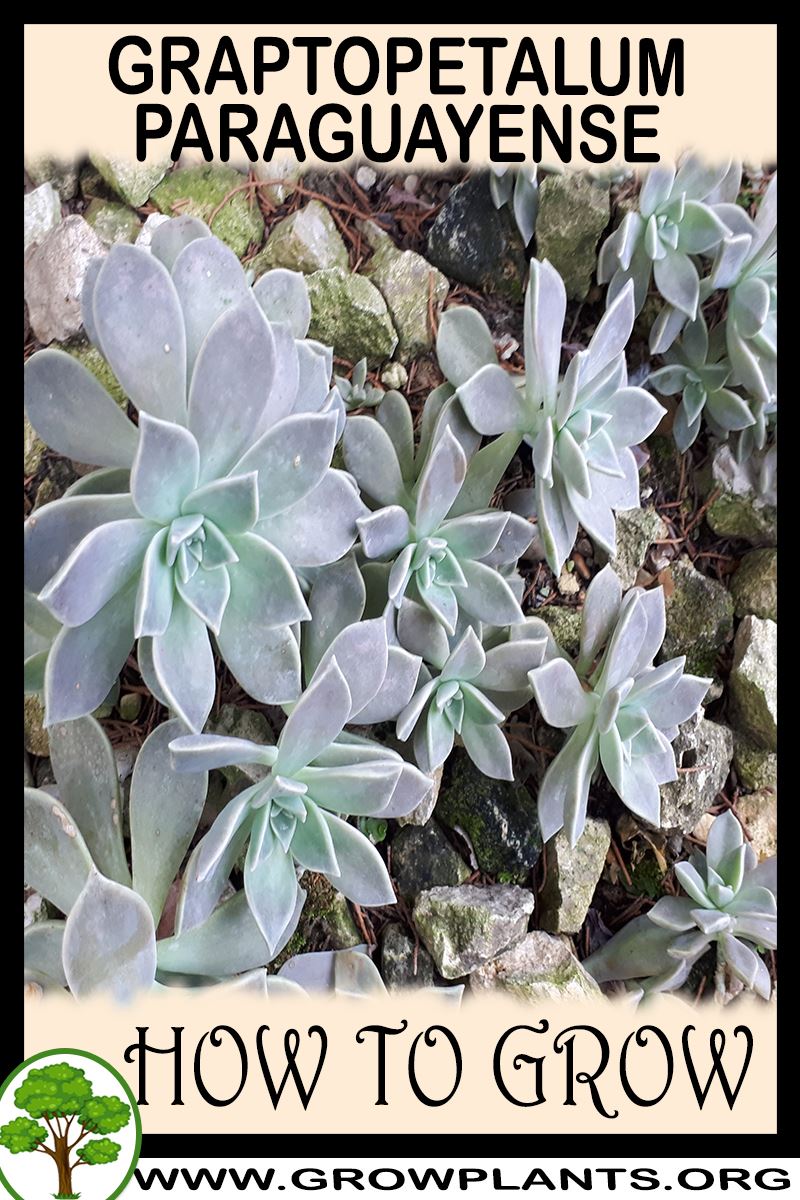
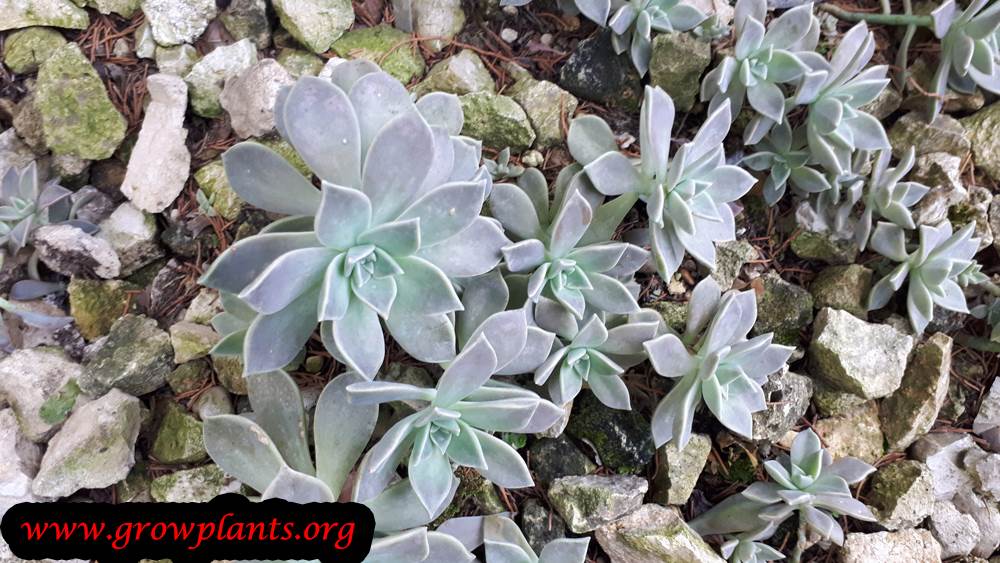
Graptopetalum paraguayense (ghost plant) is a drought-tolerant succulent for mediterranean, desert, subtropical or temperate climates, or a bright indoor spot, growing well from full sun to fairly deep shade with plenty of ambient light. It has low-to-moderate cold hardiness, generally thriving from about USDA zone 9 upward and surviving zone 8 winters with extra care.
Quick Climate Specifications
| Climate Zones | Mediterranean, desert, subtropical and temperate climates; also grown as a houseplant |
| USDA Hardiness Zones | approximately 9+ outdoors, and with attentive overwintering care sometimes into zone 8 |
| Optimal Temp Range | approximately 15–27°C (59–81°F) |
| Cold Damage Begins | below approximately 5°C (41°F) |
| Approx. Survival Minimum | an established plant may briefly tolerate light frost near 0°C (32°F) for short periods, particularly with protection |
| Frost Tolerance | Low to Moderate |
| Light Conditions | Full sun to full shade (best rosette color and form with plenty of bright light) |
Sunlight & Light Exposure
Optimal Light Setup
Bright light throughout the day gives the best color and compact rosette form; tolerates full sun to full shade as long as ambient light is good.
Direct Sun Requirement
Handles full sun well once acclimated; in the hottest climates a little midday shade can prevent scorch on pale-colored forms.
Shade & Heat Management
More shade-tolerant than many rosette succulents, but growth stretches if truly dim.
Best Exposure / Orientation
A bright south- or west-facing exposure outdoors; a sunny windowsill indoors.
Temperature Extremes & Hardiness
USDA Hardiness & Regional Limits
Site data places it at about zone 9 and warmer outdoors, with zone 8 possible given careful overwintering (protection, dry soil, or moving under cover).
Cold Damage & Winter Protection
Protect from hard freezes; in zone 8–9 give a sheltered site, excellent drainage, and keep soil drier through winter to reduce cold-wet injury.
Frost Sensitivity
Low to moderate – light, brief frost may be tolerated by an established plant, but hard or prolonged freezes damage or kill it.
Extreme Heat Tolerance
Very good; the site notes it tolerates dry tropical heat as well as desert conditions.
Wind, Humidity & Microclimate
Humidity Preferences
Adaptable to both dry mediterranean/desert air and more humid subtropical or dry-tropical climates.
Dry-Air Tolerance
High.
Rainfall & Seasonal Moisture
Drought-tolerant; prefers to dry out between waterings/rains, so in high-rainfall locations improve drainage (raised beds, gritty soil, or coarse material beneath the roots).
Microclimate Recommendations
An easy container succulent that can be moved under cover for winter in marginal zones; sheltered, bright microsites extend its outdoor range.
Growing in Pots, Balconies & Indoors
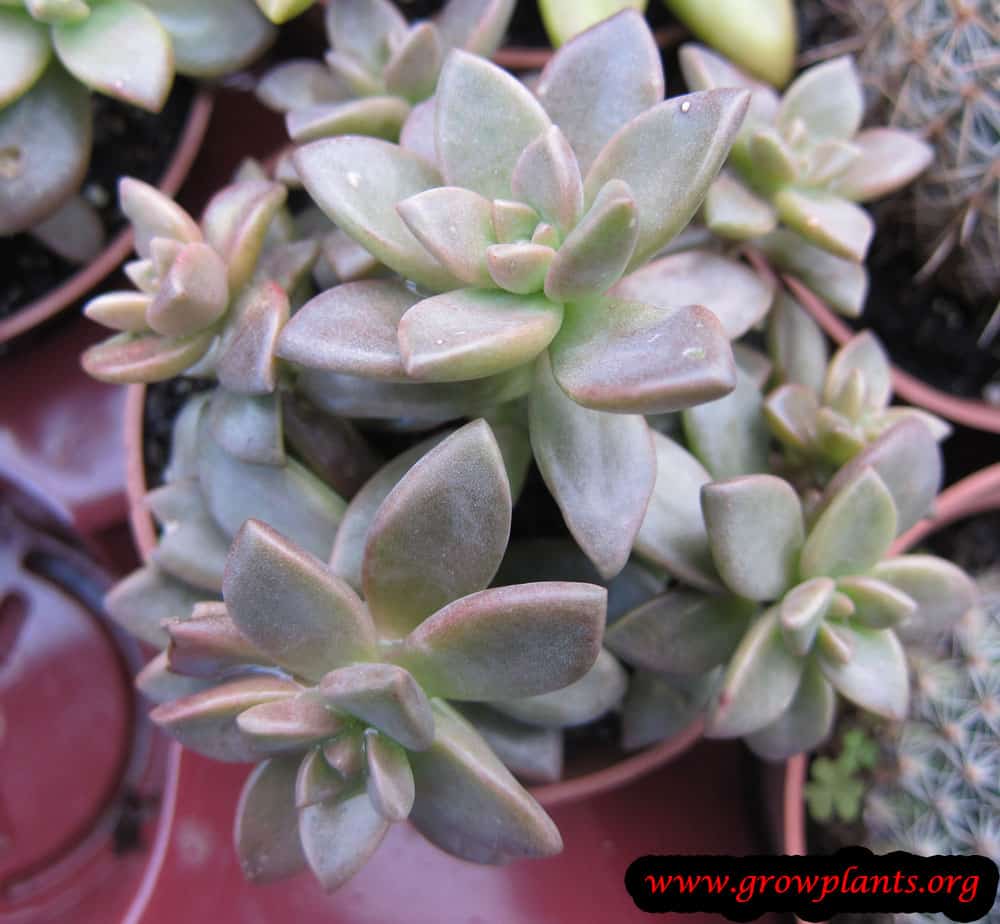
Graptopetalum paraguayense (ghost plant) is an easy, forgiving succulent that works both as a houseplant and as a container or balcony plant. It keeps its best pastel colour in strong light, so give it the brightest spot you can – a very sunny windowsill indoors or full sun outside.
Quick Details
- Container Size: A modest pot for its 15-40 cm (6-16 in) spreading rosettes; a wide, shallow pot suits its trailing habit
- Indoor Suitability: A genuine houseplant in a bright, sunny window; colour fades and stems stretch in low light — a grow light helps hold that colour away from the brightest window.
- Best Spot: Full sun to light shade outdoors; the sunniest windowsill indoors
- Soil & Drainage: Gritty cactus/succulent mix or sandy soil with pebbles at the base; must drain freely
- Watering in Pots: Sparingly, letting the mix dry between waterings; it is drought tolerant and rots if kept wet
Indoors & On the Windowsill
- A good houseplant: The grower confirms it grows happily indoors. Stand it in the brightest window; it tolerates some shade but needs plenty of light to stay compact and colourful.
- Windowsill growing: A sunny sill is perfect – the trailing rosettes look good spilling over the pot edge. Water sparingly and keep it away from radiators.
- Overwintering: It is not frost hardy, so in cold climates keep it indoors or under cover over winter, watering only lightly.
On a Balcony or Patio
- Light & warmth: It loves a sunny, sheltered balcony, where strong light brings out its pink-grey tints. Reflected heat from walls dries pots fast, so check moisture in warm weather.
- Rain & drainage: In wet climates raise the pot or stand it on grit so rain drains away; the brittle rosettes also appreciate shelter from heavy rain and wind.
Choosing the Pot, Soil & Long-Term Care
- Pot & drainage: Any pot with good drainage holes; terracotta breathes and dries fast. Skip a standing saucer of water.
- Potting mix: A gritty cactus/succulent mix or sandy soil with pebbles or lava grit at the bottom.
- Feeding: A weak succulent feed once or twice in the growing season is plenty – potting soil leaches, but overfeeding causes soft, floppy growth.
- Refreshing: Swap tired soil for fresh mix every few years and pot up a size if needed; dropped leaves root easily to make new plants.
Growing this plant in a greenhouse
A greenhouse can give graptopetalum paraguayense frost protection and cold protection.
Greenhouse at a glance
| Greenhouse suitability | Good - clearly useful |
|---|---|
| Main benefits | frost protection, cold protection |
| Outdoor protection advisable below | about 5°C |
| Maintain greenhouse minimum | around 5°C for active growth |
| Suitable types | unheated greenhouse, polycarbonate greenhouse |
| Heating | Heating is optional - useful mainly for winter growing in cold areas. |
Related greenhouse guides
- Greenhouses: How to Choose the Right Greenhouse
- Polycarbonate Greenhouses: What to Look for Before Buying
- Greenhouse Climate Control: Temperature, Ventilation and Humidity
Fertilizing & Feeding
A very light feeder: at most an occasional dilute, low-nitrogen feeding during active growth, and none while dormant. Lean conditions keep these succulents compact and well colored.
Quick Fertilizing Specs
| Feeding Level | Light feeder |
|---|---|
| Main Nutrient Priority | Lean, low-nitrogen feeding to keep growth firm and compact |
| Best Feeding Period | Only during the active growing season |
| Organic Options | A little low-nutrient gritty compost or worm castings worked into the mix |
| Reduce/Stop Feeding | Stop feeding through dormancy and cool, low-light rest |
| Micronutrients | Usually adequate in fresh mix; correct only a diagnosed deficiency |
| Soil pH | Slightly acidic to near neutral, with sharp drainage |
Feeding by Growth Stage
Active growth
Support steady, compact growth during the active growing season without forcing soft, weak tissue.
| Nutrient direction | A dilute, low-nitrogen complete fertilizer made for cacti and succulents; lean nutrition keeps growth firm and well colored. |
|---|---|
| Timing | During the active growing season, while the plant is putting on new growth. |
| Frequency | Feed sparingly and infrequently through the active season; this is a low-demand succulent that needs very little. |
| Fertilizer types | A dilute complete fertilizer formulated for cacti and succulents, A little low-nutrient gritty compost or worm castings worked into the mix |
| Precautions | Feed lightly and only into already-moist gritty mix; overfeeding produces soft, stretched, rot-prone growth and salt buildup. |
Dormancy and rest
Let the plant rest through its dormant period without pushing new growth.
| Nutrient direction | None – withhold fertilizer while the plant is dormant and not in active growth. |
|---|---|
| Timing | During the dormant rest period, when growth naturally stops in the hot, dry or cold part of the year. |
| Frequency | No feeding at this stage. |
| Fertilizer types | No feeding at this stage; do not fertilize until active growth resumes. |
| Precautions | Do not fertilize a dormant succulent; feeding now wastes nutrients and raises the risk of salt injury and rot. |
Nutrient Deficiency Signs & Corrections
Overall growth slows and older growth fades to a pale, washed-out green, sometimes with weak, stretched development.
| Possible causes | low available nitrogen in a lean, gritty mix, long spell in old, exhausted potting mix, nitrogen leaching from repeated watering |
|---|---|
| Appears first on | older, lower growth |
| What to check | how long since repotting into fresh mix, recent feeding history, light levels, since low light also causes pale, stretched growth |
| Possible correction | Apply a dilute low-nitrogen complete succulent fertilizer during active growth and refresh exhausted mix; also correct low light if present. |
Tips or margins brown and scorch, roots may blacken, and growth stalls despite adequate watering.
| Possible causes | fertilizer salt buildup in the gritty mix, overfeeding or feeding at too high a strength, poor drainage that concentrates salts around the roots |
|---|---|
| Appears first on | growing tips and margins |
| What to check | recent fertilizer strength and how often it was applied, drainage and the condition of the mix, whether water flushes freely through the pot |
| Possible correction | Ease off feeding, flush the mix with clean water to leach accumulated salts, then return to lighter, dilute feeding. |
Newest growth turns pale or yellow between the green veins while older growth stays greener.
| Possible causes | high soil or irrigation-water pH reducing iron availability, overwatering and cold, poorly aerated mix limiting root uptake, genuinely low micronutrient availability in old, spent mix |
|---|---|
| Appears first on | the newest growth |
| What to check | soil and irrigation-water pH, drainage and how wet the mix stays, how long since the mix was refreshed |
| Possible correction | Correct pH and improve drainage first; if it persists, apply a chelated iron product per its label. |
Pruning, Training & Seasonal Maintenance
Graptopetalum paraguayense (Ghost Plant) is a trailing rosette succulent with no woody framework, so pruning is light, year-round tidying rather than structural work – though it responds best to any deeper cut made in winter, when growth naturally slows and a fresh wound is less likely to sit in humid, active-growth conditions. The objective is removing old leaves and spent bloom stems and, on older plants, correcting stretched growth. None of this changes flowering the following summer; it mainly keeps the pale, dusty-rose rosettes visible and the trailing habit tidy.
Quick Pruning & Maintenance Specs
| Pruning Tolerance | Low to Moderate |
| Primary Pruning Window | Year-round, but winter is preferred for anything beyond light tidying |
| Secondary Maintenance Window | Any time old leaves or spent bloom stems appear |
| Typical Frequency | Ongoing light tidy, plus an occasional shape/rejuvenation cut on older plants |
| Main Objective | Remove old leaves and spent bloom stems; correct stretched, trailing growth |
| Young Plant Priority | None – let a newly rooted rosette establish undisturbed |
| Mature Plant Priority | Manage trailing stem length and correct etiolated (stretched) growth |
| Best Tool Type | Precision snips or clean fingers |
| Avoid Heavy Pruning During | Peak summer heat stress and, for plants kept outdoors, any frost risk |
Pruning by Plant Age & Size
Newly Established
Do not prune a newly planted or freshly rooted offset; only remove tissue that arrived damaged.
Young / Formative
No formal training system applies. As trailing stems form, pinching a growing tip encourages branching and a fuller, bushier habit rather than a single long runner.
Mature / Established
Mature plants accumulate old lower leaves and, as stems trail and lengthen, can stretch and thin out. Remove spent leaves and bloom stems routinely, and shorten or behead an overly long, sparse stem (see Heavy Pruning) to keep the plant full.
Seasonal Pruning Schedule
Dormant/Winter (preferred window for any larger cut): the plant's slower winter growth means a pruning wound is exposed for longer before new tissue seals it, so this is the best time to do a shaping or rejuvenation cut deliberately, not just incidental tidying; remove old leaves and any soft or water-soaked tissue.
Ongoing Sanitary (year-round): remove old, dried lower leaves and spent bloom stems as they occur through spring and summer growth; this is routine housekeeping and does not need to wait for winter.
Structural Pruning & Training
The plant's habit is trailing/spreading rather than upright, so "structure" means managing stem length and fullness. Long trailing stems can be shortened at a leaf joint to keep the plant compact; the source's own propagation method – bending a stem down and covering part of it with soil – can be combined with a later cut once that section has rooted, effectively layering a new plant off the parent instead of taking a loose cutting.
Special Growth to Remove
- Old, dried lower leaves as stems lengthen and trail
- Spent bloom stems once flowering finishes
- Any soft or discolored tissue – a rot signal, remove promptly and cleanly
Leaves are also removed "for design" on this plant – but that should mean thinning old, faded leaves to reveal the rosette shape, not stripping healthy silvery-lavender foliage.
Container & Small-Space Pruning
This species is one of the more houseplant-friendly succulents in this group and is routinely grown indoors, so container pruning matters here more than for the Graptosedum cultivars. In a hanging pot or shallow container, pinch trailing stems to control how far they spill over the edge, and thin old leaf litter that collects at the base, since it holds moisture against the pot rim. Refresh the potting mix every couple of years rather than root-pruning.
Tools
Precision snips for old leaves and spent bloom stems. For shortening or beheading a thicker trailing stem, a sharp grafting knife gives a cleaner single cut than snips and reduces crushing on the fleshy stem.
Tool Hygiene & Disease Risk
Routine – wipe the blade clean between plants. Disinfect it before moving from a rotten cut to a healthy plant, since soft-rot organisms spread readily between succulent wounds, especially on stems kept indoors with limited airflow.
Cut Placement & Technique
Snip spent bloom stems at their base. When shortening or beheading a stretched trailing stem, cut cleanly through firm tissue just above a leaf node, then let the cut ends of both pieces dry and callus for several days in a shaded spot before contact with moist soil.
Heavy Pruning & Rejuvenation
Tolerated as beheading or shortening an overly long, sparse trailing stem: cut back to firm tissue, callus the removed piece, and reroot it as a new plant; the remaining base commonly resprouts new rosettes from the cut point. Winter is the preferred timing given above, but a plant kept as an actively growing houseplant can also be cut in spring if that suits the grower better – either way, avoid doing it during a summer heat spell.
Post-Pruning Care
Keep the wound dry until it calluses before replanting or watering. Once resprouting, water sparingly, matching the plant's normal drought-tolerant routine (it tolerates both very light and more average watering as long as drainage is good). Do not fertilize right after cutting; watch the cut area for soft rot over the following weeks.
Common Pruning Mistakes
- Watering or repotting a fresh wound immediately, inviting rot
- Stripping healthy leaves for "design" rather than just removing the old, faded ones
- Cutting during a summer heat spell instead of the plant's slower winter period
- Using a dull or dirty blade that crushes the fleshy stem instead of slicing it
When NOT to Prune
Avoid a larger cut during a summer heat spell, when the plant is already under stress and a fresh wound heals more slowly in muggy conditions. For outdoor plants, avoid pruning right before or during a frost event, since this species is only reliably hardy to roughly zone 9, with protection recommended below that.
Recommended Tools (by task)
- precision_snips – for removing old leaves and spent bloom stems; clean, small-scale cuts that won't crush soft tissue.
- grafting_knife – for shortening or beheading a thicker trailing stem, giving a clean single cut that limits rot risk.
- blade_disinfectant – to wipe the blade between cutting rotten tissue and healthy plants, especially important for plants kept indoors with less airflow.
Propagation Guide
Graptopetalum paraguayense (Ghost Plant) is most easily propagated from leaf or stem cuttings, or by simply bending a branch down and covering part of it with soil until it roots; seed is possible but, by the site’s own experience, seedling growth from seed is notably slow. This is one of the easiest succulents to root from a leaf or stem, so vegetative propagation is not strictly required but is by far the more practical route.
Quick Propagation Specs
| Best Propagation Method | Leaf or stem cuttings |
| Alternative Methods | Ground layering; seed |
| Propagation Difficulty | Easy |
| Seed True-to-Type | Usually true-to-type (species), though it may cross with related genera in mixed collections |
| Vegetative True-to-Type | Yes |
| Best Propagation Season | Spring in zone 8–9; spring to summer in zone 10a; spring to autumn in zone 10b–11; year-round in zone 12+ |
| Cutting Rooting Time | Typically a few weeks once callused |
| Germination Temperature | Warm room temperature, roughly 18–24°C (65–75°F) |
Growing from Seed
Seed Handling & Viability
No site-specific storage data is recorded; treat like other succulent seed and sow while reasonably fresh.
Sowing Season
Best sown during the plant’s active growing season — spring in cooler zones, extending into summer or, in warm zones, autumn.
Germination Conditions
Sow onto a light, well-drained succulent mix, kept only lightly moist; avoid overwatering.
Seedling Care
Growth from seed is notably slow for this species, so expect seedlings to take considerably longer to reach a usable size than a rooted cutting would — give them bright light and consistent, light moisture and be patient.
Stem Cuttings
Cutting Type
Stem cuttings, or a whole rosette cut with a short length of stem attached.
Best Timing
Spring in zone 8–9; spring to summer in zone 10a; spring to autumn in zone 10b–11; year-round in zone 12+.
Cutting Preparation
Cut the stem, then let it sit in a shaded spot for a few days so the wound can heal and dry slightly before it goes into soil.
Rooting Setup
Set the healed cutting onto or into a well-drained, light soil; water it in with a moist (not soaking) watering and avoid overwatering afterward.
Rooting Hormone
Not necessary — Ghost Plant is known for rooting easily on its own.
Rooting Time
Typically just a few weeks under warm conditions.
Leaf & Root Cuttings
Individual leaves root readily too: take a clean cut at the base of the leaf for the best results (more reliable than a leaf broken mid-way), let it dry and heal a few days in shade, then set the cut end onto moist, well-drained soil without overwatering. A new rosette forms at the base as it roots.
Air & Ground Layering
An especially easy alternative for this trailing/branching succulent: bend a lower branch over so part of it touches the ground and cover that section with soil while it is still attached to the parent plant. Keep the covered section lightly moist; once it has rooted into the soil, sever it from the parent and grow it on as an independent plant.
Bloom & Flower Guide
Quick Details
- Bloom Season: Summer
- Time to First Bloom: On mature rosettes, once plants are well established
- Flower Appearance: Star-shaped white flowers speckled with red, carried a few at a time in open clusters
- Edibility: Ornamental only – the flowers are not eaten (the plant is non-toxic)
Detailed Blooming Overview
Graptopetalum paraguayense – the ghost plant – is a trailing rosette succulent in the stonecrop family (Crassulaceae). In summer, established rosettes produce arching sprays of star-shaped flowers: pale, almost pearly white petals finely speckled and tipped with red, opening a few at a time along the stem.
Flower Characteristics
- Star-shaped flowers with pointed white petals marked with red.
- Flowers open in loose clusters on arching stems.
Bloom Care & Thinning
- Encouraging blooms: Bright light with some direct sun and a lean, fast-draining mix give the best flowering.
- Pollination: The open, star-shaped flowers are readily visited by bees and other small pollinators.
- After flowering: Trim the spent flower stem back once it fades; take care, as the leaves detach very easily when handled.
Bloom Health & Protection
- Aphids on flower stalks: Tender bloom stems can attract aphids; a jet of water or an insecticidal soap clears them.
- Mealybugs: Watch where the flower stem joins the rosette; a cotton bud dipped in alcohol or an insecticidal soap keeps them in check.
Fruit & Uses
Graptopetalum paraguayense (Ghost Plant) is grown mainly as an ornamental succulent, but its fleshy rosette leaves are also eaten as a vegetable in some cuisines, most notably in Taiwan. The leaves can be eaten raw in small amounts or cooked, for example in soups and hot pot; there is no edible fruit.
Quick Edible Specs
| Edible Parts | Rosette leaves |
|---|---|
| Main Use(s) | Culinary vegetable (fresh salad addition or cooked green, notably in Taiwanese hot pot and soups) |
| Eaten Raw or Cooked | Both – raw leaves have a mild, cucumber-like flavour; cooked leaves take on a flavour closer to asparagus |
| Preparation Required | None strictly required – wash well; cooking is a culinary choice rather than a safety necessity |
| Harvest Season | Whenever the rosettes are actively growing – spring through autumn outdoors, or year-round where kept as a houseplant |
| Storage | Best used fresh soon after picking; leaves wilt once removed from the rosette |
| Safety/Toxicity Caveat | Site notes the plant is toxic to cats – keep cuttings and trimmings away from pets even though the leaves are eaten by people in moderate, normal culinary amounts |
Leaves & Greens
The edible part is the fleshy, wedge-shaped leaf – green-gray with purple or red edges (site description) – picked individually from the rosette. Choose younger, plump, unblemished leaves; very old or shrivelled leaves are best left on the plant. Raw leaves are mild and slightly crunchy with a cucumber-like taste and are used sparingly in salads; cooked (steamed, added to soup, or used as a hot-pot green) they soften and take on a flavour often compared to asparagus. Because this is a niche, lesser-known food use outside its traditional growing regions, eat only clean, unsprayed leaves from a plant not treated with ornamental pesticides, and use in modest, occasional amounts rather than as a staple green.
Preparation, Uses & Safety
Wash leaves well before use. Use young leaves raw in small quantities, or cook larger leaves briefly in soups, stir-fries or hot pot. The plant is also used in traditional Chinese and Taiwanese herbal preparations; treat any such use as traditional practice only, not a medical claim. Safety: the site specifically notes this plant is toxic to cats, so keep harvested leaves and trimmings well away from pets, and only use leaves that are correctly identified and free of pesticide residue.
Pests, Diseases & Troubleshooting
Overview: Graptopetalum and its popular intergeneric hybrids (×Graptosedum with Sedum, ×Graptoveria with Echeveria) are undemanding Crassulaceae succulents with very low pest pressure. The ghost plant itself — the pastel grey-pink species that anchors this whole succulent group. By a wide margin the greatest danger is not a pest at all but overwatering, which triggers fatal root and crown rot; the handful of insects that do appear — above all mealybugs — are secondary. Grow them lean, bright and sharply drained and they are almost trouble-free.
Quick Troubleshooting Overview
| Issue / Pest | Main Symptom | Primary Solution |
|---|---|---|
| Mealybugs | White cottony fluff in leaf axils and at the crown; sticky honeydew | Dab with alcohol, isolate, insecticidal soap or oil; check roots |
| Root mealybugs | Stalled growth; white waxy deposits on roots and inside the rootball | Bare-root, wash off, repot in fresh dry mix; soil drench if severe |
| Aphids | Clusters on flower stalks and new rosettes; sticky honeydew | Rinse off, insecticidal soap, protect ladybirds |
| Root & crown rot | Mushy, blackening stem/base; rosette collapses — the usual killer | Cut back to firm tissue, dry out, re-root; water far less |
| Sunburn | Bleached tan or brown dry patches after sudden strong sun | Acclimatise gradually; shade in extreme heat |
| Etiolation | Stretched, pale, loose rosette leaning to the light | Move to bright light; behead and re-root the stretched top |
Common Pests & Management
- Mealybugs (Pseudococcus / Planococcus spp.):
- Symptoms: The number-one insect pest of these succulents. Small oval insects hidden under white cottony wax, tucked into leaf axils, the tight centre of the rosette and beneath lower leaves. They suck sap, leave sticky honeydew and sooty mould, and cause pale, distorted new growth.
- Prevention & Control: Inspect new plants and quarantine them, since mealybugs arrive on incoming stock. Touch each colony with a cotton bud dipped in rubbing alcohol for immediate knock-down. Rinse and repeat treatments with insecticidal soap or horticultural oil, reaching deep into the rosette. Avoid over-feeding, which produces the soft growth they favour.
- Root mealybugs (Rhizoecus spp.):
- Symptoms: An underground relative that is easy to miss: plants stall, lose colour and fail to thrive for no obvious reason. Knock the plant from its pot and look for white waxy powder and cottony patches on the roots and inside the rootball.
- Prevention & Control: Bare-root the plant, wash all soil from the roots, and remove infested material. Repot into fresh, dry, gritty mix in a clean pot. For valuable plants, a systemic soil drench can be used. Because it spreads through shared soil and saucers, isolate affected plants and water them individually.
- Aphids (Aphis spp.):
- Symptoms: Green, grey or black soft-bodied insects that mass on tender new rosettes and especially on the emerging flower stalks, leaving honeydew and causing puckered growth.
- Prevention & Control: Rinse them off with a gentle jet of water, or wipe them from flower stalks. Encourage ladybirds and lacewings. Insecticidal soap or a light oil clears persistent colonies; treat flower stalks promptly as aphids concentrate there.
- Vine weevil (Otiorhynchus sulcatus):
- Symptoms: Adult beetles notch the leaf margins at night, but the real damage is done by the plump white C-shaped larvae in the soil, which devour roots and can hollow out the stem base — a plant may suddenly wilt and topple with its roots eaten away.
- Prevention & Control: Check the rootball of any collapsing plant for grubs. Drench pots with parasitic nematodes (Steinernema / Heterorhabditis) when soil is warm. Hand-pick adults at night, and repot survivors into fresh clean mix.
- Scale and spider mites:
- Symptoms: Scale appear as small immobile brown or tan bumps on stems and leaf undersides, with honeydew. Spider mites cause fine pale stippling and faint webbing on stressed plants in hot, dry, still air.
- Prevention & Control: Scrape or wipe off scale and treat with horticultural oil to smother them. For mites, improve airflow, avoid dusty conditions, and use insecticidal soap or oil; predatory mites help under cover. Fungus gnats and slugs are minor and point mainly to soil kept too wet.
Diseases & Fungal Issues
- Root & crown rot (Pythium, Phytophthora, Fusarium):
- Symptoms: The classic and usually fatal problem. The stem base and lower rosette turn soft, black or brown and mushy; leaves detach at a touch and the rosette collapses from the centre. Almost always the result of too much water, poor drainage or cold wet soil.
- Treatment & Management: Act fast: cut away all soft, discoloured tissue back to firm, clean flesh, let the cut callus in dry air, and re-root the healthy top as a cutting. Discard rotten roots and their soil. Prevent it by using a sharply draining gritty mix, unglazed pots with drainage, and a “soak then dry” watering rhythm — when in doubt, do not water.
- Grey mould / Botrytis (Botrytis cinerea):
- Symptoms: Fuzzy grey mould and soft brown patches on leaves and fading flower stalks in cool, damp, poorly ventilated conditions.
- Treatment & Management: Remove affected tissue and spent flower stalks, cut back watering, and improve ventilation and light. Avoid wetting the foliage. Good airflow and dry leaves usually prevent it without chemicals.
- Fungal leaf spot / black rot:
- Symptoms: Sunken black, brown or tan spots and blotches on leaves, sometimes spreading from water sitting in the rosette centre after overhead watering.
- Treatment & Management: Remove marked leaves, keep water out of the rosette, and increase light and airflow. Powdery mildew is uncommon on these succulents; a copper fungicide can be used for persistent spotting on valued plants.
Growing Difficulties & Abiotic Problems
- Overwatering rot — the number-one killer:
- Cause & Symptoms: Too-frequent watering, a moisture-holding mix, or a pot without drainage leaves roots sitting wet; lower leaves go translucent, yellow and mushy and the whole plant can rot from the base up.
- Correction Strategy: Water thoroughly only when the mix has fully dried, and much less in winter dormancy. Use a gritty, free-draining mix and a pot with holes. It is always safer to under-water a plump succulent than to over-water it.
- Etiolation (stretching in low light):
- Cause & Symptoms: In too little light the tidy rosette stretches, pales, spaces its leaves widely and leans toward the window, losing its compact form and colour.
- Correction Strategy: Give bright light — a few hours of direct sun or a strong grow light. Etiolated growth will not re-compact, so behead the stretched rosette, let it callus and re-root it for a fresh, tight plant.
- Sunburn / scorch:
- Cause & Symptoms: Sudden exposure to intense sun — especially after a move from indoors or during a heatwave — bleaches leaves to tan or brown, leaving permanent dry scars.
- Correction Strategy: Acclimatise to strong sun gradually over one to two weeks. Provide light afternoon shade in extreme heat. Scarred leaves will not recover but the plant grows out of it; the ghostly pastel colours of these plants are otherwise their normal, healthy stress colouring.
- Edema (oedema):
- Cause & Symptoms: When roots take up more water than the leaves can transpire — often in cool, damp, dull weather — cells burst and form corky, warty or blister-like bumps on the leaf undersides.
- Correction Strategy: Water more sparingly and only in bright conditions, improve airflow and light, and avoid soggy soil. The marks are permanent but harmless; adjusting watering stops new ones forming.
- Cork, scarring and frost damage:
- Cause & Symptoms: Old stems naturally develop brown corky bark near the base; frost turns leaves translucent, then mushy and black. Physical handling leaves grey scuff marks on the waxy farina.
- Correction Strategy: Corking is normal ageing — behead and re-root leggy plants to refresh them. Protect from frost by bringing plants under cover; these are tender to light frost. Handle by the stem to preserve the protective bloom.
What Helps — Products & Tools
These succulents need very little intervention. Keep on hand: rubbing alcohol / cotton buds and insecticidal soap or neem / horticultural oil for mealybugs, scale and aphids; parasitic nematodes for vine weevil and fungus-gnat larvae in the soil; a sharply draining gritty succulent / cactus mix and unglazed pots with drainage to prevent rot; and a copper fungicide in reserve for persistent leaf spot. The best “tool” of all is a restrained watering can. Follow all labels and treat in the cool of evening.