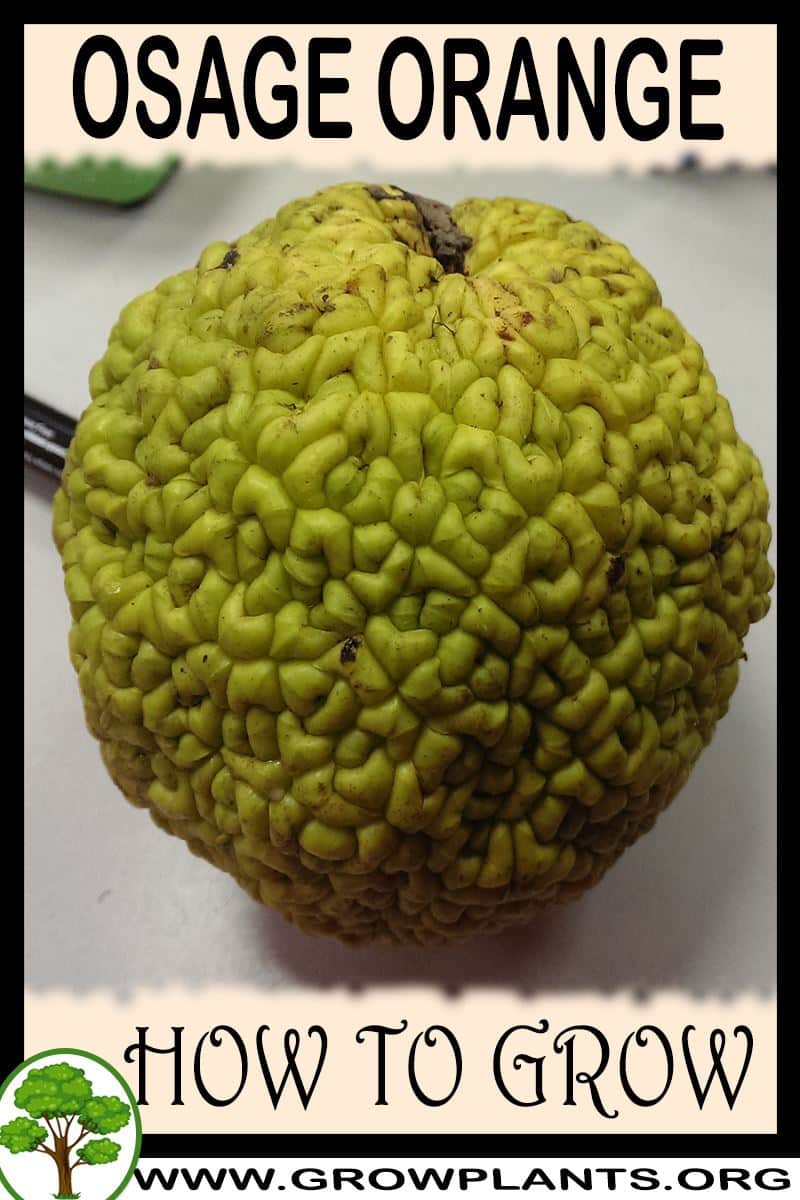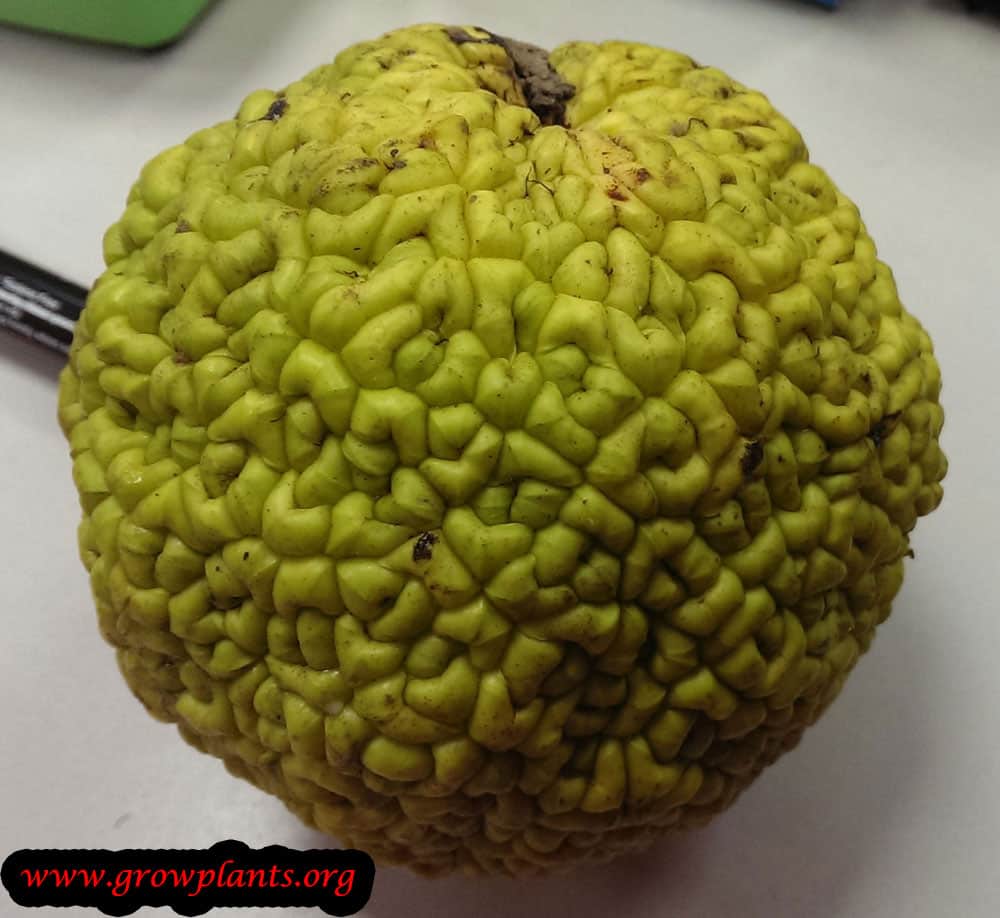
Plant Profile & Key Characteristics
Overview: Deciduous shrub-to-tree reaching 5-12 m, often thorny, grown as an ornamental, hedge and for its durable wood. Dioecious, with female trees bearing large, bumpy green inedible fruits.
Quick Specifications
| Specification | Attribute |
|---|---|
| Plant Type / Life Cycle | Perennial (deciduous tree) |
| Foliage Type | Deciduous |
| Mature Size | 5-12 m (15-36 ft) |
| Growth Rate | Fast to moderate |
| Toxicity | Fruit inedible; milky sap can irritate skin |
| Hardiness | USDA zones 4-9 |
Growth Form & Structure
- Height & Spread: 5-12 m; can be container-grown while young.
- Growth Habit & Form: Rounded, often thorny deciduous tree.
- Lifespan & Maturity: Long-lived, hardy tree.
Anatomy & Physical Features
- Leaves & Foliage: Green, elliptic leaves.
- Flower Characteristics: Small white flowers in rounded clusters; male and female on separate trees.
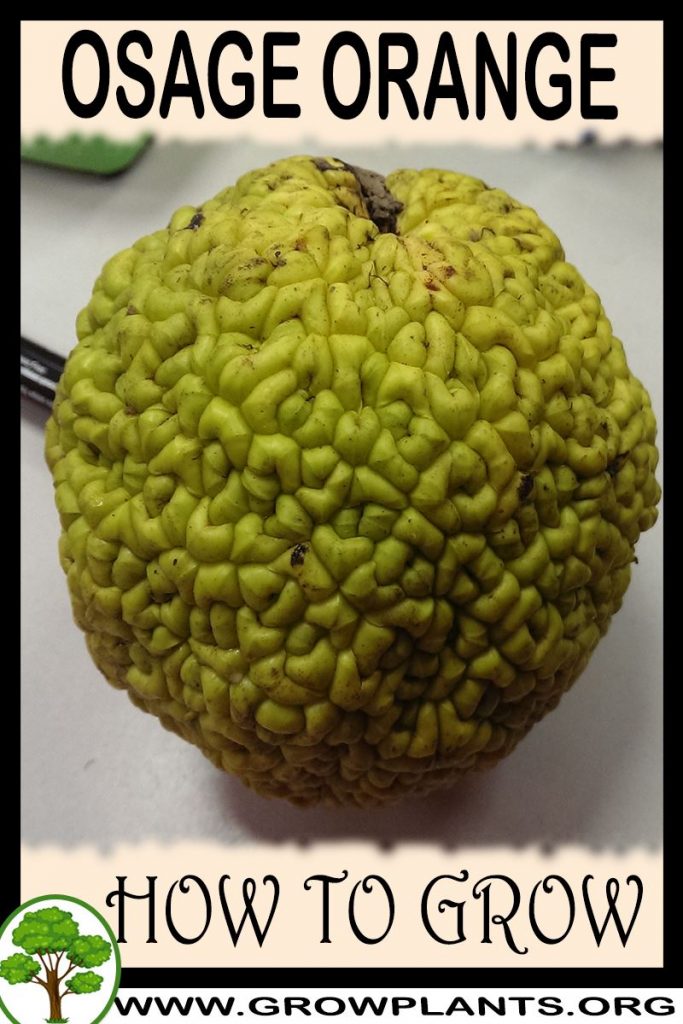
- Fruit Profile: Large, bumpy, green multiple fruit (hedge apple) – inedible.
Primary Uses & Landscape Value
- Functional & Ornamental Roles: Traditional hedge and windbreak tree, ornamental, valued for very hard, rot-resistant wood; also used medicinally.
Care Guide: Planting, Soil & Watering
Overview: Osage orange (Maclura pomifera) is a fast, exceptionally tough deciduous tree (zones 4–9) for full sun to part shade. It tolerates a wide range of soils and dry conditions, asking only for reasonable drainage and moderate watering.
Quick Care Requirements
| Requirement | Ideal Condition |
|---|---|
| Planting Season | Winter through summer |
| Growth Rate | Moderate to fast |
| Soil Type | Very adaptable; tolerates poor and dry soils, well-drained |
| Water Need | Moderate; drought-tolerant once established |
Planting & Establishment
- Best Planting Season: From winter through summer, outside spells of hard frost.
- How to Plant:
- Hole Preparation: Dig a hole about the depth of the root ball and twice as wide; the sides can be left rough, as this tree roots readily.
- Soil Amendments: Some compost improves poor ground, but Osage orange is undemanding and establishes even in lean, dry soils.
- Planting Depth: Set the root collar level with the surrounding soil; do not bury the trunk.
- Growth Speed & Expectations: A moderate to fast grower that quickly becomes a large, thorny, drought-hardy tree.
Soil, Watering & Drainage Care
- Soil Mix & Drainage Needs: Grows in almost any free-draining soil, including poor and dry sites; only waterlogged ground is a problem. It can be grown in a large container while young.
- Watering Schedule & Technique:
- Young / Newly Planted: Water regularly for the first season so the roots establish.
- Established: Once established it is highly drought-tolerant — water deeply but infrequently, letting the soil dry well between waterings.
- Seasonal Adjustments: Little supplemental water is needed except in prolonged summer drought; keep dry in winter.
Climate, Light & Hardiness
Osage orange is a very tough, deciduous tree of temperate to subtropical climates, notably more cold-hardy than true mulberries at USDA zone 4–9. It grows well in full sun to half shade and, once established, is famously tolerant of wind, heat, and poor soils, having long been used as a windbreak and hedge tree in exposed sites.
Quick Climate Specifications
| Climate Zones | temperate to subtropical climates |
|---|---|
| USDA Hardiness Zones | 4–9 |
| Optimal Temp Range | approximately 18–30°C (64–86°F) during active growth, with a cold winter dormancy |
| Cold Damage Begins | new spring growth and flowers can be damaged by late hard frosts; dormant wood is very cold-tolerant |
| Approx. Survival Minimum | established trees typically survive briefly to around −29 to −34°C (−20 to −30°F), consistent with zone 4 |
| Frost Tolerance | High (dormant season) / Low (new spring growth) |
| Light Conditions | Full Sun / Half Shade |
| Wind Tolerance | High |
Sunlight & Light Exposure
Optimal Light Setup
Full sun gives the fullest, densest canopy; the tree also tolerates half shade.
Direct Sun Requirement
Grows best with a good share of direct sun each day, though it isn't as strict about it as many fruiting trees.
Shade & Heat Management
Very heat tolerant once established; needs no special summer heat management.
Best Exposure/Orientation
Tolerates open, exposed sites well – historically planted as a windbreak and hedge tree specifically because of its toughness in such positions.
Temperature Extremes & Hardiness
USDA Hardiness & Regional Limits
Hardy across zones 4–9, noticeably more cold-tolerant than true mulberries, which typically start at zone 5.
Cold Damage & Winter Protection
Dormant, established trees need no winter protection within their range; young trees benefit from mulch their first winter or two.
Frost Sensitivity
Dormant wood is very frost-hardy; new spring growth and flowers remain frost-sensitive.
Extreme Heat Tolerance
Very good – a genuinely tough, heat- and drought-tolerant tree once established.
Wind, Humidity & Microclimate
Humidity Preferences
Adaptable across humid temperate and drier subtropical climates.
Dry-Air Tolerance
Very good; tolerates average irrigation and dry-air conditions well.
Wind Tolerance
High – a classic windbreak and hedge tree, well suited to exposed, wind-swept sites.
Rainfall & Seasonal Moisture
Adapts to a wide range of rainfall patterns across its temperate-to-subtropical range.
Microclimate Recommendations
Well suited to open, exposed positions where more delicate trees would struggle; no special microclimate is needed.
Growing in Pots, Balconies & Indoors
The Osage orange (Maclura pomifera) is ultimately a full-size tree (5-12 m (15-36 ft)), so a pot suits it only while young – the grower confirms it is not a houseplant. Kept in a large tub on a sunny patio or balcony it grows happily for a few years before it needs the open ground or ever-bigger pots.
Quick Details
- Container Size: Large tub (40-60 L+ while young), stepped up over time
- Indoor Suitability: Not a houseplant – too large and too light-hungry for indoors
- Best Spot: Full sun to a little afternoon shade
- Soil & Drainage: Aerated, organic-rich mix that drains freely
- Watering in Pots: An average amount of water – potted trees dry fast, so check often
Indoors & On the Windowsill
- Houseplant limits: Not an indoor plant – it grows into a sizeable tree and needs far more light than a room can give; a bright window is no substitute for open sun.
- Overwintering: Hardy once established; a young potted tree in a very cold area can still be given a sheltered spot for its first winters.
On a Balcony or Patio
- Light & wind: Give it the sunniest spot; stake a young tree against wind, and remember walls and paving reflect heat so pots dry quickly – check moisture daily in hot spells.
- Weight & drainage: A filled tub is heavy – use a stable, wide container and make sure a balcony can take the load and drain the run-off.
Choosing the Pot, Soil & Long-Term Care
- Pot & drainage: A large, heavy tub while young (think 40-60 L and up), stepped up as it grows; strong drainage holes, and skip a standing-water saucer to avoid root rot. Terracotta breathes and dries faster, glazed or plastic holds moisture longer.
- Potting mix: A well-aerated, organic mix – peat or coir with perlite (and a little vermiculite) – giving roots both moisture and air.
- Feeding: Potted plants need feeding more often than those in the ground, since watering leaches nutrients from the mix – a balanced feed through the growing season keeps them productive.
- Holding its size: To keep a tree small in a pot for longer, root- and top-prune every year or two (a bonsai-style approach) and refresh part of the mix.
Fertilizing & Feeding
A light feeder: this tough, fast-establishing landscape and hedgerow tree is grown for form and its distinctive fruit rather than a food crop, and it typically needs only modest feeding while young, with none required once established in reasonable soil.
Quick Fertilizing Specs
| Feeding Level | Light feeder |
|---|---|
| young_feeding | A light, balanced complete fertilizer while the young tree establishes |
| mature_feeding | Little to no supplemental feeding once established in reasonable soil |
| Main Nutrient Priority | Balanced nutrition while establishing; organic matter over routine fertilizer once mature |
| Best Feeding Period | Spring through summer while the tree is actively rooting in |
| Organic Options | Compost or organic mulch around the root zone |
| Soil pH | Tolerates a wide range of soils |
Feeding by Growth Stage
Newly planted tree
Help a newly planted Osage orange establish a strong root system in the winter-through-summer planting window the facts describe.
| Nutrient direction | A light, balanced complete fertilizer supports root establishment without forcing soft top growth. |
|---|---|
| Timing | Through the first growing season after planting. |
| Frequency | A light feeding as new growth begins, then ease off as the tree roots in. |
| Fertilizer types | A diluted, balanced complete fertilizer, Compost or organic mulch worked into the planting area |
| Precautions | Avoid heavy feeding right after planting; this species establishes readily and overfeeding can push weak, over-succulent growth. |
Young, actively growing tree
Support steady framework growth as the tree fills out into its mature hedgerow or shade form.
| Nutrient direction | A balanced complete fertilizer, used sparingly, keeps growth steady on this vigorous, adaptable tree. |
|---|---|
| Timing | Through the active growing season in the years after establishment. |
| Frequency | An occasional light feeding is usually enough given how readily this species grows. |
| Fertilizer types | A balanced complete fertilizer, used sparingly, Organic mulch renewed as needed |
| Precautions | This tree grows vigorously on its own; avoid routine heavy feeding, which mainly adds pruning work without real benefit. |
Winter dormancy
Let this deciduous tree rest through its winter dormant period without pushing new growth.
| Nutrient direction | None – withhold fertilizer while the tree is dormant. |
|---|---|
| Timing | Winter, matching the tree’s leafless dormant period and its winter pruning season. |
| Frequency | No feeding during this dormant period; resume only when active growth returns in spring. |
| Fertilizer types | No feeding at this stage; do not fertilize a dormant tree. |
| Precautions | Do not fertilize during dormancy; nutrients applied now are not taken up and can be wasted or leach away. |
Nutrient Deficiency Signs & Corrections
Pale, uniformly yellow-green foliage and reduced shoot growth.
| Possible causes | low available soil nitrogen, heavy grass or weed competition at the base of the tree, poor, compacted soil limiting root function |
|---|---|
| Appears first on | older, lower leaves |
| What to check | grass or weed competition around the trunk, soil compaction and drainage, recent feeding history, if any |
| Possible correction | Clear competing vegetation from the root zone and, if growth stays weak, apply a light balanced fertilizer during active growth. |
Interveinal yellowing on new leaves while the veins stay green.
| Possible causes | high soil pH tying up available iron, waterlogged or poorly aerated soil, root stress from compaction or root disturbance |
|---|---|
| Appears first on | newest leaves at branch tips |
| What to check | soil pH and drainage, recent root disturbance or construction damage, irrigation consistency |
| Possible correction | Improve drainage and reduce root stress; apply a chelated iron product per its label if alkaline soil is the likely cause. |
Leaf margins scorch or brown and growth stalls despite adequate watering.
| Possible causes | fertilizer salt buildup from overfeeding, under-watering that concentrates salts in the root zone, compacted soil limiting drainage |
|---|---|
| Appears first on | leaf margins and tips |
| What to check | recent fertilizer amounts and frequency, watering consistency, soil drainage |
| Possible correction | Ease off feeding and water thoroughly to help flush accumulated salts, then return to lighter feeding. |
Pruning, Training & Seasonal Maintenance
Osage orange tolerates hard pruning exceptionally well – it was historically grown as a clipped living fence and can be sheared or cut back hard without lasting harm. The main objectives are building sound structure while young and, on mature trees, shaping or hedging plus canopy-raising over paths, since this plant’s own data flags its heavy fruit as dangerous when it falls. Winter dormancy is the recorded and biologically appropriate window: the tree is leafless so structure is easy to read, and cuts heal before the fast spring growth flush arrives. Because this species is grown for form rather than for its (inedible) fruit, pruning timing affects shape and safety far more than any crop.
Quick Pruning & Maintenance Specs
| Pruning Tolerance | High |
| Primary Pruning Window | Winter (dormant) |
| Typical Frequency | Annual on hedges; every few years on freestanding specimens |
| Main Objective | Structural framework while young; shape/size control and canopy-raising on mature (especially fruiting female) trees |
| Young Plant Priority | Single dominant leader (specimen) or an even hedge line (barrier planting) |
| Mature Plant Priority | Remove crossing/damaged wood; raise canopy over walkways on fruiting trees |
| Best Tool Type | Loppers/saw for framework; hedge shears only on a deliberately sheared hedge |
| Avoid Heavy Pruning During | Active summer growth flush, or right under a heavy hanging fruit load |
Pruning by Plant Age & Size
Newly Established
Remove only damaged or crossing growth; don’t force early heading cuts on a young tree that hasn’t filled in.
Young / Formative
Train to a single dominant leader if grown as a specimen tree, or as a closely spaced multi-stem hedge line if grown as a barrier planting – the traditional use for this species.
Mature / Established
Maintain the chosen form (single leader or hedge). On fruit-bearing female trees, raise the lower canopy over paths and driveways to reduce the impact zone of falling fruit, a real hazard this plant’s own data records.
Seasonal Pruning Schedule
| Stage | Objective | What to Remove | Expected Response |
| Dormant / Winter | Structural shaping, hedge renewal, safety canopy-raising | Dead, crossing, and damaged wood; excess hedge growth | Vigorous, well-tolerated regrowth from spring |
| Ongoing Sanitary | Remove storm damage | Broken limbs any time of year | Callus and reseal without issue on this tough species |
Structural Pruning & Training
This species tolerates dense shearing (its historic use as a living fence), so a hedge form can be clipped to a tight face; a specimen tree instead does better with a single dominant leader and well-spaced scaffolds, since multiple co-dominant leaders on this fast grower can form weak, included-bark unions. On fruit-bearing trees, thin or raise the canopy over trafficked areas as a safety measure.
Special Growth to Remove
- Root suckers – this species suckers vigorously from the roots, especially after root disturbance or a hard top pruning; remove promptly for a clean single-trunk form, or allow selectively to thicken a hedge line.
- Watersprouts – vigorous upright shoots common after any hard cut; thin the following dormant season.
Tools
Loppers and a pruning saw handle most structural cuts on this dense-wooded tree; hedge shears are appropriate only where the plant is deliberately kept as a sheared barrier hedge. This species carries stout thorns on much of its wood, so gloves and careful hand placement matter for close-in cuts.
Tool Hygiene & Disease Risk
Routine – no major transmissible pathogen is well documented for this species; clean, sharp tools are sufficient.
Cut Placement & Technique
Cut just outside the branch bark ridge, never flush. On this dense, hard wood, stage the removal of large limbs (undercut, then remove) to avoid bark tear.
Heavy Pruning & Rejuvenation
Tolerates hard cutback or coppicing very well, consistent with its historic use as a hedge. An overgrown hedge line or damaged specimen can be renewed with a hard cut and will regrow vigorously the same season; on very large old specimens, spread the heaviest cuts over two winters to limit stress and excess watersprout regrowth.
Post-Pruning Care
Minimal follow-up is needed given this tree’s toughness; simply monitor large cut sites on mature trees. No extra feeding is required.
Common Pruning Mistakes
- Leaving multiple co-dominant leaders on a young specimen tree instead of selecting one.
- Not raising the canopy on fruiting female trees near paths, given the recorded fruit-drop hazard.
- Forgetting root suckers after a hard pruning cut.
- Using hedge shears on a tree meant to keep a natural form, which builds a dense shell rather than sound branch structure.
When NOT to Prune
Avoid major structural work on fruiting female trees while heavy fruit still hangs overhead – a genuine hazard to the person pruning. Prefer the recorded winter window over hot, dry summer stress periods.
Recommended Tools (by task)
| Task | Tool Category | Why |
| Sucker/small shoot removal | bypass_secateurs | Clean small cuts near thorny wood |
| Framework thinning | loppers | Handles mid-size branches beyond secateur capacity |
| Large limb removal | pruning_saw | Needed for this tree’s mature, dense-wood scaffold |
| Hedge-form maintenance | hedge_shears | Only for specimens deliberately kept as a sheared barrier hedge |
Pruning Troubleshooting
| Problem | Possible Cause | What to Check | Corrective Action |
| Excess root suckering | Root disturbance or repeated hard topping | Base and root zone for new shoots | Remove suckers at the base; avoid repeated hard topping |
| Weak, splitting branch unions | Multiple co-dominant leaders left unpruned when young | Crotch angles on the main scaffold | Select one dominant leader early; remove competing leaders |
| Fruit dropping on paths or people | Low canopy over a trafficked area on a female tree | Canopy height over walkways | Raise (crown-lift) the canopy on the affected side |
Propagation Guide
The site notes vegetative reproduction is not necessary, so seed is the simplest and most practical way to start Osage orange. Because the species is dioecious, seedlings may turn out male or female (only females fruit), so growers who want a specific sex – for example a thornless, non-fruiting male for hedging – instead rely on root cuttings or grafting from a known plant; difficulty is Easy from seed and Moderate for vegetatively propagating a particular clone.
Quick Propagation Specs
| Best Propagation Method | Seed |
| Alternative Methods | Root cuttings; grafting (to fix sex, thornlessness, or fruitlessness of a known selection) |
| Propagation Difficulty | Easy (seed); Moderate (vegetative propagation of a specific clone) |
| Seed True-to-Type | Variable – sex (male/female) is not predictable from seed |
| Vegetative True-to-Type | Yes |
| Best Propagation Season | Planting season is winter, spring or summer per the site; seed is commonly sown fresh in autumn or stratified and sown in spring, and root cuttings are best taken while the plant is dormant |
Growing from Seed
Seed Handling & Viability
Seed is produced in large numbers inside the big, heavy fruit and is generally cleaned from the fruit pulp before sowing or storage.
Dormancy & Pre-Sowing Treatment
Germination is often more even after a period of cold, moist stratification over winter; fresh seed can also be sown directly outdoors in autumn to stratify naturally.
Sowing Season
Autumn (fresh seed, to stratify naturally) or spring (after stratification), consistent with the site’s stated winter-to-summer planting window.
Germination Conditions
Full sun to half shade, in line with the site’s stated light preference; germination can be staggered over several weeks.
Seedling Care
Grow on in full sun to half shade with average watering while young, matching the site’s general care data.
Division, Offsets, Pups & Suckers
Osage orange is known to send up root suckers, particularly after the roots are disturbed or the top growth is cut back. A sucker dug up with roots attached from a known female (for fruiting) or a known thornless male (for fruitless hedging) can be used to propagate that specific plant true-to-type.
Grafting & Budding
Why Grafting Is Used
To propagate a specific named or sex-selected plant – most often a thornless, fruitless male used for hedging – true-to-type, since seedlings cannot guarantee sex, thornlessness, or growth habit.
Rootstock
Seedling Osage orange rootstock.
Scion Selection
Scion wood chosen from a known male (thornless, fruitless) or a known good female, depending on the desired result.
Best Grafting Season
Typically done during the dormant season, in line with the site’s own winter pruning season.
Graft Aftercare
Keep the graft union protected and the young tree supported until it is established, similar to general planting care noted by the site.
Bloom & Flower Guide
Quick Details
- Bloom Season: Spring to summer
- Flower Appearance: Small greenish-white flowers gathered into rounded heads
- Edibility: Not eaten – the flowers are inconspicuous and the tree is grown as an ornamental and hedge plant, not for eating
Detailed Blooming Overview
Osage orange (Maclura pomifera) flowers from spring into summer, but its blooms are easy to miss: small and greenish-white, clustered into tight rounded heads. The species is dioecious, so male and female flowers are carried on separate trees, and only female trees go on to form the large, knobbly fruit.
Flower Characteristics
- Small greenish-white flowers packed into rounded, ball-like clusters.
- Male and female flowers borne on separate trees.
Bloom Care & Thinning
- Pollination: Wind-pollinated, so a female tree needs a male within pollen range to set fruit.
Pests, Diseases & Troubleshooting
Overview: Osage orange is famously one of the most pest- and disease-resistant trees grown, with dense rot-resistant wood and few natural enemies. Honest assessment: it is nearly trouble-free, and this section is deliberately short – the main considerations are its vigour, thorns and inedible fruit rather than any pest.
Quick Troubleshooting Overview
| Issue / Pest | Main Symptom | Primary Solution |
|---|---|---|
| Aphids (minor) | Occasional honeydew on new growth | Usually ignore; hose off if needed |
| Scale (minor) | Rare brown bumps on stems | Scrape off; horticultural oil |
| Spider mites | Slight stippling in hot dry spells | Hose foliage; rarely needs treatment |
| Cotton root rot | Sudden wilt in hot alkaline soils (regional) | Improve soil; drainage; little can be done once advanced |
| Thorns / suckers | Vicious spines and root suckers | Site carefully; prune; use thornless male clones |
Common Pests & Management
- Aphids (occasional) (Aphis spp.):
- Symptoms: Light, sporadic colonies on new growth causing minor curling and honeydew; rarely significant on this tough tree.
- Prevention & Control: Usually best ignored; hose off if unsightly and let natural predators clean them up.
- Scale insects (occasional) (Diaspididae spp.):
- Symptoms: Rare brown or waxy bumps on twigs, sucking sap with little real impact.
- Prevention & Control: Scrape off small infestations and apply horticultural oil only if they build up; seldom necessary.
- Spider mites (minor) (Tetranychus spp.):
- Symptoms: Slight leaf stippling in prolonged hot, dry, dusty conditions.
- Prevention & Control: Hose foliage to remove dust; treatment is rarely warranted on established trees.
Diseases & Fungal Issues
- Cotton (Texas) root rot (Phymatotrichopsis omnivora):
- Symptoms: In hot regions with alkaline soils, sudden wilting and death from a soil fungus attacking the roots – the one disease of note, and even then Osage orange is relatively tolerant.
- Treatment & Management: Improve soil organic matter and drainage, avoid planting in known infested alkaline ground, and keep trees vigorous; there is no practical cure once a tree is heavily affected.
- Leaf spot / rust (minor):
- Symptoms: Occasional cosmetic leaf spotting in wet seasons with no real harm to the tree.
- Treatment & Management: No treatment needed; rake up fallen leaves if desired.
Growing Difficulties & Abiotic Problems
- Fierce thorns:
- Cause & Symptoms: Stout, sharp spines on stems make handling, pruning and siting hazardous.
- Correction Strategy: Site well away from paths, play areas and livestock, wear stout gloves when pruning, or plant thornless male clones bred for landscape use.
- Messy, inedible fruit & suckering:
- Cause & Symptoms: Large, heavy, hard green ‘hedge apples’ litter the ground under female trees, and roots sucker freely.
- Correction Strategy: Plant fruitless male selections for tidy landscapes, remove suckers, and site away from lawns and drives where fallen fruit is a nuisance.
- Aggressive vigour:
- Cause & Symptoms: Fast, dense growth that can dominate a small space and was historically grown as an impenetrable hedge.
- Correction Strategy: Give it room, or coppice/prune hard to keep it in bounds; it regrows readily from hard cuts.
What Helps – Products & Tools
Osage orange essentially manages itself – no routine spraying is needed. Keep a horticultural oil on hand for the rare scale or mite, focus on good drainage against cotton root rot in hot alkaline regions, and choose thornless, fruitless male clones to sidestep its real drawbacks.