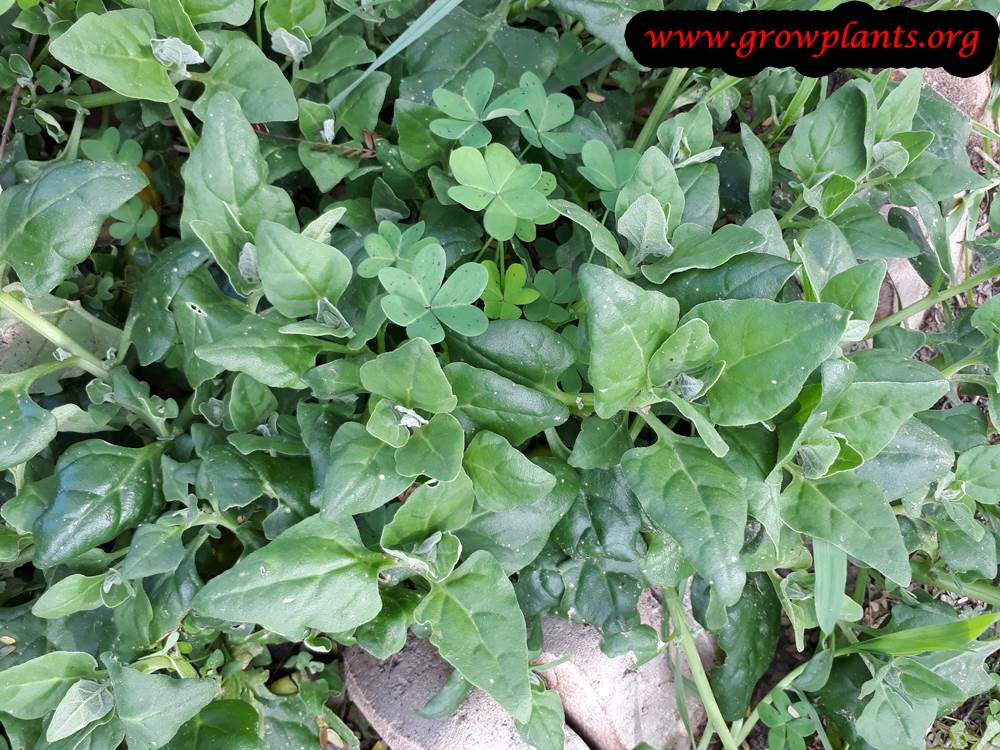
Plant Profile & Key Characteristics
Overview: A sprawling, fleshy-leaved herb, perennial in mild climates and grown as an annual where cold, forming low mounds around 20-50 cm (8-20 in) high that spread widely as a groundcover. Its succulent leaves are eaten as a warm-season spinach substitute.
Quick Specifications
| Specification | Attribute |
|---|---|
| Plant Type / Life Cycle | Herbaceous perennial (grown as an annual in cold climates) |
| Foliage Type | Evergreen where mild; annual where frosted |
| Mature Size | 20-50 cm (8-20 in) tall, spreading widely as groundcover |
| Growth Rate | Fast |
| Toxicity | Leaves are edible cooked; like true spinach they are high in oxalates and best eaten cooked rather than raw |
| Hardiness | USDA zones 6+ as a perennial, 2+ as an annual |
Growth Form & Structure
- Height and Spread: Low mounds of 20-50 cm (8-20 in) that trail outward as far as they are allowed, making a dense groundcover; also grown in containers.
- Growth Habit and Form: Sprawling, mat-forming herb with succulent, brittle stems radiating over the soil.
- Lifespan and Maturity: A fast, vigorous grower that self-seeds readily and can become aggressive or invasive.
Anatomy & Physical Features
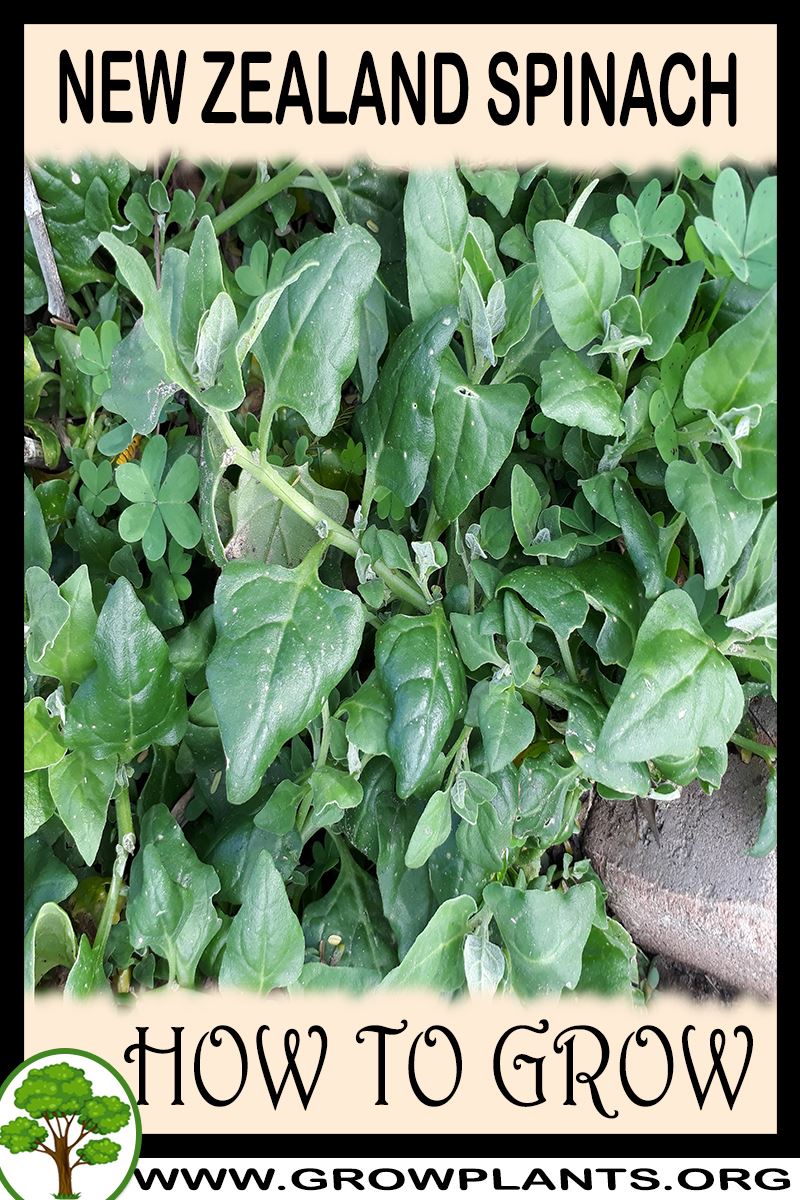
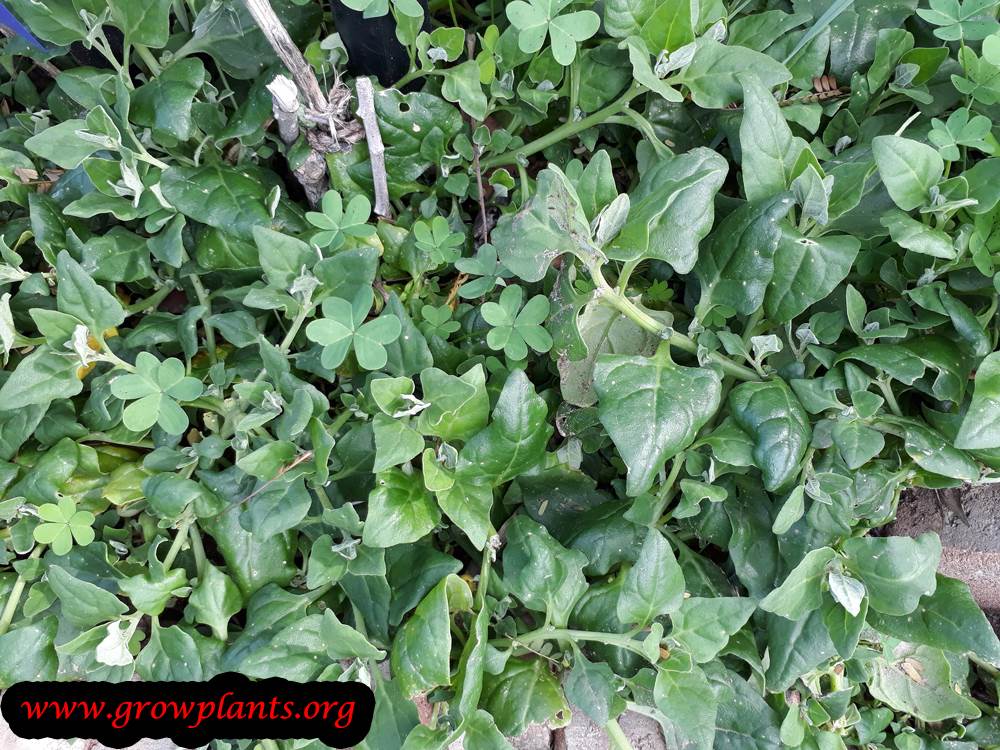
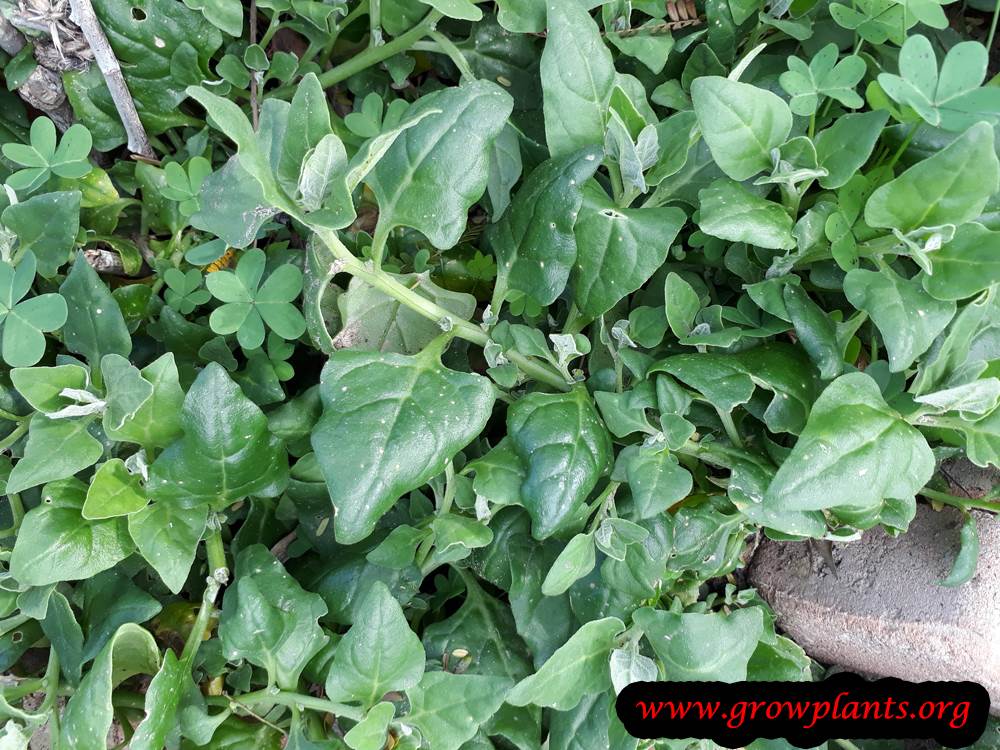
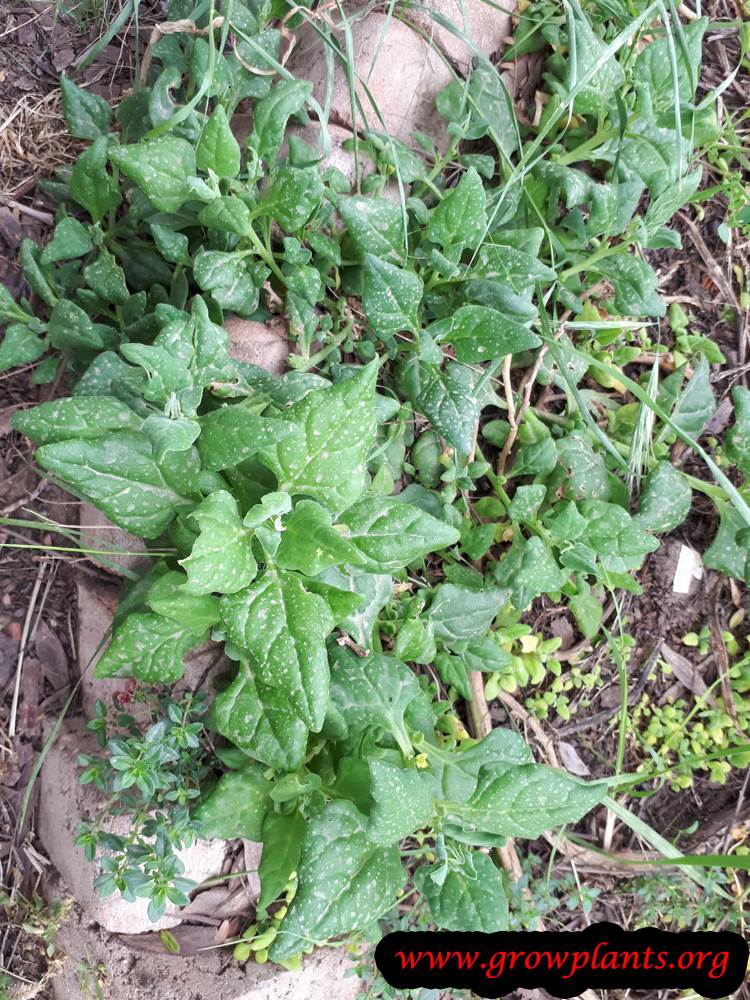
- Leaves and Foliage: Thick, fleshy, triangular (deltoid) green leaves.
- Flower Characteristics: Tiny yellow flowers, only 1-2 mm, tucked in the leaf axils.
Primary Uses & Landscape Value
- Edible Uses: Young fleshy leaves cooked or stir-fried as a heat-tolerant summer spinach.
- Functional and Ornamental Roles: Edible groundcover and ornamental for banks and beds; its spreading, self-seeding habit needs managing.
Care Guide: Planting, Soil & Watering
Overview: New Zealand spinach is a fast-growing, heat-tolerant leafy vegetable that thrives in full sun to part shade and moist, sandy, well-drained soil enriched with nitrogen. It sprawls as a lush groundcover and appreciates steady moisture and mulch through the warm season.
Quick Care Requirements
| Requirement | Ideal Condition |
|---|---|
| Planting Season | Spring through autumn, in the warm season |
| Growth Rate | Fast |
| Soil Type | Moist, sandy, nitrogen-rich, well-drained soil |
| Soil pH | Neutral, around 6.0–7.0 |
| Water Need | Moderate to high — keep the soil evenly moist |
Planting & Establishment
- Best Planting Season: Sow or plant from spring through autumn once the soil has warmed; it grows as a tender annual where winters are cold and as a perennial in mild climates.
- How to Plant:
- Hole Preparation: Space plants generously, as each spreads widely, and loosen the soil well before planting.
- Soil Amendments: Enrich the bed with compost and a nitrogen source, and apply mulch to keep the roots cool and moist.
- Planting Depth: Set transplants at the same depth they grew in their pots, keeping the stem base at soil level.
- Growth Speed & Expectations: Grows fast and sprawls into a wide, leafy mat; harvest young shoots regularly to keep it productive.
Soil, Watering & Drainage Care
- Soil Mix & Drainage Needs: Moist, sandy, well-drained soil rich in organic matter and nitrogen is ideal; in containers use a good potting mix and keep it evenly moist, with mulch to retain moisture.
- Watering Schedule & Technique:
- Young / Newly Planted: Keep the soil consistently moist while seedlings and young plants establish.
- Established: Water regularly and generously to keep the leaves tender; growth and flavour suffer if the soil dries out.
- Seasonal Adjustments: Water more in summer heat to prevent stress and bolting, and less as growth slows in cool weather.
Climate, Light & Hardiness
New Zealand spinach is a warm-season leafy vegetable that grows as a true perennial in mild climates and as a frost-killed annual further north, thriving across tropical, subtropical, Mediterranean, and temperate regions. It wants full sun to half shade and consistently moist soil, and cold is what limits it to a single growing season outside its mild-winter range.
Quick Climate Specifications
| Climate Zones | Tropics, subtropics, Mediterranean, temperate |
| USDA Hardiness Zones | 6+ as a perennial; commonly grown as an annual from about zone 2 upward |
| Frost Tolerance | Low |
| Light Conditions | Full Sun / Half Shade |
Sunlight & Light Exposure
Optimal Light Setup
Full sun to half shade suits New Zealand spinach well, supporting its fast, sprawling growth habit.
Best Exposure / Orientation
An open, sunny bed with room to spread suits it best, since it grows as wide as it is allowed to.
Temperature Extremes & Hardiness
USDA Hardiness & Regional Limits
In genuinely frost-free or near-frost-free climates (roughly USDA zone 6 and warmer) it can persist and regrow as a short-lived perennial; where winters bring hard freezes, it is grown as a warm-season annual instead, which is possible far beyond zone 6 (down to about zone 2) since it is simply replanted each year.
Cold Damage & Winter Protection
Frost damages and typically kills the foliage, which is why the plant behaves as an annual in cold-winter climates even though it is a true perennial where winters stay mild.
Frost Sensitivity
Frost tolerance is low; harvest and use the leaves before the first hard frost in climates where the plant will not survive winter.
Wind, Humidity & Microclimate
Rainfall & Seasonal Moisture
It wants consistently moist soil rather than a dry, succulent-style watering regime, reflecting its origin as a coastal, moisture-loving green rather than an arid-climate plant.
Microclimate Recommendations
Sandy soil enriched with organic matter and mulch helps retain the steady moisture and nitrogen this fast-growing crop needs across its range of climates.
Growing in Pots, Balconies & Indoors
New Zealand spinach (Tetragonia tetragonioides) is a sprawling, edible leafy green grown as a warm-season spinach substitute – not a houseplant, but a productive container plant for a sunny balcony, patio or a very bright windowsill. It needs far more water than the succulents it is often shelved beside, and it spreads vigorously, so a large pot suits it best.
Quick Details
- Container Size: A large, roomy pot or trough (about 15 L / 4 gal or more) – it sprawls as wide as you let it
- Indoor Suitability: Not a true houseplant, but you can pick tender leaves from a plant on a very sunny windowsill
- Best Spot: Full sun to part shade – the sunnier the sill or balcony, the more leaves
- Soil & Drainage: Rich, moisture-retentive but well-drained potting mix; strong drainage holes
- Watering in Pots: Average to generous – unlike the succulents here it likes steady moisture; do not let it dry out or it bolts
Indoors & On the Windowsill
- Not a houseplant: The grower marks this as not a houseplant – it is a sprawling vegetable, not a room plant.
- Sunny windowsill: On a bright, sunny sill you can still grow and harvest tender leaves; give it the most light you can and keep it well watered.
- Annual or perennial: It is perennial in mild climates (hardiness zone 6+) but grown as an annual where winters are cold, so there is little point overwintering it – just resow.
On a Balcony or Patio
- Sun & space: A sunny balcony or patio is ideal; give it a big pot, as it spreads widely.
- Watering: Pots dry fast and this plant is thirsty, so water regularly and never let it wilt – it toughens and bolts if stressed. A drip irrigation kit with a timer can take over that watering check automatically.
- Vigour: It self-seeds and can be invasive in open ground, so a container keeps it tidy.
Choosing the Pot, Soil & Long-Term Care
- Pot & drainage: A large pot with strong drainage holes; there is no need for a gritty succulent mix here.
- Potting mix: A rich, organic, moisture-retentive potting mix – the opposite of the sharp mixes the succulents want.
- Feeding: As a leafy crop in a pot it is hungry – feed regularly with a balanced or leafy feed, since watering leaches nutrients from pots fast.
- Harvest: Pick the soft growing tips regularly; this keeps it bushy and productive through the warm season.
Fertilizing & Feeding
New Zealand spinach is a leafy crop and a moderate feeder – steady, nitrogen-leaning feeding on a balanced base keeps the edible leaves tender and productive through the season.
Quick Fertilizing Specs
| Feeding Level | Moderate feeder |
|---|---|
| young_feeding | Light, balanced feeding as seedlings establish |
| mature_feeding | Regular, nitrogen-leaning feeding through the harvest season |
| Main Nutrient Priority | Nitrogen for continuous leaf production, on a balanced base |
| Best Feeding Period | The warm active growing and harvest season |
| Organic Options | Compost, well-rotted manure, or a diluted fish or seaweed liquid feed |
| Micronutrients | Rarely limiting in decent soil; correct pH before adding micros |
| Soil pH | Prefers a slightly acidic to near-neutral range |
| Reduce/Stop Feeding | Taper feeding as the season ends or the plant is spent |
Feeding by Growth Stage
Establishment after planting
Help young transplants and seedlings settle in and begin steady leafy growth.
| Nutrient direction | A balanced complete fertilizer, gentle at first, to get roots and early leaves going. |
|---|---|
| Timing | At and just after transplanting or thinning in spring. |
| Frequency | A light feeding as plants establish, then move into regular growing-season feeding. |
| Fertilizer types | A balanced complete garden fertilizer, Compost or well-rotted organic matter worked into the bed |
| Precautions | Avoid strong fertilizer on tender young roots; keep early feeding light. |
Leafy vegetative growth
Drive lush, tender leaf production, which is the harvested part of this crop.
| Nutrient direction | Nitrogen-forward complete feeding to fuel abundant leaves. |
|---|---|
| Timing | Through the warm growing season as the plant spreads. |
| Frequency | Feed regularly through active growth to keep leaves coming. |
| Fertilizer types | A nitrogen-forward complete fertilizer, A diluted fish or other organic liquid feed |
| Precautions | Do not overdo nitrogen to the point of soft, pest-prone growth; pair feeding with steady moisture. |
Ongoing cut-and-come-again harvest
Sustain regrowth of tender shoots as leaves are repeatedly picked.
| Nutrient direction | Steady, balanced-to-nitrogen feeding to replace what harvesting removes. |
|---|---|
| Timing | During the long harvest window while plants keep producing. |
| Frequency | Light, regular feeding after harvest flushes keeps new growth tender. |
| Fertilizer types | A balanced or nitrogen-leaning complete fertilizer, A gentle organic liquid feed between harvests |
| Precautions | Keep feeding moderate and paired with consistent watering to avoid tough or bitter leaves. |
Nutrient Deficiency Signs & Corrections
Overall pale, yellow-green leaves with slow, stunted leafy growth.
| Possible causes | Nitrogen shortage in a heavily harvested leafy crop, Leaching of nitrogen from frequent watering or rain, Cold or waterlogged soil limiting root uptake |
|---|---|
| Appears first on | Older, lower leaves first. |
| What to check | Recent feeding and how much leaf has been removed, Soil moisture and drainage, Soil temperature early in the season |
| Possible correction | Feed with a nitrogen-forward complete fertilizer during active growth and keep moisture even. |
New leaves yellow between the veins while the veins themselves stay green.
| Possible causes | Iron or manganese availability limited by high or alkaline soil pH, Waterlogged or cold roots reducing micronutrient uptake, Genuine micronutrient shortage in poor soil |
|---|---|
| Appears first on | Youngest leaves at the growing tips. |
| What to check | Soil pH and whether it is alkaline, Drainage and root health, Whether symptoms follow cold, wet spells |
| Possible correction | Correct soil pH where it is too high and, if needed, apply a chelated micronutrient product per its label. |
Leaf edges brown, dry or scorched, sometimes with wilting.
| Possible causes | Salt buildup from over-fertilizing, Inconsistent watering and drought stress, Excess soluble fertilizer near the roots |
|---|---|
| Appears first on | Leaf margins, especially on the largest leaves. |
| What to check | Fertilizer amount and frequency, Watering consistency, Signs of a salt crust on the soil |
| Possible correction | Ease off feeding, water thoroughly to leach excess salts, and keep the crop evenly moist. |
Pruning, Training & Seasonal Maintenance
New Zealand spinach is a sprawling, soft-stemmed leaf crop, not a woody plant, so its “pruning” is really ongoing harvest and pinching rather than structural cutting. Regularly picking young leaf tips is itself the main maintenance task: it forces branching for a bushier, more productive plant and delays the shift into flowering and seed set that makes older growth tougher and less palatable. Because it is aggressive and spreading, the other pruning-adjacent task is keeping its sprawl in bounds – by trimming stems back or restricting the root run – rather than any concern about flowering or fruiting wood.
Quick Pruning & Maintenance Specs
| Pruning Tolerance | High – regular tip and leaf harvest only encourages fuller growth |
| Primary Pruning Window | Ongoing through the growing season (spring–autumn; year-round in frost-free/tropical zones) |
| Typical Frequency | Continuous light harvesting/pinching, roughly weekly once established |
| Main Objective | Bushier, more productive plant; delayed bolting; contained spread |
| Young Plant Priority | Pinch the growing tip early to force branching before the plant starts to run |
| Mature Plant Priority | Steady harvest of young leaves and shoot tips; cut back sprawling stems that exceed their space |
| Best Tool Type | Fingers or small snips – stems and leaves are soft and fleshy |
| Avoid Heavy Pruning During | Not applicable – this plant has no dormant or frost-sensitive framework to protect; harvest continues as long as it is actively growing |
Pruning by Plant Age & Size
Newly Established
Let a young seedling or transplant grow a handful of true leaves before the first harvest, then pinch the growing tip to encourage the low, branching habit the plant is grown for.
Young / Formative
No staking or structural training applies to this ground-hugging spreader; formative work is simply repeated tip-pinching, which multiplies the number of side shoots – and therefore the harvestable leaf area – from a single plant.
Mature / Established
A mature plant is kept productive by continuous harvesting of the youngest leaves and shoot tips; because it can spread as wide as it is allowed to, cut back any stems that have run past their bed or container edge, which also keeps the plant channeling energy into leaf production rather than covering more ground.
Special Growth to Remove
- Older, tougher leaves and stems past their prime for eating – remove to redirect energy into new tender growth
- Flower buds – pinching these out (thinning the blossom, per the source growing notes) delays bolting and keeps leaf quality high for longer
- Runners/spreading stems that have grown beyond the intended bed – trim back, since this species is noted as aggressive and spreads readily
Container & Small-Space Pruning
Because it spreads as wide as space allows, container growing is itself a form of pruning control – a pot or raised bed with a restricted root run keeps the plant compact and manageable, matching the growing guidance to confine the roots to a defined area. Pinch tips a little more assertively in a container to keep growth bushy rather than trailing over the pot’s edge.
Tools
Fingers are usually enough for pinching tips and picking leaves; use small precision snips for cleaner cuts on thicker stem sections or when trimming back a sprawling runner. No loppers, saws, or hedge shears are appropriate for this soft-stemmed herb.
Tool Hygiene & Disease Risk
Routine hygiene only – there is no significant disease risk, just occasional slug damage. Clean hands or tools between harvesting sessions is sufficient; there is no disinfection requirement.
Cut Placement & Technique
Pinch or snip just above a leaf node or side shoot so the plant branches from that point; harvest the youngest leaves and tips first, which are also the most tender for eating, and leave enough foliage on each stem for the plant to keep photosynthesizing.
Post-Pruning Care
This is a fast-growing, moderate-to-heavy water user, so keep up regular watering after a harvest flush to support the next round of tender leaf growth; no special wound care or feeding routine is needed beyond its normal watering and soil moisture requirements.
Common Pruning Mistakes
- Letting the plant flower and set seed unchecked, which toughens the remaining leaves and slows fresh leaf production
- Allowing it to spread unrestricted, given its noted aggressive/invasive growing habit
- Harvesting only old, tough leaves instead of the young growing tips that regrow best
Recommended Tools (by task)
- precision_snips – tip-pinching, leaf harvest, and trimming back sprawling stems on this soft-stemmed leaf crop.
Propagation Guide
New Zealand spinach is most commonly started from seed sown directly where it is to grow, after soaking to soften its hard seed coat; it is an open-pollinated species grown for its edible leaves rather than a fixed cultivar, so seed-grown plants are perfectly acceptable, and the site notes that vegetative propagation by stem cuttings is also easy when it is worth duplicating a particular plant. Propagation is easy overall.
Quick Propagation Specs
| Best Propagation Method | Seed (direct sow) |
| Alternative Methods | Stem cuttings |
| Propagation Difficulty | Easy |
| Seed True-to-Type | Yes |
| Vegetative True-to-Type | Yes |
| Best Propagation Season | Spring, once frost danger has passed (also summer/autumn in warm climates, per site planting-season data) |
| Seed Germination Time | Typically several weeks; can be slow and uneven due to the hard seed coat |
| Cutting Rooting Time | Roots quickly given the plant’s fast growth rate |
| Germination Temperature | About 18–24°C (64–75°F) |
| Seed Sowing Depth | About 1–2.5cm (0.5–1 inch) |
Growing from Seed
Seed Handling & Viability
What is sown is technically a hard, corky fruit containing several true seeds inside, not a single naked seed.
Dormancy & Pre-Sowing Treatment
Soak the fruit in water for roughly a day before sowing to soften the tough coat and improve and speed germination.
Sowing Season
Direct-sow in spring after frost danger has passed; can continue into summer in most climates.
Sowing Depth & Orientation
Sow about 1–2.5cm (0.5–1 inch) deep; since each fruit contains multiple seeds, expect more than one seedling per sowing point.
Germination Conditions
Needs warm soil; even after soaking, germination can remain slow and uneven because of the hard seed coat.
Germination Time
Generally takes a couple of weeks and can be staggered.
Seedling Care
Thin to the strongest seedling per station once true leaves appear, since several seeds can germinate from one fruit.
Stem Cuttings
Cutting Type
Fleshy stem tip cuttings.
Best Timing
Spring to summer, during active growth.
Cutting Preparation
Remove the lower leaves before inserting the cutting.
Rooting Setup
Root in moist potting mix or in water, keeping the medium consistently moist.
Rooting Hormone
Not necessary — the site notes vegetative propagation is easy without it.
Rooting Time
Roots quickly given this plant’s fast growth rate, typically within one to two weeks.
Bloom & Flower Guide
Quick Details
- Bloom Season: Summer
- Time to First Bloom: In its first season, as the plant matures in warm weather
- Flower Appearance: Small, greenish-yellow flowers tucked where the leaves meet the stems
- Edibility: Grown for its leaves – the small flowers themselves are not eaten
Detailed Blooming Overview
New Zealand spinach is grown as a heat-tolerant leafy green, and its flowering is a low-key affair: small, greenish-yellow blooms appear in summer, tucked into the leaf axils along the stems. As with many leaf crops, flowering and seed-set slow leaf production, so gardeners often pinch out the developing blooms and shoot tips to keep tender new leaves coming.
Flower Characteristics
- Small, inconspicuous greenish-yellow flowers.
- Borne singly where the leaves meet the stems.
- Largely self-pollinating, though bees and flies may also visit.
Bloom Care & Thinning
- Managing the bloom: For the best leaf harvest, pinch out flower buds and shoot tips as they appear – the grower recommends thinning the blossom – to keep the plant producing tender leaves.
- Pollination & seed set: Largely self-pollinating; bees and flies also visit the small flowers.
Fruit & Uses
New Zealand spinach is grown for its fleshy, deltoid green leaves and tender young shoot tips, which are the only edible part of the plant. They are almost always cooked – briefly blanched, steamed or stir-fried – rather than eaten raw in large amounts, and are used as a warm-weather substitute for true spinach.
Quick Edible Specs
| Edible Parts | Leaves and young shoot tips |
|---|---|
| Main Use(s) | Culinary – cooked leafy green, spinach substitute |
| Eaten Raw or Cooked | Best cooked; only very young, tender leaves are used sparingly raw |
| Preparation Required | Cook (blanch, steam or stir-fry) |
| Harvest Season | All year where mild; spring through summer in cold-winter climates |
| Time to First Harvest | Once plants are established with several sets of leaves (see Propagation for how it is started) |
| Storage | Best used fresh soon after picking, like other tender greens; can be blanched and frozen for longer keeping |
| Safety/Toxicity Caveat | Contains oxalic acid similar to true spinach and chard, so cooking rather than eating large raw quantities is recommended |
Leaves & Greens
The fleshy, arrow-shaped (deltoid) green leaves and the soft tips of the trailing branches are what is eaten. The site recommends picking the young leaves, cutting them together with the branch tips rather than stripping mature leaves, which keeps the plant productive and the harvest tender.
Because it is a sprawling, fast-growing ground cover, regular picking (cut-and-come-again) encourages fresh new growth through the season; leaves left to age on the plant, or taken after the plant has flowered and set seed, become tougher and are less pleasant to eat.
In the kitchen the leaves are used much like spinach or chard – stir-fried, steamed, or added to soups and cooked greens dishes – which also helps reduce their natural oxalic-acid content compared with eating them raw.
Harvesting
Harvest continues through the growing season (year-round in frost-free climates, spring to summer where winters are cold), taking young leafy branch tips a little at a time rather than a single cut, which lets the plant keep producing.
Preparation, Uses & Safety
New Zealand spinach is a classic warm-season stand-in for true spinach (Spinacia oleracea), which tends to bolt in heat, so it is valued for filling the same culinary role – sauteed, stir-fried, steamed or used in cooked greens dishes – through hot weather. As with spinach and chard, the leaves contain oxalic acid, so cooking (rather than eating large amounts raw) is the customary preparation and is recommended, particularly for anyone needing to limit oxalate intake.
Pests, Diseases & Troubleshooting
Overview: New Zealand spinach is a sprawling, heat- and salt-tolerant leafy vegetable that is notably robust and largely free of the pests that plague true spinach; its occasional troubles are aphids, leaf miners, slugs and caterpillars, plus downy mildew and damping-off in cool wet conditions. Good spacing and morning watering keep it clean.
Quick Troubleshooting Overview
| Issue / Pest | Main Symptom | Primary Solution |
|---|---|---|
| Aphids | Colonies on shoot tips | Water jet, insecticidal soap |
| Leaf miners | Pale tunnels in leaves | Pick mined leaves, row cover |
| Slugs & snails | Ragged holes, slime trails | Traps, barriers, iron-phosphate bait |
| Caterpillars | Chewed foliage | Hand-pick, Bt |
| Downy mildew | Yellow patches, grey underside | Airflow, morning watering |
Common Pests & Management
- Aphids (Aphidoidea):
- Symptoms: Clusters of tiny soft-bodied green, black or grey insects on new shoots, flower buds and leaf undersides. Feeding causes puckered, curled or yellowing young growth, and a sticky honeydew that fosters sooty mould and attracts ants.
- Prevention & Control: Knock colonies off with a firm jet of water and pinch out badly infested tips. Encourage ladybirds, lacewings and hoverflies, and avoid excess nitrogen that pushes soft sappy growth. For persistent outbreaks apply insecticidal soap or a light horticultural/neem oil, coating leaf undersides and spraying in the cool of evening to protect pollinators.
- Leaf Miners (Liriomyza spp.):
- Symptoms: Winding pale tunnels or blotchy blister-mines meandering within the leaf, caused by larvae feeding between the upper and lower surfaces; heavy mining reduces vigour and disfigures foliage.
- Prevention & Control: Pick off and destroy mined leaves before larvae mature, and clear plant debris. Encourage parasitic wasps, which are the main natural control. Floating row cover excludes egg-laying adults on low crops; sprays are rarely justified as the larvae are shielded inside the leaf.
- Slugs & Snails (Gastropoda):
- Symptoms: Ragged holes with smooth edges eaten from tender leaves and seedlings, plus tell-tale silvery slime trails; damage appears overnight and in damp, shaded spots.
- Prevention & Control: Water in the morning so foliage and soil dry by night, and clear hiding places such as boards and dense debris. Trap with beer-baited saucers, hand-pick after dark, and protect plants with barriers of grit, copper tape or wool. Iron-phosphate baits are a wildlife-safer option if pressure is high.
- Leaf-eating Caterpillars (Lepidoptera larvae):
- Symptoms: Irregular chewed holes, ragged leaf margins or skeletonised foliage, with dark frass (droppings) and sometimes rolled or webbed leaves sheltering the larvae.
- Prevention & Control: Inspect regularly and hand-pick caterpillars and egg clusters, especially at dusk. Encourage birds, predatory wasps and other natural enemies. For heavy pressure the biological spray Bacillus thuringiensis (Bt) selectively controls caterpillars while sparing beneficial insects.
Diseases & Fungal Issues
- Downy Mildew (Peronosporaceae):
- Symptoms: Pale yellow angular patches on the upper leaf surface with a greyish-purple downy growth beneath, favoured by cool, wet, humid conditions; leaves brown and collapse.
- Treatment & Management: Improve airflow and drainage, water at the base in the morning, and remove infected leaves promptly. Rotate crops and choose resistant varieties. Copper-based fungicides give some protection when conditions favour disease.
- Fungal Leaf Spot (Cercospora / Colletotrichum spp.):
- Symptoms: Brown, tan or black spots, often with a yellow halo or concentric rings, that enlarge and merge in warm humid weather; severe spotting causes leaves to yellow and fall.
- Treatment & Management: Remove and destroy spotted leaves and fallen litter to reduce spores, and avoid overhead watering. Improve spacing and airflow. Copper-based fungicides can protect new growth if the problem recurs each season.
- Damping-off (Pythium / Rhizoctonia spp.):
- Symptoms: Seedlings rot and topple at the soil line in cold, over-wet, poorly drained seedbeds.
- Treatment & Management: Sow into warm, free-draining soil, avoid overwatering, and thin for airflow. Remove collapsed seedlings; do not sow too early into cold wet ground.
Growing Difficulties & Abiotic Problems
- Overwatering & Root Rot:
- Cause & Symptoms: Yellowing lower leaves, wilting despite wet soil, and a soft, foul-smelling root ball or stem base result from waterlogged, airless soil that suffocates and rots the roots.
- Correction Strategy: Let the soil dry appropriately between waterings, plant in free-draining media, and ensure pots have working drainage holes. Ease off water in cool or dormant periods and never leave the plant standing in a saucer of water.
- Salt & Fertiliser Burn:
- Cause & Symptoms: Brown, scorched leaf edges and tips and a white crust on the soil surface, caused by salt build-up from over-feeding, hard water or de-icing/coastal salt.
- Correction Strategy: Flush containers and beds periodically with plenty of clean water to leach salts, feed at modest rates, and avoid fertilising stressed or dry plants. Where salt spray or run-off is the source, screen or resite the plant.
- Sunscald / Leaf Scorch:
- Cause & Symptoms: Bleached, tan or brown dead patches on the most exposed leaves or bark, appearing after a sudden move into strong sun, intense heat, or reflected heat, especially on soft or previously shaded growth.
- Correction Strategy: Acclimatise plants gradually to stronger light, provide light shade during fierce afternoon heat, and keep roots evenly moist so the plant can transpire. Site sensitive plants where they escape the harshest midday and reflected sun.
What Helps – Products & Tools
This tough green rarely needs anything beyond cultural care; insecticidal soap for aphids, Bacillus thuringiensis (Bt) for caterpillars, and iron-phosphate slug bait or barriers cover the pests. For edible crops keep to soft, food-safe options and simply pick off mined or spotted leaves.