Plant Profile & Key Characteristics
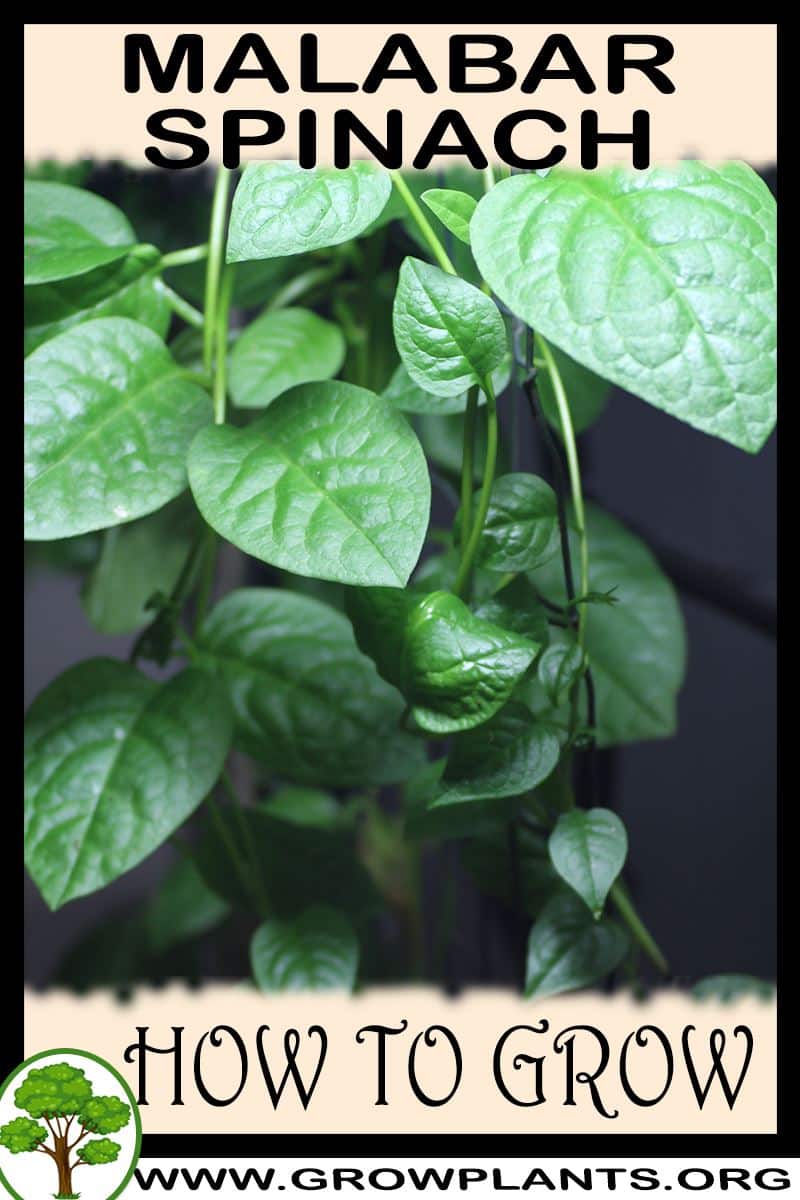
Overview: Malabar spinach (Basella alba) is a fast-growing, twining vine reaching 2-8 m (6-24 ft), grown as an edible leafy vegetable and as an ornamental. It is an evergreen perennial in warm climates, grown as an annual where it is cold.
Quick Specifications
| Specification | Attribute |
|---|---|
| Plant Type / Life Cycle | Perennial (grown as an annual in cold climates) |
| Foliage Type | Evergreen |
| Mature Size | 2-8 m (6-24 ft) long |
| Growth Rate | Fast |
| Toxicity | Non-toxic / edible |
| Hardiness | USDA zone 11+ as perennial (10b with care); 6+ as annual |
Growth Form & Structure
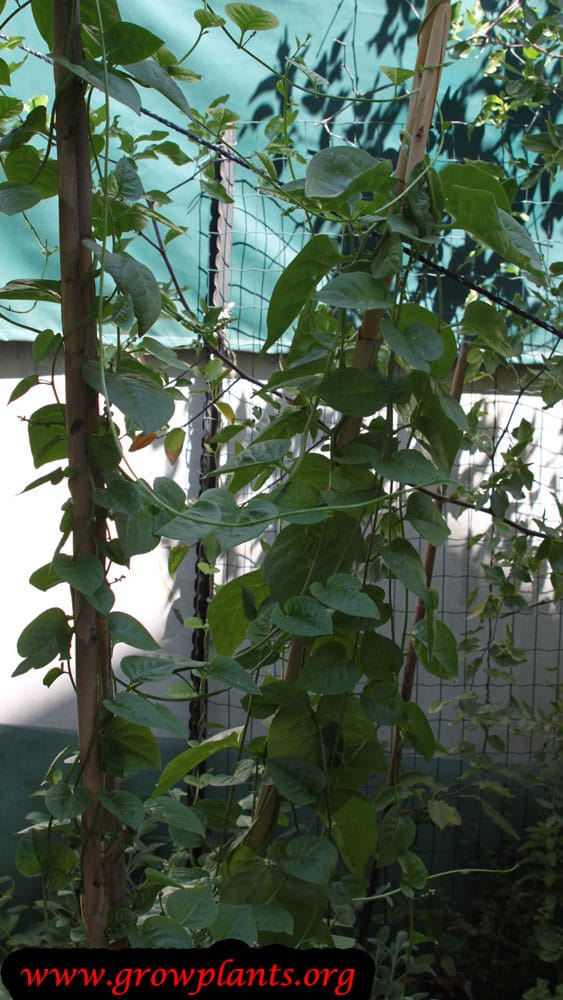
- Height & Spread: Climbs 2-8 m (6-24 ft) and needs a trellis or support; also productive in large containers stepped up as it grows
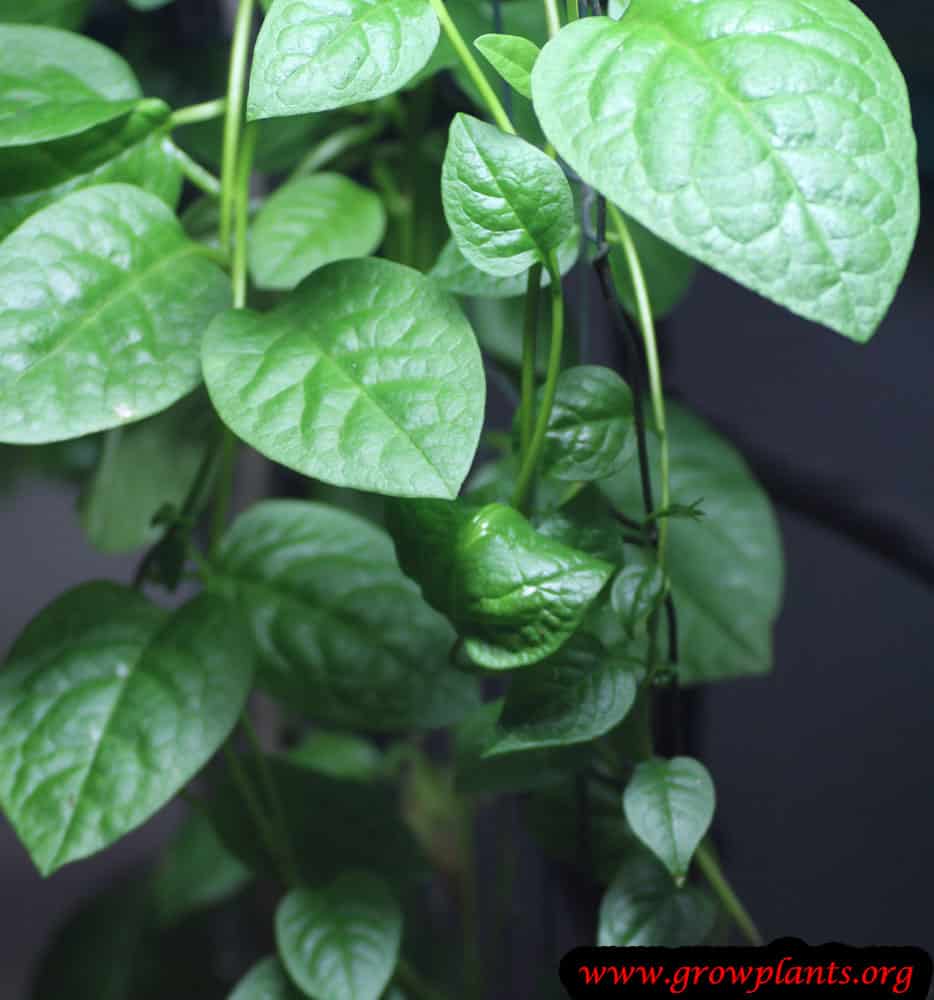
- Growth Habit & Form: Vigorous twining vine with green-stemmed and red-stemmed cultivars
- Lifespan & Maturity: Very fast-growing; leaves ready to harvest within weeks and fruit in about 1-2 months
Anatomy & Physical Features
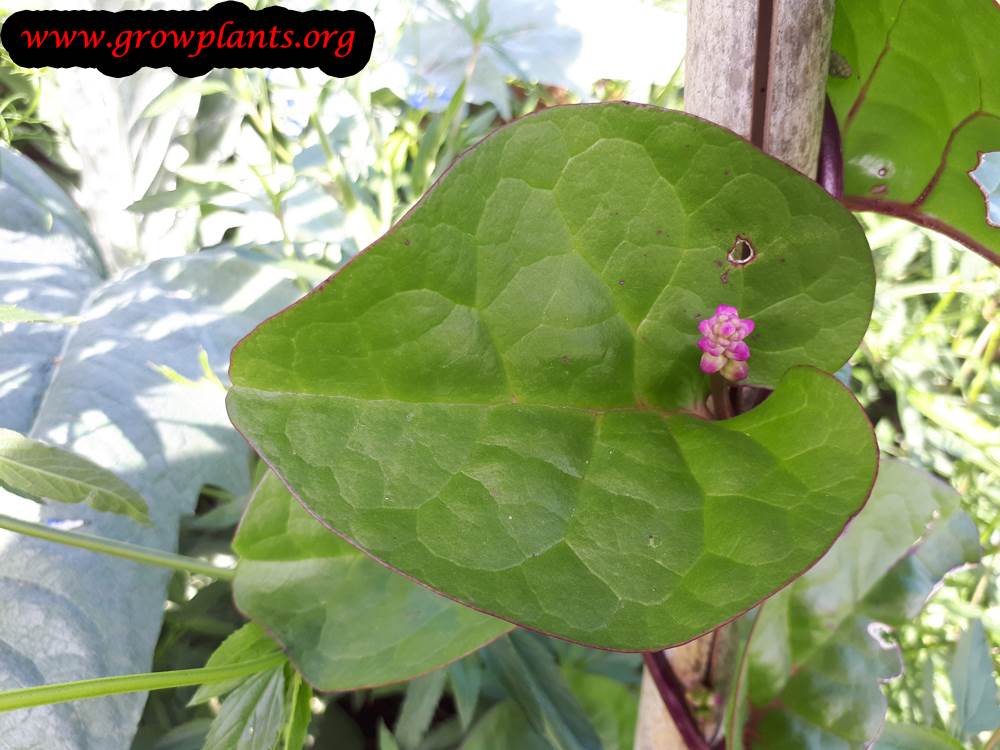
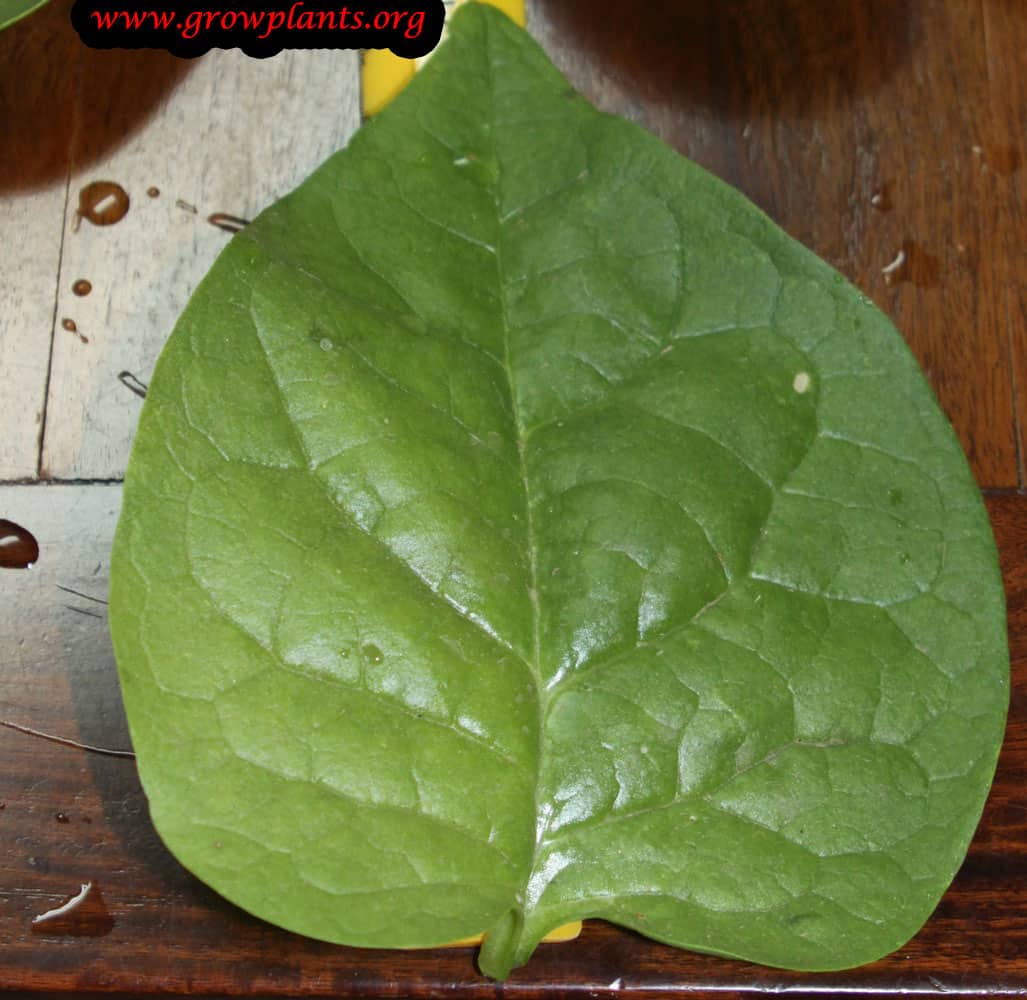
- Leaves & Foliage: Fleshy, thick, oval-to-heart-shaped leaves 2-20 cm long, light green (green cultivar) or dark red (red cultivar)
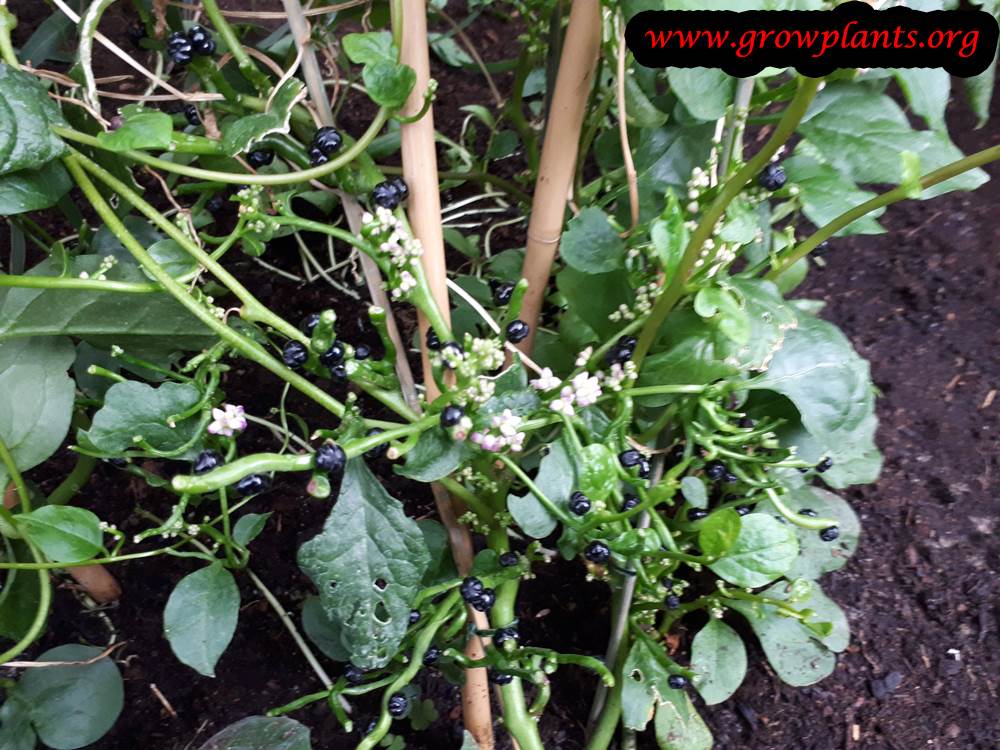
- Flower Characteristics: Small white-and-pink flowers (see the Bloom guide)
- Fruit Profile: Small purple-black berries with a large seed, edible but tasteless (see the Fruit guide)
Primary Uses & Landscape Value
- Edible Uses: Leaves and young stems eaten raw, in salads, cooked, in soups, casseroles and juice; flowers and fruit are also edible (fruit juice used as a colouring)
- Functional & Ornamental Roles: Edible leafy-vegetable vine, ornamental screen on a trellis, and container plant
Care Guide: Planting, Soil & Watering
Overview: Malabar spinach (Basella alba) is a vigorous edible vine that grows in full sun to shade in rich, moisture-retentive soil with plenty of organic matter, and needs a trellis to climb. It is heat-loving and thirsty, wanting consistently moist soil and moderate to high water through its fast, sprawling growth.
Quick Care Requirements
| Requirement | Ideal Condition |
|---|---|
| Planting Season | In spring as an annual (zones 6–10, or start indoors in late winter); spring to summer in zone 10b; spring to autumn in zone 11; year-round in zone 12 |
| Growth Rate | Fast |
| Soil Type | Rich, moisture-retentive soil with generous organic matter; needs a trellis or support |
| Water Need | Moderate to High – keep consistently moist and never let it dry out |
Planting & Establishment
- Best Planting Season: Plant in spring after the last frost where grown as an annual (starting indoors in late winter in cool areas); in warmer zones extend from spring into summer, autumn or year-round.
- How to Plant:
- Hole Preparation: Dig a hole to fit the root ball beside a trellis, fence or other support it can climb.
- Soil Amendments: Work in plenty of humus, compost and organic matter to build a rich, water-holding soil.
- Planting Depth: Set the root collar level with the soil surface and mulch to keep the soil moist.
- Growth Speed & Expectations: Very fast, climbing 2–8 m in a season; it is aggressive and can be invasive in tropical climates.
Soil, Watering & Drainage Care
- Soil Mix & Drainage Needs: Wants a rich, organic, moisture-retentive but well-draining soil; in containers use potting mix or peat soil with perlite blended with humus and organic matter, mulched to hold moisture, and let any saucer drain the same day.
- Watering Schedule & Technique:
- Young / Newly Planted: Water frequently to keep the soil consistently moist as it establishes.
- Established: Water generously and regularly; the fast, leafy growth uses a lot of water and should never dry out.
- Seasonal Adjustments: Water most heavily through the hot growing season; taper off as temperatures fall and growth stops.
Climate, Light & Hardiness
Malabar spinach is a vigorous tropical vine that stays evergreen and perennial in warm climates but is commonly grown as a warm-season annual anywhere winters bring real cold. It tolerates full sun through to full shade, though it needs strong light to flower, and can even be grown indoors given enough light.
Quick Climate Specifications
| Climate Zones | Mediterranean, subtropical, temperate, tropical |
|---|---|
| USDA Hardiness Zones | 11 and warmer as a perennial (possible in 10b with attentive care); 6 and warmer as an annual |
| Light Conditions | Full sun to full shade (full-shade plants generally will not bloom) |
| Frost Tolerance | Very low |
Sunlight & Light Exposure
Optimal Light Setup
Adaptable from full sun to full shade, an unusual range for a vine, though flowering requires good light – heavily shaded plants stay vegetative.
Indoor Light Note
Can be grown as a houseplant, but needs plenty of bright light; low-light indoor conditions will keep it from flowering.
Temperature Extremes & Hardiness
USDA Hardiness & Regional Limits
True year-round perennial growth needs essentially frost-free warmth (zone 11, or zone 10b with careful winter protection). Where winters bring real cold (down to about zone 6), it is instead grown as a warm-season annual, started in spring, since the vine itself has little cold tolerance.
Frost Sensitivity
Frost-tender; cold kills top growth and the plant will not survive a hard freeze outdoors.
Growing in Pots, Balconies & Indoors
Malabar spinach (Basella alba) is a fast, twining edible vine that pots up well. The grower notes it can be grown indoors as a houseplant but needs a great deal of light and will not flower there; outdoors on a warm, sunny balcony with a trellis it climbs vigorously (2-8 m) and gives edible leaves all season.
Quick Details
- Container Size: At least 2 gal (8 L), and better 5 gal (19 L), per the grower – a vigorous vine that wants root room
- Indoor Suitability: Possible indoors with very strong light, but it will not bloom there – best on a bright, sunny windowsill
- Best Spot: Full sun to half shade, with support to climb; warmth-loving
- Soil & Drainage: Potting mix or peat-based soil with perlite, enriched with humus and organic matter
- Watering in Pots: Keep the soil moist – never let it dry out; a chopped-mulch layer helps hold moisture
Indoors & On the Windowsill
- As a houseplant: The grower says yes, but only with plenty of light – and it will not flower indoors. Give it the brightest sill you have and something to climb.
- Overwintering: It is frost-tender and usually grown as an annual; where you want to carry a plant over, a pot lets you bring it into a warm, bright room, though growth slows in low winter light.
On a Balcony or Patio
- Light & support: On a sunny balcony give it a trellis, netting or strings – it twines quickly and rewards you with edible foliage. Warmth and sun drive growth.
- Watering: It is thirsty and hates drying out; the grower’s tip of a chopped-mulch layer keeps the mix moist. Let the base of the pot take up water but see it dry off within the same day.
Choosing the Pot, Soil & Long-Term Care
- Pot & drainage: Start at 8 L, ideally 19 L, with good drainage holes; the grower lets the pot base briefly hold water but ensures it dries by day’s end – avoid permanent standing water and root rot.
- Potting mix: Potting mix or peat soil with perlite, mixed with humus and organic matter (the grower’s recipe); top with chopped mulch to conserve moisture.
- Feeding, potting up & soil refresh: As a perennial in frost-free climates, pot up when the root ball fills the container, refresh the soil (best in the cool season) and replace it every few years; for a small pot, swap all the soil and trim some roots and top growth, for a big pot replace part of the soil from the side. Potted plants exhaust their food faster than those in the ground, as watering leaches nutrients out; feed lightly but more regularly through the growing season.
Grower’s Container Tip
- Start with a half-empty pot: The grower’s practical method: when starting a plant in a pot, begin with the pot only partly filled with soil and, as the vine grows, keep adding soil to cover more of the stem – this builds a stronger, deeper root system over time.
Fertilizing & Feeding
Malabar spinach is a fast-growing, continually harvested leafy vine that benefits from steady nitrogen-forward feeding to keep new leaves and stems coming.
Quick Fertilizing Specs
| Feeding Level | Moderate to fairly heavy – a fast-growing, continually harvested leafy vine |
|---|---|
| young_feeding | Balanced feeding while young plants establish roots and begin climbing |
| mature_feeding | Nitrogen-forward feeding supports the fast leaf and vine growth this crop is grown for |
| Main Nutrient Priority | Nitrogen, to keep leaf and stem production going through repeated harvests |
| Best Feeding Period | Through the whole active growing season, since leaves are harvested continually |
| Organic Options | Rich, compost-amended soil plus periodic organic feeding such as compost tea suits this vigorous vine well |
| Micronutrients | No routine micronutrient program is typically needed in rich garden soil |
| Soil pH | Prefers rich, moisture-retentive soil and tolerates a fairly wide pH range |
| Reduce/Stop Feeding | Where the vine persists through mild winters as a perennial, feeding can taper off as growth slows in cooler weather |
Feeding by Growth Stage
Establishment
Support root and vine establishment after planting, direct sowing, or rooting cuttings.
| Nutrient direction | A balanced, moderate feeding at planting supports steady early root and shoot growth. |
|---|---|
| Timing | At planting and through the first weeks of growth. |
| Frequency | Light, regular feeding suits young plants while they establish. |
| Fertilizer types | A balanced, complete fertilizer worked into rich soil at planting, Compost or well-rotted manure blended into the planting area |
| Precautions | Very young seedlings and unrooted cuttings can be stressed by heavy or concentrated feeding. |
Vigorous Vine and Leaf Growth
Fuel the fast, sprawling vine and leaf growth this plant is grown for.
| Nutrient direction | Nitrogen-forward feeding supports the vigorous leafy growth typical of this vine. |
|---|---|
| Timing | Through the main growing season as the vine climbs and fills out. |
| Frequency | Regular feeding through this stage matches the plant’s fast growth rate. |
| Fertilizer types | A nitrogen-forward, balanced fertilizer applied regularly through active growth, Organic feeding such as compost tea or diluted fish emulsion |
| Precautions | In warm climates this vine can grow aggressively; avoid excessive feeding that pushes even faster spread than desired. |
Ongoing Leaf Harvest
Keep the plant producing tender new leaves and stems through repeated harvesting.
| Nutrient direction | Continued nitrogen-forward feeding replaces nutrients removed with each harvest and keeps new growth coming. |
|---|---|
| Timing | Throughout the harvest period, as leaves and young stems are repeatedly cut. |
| Frequency | Regular light feeding through the harvest period supports continuous regrowth. |
| Fertilizer types | A nitrogen-forward, balanced fertilizer applied regularly through the harvest period, Organic feeding such as compost tea between harvests |
| Precautions | Reduce feeding if the plant becomes unmanageably vigorous, since this species can spread aggressively in warm climates. |
Nutrient Deficiency Signs & Corrections
Leaves are pale green to yellow and new growth slows despite regular harvesting.
| Possible causes | Nitrogen deficiency, Depleted soil from frequent harvesting without replacement feeding, Poor drainage or waterlogged roots limiting uptake |
|---|---|
| Appears first on | Overall foliage color and new leaf growth. |
| What to check | Feeding history relative to harvest frequency, Soil richness and organic matter, Drainage around the root zone |
| Possible correction | A nitrogen-forward, balanced feeding typically restores healthy leaf color and growth rate. |
Older leaves show yellowing between the veins while the veins remain green.
| Possible causes | Magnesium deficiency, Potassium-heavy fertilizer that has crowded out magnesium uptake, Leaching from sandy soil or frequent heavy watering |
|---|---|
| Appears first on | Older, lower leaves. |
| What to check | Recent fertilizer type and nutrient balance, Soil type and watering or leaching pattern, Whether yellowing follows an interveinal pattern |
| Possible correction | A balanced fertilizer that includes magnesium, or a dedicated magnesium supplement per its label, usually corrects this. |
New leaves emerge pale yellow to almost white while the veins stay green.
| Possible causes | Iron deficiency (chlorosis), High soil pH limiting iron availability, Waterlogged, poorly aerated soil restricting root uptake |
|---|---|
| Appears first on | Newest leaves. |
| What to check | Soil pH, Drainage and soil aeration, Whether new growth specifically is affected |
| Possible correction | Improve drainage, correct soil pH toward a more favorable range, and apply a chelated iron product per its label if needed. |
Pruning, Training & Seasonal Maintenance
Malabar spinach is a vigorous, fast-growing twining vine harvested continuously for its leaves, so pruning here is really ongoing harvest-pinching plus detangling rather than shaping a permanent framework. It tolerates cutting extremely well and can be cut back hard almost any time during active growth without harming it; the main jobs are keeping vines separated on their support so leaves stay easy to pick, and limiting self-seeding given its noted aggressive, potentially invasive habit in warm climates.
Quick Pruning & Maintenance Specs
| Pruning Tolerance | High |
| Primary Pruning Window | Continuous during active growth (year-round in warm zones, spring–autumn elsewhere) |
| Secondary Maintenance Window | None additional – harvest-pruning is continuous |
| Typical Frequency | Weekly to bi-weekly harvest and detangling |
| Main Objective | Leaf production, keeping vines untangled on the trellis, limiting self-seeding |
| Young Plant Priority | Train the leader onto its support; pinch to encourage branching |
| Mature Plant Priority | Continual harvest cuts and removal of stems tangled over each other |
| Best Tool Type | Precision snips or bypass secateurs (soft, fleshy stems) |
| Avoid Heavy Pruning During | Just before first frost in marginal zones, where new growth won’t have time to establish |
Pruning by Plant Age & Size
Newly Established
Let the young vine establish onto its trellis or support with minimal cutting; pinch the tip once it is climbing well to encourage side branching.
Young / Formative
Training system: trellising/climbing support. Pinch leading shoots to build several productive vines rather than one long runner.
Mature / Established
Continual selective harvest-cutting of tangled or crossing stems; periodically cut back hard to renew tender, palatable growth since older stems become fibrous.
Seasonal Pruning Schedule
| Summer Canopy Management / Ongoing Sanitary (essentially year-round while actively growing) | Objective: keep leaves accessible and encourage continued tender growth. Remove stems that have grown into or over other stems, and any older, fibrous lower stems. Do not strip an entire vine bare in one pass. Response: fresh branching and renewed tender shoots for harvest. |
Special Growth to Remove
- Older, lower stems that have become fibrous and are no longer worth harvesting.
- Tangled or overlapping runners climbing over other stems, which the plant’s own growth habit makes hard to pick from if left unmanaged.
- Spent flower/fruit clusters – removing these limits self-seeding, useful given the plant’s aggressive, potentially invasive habit in warm climates.
Container & Small-Space Pruning
In containers, provide its own trellis or stake and pinch regularly to keep growth compact; root-bound plants benefit from more frequent cutting back to stay manageable in a confined pot.
Tools
- Precision snips or bypass secateurs for soft-stem harvest and detangling.
- Soft ties or stakes for training vines onto their support.
Tool Hygiene & Disease Risk
Routine: clean tools are sufficient. Aphids are the main pest of concern – check new, tender regrowth after cutting for buildup, since fresh cuts stimulate exactly the soft new growth aphids prefer.
Cut Placement & Technique
Cut just above a leaf node or side-shoot to encourage branching; harvest young, tender stem tips together with their leaves rather than stripping individual leaves off a stem.
Heavy Pruning & Rejuvenation
Tolerates a hard cut-back well during the warm growing season to rejuvenate a tangled or leggy vine, given its fast growth rate. Avoid a hard cut-back as cool weather or frost approaches in marginal zones, since regrowth won’t have time to establish.
Post-Pruning Care
Keep soil consistently moist and rich after cutting (its preferred growing conditions); watch fresh regrowth for aphids. No extra feeding is needed after routine harvest cuts given how vigorously it already grows.
Common Pruning Mistakes
- Letting vines pile onto each other untrained until the leaves become hard to reach – the exact problem the plant’s own growth habit creates if left unmanaged.
- Allowing it to flower and fruit freely in warm climates, where it can self-seed and become weedy.
- Repeatedly stripping all foliage from one vine instead of rotating harvest cuts across the plant.
When NOT to Prune
Avoid a hard cut-back right at the first frost in marginal zones, since the plant won’t recover in time; otherwise this vine is exceptionally pruning-tolerant with few restrictions.
Recommended Tools (by task)
- precision_snips – routine tip and leaf harvest on soft stems.
- bypass_secateurs – thicker lower stems and detangling cuts.
- soft_ties_stakes – training and securing vines to a trellis or support.
Propagation Guide
Malabar spinach is most easily propagated from stem cuttings or by ground layering (bending a branch into the soil while it stays attached to the parent), both of which the site describes in detail and root within weeks; seed is also straightforward and not required, but is a slower route to a usable plant. Given how fast and reliably this vigorous, self-described "very aggressive" vine roots by either cuttings or layering, propagation overall is Easy.
Quick Propagation Specs
| Best Propagation Method | Stem cuttings |
| Alternative Methods | Ground layering (bending a branch into the soil while attached to the mother plant); seed |
| Propagation Difficulty | Easy |
| Seed True-to-Type | Usually true-to-type for the green and red forms |
| Vegetative True-to-Type | Yes |
| Best Propagation Season | Best started in early spring or around 26°C (79°F), but possible year-round in warm temperatures; vegetative propagation generally spring, summer or autumn |
| Seed Germination Time | 2-10 weeks, usually germinates after about 2 weeks |
| Cutting Rooting Time | 1-4 weeks |
| Seed Sowing Depth | 1-2 cm (0.4-0.8 in) |
Growing from Seed
Seed Handling & Viability
Seeds are black-gray, 2-4 mm; clean them from the fruit leftovers before storing.
Seed Handling & Viability (Storage)
Keep cleaned seed at room temperature in a dark, dry place until sowing.
Sowing Season
Spring to summer.
Sowing Depth & Orientation
Sow about 1-2 cm (0.4-0.8 in) deep, spaced about 10 cm (4 in) apart (can be closer); seeds are only lightly covered rather than buried deep.
Germination Conditions
Needs moist, rich soil and a big amount of water – do not let it dry out.
Germination Time
2-10 weeks, usually germinating after about 2 weeks.
Seedling Care
Keep seedlings moist, in the sun, with mulch.
Stem Cuttings
Cutting Type
A stem section with about 3 wood nodes, leaves removed.
Best Timing
Best started in early spring or around 26°C (79°F) soil/air temperature, though possible year-round in warm climates.
Cutting Preparation
Take a branch with about 3 wood nodes and strip the leaves before rooting.
Rooting Setup
Two methods work: (1) stand the stem in water and change the water every day, or (2) insert into moist, peat-based soil and keep it consistently wet, ideally with high humidity under a greenhouse or a small ventilated plastic cover (holes for airflow).
Rooting Hormone
The site lists a rooting hormone as part of its recommended treatment; treat it as beneficial for reliable rooting rather than strictly essential, since cuttings also root well simply stood in water.
Rooting Time
1-4 weeks.
Air & Ground Layering
Bend a flexible branch down and bury a section of it in moist soil while it remains attached to the mother plant, breaking the stem slightly at the buried point without fully severing the connection. Once the buried section has rooted (a similar timeframe to cuttings, around 1-4 weeks), it can be cut free from the parent and transplanted.
Bloom & Flower Guide
Quick Details
- Bloom Season: Spring, summer and autumn
- Flower Appearance: Small white flowers flushed with pink, held in short spikes along the stems
- Edibility: The flower is not eaten — Malabar spinach is grown for its leaves
Detailed Blooming Overview
On this climbing leaf vegetable the flowers are small and quiet — little white blooms tinged pink, tucked in short spikes along the twining stems. As with many leaf crops, flowering shifts the plant’s energy away from foliage, so it is usually discouraged; the blooms are more a signal to keep picking than a display in themselves.
Flower Characteristics
- Small flowers, white with a pink flush.
- Borne in short spikes along the climbing stems.
- Often barely opening, in the way typical of this genus.
Bloom Care & Thinning
- Thinning the bloom: removing the flower spikes helps keep the plant producing tender leaves, though on a vigorous vine it is a fair bit of work.
- Pollination: worked by bees and flies where flowers are left to set seed.
Fruit & Uses
Malabar spinach is grown mainly as a leafy vegetable: its thick, fleshy leaves and young stems are the main edible parts, eaten raw or cooked much like true spinach. The small flowers and the tasteless purple-black fruit are also edible and are used more as accents than as a main food.
Quick Edible Specs
| Edible Parts | Leaves, young stems, flowers, fruit |
|---|---|
| Main Use(s) | Culinary leafy green (salads, soups, casseroles); fruit mainly for its juice/color |
| Eaten Raw or Cooked | Leaves/stems: raw or cooked; flowers: as leaves; fruit: raw or juiced |
| Preparation Required | None for young growth; older stems become fibrous and are best used cooked or avoided |
| Harvest Season | Spring through autumn (year-round in warm climates); cut-and-come-again |
| Time to First Harvest | Fruit forms roughly a month or two after flowering; leaves can be picked as soon as growth is established (see Propagation for germination/establishment timing) |
| Safety/Toxicity Caveat | None significant; like other mucilaginous leaf vegetables, normal culinary quantities are fine |
Leaves & Greens
Leaves are thick and fleshy, 2-20 cm, oval to heart-shaped — light green in the standard (green) cultivar, dark red in the red cultivar. Young leaves are cut near the stem and can be harvested along with their stems; regular picking encourages continued growth. Available spring through autumn (year-round in the warmest zones). Used raw in salads or cooked into soups, casseroles, stir-fries, and juices, much like true spinach.
Shoots & Stems
Young stems are tender and edible and are often harvested together with the leaves; older stems turn fibrous, so it’s best to keep taking new growth rather than letting stems mature and toughen.
Flowers & Flower Buds
The small white-and-pink flowers are edible and are generally used the same way as the leaves.
Fruit
Small, purple-black berries with one large central seed form after flowering, spring through autumn. The site notes they are edible but essentially tasteless — eaten raw or, more commonly, juiced (the deep purple juice is valued mainly for its color).
Harvesting
Leaves and stems can be picked continually through the growing season (cut-and-come-again). Once the vine begins to flower and fruit, harvesting the leaves becomes harder to manage as the stems tangle into one another (see Pruning for how to keep growth manageable). Fruit is ready roughly a month or two after flowering.
Preparation, Uses & Safety
Leaves and young stems are eaten raw in salads or cooked into soups, stir-fries, and casseroles; flowers are used the same way. Fruit is eaten raw or juiced, valued mainly for its natural purple color rather than flavor. No specific safety concerns are noted for this species.
Pests, Diseases & Troubleshooting
Overview: Malabar spinach (Basella alba) is a fast, heat-loving edible vine that is fairly robust, but as a leafy crop it draws leaf-eating and sap-sucking pests – caterpillars, leaf miners, aphids, spider mites, whitefly and flea beetles – and, most importantly, root-knot nematode and Cercospora leaf spot, its two signature problems. Grow it in warm, fertile, well-drained soil with good airflow and rotate its position to keep nematodes and leaf spot in check.
Quick Troubleshooting Overview
| Issue / Pest | Main Symptom | Primary Solution |
|---|---|---|
| Cercospora leaf spot | Circular brown/tan spots with dark margins on leaves | Airflow, remove leaves, avoid wet foliage, copper |
| Root-knot nematode | Stunting, wilting, galled/knotted roots | Rotate, add organic matter, resistant/clean soil |
| Caterpillars | Chewed leaves and holes, droppings | Hand-pick, Bt |
| Aphids | Sticky curled shoots, virus risk | Hose off, insecticidal soap |
| Leaf miners | Pale winding tunnels inside leaves | Remove mined leaves, row cover |
| Spider mites | Fine stippling and webbing in heat | Hose, raise humidity, soap/oil |
Common Pests & Management
- Caterpillars / leaf-eaters (Spodoptera & loopers):
- Symptoms: Ragged holes and chewed margins on the succulent leaves, with green or dark caterpillars and droppings; leaf-eaters and semi-loopers can strip young plants fast.
- Prevention & Control: Hand-pick and inspect leaf undersides, encourage birds and parasitic wasps, and spray Bacillus thuringiensis (Bt) in the evening for heavier feeding – important on a food crop as it is selective and safe up to harvest with label adherence.
- Aphids (Aphis / Myzus spp.):
- Symptoms: Colonies on soft shoot tips and leaf undersides, curling growth, leaving honeydew and sooty mould, and potentially spreading viruses.
- Prevention & Control: Blast off with water, encourage ladybirds and lacewings, and use insecticidal soap or neem, wetting the undersides; observe pre-harvest intervals on edibles.
- Leaf miners (Liriomyza spp.):
- Symptoms: Pale, winding, translucent tunnels (‘serpentine mines’) within the leaf blades from larvae feeding between the surfaces; heavy mining disfigures the harvestable leaves.
- Prevention & Control: Pick off and destroy mined leaves, use floating row cover to exclude the adult flies, and encourage parasitic wasps; avoid broad-spectrum sprays that kill the miners’ natural enemies.
- Whitefly (Bemisia / Trialeurodes):
- Symptoms: Tiny white flies rising in a cloud, with honeydew and sooty mould on the leaves and flat nymphs beneath.
- Prevention & Control: Yellow sticky traps, Encarsia parasitoids, and hosing; insecticidal soap or neem on the undersides in the evening, respecting harvest intervals.
- Spider mites (Tetranychus urticae):
- Symptoms: Fine pale stippling and webbing on the leaves in hot, dry weather, with a dull bronzed cast.
- Prevention & Control: Raise humidity, hose the foliage, and treat with insecticidal soap or horticultural oil; keep plants well-watered to reduce stress.
- Flea beetles (Phyllotreta / Epitrix spp.):
- Symptoms: Tiny ‘shot-hole’ pits across the leaves from small jumping beetles, worst on young plants in warm dry spells.
- Prevention & Control: Protect seedlings with floating row cover, keep plants vigorous, and use yellow sticky traps; a light neem spray or diatomaceous earth checks heavy pressure.
Diseases & Fungal Issues
- Cercospora leaf spot (Cercospora / Pseudocercospora):
- Symptoms: The signature disease: numerous circular tan-to-brown spots with darker margins (sometimes pale centres) on the leaves, coalescing and causing yellowing and defoliation in warm, humid, wet conditions.
- Treatment & Management: Space plants for airflow, avoid overhead watering, remove and destroy spotted leaves, and rotate crops. Copper fungicide protects new growth under heavy pressure; harvest and use outer leaves promptly.
- Root-knot nematode (Meloidogyne spp.):
- Symptoms: Stunting, yellowing, midday wilting and poor vigour despite watering; roots bear characteristic knots and galls. A key soil-borne problem for this crop in warm soils.
- Treatment & Management: Rotate away from susceptible crops, incorporate plenty of organic matter to boost antagonistic microbes, solarise infested beds, and grow in clean or container soil. Marigold cover crops and good soil health help suppress populations.
- Damping-off (Pythium / Rhizoctonia):
- Symptoms: Seedlings collapse at the soil line with water-soaked, pinched stems and fail to establish in cold, wet, overcrowded seedbeds.
- Treatment & Management: Sow in warm, free-draining, sterile mix, avoid overwatering and overcrowding, and provide airflow; do not sow too early into cold wet soil.
- Fungal / anthracnose leaf blight (Colletotrichum spp.):
- Symptoms: Dark, sometimes sunken, spreading leaf lesions in prolonged wet weather, downgrading the edible foliage.
- Treatment & Management: Remove affected leaves, improve airflow, keep foliage dry, and rotate; copper checks severe outbreaks on a food crop within label limits.
Growing Difficulties & Abiotic Problems
- Cold sensitivity / slow start:
- Cause & Symptoms: A tropical vine, it stalls, yellows and suffers in cool weather and is killed by frost.
- Correction Strategy: Sow and plant out only in warm soil and weather, and grow through the warm season; provide a warm, sunny, sheltered site and support to climb.
- Nitrogen / feeding needs for leaf quality:
- Cause & Symptoms: As a cut-and-come-again leaf crop, it becomes pale, tough or slow without adequate fertility.
- Correction Strategy: Grow in rich, moisture-retentive soil, feed with a nitrogen-rich organic fertiliser, and keep evenly watered for tender, abundant leaves.
- Sunscald / heat-drought stress:
- Cause & Symptoms: In extreme heat with dry roots the leaves can scorch and toughen.
- Correction Strategy: Keep the soil evenly moist with mulch and harvest regularly; light afternoon shade in the most extreme heat keeps leaves tender.
- Need for support:
- Cause & Symptoms: Left to sprawl, the vine mats on the ground where leaves stay wet and are harder to keep clean and disease-free.
- Correction Strategy: Provide a trellis or netting to train it upward, improving airflow, leaf quality and disease resistance.
What Helps – Products & Tools
As an edible, favour cultural and low-toxicity controls and always observe pre-harvest intervals. Useful tools include floating row cover (flea beetles, leaf miners), Bacillus thuringiensis (Bt) for caterpillars, insecticidal soap and neem (aphids, whitefly, mites), yellow sticky traps, copper fungicide (Cercospora and leaf blights) and organic matter/marigolds plus rotation for nematodes. Spray in the evening to protect pollinators and follow all label guidance on a food crop.
Varieties & Cultivars
- Green malabar spinach: Big green leaves, bigger than the red variety. — Shop Green malabar spinach on Amazon
- Red malabar spinach: Veins are red to pink; leaves are thicker. — Shop Red malabar spinach on Amazon