![Greenwood Nursery: Live Perennial Plants - 'Junior Walkers Low' Catmint + Nepeta × Faassenii - [Qty: 2X Pint Pots] - (Click for Other Available Plants/Quantities)](https://m.media-amazon.com/images/I/61yNYeuF5QL._SL160_.jpg)


Plant Profile & Key Characteristics
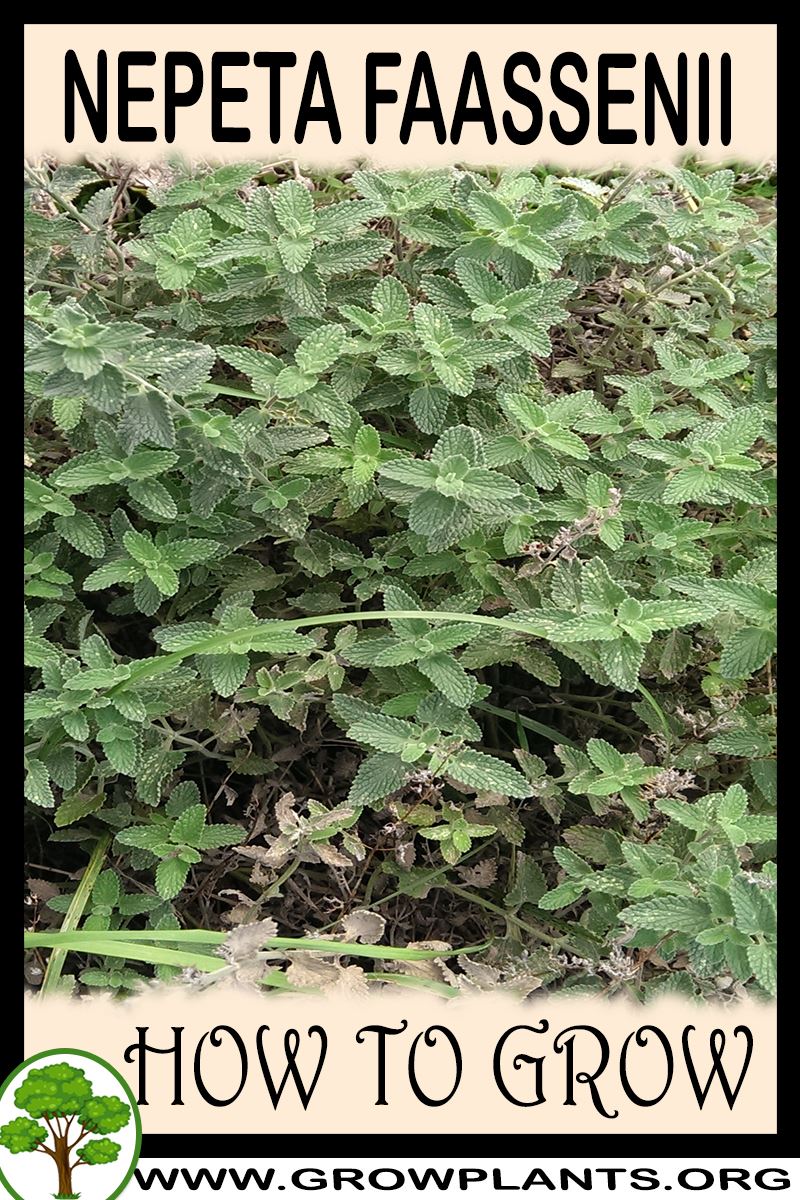
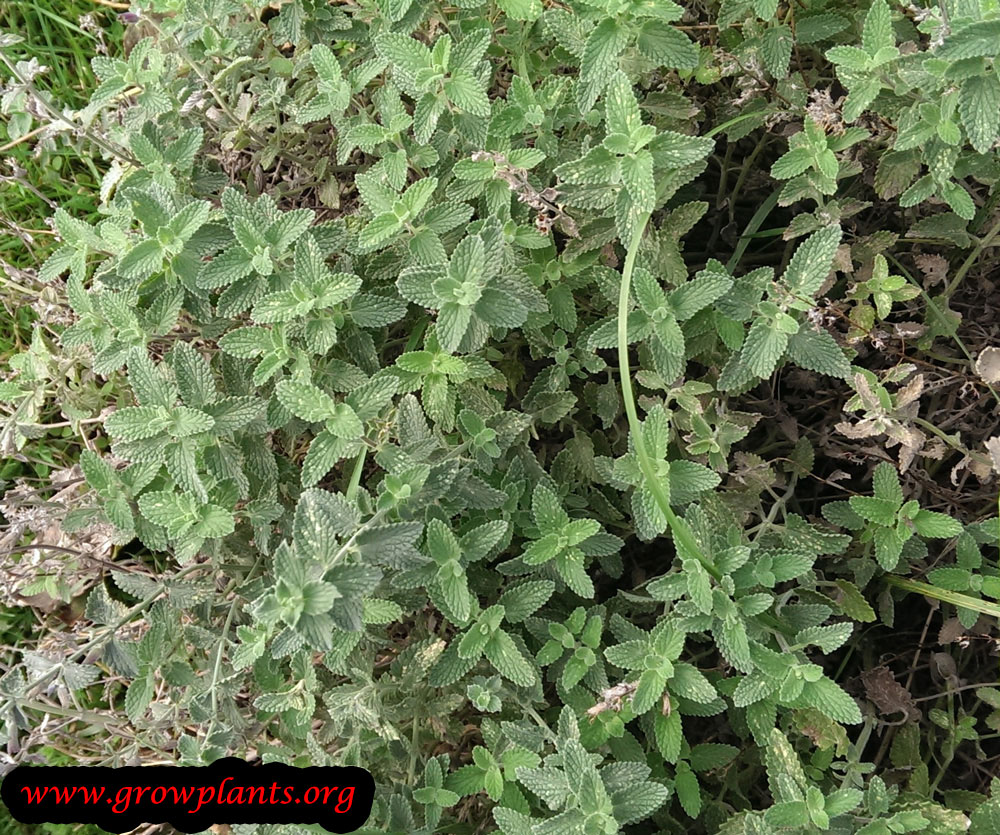
Overview: Nepeta faassenii (catmint) is an aromatic, mounding herbaceous perennial 20-50 cm (8-20 in) tall, grown as an ornamental groundcover that attracts pollinators. It suits temperate, Mediterranean and subtropical climates.
Quick Specifications
| Specification | Attribute |
|---|---|
| Plant Type / Life Cycle | Perennial |
| Foliage Type | Evergreen to deciduous (dies back in cold winters) |
| Mature Size | 20-50 cm (8-20 in) tall |
| Growth Rate | Moderate to Fast |
| Root System | Fibrous, clump-forming |
| Toxicity | Non-toxic |
| Hardiness | USDA zones 3-10 |
Growth Form & Structure
- Height & Spread: Forms a soft mound 20-50 cm (8-20 in) tall and spreading; also grown in containers.
- Growth Habit & Form: Low, mounding, well-branched herbaceous perennial that works as a groundcover.
- Lifespan & Maturity: Fast-establishing, long-flowering perennial that benefits from shearing after bloom.
Anatomy & Physical Features
- Leaves & Foliage: Grey-green, heart-shaped aromatic leaves with a fine crinkled texture.
- Flower Characteristics: Spikes of small purple to blue flowers that attract bees and other pollinators.
Primary Uses & Landscape Value
- Functional & Ornamental Roles: Ornamental groundcover and edging; pollinator and aromatic plant for borders, gravel gardens and containers.
Care Guide: Planting, Soil & Watering
Overview: Catmint (Nepeta x faassenii) is an easy perennial that thrives in well-drained soil of average fertility in full sun to part shade. It needs only moderate water and becomes drought-tolerant once established.
Quick Care Requirements
| Requirement | Ideal Condition |
|---|---|
| Planting Season | Warm season – spring through autumn |
| Growth Rate | Fast to moderate |
| Soil Type | Well-drained, average fertility |
| Water Need | Moderate; drought-tolerant once established |
Planting & Establishment
- Best Planting Season: Plant in the warm season – spring or autumn are ideal.
- How to Plant:
- Hole Preparation: Dig a hole as wide as, and slightly larger than, the root ball, and the same depth.
- Soil Amendments: A little compost helps, but keep drainage sharp – catmint tolerates lean soil and dislikes rich, wet ground.
- Planting Depth: Set the crown level with the soil surface.
- Growth Speed & Expectations: Fast to moderate; it fills out quickly into a mound.
Soil, Watering & Drainage Care
- Soil Mix & Drainage Needs: Well-drained soil is key – it dislikes soggy ground and is prone to rot in wet soil; it tolerates poor soil well.
- Watering Schedule & Technique:
- Young / Newly Planted: Water regularly to establish the roots.
- Established: Drought-tolerant – water deeply but infrequently, letting the top of the soil dry between waterings.
- Seasonal Adjustments: Minimal water in winter; a little more during extreme heat.
Climate, Light & Hardiness
Catmint is a wide-ranging perennial suited to temperate, mediterranean, and subtropical climates, staying evergreen where winters are mild and dying back where winters are cold. It grows in full sun to half shade and is hardy across a broad zone range.
Quick Climate Specifications
| Climate Zones | Temperate, Mediterranean, subtropics |
|---|---|
| USDA Hardiness Zones | 3–10 |
| Frost Tolerance | High |
| Light Conditions | Full Sun to Half Shade |
Sunlight & Light Exposure
Optimal Light Setup
Full sun to half shade; full sun generally gives the most compact growth and best flowering.
Temperature Extremes & Hardiness
USDA Hardiness & Regional Limits
Very broadly hardy, from cold-winter zone 3 through warm subtropical zone 10, behaving as a cold-deciduous perennial in colder zones and evergreen in milder ones.
Cold Damage & Winter Protection
In cold-winter zones, foliage dies back to the roots each year; this is a normal seasonal pattern rather than plant damage.
Growing in Pots, Balconies & Indoors
Catmint forms soft mounds of grey-green aromatic foliage topped with hazy lavender-blue flower spikes. The grower rates it for containers but not indoors – it is a hardy, sun-loving perennial that’s easy and long-flowering in a pot.
Quick Details
- Container Size: A medium pot or trough, 10-25 L (3-6 gal)
- Indoor Suitability: Not a houseplant (grower); a hardy, sun-loving perennial for outdoor pots
- Best Spot: Full sun to partial shade; a bright spot with some direct sun is ideal.
- Soil & Drainage: Free-draining, rather lean mix (potting mix or sandy mix with added perlite); avoid heavy, water-holding soil.
- Watering in Pots: Keep the mix evenly moist, letting the surface dry slightly between waterings; pots dry faster than open ground.
Indoors & On the Windowsill
- Not a houseplant: The grower marks it unsuitable indoors; it needs full outdoor light to flower and stay compact, and is a hardy perennial adapted to outdoor seasons.
- No winter shelter needed: It dies back and overwinters outdoors, resprouting each spring.
On a Balcony or Patio
- Light & exposure: Full sun to part shade gives the best flowering; it is drought-tolerant and thrives in the heat and free-draining conditions of a sunny balcony. Shear it back after the first flush for a repeat show.
- Watering: Water moderately and let the surface dry between drinks – it hates soggy roots. (Cats may be drawn to it.)
Choosing the Pot, Soil & Long-Term Care
- Pot & drainage: A medium pot with strong drainage holes; skip a standing-water saucer. It prefers a free-draining, slightly lean mix over rich, water-holding soil.
- Potting mix: Use a well-aerated, organic-rich mix – quality potting mix, or peat/coir blended with perlite or vermiculite.
- Feeding: Feed only lightly – too much feed makes it floppy.
- Repotting: Divide and refresh the mix every couple of years to keep clumps vigorous.
Fertilizing & Feeding
Catmint is a tough, pollinator-friendly perennial ground cover that flowers best on lean to moderately fertile, well-drained soil; heavy feeding tends to produce floppy growth rather than a better bloom.
Quick Fertilizing Specs
| Feeding Level | Light; a low-input perennial that flowers well without rich feeding. |
|---|---|
| Main Nutrient Priority | Balanced nutrition applied sparingly to support foliage and the long purple-blue flower display. |
| Best Feeding Period | As spring growth begins and again lightly if a mid-season cutback is given. |
| Organic Options | A light compost top-dressing suits this perennial well in place of concentrated fertilizer. |
| Reduce/Stop Feeding | Feeding is rarely needed once the plant is established and growth slows toward the end of the season. |
Feeding by Growth Stage
Establishment
Help a newly planted Catmint root into well-drained soil and put out its first mound of aromatic, heart-shaped leaves.
| Nutrient direction | Light, balanced nutrition to support root and early leaf growth. |
|---|---|
| Timing | In the weeks after planting. |
| Frequency | A light feeding at planting is usually enough to help this perennial establish. |
| Fertilizer types | A balanced complete fertilizer used lightly, A light compost top-dressing worked into well-drained soil |
| Precautions | Avoid rich soil or heavy feeding at planting, which can make young plants floppy and open in the center. |
Spring growth and bloom
Support the mounded foliage habit and the long-lasting purple-blue flower spikes that make this plant so attractive to pollinators.
| Nutrient direction | Minimal, balanced nutrition – this perennial flowers most reliably on soil that is not overly rich. |
|---|---|
| Timing | From spring growth through the main flowering season, and again lightly if the plant is cut back for a second flush. |
| Frequency | Minimal feeding is usually enough for established plants; a light feeding after a hard cutback can help the plant rebound. |
| Fertilizer types | A balanced complete fertilizer used sparingly, if at all, A light compost top-dressing as an alternative to concentrated fertilizer |
| Precautions | Rich soil or heavy nitrogen tends to make Catmint sprawl and flop open rather than flower more heavily. |
Dormancy or cold-season rest
Let the plant die back or slow down naturally where winters are cold, ready to resprout the following spring.
| Nutrient direction | None – withhold fertilizer while the plant is dormant or not actively growing. |
|---|---|
| Timing | Through autumn and winter, or the coldest part of the year in this plant’s range. |
| Frequency | No feeding at this stage. |
| Fertilizer types | No feeding – resume light feeding once new spring growth appears |
| Precautions | Do not fertilize a dormant or slow-growing plant; wait for clear new growth in spring. |
Nutrient Deficiency Signs & Corrections
Foliage looks pale or thin rather than forming a full, healthy mound.
| Possible causes | Poor, compacted or waterlogged soil limiting root function, A genuine nutrient shortage on very depleted soil, Too much shade for this full-sun to half-shade plant |
|---|---|
| Appears first on | New growth across the plant. |
| What to check | Soil drainage and compaction, Sun exposure at the site, Recent feeding history |
| Possible correction | Improve drainage and confirm adequate sun first, then give only a light balanced feeding if pale growth continues. |
The center of the plant opens up and stems sprawl or flop rather than staying compact.
| Possible causes | Overly rich soil or excess nitrogen encouraging soft growth, Too much shade reducing stem sturdiness, The plant simply being due for a cutback, since older growth naturally splays |
|---|---|
| Appears first on | The overall shape of the plant. |
| What to check | Recent feeding amounts and soil richness, Sun exposure, How long since the last cutback |
| Possible correction | Cut back on feeding, confirm full sun, and shear the plant back hard to encourage a fresh, compact flush of growth. |
The plant grows well but blooms poorly or the flower spikes fade quickly.
| Possible causes | Excess nitrogen favoring foliage over flowers, Spent flower spikes not being deadheaded or cut back to encourage rebloom, Insufficient sun for good bud formation |
|---|---|
| Appears first on | Overall flowering across the plant. |
| What to check | Recent nitrogen-heavy feeding, Whether spent flowers have been trimmed back, Sun exposure |
| Possible correction | Ease back on nitrogen, shear off spent flower spikes to encourage a fresh flush, and confirm adequate sun. |
Pruning, Training & Seasonal Maintenance
Nepeta faassenii is a low, mounding herbaceous perennial grown for its long, pollinator-friendly bloom and grey-green foliage. It carries no persistent woody framework, so the real pruning lever is not shaping for looks alone but a mid-season shear-back once the first flush of bloom fades — this triggers vigorous reblooming and prevents the floppy, open-centered habit unpruned catmint is prone to. A full cutback to a few inches above the crown clears away the past season’s growth before new shoots emerge, timed to protect the crown through winter in colder zones.
Quick Pruning & Maintenance Specs
| Pruning Tolerance | High — recovers quickly from hard shearing |
| Primary Pruning Window | Late winter/early spring hard cutback (mild-winter zones may instead cut back in autumn) |
| Secondary Maintenance Window | Mid-summer shear-back by about a third to a half after the first bloom flush fades |
| Typical Frequency | One hard cutback per year, plus one or two mid-season shears |
| Main Objective | Force rebloom and keep a compact, non-floppy habit |
| Young Plant Priority | None — let first-year plants establish; shear only if flopping |
| Mature Plant Priority | Mid-season reblooming shear plus an annual hard cutback |
| Best Tool Type | Hand shears or precision snips (a whole-clump cut, not selective pruning) |
| Avoid Heavy Pruning During | Deep winter dormancy in cold zones — leave old growth in place for crown protection until early spring |
Pruning by Plant Age & Size
Newly Established
No pruning needed in the first weeks after planting.
Young / Formative
No structural training applies — it is a mounding herbaceous perennial. An occasional pinch can help if growth flops early.
Mature / Established
Annual hard cutback each spring (or autumn in mild-winter climates), plus a mid-summer reblooming shear after the first flush of flowers browns.
Seasonal Pruning Schedule
Pre-Growth/Early-Spring (primary window in colder zones)
Objective: clear away the past season’s growth before new shoots emerge. Remove: cut the whole clump back to a few inches above the crown. Do not remove: this growth any earlier in winter — leaving it in place helps insulate the crown through the coldest part of the year. Expected response: a fresh flush of foliage and the first bloom cycle. Flowering impact: none — this clears the way for the coming season’s growth.
Summer Canopy Management (secondary window)
Objective: force a second bloom flush and prevent legginess. Remove: shear the whole plant back by about a third to a half once the first flush of flowers browns. Do not remove: more than about half of the growth at once. Expected response: fresh foliage and a renewed bloom within roughly two to three weeks. Flowering impact: strongly positive — this is the single most effective technique for extending this plant’s bloom season.
Special Growth to Remove
- Spent flower spikes — the trigger for the mid-summer reblooming shear.
- Winter-killed top growth, cleared in the early-spring cutback.
Container & Small-Space Pruning
Grows well in containers. The same shear-back regime keeps a potted specimen compact; because pots dry out faster than garden soil, give consistent water after the mid-summer shear to support quick regrowth.
Tools
- Precision snips or hand shears — for both the annual hard cutback and the mid-season reblooming shear; the plant is entirely herbaceous with no woody stems, so no heavier tool is needed.
Tool Hygiene & Disease Risk
Routine — only aphids are noted as a pest concern; no disease-transmission risk requiring blade disinfection between cuts.
Cut Placement & Technique
For the hard cutback, shear the whole clump to a few inches above the crown. For the mid-summer reblooming shear, cut stems back by roughly a third to a half, just above a lower set of basal foliage.
Heavy Pruning & Rejuvenation
The annual near-ground cutback is itself the rejuvenation method for this plant — well tolerated, and it resprouts quickly from the crown each spring.
Post-Pruning Care
Water well after the mid-summer shear to support the rebloom flush. No fertilizing is needed — this vigorous grower does not require feeding just because it was cut back.
Common Pruning Mistakes
- Skipping the mid-summer shear and getting only one bloom flush, followed by a floppy, splayed-open plant later in the season.
- Cutting the whole clump down to the crown too early in cold-winter zones, before the last hard frost, exposing it to cold damage.
- Shearing during a summer heat spike or drought instead of waiting for cooler conditions.
When NOT to Prune
Avoid the hard crown-level cutback before winter finishes in cold zones — leaving top growth in place helps insulate the crown. Avoid shearing during a summer drought or heat spike; wait for milder conditions.
Recommended Tools (by task)
- precision_snips — the annual hard cutback and the mid-season reblooming shear; the only tool this herbaceous perennial needs.
Propagation Guide
Nepeta faassenii is best propagated using division and stem cuttings when the goal is to preserve the current plant form.
Quick Propagation Specs
| Preferred Method | Division and stem cuttings |
| Seed | Seed should not be relied on to preserve the hybrid |
| Grafting Required | No |
Vegetative Propagation
Take healthy vegetative material with viable nodes, avoid flowering or damaged growth, and root it in a clean, free-draining propagation medium. Maintain steady humidity without keeping the medium waterlogged.
Seed Propagation
Seed should not be relied on to preserve the hybrid. When seed is used, sow mature viable seed in a clean, free-draining medium.
Aftercare
Protect newly propagated plants from severe drought, heat and waterlogging until new roots and shoots are established.
Bloom & Edible Flower Guide
Quick Details
- Bloom Season: Late spring through autumn (long, and it usually reblooms)
- Flower Appearance: Small purple to blue tubular flowers in loose spikes above grey-green foliage
- Edibility: Catmint flowers and leaves are edible and are used to flavour herbal teas; they are also a strong magnet for bees (and, famously, cats)
Detailed Blooming Overview
Catmint is one of the great long-season bloomers, sending up airy spikes of small purple-blue flowers over soft, aromatic grey-green leaves. Bees work it constantly, and the whole plant is safe and mildly aromatic – the flowers and leaves can be steeped for a gentle tea.
Flower Characteristics
- Small, tubular purple to blue flowers.
- Carried in loose, branching spikes well above the foliage.
Bloom Care & Thinning
- Rebloom: Shear the plant back by about a third once the first flush fades to trigger a strong second round of flowers.
- Pollinators: A reliable draw for bees and other pollinators through its long season.
Pests, Diseases & Troubleshooting
Overview: Catmint (Nepeta × faassenii) is an aromatic member of the mint family that most insects avoid, so it is nearly pest-free. Its real issues are cultural – powdery mildew and flopping after the first flush, root rot in wet soil, and the attention of cats. A hard shear after flowering solves most problems.
Quick Troubleshooting Overview
| Issue / Pest | Main Symptom | Primary Solution |
|---|---|---|
| Powdery mildew | White coating, esp. after bloom | Shear back hard; improve airflow |
| Aphids | Minor clusters on soft growth | Water jet; usually needs nothing |
| Whiteflies | Occasional white flies from foliage | Sticky traps; rinse |
| Root/crown rot | Center rots, plant collapses | Sharp drainage; avoid winter wet |
| Flopping / cat damage | Sprawling, crushed clumps | Shear back; protect from cats |
Common Pests & Management
- Aphids (Aphis spp.):
- Symptoms: Only occasionally, small clusters on soft new shoots; the aromatic foliage deters most.
- Prevention & Control: Usually needs nothing – a water jet or natural predators handle them; treat with insecticidal soap only in the rare heavy case.
- Whiteflies (Aleyrodidae):
- Symptoms: Occasional tiny white flies rising from the foliage, mainly on stressed or sheltered plants.
- Prevention & Control: Hang yellow sticky traps, rinse leaf undersides, and use insecticidal soap only if they build up.
- Leafhoppers (Cicadellidae):
- Symptoms: Pale flecking and stippling on leaves; usually cosmetic.
- Prevention & Control: Tolerate light damage and keep plants vigorous; treatment is rarely justified.
- Spider mites (Tetranychus spp.):
- Symptoms: Fine stippling in hot, dry, dusty spells.
- Prevention & Control: Rinse foliage and improve conditions; oils or soap only if needed.
Diseases & Fungal Issues
- Powdery mildew (Erysiphaceae):
- Symptoms: White powdery coating on leaves and stems, especially on crowded plants and after the first flush of flowers.
- Treatment & Management: Shear the whole plant back hard after the first bloom to remove mildewed growth and trigger fresh, clean regrowth; space plants for airflow and use sulfur or potassium bicarbonate only if it recurs.
- Leaf spot (Cercospora / Septoria):
- Symptoms: Brown spots on leaves in prolonged wet, humid weather.
- Treatment & Management: Remove affected foliage, improve airflow, and avoid overhead watering; rarely serious enough for fungicide.
- Root & crown rot (Phytophthora / Rhizoctonia):
- Symptoms: The clump rots and collapses in heavy, wet, poorly drained soil, especially over winter.
- Treatment & Management: Grow in full sun and free-draining soil, avoid winter wet and heavy mulch on the crown, and divide old woody clumps.
Growing Difficulties & Abiotic Problems
- Flopping / sprawl:
- Cause & Symptoms: Rich soil, shade, or the weight of bloom makes clumps open and flop in the center.
- Correction Strategy: Grow lean in full sun, and shear back by half after flowering (the ‘Chelsea chop’ approach) for a compact rebloom.
- Cat damage:
- Cause & Symptoms: Cats are attracted to the plant and roll on and crush it.
- Correction Strategy: Protect young plants with a low cage or twiggy sticks until established; mature clumps usually recover.
- Post-bloom decline:
- Cause & Symptoms: Flowering fades and foliage tires by mid-season.
- Correction Strategy: A hard shear after the first flush renews foliage and brings a strong second flush of flowers.
What Helps – Products & Tools
This aromatic needs almost nothing: a hard post-bloom shear plus airflow handle powdery mildew, a water jet handles the rare aphid, and good drainage prevents rot; sulfur or potassium bicarbonate only if mildew is stubborn.