

Plant Profile & Key Characteristics
Overview: A fast-growing tree reaching 5-10 m, evergreen or drought/cold-deciduous, grown as a highly productive food plant for its edible leaves, flowers, pods and seeds. It has a soft trunk and open canopy.
Quick Specifications
| Specification | Attribute |
|---|---|
| Plant Type / Life Cycle | Perennial (tree) |
| Foliage Type | Evergreen or deciduous (summer-deciduous in heat, winter-deciduous in cold) |
| Mature Size | 5-10 m (15-30 ft) |
| Growth Rate | Fast |
| Root System | Tuberous taproot |
| Toxicity | Leaves, pods, flowers and seeds edible; root bark (peel) is toxic |
| Hardiness | USDA zone 9+ |
Growth Form & Structure
- Height & Spread: 5-10 m (15-30 ft), though often pollarded and kept small for easy leaf harvest; can be container-grown.
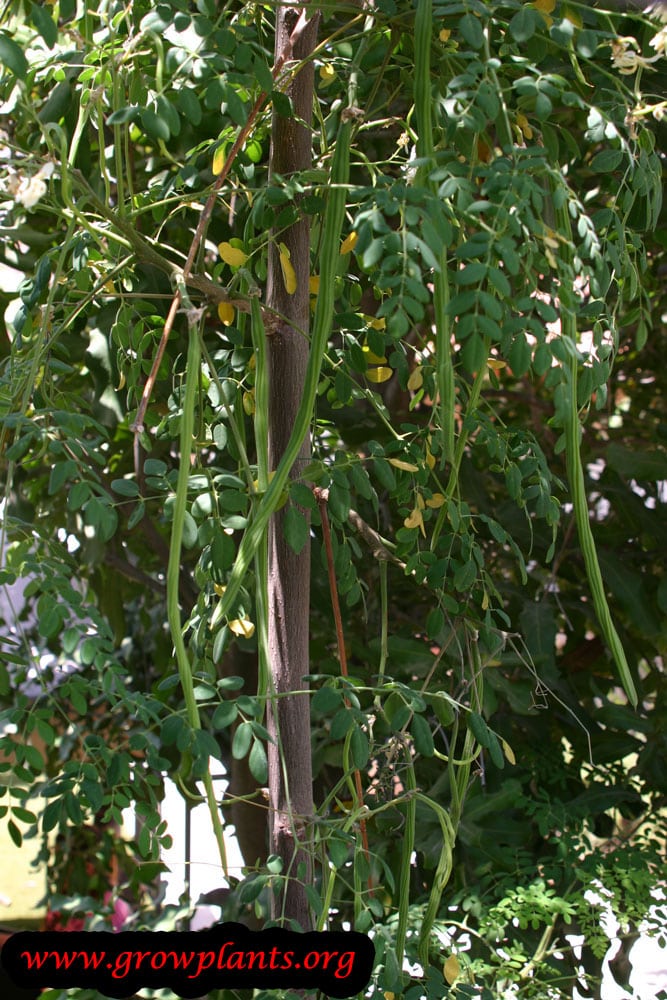
- Growth Habit & Form: Fast-growing slender tree with a soft trunk and open canopy; branches can be brittle and occasionally fall.
- Lifespan & Maturity: Fast-growing, bearing pods in about 1.5-3 years.
Anatomy & Physical Features
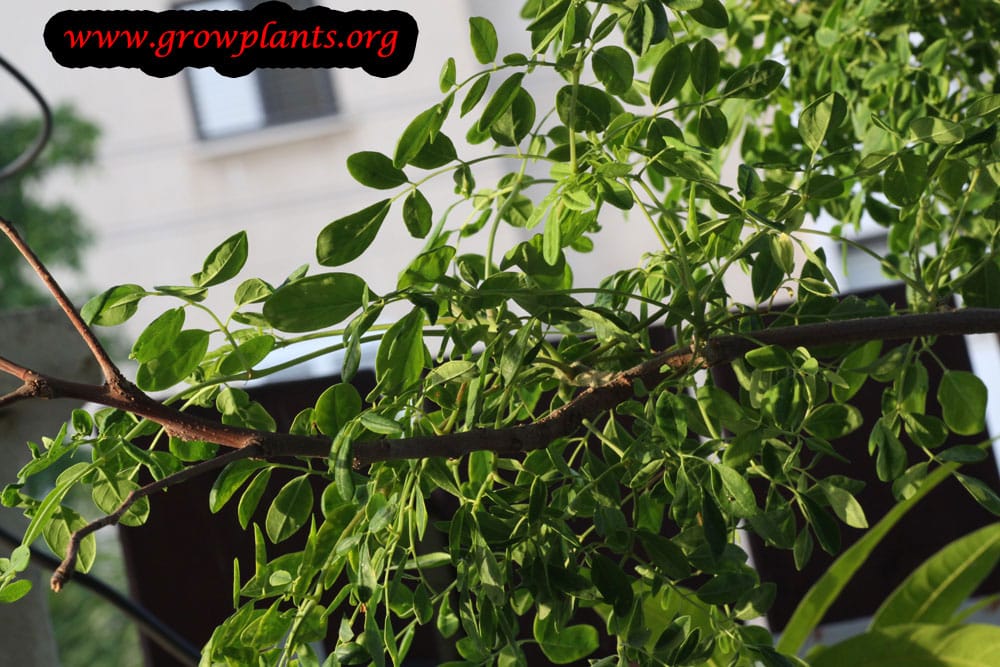
- Leaves & Foliage: Light-to-dark green odd-pinnate leaves with elliptic leaflets; edible.
- Flower Characteristics: Fragrant white-cream edible flowers that attract pollinators.
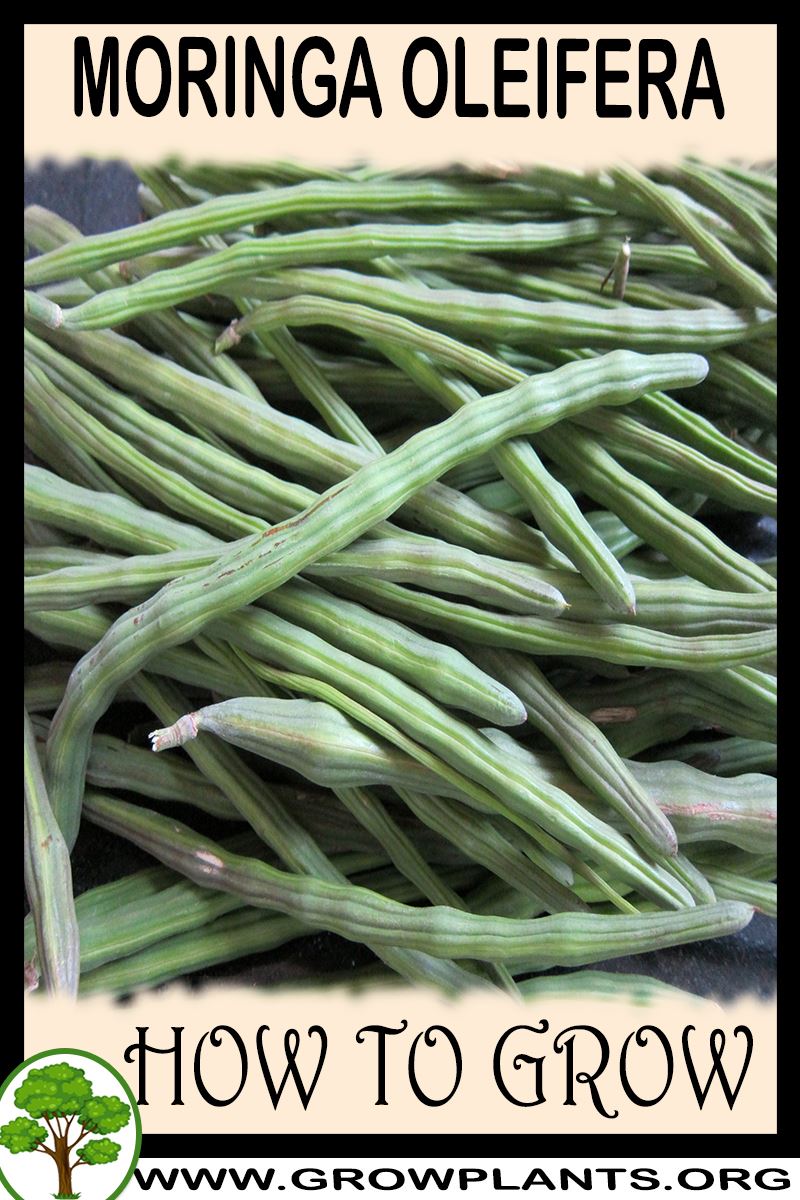
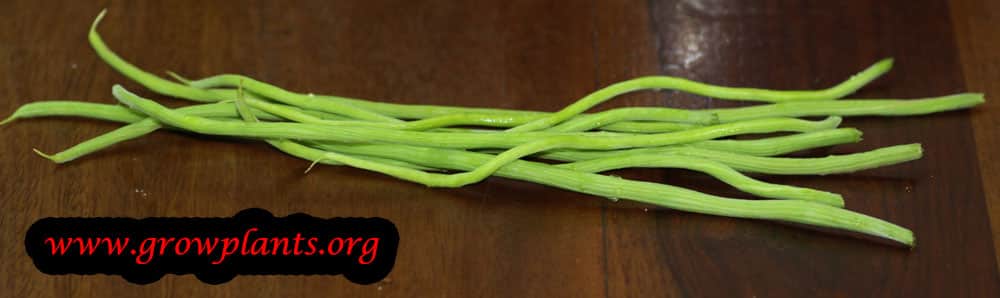
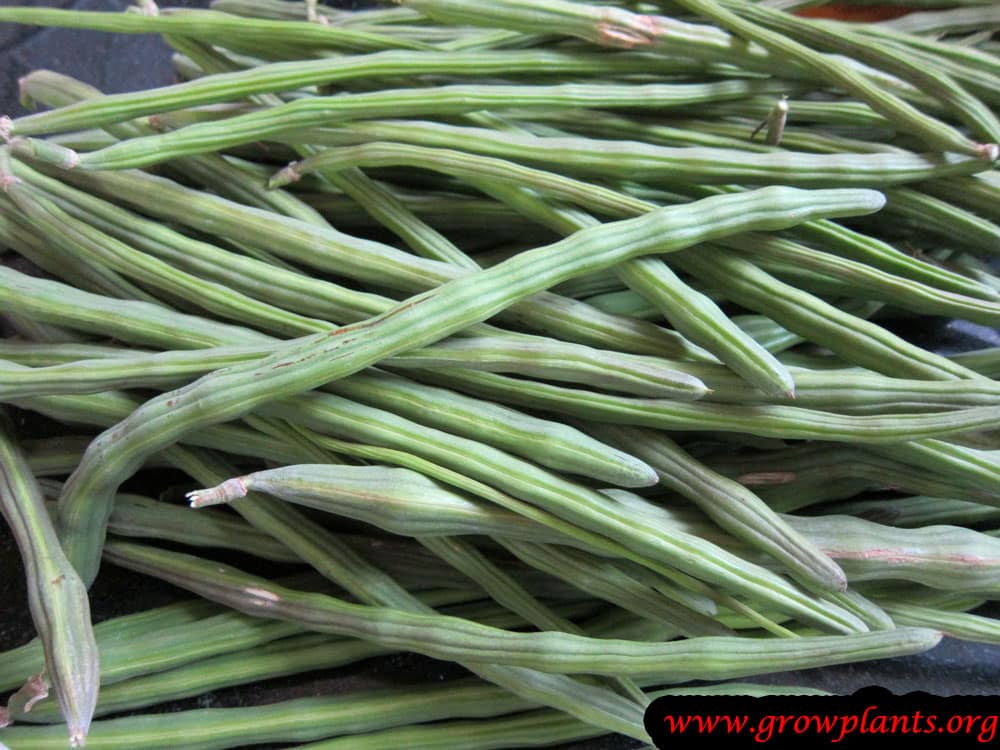
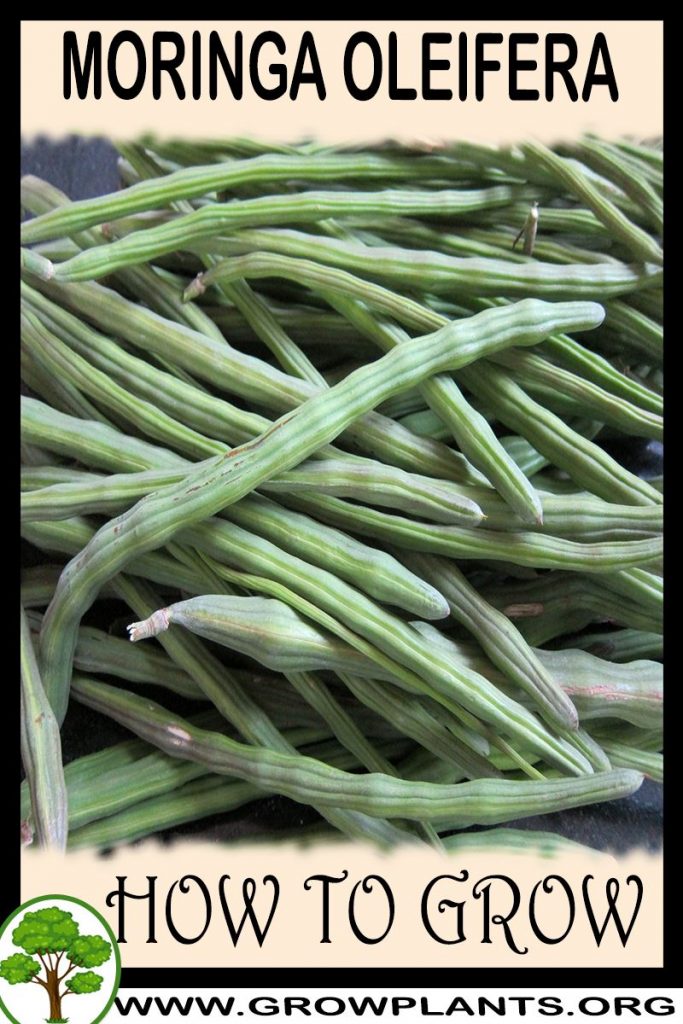
- Fruit Profile: Long green edible pods (“drumsticks”), fully edible when young and with an edible inner part when ripe.
Primary Uses & Landscape Value
- Edible Uses: Leaves eaten raw in salad or cooked; edible flowers, young pods and seeds; young root edible, but its peel is toxic.
- Functional & Ornamental Roles: Multipurpose nutrition and food tree; also ornamental.
Care Guide: Planting, Soil & Watering
Overview: Moringa oleifera (Drumstick tree) is a fast-growing tree for full sun to part shade in warm, essentially frost-free climates (hardiness zone 9+). It is drought-tolerant and does best in light, well-drained soil with modest watering.
Quick Care Requirements
| Requirement | Ideal Condition |
|---|---|
| Planting Season | Spring to summer; autumn in desert areas |
| Growth Rate | Fast |
| Soil Type | Light, well-draining; tolerates poor, sandy ground |
| Water Need | Low to Moderate – drought-tolerant once established |
Planting & Establishment
- Best Planting Season: Plant in spring to summer in cooler areas, or in autumn in hot desert climates, so young trees avoid frost.
- How to Plant:
- Hole Preparation: Dig a hole about twice the width of the root ball in a warm, sunny, well-drained spot.
- Soil Amendments: Add some compost to poor soil, but keep the mix light and free-draining – Moringa dislikes heavy, wet ground.
- Planting Depth: Set the root collar at soil level; do not bury the stem.
- Growth Speed & Expectations: Fast – it puts on height rapidly and can begin bearing pods within a couple of years.
Soil, Watering & Drainage Care
- Soil Mix & Drainage Needs: Sharp drainage is key; sandy, light soils suit it well, while waterlogged ground causes rot.
- Watering Schedule & Technique:
- Young / Newly Planted: Water young trees regularly to establish them, letting the soil dry somewhat between waterings.
- Established: Highly drought-tolerant once established; water deeply but infrequently.
- Seasonal Adjustments: Water more in prolonged heat; reduce in winter and in cool, wet spells.
Climate, Light & Hardiness
Moringa (Moringa oleifera) is a fast-growing tree of subtropical, tropical, Mediterranean and desert climates that demands full sun and abundant heat. Grown in roughly USDA zone 9 and warmer, it is frost-tender - frost kills the soft top growth - but established roots can survive a small amount of frost and resprout.
Quick Climate Specifications
| Climate Zones | Subtropical, tropical, Mediterranean, desert |
|---|---|
| USDA Hardiness Zones | Approximately 9 and warmer |
| Optimal Temp Range | Warm to hot, roughly 25–35 °C (77–95 °F) |
| Cold Damage Begins | At light frost; soft stems and foliage are killed quickly |
| Approx. Survival Minimum | Established roots take a little brief frost, roughly −2 to 0 °C (28 to 32 °F), and resprout; harder freezes are lethal to the top |
| Frost Tolerance | Very low |
| Light Conditions | Full sun |
| Wind Tolerance | Low to moderate (brittle branches) |
Sunlight & Light Exposure
Optimal Light Setup
Full, direct sun all day gives the fast, upright growth this tree is grown for; it does not perform in shade.
Direct Sun Requirement
High - strong sun and heat are essential to its rapid growth and leaf and pod production.
Best Exposure / Orientation
The hottest, sunniest, most sheltered spot available suits it, especially near the cool edge of its range.
Temperature Extremes & Hardiness
USDA Hardiness & Regional Limits
Grown outdoors in roughly zone 9 and warmer. In the coldest of these the top may be frosted off in winter and regrow from the roots in spring; it is often cut back and treated as a resprouting or even root-hardy plant at its cold margin. Young plants are far more cold-sensitive than established ones.
Cold Damage & Winter Protection
Even light frost blackens the soft growth; established roots frequently survive a brief, light freeze and reshoot when warmth returns. Heavy mulch over the root zone and a warm, sheltered position improve regrowth after a cold winter.
Frost Sensitivity
Highly frost-sensitive above ground; the plant behaves as winter-deciduous where cold, and summer-deciduous in some hot-dry areas, shedding leaves in response to the season.
Extreme Heat Tolerance
Outstanding - it is one of the most heat-adapted of cultivated trees and thrives in intense desert and tropical warmth.
Wind, Humidity & Microclimate
Dry-Air Tolerance
Excellent tolerance of hot, dry air, in keeping with its desert adaptability.
Wind Tolerance
The soft, brittle wood breaks easily, so shelter from strong wind protects the fast, sappy growth.
Microclimate Recommendations
A hot, sun-drenched, wind-sheltered pocket maximises growth and gives the roots the best chance of resprouting after a cold snap at the edge of its range.
Growing in Pots, Balconies & Indoors
Moringa (the drumstick tree) is a fast-growing tropical tree (5-10 m) grown for its nutritious leaves and pods. It is not a houseplant, as the grower confirms, but it takes well to a large container where it can be cut back hard and grown as a leafy shrub for young leaves, and potting lets you protect it from frost.
Quick Details
- Container Size: A large, deep tub for its fast taproot; the bigger the better, with hard pruning to keep it low
- Indoor Suitability: Not a houseplant (per the grower) – a fast tree that needs full sun
- Best Spot: Full sun to half shade
- Soil & Drainage: Very free-draining mix – it hates wet feet and rots easily in cold, soggy soil
- Watering in Pots: Small to average; let it dry between waterings, especially when cool
Indoors & On the Windowsill
- Houseplant limits: The grower marks it no for indoors; it grows fast and tall and wants full outdoor sun, though a cut-back potted plant can be raised for leaf harvests outdoors.
- Overwintering indoors: Very frost-tender – in cold climates keep it potted, cut it back and move it into a warm, bright, frost-free space over winter (it can drop leaves and rest).
On a Balcony or Patio
- Light & wind: Give it the hottest, sunniest spot; the soft, fast growth is brittle, so shelter from wind. It’s drought-tolerant once established but pots still dry fast in heat – water enough to keep it growing, never waterlogged.
Choosing the Pot, Soil & Long-Term Care
- Pot & drainage: Use a pot with strong drainage holes and skip a standing-water saucer, which invites root rot; terracotta breathes and dries faster, while glazed or plastic holds moisture longer.
- Potting mix: A light, aerated organic mix – peat or coir with perlite or vermiculite – gives the roots both moisture and air.
- Feeding: Potted plants use up their feed faster because each watering leaches nutrients away, so feed a little more often than plants in open ground.
- Repotting: Refresh the top of the mix and pot up every couple of years; a light root and top prune at repotting keeps established plants vigorous.
Fertilizing & Feeding
A moderate feeder: fast-growing Moringa oleifera responds to light, balanced feeding through the active season, with a little extra nitrogen while young to support the leafy growth that is harvested. A fertilizer formulated for tomatoes and vegetables supports that feeding pattern through harvest.
Quick Fertilizing Specs
| Feeding Level | Moderate |
|---|---|
| young_feeding | Nitrogen-leaning complete fertilizer to build the framework |
| mature_feeding | Balanced feeding with adequate potassium as it bears |
| Main Nutrient Priority | Nitrogen when young; balanced with adequate potassium as it bears |
| Best Feeding Period | From late dormancy through the active growing season |
| Organic Options | Compost, aged manure and mulch |
| Micronutrients | Usually supplied by a complete fruit-tree fertilizer; iron may need attention on alkaline soils |
| Soil pH | Tolerates a wide range; needs well-drained soil |
| Reduce/Stop Feeding | Ease back in late season and during dormancy |
Feeding by Growth Stage
Newly planted
Help the newly planted Moringa oleifera settle in and push healthy roots and first shoots.
| Nutrient direction | A gentle, balanced complete fertilizer once new growth appears, kept light while roots establish. |
|---|---|
| Timing | The first growing season after planting, once the tree shows active new growth. |
| Frequency | Light feeding spread across the active growing season. |
| Fertilizer types | Balanced complete garden or fruit-tree fertilizer, Compost or well-rotted organic matter worked into the surface |
| Precautions | Keep fertilizer off the trunk and avoid heavy applications before roots establish. |
Young, pre-bearing tree
Build a strong framework of shoots and foliage on the young, non-bearing Moringa oleifera.
| Nutrient direction | Lean a little more toward nitrogen to drive vegetative growth, supplied within a complete fertilizer. |
|---|---|
| Timing | Through the active growing seasons of the young, pre-bearing years. |
| Frequency | Several light feedings across the growing season. |
| Fertilizer types | Nitrogen-forward complete fruit-tree fertilizer, Compost and mulch for steady background nutrition |
| Routine trace nutrients | iron, manganese, zinc |
| Precautions | Avoid pushing soft, late-season growth with excess nitrogen, as it is prone to cold and pests. |
Established, beginning to bear
Support steady growth and the first crops as Moringa oleifera begins to bear.
| Nutrient direction | Return to a balanced complete fertilizer that supplies nitrogen with adequate potassium. |
|---|---|
| Timing | From late dormancy into the active growing season as bearing begins. |
| Frequency | A few light feedings during the active growing season. |
| Fertilizer types | Balanced complete fruit-tree fertilizer, Compost or aged manure as organic backing |
| Routine trace nutrients | iron, manganese, zinc |
| Precautions | Feed to match the tree’s growth rather than a fixed schedule. |
Mature and bearing
Sustain reliable cropping and fruit quality on the mature, bearing Moringa oleifera.
| Nutrient direction | Keep a balanced base with enough potassium as fruit develops, while avoiding excess nitrogen that favours leaves over fruit. |
|---|---|
| Timing | From late dormancy through fruit development in the active growing season. |
| Frequency | Light feedings early in the season, easing back as fruit ripens. |
| Fertilizer types | Balanced fruit-tree fertilizer with adequate potassium, Compost and mulch to maintain soil organic matter |
| Routine trace nutrients | iron, manganese, zinc |
| Precautions | Excess nitrogen can reduce fruiting and attract pests, so feed to match growth rather than a fixed schedule. |
Nutrient Deficiency Signs & Corrections
Older leaves turn pale green to yellow and shoot growth slows.
| Possible causes | Low soil nitrogen, Cold or waterlogged soil limiting uptake, Heavy grass or weed competition around the trunk |
|---|---|
| Appears first on | Older, lower leaves |
| What to check | Recent feeding history, Soil drainage and root health, Weed competition at the base |
| Possible correction | Apply a complete nitrogen-containing fertilizer as growth resumes and build soil organic matter with compost. |
Youngest leaves yellow between still-green veins.
| Possible causes | High soil pH reducing iron availability, Waterlogged or cold soils, A genuine iron shortage |
|---|---|
| Appears first on | Youngest leaves at the shoot tips |
| What to check | Soil pH, Drainage, Whether only new growth is affected |
| Possible correction | Correct soil pH where possible and apply a chelated iron product per its label. |
Margins of older leaves scorch and brown and fruit quality drops.
| Possible causes | Low soil potassium, Heavy fruit load drawing down reserves, Sandy soils that leach potassium |
|---|---|
| Appears first on | Margins of older leaves |
| What to check | Soil potassium status, Fruit load, Soil type and leaching |
| Possible correction | Feed with a potassium-containing complete fertilizer during fruit development. |
Pruning, Training & Seasonal Maintenance
Moringa oleifera has very high pruning tolerance and is exceptionally responsive to hard cutting back (coppicing), a trait routinely used to advantage with this species. The main objectives are keeping the tree at an easily harvestable height and reducing storm or wind damage from its notably brittle, weak wood by keeping growth shorter and stockier rather than tall and lanky. Pruning can be done essentially any time it is actively growing, with the heaviest cutbacks best timed just before a new growth flush.
Quick Pruning & Maintenance Specs
| Pruning Tolerance | Very High |
| Primary Pruning Window | Any time during active growth; heaviest cuts just before the main flush |
| Secondary Maintenance Window | Ongoing removal of weak/dead wood year-round |
| Typical Frequency | Can be cut back repeatedly through the growing season where continuous young leafy growth is wanted |
| Main Objective | Height control for ease of harvest; reduce wind/branch-breakage risk |
| Young Plant Priority | Head back early to build a lower-branching, stockier plant |
| Mature Plant Priority | Periodic coppicing back to a low framework to keep growth within reach |
| Best Tool Type | Loppers/pruning saw for coppice cuts; secateurs for thinner growth |
| Avoid Heavy Pruning During | Prolonged cold spells at the frost-tender edge of its range |
Pruning by Plant Age & Size
Newly Established
Once past initial establishment, an early heading cut encourages branching low down rather than the single tall, fast, whip-like stem this species produces if left unpruned.
Young / Formative
Repeated tip pruning/heading in the first year or two builds a multi-branched, stocky framework instead of one rocketing trunk, making the tree easier to manage and harvest later.
Mature / Established
Periodic hard coppicing — cutting back to a low framework, or even near ground level — is standard, well-tolerated practice to keep the tree at a manageable, easy-to-harvest height and to force a flush of new, tender leafy growth.
Seasonal Pruning Schedule
Pre-Growth/Early Flush
Objective: the most effective time for a major coppicing cutback, since the plant channels the coming season’s vigorous growth into a fresh, low, leafy flush.
Summer Canopy Management
Objective: keep pace with fast growth. This species is fast enough that additional shaping or height-limiting cuts through the growing season are normal and well tolerated, not just an annual event.
Ongoing Sanitary
Remove weak, dead, or storm-damaged branches at any time, given the wood’s brittleness.
Flowering & Fruiting Wood
Flowers and pods form on current-season growth, so a hard coppice cut removes flowering/podding wood temporarily; because the tree is so fast-growing, it typically resumes flowering on the new flush within the same warm season rather than losing a full year’s production.
Structural Pruning & Training
Build a low, multi-branched framework rather than a single tall trunk, both for ease of harvest reach and for wind resistance given the brittle wood. Remove or shorten overly long, thin, whip-like branches that are prone to snapping, especially any carrying a heavy pod load.
Special Growth to Remove
Weak and dead branches, per the plant’s own maintenance needs. Any long, thin branch showing signs of splitting or bending heavily under its own weight or pod load should be shortened before it snaps and tears. If several sprouts arise from a coppiced base, thin to the best few strong shoots rather than leaving a thicket of thin ones.
Container & Small-Space Pruning
Can be grown in a large container while young or for a limited period, kept compact by frequent heading back; as a genuinely fast, large-growing tree (5–10 m unmanaged), long-term container culture only works with committed, repeated pruning, and root confinement itself also naturally checks its size.
Tools
Bypass secateurs for thin new shoots; loppers for the moderate branches typical of routine coppicing; pruning saw for an occasional stump-level cut on an older, thickened trunk.
Tool Hygiene & Disease Risk
Routine — clean, sharp tools; no major transmissible pathogen is flagged for this species (caterpillars, aphids, and ants are pests, not tool-borne diseases). Because the brittle wood is prone to tearing rather than clean breakage, a sharp tool and correct cut placement matter more here for wound quality than for disease risk.
Cut Placement & Technique
Because the wood is notably brittle and prone to tearing or splitting, use clean, sharp cuts and support larger branches while cutting to avoid a tear running down into the trunk. Cut back to just above a healthy node when heading for branching; for a full coppice cut, cut cleanly across the stem rather than leaving a ragged or crushed stump.
Heavy Pruning & Rejuvenation
Exceptionally well tolerated — moringa is one of the few trees that can be cut back hard, even to a low stump, and reliably resprout vigorously within weeks in warm weather. This is a standard, deliberate management technique for this species, not a last resort, used specifically to keep the tree at a manageable height and stimulate flushes of tender young leaves. Expect a temporary pause in flowering/podding after a hard cutback until new growth matures.
Post-Pruning Care
Water normally to support the fast regrowth; avoid heavy nitrogen feeding immediately after a hard coppice cut, since the plant already regrows vigorously on its own; watch the flush of soft new growth for caterpillars and aphids, which are drawn to tender regrowth.
Common Pruning Mistakes
Letting the tree grow tall and unbranched without early heading, resulting in a lanky, wind-vulnerable trunk that’s also hard to harvest from; leaving long, thin, heavily podded branches unsupported until they snap given the wood’s brittleness; being overly cautious about hard pruning — under-pruning is more often the mistake with this species, since it tolerates and benefits from assertive cutbacks.
When NOT to Prune
Avoid a major hard cutback right before an expected cold snap in marginal, frost-edge plantings, since the resulting soft new growth is more cold-tender than established wood. Otherwise this species has few pruning-timing restrictions given its all-year growth habit in warm climates.
Recommended Tools (by task)
- bypass_secateurs — thin new shoots and light shaping; clean cuts on soft young growth.
- loppers — routine coppice-style cutbacks on moderate branches; the main working cut size for keeping this fast grower at a manageable height.
- pruning_saw — occasional stump-level renewal cut on an older, thickened trunk; needed once base wood has thickened beyond lopper capacity.
Pruning Troubleshooting
| Problem | Possible Cause | What to Check | Corrective Action |
| Branches snapping or splitting | Brittle wood combined with long, thin, heavily podded or wind-exposed branches | Branch length/thickness ratio and pod load | Shorten long branches proactively; build a stockier framework via earlier heading |
| Tree growing tall and lanky, hard to harvest | No early heading or coppicing done | Pruning history and current height versus reach | Coppice back to a manageable height — moringa recovers quickly |
| Reduced flowering/pods after cutback | Recent hard coppice removed current flowering wood | Timing of the last hard prune | Expect a temporary pause; flowering resumes on the new flush within the same warm season |
Propagation Guide
Moringa is among the easiest trees to propagate: fresh seed germinates fast with no pretreatment, and large hardwood cuttings (limb cuttings or truncheons) root readily when planted directly. Seed gives a taprooted, wind-firm tree; cuttings clone a selected plant but produce a shallower root system. Overall easy.
Quick Propagation Specs
| Best Propagation Method | Fresh seed (direct-sown) |
| Alternative Methods | Large hardwood cuttings / truncheons |
| Propagation Difficulty | Easy |
| Seed True-to-Type | Reasonably uniform (open-pollinated) |
| Vegetative True-to-Type | Yes |
| Best Propagation Season | Spring–summer in cooler areas; autumn in the desert; year-round in the tropics |
Growing from Seed
Seed Handling & Viability
Sow reasonably fresh seed; viability declines with age and heat. The seed has no hard dormancy and needs no stratification or scarification.
Sowing Season
Spring to summer in cooler areas, autumn in the desert; year-round in the tropics.
Sowing Depth & Orientation
Sow about 1–2 cm deep, directly in place or in deep containers — the long taproot resents disturbance, so avoid shallow trays.
Germination Conditions
Warm, moist, free-draining medium; seedlings usually emerge within a week or two.
Seedling Care
Growth is fast; grow on in deep pots to accommodate the taproot and plant out young.
Stem Cuttings
Large hardwood cuttings and truncheons (thick limb sections) root readily when set directly in warm, moist ground. Cutting-grown trees establish quickly but lack the deep taproot of seedlings, so they are less wind-firm. A rooting hormone is optional given how easily the wood strikes.
Bloom & Edible Flower Guide
Quick Details
- Bloom Season: Spring to summer in cooler areas; year-round in the tropics
- Time to First Bloom: Fast-growing trees often flower within their first year
- Flower Appearance: Small white to cream flowers in loose sprays
- Edibility: Edible – both the flowers and the buds are eaten, often cooked or brewed as a tea
Detailed Blooming Overview
Moringa is a quick, willing bloomer that can flower almost continuously where winters are mild. The creamy, lightly scented sprays are valuable on two fronts: they keep bees and other pollinators busy, and the flowers and buds themselves are a genuine food, with a delicate flavour when lightly cooked.
Flower Characteristics
- Small, white-to-cream flowers carried in airy clusters.
- Both flowers and unopened buds are edible.
Bloom Care & Thinning
- Managing the bloom: Harvest flowers and buds while fresh; regular picking and light pruning keep the tree productive and within reach.
- Pollination: Bees are the main visitors, and the flowers reliably attract a range of pollinators.
Fruit & Uses
Moringa is a multi-purpose food tree: the leaves, flowers and buds, young pods (drumsticks), seeds and even the roots are all eaten. The one important exception is the root peel and bark, which are toxic and must be removed before the root is used.
Quick Edible Specs
| Edible Parts | Leaves; flowers & buds; young pods (drumsticks); seeds; peeled roots |
|---|---|
| Main Use(s) | Culinary – leaves as a green (salad or cooked), pods and flowers cooked, seeds raw or cooked, peeled root as a pungent condiment |
| Eaten Raw or Cooked | Both – leaves and seeds raw or cooked; pods and flowers cooked |
| Preparation Required | Peel / remove toxic part – the root peel and bark MUST be removed; ripe pods use only the inner pulp; seeds need the white seed-coat removed |
| Harvest Season | Leaves all year; pods summer to autumn (all year in the tropics) |
| Storage | Leaves used fresh or dried into a keeping powder |
| Safety/Toxicity Caveat | Root peel and bark are toxic – remove them; roots are pungent and are used only in small amounts |
Leaves & Greens
The light-to-dark-green pinnate leaves are the main crop and can be picked all year. They are eaten raw in salads or cooked like spinach, and are often dried and ground into a storable powder. Harvest is easiest when the tree is kept small by pruning; strip the leaflets from the tougher stalks.
Flowers & Flower Buds
The white-cream flowers and their buds are edible and are cooked – for example fried or added to dishes. Gather them while fresh.
Seeds, Pods & Nuts
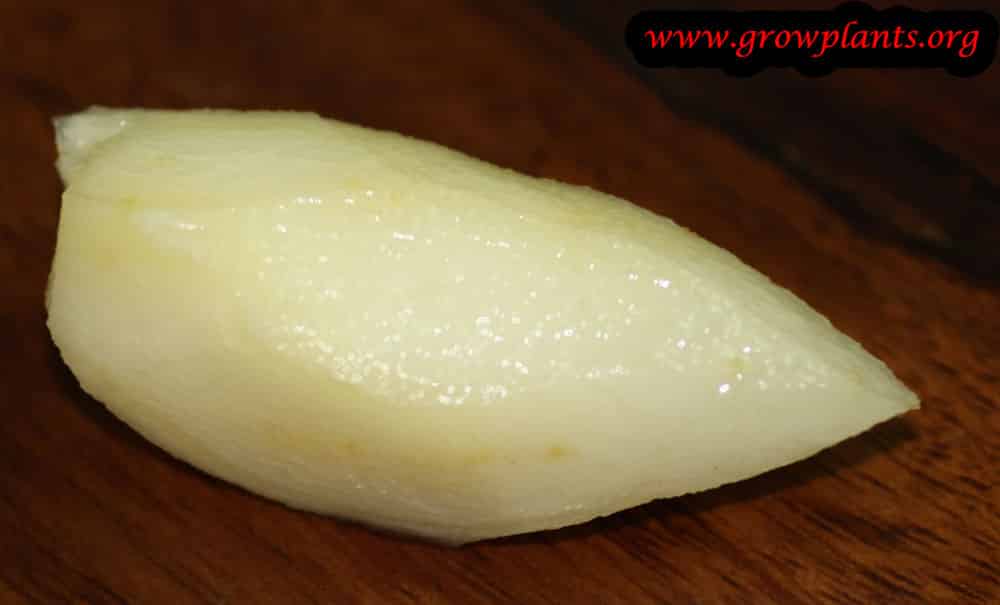
The green pods (drumsticks) are eaten whole while young and tender. Once the pod fully ripens only the inner pulp is used, as the outer wall turns fibrous. The seeds themselves are edible after peeling off the white seed-coat; they have a sweet-bitter taste and are eaten raw or cooked. Pick pods at the right stage – young for whole use, mature only for the seeds.
Roots & Tubers
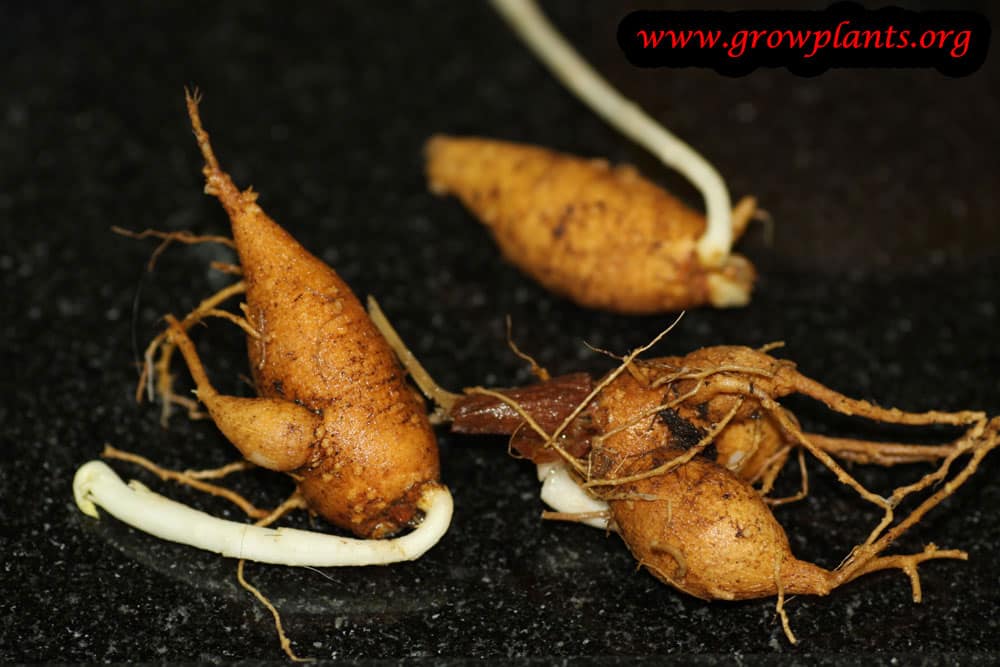
The white root is edible only after its brown peel and bark are stripped away, because that peel is toxic. Pull roots while the plant is young, before they turn fibrous. The peeled root is pungent and is used raw or shredded into salads as a sharp condiment – in small amounts rather than as a bulk vegetable.
Preparation, Uses & Safety
Leaves and seeds can be eaten raw or cooked; pods and flowers are cooked. The key safety step is the root: always remove the toxic brown peel and bark, and use the pungent root sparingly. Ripe pods should be shelled for the inner pulp and seeds rather than eaten whole.
Pests, Diseases & Troubleshooting
Overview: Moringa are fast-growing, generally resilient trees, but their soft young foliage and pods attract aphids, caterpillars and specific budworms and fruit flies, while the roots and stems can rot in waterlogged or cold soil. The tree’s vigor lets it outgrow most damage; sanitation, pruning and encouraging beneficials handle the rest.
Quick Troubleshooting Overview
| Issue / Pest | Main Symptom | Primary Solution |
|---|---|---|
| Aphids (with ants) | Curled shoot tips, honeydew, ant activity | Rinse, control ants, insecticidal soap |
| Budworm / leaf webworm | Webbed, eaten buds and leaves, defoliation | Remove webs, Bt or spinosad, sanitation |
| Fruit fly | Maggoty, distorted pods | Bag pods, traps, remove infested pods |
| Caterpillars | Chewed, skeletonized foliage | Hand-pick, Bt, encourage predators |
| Root rot / damping-off | Wilting, blackened base, seedling collapse | Improve drainage, ease watering |
| Wind / frost damage | Snapped brittle branches, frost dieback | Shelter, prune, protect from cold |
Common Pests & Management
- Aphids (Aphis / Toxoptera spp.):
- Symptoms: Dense colonies on soft new shoots, flower stalks and leaflets, causing curling, stunting, honeydew and sooty mold; ants farm and protect them, which is why ants appear alongside.
- Prevention & Control: Wash off with water, control the ants with barriers or bait to expose the aphids to predators, and encourage ladybugs and lacewings. Insecticidal soap or neem clears heavy colonies; avoid excess nitrogen.
- Moringa budworm / leaf webworm (Noorda moringae / Noorda blitealis):
- Symptoms: Caterpillars web together and bore into flower buds (budworm) or web and eat leaves (leaf webworm), causing bud drop, webbed skeletonized foliage and defoliation.
- Prevention & Control: Prune out and destroy webbed buds and shoots, keep the area clean, and encourage parasitic wasps. Bt (Bacillus thuringiensis) or spinosad in the evening controls larvae; act early before webbing protects them.
- Fruit fly (Gitona / Bactrocera spp.):
- Symptoms: Flies lay in developing pods, whose seeds and walls are then tunneled by maggots, leaving distorted, oozing or dropped pods.
- Prevention & Control: Bag pods for seed, hang protein-bait or pheromone traps, and collect and destroy infested and fallen pods; harvest young pods promptly for eating.
- Caterpillars / hairy caterpillars (Spodoptera / Eupterote spp.):
- Symptoms: Leaf-eating caterpillars chew and skeletonize foliage, sometimes defoliating young trees in outbreaks.
- Prevention & Control: Hand-pick where practical, remove egg masses, and encourage birds and predators; Bt or spinosad handles larvae on smaller trees.
- Termites and borers (Odontotermes / stem borers):
- Symptoms: Termites attack roots and stems of stressed or young trees; borers tunnel stems, causing wilting and dieback.
- Prevention & Control: Keep trees vigorous and unstressed, remove dead wood, avoid piling mulch against the trunk, and treat active termite nests around the root zone as needed.
Diseases & Fungal Issues
- Root rot and damping-off (Pythium / Rhizoctonia / Diplodia):
- Symptoms: Seedlings collapse at the soil line (damping-off), and older trees wilt with a blackened, soft base and rotted roots in wet, poorly drained or cold soil.
- Treatment & Management: Sow in free-draining media, avoid overwatering, and never leave the tree waterlogged. Improve drainage, remove affected plants, and treat seed or drench with a biological or copper product for damping-off.
- Twig and stem canker / dieback (Diplodia / Fusarium spp.):
- Symptoms: Sunken cankers, oozing and progressive dieback of twigs and branches, often entering through wounds or on stressed trees.
- Treatment & Management: Prune out cankered wood well below the lesion with sterile tools, avoid mechanical injury, and keep the tree vigorous; paint or protect large cuts.
- Powdery mildew / leaf spot (Leveillula / Cercospora spp.):
- Symptoms: White powdery patches or brown leaf spots in humid, crowded conditions, causing leaf yellowing and drop.
- Treatment & Management: Prune for airflow, remove affected leaves, and avoid overhead evening watering; sulfur or copper fungicide helps if it spreads.
- Fruit rot (Cochliobolus / Colletotrichum spp.):
- Symptoms: Soft, discolored rotting of pods in wet weather.
- Treatment & Management: Improve airflow, remove affected pods, harvest promptly, and avoid overhead watering.
Growing Difficulties & Abiotic Problems
- Waterlogging and root death:
- Cause & Symptoms: Moringa is very intolerant of wet feet; standing water quickly kills roots and the tree.
- Correction Strategy: Plant in free-draining or sandy soil, never overwater, and site on a mound in heavy ground.
- Frost and cold damage:
- Cause & Symptoms: As a tropical/subtropical tree it defoliates or dies back in frost and stops growing in cold.
- Correction Strategy: Protect young trees, grow in the warmest spot or as a cut-back plant in cold climates, and expect recovery from the base after light frost.
- Wind and self-breakage:
- Cause & Symptoms: The brittle, fast-grown wood snaps in wind and under heavy pod loads.
- Correction Strategy: Shelter from strong wind, prune to a strong framework and keep trees headed low, and stake young trees.
What Helps — Products & Tools
A fast, vigorous tree needs little chemistry. Keep insecticidal soap or neem for aphids, ant baits or barriers to break the ant-aphid link, Bt or spinosad for budworm, webworm and caterpillars, protein-bait or pheromone traps plus pod bagging for fruit fly, and a copper or biological fungicide for damping-off and cankers. Clean pruning tools and good drainage are the main defenses.