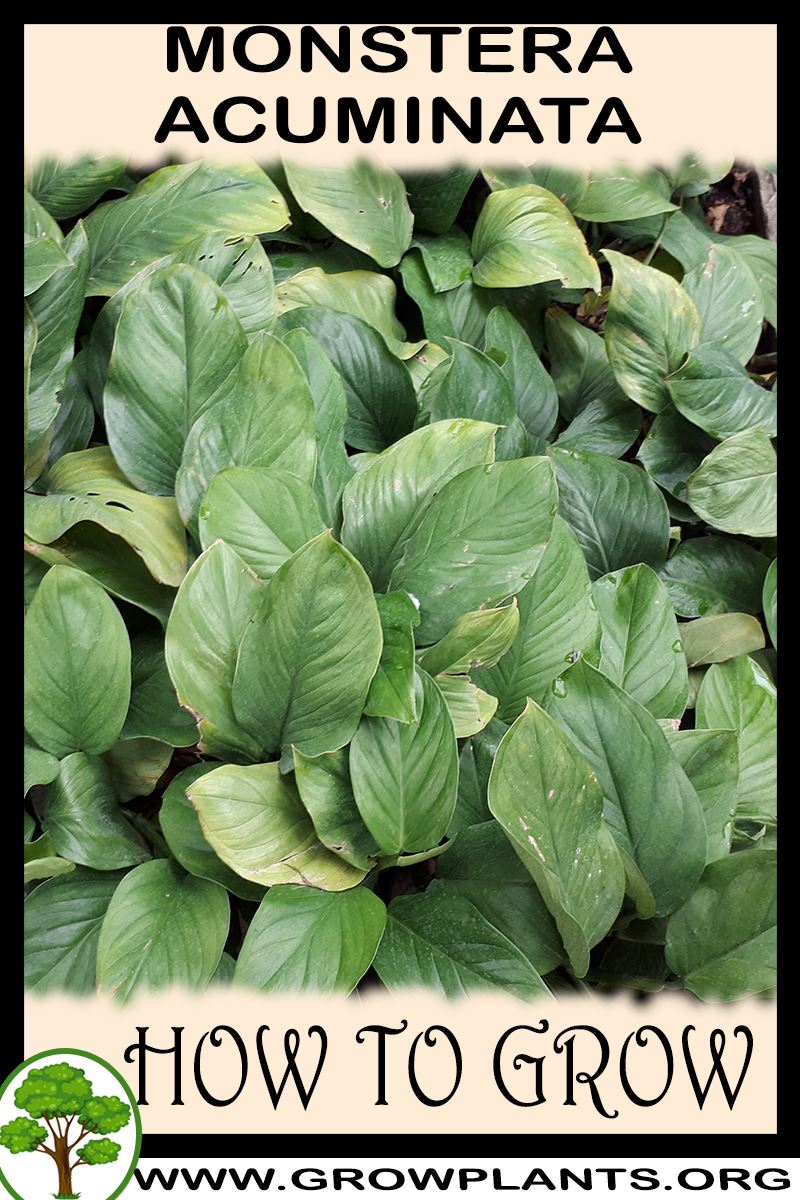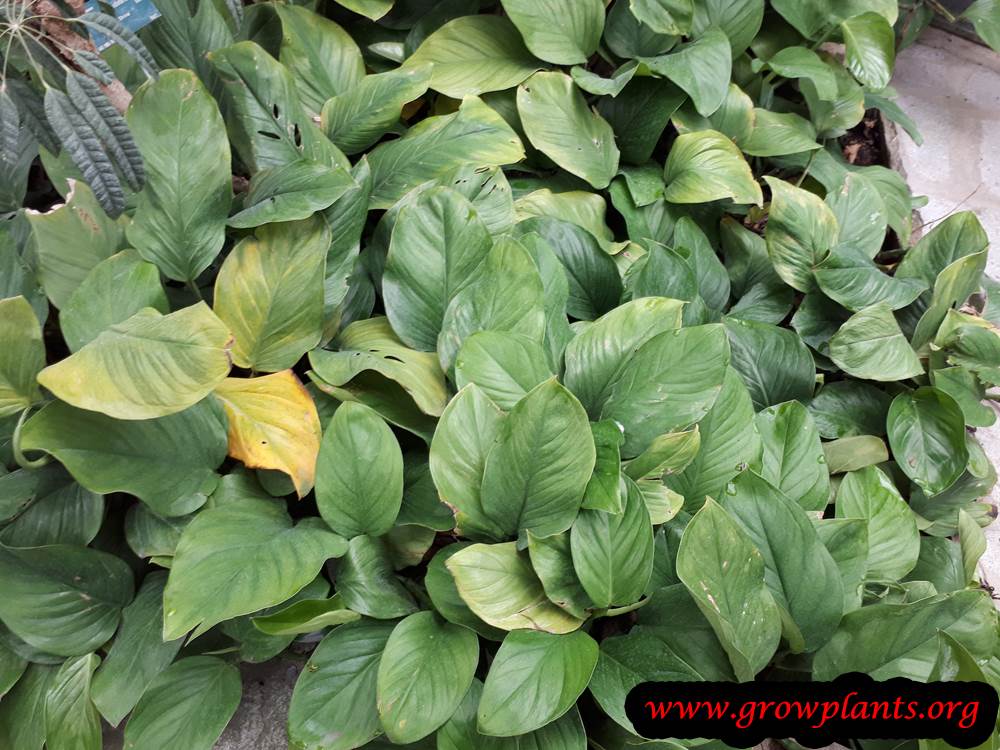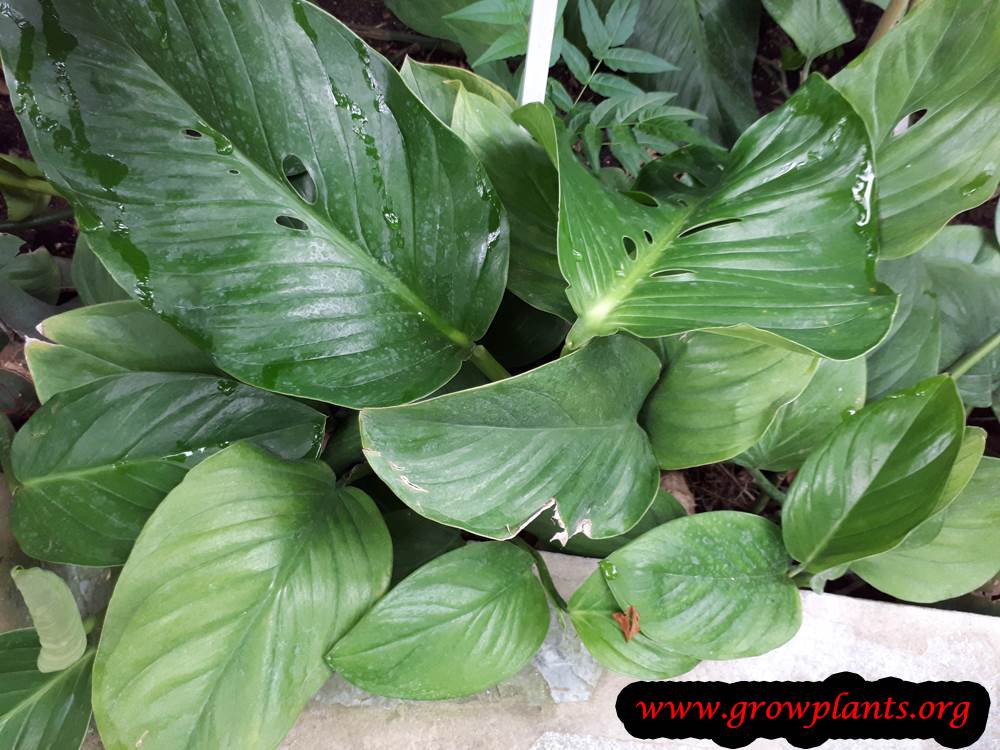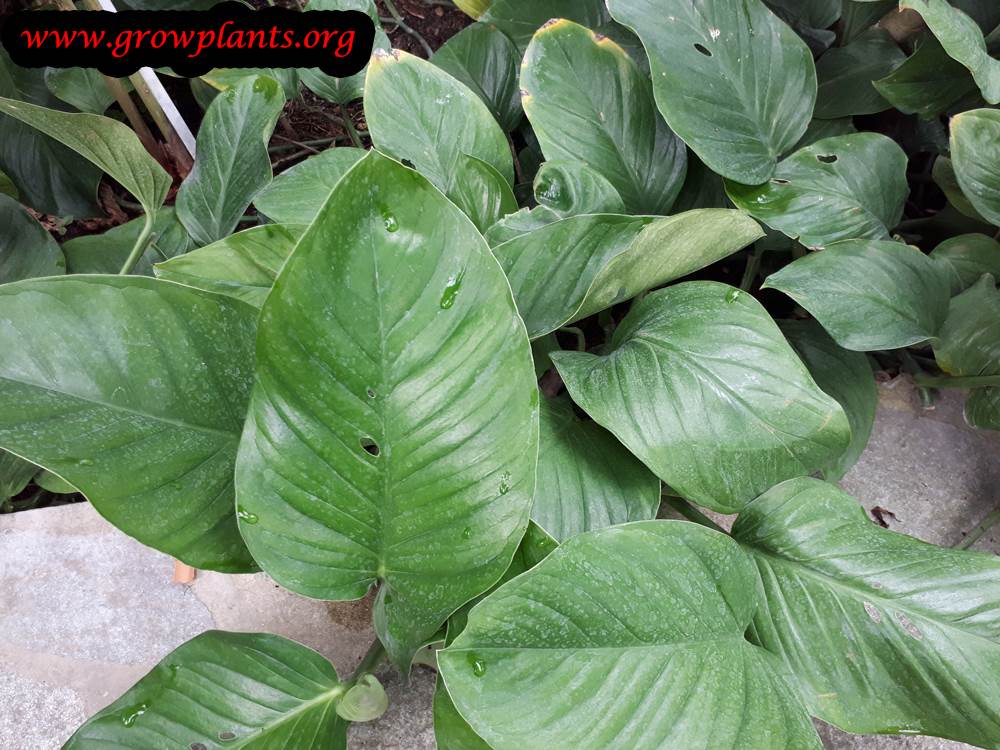


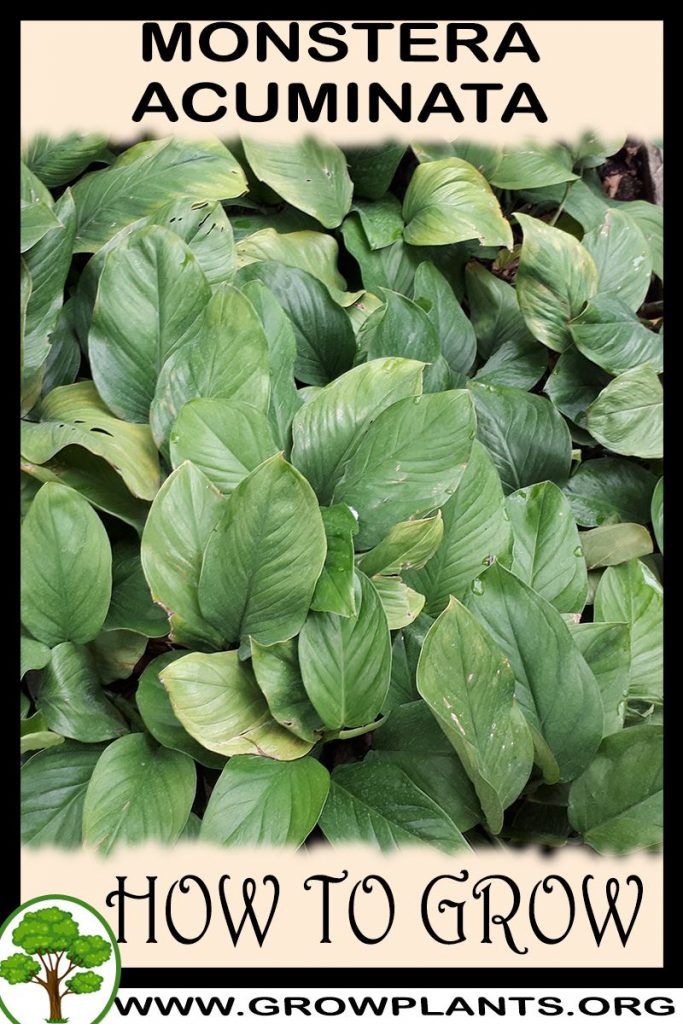
Plant Profile & Key Characteristics
Overview: An evergreen climbing vine reaching 2-5 m, grown ornamentally for its large foliage. It climbs by aerial roots and shingles against surfaces when young.
Quick Specifications
| Specification | Attribute |
|---|---|
| Plant Type / Life Cycle | Perennial (evergreen) |
| Foliage Type | Evergreen |
| Mature Size | 2-5 m (6-15 ft) |
| Growth Rate | Slow to Moderate |
| Root System | Aerial roots (epiphytic climber) |
| Toxicity | All parts contain calcium oxalate crystals – toxic and irritant to pets and humans |
| Hardiness | USDA zone 10b+ |
Growth Form & Structure
- Height & Spread: 2-5 m (6-15 ft) climbing; kept smaller in containers with support.
- Growth Habit & Form: Evergreen root-climbing vine that shingles flat against surfaces when young.
- Lifespan & Maturity: Long-lived; slow-to-medium growth, slowest when young.
Anatomy & Physical Features
- Leaves & Foliage: Green ovate leaves 25-100+ cm, some developing holes.
- Flower Characteristics: White-yellowish spathe surrounding a beehive-like spadix.
Primary Uses & Landscape Value
- Functional & Ornamental Roles: Popular ornamental foliage houseplant and climber.
Care Guide: Planting, Soil & Watering
Overview: Monstera acuminata (Shingle plant) is a shade-loving climber for warm, humid conditions (hardiness zone 10b+ or indoors); its leaves scorch in direct sun. It wants rich, organic, moisture-retentive but well-draining soil kept evenly moist, with high humidity.
Quick Care Requirements
| Requirement | Ideal Condition |
|---|---|
| Planting Season | Spring to autumn; year-round in the tropics |
| Growth Rate | Moderate to Slow |
| Soil Type | Rich, organic, moisture-retentive yet well-draining |
| Water Need | Moderate to High – keep evenly moist, mist for humidity |
Planting & Establishment
- Best Planting Season: Plant from spring to autumn in zones 10b–11a (year-round in the tropics), once temperatures stay reliably above about 20°C.
- How to Plant:
- Hole Preparation: Dig a hole to fit the root ball and provide a trellis or support for the climbing stems.
- Soil Amendments: Work in plenty of organic matter and humus; it thrives on rich, moisture-holding soil.
- Planting Depth: Set the root collar at soil level, firm gently, then mulch to keep the surface moist.
- Growth Speed & Expectations: Moderate to slow, particularly for young plants, picking up once established in warmth and humidity.
Soil, Watering & Drainage Care
- Soil Mix & Drainage Needs: Use a rich, airy, well-draining mix; good drainage prevents rot, and covering or supporting the aerial roots helps growth.
- Watering Schedule & Technique:
- Young / Newly Planted: Keep newly planted specimens evenly moist as they settle, misting to raise humidity.
- Established: Water deeply and let the top of the soil dry slightly before watering again; mist for the aerial roots.
- Seasonal Adjustments: Reduce watering in cool winter weather and shield the frost- and sun-sensitive plant from extremes.
Climate, Light & Hardiness
Monstera acuminata is a true tropical vine that needs warm, humid, frost-free conditions and grows outdoors year-round only in the warmest climates (tropical, subtropical, and mild mediterranean) or as a houseplant elsewhere. It prefers full shade to almost full shade with strong indirect light, and it has very little tolerance for cold.
Quick Climate Specifications
| Climate Zones | Tropical, subtropical, mediterranean (or houseplant) |
|---|---|
| USDA Hardiness Zones | 10b+ |
| Frost Tolerance | Very Low |
| Light Conditions | Full Shade to almost Full Shade (filtered/indirect) |
Sunlight & Light Exposure
Optimal Light Setup
Grow under filtered light - beneath tree canopy outdoors or a shade net, or set back from a bright window indoors.
Shade & Heat Management
Direct sun burns the leaves, so dappled or filtered light is essential; growing it under trees or shade cloth gives the best results outdoors.
Temperature Extremes & Hardiness
USDA Hardiness & Regional Limits
Outdoor perennial culture is only realistic in zone 10b and warmer, or in genuinely frost-free tropical climates; below that it is grown as a houseplant. Planting outdoors is best timed for when night temperatures are reliably staying above roughly 20°C (68°F).
Cold Damage & Frost Sensitivity
The site data flags this species as sensitive to cold as well as to direct sun - cool drafts, cold windowsills, and any frost will damage or kill it, so it should be kept well away from cold exposure whenever grown outside its hardy zone.
Wind, Humidity & Microclimate
Humidity Preferences
Needs consistently high humidity; misting helps keep its aerial roots functional, and dry indoor air (especially near heating or cooling vents) is a common source of stress.
Microclimate Recommendations
A warm, humid, shaded microclimate - under tree canopy outdoors or grouped with other tropicals indoors - best matches its native forest-floor conditions.
Growing in Pots, Balconies & Indoors
Monstera acuminata is one of the most popular indoor foliage climbers – it grows happily in a pot and prefers bright, filtered light rather than harsh sun, so it is well suited to life indoors and on a shaded patio.
Quick Details
- Container Size: A roomy pot with a moss pole or trellis; refresh part of the soil every few years
- Indoor Suitability: A genuine, easy houseplant – popular indoors, needs light but not strong sun
- Best Spot: Bright, filtered light or light shade; direct sun scorches the leaves
- Soil & Drainage: Rich, airy, free-draining mix with ample drainage holes
- Watering in Pots: Keep lightly moist; mist to raise humidity for the aerial roots
Indoors & On the Windowsill
- A true houseplant: One of the classic indoor climbers – give it a bright spot out of direct sun and it thrives in a living room.
- Light: It wants good light but not strong sun; near a bright window or under filtered light is ideal.
- Humidity: Mist the plant to keep the aerial roots and foliage happy in dry indoor air.
- Safety: Keep out of reach of children and pets – the sap and leaves are irritant and toxic if chewed.
On a Balcony or Patio
- Light & shelter: Best on a shaded or part-shaded balcony or patio; keep it off blazing, sun-baked walls.
- Heat & wind: Pots dry faster outdoors – check moisture often and shelter the large leaves from wind.
Choosing the Pot, Soil & Long-Term Care
- Pot & drainage: A large pot with strong drainage holes; do not leave it standing in water.
- Potting mix: A light, free-draining mix – a good potting mix, or peat/coir blended with perlite or vermiculite.
- Feeding: Container plants use up food faster because watering washes nutrients out – feed a little and often through the growing season.
- Repotting: Refresh part of the soil every couple of years and pot up as it grows.
Grower’s Container Tip
- Manage the aerial roots: As it climbs it throws out aerial roots – tuck them back into the pot to draw up moisture, and give the plant a moss pole or trellis to climb. Swap out part of the soil every few years.
Fertilizing & Feeding
Monstera acuminata grows fastest with steady but gentle feeding through the warm season; it is not a heavy feeder and responds poorly to over-fertilizing or salt buildup in the pot.
Quick Fertilizing Specs
| Feeding Level | Light feeder overall, a bit more attentive during its warm-season growth flush |
|---|---|
| Main Nutrient Priority | Balanced feeding with a nitrogen lean to support leaf and vine growth |
| Best Feeding Period | Warm months while the plant is actively pushing new leaves and stems |
| Organic Options | Well-rotted compost or worm castings worked lightly into the topsoil |
| Micronutrients | Iron and manganese support from a complete houseplant fertilizer helps keep foliage deep green |
| Reduce/Stop Feeding | Ease off and then stop as light and temperatures drop and new-leaf growth stalls |
Feeding by Growth Stage
Establishment After Repotting
Let a newly planted, divided, or freshly repotted Monstera acuminata settle in before any fertilizer is added.
| Nutrient direction | None – withhold fertilizer while roots recover from disturbance. |
|---|---|
| Timing | The first few weeks after planting, repotting, or a fresh division. |
| Frequency | No feeding at this stage. |
| Fertilizer types | No feeding at this stage; plain watering is sufficient until new leaf growth confirms active roots. |
| Precautions | Do not fertilize disturbed or newly potted roots; wait for visible new growth before resuming feeding. |
Active Growth
Support steady vine extension and new leaf development during the warm growing season.
| Nutrient direction | A balanced, nitrogen-forward feed that supports lush foliage without overwhelming the roots. |
|---|---|
| Timing | Warm months when the plant is actively producing new leaves and climbing growth. |
| Frequency | Several light feedings spaced through the active growing season. |
| Fertilizer types | A balanced liquid houseplant fertilizer diluted for regular use, or a controlled-release formula worked lightly into the topsoil. |
| Routine trace nutrients | iron, manganese |
| Precautions | Keep feeding light – this aroid is sensitive to fertilizer salt buildup; water thoroughly after every feeding. |
Low-Light Slowdown
Match feeding to the plant’s reduced nutrient uptake once light and warmth drop and growth slows.
| Nutrient direction | None – withhold fertilizer while growth is minimal or stalled. |
|---|---|
| Timing | Cooler, lower-light months when new leaf production visibly stalls. |
| Frequency | No feeding at this stage. |
| Fertilizer types | No feeding at this stage; resume only once new growth restarts in warmer, brighter conditions. |
| Precautions | Do not fertilize a slow or resting plant; unused nutrients build up as salts around the roots and can damage them. |
Nutrient Deficiency Signs & Corrections
New leaves emerge pale to yellow between the veins while the veins themselves stay green.
| Possible causes | Iron deficiency, often induced by high potting-mix pH, Overly wet or compacted potting mix limiting root uptake, Old, depleted potting mix that has not been refreshed |
|---|---|
| Appears first on | Newest, most recently unfurled leaves |
| What to check | Potting mix pH, Drainage and root health for signs of rot, How long since the last repot or soil refresh |
| Possible correction | Improve drainage and repot into fresh mix if overdue; if pH is high, correct it and apply a chelated iron product per its label. |
Overall pale green leaves and noticeably slower vine and leaf production despite adequate light.
| Possible causes | Nitrogen deficiency from an extended period without feeding, Root-bound plant with too little fresh potting mix, Insufficient light for the season |
|---|---|
| Appears first on | Older, lower leaves first, then the whole plant |
| What to check | Time since the last feeding and last repot, Root crowding when checking the pot, Light levels at the plant’s location |
| Possible correction | Resume balanced feeding during active growth and refresh the potting mix if the plant is root-bound. |
Leaf margins turn brown and crisp, especially on older or more exposed leaves.
| Possible causes | Fertilizer salt buildup from over-feeding or infrequent flushing, Low humidity or underwatering stress, Direct sun or cold-air exposure |
|---|---|
| Appears first on | Leaf tips and margins, oldest leaves first |
| What to check | Strength and frequency of recent feedings, Humidity and watering consistency, Placement relative to direct sun, drafts, or cold windows |
| Possible correction | Flush the potting mix with plain water to clear excess salts, reduce feeding strength, and adjust humidity or placement. |
Pruning, Training & Seasonal Maintenance
Monstera acuminata is a climbing vine tolerant of routine trimming; it is grown for its foliage, so pruning is really about removing old or damaged leaves, controlling how far and in what direction the vine climbs, and keeping growth full rather than bare and leggy. Cutting is possible essentially all year, though the facts note it is best done before winter for tidiness, when growth naturally slows. Because this species climbs via support and aerial roots rather than building a woody framework, most of the structure work is training onto a trellis or moss pole rather than shaping cuts.
Quick Pruning & Maintenance Specs
| Pruning Tolerance | Moderate (leaf/vine trimming; slow to regrow when young) |
| Primary Pruning Window | Before winter for tidiness, though possible year-round |
| Typical Frequency | As needed – remove old leaves whenever they decline |
| Main Objective | Remove spent leaves, control vine size/direction, keep growth full |
| Young Plant Priority | Minimal cutting; establish support/trellising early |
| Mature Plant Priority | Manage vine length and leggy bare stretches; remove old leaves |
| Best Tool Type | Precision snips/bypass secateurs; soft ties for trellis training |
| Avoid Heavy Pruning During | Right after repotting or relocation, and in low-light winter conditions |
Pruning by Plant Age & Size
Newly Established
Avoid cutting a young plant beyond removing damaged leaves; growth is naturally slow at this stage and the plant needs its full leaf area while it establishes.
Young / Formative
No structural pruning system in the woody sense – instead, set up a trellis or moss pole early and guide the climbing stem onto it, since this vine climbs and roots along a support rather than self-supporting like a shrub.
Mature / Established
Once climbing well, focus on removing old or damaged leaves for design/appearance and shortening or redirecting a stem that has outgrown its space or become bare and leggy at the base.
Seasonal Pruning Schedule
Ongoing Sanitary
Objective: keep the plant tidy and full of healthy foliage.
Remove: old, yellowing, or browning leaves (browning edges are a noted issue for this species) as they decline.
Do not remove: healthy mature leaves purely for size, since this slows the plant’s already modest growth rate.
Expected response: a cleaner-looking plant with growth directed to remaining healthy leaves.
Flowering impact: not relevant – this species is grown for foliage, and any bloom is incidental to its culture.
Structural Pruning & Training
Training the vine onto a trellis or moss pole is the main structural task; tie or guide new growth to the support as it climbs. If a stem becomes long and bare at the base, cutting it back to just above a leaf node encourages branching lower down and fills the plant out rather than leaving one long runner.
Special Growth to Remove
Old or spent leaves, and leaves with significant leaf-edge browning, cut off at the base of the leaf stalk (petiole). Aerial roots are a normal, useful part of this climbing habit for anchoring and absorbing moisture; tuck them onto the support or into the growing medium rather than routinely cutting them off.
Container & Small-Space Pruning
Indoors, size control is the main reason to prune – shorten an overly long climbing stem back to a node to keep the plant within its space, and remove older lower leaves once the plant is climbing well and putting most of its energy into upper growth. Combine with the periodic partial soil refresh already used for this species rather than pruning roots aggressively.
Tools
Precision snips or bypass secateurs for leaf and stem cuts on this moderately thick-stemmed vine; soft ties or plant clips for securing new growth to a trellis or moss pole.
Tool Hygiene & Disease Risk
Routine: clean tools are sufficient. No major transmissible pruning-borne pathogen is documented for this species; the noted issue (leaf-edge browning) is generally an environmental/humidity response rather than something spread by cutting tools.
Cut Placement & Technique
Cut a leaf at the base of its petiole rather than leaving a stub; when shortening a bare vine stem, cut just above a node so new growth (and a new aerial root) can emerge from that point.
Heavy Pruning & Rejuvenation
Tolerated to a degree for size control – cutting a long stem back hard forces branching from a lower node – but regrowth is slow, especially on young plants, so treat this as a size-management tool used sparingly rather than a routine rejuvenation practice.
Post-Pruning Care
Maintain the humidity/misting this species prefers after cutting, since open cuts and reduced leaf area can briefly increase moisture stress; avoid heavy pruning at the same time as repotting or moving the plant, to limit compounding stress. No extra feeding is needed just for a routine trim.
Common Pruning Mistakes
Cutting off aerial roots wholesale instead of tucking them onto the support, which removes a structure the vine relies on to climb and take up moisture; over-removing leaves on a plant already growing slowly in low light, which further limits its energy; pruning immediately after repotting or relocating, compounding stress on the plant.
When NOT to Prune
Avoid significant pruning right after repotting, propagating, or relocating the plant, and avoid heavy leaf removal during low-light winter periods when the plant is already growing slowly.
Recommended Tools (by task)
- precision_snips – for removing old leaves and light vine trimming.
- soft_ties_stakes – for training and securing new climbing growth to a trellis or moss pole.
Propagation Guide
Monstera acuminata is almost always grown from stem cuttings or air layering, since viable seed is rarely available and can be difficult to germinate; both vegetative methods reliably reproduce the parent vine. Overall propagation difficulty is moderate – the methods themselves are simple, but rooting an aroid cutting can take anywhere from several weeks to over six months depending on warmth and humidity.
Quick Propagation Specs
| Best Propagation Method | Stem (node) cuttings |
| Alternative Methods | Air layering |
| Propagation Difficulty | Moderate |
| Vegetative True-to-Type | Yes |
| Best Propagation Season | Spring to summer (avoid starting in late summer in hardiness zone 10b, since cuttings may not establish before winter) |
| Cutting Rooting Time | At least about a month for initial roots, sometimes over 6 months depending on care |
| Germination Temperature | Above 21°C (70°F) |
Growing from Seed
Seed of Monstera acuminata is rare and difficult to source, and germination is not well documented for this species. Where seed can be found, the site notes it should be sown in spring once temperatures stay above 21°C (70°F), kept in the warm, moist, humid conditions this species prefers generally.
Stem Cuttings
Cutting Type
A stem (node) cutting, ideally including an aerial root, roots most reliably.
Best Timing
Take cuttings spring through summer, avoiding cold weather; in hardiness zone 10b, starting too late in summer risks the cutting failing to establish before winter.
Rooting Setup
Keep the cutting moist and humid in warm, shaded conditions – the same treatment used for air layers of this species.
Rooting Hormone
Not required, though it may speed root formation.
Rooting Time
New roots typically take at least a month to appear, and full establishment can take over six months depending on how well warmth and humidity are maintained.
Air & Ground Layering
Air layering a twig or stem section is a recommended alternative to a simple cutting for this vine, especially for thicker or already-climbing growth.
Best Timing
Spring to summer, when there is no risk of cold weather; in hardiness zone 10b, starting in summer may not leave enough time for the layer to establish before winter.
Rooting Setup
Wrap the wounded section in a moist, humid medium and keep it warm and shaded until roots form.
Rooting Time
Ranges from a few weeks to a few months, depending on how consistently the moist, warm, humid conditions are maintained.
Bloom & Flower Guide
Quick Details
- Bloom Season: Late spring to summer
- Flower Appearance: A large (10-30 cm) creamy white to yellowish hood (spathe) around a central spike (spadix) whose surface looks like a beehive
- Edibility: Not eaten – Monstera contains calcium oxalate crystals and is irritating and toxic if chewed
Detailed Blooming Overview
Monstera acuminata is an aroid, so what looks like one big flower is really an inflorescence: a creamy white to yellowish hood (the spathe), 10-30 cm long, wrapped around a central spike (the spadix) that is covered in many tiny true flowers – the honeycomb or beehive surface described here. It flowers mainly on mature plants and rarely indoors. All parts contain calcium oxalate crystals, so it is not edible.
Flower Characteristics
- Large creamy white to yellowish spathe (hood)
- Central spadix with a beehive-like surface of tiny flowers
- Appears mainly on mature plants
Bloom Care & Thinning
- Managing the bloom: No thinning is needed; indoors, blooming is uncommon and follows good maturity and bright light.
- Pollination: In the wild the spadix is worked by bees and other insects.
- Safety: Keep the plant and any flower parts away from pets and children, as the sap is irritating.
Pests, Diseases & Troubleshooting
Overview: Monstera are tough tropical aroids grown mostly as houseplants, and their problems are overwhelmingly cultural rather than pest-driven: sap-sucking mites, mealybugs and scale in dry indoor air, and root rot, yellowing and brown edges from watering and humidity mistakes. Correct light, humidity and watering solve most issues before any spray is needed.
Quick Troubleshooting Overview
| Issue / Pest | Main Symptom | Primary Solution |
|---|---|---|
| Spider mites | Fine stippling, webbing on undersides in dry air | Raise humidity, rinse, insecticidal soap or oil |
| Mealybugs | White cottony fluff in leaf joints, honeydew | Alcohol swab, wash, horticultural oil |
| Scale | Brown bumps on stems and midribs, sticky residue | Scrape off, horticultural oil |
| Fungus gnats | Small flies around soil, larvae in wet mix | Let soil dry, sticky traps, BTI drench |
| Root rot | Yellowing, mushy stems, wet sour mix | Reduce watering, repot into airy mix |
| Brown crispy edges | Dry brown leaf margins | Raise humidity, steady watering |
Common Pests & Management
- Spider mites (Tetranychus urticae):
- Symptoms: Fine pale stippling that dulls the leaf, faint webbing on undersides and along veins, and a dusty bronze cast in dry, warm indoor air; a very common Monstera pest.
- Prevention & Control: Raise humidity, rinse or shower the foliage regularly, and wipe undersides. Insecticidal soap or light horticultural oil in the evening, repeated every 5-7 days, clears them; keep leaves dust-free.
- Mealybugs (Pseudococcus / Planococcus spp.):
- Symptoms: White cottony tufts tucked into leaf axils, on new growth and along stems, with sticky honeydew and sooty mold; growth slows.
- Prevention & Control: Isolate the plant, dab each cluster with alcohol on a swab, wash the foliage, and follow with horticultural oil; repeat weekly and inspect unfurling leaves and aerial roots.
- Scale insects (Coccus / Saissetia spp.):
- Symptoms: Brown, waxy limpet-like bumps on stems, petioles and leaf midribs that do not brush off easily, with honeydew and sooty mold.
- Prevention & Control: Scrape off with a fingernail or soft brush, then apply horticultural oil to smother the rest, treating stems and undersides; repeat every couple of weeks.
- Thrips (Frankliniella / Thrips spp.):
- Symptoms: Silvery-bronze scarring and tiny black specks on leaves, with distorted new growth; increasingly common on houseplants.
- Prevention & Control: Isolate, use blue sticky traps, wipe leaves, and treat with spinosad or insecticidal soap; repeat to catch successive generations.
- Fungus gnats (Bradysia spp.):
- Symptoms: Small dark flies drifting around the pot and larvae in the top of a constantly moist mix; larvae can nibble fine roots of seedlings.
- Prevention & Control: Let the top of the mix dry between waterings, use yellow sticky traps for adults, and drench with Bti (mosquito-bit) product for larvae; a layer of grit on the surface deters egg-laying.
Diseases & Fungal Issues
- Root rot (Pythium / Phytophthora / Rhizoctonia):
- Symptoms: Yellowing, wilting despite wet soil, blackened mushy roots and stem base, and a sour smell; the classic result of overwatering or a heavy, airless mix.
- Treatment & Management: Water only when the top few centimeters dry, use a chunky, free-draining aroid mix and a pot with drainage, and empty saucers. Trim rotted roots and repot; a biological or copper drench can help early cases.
- Leaf spot / anthracnose (Colletotrichum / Xanthomonas spp.):
- Symptoms: Brown or black spots, sometimes water-soaked with yellow halos (bacterial) or with tan centers (fungal), spreading in humid, wet-leaf conditions.
- Treatment & Management: Remove affected leaves, avoid wetting foliage and misting late in the day, and improve airflow; a copper fungicide checks spread and sterilize tools between cuts.
- Southern blight / stem rot (Sclerotium rolfsii):
- Symptoms: Soft rotting at the stem base with white fungal threads and tiny tan pellets in warm, wet, crowded conditions.
- Treatment & Management: Remove and destroy affected plants and surrounding mix, improve drainage and airflow, and avoid mounding wet media against stems.
Growing Difficulties & Abiotic Problems
- Yellowing leaves (overwatering):
- Cause & Symptoms: Constantly soggy mix suffocates roots, yellowing lower leaves; the commonest Monstera complaint.
- Correction Strategy: Let the top of the mix dry before watering, use a chunky mix and a draining pot, and empty the saucer; correct before roots rot.
- Brown, crispy leaf edges:
- Cause & Symptoms: Low humidity, underwatering, or salt and fertilizer buildup dries and browns leaf margins.
- Correction Strategy: Raise humidity, water thoroughly and evenly, flush the mix occasionally to leach salts, and keep away from heat vents and dry drafts.
- Small leaves without splits or holes:
- Cause & Symptoms: Immaturity, low light or lack of support limits the famous fenestration and aerial-root climbing.
- Correction Strategy: Give bright indirect light and a moss pole or support; fenestration develops as the plant matures in good light.
- Edema (corky bumps):
- Cause & Symptoms: Overwatering in low light and humidity causes cells to burst, leaving corky spots on undersides.
- Correction Strategy: Water more evenly, improve light and airflow, and avoid soggy conditions; damage is cosmetic and stops with corrected care.
What Helps — Products & Tools
Care first, sprays second with Monstera. Keep insecticidal soap and light horticultural (neem) oil for mites, mealybugs and scale, blue or yellow sticky traps for thrips and gnats, a Bti drench for fungus-gnat larvae, and a copper fungicide only for leaf spot or root/stem rot. A chunky aroid mix, a moss pole and a moisture meter prevent far more problems than any pesticide.