
Plant Profile & Key Characteristics
Overview: A fast-growing marigold, 20-80 cm (8-32 in) tall, grown as an annual or short-lived perennial and used mostly as an ornamental. Its fragrant flowers are edible and the plant helps repel soil nematodes.
Quick Specifications
| Specification | Attribute |
|---|---|
| Plant Type / Life Cycle | Annual, or evergreen perennial in frost-free climates |
| Foliage Type | Evergreen where perennial; killed back by frost |
| Mature Size | 20-80 cm (8-32 in) tall |
| Growth Rate | Fast |
| Root System | Fibrous and shallow |
| Toxicity | Non-toxic / edible (flowers are eaten) |
| Hardiness | USDA zone 3+ as an annual; 10b+ as a perennial |
Growth Form & Structure
- Height & Spread: In the ground 20-80 cm (8-32 in) tall depending on cultivar; well suited to containers and bedding.
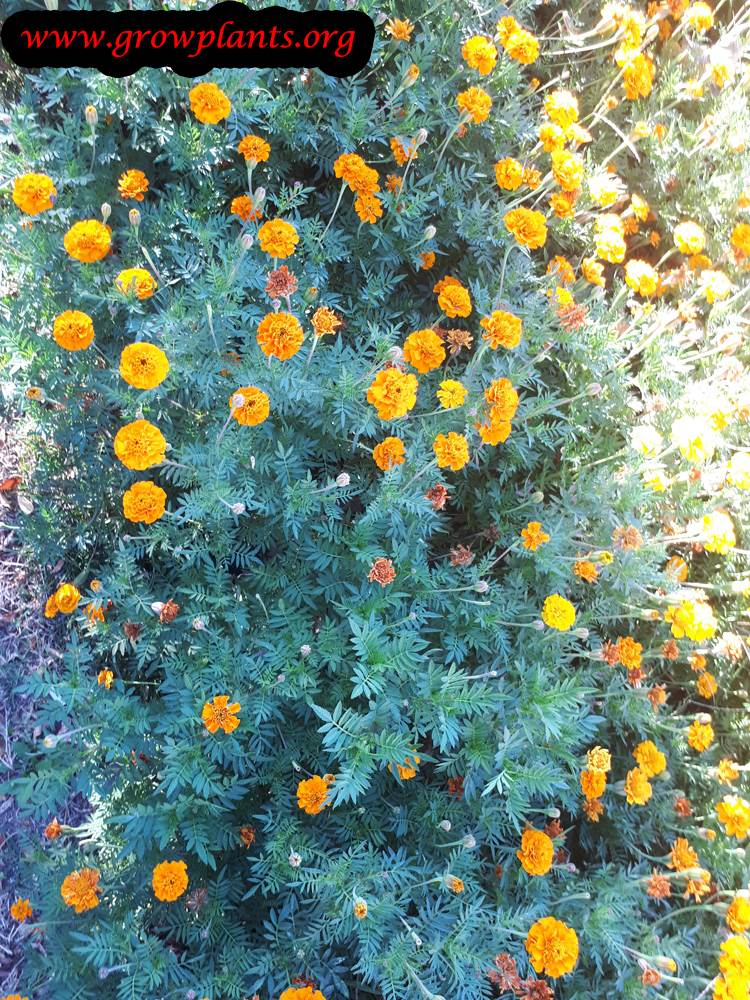
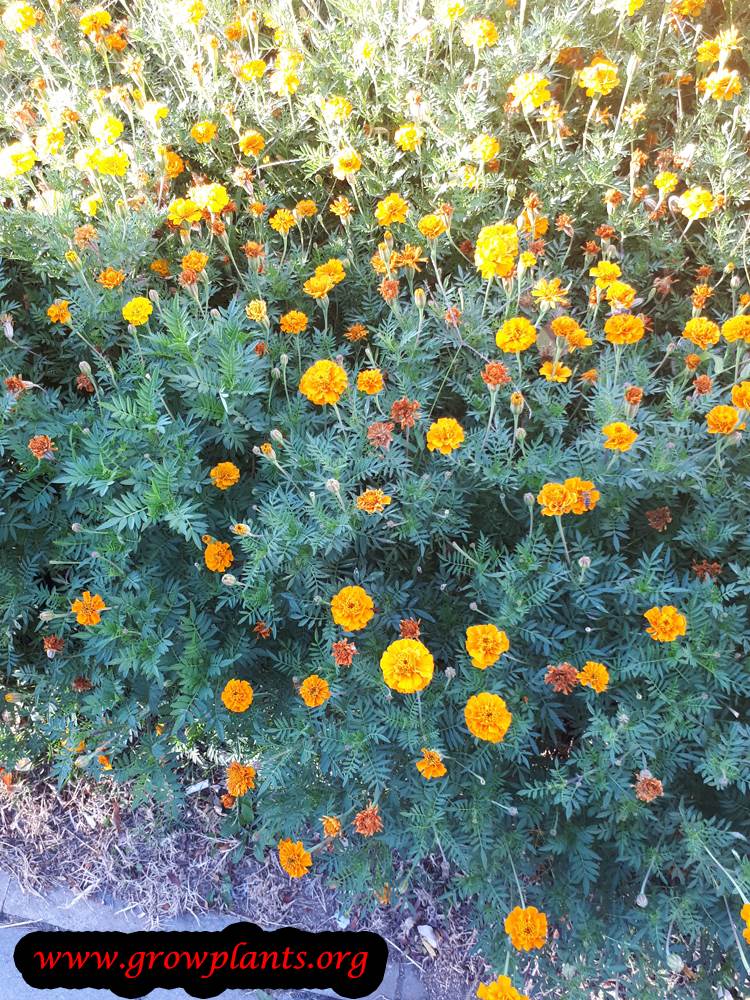
- Growth Habit & Form: Upright, bushy herbaceous plant that branches freely and flowers heavily.
- Lifespan & Maturity: Fast to flower, blooming about 1.5-2 months from sowing; treated as an annual in most climates.
Anatomy & Physical Features
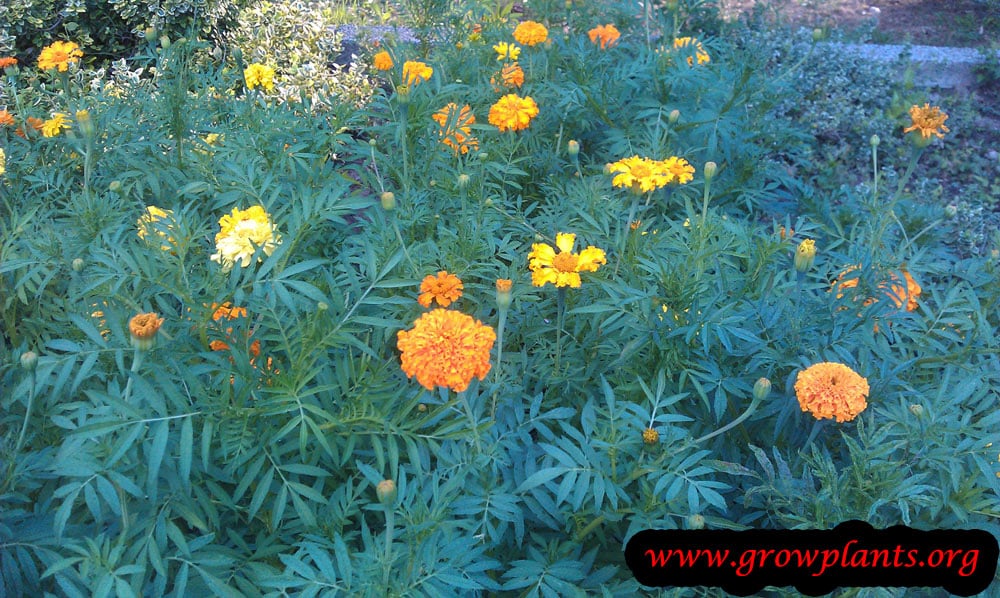
- Leaves & Foliage: Green, linear, odd-pinnate leaves with serrated edges.
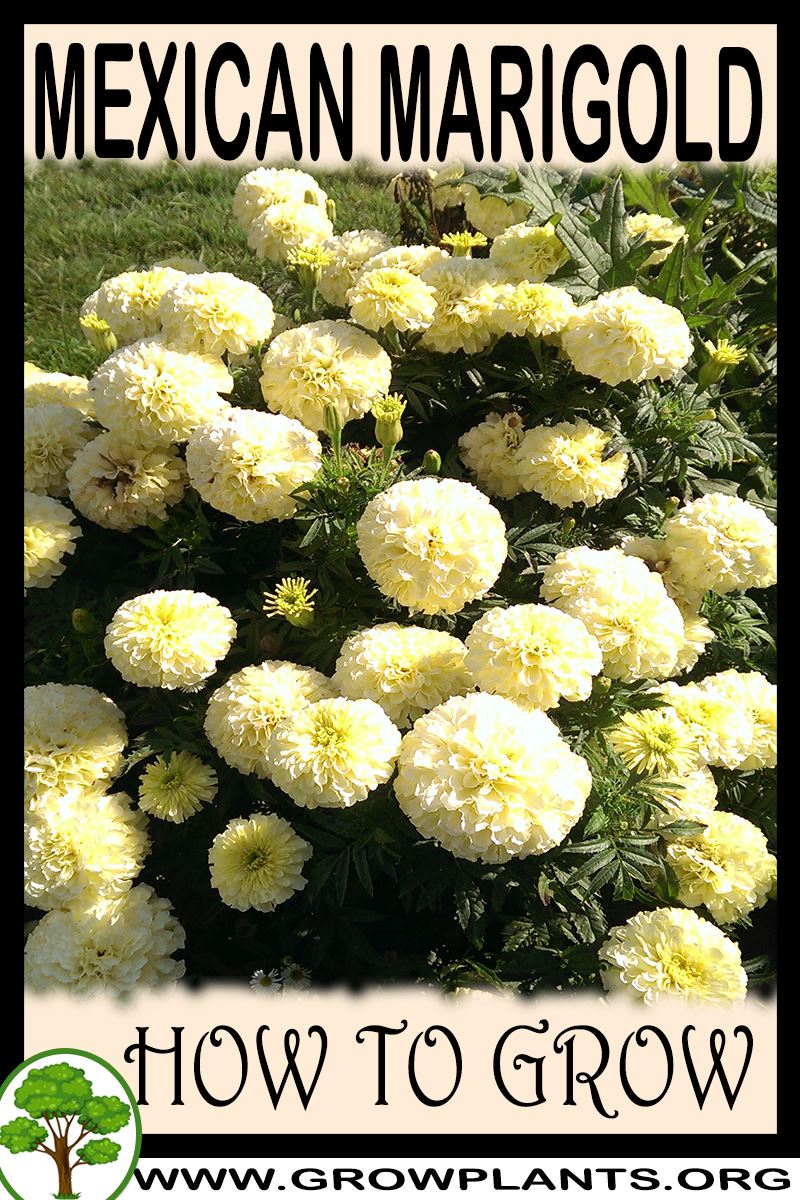
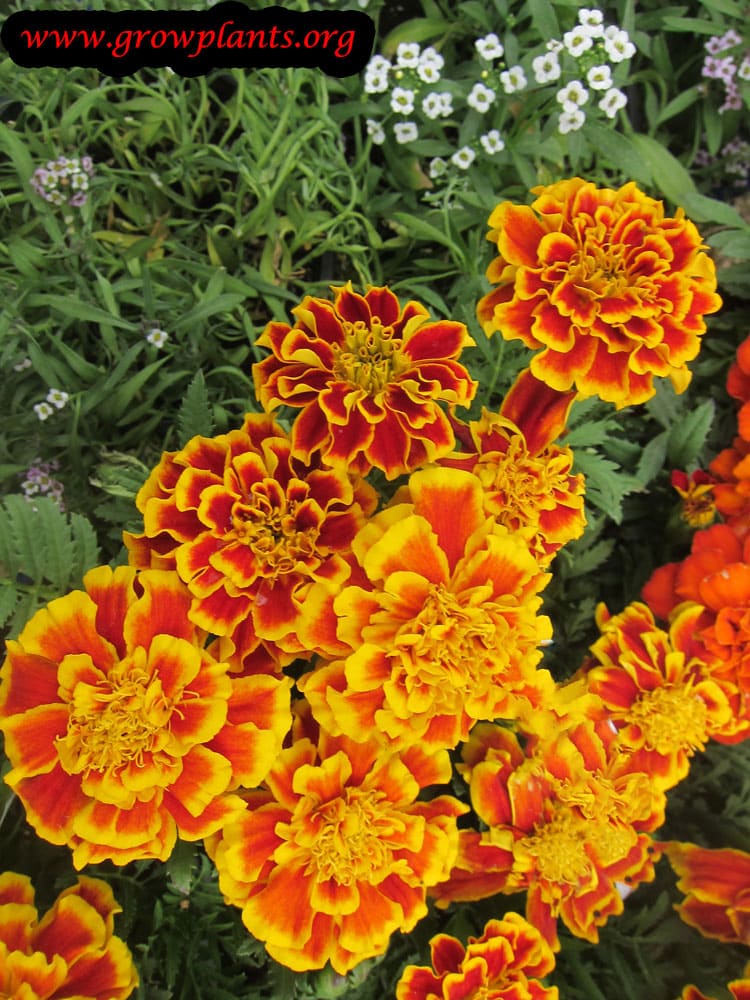
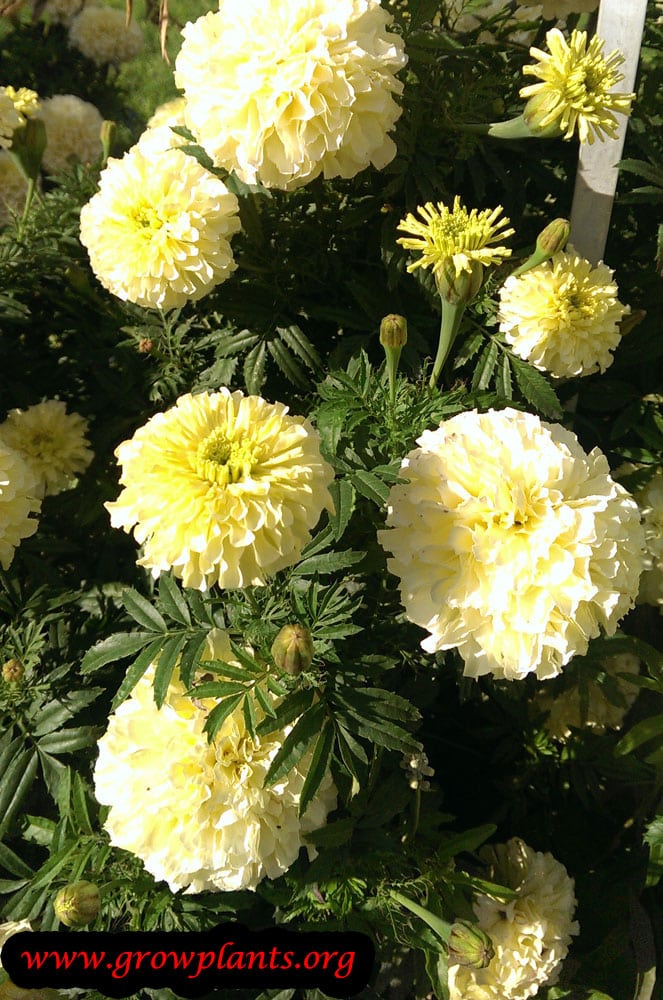
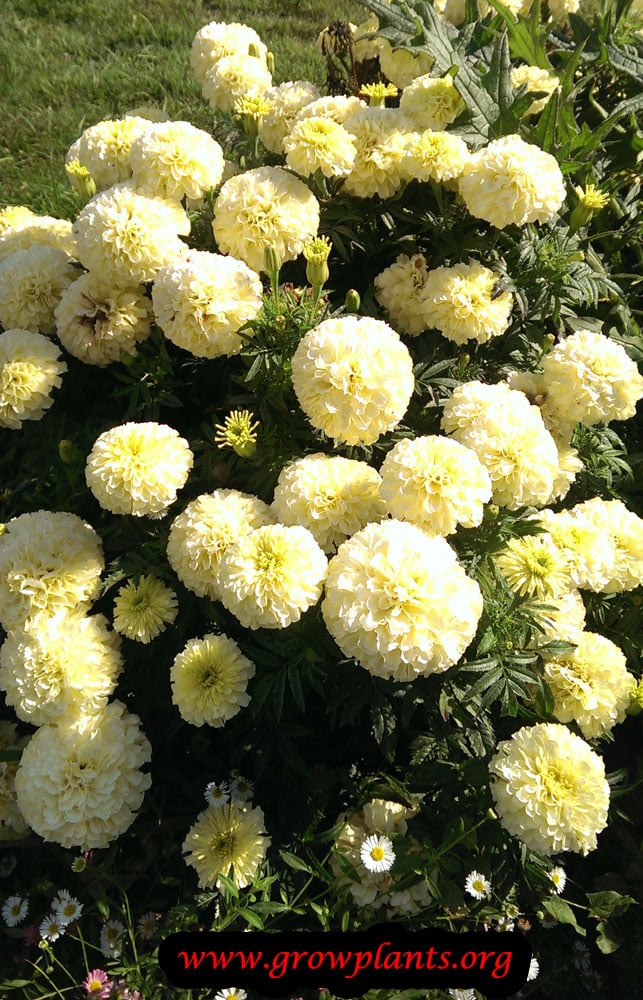
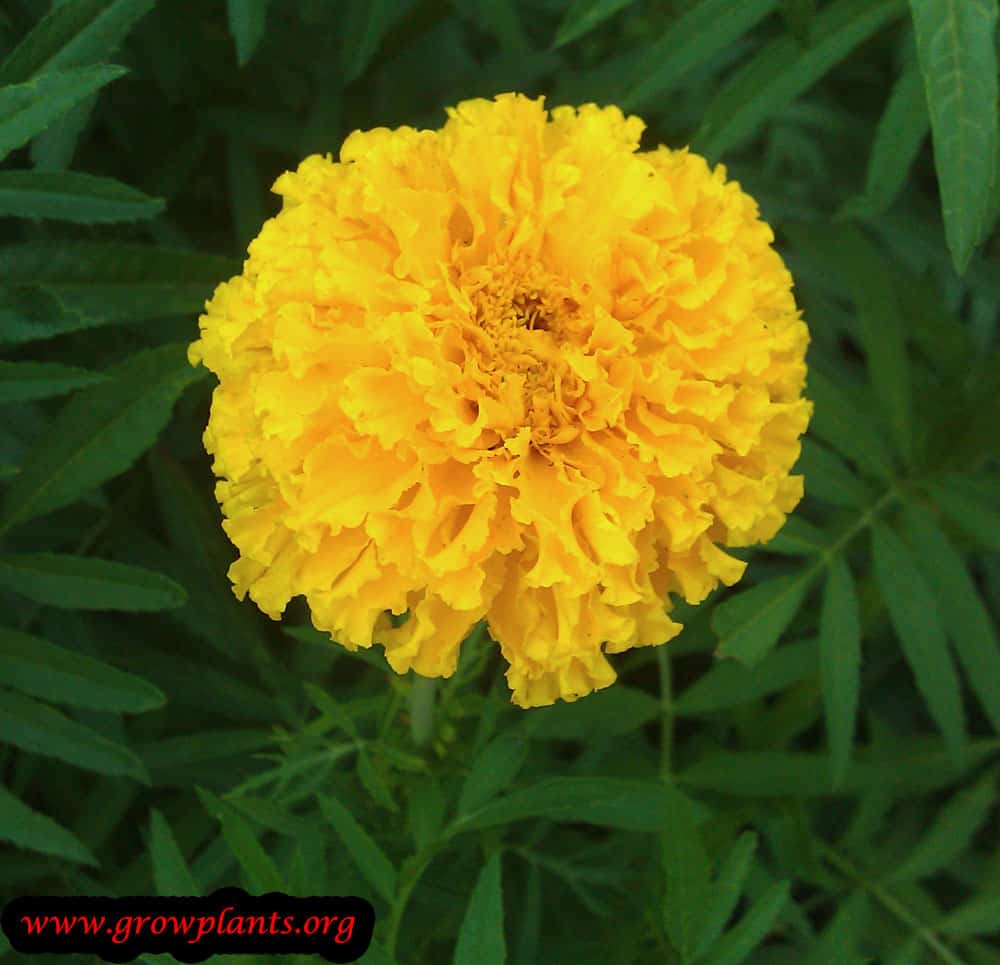
- Flower Characteristics: Large, fragrant, fully double flowers in yellow, orange or cream, edible and long-lasting.
Primary Uses & Landscape Value
- Edible Uses: Edible flowers used as a flavouring and natural yellow-orange colourant.
- Functional & Ornamental Roles: Bedding and container ornamental, cut flower, companion plant that repels nematodes, and a source of insect-repellent and medicinal preparations.
Care Guide: Planting, Soil & Watering
Overview: Mexican / Aztec marigold (Tagetes erecta) is a sun-loving, fast-growing annual marigold that thrives in well-drained soil (hardiness zone 10b+ as perennial, 3+ as annual). Give it full sun to part shade and it needs little fuss beyond good drainage and appropriate water.
Quick Care Requirements
| Requirement | Ideal Condition |
|---|---|
| Planting Season | Spring after the last frost through summer; zone 11+ also autumn; zone 10b+ sow at winter’s end |
| Growth Rate | Fast |
| Soil Type | Light, well-drained soil |
| Water Need | Moderate to High — keep the soil evenly moist, especially while young and flowering |
Planting & Establishment
- Best Planting Season: Plant in spring after the last frost and through summer; in zone 11+ you can also start in autumn, and in zone 10b+ sow at the end of winter.
- How to Plant:
- Hole Preparation: For transplants, make a hole a little wider than the root ball in loosened, free-draining soil; for direct sowing, prepare a fine, weed-free bed.
- Soil Amendments: Marigolds are not hungry feeders — a little compost worked into light, well-drained soil is plenty; avoid rich, soggy ground.
- Planting Depth: Set seedlings at the same depth they were in their pot, with the root collar at soil level; sow seed only shallowly.
- Growth Speed & Expectations: Fast-growing — it fills out and flowers quickly in a warm, sunny spot.
Soil, Watering & Drainage Care
- Soil Mix & Drainage Needs: The key is sharp drainage — light soil that never stays wet. In containers use a free-draining potting mix and pots with good drainage holes.
- Watering Schedule & Technique:
- Young / Newly Planted: Keep the soil evenly moist while seedlings and young plants establish; do not let them dry out at this stage.
- Established: Water regularly to keep the soil evenly moist through the growing and flowering season.
- Seasonal Adjustments: Water more in summer heat; reduce in cool or wet weather to avoid soggy roots.
Climate, Light & Hardiness
Mexican marigold is a heat-loving plant that grows best in full sun, needing somewhat reduced sun or half shade only in desert climates with very intense summer heat. It is frost-sensitive and most commonly grown as a summer bedding annual from seed - which is why the site data rates it from Zone 3 upward - but it can also persist as an evergreen perennial in genuinely frost-free zone 10b+ climates.
Quick Climate Specifications
| Climate Zones | Mediterranean, desert, subtropical, temperate, tropical |
|---|---|
| USDA Hardiness Zones | 3+ as a warm-season annual (frost kills the plant, so it is simply reseeded or replanted each year); 10b+ for true perennial persistence outdoors |
| Optimal Temp Range | approximately 18–30°C (64–86°F) |
| Cold Damage Begins | approximately 0°C (32°F) |
| Approx. Survival Minimum | killed outright by hard frost; reliably persists through winter only in zone 10b+ |
| Frost Tolerance | None |
| Light Conditions | Full Sun (reduce to about 80% sun, or half shade, in desert/very hot-summer climates) |
| Wind Tolerance | Moderate–High |
| Salt / Coastal Tolerance | Moderate |
Sunlight & Light Exposure
Optimal Light Setup
Full sun is standard, but the site data specifically recommends reducing sun exposure (to roughly 80%) or using half shade in desert regions or climates with very hot summers.
Direct Sun Requirement
Aim for as much direct sun as the climate comfortably allows, dialing it back only where summer heat is extreme.
Shade & Heat Management
In desert and very hot-summer climates, light shading helps prevent heat stress while still supporting good flowering.
Best Exposure / Orientation
An open, sunny bed suits it in most climates; in desert regions a spot with some midday relief from the harshest sun is preferable.
Temperature Extremes & Hardiness
USDA Hardiness & Regional Limits
The site's Zone 3+ rating reflects that this marigold is commonly grown as a fresh summer annual from seed, so almost any zone can grow it during the warm season; Zone 10b+ is needed for it to persist outdoors as a genuine perennial year after year. Frost is what forces annual treatment - in frost-free conditions it can keep growing beyond a single season.
Cold Damage & Winter Protection
Frost kills the plant outright; in colder zones there is no winter-protection strategy beyond growing it as an annual and replanting from seed or transplants each spring.
Frost Sensitivity
Fully frost-tender at every growth stage.
Extreme Heat Tolerance
High, though the site data recommends reduced sun in desert climates with very intense heat to avoid stress.
Frost-Free Growing Season
As a widely grown bedding annual, it needs a frost-free stretch running from after the last spring frost to before the first autumn frost; site data notes it typically takes about 1.5–2 months from sowing to bloom, so the growing season needs to be long enough to allow flowering.
Wind, Humidity & Microclimate
Humidity Preferences
Tolerates a range of humidity levels; good airflow helps keep foliage healthy in more humid climates.
Dry-Air Tolerance
Moderate to High once established, consistent with its broad climate range including desert conditions.
Wind Tolerance
Moderate to High; a sturdy, upright plant that generally tolerates open, breezy sites, though very tall cultivars may benefit from some shelter or staking.
Coastal / Salt Tolerance
Moderate - commonly used in a wide range of garden and landscape settings, including many coastal-adjacent gardens.
Rainfall & Seasonal Moisture
Prefers average to fairly generous moisture through the growing season, with moist soil especially important while young, per the site data.
Microclimate Recommendations
An open, sunny bed suits most climates; in desert or very hot-summer regions, light shade cloth or a partly shaded microclimate helps reduce heat stress without sacrificing bloom.
Growing in Pots, Balconies & Indoors
Mexican marigold (Tagetes erecta, Aztec marigold) is a fast-growing, full-sun bedding plant. The grower does not rate it as an indoor plant – grow it in a container outdoors, where the flowers get the strong light they need.
Quick Details
- Container Size: A free-draining pot comfortably larger than the root ball (general guidance – the grower confirms containers suit it but gives no set volume)
- Indoor Suitability: Not an indoor plant – a full-sun outdoor container plant
- Best Spot: Full sun (in very hot or desert climates give it some midday shade)
- Soil & Drainage: Well-drained mix
- Watering in Pots: Keep the mix evenly moist – pots dry fast; never waterlogged
Indoors & On the Windowsill
- Houseplant limits: The grower marks it as not a houseplant. It is a sun-lover that needs strong, direct light to flower – it will not thrive in a room, and even a bright sill rarely gives enough sun for good bloom.
- Best kept outdoors: Grow it in a container on a sunny balcony, patio or terrace rather than indoors.
On a Balcony or Patio
- Light, wind & heat: A bright, sheltered balcony or patio suits it well. Walls, railings and paving reflect heat so pots dry fast – check moisture often in hot weather, shelter it from strong wind, and allow for the pot’s weight and for drainage runoff.
- Practicalities: Give it the sunniest spot for the best flowering; deadhead spent blooms to keep it going.
Choosing the Pot, Soil & Long-Term Care
- Pot & drainage: Use a pot with strong drainage holes and empty any standing saucer so the roots never sit in water and rot.
- Pot material: Terracotta breathes and dries quickly (handy for sun-loving Mediterranean plants); glazed or plastic pots hold moisture longer.
- Potting mix: Well-aerated, free-draining mix – a good potting mix, or peat/coir blended with perlite or vermiculite and some organic matter.
- Feeding: Potted plants use up nutrients faster because watering leaches them out, so feed a little more often than plants in open ground.
Growing this plant in a greenhouse
A greenhouse can give mexican marigold frost protection, cold protection, a longer growing season and controlled production. Under warm enough conditions it can keep growing well beyond the normal outdoor season and potentially be maintained year-round - though continuous cropping is not guaranteed and depends on temperature and light.
Greenhouse at a glance
| Greenhouse suitability | Excellent - a major practical advantage |
|---|---|
| Main benefits | frost protection, cold protection, a longer growing season, controlled production |
| Season extension | potentially year-round |
| Outdoor protection advisable below | about 5°C |
| Maintain greenhouse minimum | around 5°C for active growth |
| Suitable types | unheated greenhouse, polycarbonate greenhouse |
| Heating | Heating is optional - useful mainly for winter growing in cold areas. |
Related greenhouse guides
- Greenhouses: How to Choose the Right Greenhouse
- Polycarbonate Greenhouses: What to Look for Before Buying
Fertilizing & Feeding
A tall, fast-growing bedding marigold grown chiefly for its large, colorful, edible flower heads; moderate, steady feeding supports its vigorous growth and long bloom season.
Quick Fertilizing Specs
| Feeding Level | moderate |
|---|---|
| young_feeding | Young plants benefit from balanced feeding to build a sturdy stem and full foliage before the main bloom display. |
| mature_feeding | Once budding and flowering, regular light-to-moderate feeding keeps the long bloom season going. |
| Main Nutrient Priority | A balanced fertilizer with adequate nitrogen supports strong stems and full flower heads; a high-phosphorus product is not needed to drive flowering. |
| Best Feeding Period | From establishment through the extended spring-to-autumn bloom season. |
| Organic Options | Compost worked into the soil at planting supports strong early growth. |
| Soil pH | Adaptable to a range of soil pH given good drainage. |
| Reduce/Stop Feeding | Feeding is no longer useful once the plant is finishing its bloom season and heading toward seed set or, in colder climates, frost. |
Feeding by Growth Stage
Establishment and early growth
Build sturdy stems and full foliage before the plant moves into heavy flowering.
| Nutrient direction | Balanced feeding with adequate nitrogen to support vigorous early growth, keeping the soil moist as the plant is young. |
|---|---|
| Timing | At planting and through early vegetative growth. |
| Frequency | Light, regular feeding through this build-up phase supports steady early growth. |
| Fertilizer types | A balanced, general-purpose fertilizer, Compost worked into the soil at planting |
| Precautions | Avoid excess nitrogen, which produces tall, floppy stems at the expense of a sturdy, well-branched plant. |
Main bloom period
Support the main display of large flower heads.
| Nutrient direction | Continue balanced feeding – a high-phosphorus “bloom” product is not needed; adequate nitrogen keeps the plant vigorous through its long flowering season. |
|---|---|
| Timing | As flower buds form and through the main bloom display. |
| Frequency | Continue the same light, regular feeding used during early growth. |
| Fertilizer types | A balanced, general-purpose fertilizer continued through bloom |
| Precautions | Avoid switching to a high-phosphorus bloom-booster product; balanced feeding supports strong flowering here. |
Repeat flushes of bloom
Fuel continued flowering when spent heads are removed and the plant keeps budding.
| Nutrient direction | Light, balanced feeding to support each new flush of buds. |
|---|---|
| Timing | Whenever the plant is actively pushing a fresh flush of buds during its extended bloom season. |
| Frequency | A light feeding timed to each new flush of growth is enough. |
| Fertilizer types | A balanced, general-purpose fertilizer applied lightly to support the new flush |
| Precautions | Keep feeding light even during repeat flushes to avoid excess soft growth late in the season. |
End-of-season decline
Let the plant finish its life cycle at the end of its bloom season.
| Nutrient direction | None – withhold fertilizer as the plant winds down. |
|---|---|
| Timing | As the plant finishes its bloom season and heads toward seed set, or as frost approaches in colder climates. |
| Frequency | No feeding at this stage. |
| Fertilizer types | No feeding at this stage; let the plant complete its natural cycle without fertilizer |
| Precautions | Do not fertilize a plant that is winding down for the season; feeding now does not help and mainly encourages weak, frost-tender new growth. |
Nutrient Deficiency Signs & Corrections
Overall pale, yellow-green foliage and a noticeably reduced flower display.
| Possible causes | Nitrogen deficiency in poor soil, Waterlogged or compacted soil limiting root uptake, Natural decline as bloom season ends |
|---|---|
| Appears first on | Older, lower foliage first |
| What to check | Soil drainage and texture, Recent feeding history, Whether new growth at the tips still looks vigorous |
| Possible correction | A balanced feeding during active growth is usually enough to bring color and flowering back. |
New growth turning pale to yellow while the veins stay green.
| Possible causes | High or alkaline soil pH tying up iron, Poor drainage limiting root function, Recent transplant stress |
|---|---|
| Appears first on | Newest leaves at the growing tips |
| What to check | Soil pH and drainage, Whether the plant was recently transplanted, Whether older foliage remains a normal green |
| Possible correction | Correct the underlying soil pH or drainage issue; a chelated iron product applied per its label can help if color does not recover on its own. |
Older leaf edges developing a scorched look, with weaker stems and fewer flower heads.
| Possible causes | Potassium deficiency, Drought stress or inconsistent watering, Salt buildup from over-fertilizing |
|---|---|
| Appears first on | Older leaf margins |
| What to check | Watering consistency, Fertilizer history and possible salt buildup, Overall bloom vigor compared to earlier in the season |
| Possible correction | Address watering and any salt buildup first; if the pattern persists, a balanced fertilizer that supplies adequate potassium, used per its label, usually resolves it. |
Pruning, Training & Seasonal Maintenance
Mexican marigold is grown almost entirely for its large flower heads, harvested fresh or for seed, so its pruning needs are light and centered on bloom production rather than framework-building. It tolerates pinching and deadheading well throughout the growing season, and because most plantings are treated as annuals (perennial only where winters stay frost-free, zone 10b+), there is no woody structure to manage or renew.
Quick Pruning & Maintenance Specs
| Pruning Tolerance | Moderate (light pinching and deadheading only) |
| Primary Pruning Window | Throughout the growing season, from early establishment onward |
| Typical Frequency | Deadhead every few days to weekly during bloom |
| Main Objective | Prolong bloom, prevent premature seed set, keep the plant from flopping |
| Young Plant Priority | Pinch the growing tip once established to force side branching |
| Mature Plant Priority | Regular deadheading; cut back leggy stems if the plant sprawls |
| Best Tool Type | Precision snips / fingers for pinching and deadheading |
| Avoid Heavy Pruning During | Early seedling stage before the plant has several true-leaf sets |
Pruning by Plant Age & Size
Newly Established
Leave the plant to establish; once it has a few sets of true leaves, pinch out the growing tip to encourage a bushier, more floriferous plant rather than one tall central stem.
Young / Formative
No structural training system is needed – pinching is the only formative technique, aimed purely at branching and compactness.
Mature / Established
Ongoing deadheading is the main task; if a perennial specimen (zone 10b+) becomes sprawling or woody at the base after a season, cut back stems by about a third to encourage fresh, more upright growth.
Seasonal Pruning Schedule
Summer Canopy Management
Objective: keep flower production going through the heat of the season. Remove: spent flower heads as they fade. Do not remove: healthy unopened buds. Response: continued branching and rebloom. Flowering impact: deadheading directly extends the bloom period by preventing the plant’s energy from shifting to seed production.
Ongoing Sanitary
Remove any yellowing lower leaves or stems damaged by mites (the main pest noted for this species) as they appear.
Special Growth to Remove
Remove spent flower stems (deadheading) regularly; where seed set is desired for saving or self-sowing, leave a few late-season heads to mature instead.
Container & Small-Space Pruning
In containers, pinch a little more aggressively when young to keep the plant proportionate to the pot, and deadhead promptly – a container plant that is allowed to set heavy seed will decline faster than one in open ground.
Tools
Precision snips (or simply pinching by hand) for both tip-pinching and deadheading – the stems are soft and never require loppers or a saw.
Tool Hygiene & Disease Risk
Routine risk – clean, sharp snips are sufficient. The plant’s main issue is mites, which spread by contact/wind rather than via pruning tools.
Cut Placement & Technique
Deadhead just above the first healthy leaf node or side bud below the spent flower, not flush with a bare stem, so the plant has a point from which to branch again.
Post-Pruning Care
No special aftercare needed beyond normal watering; avoid extra feeding purely in response to deadheading, since this plant already flowers heavily on its own once established.
Common Pruning Mistakes
Letting spent heads sit too long, which shifts the plant’s energy into seed production and slows new flower formation; skipping the early pinch, which leads to a single leggy stem that flops in wind or rain.
When NOT to Prune
Avoid pinching very young seedlings before they have several true leaves, and hold off on any hard cutback while the plant is in full, heavy bloom if continuous flowering is the goal.
Recommended Tools (by task)
- Tip pinching (young plants) – precision_snips: clean pinch of soft new growth to force branching.
- Deadheading (mature plants) – precision_snips: frequent light cuts on soft flower stalks throughout bloom.
Propagation Guide
Mexican marigold is propagated from seed – the site explicitly notes that grafting or vegetative propagation is unnecessary. Straight-species seed generally comes true to type, and this fast annual germinates and reaches bloom quickly, making it an easy plant to start.
Quick Propagation Specs
| Best Propagation Method | Seed |
| Propagation Difficulty | Easy |
| Seed True-to-Type | Generally true-to-type for open-pollinated/straight-species seed; seed saved from named hybrid marigold cultivars may not come true |
| Best Propagation Season | Spring to summer (best in spring for annual use); can be started indoors in late winter; zone 11+ can also start in autumn, zone 10b+ is better sown at the end of winter |
| Seed Germination Time | About 15 days per the site’s own guidance, with a broader reported range of roughly 1-3 weeks; about 1.5-2 months from sowing to bloom |
| Seed Sowing Depth | 0.5-1 cm (0.25-0.5 in) |
Growing from Seed
Seed Handling & Viability
Store seed in a dry, dark location until sowing.
Dormancy & Pre-Sowing Treatment
None needed – seed can be sown directly in the soil before the last expected frosts without pretreatment.
Sowing Season
Spring to summer, best in spring for annual growing; can be started indoors at the end of winter. In hardiness zone 11+ an autumn start is also possible (if grown as perennial), and in zone 10b+ it’s better sown at the end of winter.
Sowing Depth & Orientation
0.5-1 cm (0.25-0.5 in) deep. Direct sowing eliminates transplanting issues, and seedlings can also be started in pots and moved to the ground in spring, in single or double rows spaced about 20×30 cm apart for smaller annual plantings.
Germination Conditions
Moist soil in a sunny location, with average to generous watering.
Germination Time
About 15 days per the site’s own note, with a broader observed range of roughly 1-3 weeks; the plant reaches bloom about 1.5-2 months after sowing.
Seedling Care
Keep soil moist and don’t let it dry out until established; sunny location.
Bloom & Edible Flower Guide
Quick Details
- Bloom Season: Spring through autumn
- Time to First Bloom: In its first season, often within about seven to eight weeks of sowing
- Flower Appearance: Large, rounded pompom-like heads in yellow, orange and cream
- Edibility: The petals are edible and fragrant, used as a garnish and natural coloring
Detailed Blooming Overview
Mexican marigold is one of the most generous bloomers in the garden, carrying its bold yellow-to-orange heads from spring right through to autumn. The flowers are richly fragrant at full bloom, draw in bees and hoverflies, and – unlike many ornamentals – the petals are edible. Regular removal of faded heads keeps a plant flowering hard for months.
Flower Characteristics
- Large, full pompom-like flower heads in shades of yellow, orange and creamy white.
- Strongly fragrant when fully open.
- Petals are edible, useful as a garnish or to add color to dishes.
Bloom Care & Thinning
- Managing the bloom: Deadhead spent flowers regularly to keep new buds coming and to extend the display.
- Pollination: Visited and pollinated by bees and flies.
Bloom Health & Protection
- In damp, still conditions the dense heads can develop gray mold (Botrytis), which browns the petals – good spacing, airflow and prompt removal of faded blooms usually keep it at bay, with a suitable fungicide only if it persists.
Fruit & Uses
Mexican marigold is grown mainly as an ornamental, but its petals are an established edible flower, used fresh as a garnish and flavor component and as a natural yellow-orange food colorant. The leaves and roots have a documented history of traditional folk-medicine use rather than everyday food use, so they are covered here with that caution rather than as something to eat.
Quick Edible Specs
| Edible Parts | Flowers (petals); leaf and root have traditional medicinal – not food – use only |
|---|---|
| Main Use(s) | Culinary/food-colorant (flower petals); medicinal-note only (leaves, roots) – not a health claim |
| Eaten Raw or Cooked | Petals used raw/fresh or dried as a colorant; leaves and roots are not a food, and are only used as infusions for traditional purposes |
| Preparation Required | Remove petals from the bitter green flower base before use; leaf/root infusions are a traditional preparation, not a food preparation |
| Harvest Season | Flowers, once fully developed heads appear (roughly a couple of months after planting) |
| Time to First Harvest | Qualitative – once flower heads are fully developed and mature at the base (see site: about 2–3 months from planting) |
| Storage | Petals best used fresh or dried for colorant/spice |
| Safety/Toxicity Caveat | Leaf and root uses are traditional/medicinal only, not food – do not treat as an ingredient; the essential oil is for external/agricultural use (insect deterrent), not for eating |
Flowers & Flower Buds
The yellow, orange, or white-cream petals are the plant’s genuine culinary part. Harvest once the flower heads are fully developed and mature at the base (roughly 2–3 months after planting); pull the petals free of the bitter green calyx before using. Petals are used as a flavor component and as a natural yellow-orange food colorant; taller cultivars are easier to harvest cleanly than compact ones. The essential oil is used externally/agriculturally (e.g. as an insect deterrent) rather than as a food.
Leaves & Greens
the source describes leaves as traditionally used for digestive complaints, coughs, sore eyes, and colds. This is a traditional folk-medicine use, not an everyday food use, and is noted here only for completeness – not as a health claim or recommendation, and not as something to eat as a green.
Roots & Tubers
the source lists the root as a traditional laxative. This is a medicinal, not culinary, application; laxative herbs can cause digestive upset if misused, so this is a traditional-use note only, not guidance to consume.
Harvesting
Flowers are ready to pick once the heads have fully developed and are mature at the base, generally a couple of months after planting; taller cultivars make picking easier and more rewarding than compact ones.
Preparation, Uses & Safety
Only the flower petals are a genuine food use: separate them from the bitter green base before using fresh, dried, or as a natural colorant. The leaf and root uses noted by the source (digestive/cough/cold relief; laxative) are traditional folk-medicine applications, not food uses – they are mentioned here for completeness only, are not health claims, and should not be treated as ready-to-eat or self-medicated without guidance. The plant is also used as a companion-planting pest deterrent (effective against nematodes, useful near nematode-sensitive plants like passion fruit) and its essential oil has agricultural/insect-deterrent uses – both non-food uses.
Pests, Diseases & Troubleshooting
Marigolds are famously easy and even repel some soil pests, but their soft foliage and dense flowers attract a predictable few troubles: spider mites in hot dry spells, aphids and thrips on new growth, and grey mould (Botrytis) rotting the flowerheads in damp, crowded conditions. Slugs and snails shear young seedlings. The philosophy is good spacing, airflow and moisture control, with cultural and biological fixes ahead of any spray.
Quick Troubleshooting Overview
| Issue / Pest | Main Symptom | Primary Solution |
|---|---|---|
| Spider mites | Fine stippling and webbing in hot dry weather | Hose foliage, raise humidity, encourage predatory mites |
| Aphids | Curled shoots, honeydew, ants | Water jet, insecticidal soap, ladybirds |
| Thrips | Silvered, distorted petals and leaves | Sticky traps, remove spent flowers, spinosad if severe |
| Slugs & snails | Seedlings chewed to the ground overnight | Traps, barriers, iron-phosphate bait, hand-pick |
| Grey mould (Botrytis) | Fuzzy grey rot on dead petals/heads | Deadhead, improve airflow, avoid wet foliage |
Common Pests & Management
- Two-spotted spider mite (Tetranychus urticae):
- Symptoms: The single most common marigold pest: in hot, dry weather leaves become finely stippled, dull, yellow-bronzed and eventually dry, with fine webbing on the undersides. Tiny moving dots confirm them.
- Prevention & Control: Keep plants watered and never drought-stressed; hose the foliage, especially undersides, to knock mites off and raise humidity. Encourage predatory mites, ladybirds and lacewings; a horticultural-oil or insecticidal-soap miticide clears heavy outbreaks.
- Aphids (Aphis / Myzus spp.):
- Symptoms: Clusters of green or black soft insects crowd the new shoots and buds, curling growth and leaving sticky honeydew; they can also spread viruses.
- Prevention & Control: Blast off with a water jet and squash early colonies. Encourage ladybirds, hoverflies and lacewings; use insecticidal soap on stubborn groups. Avoid excess nitrogen, which drives soft, aphid-prone growth.
- Thrips (Frankliniella occidentalis):
- Symptoms: Rasping feeders silver and streak the petals and leaves and deform opening buds; flowers may be flecked or fail to open cleanly. They also transmit tospoviruses.
- Prevention & Control: Set blue or yellow sticky traps to monitor, remove spent and infested flowers, and clear weeds that harbour them. Encourage predatory mites and minute pirate bugs; reserve spinosad for severe cases, applied in the evening to spare bees.
- Slugs & snails (Deroceras / Cornu spp.):
- Symptoms: Soft young seedlings and transplants are sheared off or riddled with holes overnight, with tell-tale slime trails; a major cause of failure at the seedling stage.
- Prevention & Control: Clear hiding places, water in the morning so soil dries by night, and set beer traps or copper barriers. Hand-pick after dark and use iron-phosphate bait, which is safe around pets and wildlife.
- Leafminers (Liriomyza spp.):
- Symptoms: Larvae tunnel between the leaf surfaces, leaving winding pale trails; heavy mining reduces vigour but is mostly cosmetic.
- Prevention & Control: Pick off and destroy mined leaves and remove crop debris. Encourage the parasitic wasps that naturally control them; yellow sticky traps catch the adult flies. Sprays are rarely justified.
Diseases & Fungal Issues
- Grey mould (Botrytis cinerea):
- Symptoms: A fuzzy grey-brown mould rots spent petals, buds and flowerheads in damp, humid, crowded conditions, spreading into stems; dense double-flowered types are worst hit.
- Treatment & Management: Deadhead regularly and remove faded flowers before they rot, space plants for airflow, and avoid wetting the foliage in the evening. Clear debris; a protectant fungicide helps only in prolonged wet spells.
- Powdery mildew (Golovinomyces / Podosphaera spp.):
- Symptoms: A white powdery coating develops on leaves in crowded, shaded or humid conditions, dulling and yellowing foliage.
- Treatment & Management: Site in full sun with airflow and avoid crowding. Remove affected leaves; sulfur or potassium-bicarbonate spray checks it at the first sign.
- Damping-off & root rot / Alternaria leaf spot (Pythium, Rhizoctonia / Alternaria tagetica):
- Symptoms: Seedlings collapse at soil level (damping-off); older plants in wet soil rot at the roots and yellow; dark target-like leaf spots and stem cankers signal Alternaria.
- Treatment & Management: Sow in clean, free-draining mix, avoid overwatering and over-crowded seedlings, and provide airflow. Remove spotted leaves and rotted plants; avoid overhead watering. A copper spray checks leaf spot in wet weather.
- Aster yellows (phytoplasma (leafhopper-vectored)):
- Symptoms: Growth turns yellow-green and distorted with stunted, deformed flowers and abnormal shoots; incurable and spread by leafhoppers.
- Treatment & Management: There is no cure – remove and destroy affected plants promptly and control leafhoppers and nearby weed hosts to limit spread.
Growing Difficulties & Abiotic Problems
- Poor flowering / leggy growth:
- Cause & Symptoms: Too-rich, high-nitrogen soil or shade produces lush leaves but few flowers, and plants stretch and flop.
- Correction Strategy: Grow in full sun in lean-to-moderate soil, avoid heavy feeding, and deadhead regularly to keep bloom coming; pinch young plants to bush out.
- Overwatering / poor drainage:
- Cause & Symptoms: Waterlogged soil yellows the lower leaves and rots roots and stem bases.
- Correction Strategy: Water at the base, let the surface dry between waterings, and grow in free-draining soil or raised beds.
What Helps – Products & Tools
Handy tools are insecticidal soap and horticultural / neem oil (mites, aphids), blue/yellow sticky traps (thrips, leafminer), iron-phosphate slug bait, sulfur or potassium-bicarbonate fungicide (mildew), and a copper or protectant fungicide for grey mould and leaf spot in wet spells. Rely on spacing, airflow and beneficial insects first. Note: this species is itself grown as a biofumigant – its roots suppress root-knot nematodes in the surrounding soil.