![Greenwood Nursery: Live Ground-Cover Plants - Vinca Minor + Lesser/Dwarf Periwinkle - [Qty: 50 Bare Roots] - (Click for Other Available Plants/Quantities)](https://m.media-amazon.com/images/I/61kEKTyxCPL._SL160_.jpg)
![Greenwood Nursery: Live Ground-Cover Plants - Vinca Minor + Lesser/Dwarf Periwinkle - [Qty: 200 Bare Roots] - (Click for Other Available Plants/Quantities)](https://m.media-amazon.com/images/I/41A-hOpe0mL._SL160_.jpg)
![Greenwood Nursery: Live Ground-Cover Plants - Vinca Minor ‘Illumination’ + Lesser/Dwarf Periwinkle - [Qty: 2X Pint Pots] - (Click for Other Available Plants/Quantities)](https://m.media-amazon.com/images/I/51ktAnm4cnL._SL160_.jpg)

Plant Profile & Key Characteristics
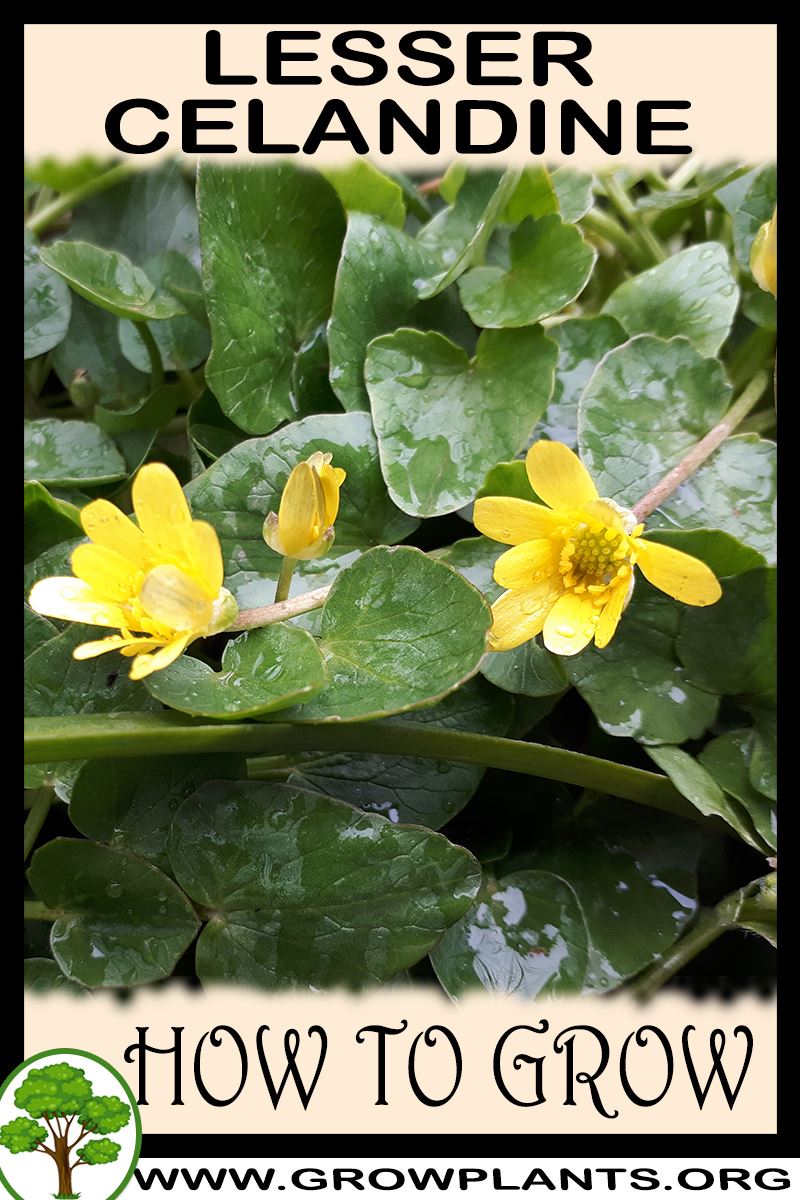
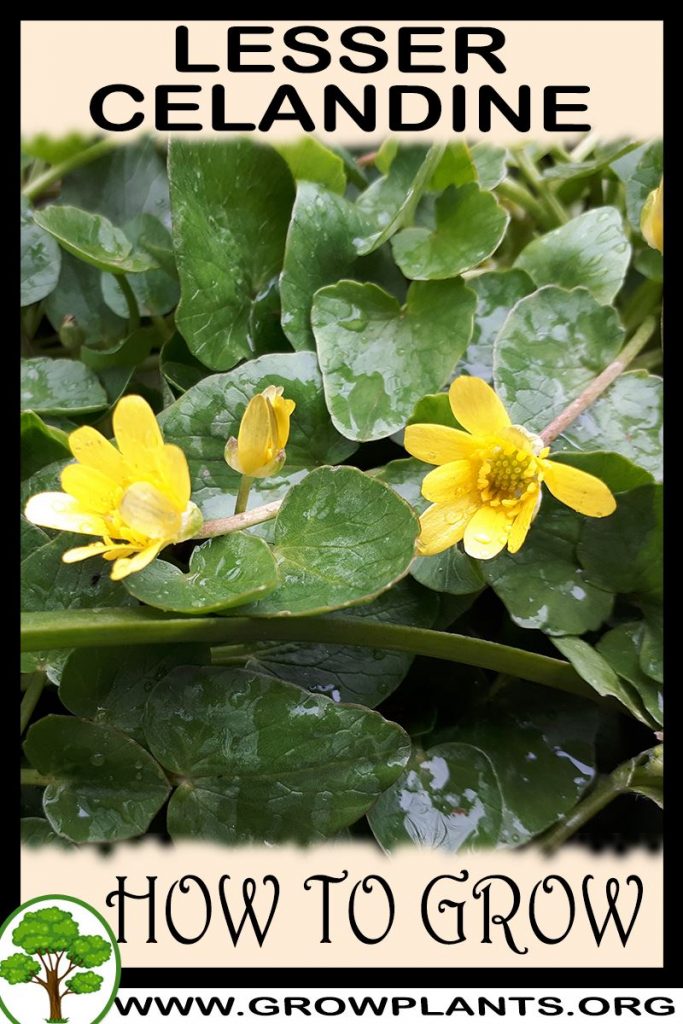
Overview: A low spring geophyte 5-30 cm (2-12 in) tall forming a carpet of glossy heart-shaped leaves and yellow buttercup-like flowers. A vigorous perennial groundcover.
Quick Specifications
| Specification | Attribute |
|---|---|
| Plant Type / Life Cycle | Perennial (tuberous geophyte) |
| Foliage Type | Deciduous (spring ephemeral; dies back after flowering) |
| Mature Size | 5-30 cm tall (2-12 in) |
| Growth Rate | Moderate to Fast |
| Root System | Tuberous (geophyte) |
| Toxicity | Toxic when fresh – contains protoanemonin (buttercup family); an irritant |
| Hardiness | USDA zones 4-10a |
Growth Form & Structure
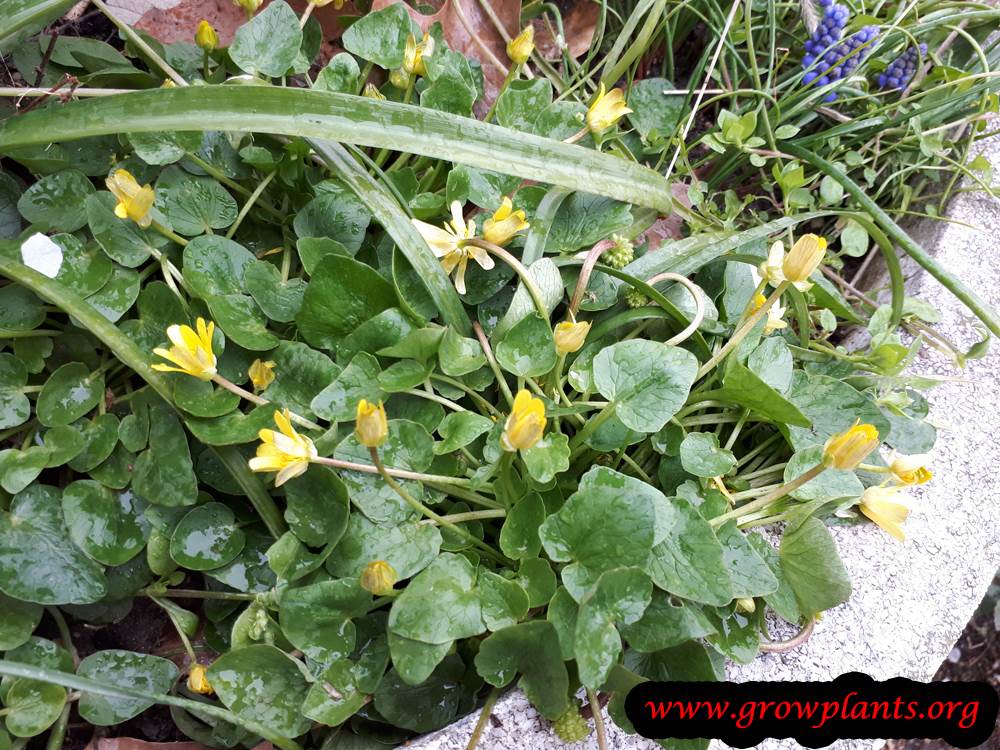
- Height & Spread: Low, 5-30 cm (2-12 in), spreading into a groundcover carpet; also grown in pots.
- Growth Habit & Form: Mat-forming geophyte that spreads by tubers.
- Lifespan & Maturity: Perennial that emerges and flowers in late winter and spring, then dies back.
Anatomy & Physical Features
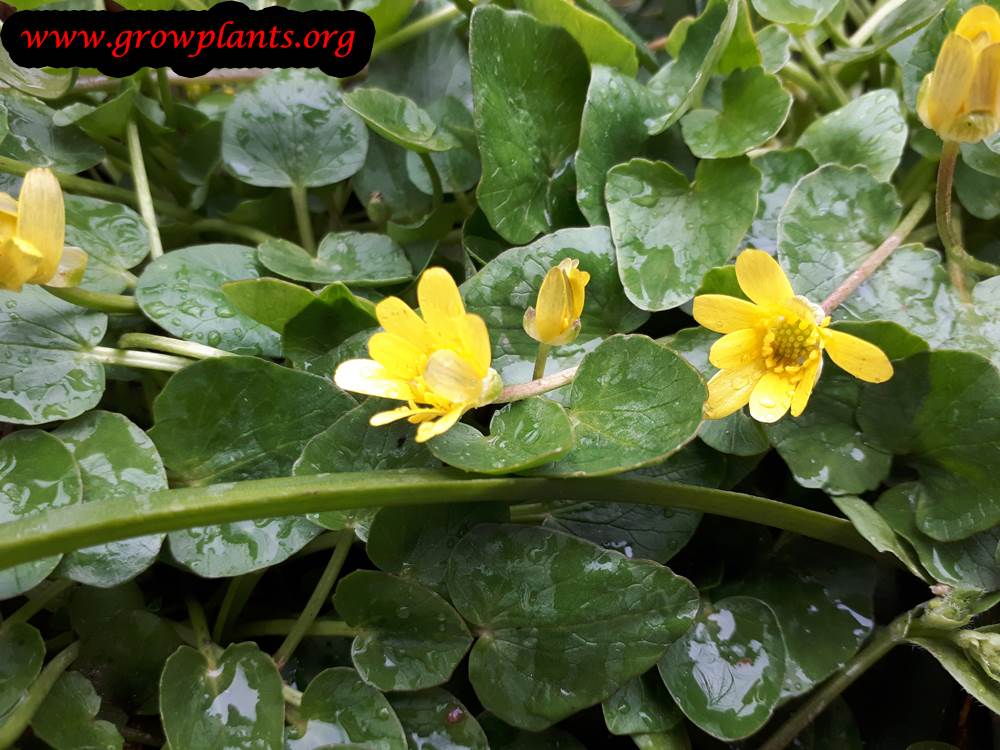
- Leaves & Foliage: Glossy green, heart-shaped leaves, sometimes slightly lobed.
- Flower Characteristics: Glossy yellow, buttercup-like flowers (full detail in the Bloom guide).
Primary Uses & Landscape Value
- Functional & Ornamental Roles: Groundcover ornamental for shade and moist soil; can also be grown as a houseplant. Noted as invasive and spreads readily.
Care Guide: Planting, Soil & Watering
Overview: Lesser celandine (Ficaria verna) is a low, spring-flowering perennial ground cover for temperate, subtropical and Mediterranean climates (hardiness zone 4-10a), also grown as a houseplant. It thrives in heavy, rich, moisture-retentive soil in full sun through full shade.
Quick Care Requirements
| Requirement | Ideal Condition |
|---|---|
| Planting Season | Cool to warm season, winter through summer |
| Growth Rate | Moderate to Fast |
| Soil Type | Heavy, rich, moisture-retentive soil |
| Water Need | Moderate to High – keep the soil moist |
Planting & Establishment
- Best Planting Season: Plant across the cooler and warmer months, from winter through summer; it emerges and flowers in winter to spring.
- How to Plant:
- Hole Preparation: Dig a hole a little larger than the root ball in rich, moisture-holding ground.
- Soil Amendments: Enrich the soil with organic matter and lay mulch when first planting to hold moisture and settle the plant.
- Planting Depth: Set the crown level with the soil surface, keeping it unburied.
- Growth Speed & Expectations: A moderate-to-fast grower that spreads to form a low carpet about 5-30 cm (2-12 in) tall – it can become invasive.
Soil, Watering & Drainage Care
- Soil Mix & Drainage Needs: Grow in heavy, rich soil that stays moist; in pots use a moisture-retentive mix with drainage holes so it never dries out but does not stagnate.
- Watering Schedule & Technique:
- Young / Newly Planted: Keep the soil consistently moist while the plant establishes.
- Established: Water regularly to keep the soil moist to fairly wet – this is a moisture-loving plant.
- Seasonal Adjustments: Water freely during active growth in the cool, moist season; it dies back and needs little once dormant in summer.
Climate, Light & Hardiness
Lesser celandine is a cold-hardy perennial suited to temperate, subtropical, and mediterranean climates, or grown as a houseplant, hardy in USDA zones 4–10a. It adapts to a wide range of light from full sun through full shade, provided the soil stays consistently moist and rich.
Quick Climate Specifications
| Climate Zones | Temperate, subtropical, mediterranean (or houseplant) |
|---|---|
| USDA Hardiness Zones | 4–10a |
| Approx. Survival Minimum | Dormant plants typically survive well below freezing, consistent with zone 4 winter minimums (roughly −34°C to −29°C / −29°F to −20°F) |
| Frost Tolerance | High |
| Light Conditions | Full sun to full shade |
Sunlight & Light Exposure
Optimal Light Setup
Adapts to a wide range from full sun to full shade.
Direct Sun Requirement
Tolerates full sun.
Shade & Heat Management
Also thrives in full shade, making it useful as a groundcover under trees.
Best Exposure / Orientation
Flexible; woodland or shaded groundcover plantings work especially well.
Temperature Extremes & Hardiness
USDA Hardiness & Regional Limits
Hardy in zones 4–10a.
Cold Damage & Winter Protection
As a herbaceous perennial, foliage naturally dies back and the plant enters dormancy for part of the year; the dormant tubers are very cold hardy.
Frost Sensitivity
Low; well adapted to hard winter freezes typical of zone 4 and up.
Extreme Heat Tolerance
Not specifically documented; performance in the warmer end of its range (zone 9–10a) likely benefits from consistent moisture and some shade.
Wind, Humidity & Microclimate
Rainfall & Seasonal Moisture
Needs an average to large amount of water in heavy, moisture-retentive, rich soil; not drought tolerant.
Microclimate Recommendations
Moist woodland or shaded groundcover settings suit it well; because it self-spreads (noted as invasive), consider containment where spread is unwanted.
Growing in Pots, Balconies & Indoors
Lesser celandine (Ficaria verna) is a low, early-flowering perennial the grower says can be grown indoors. It is a small, undemanding container plant, but note it is toxic when raw and spreads vigorously, so it is best kept contained.
Quick Details
- Container Size: Small – a shallow pot suits this low, 5-30 cm (2-12 in) plant.
- Indoor Suitability: Yes, per the grower – a small, easy container plant, best kept where it cannot escape.
- Best Spot: Very adaptable – full sun to full shade.
- Soil & Drainage: Moisture-retentive but not stagnant mix.
- Watering in Pots: Keep evenly moist to generous while in leaf; it naturally dies back after flowering.
Indoors & On the Windowsill
- Houseplant: Yes – the grower confirms it grows indoors; it is a small, low-care plant that dies back after its early flowering.
- Light: Undemanding about light – a bright spot gives the best flowering, but it tolerates shade.
- Safety: Raw lesser celandine is toxic (it contains protoanemonin) – never eat it fresh, and grown indoors set it where children and pets cannot reach it.
On a Balcony or Patio
- Easy but spreads: It grows happily in a pot on a balcony in sun or shade; keeping it potted is wise, as in the ground it spreads aggressively.
- Watering: Keep the mix moist while it is growing; it dies back naturally after flowering, when it needs far less.
Choosing the Pot, Soil & Long-Term Care
- Pot & drainage: Choose a pot with strong drainage holes and skip a standing-water saucer, which invites root rot; terracotta breathes and dries quickly, while glazed or plastic hold moisture longer.
- Potting mix: Fill with a well-aerated, organic-rich medium – a good potting mix, or peat/coir blended with perlite or vermiculite for drainage.
- Feeding: Container plants run through nutrients fast because watering washes them out, so feed a little more often through the growing season than you would in open ground.
- Containment: Growing it in a pot is the safest way to enjoy it – it stops the tubers and bulbils from colonising a garden.
Fertilizing & Feeding
A light feeder: this geophyte spring ephemeral does most of its growing and flowering in a short window, so a single well-timed light feeding during active leaf growth is enough, with no feeding needed once it dies back for the year.
Quick Fertilizing Specs
| Feeding Level | Light feeder |
|---|---|
| Main Nutrient Priority | Balanced feeding while leaves are actively growing, ahead of the bloom |
| Best Feeding Period | Late winter into spring, while leaves are actively expanding |
| Organic Options | Rich, heavy soil amended with organic matter, with mulch helpful when the planting is first established |
| Reduce/Stop Feeding | Stop feeding once the foliage yellows and dies back after bloom |
| Micronutrients | Usually met by rich soil and organic matter; correct only diagnosed issues |
| Soil pH | Adaptable; performs well in rich, moisture-retentive garden soil |
Feeding by Growth Stage
Active leaf growth
Support the emerging heart-shaped leaves as this geophyte breaks dormancy for its brief above-ground season.
| Nutrient direction | A balanced, complete fertilizer with adequate nitrogen supports the leafy growth that will fuel flowering. |
|---|---|
| Timing | As leaves emerge in late winter or early spring. |
| Frequency | A single light feeding as leaves emerge is generally sufficient for this short-lived growth window. |
| Fertilizer types | A balanced complete fertilizer, Organic matter worked into the surrounding rich soil |
| Precautions | Keep soil evenly moist through this stage; this species prefers heavier, moisture-retentive ground and stalls in dry, light soil. |
Yellow daisy-shaped bloom
Support the yellow, daisy-shaped flowers that follow the leaf flush.
| Nutrient direction | Continue the same balanced feeding already applied for leaf growth; no separate bloom-specific feeding is needed. |
|---|---|
| Timing | During winter into spring while flowers are open. |
| Frequency | Rarely needs a second feeding once the early-season application has been made. |
| Fertilizer types | No additional fertilizer beyond the early-season feeding is usually needed |
| Precautions | Avoid extra feeding at this stage; this plant spreads aggressively on its own and rich feeding can encourage it to become more invasive. |
Post-bloom summer dieback
Let the plant die back naturally to its underground storage structures for the rest of the year.
| Nutrient direction | None – withhold fertilizer once the foliage yellows and dies back. |
|---|---|
| Timing | From late spring through summer and into autumn, while the plant is dormant below ground. |
| Frequency | No feeding at this stage. |
| Fertilizer types | No feeding at this stage; do not fertilize until leaves re-emerge the following winter or spring. |
| Precautions | Do not fertilize dormant, dormant-underground growth; there is no foliage present to use the nutrients. |
Nutrient Deficiency Signs & Corrections
Leaves emerge pale or small and the overall leaf flush looks sparse.
| Possible causes | low soil nitrogen, soil lacking organic matter, planting site drying out during the active leaf period |
|---|---|
| Appears first on | newly emerging leaves |
| What to check | soil organic matter, soil moisture during emergence, recent feeding history |
| Possible correction | Apply a balanced complete fertilizer with nitrogen as leaves emerge and work in organic matter. |
Leaves grow normally but few or no yellow flowers appear.
| Possible causes | insufficient light during the leaf-growth window, overcrowding from the plant’s own aggressive spread, unusually dry soil during bud formation |
|---|---|
| Appears first on | overall flower count rather than a specific leaf symptom |
| What to check | light exposure at the planting site, planting density and crowding, soil moisture in the weeks before bloom |
| Possible correction | Improve light exposure where possible, thin overcrowded patches, and keep soil evenly moist ahead of bloom. |
Leaves yellow or collapse despite this species’ preference for moist soil.
| Possible causes | standing water or truly waterlogged, poorly drained soil, root or crown rot in saturated conditions, excess feeding compounding stress on weakened roots |
|---|---|
| Appears first on | whole leaves and overall plant vigor |
| What to check | site drainage, how long water stands after rain, recent fertilizer use |
| Possible correction | Improve drainage where the site stays waterlogged and hold off feeding until the plant recovers active growth. |
Pruning, Training & Seasonal Maintenance
This tuberous, mat-forming groundcover is a classic spring ephemeral: it flowers in winter to spring, then dies back naturally into summer dormancy, so it needs very little true pruning. What pruning mostly means here is grooming spent foliage as it declines, and – because it is documented as an aggressive, invasive spreader – controlling its spread before it sets seed or scatters further. Cutting does not affect flowering, since next year’s bloom comes from underground tubers rather than any retained top growth.
Quick Pruning & Maintenance Specs
| Pruning Tolerance | High for foliage removal (does not affect the tuber or next year’s bloom) |
| Primary Pruning Window | As foliage yellows and dies back after the winter-spring bloom, on the way to natural summer dormancy |
| Secondary Maintenance Window | Light grooming or spot control during active winter-spring growth |
| Typical Frequency | As needed for containment given its aggressive spread; one main grooming pass at post-bloom die-back |
| Main Objective | Contain spread and tidy dying foliage – not shape or structure |
| Young Plant Priority | Let it establish; monitor for early spread |
| Mature Plant Priority | Containment – remove unwanted patches before they set seed or bulbils |
| Best Tool Type | Precision snips or hand removal – no woody cuts are ever needed |
| Avoid Heavy Pruning During | Active winter-spring bloom if flowering display is wanted; avoid disturbing the plant once tiny bulbils are present |
Pruning by Plant Age & Size
Newly Established
Minimal – allow establishment undisturbed.
Young / Formative
No structural training – this is a spreading groundcover geophyte with no framework to build.
Mature / Established
Ongoing containment: edge-trim or physically remove growth to keep spread in bounds, given the source’s own invasive flag.
Seasonal Pruning Schedule
Post-Bloom die-back (spring, as flowering ends and foliage yellows toward summer dormancy): tidy declining foliage as the plant moves into its natural dormancy; remove yellowing or collapsing foliage, but leave actively green, still-photosynthesizing leaves in place, since removing them too early can weaken next year’s tubers, the same logic that applies to spring bulbs; the plant then dies back naturally to dormant tubers with no negative flowering impact if timed correctly.
Ongoing Sanitary / Containment (through winter-spring growth): control spread by removing unwanted spreading patches and, if containment is a priority, flower heads before seed or bulbil development.
Structural Pruning & Training
Not applicable in the usual sense – as a low, spreading geophyte groundcover it is not trained to a framework. The only structural concern is horizontal spread: edging, barriers, or physically removing runners and stray tubers straying past the intended bed line.
Special Growth to Remove
- Spent flower stems – deadhead before seed-set or bulbil formation to help slow its documented invasive spread
- Yellowing or collapsing post-bloom foliage as it goes dormant
- Any plantlets or bulbils found outside the intended planting area
Container & Small-Space Pruning
Containers are a genuinely useful way to contain this otherwise aggressive spreader. Even potted, remove spent flowers before they set seed or bulbils, and refresh the soil at its natural dormant period rather than disturbing the tubers mid-growth.
Tools
Precision snips for deadheading and foliage grooming – this low, soft herbaceous growth never needs anything heavier.
Tool Hygiene & Disease Risk
Routine for general grooming, but with an important disposal note: because this species spreads readily from small tuber and bulbil fragments, bag and dispose of removed material rather than composting or leaving it on site, to avoid re-establishing it from fragments – a direct consequence of the invasiveness flagged in the source data.
Cut Placement & Technique
Snip spent flower stalks at the base. When grooming dying foliage, cut or gently pull only once it has yellowed and detaches easily, rather than tearing green, still-active leaves.
Heavy Pruning & Rejuvenation
Not applicable in the woody-plant sense – this species cuts itself back naturally by going fully dormant each year. There is no benefit to a hard rejuvenation cut, and removing green foliage early does not rejuvenate it, it simply weakens next year’s tuber reserves.
Post-Pruning Care
No extra watering or feeding is needed around the natural die-back. During active winter-spring growth, keep the soil evenly moist per its preference for heavy, rich soil, and monitor for the aphids, slugs and snails noted as its common pests.
Common Pruning Mistakes
- Cutting or pulling green, still-growing foliage too early and weakening next year’s tuber reserves
- Composting removed material and inadvertently spreading tubers or bulbils to new areas
- Letting spent flowers set seed or bulbils unchecked given its invasive tendency
When NOT to Prune
Avoid removing green, actively-growing foliage before it yellows on its own, and be cautious cultivating around the plant once tiny bulbils are present, since disturbance can spread them further.
Recommended Tools (by task)
| precision_snips | Deadheading spent flowers and removing yellowing foliage on this low, soft-stemmed geophyte |
Propagation Guide
Lesser celandine spreads and is propagated mainly through its small root tubers and (in some forms) axillary bulbils, which is the main reason the site notes this plant as invasive. Seed does produce true-to-type plants, but the tiny tubers and bulbils are the faster, more dependable practical method. Overall difficulty is easy – arguably too easy given how readily it spreads.
Quick Propagation Specs
| Best Propagation Method | Tuber/bulbil division |
| Alternative Methods | Seed |
| Propagation Difficulty | Easy |
| Seed True-to-Type | Usually true-to-type |
| Vegetative True-to-Type | Yes |
| Best Propagation Season | As foliage dies back and the plant goes summer-dormant, after its winter/spring bloom |
Growing from Seed
Dormancy & Pre-Sowing Treatment
Not detailed by the site; as an early-spring-blooming member of the buttercup family, seed often benefits from a period of cool, moist stratification mimicking winter before it germinates well – a general precaution rather than a site-confirmed requirement.
Sowing Season
Best sown in autumn to winter so seed can experience natural cold before spring germination.
Rhizomes, Tubers, Bulbs & Corms
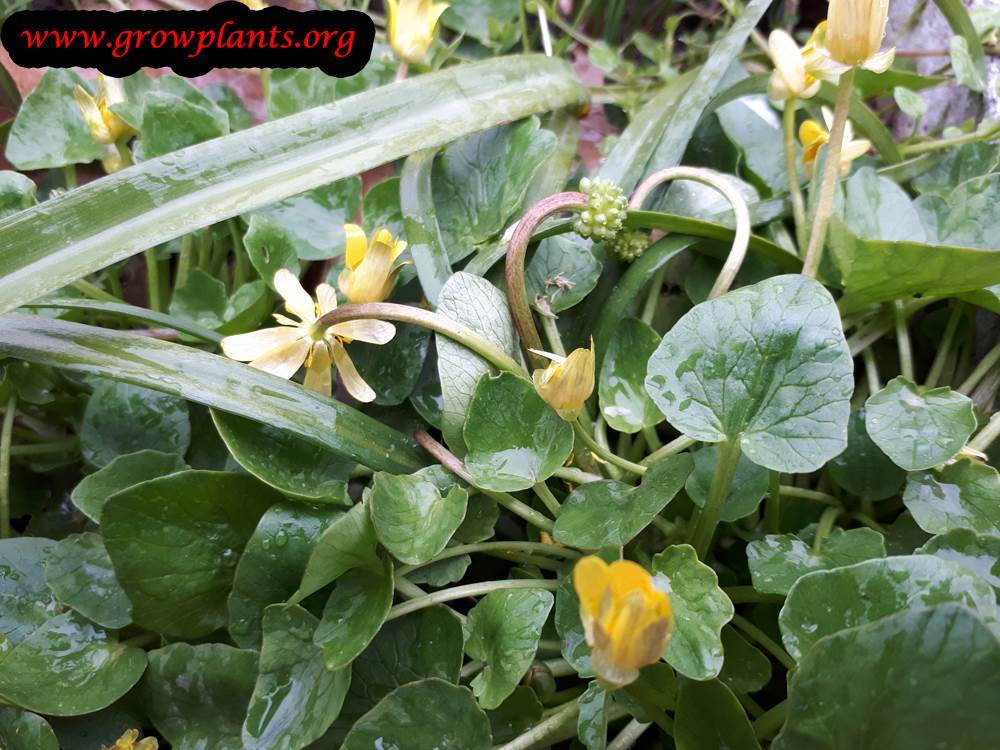
This species produces small root tubers and, in some forms, axillary bulbils along the stems. Lift and separate these as the foliage yellows and the plant enters its summer dormancy after flowering. Each small tuber or bulbil carries its own growth point and can be replanted whole – there is no need to cut them into sections given their small size. Unlike bulbs suited to long dry storage, these structures are best replanted promptly or kept in barely moist material until replanting, rather than left to dry out. Plant shallowly; precise orientation is not critical for these small, irregular structures.
Bloom & Flower Guide
Quick Details
- Bloom Season: Late winter into spring
- Time to First Bloom: Flowers very early in the year, then dies back for summer
- Flower Appearance: Small, glossy, varnished-looking yellow flowers with many petals, star- or daisy-like
- Edibility: Not edible — like other buttercups it is acrid and toxic when raw
Detailed Blooming Overview
Lesser celandine is one of the first flowers of the year, opening glossy yellow stars low over its heart-shaped leaves in late winter and early spring, then dying back underground for summer. It makes a bright early carpet, though it can spread strongly.
Flower Characteristics
- Many narrow, glossy yellow petals in a star or daisy shape.
- Petals have a distinctive varnished sheen.
- Open wide in sun and close up in dull or wet weather.
Bloom Care & Thinning
- Site for best flowering: Part shade and moist soil suit its early-season habit.
- Managing the spread: Contain it where vigour is a concern, as it self-sows and multiplies from tubers.
- Safety: All parts are acrid and toxic if eaten raw (they contain protoanemonin) — grow it as an ornamental only, and pollination is by early bees and flies.
Fruit & Uses
Safety note first: only the very young leaves gathered before the plant flowers are foraged as food, and they must be cooked, never eaten raw in quantity – once flowering begins, or if eaten raw or in large amounts, the plant becomes irritant. Where conditions are safe, the young pre-flowering leaves are used as a mild, spinach-like cooked green.
Quick Edible Specs
| Edible Parts | Young leaves only, gathered before flowering |
|---|---|
| Main Use(s) | Cooked wild green (spring foraging), traditionally called pilewort |
| Eaten Raw or Cooked | Cooked strongly preferred; raw use should be limited to a very small amount of the youngest pre-flowering leaves, if at all |
| Preparation Required | Cook (boil, steam or stir-fry) – this breaks down the irritant compound; do not eat once flowering has started |
| Harvest Season | Late winter to early spring, before flowering begins (matches the plant’s own Winter/Spring bloom window – pick before, not during, bloom) |
| Time to First Harvest | As soon as young leaves emerge in late winter/early spring, well before flowers appear – see Blooming for this plant’s bloom season |
| Storage | Use fresh; not typically stored or preserved |
| Safety/Toxicity Caveat | Contains ranunculin, which becomes the irritant toxin protoanemonin when the plant is cut or bruised, especially once it flowers; can irritate the mouth, throat and gut (nausea, vomiting) if eaten raw or past the young stage; cooking or drying destroys the toxin. Handling sap can also irritate skin. |
Leaves & Greens
Only the young, tender leaves that emerge before the plant comes into flower are gathered – identification should be certain, since this is when protoanemonin levels are lowest. Leaves are picked by hand or snipped, washed, and then boiled, steamed, or stir-fried like spinach or pak choi; cooking is what makes them safe to eat in normal portions. Leaves gathered after flowering starts should not be eaten, as toxin levels rise through the bloom period.
Harvesting
The foraging window is short: gather only in the pre-flowering stage of growth, typically in late winter into early spring depending on climate, and stop once flower buds/blooms appear. This is a one-time seasonal window each year rather than a repeat harvest, since the plant is unsafe once it flowers.
Preparation, Uses & Safety
Cooking (boiling, steaming or stir-frying) is required to break down protoanemonin into a harmless compound and is the only preparation recommended here; eat in moderate, ordinary vegetable portions rather than large quantities, and only from confidently identified, young pre-flowering plants. Do not eat any part of the plant once it is flowering, and avoid raw consumption beyond, at most, a token taste. The plant’s traditional name ‘pilewort’ reflects a historical folk-medicine use unrelated to eating it as food; no medical claims are made here. Wearing gloves when handling larger amounts of foliage is a reasonable precaution, as the sap can irritate sensitive skin.
Pests, Diseases & Troubleshooting
Overview: Lesser celandine is a low, spring-ephemeral perennial that emerges, flowers and dies back before summer, and is famously trouble-free – indeed it is more often a problem AS a plant, spreading aggressively and behaving invasively in many regions. Its few realistic issues are minor: occasional aphids, slugs on the soft foliage, and specialist fungal infections (celandine smut, rust, powdery mildew). Note that its sap contains protoanemonin and is a skin/mouth irritant.
Quick Troubleshooting Overview
| Issue / Pest | Main Symptom | Primary Solution |
|---|---|---|
| Aphids | Small colonies on soft leaves/stems | Usually self-limiting; rinse, beneficials |
| Slugs & snails | Ragged holes, slime on foliage | Reduce damp cover; iron-phosphate bait if needed |
| Celandine smut | Blistered swellings / dark spore masses on leaves | Remove & destroy affected plants |
| Rust | Orange/brown pustules on leaves | Remove infected leaves; airflow |
| Powdery mildew | White film on leaves late in season | Usually harmless as plant dies back |
| Invasiveness (the real issue) | Dense spreading mats crowd out other plants | Contain/remove; dispose of tubers carefully |
Common Pests & Management
- Aphids (Aphis / Myzus spp.):
- Symptoms: Small colonies of green or black soft-bodied insects on the soft leaves and flower stems in spring, sometimes with a little honeydew and leaf curl; rarely more than cosmetic on this brief-lived spring plant.
- Prevention & Control: Almost always self-limiting as natural enemies arrive and the plant dies back for summer; simply rinse off heavy colonies with water and encourage ladybirds and hoverflies. Sprays are essentially never warranted.
- Slugs & snails (Deroceras / Helix / Arion spp.):
- Symptoms: Ragged holes and slime trails on the low, soft, ground-hugging foliage in the damp cool conditions this plant enjoys.
- Prevention & Control: Reduce damp hiding places and debris nearby, use barriers or traps in cherished plantings, and apply iron-phosphate bait only if damage is significant; the plant’s brief season limits any real impact.
- Leaf miners / weevils (minor) (Phytomyza / various):
- Symptoms: Occasional pale mines or notched leaf edges; incidental and cosmetic.
- Prevention & Control: No action is normally needed; pick off affected leaves in small plantings and rely on natural enemies.
Diseases & Fungal Issues
- Celandine smut (Urocystis ficariae):
- Symptoms: Raised blisters, swellings and streaks on leaves and stalks that rupture to release dark, sooty masses of spores; a specialist smut of lesser celandine that distorts the affected parts.
- Treatment & Management: Remove and destroy infected plants and leaves to reduce spore load (do not compost), and avoid moving soil/tubers from infected patches. No chemical control is needed on this ephemeral; sanitation is sufficient.
- Rust (Uromyces spp.):
- Symptoms: Orange to brown powdery pustules on the leaves, with yellow flecking and premature yellowing in damp springs.
- Treatment & Management: Pick off and destroy infected leaves, improve airflow where plants are crowded, and clear debris; the plant’s die-back for summer usually ends the problem naturally.
- Powdery mildew (Erysiphe / Podosphaera spp.):
- Symptoms: White powdery film on the leaves, usually late in the plant’s short season as it begins to senesce; largely harmless.
- Treatment & Management: Generally no action needed since the foliage is dying back anyway; improve airflow in dense stands if it appears early.
Growing Difficulties & Abiotic Problems
- Invasiveness (the main ‘problem’):
- Cause & Symptoms: Rapid spread by prolific tubers and bulbils into dense mats that smother other spring plants; classed as invasive in many regions.
- Correction Strategy: Site deliberately and contain it, deadhead before seed/bulbils form, and lift and dispose of tubers carefully (bagged, not composted) if removing it; think twice before introducing it to beds or near wild areas.
- Summer dormancy mistaken for death:
- Cause & Symptoms: The whole plant yellows and vanishes by early summer, which looks like decline but is normal ephemeral dormancy.
- Correction Strategy: Recognise this as natural summer dormancy – do not overwater or ‘rescue’ the bare ground; mark its position and it will return the following spring.
- Sap irritation (protoanemonin):
- Cause & Symptoms: Fresh sap contains protoanemonin, which can irritate skin and the mouth and is toxic if eaten raw.
- Correction Strategy: Wear gloves when handling or removing large quantities, keep it out of the vegetable patch where it might be confused with edible greens, and wash any sap off skin.
- Chlorosis / poor growth:
- Cause & Symptoms: Pale, weak foliage in very dry or impoverished sites (it prefers moist, humus-rich, semi-shaded ground).
- Correction Strategy: Grow in moist, fertile, part-shaded soil that mimics its damp woodland habitat; it needs no feeding and generally thrives untended.
What Helps – Products & Tools
Lesser celandine essentially never needs pest or disease products – it is a brief, tough spring ephemeral. At most, iron-phosphate slug bait protects cherished plantings and a rinse handles aphids; smut and rust are dealt with by removing and destroying affected leaves. The ‘product’ most gardeners actually want is a strategy to contain its spread, plus gloves because of the irritant sap.