Plant Profile & Key Characteristics
Also known as: Yellow lemon guava, Lemon guavas, Yellow strawberry guava, Yellow guava tree, Cattley guava tree
Overview: A fast-growing evergreen guava reaching 1-5 m (3-15 ft) and easily kept as a shrub by pruning. Grown for its small edible yellow fruit, it is a productive, drought- and container-tolerant tree for warm climates.
Quick Specifications
| Specification | Attribute |
|---|---|
| Plant Type / Life Cycle | Evergreen perennial tree/shrub |
| Foliage Type | Evergreen |
| Mature Size | 1-5 m (3-15 ft) tall |
| Growth Rate | Fast (moderate in zones 9-10a) |
| Root System | Shallow, spreading and suckering — contributes to its aggressive, invasive tendency |
| Toxicity | Non-toxic / edible fruit |
| Hardiness | USDA zones 10+ (zone 9 with protection) |
Growth Form & Structure
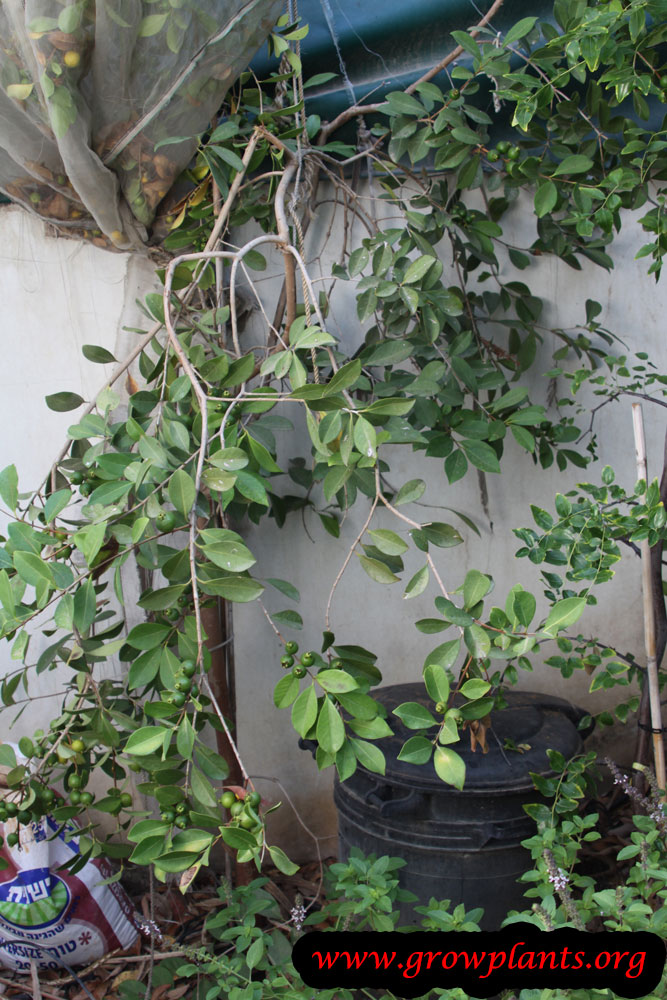
- Height & Spread: In the ground 1-5 m (3-15 ft) tall and can be kept lower and bushier by pruning; grows and fruits well in a large pot, where regular root pruning keeps it compact.
- Growth Habit & Form: A fast, twiggy evergreen that grows as a small multi-stemmed tree or large shrub and suckers freely from the base.
- Lifespan & Maturity: A long-lived fruiting tree that typically begins bearing in 2-3 years from planting.
Anatomy & Physical Features
- Leaves & Foliage: Green, oval evergreen leaves.
- Flower Characteristics: Small white flowers 1.5-3 cm across, borne in clusters and pollinated by bees.
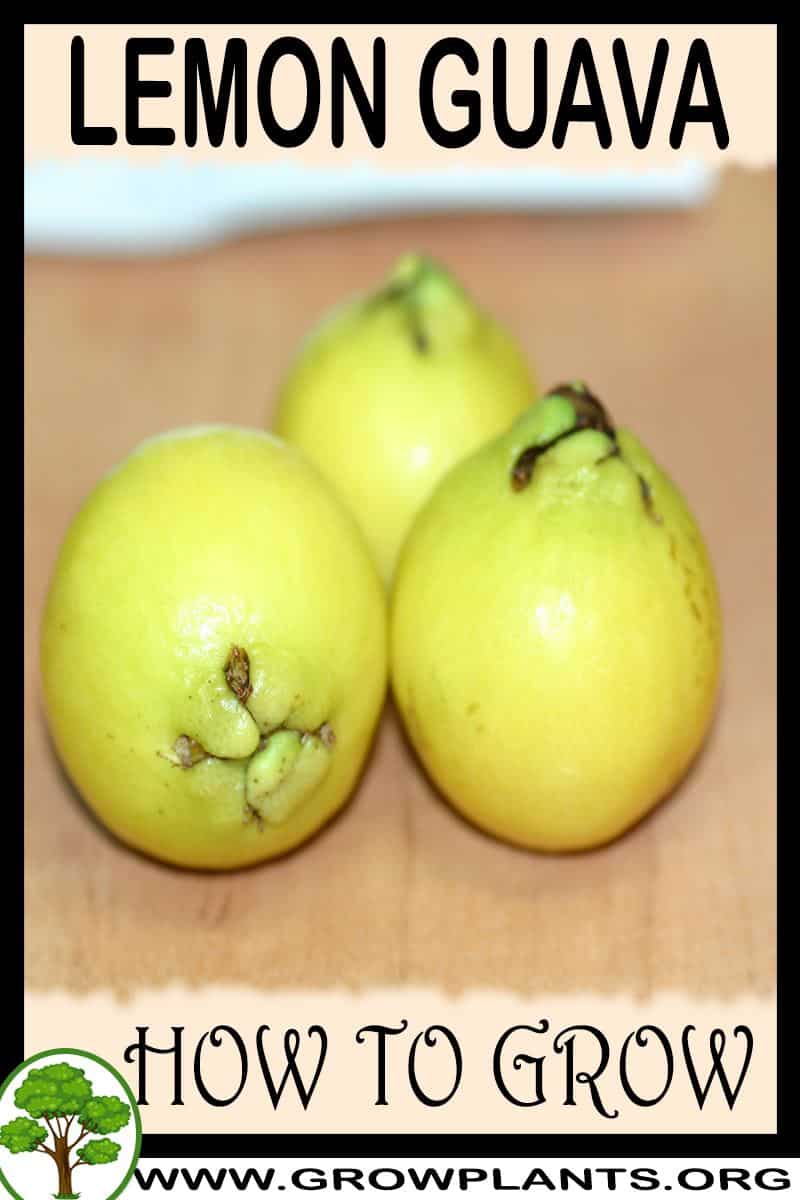
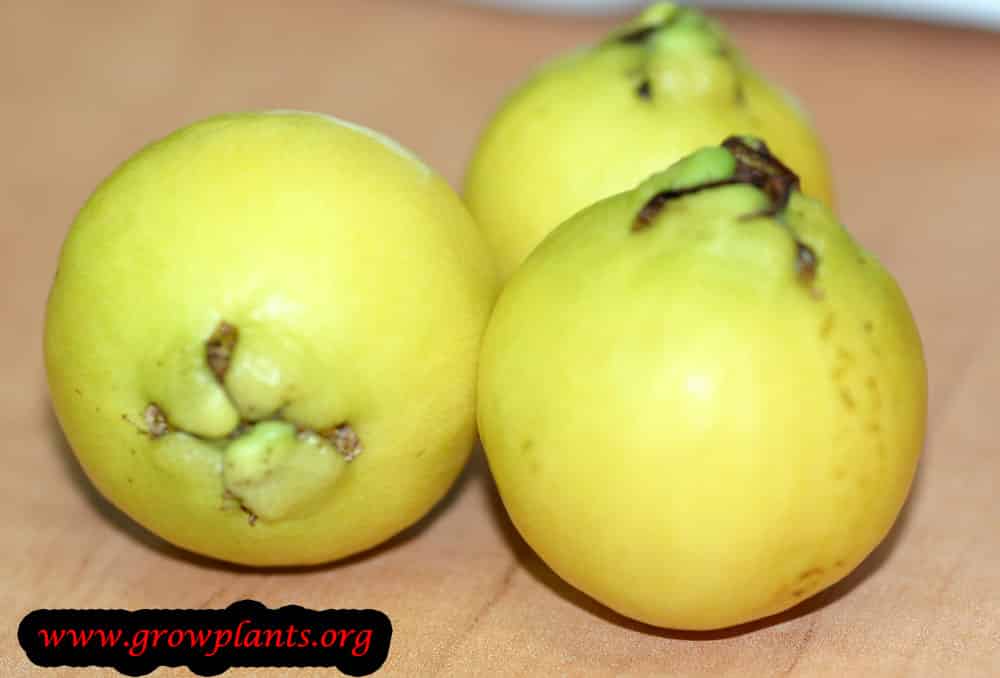
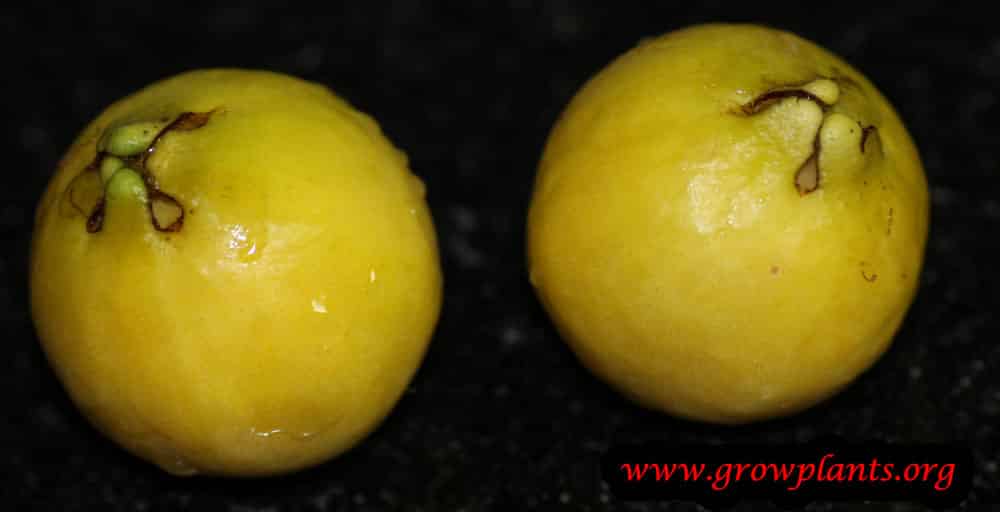
- Fruit Profile: Small round yellow-green fruit 1-4 cm across with white to yellow flesh; the seeds are edible too.
Primary Uses & Landscape Value
- Edible Uses: Eaten fresh; also made into jam, juice and cakes.
- Functional & Ornamental Roles: Grown mainly as a fruit tree and container specimen; not suited to indoor culture and best sited where its vigorous, suckering growth can be managed.
Care Guide: Planting, Soil & Watering
Overview: The lemon guava (Psidium littorale) is a fast-growing evergreen tree for tropical, subtropical or mediterranean climates (roughly hardiness zone 9-10+), thriving in full sun to part shade in rich, moisture-retentive but well-draining soil. It likes regular water and a mulched, humus-rich root zone, and grows well with steady moisture.
Quick Care Requirements
| Requirement | Ideal Condition |
|---|---|
| Planting Season | Year-round in frost-free zones (11b+); spring to autumn in zones 10b-11a; spring to summer in cooler zones 9-10a |
| Growth Rate | Fast (moderate in cooler zones 9-10a) |
| Soil Type | Rich, humus-rich, moist but well-draining; mulched |
| Water Need | Moderate to high; keep the soil evenly moist |
Planting & Establishment
- Best Planting Season: Timing follows your climate: plant year-round in frost-free zones (11b and warmer), from spring through autumn in zones 10b-11a, and in spring to summer in cooler zones (9-10a) once the weather has warmed.
- How to Plant:
- Hole Preparation: Dig a hole about 50% wider than the root ball and loosen the surrounding soil so the roots can spread easily.
- Soil Amendments: Mix organic matter, dead leaves and humus into the backfill, then firm the tree in gently and stake it if it is unstable; prune a top-heavy tree lightly if it will not stand on its own.
- Planting Depth: Set the tree at the level it grew in the pot, keeping the root collar at the surface and never burying the stem.
- Growth Speed & Expectations: A vigorous, fast grower reaching about 1-5 m that can be kept as a shrub by pruning; growth slows to moderate in cooler zones, and trees typically begin fruiting within 2-3 years.
Soil, Watering & Drainage Care
- Soil Mix & Drainage Needs: Give it rich, well-draining soil kept moist under a layer of mulch; in containers use potting soil or a peat-and-perlite mix and never let water sit in the saucer for more than a day, as constant wet destroys the soil and rots the roots.
- Watering Schedule & Technique:
- Young / Newly Planted: Water twice on planting day, then daily for the first two weeks, so the young tree never dries out while it roots in.
- Established: Once settled it grows well with regular water; water deeply and consistently, and increase watering while the tree is carrying fruit.
- Seasonal Adjustments: Water more through summer heat and while fruiting, and ease back in cool or wet weather; keep the plant frost-free.
Climate, Light & Hardiness
Lemon Guava grows in tropical, subtropical, and mediterranean climates and prefers full sun to half shade. Cold tolerance is low: the site rates it to approximately zone 10 and above generally, with zone 9 achievable given the right care.
Quick Climate Specifications
| Climate Zones | Tropical, subtropical, and mediterranean climates |
|---|---|
| USDA Hardiness Zones | Approximately 10 and above; zone 9 possible with the right care |
| Frost Tolerance | Low |
| Light Conditions | Full Sun to Half Shade |
Sunlight & Light Exposure
Optimal Light Setup
Full sun to half shade both work well for this shrub or small tree.
Temperature Extremes & Hardiness
USDA Hardiness & Regional Limits
Reliable outdoor culture is generally rated from approximately zone 10 upward, with zone 9 possible for gardeners providing attentive winter care. The site's planting-season guidance also shifts by zone - all year in zone 11b+, spring through autumn in zone 10b–11a, and spring to summer only in the cooler zone 9–10a range - reflecting a narrower frost-free planting window as winters get colder.
Cold Damage & Winter Protection
Growth is noticeably slower in the cooler end of its range (zone 9–10a) compared with warmer zones; protect trees from frost, especially while young.
Frost Sensitivity
Frost can damage foliage and young growth; site in the warmest available spot in marginal zone 9 gardens.
Wind, Humidity & Microclimate
Humidity Preferences
Prefers a moderately humid environment typical of tropical and subtropical guava relatives.
Microclimate Recommendations
A warm, sheltered site speeds growth and improves winter survival at the cooler end of its range.
Growing in Pots, Balconies & Indoors
Lemon guava (Psidium littorale) grows to 1-5 m (3-15 ft), and can be pruned to a shrub and can be kept as a compact shrub by pruning, which makes it a rewarding container plant for a sunny patio or balcony. It is not a houseplant – it needs full outdoor sun to crop.
Quick Details
- Container Size: Start small (20-30% larger than the root ball) and step up gradually to a large tub
- Indoor Suitability: Not a houseplant; grow it outdoors in a pot
- Best Spot: Full sun to part shade on a patio or balcony
- Soil & Drainage: Potting soil, or a peat-and-perlite mix, with strong drainage
- Watering in Pots: Water regularly, but never let it sit wet – overwatering in a pot ruins the soil and roots
Indoors & On the Windowsill
- Not a houseplant: Indoor light is too weak for it to grow well or fruit, so it is not suited to life in a room. Keep it outdoors.
- Windowsill: A young plant can sit on your sunniest sill for a while, but it needs to move outside into full sun to crop.
- Overwintering: Frost-tender – in cold climates grow it in a pot you can move to a bright, frost-free space for the cold season and back out when warmth returns.
On a Balcony or Patio
- Light & heat: Give it the sunniest spot. Walls and paving reflect heat and pots dry quickly, so check moisture often; shelter a laden plant from strong wind.
Choosing the Pot, Soil & Long-Term Care
- Pot & drainage: Strong drainage holes are essential. If you use a saucer, never let water stand in it more than a day. Choose a pot with strong drainage holes; skip a standing-water saucer, or empty it promptly, so the roots never sit wet. Terracotta breathes and dries faster, while glazed or plastic pots hold moisture longer.
- Potting mix: Potting soil, or a mix of peat and perlite, kept open and free-draining.
- Watering care: Water regularly but do not overwater – unlike open ground, a waterlogged pot destroys the soil structure and the roots.
- Feeding: Add humus a few times a year; potted plants use up their soil faster because nutrients leach out with every watering, so feed a little more often than plants in open ground.
- Repotting: Every few years replace part of the soil and trim some roots – you can do this from the side of the pot without lifting the whole plant.
Grower’s Container Tip
- Pot up gradually: Start in a small pot about 20-30% larger than the root ball; each time you move up a size, swap in some fresh soil, until you reach the tub size you want. This keeps the plant vigorous and the soil fresh.
Fertilizing & Feeding
Lemon guava is a moderate feeder: it responds well to steady, modest nutrition through the warm growing season rather than heavy applications, and it appreciates organic matter worked into rich, consistently moist soil.
Quick Fertilizing Specs
| Feeding Level | Moderate – regular light-to-moderate feeding during active growth |
|---|---|
| young_feeding | Nitrogen-forward feeding to build structure and canopy while the tree establishes |
| mature_feeding | Balanced feeding that shifts toward potassium support once the tree is carrying fruit |
| Main Nutrient Priority | Nitrogen while the canopy develops, then a balanced blend with extra potassium once fruiting begins |
| Best Feeding Period | Through the warm, active growing season; ease off as growth slows in cooler months |
| Organic Options | Composted manure, mulch, and worked-in organic matter suit this tree’s preference for rich, humus-fed soil |
| Micronutrients | A complete fruit-tree fertilizer carrying iron, manganese and zinc supports the tree’s glossy evergreen foliage |
| Soil pH | Prefers rich soil that stays consistently moist; avoid strongly alkaline conditions that can lock out iron |
Feeding by Growth Stage
Newly Planted Tree
Help the young tree settle and root out into the surrounding soil without pushing tender growth it can’t yet support
| Nutrient direction | Light, root-focused nutrition – favor organic matter over a concentrated synthetic dose |
|---|---|
| Timing | At planting and through the first flush of new growth |
| Frequency | A single light feeding at planting, then hold off until fresh growth confirms the roots are active |
| Fertilizer types | Compost or well-rotted organic matter mixed into the planting hole, A diluted, gentle starter fertilizer once new growth appears |
| Precautions | Avoid concentrated fertilizer in direct contact with new roots; keep the root zone mulched and evenly moist |
Young, Establishing Tree
Build a strong framework of branches and canopy ahead of fruiting
| Nutrient direction | Nitrogen-forward feeding to drive vigorous vegetative growth, paired with a complete fertilizer for overall balance |
|---|---|
| Timing | Through the active growing season as the tree puts on height and canopy |
| Frequency | Several light feedings spread across the warm growing season, tapering off as growth slows |
| Fertilizer types | A nitrogen-forward, complete fruit-tree fertilizer, Mulch and organic matter to sustain the rich soil this tree favors |
| Routine trace nutrients | iron, manganese, zinc |
| Precautions | Don’t let feeding outpace watering – this tree wants consistently moist soil to make use of the nutrients it’s given |
Established, Pre-Bearing Tree
Maintain steady, balanced growth as the tree matures toward its first fruit set
| Nutrient direction | Shift toward a balanced, complete fertilizer rather than a nitrogen-heavy blend |
|---|---|
| Timing | Across the active growing season, easing back as growth naturally slows |
| Frequency | Regular light feedings during active growth, reduced once growth slows |
| Fertilizer types | A balanced, complete fruit-tree fertilizer, Continued mulch and organic matter to keep the soil rich |
| Routine trace nutrients | iron, manganese, zinc |
| Precautions | Resist pushing extra nitrogen once growth is steady – excess soft growth can delay the shift into bearing |
Mature, Fruit-Bearing Tree
Support consistent fruit set and quality once the tree is established and bearing
| Nutrient direction | Balanced feeding with added attention to potassium as fruit develops, since potassium supports fruit size and quality |
|---|---|
| Timing | Through the growing season, with attention around flowering and fruit development |
| Frequency | Regular light-to-moderate feedings through the active season, scaled back once fruit is harvested |
| Fertilizer types | A balanced, complete fruit-tree fertilizer with potassium support at fruiting, Mulch and organic matter to maintain moisture and soil richness |
| Routine trace nutrients | iron, manganese, zinc |
| Precautions | Keep watering consistent while the tree carries fruit – uneven moisture undermines nutrient uptake and fruit quality |
Nutrient Deficiency Signs & Corrections
Yellowing between the veins on the newest leaves, while the veins themselves stay green
| Possible causes | Iron deficiency, often induced by alkaline or waterlogged soil rather than a true lack of iron, Root stress from poor drainage or overly wet soil limiting nutrient uptake, Compacted or heavy soil restricting root function |
|---|---|
| Appears first on | Newest leaves at branch tips |
| What to check | Soil drainage and moisture around the root zone, Whether mulch or organic matter has broken down and needs renewing, Whether yellowing is limited to new growth or spread across the canopy |
| Possible correction | Improve drainage, work in organic matter, and consider a chelated iron product per its label if the pattern persists |
Overall pale, light-green foliage and slowed shoot growth, more pronounced on older leaves
| Possible causes | Insufficient nitrogen reaching the roots, Soil that has become depleted of organic matter, Heavy watering leaching nutrients out of the root zone |
|---|---|
| Appears first on | Older, lower leaves first, spreading upward if uncorrected |
| What to check | Recent feeding history and whether mulch has been renewed, Watering pattern for signs of leaching, General vigor of new growth |
| Possible correction | Resume a nitrogen-forward complete fertilizer during the active growing season and refresh organic mulch |
Browning or scorching along leaf margins, most noticeable on leaves near fruit clusters
| Possible causes | Low potassium availability, especially on a tree carrying a heavy fruit load, Sandy or fast-draining soil that doesn’t hold nutrients well, Salt buildup from over-fertilizing interfering with potassium uptake |
|---|---|
| Appears first on | Margins of mature leaves, particularly near developing fruit |
| What to check | Fruit load relative to canopy size, Soil texture and drainage, Recent fertilizer history for a potassium-supplying product |
| Possible correction | Apply a balanced fertilizer with potassium support per its label, and correct any salt buildup with thorough watering |
Smaller, narrower new leaves clustered in a rosette pattern at branch tips
| Possible causes | Zinc deficiency, seen occasionally in guava relatives on alkaline or sandy soils, High soil pH limiting zinc availability, Root competition or stress reducing uptake |
|---|---|
| Appears first on | New growth at branch tips |
| What to check | Soil pH tendency and texture, Whether a complete fertilizer with micronutrients has been used recently, Leaf size on new growth compared with older growth |
| Possible correction | Switch to a complete fruit-tree fertilizer that includes zinc, or apply a chelated zinc product per its label |
Pruning, Training & Seasonal Maintenance
Lemon guava tolerates moderate to fairly heavy pruning and is unusual among the guavas in this batch in that the source explicitly notes it can be kept as a shrub rather than a small tree purely by how it is pruned. Its main objective is not shaping for looks but keeping the plant low and open enough to cover with netting and to hand-pick fruit easily. The safest window is late winter or after the end-of-summer harvest, since flowering runs spring into autumn and fruit needs to be netted and picked while ripening.
Quick Pruning & Maintenance Specs
| Pruning Tolerance | Moderate |
| Primary Pruning Window | End of winter, before spring growth |
| Secondary Maintenance Window | End of summer, after the main harvest |
| Typical Frequency | Once yearly |
| Main Objective | Keep the plant at a pickable, netable height; choose shrub vs. small-tree form |
| Young Plant Priority | Decide and set shrub form (multiple low stems) vs. small-tree form (single trunk) |
| Mature Plant Priority | Height/spread containment and fruit accessibility |
| Best Tool Type | Bypass secateurs for most cuts, loppers for older basal wood |
| Avoid Heavy Pruning During | Flowering (spring, sometimes autumn) and while fruit is ripening (summer, sometimes winter in warm zones) |
Pruning by Plant Age & Size
Newly Established
Limit cuts to damaged or dead growth only; do not force a shrub or tree form before the root system is established.
Young / Formative
This is the point to decide the plant’s form: for a shrub (the source’s stated option), select and retain several low stems and pinch/head them to encourage bushiness; for a small-tree form, select one leader and remove low competing shoots. Either way, keep future height in mind – the source’s own picking/covering logic favors staying compact.
Mature / Established
Annual maintenance to hold the chosen form: cut back to keep the canopy low enough to net and to pick fruit without a ladder, and remove crowded interior growth so netting can sit close to the fruit.
Seasonal Pruning Schedule
Post-Harvest (fruit crops)
Objective: renew fruiting wood after the end-of-summer harvest. Remove: spent fruited wood, damaged or crossing growth. Do not remove: developing shoots not yet fruited. Expected response: fresh growth that will carry the next bloom. Flowering/fruiting impact: supportive, since this timing follows fruiting rather than pre-empting it.
Dormant/Winter
Objective: the source’s second stated pruning point (end of winter), used to reset height/shape before spring flowering begins. Remove: dead, weak or overcrowded wood. Do not remove: healthy wood about to flower in spring. Expected response: a controlled spring flush. Flowering/fruiting impact: neutral to supportive if done before buds swell.
Flowering & Fruiting Wood
Flowering runs from spring (and sometimes again in autumn in warmer climates) into new growth, and the source recommends thinning some flowers because a heavy fruit set produces smaller, seedier fruit. Pruning close to either bloom period removes wood that would otherwise flower that cycle; pruning in the stated end-of-winter/end-of-summer windows instead targets already-spent or dormant wood, protecting the coming or recovering crop.
Structural Pruning & Training
Crossing and rubbing growth should be removed as the plant fills in, since a dense multi-stemmed shrub form is common here. Height and spread control is the plant’s central structural task – the source ties pruning directly to keeping the tree easy to cover and pick, not to canopy density or airflow.
Special Growth to Remove
Thin excess flowers/small fruit clusters when set is heavy, per the source, to favor larger fruit over numerous small ones. Remove old fruited wood after harvest to keep the plant productive and compact. The species is noted as aggressive/invasive, so also remove any unwanted root suckers spreading beyond the intended planting area.
Container & Small-Space Pruning
Lemon guava can be grown in a container (per the source) and, since it already tolerates being kept as a shrub by pruning, container specimens should be pruned more assertively for compactness than an in-ground tree-form plant – favor repeated light heading over occasional hard cuts to keep the root-to-canopy balance manageable in a pot.
Tools
Bypass secateurs for most annual cuts on young and fruiting wood; loppers for thicker basal or older shrub stems when resetting shape.
Tool Hygiene & Disease Risk
Routine. Documented pests (aphids, mealybugs, scale, borers, whiteflies, thrips) are insect pests, not pruning-transmitted pathogens, so clean, sharp tools are sufficient sanitation between plants.
Cut Placement & Technique
Use heading cuts to encourage the bushy, low form the source favors, and thinning cuts to open crowded interior growth for netting access; cut just above an outward-facing bud so regrowth spreads the canopy rather than crowding its center.
Heavy Pruning & Rejuvenation
Tolerated but not documented as a routine requirement for this species (unlike its guava relatives in this batch, the source does not call for a biennial hard prune) – use a harder cutback only if the plant has outgrown its space or become leggy, expecting a temporary loss of that season’s flowering in the recovery flush.
Post-Pruning Care
Keep mulch and moisture consistent as the plant prefers rather than adding extra fertilizer right after cutting; watch newly exposed lower stems for sunburn if a dense shrub was opened up significantly; re-net remaining and regrowing fruit against fruit fly and birds.
Common Pruning Mistakes
Letting the plant grow tall and single-trunked when the source’s own advice favors a low, coverable shrub form; skipping fruit thinning and getting a heavy set of small, seedy fruit instead; pruning during active bloom or while fruit is ripening and losing that cycle’s crop.
When NOT to Prune
During spring (or autumn, in warm climates) bloom; while fruit is ripening toward the summer harvest; right after transplanting.
Recommended Tools (by task)
- Annual shaping and fruited-wood removal: bypass_secateurs – the main tool for this compact, hand-managed shrub.
- Older/basal shrub-stem renewal: loppers – for wood too thick for secateurs when resetting a container or overgrown plant.
Pruning Troubleshooting
| Problem | Possible Cause | What to Check | Corrective Action |
| Small, seedy fruit | Fruit set too heavy, no thinning done | Number of fruit per cluster | Thin flowers/young fruit as the source recommends |
| Plant growing tall and hard to net | Left to grow as a tree instead of pruned as a shrub | Current height vs. netting/harvest reach | Head back to encourage the shrub form and lower fruiting wood |
| Poor flowering after a hard cutback | Cutback timed too close to a bloom period | Timing of the cut relative to spring/autumn bloom | Shift hard cuts to end-of-winter or post-harvest windows |
Propagation Guide
Lemon guava is easiest to raise from seed, which germinates in as little as 2-4 weeks per the site’s own data, though seedling fruit quality varies; cuttings and air layering are used to reproduce a known good tree exactly, and grafting is an option when fruit quality is disappointing – the site notes it is even possible to graft Red strawberry guava onto the same tree to grow two guava types on one plant. Overall difficulty is Easy.
Quick Propagation Specs
| Best Propagation Method | Seed – fast and straightforward |
| Alternative Methods | Stem cuttings, air layering, and grafting (including topworking with Red strawberry guava) |
| Propagation Difficulty | Easy |
| Seed True-to-Type | Variable – typical of guava seedlings |
| Vegetative True-to-Type | Yes |
| Best Propagation Season | Spring to early summer; also possible summer to autumn |
| Seed Germination Time | 2–4 weeks, though it can take longer |
| Germination Temperature | 20–27°C (68–80°F) |
| Seed Sowing Depth | 2cm (1 inch) |
Growing from Seed
Seed Handling & Viability
Store seed in a dry, dark location at room temperature until sowing.
Sowing Season
Spring to early summer is best; sowing from summer into autumn is also possible.
Sowing Depth & Orientation
Sow about 2cm (1 inch) deep, covering the seed lightly in soil kept moist.
Germination Conditions
Moist, high-humidity, well-drained soil in a sunny spot, with a temperature of about 20–27°C (68–80°F); keep the soil from drying out and water with an average amount.
Germination Time
Typically 2–4 weeks, though germination can take longer.
Seedling Care
Keep seedlings in a sunny spot with steady humidity and moist soil. Start in separate pots; when spacing plants out directly, allow about 3x4m (10×13 feet), or about 5x5cm (2×2 inches) when transplanting smaller starts.
Stem Cuttings
Cutting Type
Semi-hardwood cuttings are the general approach used for this species.
Best Timing
Take cuttings during the warm growing season.
Rooting Setup
A humid, warm, well-draining rooting medium is typical for Psidium cuttings.
Rooting Hormone
Optional – may improve and speed rooting but is not stated as required.
Rooting Time
Generally several weeks to a couple of months under warm, humid conditions.
Air & Ground Layering
Air layering is one of the plant’s recognized methods. Select a healthy branch, wound or girdle the bark, wrap the area in moist medium, and keep it consistently damp; roots typically develop over a couple of months, after which the layer can be severed and potted up.
Grafting & Budding
Why Grafting Is Used
Grafting is not required, but the site recommends it when fruit quality is disappointing. Notably, it is also possible to graft Red strawberry guava onto the same tree, allowing two guava types to be grown on one plant.
Preferred Grafting Methods
Cleft grafting or chip budding are typical choices for Psidium species.
Rootstock
Seedling lemon guava (or an established tree, for topworking).
Scion Selection
Scion wood from a tree with known good fruit quality – or from Red strawberry guava, if combining fruit types.
Best Grafting Season
Warm active-growth months.
Graft Aftercare
Protect the graft union from drying out and monitor until it has knitted and growth resumes.
Bloom & Flower Guide
Quick Details
- Bloom Season: Spring, and sometimes again in autumn in warmer climates
- Flower Appearance: White flowers about 1.5 to 3 cm across, each a puff of many stamens, borne in clusters
- Edibility: Grown for its fruit – the flowers themselves are not eaten
Detailed Blooming Overview
Lemon guava opens fluffy white flowers in spring, each one a little burst of stamens that bees find irresistible. In warm climates a lighter second flush can follow in autumn. Every pollinated flower can set fruit, so how you manage the bloom directly shapes the crop that follows.
Flower Characteristics
- White flowers 1.5 to 3 cm wide with a prominent brush of stamens.
- Carried in clusters along the stems.
Bloom Care & Thinning
- Thinning the bloom: Thin out some of the flowers – if too many set, the fruit stays small and seedy with little flesh, so removing a share of the blooms gives larger, better fruit.
- Pollination: Worked by bees; a good bee presence improves fruit set.
Fruit & Uses
Lemon Guava is grown for its small, aromatic fruit, which is eaten whole — skin, flesh and seeds together — either fresh off the tree or made into jam, juice and cakes.
Quick Edible Specs
| Edible Parts | Fruit (flesh, skin, and seeds) |
|---|---|
| Main Use(s) | Culinary — fresh eating, jam, juice, cakes |
| Eaten Raw or Cooked | Raw, or cooked into jam/cakes |
| Preparation Required | None — whole fruit including seeds is eaten |
| Harvest Season | Summer (sometimes into winter in hardiness zone 11+) |
| Time to First Harvest | A few years after planting (see Propagation) |
| Storage | Best picked fully ripe for the sweetest flavour |
| Safety/Toxicity Caveat | None known |
Fruit
The fruit is yellow-green outside with white-to-yellow flesh inside, 1-4 cm in size — described on the site as a "yellow strawberry guava." Unusually, the seeds are also edible and are eaten as part of the fruit rather than discarded. Thinning some of the flowers is recommended (see Pruning), since a heavy fruit set otherwise produces smaller fruit with more seed relative to flesh.
Harvesting
Fruit is harvested mainly in summer, sometimes extending into winter in the warmest zones (11+). It is best picked when fully ripe, since the site notes the fruit is sweeter at that stage.
Preparation, Uses & Safety
The whole fruit — skin, flesh and seeds — can be eaten out of hand with no peeling or deseeding needed. It is also cooked into jam or juice, or baked into cakes. No safety caveats are noted.
Pests, Diseases & Troubleshooting
Guavas are robust, fast fruiting trees in the myrtle family whose chief challenges are fruit flies that sting ripening fruit and sap-sucking insects (whitefly, scale, mealybug, thrips) that foster sooty mould, with root-knot nematodes and guava/myrtle rust as the key soil and foliar diseases. The management philosophy is integrated and preventative — orchard sanitation, fruit bagging, traps and beneficials first, with oils and targeted sprays as back-up. Prompt removal of fallen and stung fruit breaks most pest cycles before they build.
Quick Troubleshooting Overview
| Issue / Pest | Main Symptom | Primary Solution |
|---|---|---|
| Fruit flies | Stung fruit with puncture marks; maggots and premature drop/rot inside | Sanitation, bagging, protein-bait & lure traps; harvest slightly early |
| Whitefly / scale / mealybug | Sticky honeydew, black sooty mould, yellowing leaves | Horticultural oil / soap, encourage parasitoids, control ants |
| Thrips & caterpillars | Scarred, russeted fruit skin; chewed leaves and bored fruit | Sticky traps, Bt for caterpillars, remove damaged fruit |
| Root-knot nematode | Galled roots, stunting, wilting and poor vigour despite feeding | Plant clean stock, mulch, add organic matter/biofumigants |
| Guava / myrtle rust | Bright yellow powdery pustules on new leaves, shoots and fruit | Remove infected tips, improve airflow, protectant fungicide on flush |
| Anthracnose | Sunken dark spots on fruit and leaves, dieback of shoot tips | Prune for airflow, sanitation, copper/protectant fungicide |
Common Pests & Management
- Mediterranean fruit fly (Ceratitis capitata / Anastrepha spp. / Bactrocera spp.):
- Symptoms: Adult flies puncture ripening fruit to lay eggs, leaving small sting marks; maggots then tunnel and rot the flesh, causing premature drop and making fruit inedible. This is the single most important guava pest in warm regions. (Note: high fruit acidity in some species can kill a proportion of the eggs, reducing but not eliminating damage.)
- Prevention & Control: Rely on sanitation first: pick up and destroy all fallen and stung fruit at least twice a week to break the breeding cycle. Bag developing fruit in paper or fine mesh sleeves, hang protein-bait and para-pheromone lure traps, and harvest at the mature-firm stage rather than fully ripe. Encourage parasitoids; use spot-applied bait sprays only where pressure is high, protecting pollinators.
- Whiteflies (Aleurodicus / Bemisia spp.):
- Symptoms: Tiny white moth-like insects that lift in clouds when foliage is disturbed; nymphs on leaf undersides suck sap, weakening the tree and coating leaves and fruit with honeydew that blackens into sooty mould. Guava whitefly can be a persistent nuisance.
- Prevention & Control: Hose down foliage, hang yellow sticky traps, and conserve natural enemies (Encarsia, ladybirds, lacewings) by avoiding harsh sprays. Control ants, which farm the pest. Insecticidal soap or horticultural/neem oil to leaf undersides manages heavy populations; repeat to catch successive generations.
- Scale insects & mealybugs (Coccidae / Diaspididae; Pseudococcus / Planococcus spp.):
- Symptoms: Brown or waxy limpet-like scales on stems and leaf veins, and white cottony mealybugs in leaf axils, on fruit and roots; both suck sap, cause yellowing and honeydew, and downgrade fruit with sooty mould. Ants tending them are a giveaway.
- Prevention & Control: Prune out heavily encrusted wood, scrub or spot-treat with alcohol, and smother with horticultural oil for scale; treat mealybug with soap/oil and manage ants. Preserve predators (ladybirds, parasitic wasps) that usually keep them in check outdoors.
- Thrips (Selenothrips rubrocinctus / Frankliniella spp.):
- Symptoms: Rasping feeders that silver, scar and russet young leaves and fruit skin; red-banded thrips in particular blemish fruit and can cause leaf bronzing and early drop. Damage is worst in hot, dry spells.
- Prevention & Control: Monitor with blue/yellow sticky traps, keep trees vigorous and not drought-stressed, and encourage predatory mites and minute pirate bugs. Where economically damaging, spinosad or horticultural oil directed at flush and flowers, timed to protect pollinators, reduces scarring.
- Fruit-boring & leaf-eating caterpillars (Lepidoptera (e.g. guava moth, fruit borers)):
- Symptoms: Caterpillars that bore into fruit (frass at entry holes, internal rot) or skeletonise and roll leaves; boring larvae ruin fruit from within and are hard to spot until harvest.
- Prevention & Control: Remove and destroy infested fruit, bag fruit early, and encourage birds and parasitic wasps. A Bacillus thuringiensis (Bt) spray targets young leaf-feeding larvae organically; timely orchard hygiene is the main control for borers.
- Root-knot nematodes (Meloidogyne spp.):
- Symptoms: Microscopic soil roundworms that gall and knot the roots, so trees are stunted, chlorotic, wilt in heat and respond poorly to water and feed — a major guava problem in sandy, warm soils and a predisposing factor for guava wilt.
- Prevention & Control: Plant certified clean stock into nematode-free or solarised ground, keep roots vigorous with heavy organic mulch and compost, and use marigold rotations or biofumigant cover crops. Resistant/tolerant rootstocks and good soil biology are the durable answer; avoid moving infested soil.
Diseases & Fungal Issues
- Guava / myrtle rust (Austropuccinia psidii (syn. Puccinia psidii)):
- Symptoms: The defining Myrtaceae disease: bright yellow to orange powdery pustules erupt on young leaves, shoot tips, flower buds and fruit, deforming and killing new growth; severe infection causes dieback and can be devastating on susceptible trees. Only tender new flush is attacked.
- Treatment & Management: Prune out and bag infected shoots, thin the canopy for airflow, and avoid overhead irrigation. Time nitrogen so flushes are not constantly tender in high-risk humid weather. Protectant fungicides on emerging flush give control where the disease is present; choose less-susceptible species/varieties where you can.
- Anthracnose (Colletotrichum gloeosporioides):
- Symptoms: Sunken, dark, sometimes concentric spots on fruit (often appearing as fruit ripens or after harvest), plus leaf spotting and tip dieback in warm, wet conditions; fruit can rot rapidly post-harvest.
- Treatment & Management: Prune for an open, quick-drying canopy, remove mummified fruit and dead wood, and avoid fruit injury. Copper or other protectant fungicides on developing fruit in wet seasons, plus prompt cool handling after harvest, keep it in check.
- Algal leaf & fruit spot (Cephaleuros virescens):
- Symptoms: Raised, greenish to rusty-orange velvety spots on leaves (and sometimes fruit and bark) in humid, crowded plantings; more disfiguring than deadly but weakens heavily spotted trees.
- Treatment & Management: Improve air circulation and light by pruning, reduce leaf wetness, and keep trees vigorous. Copper-based sprays manage severe cases; spacing and canopy management are the main tools.
- Guava wilt (Nalanthamala psidii / Fusarium spp.):
- Symptoms: A serious soil-borne vascular disease in some regions: leaves yellow, wilt and the tree declines branch by branch, with browning of the internal wood; often worse where roots are damaged by nematodes or waterlogging.
- Treatment & Management: There is no cure once trees are affected, so prevention rules: plant clean stock on tolerant rootstocks, avoid root injury and waterlogging, manage nematodes, and remove and destroy dead trees with their root systems to limit spread.
Growing Difficulties & Abiotic Problems
- Fruit cracking & splitting:
- Cause & Symptoms: Irregular water supply — heavy irrigation or rain after a dry spell — makes the flesh swell faster than the skin, splitting fruit and opening the door to rot and fruit flies.
- Correction Strategy: Water evenly and mulch to buffer soil moisture, especially as fruit sizes and ripens; avoid sudden heavy watering after drought and thin excessive crop loads.
- Nutrient deficiency / chlorosis:
- Cause & Symptoms: In alkaline, sandy or waterlogged soils guavas show interveinal yellowing (iron/zinc) or general paleness; young leaves worst for iron, giving weak growth and poor fruit.
- Correction Strategy: Correct soil drainage and pH, feed a balanced fertiliser with micronutrients, and apply chelated iron or zinc as a foliar/soil treatment for acute deficiency; maintain organic mulch to improve soil health.
- Cold & wind damage:
- Cause & Symptoms: Guavas are subtropical; frost scorches or kills young growth and can defoliate or kill young trees, while strong wind tatters leaves and drops fruit.
- Correction Strategy: Site in a warm, sheltered spot, protect young trees from frost with covers, and use windbreaks; established trees usually reshoot from wood after light cold.
- Sunburn on fruit & bark:
- Cause & Symptoms: Exposed fruit and thin smooth bark can scald in intense sun, especially after heavy pruning, leaving pale corky patches that invite rot.
- Correction Strategy: Maintain enough canopy to shade fruit and trunk, whitewash exposed trunks in very hot climates, and prune gradually rather than opening the canopy all at once.
What Helps – Products & Tools
The guava toolkit centres on fruit-fly traps and bait (protein and para-pheromone lures) plus fruit bags/sleeves, backed by horticultural / neem oil and insecticidal soap for whitefly, scale, mealybug and mites, yellow/blue sticky traps for whitefly and thrips, Bt for caterpillars, and spinosad for heavier thrips. On the disease side keep a copper fungicide for anthracnose and algal spot and a protectant for guava/myrtle rust on new flush; chelated iron/zinc corrects the common micronutrient chlorosis.