Plant Profile & Key Characteristics
Overview: Fernleaf lavender (Lavandula pinnata) is an aromatic, evergreen woody subshrub reaching 80-150 cm, grown as an ornamental and for its fragrant, edible flowers. It forms a neat mound of grey-green foliage topped by purple-lilac flower spikes and is a magnet for bees and other pollinators.
Quick Specifications
| Specification | Attribute |
|---|---|
| Plant Type / Life Cycle | Perennial |
| Foliage Type | Evergreen |
| Mature Size | 80-150 cm (32-60 in) tall |
| Growth Rate | Moderate to fast |
| Toxicity | Non-toxic / edible (culinary flowers and leaves) |
| Hardiness | USDA zones 9-11 |
Growth Form & Structure
- Height & Spread: 80-150 cm (32-60 in) tall with a similar spread; grows well in containers of 8-18 L (2-5 gal).
- Growth Habit & Form: rounded, mounding woody subshrub that becomes woody at the base with age.
- Lifespan & Maturity: reaches flowering size within a year or two; renew every few years as older plants grow leggy.
Anatomy & Physical Features
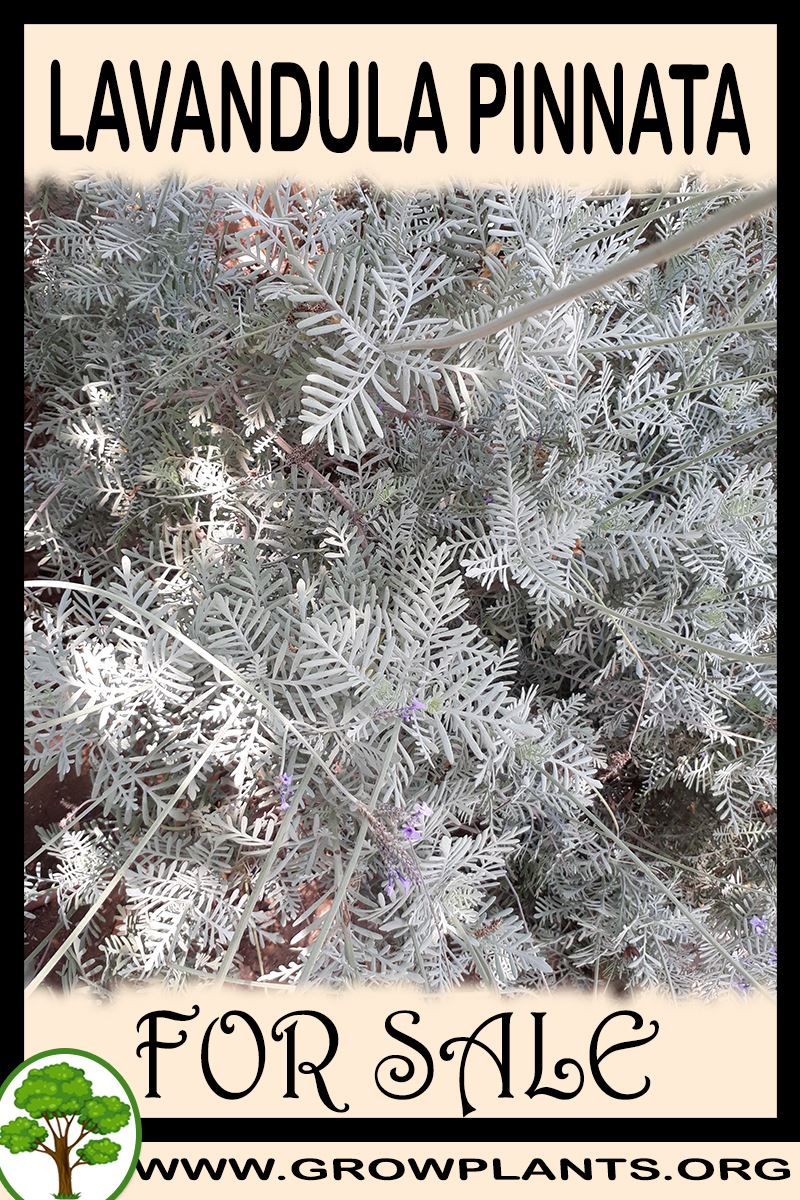
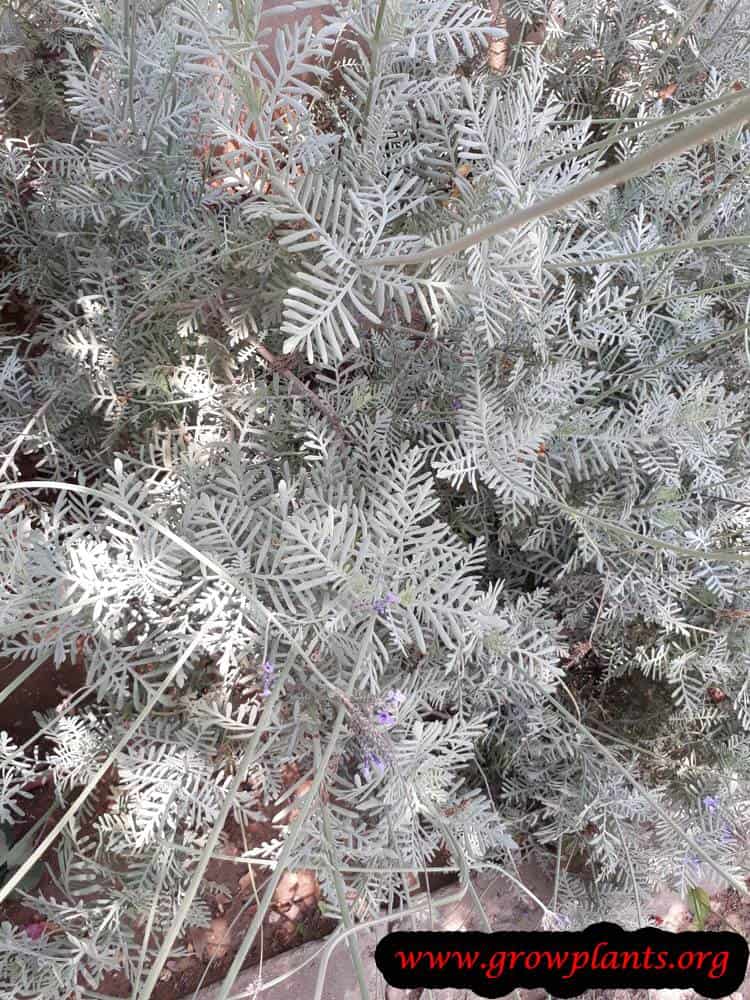
- Leaves & Foliage: green, finely divided pinnate (fern-like) leaves with serrated edges, highly aromatic.
- Flower Characteristics: purple-lilac flowers packed into hive-like spikes at the stem tips, fragrant and rich in nectar (spring to summer).
Primary Uses & Landscape Value
- Edible Uses: flowers and leaves used for essential oil, herbal beverages and flavouring.
- Functional & Ornamental Roles: fragrant ornamental, low hedge and border plant, pollinator plant, cut/dried flower and natural insect repellent.
Care Guide: Planting, Soil & Watering
Overview: Lavender is a sun-loving, drought-tolerant Mediterranean shrub that needs full sun and sharp drainage above all else. It grows best in light, gritty, very well-draining soil and dislikes wet, heavy ground.
Quick Care Requirements
| Requirement | Ideal Condition |
|---|---|
| Planting Season | In spring to summer in cooler zones, spring to autumn in mild zones, or autumn to spring in the warmest (zone 10b) areas |
| Growth Rate | Moderate to Fast |
| Soil Type | Light, gritty, very well-draining soil |
| Soil pH | Neutral to slightly alkaline (around 6.5-8.0); tolerates lime |
| Water Need | Moderate – water deeply, then let the soil dry out between waterings; drought tolerant |
Planting & Establishment
- Best Planting Season: Plant in spring to summer in cooler zones (5-8), spring to autumn in mild zones (9-10a), or autumn to spring in the warmest areas (zone 10b), matching planting to the cooler, settled weather of your climate.
- How to Plant:
- Hole Preparation: Dig a hole about 50-100% wider than the root ball and loosen the surrounding soil so the roots can spread into free-draining ground.
- Soil Amendments: Put some dead leaves and organic matter in the hole; on heavy soils add grit or sand to sharpen drainage, as good drainage matters more than richness.
- Planting Depth: Set the plant with its crown at or slightly above soil level; never bury the stem base, which invites rot.
- Growth Speed & Expectations: A moderate-to-fast grower that quickly forms a rounded, woody shrub, in good conditions reaching about 80-150 cm.
Soil, Watering & Drainage Care
- Soil Mix & Drainage Needs: Above all it needs sharp drainage – light, gritty, well-aerated soil, or a free-draining potting mix (for example one with perlite or vermiculite) in containers; wet, heavy soil is the main cause of failure.
- Watering Schedule & Technique:
- Young / Newly Planted: Water young plants just enough to keep the soil lightly moist while they root in, without keeping it soggy.
- Established: Once established it is drought tolerant; water deeply but infrequently, letting the soil dry out well between waterings.
- Seasonal Adjustments: Water very little over winter to avoid root rot, and give occasional deep watering only in prolonged summer heat and drought.
Climate, Light & Hardiness
Lavandula pinnata (fernleaf lavender) is a tender evergreen Mediterranean-climate shrub, notably less cold-hardy than common English lavender, reliably outdoor-perennial only in USDA zone 9–11. It wants full sun for best bloom, with half shade tolerated at the cost of fewer flowers.
Quick Climate Specifications
| Climate Zones | Mediterranean, subtropical, temperate |
|---|---|
| USDA Hardiness Zones | 9–11 |
| Frost Tolerance | Low |
| Light Conditions | Full sun (half shade tolerated, fewer flowers) |
Sunlight & Light Exposure
Optimal Light Setup
Full sun is needed for a strong flower spike display; in half shade the plant survives but blooms noticeably less.
Temperature Extremes & Hardiness
USDA Hardiness & Regional Limits
Hardy through USDA zone 9–11; unlike common lavender (Lavandula angustifolia, hardy to roughly zone 5), fernleaf lavender is a warm-climate species and should be treated as tender in colder gardens, brought under cover or grown in containers where winters are cold.
Frost Sensitivity
Frost damages foliage and stems; site outdoors only where winters stay largely frost-free (zone 9 and warmer).
Wind, Humidity & Microclimate
Rainfall & Seasonal Moisture
Suits the dry-summer, mild-wet-winter pattern typical of Mediterranean climates; good drainage matters more than rainfall amount.
Growing in Pots, Balconies & Indoors
Lavandula pinnata (fernleaf lavender) is a fragrant, full-sun shrub. The grower does not rate it as a houseplant – it needs full sun and open air, so grow it in a container on a sunny balcony, patio or terrace.
Quick Details
- Container Size: 8-18 L (2-5 gal) (grower’s value)
- Indoor Suitability: Not an indoor plant – a full-sun outdoor container shrub; a very sunny sill is only a marginal, short-term option
- Best Spot: Full sun (part shade gives fewer flowers)
- Soil & Drainage: Free-draining, organic-rich mix; excellent drainage is essential
- Watering in Pots: Water moderately and let the surface dry between waterings; mulch helps cut evaporation
Indoors & On the Windowsill
- Houseplant limits: The grower marks it as not a houseplant. Lavender demands full sun and airy conditions, which indoor rooms rarely provide – it tends to weaken and rot inside, so it is not recommended as a houseplant.
- If you must try a sill: Only the sunniest, airiest window has any chance, and even then it is a short-term measure – lavender is really an outdoor container shrub.
- Overwintering: In hard-winter climates a potted lavender can be moved to a cold, bright, frost-free spot such as an unheated porch to overwinter, rather than a warm room.
On a Balcony or Patio
- Light, wind & heat: A bright, sheltered balcony or patio suits it well. Walls, railings and paving reflect heat so pots dry fast – check moisture often in hot weather, shelter it from strong wind, and allow for the pot’s weight and for drainage runoff.
- Practicalities: Give it the sunniest, most open spot; its grey foliage and flowers love heat and air movement, and a pot lets you site it perfectly.
Choosing the Pot, Soil & Long-Term Care
- Pot & drainage: An 8-18 L pot with strong drainage holes; empty any standing saucer so the roots never sit in water and rot.
- Pot material: Terracotta breathes and dries quickly (handy for sun-loving Mediterranean plants); glazed or plastic pots hold moisture longer.
- Potting mix: Well-aerated, free-draining mix – a good potting mix, or peat/coir blended with perlite or vermiculite and some organic matter; the grower suggests mulching the surface to reduce water loss.
- Feeding: Potted plants use up nutrients faster because watering leaches them out, so feed a little more often than plants in open ground – but lavender is lean-loving, so feed only lightly.
- Repotting: The grower switches the soil about every two years (renewing part of it so it does not turn sour); when roots fill the pot, either pot up or cut back part of the roots and the plant.
Grower’s Container Tip
- Root-prune to keep it potted: When the roots fill the container, the grower either moves it to a bigger pot or trims back part of the root ball together with the top growth – and renews part of the soil every couple of years so it never turns stale.
Fertilizing & Feeding
A light feeder: this tender, finely-divided-leaved lavender is often grown in containers where winters are cold, and restrained, balanced feeding keeps its fragrant foliage and flowers compact rather than soft and overgrown.
Quick Fertilizing Specs
| Feeding Level | Light feeder |
|---|---|
| Main Nutrient Priority | A balanced fertilizer used sparingly, leaning away from heavy nitrogen so growth stays compact and fragrant |
| Best Feeding Period | As active growth resumes in spring |
| Organic Options | Organic matter and humus worked into well-drained soil at planting |
| Reduce/Stop Feeding | Feeding is held back through any cooler, slow-growth period |
| Micronutrients | Usually adequate from a complete fertilizer and organic matter in well-drained soil |
| Soil pH | Prefers well-drained soil and tolerates lean conditions |
Feeding by Growth Stage
Establishment after planting
Help a newly planted or newly potted fernleaf lavender establish roots in well-drained soil without pushing soft, cold-tender growth.
| Nutrient direction | A light, balanced fertilizer plus organic matter supports root establishment while keeping growth compact. |
|---|---|
| Timing | At planting or potting, ideally in spring. |
| Frequency | A single light feeding at planting is usually enough while roots establish. |
| Fertilizer types | A balanced complete fertilizer used sparingly, Organic matter and humus worked into the planting hole or potting mix |
| Precautions | Favor lean, well-drained soil over rich, heavily fed soil; container plants should never sit in standing water. |
Active growth and bloom
Support this tender lavender’s fragrant foliage and flower-spike production while it is grown in a container or bed.
| Nutrient direction | Keep feeding light and balanced; heavier feeding favors soft, lax growth over fragrance and a compact form. |
|---|---|
| Timing | Through spring and into the bloom period. |
| Frequency | Minimal feeding is usually enough once the plant is established. |
| Fertilizer types | A balanced complete fertilizer used sparingly, Organic matter as an occasional top-dressing |
| Precautions | Container-grown plants dry out and drain faster than garden soil, so watch that light feeding does not accumulate as salts between waterings. |
Nutrient Deficiency Signs & Corrections
Older leaves look pale and growth is noticeably slower than expected.
| Possible causes | low available nitrogen, especially in an aging potting mix, leaching from frequent container watering, root crowding limiting nutrient uptake |
|---|---|
| Appears first on | older, lower leaves |
| What to check | recent feeding history, how long the current soil or potting mix has been in use, whether roots have filled the container |
| Possible correction | Apply a balanced fertilizer at a light rate, or refresh the potting mix if it has not been changed in some time. |
Leaf tips and margins brown despite regular watering.
| Possible causes | fertilizer salt buildup in an aging container mix, under-watering that concentrates salts, feeding more heavily than this light feeder needs |
|---|---|
| Appears first on | leaf margins and tips |
| What to check | recent feeding amounts, watering consistency, age and drainage of the potting mix |
| Possible correction | Ease off feeding, water thoroughly to flush accumulated salts, then resume only light feeding. |
New leaves show yellowing between the veins while the veins remain green.
| Possible causes | alkaline potting mix or irrigation water limiting iron availability, waterlogged roots from poor drainage, excess phosphorus tying up iron |
|---|---|
| Appears first on | newest growth at the shoot tips |
| What to check | potting mix pH and drainage, watering frequency, water source alkalinity |
| Possible correction | Improve drainage first; apply a chelated iron product per its label only if alkaline conditions are confirmed. |
Pruning, Training & Seasonal Maintenance
Fernleaf lavender grows faster and lankier than the hardier English types, and in the mild, frost-free hardiness zones it is suited to (9-11) it can flower on and off for most of the warm season rather than in one tight flush – so pruning here is more about frequent light tip control than a single big post-bloom shear. As with other lavenders it will not reliably resprout from cuts into bare, leafless stems, so all shaping stays within leafy growth. The safest window is a light trim after each bloom flush, with a slightly harder tidy possible in late winter/early spring before the main season’s growth begins.
Quick Pruning & Maintenance Specs
| Pruning Tolerance | Moderate (frequent light shearing yes, hard renewal no) |
| Primary Pruning Window | After each bloom flush through spring-summer |
| Secondary Maintenance Window | Late winter/early spring, before the main flush of new growth |
| Typical Frequency | 2-3 times per year (more often than hardy English lavender, given its faster, lankier growth) |
| Main Objective | Keep a fast-growing, feathery-leaved plant compact and avoid bare, woody legs |
| Young Plant Priority | Repeated tip-pinching to force branching before it gets tall and sparse at the base |
| Mature Plant Priority | Light shearing after each flush rather than one hard annual cut |
| Best Tool Type | Hand shears or bypass secateurs |
| Avoid Heavy Pruning During | Any cold snap even within its zone range (it is more frost-tender than English lavender), and any cut into bare wood |
Pruning by Plant Age & Size
Newly Established
Remove only damaged growth in the first months; allow roots to establish before shaping.
Young / Formative
Pinch tips repeatedly through the first year – more aggressively than English lavender – since this species grows quickly to 80-150 cm and becomes sparse-based if left unpinched.
Mature / Established
Trim lightly after each flowering flush to keep the mound dense; avoid letting it run to full height unchecked, since recovery from a later hard cut is unreliable.
Seasonal Pruning Schedule
Post-Flowering
Objective: remove spent spikes and reset shape after each flush (this species can rebloom more than once per season). Remove: faded flower stems and the leafy tips just below them. Do not remove: wood below the current season’s leafy growth. Expected response: fresh leafy shoots and a repeat bloom flush in mild climates. Flowering impact: prompt deadheading tends to encourage further flowering rather than seed-set.
Pre-Growth/Early-Spring
Objective: shape correction and removal of any winter-thinned growth before the main growing season. Remove: weak, straggly stems. Do not remove: the plant’s main leafy framework. Expected response: denser regrowth. Flowering impact: none if kept light.
Structural Pruning & Training
Height and spread control matter more here than on hardier lavenders, since this species’ faster growth quickly turns into a leggy, open habit if unchecked. Regular light shearing rather than one annual cut keeps the plant dense and self-supporting.
Special Growth to Remove
- Spent flower spikes – remove promptly to encourage further flushes.
- Straggly, overextended shoots that pull the mound out of shape.
- Any frost- or cold-damaged tips, checked after cool snaps even within its normal range.
Container & Small-Space Pruning
This species suits an 8-18 liter (2-5 gallon) container well and, being more tender, is often grown in a pot specifically so it can be moved under cover in a cold snap – keep it pinched compact so it stays manageable to move. Avoid a hard prune right before moving it indoors or outdoors, since that compounds transplant/relocation stress.
Tools
Hand shears or bypass secateurs for the frequent light shaping cuts; precision snips for picking individual spent flower stems.
Tool Hygiene & Disease Risk
Routine: clean, sharp tools are sufficient. No major transmissible pruning-borne disease is typical for this species; watch for gray mold on cuts made in humid or wet conditions.
Cut Placement & Technique
Cut back to a leaf node within the current season’s leafy growth; never cut into the older bare wood at the base, which will not reliably reshoot.
Heavy Pruning & Rejuvenation
Not tolerated – like other lavenders, a hard cutback into old wood on a leggy specimen will usually leave bare, non-resprouting stumps rather than renewing the plant. Because this species grows and ages quickly, replacing an overgrown, woody plant with fresh cuttings is generally more reliable than trying to rejuvenate it.
Post-Pruning Care
Water normally after a light trim; do not fertilize to push regrowth, as this species is already a fast grower and excess feeding encourages weak, floppy stems. Watch cut ends for gray mold in humid weather.
Common Pruning Mistakes
- Letting the plant grow unchecked for a full season, so it becomes tall and bare at the base and can no longer be corrected with a light trim.
- Cutting into old bare wood expecting it to resprout.
- Skipping deadheads, which lets the plant put energy into seed instead of the next bloom flush.
When NOT to Prune
Avoid pruning right before an expected cold snap, since this species is more frost-tender than hardy English lavender; avoid hard cuts into bare wood at any time; and avoid pruning during prolonged wet weather because of gray mold risk.
Recommended Tools (by task)
- bypass_secateurs – the routine, frequent light shaping cuts this fast-growing species needs.
- precision_snips – deadheading individual spent flower spikes.
Propagation Guide
Fernleaf lavender is most reliably propagated by stem cuttings or by simple layering (bending a low branch into the soil), both described for this plant; seed is possible and not difficult but slower to reach a usable size. As a more tender, warm-climate lavender (hardiness zone 9-11) than common English lavender, cuttings and layering are best timed for mild, frost-free spring conditions. Overall this is an easy plant to root from cuttings.
Quick Propagation Specs
| Best Propagation Method | Stem cuttings |
| Alternative Methods | Simple/ground layering; seed |
| Propagation Difficulty | Easy (cuttings, layering); Moderate (seed) |
| Seed True-to-Type | Usually true-to-type for the species |
| Vegetative True-to-Type | Yes |
| Best Propagation Season | Spring |
| Seed Germination Time | 2–5 weeks |
| Cutting Rooting Time | Typically several weeks under warm, humid conditions |
| Germination Temperature | 10–21°C (50–70°F) |
| Seed Sowing Depth | 1 cm (0.5 in) |
Growing from Seed
Seed Handling & Viability
Store saved seed in a cool, dry location until sowing.
Sowing Season
Spring to summer.
Sowing Depth & Orientation
Sow about 1 cm (0.5 in) deep; the seed does need to be covered.
Germination Conditions
Keep the soil moist at 10–21°C (50–70°F); germination is often slow and can be uneven.
Germination Time
About 2–5 weeks.
Seedling Care
Grow seedlings in full sun and keep the soil moist. Once established, space young plants roughly 30×40 cm (12×16 in) apart before they reach full size.
Stem Cuttings
Cutting Type
Stem cuttings.
Best Timing
Spring.
Cutting Preparation
Take a stem cutting and either place it in water, changing the water every few days, or insert it into a peat-based soil mix.
Rooting Setup
A peat-based, well-drained mix works best; keep humidity high and mist the cutting regularly.
Rooting Hormone
Beneficial – the site recommends using a root growth hormone for better results.
Rooting Time
Typically a few weeks under warm, humid conditions.
Air & Ground Layering
An alternative to cuttings: bend a low, flexible branch to the ground and cover part of it with soil, in spring. Keep the covered section consistently moist; once it has formed its own roots (generally after a few weeks), sever it from the parent plant and pot it up or transplant it.
Bloom & Edible Flower Guide
Quick Details
- Bloom Season: Spring and summer
- Time to First Bloom: In its first summer for established plants; seed-grown plants may wait until their second year
- Flower Appearance: Small purple-lilac flowers packed onto upright spikes above the foliage
- Edibility: The fragrant flowers are edible and are used in infusions and cooking
Detailed Blooming Overview
Like other lavenders, this plant carries slender flower spikes densely set with small purple-lilac blooms through spring and summer, held clear of the foliage. The flowers are fragrant, edible in moderation, and a reliable magnet for bees. As with all lavenders, a trim after flowering keeps the plant tidy and encourages a fresh flush the following season.
Flower Characteristics
- Small purple-lilac flowers clustered on upright spikes.
- Fragrant, with the familiar lavender aroma.
- Edible in moderation and valued for essential oil.
Bloom Care & Thinning
- Managing the bloom: Cut spikes as they open for the best fragrance; shear the plant over after flowering to keep it compact.
- Pollination: Pollinated by bees, which the flowers draw in well.
- Uses of the flowers: Essential oil, a natural insect repellent, and infusions.
Fruit & Uses
Caution: Lavandula pinnata (Fernleaf lavender) is a tender, mainly ornamental and fragrant lavender species, not one of the lavenders typically grown or recommended for the kitchen – treat any culinary use as marginal and confirm the plant’s identity/variety before eating it. If used at all, only the aromatic flower spikes and leaves are involved, in the same way people use other lavenders for scent and light flavoring.
Quick Edible Specs
| Edible Parts | Flowers (buds), Leaves – limited/uncertain culinary use |
|---|---|
| Main Use(s) | Primarily fragrance/ornamental; light flavoring only if a confirmed food-safe plant |
| Eaten Raw or Cooked | If used, raw/dried in small infused amounts, not cooked |
| Preparation Required | None for fragrance use; culinary use (if attempted) should be minimal and only from an unsprayed, correctly identified plant |
| Harvest Season | Flowers: spring–summer bloom; Leaves: all year once established |
| Time to First Harvest | After the plant is established and flowering, qualitatively |
| Storage | Dry flower spikes in a cool, dark, airtight container if used for fragrance/sachets |
| Safety/Toxicity Caveat | Culinary suitability of this species is not well established – prefer confirmed culinary lavender (L. angustifolia, English lavender) for anything meant to be eaten or drunk; lavender essential oil is for aroma/topical use only, never for ingestion |
Flowers & Flower Buds
The purple-lilac, hive-shaped flower spikes are fragrant, like other lavenders. They can be cut and dried for potpourri, sachets and scent. Because this species is not a standard culinary lavender, treat any food or beverage use as a minor, cautious exception rather than a routine kitchen herb.
Leaves & Greens
The fine, pinnate, serrated leaves are fragrant when crushed, in the same way as the flowers. As with the flowers, their main established use here is fragrance rather than cooking.
Preparation, Uses & Safety
If any culinary use is attempted, use only unsprayed material, in very small quantity, and only once the plant is confidently identified as this species and confirmed food-safe locally. For everyday cooking or tea-making with lavender, English lavender (Lavandula angustifolia) is the better-established and safer choice. As with all lavenders, the essential oil is an aromatic/topical product, not something to drink or eat.
Pests, Diseases & Troubleshooting
Overview: Lavender is an aromatic, drought-loving Mediterranean sub-shrub that is naturally pest-resistant, so its foliage is seldom seriously eaten; its overwhelming weakness is root rot in wet or heavy soil, which kills more lavenders than any pest. The insects it does attract, spittlebugs and leafhoppers, matter mainly as potential vectors of the serious bacterial disease Xylella. Grow it lean, sunny and sharply drained, and most problems never arise.
Quick Troubleshooting Overview
| Issue / Pest | Main Symptom | Primary Solution |
|---|---|---|
| Root rot | Grey wilting, dieback, collapse in wet soil | Sharp drainage; water sparingly – the #1 issue |
| Spittlebug / froghopper | White frothy ‘cuckoo spit’ on stems | Tolerate/hose off; watch as Xylella vector |
| Rosemary beetle | Metallic beetles & grubs eating leaves/flowers | Hand-pick; shake onto sheet |
| Aphids / whiteflies | Sticky growth (mainly under cover) | Water jet, soap; airflow |
| Xylella (bacterial) | Leaf scorch, dieback, decline | Notifiable in some regions; remove; control vectors |
| Woody legginess | Bare woody bases, open sprawling plant | Trim yearly; never cut into old bare wood |
Common Pests & Management
- Spittlebug / froghopper (Philaenus spumarius):
- Symptoms: Blobs of white frothy ‘cuckoo spit’ on stems in which the pale nymphs hide, sucking sap. Direct damage is minor, but this insect is the principal vector of the bacterium Xylella fastidiosa, which makes it important to monitor.
- Prevention & Control: The froth is largely harmless in itself and can be hosed off or tolerated; keep an eye on numbers because of the Xylella risk. Avoid stressing plants, encourage general predators, and in regions where Xylella occurs follow official monitoring and control advice for the vector rather than routine spraying.
- Rosemary beetle (Chrysolina americana):
- Symptoms: Striking metallic green-and-purple striped beetles and their grey grubs feeding on the aromatic foliage and flowers of lavender, rosemary and sage, chewing leaves and shoots mainly from late summer through winter.
- Prevention & Control: Hand-pick beetles and larvae or shake them onto a sheet laid beneath the plant, especially in the cooler part of the day, and clear debris where they shelter. On aromatic culinary/craft plants avoid insecticides; regular hand-picking keeps numbers down.
- Aphids (Aphidoidea):
- Symptoms: Small soft-bodied green, black or grey insects clustering on new shoots, flower buds and the undersides of young leaves. They suck sap, causing curled, distorted, sticky (honeydew-coated) growth and can transmit viruses. Look for cast white skins and attending ants.
- Prevention & Control: Blast colonies off with a firm jet of water and pinch out badly infested tips. Encourage ladybirds, lacewings and hoverflies with companion flowers; avoid excess high-nitrogen feeding that produces soft, aphid-prone growth. If populations persist, treat with insecticidal soap or a light horticultural/neem oil, coating leaf undersides and spraying in the cool of the evening to protect pollinators.
- Whiteflies (Trialeurodes / Bemisia spp.):
- Symptoms: Tiny white moth-like insects that rise in a cloud when foliage is disturbed. Nymphs on leaf undersides suck sap, causing yellowing, weakness and sticky honeydew that fuels sooty mould.
- Prevention & Control: Hang yellow sticky traps to monitor and reduce adults, and inspect the undersides of new leaves regularly. Encourage Encarsia parasitic wasps and lacewings. For heavier infestations use insecticidal soap or neem oil, spraying leaf undersides thoroughly and repeating to break the life cycle.
- Spider mites (Tetranychus urticae):
- Symptoms: Fine pale stippling or a bronzed, dusty look on leaves, with delicate webbing in leaf axils during hot, dry conditions. Leaves dry, yellow and drop; a shaken leaf over white paper reveals tiny moving specks.
- Prevention & Control: Mites thrive in hot, dry, dusty air, so raise humidity, hose down foliage and avoid drought stress. Preserve predatory mites and other beneficials by avoiding broad-spectrum sprays. For outbreaks, apply insecticidal soap or horticultural oil to leaf undersides, repeating every 5-7 days to catch newly hatched mites.
Diseases & Fungal Issues
- Phytophthora root & crown rot (Phytophthora / Pythium spp.):
- Symptoms: The great lavender killer: plants go dull grey-green, wilt, and whole branches or the entire plant die back and collapse, with blackened rotted roots and stem base, in heavy, wet or poorly drained soil.
- Treatment & Management: This is overwhelmingly a drainage problem: plant in poor, gritty, sharply drained soil or on a mound/raised bed, in full sun, and water very sparingly once established. Never mulch wet organic matter against the stem; use grit or gravel mulch instead. There is no cure once rot is advanced, so prevention through dry, lean, well-drained conditions is everything.
- Shab disease (Phomopsis lavandulae):
- Symptoms: Wilting and dieback of individual shoots which turn brown and die while others stay green, caused by a fungus entering the woody stems; whole plants can gradually decline.
- Treatment & Management: Cut out and destroy affected shoots well into healthy wood, disinfecting tools, and remove severely diseased plants. Buy clean, healthy stock, avoid overhead watering and overcrowding, and keep plants open and airy. There is no chemical cure.
- Xylella (bacterial leaf scorch) (Xylella fastidiosa):
- Symptoms: A serious notifiable bacterial disease in affected regions causing leaf scorch, stunting, dieback and eventual death, spread by sap-sucking insects such as spittlebugs and leafhoppers.
- Treatment & Management: Where Xylella is present this is a regulated disease: there is no cure, so remove and destroy affected plants as directed, control the insect vectors, buy certified healthy stock, and follow official reporting and quarantine requirements. In unaffected regions, using clean nursery stock is the key preventive measure.
- Grey mould & leaf spot (Botrytis cinerea / Septoria spp.):
- Symptoms: Grey fuzzy mould on flowers and soft growth or brown leaf spots in cool, damp, crowded or humid conditions, especially on lush over-fed plants.
- Treatment & Management: Grow lavender hard and open in full sun with excellent airflow, avoid overhead watering and heavy feeding, and remove faded flowers and any mouldy growth. Good ventilation and lean culture prevent nearly all fungal foliage problems.
Growing Difficulties & Abiotic Problems
- Root rot from wet/heavy soil (overwatering) (abiotic):
- Cause & Symptoms: By far the most common cause of lavender death: yellowing, greying, wilting and collapse where plants sit in clay, poorly drained ground, or are watered too often, especially in humid climates.
- Correction Strategy: Plant in full sun in gritty, free-draining, even poor soil, raise beds or plant on a mound in heavy ground, space for airflow, and water deeply but infrequently, letting soil dry out between. Use gravel rather than organic mulch around the crown. Lean, dry conditions are the secret to long-lived lavender.
- Woody legginess & sprawl (abiotic / pruning):
- Cause & Symptoms: Plants become bare, woody and open at the base with flowering only at the tips, and may split open, if never trimmed.
- Correction Strategy: Trim lightly each year after flowering, shaping into a neat mound but cutting only into green, leafy growth – never hard into bare old wood, from which lavender seldom reshoots. Regular light pruning keeps plants compact and prolongs their life; replace very old, gnarled plants.
- Cold & humidity intolerance (abiotic):
- Cause & Symptoms: Dieback in cold wet winters or humid summers, as many lavenders (especially L. dentata, L. stoechas and other tender types) dislike combined cold and wet.
- Correction Strategy: Match the species to the climate, growing tender lavenders in containers to shelter over winter in cold areas, ensure winter drainage is perfect, and provide maximum sun and air movement in humid climates. Sharp drainage and airflow buffer both cold-wet and humid stress.
What Helps — Products & Tools
Lavender needs almost no pest products; its care is cultural. The essential ‘tools’ are grit or gravel for sharp drainage, secateurs for the annual light trim (into green wood only), and hand-picking for rosemary beetle. Insecticidal soap covers the rare aphid or whitefly under cover, and clean certified stock is the best defence against Xylella and shab.