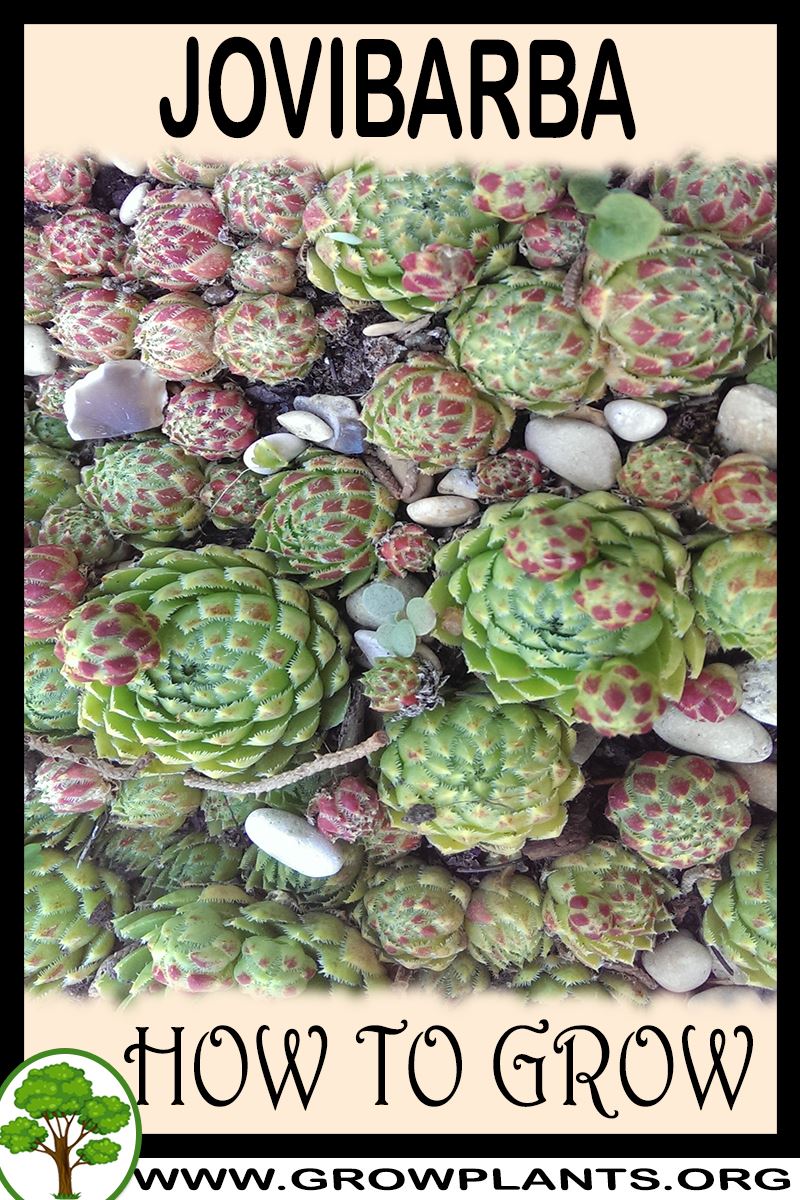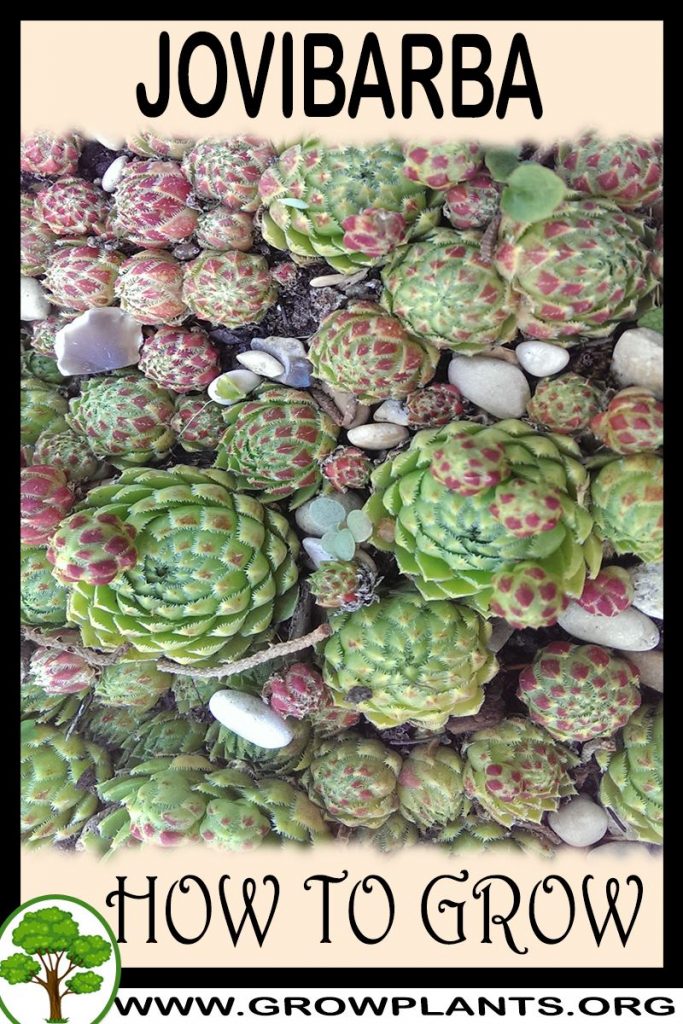
Plant Profile & Key Characteristics
Overview: Jovibarba (beard of Jupiter) is a hardy evergreen succulent forming low rosettes only 2–5 cm (1–2 in) tall, with flower stems to 10–15 cm (4–6 in). It is grown as an ornamental for rock gardens, containers and green roofs.
Quick Specifications
| Specification | Attribute |
|---|---|
| Plant Type / Life Cycle | Perennial |
| Foliage Type | Evergreen |
| Mature Size | Rosette 2–5 cm (1–2 in) tall; flower stem 10–15 cm (4–6 in) |
| Growth Rate | Slow |
| Root System | Fibrous and shallow |
| Toxicity | Non-toxic |
| Hardiness | USDA zones 8–12 |
Growth Form & Structure
- Height & Spread: Ground-hugging rosettes 2–5 cm (1–2 in) tall that spread into mats by offsets; ideal for shallow containers and troughs.
- Growth Habit & Form: Clump-forming, mat-like succulent – each rosette produces numerous offset ‘chicks’.
- Lifespan & Maturity: Individual rosettes are monocarpic (dying after flowering); the colony persists through continual offsets.
Anatomy & Physical Features
- Leaves & Foliage: Fleshy, pointed leaves in tight rosettes, coloured green, red, purple, yellow or a mix, triangular to wedge-shaped.
- Flower Characteristics: Green to yellow flowers on a stout stem from the centre of a mature rosette.
Primary Uses & Landscape Value
- Functional & Ornamental Roles: Ornamental groundcover for rock gardens, crevices, alpine troughs, containers and green roofs; very drought tolerant.
Care Guide: Planting, Soil & Watering
Overview: This is a hardy, mat-forming alpine succulent that grows naturally in rocky, gritty ground and is very drought tolerant. It needs sharp drainage above all, tolerates full sun to part shade, and asks for only sparing water once established.
Quick Care Requirements
| Requirement | Ideal Condition |
|---|---|
| Planting Season | In mild climates almost any time; in cold-winter areas plant in spring or early autumn |
| Growth Rate | Slow |
| Soil Type | Gritty, very free-draining rocky or sandy soil |
| Water Need | Low – let the soil dry out between waterings; avoid overwatering |
Planting & Establishment
- Best Planting Season: Plant in spring or early autumn in colder regions so rosettes settle before extreme heat or cold; in mild areas it can be set out through much of the year.
- How to Plant:
- Hole Preparation: Make a shallow planting pocket in gritty, fast-draining ground; it is happiest tucked among rocks, in gravel, or in a raised gritty bed.
- Soil Amendments: Add plenty of coarse sand, grit or gravel to open up the soil rather than rich organic matter, which holds too much moisture.
- Planting Depth: Set the rosette so its base sits right at soil level; do not bury the crown, which invites rot.
- Growth Speed & Expectations: Slow but steady, spreading by offsets (the ‘chicks’) to form a low mat over time.
Soil, Watering & Drainage Care
- Soil Mix & Drainage Needs: The single most important thing is drainage – a gritty, mineral mix that never stays wet. In pots use a cactus or succulent mix with extra grit and generous drainage holes.
- Watering Schedule & Technique:
- Young / Newly Planted: Water lightly and only when the soil has dried while young plants root in; keep it on the dry side.
- Established: Established mats need very little water and rely largely on rainfall; water only during prolonged dry heat, then let the soil dry fully again.
- Seasonal Adjustments: Give almost no water over a cool, wet winter, and only occasional water in the hottest, driest part of summer.
Climate, Light & Hardiness
Jovibarba is an alpine-type rosette succulent adapted to rocky, sharply drained sites across Mediterranean, desert, subtropical, and temperate climates. It tolerates a wide range of light from full sun to fairly deep shade, and per site data is hardy to about −3°C (27°F) within USDA zones 8–12.
Quick Climate Specifications
| Climate Zones | Mediterranean, desert, subtropical, temperate (rocky, well-drained habitats) |
|---|---|
| USDA Hardiness Zones | 8–12 (site data) |
| Approx. Survival Minimum | Approximately −3°C (27°F) for an established plant, briefly (site data) |
| Frost Tolerance | Moderate (tolerates light frost per site data; not established for hard freezes) |
| Light Conditions | Full Sun / Half Shade / Full Shade (adaptable) |
Sunlight & Light Exposure
Optimal Light Setup
Adaptable from full sun to shade per site data; as with most rosette succulents, more sun typically produces tighter, more colorful rosettes.
Direct Sun Requirement
Tolerates full direct sun well, especially where drainage is sharp; not an obligate requirement, since shade is also tolerated.
Shade & Heat Management
In hot desert climates, part-day shade can prevent scorch on exposed rosettes; gritty, rocky siting keeps roots from overheating and staying wet.
Best Exposure / Orientation
Rock gardens, gritty raised beds, or stone troughs in full sun to part shade.
Temperature Extremes & Hardiness
USDA Hardiness & Regional Limits
Site data rates this genus for zones 8–12, suited to mild-winter climates; this is the site's established figure and is retained here as the primary reference point.
Cold Damage & Winter Protection
Site data indicates tolerance of brief cold down to about −3°C (27°F). In marginal zones, sharp drainage and rocky siting reduce the added risk that cold, wet soil around the crown poses beyond the cold itself.
Frost Sensitivity
Light frost is tolerated per site data, but cold tolerance can vary meaningfully by species and cultivar within this genus, so treat −3°C (27°F) as a general guide rather than an absolute floor for every form.
Extreme Heat Tolerance
Good, given the rocky, sun-baked siting typical of this plant's habitat; well-drained, gritty soil is the key to handling summer heat without rot.
Wind, Humidity & Microclimate
Humidity Preferences
Prefers dry-to-moderate air typical of open, rocky sites; poor tolerance of prolonged damp, humid conditions, which favor rot.
Dry-Air Tolerance
High - well suited to arid air given its succulent, drought-adapted rosette form.
Wind Tolerance
Generally good; the low-growing rosette habit typical of open rocky habitats suggests solid wind tolerance, though this is general species knowledge rather than site-specific data.
Rainfall & Seasonal Moisture
Best in climates with a distinct dry period or excellent drainage; the “rocky environment” and “weed free” siting called for in site data both point to lean, fast-draining conditions rather than consistently wet soil.
Microclimate Recommendations
Raised beds, rock gardens, or gritty troughs that shed water quickly; in humid climates, elevate plantings and avoid low, damp spots.
Growing in Pots, Balconies & Indoors
Jovibarba (a houseleek relative) is a hardy little rosette succulent. The grower says it can be grown indoors but only with plenty of light, so treat it as a bright-windowsill plant; it is a classic subject for shallow pots, troughs, and alpine containers outdoors.
Quick Details
- Container Size: A shallow, wide pot or trough – it stays tiny and offsets into a mat
- Indoor Suitability: Only on the sunniest windowsill; it needs strong light and will stretch and weaken in a dim room
- Best Spot: Full sun to light shade – the more light the better; the sunniest sill indoors
- Soil & Drainage: A very gritty, free-draining alpine/succulent mix – A free-draining cactus/succulent mix – potting mix or sandy soil opened up with coarse sand, perlite, or fine gravel; a layer of gravel, pebbles, or lava rock at the base helps drainage.
- Watering in Pots: Water sparingly and let it dry out between waterings; it stores its own water and rots if kept wet
Indoors & On the Windowsill
- Windowsill only: The grower says indoor growing works only with a lot of light. Give it your brightest, sunniest sill; away from a window it etiolates and loses its tight form.
- Cool and bright in winter: As a hardy alpine it likes a cool, bright, dry winter rest – avoid a warm, dim room over the low-light months.
- Better outdoors: It is fully hardy and often happiest outdoors in a trough or alpine pot, where light and airflow keep the rosettes compact.
On a Balcony or Patio
- Light & heat: A sunny, exposed balcony or patio is ideal – it thrives on heat and reflected light and needs no shelter from sun.
- Practicalities: The one thing to manage is winter wet: keep the shallow pot draining freely and out of standing rain.
Choosing the Pot, Soil & Long-Term Care
- Pot & drainage: A shallow pot with strong drainage holes and no standing-water saucer; a grit layer at the base and a grit topdressing keep the neck dry.
- Potting mix: A free-draining cactus/succulent mix – potting mix or sandy soil opened up with coarse sand, perlite, or fine gravel; a layer of gravel, pebbles, or lava rock at the base helps drainage.
- Feeding: Barely feed at all – a very weak feed once in the growing season is plenty for this lean-living plant.
- Repotting: Divide the mat and refresh the grit mix every few years when it crowds the pot.
Fertilizing & Feeding
A cold-hardy, rosette-forming succulent grown in rocky, well-drained sites; it is naturally slow-growing and needs only minimal feeding, since soft, over-fed rosettes are less cold-hardy and more prone to rot.
Quick Fertilizing Specs
| Feeding Level | Light |
|---|---|
| Main Nutrient Priority | Low-nitrogen feed that favors compact rosettes and offset production over rapid leafy growth |
| Best Feeding Period | Warm months while the rosette is actively producing new leaves and offsets |
| Organic Options | A thin top-dressing of compost worked into the gritty, rocky planting mix is optional and not required |
| Soil pH | Tolerates a wide range in sharply drained, rocky soil |
| Reduce/Stop Feeding | Stop feeding well before cold weather sets in so growth can harden off |
Feeding by Growth Stage
Warm-Season Active Growth
Support steady rosette development and offset (‘bud’) production without pushing soft growth that reduces cold-hardiness and rot resistance
| Nutrient direction | A light, low-nitrogen succulent-formulated feed |
|---|---|
| Timing | During the warm months when the rosette is visibly producing new leaves and rolling offsets |
| Frequency | Occasional light feedings through the active season rather than a single heavy dose |
| Fertilizer types | A diluted, low-nitrogen cactus or succulent fertilizer suited to gritty, rocky planting mixes |
| Precautions | Avoid feeding at full label strength or during cold, wet spells, and keep fertilizer off the tight rosette center |
Cold-Season Dormancy
Let the rosette rest through cold weather without pushing tender growth that frost could damage
| Nutrient direction | None – withhold fertilizer through the cold, slow-growth period |
|---|---|
| Timing | Through the coldest months when growth has visibly stopped |
| Frequency | No feeding at this stage |
| Fertilizer types | No feeding at this stage; the resting rosette does not need nutrient input |
| Precautions | Do not fertilize until active growth clearly resumes in the warm season |
Nutrient Deficiency Signs & Corrections
Yellowing between the veins on new rosette leaves while older leaves stay green
| Possible causes | High pH or alkaline planting mix, Waterlogged, poorly drained soil limiting root function, Nutrient-poor or very old potting mix, Root stress from overwatering or rot |
|---|---|
| Appears first on | Newest leaves at the center of the rosette |
| What to check | Drainage and moisture of the current planting mix, Age of the potting mix and time since it was last refreshed, Root condition if the plant can be checked |
| Possible correction | Correct pH and drainage first, then apply a chelated iron product per its label if yellowing persists |
Pale, undersized rosettes and noticeably slower offset (‘bud’) production than usual
| Possible causes | Nutrient-depleted rocky or gritty planting mix, Insufficient light for the current growing conditions, Waterlogged roots limiting nutrient uptake, No feeding for an extended period in a container setting |
|---|---|
| Appears first on | Whole rosette, most visible in reduced offset production |
| What to check | Rosette size and color compared to previous seasons, Light exposure and recent growing conditions, How long it has been since any feeding or soil refresh |
| Possible correction | Apply a light, diluted low-nitrogen feed during the next active growth period and refresh old potting mix |
Brown, dry leaf-tip burn on the outer leaves of the rosette, especially in container-grown plants
| Possible causes | Fertilizer or mineral salt accumulation in a rarely flushed pot, Poor drainage allowing salts to concentrate, Consistently hard tap water, Overly frequent feeding relative to this plant’s light needs |
|---|---|
| Appears first on | Tips and edges of the outer, older leaves |
| What to check | Mineral crust visible on the soil surface or pot, Water source and hardness, Frequency of feeding relative to the plant’s light needs |
| Possible correction | Flush the growing mix thoroughly with plain water and reduce feeding frequency going forward |
Pruning, Training & Seasonal Maintenance
Jovibarba forms tight, offsetting rosettes and, true to its close relatives the houseleeks, does not need or really tolerate routine pruning – the source data for this plant states plainly that there is "no need" to prune it. The only real maintenance task is removing spent material: chiefly the individual rosette that has flowered, since each rosette is monocarpic and dies once it blooms, plus any dead leaves. This can be done at any time of year and has no bearing on the mat’s ongoing growth, which continues from the surrounding offsets.
Quick Pruning & Maintenance Specs
| Pruning Tolerance | Low – not a plant that is routinely pruned |
| Primary Pruning Window | Any time, as needed (source data: pruning season “all year”) |
| Typical Frequency | Occasional spot removal only |
| Main Objective | Remove the spent (flowered, dying) rosette and any dead leaves |
| Young Plant Priority | None – leave the mat to establish and offset |
| Mature Plant Priority | Remove each mother rosette after it flowers and dies naturally; separate crowded offsets if desired |
| Best Tool Type | Precision snips or a small sterile knife |
| Avoid Heavy Pruning During | Not applicable – this plant is never hard- or structurally pruned |
Pruning by Plant Age & Size
Newly Established
No pruning task – let the young rosette settle in.
Young / Formative
No training system applies; offsets that form around the mother rosette are left in place to build the mat, or separated for propagation rather than pruned.
Mature / Established
Once an individual rosette flowers, it is monocarpic and will die back on its own; remove that spent rosette to tidy the mat and make room for the surrounding offsets that replace it.
Special Growth to Remove
- The individual rosette that has flowered and is dying (monocarpic) – remove once clearly spent.
- Dead or shriveled leaves.
- Excess offsets, only if the mat has become more crowded than wanted.
Container & Small-Space Pruning
Jovibarba is commonly grown in pots; the same light, occasional grooming applies indoors or in containers – there is no separate container-specific pruning technique for this species.
Tools
- Precision snips or a small sterile knife for removing a spent rosette or dead leaves.
Tool Hygiene & Disease Risk
Routine – use a clean blade; no significant transmissible disease risk is documented for this plant.
Cut Placement & Technique
Remove a spent rosette at its point of attachment to the mat, taking care not to disturb the roots of the neighboring offsets that will continue growing.
Heavy Pruning & Rejuvenation
Not tolerated and not needed – Jovibarba is not rejuvenated by cutting back. A declining or overcrowded mat is refreshed by simply letting its offsets take over, not by structural pruning.
Post-Pruning Care
Let any cut surface dry briefly before watering that area again, standard practice for succulent tissue to avoid rot at the wound.
Common Pruning Mistakes
- Cutting into a living rosette instead of waiting for it to finish flowering and die naturally.
- Watering heavily right over a fresh cut, inviting rot.
When NOT to Prune
There is no real need to prune this plant pre-emptively; avoid removing rosettes that are still green and healthy just for tidiness.
Recommended Tools (by task)
- Precision snips – for lifting away dead leaves or a fully spent rosette.
- Grafting knife – a small sterile blade for cleanly separating an offset from the mother mat when division is wanted.
Propagation Guide
Jovibarba is most easily propagated from its offset rosettes (“chicks”), which in this genus often detach from the mother rosette on their own once mature rather than staying joined by a stolon as in the related Sempervivum. Vegetative propagation is easy and is the site’s own listed method for starting this plant; seed is a possible but slower, less certain alternative, since Jovibarba hybridizes readily in cultivation.
Quick Propagation Specs
| Best Propagation Method | Offsets (rosette “chicks”) |
| Alternative Methods | Division of larger rosette clusters; seed |
| Propagation Difficulty | Easy (offsets); Moderate (seed) |
| Seed True-to-Type | Variable – plants in this genus hybridize readily, so seed from garden-grown plants may not match the parent |
| Vegetative True-to-Type | Yes |
| Best Propagation Season | Offsets are most available while the rosette is actively growing (spring–summer); the site lists an all-year planting/pruning season for this plant generally |
Growing from Seed
Seed is not the site’s listed method, but is possible: as with most small Crassulaceae seed, sow on the surface of a very free-draining, gritty mix without deep burial, and keep only lightly moist. Because the genus hybridizes readily, seed collected in a mixed collection may not resemble the parent plant, and germination/establishment from seed tends to be slow.
Division, Offsets, Pups & Suckers
Once a rosette matures, it commonly produces offset “chicks” that in this genus often loosen and detach on their own rather than remaining attached by a short stolon. Gather detached or loosely attached offsets and simply rest them on top of gritty, well-drained soil, consistent with the rocky, sharp-drainage conditions this plant needs; they typically root in from the base without further help. If a cut is needed to separate a still-attached offset, or when splitting a larger clustered clump into sections, let the cut surface dry/callus for a day or so in a shaded spot before setting it on soil, and hold off on heavy watering until roots have formed.
Bloom & Flower Guide
Quick Details
- Bloom Season: Spring into summer
- Flower Appearance: Pale green to yellow, bell-like flowers on an upright stalk that rises from the centre of the rosette
- Edibility: Ornamental only – grown for its rosettes, not for eating
Detailed Blooming Overview
Jovibarba (here Jovibarba globifera, a houseleek relative) is grown for its tight rosettes, but a mature rosette will eventually throw up a central flowering stalk in spring or summer bearing greenish-yellow, bell-shaped flowers. Like sempervivums, it is monocarpic: the rosette that flowers sets seed and then dies, while the ring of offsets it has produced carries the colony on, so the planting continues unbroken.
Flower Characteristics
- Pale green to yellow, bell-shaped, and slightly nodding.
- Carried on an upright stalk from the middle of the rosette.
- The flowering rosette is the plant’s final act before offsets take over.
Bloom Care & Thinning
- What to expect: When a rosette blooms it will die afterward – this is normal, not a fault.
- After flowering: Pull out the spent rosette once it browns; the surrounding offsets fill the gap.
Pests, Diseases & Troubleshooting
Overview: Jovibarba are hardy alpine succulents, very much like Sempervivum, and are almost pest-free outdoors. Their real enemy is wet: crown and root rot in soggy or poorly drained soil kills far more plants than any insect. Grow lean, gritty and sharply drained and problems are rare.
Quick Troubleshooting Overview
| Issue / Pest | Main Symptom | Primary Solution |
|---|---|---|
| Crown / root rot | Rosette turns mushy, brown and collapses in wet soil | Gritty, sharp-drained soil; avoid overwatering |
| Root & foliar mealybugs | White fluff at the base or among leaves, weak growth | Bare-root and rinse; insecticidal soap / oil |
| Vine weevil | Plants wilt as grubs eat the roots | Check roots; beneficial nematodes; remove grubs |
| Aphids | Sticky new offsets, distortion | Water jet; insecticidal soap |
| Rust | Orange pustules on leaves | Remove infected rosettes; improve airflow |
| Slugs & snails | Minor grazing marks on soft new offsets | Traps, barriers, hand-pick at night |
Common Pests & Management
- Root mealybugs (Rhizoecus spp.):
- Symptoms: White, waxy specks and cottony patches on the roots and at the crown, seen when a struggling, oddly unthrifty plant is lifted; growth stalls and rosettes lose vigor.
- Prevention & Control: Lift the plant, wash all soil off the roots, cut away infested roots, and rinse or dip in insecticidal soap before repotting into fresh gritty mix in a clean pot.
- Foliar mealybugs (Planococcus citri):
- Symptoms: Cottony white tufts tucked between the tightly packed leaves of the rosette, with sticky residue.
- Prevention & Control: Dab with an alcohol swab, flush the rosette with water, and treat with insecticidal soap or a light oil; watch offsets, where they hide.
- Vine weevil (Otiorhynchus sulcatus):
- Symptoms: Plants wilt and topple as legless white grubs devour the roots below; adults notch leaf edges at night.
- Prevention & Control: Inspect the root zone, remove and destroy grubs, drench with beneficial nematodes (Steinernema/Heterorhabditis), and refresh the compost.
- Aphids (Aphis spp.):
- Symptoms: Small soft insects clustered on new offsets and flowering stems, with sticky honeydew.
- Prevention & Control: Rinse them off with water, encourage ladybirds, and use insecticidal soap only if colonies persist.
- Slugs & snails (Deroceras / Cornu spp.):
- Symptoms: Irregular grazed patches and slime trails on soft young offsets, mostly in damp, mild spells – a minor issue on these firm-leaved plants.
- Prevention & Control: Hand-pick after dark, set beer traps, and ring plants with grit or copper; sharp gritty topdressing deters them and also cuts rot.
Diseases & Fungal Issues
- Crown & root rot (Phytophthora / Pythium spp.):
- Symptoms: The central rosette softens, browns or blackens and pulls away mushy; the classic result of wet, airless soil, over-watering, or water sitting in the rosette.
- Treatment & Management: Prevention is everything: gritty free-draining soil, full sun, careful watering and never wetting the crown in cold weather. Remove rotted rosettes; healthy offsets can be re-rooted in dry grit.
- Rust (Endophyllum sempervivi):
- Symptoms: Swollen, distorted rosettes with orange to brown powdery pustules; infected plants are systemically affected.
- Treatment & Management: There is no cure – remove and destroy infected rosettes promptly, improve airflow and spacing, and avoid overhead watering to stop spread.
Growing Difficulties & Abiotic Problems
- Etiolation (stretching):
- Cause & Symptoms: Rosettes open up, pale and stretch toward the light in too much shade, losing their tight form and color.
- Correction Strategy: Give full sun to very bright light; move shaded plants gradually to avoid scorch.
- Winter wet damage:
- Cause & Symptoms: Rosettes rot or mark where cold water collects in and around them during wet, freezing spells.
- Correction Strategy: Provide overhead shelter or grow in troughs/alpine pans over winter; keep the crown dry and the soil gritty.
- Post-flowering die-back:
- Cause & Symptoms: A rosette that flowers naturally dies afterward – this is normal, not disease, as the plant is monocarpic per rosette.
- Correction Strategy: Simply remove the spent rosette; the surrounding offsets carry the plant on.
What Helps – Products & Tools
These succulents need almost no spraying. The key tools are cultural: a gritty free-draining mix, full sun and restrained watering to prevent rot. For the occasional pest, insecticidal soap or a light horticultural oil handles mealybugs and aphids, beneficial nematodes deal with vine weevil grubs, and grit or copper barriers plus night hand-picking manage slugs. Remove any rust-infected rosettes rather than treating them.