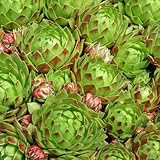


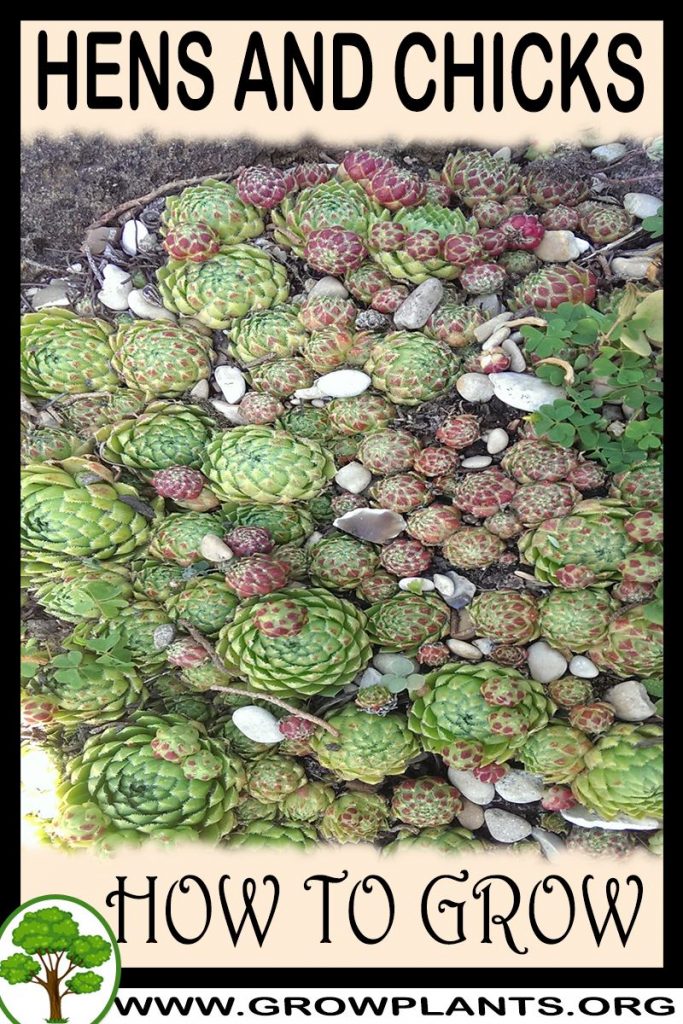
Plant Profile & Key Characteristics
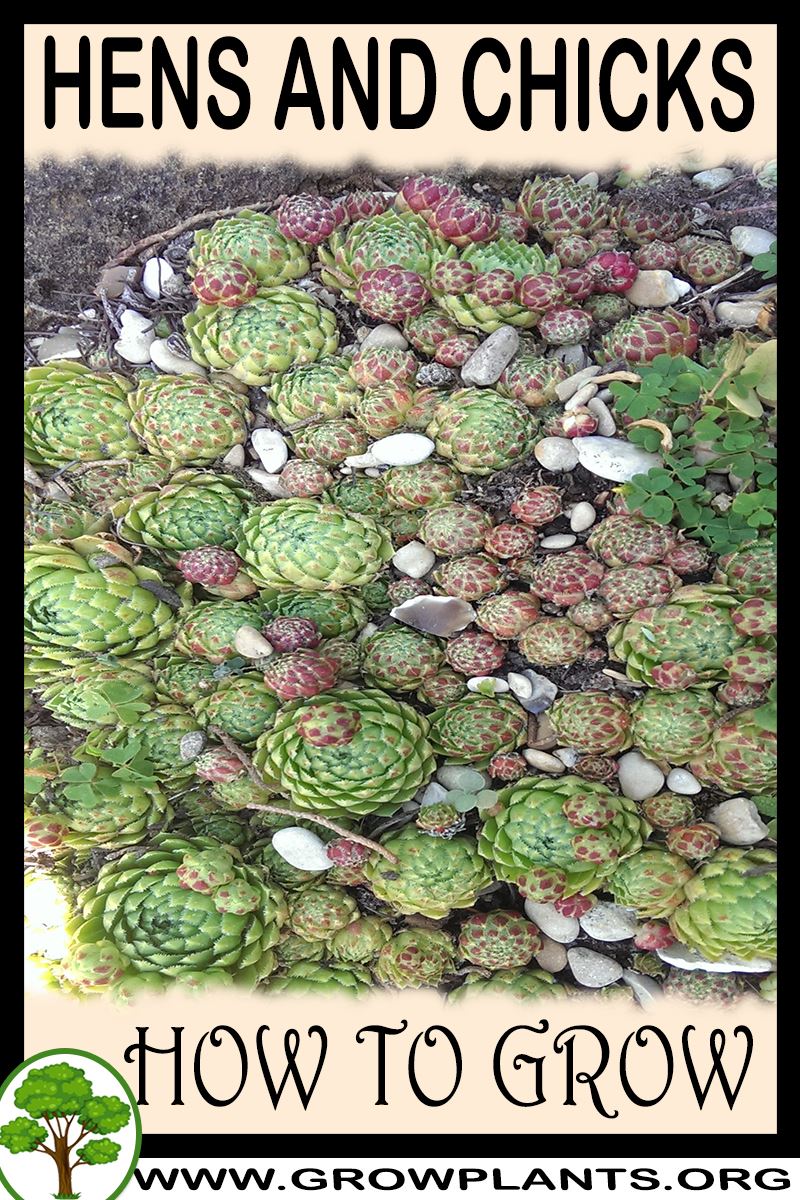
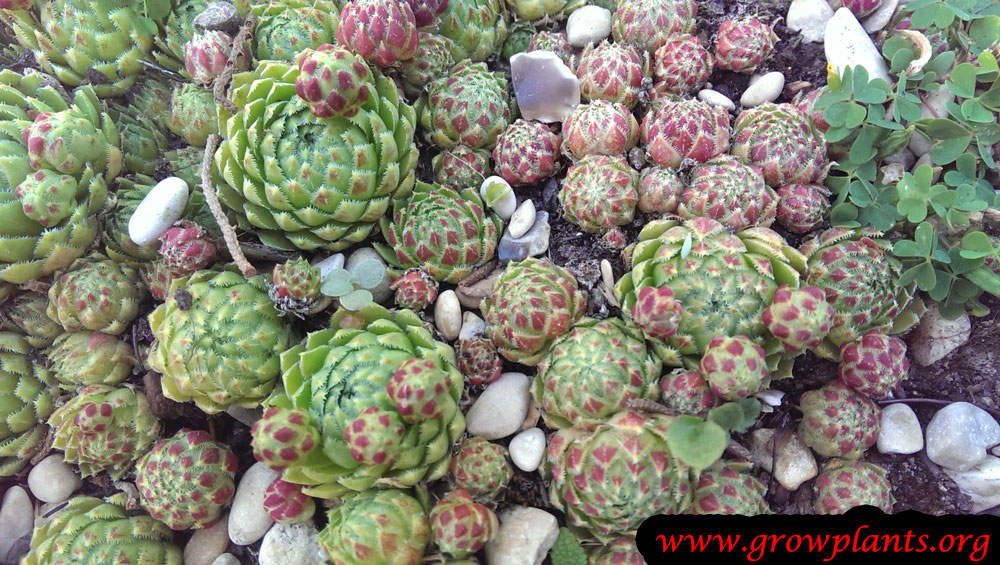
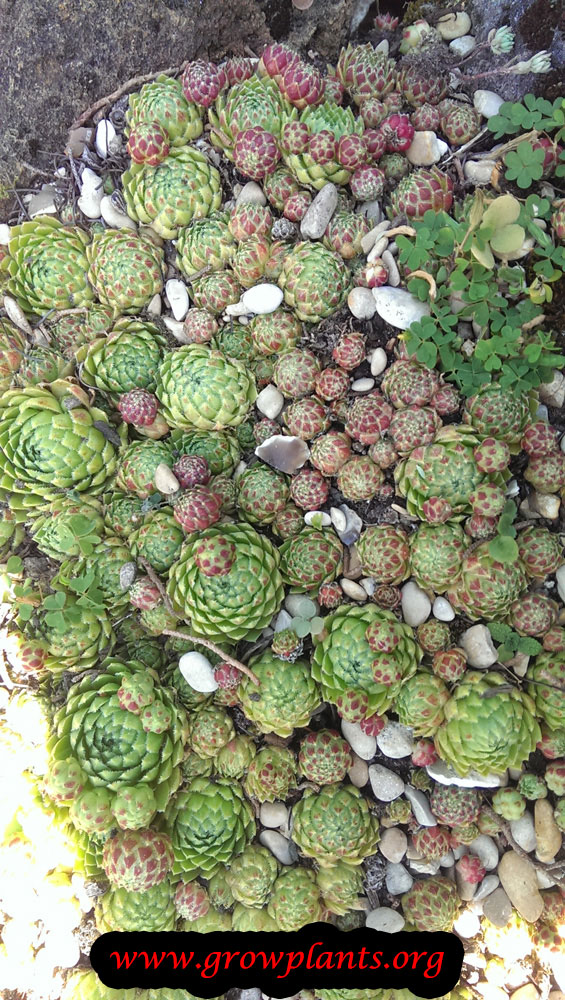
Overview: Jovibarba globifera (hen and chicks) is a hardy evergreen succulent forming low rosettes only 2–5 cm (1–2 in) tall, with flower stems rising to 10–15 cm (4–6 in). It is grown as an ornamental for rock gardens, containers and green roofs.
Quick Specifications
| Specification | Attribute |
|---|---|
| Plant Type / Life Cycle | Perennial |
| Foliage Type | Evergreen |
| Mature Size | Rosette 2–5 cm (1–2 in) tall; flower stem 10–15 cm (4–6 in) |
| Growth Rate | Slow |
| Root System | Fibrous and shallow |
| Toxicity | Non-toxic |
| Hardiness | USDA zones 8–12 |
Growth Form & Structure
- Height & Spread: Ground-hugging rosettes 2–5 cm (1–2 in) tall that spread into mats by offsets; thrives in shallow containers and troughs.
- Growth Habit & Form: Clump-forming, mat-like succulent – each ‘hen’ rosette produces numerous ‘chick’ offsets that roll away to root nearby.
- Lifespan & Maturity: Individual rosettes are monocarpic (dying after flowering) but the colony is perpetuated by constant offsets.
Anatomy & Physical Features
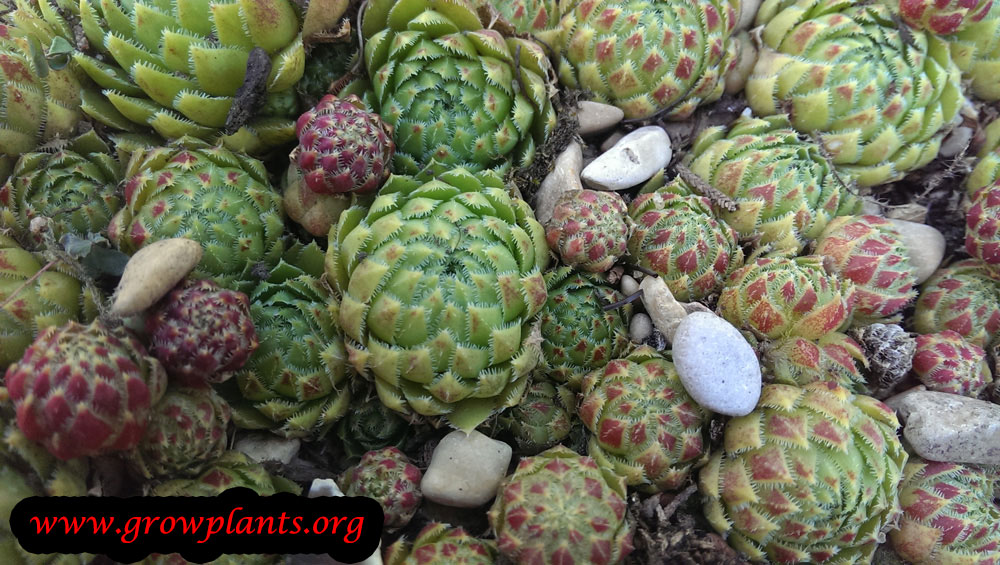
- Leaves & Foliage: Fleshy, pointed green leaves in tight rosettes, often flushed red at the tips.
- Flower Characteristics: Green to yellow flowers on a stout stem rising from the centre of a mature rosette.
Primary Uses & Landscape Value
- Functional & Ornamental Roles: Ornamental groundcover for rock gardens, crevices, alpine troughs, containers and green roofs; extremely drought tolerant.
Care Guide: Planting, Soil & Watering
Overview: This is a hardy, mat-forming alpine succulent that grows naturally in rocky, gritty ground and is very drought tolerant. It needs sharp drainage above all, tolerates full sun to part shade, and asks for only sparing water once established.
Quick Care Requirements
| Requirement | Ideal Condition |
|---|---|
| Planting Season | In mild climates almost any time; in cold-winter areas plant in spring or early autumn |
| Growth Rate | Slow |
| Soil Type | Gritty, very free-draining rocky or sandy soil |
| Water Need | Low – let the soil dry out between waterings; avoid overwatering |
Planting & Establishment
- Best Planting Season: Plant in spring or early autumn in colder regions so rosettes settle before extreme heat or cold; in mild areas it can be set out through much of the year.
- How to Plant:
- Hole Preparation: Make a shallow planting pocket in gritty, fast-draining ground; it is happiest tucked among rocks, in gravel, or in a raised gritty bed.
- Soil Amendments: Add plenty of coarse sand, grit or gravel to open up the soil rather than rich organic matter, which holds too much moisture.
- Planting Depth: Set the rosette so its base sits right at soil level; do not bury the crown, which invites rot.
- Growth Speed & Expectations: Slow but steady, spreading by offsets (the ‘chicks’) to form a low mat over time.
Soil, Watering & Drainage Care
- Soil Mix & Drainage Needs: The single most important thing is drainage – a gritty, mineral mix that never stays wet. In pots use a cactus or succulent mix with extra grit and generous drainage holes.
- Watering Schedule & Technique:
- Young / Newly Planted: Water lightly and only when the soil has dried while young plants root in; keep it on the dry side.
- Established: Established mats need very little water and rely largely on rainfall; water only during prolonged dry heat, then let the soil dry fully again.
- Seasonal Adjustments: Give almost no water over a cool, wet winter, and only occasional water in the hottest, driest part of summer.
Climate, Light & Hardiness
This Jovibarba globifera hen-and-chicks succulent adapts to Mediterranean, desert, subtropical, and temperate climates, and tolerates full sun through full shade. Site guidance recommends keeping it above about −3°C (27°F) for best appearance, though its broader hardiness range extends further.
Quick Climate Specifications
| Climate Zones | Mediterranean, Desert, Subtropics, Temperate |
|---|---|
| USDA Hardiness Zones | 8–12 |
| Optimal Temp Range | Typically 15–27°C (59–81°F) during active growth |
| Cold Damage Begins | Site guidance recommends protection below approximately −3°C (27°F) to avoid foliage damage |
| Approx. Survival Minimum | Reported hardy to about USDA zone 8, corresponding to winter minimums of roughly −12°C (10°F) for brief periods in well-drained rocky sites |
| Frost Tolerance | Moderate |
| Light Conditions | Full Sun / Half Shade / Full Shade |
| Wind Tolerance | Moderate |
| Salt / Coastal Tolerance | Low |
Sunlight & Light Exposure
Optimal Light Setup
This rosette succulent is unusually flexible with light, growing well anywhere from full sun to full shade.
Direct Sun Requirement
Full sun is tolerated and often intensifies the reddish leaf coloring, but isn't mandatory since the plant also does well in part or full shade.
Shade & Heat Management
In hot, intensely sunny climates, some shade helps prevent scorch on the fleshy rosettes.
Best Exposure / Orientation
Rocky, well-drained sites in a rock garden or crevice planting suit its natural growth habit and help keep the crown dry.
Temperature Extremes & Hardiness
USDA Hardiness & Regional Limits
Listed hardy to USDA zones 8–12, suited to Mediterranean, desert, subtropical, and temperate gardens without hard, prolonged freezes.
Cold Damage & Winter Protection
Site guidance points to roughly −3°C (27°F) as a practical threshold below which the rosettes are best given protection; a well-drained, rocky planting site helps cold air and moisture drain away from the crown.
Frost Sensitivity
Wet, cold conditions are more damaging than dry cold; good drainage is important wherever winter frost occurs.
Extreme Heat Tolerance
Tolerates hot, dry desert and Mediterranean summers well, especially with some afternoon shade in the hottest climates.
Wind, Humidity & Microclimate
Humidity Preferences
Prefers drier air typical of Mediterranean and desert climates; humid, still conditions raise the risk of rot.
Dry-Air Tolerance
Very tolerant of dry air, in keeping with its succulent, drought-adapted nature.
Wind Tolerance
Its low, ground-hugging rosette form tolerates moderate wind without damage.
Microclimate Recommendations
A rocky, weed-free, well-drained site - such as a rock garden or gravel bed - both suits its natural habitat and reduces winter cold/wet stress on the crown.
Growing in Pots, Balconies & Indoors
Hen and chicks is a tough little alpine succulent that forms tight rosettes surrounded by clusters of offset “chicks.” It grows happily in shallow pots, troughs and dish gardens, and can be kept indoors only in a very bright, sunny spot.
Quick Details
- Container Size: Small and shallow – a wide, shallow pan or trough; even 1-3 L is plenty, as the plants stay tiny and spread sideways
- Indoor Suitability: Possible only with lots of light – a very sunny windowsill; it is really an outdoor/alpine plant
- Best Spot: Full sun to part shade outdoors; the brightest sill indoors
- Soil & Drainage: Very free-draining gritty cactus/succulent mix; sharp drainage is essential
- Watering in Pots: Little water – let the mix dry out fully between waterings; never waterlogged
Indoors & On the Windowsill
- Houseplant note: It can be grown indoors, but only with plenty of direct light (the grower’s key condition). A ready-made cactus and succulent soil mix provides that structure without mixing it yourself. On a dim sill the rosettes stretch and lose their tight shape and colour – a hot, sunny windowsill is the place for it.
- Hardy by nature: This is a cold-hardy alpine that actually enjoys being outdoors year-round, cold winters included, so there is no need to bring it in to overwinter – it prefers the cold.
On a Balcony or Patio
- Light & exposure: Perfect for a sunny balcony in shallow pots and troughs. It shrugs off heat and drought but hates sitting wet, so make sure rain drains away freely.
- Practicalities: Lightweight and low – ideal for railings and windowsill boxes, though secure containers against strong wind.
Choosing the Pot, Soil & Long-Term Care
- Pot & drainage: Choose a wide, shallow pot with strong drainage holes and no standing saucer. Terracotta is ideal because it breathes and dries quickly.
- Potting mix: A gritty, mineral succulent/cactus mix – add extra perlite, grit or pumice.
- Feeding: Very little – a weak feed once or twice in the growing season is ample; too much makes soft, weak growth.
- Repotting: Refresh the mix and divide the crowded “chicks” every couple of years to keep the colony healthy.
Fertilizing & Feeding
A very light feeder: this cold-hardy rosette succulent needs only a weak, occasional feeding while it is actively producing new offset rosettes, and no feeding at all once it settles into its cold-season dormancy.
Quick Fertilizing Specs
| Feeding Level | Light feeder |
|---|---|
| Main Nutrient Priority | A dilute, low-nitrogen or balanced feed to support tight, compact rosette growth |
| Best Feeding Period | During the warm season while new offset ‘chicks’ are forming |
| Organic Options | A little compost worked into a gritty, rocky, well-drained mix |
| Reduce/Stop Feeding | Pause feeding as the rosette settles into cold-season dormancy |
| Micronutrients | Usually met by a complete fertilizer; correct only a diagnosed issue |
| Soil pH | Tolerates a wide range in lean, rocky, well-drained soil |
Feeding by Growth Stage
Warm-season rosette and offset growth
Support slow, tight rosette growth and the production of new offset ‘chicks’ during the warm growing season.
| Nutrient direction | A weak, well-diluted low-nitrogen or balanced fertilizer keeps rosettes compact and well-colored without pushing soft, loose growth. |
|---|---|
| Timing | Through the warm growing season when the rosette is actively producing offsets. |
| Frequency | Light, infrequent feeding is plenty; this rosette succulent is a sparse feeder even in its lean, rocky native habitat. |
| Fertilizer types | A dilute low-nitrogen or balanced liquid fertilizer, A little compost worked into a gritty, rocky, well-drained mix |
| Precautions | Feed sparingly in a fast-draining, weed-free mix; overfeeding produces soft, loose rosettes that lose their tight, cold-hardy form. |
Cold-season dormant rest
Let the rosette rest through cold weather without pushing tender growth that could be damaged by frost.
| Nutrient direction | None – withhold fertilizer while the rosette is dormant. |
|---|---|
| Timing | During the cold season and winter dormancy. |
| Frequency | No feeding at this stage; resume only when warm-season growth returns. |
| Fertilizer types | No feeding at this stage; do not fertilize until active growth resumes in warm weather. |
| Precautions | Withhold fertilizer now; this rosette naturally tolerates cold well below freezing and does not need feeding while dormant. |
Nutrient Deficiency Signs & Corrections
Rosette leaves fade to pale green and new offset production slows noticeably.
| Possible causes | low available nitrogen in the lean, rocky mix this plant is grown in, nutrients leached from a long-unfed, fast-draining soil, spent, exhausted potting medium in containers |
|---|---|
| Appears first on | outer, older rosette leaves |
| What to check | how long since the last feeding, age and condition of the potting mix, how many new offsets have formed compared with previous seasons |
| Possible correction | Apply a dilute, low-nitrogen or balanced fertilizer during active growth and refresh a long-unamended mix. |
Rosette leaf tips brown or scorch and the plant looks stressed despite reasonable watering.
| Possible causes | fertilizer salt buildup in a small pot or shallow rocky bed, overfeeding or feeding too concentrated a solution, poor drainage concentrating salts around the roots |
|---|---|
| Appears first on | outer leaf tips and margins |
| What to check | recent fertilizer strength and amount, drainage and container or bed size, any visible salt crust on the soil surface |
| Possible correction | Ease off feeding, water thoroughly to flush accumulated salts from the mix, then return to lighter feeding. |
Newest inner rosette leaves come in pale or yellowish while the rest of the rosette stays green.
| Possible causes | iron made unavailable by an overly alkaline mix or hard irrigation water, waterlogged roots limiting uptake in poorly drained rock gardens, not a true shortage of iron in the soil |
|---|---|
| Appears first on | newest inner rosette leaves |
| What to check | mix and irrigation-water alkalinity, drainage and root health, especially in rock gardens that hold water, overall watering habits |
| Possible correction | Correct alkalinity and drainage, and if needed apply a chelated iron product per its label. |
Pruning, Training & Seasonal Maintenance
Hen and chicks (Jovibarba globifera) is a tiny, mat-forming rosette succulent that essentially needs no pruning in the conventional sense – there is no woody framework, no branches to train, and no seasonal cutting schedule to follow. The only routine tasks are removing a spent, flowered rosette (each individual rosette flowers once, on a stem from its center, then dies) and tidying dead leaf material, both of which can be done any time they’re noticed.
Quick Pruning & Maintenance Specs
| Pruning Tolerance | Low – not a plant that is structurally pruned; only spent/damaged tissue is removed |
| Primary Pruning Window | Any time; not season-dependent |
| Typical Frequency | As needed – a few minutes’ tidying whenever a rosette flowers/fades or dead leaves accumulate |
| Main Objective | Remove spent flowered rosettes and dead leaf debris; keep offsets tidy |
| Young Plant Priority | None – a new offset needs no cutting to establish |
| Mature Plant Priority | Remove the spent stem/rosette after flowering; separate excess offsets if the mat is overcrowded |
| Best Tool Type | Fingers or precision snips for the flower stem; grafting knife only if dividing offsets |
Pruning by Plant Age & Size
Newly Established
No pruning is needed; a young offset simply roots and grows into its own rosette.
Mature / Established
Once a rosette flowers and dies (its natural monocarpic life cycle), cut or snap out the spent stem and rosette at its base so the surrounding offsets (‘chicks’) fill the gap. No other cutting applies.
Special Growth to Remove
The spent flower stem and the rosette that produced it should be removed once flowering has finished, since that individual rosette will not regrow. Jovibarba globifera produces its offsets as small, loosely attached globular ‘rollers’ rather than the stolon-connected chicks typical of Sempervivum – these often detach on their own; any that stay attached but are overcrowding the mat can simply be lifted or gently twisted off by hand to replant elsewhere or thin the clump. Dead, dried lower leaves can be pulled or snipped away as they accumulate, mainly to reduce hiding spots for slugs and snails (the pests noted for this plant).
Container & Small-Space Pruning
This species is grown almost entirely in shallow pots, troughs or rock-garden pockets given its small size (2–5 cm rosettes); the only container-specific task is periodically lifting and separating congested offsets so the mat doesn’t outgrow its container and smother itself, and removing spent rosettes so the space is quickly reclaimed by a chick rather than left as unsightly dead tissue.
Tools
Fingers are usually enough to snap off a spent flower stem or twist away a loose offset. Precision snips can trim a stem cleanly if it doesn’t detach easily. A grafting knife (kept clean and sharp) is useful only when deliberately cutting an offset free for propagation rather than letting it detach on its own.
Tool Hygiene & Disease Risk
Routine. This succulent carries no notable tool-transmissible disease; the main risk is rot from handling in wet conditions rather than anything spread by cutting. Keep any blade used for offset division clean and let cut surfaces dry/callus before replanting.
Cut Placement & Technique
When separating an offset deliberately, cut or twist it free close to its own base rather than tearing into the mother rosette. Let the separated offset’s cut surface dry for a day or so before setting it on soil, to reduce rot risk.
Post-Pruning Care
After removing a spent rosette or separating offsets, keep the area on the dry side for a few days rather than watering immediately, since the exposed/cut tissue is more prone to rot while fresh. No feeding is needed.
Common Pruning Mistakes
- Trying to “prune” a rosette to keep it going after it has flowered – a flowered rosette is finished and will not regreen; it should be removed, not preserved.
- Cutting offsets away with excess force, tearing the mother rosette instead of letting the naturally loose ‘roller’ offsets detach.
- Handling or cutting during wet, humid conditions, raising rot risk on cut tissue.
When NOT to Prune
Avoid cutting or handling rosettes in prolonged wet weather, when cut or damaged tissue is most prone to rot; otherwise timing is not critical for this plant.
Recommended Tools (by task)
- precision_snips – removing a spent flower stem cleanly when it won’t simply snap off by hand.
- grafting_knife – a sterile, clean-cutting blade for deliberately dividing offsets for propagation.
Propagation Guide
Jovibarba globifera propagates almost entirely by its small globular offsets, commonly called “rollers,” which detach from the mother rosette on their own and root readily wherever they land, making vegetative propagation both the easiest and the standard method; seed is possible but slower and less reliable for garden use. Propagation is easy, requiring little more than collecting and placing the offsets.
Quick Propagation Specs
| Best Propagation Method | Globular offsets (“rollers”) |
| Alternative Methods | Rosette/crown division; seed |
| Propagation Difficulty | Easy |
| Seed True-to-Type | Variable — plants in the Sempervivum/Jovibarba group hybridize readily in cultivation, so seed-grown offspring may not match the parent |
| Vegetative True-to-Type | Yes |
| Best Propagation Season | Spring through summer, when rollers are actively produced |
| Seed Germination Time | A few weeks under warm conditions, though often uneven |
| Germination Temperature | About 18–21°C (64–70°F) |
| Seed Sowing Depth | Surface-sown or barely covered — the seed is very fine |
Growing from Seed
Seed Handling & Viability
Seed is tiny and best sown fresh where possible; because this group hybridizes easily in gardens and collections, seed collected in mixed plantings may not reproduce the parent’s exact form.
Sowing Season
Spring, once temperatures are reliably warm.
Sowing Depth & Orientation
Surface-sow on a gritty, free-draining mix and press in lightly rather than burying — the seed is too fine to cover deeply.
Germination Conditions
Warm, bright conditions with the surface kept lightly moist but not wet, since seedlings are prone to rot in soggy mix.
Germination Time
Typically a few weeks, though it can be uneven.
Seedling Care
Seedlings are tiny and slow to bulk up; keep in bright light with careful, moderate watering until rosettes are large enough to handle.
Division, Offsets, Pups & Suckers
The key trait that distinguishes Jovibarba globifera from the closely related Sempervivum (also called “hen and chicks”) is that its offsets form as small, nearly spherical “rollers” on thin stalks around the mother rosette; unlike Sempervivum’s chicks, which stay joined by short stolons, these rollers detach on their own with little or no root system already formed and can simply roll a short distance from the parent. To propagate, collect fallen or gently detached rollers and set them on top of a free-draining, gritty substrate; keep barely moist and they will root readily where they make soil contact, typically within a few weeks. Established clumps can also be lifted and pulled apart into individual rosettes with any roots they have, replanted immediately at the same depth.
Bloom & Flower Guide
Quick Details
- Bloom Season: Spring into summer
- Flower Appearance: Pale green to yellow, bell-shaped flowers on a short stem rising from the centre of the rosette
- Edibility: Ornamental only — not grown for eating
Detailed Blooming Overview
When a mature rosette (the “hen”) is ready, it lifts a short, stout stem from its centre carrying a cluster of pale, bell-like flowers — nodding and fringed, which sets Jovibarba apart from the star-flowered Sempervivum it resembles. That rosette is monocarpic: it flowers once and then dies, but the surrounding “chicks” carry the colony on without a break.
Flower Characteristics
- Green to yellow, campanulate (bell-shaped) flowers.
- Held on a short stem from the middle of the flowering rosette.
- Marks the end of that rosette’s life — the offsets continue.
Bloom Care & Thinning
- After flowering: lift or trim out the spent hen once it dies back, leaving the chicks to fill the gap.
- Low-fuss bloom: no routine pruning is needed; full sun and sharp drainage keep the rosettes healthy and free-flowering.
Fruit & Uses
Foraging references list the fleshy rosette leaves and young offset “chicks” of hen-and-chicks succulents as edible raw, with a sour, mildly astringent flavour used sparingly as an occasional salad addition rather than a everyday food. Documentation specific to Jovibarba globifera is limited, so this should be treated as a minor, occasional use rather than a well-established food.
Quick Edible Specs
| Edible Parts | Fleshy rosette leaves (fid 2744-p02) and young offset shoots (“chicks”) |
|---|---|
| Main Use(s) | Occasional raw salad addition / novelty use |
| Eaten Raw or Cooked | Raw |
| Preparation Required | None beyond rinsing; use young, tender leaves – older leaves are tougher |
| Harvest Season | Year-round where the plant stays evergreen and actively growing |
| Time to First Harvest | Not applicable – light harvesting is possible once rosettes (2-5 cm, fid 2744-b12) are established, without waiting for a specific season |
| Storage | Best eaten fresh; does not store well once cut |
| Safety/Toxicity Caveat | Species-specific edibility documentation is limited; no significant toxicity is reported for the genus, but use in small amounts, confirm identification carefully, and stop if any irritation occurs |
Leaves & Greens
The fleshy, often red-tinged leaves (fid 2744-p02) can be eaten raw in small amounts, with a sour, slightly astringent flavour typical of houseleek-type succulents. Younger, smaller leaves from the outer rosette are more tender than older ones. Small offset rosettes (“chicks”) can be used the same way as the leaves.
Harvesting
Take only a few outer leaves or a small offset rosette at a time, leaving the main rosette intact, since each individual rosette in this genus naturally declines after it flowers. Harvesting more than a light amount will visibly thin the clump, so treat this as a very occasional garnish rather than a repeat crop.
Preparation, Uses & Safety
Rinse leaves or offsets before eating; no cooking or other processing is required. Because culinary documentation specific to this species is limited, use only a small amount at a time and make sure of a confident identification before eating any succulent from the garden, since several unrelated succulents look similar. The genus also has a separate traditional folk use of leaf sap applied topically to minor skin irritation, but that is a topical use, not a food, and is not covered here.
Pests, Diseases & Troubleshooting
Overview: Jovibarba are hardy alpine succulents, very much like Sempervivum, and are almost pest-free outdoors. Their real enemy is wet: crown and root rot in soggy or poorly drained soil kills far more plants than any insect. Grow lean, gritty and sharply drained and problems are rare.
Quick Troubleshooting Overview
| Issue / Pest | Main Symptom | Primary Solution |
|---|---|---|
| Crown / root rot | Rosette turns mushy, brown and collapses in wet soil | Gritty, sharp-drained soil; avoid overwatering |
| Root & foliar mealybugs | White fluff at the base or among leaves, weak growth | Bare-root and rinse; insecticidal soap / oil |
| Vine weevil | Plants wilt as grubs eat the roots | Check roots; beneficial nematodes; remove grubs |
| Aphids | Sticky new offsets, distortion | Water jet; insecticidal soap |
| Rust | Orange pustules on leaves | Remove infected rosettes; improve airflow |
| Slugs & snails | Minor grazing marks on soft new offsets | Traps, barriers, hand-pick at night |
Common Pests & Management
- Root mealybugs (Rhizoecus spp.):
- Symptoms: White, waxy specks and cottony patches on the roots and at the crown, seen when a struggling, oddly unthrifty plant is lifted; growth stalls and rosettes lose vigor.
- Prevention & Control: Lift the plant, wash all soil off the roots, cut away infested roots, and rinse or dip in insecticidal soap before repotting into fresh gritty mix in a clean pot.
- Foliar mealybugs (Planococcus citri):
- Symptoms: Cottony white tufts tucked between the tightly packed leaves of the rosette, with sticky residue.
- Prevention & Control: Dab with an alcohol swab, flush the rosette with water, and treat with insecticidal soap or a light oil; watch offsets, where they hide.
- Vine weevil (Otiorhynchus sulcatus):
- Symptoms: Plants wilt and topple as legless white grubs devour the roots below; adults notch leaf edges at night.
- Prevention & Control: Inspect the root zone, remove and destroy grubs, drench with beneficial nematodes (Steinernema/Heterorhabditis), and refresh the compost.
- Aphids (Aphis spp.):
- Symptoms: Small soft insects clustered on new offsets and flowering stems, with sticky honeydew.
- Prevention & Control: Rinse them off with water, encourage ladybirds, and use insecticidal soap only if colonies persist.
- Slugs & snails (Deroceras / Cornu spp.):
- Symptoms: Irregular grazed patches and slime trails on soft young offsets, mostly in damp, mild spells – a minor issue on these firm-leaved plants.
- Prevention & Control: Hand-pick after dark, set beer traps, and ring plants with grit or copper; sharp gritty topdressing deters them and also cuts rot.
Diseases & Fungal Issues
- Crown & root rot (Phytophthora / Pythium spp.):
- Symptoms: The central rosette softens, browns or blackens and pulls away mushy; the classic result of wet, airless soil, over-watering, or water sitting in the rosette.
- Treatment & Management: Prevention is everything: gritty free-draining soil, full sun, careful watering and never wetting the crown in cold weather. Remove rotted rosettes; healthy offsets can be re-rooted in dry grit.
- Rust (Endophyllum sempervivi):
- Symptoms: Swollen, distorted rosettes with orange to brown powdery pustules; infected plants are systemically affected.
- Treatment & Management: There is no cure – remove and destroy infected rosettes promptly, improve airflow and spacing, and avoid overhead watering to stop spread.
Growing Difficulties & Abiotic Problems
- Etiolation (stretching):
- Cause & Symptoms: Rosettes open up, pale and stretch toward the light in too much shade, losing their tight form and color.
- Correction Strategy: Give full sun to very bright light; move shaded plants gradually to avoid scorch.
- Winter wet damage:
- Cause & Symptoms: Rosettes rot or mark where cold water collects in and around them during wet, freezing spells.
- Correction Strategy: Provide overhead shelter or grow in troughs/alpine pans over winter; keep the crown dry and the soil gritty.
- Post-flowering die-back:
- Cause & Symptoms: A rosette that flowers naturally dies afterward – this is normal, not disease, as the plant is monocarpic per rosette.
- Correction Strategy: Simply remove the spent rosette; the surrounding offsets carry the plant on.
What Helps – Products & Tools
These succulents need almost no spraying. The key tools are cultural: a gritty free-draining mix, full sun and restrained watering to prevent rot. For the occasional pest, insecticidal soap or a light horticultural oil handles mealybugs and aphids, beneficial nematodes deal with vine weevil grubs, and grit or copper barriers plus night hand-picking manage slugs. Remove any rust-infected rosettes rather than treating them.