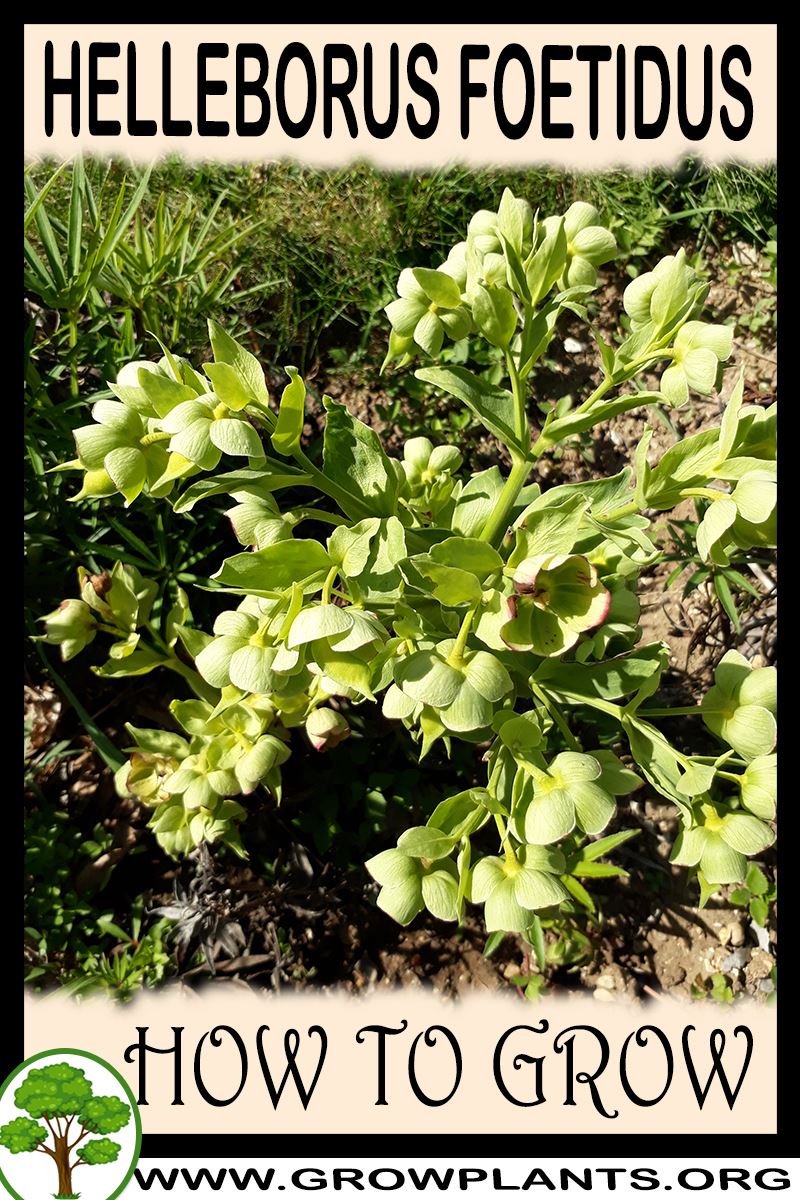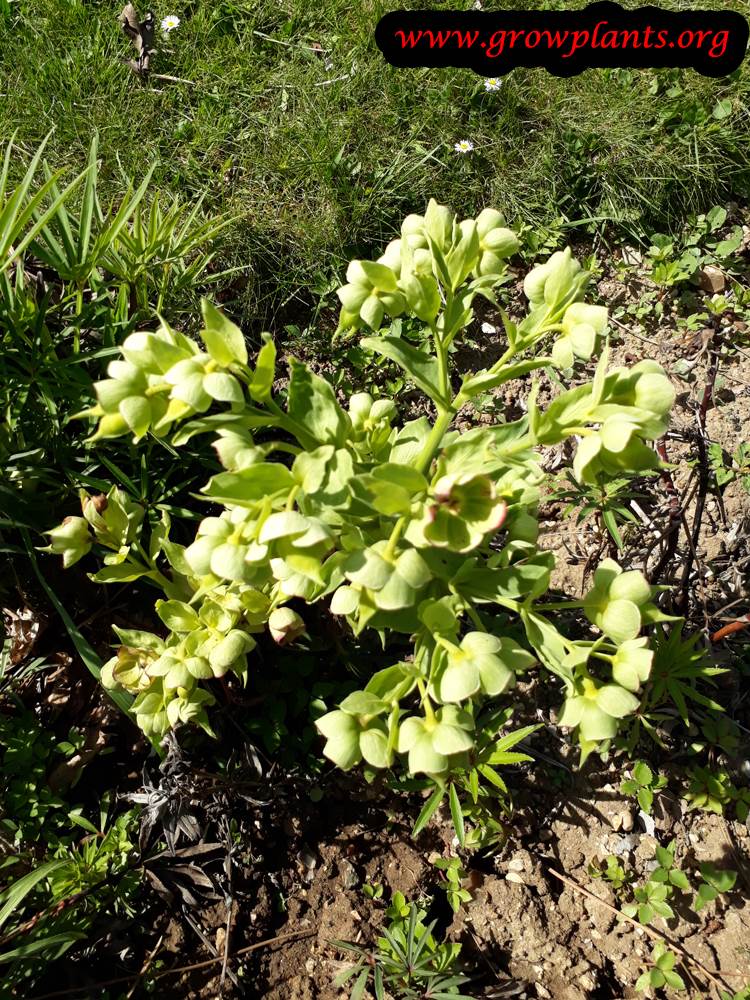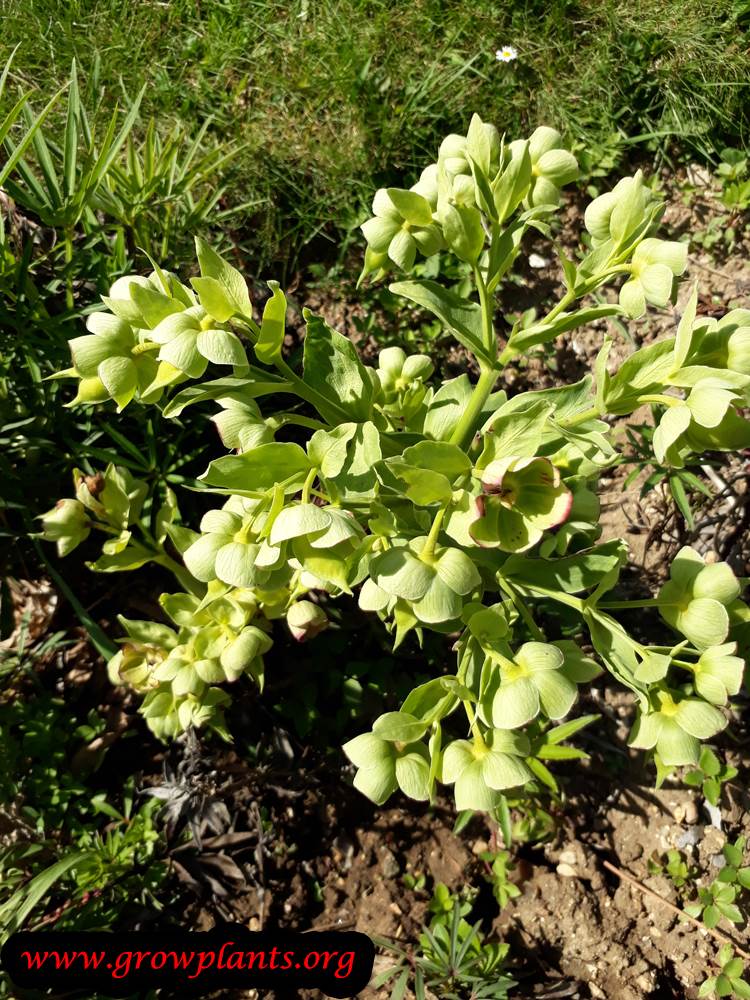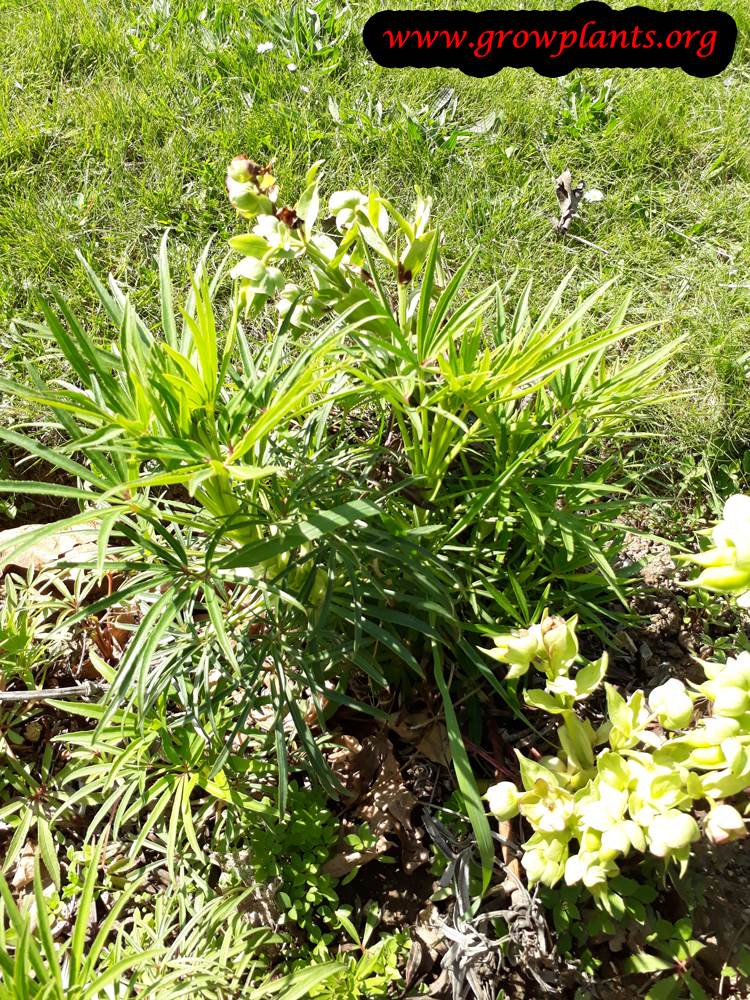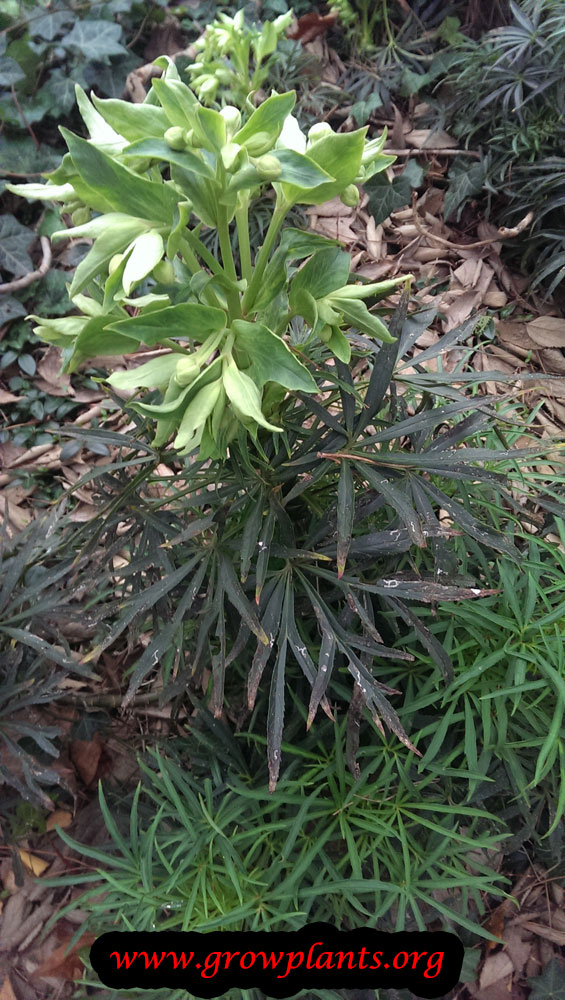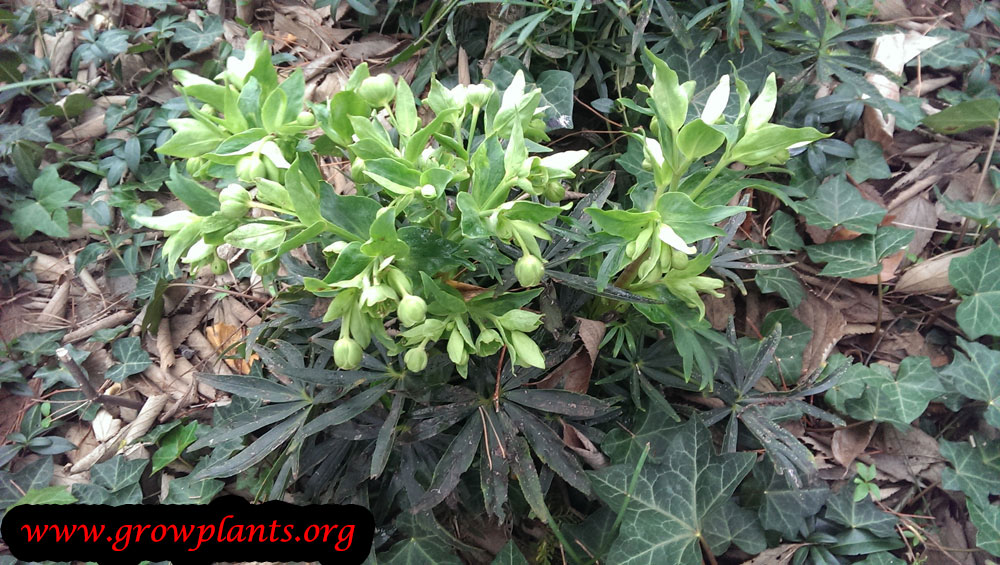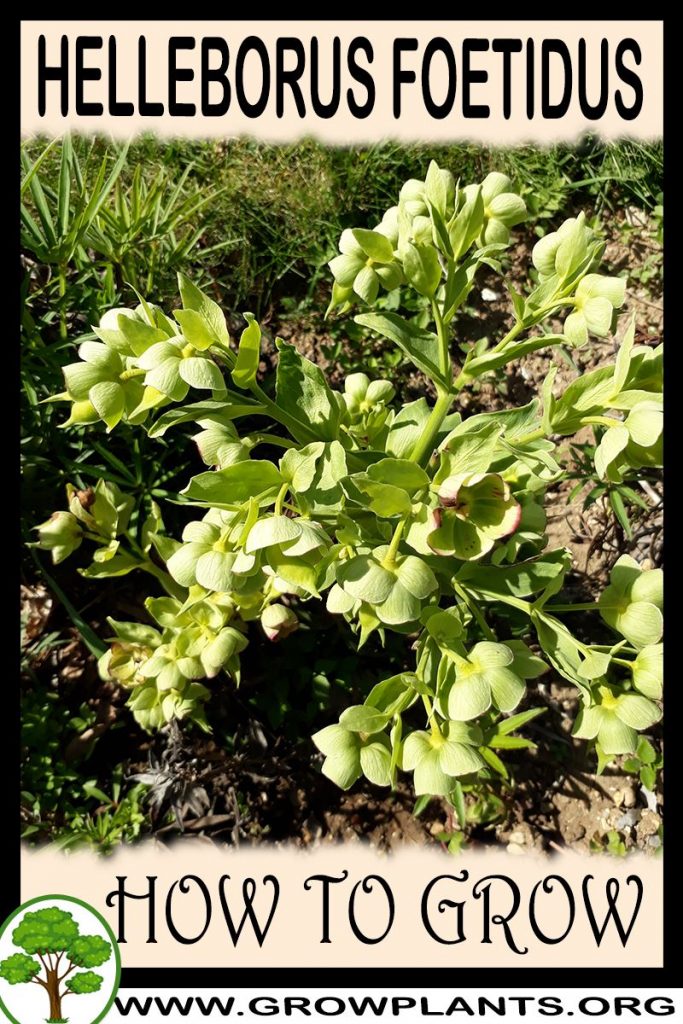
Plant Profile & Key Characteristics
Overview: Helleborus foetidus, the stinking hellebore, is an evergreen perennial forming clumps of 0.3-1 m, grown as an ornamental and cut flower for its clusters of green cup-shaped blooms. It is hardy in zones 5-9 and thrives in sun to full shade.
Quick Specifications
| Specification | Attribute |
|---|---|
| Plant Type / Life Cycle | Perennial (herbaceous) |
| Foliage Type | Evergreen |
| Mature Size | 0.3-1 m tall (1-3 feet) |
| Growth Rate | Moderate |
| Root System | Clump-forming from a short fibrous rootstock |
| Toxicity | Toxic – all parts are poisonous; not for consumption |
| Hardiness | USDA zones 5-9 |
Growth Form & Structure
- Height and Spread: Reaches 0.3-1 m (1-3 feet) in the ground; also suited to planters and containers, and can be kept indoors.
- Growth Habit and Form: Upright, clump-forming herbaceous perennial with leafy stems topped by flower clusters.
- Lifespan and Maturity: Perennial that matures at a moderate rate into a self-supporting clump.
Anatomy & Physical Features
- Leaves and Foliage: Green, pedate (divided) leaves; some cultivars have serrated edges.
- Flower Characteristics: Flat, five-petalled or double green flowers borne in winter to spring (full detail in the Bloom accordion).
Primary Uses & Landscape Value
- Functional and Ornamental Roles: Ornamental for shade and woodland gardens, also used as a cut flower.
Care Guide: Planting, Soil & Watering
Overview: Helleborus foetidus (stinking hellebore) is a shade-tolerant evergreen perennial that grows best in dappled to full shade in cool conditions. It likes a rich, moist but well-drained soil and resents both drying out and waterlogging.
Quick Care Requirements
| Requirement | Ideal Condition |
|---|---|
| Planting Season | In spring, summer or autumn during mild weather |
| Growth Rate | Moderate |
| Soil Type | Rich, moist, well-draining |
| Soil pH | Neutral to alkaline |
| Water Need | Moderate to High – keep evenly moist |
Planting & Establishment
- Best Planting Season: Plant in spring, summer or autumn during mild weather.
- How to Plant:
- Hole Preparation: Dig a hole about twice the width of the root ball and of equal depth, loosening the surrounding soil; hellebores dislike disturbance once settled.
- Soil Amendments: Enrich with plenty of compost or leaf mould for a rich, moisture-retentive yet well-drained soil; it also appreciates some lime (limestone) in the soil.
- Planting Depth: Set the crown level with the soil surface — planting too deep can prevent flowering; do not bury it.
- Growth Speed & Expectations: A moderate grower reaching about 0.3-1 m (1-3 ft).
Soil, Watering & Drainage Care
- Soil Mix & Drainage Needs: Provide rich, moisture-retentive soil that still drains freely; good drainage through winter prevents crown and root rot.
- Watering Schedule & Technique:
- Young / Newly Planted: Keep the soil consistently moist after planting while the roots establish.
- Established: Water to keep the soil evenly moist, especially in dry spells; avoid letting it bake dry or sit waterlogged.
- Seasonal Adjustments: Water more in dry summer weather; in winter it needs less, but the soil should not dry out completely.
Climate, Light & Hardiness
Helleborus foetidus is a shade-loving evergreen perennial for temperate, subtropical and Mediterranean climates, growing best in partial to full shade and cooler conditions. It is a cold-hardy winter- and spring-flowering plant (site data lists USDA zones 5–9); hot, dry summers - not winter cold - are usually its main limit.
Quick Climate Specifications
| Climate Zones | temperate, subtropical and Mediterranean |
|---|---|
| USDA Hardiness Zones | 5–9 |
| Optimal Temp Range | Cool, roughly 10–20°C (50–68°F) |
| Cold Damage Begins | Open flowers and soft new growth can be nipped by severe frost, though the plant itself is hardy |
| Approx. Survival Minimum | Zone 5 corresponds to winter lows near −29°C (−20°F) |
| Frost Tolerance | High (established plant) / Moderate (open blooms) |
| Light Conditions | Partial to full shade (full sun only where summers stay cool) |
| Wind Tolerance | Moderate |
Sunlight & Light Exposure
Optimal Light Setup
Grows best in partial or dappled shade, and tolerates full shade with a little light. Winter sun with summer shade - as under deciduous trees - suits it well.
Shade & Heat Management
Full sun is acceptable only where summers are not hot; in warm regions shade and a cool, mulched root zone are important to prevent heat and moisture stress.
Best Exposure / Orientation
A sheltered, shaded woodland-type position protected from hot afternoon sun gives the healthiest foliage and longest-lasting flowers.
Temperature Extremes & Hardiness
USDA Hardiness & Regional Limits
The site data lists hardiness zones 5–9. The plant is genuinely cold-hardy and often blooms in late winter; a "frost-free" note in its care refers mainly to protecting the open flowers, not the crown, which withstands hard freezes.
Cold Damage & Winter Protection
Established crowns need no special winter protection within range. During severe frost the flowers and leaves may temporarily wilt or brown, then recover as it thaws; a light mulch steadies soil temperature.
Frost Sensitivity
The plant is frost-hardy; only the open blooms and tender new growth are frost-sensitive.
Extreme Heat Tolerance
Heat is the real constraint - prolonged hot, dry weather stresses the foliage and shortens the plant's life, so shade and cool, moist soil matter most in warm climates.
Wind, Humidity & Microclimate
Humidity Preferences
Prefers average to somewhat moist air; it dislikes hot, dry, exposed positions.
Wind Tolerance
Wind tolerance is moderate; a sheltered position keeps the evergreen leaves and winter flowers in good condition.
Microclimate Recommendations
A cool, shaded, sheltered spot with a mulched, moisture-retentive root zone is ideal - think woodland edge or the north side of a wall.
Growing in Pots, Balconies & Indoors
The stinking hellebore is an architectural, shade-loving evergreen perennial that the grower confirms grows well both in containers and indoors. Its divided leaves and clusters of green cups look good all year, and it is happiest cool and out of harsh sun – ideal for a shaded patio, a balcony that does not bake, or a cool, bright room. In a pot it holds at 0.3-1 m (1-3 ft).
Quick Details
- Container Size: A pot of about 5-15 L (1.3-4 gal) suits its clump-forming 0.3-1 m size
- Indoor Suitability: Grows indoors in a cool, bright spot – it dislikes hot, dry rooms and deep shade
- Best Spot: Full sun to full shade with some light, but out of hot direct sun
- Soil & Drainage: Rich, organic, free-draining mix that stays evenly moist – potting mix with perlite or vermiculite
- Watering in Pots: Average to generous – keep evenly moist but never waterlogged
Indoors & On the Windowsill
- Grows indoors: The grower confirms it can be a houseplant. It does best in a cool, bright room out of hot direct sun – a cool sill, porch or north or east window suits its evergreen foliage well.
- Care indoors: Keep the soil evenly moist, give good light without scorching, and keep it away from dry radiator heat. It flowers in the cool season, so cool conditions help it bloom.
- Overwintering: It is hardy and enjoys a cool winter; a potted plant is happy outdoors in a shaded, sheltered spot, brought to a cool bright room only to enjoy the flowers up close.
On a Balcony or Patio
- Light & shelter: It prefers a shaded or part-shaded corner rather than a hot, sunny balcony; too much direct heat scorches it. A sheltered north- or east-facing spot is ideal.
- Water & wind: Pots dry faster than open ground, so keep the mix moist, especially in warmth; the evergreen leaves shrug off cold but appreciate shelter from drying wind.
Choosing the Pot, Soil & Long-Term Care
- Pot & drainage: A pot with strong drainage holes; skip a standing water saucer to avoid root rot. Glazed or plastic pots hold the steady moisture it likes better than fast-drying terracotta.
- Potting mix: Rich, organic and free-draining – potting mix with perlite or vermiculite and added leaf mould or compost.
- Feeding: Potted plants leach nutrients with watering, so feed through the growing season with a balanced feed for strong leaves and flowers.
- Repotting: Refresh the mix or pot on every year or two; this species is short-lived but self-seeds readily, so keep a few seedlings coming on. Remove tired old growth as new shoots appear.
- Safety: The grower records it as poisonous – all parts can cause irritation and upset if eaten, so keep it away from children and pets, especially indoors.
Fertilizing & Feeding
A modest feeder: a balanced feeding as growth resumes and through bloom, backed by organic matter, is plenty, with feeding held off during summer rest.
Quick Fertilizing Specs
| Feeding Level | Modest feeder |
|---|---|
| Main Nutrient Priority | Balanced feeding with adequate nitrogen for foliage and bloom |
| Best Feeding Period | Late winter through spring, covering growth and flowering |
| Organic Options | Compost, leaf mould, and other organic matter |
| Reduce/Stop Feeding | Hold off feeding during hot summer rest |
| Micronutrients | Usually met by organic matter and a complete fertilizer; correct only diagnosed issues |
| Soil pH | Tolerates a wide range, and grows well in neutral to slightly alkaline, limestone soils |
Feeding by Growth Stage
Late-winter to spring growth
Support fresh leaf and stem growth as the plant becomes active in cool weather.
| Nutrient direction | A balanced complete fertilizer with adequate nitrogen to build healthy evergreen foliage. |
|---|---|
| Timing | As new growth pushes in late winter and spring. |
| Frequency | A light feeding as active growth begins, with organic matter renewed around the plant. |
| Fertilizer types | A balanced complete fertilizer, Compost, leaf mould, and other organic matter as a mulch |
| Precautions | Keep feeding modest; hellebores are steady growers and rich soil plus organic matter carries much of the load. |
Winter to spring bloom
Sustain the long flowering display and the foliage carrying it.
| Nutrient direction | Stay with a balanced complete fertilizer; adequate nitrogen and a balanced supply drive bloom better than a high-phosphorus product. |
|---|---|
| Timing | Through the winter-to-spring flowering period. |
| Frequency | An occasional light feeding sustains bloom and foliage without forcing soft growth. |
| Fertilizer types | A balanced complete fertilizer, Compost or well-rotted organic matter |
| Precautions | Avoid reaching for a high-phosphorus bloom booster; a balanced feed with enough nitrogen is what supports flowering. |
Summer heat rest
Let the plant coast through hot, dry weather without pushing new growth.
| Nutrient direction | None – withhold fertilizer while the plant is resting through summer heat. |
|---|---|
| Timing | During the hot, dry part of summer when growth slows. |
| Frequency | No feeding during this rest; resume only when cooler weather returns growth. |
| Fertilizer types | No feeding at this stage; hold off fertilizing until active growth resumes in cooler weather. |
| Precautions | Do not fertilize a resting plant; feeding now wastes nutrients and risks salt buildup in dry soil. |
Nutrient Deficiency Signs & Corrections
Older, lower leaves fade to pale green or uniform yellow and overall growth slows.
| Possible causes | low available soil nitrogen, nitrogen leaching from heavy watering or rain, thin, low-organic-matter soil |
|---|---|
| Appears first on | older, lower leaves |
| What to check | recent feeding history, soil organic matter, watering and drainage |
| Possible correction | Apply a nitrogen-containing complete fertilizer and build soil organic matter, then water evenly. |
Interveinal yellowing on older leaves while the veins themselves stay green.
| Possible causes | low soil magnesium, high-potassium feeding competing with magnesium uptake, leaching in light, sandy soils |
|---|---|
| Appears first on | older, lower leaves |
| What to check | soil magnesium status, how potassium-heavy recent feeding has been, soil texture and leaching |
| Possible correction | Apply a labeled magnesium source such as Epsom salt or a dolomitic amendment and rebalance feeding. |
Leaf margins brown or scorch and growth stalls despite adequate watering.
| Possible causes | fertilizer salt buildup in the root zone, under-watering that concentrates salts, excessive or too-frequent feeding |
|---|---|
| Appears first on | leaf margins and tips |
| What to check | recent fertilizer amounts, watering consistency, drainage, especially in containers |
| Possible correction | Ease off feeding, water thoroughly to flush accumulated salts, then return to lighter feeding. |
Pruning, Training & Seasonal Maintenance
Helleborus foetidus (stinking hellebore) is a caulescent species: its flowering stems typically live about two years, growing vegetatively in year one and flowering, seeding, then declining in year two, so pruning is again about stem renewal rather than shaping. The safest window is the same late spring into summer, once flowering has finished. This species self-seeds prolifically, so the timing of stem removal materially affects how many volunteer seedlings appear the following year, not just how tidy the clump looks. Foliage has a strong odor when bruised, worth knowing when handling cut material at close range.
Quick Pruning & Maintenance Specs
| Pruning Tolerance | Low to Moderate |
| Primary Pruning Window | Late Spring to Summer, after flowering |
| Secondary Maintenance Window | Late Winter, removing storm- or frost-damaged leaves |
| Typical Frequency | 1–2 times per year |
| Main Objective | Remove spent (two-year-old) flowering stems; manage self-seeding |
| Young Plant Priority | None – let first-year vegetative stems establish |
| Mature Plant Priority | Cut out stems that have already flowered; decide whether to allow seed drop |
| Best Tool Type | Precision snips or bypass secateurs |
| Avoid Heavy Pruning During | Active bloom, and hot, dry summer stress |
Pruning by Plant Age & Size
Newly Established
Leave the plant untouched beyond removing damaged leaves; first-year stems are vegetative and will not flower until their second year.
Young / Formative
No structural training system applies – it is not staked, leadered, or shaped. Let new stems develop naturally from the base.
Mature / Established
Once a stem has flowered and its bloom has faded, cut it to the base – it will not flower again. Because this species seeds itself so readily, deciding when to make that cut (before or after seed drop) is as much a population-control decision as a tidiness one.
Seasonal Pruning Schedule
| Stage | Objective | Remove | Do Not Remove | Expected Response | Flowering Impact |
| Post-Flowering (Late Spring–Summer) | Stem renewal and self-seed control | Spent flowering stems, cut to the base – earlier in the window if unwanted seedlings are to be limited, later if naturalizing is wanted | Current-year vegetative stems that will flower next year | Fresh vegetative stems continue from the crown; seedling numbers next season are reduced if cut before seed drop | None on the current bloom; shapes next year’s seedling population |
| Ongoing Sanitary | Disease control | Leaves with leaf-spot lesions or heavy pest damage | Healthy foliage | Reduced fungal spore load | None |
Structural Pruning & Training
Remove old, exhausted stems from the center of the clump for airflow; no height or spread control is needed on this naturally upright, self-contained plant.
Special Growth to Remove
- Spent (already-flowered) stems – cut at the base; they are finished and will not rebloom.
- Unwanted self-sown seedlings around the base – a weeding task distinct from stem pruning, but the two are often done in the same visit.
- Leaf-spot-affected or storm-damaged leaves.
Container & Small-Space Pruning
Grows well in containers. In a pot, self-seeding is rarely a problem, so stems can be left to fully set seed for appearance if desired; otherwise remove promptly after flowering to keep the container tidy and free the plant from supporting spent growth.
Tools
Precision snips or bypass secateurs for the stem bases; no loppers or saw needed.
Tool Hygiene & Disease Risk
Increased risk. As with other hellebores, leaf-spot fungus spreads by water splash and can be carried on blades between plants; disinfect after cutting symptomatic foliage and discard infected material rather than composting it.
Cut Placement & Technique
Cut spent stems low, close to the crown, without damaging the crown itself or nearby new vegetative growth.
Heavy Pruning & Rejuvenation
Not applicable in the woody-shrub sense – there is no stump to cut back to; renewal happens one stem at a time as each completes its two-year cycle.
Post-Pruning Care
Water at the base rather than overhead after removing diseased leaves to limit reinfection. No extra feeding is needed. If seedlings are being allowed to establish, keep the area around the parent plant lightly weeded of unrelated competition.
Common Pruning Mistakes
Cutting every stem back hard in one visit regardless of age – first-year vegetative stems that have not yet flowered should be left, or next winter’s display is lost. Letting cut, seeding stems lie on the ground nearby also spreads seedlings further than intended.
When Not to Prune
Do not cut stems that are still flowering if bloom or eventual seed is wanted. Avoid pruning in prolonged wet weather, which favors leaf-spot, and avoid hard cutting immediately after transplanting.
Recommended Tools (by task)
- Cutting spent flowering stems at the base: bypass_secateurs – a clean cut on the semi-woody stem base.
- Removing individual damaged or diseased leaves: precision_snips.
- Leaf-spot hygiene between cuts: blade_disinfectant – genuine tool-transmissible fungal risk in this genus.
Propagation Guide
Helleborus foetidus is propagated almost entirely from seed – unlike clump-forming hellebores, it grows as an upright, single-crowned plant that does not produce divisible offsets, but it self-sows abundantly in the garden and seedlings of the straight species come reasonably true when grown away from other Helleborus species. Grafting or vegetative reproduction is not required. This makes it one of the easier hellebores to propagate, provided a grower is patient with its irregular, sometimes slow germination.
Quick Propagation Specs
| Best Propagation Method | Seed |
| Propagation Difficulty | Easy |
| Seed True-to-Type | Usually true-to-type when isolated from other Helleborus species |
| Best Propagation Season | Sow fresh seed in summer as soon as ripe (planting season overall is spring, summer, or autumn) |
| Seed Germination Time | Slow and often erratic – commonly several months, sometimes not until the following autumn or winter |
| Seed Sowing Depth | Surface-sow or cover very lightly, about 0.5–1 cm (¼–½ inch) |
Growing from Seed
Seed Handling & Viability
Seed loses viability quickly if dried and stored – collect and sow it fresh as soon as the ripening pods split open, or simply let the plant self-sow where it stands.
Dormancy & Pre-Sowing Treatment
Fresh seed needs a warm summer period followed by a cold winter period to break dormancy; no scarification is needed, but seed will not sprout until this warm-then-cold sequence has been experienced outdoors.
Sowing Season
Sow immediately after collecting the seed, in summer; self-sown seedlings typically appear where mature plants have shed seed.
Sowing Depth & Orientation
Surface-sow or cover only very lightly, roughly 0.5–1 cm (¼–½ inch); deep burial delays or prevents germination.
Germination Conditions
Keep pots or seed beds outdoors or in a shaded cold frame so they experience natural seasonal temperature swings; keep the medium consistently moist but not waterlogged.
Germination Time
Irregular and slow – seedlings may not appear until the following autumn, winter, or even the second spring.
Seedling Care
Once seedlings have a couple of true leaves, prick them out carefully (roots are brittle) or transplant self-sown seedlings while still small; plants typically take a couple of years to reach flowering size.
Bloom & Flower Guide
Quick Details
- Bloom Season: Winter into spring
- Flower Appearance: Nodding, cup-shaped green flowers with five parts (sometimes double-flowered)
- Edibility: Not edible – all parts of hellebore are toxic
Detailed Blooming Overview
Stinking hellebore is grown for its long-lasting clusters of pale green, cup-shaped flowers, held above dark, finely cut evergreen foliage from late winter into spring. The common name comes from the scent of the crushed leaves rather than the flowers, which are one of the earliest nectar sources for bees.
Flower Characteristics
- Nodding, cup-shaped green flowers with five parts, occasionally double.
- Carried in large heads and very long-lasting, as the green parts are durable sepals.
Bloom Care & Thinning
- Managing the bloom: Cut spent flower stems to the base once flowering ends to keep the clump fresh and to limit self-seeding.
- Pollination: An important early nectar source, visited by bees on mild winter days.
Bloom Health & Protection
- Safety: Every part of the plant is toxic if eaten and the sap can irritate skin – grow it as an ornamental, and wear gloves when handling.
Pests, Diseases & Troubleshooting
Overview: Helleborus foetidus (stinking hellebore) is an evergreen, shrubby caulescent species. Hellebores are generally tough, long-lived woodland perennials, but they are prone to a handful of signature problems: the sap-sucking hellebore aphid (which also spreads the incurable “hellebore black death” virus), fungal leaf spot, slug damage on new growth, and crown rot in wet, poorly drained soil. Manage them culturally first — good airflow, annual removal of old foliage, and sharp drainage prevent most trouble. Note that all parts of the plant are toxic and the sap is a skin irritant, so wear gloves when cutting.
Quick Troubleshooting Overview
| Issue / Pest | Main Symptom | Primary Solution |
|---|---|---|
| Hellebore aphid | Grey-green colonies on flower stalks & leaf undersides, sticky honeydew | Blast off / insecticidal soap; controls virus spread |
| Leaf spot (black spot) | Black-brown blotches with concentric rings, dying leaves | Remove & destroy affected foliage; copper fungicide |
| Black death (virus) | Black streaks/rings, stunted distorted growth | No cure — dig up and destroy the whole plant |
| Slugs & snails | Ragged holes in new leaves and flower stems | Barriers, iron-phosphate pellets, hand-picking |
| Crown / root rot | Collapsing crown, blackened base in wet soil | Improve drainage; remove rotted tissue |
Common Pests & Management
- Hellebore aphid (Macrosiphum hellebori):
- Symptoms: Distinctive grey-green aphids clustering on flower stalks, buds and the undersides of leaves, coating them in sticky honeydew that later turns black with sooty mould. This species is specific to hellebores and is the main vector of hellebore black death.
- Prevention & Control: Inspect flower stems early in the season and dislodge colonies with a firm jet of water. Encourage ladybirds, lacewings and hoverflies. For heavier infestations use insecticidal soap or a neem/horticultural-oil spray, applied in the evening to protect pollinators. Prompt aphid control is the best defence against the virus.
- Slugs & snails (Deroceras / Helix spp.):
- Symptoms: Irregular holes and shredded edges on emerging leaves and flower stems, with slime trails; worst in damp, shaded conditions and early in the growing season.
- Prevention & Control: Clear leaf litter and hiding places, water in the morning so the surface dries by night, and ring plants with grit, crushed shell or copper tape. Iron-phosphate pellets are a wildlife-safe option; hand-pick after dark.
- Vine weevil (Otiorhynchus sulcatus):
- Symptoms: Adults notch the leaf margins at night; the far more damaging C-shaped white larvae eat roots and the crown, causing sudden wilting or collapse — especially in container-grown plants.
- Prevention & Control: Check pots for grubs when repotting, encourage ground beetles and birds, and drench with beneficial nematodes (Steinernema / Heterorhabditis) when soil is warm and moist.
Diseases & Fungal Issues
- Hellebore leaf spot / black spot (Microsphaeropsis hellebori, syn. Coniothyrium hellebori):
- Symptoms: Round to irregular black-brown blotches, often with concentric rings, on leaves, stems and even petals; badly affected leaves yellow and die. The most common hellebore disease.
- Treatment & Management: Cut off and destroy all old and spotted foliage in late dormancy before new growth and flowers emerge — this single step breaks most of the disease cycle. Improve airflow, avoid overhead watering, and apply a copper-based fungicide in wet spells if pressure is high.
- Hellebore black death (Helleborus net necrosis virus, HeNNV):
- Symptoms: Black streaking and ringspots along veins, distorted, stunted and blackened new growth. Fatal and incurable; spread plant-to-plant by the hellebore aphid.
- Treatment & Management: There is no cure — dig up and destroy affected plants promptly (do not compost) and control aphids rigorously to protect neighbouring plants. Disinfect tools between plants.
- Downy mildew (Peronospora pulveracea):
- Symptoms: Greyish, furry growth on leaf undersides with corresponding pale, distorted or puckered areas above; worst in cool, wet, still air.
- Treatment & Management: Improve spacing and airflow, remove affected leaves, avoid wetting foliage. Copper fungicide gives some protection in prolonged wet weather.
- Crown & root rot (Phytophthora / Sclerotinia spp.):
- Symptoms: Collapsing crown, blackened, mushy tissue at the base and dying leaves, typically in heavy or waterlogged soil.
- Treatment & Management: Prevention is everything — plant in free-draining, humus-rich soil and never bury the crown. Cut away rotted tissue, improve drainage, and avoid replanting hellebores in the same rotted spot.
Growing Difficulties & Abiotic Problems
- Waterlogging & crown rot:
- Cause & Symptoms: Wet, compacted or badly drained soil suffocates roots and rots the crown, giving yellowing, wilting and collapse. Correction Strategy: Raise beds or add grit and compost to open the soil; site plants where winter wet drains away.
- Leaf scorch & heat stress:
- Cause & Symptoms: Too much direct summer sun bleaches and browns leaf edges. Correction Strategy: Grow in dappled shade under deciduous trees; mulch to keep roots cool and moist.
- Transplant shock / dislike of disturbance:
- Cause & Symptoms: Sulking, poor flowering and slow establishment after being moved or divided. Correction Strategy: Site them permanently, disturb roots as little as possible, and be patient — they resent frequent division.
- Toxicity / sap irritation:
- Cause & Symptoms: All parts contain irritant glycosides; sap can cause skin and eye irritation, and the plant is poisonous if eaten. Correction Strategy: Wear gloves when cutting old foliage, wash hands, and keep away from pets and children.
H. foetidus is often short-lived and is particularly susceptible to the hellebore aphid and to black death, so early aphid control and prompt removal of any virus-affected plants matter even more here. It also self-seeds freely, which can carry problems to seedlings.
What Helps — Products & Tools
For hellebores the core toolkit is insecticidal soap or neem/horticultural oil for aphids, wildlife-safe iron-phosphate slug pellets plus copper tape and grit for barriers, beneficial nematodes for vine weevil grubs, and a copper-based fungicide for leaf spot and downy mildew. The single most valuable “tool” is a clean pair of secateurs used to strip and destroy old foliage each dormant season.