Plant Profile & Key Characteristics
Overview: A tall herbaceous perennial 1-3 m (40-120 in) grown as an ornamental pollinator plant, bearing yellow daisy-like flowers. It grows fast, dies back in cold winters and spreads vigorously.
Quick Specifications
| Specification | Attribute |
|---|---|
| Plant Type / Life Cycle | Perennial (annual in cold climates) |
| Foliage Type | Deciduous in cold areas (evergreen where mild) |
| Mature Size | 1-3 m (40-120 in) |
| Growth Rate | Fast |
| Root System | Rhizomatous (spreading) |
| Toxicity | Non-toxic |
| Hardiness | USDA zone 4+ |
Growth Form & Structure
- Height & Spread: Tall leafy stems 1-3 m (40-120 in); can also be container-grown.
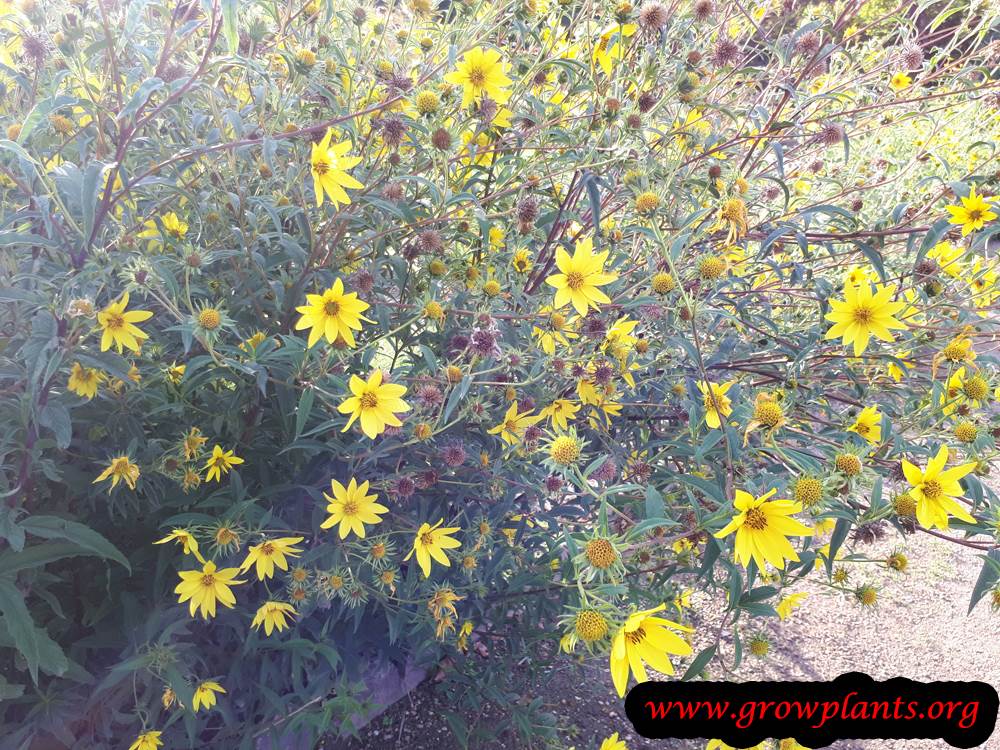
- Growth Habit & Form: Upright clump of tall leafy stems spreading by rhizomes; vigorous and aggressive.
- Lifespan & Maturity: Perennial of fast growth, colonising over time.
Anatomy & Physical Features
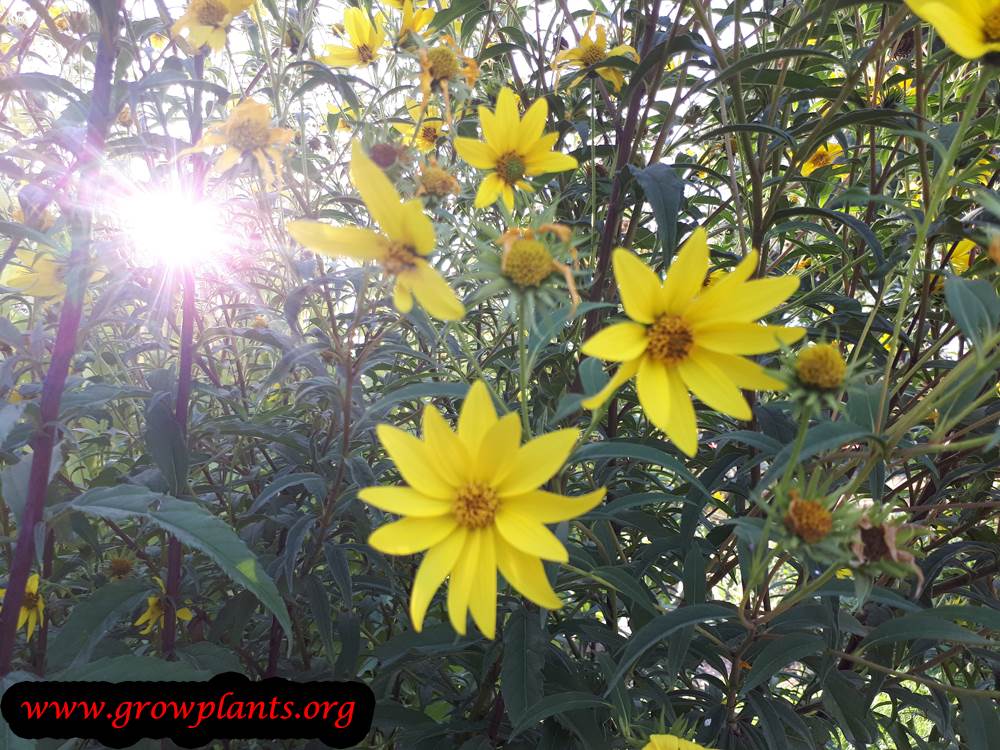
- Leaves & Foliage: Green rhomboid leaves with serrated margins.
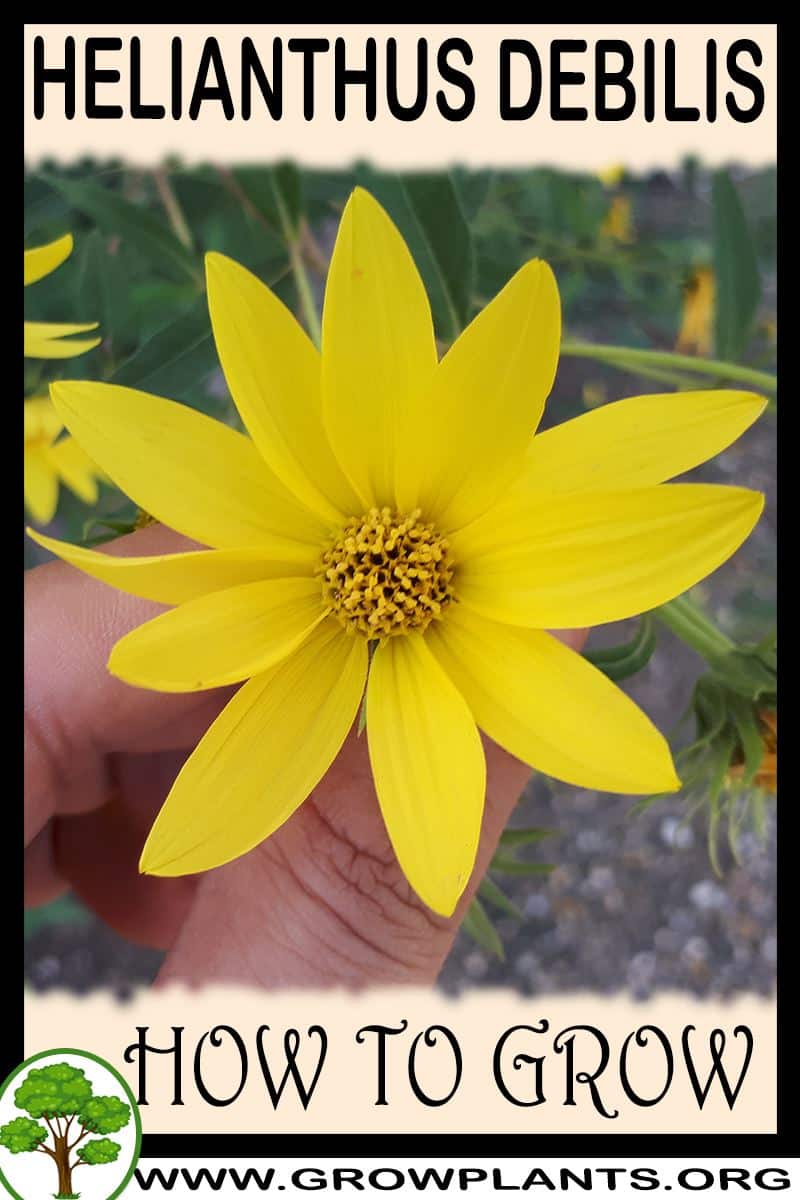
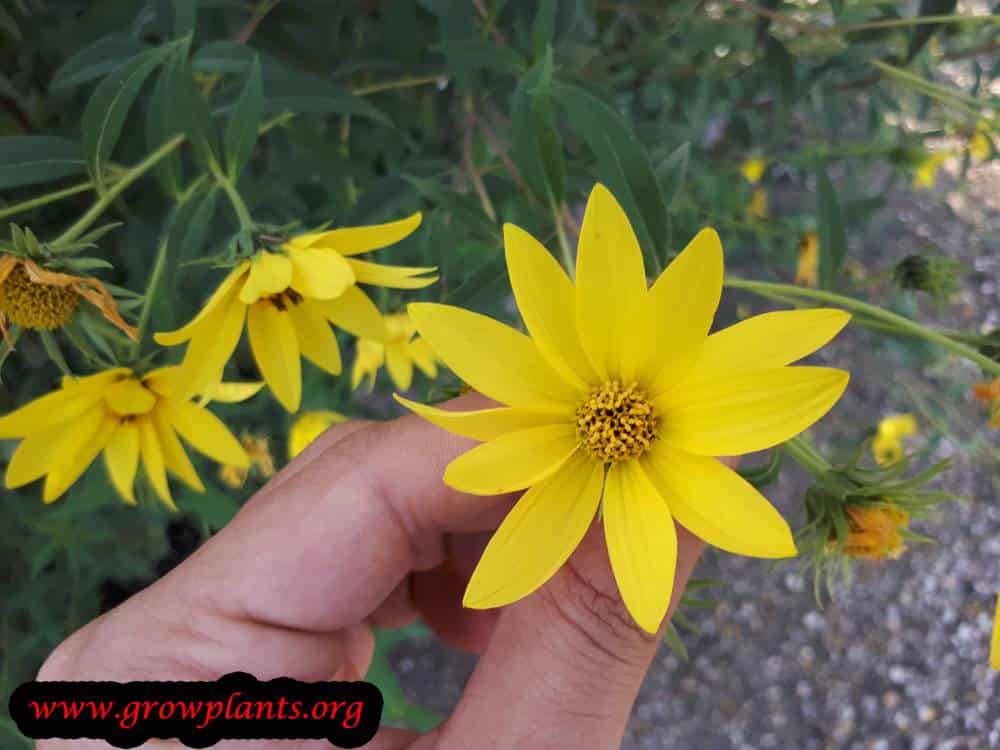
- Flower Characteristics: Yellow daisy-like flowers with a darker centre, attracting pollinators.
Primary Uses & Landscape Value
- Functional & Ornamental Roles: Tall ornamental for the back of borders and naturalistic plantings; attracts pollinators.
Care Guide: Planting, Soil & Watering
Overview: Helianthus giganteus (giant sunflower) is a tall, vigorous perennial sunflower that needs full sun. It grows in most well-drained soils, benefits from a mulch, and likes steady, generous moisture.
Quick Care Requirements
| Requirement | Ideal Condition |
|---|---|
| Planting Season | In spring through summer during active growth |
| Growth Rate | Fast |
| Soil Type | Well-draining, mulched |
| Water Need | Moderate to High |
Planting & Establishment
- Best Planting Season: Plant in spring to summer during active growth; note it is a vigorous spreader, so give it room or contain it.
- How to Plant:
- Hole Preparation: Set into loosened, well-drained soil in a hole slightly wider than the root ball.
- Soil Amendments: Enrich with compost and mulch to hold moisture and feed the strong growth.
- Planting Depth: Set the root ball level with the soil surface; do not bury the crown.
- Growth Speed & Expectations: A fast grower reaching 1-3 m (40-120 in).
Soil, Watering & Drainage Care
- Soil Mix & Drainage Needs: Provide well-drained soil; a mulch and steady moisture give the best growth.
- Watering Schedule & Technique:
- Young / Newly Planted: Keep evenly moist after planting while it establishes.
- Established: Water regularly and generously through the warm season.
- Seasonal Adjustments: Water freely in summer heat and reduce as growth dies back in autumn and winter.
Climate, Light & Hardiness
Helianthus giganteus (giant/tall sunflower) is a robust perennial sunflower for full sun that adapts to tropical, mediterranean, subtropical, desert, and temperate climates, behaving as a deciduous perennial where winters are cold and as an evergreen perennial in milder climates. In climates colder than its hardiness limit it is grown as an annual instead.
Quick Climate Specifications
| Climate Zones | Tropical, mediterranean, subtropical, desert, temperate |
|---|---|
| USDA Hardiness Zones | 4+ |
| Cold Damage Begins | Foliage dies back with the first hard frost, consistent with its deciduous behavior in cold climates |
| Approx. Survival Minimum | The root/crown is hardy through typical zone 4 winters; colder than this it is grown as an annual from seed or tuber each year |
| Frost Tolerance | Low (top growth) / Moderate to High (root system within its hardy range) |
| Light Conditions | Full Sun |
Sunlight & Light Exposure
Optimal Light Setup
Full sun is required for the vigorous, tall growth and daisy-form flowers typical of this species.
Direct Sun Requirement
Needs most of the day in direct sun.
Best Exposure / Orientation
An open site is best, both for sun exposure and because its fast, aggressive spread benefits from room to establish without competing for light.
Temperature Extremes & Hardiness
USDA Hardiness & Regional Limits
Perennial and root-hardy from USDA zone 4 and warmer; in colder climates it is commonly grown as an annual, sown fresh each spring, since freezing winters prevent the crown from surviving outdoors.
Cold Damage & Winter Protection
Top growth is killed back by frost each autumn even within its hardy range, re-sprouting from the root the following spring; mulching the crown can help in the coldest part of zone 4.
Frost Sensitivity
Foliage and flowers are frost-sensitive, while the established root system tolerates winter cold within its hardiness zone.
Extreme Heat Tolerance
Good; it grows successfully in desert and subtropical heat given average-to-generous water.
Wind, Humidity & Microclimate
Wind Tolerance
Moderate; its tall stems (1–3 m / 40–120 in) can be vulnerable to wind lodging in exposed sites and may benefit from a sheltered spot or informal support.
Rainfall & Seasonal Moisture
Prefers average to generous seasonal moisture and appreciates mulch to conserve soil moisture through the growing season.
Microclimate Recommendations
An open, sunny site with room to spread suits its vigorous, aggressive growth habit across its broad climate range.
Growing in Pots, Balconies & Indoors
Giant sunflower (Helianthus giganteus) is a tall, sun-loving 1-3 m (40-120 in) plant. The grower notes it is not an indoor houseplant, but it can be grown in a large container on a sunny balcony or patio.
Quick Details
- Container Size: A large, deep, heavy-based pot to anchor the tall stems
- Indoor Suitability: Not a houseplant – it needs full sun
- Best Spot: Full sun
- Soil & Drainage: Free-draining, organic-rich mix
- Watering in Pots: Average to generous – big leafy stems drink heavily in warm weather
Indoors & On the Windowsill
- Houseplant limits: The grower marks it as not for indoors – it is far too tall and sun-hungry for a room or sill.
- Windowsill note: Not viable indoors; grow it outside.
On a Balcony or Patio
- Light & wind: Give it the sunniest spot and stake it well – at this height it catches the wind badly on an exposed balcony. Pots against warm walls dry fast, so check moisture daily in summer, and use a heavy, wide-based pot for stability. A drip irrigation kit with a timer can take over that watering check automatically.
Choosing the Pot, Soil & Long-Term Care
- Pot & drainage: A pot with strong drainage holes is essential; skip a permanently full standing-water saucer to avoid root rot. Terracotta breathes and dries faster, while glazed or plastic holds moisture longer.
- Potting mix: A well-aerated, organic-rich mix – potting mix or peat/coir with perlite or vermiculite – works best.
- Feeding: Potted plants need feeding more often than those in the ground, since watering steadily leaches nutrients out of the container.
Fertilizing & Feeding
Moderate – a tall, fast-growing, pollinator-attracting sunflower; steady balanced feeding supports its rapid height gain and daisy-shaped blooms, but this vigorous, sometimes aggressive spreader does not need heavy fertilizing to perform well.
Quick Fertilizing Specs
| Feeding Level | Moderate – vigorous, fast growth is supported by steady, balanced nutrition rather than heavy feeding. |
|---|---|
| young_feeding | A balanced feed as young shoots establish in spring. |
| mature_feeding | Regular light-to-moderate balanced feeding through the tall growth phase and into bloom. |
| Main Nutrient Priority | Balanced nutrition with adequate nitrogen to support the plant’s rapid height gain. |
| Best Feeding Period | From spring growth through the summer-to-autumn bloom period. |
| Organic Options | Compost or well-rotted organic matter worked into the bed. |
| Soil pH | Tolerates a wide range of soils; near-neutral is fine. |
| Reduce/Stop Feeding | Ease off feeding as bloom finishes and, where grown as a perennial, as the plant heads into winter dieback. |
| Micronutrients | Rarely needed on ordinary garden soil; correct only if a deficiency shows. |
Feeding by Growth Stage
Spring growth
Fuel the rapid stem and leaf growth that carries this tall sunflower toward its full height.
| Nutrient direction | A balanced complete fertilizer with adequate nitrogen to support fast, sturdy growth. |
|---|---|
| Timing | As new shoots emerge and through the main growth push in spring and early summer. |
| Frequency | Regular light-to-moderate feeding through the active growth phase. |
| Fertilizer types | Balanced complete fertilizer, Compost or well-rotted organic matter |
| Precautions | Avoid excess nitrogen, which can produce overly tall, weak stems prone to toppling in wind; this plant already spreads readily and does not need extra vigor from over-feeding. |
Flowering
Sustain the daisy-shaped, pollinator-attracting flower heads through the bloom period.
| Nutrient direction | Continue a balanced feed with adequate nitrogen; a high-phosphorus bloom booster is not needed to produce more flowers. |
|---|---|
| Timing | Through the summer-to-autumn bloom period. |
| Frequency | Light, occasional feeding while in bloom. |
| Fertilizer types | Balanced complete fertilizer |
| Precautions | Do not reach for a high-phosphorus formula to try to push more or bigger blooms; balanced nutrition and adequate light drive flowering. |
Dormancy or seasonal decline
Let the plant rest or complete its cycle with little to no nutrient demand.
| Nutrient direction | None – withhold fertilizer as bloom finishes and the plant dies back for winter or, where grown as an annual, completes its life cycle. |
|---|---|
| Timing | After bloom, through winter dieback where perennial, or toward the end of the season where grown as an annual. |
| Frequency | No feeding at this stage. |
| Fertilizer types | No feeding at this stage – withhold fertilizer until active spring growth resumes, where the plant is perennial. |
| Precautions | Do not fertilize a plant that is dying back or finishing its cycle; resume only with new spring growth if the plant is perennial in your climate. |
Nutrient Deficiency Signs & Corrections
Pale green to yellowish lower leaves and reduced height or vigor.
| Possible causes | Low soil nitrogen, Waterlogged or compacted soil limiting root uptake, Heavy competition from crowded self-seeded stands |
|---|---|
| Appears first on | Older, lower leaves first. |
| What to check | Recent feeding history, Soil drainage and compaction, Crowding from self-seeded or spreading stems |
| Possible correction | Resume a balanced complete feed, improve soil drainage, and thin overcrowded stands so plants are not competing heavily for nutrients. |
Yellowing between the veins of the newest leaves while the veins stay green.
| Possible causes | High or alkaline soil pH locking up iron or manganese, Overly wet or cold soil reducing micronutrient uptake, Genuinely low available iron in the soil |
|---|---|
| Appears first on | Newest leaves near the growing tips. |
| What to check | Soil pH, Drainage and recent watering, Whether older leaves remain unaffected |
| Possible correction | Correct soil pH toward a more neutral range, improve drainage, and if it persists apply a chelated iron product per its label. |
Tall, soft stems that bend or topple, especially in wind or rain.
| Possible causes | Excess nitrogen producing rapid but weak growth, Insufficient light causing stretched, leggy stems, Wind exposure without adequate support |
|---|---|
| Appears first on | The tallest, most recently grown stems. |
| What to check | Recent nitrogen inputs, Light exposure, Wind exposure and whether staking is used |
| Possible correction | Moderate nitrogen, ensure full sun, and stake tall stems in exposed sites rather than increasing feeding. |
Pruning, Training & Seasonal Maintenance
Giant sunflower genuinely does not need routine pruning to grow or flower well – left alone it performs fine. The maintenance that does matter is different from typical pruning: containing its aggressive, rhizome-spreading habit, supporting its tall (1–3 m) stems against wind, and, in cold climates where it dies back each year, clearing the dead top growth once frost has finished it off. None of this affects flowering the way pruning does on a shrub or tree.
Quick Pruning & Maintenance Specs
| Pruning Tolerance | Low – no structural pruning required |
| Primary Pruning Window | Not applicable for shaping; optional deadheading through the growing season |
| Secondary Maintenance Window | Late autumn/winter cutback in cold climates once frost kills top growth |
| Typical Frequency | Occasional spread control; annual cutback where deciduous |
| Main Objective | Contain spread and remove spent/dead growth, not shape the plant |
| Young Plant Priority | None – let it establish undisturbed |
| Mature Plant Priority | Curb rhizome spread; stake if stems begin to lodge |
| Best Tool Type | Bypass secateurs for stalks; stakes/ties for tall stems |
| Avoid Heavy Pruning During | Not a meaningful concept here – this species simply isn’t pruned for shape |
Pruning by Plant Age & Size
Newly Established
No pruning needed while young plants establish; only remove obviously damaged growth from planting.
Young / Formative
No structural training system applies, and the source guidance for this species is explicitly “no need” for pruning. The one relevant intervention is staking very tall stems in exposed, windy sites – a support measure, not a cut.
Mature / Established
Ongoing work is limited to removing unwanted rhizome shoots that spread beyond the intended planting area, optional deadheading, and (in cold climates) an end-of-season cutback of dead stalks.
Seasonal Pruning Schedule
| Growing season (spring–autumn) | Objective: optional tidiness/spread control. Remove: spent flower heads if you don’t want them to self-seed further (this species is already noted as aggressive); unwanted rhizome shoots emerging outside the desired area. Do not remove: healthy stems or buds – there is no structural benefit to cutting them. Response: reduced volunteer seedlings if deadheaded. Bloom impact: deadheading has little effect on the current display since it removes already-spent heads. |
| Late autumn/winter (cold-climate dieback) | Objective: sanitation and dormancy prep. Remove: dead stalks, cut to near ground level once frost has killed the top growth. Do not remove: the rhizome crown/roots. Response: fresh shoots the following spring from the persistent rootstock. Bloom impact: none, the season is over. |
Structural Pruning & Training
There is no real canopy to thin or shape on this upright forb – “structural” management here means physically containing the spreading rhizome clump (with a barrier or periodic digging-out of runners) rather than cutting stems, since thinning cuts do nothing to slow its underground spread.
Special Growth to Remove
- Rhizome-spread shoots emerging beyond the intended bed – the most useful “pruning” task for this aggressive spreader; dig out at the root rather than just cutting the top.
- Spent flower heads, if seed drop/self-sowing is unwanted.
- Dead stalks after frost, in climates where the top growth dies back each year.
Container & Small-Space Pruning
Growing it in a large, heavy container (needed to counter its height) has the side benefit of naturally containing the rhizome spread that is such an issue in open ground; still deadhead promptly if seed dropping into surrounding beds is a concern.
Tools
- Bypass secateurs for cutting the thick, pithy stalks at season’s end.
- Soft ties/stakes for supporting tall stems in windy sites.
Tool Hygiene & Disease Risk
Routine: clean, sharp tools are sufficient; the snail/slug pressure reported for this species is not spread by pruning cuts.
Cut Placement & Technique
Cut dead stalks close to ground level in autumn/winter cutback; when deadheading, cut the flower stem back to the nearest healthy leaf or side bud rather than mid-stem.
Heavy Pruning & Rejuvenation
Hard structural cutback is not how this species is rejuvenated – instead, an overgrown, congested clump is renewed by lifting and dividing the spreading rhizome mass during dormancy, not by cutting the top growth hard.
Post-Pruning Care
Watch new spring shoots for snails and slugs; no special feeding is needed after a routine autumn cutback.
Common Pruning Mistakes
- Trying to “shape” the plant with routine pruning it doesn’t need or benefit from.
- Failing to stake very tall stems in exposed sites, leading to wind lodging.
- Letting rhizome spread go unchecked, which compounds the species’ already aggressive habit.
When Not to Prune
There is little downside to leaving this species uncut through the growing season; the main reason to withhold deadheading is if you want it to self-seed or want the seed heads left for birds – in which case skip the deadhead deliberately.
Recommended Tools (by task)
- Cutting thick stalks / seasonal cutback – bypass_secateurs: enough cutting power for pithy sunflower stems without needing a saw.
- Supporting tall stems in windy sites – soft_ties_stakes: a training aid rather than a cut, needed given the plant’s 1–3 m height.
Propagation Guide
Helianthus giganteus can be grown from seed, which is usually reliable for this wild-type sunflower, but as a spreading perennial it is just as easily and quickly multiplied by dividing its rhizomatous rootstock — the “Tuber” the site lists as a start method reflects this rhizome-spreading habit rather than a true tuber. Division is not required but is a fast shortcut, and both methods are easy given how readily this species spreads.
Quick Propagation Specs
| Best Propagation Method | Rhizome/rootstock division |
| Alternative Methods | Seed |
| Propagation Difficulty | Easy |
| Seed True-to-Type | Usually true-to-type (species form) |
| Vegetative True-to-Type | Yes |
| Best Propagation Season | Spring |
| Seed Germination Time | Typically 1-3 weeks |
| Germination Temperature | Roughly 18-24°C (65-75°F) |
| Seed Sowing Depth | About 1-2 cm (roughly 1/2-3/4 inch) |
Growing from Seed
Sowing Season
Spring, matching the site’s spring/summer planting window.
Sowing Depth
Roughly 1-2 cm (about 1/2-3/4 inch) deep, typical for Helianthus seed.
Germination Conditions
Average garden warmth and consistent moisture are sufficient; no special pre-treatment is typically needed.
Germination Time
Usually within one to three weeks.
Rhizomes, Tubers, Bulbs & Corms
Like other perennial Helianthus species, Helianthus giganteus spreads by rhizomatous roots, which the site’s own data reflects by listing “Tuber” as a start method; dividing this rootstock is a fast, reliable way to multiply the plant and matches its noted aggressive spreading habit.
- Timing: divide in spring as new shoots emerge, or in autumn after die-back in cold-winter areas.
- Each division should include a piece of rhizome with at least one or two visible growth points and, where possible, some fine roots attached.
- Replant divisions promptly at the same depth as the parent clump; do not let the rhizome pieces dry out before planting.
Bloom & Flower Guide
Quick Details
- Bloom Season: From late spring through autumn, mostly in the second half of the season
- Flower Appearance: Classic daisy-form sunflower heads, yellow rays around a darker central disc
- Edibility: Grown as an ornamental and pollinator plant rather than as an edible flower
Detailed Blooming Overview
This tall perennial sunflower carries its bloom high on airy, branching stems, opening a long run of bright yellow daisy heads. Each “flower” is really a composite of slender ray florets around a dense central disc – a design that makes it one of the best pollinator plants of the late-season border, alive with bees and butterflies.
Flower Characteristics
- Yellow ray florets encircling a darker disc, in the familiar daisy form.
- Many medium heads on branching stems, rather than one giant bloom.
Bloom Care & Thinning
- Keep it flowering: Remove faded heads to encourage more; the plant blooms over a long stretch.
- Stems and light: Full sun and, on the tallest stems, a little support keep the display upright and heavy with bloom.
- Pollinators: Leave insecticides off the open heads so bees and butterflies can work them.
Bloom Health & Protection
- Powdery mildew: Common on sunflower foliage in late summer; airflow helps, and a sulfur- or potassium-bicarbonate-based fungicide checks it.
- Aphids on buds: Clusters on the flower buds wash off with water or yield to insecticidal soap.
Pests, Diseases & Troubleshooting
Overview: This is a wild/perennial sunflower – a tough, adaptable native prairie-type plant that is largely self-reliant and lightly troubled by pests. As with all Helianthus, its notable issues are aphids and seed-head pests, plus the sunflower foliar fungi (rust, powdery mildew, downy mildew) and Sclerotinia rot in wet, crowded conditions. Rotation, airflow and sanitation keep it healthy. H. giganteus is a tall perennial (giant) sunflower.
Quick Troubleshooting Overview
| Issue / Pest | Main Symptom | Primary Solution |
|---|---|---|
| Aphids | Curled leaves, honeydew, sooty mould | Water jet, beneficials, insecticidal soap |
| Sunflower moth (heads) | Larvae/frass in the seed heads | Sanitation, till residue, encourage parasites |
| Rust | Orange-brown pustules on leaf undersides | Sanitation, airflow, resistant stock |
| Powdery mildew | White coating on foliage, late season | Airflow; usually cosmetic |
| Sclerotinia rot | Wilting, stem/crown rot, white mould | Rotate, drainage, remove debris |
| Slugs/snails (shoots) | Rasped young growth, slime | Iron-phosphate bait, traps |
Common Pests & Management
- Aphids (Aphis spp. & others):
- Symptoms: Colonies of green, grey or dark soft-bodied insects on leaf undersides, stems and buds, curling growth with honeydew and sooty mould; can carry viruses.
- Prevention & Control: Tolerate light numbers – these plants host abundant predators. Blast off heavy clusters with water and use insecticidal soap only if they overwhelm young growth.
- Sunflower moth (Homoeosoma electellum):
- Symptoms: Moths lay on the open flowers and larvae tunnel through the developing seed heads, leaving frass, webbing and spoiled, mouldy seed.
- Prevention & Control: Destroy or till crop/flower residue where larvae overwinter, encourage parasitic wasps, and – only where damage is severe – use Bt at early bloom, never on open flowers with bees present.
- Caterpillars & beetles (Lepidoptera / Chrysomelidae):
- Symptoms: Chewed leaves and petals and occasional defoliation from various caterpillars and leaf beetles.
- Prevention & Control: Hand-pick, encourage birds and predators, and use Bt for caterpillars if numbers warrant; robust perennials usually outgrow light feeding.
- Slugs & snails (Gastropoda):
- Symptoms: Rasped ragged damage to soft emerging shoots in spring, with slime trails.
- Prevention & Control: Iron-phosphate bait, traps or grit around young shoots; damage is mostly early-season.
Diseases & Fungal Issues
- Rust (Puccinia helianthi):
- Symptoms: Powdery orange-brown pustules mainly on leaf undersides, later darkening, yellowing and killing leaves under heavy pressure.
- Treatment & Management: Remove old debris and volunteers that carry it over, space clumps for airflow, and divide congested stands. Rarely needs spraying on wild sunflowers; sanitation suffices.
- Powdery mildew (Golovinomyces cichoracearum):
- Symptoms: White powdery film on leaves and stems, most common late in the season and in crowded, dry-day/humid-night conditions.
- Treatment & Management: Improve airflow by dividing and spacing, remove affected growth; usually cosmetic late-season. Sulfur or potassium bicarbonate if early and severe.
- Downy mildew (Plasmopara halstedii):
- Symptoms: Stunting with pale mottling above and white downy mould beneath, in cool wet soils.
- Treatment & Management: Ensure drainage, rogue severely affected plants, and avoid wet crowded conditions; less troublesome on established wild stands than on crop sunflowers.
- Sclerotinia rot (white mould) (Sclerotinia sclerotiorum):
- Symptoms: Wilting with a bleached, soft rot of the stem or crown, fluffy white mould and hard black sclerotia; can rot the base of the clump.
- Treatment & Management: Rotate/relocate (sclerotia persist in soil), avoid dense wet stands and excess nitrogen, ensure airflow and drainage, and remove infected debris. Prevention only – infected tissue can’t be cured.
Growing Difficulties & Abiotic Problems
- Spreading & aggressiveness:
- Cause & Symptoms: Many perennial sunflowers spread strongly by rhizomes or self-seeding and can crowd neighbours.
- Correction Strategy: Site where vigorous spread is welcome, divide regularly to contain, and deadhead to limit self-seeding if needed.
- Lodging:
- Cause & Symptoms: Tall stems flop in wind, rich soil or shade.
- Correction Strategy: Grow in full sun on lean soil for sturdy stems, give some shelter or support, and avoid excess nitrogen.
- Drought & heat stress:
- Cause & Symptoms: Wilting and leaf scorch in prolonged drought, though these natives are fairly tolerant once established.
- Correction Strategy: Water through establishment and severe drought; mature clumps are largely self-sufficient. Mulch to conserve moisture in the first season.
What Helps – Products & Tools
Very little is needed for a wild sunflower. Keep insecticidal soap for aphid flare-ups, Bt for caterpillars/sunflower moth (never on open flowers with bees present), and iron-phosphate bait for slugs on spring shoots. Disease control is cultural – division, airflow, sanitation and rotation – with fungicides rarely justified.