

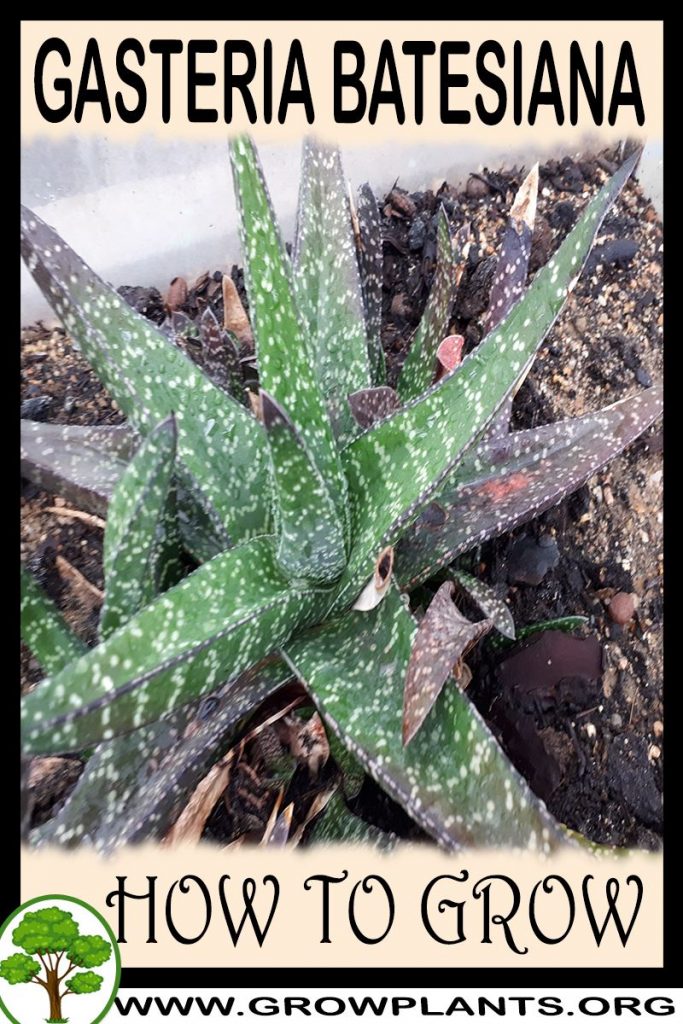
Plant Profile & Key Characteristics
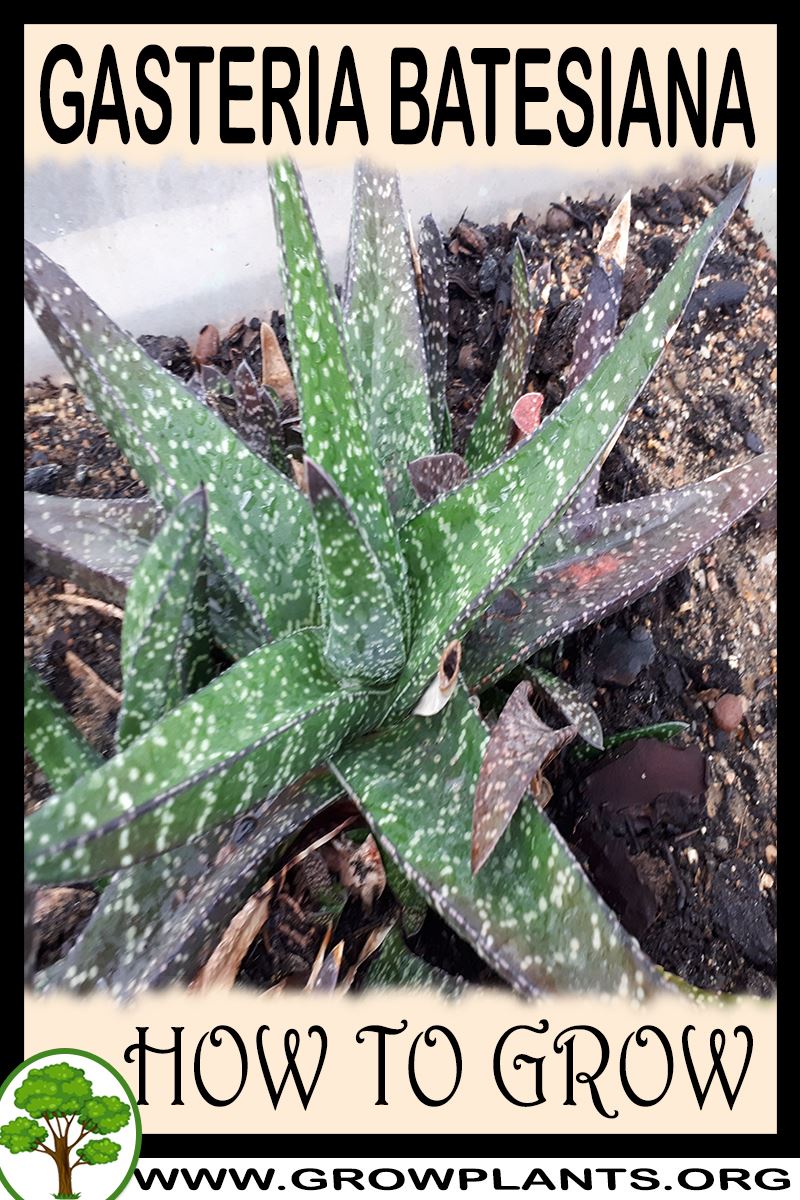
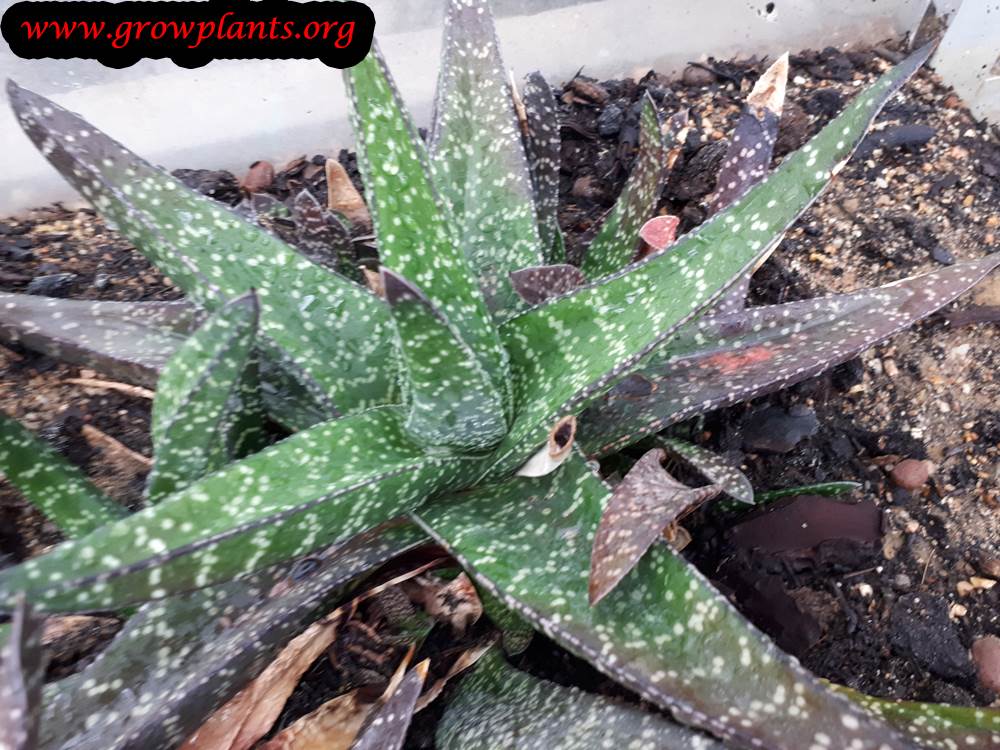
Overview: Gasteria batesiana is a slow-growing evergreen leaf succulent forming a low rosette of thick, tongue-shaped leaves 5-9 cm (2-4 in) across. A drought-tolerant ornamental grown as a houseplant or rockery plant, it is valued for its dark, mottled, textured foliage.
Quick Specifications
| Specification | Attribute |
|---|---|
| Plant Type / Life Cycle | Perennial (leaf succulent) |
| Foliage Type | Evergreen |
| Mature Size | 5-9 cm (2-4 in) |
| Growth Rate | Slow |
| Root System | Shallow, fibrous |
| Toxicity | Non-toxic (listed pet-safe) |
| Hardiness | USDA zones 10-12 |
Growth Form & Structure
- Height & Spread: Low rosette 5-9 cm (2-4 in) across; in a pot choose a container about 30-50% larger than the root ball.
- Growth Habit & Form: Stemless rosette of thick, fleshy leaves that offsets into clumps of daughter plants.
- Lifespan & Maturity: Long-lived perennial succulent; slow to reach full size.
Anatomy & Physical Features
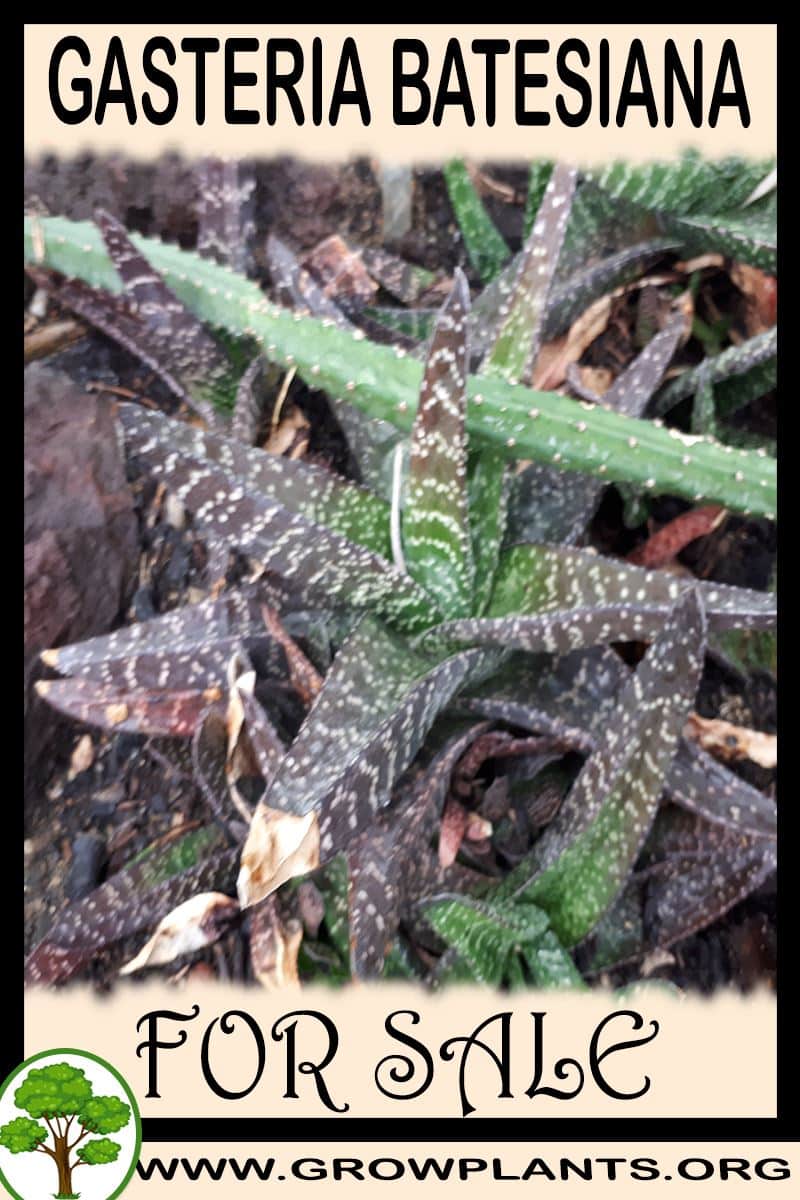
- Leaves & Foliage: Thick, fleshy tongue-shaped leaves, dark green and mottled, often covered in fine tubercle-like bumps.
- Flower Characteristics: Red flowers tipped yellow or green, bell-shaped in clusters on tall stems (full detail in the Bloom guide).
Primary Uses & Landscape Value
- Functional & Ornamental Roles: Ornamental houseplant, windowsill and container succulent for rockeries and dish gardens.
Care Guide: Planting, Soil & Watering
Overview: Gasteria batesiana is a slow-growing, drought-tolerant succulent that does best in bright shade to part shade with just a little direct sun, storing water in its thick, tongue-shaped leaves. It needs a gritty, sharply draining soil and only occasional watering, drying out well between drinks.
Quick Care Requirements
| Requirement | Ideal Condition |
|---|---|
| Planting Season | Warm season (spring, into autumn in warmer zones) |
| Growth Rate | Slow |
| Soil Type | Gritty, sharply draining (cactus/succulent mix) |
| Water Need | Low – let the soil dry between waterings |
Planting & Establishment
- Best Planting Season: Plant in the warm season: spring to summer in cooler, borderline areas (around zone 10a), spring through autumn in zones 10a-11a, and year-round in frost-free zones 11-12. Avoid planting when frost is a risk.
- How to Plant:
- Hole Preparation: Dig a hole just a little wider than the root ball; these are shallow-rooted succulents that resent sitting in a large, damp pocket of soil.
- Soil Amendments: Work coarse sand, grit or perlite into the planting area to guarantee fast drainage, since heavy or waterlogged soil quickly leads to rot.
- Planting Depth: Set the plant so the base of the rosette rests at soil level, and never bury the fleshy leaves or crown, which will rot if kept damp.
- Growth Speed & Expectations: Expect slow, steady growth even in ideal conditions; this stays a compact succulent only a few centimetres across.
Soil, Watering & Drainage Care
- Soil Mix & Drainage Needs: Use a very free-draining medium, such as potting mix or cactus mix with added gravel, lava rock or pebbles for drainage; in containers refresh the mix every few years as its drainage breaks down. Wherever it grows, avoid standing water at the roots to prevent rot.
- Watering Schedule & Technique:
- Young / Newly Planted: Water lightly after planting and then only sparingly while it settles in, keeping the mix barely moist rather than wet.
- Established: Once established, water deeply but infrequently, always letting the mix dry out completely before watering again.
- Seasonal Adjustments: Cut watering back sharply in winter and cool spells, and water a little more often only during active warm-season growth.
Climate, Light & Hardiness
Gasteria batesiana is a shade-loving succulent suited to Mediterranean, desert, and subtropical climates, or grown indoors as a houseplant elsewhere. It has some frost tolerance for a succulent but performs best where winters stay mild, and it prefers bright shade over strong direct sun.
Quick Climate Specifications
| Climate Zones | Mediterranean, desert, and subtropical climates, or indoors as a houseplant |
|---|---|
| USDA Hardiness Zones | Approximately zone 10–12; in zone 10a, protection is needed during heavy frost |
| Optimal Temp Range | Mild, generally frost-free conditions |
| Cold Damage Begins | Leaves can be damaged during heavy or prolonged frost |
| Approx. Survival Minimum | Can survive light frost, though this is not ideal and heavier frost requires winter protection |
| Frost Tolerance | Low |
| Light Conditions | Full Shade to Half Shade, with about two hours of direct sun tolerated |
Sunlight & Light Exposure
Optimal Light Setup
Bright shade with a small amount of direct sun (around two hours) suits this succulent best.
Direct Sun Requirement
Too much direct sun burns the leaves, so only limited, gentle exposure is recommended.
Shade & Heat Management
Full shade with good ambient light is well tolerated, making this a good choice for shaded succulent beds or indoor spots.
Best Exposure / Orientation
An east-facing or otherwise softly lit position, protected from harsh midday sun, works well.
Temperature Extremes & Hardiness
USDA Hardiness & Regional Limits
Site data places this plant at zone 10–12, with winter protection needed during heavy frost in zone 10a; outside this range, growing it as a container plant that can be sheltered or brought indoors is the practical approach.
Cold Damage & Winter Protection
Provide protection (cover or move indoors) during heavy frost events, even within its general hardiness range.
Frost Sensitivity
Can survive light frost, but this is explicitly noted as better avoided; heavier frost requires active protection.
Extreme Heat Tolerance
Tolerates heat well as a succulent, provided it is shaded from the most intense direct sun.
Wind, Humidity & Microclimate
Microclimate Recommendations
A shaded, sheltered spot with excellent drainage helps this plant handle occasional cold snaps while avoiding sun scorch.
Growing in Pots, Balconies & Indoors
Gasteria batesiana is a small, shade-tolerant succulent (5-9 cm / 2-4 in) that the grower confirms makes a good houseplant. Its low light needs – it actually prefers shade to full sun – make it one of the easier succulents for a windowsill or bright indoor spot, and it thrives in a small, free-draining pot for years.
Quick Details
- Container Size: Small – 30-50% larger than the root ball (or a small pot with the roots trimmed at planting)
- Indoor Suitability: A genuinely good houseplant
- Best Spot: Bright shade to half shade; about two hours of gentle sun is ideal, but strong sun scorches the leaves
- Soil & Drainage: Very free-draining cactus/succulent mix; sharp drainage is essential
- Watering in Pots: Sparing – let it dry out between waterings; overwatering is the main killer
Indoors & On the Windowsill
- A true houseplant: Unusually for a succulent it does not demand blazing sun, so a bright indoor spot or an east/north sill suits it well. A ready-made cactus and succulent soil mix provides that structure without mixing it yourself.
- Care: Give it bright light with just a little gentle sun, keep it away from radiators, and water sparingly – always check the pot is not still damp before watering again.
On a Balcony or Patio
- Light & shelter: In warm climates it can sit outside in bright shade with a couple of hours of soft sun; keep it out of harsh midday sun and heavy rain.
Choosing the Pot, Soil & Long-Term Care
- Pot & drainage: A pot only 30-50% larger than the root ball, with strong drainage holes (or keep it in a small pot and trim the roots when planting). Never leave it sitting in water. Terracotta breathes and dries faster, which suits succulents.
- Potting mix: A potting mix or dedicated cactus mix; add gravel, lava rock, or pebbles to sharpen drainage.
- Feeding: Feed only lightly in the growing season; succulents need little.
- Repotting: Drainage declines as the mix ages, so refresh it every few years rather than letting it break down.
Fertilizing & Feeding
A light feeder – like most succulents, this slow-growing Gasteria needs only occasional, diluted, low-nitrogen feeding, and it is far more often harmed by overwatering than by too little fertilizer.
Quick Fertilizing Specs
| Feeding Level | Light feeder |
|---|---|
| young_feeding | Very light, diluted feeding once a young plant is actively rooted |
| mature_feeding | Occasional light, low-nitrogen feeding during active growth only |
| Main Nutrient Priority | Low-nitrogen nutrition that favors sturdy, compact growth over rapid leafy growth |
| Best Feeding Period | Warm-season active growth |
| Organic Options | A well-diluted organic succulent feed can substitute for a synthetic low-nitrogen formula |
| Reduce/Stop Feeding | Stop feeding during the dormant or slow-growth season |
Feeding by Growth Stage
Active Growth
Support slow, steady leaf development during the warmer active-growth months without pushing this naturally slow succulent
| Nutrient direction | A light, low-nitrogen feed is plenty – like most succulents, this Gasteria stores what it needs and grows slowly by nature |
|---|---|
| Timing | Warm-season active growth |
| Frequency | Occasional light feeding is enough; minimal feeding suits this slow grower well |
| Fertilizer types | A diluted, low-nitrogen succulent or cactus feed applied to already-moist soil |
| Precautions | Only feed when the soil is already moist from watering, and keep the dose light to avoid burning the shallow root system |
Dormant Rest
Let the plant rest through its slow season without encouraging tender growth it can’t support
| Nutrient direction | None – withhold fertilizer during the dormant rest period |
|---|---|
| Timing | Cooler months or whenever growth visibly slows |
| Frequency | No feeding at this stage |
| Fertilizer types | No feeding at this stage – resume light feeding only once active growth clearly resumes |
| Precautions | Do not fertilize a dormant or slow-growing plant; unused nutrients build up as salts in the shallow root zone |
Nutrient Deficiency Signs & Corrections
Leaves grow pale and elongated rather than the usual thick, compact rosette form
| Possible causes | insufficient light causing stretching that looks like a nutrient problem, nitrogen deficiency in very depleted potting mix over a long period, overwatering encouraging soft, elongated growth |
|---|---|
| Appears first on | newest leaves at the rosette center |
| What to check | light exposure, time since last repotting or feeding, watering frequency |
| Possible correction | Increase light first, since stretching is usually a light issue rather than a feeding one, and only adjust feeding if soil has gone truly depleted |
Leaf tips brown and die back while the rest of the leaf stays firm
| Possible causes | fertilizer or mineral salt buildup from over-feeding or hard water, underlying root rot from overly wet soil, natural aging of the oldest outer leaves |
|---|---|
| Appears first on | tips of older, outer leaves |
| What to check | feeding frequency and strength, soil drainage and moisture history, whether new leaves are unaffected |
| Possible correction | Cut back on feeding frequency and flush the potting mix occasionally with plain water to clear built-up salts |
Leaves look soft, swollen, or slightly translucent rather than firm
| Possible causes | overwatering, far more likely than any nutrient deficiency in this drought-adapted plant, poorly drained soil holding excess moisture around the roots, root rot developing from consistently wet conditions |
|---|---|
| Appears first on | lower or older leaves first |
| What to check | watering frequency, soil drainage and mix composition, root condition if the plant can be unpotted |
| Possible correction | Let the soil dry out fully between waterings and improve drainage rather than adjusting fertilizer |
Pruning, Training & Seasonal Maintenance
Gasteria batesiana is a small, slow-growing rosette leaf succulent, so it does not tolerate structural pruning of any kind – there is no stem or branch framework to shape, and cutting into healthy tissue only creates an open wound with no benefit. What this species needs instead is periodic removal of old or dead lower leaves, the spent bloom stalk after flowering, and prompt removal of any infected leaf to stop rot from spreading through the tight rosette.
Quick Pruning & Maintenance Specs
| Pruning Tolerance | Low (no structural pruning; maintenance removal only) |
| Primary Pruning Window | All year, as needed |
| Secondary Maintenance Window | After flowering, to remove the spent bloom stalk |
| Typical Frequency | Occasional, only when a leaf or stalk actually needs removing |
| Main Objective | Remove dead/old leaves, spent bloom stems, and any infected tissue |
| Young Plant Priority | Leave untouched; young rosettes need every leaf while establishing |
| Mature Plant Priority | Clear old lower leaves and spent bloom stalks; watch for and excise any rot promptly |
| Best Tool Type | A clean, sharp knife or precision snips sized to the small leaf base |
| Avoid Heavy Pruning During | Not applicable – this species is never structurally pruned |
Pruning by Plant Age & Size
Newly Established
Do not remove any leaves from a young or recently potted rosette unless they are clearly dead; at only 5–9cm across, this species has little to spare and needs its full leaf set to grow.
Young / Formative
No training system applies to a rosette succulent of this type – there is no stem to stake or shape.
Mature / Established
On a mature rosette, the recurring task is removing the lowest leaves once they naturally shrivel or brown, cutting off the spent flower stalk once bloom finishes, and offsetting daughter rosettes (pups) if a single-rosette look or propagation is wanted.
Special Growth to Remove
- Old, shriveled, or fully dead lower leaves.
- The spent bloom stem after the red-and-yellow/green bell flowers finish.
- Any infected leaf – cut out promptly at the first sign of rot or disease rather than waiting, since on a tightly packed rosette an infected leaf can spread to healthy tissue if left in place.
- Offsets (daughter rosettes) around the base, which can be left to form a clump or removed and used for propagation.
Container & Small-Space Pruning
This species is most often grown in a small pot or as a houseplant; container culture does not change the pruning approach, but good drainage and avoiding overwatering matter more than pruning itself for keeping leaves rot-free in the first place.
Tools
- A clean, sharp knife (or a grafting-type blade) for cutting a leaf or offset cleanly at its base.
- Precision snips for the thin spent bloom stalk.
Tool Hygiene & Disease Risk
High-risk – when removing an infected or rotting leaf, disinfect the blade before and after the cut so rot organisms are not carried to the next healthy leaf or to another plant; for routine dead-leaf and bloom-stalk removal on clean, healthy tissue, ordinary clean-tool hygiene is sufficient.
Cut Placement & Technique
Cut a leaf close to its base rather than partway along the blade, and let any cut surface dry and callus for at least 24 hours before it contacts moist soil, which helps prevent rot from entering the wound.
Heavy Pruning & Rejuvenation
Not applicable – Gasteria batesiana does not tolerate or benefit from hard structural pruning or rejuvenation cuts; an old or leggy-looking specimen is better propagated fresh from a leaf or offset than cut back.
Post-Pruning Care
After any cut, keep the plant on the dry side for a few days so the wound can callus before watering resumes, and keep it out of direct hot sun during that time to avoid stressing the cut tissue.
Common Pruning Mistakes
- Cutting off healthy green leaves for a "neater" look, rather than leaving them until they naturally decline.
- Leaving a rotting or infected leaf in place too long, letting it spread to neighboring leaves.
- Using an unsterilized blade on rotten tissue and then reusing it on a healthy leaf or another plant.
When NOT to Prune
Avoid any cutting while the plant is actively flowering unless the stalk is fully spent, and avoid removing leaves purely for shaping, since this species has essentially no tolerance for cosmetic structural pruning.
Recommended Tools (by task)
- grafting_knife – for clean, sterile cuts when removing an infected leaf or taking an offset/leaf for propagation, minimizing rot risk on this succulent’s soft tissue.
- blade_disinfectant – to sterilize the blade before and after cutting any diseased or rotting material.
Propagation Guide
Gasteria batesiana is easiest to propagate from its own daughter (offset) plants, which the site notes is the simplest route, though the detailed leaf- and stem-cutting method the site describes also works well; seed is possible too but slower. Overall propagation is easy.
Quick Propagation Specs
| Best Propagation Method | Daughter plants (offsets) |
| Alternative Methods | Leaf cuttings; stem cuttings; seed |
| Propagation Difficulty | Easy |
| Seed True-to-Type | Cultivar/variegation-dependent – variegated individuals may not come true from seed |
| Vegetative True-to-Type | Yes |
| Best Propagation Season | Late spring to early summer outdoors; possible indoors year-round depending on temperature |
| Cutting Rooting Time | A few weeks to about a month for roots to begin |
| Seed Sowing Depth | Surface sow – seed is very fine |
Stem Cuttings
Cutting Type
Stem cuttings, prepared the same way as leaf cuttings (see below).
Best Timing
Better to start in late spring to early summer, though it can be done indoors at other times depending on the temperature in the house.
Cutting Preparation
If cut with a sharp tool (as is typical for a stem), let the cut surface heal for a few days before planting.
Rooting Setup
Plant the callused cutting in well-drained soil; water every few days, letting it dry out somewhat between waterings but not fully dry.
Rooting Hormone
Not specified as necessary by the site; Gasteria generally roots without it, though it may speed the process along.
Rooting Time
After a few weeks to about a month, roots begin to form.
Leaf & Root Cuttings
Leaf cuttings are prepared the same way as stem cuttings. Remove a leaf at its base, preferably by hand rather than with anything sharp, and wait at least 24 hours for the wound to callus before planting (allow a few days if it was cut with a sharp tool). Plant in well-drained soil and water on the same every-few-days, dry-between-waterings schedule; roots typically begin within a few weeks to a month. As with many variegated succulents, leaf cuttings taken from a variegated individual may not reliably reproduce the variegated pattern this species can show – offsets are the more dependable way to keep a particular variegated form true.
Division, Offsets, Pups & Suckers
The site notes it is easier to start new plants from daughter plants (offsets) than from cuttings. Where possible, wait until an offset has developed its own roots, or at least a firm base, before separating it from the parent for the best success. Pot separated offsets into the same well-drained soil used for the parent plant and water sparingly until established.
Bloom & Flower Guide
Quick Details
- Bloom Season: Spring to summer
- Flower Appearance: Curved red flowers tipped yellow to green, in a bell/stomach shape, dangling in clusters on a slender stalk
- Edibility: Not eaten – an ornamental succulent (non-toxic to pets)
Detailed Blooming Overview
Gasteria batesiana sends up a slender, arching raceme hung with curved, swollen flowers – the puffed ‘stomach’ shape gives the genus its name (gaster is Latin for stomach). Each flower is red at the base and fades to yellow or green at the mouth, and is full of nectar; in habitat sunbirds work the blooms from spring into summer.
Flower Characteristics
- Curved, bell/stomach-shaped flowers
- Red with yellow to green tips
- Dangling in clusters along a wiry, arching stalk
Bloom Care & Thinning
- Managing the bloom: Nothing is needed; the flower stalk is slender and undemanding.
- After flowering: Cut the spent raceme at the base once the last flowers drop.
- Pollination: Nectar-rich and friendly to nectar-feeding birds and insects.
Pests, Diseases & Troubleshooting
Overview: Gasteria batesiana is a slow, tough succulent with very few insect enemies – the real killer is overwatering, not bugs. Its thick leaves store water, so root and basal rot from soggy mix is the number-one cause of death, followed by sunburn in harsh light and cottony mealybugs. Grow it lean: gritty, fast-draining mix, cautious watering, and bright but filtered light, and it is almost trouble-free.
Quick Troubleshooting Overview
| Issue / Pest | Main Symptom | Primary Solution |
|---|---|---|
| Mealybugs | White cottony fluff in leaf folds and on roots | Wipe/alcohol, systemic-free soil check, oil |
| Scale insects | Small brown bumps on leaves | Scrape off, dab with alcohol, horticultural oil |
| Fungus gnats | Tiny black flies from wet mix; larvae in soil | Let mix dry; sticky traps; reduce watering |
| Root/basal rot | Soft, mushy, browning base – the #1 killer | Cut back watering; repot into dry gritty mix |
| Sunburn | Bleached white or brown scorched patches | Shade from harsh midday sun; acclimatise slowly |
| Black leaf spot | Dark cosmetic fungal spots on leaves | Improve airflow; keep leaves dry; remove leaf |
Common Pests & Management
- Mealybugs (incl. root mealybug) (Pseudococcus / Rhizoecus spp.):
- Symptoms: The main pest: white cottony tufts wedged into the tight leaf overlaps and crown, or – easily missed – white waxy root mealybugs coating the roots and inner pot wall, causing slow decline. Both leave sticky honeydew.
- Prevention & Control: Dab visible mealybugs with a cotton bud dipped in rubbing alcohol and wipe out the leaf folds. At every repot, check the roots; if root mealybugs are present, wash all soil off, trim damaged roots, and repot into fresh dry mix in a clean pot. Horticultural or neem oil helps, but keep it out of the crown where it can trap water.
- Scale insects (Diaspididae / Coccidae):
- Symptoms: Small, flat brown or grey limpet-like bumps clinging to leaves, sometimes with honeydew from soft scales. Slow to spread but persistent.
- Prevention & Control: Scrape off gently with a fingernail or dab with alcohol. Wipe leaves clean and isolate affected plants. A light horticultural-oil wipe smothers crawlers; repeat to catch newly hatched ones.
- Fungus gnats (Bradysia / Sciaridae):
- Symptoms: Tiny black flies drifting up from the soil surface; their larvae live in constantly moist mix and can nibble fine roots of a stressed plant. A symptom of overwatering more than a primary pest.
- Prevention & Control: Let the top of the mix dry out fully between waterings – the single best control. Use a gritty, fast-draining medium, add a layer of top-dressing grit, and set yellow sticky traps. A Bacillus thuringiensis israelensis (Bti) soil drench targets the larvae if needed.
- Spider mites (Tetranychus spp.):
- Symptoms: Uncommon on Gasteria, but hot, dry, stagnant air can bring fine stippling, rusty patches and faint webbing on the leaves.
- Prevention & Control: Improve air movement, wipe or rinse the leaves, and keep the plant unstressed. A gentle miticidal oil clears rare outbreaks; avoid soaking the crown.
- Slugs & snails (Gastropoda):
- Symptoms: Rasped, scarred patches and chewed edges on the fleshy leaves, mainly on plants kept outdoors in mild weather; slime trails give them away.
- Prevention & Control: Hand-pick at night, remove hiding places, and keep pots off damp ground. Copper tape around pots, wool pellets or iron-phosphate bait protect outdoor plants; indoors they are rarely an issue.
Diseases & Fungal Issues
- Root, basal & soft rot (Fusarium, Pythium, Erwinia):
- Symptoms: The number-one killer of Gasteria: the base or lower leaves turn soft, translucent, brown or black and mushy, often with a foul smell, after overwatering, a cold-and-wet spell, or water pooling in the crown. Roots blacken and collapse.
- Treatment & Management: Prevention is the cure – gritty, fast-draining mix, pots with drainage, cautious watering (let the mix dry well, and keep nearly dry in cold or dormant periods), and never let water sit in the crown. If rot starts, unpot, cut away all soft tissue back to firm green, dust with sulfur, dry the cuts, and re-root the healthy top in dry mix. Discard hopelessly rotted plants.
- Black spot / leaf fungal spot (Alternaria / fungal complex):
- Symptoms: Sunken or raised dark spots and blotches on the leaves – largely cosmetic, triggered by water sitting on foliage, high humidity and poor airflow, sometimes following pest or sun damage.
- Treatment & Management: Keep foliage dry, water at the base, and improve ventilation and light. Remove badly marked leaves. Spots are permanent on existing leaves but stop spreading once conditions dry out; a copper or sulfur spray helps in a persistent outbreak.
- Botrytis (grey mould) (Botrytis cinerea):
- Symptoms: Fuzzy grey mould on damaged tissue or crowded leaves in cold, damp, still conditions, causing soft browning.
- Treatment & Management: Increase airflow and warmth, cut off affected tissue, and reduce humidity and overhead moisture. Good ventilation usually stops it without chemicals.
Growing Difficulties & Abiotic Problems
- Overwatering rot (the killer):
- Cause & Symptoms: By far the most common problem: soggy, poorly drained mix suffocates the roots and invites rot, showing as yellowing, translucent, mushy leaves and a soft base – worse in cold weather and dormancy.
- Correction Strategy: Water only when the mix is dry, less in winter, and always in a gritty, free-draining medium with drainage holes. When in doubt, underwater – Gasteria tolerates drought far better than wet feet.
- Sunburn / sun scorch:
- Cause & Symptoms: Gasteria naturally grows in shade or dappled light, so sudden strong sun bleaches leaves white or scorches brown, sunken patches that never recover.
- Correction Strategy: Give bright, indirect or lightly filtered light and shade from fierce midday sun. Move plants to stronger light gradually over weeks to let them acclimatise.
- Etiolation (stretching):
- Cause & Symptoms: Too little light makes the rosette stretch, pale and grow loose and floppy, losing its tight compact form and markings.
- Correction Strategy: Move to brighter (but not scorching) light. Stretched growth won’t retract, but new growth will be compact; rotate the plant for even exposure.
- Cold damage & edema:
- Cause & Symptoms: Frost turns leaves translucent and mushy; cool, wet, dim spells can also cause edema – corky bumps where roots take up more water than the leaves can use.
- Correction Strategy: Keep above ~5°C and dry in winter. Ease off watering in cool, low-light conditions to prevent edema and cold-plus-wet rot.
What Helps – Products & Tools
Gasteria needs very little. Keep rubbing alcohol and cotton buds plus horticultural or neem oil for mealybugs and scale, yellow sticky traps and a Bti drench for fungus gnats, and iron-phosphate bait for outdoor slugs. The most valuable ‘products’ are a gritty, fast-draining succulent/cactus mix, pots with drainage, sulfur powder to dust rot cuts, and restraint with the watering can. Follow the label and spray oils in the evening to protect pollinators.