Plant Profile & Key Characteristics
Overview: Clematis vitalba (‘old man’s beard’) is a vigorous perennial climbing vine, 2–4 m (6–12 ft), evergreen or cold-deciduous, grown as an ornamental hedge/screen for its fragrant flowers and decorative seed-heads. It suits subtropical, Mediterranean and temperate climates.
Quick Specifications
| Specification | Attribute |
|---|---|
| Plant Type / Life Cycle | Perennial (woody climbing vine) |
| Foliage Type | Deciduous or evergreen (variety-dependent) |
| Mature Size | 2–4 m tall/long (6–12 ft) |
| Growth Rate | Fast to moderate |
| Toxicity | Toxic if eaten – contains protoanemonin; sap can irritate skin and mucous membranes |
| Hardiness | USDA zone 4–9 |
Growth Form & Structure
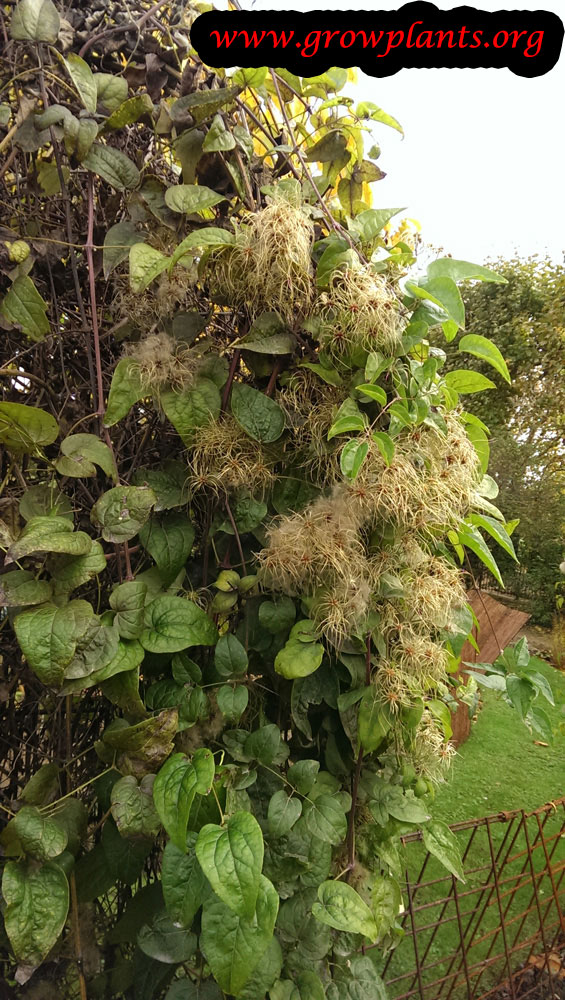
- Height & Spread: Climbs 2–4 m (6–12 ft) on a support; also grows in containers with a trellis.
- Growth Habit & Form: Twining/leaf-stalk climbing vine trained on trellis, fence, pergola or through shrubs; can be vigorous.
- Lifespan & Maturity: Long-lived perennial climber that reaches flowering size quickly.
Anatomy & Physical Features
- Leaves & Foliage: Green, deltoid, trifoliate leaves with serrated edges.
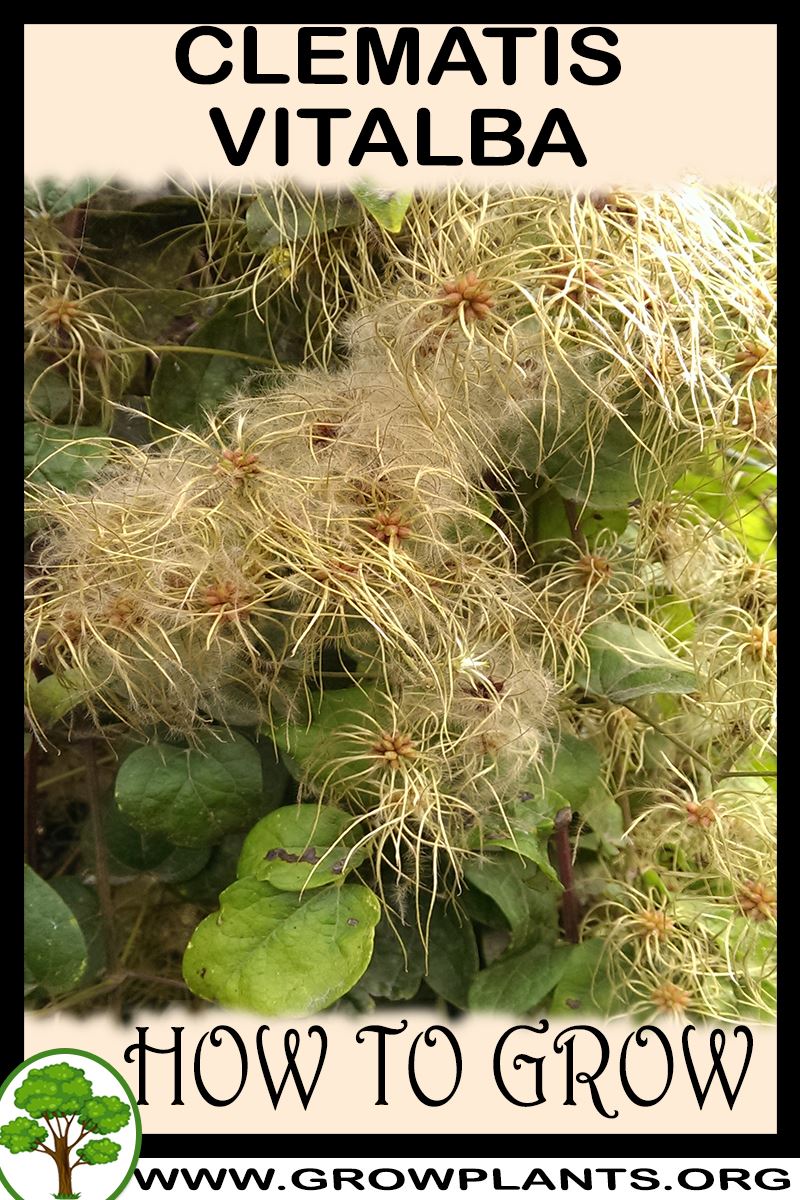
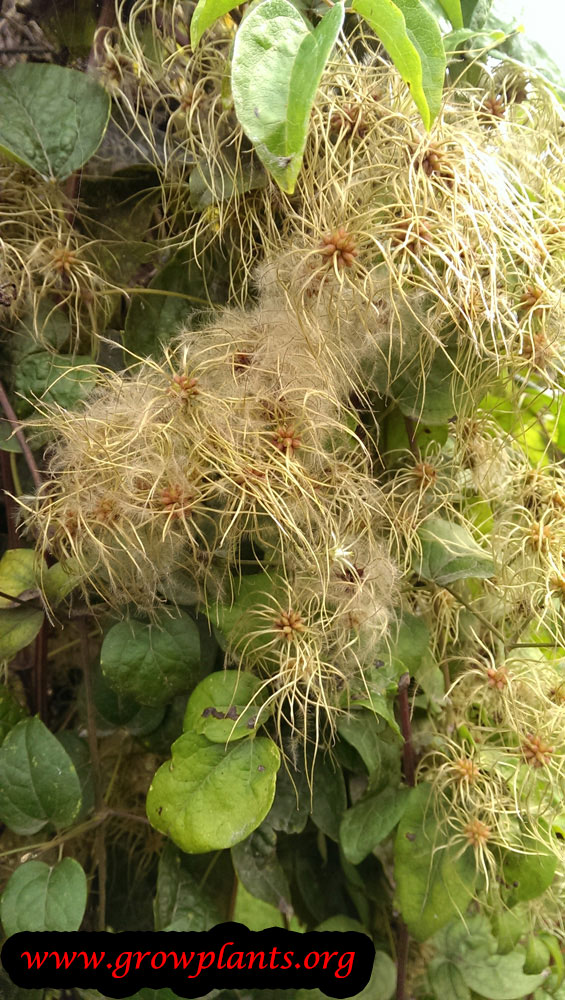
- Flower Characteristics: Small, fragrant white flowers with four tepals and many stamens borne in clusters, followed by silky feathery seed-heads (‘old man’s beard’) (see the Bloom guide).
Primary Uses & Landscape Value
- Functional & Ornamental Roles: Ornamental flowering climber for trellises, fences, pergolas and screens; usable as an informal hedge and in large containers.
Care Guide: Planting, Soil & Watering
Overview: The Clematis vitalba (old man’s beard) is a vigorous perennial climbing vine that flowers best with its top in full sun. It likes a fertile, well-drained soil and steady, moderate moisture, with one signature preference: cool, shaded roots – keep the base shaded and mulched while the top climbs into the light.
Quick Care Requirements
| Requirement | Ideal Condition |
|---|---|
| Planting Season | Winter, spring or summer |
| Growth Rate | Fast to moderate |
| Soil Type | Fertile, well-drained soil; roots kept cool and shaded |
| Water Need | Moderate – keep evenly moist, never waterlogged |
Planting & Establishment
- Best Planting Season: Plant during the cooler, active seasons – winter, spring or summer – while the ground is workable and not baking hot, giving the roots time to establish before flowering.
- How to Plant:
- Hole Preparation: Dig a hole wider and a little deeper than the root ball, and set up a trellis or support at planting time for the vine to climb.
- Soil Amendments: Work plenty of compost and organic matter into the backfill – clematis are hungry plants that reward a rich, well-drained soil.
- Planting Depth: Unusually, set clematis a little deeper than it grew in its pot, with the crown about 5–8 cm below the surface; this encourages strong shoots and helps it recover from clematis wilt. Mulch to keep the roots cool.
- Growth Speed & Expectations: A fast to moderate grower and a vigorous climber that can put on several metres of growth, so give it sturdy support from the outset.
Soil, Watering & Drainage Care
- Soil Mix & Drainage Needs: Clematis want a rich but sharply drained soil, never waterlogged. Follow the classic rule of ‘cool feet, warm head’: shade the root zone with mulch, low planting or a neighbouring plant, while the vine climbs its trellis into the sun.
- Watering Schedule & Technique:
- Young / Newly Planted: Keep the soil evenly moist while the young vine establishes – water deeply and regularly, and don’t let the root zone dry out in its first season.
- Established: Once established, water moderately but deeply, especially in dry spells; a mulched, shaded root run holds moisture and keeps the roots cool.
- Seasonal Adjustments: Water more in hot, dry weather while the vine is in active growth and bloom; reduce in cool or wet periods to avoid soggy roots.
Climate, Light & Hardiness
Clematis vitalba is a full-sun flowering vine suited to subtropics, Mediterranean, temperate climates, either evergreen or losing its leaves where winters turn cold. Its winter-cold tolerance is defined by its stated hardiness range, and cold triggers its deciduous habit rather than damaging the plant within that range.
Quick Climate Specifications
| Climate Zones | Subtropics, mediterranean, temperate |
|---|---|
| USDA Hardiness Zones | Zones 4–9 |
| Frost Tolerance | Moderate to high within its hardy range (deciduous response to cold) |
| Light Conditions | Full sun |
Sunlight & Light Exposure
Optimal Light Setup
Needs full sun on the top growth for strong flowering; many clematis appreciate a shaded, cool root zone even while the vine itself climbs into the sun.
Temperature Extremes & Hardiness
USDA Hardiness & Regional Limits
Reliably hardy through its stated zone range; in the colder part of that range it behaves as cold-deciduous, losing its leaves and resprouting from woody stems or the crown each spring.
Cold Damage & Winter Protection
Losing leaves with the onset of cold is a normal seasonal response, not damage, within the plant's hardy zones; further into hardier zones than stated is where actual winter kill becomes a risk.
Growing in Pots, Balconies & Indoors
Old man’s beard (Clematis vitalba) is a rampant, woody climber that scrambles 2-4 m and more – a wild, vigorous vine rather than a houseplant. It can be grown in a large container with a strong support, but it needs regular hard pruning to stay in bounds.
Quick Details
- Container Size: A large container, 30-50 L (8-12 gal), for a climber of 2-4 m; give it a sturdy trellis or obelisk
- Indoor Suitability: Not a houseplant (the grower marks it “No”) – a large, sun-loving woody climber
- Best Spot: Full sun for the top growth; it likes its roots cool and shaded
- Soil & Drainage: Rich, free-draining mix; keep the root zone cool
- Watering in Pots: Average – keep evenly moist while in growth; do not let a pot bake dry
Indoors & On the Windowsill
- Houseplant limits: The grower marks it as not suitable indoors. It is a large, hardy climber needing full sun, a big support and a cold winter rest – impossible on a windowsill.
- Vigour note: It is a known rampant spreader; keeping it potted and pruned hard helps stop it seeding around and swamping other plants.
On a Balcony or Patio
- Light & wind: Give the top full sun but shade the pot (or slip it behind other pots) to keep the roots cool. Its dense growth catches wind, so anchor the support firmly.
- Practicalities: A heavy, vigorous plant – use a large, stable container and cut it back hard each year.
Choosing the Pot, Soil & Long-Term Care
- Pot & drainage: A large 30-50 L pot with strong drainage holes; skip a standing water saucer to avoid root rot. Shade the pot to keep roots cool.
- Potting mix: A rich, well-aerated, free-draining mix.
- Feeding: Feed through the growing season, as vigorous potted climbers leach nutrients quickly with frequent watering.
- Repotting: Refresh the mix every couple of years and prune hard each late winter to control size and spread.
Fertilizing & Feeding
A vigorous flowering vine that benefits from balanced feeding through spring growth and into its summer-to-autumn bloom, then a rest from feeding once it goes dormant for winter.
Quick Fertilizing Specs
| Feeding Level | Moderate – steady balanced feeding through the growing season supports strong bloom without encouraging feeding once the vine is dormant. |
|---|---|
| young_feeding | Newly planted vines benefit from a balanced feed to help them establish and begin climbing their support. |
| mature_feeding | Established vines do well on balanced feeding each spring as new growth resumes, continuing lightly through the bloom period. |
| Main Nutrient Priority | Balanced feeding rather than a phosphorus-heavy ‘bloom booster’ – adequate nitrogen alongside other nutrients supports flowering just as well. |
| Best Feeding Period | From the start of spring growth through the summer-to-autumn bloom period. |
| Organic Options | A layer of compost or well-rotted manure around the base each spring supports steady growth. |
| Soil pH | Prefers a well-drained soil that is not strongly acidic; tolerates a range of soil types. |
Feeding by Growth Stage
Spring Growth Resumption
Support the flush of new vine growth as the plant comes out of winter dormancy.
| Nutrient direction | A balanced feed to fuel new shoots and foliage |
|---|---|
| Timing | As new growth resumes in spring |
| Frequency | A light to moderate feeding as growth resumes is usually enough to carry the vine into bloom |
| Fertilizer types | A balanced complete fertilizer applied around the base, or a compost top-dressing |
| Precautions | Avoid piling fertilizer against the stem base; apply around the root zone instead to prevent stem damage. |
Summer-to-Autumn Bloom
Support the vine’s extended summer-into-autumn flowering display.
| Nutrient direction | Continue balanced feeding rather than switching to a high-phosphorus ‘bloom’ product |
|---|---|
| Timing | Through the summer and into autumn while the vine is in flower |
| Frequency | Light, occasional feeding through bloom is enough; there is no need to increase feeding to encourage more flowers |
| Fertilizer types | A balanced complete fertilizer, applied lightly during the bloom period |
| Precautions | Do not switch to a high-phosphorus fertilizer for ‘more blooms’ – balanced feeding with adequate nitrogen supports flowering just as well and avoids nutrient imbalance. |
Winter Dormancy
Let the vine rest through its winter dormant period, which also lines up with its autumn-to-winter pruning window.
| Nutrient direction | None – withhold fertilizer while the vine is dormant |
|---|---|
| Timing | Through autumn pruning and the winter dormant period |
| Frequency | No feeding needed at this stage |
| Fertilizer types | No feeding needed while the vine is dormant |
| Precautions | Do not fertilize a dormant vine; feeding during dormancy does not help growth and can encourage tender growth right before pruning or cold weather. |
Nutrient Deficiency Signs & Corrections
Pale green leaves and weak, thin new shoot growth in spring
| Possible causes | Nitrogen deficiency from insufficient spring feeding, Compacted or root-bound soil at the base limiting nutrient uptake, Competition from surrounding shrubs or vines for nutrients |
|---|---|
| Appears first on | New spring shoots and the oldest leaves on the vine |
| What to check | Soil condition and root space around the base, Feeding history through the previous growing season, Competing roots from nearby plantings |
| Possible correction | Resume balanced spring feeding around the root zone rather than against the stem base. |
Vigorous leafy growth but a noticeably light bloom display
| Possible causes | Overfeeding with a nitrogen-heavy fertilizer favoring leaves over flowers, Incorrect pruning timing removing the wood that would have flowered, Insufficient sunlight reaching the vine |
|---|---|
| Appears first on | Across the whole vine rather than individual leaves |
| What to check | Recent fertilizer type and feeding frequency, When and how the vine was last pruned, Hours of direct sun the planting receives |
| Possible correction | Switch to balanced rather than nitrogen-heavy feeding and confirm pruning timing matches this species’ bloom habit. |
New leaves turn pale yellow while the veins stay green
| Possible causes | Iron deficiency triggered by alkaline or poorly drained soil, Waterlogged roots reducing nutrient uptake, Soil compaction restricting root growth |
|---|---|
| Appears first on | Newest leaves at the growing tips |
| What to check | Soil pH and drainage around the base, Recent overwatering or standing water, Soil compaction near the roots |
| Possible correction | Improve drainage and, where soil is markedly alkaline, consider a chelated iron product applied per its label. |
Pruning, Training & Seasonal Maintenance
Clematis vitalba (Old Man’s Beard) is a vigorous, woody-based deciduous climbing vine that flowers on the CURRENT season’s new growth, so its one major structural prune is safest and most effective in late winter to very early spring, just before growth resumes – cutting then sacrifices none of the coming bloom. Doing it that late, rather than in autumn, also lets the plant’s fluffy silvery seed heads (the ‘beard’ the plant is named for) stay decorative through winter. It tolerates hard, even severe, cutting back given its aggressive, invasive growth habit.
Quick Pruning & Maintenance Specs
| Pruning Tolerance | High |
| Primary Pruning Window | Late winter to very early spring, just before new growth starts |
| Secondary Maintenance Window | Ongoing summer trimming to rein in aggressive spread |
| Typical Frequency | One hard annual prune plus periodic summer control |
| Main Objective | Contain invasive spread and renew the flowering wood (bloom is on new growth) |
| Young Plant Priority | Establish a climbing support; pinch tips to branch low down |
| Mature Plant Priority | Hard annual cut-back to a low framework, since bloom forms on the resulting new growth regardless |
| Best Tool Type | Bypass secateurs for stems, loppers for older woody base growth |
| Avoid Heavy Pruning During | Active summer growth flush, and right before the first hard frost |
Pruning by Plant Age & Size
Newly Established
Minimal – remove only damaged or weak growth, and put a support structure in place for it to begin climbing (it climbs by twining leaf-stalks).
Young / Formative
Train several strong shoots onto the support in the desired direction; pinch tips to encourage branching low on the plant rather than a single bare runner.
Mature / Established
The standard approach for this vigorous type is an annual hard renewal cut-back (most or all stems cut to roughly 30-60cm above ground, or to a permanent low framework), since it reliably flowers on the resulting season’s new growth. Where it covers a large informal support (an old tree, a long fence line), thinning congested growth instead of a full hard cutback can also work.
Seasonal Pruning Schedule
- Dormant/Winter (late): the main hard structural cut-back, timed just before growth resumes rather than in autumn, so the seed heads stay ornamental through winter.
- Summer Canopy Management: trim and redirect vigorous new growth away from gutters, structures, or neighbouring plants, given its documented invasive habit.
- Ongoing Sanitary: remove dead or damaged stems as seen.
Flowering & Fruiting Wood
C. vitalba flowers on the current season’s growth – new wood produced after the spring cut – not on wood from the previous year. A hard prune in late winter therefore removes only spent old growth and does not sacrifice the coming bloom; pruning too late, once new growth and flower buds have already formed, will reduce or delay flowering.
Structural Pruning & Training
Height and spread control is the priority given its invasive tendency. Where it is grown over a support, thinning helps prevent it becoming a dense, light-excluding mat that shades out what it is climbing over. Renewal is achieved via the annual hard cut-back described above.
Special Growth to Remove
Given its documented aggressive, invasive habit, cut back any stems that self-layer (root where they touch soil) away from the intended support. During the annual renewal cut, favour vigorous new shoots over old woody growth.
Container & Small-Space Pruning
Container growing is possible per the facts, though it is more typically grown as a large climbing specimen. In a container, the annual hard cut-back is even more important to keep root and top growth in scale with the pot.
Tools
Bypass secateurs for most stems; loppers for thicker old woody growth at the base; soft ties/stakes when training onto a new support.
Tool Hygiene & Disease Risk
Routine to Increased – clematis as a genus can carry clematis wilt (Phoma/Ascochyta clematidina); species types like C. vitalba are generally less susceptible than large-flowered hybrids, but clean, sharp cuts and prompt removal of any dieback (alongside the caterpillar/aphid pressure noted in the facts) reduce risk.
Cut Placement & Technique
Cut back to a strong pair of buds or a node; avoid leaving long stubs that die back. For the annual hard renewal cut, take all main stems down to a consistent low framework height.
Heavy Pruning & Rejuvenation
Well tolerated – this species is routinely cut hard to the base or to a low framework every year (or every few years if left semi-wild) without harming flowering, since bloom forms on the resulting new growth. Expect vigorous regrowth given its fast-to-medium growth rate.
Post-Pruning Care
Normal watering; no extra feeding is needed since regrowth is already vigorous. Watch the flush of tender new growth for aphids and caterpillars, both flagged as pests.
Common Pruning Mistakes
Pruning too early in autumn and losing the winter seed-head display; being too gentle with an inherently aggressive vine and letting it engulf neighbouring plants or structures; letting old tangled growth accumulate instead of renewing it, which produces fewer flowers and a messier plant.
When NOT to Prune
Avoid major cutting back during the summer growth flush as flower buds are forming or opening (it reduces the current display) – save the hard prune for the late-winter window. Avoid heavy pruning right before an expected hard frost on fresh cuts.
Recommended Tools (by task)
- bypass_secateurs – routine cuts on the season’s stems.
- loppers – thicker old basal wood on a mature specimen.
- pruning_saw – only if a very old, thick woody base has built up on a neglected, long-established plant.
- soft_ties_stakes – training young shoots onto a support.
Pruning Troubleshooting
| Problem | Possible Cause | What to Check | Corrective Action |
| Little or no flowering after a hard prune | Pruned too late, after new growth/buds had already formed | Timing of the last prune relative to bud break | Prune earlier next season, before growth resumes |
| Bare, leggy growth low down | Growth not renewed/thinned regularly, all growth pushed to the top | Age of wood at the base | Hard cut-back to force fresh growth low on the plant |
| Dieback on cut stems | Disease entry (clematis wilt) or a blunt/dirty tool | Cut surface and wilting pattern | Recut back to clean healthy wood with a sharp, clean tool; remove affected material |
Propagation Guide
Clematis vitalba is most reliably increased by stem cuttings or ground layering, which root readily on this vigorous vine and preserve the parent plant’s exact form; seed also works and is how the species spreads so freely in the wild, but germination is often slow and uneven. Named forms should always be propagated vegetatively to keep the same character as the mother plant. Overall difficulty is Easy to Moderate.
Quick Propagation Specs
| Best Propagation Method | Stem cuttings or ground layering |
| Alternative Methods | Seed |
| Propagation Difficulty | Easy to Moderate |
| Seed True-to-Type | Yes for the wild species; named forms should be propagated vegetatively to match the mother plant |
| Vegetative True-to-Type | Yes |
| Best Propagation Season | Spring to summer for cuttings and layering; seed can be sown once ripe in autumn/winter |
| Seed Germination Time | Often slow and irregular, sometimes taking several months |
| Cutting Rooting Time | Typically several weeks under warm, humid conditions |
Growing from Seed
Seed Handling & Viability
Seeds ripen attached to a feathery, beard-like plume that aids wind dispersal; this same plume is part of why the vine self-seeds so aggressively where it naturalizes.
Sowing Season
Sow once seed is ripe in autumn or winter, or start in spring.
Germination Conditions
Germination can be slow and staggered; do not judge a sowing to have failed too quickly, and expect emergence to be spread out over time.
Stem Cuttings
Cutting Type
Softwood to semi-ripe stem sections taken during active growth, typically cut as single-node (leaf-bud) cuttings in the manner used for the wider Clematis genus.
Best Timing
Spring through summer.
Cutting Preparation
Take a stem section with one or two nodes, trimming just below a node, and remove excess leaf area to reduce moisture loss.
Rooting Setup
A free-draining, moisture-retentive rooting mix kept humid and out of direct hot sun.
Rooting Hormone
Optional but can improve consistency, especially on semi-ripe wood.
Rooting Time
Typically several weeks.
Air & Ground Layering
A flexible, not-too-woody stem can be bent to the ground and a low section pinned or lightly buried, leaving the growing tip exposed. Light wounding of the buried section can help rooting. Kept moist through the growing season, the layered section roots readily and can be severed from the mother vine and moved once well rooted — a simple, dependable method given how easily this vine roots along its stems.
Bloom & Flower Guide
Quick Details
- Bloom Season: Summer into autumn
- Flower Appearance: Small, fragrant, creamy-white flowers with four petal-like sepals and a boss of many stamens, carried in generous clusters
- Edibility: Toxic – not edible
Detailed Blooming Overview
Old man’s beard is a vigorous climber that smothers itself in froths of small, sweetly scented white flowers through summer and into autumn. What look like four white petals are actually sepals, set off by a central tuft of stamens. As the flowers fade they give way to the silky, feathery seed heads that earn the plant its common name.
Flower Characteristics
- Flat, four-parted flowers about 2 cm across, each with numerous prominent stamens.
- Softly fragrant and borne in loose, abundant clusters along the stems.
- Creamy-white, later followed by the characteristic silvery plumed seed heads.
Bloom Care & Thinning
- Encouraging bloom: Flowers form on the current season’s growth, so it tolerates hard pruning in late winter and still blooms well.
- Keeping it in bounds: This is a fast, self-seeding climber – thin and cut back after flowering to keep it manageable.
- Pollination: The nectar-rich flowers draw bees and other insects.
Bloom Health & Protection
- Clematis wilt: A fungal problem that can collapse flowering shoots suddenly; cutting out affected stems below the damage and improving airflow helps, and a fungicide can be used on valued plants.
- Powdery mildew: A white bloom on leaves and buds in humid, still conditions; better spacing and airflow, or a sulfur-based fungicide, keeps it in check.
Pests, Diseases & Troubleshooting
Overview: Clematis are generally trouble-free but have one signature killer – clematis wilt (Calophoma clematidina), a fungal stem-and-leaf disease that collapses shoots overnight, worst on large-flowered hybrids. As a tough species clematis, this plant is far more resistant to clematis wilt than the big-flowered hybrids and rarely collapses from it. Beyond wilt, expect sap-sucking aphids, earwigs and slugs/snails chewing soft growth, spider mites on hot dry walls, and powdery mildew; most trouble is prevented by planting deep with “cool feet and a warm head” and keeping the plant vigorous.
Quick Troubleshooting Overview
| Issue / Pest | Main Symptom | Primary Solution |
|---|---|---|
| Clematis wilt | Sudden collapse/blackening of shoots | Cut below the lesion; plant deep; keep base cool |
| Aphids | Curled tips, sticky honeydew on new growth | Water blast, soap; encourage ladybirds |
| Earwigs | Ragged holes in petals & young leaves at night | Trap in rolled cardboard/pots; tidy debris |
| Slugs & snails | New shoots grazed to stubs in spring | Barriers/traps; protect emerging shoots |
| Spider mites | Stippled, bronzed leaves on hot walls | Raise humidity, hose; miticide if severe |
| Powdery mildew | White powdery film on leaves/buds | Airflow, sun; potassium-bicarbonate/sulphur |
Common Pests & Management
- Aphids (Myzus persicae, Aphis spp.):
- Symptoms: Clusters of green or black soft-bodied insects on soft new shoots, flower buds and leaf undersides, curling and distorting young growth and leaving sticky honeydew that blackens with sooty mould; they can also spread viruses.
- Prevention & Control: Let ladybirds, lacewings and hoverflies control light numbers; blast colonies off with water and pinch out badly infested tips. Avoid excess nitrogen that fuels soft growth, and manage ants. Insecticidal soap or neem oil deals with heavier outbreaks.
- Earwigs (Forficula auricularia):
- Symptoms: Ragged, irregular holes chewed in petals, buds and soft young leaves, with the damage appearing overnight; earwigs hide in tight crevices, spent flowers and debris by day, and can badly disfigure blooms.
- Prevention & Control: Trap them with rolled corrugated cardboard, or upturned pots stuffed with straw set among the stems, and empty the traps each morning. Clear plant debris and hiding places at the base. Tolerate modest numbers – earwigs also eat aphids – and only intervene when flowers are being spoiled.
- Slugs & snails (Deroceras reticulatum, Cornu aspersum):
- Symptoms: The tender new shoots emerging in spring are grazed to stubs, and slime trails and ragged holes appear on low leaves; a heavy attack on young shoots can set a plant back badly.
- Prevention & Control: Protect emerging shoots with barriers (grit, copper bands, crushed shell), clear damp hiding spots, and set traps (beer traps, scooped grapefruit halves) or hand-pick after dark. Encourage ground beetles, frogs and birds; use iron-phosphate pellets sparingly if needed.
- Spider mites (Tetranychus urticae):
- Symptoms: Fine pale stippling and a dull, bronzed look to leaves, with delicate webbing on undersides, worst on plants grown against hot, dry sunny walls or under glass; leaves yellow and drop from the base up.
- Prevention & Control: Keep roots cool and moist and the plant unstressed, and hose down foliage to raise humidity – mites thrive in hot, dry, dusty conditions. Remove badly affected leaves. Insecticidal soap or a suitable miticide controls a heavy outbreak; treat early.
- Clematis blister / gall mite (Aceria / Eriophyid mites):
- Symptoms: Microscopic eriophyid mites cause small raised blisters, galls or distorted, thickened puckered growth on leaves and buds; damage is usually cosmetic but can deform new growth on a susceptible plant.
- Prevention & Control: Prune out and destroy distorted, galled shoots, and keep the plant vigorous. These mites are hard to reach with contact sprays; horticultural oil or sulphur on affected growth helps, but tolerance and pruning are usually the practical approach.
Diseases & Fungal Issues
- Clematis wilt (leaf & stem spot) (Calophoma clematidina):
- Symptoms: Sudden wilting, blackening and collapse of individual shoots with dark leaf spots and basal stem lesions. Vigorous species clematis like this are highly resistant and seldom badly affected, though stressed stems can occasionally show spotting. (formerly known as Phoma/Ascochyta clematidina).
- Treatment & Management: Plant clematis deep – with the crown 5–8 cm below soil level – so it can re-shoot from below any lesion, and keep the base cool, moist and mulched with the top in sun. At the first sign, cut affected stems right back to healthy tissue (below soil if needed), remove and destroy the prunings, and disinfect tools. Water and feed to keep the plant vigorous; most plants recover and re-grow from the base. A protectant fungicide can be used on valuable plants, but good culture and deep planting are the real defence.
- Powdery mildew (Erysiphe / Podosphaera spp.):
- Symptoms: A white, powdery coating on leaves, stems and flower buds, usually later in the season or in warm days with cool humid nights and poor airflow; heavily affected leaves yellow, distort and drop, and buds may fail to open.
- Treatment & Management: Grow in an airy spot with the roots cool and never drought-stressed (dry roots worsen mildew), and space or prune for airflow. Remove affected leaves. Potassium-bicarbonate, sulphur or a light horticultural-oil spray controls it; choose more resistant types where mildew is a recurring problem.
- Green petal / clematis phytoplasma (Candidatus Phytoplasma spp.):
- Symptoms: Flowers develop green, leaf-like, deformed or streaky petals and fail to colour or open properly, sometimes with distorted, proliferating growth; the disorder is caused by a phytoplasma spread by leafhoppers and is uncommon but untreatable.
- Treatment & Management: There is no cure – remove and destroy affected plants to protect others, and control leafhoppers that spread it. Buy healthy stock and keep plants vigorous; occasional odd green flowers from cold or a sport are harmless and not the same thing.
- Root & stem base rot (Phytophthora / other fungi):
- Symptoms: Wilting, yellowing and dieback caused by rotting roots or crown in cold, heavy, waterlogged soil – sometimes confused with clematis wilt, but here the roots themselves are rotten.
- Treatment & Management: Plant in free-draining soil enriched with organic matter, avoid waterlogged spots, and keep water off a deeply-planted crown while still keeping roots cool with mulch. Improve drainage on heavy ground; there is no chemical rescue once roots have rotted.
- Invasive vigour (not a disease, but a warning):
- Symptoms: This species (“old man’s beard”) is extremely vigorous and self-seeds freely, smothering shrubs and fences and becoming a serious weed in mild climates – its “problem” is more often excess growth than any pest.
- Treatment & Management: Site it where its vigour is wanted, prune hard, and dead-head/cut back before the fluffy seed heads shed to limit self-seeding. Remove unwanted seedlings while young; in regions where it is listed as invasive, choose a better-behaved species instead.
Growing Difficulties & Abiotic Problems
- “Cool feet, warm head” siting:
- Cause & Symptoms: Clematis resent hot, dry roots: a plant with its root zone baking in sun wilts, flowers poorly, drops leaves and becomes far more prone to mildew and mite attack, even when the top is thriving.
- Correction Strategy: Keep the roots cool and evenly moist – mulch deeply, shade the base with low planting, stones or a paving slab, and site the top in sun. Water generously in dry spells, especially for wall-grown and container plants that dry out fast.
- Poor flowering & wrong pruning:
- Cause & Symptoms: Weak or missing flowers often come from too much shade, too much nitrogen (leafy growth, few blooms), a young plant still establishing, or pruning at the wrong time – cutting a spring-flowering type hard removes the flower buds.
- Correction Strategy: Give enough sun, feed in balance (a potassium-rich feed encourages flowers), and be patient in the first year or two. Learn the plant’s pruning group and prune accordingly – many summer hybrids are cut back hard in the dormant season, while early bloomers are only tidied after flowering.
- Leaf scorch & establishment stress:
- Cause & Symptoms: Newly planted, wall-grown or container clematis can scorch and brown at the leaf edges in hot, drying wind or when roots dry out, and may sulk or die back in their first season.
- Correction Strategy: Plant well, water deeply and regularly through establishment, mulch to conserve moisture and cool the roots, and shelter from drying wind. Container plants need a large pot, cool-rooted position and frequent watering.
- Frost & bud damage:
- Cause & Symptoms: Late frosts can blacken tender new shoots and ruin early flower buds on the previous season’s wood, and cold winds brown young foliage.
- Correction Strategy: Site early-flowering, old-wood types where late frost is less likely, and give temporary protection (fleece) to precious early buds during cold snaps. Damaged shoots usually re-grow – prune out blackened tips once growth resumes.
What Helps – Products & Tools
Clematis are best kept healthy by culture – deep planting, cool moist roots and airflow. Keep on hand insecticidal soap and neem oil for aphids and mites; potassium-bicarbonate or sulphur fungicide for powdery mildew; a protectant fungicide for clematis wilt on valuable plants; earwig traps (rolled cardboard, straw-filled pots); iron-phosphate slug pellets and barriers for slugs and snails; and a good mulch to keep the roots cool. Cut wilt-struck stems back hard and the plant usually recovers from the base.