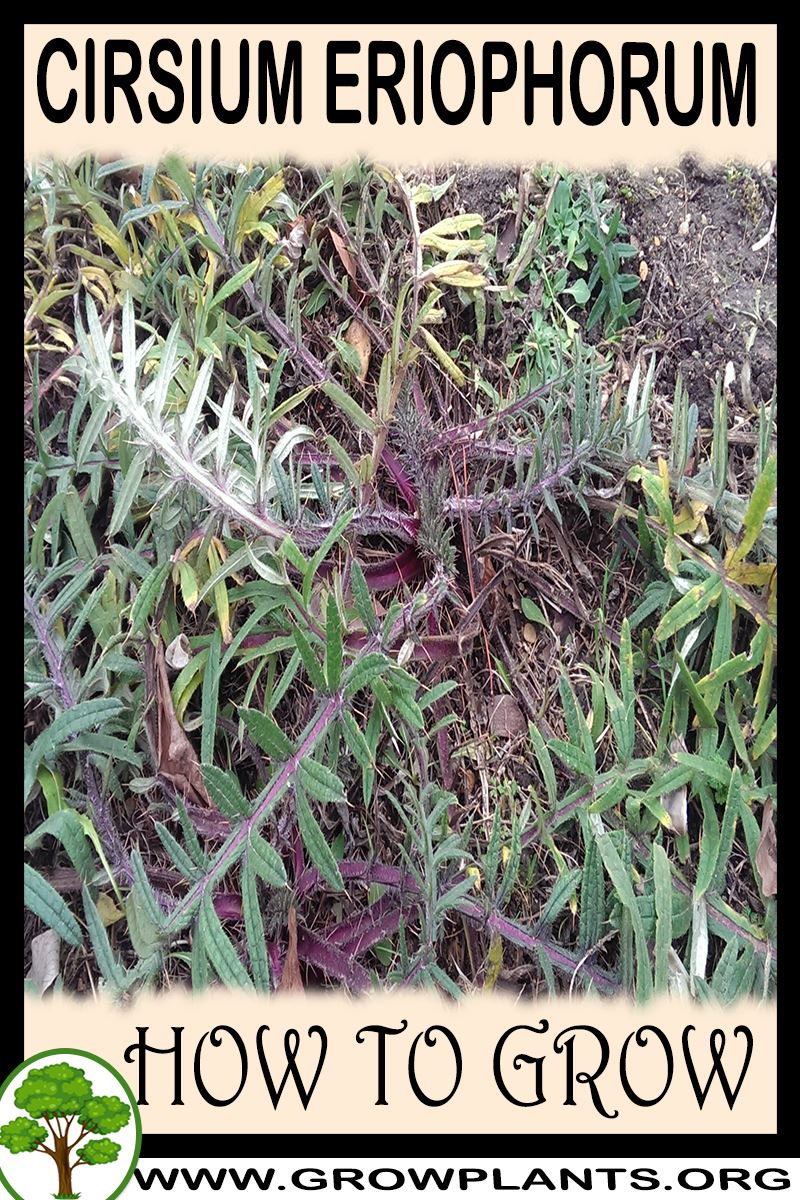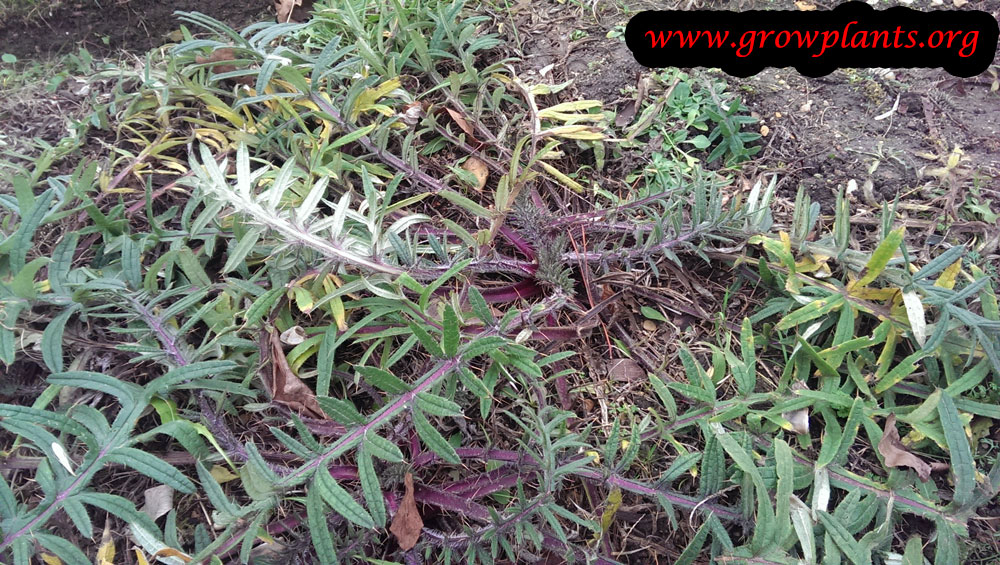

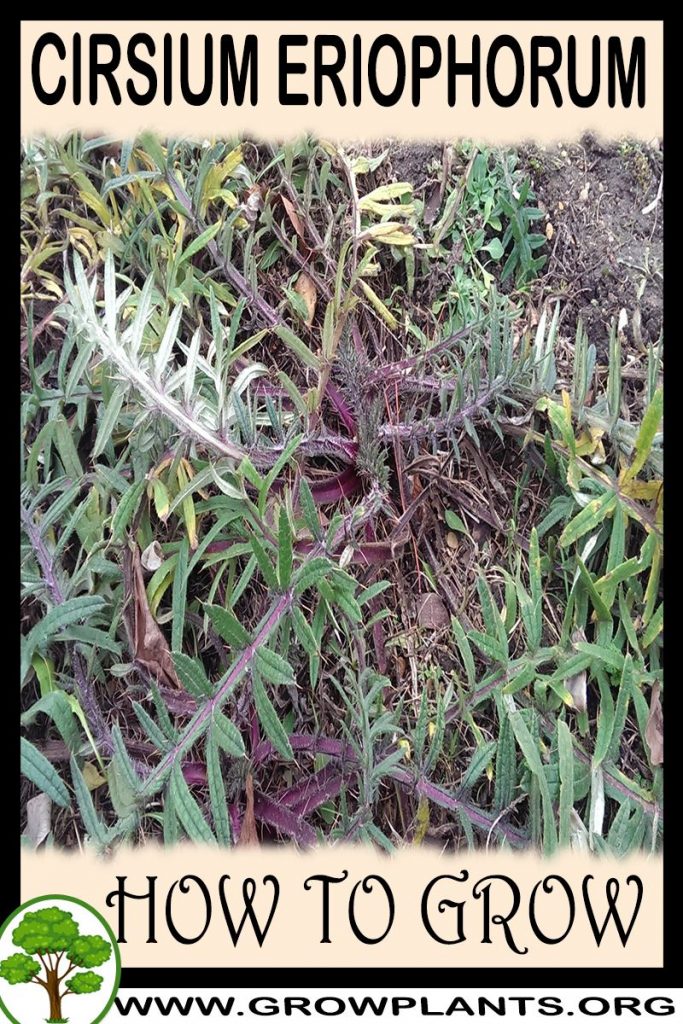
Plant Profile & Key Characteristics
Overview: A biennial thistle growing 0.4-1.5 m (16 in-5 ft) tall, grown as a bold ornamental for its large, woolly flowerheads. It forms a spiny leaf rosette in its first year and flowers in the second.
Quick Specifications
| Specification | Attribute |
|---|---|
| Plant Type / Life Cycle | Biennial (herbaceous) |
| Mature Size | 0.4-1.5 m (16 in-5 ft) tall |
| Growth Rate | Moderate to fast |
| Root System | Taproot |
| Hardiness | USDA zones 3-10a |
Growth Form & Structure
- Height & Spread: 0.4-1.5 m (about 16 in-5 ft) tall; can also be container-grown
- Growth Habit & Form: Erect biennial with a basal rosette and a tall, branching flowering stem
- Lifespan & Maturity: Biennial – a rosette in the first year, then flowering and seeding in the second
Anatomy & Physical Features
- Leaves & Foliage: Green, toothed and spiny leaves with reddish veins
- Flower Characteristics: Rounded pom-pom flowerheads in blue, purple or white
Primary Uses & Landscape Value
- Functional & Ornamental Roles: Ornamental, architectural border plant; highly valuable to pollinators
Care Guide: Planting, Soil & Watering
Overview: The woolly thistle (Cirsium eriophorum) is a hardy biennial grown as an architectural ornamental in full sun to part shade and ordinary, moist but well-drained soil. It needs only low to moderate water and appreciates a cool winter (zones 3–10a).
Quick Care Requirements
| Requirement | Ideal Condition |
|---|---|
| Planting Season | Spring through autumn |
| Growth Rate | Moderate to Fast |
| Soil Type | Ordinary, moist but well-draining |
| Water Need | Low to Moderate – let the surface dry between waterings |
Planting & Establishment
- Best Planting Season: Plant in spring, summer or autumn; it is hardy across cool temperate zones (3–10a) and appreciates a cool winter.
- How to Plant:
- Hole Preparation: Dig a hole about twice the width of the root ball and the same depth.
- Soil Amendments: Loosen the soil and add a little organic matter, making sure it drains freely while staying moisture-retentive.
- Planting Depth: Set the crown at soil level – do not bury it. Handle with care, as the plant is spiny.
- Growth Speed & Expectations: A moderate-to-fast grower; a biennial that forms a leafy rosette the first year and a flowering stem 0.4–1.5 m tall the second.
Soil, Watering & Drainage Care
- Soil Mix & Drainage Needs: Moist but well-drained soil; avoid waterlogging. It can also be grown in a deep container with good drainage.
- Watering Schedule & Technique:
- Young / Newly Planted: Keep the soil evenly moist while the rosette establishes.
- Established: Water moderately; it tolerates some dryness, so let the top of the soil dry between waterings.
- Seasonal Adjustments: A little more in summer heat; keep it drier through a cool, wet winter.
Climate, Light & Hardiness
Woolly thistle is a cold-hardy biennial adapted to temperate, Mediterranean, and subtropical climates that needs a distinct cool winter and consistently moist soil; it tolerates full sun to half shade.
Quick Climate Specifications
| Climate Zones | Temperate, Mediterranean, subtropics |
|---|---|
| USDA Hardiness Zones | Approximately 3–10a |
| Light Conditions | Full sun; half shade |
Temperature Extremes & Hardiness
USDA Hardiness & Regional Limits
Hardy roughly zone 3 through 10a. As a biennial it needs a genuine cool winter period between its first-year rosette and second-year flowering.
Wind, Humidity & Microclimate
Rainfall & Seasonal Moisture
Prefers consistently moist soil over dry conditions.
Growing in Pots, Balconies & Indoors
The woolly thistle is a striking biennial reaching up to about 1.5 m, with large cottony flower heads. The grower confirms it grows in containers but is not a houseplant – it wants full outdoor sun and open air.
Quick Details
- Container Size: Roughly 15-30 L (4-8 gal), scaled to the plant’s height
- Indoor Suitability: Not an indoor plant – a sun-loving border plant, better outdoors
- Best Spot: Full sun to part shade, outdoors
- Soil & Drainage: Free-draining, not-too-rich mix – these thistles resent soggy soil
- Watering in Pots: Water moderately and let the top of the mix dry between waterings – these plants dislike constantly wet feet, and pots must drain freely
Indoors & On the Windowsill
- Not a houseplant: The grower marks it No – it needs full outdoor sun and does not adapt to a room.
- Windowsill note: A spiny, sun-loving border plant is not suited to a sill; enjoy it outdoors in a pot or bed.
On a Balcony or Patio
- Light, wind & heat: Give it the sunniest spot you have. Walls and paving reflect heat so pots dry quickly – check moisture often in warm weather. On an exposed balcony, stake tall stems and shelter from strong wind.
- Practicalities: A full pot is heavy once watered – make sure the balcony can take the load and that drainage runoff has somewhere to go.
Choosing the Pot, Soil & Long-Term Care
- Pot & drainage: Use a pot with strong drainage holes and skip a standing-water saucer to avoid root rot. Terracotta breathes and dries faster; glazed or plastic pots hold moisture longer.
- Potting mix: A well-aerated, organic-rich mix – potting mix or peat/coir blended with perlite or vermiculite for free drainage.
- Feeding: Potted plants need feeding more often than those in open ground, as nutrients leach out with each watering – feed regularly through the growing season.
- Season to season: As a short-lived plant there is no long-term repotting – empty and refill the pot with fresh, clean mix each cycle so pests and disease are not carried over.
Fertilizing & Feeding
A light feeder: this biennial ornamental thistle needs only light, balanced feeding to build its first-year rosette, with established plants flowering reliably on minimal fertilizer.
Quick Fertilizing Specs
| Feeding Level | Light feeder |
|---|---|
| Main Nutrient Priority | Balanced feeding, used sparingly once the plant is established |
| Best Feeding Period | The first-year rosette stage |
| Organic Options | Compost worked into the bed at planting |
| Micronutrients | Rarely needed; correct specific issues only when diagnosed |
| Soil pH | Prefers moist, well-drained soil |
Feeding by Growth Stage
First-year rosette establishment
Build a strong basal rosette in the first year before this biennial bolts and flowers in its second.
| Nutrient direction | A balanced complete fertilizer at a light rate. |
|---|---|
| Timing | Spring through autumn of the first year after sowing or planting. |
| Frequency | Light, occasional feeding is usually enough to establish the rosette. |
| Fertilizer types | A balanced complete fertilizer at a light rate, Compost worked into the bed at planting |
| Precautions | Handle and site this spiny plant carefully; avoid overly rich soil, which can produce soft, floppy growth. |
Second-year bolting and bloom
Support the tall flowering stem and blue, purple, or white pompon-shaped flower heads.
| Nutrient direction | Keep feeding light and balanced; established plants flower reliably with minimal fertilizer. |
|---|---|
| Timing | Spring through summer of the second year as the plant bolts and flowers. |
| Frequency | Little to no supplemental feeding is usually needed once the plant is established. |
| Fertilizer types | A balanced fertilizer used sparingly, if at all |
| Precautions | Overfeeding favors soft growth over sturdy flowering stems on this tall biennial. |
Post-bloom decline
Let the plant complete its natural biennial life cycle after flowering and seed set.
| Nutrient direction | None – withhold fertilizer as the plant finishes its life cycle after flowering. |
|---|---|
| Timing | Late summer into autumn, after flowering and seed set. |
| Frequency | No feeding at this stage. |
| Fertilizer types | No feeding at this stage; this biennial will not benefit from further fertilizer after flowering. |
| Precautions | Do not fertilize a plant that has finished flowering and is naturally declining. |
Nutrient Deficiency Signs & Corrections
Pale, yellow-green foliage overall with reduced vigor in the rosette.
| Possible causes | Low soil nitrogen, Lean or heavily leached soil, Prolonged lack of any feeding |
|---|---|
| Appears first on | Overall foliage color, especially older leaves. |
| What to check | Feeding history, Soil quality, Planting site |
| Possible correction | Apply a balanced, general-purpose fertilizer at a light rate. |
New leaves yellow between the veins while the veins stay green.
| Possible causes | High or alkaline soil pH limiting iron availability, Waterlogged or poorly drained soil, Genuine iron shortage in poor soil |
|---|---|
| Appears first on | Youngest leaves at the growing tips. |
| What to check | Soil pH, Drainage and root health, Whether symptoms follow cold, wet spells |
| Possible correction | Correct soil pH where it is too high and, if needed, apply a chelated iron product per its label. |
Leaf margins browning or scorched despite adequate watering.
| Possible causes | Fertilizer salt buildup from overfeeding, Under-watering that concentrates salts, Poor drainage trapping salts near the roots |
|---|---|
| Appears first on | Leaf margins and tips. |
| What to check | Recent feeding amounts, Watering consistency, Soil drainage |
| Possible correction | Reduce the feeding rate, water thoroughly to flush salts, then return to a lighter routine. |
Pruning, Training & Seasonal Maintenance
Woolly thistle is a biennial—a spiny basal rosette in year one, then a tall flowering stem in year two that blooms in summer/autumn before the whole plant dies. Pruning is limited to summer sanitary leaf removal, matching the plant’s own data, plus, where self-seeding isn’t wanted, deadheading before the fluffy seed heads disperse.
Quick Pruning & Maintenance Specs
| Pruning Tolerance | Low |
| Primary Pruning Window | Summer, ongoing (per the plant’s own data) |
| Secondary Maintenance Window | Late summer/autumn, before seed dispersal, if controlling spread |
| Main Objective | Sanitary tidiness; optional seed-spread control |
| Young Plant Priority | None – let the first-year rosette build reserves for its single flowering season |
| Mature Plant Priority | Remove dead/spine-damaged leaves; deadhead before seed dispersal if self-seeding is unwanted |
| Best Tool Type | Bypass secateurs, with thick gloves – the plant’s own data flags it as spiny |
| Avoid Heavy Pruning During | Active summer/autumn bloom, if pollinator value or ornamental seed heads are wanted |
Pruning by Plant Age & Size
Newly Established (Year 1 Rosette)
No cutting—the rosette needs to fully develop before it can bolt and flower in year two.
Young / Formative
Not applicable; no structural training on a taprooted rosette.
Mature (Year 2, Flowering)
As a monocarpic biennial, the whole plant dies after seeding, so there is no renewal pruning. The only choice is whether to deadhead before seed-set or leave heads to mature and disperse for self-sowing.
Seasonal Pruning Schedule
Ongoing Sanitary (Summer)
Objective: matches the plant’s own “Summer” pruning-window fact. Remove: dead or spine-damaged leaves from the base as the rosette or bolting stem develops. Do not remove: healthy foliage feeding the developing flower stem.
Pre-Seed-Set (Late Summer into Autumn)
Objective: control self-seeding, after bloom. Remove: spent flowerheads at the stem before the characteristic thistledown disperses, if naturalizing further is unwanted. Do not remove: heads while pollinators are still actively working them.
Special Growth to Remove
- Spent flowerheads/seed heads, for self-seeding control.
- Dead or mite-damaged leaves—the plant’s own data flags Aceria (gall mite) as a pest; inspect and remove affected foliage.
Tools
- Bypass secateurs—the stiff, spiny stems need more than snips.
- Heavy gloves are essential given the plant’s own documented spines.
Tool Hygiene & Disease Risk
Increased—inspect for and remove foliage showing the Aceria (gall mite) damage the plant’s own data flags, to reduce mite spread between plants. Otherwise, standard clean-tool practice.
Cut Placement & Technique
Cut flowering stems at the base once finished. Remove damaged leaves at their point of attachment.
Heavy Pruning & Rejuvenation
Not applicable—biennial, dies after flowering; there is no crown to rejuvenate.
Post-Pruning Care
None special. Dispose of Aceria-affected material rather than composting it, to limit re-infestation.
Common Pruning Mistakes
- Handling without gloves, given the plant’s documented spines.
- Letting thistledown seed heads mature and disperse when spread is unwanted—this species self-seeds readily.
When NOT to Prune
- Avoid deadheading while pollinators are actively working the summer/autumn blooms, if supporting them is a goal.
- Skip cutting the first-year rosette—it needs a full season to build reserves for flowering.
Recommended Tools (by task)
- Task: Deadheading spent flowerheads/cutting spent stems – stiff, spiny stem → bypass_secateurs – handles the stiffer, spine-covered stems this genus produces better than snips.
Propagation Guide
Woolly thistle is propagated from seed, the only method the site lists, and the practical way to grow this biennial; no grafting or vegetative propagation is used. Propagation is easy, though the spiny foliage the site notes as a growing difficulty makes handling seedlings and mature plants worth doing with gloves.
Quick Propagation Specs
| Best Propagation Method | Direct-sown seed |
| Propagation Difficulty | Easy |
| Seed True-to-Type | Yes |
| Best Propagation Season | Spring, summer or autumn, per the site’s planting season |
Growing from Seed
Sowing Season
Sow in spring, summer or autumn.
Sowing Depth & Orientation
Sow seed shallowly, just covered.
Germination Conditions
Germinates in cool-to-average, moist soil without a special pretreatment reported; as a hardy biennial (hardiness zone 3–10a per the site), it tolerates cool sowing conditions well.
Seedling Care
Handle seedlings and young plants carefully, as the site notes this species develops spines. It forms a low rosette in its first season and flowers the following year, so expect foliage growth well before any bloom.
Bloom & Flower Guide
Quick Details
- Bloom Season: Summer into autumn
- Time to First Bloom: A biennial – it forms a rosette the first year and flowers in its second
- Flower Appearance: Rounded pompon heads of small blue, purple or white florets set in a woolly, cottony base
- Edibility: Ornamental only – not eaten
Detailed Blooming Overview
Woolly thistle is grown for the drama of its flowering stems in the second year, when large pompon heads of blue to purple florets sit atop a base wrapped in dense white wool. It is a bold, statuesque plant for a wild or naturalistic planting, and its nectar-rich heads are much loved by bees and butterflies. As a biennial, the flowering year is also its final one.
Flower Characteristics
- Rounded, pompon-like heads of many small florets in blue, purple or white.
- Set in a distinctive woolly, cobweb-covered base of bracts.
- Carried on tall, spiny second-year stems.
Bloom Care & Thinning
- Managing self-seeding: As a biennial it relies on seed, so remove the heads before they ripen if you want to control its spread.
- Naturalising: Left to seed, it will maintain itself in a wild or meadow setting.
- Pollination: The heads are a strong draw for bees and butterflies.
Pests, Diseases & Troubleshooting
Overview: Woolly thistle is a robust, largely trouble-free biennial thistle that is more often a magnet for beneficial insects than a victim of pests; its main issues are aphids on the flower stems, the caterpillars and beetles that specialise on thistles, and rusts and mildews in crowded, damp conditions. As a wild/ornamental species it needs little intervention.
Quick Troubleshooting Overview
| Issue / Pest | Main Symptom | Primary Solution |
|---|---|---|
| Aphids | Colonies on stems & flower heads, honeydew | Tolerate/beneficials, water jet, soap if severe |
| Thistle tortoise beetle | Holes and windowing in leaves | Handpick; usually tolerable |
| Painted lady caterpillars | Webbed, skeletonised leaves | Handpick; often left for wildlife |
| Thistle gall / seed-head flies | Swollen galls, damaged seed heads | Remove galled heads if spread unwanted |
| Rust | Orange pustules on leaves | Remove affected leaves, improve airflow |
| Powdery mildew | White powdery coating in dry crowding | Space for airflow, sulfur if needed |
Common Pests & Management
- Aphids (Aphis fabae, Brachycaudus cardui, Uroleucon spp.):
- Symptoms: Dense colonies of black or greenish aphids on flower stems, bracts and heads, with honeydew, sooty mould and some distortion; thistles are a well-known aphid host.
- Prevention & Control: Usually best tolerated, as they feed the ladybirds, hoverflies and lacewings the plant attracts. Blast heavy colonies off with water and, only if necessary, spot-treat with insecticidal soap; avoid broad sprays that harm the abundant beneficials.
- Thistle tortoise beetle (Cassida rubiginosa):
- Symptoms: Rounded greenish tortoise-shaped beetles and their spiny larvae graze leaves, leaving small holes and ‘windowed’ translucent patches; a specialist thistle feeder.
- Prevention & Control: Damage is usually cosmetic on a vigorous plant – hand-pick if desired. No treatment is normally warranted; this beetle is even used as a biocontrol of weedy thistles.
- Painted lady and other thistle caterpillars (Vanessa cardui, Cynthia cardui larvae):
- Symptoms: Caterpillars feed within silken webbing on the leaves, skeletonising and tattering foliage; the painted lady butterfly favours thistles as a larval host.
- Prevention & Control: Most gardeners leave these for their butterfly value. Hand-pick or remove webbed leaves if defoliation is heavy; Bacillus thuringiensis (Bt) is an option only where control is genuinely needed.
- Thistle gall and seed-head flies (Urophora spp., Terellia spp.):
- Symptoms: Larvae form woody swollen galls in stems or seed heads and destroy developing seed; commonly seen in wild thistle stands.
- Prevention & Control: No control is usually needed. If you wish to limit self-seeding or spread, cut and destroy galled and spent seed heads before the flies or seed mature.
- Lace bugs and capsids (Tingis cardui, Lygus spp.):
- Symptoms: Fine pale stippling, bronzing and distortion of leaves and buds from sap-sucking bugs; the spear thistle lace bug is a thistle specialist.
- Prevention & Control: Tolerate light damage; encourage predators. Hose off or spot-treat with insecticidal soap only where distortion is significant.
Diseases & Fungal Issues
- Thistle rust (Puccinia cardui-pycnocephali, Puccinia spp.):
- Symptoms: Orange to brown powdery pustules on leaves and stems, with yellowing and premature leaf death in humid conditions.
- Treatment & Management: Remove and destroy affected leaves, improve spacing and airflow, and avoid overhead watering. A sulfur or protectant fungicide is rarely needed on a wild plant but can be used if valued specimens are badly hit.
- Powdery mildew (Golovinomyces cichoracearum (Erysiphe)):
- Symptoms: White powdery coating on leaves and stems in crowded, dry, still conditions, later yellowing and distortion.
- Treatment & Management: Space plants for light and airflow and remove affected leaves. Potassium bicarbonate or sulfur controls it if treatment is warranted.
- White mould / stem rot (Sclerotinia sclerotiorum):
- Symptoms: Watery stem rot with fluffy white mould and hard black sclerotia, collapsing stems in wet, crowded stands.
- Treatment & Management: Improve drainage and airflow, remove and destroy affected plants, and avoid dense over-watered plantings.
- Downy mildew & leaf spot (Peronospora spp.; Septoria / Ramularia spp.):
- Symptoms: Pale patches with downy growth beneath (downy mildew) or discrete leaf spots (leaf spot) on lower leaves in damp weather.
- Treatment & Management: Water at the base, thin for airflow, and clear affected and fallen leaves; copper helps only in the rare case treatment is needed.
Growing Difficulties & Abiotic Problems
- Root rot in wet soil:
- Cause & Symptoms: This thistle prefers well-drained ground; heavy, waterlogged soil rots the taproot and crown.
- Correction Strategy: Grow in free-draining soil in full sun and avoid wet, low-lying sites; it tolerates poor, dry ground well.
- Flopping and legginess in rich soil or shade:
- Cause & Symptoms: Over-rich feeding or too much shade gives soft, tall, floppy growth that leans and breaks.
- Correction Strategy: Site in full sun on lean soil, avoid fertilising, and give room; it is naturally a plant of rough, poor ground.
- Prolific self-seeding:
- Cause & Symptoms: As a biennial thistle it can seed around vigorously and become weedy.
- Correction Strategy: Deadhead and remove spent seed heads before seed sets if you want to limit spread; check its status where thistles are regulated.
What Helps – Products & Tools
This is a low-input plant best managed by tolerance and encouraging its many natural enemies. If intervention is ever needed, insecticidal soap or a water jet handles aphids and bugs, Bacillus thuringiensis (Bt) targets caterpillars, and sulfur or potassium bicarbonate checks rust and powdery mildew. Deadheading controls self-seeding. Reserve any spray for the evening to protect the pollinators this plant attracts.