Plant Profile & Key Characteristics
Overview: A succulent subshrub reaching 30-100 cm (1-3 ft), grown as an evergreen perennial in warm climates or as an annual/houseplant elsewhere. It is valued as an ornamental groundcover with edible leaves and fragrant flowers.
Quick Specifications
| Specification | Attribute |
|---|---|
| Plant Type / Life Cycle | Perennial (grown as annual in cold zones) |
| Foliage Type | Evergreen |
| Mature Size | 30-100 cm (1-3 ft) tall |
| Growth Rate | Fast to moderate |
| Toxicity | Leaves edible; sap may cause skin irritation |
| Hardiness | USDA zone 10b+ as perennial (4-10a as annual) |
Growth Form & Structure
- Height & Spread: 30-100 cm (1-3 ft) tall, spreading by runners; grows in the ground, in containers or as a hanging-basket plant.
- Growth Habit & Form: Rosette-forming succulent that throws out long horizontal runners (like a spider plant), rooting to form a groundcover.
- Lifespan & Maturity: Fast-growing; kept year to year in frost-free areas or overwintered indoors from cuttings.
Anatomy & Physical Features
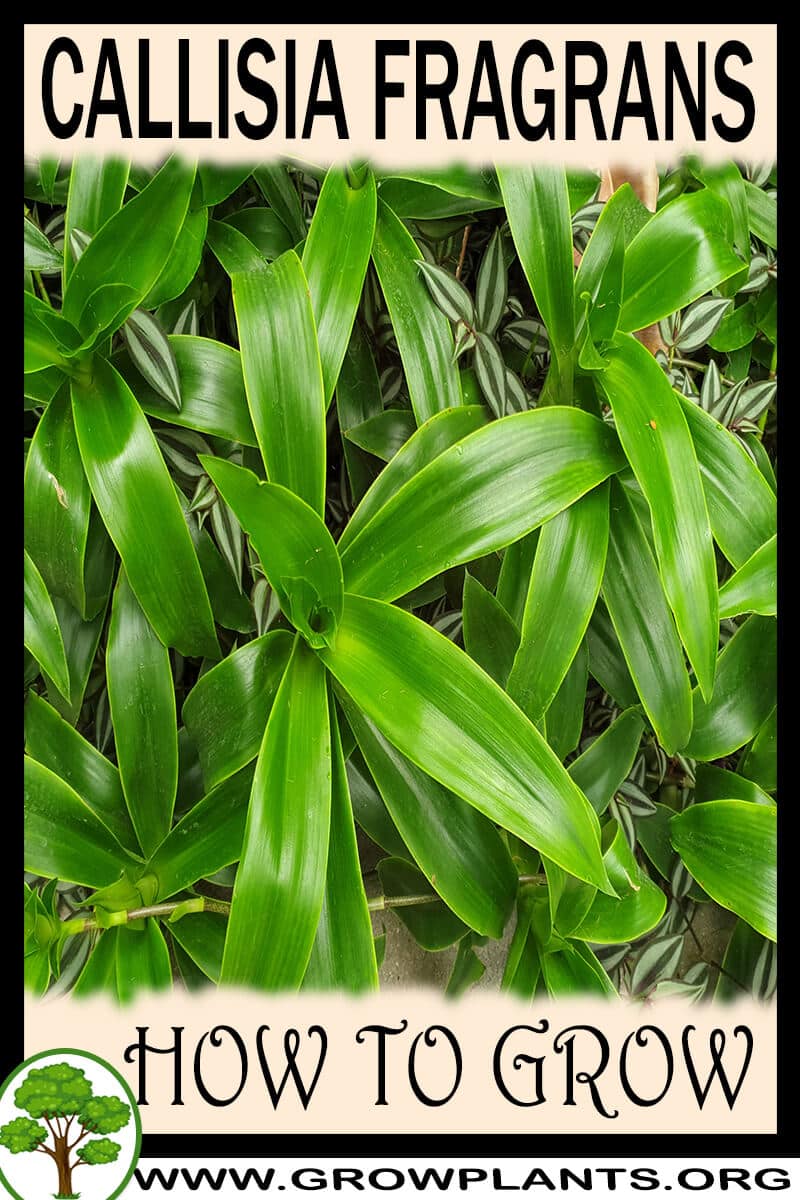
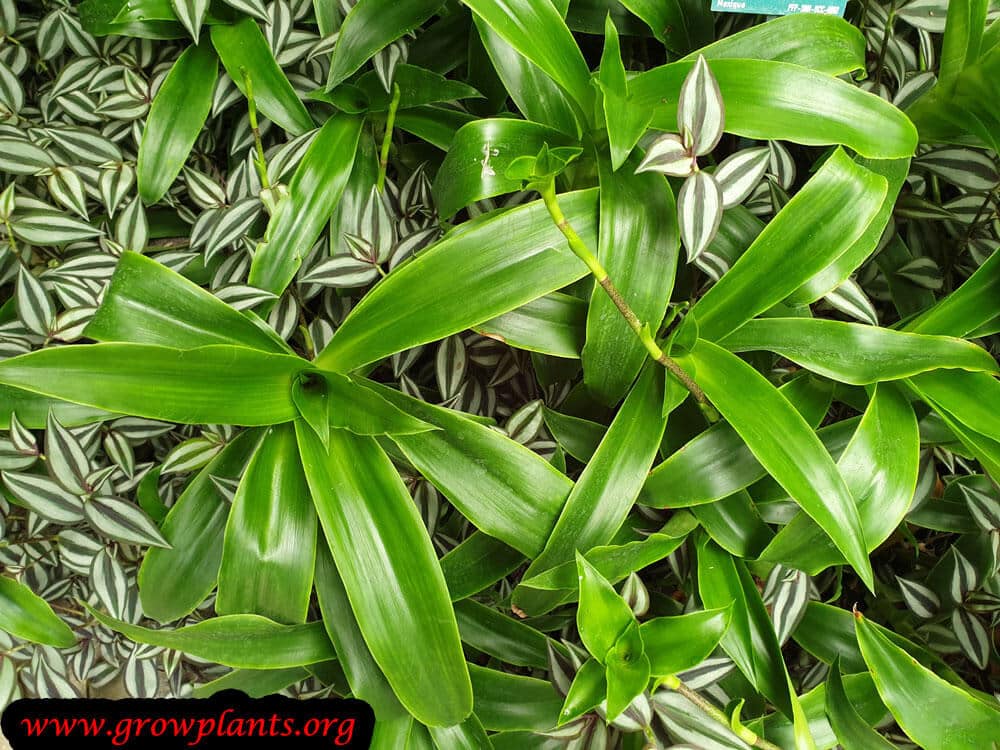
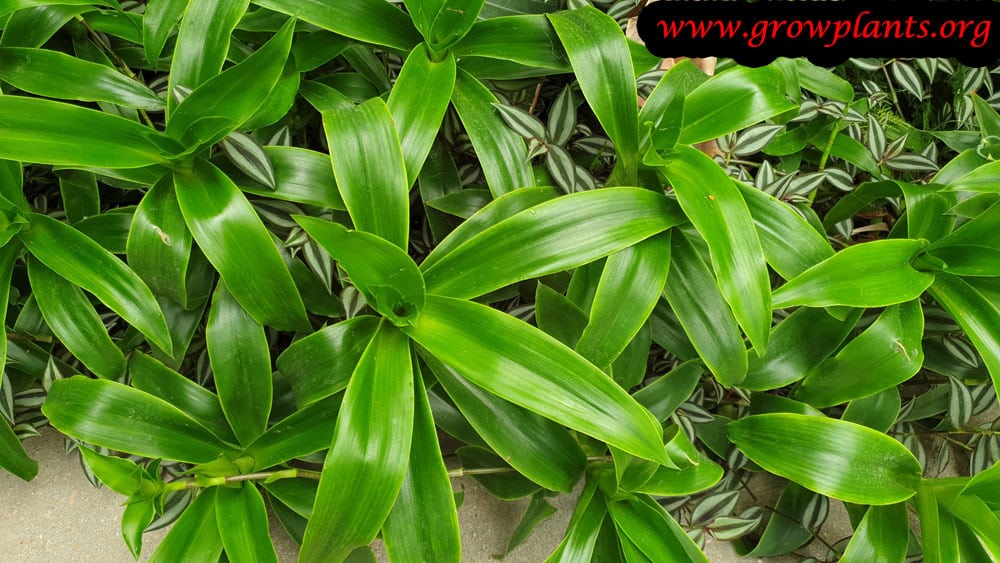
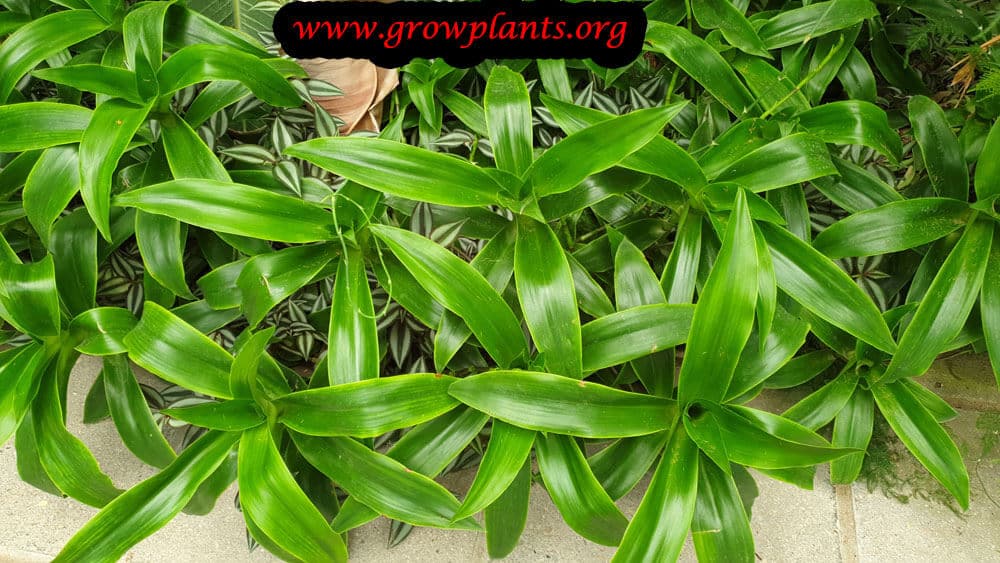
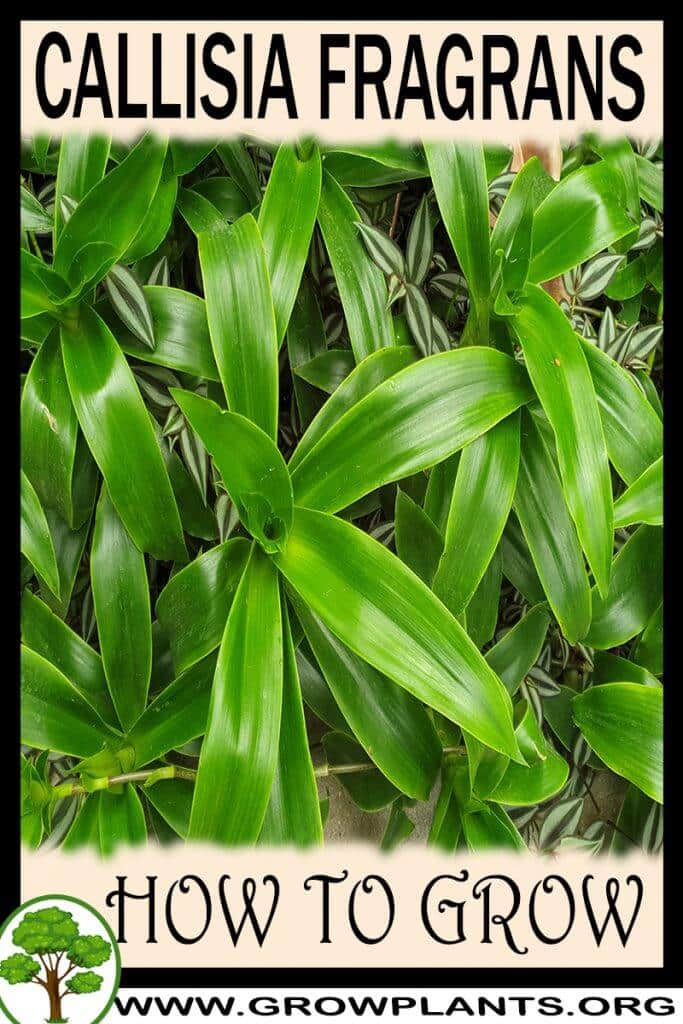
- Leaves & Foliage: Glossy green triangular succulent leaves clasping the stem; edible.
- Flower Characteristics: Small, fragrant white flowers (full detail in the Bloom section).
Primary Uses & Landscape Value
- Edible Uses: Young leaves eaten raw or cooked; also used as a folk medicinal plant.
- Functional & Ornamental Roles: Ornamental groundcover, container and hanging-basket plant; popular houseplant in bright light.
Care Guide: Planting, Soil & Watering
Overview: A vigorous, tender succulent grown as groundcover or a trailing basket plant, thriving in warmth and humidity. It prefers a rich, well-drained soil kept lightly moist rather than wet.
Quick Care Requirements
| Requirement | Ideal Condition |
|---|---|
| Planting Season | Spring in cooler zones; spring to autumn in zone 10b-11; year-round in zone 12+ |
| Growth Rate | Moderate to Fast |
| Soil Type | Rich, well-draining soil with organic matter |
| Water Need | Low to Moderate – let the surface dry between waterings |
Planting & Establishment
- Best Planting Season: Plant in spring after frost; in frost-free zones (10b-11) spring through autumn, and year-round in zone 12+.
- How to Plant:
- Hole Preparation: Dig a hole a little wider than the root ball to let the roots settle in easily.
- Soil Amendments: Blend in compost or organic matter, adding sand or perlite to improve drainage in heavy soil.
- Planting Depth: Set the crown at soil level; do not bury the fleshy stems.
- Growth Speed & Expectations: Grows quickly in warm, humid conditions, reaching 30-100 cm (1-3 ft) with trailing rosettes.
Soil, Watering & Drainage Care
- Soil Mix & Drainage Needs: In containers use a sandy potting mix or peat with perlite; ensure sharp drainage to avoid root and stem rot.
- Watering Schedule & Technique:
- Young / Newly Planted: Keep lightly moist while young plants or cuttings establish.
- Established: Water when the top few cm of soil dry; the succulent leaves tolerate short dry spells.
- Seasonal Adjustments: Water less in winter (especially indoors); increase in summer heat.
Climate, Light & Hardiness
Callisia fragrans is an adaptable succulent-leaved perennial that grows outdoors year-round in USDA zone 10b and warmer, while in zone 4–10a it is typically grown as a warm-season annual (or overwintered indoors as a houseplant) since it cannot survive freezing winters outdoors. It tolerates a wide range of light from full sun to full shade and adapts to Mediterranean, desert, subtropical, temperate, and tropical climates.
Quick Climate Specifications
| Climate Zones | Mediterranean, desert, subtropical, temperate, tropical |
|---|---|
| USDA Hardiness Zones | 10b+ as a perennial; grown as an annual in zone 4–10a, or overwintered indoors |
| Approx. Survival Minimum | Not established outdoors below about 0°C (32°F); freezing temperatures kill outdoor top growth below zone 10b |
| Frost Tolerance | Very Low |
| Light Conditions | Full Sun to Full Shade (with adequate ambient light) |
Sunlight & Light Exposure
Optimal Light Setup
Adaptable from full sun to full shade, provided shaded spots still receive some ambient light; site data indicates it performs across this whole range.
Direct Sun Requirement
Not obligatory; full sun intensifies leaf color and growth, but the plant also thrives in partial to full shade.
Shade & Heat Management
In the hottest desert climates, afternoon shade helps prevent leaf scorch, especially for container specimens.
Best Exposure / Orientation
A bright window or a partly shaded garden bed both suit it, making it flexible for varied placements.
Temperature Extremes & Hardiness
USDA Hardiness & Regional Limits
Outdoor perennial only in zone 10b and warmer per site data; in zone 4–10a it is grown as a warm-season annual, with the option of taking cuttings indoors to overwinter and replant the following year.
Cold Damage & Winter Protection
Freezing temperatures kill outdoor growth below zone 10b; where grown as an annual, take stem cuttings indoors before the first frost to carry the plant through winter.
Frost Sensitivity
Very low – any hard frost is likely to kill unprotected plants. This does not make the species unsuitable for cold-winter gardens, only unsuitable for outdoor winter survival there; it is simply treated as an annual or houseplant instead.
Extreme Heat Tolerance
Good; it is grown successfully in desert climates per site data, provided some water and, in the hottest spots, light shade.
Frost-Free Growing Season
Where grown as an annual (zone 4–10a), plant out after the last frost and expect growth through the frost-free season; take cuttings before autumn frost to preserve the plant for next year.
Wind, Humidity & Microclimate
Humidity Preferences
Adaptable; tolerates both the dry air of desert and Mediterranean climates and the humidity of subtropical and tropical regions.
Dry-Air Tolerance
Moderate to high – it grows successfully in desert climates per site data.
Rainfall & Seasonal Moisture
Tolerates a range of light-to-moderate rainfall regimes given its use across Mediterranean, desert, subtropical, and tropical climates; avoid waterlogging.
Microclimate Recommendations
In marginal, cold-winter climates, grow in a container that can be brought indoors before frost, or treat as an annual and take cuttings to overwinter.
Growing in Pots, Balconies & Indoors
Callisia fragrans (basket plant) is a spreading, trailing foliage plant (30-100 cm / 1-3 ft) and a popular, easy houseplant. The grower recommends it indoors with plenty of light, ideally right next to a window; it trails beautifully from a hanging pot or shelf.
Quick Details
- Container Size: A pot about 50% larger than the root ball (or your target size); good for hanging baskets
- Indoor Suitability: A good houseplant – happiest with lots of light, best next to a window
- Best Spot: Full sun to half shade, and full shade with light; bright light deepens its colour
- Soil & Drainage: Sandy soil, potting mix, or peat with perlite – free-draining
- Watering in Pots: Small to average – take care not to overwater; let it dry between waterings
Indoors & On the Windowsill
- Houseplant use: The grower recommends it indoors with a lot of light, best right beside a window. It is forgiving and fast, trailing attractively from a hanging pot or high shelf.
- Windowsill/basket growing: Bright light keeps it compact and can bring out purple tints; in dim spots it stretches and pales. Water only when the mix dries and avoid soggy soil.
- Overwintering: Tender – keep it warm indoors over cold months; it is naturally a good year-round houseplant.
- Safety: Contact with the plant/sap can cause skin irritation (noted by the grower) – handle with care and keep it away from where children or pets might chew it.
On a Balcony or Patio
- Light & shelter: A bright, sheltered balcony or patio suits it – full sun to part shade; it trails well from railings and hanging pots. Bring it in before cold weather.
- Practicalities: Drought-tolerant, so err on the dry side; free drainage matters more than frequent watering.
Choosing the Pot, Soil & Long-Term Care
- Pot & drainage: A pot about 50% larger than the root ball with strong drainage holes; if the roots get too big, prune both roots and leaves rather than over-potting. Skip a standing-water saucer.
- Potting mix: The grower’s choice – sandy soil, potting mix, or peat with perlite; all free-draining.
- Feeding: Potted plants exhaust and leach nutrients faster than those in the ground, so feed lightly during active growth – more often than you would in open soil.
- Repotting: Every few years refresh the mix and cut back the roots, trimming the leaves to match; this keeps it vigorous without needing an ever-larger pot.
Fertilizing & Feeding
A light to moderate feeder grown mainly for its glossy, edible foliage; a balanced fertilizer through active growth paired with rich, organic soil covers its needs without pushing it past its naturally easy-care habit.
Quick Fertilizing Specs
| Feeding Level | Light to moderate feeder |
|---|---|
| Main Nutrient Priority | Balanced feeding with adequate nitrogen to support glossy leaf growth |
| Best Feeding Period | Through the active growing season, spring into autumn |
| Organic Options | Compost or organic matter worked into rich, moisture-retentive soil |
| Micronutrients | Usually met by a complete fertilizer with iron and manganese; correct only a diagnosed issue |
Feeding by Growth Stage
Establishment after planting or repotting
Let new roots settle into fresh, rich soil before asking the plant to support new top growth with added nutrition.
| Nutrient direction | None – hold off fertilizing while roots are settling into new or refreshed soil. |
|---|---|
| Timing | Immediately after planting, repotting, or a soil change. |
| Frequency | No feeding during this settling-in period. |
| Fertilizer types | No feeding at this stage; do not fertilize until new growth confirms the roots have settled in. |
| Precautions | Do not fertilize freshly potted or transplanted specimens; fresh organic-rich soil already supplies what the plant needs at first. |
Active growth season
Support steady production of the glossy, edible foliage this plant is grown for as a houseplant or warm-season ground cover.
| Nutrient direction | A balanced, complete fertilizer with adequate nitrogen and routine iron and manganese supports full, glossy leaf growth. |
|---|---|
| Timing | Through the active growing season while light and warmth are good. |
| Frequency | Several light feedings through the growing season are usually enough. |
| Fertilizer types | A balanced complete houseplant fertilizer, Compost or organic matter for outdoor plantings |
| Routine trace nutrients | iron, manganese |
| Precautions | This plant’s sap can cause skin irritation, so wear gloves when handling it during feeding or maintenance; avoid overfeeding, which can lead to leggy, weak growth. |
Cool-season or low-light slowdown
Let the plant rest through cooler weather or reduced indoor light without pushing weak new growth.
| Nutrient direction | None – withhold fertilizer while growth has clearly slowed with cooler temperatures or lower light. |
|---|---|
| Timing | Through winter or whenever indoor light and warmth drop noticeably. |
| Frequency | No feeding during this slowdown. |
| Fertilizer types | No feeding at this stage; do not fertilize until active growth resumes with better light and warmth. |
| Precautions | Do not fertilize a plant that is not actively growing; resume only once new growth appears. |
Nutrient Deficiency Signs & Corrections
Older, lower leaves fade to pale green or yellow and new leaf production slows.
| Possible causes | low available soil nitrogen, soil low in organic matter, root-bound plant unable to access nutrients |
|---|---|
| Appears first on | older, lower leaves |
| What to check | recent feeding history, soil organic matter, root crowding in the container |
| Possible correction | Apply a balanced fertilizer and refresh the growing medium, then watch for greener new growth. |
Interveinal yellowing appears on newer leaves while the veins stay green.
| Possible causes | high soil pH limiting manganese availability, overly wet, poorly drained soil, low manganese in the growing medium |
|---|---|
| Appears first on | newer leaves |
| What to check | soil pH and drainage, watering frequency, recent fertilizer composition |
| Possible correction | Improve drainage, correct pH toward neutral where practical, or apply a chelated manganese product per its label. |
Leaf tips and margins brown or scorch despite regular watering.
| Possible causes | fertilizer salt buildup from overfeeding, inconsistent watering that concentrates salts, poor container drainage |
|---|---|
| Appears first on | leaf tips and margins |
| What to check | recent feeding amounts, container drainage, watering consistency |
| Possible correction | Ease off feeding, water thoroughly to flush accumulated salts, and return to lighter feeding afterward. |
Pruning, Training & Seasonal Maintenance
Callisia fragrans is a succulent-leaved trailing subshrub grown as a houseplant, groundcover, and edible/medicinal plant. It tolerates moderate cutting back: its own care notes call for removing dead bloom stems and leaves in autumn/winter, and because it spreads by long trailing stolons (the trait behind its “Basket plant”/”Chain plant” names), controlling that spread is the other main pruning task. Cutting back doesn’t harm flowering since blooms form on the current season’s new growth. Regular leaf harvest (an edible-use topic) already removes some foliage through the season – see the separate Fruit & Uses guidance for harvest technique; this section covers pruning/shaping only.
Quick Pruning & Maintenance Specs
| Pruning Tolerance | Moderate |
| Primary Pruning Window | Autumn – Winter |
| Secondary Maintenance Window | As needed through the growing season to control stolon spread |
| Typical Frequency | 1–2 times per year plus spot maintenance |
| Main Objective | Remove dead bloom stems/leaves; control stolon spread and legginess |
| Young Plant Priority | Pinch the central rosette to build a fuller plant before it starts trailing |
| Mature Plant Priority | Thin/trim old stolons, remove dead bloom stems and leaves |
| Best Tool Type | Precision snips / bypass secateurs |
| Avoid Heavy Pruning During | The main active growth flush, when removing too much green tissue sets the plant back |
Pruning by Plant Age & Size
Newly Established
Remove only damaged leaves; avoid cutting stolons before the plant is well rooted in.
Young / Formative
Pinch the central rosette to encourage a fuller, bushier plant before letting stolons trail for a basket display, or let stolons run early if it’s being used as groundcover.
Mature / Established
Routine thinning of old or overly long stolons, removal of spent bloom stems and dead leaves.
Seasonal Pruning Schedule
Dormant/Winter
Objective: tidy the plant ahead of its cooler, slower period.
Remove: dead bloom stems, dead or damaged leaves, and excess or already-rooted stolons where spread isn’t wanted.
Do not remove: healthy, actively growing stolon tips if spread or propagation is desired.
Expected response: fuller regrowth from the base.
Flowering/fruiting impact: minimal, since flowers form on the current season’s new growth rather than older wood.
Structural Pruning & Training
Control height and spread by cutting back trailing stolons. If grown as a dense groundcover mat, thin overly congested growth occasionally – as a succulent, dense wet mats are more prone to rot than an airier planting.
Special Growth to Remove
- Dead bloom stems and dead/damaged leaves.
- Stolons/runners – the plant spreads via trailing stems tipped with plantlets; cut these back at the base to control spread, or retain a few for propagation if new plants are wanted.
Container & Small-Space Pruning
When repotting, the plant’s own care notes call for cutting back roots and leaves/stems if the plant has become root-bound. Pinch regularly to keep a compact “basket” shape indoors rather than letting it grow leggy.
Tools
Precision snips for soft succulent stems, leaves, and stolons – no woody growth on this plant calls for anything larger.
Tool Hygiene & Disease Risk
Routine. Soft succulent tissue with no specific transmissible disease flagged; clean, sharp tools are sufficient.
Cut Placement & Technique
Cut dead bloom stems and leaves at their base. Sever stolons close to the parent crown, or at a node if the cutting is being kept for propagation. The sap can cause skin irritation, so wear gloves when cutting or handling this plant.
Heavy Pruning & Rejuvenation
Moderate tolerance – a leggy, overgrown plant can be cut back hard to the base to force fresh, compact rosettes. Do this during active growth for the best recovery; expect a temporarily bare look before new growth fills in.
Post-Pruning Care
Keep soil evenly moist but not soggy after a cutback – as a succulent, it is prone to rot if overwatered while recovering. No extra feeding is needed purely for pruning recovery.
Common Pruning Mistakes
- Letting stolons run unchecked indoors, resulting in a tangled, leggy plant.
- Overwatering right after a hard cutback, risking rot in the succulent tissue.
- Handling cut stems without gloves – the sap can irritate skin.
When NOT to Prune
Avoid heavy cutback during the plant’s main active growth flush if a full look is wanted, and avoid pruning when the plant is already stressed, such as right after repotting.
Recommended Tools (by task)
- Precision snips – trimming soft succulent stems, stolons, and dead leaves close to the base; the only tool this plant’s growth calls for.
Propagation Guide
Callisia fragrans is most commonly and easily grown from stem cuttings, which root readily and are the recommended route when a specific leaf color form needs to be preserved, since seedlings may not match the parent’s coloration. Propagation is easy overall.
Quick Propagation Specs
| Best Propagation Method | Stem cuttings |
| Alternative Methods | Seed; layering; division of offsets |
| Propagation Difficulty | Easy |
| Vegetative True-to-Type | Yes, including leaf color form |
| Seed True-to-Type | Variable – not recommended when a specific leaf color needs to be kept |
Stem Cuttings
Cutting Preparation
Take a stem section for rooting.
Rooting Setup
Insert into moist soil, ideally peat-based (though other soils work), and use a greenhouse or covered plastic box to maintain the high humidity cuttings need. Rooting in a jar of water, changed every few days, is also possible though less reliable.
Air & Ground Layering
An alternative method: bend a trailing stem down to soil level and cover the contact section with soil until it roots on its own, then separate it from the parent.
Division, Offsets, Pups & Suckers
As a clumping subshrub, established plants also produce basal offsets that can be separated with their own roots and replanted, though the site emphasizes stem cuttings as the primary method, especially for preserving leaf color.
Bloom & Flower Guide
Quick Details
- Bloom Season: Winter to summer
- Flower Appearance: Small, fragrant white flowers carried in clusters on long stems
- Edibility: Grown as an ornamental and leaf plant; the flowers are fragrant but not eaten, and the sap can irritate skin
Detailed Blooming Overview
Basket plant, or chain plant, is a trailing succulent grown for its glossy foliage and easygoing habit, but a mature, slightly pot-bound plant will send out long stems tipped with clusters of tiny white flowers that carry a sweet fragrance. It flowers most freely once the plant is well established and has plenty of light.
Flower Characteristics
- Small white flowers borne in clusters on long stems.
- Fragrant.
Bloom Care & Thinning
- To encourage bloom: Give it strong light and let the plant mature – young or shaded plants flower little.
- After flowering: Cut back the spent flower stems along with any tired leaves; wear gloves if you are sensitive, as the sap can irritate skin.
Fruit & Uses
The triangular, glossy green leaves of Callisia fragrans (basket plant / chain plant) are the edible part, eaten both raw and cooked. The site’s own care notes also flag that the plant can cause skin/contact irritation, so leaves are best handled carefully and eaten in moderate amounts rather than in bulk.
Quick Edible Specs
| Edible Parts | Leaves |
|---|---|
| Main Use(s) | Culinary (leafy green, raw or cooked); also used in traditional folk preparations |
| Eaten Raw or Cooked | Both raw and cooked |
| Preparation Required | None strictly required, but wash well and handle with care given reported skin irritation; start with small amounts when eating raw |
| Harvest Season | Spring to autumn in hardiness zone 10b–11a; all year in zone 11b+; summer to autumn when grown as an annual in zone 4–10a |
| Time to First Harvest | Once the plant is established |
| Storage | Best used fresh; not noted for long storage |
| Safety/Toxicity Caveat | Contact with the plant has been noted to cause skin irritation – handle and harvest with care, and eat leaves in moderation |
Leaves & Greens
Leaves are triangular, glossy green, and attach to the stem at their base. Once the plant is established, leaves are harvested by cutting them at the base next to the stem, and can then be eaten raw or cooked as a leafy green. Because handling this plant has been noted to cause skin irritation for some people, harvest with care (gloves are a reasonable precaution) and introduce it cautiously the first time it is eaten, especially raw.
Harvesting
Leaves can be cut repeatedly through the growing season – spring to autumn, or year-round in the warmest zones – rather than as a single harvest. Cutting at the base near the stem lets the plant keep producing new leaf growth.
Preparation, Uses & Safety
Leaves are used both raw and cooked as a green, and the plant is also traditionally used in folk preparations (noted briefly here, not as a health claim). Given the site’s own note that the plant can cause skin irritation, caution is warranted: wash leaves thoroughly, handle them carefully during harvest, and eat in moderate amounts rather than in large quantity, particularly the first time it is tried.
Pests, Diseases & Troubleshooting
Overview: Callisia are easy, fleshy-stemmed members of the spiderwort family grown as trailing houseplants or groundcovers, and they are largely trouble-free. Their main enemy is not an insect but the watering can: soft succulent stems rot quickly in cold, wet, airless compost. A handful of common sap-suckers may appear, but good light, warmth and restrained watering prevent nearly every problem.
Quick Troubleshooting Overview
| Issue / Pest | Main Symptom | Primary Solution |
|---|---|---|
| Overwatering / root rot | Mushy blackened stems, collapse | Dry out, free-draining mix, ease off water |
| Mealybugs | White cottony tufts in leaf axils | Dab with alcohol, insecticidal soap |
| Spider mites | Fine stippling, webbing in dry air | Raise humidity, rinse, soap / oil |
| Aphids | Sticky, curled young tips | Rinse off, insecticidal soap |
| Leggy pale growth | Stretched stems, faded colour | More light, pinch and trim |
| Leaf scorch | Bleached / brown patches | Shade from harsh midday sun |
Common Pests & Management
- Mealybugs (Planococcus citri, Pseudococcus species):
- Symptoms: White cottony blobs tucked into leaf axils and along stems; feeding causes yellowing, sticky honeydew and sooty mould, and colonies can hide at the root collar.
- Prevention & Control: Wipe off with a cotton bud dipped in dilute alcohol, isolate the plant and inspect neighbours. Follow up with insecticidal soap or neem, repeating weekly; a light horticultural oil smothers stubborn colonies.
- Spider mites (Tetranychus urticae):
- Symptoms: Fine pale stippling, a dull grey-bronze look and gossamer webbing on undersides in warm, dry indoor air; leaves dry and drop.
- Prevention & Control: Raise humidity, rinse the foliage regularly and keep plants off dry heat sources. Remove webbed growth and treat with insecticidal soap or horticultural oil, covering leaf undersides.
- Aphids (Aphis and Myzus species):
- Symptoms: Clusters of soft green or dark insects on tender shoot tips, causing curled, sticky new growth and sooty mould.
- Prevention & Control: Rinse colonies off under a tap, pinch out infested tips and treat any regrowth with insecticidal soap or neem in the cool of the day.
- Scale insects (Coccus, Saissetia species):
- Symptoms: Small brown or waxy limpet-like bumps along stems and leaf midribs that do not brush off; sticky honeydew and sooty mould follow.
- Prevention & Control: Scrape off light infestations by hand or with an alcohol-dipped swab, then apply horticultural oil to smother remaining scale, repeating to catch crawlers.
- Fungus gnats (Bradysia species):
- Symptoms: Small dark flies over constantly moist compost; larvae feed on fine roots and can weaken cuttings and young plants.
- Prevention & Control: Let the surface dry between waterings and top-dress with grit; use yellow sticky traps for adults and Bti or nematode drenches for larvae.
Diseases & Fungal Issues
- Stem and root rot (Pythium, Rhizoctonia, Fusarium species):
- Symptoms: Soft, blackened, collapsing stems at the base and mushy roots, almost always following cold, wet, poorly drained conditions – the commonest way these plants are lost.
- Treatment & Management: Prevention is everything: use a gritty, free-draining mix, water sparingly and keep plants warm. Cut back to firm healthy tissue and re-root clean cuttings if the crown is lost; discard soggy compost.
- Grey mould (Botrytis cinerea):
- Symptoms: Fuzzy grey mould on damaged or dying leaves and crowded, humid growth, especially in cool stagnant conditions.
- Treatment & Management: Improve airflow, remove dead and dying foliage promptly and avoid overhead watering. Space plants and reduce humidity around dense mats.
- Leaf spot (Cercospora and bacterial leaf-spot organisms):
- Symptoms: Brown or watery spots, sometimes with yellow halos, on foliage kept wet in stagnant humid air.
- Treatment & Management: Keep foliage dry, ventilate well and remove spotted leaves. It is rarely serious; sanitation usually resolves it without sprays.
Growing Difficulties & Abiotic Problems
- Overwatering and root rot:
- Cause & Symptoms: The number-one killer of Callisia: soggy compost rots the succulent stems from the base, giving yellowing, translucence and collapse even while the plant looks watered.
- Correction Strategy: Grow in free-draining pots, let the top of the mix dry before rewatering and never leave the plant standing in water. Increase warmth and light to speed drying.
- Leaf scorch and bleaching:
- Cause & Symptoms: Harsh direct midday sun bleaches and browns the leaves, fading the pink or purple tones the plant is grown for.
- Correction Strategy: Give bright but filtered light or gentle morning sun; acclimatise gradually if moving a plant outdoors, and shade from fierce afternoon sun.
- Legginess in low light:
- Cause & Symptoms: In dim conditions stems stretch, internodes lengthen and colour fades to plain green.
- Correction Strategy: Move to brighter light, pinch growing tips to encourage bushiness and trim leggy stems to propagate fresh, compact growth.
- Tip browning from dry air or salts:
- Cause & Symptoms: Crispy brown leaf tips and margins result from very dry air, under-watering or a build-up of fertiliser salts.
- Correction Strategy: Water consistently, flush the pot occasionally to leach salts, and raise humidity around indoor plants. Note the sap can irritate sensitive skin, so wash hands after handling.
What Helps – Products & Tools
These are near pest-free plants, so tools stay simple: a cotton bud with dilute alcohol for mealybugs and scale, insecticidal soap or neem/horticultural oil for aphids, mites and scale, and yellow sticky traps plus Bti for fungus gnats. The most important ‘product’ is a gritty, free-draining mix and a restrained watering routine to prevent rot.