
Plant Profile & Key Characteristics
Overview: A fast-growing, deciduous to evergreen legume shrub reaching about 1.4-5 m (5-15 ft), grown as an ornamental flowering shrub, a nitrogen-fixer and for bonsai.
Quick Specifications
| Specification | Attribute |
|---|---|
| Plant Type / Life Cycle | Perennial (legume shrub) |
| Foliage Type | Deciduous or evergreen (by climate) |
| Mature Size | 1.4-5 m tall (5-15 ft) |
| Growth Rate | Fast to Moderate |
| Root System | Taproot; nitrogen-fixing (legume) |
| Toxicity | Toxic – immature seed pods are poisonous if ingested |
| Hardiness | USDA zone 7+ |
Growth Form & Structure
- Height & Spread: 1.4-5 m (5-15 ft) in the ground; can also be container-grown or trained as bonsai.
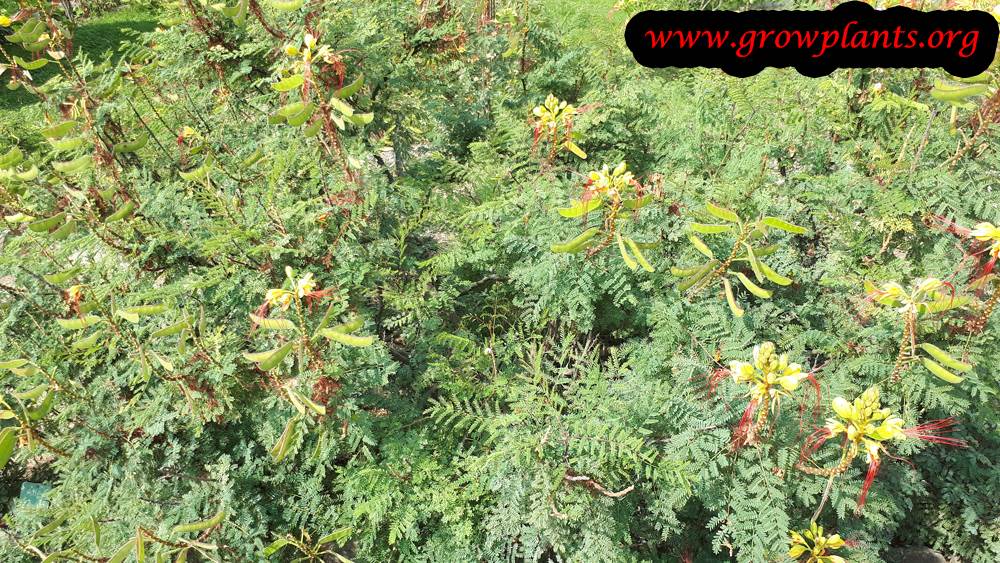
- Growth Habit & Form: Fast, open, upright shrub or small tree with ferny foliage.
- Lifespan & Maturity: Perennial that reaches flowering size quickly given its fast growth.
Anatomy & Physical Features
- Leaves & Foliage: Green, elliptic leaflets in a fern-like bipinnate arrangement.
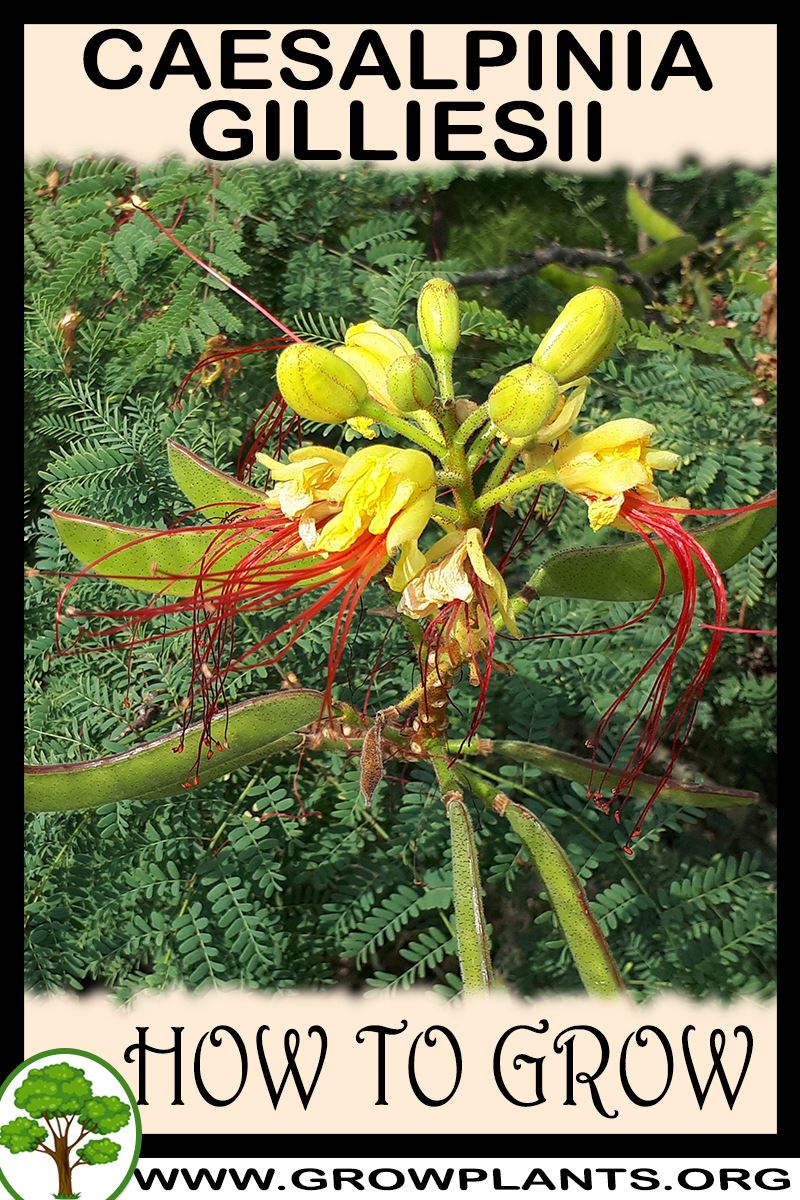
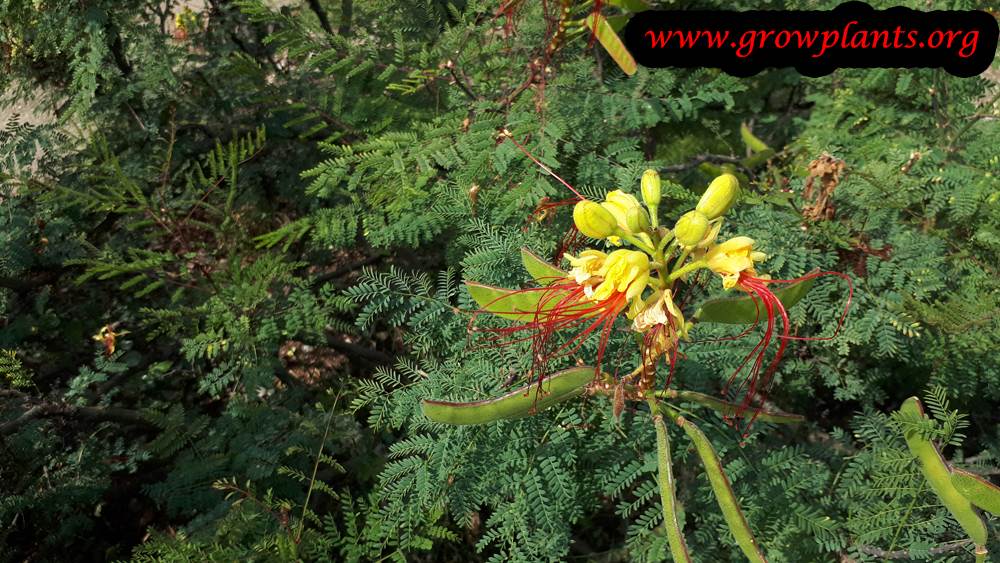
- Flower Characteristics: Yellow to orange-red flowers with long, showy red stamens.
Primary Uses & Landscape Value
- Functional & Ornamental Roles: Ornamental flowering shrub, pollinator and hummingbird plant, nitrogen-fixer, and bonsai subject.
Care Guide: Planting, Soil & Watering
Overview: A tough flowering legume for subtropical, mediterranean, tropical and desert gardens (hardiness zone 7+) that survives light frost. It wants well-drained soil and only a light to moderate supply of water once established.
Quick Care Requirements
| Requirement | Ideal Condition |
|---|---|
| Planting Season | Late winter to spring |
| Growth Rate | Moderate to Fast |
| Soil Type | Well-drained |
| Water Need | Low to Moderate – drought-tolerant once established |
Planting & Establishment
- Best Planting Season: Plant in late winter to spring as the soil warms, so it establishes before summer heat; give it full sun for the best bloom.
- How to Plant:
- Hole Preparation: Dig a hole about twice the width of the root ball and no deeper, keeping the plant at its original level.
- Soil Amendments: Little feeding is needed from this nitrogen-fixer; open up heavy soil with grit to improve drainage.
- Planting Depth: Set the root collar level with the soil surface – don’t bury the stem base.
- Growth Speed & Expectations: Fast to moderate, forming a 1.4-5 m shrub that flowers through the warm season.
Soil, Watering & Drainage Care
- Soil Mix & Drainage Needs: Well-drained soil is essential; it copes with poor ground but not with waterlogging.
- Watering Schedule & Technique:
- Young / Newly Planted: Water regularly through the first season while it establishes.
- Established: Once established it is drought-tolerant – water deeply but infrequently, allowing the soil to dry between.
- Seasonal Adjustments: Water occasionally in summer heat and sparingly, if at all, in cool wet weather.
Climate, Light & Hardiness
Caesalpinia gilliesii (Yellow bird of paradise, botanically also placed in Erythrostemon) suits subtropical, Mediterranean, tropical, and desert climates, thriving in full sun for the best flowering. It tolerates light frost, making it hardier than many similarly showy legume shrubs.
Quick Climate Specifications
| Climate Zones | Subtropical, Mediterranean, tropic, desert |
|---|---|
| USDA Hardiness Zones | 7+ |
| Frost Tolerance | Low to Moderate |
| Light Conditions | Full sun to half shade |
Sunlight & Light Exposure
Optimal Light Setup
Full sun to half shade both work, but the source data notes it blooms best in full sun.
Temperature Extremes & Hardiness
USDA Hardiness & Regional Limits
Hardy to USDA zone 7 and warmer – relatively cold-tolerant for a subtropical/desert legume shrub.
Cold Damage & Winter Protection
Can survive light frost; in its coldest hardy zones it may be deciduous or dieback-prone in winter, resprouting from the base or older wood in spring.
Frost Sensitivity
Tolerates light frost but is not suited to harder or prolonged freezes.
Wind, Humidity & Microclimate
Microclimate Recommendations
An open, sunny, well-drained site suits this fast-growing shrub, which can also be trained as a bonsai or used for nitrogen-fixing hedgerows.
Growing in Pots, Balconies & Indoors
Caesalpinia (pride of Barbados, Caesalpinia pulcherrima) is a large sun-loving flowering shrub (to about 1.4-5 m). The grower does not class it as a houseplant; it can be grown in a big container on a hot, sunny patio, especially while young.
Quick Details
- Container Size: A large, sturdy pot; it can reach 1.4-5 m (5-15 ft), so it suits containers best while young
- Indoor Suitability: Not a houseplant – it needs strong, direct sun
- Best Spot: Full sun to half shade (it blooms best in full sun)
- Soil & Drainage: Free-draining organic mix; strong drainage holes
- Watering in Pots: Low to moderate – fairly drought-tolerant once established; never waterlog
Indoors & On the Windowsill
- Not a houseplant: The grower confirms it will not grow indoors – it needs full sun a room cannot supply.
- Windowsill: Far too large and light-hungry for a sill; grow it outdoors.
- Overwintering: It is frost tender – in cold climates a potted plant can shelter in a bright, frost-free spot over winter.
- Safety: The seeds and pods are toxic if eaten – keep them away from children and pets, whether on the patio or when overwintered indoors.
On a Balcony or Patio
- Light & heat: Give it the hottest, sunniest spot; it loves reflected heat from walls and paving.
- Wind & weight: A tall shrub in a pot can be top-heavy – use a heavy, stable container and shelter it from strong wind.
Choosing the Pot, Soil & Long-Term Care
- Pot & drainage: A large, heavy pot with strong drainage holes; skip a standing-water saucer to avoid root rot.
- Potting mix: A free-draining organic mix.
- Feeding: Feed through the warm growing season, as nutrients leach from the pot.
- Repotting: Pot on as it grows; long term it does best in the ground, so treat pots as a stage while young.
Fertilizing & Feeding
As a legume shrub capable of fixing its own nitrogen at the roots, this desert- and heat-tolerant plant needs only light, balanced feeding to support its yellow-orange-red flower display; it does not depend on added nitrogen the way many non-legume ornamentals do.
Quick Fertilizing Specs
| Feeding Level | Light feeder |
|---|---|
| Main Nutrient Priority | Balanced feeding kept light, since this nitrogen-fixing legume shrub covers much of its own nitrogen need |
| Best Feeding Period | From spring growth through the spring-to-summer bloom |
| Organic Options | A light top-dressing of compost worked into well-drained soil |
| Reduce/Stop Feeding | Ease off as bloom finishes and growth slows heading into cooler weather |
| Micronutrients | Rarely an issue in well-drained soil; correct specific issues only when diagnosed |
| Soil pH | Tolerates a wide range; performs well in lean, well-drained soil |
Feeding by Growth Stage
Spring growth
Support fresh stem and pinnate-leaf growth as the shrub breaks winter rest.
| Nutrient direction | A light, balanced feeding is enough; as a nitrogen-fixing legume this shrub generally needs less added nitrogen than non-legume ornamentals. |
|---|---|
| Timing | As new growth emerges in spring. |
| Frequency | Light feeding is usually enough as growth resumes; this shrub rarely needs more than that. |
| Fertilizer types | A balanced complete garden fertilizer, applied sparingly, A light top-dressing of compost |
| Precautions | Avoid heavy nitrogen feeding, which a nitrogen-fixing legume rarely needs and which can push soft growth at the expense of flowering. |
Spring-to-summer bloom
Sustain the shrub through its yellow-orange-red, red-stamened flower display, which blooms best in full sun.
| Nutrient direction | Keep feeding light and balanced; heavy feeding is not needed to support flowering on this legume shrub. |
|---|---|
| Timing | Through the main spring-to-summer flowering period. |
| Frequency | Light feeding is usually enough through bloom; minimal feeding is needed beyond that. |
| Fertilizer types | A balanced complete garden fertilizer, applied sparingly |
| Precautions | Avoid nitrogen-heavy feeding, which favors leafy growth over the flower display and is rarely needed on a nitrogen-fixing shrub. |
Cool-season rest
Let the shrub rest through cooler weather, whether it drops its leaves after light frost or simply slows where winters stay mild.
| Nutrient direction | None – withhold fertilizer while the shrub is dormant or resting. |
|---|---|
| Timing | From the autumn/winter prune through the cool-season rest period. |
| Frequency | No feeding at this stage. |
| Fertilizer types | No feeding at this stage; the shrub is resting rather than in active growth |
| Precautions | Do not fertilize a dormant or resting shrub; wait for active spring growth before resuming light feeding. |
Nutrient Deficiency Signs & Corrections
Older, lower leaflets fade to pale green or yellow and stem growth slows despite the plant’s own nitrogen-fixing ability.
| Possible causes | poor nodulation limiting nitrogen fixation at the roots, very low overall soil fertility, waterlogged soil suppressing root and nodule activity |
|---|---|
| Appears first on | older, lower leaflets |
| What to check | soil drainage, root and root-nodule condition, recent feeding history |
| Possible correction | Improve drainage first, since poor nodulation is often a root-health issue; apply only a light, balanced feeding if deficiency persists. |
New leaflets emerge pale yellow while the veins stay distinctly green.
| Possible causes | high soil pH limiting iron availability, poorly drained or compacted soil, root stress from recent transplanting |
|---|---|
| Appears first on | newest growth |
| What to check | soil pH and drainage, recent watering patterns, root health |
| Possible correction | Improve drainage and apply a chelated iron product per its label if the soil is alkaline. |
Shrub grows leafy and vigorous but produces few of its characteristic flower clusters.
| Possible causes | overfeeding with a nitrogen-heavy fertilizer on a plant that fixes its own nitrogen, too much shade for a species that flowers best in full sun, excessive pruning removing flowering wood |
|---|---|
| Appears first on | whole-shrub effect rather than a single stem |
| What to check | recent fertilizer type and amount, light exposure, pruning timing and severity |
| Possible correction | Cut back to light, balanced feeding, improve sun exposure, and time pruning to avoid removing flowering wood. |
Pruning, Training & Seasonal Maintenance
This fast-growing legume shrub tolerates pruning well and resprouts vigorously from cut wood, so shaping is mainly a matter of style rather than risk. Because its yellow-orange-red flowers form on the current season’s new growth, the safest and most effective time to cut is late winter, just before the spring flush, which shapes the plant and stimulates more of the very wood that will carry that year’s bloom. Light deadheading through the bloom season also helps curb the self-seeding this species is noted for.
Quick Pruning & Maintenance Specs
| Pruning Tolerance | High – resprouts readily from old wood and the base |
| Primary Pruning Window | Late winter, just before the spring growth flush |
| Secondary Maintenance Window | Through bloom season, deadhead spent flowers/seed pods |
| Typical Frequency | One structural prune a year, plus ongoing deadheading |
| Main Objective | Shape, size control, remove frost dieback, maximize new flowering wood |
| Young Plant Priority | Select 3–5 well-spaced main stems from vigorous basal growth |
| Mature Plant Priority | Renewal of leggy stems, thin crowded interior growth |
| Best Tool Type | Bypass secateurs and loppers |
| Avoid Heavy Pruning During | Just before an expected frost, and at peak bloom |
Pruning by Plant Age & Size
Newly Established
Remove only damaged or transplant-stressed growth; let the young shrub establish before any structural shaping.
Young / Formative
Multi-leader / open form: choose 3–5 well-spaced stems from the vigorous basal shoots this species produces and pinch tips to build a bushy framework rather than a single trunk.
Mature / Established
Renewal-prune the oldest, leggiest basal stems, thin crowded growth for light and air, and control spread as the shrub approaches its 5–15 ft (1.4–5 m) mature size.
Seasonal Pruning Schedule
Dormant/Winter
Objective: structural shaping and frost-dieback cleanup. Remove dead or frost-blackened tips (wait for new growth to clearly show the dead/live line before cutting back), weak thin growth, and crossing stems. Do not remove healthy wood carrying dormant buds. Expect a vigorous spring flush; because bloom forms on this new growth, dormant pruning increases rather than reduces the coming season’s flowering.
Ongoing Sanitary
Through the bloom season, deadhead spent flowers and developing seed pods before they mature, which also reduces the self-seeding/invasive tendency noted for this species.
Flowering & Fruiting Wood
Flowers form on the current season’s new growth, produced after the main pruning flush, much like other warm-climate flowering legumes. Dormant-season structural pruning does not sacrifice the coming bloom and typically stimulates more flowering wood; pruning late in the growing season, once flower buds are forming, removes that flush’s blooms.
Structural Pruning & Training
Select among vigorous basal resprouts to keep an open, well-spaced framework rather than a dense thicket. Remove crossing or rubbing stems, and thin the canopy periodically, since dense multi-stem growth shades the interior and reduces flowering there.
Special Growth to Remove
- Frost-killed dieback tips, cut back to live green cambium once new growth clarifies the dead/alive line.
- Spent flower stalks and forming seed pods, to limit self-seeding.
- Excess basal shoots beyond the chosen framework stems.
Container & Small-Space Pruning
Where grown in a container, or trained as bonsai (both confirmed for this species), pinch new shoot tips repeatedly through the growing season to keep growth compact and dense, since this shrub can otherwise reach 5–15 ft. For bonsai specimens, wire and pinch young shoots after the dormant structural cut to set the permanent framework.
Tools
- Bypass secateurs for most pencil-to-finger-thick stems and deadheading.
- Loppers for thicker basal renewal cuts.
- Precision snips for bonsai-trained specimens.
Tool Hygiene & Disease Risk
Routine – clean, sharp tools are sufficient. No significant transmissible disease is noted for this species; aphids and mites are pests rather than pathogens spread by pruning cuts.
Cut Placement & Technique
Favor thinning cuts back to a main stem or bud over indiscriminate heading, to preserve the shrub’s natural open form. Cut just above an outward-facing bud when shortening a stem, and remove basal suckers flush at their point of origin.
Heavy Pruning & Rejuvenation
Tolerates hard cutback well. Like most fast-growing, multi-stemmed legume shrubs it resprouts vigorously from the base, so an overgrown or frost-damaged specimen can be renewal-pruned hard in late winter. Expect a strong new flush and a temporary reduction in bloom that season while the plant rebuilds.
Post-Pruning Care
Water normally through the spring flush; no extra feeding is needed since the plant already resprouts vigorously. Watch the fresh, soft new growth for aphids and mites, the pests already noted for this species, since flushes of tender growth are what they target.
Common Pruning Mistakes
- Pruning in late spring or summer, removing the developing flower buds on current-season growth.
- Leaving frost-blackened tips unpruned into the growing season, which can carry dieback into live wood.
- Over-thinning down to a single trunk, fighting this shrub’s natural multi-stem habit.
When NOT to Prune
Avoid hard pruning right before an expected frost or cold snap in marginal zones (zone 7 is the species’ noted cold limit), since fresh cuts and the soft growth they stimulate are more cold-tender. Avoid cutting during peak bloom if flowers are wanted that season.
Recommended Tools (by task)
- Bypass secateurs – shaping cuts and deadheading spent pods on pencil-thick stems.
- Loppers – renewal cuts on older basal stems when rejuvenating an overgrown shrub.
- Precision snips – fine pinching for bonsai-trained specimens.
Pruning Troubleshooting
| Problem | Possible Cause | What to Check | Corrective Action |
| Few flowers after pruning | Pruned too late, removing current-season buds | Timing relative to spring bud break | Move structural cuts to late winter, before the new flush |
| Dieback after winter | Frost damage in a marginal zone | Scratch bark for green cambium | Cut back to live wood once new growth clarifies the line |
| Leggy, sparsely flowering shrub | No pinching or renewal pruning | Age and density of oldest stems | Renewal-prune the oldest basal stems, pinch young shoots |
| Volunteer seedlings spreading nearby | Spent pods left to mature and split | Unpruned pods late in the season | Deadhead pods before they dry and split |
Propagation Guide
Caesalpinia gilliesii is propagated almost exclusively from seed, which the site notes is the standard method with no need for grafting or vegetative reproduction. Like most legume-family shrubs it has a hard seed coat that benefits from scarification before sowing, and overall it is an Easy plant to raise from seed once dormancy is broken.
Quick Propagation Specs
| Best Propagation Method | Seed |
| Propagation Difficulty | Easy |
| Seed True-to-Type | Usually true-to-type (species, not a named cultivar) |
| Best Propagation Season | Winter to spring (matching the site’s planting season) |
| Seed Germination Time | Typically 1–4 weeks after scarification |
| Germination Temperature | Roughly 20–27°C (68–81°F) |
Growing from Seed
Seed Handling & Viability
Seed of this legume shrub has a hard outer coat and can remain viable in dry, cool storage for a fair while, but stored seed germinates far more reliably once the coat is broken.
Dormancy & Pre-Sowing Treatment
Scarify seed (nick or lightly sand the coat, or soak in warm water for a day) before sowing – this is standard practice for Caesalpinia/Erythrostemon and related legumes to overcome hard-seed-coat dormancy; unscarified seed can germinate very slowly and unevenly.
Sowing Season
Sow in winter to spring, matching the site’s recommended planting season.
Germination Conditions
Warm conditions (roughly 20–27°C / 68–81°F) with moist, well-drained soil favor germination; being desert- and subtropics-adapted, seedlings do not want to sit wet.
Germination Time
Typically within a few weeks once scarified, though timing varies with seed freshness and temperature.
Seedling Care
Grow seedlings on in full sun to half shade with well-drained soil, matching the plant’s general light and drainage preferences, before transplanting once established.
Bloom & Flower Guide
Quick Details
- Bloom Season: Spring to summer
- Flower Appearance: Yellow flowers shading to orange-red, with long, showy red stamens standing well clear of the petals
- Edibility: Not edible – the seeds and green pods are toxic and cause stomach upset, so it is grown strictly as an ornamental
Detailed Blooming Overview
Yellow bird of paradise flowers through spring and summer, carrying spikes of soft yellow blooms whose most striking feature is a spray of long red stamens that arch out like fine wires. The airy, exotic flowers are a strong draw for hawkmoths and hummingbirds in the evening.
Flower Characteristics
- Yellow petals flushing toward orange-red.
- Long, prominent red stamens that project dramatically from each flower.
Bloom Care & Thinning
- Encouraging bloom: Full sun and summer heat bring the most flowers; a light prune keeps the shrub shapely.
- Safety: Keep the developing seedpods away from children and pets, as the seeds are toxic.
Pests, Diseases & Troubleshooting
Overview: Pride-of-Barbados and its Caesalpinia relatives are tough, heat- and drought-loving legumes with few serious problems; the pests they attract are the common sap-suckers and leaf-chewers, and they shrug off most disease unless soils stay wet. Their main real risks are root rot in poorly drained ground and cold dieback at the edge of their range.
Quick Troubleshooting Overview
| Issue / Pest | Main Symptom | Primary Solution |
|---|---|---|
| Scale insects | Bumps on stems/leaves, honeydew, sooty mould | Prune, horticultural oil, beneficials |
| Aphids | Sticky, curled new growth on shoots and buds | Water jet, insecticidal soap |
| Caterpillars | Chewed and notched leaflets | Hand-pick, Bt |
| Whitefly | Tiny white flies, honeydew, yellowing | Sticky traps, soap/oil, encourage predators |
| Spider mites | Stippling and webbing in hot dry spells | Hose off, oil/soap, raise humidity |
| Root rot | Wilting and dieback in wet soil | Improve drainage, ease watering |
Common Pests & Management
- Scale insects (armoured & soft scale):
- Symptoms: Brown, grey or waxy limpet-like bumps along stems, leaf midribs and undersides, with yellowing, honeydew and sooty mould from soft-scale types.
- Prevention & Control: Prune out heavily encrusted wood and wash foliage; smother with horticultural oil, covering stems and undersides, and repeat. Conserve ladybirds and parasitic wasps that keep scale in balance.
- Aphids (Aphis spp.):
- Symptoms: Green, black or yellow clusters on soft new shoots, flower buds and seed pods, causing curling, honeydew and sooty mould.
- Prevention & Control: Blast off with water and encourage lacewings, ladybirds and hoverflies; use insecticidal soap for persistent colonies, keeping open flowers clear for pollinators.
- Caterpillars (loopers and leaf-feeders):
- Symptoms: Chewed, notched or skeletonised leaflets, with frass and larvae on the foliage.
- Prevention & Control: Hand-pick and remove egg masses; encourage birds and parasitic wasps. Spot-treat outbreaks with Bacillus thuringiensis (Bt), which is selective and pollinator-safe.
- Whitefly (Bemisia / Trialeurodes spp.):
- Symptoms: Tiny white flies that rise in clouds when foliage is disturbed, with honeydew, sooty mould and yellowing on the leaf undersides where they cluster.
- Prevention & Control: Use yellow sticky traps to monitor and reduce numbers, encourage Encarsia parasitoids, and spray insecticidal soap or horticultural oil on leaf undersides in the evening.
- Spider mites (Tetranychus spp.):
- Symptoms: Fine pale stippling, bronzing and faint webbing on leaflets during hot, dry, dusty weather.
- Prevention & Control: Hose down foliage, relieve drought stress, and treat with horticultural oil or insecticidal soap on undersides if numbers climb.
- Borers & mealybugs (occasional):
- Symptoms: Borers leave small holes, sawdust-like frass and wilting branch tips; mealybugs form white cottony tufts with honeydew.
- Prevention & Control: Prune out and destroy borer-infested wood and keep plants vigorous, since borers target stressed tissue; treat mealybugs with alcohol swabs, soap or oil.
Diseases & Fungal Issues
- Leaf spots (fungal, Cercospora and others):
- Symptoms: Brown or black spots that may merge on leaflets, mostly cosmetic and worse in wet, humid seasons.
- Treatment & Management: Rake up fallen leaves, water at the base rather than overhead, and improve spacing and airflow. Fungicide is rarely needed; copper helps in persistently wet weather.
- Root & collar rot (Phytophthora / Pythium):
- Symptoms: Wilting despite moist soil, dark roots and crown, and dieback – driven by heavy, waterlogged soils.
- Treatment & Management: Prevent with sharp drainage and restrained watering; these are drought-adapted plants that resent wet feet. Improve drainage; badly rotted plants seldom recover.
- Sooty mould (secondary):
- Symptoms: Black powdery film on leaves growing on the honeydew of aphids, scale, whitefly or mealybugs.
- Treatment & Management: Control the sap-sucking pest producing the honeydew; the mould then weathers off and can be rinsed away.
Growing Difficulties & Abiotic Problems
- Root rot from overwatering / poor drainage:
- Cause & Symptoms: Yellowing, wilting and dieback in wet or clay soils – the most likely serious problem for these drought-lovers.
- Correction Strategy: Plant in free-draining soil, water established plants deeply but infrequently, and avoid soggy sites.
- Cold / frost dieback:
- Cause & Symptoms: Stems blacken and die back after frost at the edge of their hardiness; the plant is tender.
- Correction Strategy: In marginal climates grow in a warm, sheltered spot or container; cut back frost-damaged wood in spring, as plants usually resprout from the base in mild-winter areas.
- Iron chlorosis:
- Cause & Symptoms: Pale new leaves with green veins in alkaline or waterlogged soils.
- Correction Strategy: Improve drainage and soil organic matter; apply chelated iron as a short-term correction and avoid over-liming.
- Note on identity:
- Cause & Symptoms: The source data lists the Latin as C. pulcherrima but the title is C. gilliesii, a distinct, more cold-hardy species with yellow flowers and long red stamens.
- Correction Strategy: Treated here as C. gilliesii per the title; the genus pest/disease profile applies to both, so the guidance holds regardless.
What Helps – Products & Tools
For these legumes the toolkit is insecticidal soap and horticultural/neem oil for scale, aphids, whitefly, mealybugs and mites, Bacillus thuringiensis (Bt) for caterpillars, yellow sticky traps for whitefly, and copper fungicide for leaf spots in wet weather – though good drainage and unstressed, sunny growth prevent most problems without any spraying.