
Plant Profile & Key Characteristics
Overview: Begonia grandis (hardy begonia) is a fast- to moderate-growing herbaceous plant reaching 30-60 cm (12-24 in) and is the most cold-hardy begonia. It is grown as an ornamental for shady borders and containers.
Quick Specifications
| Specification | Attribute |
|---|---|
| Plant Type / Life Cycle | Perennial (can also be grown as an annual) |
| Foliage Type | Evergreen or deciduous (dies back to the tuber where cold) |
| Mature Size | 30-60 cm (12-24 in) tall |
| Growth Rate | Fast to moderate |
| Root System | Tuberous – also spreads by bulbils |
| Toxicity | Toxic to pets – contains oxalates |
| Hardiness | USDA zones 6-9 (10a with care) |
Growth Form & Structure
- Height & Spread: 30-60 cm (12-24 in) in the ground; well suited to containers in about 10-20 L (2.5-5 gal)
- Growth Habit & Form: Upright herbaceous begonia growing from a tuber, spreading by small bulbils formed in the leaf axils
- Lifespan & Maturity: The tuber persists for years, dying back and resprouting each season
Anatomy & Physical Features
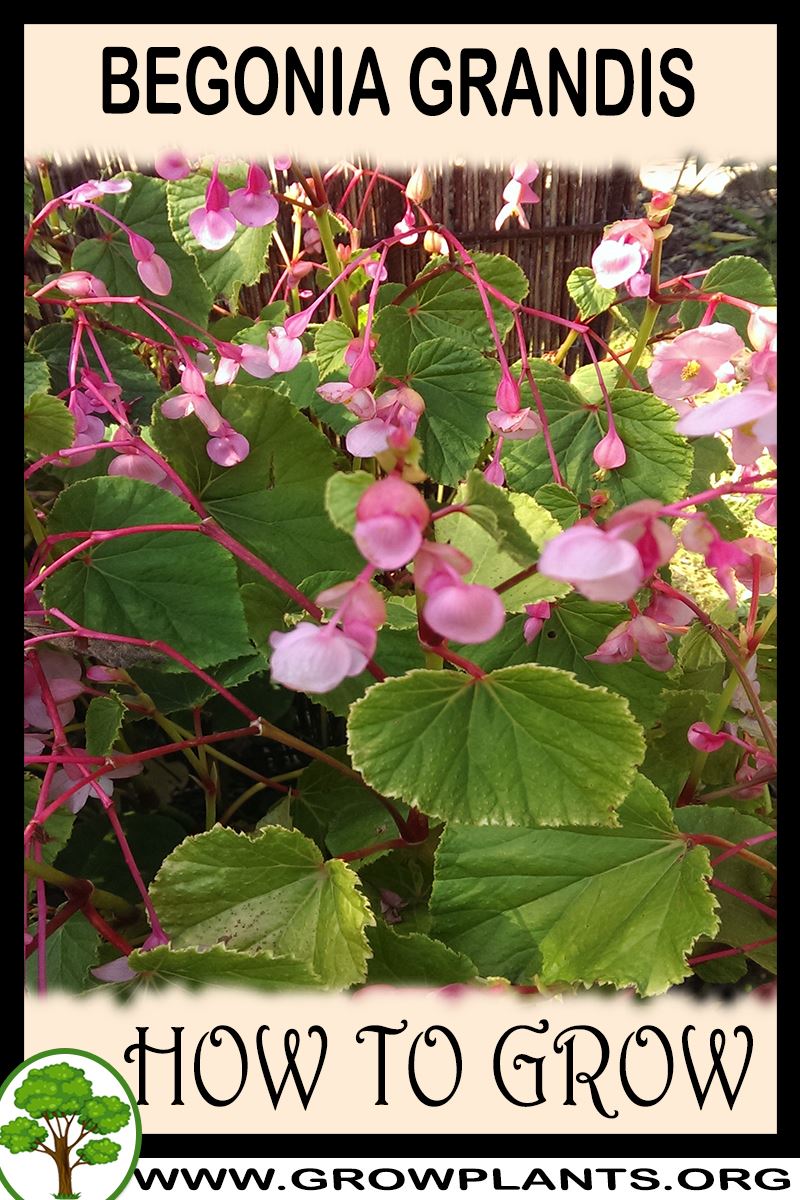
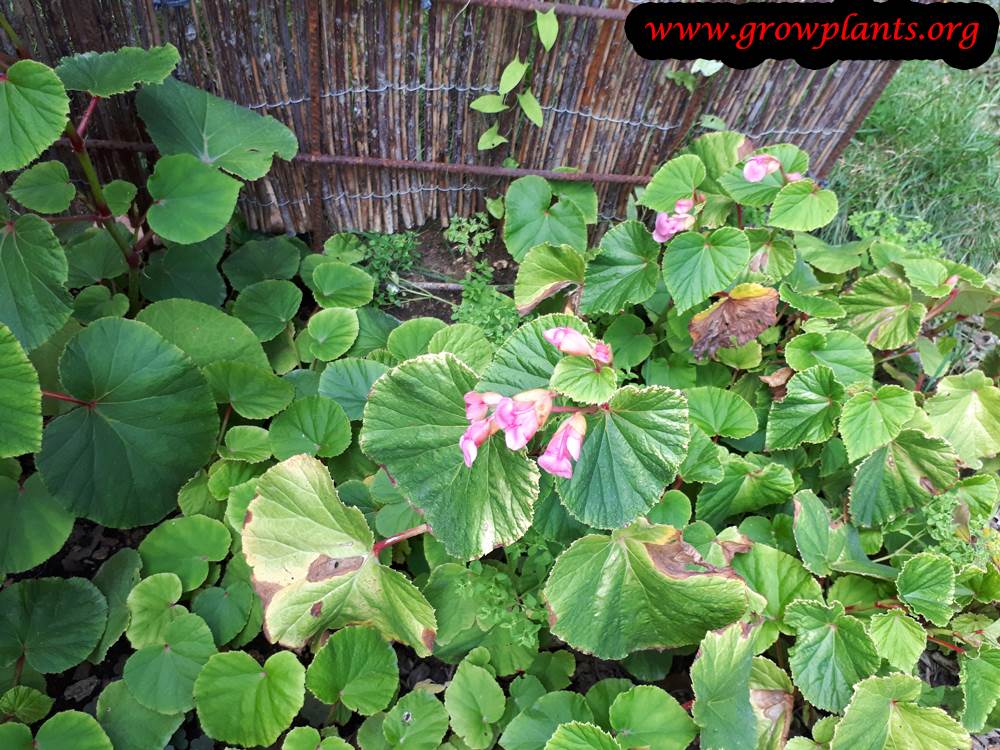
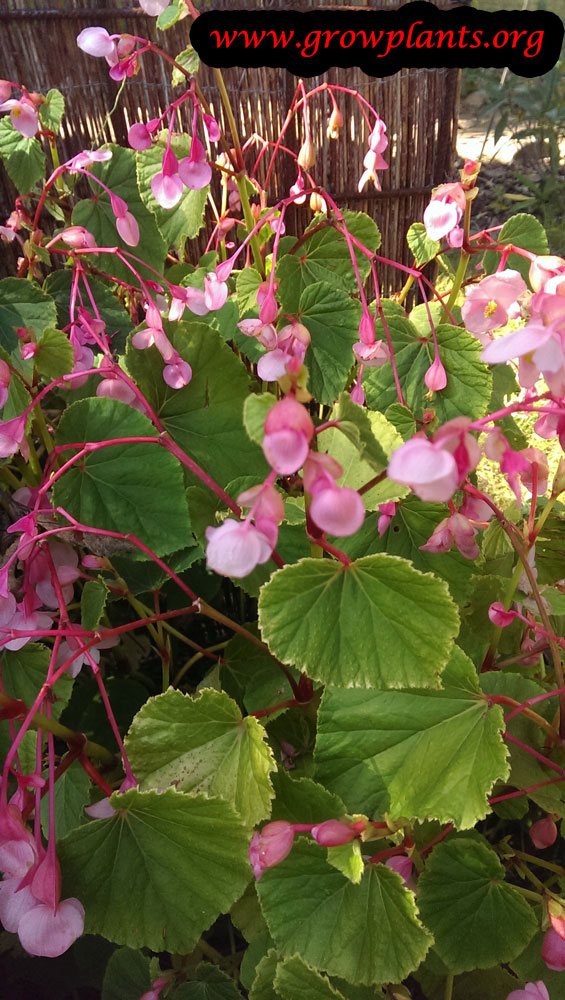
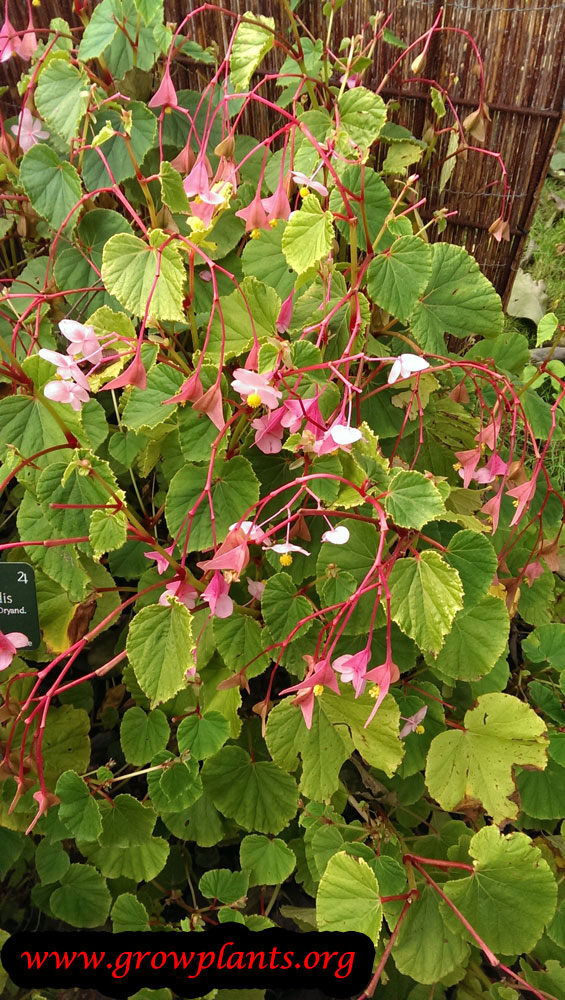
- Leaves & Foliage: Green, heart-shaped leaves with serrated margins, often with reddish veins beneath
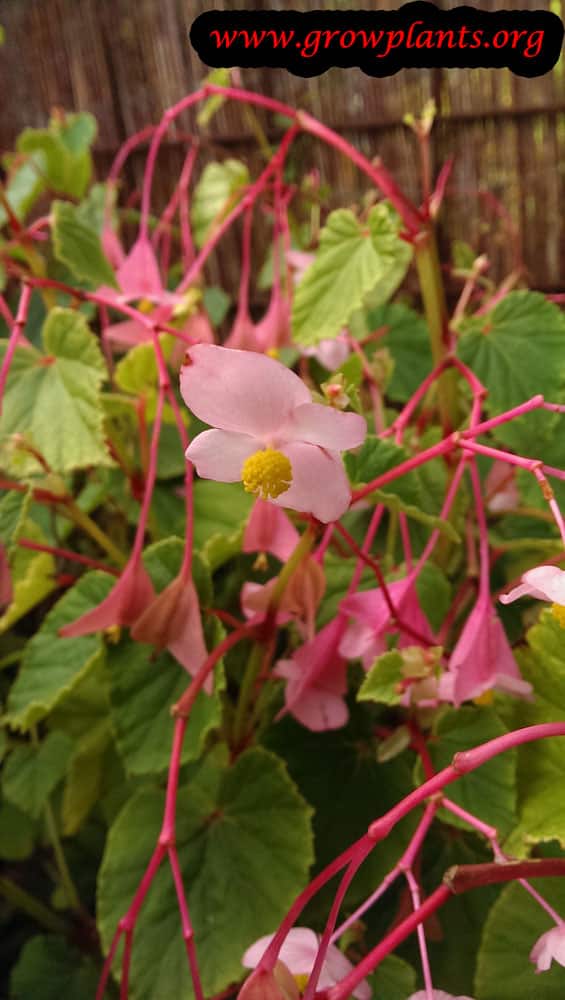
- Flower Characteristics: Pink or white flowers with four petals of two sizes in opposite pairs (see the Bloom guide)
Primary Uses & Landscape Value
- Functional & Ornamental Roles: Ornamental for shady borders and woodland gardens, and container plant
Care Guide: Planting, Soil & Watering
Overview: Begonia grandis (hardy begonia) grows best in half to full shade in humid conditions in rich, moist, humus-heavy soil topped with mulch. It wants steady, generous moisture and good drainage; it is the most cold-tolerant begonia here but still resents waterlogged soil and intense heat.
Quick Care Requirements
| Requirement | Ideal Condition |
|---|---|
| Planting Season | Spring to summer in zones 6–8; spring to autumn in zones 9–10a |
| Growth Rate | Moderate to Fast |
| Soil Type | Rich, moist, humus-heavy soil with mulch; well-aerated and free-draining |
| Water Need | Moderate to High – keep evenly moist, letting only the surface dry between waterings |
Planting & Establishment
- Best Planting Season: Plant from spring through summer in cooler zones (6–8), extending into autumn in milder zones (9–10a). Protect from heat waves, which can kill the plant.
- How to Plant:
- Hole Preparation: Dig a hole a little larger than the root ball in a shaded, sheltered, humid spot.
- Soil Amendments: Mix in organic matter, chopped dead leaves and humus, and mulch the surface to hold moisture.
- Planting Depth: Set the plant in place and cover it lightly, keeping the crown at soil level.
- Growth Speed & Expectations: Moderate to fast, forming a clump about 30–60 cm tall; it can be invasive.
Soil, Watering & Drainage Care
- Soil Mix & Drainage Needs: Needs a well-ventilated, free-draining, organic-rich soil; in containers use potting mix or peat soil with perlite or vermiculite, and avoid a water-filled saucer to prevent rot.
- Watering Schedule & Technique:
- Young / Newly Planted: Water regularly to keep the soil consistently moist while establishing.
- Established: Water so the soil stays moist and surplus drains away, letting only the surface dry between waterings.
- Seasonal Adjustments: Keep moist and humid in warm growth; reduce sharply as it dies back for winter dormancy.
Climate, Light & Hardiness
Begonia grandis (hardy begonia) is unusual among begonias for its good cold hardiness, suited to subtropical, Mediterranean, and temperate climates, growing best in half to full shade (avoiding midday sun). It is also heat sensitive, so both cold and heat extremes matter for this species.
Quick Climate Specifications
| Climate Zones | Subtropics, Mediterranean, Temperate (also grown indoors) |
|---|---|
| USDA Hardiness Zones | 6–9; possible in zone 10a with the right care |
| Frost Tolerance | Moderate |
| Light Conditions | Half Shade (better without midday sun) / Full Shade (with adequate light); in hot-summer climates, shade is essential in summer |
Sunlight & Light Exposure
Optimal Light Setup
Prefers half shade without direct midday sun, or full shade with enough ambient brightness.
Shade & Heat Management
In hot-summer climates, shade during summer is described as essential, reflecting a notable heat sensitivity for this species.
Temperature Extremes & Hardiness
USDA Hardiness & Regional Limits
Hardy across zones 6–9, with zone 10a possible given the right care – notably more cold tolerant than most other begonias in this dataset, consistent with its common name "hardy begonia."
Cold Damage & Winter Protection
Top growth typically dies back with frost within its zone range, with the tuberous root surviving to resprout in spring.
Extreme Heat Tolerance
Poor – a heat wave can kill the plant, so summer heat protection matters as much as winter cold protection for this species.
Frost Sensitivity
Tolerates typical zone 6–7 winter frost at the root, though foliage is frost tender and dies back.
Wind, Humidity & Microclimate
Humidity Preferences
Prefers humid conditions with consistently moist soil.
Microclimate Recommendations
A shaded, humid site protected from both hard freezes and summer heat spikes suits this species best.
Growing in Pots, Balconies & Indoors
Hardy begonia (Begonia grandis) is a fine houseplant given enough light, and an excellent container plant for a shaded patio or balcony. It reaches about 30-60 cm (12-24 in), so a medium pot suits it well.
Quick Details
- Container Size: 10-20 L (2.5-5 gal)
- Indoor Suitability: A good houseplant when given bright, indirect light
- Best Spot: Bright but sheltered – part shade or bright shade with light; avoid harsh midday sun
- Soil & Drainage: Well-ventilated, free-draining, organic-rich mix – potting mix, or peat with perlite or vermiculite
- Watering in Pots: Keep the soil moist and let the water drain out freely; do not leave it standing in a saucer
Indoors & On the Windowsill
- As a houseplant: Grows well indoors as long as it gets enough light – a bright spot out of scorching direct sun. Keep it warm, in humid air, and let the surface dry slightly between waterings.
- Windowsill: A bright sill with gentle direct light is ideal; protect from cold draughts and midday sun through glass.
- Overwintering: It dies back and rests in the cold season; keep the pot cool and barely moist while dormant, then resume normal care as it regrows.
On a Balcony or Patio
- Light & shelter: Give it bright shade or morning sun and shelter from wind and hot midday sun. Walls and paving reflect heat, so pots dry quickly – check moisture often in warm weather.
Choosing the Pot, Soil & Long-Term Care
- Pot & drainage: A 10-20 L pot with strong drainage holes; the grower advises against using a saucer under the pot, and to let water run through. Choose a pot with strong drainage holes; skip a standing-water saucer, or empty it promptly, so the roots never sit wet. Terracotta breathes and dries faster, while glazed or plastic pots hold moisture longer.
- Potting mix: Well-ventilated with good drainage and rich in organic matter – potting mix, or peat with perlite or vermiculite.
- Feeding: Potted plants use up their soil faster because nutrients leach out with every watering, so feed a little more often than plants in open ground.
- Repotting: Grown as a perennial, switch the soil every two years and prune part of the roots and the plant to keep it vigorous.
- Safety: Begonias are toxic to cats and dogs (the tubers most of all) – keep them out of reach of pets and children.
Fertilizing & Feeding
A cold-hardy, deciduous perennial that dies back each winter; feed lightly through its growing and blooming season and stop entirely once it dies back, since the dormant rootstock has no leaves or active roots to use fertilizer.
Quick Fertilizing Specs
| Feeding Level | moderate |
|---|---|
| young_feeding | Newly planted starts do best with light feeding while roots establish. |
| mature_feeding | Established clumps need only modest, steady feeding through the growing season. |
| Main Nutrient Priority | Balanced nutrition with adequate nitrogen for leafy growth and enough potassium to support the late-season flowers. |
| Best Feeding Period | Spring through mid-summer, ahead of the late-summer to autumn bloom. |
| Organic Options | Humus and organic matter worked into the planting hole and topdressed each spring support steady nutrition. |
| Micronutrients | Not typically needed beyond a balanced complete fertilizer in reasonably good garden soil. |
| Soil pH | Prefers a rich, well-drained soil without an extreme pH. |
| Reduce/Stop Feeding | Reduce feeding once flowering begins and stop completely once the plant dies back for winter. |
Feeding by Growth Stage
Spring Emergence and Growth
Support the flush of new shoots and leaves as this perennial resprouts from its dormant rootstock in spring.
| Nutrient direction | A balanced, nitrogen-adequate fertilizer to build leafy growth quickly once shoots emerge. |
|---|---|
| Timing | As new shoots emerge from the ground in spring. |
| Frequency | Light feeding once shoots are up and growing is usually enough to carry the clump into its bloom period. |
| Fertilizer types | A balanced, complete fertilizer for herbaceous perennials, granular or liquid |
| Precautions | Wait until shoots are visibly growing before feeding; there is little for fertilizer to support before then. |
Late-Summer to Autumn Bloom
Sustain the plant through its characteristic late bloom without pushing excess new leaf growth this late in the season.
| Nutrient direction | Balanced feeding at a lighter rate; ease off nitrogen as the season progresses toward bloom. |
|---|---|
| Timing | Mid to late summer into autumn, through the bloom period. |
| Frequency | A light feeding early in this stage is usually enough; established clumps often need nothing further before bloom. |
| Fertilizer types | A balanced, complete fertilizer for herbaceous perennials, applied sparingly |
| Precautions | Avoid feeding late in this stage; pushing new growth close to the plant’s natural die-back leaves it without time to harden before dormancy. |
Winter Dormancy
Let the top growth die back completely and the rootstock rest through winter without any feeding.
| Nutrient direction | None – withhold fertilizer once the plant has died back. |
|---|---|
| Timing | From the first hard frost, once foliage dies back, through winter. |
| Frequency | No feeding at this stage. |
| Fertilizer types | No feeding at this stage – resume only after new shoots emerge in spring |
| Precautions | Do not fertilize the dormant rootstock; there are no leaves or active roots present to use it, and it can wash away or build up salts before growth resumes. |
Nutrient Deficiency Signs & Corrections
Pale green, smaller-than-usual leaves and slow shoot growth in spring.
| Possible causes | Insufficient nitrogen in the surrounding soil, Leaching from heavy spring rains, Root competition from nearby trees or shrubs, Thin or depleted garden soil |
|---|---|
| Appears first on | New shoots as they emerge |
| What to check | Review recent feeding history, Check for root competition nearby, Assess soil organic matter content |
| Possible correction | Resume balanced feeding once shoots are actively growing and enrich the soil with organic matter. |
Interveinal yellowing on older leaves while veins remain green.
| Possible causes | Magnesium leached from sandy or heavily irrigated soil, High potassium feeding competing with magnesium uptake, Naturally low-magnesium soil, General root stress |
|---|---|
| Appears first on | Older, lower leaves |
| What to check | Review feeding history for heavy potassium use, Check soil type and drainage, Confirm symptoms are confined to older leaves |
| Possible correction | Use a balanced feeding program and consider a magnesium-containing product if the pattern is clear and persistent. |
Brown, scorched leaf margins and reduced bloom late in the season.
| Possible causes | Low potassium in sandy or leached soil, Drought stress ahead of the bloom period, A nitrogen-heavy feeding pattern, Salt buildup from over-fertilizing |
|---|---|
| Appears first on | Older leaves, starting at the margins |
| What to check | Review fertilizer balance used earlier in the season, Check for drought stress heading into bloom, Look for salt crust on the soil surface |
| Possible correction | Switch to a balanced, potassium-inclusive fertilizer earlier in the season and keep the clump watered through dry spells. |
Pruning, Training & Seasonal Maintenance
Begonia grandis is a herbaceous perennial that dies back to its underground rootstock every autumn or winter, so most of its ‘pruning’ is simply removing dead top growth once frost or cold has finished it off, rather than shaping a persistent structure. The one thing worth actively managing during the growing season is deadheading, both to keep flowers coming and to limit the small bulbils and self-sown seedlings that make this species spread more readily than most gardeners expect.
Quick Pruning & Maintenance Specs
| Pruning Tolerance | High for dead/dying top growth, since it is cut back naturally each year regardless |
| Primary Pruning Window | Autumn to winter, once frost has killed the top growth back |
| Typical Frequency | One seasonal cutback, plus ongoing deadheading through summer/autumn bloom |
| Main Objective | Tidy dead foliage and limit unwanted spread from spent flowers and bulbils |
| Best Tool Type | Precision snips or bypass secateurs – soft herbaceous stems, no woody wood |
Pruning by Plant Age & Size
Newly Established
No pruning needed beyond removing any transplant-damaged leaves while the plant settles in.
Young / Formative
No structural training; it forms a naturally rounded clump of soft stems from its rootstock.
Mature / Established
Deadhead through the bloom season and cut the whole clump back once the top growth is killed by cold at season’s end.
Seasonal Pruning Schedule
Ongoing Sanitary
Objective: sustain flowering and limit self-spread. Remove: spent flower stems before they set the small bulbils and seed this species uses to spread, along with any damaged leaves. Do not remove: healthy foliage still supporting the clump’s growth.
Dormant / Winter
Objective: seasonal tidy. Remove: all frost-blackened or collapsed top growth, cut down close to the ground once it has died back on its own. Do not remove anything before the foliage has actually died back – it is still feeding the rootstock. Expected response: fresh shoots re-emerge from the rootstock the following spring.
Structural Pruning & Training
Not applicable – this species has no persistent above-ground framework to train or thin.
Special Growth to Remove
- Spent flower stems – deadheading also reduces the bulbils and self-sown seedlings that make this plant spread, which the source notes it can do aggressively
- Frost-killed or collapsed foliage, once fully dead
- Unwanted volunteer seedlings/bulbil plantlets found spreading beyond where they’re wanted
Container & Small-Space Pruning
Growing it in a container is actually a useful way to curb its self-spreading habit. Deadhead promptly to prevent bulbils dropping into the pot or nearby beds, and cut back the same way as an in-ground plant once it dies down for winter.
Tools
Precision snips or bypass secateurs for deadheading and the seasonal cutback – all growth is soft and herbaceous.
Tool Hygiene & Disease Risk
Routine – clean, sharp tools are enough. Watch for powdery mildew; remove and discard affected foliage rather than leaving it in the bed.
Cut Placement & Technique
Deadhead by cutting the flower stem back to the nearest leaf node. For the seasonal cutback, cut all top growth down to a few centimetres above ground level once it has died back.
Post-Pruning Care
After the winter cutback, no special care is needed – the rootstock is dormant. During the growing season, water as normal after deadheading.
Common Pruning Mistakes
- Letting flowers go to seed/bulbil unchecked, then being surprised by volunteer seedlings coming up nearby the following year
- Cutting back green top growth before it has actually died down in autumn, before it has finished feeding the rootstock
When NOT to Prune
Avoid cutting back the top growth while it is still green and active in summer; wait until it collapses with cold in autumn/winter.
Recommended Tools (by task)
- precision_snips – deadheading through the bloom season
- bypass_secateurs – the single autumn/winter cutback of the whole clump
Propagation Guide
Hardy begonia can be grown from stem cuttings, from seed, or simply left to self-propagate: mature plants form small bulbils (bulb-like growths) in the leaf axils that drop and root on their own, and the plant regrows each spring from a below-ground tuberous rootstock – this self-seeding and bulbil habit is part of why the site notes it can become invasive. For most gardeners, cuttings are the easiest deliberate method.
Quick Propagation Specs
| Best Propagation Method | Stem cuttings |
| Alternative Methods | Bulbils (self-sown); seed; division of the tuberous rootstock |
| Propagation Difficulty | Easy |
| Seed True-to-Type | Usually true-to-type for the species |
| Vegetative True-to-Type | Yes |
| Best Propagation Season | Spring to summer for cuttings and seed; divide the dormant rootstock in early spring |
| Seed Germination Time | 2–5 weeks |
| Cutting Rooting Time | Several weeks under warm, humid conditions |
| Germination Temperature | 22–26°C (70–80°F) |
| Seed Sowing Depth | On the surface of the soil, or at most 0.5 cm (0.25 inch) |
Growing from Seed
Seed Handling & Viability
Seed is very fine; store in a dry, dark location until sowing.
Sowing Season
Spring to summer, or start indoors in early winter.
Sowing Depth & Orientation
Sow on the surface of a potting or peat-based mix with vermiculite, or cover with at most 0.5 cm (0.25 inch); pressing the seed onto vermiculite aids germination.
Germination Conditions
High humidity and 22–26°C (70–80°F); mist lightly around twice a day.
Germination Time
2–5 weeks.
Seedling Care
Seedlings are delicate; keep humidity high and give more light gradually, letting them size up before transplanting.
Stem Cuttings
Cutting Type
Stem tip cuttings.
Cutting Preparation
Conditions need to stay above about 22–26°C (72–80°F) with water/soil that isn’t cold.
Rooting Setup
Root in high humidity and full shade, either in water (changed every few days) or moist soil kept misted; a peat-based mix works well.
Rooting Hormone
Not necessary – this species is easy to start from cuttings, though hormone can speed rooting.
Division, Offsets, Pups & Suckers
Bulbils
Small bulbil-like growths form in the leaf axils in late summer/autumn; they drop and can root and grow into new plants on their own, or can be collected and planted shallowly like tiny bulbs. This is a major reason the site flags the plant as potentially invasive in the garden.
Rhizomes, Tubers, Bulbs & Corms
Tuber Division
The plant dies back to a below-ground tuberous rootstock over winter; while dormant in early spring, the rootstock can be lifted and divided into sections, each with a growth point, before replanting.
Bloom & Edible Flower Guide
Quick Details
- Bloom Season: Summer into autumn
- Time to First Bloom: In its first or second season once established
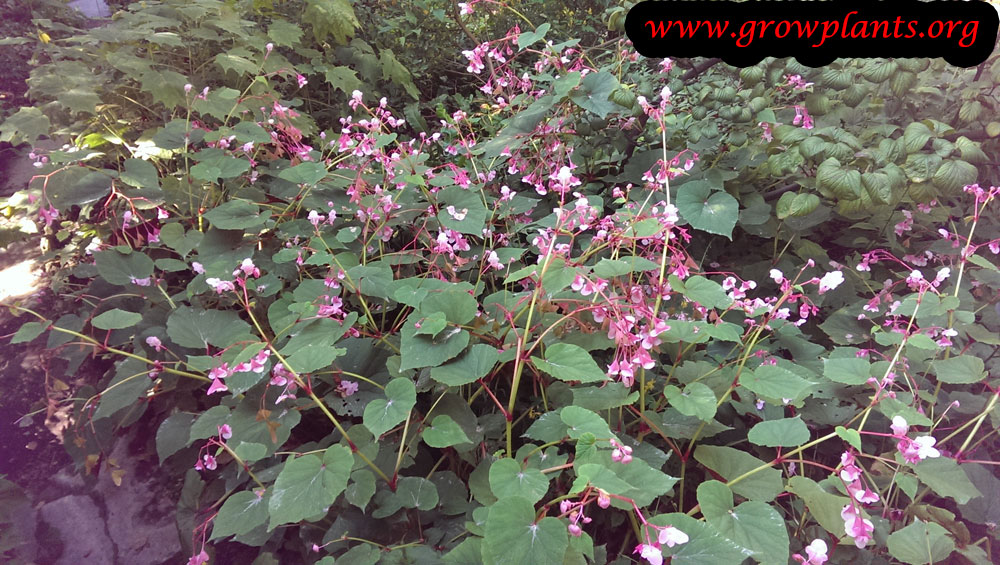
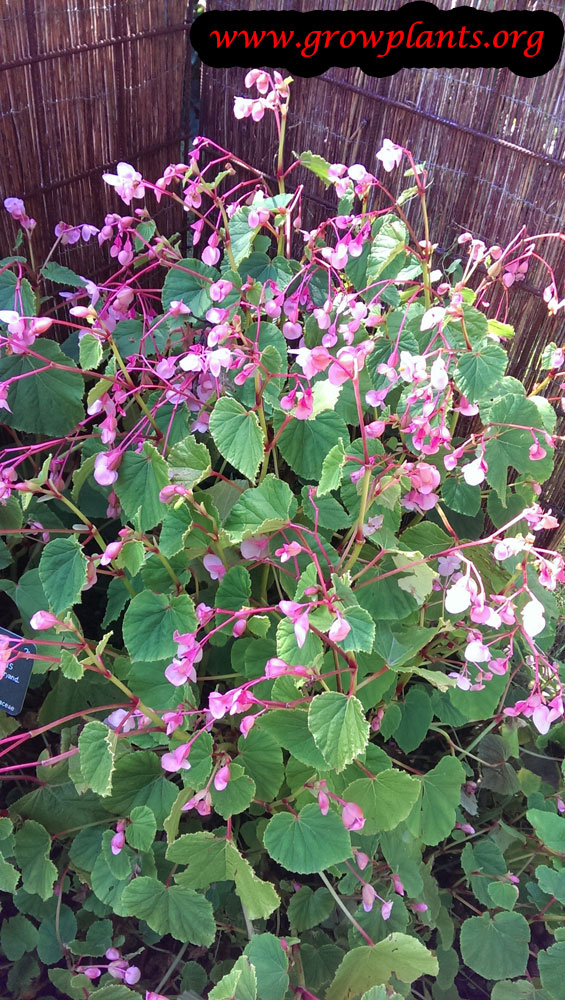
- Flower Appearance: Loose, dangling sprays of pink or white flowers, each with four petals in two sizes arranged in opposite pairs
- Edibility: The flowers are edible with a mild citrus tartness – enjoy in moderation, as begonias contain oxalic acid. Note that begonias are toxic to cats and dogs.
Detailed Blooming Overview
Hardy begonia is the cold-tolerant begonia, sending up airy sprays of pink or white flowers in late summer and autumn above attractively veined leaves. As with other begonias, the flowers are edible in moderation.
Flower Characteristics
- Pink or white flowers with four petals in two sizes, in opposite pairs.
- Carried in loose, pendent sprays.
Bloom Care & Thinning
- Best display: Part shade with moist, well-drained soil gives the best bloom.
- Spread: It multiplies gently by small bulbils, so expect a slowly expanding late-season display.
Fruit & Uses
Begonia grandis (hardy begonia) produces edible pink or white flowers with a tart, citrus-like flavour from natural oxalic acid; like other Begonia species, they are used fresh as a garnish rather than cooked. No other part of this plant is an established food.
Quick Edible Specs
| Edible Parts | Flowers |
|---|---|
| Main Use(s) | Culinary garnish; edible-flower salads and desserts |
| Eaten Raw or Cooked | Raw |
| Preparation Required | None beyond picking and rinsing |
| Harvest Season | Summer to autumn, while the plant is in bloom |
| Storage | Best used fresh the same day |
| Safety/Toxicity Caveat | Contains oxalic acid; use sparingly as a garnish and avoid if prone to kidney stones, gout, or on an oxalate-restricted diet |
Flowers & Flower Buds
The pink or white flowers grow in opposite pairs with petals in two sizes; pick fully open flowers just before use. Their tart flavour and delicate texture suit them as a scattered garnish over salads or desserts; they are not typically cooked.
Preparation, Uses & Safety
Rinse gently and use fresh; treat as an occasional garnish rather than a bulk ingredient because of the oxalic acid content. As with other Begonia species, this edible use is light and decorative and should always carry the oxalate caution.
Pests, Diseases & Troubleshooting
Overview: Begonia grandis (hardy begonia) is the toughest, most robust of the group – a hardy, tuberous, shade perennial that dies back each year and returns from bulbils and tubers, and is generally little troubled. Its main nuisances are slugs and snails and, in humid crowding, powdery mildew and Botrytis; the standard begonia sap-suckers and mites are minor outdoors. Give it moist, humus-rich, well-drained shade and it largely looks after itself.
Quick Troubleshooting Overview
| Issue / Pest | Main Symptom | Primary Solution |
|---|---|---|
| Slugs & snails | Holes and slime trails on soft leaves and new shoots | Iron-phosphate bait, traps, hand-pick at night |
| Powdery mildew | White powdery film on leaves in humid crowding | Airflow, spacing, sulphur/bicarbonate |
| Botrytis | Grey fuzzy rot on leaves/stems in cool damp air | Remove debris, improve airflow |
| Aphids / whitefly | Sticky new growth, white flies | Hose off, insecticidal soap |
| Rot in wet soil | Blackened base, collapse in soggy ground | Improve drainage, avoid waterlogging |
| Slow spring emergence | No growth until late; appears ‘dead’ | Be patient – it emerges late; mark its position |
Common Pests & Management
- Slugs and snails:
- Symptoms: Irregular holes and ragged edges with slime trails on the soft leaves and emerging shoots, especially in the damp shade this plant enjoys; worst on new spring growth.
- Prevention & Control: Hand-pick at night, set beer traps, use copper barriers around clumps, and scatter iron-phosphate pellets; keep surrounding debris cleared to reduce hiding places.
- Mealybugs (Pseudococcus spp.):
- Symptoms: White cottony tufts in leaf axils and stem joints with honeydew; minor outdoors but possible on sheltered or containerised plants.
- Prevention & Control: Dab with alcohol, hose off, and use insecticidal soap or horticultural oil if needed; usually a non-issue in the open garden.
- Aphids and whitefly:
- Symptoms: Colonies or white flies on soft new growth with honeydew and sooty mould, mainly on sheltered plants.
- Prevention & Control: Blast off with water, conserve natural enemies, and use insecticidal soap on persistent colonies.
- Spider mites (Tetranychus urticae):
- Symptoms: Fine stippling on leaves only when grown too hot and dry (uncharacteristic for this shade plant).
- Prevention & Control: Correct siting to cooler, moister shade and hose the foliage; insecticidal soap if it persists.
Diseases & Fungal Issues
- Powdery mildew (Golovinomyces / Oidium spp.):
- Symptoms: White powdery patches spreading over the leaves and stems (and sometimes flowers), which then yellow and distort; extremely common on begonias in still, humid, crowded conditions with poor airflow.
- Treatment & Management: Improve air circulation and spacing, avoid crowding and deep shade, and keep water off the leaves. Remove affected foliage and treat with sulphur, potassium bicarbonate or neem; choose more mildew-tolerant varieties where possible.
- Botrytis (grey mould) (Botrytis cinerea):
- Symptoms: Fuzzy grey mould and soft, tan, water-soaked rot on flowers, leaves and stems in cool, damp, stagnant air; spreads fast in crowded plantings and on fleshy tissue.
- Treatment & Management: Increase airflow and reduce humidity, remove faded flowers and dead leaves promptly, avoid overhead watering, and space plants. Reduce leaf wetness overnight; a suitable fungicide helps only when cultural control is not enough.
- Bacterial leaf spot & blight (Xanthomonas campestris pv. begoniae):
- Symptoms: The signature begonia bacterial disease: small, water-soaked, translucent blister-like spots on the leaf undersides that enlarge into brown blotches with yellow haloes, plus wilting and systemic collapse in severe cases; spread by water splash.
- Treatment & Management: There is no cure – remove and destroy infected leaves or whole plants, keep foliage dry, avoid overhead watering and splashing, space plants, and sterilise tools. Buy clean stock and copper-protect healthy plants in an outbreak.
- Pythium / Rhizoctonia root & stem rot (Pythium / Rhizoctonia spp.):
- Symptoms: Blackened, mushy stem bases and rotted roots with wilting and collapse, especially in overwet, poorly drained mix or when planted too deep.
- Treatment & Management: Use a free-draining mix, water only when the surface has dried, do not bury the crown, and ensure pots drain freely. Discard badly rotted plants; take healthy cuttings or leaf cuttings to replace losses.
- Viruses (INSV / TSWV / CMV) (tospoviruses & mosaic viruses):
- Symptoms: Ringspots, mosaic mottling, necrotic flecks, distortion and stunting; INSV/TSWV are thrips-vectored and incurable.
- Treatment & Management: There is no cure – remove and destroy symptomatic plants, control thrips and aphid vectors, sterilise tools, and buy clean stock.
Growing Difficulties & Abiotic Problems
- Late spring emergence (mistaken for death):
- Cause & Symptoms: This hardy begonia emerges notably late in spring and dies back completely in autumn, so it looks absent or dead for a long stretch.
- Correction Strategy: Be patient and mark its position so you do not dig it up or plant over it; it reliably reappears once the soil warms and self-sows via bulbils.
- Root/crown rot in wet soil:
- Cause & Symptoms: Waterlogged or poorly drained winter soil can rot the dormant tubers and crown.
- Correction Strategy: Grow in humus-rich but free-draining soil in shade, avoid winter waterlogging, and mulch to protect the crown in cold areas.
- Leaf scorch / drought stress:
- Cause & Symptoms: Too much sun or dry soil scorches and wilts the leaves on this woodland plant.
- Correction Strategy: Site in dappled to full shade with consistently moist, humus-rich soil and mulch to conserve moisture.
- Self-seeding / spread:
- Cause & Symptoms: It drops numerous bulbils and self-sows, forming colonies that may exceed the intended space.
- Correction Strategy: Rub off bulbils and remove unwanted seedlings if you want to contain it; otherwise let it naturalise in a woodland setting.
What Helps – Products & Tools
As a hardy shade perennial it needs little intervention – the main tools are slug control and good airflow. Iron-phosphate slug bait and copper barriers protect soft growth; insecticidal soap handles the occasional aphid, whitefly or mealybug; and sulphur, potassium bicarbonate or neem check mildew and Botrytis in humid spells. Keep water off the foliage to avoid bacterial spot and foliar nematode.