Plant Profile & Key Characteristics
Overview: Begonia echinosepala is a fast- to moderate-growing shrub-type begonia reaching 30-60 cm (12-24 in), grown as an ornamental foliage and flowering plant. It is evergreen or deciduous and can also be grown as an annual.
Quick Specifications
| Specification | Attribute |
|---|---|
| Plant Type / Life Cycle | Perennial (can also be grown as an annual) |
| Foliage Type | Evergreen or deciduous |
| Mature Size | 30-60 cm (12-24 in) tall |
| Growth Rate | Fast to moderate |
| Toxicity | Toxic to pets – contains oxalates |
| Hardiness | USDA zones 8-11 |
Growth Form & Structure
- Height & Spread: 30-60 cm (12-24 in) in the ground; well suited to containers in about 10-20 L (2.5-5 gal), and grown indoors with good light
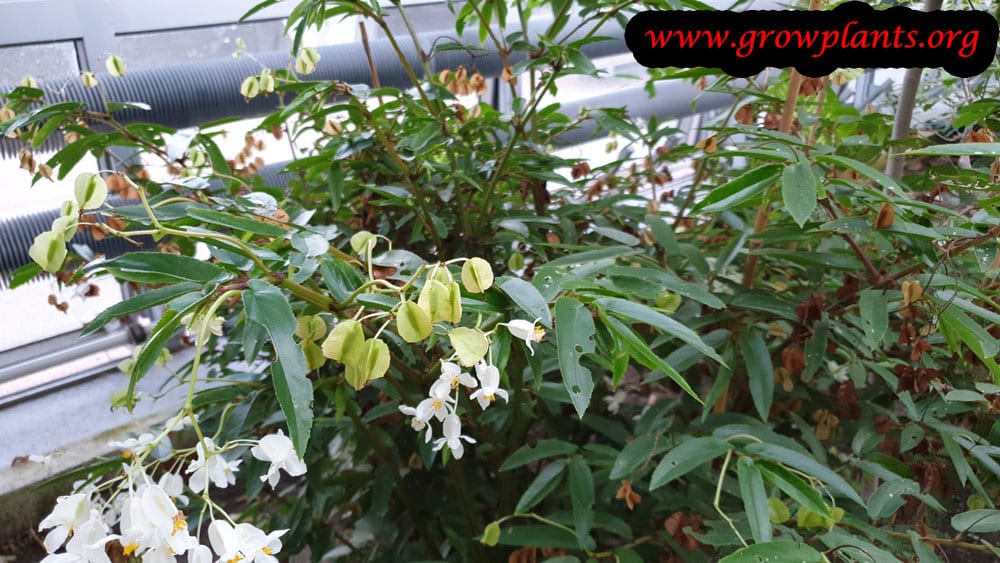
- Growth Habit & Form: Shrubby, cane-like begonia with upright stems
- Lifespan & Maturity: Long-lived as a perennial; fast to moderate to fill out
Anatomy & Physical Features
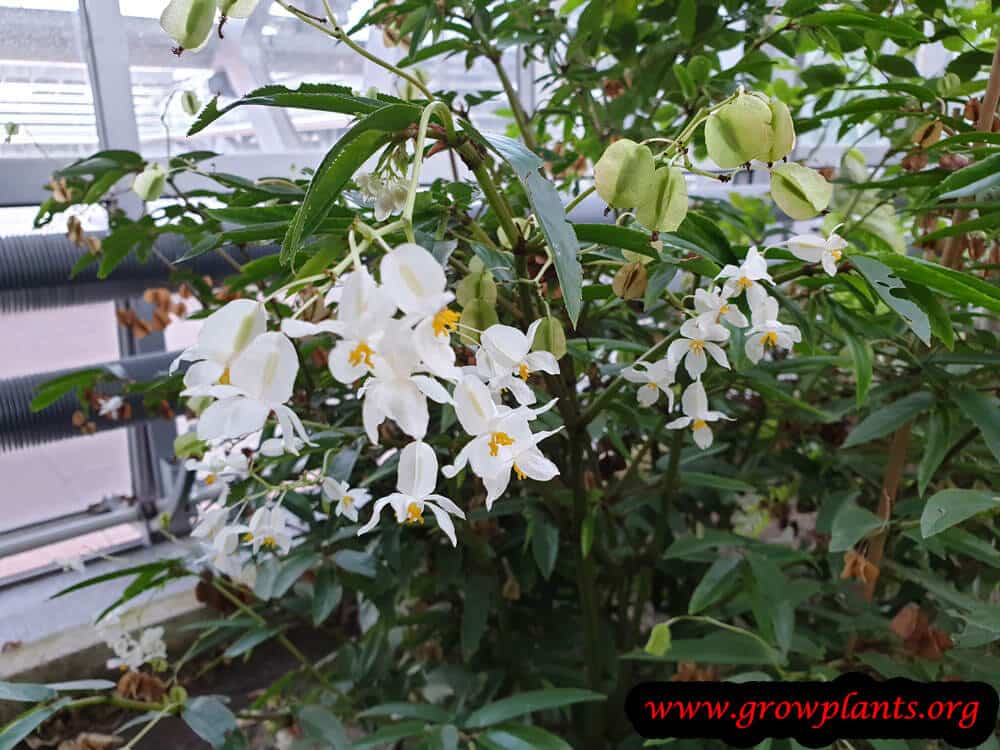
- Leaves & Foliage: Green, elliptic leaves with serrated margins
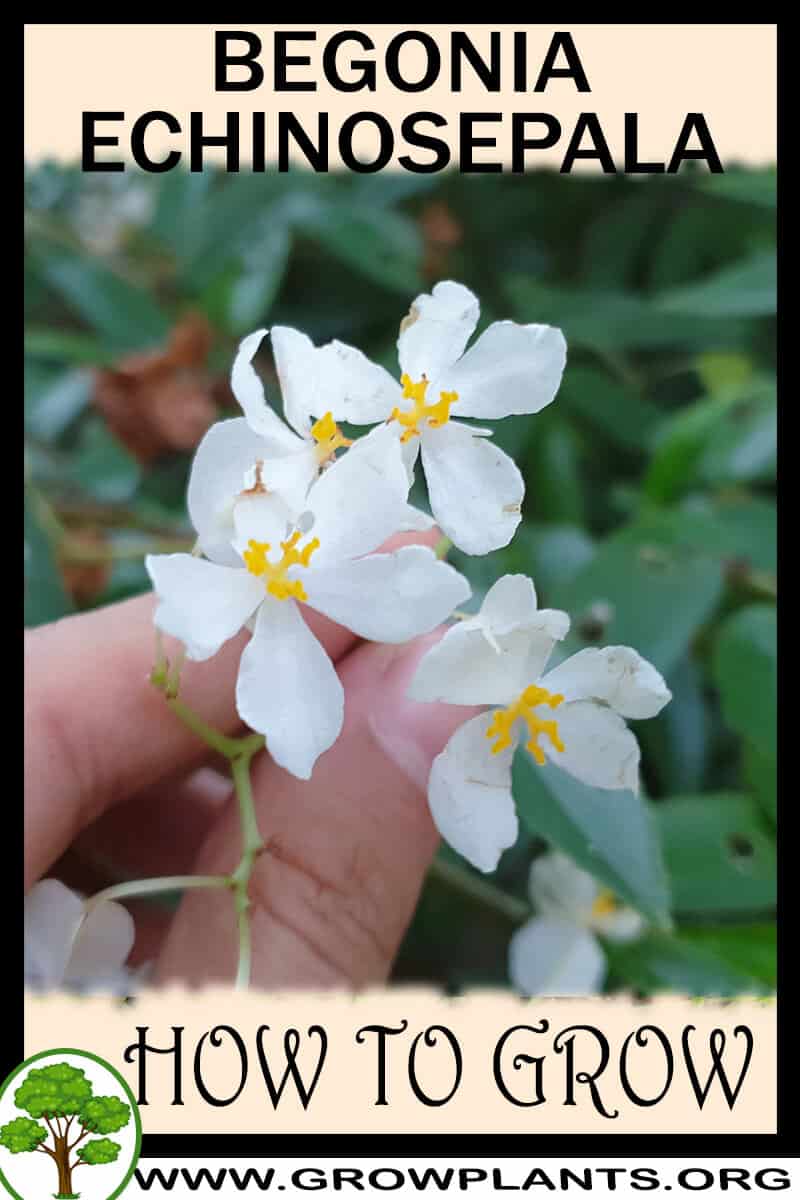
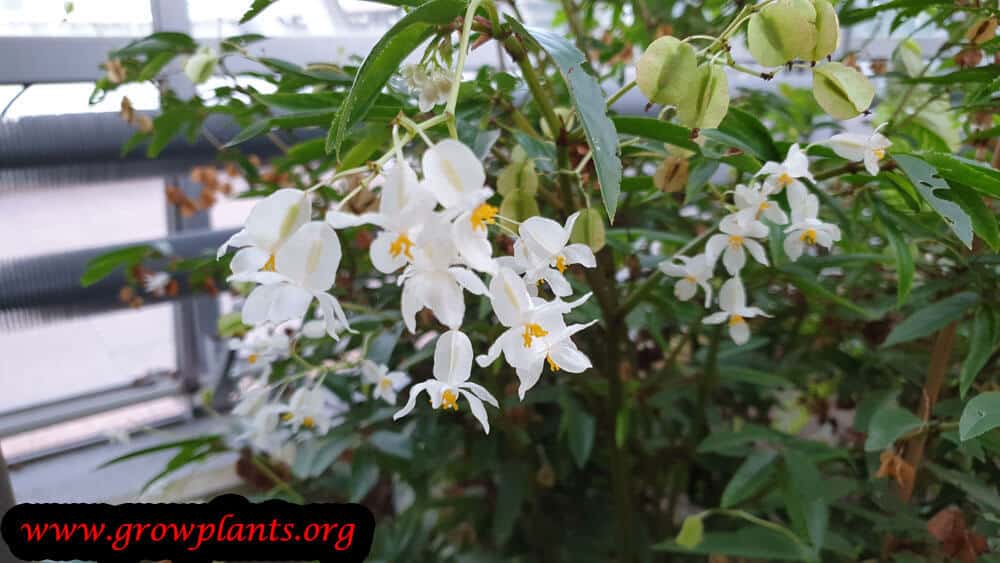
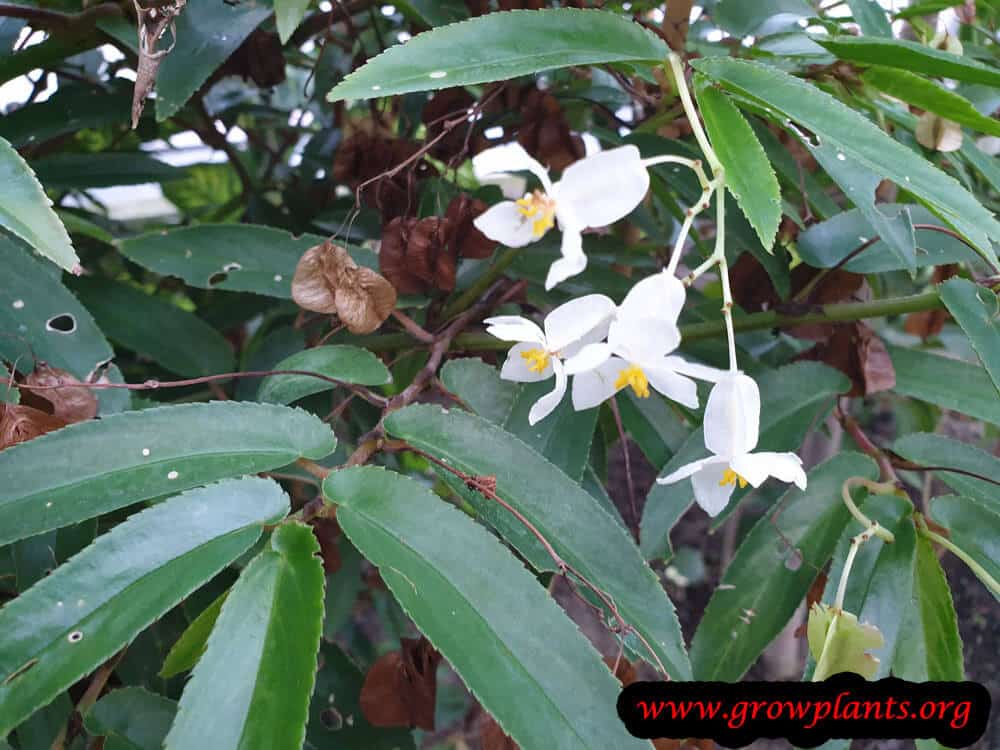
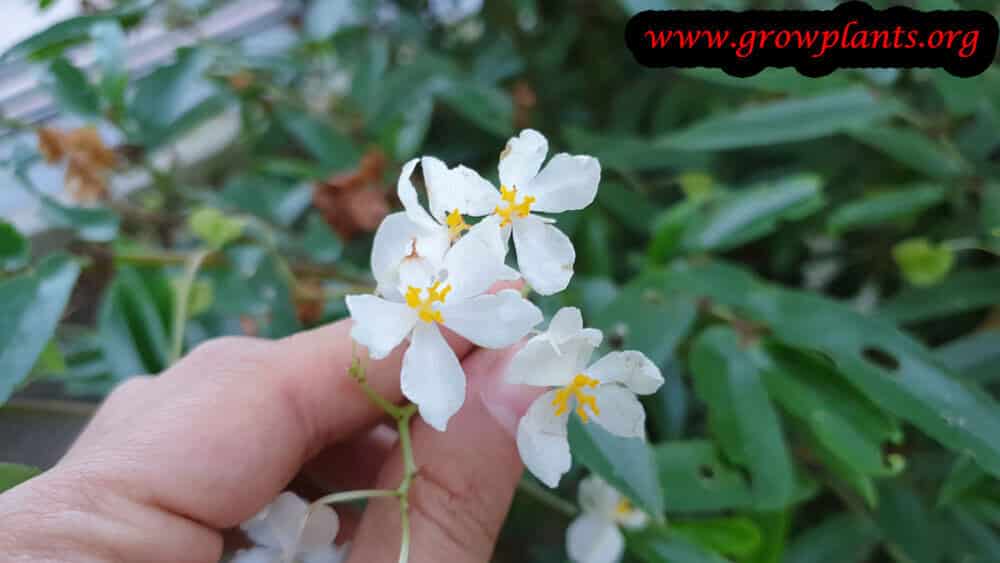
- Flower Characteristics: White or pink flowers with a yellow centre, four petals of two sizes in opposite pairs (see the Bloom guide)
Primary Uses & Landscape Value
- Functional & Ornamental Roles: Ornamental foliage and flowering plant for containers, borders and indoors
Care Guide: Planting, Soil & Watering
Overview: Begonia echinosepala is a shrubby begonia that grows best in half to full shade in humid conditions in rich, moist, humus-heavy soil topped with mulch. It likes steady, generous moisture and high humidity together with the good drainage its fleshy roots need to avoid rot.
Quick Care Requirements
| Requirement | Ideal Condition |
|---|---|
| Planting Season | Spring in zone 8; spring to summer in zones 9–10a; spring to autumn in zone 10b; year-round in zone 11 |
| Growth Rate | Moderate to Fast |
| Soil Type | Rich, moist, humus-heavy soil with mulch; well-aerated and free-draining |
| Water Need | Moderate to High – keep evenly moist, letting only the surface dry between waterings |
Planting & Establishment
- Best Planting Season: Plant in spring in cooler (zone 8) areas, extending through summer, autumn or year-round as the climate warms (zones 9–11). Protect from heat waves, which can kill the plant.
- How to Plant:
- Hole Preparation: Dig a hole a little larger than the root ball in a shaded, humid, sheltered spot.
- Soil Amendments: Blend in humus and organic matter, and mulch the surface to conserve moisture and humidity.
- Planting Depth: Set the crown at soil level and cover lightly, keeping the stem bases from being buried.
- Growth Speed & Expectations: Moderate to fast, forming a shrubby plant about 30–60 cm tall; it can be invasive.
Soil, Watering & Drainage Care
- Soil Mix & Drainage Needs: Needs a well-ventilated, free-draining, organic-rich soil; in containers use potting mix or peat soil with perlite or vermiculite, and avoid a water-filled saucer to prevent root rot.
- Watering Schedule & Technique:
- Young / Newly Planted: Water regularly to keep the soil consistently moist as it establishes.
- Established: Water so the soil stays moist and surplus drains freely, letting only the surface dry between waterings.
- Seasonal Adjustments: Keep moist and humid in warm growth; reduce watering in cool weather when growth slows.
Climate, Light & Hardiness
Begonia echinosepala is a shade-loving shrub begonia suited to subtropical, Mediterranean, and temperate gardens (or grown as a houseplant in colder climates), doing best in half to full shade with protection from midday sun. It is reliably hardy only from about USDA zone 8 through 11, and unusually for a warm-zone plant it can also be damaged by extreme heat waves.
Quick Climate Specifications
| Climate Zones | Subtropical, Mediterranean, temperate (or houseplant in colder regions) |
|---|---|
| USDA Hardiness Zones | 8–11 |
| Frost Tolerance | Low |
| Light Conditions | Half Shade to Full Shade (with adequate light); avoid midday sun, especially in hot-summer climates |
| Wind Tolerance | Low |
Sunlight & Light Exposure
Optimal Light Setup
Bright, filtered light in half to full shade suits it best; avoid direct midday sun.
Direct Sun Requirement
Not needed and not well tolerated at midday, especially in hot-summer climates per site data.
Shade & Heat Management
In hot-summer areas, full shade (with enough ambient light) is specifically recommended in the site's own care notes, and also helps guard against the heat-wave damage flagged for this species.
Best Exposure / Orientation
An eastern exposure or dappled light beneath taller plants suits it well.
Temperature Extremes & Hardiness
USDA Hardiness & Regional Limits
Reliably grown outdoors in zone 8–11 per site data; in colder climates it is grown as a houseplant instead.
Cold Damage & Winter Protection
As a soft-stemmed shrub begonia, foliage and stems are frost-tender; even within its rated zone range, a sheltered microclimate and winter mulch reduce cold injury.
Frost Sensitivity
Low – avoid frost exposure; bring container specimens indoors or under cover before any freeze.
Extreme Heat Tolerance
Limited – the site's own data specifically warns that a heat wave can kill this plant, an unusual vulnerability for a species rated to warm zones 8–11, so shade and consistent moisture during hot spells are important.
Wind, Humidity & Microclimate
Humidity Preferences
Prefers consistently humid, moist growing conditions.
Dry-Air Tolerance
Low – performs poorly in hot, dry air; mulch and ambient humidity help, especially during heat waves.
Wind Tolerance
Low – soft foliage bruises and desiccates in strong or drying wind, so choose a sheltered spot.
Rainfall & Seasonal Moisture
Prefers consistently moist conditions rather than a pronounced dry season.
Microclimate Recommendations
A shaded, humid, wind-sheltered spot – such as beneath larger shrubs or trees – best protects it from both cold snaps and summer heat waves.
Growing in Pots, Balconies & Indoors
Begonia echinosepala is a cane-type begonia (30-60 cm / 12-24 in) and a fine houseplant. It prefers half to full shade (with light) rather than strong sun, which makes it well suited to indoor light – just give it a bright spot out of harsh, direct midday sun.
Quick Details
- Container Size: About 10-20 L (2.5-5 gal); keep the soil moist but freely draining
- Indoor Suitability: A good houseplant – give it enough (bright, indirect) light
- Best Spot: Half shade, ideally without midday sun, to full shade with light
- Soil & Drainage: Well-aerated, well-drained and rich – potting mix, or peat with perlite/vermiculite and organic matter
- Watering in Pots: Average – keep the soil moist and let excess water drain away; avoid waterlogging
Indoors & On the Windowsill
- Houseplant use: The grower confirms it indoors, with the key being enough light – a bright spot out of direct sun. Its shade tolerance is exactly what makes it a good room plant.
- Care: Keep humidity moderate and the soil evenly moist (never soggy); protect it from cold drafts and from heatwaves, which the grower notes can kill it.
- Overwintering: Tender – keep it warm indoors through cold months; it is naturally happiest as an indoor or sheltered plant.
- Safety: Begonias contain calcium oxalates and are toxic to pets (and irritating if chewed) – keep away from cats, dogs and small children.
On a Balcony or Patio
- Light & shelter: A shaded to part-shaded, sheltered balcony or patio suits it – avoid hot direct sun, which scorches the leaves. Shelter it from wind and from extreme heat, which the grower warns can be fatal.
- Practicalities: Keep the mix moist in warm weather but ensure water drains freely; the grower advises using no saucer under the pot.
Choosing the Pot, Soil & Long-Term Care
- Pot & drainage: Around 10-20 L with strong drainage holes; better without a saucer so water runs straight through and the roots never sit wet.
- Potting mix: Well-ventilated, free-draining and rich in organic matter – potting mix, or peat with perlite or vermiculite.
- Feeding: Potted plants exhaust and leach nutrients faster than those in the ground, so feed lightly during active growth – more often than you would in open soil.
- Repotting: Grown as a perennial, refresh the soil about every two years, pruning back part of the roots and top growth at the same time.
Fertilizing & Feeding
A moderate feeder that responds well to several light feedings through the active growing season, paired with the rich, humus-amended soil this shrubby begonia prefers.
Quick Fertilizing Specs
| Feeding Level | Moderate feeder |
|---|---|
| Main Nutrient Priority | Balanced feeding with adequate nitrogen for foliage, easing off as bloom approaches |
| Best Feeding Period | Spring through the summer and autumn bloom season |
| Organic Options | Humus and organic matter worked into rich, consistently moist soil |
| Micronutrients | Usually met by rich organic soil; correct only a diagnosed issue |
Feeding by Growth Stage
Spring vegetative growth
Build lush foliage and a full shrubby framework as the plant resumes growth after winter.
| Nutrient direction | A balanced fertilizer with adequate nitrogen supports vigorous leaf and stem growth, complemented by humus worked into the soil. |
|---|---|
| Timing | As new growth resumes in spring. |
| Frequency | Several light feedings through this stage keep growth steady without forcing it. |
| Fertilizer types | A balanced complete fertilizer, Humus or organic matter worked into rich soil |
| Precautions | Keep soil consistently moist and rich but not waterlogged; this begonia is sensitive to heat stress, so avoid feeding heavily right before a heat wave. |
Summer to autumn bloom
Support the paired white or pink blooms through the summer and autumn flowering period.
| Nutrient direction | Continue balanced feeding with adequate nitrogen; a high-phosphorus product is not needed to drive bloom. |
|---|---|
| Timing | Through the summer and into autumn while the plant is in bloom. |
| Frequency | A light feeding as bloom begins, tapering off as flowering winds down. |
| Fertilizer types | A balanced complete fertilizer at a light rate |
| Precautions | Ease off feeding as flowering slows to avoid pushing new soft growth going into cooler weather. |
Cool-season rest
Let the plant rest through cool weather, whether it holds its leaves or dies back where grown as deciduous or annual.
| Nutrient direction | None – withhold fertilizer while the plant is not in active growth. |
|---|---|
| Timing | Through autumn pruning and winter, or whenever growth clearly slows in cool weather. |
| Frequency | No feeding during this rest period. |
| Fertilizer types | No feeding at this stage; do not fertilize until active growth resumes in spring. |
| Precautions | Do not fertilize a plant that has slowed or stopped growing; resume feeding only once new spring growth appears. |
Nutrient Deficiency Signs & Corrections
Older, lower leaves pale to yellow-green and new growth is sparse.
| Possible causes | low available soil nitrogen, soil low in organic matter, nitrogen leaching from frequent watering in rich, moist soil |
|---|---|
| Appears first on | older, lower leaves |
| What to check | soil organic matter, recent feeding history, watering frequency |
| Possible correction | Apply a balanced fertilizer and refresh organic matter in the soil, then watch for greener new growth. |
New leaves emerge yellow while the veins remain green.
| Possible causes | soil pH too high for good iron availability, waterlogged or compacted soil limiting root uptake, cool, wet soil temporarily slowing nutrient uptake |
|---|---|
| Appears first on | newest leaves |
| What to check | soil pH and drainage, watering consistency, recent temperature stress |
| Possible correction | Improve drainage, correct pH toward neutral where practical, or apply a chelated iron product per its label. |
Leaf margins brown or scorch, especially on container-grown plants, despite regular watering.
| Possible causes | fertilizer salt buildup from overfeeding, inconsistent watering that concentrates salts, poor drainage in a container |
|---|---|
| Appears first on | leaf margins and tips |
| What to check | recent feeding amounts, container drainage, watering consistency |
| Possible correction | Ease off feeding, water thoroughly to flush accumulated salts, and return to lighter feeding afterward. |
Pruning, Training & Seasonal Maintenance
This shrub-type begonia tolerates a moderate annual prune. Its own care notes call for one main cutback a year, done after the summer/autumn bloom finishes and into the autumn/winter window, focused on removing dead parts and shaping. Because new flowers form on fresh growth produced after the cut, this timing costs nothing this season and sets the plant up for a fuller flush next cycle.
Quick Pruning & Maintenance Specs
| Pruning Tolerance | Moderate |
| Primary Pruning Window | After bloom, into Autumn – Winter |
| Secondary Maintenance Window | Tip-pinching during spring – summer growth |
| Typical Frequency | 1 main cutback per year, plus ongoing pinching/deadheading |
| Main Objective | Renew compact shape and remove dead/leggy stems |
| Young Plant Priority | Pinch tips to build branching |
| Mature Plant Priority | Annual after-bloom cutback of dead and leggy stems |
| Best Tool Type | Precision snips / bypass secateurs |
| Avoid Heavy Pruning During | Active summer/autumn bloom, and during heat-wave stress |
Pruning by Plant Age & Size
Newly Established
Once rooted in, pinch the growing tip to encourage branching; avoid any hard cutback while the plant is settling.
Young / Formative
Repeated tip-pinching through the first season builds a bushy, multi-stemmed habit – this soft-stemmed subshrub has no leader/framework to train.
Mature / Established
Annual after-bloom cutback of dead and overly leggy stems, thinning crowded growth at the base for airflow.
Seasonal Pruning Schedule
Post-Flowering
Objective: remove spent flowering growth and reset before winter.
Remove: dead and damaged stems, spent flower stems.
Do not remove: healthy stems carrying viable buds.
Expected response: a fresh, more compact flush of growth the following season.
Flowering/fruiting impact: none negative – flowers form on new growth, so this timing doesn’t sacrifice next season’s bloom.
Ongoing Sanitary
Remove damaged or mildew-affected leaves promptly through the growing season; the plant is noted as susceptible to powdery mildew, and clearing infected tissue early limits its spread through the clump.
Flowering & Fruiting Wood
This begonia flowers on the current season’s new growth rather than on older persistent wood. Pruning after bloom (rather than mid-bloom or right before it) removes only spent material and encourages the fresh stems that will carry next season’s flowers – it does not remove developing flower buds.
Structural Pruning & Training
Multi-stemmed subshrub habit; remove crossing or overcrowded stems at the base to keep airflow through the clump, which matters given its susceptibility to powdery mildew. No formal leader or vase framework is needed at this scale.
Special Growth to Remove
- Dead or damaged stems and leaves.
- Spent flower stems, once bloom finishes.
Not a grafted plant, so there is no rootstock-sucker concern.
Container & Small-Space Pruning
When grown in a container (10–20L), the plant’s own care calls for switching the soil every two years and pruning back part of the roots along with the top growth at that time. When root-pruning at repot, reduce the top growth proportionally so the reduced root mass isn’t left supporting an oversized canopy.
Tools
Precision snips for pinching and most stem cuts; bypass secateurs for the slightly thicker basal stems removed at the annual cutback or at root-pruning time. No saw or hedge shears – this is a soft-stemmed plant with no thick woody growth.
Tool Hygiene & Disease Risk
Increased. The plant is noted as susceptible to powdery mildew, a transmissible fungal pathogen, and also carries aphids and mealybugs – clean tools between plants and when removing visibly infected material.
Cut Placement & Technique
Pinch or cut just above a node or leaf joint. Cut spent flowering stems back to a healthy node or near the base. Avoid crushing or tearing the soft, succulent stems.
Heavy Pruning & Rejuvenation
Moderate tolerance – a leggy plant can be cut back close to the base, ideally timed with the biennial repot and root-prune, and will recover with a fresh flush of stems. Avoid doing this during summer heat waves, since the plant is noted as vulnerable to dying in extreme heat.
Post-Pruning Care
After root-pruning at repot, water in and keep the plant out of direct hot sun for a few days while it recovers. Watch fresh regrowth for aphids and mealybugs. No extra feeding is needed purely for pruning recovery beyond the plant’s normal 2–4-times-a-year fertilizing.
Common Pruning Mistakes
- Leaving spent flower stems to sit and rot in the plant’s preferred humid, moisture-retentive soil, inviting powdery mildew.
- Cutting back hard during a summer heat wave, compounding heat stress.
- Doing one severe cutback instead of pinching through the season, leaving the plant bare and slow to recover.
When NOT to Prune
Avoid pruning during active summer/autumn bloom, and avoid any hard cutback during heat-wave conditions.
Recommended Tools (by task)
- Precision snips – pinching tips and cutting soft stems and spent flowers throughout the season.
- Bypass secateurs – the thicker basal stems at the annual after-bloom cutback and the root-pruning done at repot.
Propagation Guide
Begonia echinosepala is easiest to start from stem cuttings, which root faster and more reliably than seed. Seed is also usable and grows true to the species, but cuttings are the more practical route for most growers, making overall difficulty easy to moderate.
Quick Propagation Specs
| Best Propagation Method | Stem cuttings |
| Alternative Methods | Seed |
| Propagation Difficulty | Easy (cuttings); Moderate (seed) |
| Seed True-to-Type | Yes |
| Vegetative True-to-Type | Yes |
| Best Propagation Season | Spring to summer (seed can also be started indoors in early winter) |
| Seed Germination Time | 2–5 weeks |
| Germination Temperature | 22–26°C (70–80°F) |
| Seed Sowing Depth | Surface-sown or up to 0.5cm (0.25 in) |
Growing from Seed
Seed Handling & Viability
Store saved seed in a dry, dark location.
Sowing Season
Spring to summer; can also be started indoors in early winter.
Sowing Depth & Orientation
Seeds are small – sow on the soil surface or barely cover, about 0.5cm (0.25 in) deep. Sowing onto vermiculite helps germination. Space seedlings about 15x20cm (6×8 in) apart as they develop.
Germination Conditions
Use potting mix or peat soil with vermiculite, at 22–26°C (70–80°F) with high humidity. Water with average to generous amounts, misting with a spray twice a day.
Germination Time
About 2–5 weeks.
Seedling Care
Seedlings are delicate; let them grow on a little before transplanting, and keep humidity high while gradually increasing light exposure.
Stem Cuttings
Cutting Type
Stem cuttings.
Cutting Preparation
Take stem sections for rooting; leaf cuttings can work for many shrubby Begonias too, though the site specifies stem cuttings as the standard method here.
Rooting Setup
Keep temperature above 26°C (80°F) with water that is never cold, high humidity, and full shade during rooting. Cuttings can be rooted in water (change the water every few days) or in moist peat soil kept misted with a spray.
Rooting Hormone
Recommended – using a rooting hormone is advised for best results with soil-rooted cuttings.
Bloom & Edible Flower Guide
Quick Details
- Bloom Season: Summer and autumn
- Flower Appearance: White or pink flowers with a yellow centre; the four tepals come in two sizes and sit in opposite pairs
- Edibility: Begonia flowers are edible and have a crisp, citrus-tart taste, but they contain oxalic acid, so enjoy them in moderation and avoid them if you have kidney stones or gout.
Detailed Blooming Overview
Begonia echinosepala flowers through summer and autumn, opening white or pink blooms with a bright yellow centre. As with begonias generally, the plant carries separate male and female flowers, and the four tepals are arranged in two sizes in opposite pairs, giving each bloom its slightly asymmetric charm.
Flower Characteristics
- White or pink with a yellow centre.
- Four tepals in two sizes, set in opposite pairs.
- Separate male and female flowers on the same plant.
Bloom Care & Thinning
- Prolonging the show: Pinch out growing tips earlier in the season for a bushier, more floriferous plant, and remove spent blooms to keep it tidy.
- Using the flowers: Pick clean, freshly opened flowers for the table, and eat them sparingly because of their oxalic acid content.
Bloom Health & Protection
- Powdery mildew and grey mould (botrytis): Both settle on flowers and foliage in damp, still air; improving airflow and avoiding wetting the blooms helps, and a sulfur-based fungicide can be used for stubborn powdery mildew.
Pests, Diseases & Troubleshooting
Overview: Begonia echinosepala is a shrub-like Brazilian species begonia grown for its glossy foliage and bristly-sepalled flowers; grown as a cane/shrub begonia it shares the genus’s core problems – mealybug, whitefly, thrips and the distorting broad/cyclamen mites, plus powdery mildew, Botrytis and bacterial leaf spot in humid, over-wet, poorly ventilated conditions. Its practical complaints are abiotic: stem and root rot from overwatering, edema, and legginess without pruning.
Quick Troubleshooting Overview
| Issue / Pest | Main Symptom | Primary Solution |
|---|---|---|
| Powdery mildew | White powdery film on leaves and stems | Airflow, spacing, sulphur/bicarbonate |
| Bacterial leaf spot | Water-soaked spots with yellow haloes | Remove leaves, keep foliage dry, sterile tools |
| Mealybug / whitefly | Cottony tufts / white flies, honeydew | Alcohol, soap/oil, sticky traps |
| Broad / cyclamen mites | Distorted, brittle, bronzed new growth | Isolate, remove growth, sulphur/miticide |
| Stem/root rot (killer) | Blackened mushy base, collapse in wet mix | Free-draining mix, careful watering |
| Edema / legginess | Corky bumps on leaves; tall bare stems | Even watering; pinch and prune |
Common Pests & Management
- Mealybugs (Pseudococcus / Planococcus spp.):
- Symptoms: White, cottony, waxy tufts tucked into leaf axils, along veins, at stem joints and among the roots, with sticky honeydew and sooty mould; growth stunts and leaves yellow. A very common begonia pest indoors and under glass.
- Prevention & Control: Dab colonies with a cotton bud of rubbing alcohol, hose off, and check the roots at repotting. Follow with insecticidal soap or horticultural oil into every crevice, repeating to catch survivors; conserve lacewings and mealybug destroyers and control ants.
- Whitefly (Trialeurodes vaporariorum):
- Symptoms: Clouds of tiny white flies rising when the plant is disturbed, with honeydew and sooty mould and flat pale nymphs on the leaf undersides; thrives in warm, sheltered, greenhouse conditions.
- Prevention & Control: Hang yellow sticky traps, introduce Encarsia parasitoids, and hose foliage. Apply insecticidal soap or neem to the undersides in the evening, repeating to break the life cycle; avoid oils on fuzzy-leaved types in strong light.
- Thrips (Frankliniella occidentalis):
- Symptoms: Silvery streaked, flecked and distorted leaves and scarred, deformed flowers with tiny black faecal specks; thrips also transmit tospoviruses (INSV/TSWV) that are serious in begonias.
- Prevention & Control: Use blue sticky traps, remove infested buds, and encourage predatory mites and minute pirate bugs. Spinosad or insecticidal soap controls outbreaks; rogue out any virus-symptomatic plants promptly.
- Cyclamen / broad mites (Phytonemus pallidus / Polyphagotarsonemus latus):
- Symptoms: Invisible mites that severely distort, thicken, bronze, cup and stunt the youngest leaves and buds, which look scarred, brittle and corky – often mistaken for a virus or growth disorder. A signature, easily-missed begonia problem.
- Prevention & Control: Isolate affected plants immediately (these mites spread readily), cut off and destroy distorted growth, and avoid moving them among the collection. Treat with wettable sulphur or a labelled miticide, or discard badly affected plants; hot-water treatment is used commercially.
- Fungus gnats (Bradysia spp.):
- Symptoms: Small dark flies running over the mix; larvae in constantly wet compost feed on fine roots and the base of cuttings, weakening young plants.
- Prevention & Control: Let the surface dry between waterings, use yellow sticky traps, and apply Bti or beneficial nematodes to the mix for the larvae; correcting overwatering is the real fix.
- Foliar nematode (Aphelenchoides spp.):
- Symptoms: Distinctive dark brown-black angular blotches on the leaves bounded by the veins (giving a wedge/patchwork look), spreading in wet foliage; a classic begonia disease that also stunts and distorts growth.
- Prevention & Control: Remove and destroy affected leaves, never wet the foliage, space plants, and avoid splashing; discard heavily infected plants and their debris. There is no cure once systemic – buy clean stock and keep leaves dry.
Diseases & Fungal Issues
- Powdery mildew (Golovinomyces / Oidium spp.):
- Symptoms: White powdery patches spreading over the leaves and stems (and sometimes flowers), which then yellow and distort; extremely common on begonias in still, humid, crowded conditions with poor airflow.
- Treatment & Management: Improve air circulation and spacing, avoid crowding and deep shade, and keep water off the leaves. Remove affected foliage and treat with sulphur, potassium bicarbonate or neem; choose more mildew-tolerant varieties where possible.
- Botrytis (grey mould) (Botrytis cinerea):
- Symptoms: Fuzzy grey mould and soft, tan, water-soaked rot on flowers, leaves and stems in cool, damp, stagnant air; spreads fast in crowded plantings and on fleshy tissue.
- Treatment & Management: Increase airflow and reduce humidity, remove faded flowers and dead leaves promptly, avoid overhead watering, and space plants. Reduce leaf wetness overnight; a suitable fungicide helps only when cultural control is not enough.
- Bacterial leaf spot & blight (Xanthomonas campestris pv. begoniae):
- Symptoms: The signature begonia bacterial disease: small, water-soaked, translucent blister-like spots on the leaf undersides that enlarge into brown blotches with yellow haloes, plus wilting and systemic collapse in severe cases; spread by water splash.
- Treatment & Management: There is no cure – remove and destroy infected leaves or whole plants, keep foliage dry, avoid overhead watering and splashing, space plants, and sterilise tools. Buy clean stock and copper-protect healthy plants in an outbreak.
- Pythium / Rhizoctonia root & stem rot (Pythium / Rhizoctonia spp.):
- Symptoms: Blackened, mushy stem bases and rotted roots with wilting and collapse, especially in overwet, poorly drained mix or when planted too deep.
- Treatment & Management: Use a free-draining mix, water only when the surface has dried, do not bury the crown, and ensure pots drain freely. Discard badly rotted plants; take healthy cuttings or leaf cuttings to replace losses.
- Viruses (INSV / TSWV / CMV) (tospoviruses & mosaic viruses):
- Symptoms: Ringspots, mosaic mottling, necrotic flecks, distortion and stunting; INSV/TSWV are thrips-vectored and incurable.
- Treatment & Management: There is no cure – remove and destroy symptomatic plants, control thrips and aphid vectors, sterilise tools, and buy clean stock.
Growing Difficulties & Abiotic Problems
- Stem and root rot from overwatering (the main killer):
- Cause & Symptoms: Soggy mix, poor drainage, or planting too deep rots the fleshy stems and roots, blackening the base and collapsing the plant.
- Correction Strategy: Use a free-draining mix, water only when the top has dried, ensure the pot drains freely, and never leave it standing wet or plant the crown too deep.
- Edema:
- Cause & Symptoms: Corky, blister-like bumps on the undersides of leaves when the roots take up more water than the leaves release in cool, damp, low-light conditions.
- Correction Strategy: Water more evenly and less in dull weather, and improve airflow and light; affected leaves stay marked but new growth is clean.
- Legginess:
- Cause & Symptoms: As a shrub/cane-type begonia it can grow open and bare at the base with sparse lower growth if unpruned.
- Correction Strategy: Pinch tips and cut back leggy stems to force branching and fresh basal shoots; the prunings root readily as cuttings.
- Leaf scorch / colour loss:
- Cause & Symptoms: Too much direct sun scorches the leaves, while too little light dulls the foliage and reduces flowering.
- Correction Strategy: Give bright, indirect light with a little gentle morning sun, adjusting until growth is compact and well-coloured.
- Cold sensitivity:
- Cause & Symptoms: A tropical species, it drops leaves, discolours and rots if chilled.
- Correction Strategy: Keep warm (above about 13–15°C) away from cold draughts, and reduce watering in cool spells.
What Helps – Products & Tools
Begonias reward cultural care – airflow, careful watering to avoid wet fleshy tissue, and dry foliage. Useful products include insecticidal soap and neem (mealybug, whitefly, aphids), wettable sulphur or a miticide (broad/cyclamen mites – the most damaging), blue/yellow sticky traps and spinosad (thrips), Bti or nematodes (fungus gnats), and sulphur, potassium bicarbonate or copper fungicides (powdery mildew, Botrytis, bacterial spot). Keep water off the leaves to prevent bacterial spot and foliar nematode, and apply oils in the evening.