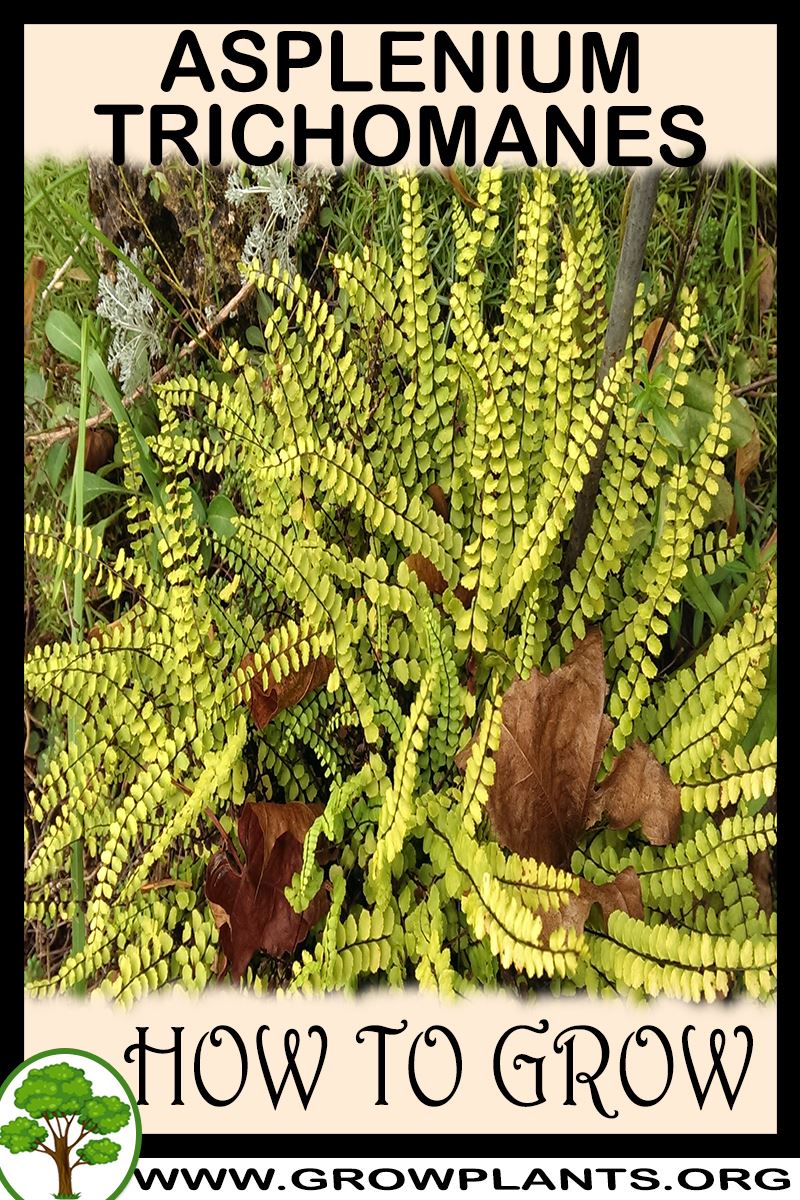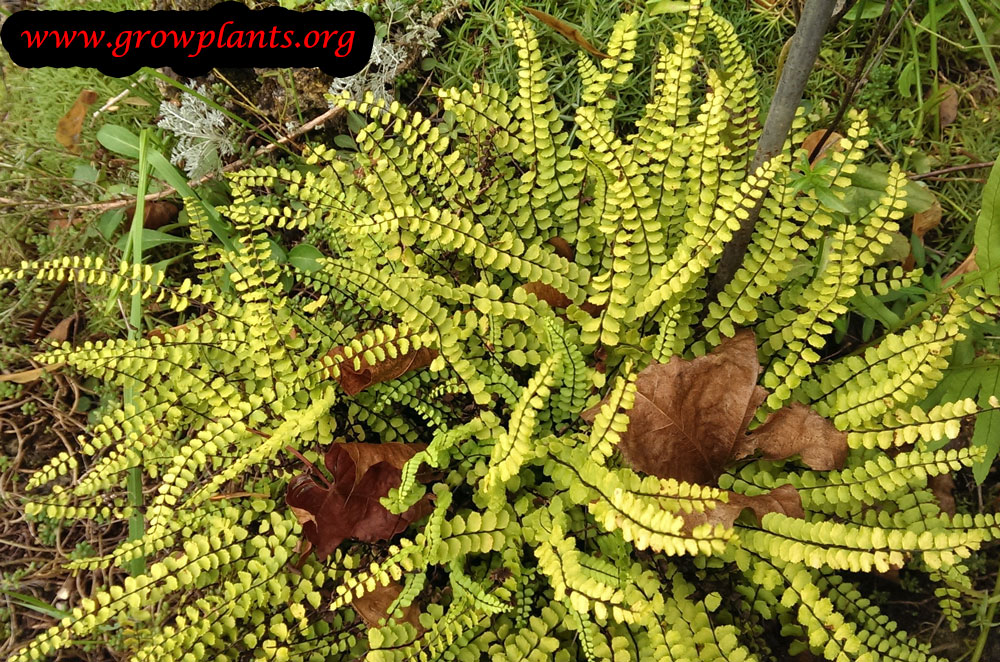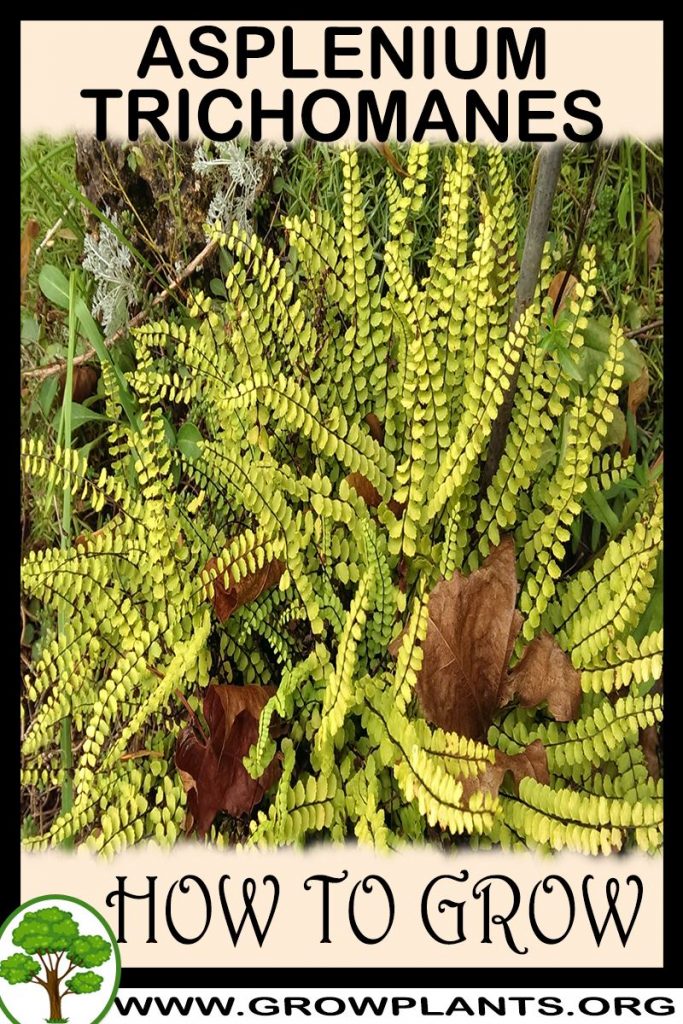
Plant Profile & Key Characteristics
Overview: Asplenium trichomanes is an evergreen fern of the spleenwort genus, forming a rosette of fronds 0.4-1 m (16-40 in) tall. This non-flowering perennial is grown as an ornamental foliage plant, hardy in temperate gardens and as a houseplant.
Quick Specifications
| Specification | Attribute |
|---|---|
| Plant Type / Life Cycle | Perennial (evergreen fern) |
| Foliage Type | Evergreen |
| Mature Size | 0.4-1 m tall (16-40 in) |
| Growth Rate | Moderate |
| Root System | Short rhizome with fibrous roots |
| Toxicity | Non-toxic (safe around pets) |
| Hardiness | USDA zones 2-8 |
Growth Form & Structure
- Height & Spread: 0.4-1 m (16-40 in) tall, forming a spreading rosette of fronds; grows well in containers and indoors, repotted as the roots fill the pot.
- Growth Habit & Form: Clump-forming fern; fronds unfurl from the centre of the rosette.
- Lifespan & Maturity: Long-lived evergreen fern.
Anatomy & Physical Features
- Leaves & Foliage: Green to yellowish fronds in a pinnate (feather-like) structure, arranged in a rosette; new fronds emerge coiled from the centre.
Primary Uses & Landscape Value
- Functional & Ornamental Roles: Ornamental foliage plant for shade and a popular houseplant.
Care Guide: Planting, Soil & Watering
Overview: Maidenhair spleenwort is a small evergreen fern of cool temperate climates (hardiness zone 2–8) that grows in shade with high humidity. It wants moist, well-drained, humus-rich soil and steady moisture.
Quick Care Requirements
| Requirement | Ideal Condition |
|---|---|
| Planting Season | Spring to summer |
| Growth Rate | Moderate |
| Soil Type | Moist, humus-rich, well-drained |
| Water Need | Moderate to high – keep consistently moist |
Planting & Establishment
- Best Planting Season: Plant in spring or summer.
- How to Plant:
- Hole Preparation: Dig a hole about the width of the root ball; these ferns are happiest tucked into a shaded, humus-rich pocket or rock crevice.
- Soil Amendments: Mix in leaf mould or organic matter for a moisture-retentive yet free-draining medium.
- Planting Depth: Set the crown at soil level, keeping it from being buried.
- Growth Speed & Expectations: Growth is moderate, forming a 0.4–1 m rosette of fronds.
Soil, Watering & Drainage Care
- Soil Mix & Drainage Needs: Humus-rich, moisture-retentive but well-drained soil is ideal; the roots must stay damp yet never stagnant, and high humidity keeps the fronds fresh.
- Watering Schedule & Technique:
- Young / Newly Planted: Keep newly planted ferns consistently moist and shaded while they establish.
- Established: Water regularly so the soil never dries out, giving an average to generous amount and letting excess drain.
- Seasonal Adjustments: Water more in warm, dry weather; keep just moist in cool periods.
Climate, Light & Hardiness
Asplenium trichomanes (Maidenhair Spleenwort) is a small, rock-crevice-dwelling fern of temperate climates that prefers cool conditions and humidity rather than heat. It grows best in half to full shade and, at USDA hardiness zone 2–8, is one of the most cold-hardy ferns commonly cultivated, tolerating serious winter cold as long as humidity is adequate.
Quick Climate Specifications
| Climate Zones | Temperate |
|---|---|
| USDA Hardiness Zones | 2–8 |
| Optimal Temp Range | approximately 8–20°C (46–68°F); it dislikes sustained heat |
| Cold Damage Begins | Evergreen fronds tolerate hard frost; damage is more commonly caused by desiccating winter wind or prolonged ice than by cold alone. |
| Approx. Survival Minimum | Reliable through the full zone 2–8 range; this is a genuinely cold-climate rock fern, not a marginal one. |
| Frost Tolerance | High |
| Light Conditions | Half Shade / Full Shade |
| Wind Tolerance | Low |
| Salt / Coastal Tolerance | Not suitable |
Sunlight & Light Exposure
Optimal Light Setup
Bright shade or dappled light mimicking a shaded rock crevice or woodland bank suits it best.
Shade & Heat Management
Keep it cool and shaded through summer heat; this species performs poorly in hot, exposed positions regardless of moisture.
Best Exposure / Orientation
A north-facing wall, shaded rockery, or crevice planting reproduces its natural cool, humid microhabitat well.
Temperature Extremes & Hardiness
USDA Hardiness & Regional Limits
Grows outdoors year-round across USDA zone 2–8, one of the widest cold-hardy ranges among cultivated ferns; it is not suited to hot subtropical or tropical climates.
Cold Damage & Winter Protection
Little winter protection is normally needed within its zone range; siting out of drying winter wind protects the evergreen fronds from desiccation.
Frost Sensitivity
Low - established plants tolerate hard frost and snow cover well.
Extreme Heat Tolerance
Poor; this is a cool-climate species that struggles and can decline in prolonged summer heat, especially if humidity is also low.
Wind, Humidity & Microclimate
Humidity Preferences
High; consistent atmospheric and soil moisture is important for frond health.
Dry-Air Tolerance
Low; both hot dry air and cold drying winter wind cause frond browning.
Wind Tolerance
Low; grow in a sheltered spot such as a shaded rock crevice or wall base rather than an open, exposed site.
Coastal / Salt Tolerance
Not suitable for salt spray or exposed coastal conditions.
Rainfall & Seasonal Moisture
Suited to climates with reasonably even year-round moisture; it does not tolerate an extended hot, dry season well.
Microclimate Recommendations
A cool, shaded, humid microclimate - a north-facing rock crevice, shaded wall, or woodland bank - reproduces its natural habitat and gives the best results.
Growing in Pots, Balconies & Indoors
Maidenhair spleenwort (Asplenium trichomanes) is an excellent houseplant – the grower confirms it grows well indoors and in containers. Like most ferns it prefers steady moisture, high humidity and bright, indirect light rather than harsh direct sun, which makes a shaded windowsill, bathroom or shaded patio its natural home in a pot.
Quick Details
- Container Size: A modest 5-15 L (1-4 gal) pot suits its compact 30-70 cm (12-28 in) size; pot up as the rhizome fills out
- Indoor Suitability: A genuine houseplant – happy in a bright, shaded room
- Best Spot: Bright, indirect light to shade – keep out of hot, direct sun, which scorches the fronds
- Soil & Drainage: Rich, moisture-retentive but free-draining mix; it likes constant moisture without waterlogging
- Watering in Pots: Keep the mix evenly moist and never let it dry out – pots dry fast, and ferns resent drought; high humidity is key
Indoors & On the Windowsill
- A true houseplant: The grower confirms it grows well indoors. Give it bright, indirect light, steady moisture and high humidity – it is a natural for a shaded windowsill, a bathroom, or a terrarium.
- Humidity & light: Dry indoor air and hot direct sun are its main enemies. Keep it off scorching south-facing sills; mist the fronds, stand the pot on a humidity tray, or group it with other plants.
- Overwintering: Tender types (from warm, frost-free climates) should spend cold winters indoors as houseplants; hardier maidenhairs can stay outside in mild areas, but a pot lets you shelter them from hard frost – a key reason to grow ferns in containers.
On a Balcony or Patio
- Light & shelter: Choose a shaded, sheltered corner – a north or east aspect, or under a canopy. Ferns dislike wind, hot sun and reflected heat from walls and railings, all of which dry and crisp the fronds.
- Moisture: Pots on a balcony dry out quickly, so check daily in warm weather and keep the mix moist; grouping pots together raises humidity around the fronds. A drip irrigation kit with a timer can take over that watering check automatically.
- Practicalities: Provide free drainage and mind the runoff on paving or a shared balcony; a large planter is heavy once wet, so position it before filling.
Choosing the Pot, Soil & Long-Term Care
- Pot & drainage: Any pot with strong drainage holes; skip a standing water saucer to avoid root rot. Terracotta breathes and dries fast (you will water more often), while glazed or plastic pots hold moisture longer – useful for a thirsty fern.
- Potting mix: A rich, well-aerated organic mix – peat or coir with perlite or vermiculite, plus leaf mould if you have it – holds the steady moisture ferns need while still draining.
- Feeding: Potted plants need feeding more often than those in the ground, as watering leaches nutrients away; give a dilute, balanced feed through the warm growing season and ease off in the cool season.
- Repotting: Refresh the mix and pot up about every two years; divide crowded clumps or rhizomes in the growing season and trim away any dead or tired fronds.
Fertilizing & Feeding
A small, slow-growing rock and wall fern adapted to lean crevice soil; it needs only a light feeding as new fronds emerge from the rosette in spring, and otherwise gets by on the soil’s own organic matter.
Quick Fertilizing Specs
| Feeding Level | light |
|---|---|
| Main Nutrient Priority | A light, balanced feed as new fronds emerge in spring is enough for this small, slow-growing rock fern |
| Best Feeding Period | Spring as new fronds emerge from the rosette |
| Reduce/Stop Feeding | Feeding tapers off over summer and stops through winter dormancy in cold climates |
| Soil pH | Naturally grows in rock crevices and prefers a lean, sharply drained soil or crevice mix |
| Organic Options | A light compost or leaf mold top-dressing is usually sufficient for this modest-demand fern |
| Micronutrients | Not usually a concern in typical garden or crevice soil |
Feeding by Growth Stage
Spring frond flush
Support the young fronds unrolling from the center of the rosette as growth resumes in spring.
| Nutrient direction | A light, balanced feed encourages fresh fronds without overwhelming this small fern’s modest root system. |
|---|---|
| Timing | Spring as new fronds begin unrolling from the rosette. |
| Frequency | A single light application as new growth begins is usually enough for this small, slow-growing fern. |
| Fertilizer types | A diluted balanced liquid or granular garden fertilizer worked lightly around the crevice or planting site, A light compost or leaf mold top-dressing |
| Precautions | Keep feeding light; this fern is adapted to lean, mineral crevice soil and excess fertilizer can do more harm than good. |
Summer maintenance
Maintain slow, steady growth through summer without pushing beyond this fern’s naturally modest pace.
| Nutrient direction | Minimal feeding is usually enough once the spring flush has hardened off; rely mainly on the soil’s own organic matter. |
|---|---|
| Timing | Through summer once spring fronds have matured. |
| Frequency | Feeding needs drop off considerably; a light top-up is worthwhile only if growth looks unusually pale or sparse. |
| Fertilizer types | A light balanced feed only if growth looks pale or sparse, Compost or leaf mold worked around the crevice or planting site |
| Precautions | Avoid routine feeding through summer; this fern is naturally slow-growing and rarely needs more than the soil already provides. |
Cold-season dormancy
Let the fern rest through the cold season when growth stops in colder climates.
| Nutrient direction | None – withhold feeding through dormancy or the cold-season slowdown. |
|---|---|
| Timing | Winter, or the cold-season rest period in colder zones. |
| Frequency | No feeding at this stage. |
| Fertilizer types | No feeding at this stage; resume only once new spring growth begins. |
| Precautions | Do not fertilize dormant or resting plants; let the soil’s organic matter carry it through winter. |
Nutrient Deficiency Signs & Corrections
Pale, sparse fronds with a noticeably thin spring flush from the rosette.
| Possible causes | Very lean or eroded crevice soil with little organic matter, Heavy competition from moss or nearby plants for available nutrients, A planting site that has never received any organic amendment |
|---|---|
| Appears first on | New fronds from the rosette center |
| What to check | Soil fertility and depth in the crevice or planting site, Competing moss or plant growth nearby, Any past feeding or compost history |
| Possible correction | Work a little compost or a light balanced feed into the planting site as spring growth begins. |
New fronds emerge pale yellow-green while the fine veins stay darker green.
| Possible causes | Alkaline, limestone-derived crevice soil limiting iron uptake, Waterlogged, poorly drained planting sites, Iron tied up and unavailable in high-pH soil |
|---|---|
| Appears first on | Newest fronds |
| What to check | Soil pH and parent rock type, Drainage at the planting site, Overall root health |
| Possible correction | Improve drainage and work in organic matter, applying a chelated iron product per its label only if chlorosis persists. |
Older fronds show yellowing between the veins while the veins stay green.
| Possible causes | Leaching from fast-draining, rocky crevice soil, Sandy or mineral-poor substrate low in magnesium, No supplemental organic matter added over time |
|---|---|
| Appears first on | Older, lower fronds |
| What to check | Soil texture and drainage, How exposed the planting site is to heavy rain, Whether any organic matter has been added |
| Possible correction | Work compost or leaf mold into the planting site and consider a complete fertilizer with secondary nutrients if symptoms persist. |
Pruning, Training & Seasonal Maintenance
Asplenium trichomanes is a small, slow-clumping rock and wall fern with no woody structure and no flowers, so its only ‘pruning’ is the ongoing removal of old fronds. It tolerates cutting at any time of year, but because it is only medium growing, a hard mass cutback is not the right approach here – the crown regenerates fronds gradually rather than flushing quickly, so grooming is spread out through the year instead of concentrated into one rejuvenation event.
Quick Pruning & Maintenance Specs
| Pruning Tolerance | Low – foliage grooming only, no structural cuts |
| Primary Pruning Window | All year |
| Typical Frequency | Occasional – as individual fronds age and brown |
| Main Objective | Remove old/spent fronds to keep the crown clean |
| Young Plant Priority | Leave fronds untouched while the small clump establishes |
| Mature Plant Priority | Steady removal of the oldest fronds only |
| Best Tool Type | Precision snips |
Pruning by Plant Age & Size
Newly Established
Leave fronds in place; remove only any that were damaged in transplanting. This species is slow to re-establish and needs its foliage to recover.
Young / Formative
No structural training applies – there is no framework to shape on a small tufted rock fern.
Mature / Established
Ongoing, light removal of the oldest, fully browned fronds from the base of the clump; healthy green fronds are left to keep photosynthesizing.
Seasonal Pruning Schedule
Ongoing Sanitary
Objective: keep the crown free of decaying fronds, which is especially relevant given this fern’s preference for humid, cool conditions where dead tissue can hold moisture against the crown. Remove only fronds that are fully brown/dead. Do not remove green fronds, even older ones that are still photosynthesizing. No flowering/fruiting impact – the plant does not flower.
Special Growth to Remove
- Old/dead fronds only, cut at the base near the crown.
Container & Small-Space Pruning
Grown as a houseplant or in a container, this fern needs even less pruning than in the ground – its small mature size (roughly 0.4–1 m) means grooming is mostly about removing the occasional spent frond rather than any size control.
Tools
- precision_snips – the only tool needed; fronds are thin and soft.
Tool Hygiene & Disease Risk
Routine – clean, sharp snips are sufficient; no specific disease-transmission risk is noted for this species (its listed problems are slugs and snails, not pathogens spread by pruning cuts).
Cut Placement & Technique
Cut each spent frond at the base of its stalk, close to the crown, rather than partway along the frond.
Heavy Pruning & Rejuvenation
Not recommended: unlike faster-growing ferns, this species does not need or benefit from a full cutback, and its medium growth rate means recovery from a hard prune would be slow. Stick to removing individual old fronds as they decline.
Post-Pruning Care
No special aftercare beyond maintaining the humidity and cool temperatures this fern already needs; do not fertilize simply because fronds were trimmed.
Common Pruning Mistakes
- Cutting back the whole plant at once, which this slow-clumping species does not recover from quickly.
- Removing green fronds prematurely instead of waiting for them to fully brown.
When NOT to Prune
Avoid removing fronds while new growth is actively unfurling from the crown, since the developing fiddleheads are easily damaged by cutting nearby.
Recommended Tools (by task)
- precision_snips – the single tool for all grooming cuts on this small, soft-fronded fern.
Propagation Guide
Maidenhair spleenwort is a small, slow-clumping rock fern, so division is only an option once a plant has grown into a multi-crowned clump with several rooted growth points; young or single-crown plants cannot be divided. Spores are the more universally available method and are the standard way this species is increased in cultivation, though they are slower and need more patience than division.
Quick Propagation Specs
| Best Propagation Method | Division of an established multi-crown clump |
| Alternative Methods | Spores |
| Propagation Difficulty | Moderate (division only once well-clumped); Specialist (spores) |
| Vegetative True-to-Type | Yes |
| Best Propagation Season | Spring to summer |
Division, Offsets, Pups & Suckers
Only divide plants that have produced several distinct crowns with their own roots; separate these carefully by hand or with a clean blade so each division keeps roots and fronds intact, then pot into humid, cool conditions matching this fern’s preference for humidity and cool temperatures until new fronds appear.
Spores
Spores form on the undersides of mature fronds and can be sown on a sterile, constantly moist medium kept humid and out of direct sun; germination and the growth of usable young plants both take a long time, and conditions need to stay consistently cool and humid, so this route is more specialist than division.
Pests, Diseases & Troubleshooting
Overview: Maidenhair spleenwort (Asplenium trichomanes) is a small, hardy rock-dwelling true fern; it shares the fern pests (scale, mealybug, foliar nematode) and the fern sensitivity to soaps and oils, with slugs an issue on this terrestrial type. Spleenworts are true ferns, so they combine typical fern pests – scale, mealybugs and the classic foliar nematode – with a sensitivity that matters when treating them: ferns can be scorched by insecticidal soaps and oils, so always dilute and test first. Their biggest cultural risks are crown rot from water pooling in the rosette of bird’s-nest types and frond scorch from dry air; grow them in humid shade with airy, moist-but-drained conditions and water at the roots, not the crown.
Quick Troubleshooting Overview
| Issue / Pest | Main Symptom | Primary Solution |
|---|---|---|
| Scale & mealybugs | Waxy bumps or cottony tufts on fronds and stalks | Wipe/pick off, dilute horticultural oil (test first) |
| Foliar nematode | Dark bands/blotches spreading between the veins | Remove affected fronds, keep foliage dry, isolate plant |
| Slugs & snails | Chewed frond margins and new croziers, slime trails | Handpick at night, barriers/traps, iron-phosphate bait |
| Bacterial/fungal leaf spot | Water-soaked or brown spots, esp. on bird’s-nest types | Remove leaves, keep foliage dry, improve airflow |
| Crown rot | Rotting, browning centre of the rosette | Water at the roots, never into the crown; improve drainage |
Common Pests & Management
- Scale insects (Pinnaspis aspidistrae (fern scale), Hemiberlesia):
- Symptoms: Small brown, tan or white waxy bumps and elongated ‘fern scale’ along the frond undersides, midribs and stalks; sticky honeydew and sooty mould with soft scale, and yellowing fronds where heavy.
- Prevention & Control: Wipe or scrape off gently with a soft cloth, then apply a dilute horticultural oil – but test on a small area first, as ferns are oil/soap sensitive – repeating to catch crawlers.
- Mealybugs (Pseudococcus / Planococcus spp.):
- Symptoms: White cottony tufts tucked into frond bases, the crown and along stalks, with honeydew and slow decline.
- Prevention & Control: Dab colonies with an alcohol-dipped swab, isolate new plants, control ants, and treat lingering infestations with a dilute, tested horticultural or neem oil.
- Aphids (Aphididae):
- Symptoms: Clusters of soft green or brown insects on tender young croziers (unfurling fronds), causing sticky, distorted new growth.
- Prevention & Control: Rinse off with water, encourage natural predators, and treat persistent groups with dilute insecticidal soap (tested first) on the new growth.
- Foliar (leaf/bud) nematode (Aphelenchoides fragariae):
- Symptoms: Dark green then brown bands and blotches spreading between the frond veins, giving a banded, blotchy dieback – a classic fern problem spread by water films.
- Prevention & Control: Remove and destroy affected fronds, keep foliage dry (water only the roots), avoid overhead watering and leaf wetness, and isolate infected plants – there is no easy cure once established.
- Slugs & snails (Gastropoda):
- Symptoms: Ragged holes and chewed margins on fronds and tender new croziers, with slime trails, worst on terrestrial spleenworts in damp shade.
- Prevention & Control: Handpick after dark, clear damp debris, and use copper barriers, traps or iron-phosphate bait around the plants.
Diseases & Fungal Issues
- Bacterial leaf blight / soft rot (Pseudomonas / Erwinia spp.):
- Symptoms: Water-soaked, translucent spots that darken and spread, especially on the broad fronds of bird’s-nest types, often after overhead watering in warm humid conditions.
- Treatment & Management: Remove affected fronds, stop overhead watering, keep foliage dry and well ventilated, isolate the plant, and avoid splashing; sanitise tools between cuts.
- Fungal leaf spot (Colletotrichum and others):
- Symptoms: Brown to black spots, sometimes ringed, on fronds kept wet or in stagnant air.
- Treatment & Management: Remove spotted fronds, improve airflow and reduce leaf wetness, and apply a copper fungicide only if it spreads – always testing first, given fern sensitivity.
- Crown & root rot (Pythium / Phytophthora spp.):
- Symptoms: Browning, softening and rot at the centre of the rosette or at the roots, from water sitting in the crown or in soggy, poorly drained mix.
- Treatment & Management: Water at the roots and never into the crown of bird’s-nest types, use an open free-draining mix, ensure drainage, and remove badly rotted plants.
Growing Difficulties & Abiotic Problems
- Frond tip & margin browning:
- Cause & Symptoms: Browning, crisping frond tips and edges from dry air, low humidity, salts/fluoride in tap water, or letting the roots dry out.
- Correction Strategy: Raise humidity, keep the mix evenly moist (never bone dry), flush the pot to leach salts, and use low-mineral water where possible.
- Crown rot from mis-watering:
- Cause & Symptoms: The signature killer of bird’s-nest ferns: water poured into the funnel-like crown sits and rots the centre.
- Correction Strategy: Always water around the base at the roots, not into the crown, and keep the plant in a humid but airy spot so any moisture dries.
- Sunburn:
- Cause & Symptoms: Bleached, scorched fronds when a shade-adapted fern is exposed to direct sun.
- Correction Strategy: Keep in shade to bright indirect light, and acclimatise gradually if increasing light; avoid direct midday sun.
- Cold & draft damage:
- Cause & Symptoms: Blackened, collapsed or spotted fronds after chilling or cold drafts, especially on tropical bird’s-nest types.
- Correction Strategy: Protect from cold drafts and keep tender species warm; hardy rock-dwelling spleenworts tolerate more cold but still dislike waterlogged winter conditions.
What Helps – Products & Tools
Grow ferns for humidity and airflow first; that prevents most problems. Because ferns are sensitive to soaps and oils, always dilute and spot-test before treating scale, mealybug or aphids with horticultural oil or insecticidal soap. Other useful tools are iron-phosphate slug bait or copper barriers, sticky traps, and – sparingly and tested – a copper fungicide for leaf spot. Keep foliage dry to head off leaf nematode and bacterial blight.