

Plant Profile & Key Characteristics
Overview: Asplenium nidus is an evergreen fern of the spleenwort genus, forming a rosette of fronds 0.4-1 m (16-40 in) tall. This non-flowering perennial is grown as an ornamental foliage plant, suited to tropical gardens and as a houseplant.
Quick Specifications
| Specification | Attribute |
|---|---|
| Plant Type / Life Cycle | Perennial (evergreen fern) |
| Foliage Type | Evergreen |
| Mature Size | 0.4-1 m tall (16-40 in) |
| Growth Rate | Moderate |
| Root System | Short rhizome with fibrous roots |
| Toxicity | Non-toxic (safe around pets) |
| Hardiness | USDA zone 12+ (11 with care) |
Growth Form & Structure
- Height & Spread: 0.4-1 m (16-40 in) tall, forming a spreading rosette of fronds; grows well in containers and indoors, repotted as the roots fill the pot.
- Growth Habit & Form: Clump-forming fern; fronds unfurl from the centre of the rosette.
- Lifespan & Maturity: Long-lived evergreen fern.
Anatomy & Physical Features
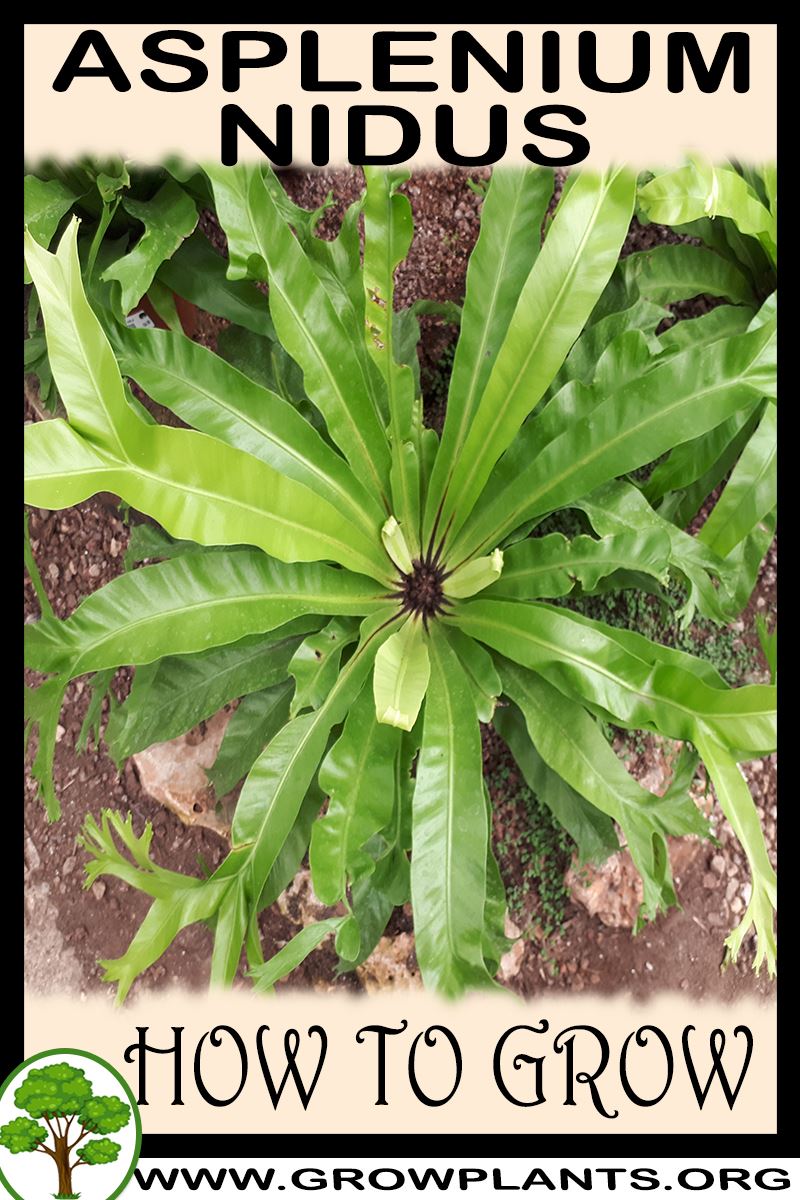
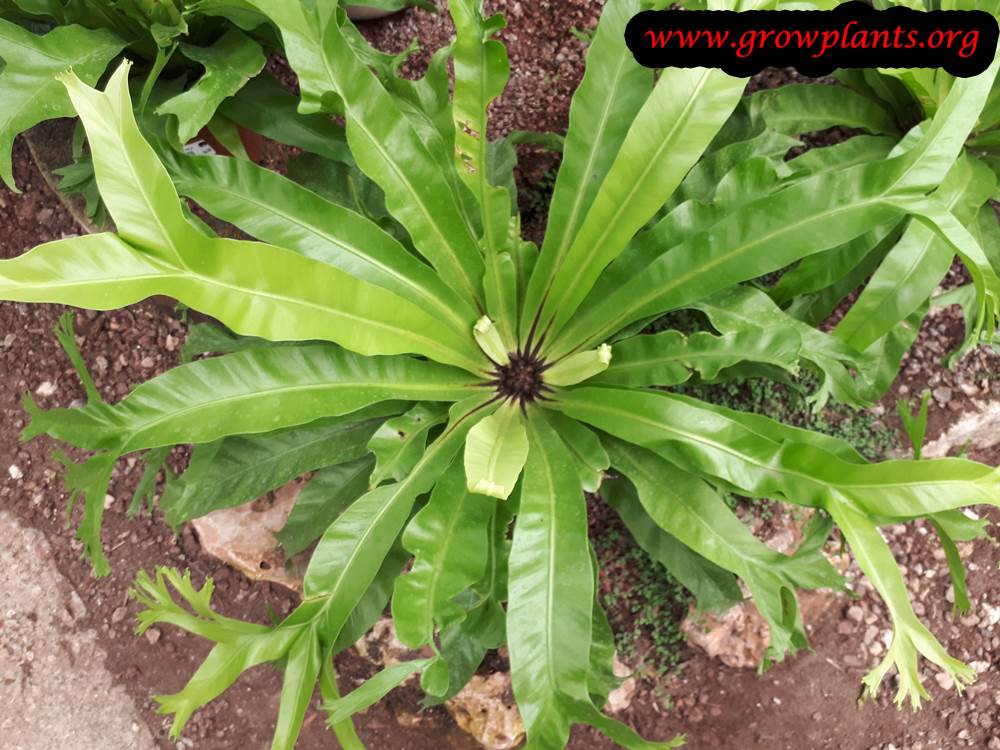
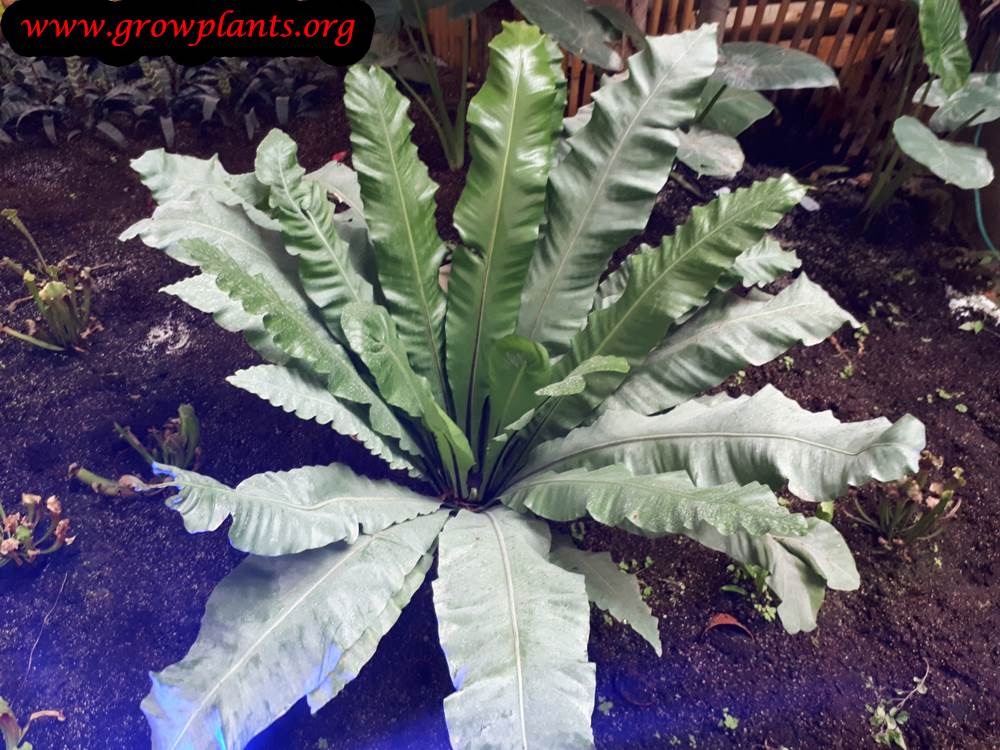
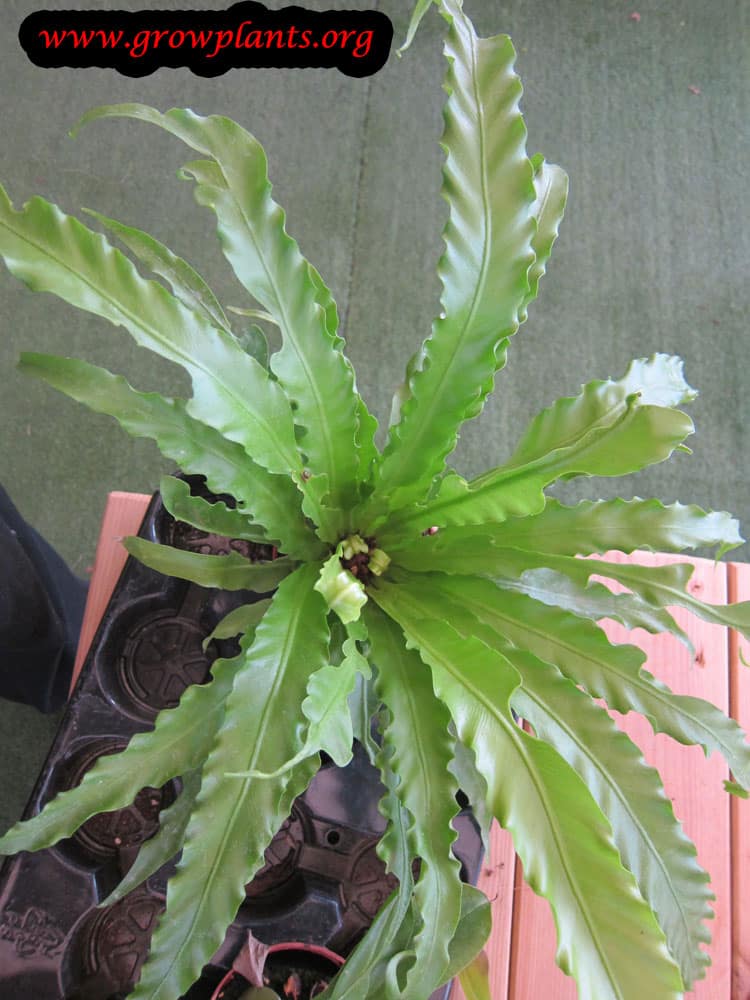
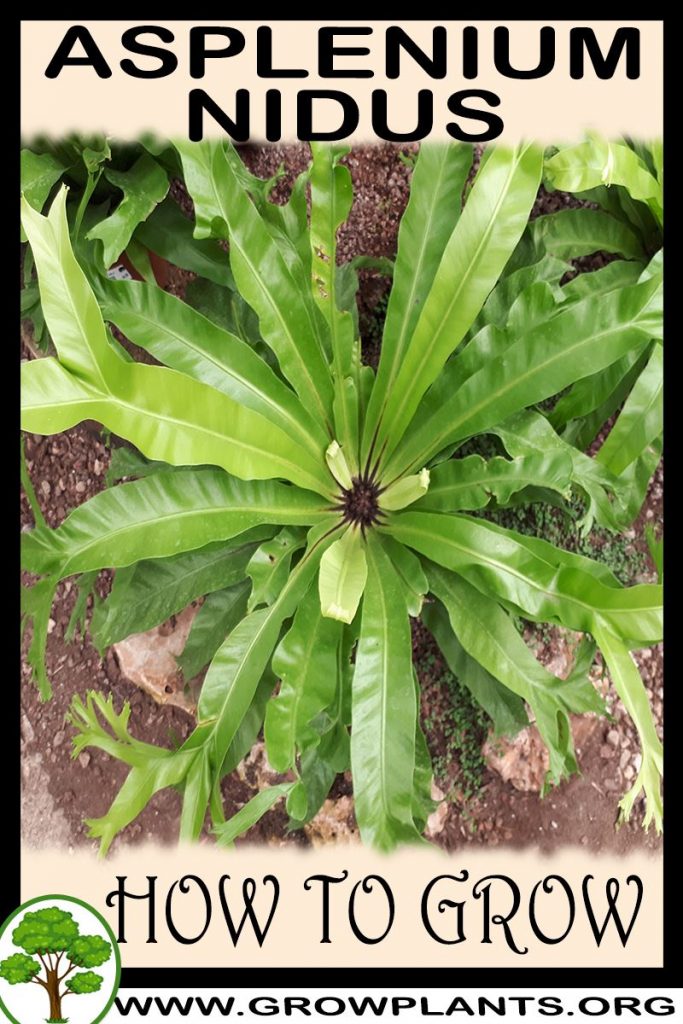
- Leaves & Foliage: Broad green wavy fronds with a dark purple midrib, arranged in a rosette forming the classic bird’s-nest; new fronds emerge coiled from the centre.
Primary Uses & Landscape Value
- Functional & Ornamental Roles: Ornamental foliage plant for shade and a popular houseplant.
Care Guide: Planting, Soil & Watering
Overview: Asplenium nidus is a tropical bird’s-nest fern (hardiness zone 12+, or 11 with care) for bright shade indoors or out. It needs rich, moist, organic soil that stays damp, warmth above about 15°C and high humidity.
Quick Care Requirements
| Requirement | Ideal Condition |
|---|---|
| Planting Season | Year-round in warm climates (spring–summer in zone 10b) |
| Growth Rate | Moderate |
| Soil Type | Rich, organic, moisture-retentive, well-drained |
| Water Need | Moderate to high – keep consistently moist, never dry |
Planting & Establishment
- Best Planting Season: Plant year-round in a warm climate; in zone 10b plant in spring to summer.
- How to Plant:
- Hole Preparation: Dig a planting pocket about the width of the root ball in a shaded, humus-rich spot; as an epiphytic fern it also grows well mounted or potted.
- Soil Amendments: Blend in humus and organic matter and top with mulch to keep the soil moist; feed about twice a year.
- Planting Depth: Keep the central rosette (nest) at the surface – never bury the crown, which would cause it to rot.
- Growth Speed & Expectations: Growth is moderate, forming a 0.4–1 m rosette of fronds.
Soil, Watering & Drainage Care
- Soil Mix & Drainage Needs: Use rich, organic, free-draining soil such as potting or peat soil with perlite; keep it moist but never soggy. In containers choose a pot 40–50% larger than the root ball and refresh the soil every few years.
- Watering Schedule & Technique:
- Young / Newly Planted: Keep newly planted ferns constantly moist with high humidity while they establish.
- Established: Water regularly and mist with a fine spray to maintain high humidity; never let the soil dry out, and let excess drain.
- Seasonal Adjustments: Water more in warm growth; keep just moist and protect from cold in winter.
Climate, Light & Hardiness
Asplenium nidus (Bird's-nest Fern) is a tropical species best suited to houseplant culture outside truly tropical climates, growing best in half to full shade. Rated for USDA hardiness zone 12+ (achievable in zone 11 with attentive care), site data shows it grows best above about 15°C (59°F) but an established plant can survive around 10°C (50°F) or a little colder, especially with mulch protection.
Quick Climate Specifications
| Climate Zones | Tropical, or indoors as a houseplant |
|---|---|
| USDA Hardiness Zones | 12+ (achievable in 11 with attentive care) |
| Optimal Temp Range | above approximately 15°C (59°F) |
| Cold Damage Begins | Growth slows and fronds become more vulnerable as temperatures drop toward 15°C (59°F); visible damage becomes likely closer to 10°C (50°F). |
| Approx. Survival Minimum | Site data indicates an established plant can survive around 10°C (50°F) and a little colder still, particularly with mulch over the root zone; sustained frost is expected to be fatal. |
| Frost Tolerance | None |
| Light Conditions | Half Shade / Full Shade (grows better with a bit more light) |
| Wind Tolerance | Low |
| Salt / Coastal Tolerance | Not suitable |
Sunlight & Light Exposure
Optimal Light Setup
Bright shade to filtered light suits its rosette of glossy, undivided fronds best; a little more light within that shaded range improves growth, but direct sun scorches the foliage.
Shade & Heat Management
Increase humidity and shade as heat rises; hot, dry, sunny conditions quickly damage the broad fronds.
Best Exposure / Orientation
A bright, shaded indoor spot (bathroom or kitchen window with filtered light) or a shaded, humid outdoor position in warm climates both work well.
Temperature Extremes & Hardiness
USDA Hardiness & Regional Limits
Reliable outdoors year-round mainly within zone 12, with zone 11 achievable given a sheltered microclimate and attentive winter care; elsewhere it is a houseplant.
Cold Damage & Winter Protection
Mulching the root zone can help push cold tolerance down toward 10°C (50°F); as a houseplant, keep it well away from cold drafts and cold window glass in winter.
Frost Sensitivity
Very high; this species has essentially no frost tolerance.
Extreme Heat Tolerance
Tolerated with high humidity and consistently moist, rich, mulched soil, per site care guidance (regular misting and not letting the soil dry out); dry heat causes rapid stress.
Wind, Humidity & Microclimate
Humidity Preferences
High; site care guidance specifically recommends misting to keep humidity elevated, along with mulch to retain soil moisture.
Dry-Air Tolerance
Low; dry air, especially from indoor heating, causes frond browning and raises cold sensitivity.
Wind Tolerance
Low; the broad, undivided fronds tear in strong wind, so keep it sheltered.
Coastal / Salt Tolerance
Not suitable for salt spray or exposed coastal conditions.
Rainfall & Seasonal Moisture
Needs consistently moist, humid conditions; avoid letting the soil dry out and avoid a prolonged dry season outdoors.
Microclimate Recommendations
A warm, shaded, humid, wind-free microclimate - grouped with other plants or misted regularly - supports both appearance and cold tolerance.
Growing in Pots, Balconies & Indoors
Asplenium nidus is the quintessential bird’s nest fern, and the grower confirms it grows both indoors and in containers. Its shuttlecock of bright, wavy fronds thrives in shade and consistent moisture, so it is one of the easiest ferns to keep as a houseplant.
Quick Details
- Container Size: A pot about 40-50% larger than the root ball (grower’s guidance), potted up as the roots fill in
- Indoor Suitability: An excellent, easy houseplant for bright shade
- Best Spot: Half to full shade; grows better with some gentle light
- Soil & Drainage: Rich, organic soil – potting or peat soil with perlite (grower)
- Watering in Pots: Water regularly; do not let it dry out too much
Indoors & On the Windowsill
- A true houseplant: The grower marks it suitable indoors, where the moderate light of a room suits it perfectly.
- Windowsill growing: Indirect light from an east or north window is ideal; a hot, sunny sill will scorch the fronds.
- Humidity: It thrives in humid rooms such as a bathroom or kitchen, or on a damp pebble tray.
On a Balcony or Patio
- Light & shelter: Keep it shaded and sheltered outdoors – wind shreds and browns the fronds, and direct sun scorches them.
- Moisture: Pots dry quickly in open air; check the mix often and water before it dries.
Choosing the Pot, Soil & Long-Term Care
- Pot & drainage: The grower chooses a pot 40-50% wider than the root ball and repots every few years, or when roots fill the container. Use a pot with strong drainage holes and skip a standing-water saucer to avoid root rot. Terracotta breathes and dries out faster, while glazed or plastic holds moisture longer.
- Potting mix: Per the grower, a rich organic mix – potting soil or peat soil with perlite; top with humus and mulch.
- Feeding: Potted plants need feeding a little more often than those in open ground, as regular watering leaches nutrients from the mix. The grower feeds established plants periodically.
- Refreshing an established pot: Once at its target size, the grower changes the old soil every few years and lightly trims some roots and leaves to keep growth fresh.
Growing this plant in a greenhouse
A greenhouse can give asplenium nidus frost protection and cold protection.
Greenhouse at a glance
| Greenhouse suitability | Good - clearly useful |
|---|---|
| Main benefits | frost protection, cold protection |
| Season extension | earlier spring & later autumn |
| Outdoor protection advisable below | about 15°C |
| Maintain greenhouse minimum | around 15°C for active growth |
| Suitable types | heated greenhouse, polycarbonate greenhouse |
| Heating | Heating is recommended in cold climates for continuous growth. |
Related greenhouse guides
- Greenhouses: How to Choose the Right Greenhouse
- Best Greenhouse Heaters
- Greenhouse Climate Control: Temperature, Ventilation and Humidity
- Polycarbonate Greenhouses: What to Look for Before Buying
Fertilizing & Feeding
A light feeder: several light feedings through the active growing season, paired with humus and organic matter, are enough to support the glossy rosette of fronds.
Quick Fertilizing Specs
| Feeding Level | Light feeder |
|---|---|
| Main Nutrient Priority | Balanced feeding with adequate nitrogen for the rosette of fronds |
| Best Feeding Period | The warm, humid active growing season |
| Organic Options | Humus and organic matter worked into rich soil |
| Reduce/Stop Feeding | Hold off feeding whenever growth slows in cooler or lower-humidity conditions |
| Micronutrients | Iron and manganese usually supplied by a complete fertilizer; correct only diagnosed deficiencies |
| Soil pH | Slightly acidic to near neutral |
Feeding by Growth Stage
Establishment after planting or repotting
Let new roots settle into rich, humid soil before the rosette is asked to support any new feeding.
| Nutrient direction | None – withhold fertilizer while the plant re-establishes its roots. |
|---|---|
| Timing | The first few weeks after planting or repotting. |
| Frequency | No feeding at this stage. |
| Fertilizer types | No feeding at this stage; do not fertilize until new fronds emerge from the center of the rosette. |
| Precautions | Do not fertilize disturbed roots; keep humidity high and moisture consistent with a light misting instead. |
Active rosette growth
Support the wavy, elliptic fronds unfurling from the center of the rosette during warm, humid conditions.
| Nutrient direction | Several light feedings of a balanced complete fertilizer through the active growing season, combined with humus and organic matter, keep the rosette healthy. |
|---|---|
| Timing | Through the warm, humid active growing season. |
| Frequency | A few light feedings spread through the growing season is usually enough; this is not a heavy feeder. |
| Fertilizer types | A diluted balanced complete fertilizer, Humus and organic matter worked into the soil |
| Routine trace nutrients | iron, manganese |
| Precautions | Keep feeding light; pouring fertilizer directly into the central rosette or overfeeding can scorch the new fiddleheads. |
Cooler or lower-humidity slowdown
Let the rosette rest through cooler temperatures or drier air without pushing tender new growth.
| Nutrient direction | None – hold fertilizer while growth is slow in cooler, lower-humidity conditions. |
|---|---|
| Timing | When temperatures drop or air humidity falls and new fronds are not forming. |
| Frequency | No feeding during this slowdown; resume once active rosette growth returns. |
| Fertilizer types | No feeding at this stage; withhold fertilizer until growth resumes. |
| Precautions | Avoid fertilizing a plant that is not actively producing new fronds; unused nutrients can accumulate as salts in the soil. |
Nutrient Deficiency Signs & Corrections
Older outer fronds fade to pale green or yellow and new center growth slows.
| Possible causes | low available soil nitrogen, nitrogen leaching from regular misting and watering, humus layer breaking down and needing renewal |
|---|---|
| Appears first on | older, outer fronds |
| What to check | recent feeding history, condition of the humus or organic matter layer, watering and drainage habits |
| Possible correction | Resume a few light balanced feedings through the growing season and refresh the humus layer. |
New fronds emerging from the center of the rosette are pale yellow while the veins stay green.
| Possible causes | high soil pH limiting iron availability, waterlogged or poorly drained soil restricting root uptake, naturally low soil iron |
|---|---|
| Appears first on | newest fronds at the center of the rosette |
| What to check | soil or potting mix pH, drainage around the roots, recent watering pattern |
| Possible correction | Correct soil pH toward the slightly acidic to neutral range this fern prefers, improve drainage, and apply a chelated iron product per its label if chlorosis persists. |
Frond tips and margins brown or scorch despite regular watering and misting.
| Possible causes | fertilizer salt buildup from feeding into the central rosette, underwatering that concentrates salts around the roots, feeding more often than this light feeder needs |
|---|---|
| Appears first on | frond tips and margins |
| What to check | recent feeding amounts and frequency, watering consistency, container or bed drainage |
| Possible correction | Ease off feeding and flush the soil thoroughly with plain water, then return to light, infrequent feeding. |
Pruning, Training & Seasonal Maintenance
Asplenium nidus, like other bird’s-nest ferns, grows every frond from a single central crown, so pruning stays minimal and centers on removing fronds only once they are fully dead rather than trimming them while still yellowing. This species is more tropical and humidity-dependent than some Asplenium relatives (hardy only to roughly zone 12, or 11 with care), so maintaining the moist, warm conditions it needs matters more to frond health than any pruning schedule does. Cuts can be made whenever a frond has fully died, any time of year, and pruning has no effect on flowering since ferns reproduce by spores.
Quick Pruning & Maintenance Specs
| Pruning Tolerance | Low – individual dead-frond removal only |
| Primary Pruning Window | All year, as fronds fully die |
| Typical Frequency | Occasional |
| Main Objective | Remove fully dead fronds without disturbing the central crown |
| Young Plant Priority | Leave all fronds while the rosette establishes |
| Mature Plant Priority | Remove only fronds that have completely died |
| Best Tool Type | Precision snips |
Pruning by Plant Age & Size
Newly Established
Avoid removing any fronds while the plant settles in, particularly since this species is more sensitive to drying out than some other ferns in this batch.
Young / Formative
No structural training applies – a single-crown rosette fern has no framework to shape; young daughter plantlets used for propagation should be left attached until independently rooted rather than treated as growth to prune away.
Mature / Established
Remove only fronds that have fully dried and died, cut from the outer edge of the rosette; never cut into the middle of the crown where new, rolled young fronds emerge.
Seasonal Pruning Schedule
Ongoing Sanitary
Objective: keep the rosette clean without sacrificing still-functioning tissue, especially important given this species’ higher humidity and moisture needs. Remove: fronds that are completely dead. Do not remove: yellowing-but-living fronds – the source guidance specifically favors waiting until a frond dies before cutting it. No flowering/fruiting impact.
Special Growth to Remove
- Fully dead outer fronds only, cut at the base.
- Daughter plantlets are propagation material, not unwanted growth – only separate them deliberately for propagation, not as routine pruning.
Container & Small-Space Pruning
Grown in a pot, this species needs repotting every few years as roots fill the container, with some root and leaf trimming done as part of that repot; routine day-to-day care otherwise stays limited to removing fully dead fronds and maintaining humidity (misting is commonly used for this species).
Tools
- precision_snips – sufficient for all frond removal on this soft-tissue rosette fern.
Tool Hygiene & Disease Risk
Routine – clean, sharp snips are adequate; noted problems are aphids, slugs and snails, not pruning-transmissible disease.
Cut Placement & Technique
Cut fully dead fronds at their base from the outer rosette, keeping well clear of the central crown where new fronds unfurl.
Heavy Pruning & Rejuvenation
Not tolerated: there is a single growing point, so no hard cutback or rejuvenation pruning is possible – damaging the crown can kill the plant outright.
Post-Pruning Care
No special aftercare beyond the humidity and moist, rich soil this species already requires; do not fertilize simply because a frond was removed.
Common Pruning Mistakes
- Trimming yellowing fronds early for appearance, against the source guidance to wait until they fully die.
- Cutting into or near the central crown, risking the plant’s single growing point.
- Removing daughter plantlets carelessly instead of the deliberate separation propagation requires.
When NOT to Prune
Avoid cutting fronds while new growth is visibly unfurling from the crown’s center, and avoid pruning during any period of low humidity stress, to which this more tropical species is particularly sensitive.
Recommended Tools (by task)
- precision_snips – the only tool needed, for careful removal of fully dead outer fronds.
Propagation Guide
Bird’s-nest fern is propagated by carefully separating rooted daughter plants from the mother plant, since the site notes that starting new plants from spores is hard. This takes a bit more care than simply dividing a clumping fern, because the daughter plant needs to develop its own independent roots before it can be safely removed.
Quick Propagation Specs
| Best Propagation Method | Separating rooted daughter plants |
| Alternative Methods | Spores (difficult) |
| Propagation Difficulty | Moderate (daughter plants); Specialist (spores) |
| Vegetative True-to-Type | Yes |
| Best Propagation Season | Possible year-round; best in spring to summer |
Division, Offsets, Pups & Suckers
The site describes a specific technique for this fern: carefully dig around the base of the plant and uncover the root mass without damaging it, using a gentle air blower or a stream of water rather than pulling by hand. Once the roots are exposed, disconnect the daughter plant’s roots from the mother plant while leaving both in place, then wait until the daughter plant has developed enough of its own root system to survive independently before lifting it out of the soil and potting it separately. Simply pulling the whole clump apart right away is an easier option but is a less reliable way to get the daughter plant established, per the site. After separation, keep humidity high and the soil moist, matching this fern’s normal care needs, and misting can help maintain humidity while the new division settles in.
Spores
The site notes that starting from spores is hard for this species. Spores would need to be sown on a sterile, constantly humid, moist medium, and germination and establishment are slow, so separating daughter plants remains the more dependable method for most growers.
Fruit & Uses
The young, still-curled fronds (fiddleheads) of Asplenium nidus are eaten as a leafy vegetable in parts of East Asia and the Pacific Islands. They are always cooked before eating – typically stir-fried, boiled, or simmered – rather than eaten raw.
Quick Edible Specs
| Edible Parts | Young unfurling fronds (fiddleheads) |
|---|---|
| Main Use(s) | Culinary – cooked leafy vegetable |
| Eaten Raw or Cooked | Cooked only |
| Preparation Required | Cook (stir-fry, boil, or simmer) |
| Harvest Season | Ongoing whenever new fronds are actively unfurling from the central rosette, during warm, humid growing periods |
| Time to First Harvest | Only established plants producing a steady flush of new fronds are picked; see Care/Propagation for how the plant matures |
| Storage | Best used fresh soon after picking; young fronds do not keep well |
| Safety/Toxicity Caveat | Regarded as non-toxic when the young fronds are cooked; as with most ferns, avoid eating raw or in large quantities |
Leaves & Greens
The part eaten is the tightly coiled new frond as it emerges from the centre of the plant’s “nest,” picked while still soft, pale green, and curled – before it unfurls and toughens. In Taiwan the young fronds are known as shan su (山蘇, “mountain vegetable”), a traditional aboriginal dish now common on restaurant menus, typically stir-fried with garlic. In Niue, Tuvalu, and Tokelau the young fronds are cooked and eaten with coconut cream, and the leaves are used the same way in the Caroline and Marshall Islands. Older, fully unfurled fronds are tougher and are left on the plant rather than eaten.
Harvesting
Pick only the newest, still-curled fronds from the centre of the rosette by hand; mature outer fronds are not used for food. Because the plant keeps producing new fronds from its central growing point through the warm season, a healthy specimen can be picked repeatedly rather than all at once. Taking too many young fronds at once reduces the plant’s leaf canopy, so leave a good number of fronds to mature and photosynthesise (see Pruning for general frond-removal guidance).
Preparation, Uses & Safety
Always cook the fronds – stir-frying or boiling is standard – rather than eating them raw. Prepared this way they have a mild, slightly mucilaginous texture similar to other cooked leafy greens. No significant toxicity is reported for the cooked young fronds, but as a general fern-safety precaution, thorough cooking is recommended and only young, tender fronds should be used.
Pests, Diseases & Troubleshooting
Overview: Bird’s-nest fern (Asplenium nidus) is a popular rosette-forming true fern; its broad fronds are susceptible to bacterial leaf blight and its central crown to rot, on top of scale, mealybug and foliar nematode. Spleenworts are true ferns, so they combine typical fern pests – scale, mealybugs and the classic foliar nematode – with a sensitivity that matters when treating them: ferns can be scorched by insecticidal soaps and oils, so always dilute and test first. Their biggest cultural risks are crown rot from water pooling in the rosette of bird’s-nest types and frond scorch from dry air; grow them in humid shade with airy, moist-but-drained conditions and water at the roots, not the crown.
Quick Troubleshooting Overview
| Issue / Pest | Main Symptom | Primary Solution |
|---|---|---|
| Scale & mealybugs | Waxy bumps or cottony tufts on fronds and stalks | Wipe/pick off, dilute horticultural oil (test first) |
| Foliar nematode | Dark bands/blotches spreading between the veins | Remove affected fronds, keep foliage dry, isolate plant |
| Slugs & snails | Chewed frond margins and new croziers, slime trails | Handpick at night, barriers/traps, iron-phosphate bait |
| Bacterial/fungal leaf spot | Water-soaked or brown spots, esp. on bird’s-nest types | Remove leaves, keep foliage dry, improve airflow |
| Crown rot | Rotting, browning centre of the rosette | Water at the roots, never into the crown; improve drainage |
Common Pests & Management
- Scale insects (Pinnaspis aspidistrae (fern scale), Hemiberlesia):
- Symptoms: Small brown, tan or white waxy bumps and elongated ‘fern scale’ along the frond undersides, midribs and stalks; sticky honeydew and sooty mould with soft scale, and yellowing fronds where heavy.
- Prevention & Control: Wipe or scrape off gently with a soft cloth, then apply a dilute horticultural oil – but test on a small area first, as ferns are oil/soap sensitive – repeating to catch crawlers.
- Mealybugs (Pseudococcus / Planococcus spp.):
- Symptoms: White cottony tufts tucked into frond bases, the crown and along stalks, with honeydew and slow decline.
- Prevention & Control: Dab colonies with an alcohol-dipped swab, isolate new plants, control ants, and treat lingering infestations with a dilute, tested horticultural or neem oil.
- Aphids (Aphididae):
- Symptoms: Clusters of soft green or brown insects on tender young croziers (unfurling fronds), causing sticky, distorted new growth.
- Prevention & Control: Rinse off with water, encourage natural predators, and treat persistent groups with dilute insecticidal soap (tested first) on the new growth.
- Foliar (leaf/bud) nematode (Aphelenchoides fragariae):
- Symptoms: Dark green then brown bands and blotches spreading between the frond veins, giving a banded, blotchy dieback – a classic fern problem spread by water films.
- Prevention & Control: Remove and destroy affected fronds, keep foliage dry (water only the roots), avoid overhead watering and leaf wetness, and isolate infected plants – there is no easy cure once established.
- Slugs & snails (Gastropoda):
- Symptoms: Ragged holes and chewed margins on fronds and tender new croziers, with slime trails, worst on terrestrial spleenworts in damp shade.
- Prevention & Control: Handpick after dark, clear damp debris, and use copper barriers, traps or iron-phosphate bait around the plants.
Diseases & Fungal Issues
- Bacterial leaf blight / soft rot (Pseudomonas / Erwinia spp.):
- Symptoms: Water-soaked, translucent spots that darken and spread, especially on the broad fronds of bird’s-nest types, often after overhead watering in warm humid conditions.
- Treatment & Management: Remove affected fronds, stop overhead watering, keep foliage dry and well ventilated, isolate the plant, and avoid splashing; sanitise tools between cuts.
- Fungal leaf spot (Colletotrichum and others):
- Symptoms: Brown to black spots, sometimes ringed, on fronds kept wet or in stagnant air.
- Treatment & Management: Remove spotted fronds, improve airflow and reduce leaf wetness, and apply a copper fungicide only if it spreads – always testing first, given fern sensitivity.
- Crown & root rot (Pythium / Phytophthora spp.):
- Symptoms: Browning, softening and rot at the centre of the rosette or at the roots, from water sitting in the crown or in soggy, poorly drained mix.
- Treatment & Management: Water at the roots and never into the crown of bird’s-nest types, use an open free-draining mix, ensure drainage, and remove badly rotted plants.
Growing Difficulties & Abiotic Problems
- Frond tip & margin browning:
- Cause & Symptoms: Browning, crisping frond tips and edges from dry air, low humidity, salts/fluoride in tap water, or letting the roots dry out.
- Correction Strategy: Raise humidity, keep the mix evenly moist (never bone dry), flush the pot to leach salts, and use low-mineral water where possible.
- Crown rot from mis-watering:
- Cause & Symptoms: The signature killer of bird’s-nest ferns: water poured into the funnel-like crown sits and rots the centre.
- Correction Strategy: Always water around the base at the roots, not into the crown, and keep the plant in a humid but airy spot so any moisture dries.
- Sunburn:
- Cause & Symptoms: Bleached, scorched fronds when a shade-adapted fern is exposed to direct sun.
- Correction Strategy: Keep in shade to bright indirect light, and acclimatise gradually if increasing light; avoid direct midday sun.
- Cold & draft damage:
- Cause & Symptoms: Blackened, collapsed or spotted fronds after chilling or cold drafts, especially on tropical bird’s-nest types.
- Correction Strategy: Protect from cold drafts and keep tender species warm; hardy rock-dwelling spleenworts tolerate more cold but still dislike waterlogged winter conditions.
What Helps – Products & Tools
Grow ferns for humidity and airflow first; that prevents most problems. Because ferns are sensitive to soaps and oils, always dilute and spot-test before treating scale, mealybug or aphids with horticultural oil or insecticidal soap. Other useful tools are iron-phosphate slug bait or copper barriers, sticky traps, and – sparingly and tested – a copper fungicide for leaf spot. Keep foliage dry to head off leaf nematode and bacterial blight.