Plant Profile & Key Characteristics
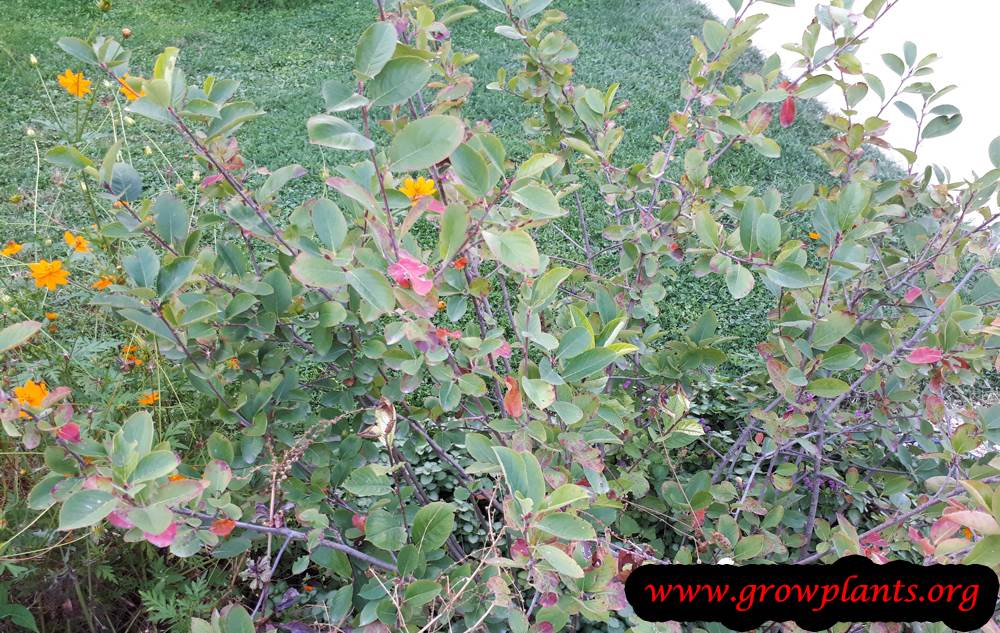
Overview: The Black chokeberry (Aronia melanocarpa) is a deciduous, multi-stemmed shrub reaching 0.5-2 m (2-6 ft), grown both for its edible berries and its ornamental value. Clusters of white spring flowers are followed by black fruit, and the foliage turns fiery red before autumn leaf-fall.
Quick Specifications
| Specification | Attribute |
|---|---|
| Plant Type / Life Cycle | Perennial (woody shrub) |
| Foliage Type | Deciduous |
| Mature Size | 0.5-2 m (2-6 ft) |
| Growth Rate | Slow to moderate |
| Root System | Fibrous and suckering (spreads by basal shoots to form colonies) |
| Toxicity | Fruit edible when ripe; the seeds/pips contain cyanogenic compounds that are toxic raw and destroyed by cooking |
| Hardiness | USDA 4-9 (to 10 with care) |
Growth Form & Structure
- Height & Spread: 0.5-2 m (2-6 ft) as an open, multi-stemmed shrub; in a container keep it smaller, starting 20-50% larger than the root ball and potting on as it fills the pot.
- Growth Habit & Form: Upright, multi-stemmed deciduous shrub that suckers from the base to form a spreading clump.
- Lifespan & Maturity: Long-lived shrub; begins bearing fruit about 2-3 years from planting.
Anatomy & Physical Features
- Leaves & Foliage: Oval green leaves, light to dark, colouring bright red before autumn leaf-fall.
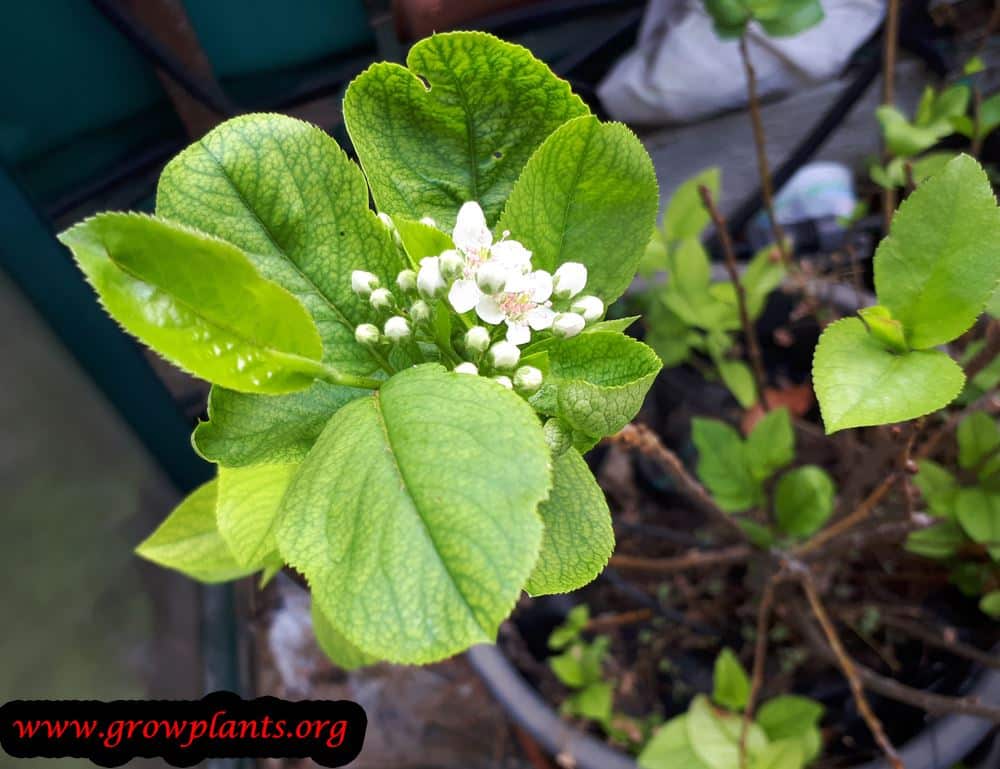
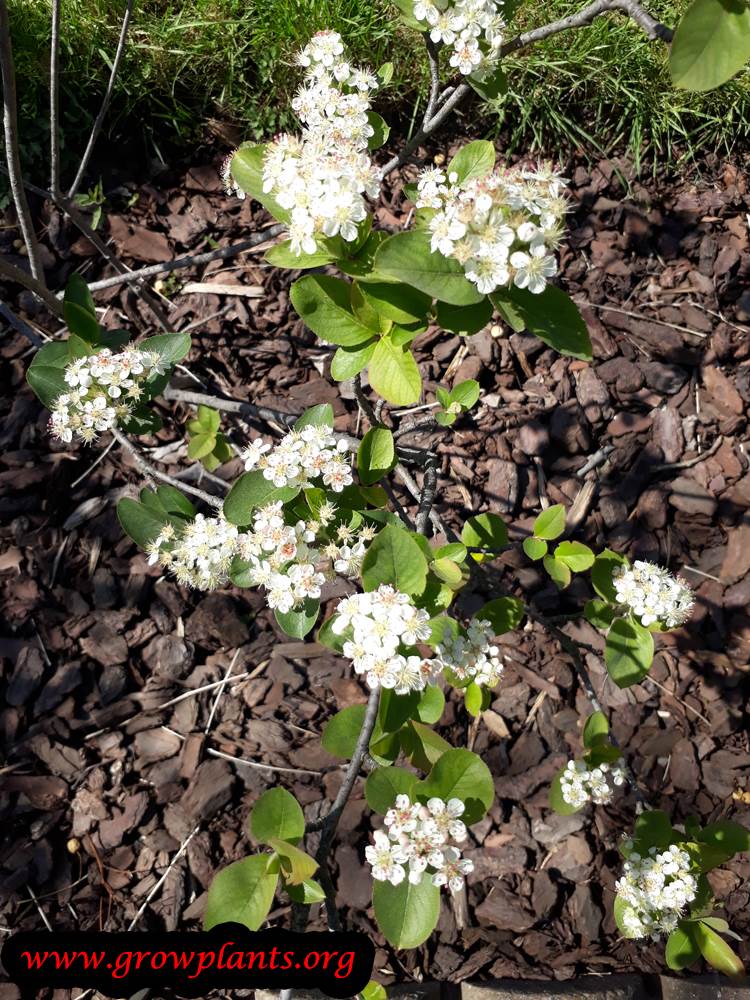
- Flower Characteristics: Clusters of small, white, five-petalled flowers in spring; bee-pollinated (see the Blooming guide).
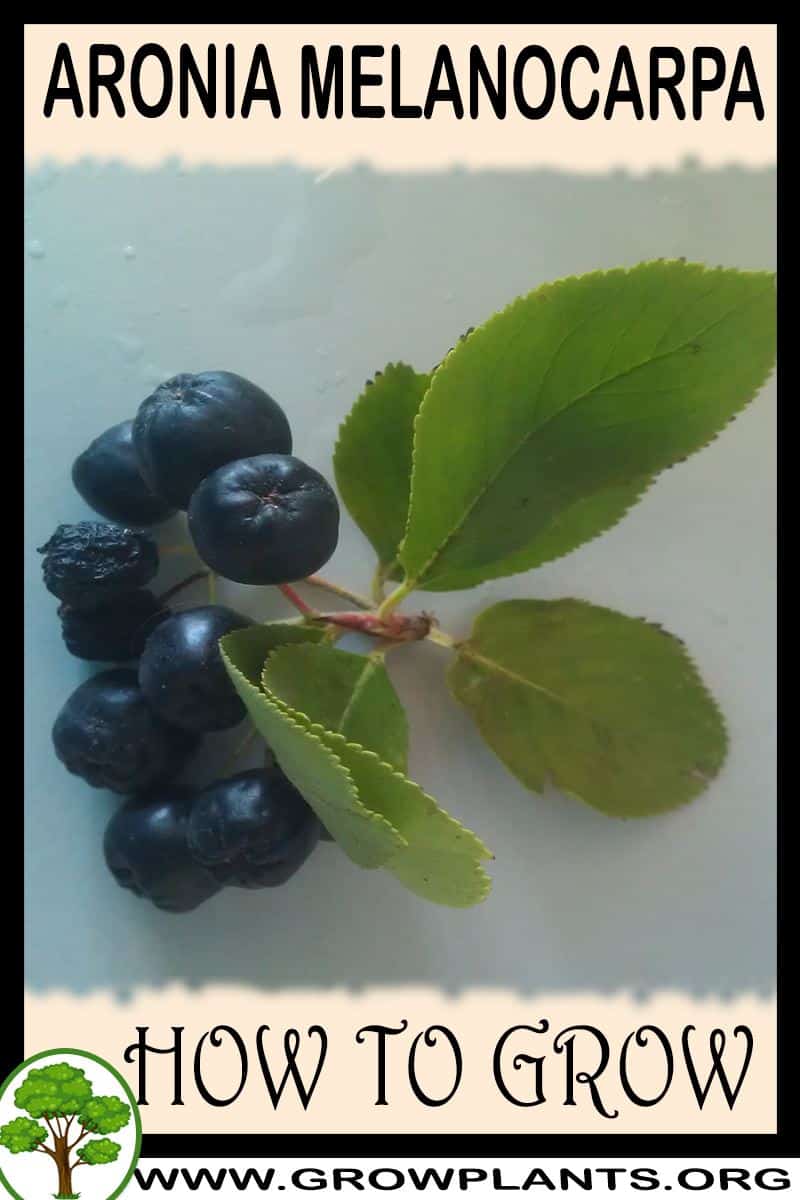
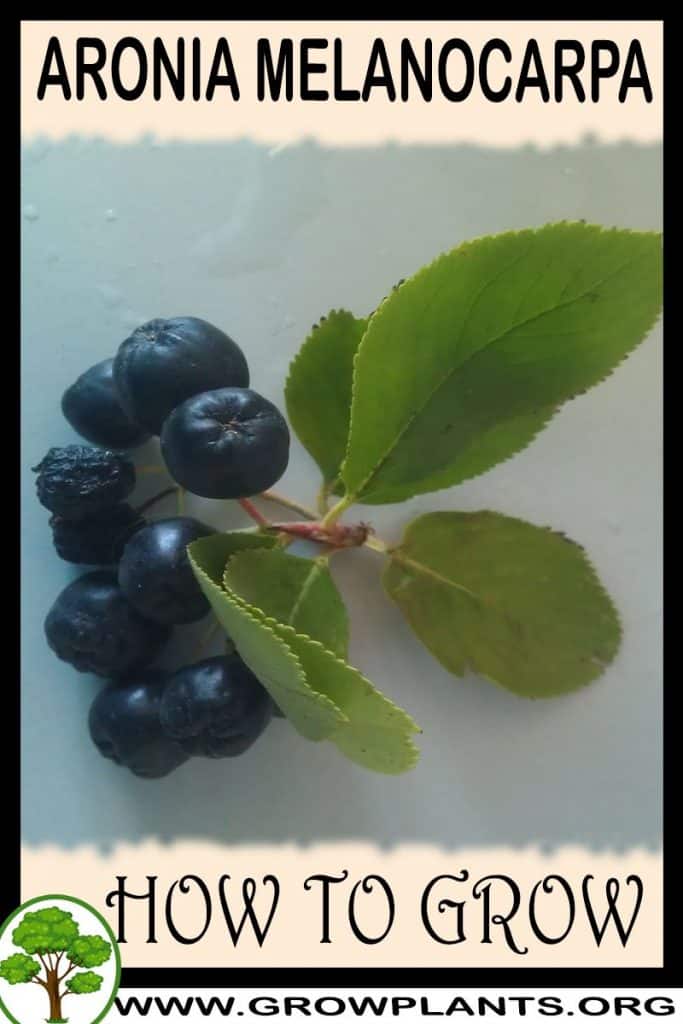
- Fruit Profile: Small, pome-like black berries borne in clusters – tart raw and best used cooked (see the Fruit guide).
Primary Uses & Landscape Value
- Edible Uses: Berries are used for juice, jam, cakes, wine and other preserves – usually cooked, as they are astringent when raw.
- Functional & Ornamental Roles: Ornamental fruiting shrub for borders and wildlife plantings, valued for its spring flowers and vivid autumn colour; suitable for large containers.
Care Guide: Planting, Soil & Watering
Overview: Chokeberry is a hardy, adaptable deciduous shrub that fruits best in full sun in rich, moisture-retentive soil, and it tolerates heavy clay far better than most shrubs. It likes steady, even moisture and needs a period of winter chill to crop well.
Quick Care Requirements
| Requirement | Ideal Condition |
|---|---|
| Planting Season | Dormant season — winter through early spring is ideal (essential for bare-root plants) |
| Growth Rate | Slow to Moderate |
| Soil Type | Rich, moisture-retentive soil; tolerates heavy clay and wet ground, but wants steady moisture |
| Water Need | Moderate — keep the soil evenly moist and never let it dry out completely |
Planting & Establishment
- Best Planting Season: Plant during the dormant season — winter to early spring is best; container-grown plants can also go in through spring. Bare-root plants must be set out while dormant in winter to early spring, or they may fail to take.
- How to Plant:
- Hole Preparation: Dig a hole roughly twice the width of the root ball and no deeper, on a sunny, weed-free site.
- Soil Amendments: Fork in generous organic matter (compost or well-rotted manure) to enrich the soil and hold moisture; chokeberry is happy on heavy or clay ground.
- Planting Depth: Set the plant at the same depth it grew in the pot, with the root collar at soil level; firm gently and water in.
- Growth Speed & Expectations: Slow to moderate — this deciduous shrub reaches about 0.5-2 m 2-6 feet over several seasons, bearing berries from roughly 2–3 years old.
Soil, Watering & Drainage Care
- Soil Mix & Drainage Needs: It prefers rich, moisture-retentive soil and copes with heavy clay, but roots still need air, so avoid stagnant waterlogging. In containers use a peat-based or loam mix with a layer of grit or lava rock at the base for drainage, and refresh part of the soil every few years.
- Watering Schedule & Technique:
- Young / Newly Planted: Keep the soil consistently moist through the first seasons so the shrub roots in well; do not let it dry out.
- Established: Water deeply and regularly, especially while flowering and fruiting; steady moisture gives the best berry crop.
- Seasonal Adjustments: Water more in summer heat and dry spells; ease off in the cool dormant season when the plant loses its leaves.
Climate, Light & Hardiness
Black chokeberry is a very cold-hardy temperate shrub suited to temperate, subtropical, and Mediterranean-type climates, doing best in full sun. It tolerates a wide hardiness range and, with the right care, can extend into warmer subtropical zones provided it gets relief from the harshest midday sun there.
Quick Climate Specifications
| Climate Zones | Temperate, subtropical, Mediterranean |
|---|---|
| USDA Hardiness Zones | 4–9, possible in zone 10 with the right care |
| Cold Damage Begins | Spring flowers and tender new growth can be damaged by late frosts around 0°C (32°F) or below |
| Approx. Survival Minimum | Established plants tolerate deep winter cold typical of zone 4, roughly −34 to −29°C (−30 to −20°F) |
| Frost Tolerance | High (dormant plant); flowers more frost-sensitive |
| Light Conditions | Full sun; in hardiness zone 10b, better in half shade away from noon sun |
| Wind Tolerance | Moderate |
Sunlight & Light Exposure
Optimal Light Setup
Full sun gives the strongest flowering and fruiting through most of its range.
Direct Sun Requirement
Needs good direct sun for flowering and fruit production across zones 4–9.
Shade & Heat Management
At the hot end of its range (zone 10b), the site’s own data recommends half shade and protection from noon sun to avoid heat and light stress.
Best Exposure / Orientation
Open southern or western exposure in cooler zones; in the warmest zone 10b sites, an exposure that avoids intense midday sun is preferable.
Temperature Extremes & Hardiness
USDA Hardiness & Regional Limits
Hardy through zone 4–9 winters, with zone 10 achievable with attentive care – a notably broad range for a fruiting shrub, spanning from severe continental cold to near-subtropical warmth.
Cold Damage & Winter Protection
The dormant shrub needs no winter protection within its zone range. Late-spring frosts remain the main risk to flowers and new growth.
Frost Sensitivity
Dormant wood and buds are very frost-hardy; open flowers and soft new growth are frost-sensitive.
Extreme Heat Tolerance
Tolerates warm subtropical conditions reasonably well up to zone 10, but the site data specifically flags that at zone 10b it needs shade from noon sun to handle the heat and light intensity comfortably.
Chilling Requirement
As a temperate deciduous shrub it needs a real winter chilling period to break dormancy and flower normally; this is met throughout its recommended zones, including the warmer end.
Wind, Humidity & Microclimate
Humidity Preferences
Adapts to the range of humidity found across temperate to subtropical growing regions.
Wind Tolerance
Handles moderate wind well once established.
Coastal / Salt Tolerance
Not specifically documented as salt-tolerant; a sheltered inland-type site is the safer default.
Rainfall & Seasonal Moisture
Suited to climates with consistent seasonal moisture rather than arid conditions.
Microclimate Recommendations
In the warmest part of its range, choose a site with afternoon or noon shade; in the coldest part, a site sheltered from late-frost pockets protects the spring bloom.
Growing in Pots, Balconies & Indoors
Black chokeberry (Aronia melanocarpa) is a hardy fruiting shrub, not a houseplant – it wants full sun and the open air. The grower confirms it can be grown in a container as long as you keep the plant small, which makes it a good long-term shrub for a sunny balcony, patio or terrace.
Quick Details
- Container Size: Start about 20-50% larger than the root ball (use the smaller end for a bigger plant) and pot up in stages
- Indoor Suitability: Not a houseplant – grow it outdoors in full sun
- Best Spot: Full sun on a patio or balcony (light shade without harsh midday sun in the hottest zones)
- Soil & Drainage: Peat-based mix with strong drainage – holes plus some lava grit or similar in the base
- Watering in Pots: Average and steady – don’t let it dry out; pots dry faster than open ground
Indoors & On the Windowsill
- Not a houseplant: The grower marks it as unsuitable indoors. It needs full sun and a natural cold season, so keep it outside rather than in a room or on a sill.
- Overwintering: Aronia is very cold-hardy and can stay outdoors through winter; no need to bring the pot inside.
On a Balcony or Patio
- Light & exposure: Give it the sunniest spot. In very hot climates shift it out of harsh midday sun. Reflected heat from walls and railings dries pots quickly, so check moisture in warm spells.
- Keeping it small: Regular pruning and a restrained pot size keep this potentially large shrub to a manageable balcony plant.
Choosing the Pot, Soil & Long-Term Care
- Pot & drainage: A pot with strong drainage holes and some lava grit or similar in the base. A saucer is fine only if you let it fill when watering and then dry out the same day – never leave the roots standing in water.
- Potting mix: The grower favours a peat-based mix; keep it open and free-draining.
- Feeding: Potted shrubs leach nutrients faster than those in the ground, so feed through the growing season with a balanced fertilizer.
- Refreshing the mix: As the plant gets large, swap out part of the soil – potting mix loses its structure over time and a refresh keeps the roots healthy.
Grower’s Container Tip
- Pot up in stages: Start in a pot only 20-50% larger than the root ball (smaller percentage for a larger plant); each time the roots fill it, move up a size until you reach the pot you want. This keeps the mix fresh and cares for the roots better than one oversized pot.
Growing this plant in a greenhouse
A greenhouse can give aronia melanocarpa frost protection and cold protection. In the right climate it may also be kept growing through winter, depending on how much warmth and light are provided.
Important: this plant needs a genuine winter chill and dormancy. Avoid maintaining excessively warm winter greenhouse conditions when the cultivar requires winter chilling for normal dormancy and flowering.
Greenhouse at a glance
| Greenhouse suitability | Conditional – depends on your climate |
|---|---|
| Main benefits | frost protection, cold protection |
| Season extension | earlier spring & later autumn |
| Outdoor protection advisable below | about 0°C |
| Suitable types | unheated greenhouse, polycarbonate greenhouse, lean-to |
| Heating | No added heat is normally needed. |
Related greenhouse guides
- Greenhouses: How to Choose the Right Greenhouse
- Best Lean-To Greenhouses
- Polycarbonate Greenhouses: What to Look for Before Buying
Fertilizing & Feeding
A moderate feeder that tolerates heavy, rich soil well – this compact, widely grown chokeberry does best on light, steady feeding rather than one large application.
Quick Fertilizing Specs
| Feeding Level | moderate |
|---|---|
| young_feeding | Keep feeding light while a newly planted shrub establishes |
| mature_feeding | Established shrubs grown for their dark, antioxidant-rich fruit still benefit from light, regular feeding rather than one heavy application |
| Main Nutrient Priority | Nitrogen while the shrub builds its compact framework, shifting toward balanced feeding with adequate potassium as flowering and fruiting begin |
| Best Feeding Period | Through the active growing season, tapering off well before dormancy |
| Organic Options | Compost and other organic matter worked into heavy soil to improve structure and feed gradually |
| Micronutrients | Micronutrient issues are uncommon in typical garden soil, but watch for interveinal yellowing if drainage is poor |
| Soil pH | Tolerant of a range of soil conditions, including heavy clay; no special acidification is normally needed |
| Reduce/Stop Feeding | Ease off and stop feeding as the season winds down so canes have time to harden off before cold weather |
Feeding by Growth Stage
Establishment after planting
Help a newly planted black chokeberry shrub root into heavy, rich soil without forcing top growth the young root system can’t yet support.
| Nutrient direction | Balanced feeding kept light while the plant settles in |
|---|---|
| Timing | The first growing season after planting, once new growth confirms establishment |
| Frequency | A light feeding to start is usually enough; hold back until active growth is clearly underway |
| Fertilizer types | A balanced, general-purpose shrub or fruit fertilizer, Organic matter worked into heavy soil to improve structure and feed gradually |
| Precautions | Avoid heavy feeding at planting; it encourages soft growth before roots can support it and does nothing to fix drainage problems in heavy soil |
Vegetative growth
Build a full framework of canes and foliage ahead of flowering.
| Nutrient direction | A nitrogen-forward feeding to drive shoot and canopy growth, easing off as new growth slows toward flowering |
|---|---|
| Timing | Through the spring growth flush into early summer |
| Frequency | Several light feedings through the active growing season rather than one heavy application |
| Fertilizer types | A nitrogen-leaning balanced fertilizer, A fresh layer of organic mulch or compost as a slow, gradual feed |
| Precautions | Heavy clay soil holds nutrients longer than light soil, so it is easy to over-fertilize; err on the light side and watch the plant’s response |
Flowering and fruiting
Support flowering, fruit set and berry development for harvest without pushing late, soft growth.
| Nutrient direction | Shift toward balanced feeding with adequate potassium as bloom opens, tapering nitrogen once fruit has set |
|---|---|
| Timing | From bloom through harvest |
| Frequency | Light feeding during bloom and early fruit set, then reduce and stop as fruit ripens |
| Fertilizer types | A balanced fertilizer with adequate potassium, Compost top-dressing to sustain even soil fertility through fruiting |
| Precautions | Excess nitrogen late in fruiting favors leafy growth over fruit quality and can delay hardening off before winter |
Nutrient Deficiency Signs & Corrections
Pale, yellowish older leaves and noticeably weaker cane growth than expected
| Possible causes | Low available soil nitrogen, Heavy, waterlogged clay limiting root uptake even when nitrogen is present, Competition from nearby weeds or turf for available nutrients, Fresh organic mulch tying up nitrogen as it breaks down |
|---|---|
| Appears first on | Older, lower leaves first |
| What to check | Drainage and soil compaction around the roots, Weed or turf competition nearby, Mulch type and how recently it was applied |
| Possible correction | Apply a light, nitrogen-forward feeding during active growth and reassess canopy color and growth over the season |
Scorched or browning margins on older leaves along with smaller, poorly colored fruit
| Possible causes | Low soil potassium, Drought stress limiting potassium uptake even where soil levels are adequate, Heavy nitrogen feeding creating a relative potassium imbalance, Naturally low potassium reserves in light or sandy soil |
|---|---|
| Appears first on | Older leaves first, worsening toward the margins |
| What to check | Recent watering consistency, Balance of nitrogen versus potassium in recent feedings, Soil texture and typical nutrient reserves |
| Possible correction | Shift to a balanced or potassium-leaning fertilizer as flowering and fruiting approach |
Interveinal yellowing on new leaves while veins stay green
| Possible causes | Waterlogged or compacted heavy clay soil restricting root oxygen and micronutrient uptake, Soil pH drifting alkaline near the root zone, Poor drainage that has persisted since planting, A genuine iron or manganese shortage in the soil around this black chokeberry |
|---|---|
| Appears first on | The newest leaves at the shoot tips |
| What to check | Soil drainage and compaction, Soil pH near the roots, How long the yellowing pattern has persisted |
| Possible correction | Improve drainage and soil structure with organic matter; if the pattern persists, apply a chelated iron or manganese product per its label |
Pruning, Training & Seasonal Maintenance
Black chokeberry is the most compact of the chokeberries (0.5-2 m), multi-stemmed and deciduous, and it is the species most often grown specifically for its fruit. It tolerates pruning well; because it stays naturally compact, the priority is less about controlling size or spread and more about annual cane renewal for fruit quality, done in late dormancy (late autumn into early winter, or after harvest if the crop is light) so it doesn’t disturb spring flower buds on one-year-and-older wood.
Quick Pruning & Maintenance Specs
| Pruning Tolerance | High |
| Primary Pruning Window | Late autumn to early winter (dormant) |
| Secondary Maintenance Window | After fruit harvest, if the crop is light |
| Typical Frequency | Annual |
| Main Objective | Renew canes annually to sustain fruit quality on a naturally compact frame |
| Young Plant Priority | Build a working set of basal canes; remove first-year bloom stems to favor establishment |
| Mature Plant Priority | Remove the oldest canes each year to keep the compact form productive |
| Best Tool Type | Bypass secateurs / loppers at the base |
| Avoid Heavy Pruning During | Spring bud break and bloom |
Pruning by Plant Age & Size
Newly Established
Remove only damaged growth; do not hard-prune a first-year plant.
Young / Formative
Cane selection: let several strong basal canes establish. Remove the first year’s bloom stems per this species’ own care notes, so early energy builds roots and canes rather than fruit.
Mature / Established
Because this species stays compact naturally, annual maintenance is lighter than its taller relatives – mainly removing the oldest, least productive canes at the base and any crossing interior stems.
Seasonal Pruning Schedule
| Dormant/Winter | Objective: cane renewal for fruit quality. Remove weak, dead, crossing, and the oldest unproductive canes. Response: stimulates fresh basal canes without pushing the plant beyond its naturally compact size. Fruiting impact: positive over time. |
| Post-Harvest | Objective: light shaping if dormant pruning was skipped. Remove dead/damaged wood only. Minimal fruiting impact. |
Flowering & Fruiting Wood
Flowers open in spring on one-year-old and older canes; fruit ripens by late summer to early autumn. A new cane needs roughly a year to become productive, so avoid removing more than a portion of the cane framework in a single season on a plant already valued for its fruit yield.
Structural Pruning & Training
Renewal-pruned, cane-based shrub: thin to the strongest canes and remove crossing or crowded interior stems to keep fruit exposed to light and air.
Special Growth to Remove
- Root/basal suckers – this species suckers less aggressively than its larger relatives, so thin lightly to select the best renewal canes rather than needing to contain spread.
- Old, low-vigor canes at the base once cropping declines.
Not grafted, so no rootstock-sucker concerns.
Container & Small-Space Pruning
Its naturally compact habit makes it well suited to a large container or a tight garden bed; still thin the oldest canes at each repot to sustain fruit production without letting the clump outgrow the pot.
Tools
Bypass secateurs for thin-to-medium canes; loppers for occasional thicker basal canes at ground level. Not appropriate for hedge shears, which would shear off fruiting wood indiscriminately.
Tool Hygiene & Disease Risk
Routine – clean, sharp tools are generally sufficient, though wiping blades between plants is still worthwhile given virus issues documented across Aronia varieties in general.
Cut Placement & Technique
Remove chosen canes flush at the base rather than leaving stubs.
Heavy Pruning & Rejuvenation
Tolerated well – even a neglected plant can be renewal-pruned hard near the base and will resprout vigorously from the crown. Expect a lost season of fruit on heavily renewed canes; spreading the renovation over two dormant seasons preserves more of the crop along the way.
Post-Pruning Care
Water during establishment if dry; monitor new basal shoots through the season for thinning at the next dormant pruning.
Common Pruning Mistakes
Shearing into a rounded hedge shape instead of thinning individual canes; skipping annual renewal until the whole plant is old, woody, and low-yielding; pruning after spring bud break, which reduces the year’s bloom.
When NOT to Prune
During bloom or while fruit is developing.
Recommended Tools (by task)
- bypass_secateurs – for annual thinning of young and medium canes, the main cut size on this compact species.
- loppers – for the occasional older, thicker basal cane removed at ground level.
Pruning Troubleshooting
| Problem | Possible Cause | What to Check | Corrective Action |
| Declining fruit size or yield | Canes aging past peak productivity without renewal | Bark condition and vigor of the oldest canes | Renewal-prune the oldest quarter to third of canes annually |
| Overly dense, twiggy interior | No interior thinning over several seasons | Canopy density and crossing stems | Thin crowded interior canes at the next dormant pruning |
| Weak regrowth after a hard cutback | Entire plant renewed in one season | How much of the cane framework was removed at once | Stage renewal over two dormant seasons instead of removing everything at once |
Propagation Guide
Black chokeberry is most easily propagated from basal-shoot cuttings or root suckers, which root readily and keep a cultivar’s fruit qualities true while bringing plants into production faster than seed. Seed is a workable alternative once cold-stratified, but named cultivars need vegetative propagation to stay true to type; this is an easy plant to propagate by either method.
Quick Propagation Specs
| Best Propagation Method | Basal-shoot (stem) cuttings or root suckers |
| Alternative Methods | Seed (cold-stratified) |
| Propagation Difficulty | Easy |
| Seed True-to-Type | Usually true-to-type for the species; cultivar-dependent for named selections |
| Vegetative True-to-Type | Yes |
| Best Propagation Season | End of winter to early spring (also possible in a greenhouse at other times) |
| Seed Germination Time | 1–3 months |
| Cutting Rooting Time | 1–2 months |
| Seed Sowing Depth | 1–2 cm |
Growing from Seed
Seed Handling & Viability
Small black seed; store in a cold, dark place (refrigerator) until sowing.
Dormancy & Pre-Sowing Treatment
Soak seed in water for about 12 hours, changing the water every few hours, then cold-stratify by mixing the seed into moist, dark, well-drained soil and refrigerating for 1–3 months.
Sowing Season
Begin the chilling/stratification step around mid-winter; sow out in spring once stratification is complete.
Sowing Depth & Orientation
Bury seed 1–2 cm deep.
Germination Conditions
Keep moist, out of direct sun, and not too hot.
Germination Time
1–3 months.
Seedling Care
Grow seedlings on in half shade, in well-drained soil.
Stem Cuttings
Cutting Type
Basal shoots (young growth from the base of the plant).
Best Timing
End of winter to early spring; also possible in a greenhouse at other times of year.
Rooting Setup
Moist to wet soil, high humidity, half shade; peat soil is preferred.
Rooting Hormone
Beneficial – the source recommends using a root-growth hormone.
Rooting Time
1–2 months.
Division, Offsets, Pups & Suckers
Root suckers can be separated from the parent plant in winter and transplanted. Not every sucker carries enough of its own root system to establish well once separated, so choose vigorous, well-rooted suckers over thin shoots.
Bloom & Flower Guide
Quick Details
- Bloom Season: Late spring into early summer
- Flower Appearance: Clusters of small white five-petalled flowers, with pinkish anthers at the centre
- Edibility: Flowers are ornamental – this shrub is grown for its edible berries, not its flowers
Detailed Blooming Overview
Black chokeberry opens flat clusters of small white flowers in late spring, a fresh display that later gives way to the dark, healthy berries the shrub is prized for. The blooms are worked by bees, and although the plant is largely self-fertile, good pollination makes for a heavier fruit set.
Flower Characteristics
- Small white flowers with five petals and pinkish anthers.
- Borne in flat-topped clusters (corymbs) along the branches.
Bloom Care & Thinning
- Thinning: In the first year, thinning the bloom is recommended so the young plant puts its energy into establishing rather than fruiting.
- Pollination: Worked by bees; largely self-fertile, so a single plant will still set fruit.
Fruit & Uses
Aronia melanocarpa, black chokeberry, produces the dark, near-black berries most commonly grown for juice and processed foods – it is the Aronia species most widely cultivated for fruit production. The raw fruit is very tart and astringent, so it is almost always cooked, juiced or otherwise processed before eating in any quantity.
Quick Edible Specs
| Edible Parts | Fruit |
| Main Use(s) | Culinary – juice, jams/preserves, baking; widely grown commercially for juice |
| Eaten Raw or Cooked | Technically edible raw, but usually processed – cooked, juiced or dried |
| Preparation Required | Cook/process for realistic use; avoid eating the seeds raw in quantity |
| Harvest Season | End of summer into early autumn |
| Time to First Harvest | Several years after planting – see Propagation |
| Storage | Fresh berries are short-lived; freezing or juicing preserves the crop |
| Safety/Toxicity Caveat | Seeds are reported to contain a bitter, potentially toxic compound raw; cooking is advised |
Fruit
Berries turn deep black-purple and slightly soften when ripe, hanging in small clusters that are usually stripped by hand in one or two passes. Because this is the chokeberry species most grown for commercial juice, most of the crop is destined for pressing rather than fresh eating.
Harvesting
Ripening is fairly uniform within a cluster, so harvest is typically concentrated rather than spread over a long season. Birds compete heavily for the ripe fruit (see Pests).
Preparation, Uses & Safety
Juice, jam, sauces and baked goods are the main outlets for the crop; cooking softens the tannic bitterness of the raw fruit and addresses the site’s caution about the seeds, which should not be eaten raw in bulk. No medical claims are made here, though the fruit is traditionally noted for its dark pigment and antioxidant content.
Pests, Diseases & Troubleshooting
Overview: Chokeberries are exceptionally tough, disease-resistant Rosaceae shrubs – among the least troubled of all fruiting plants. Where problems do appear they mirror other pome-family relatives: aphids, mites and scale on stressed plants, and rust or leaf spot in humid seasons. In practice the biggest “pest” of a ripe crop is birds. Keep plants vigorous, sunny and open and very little intervention is needed. Black chokeberry (Aronia melanocarpa) is the most widely grown and the most disease-resistant of all; its main habit quirk is suckering into a colony.
Quick Troubleshooting Overview
| Issue / Pest | Main Symptom | Primary Solution |
|---|---|---|
| Aphids | Curled tips, sticky honeydew, sooty mould | Water blast; insecticidal soap; beneficials |
| Spider mites | Stippled, bronzed leaves with fine webbing | Hose foliage; horticultural oil |
| Scale insects | Bumps on stems, sooty mould, weak growth | Prune out; dormant/horticultural oil |
| Japanese beetle | Skeletonised leaves, chewed flowers | Hand-pick; keep traps away from plant |
| Cedar-quince / cedar-apple rust | Orange spots on leaves; distorted, spiny fruit | Remove nearby junipers; airflow |
| Birds | Ripe berries stripped overnight | Net plants as fruit colours |
Common Pests & Management
- Aphids (Aphis spp.):
- Symptoms: Green or black soft-bodied insects clustering on shoot tips and leaf undersides, curling new growth and coating it in sticky honeydew that blackens with sooty mould; ants often attend them. Usually minor.
- Prevention & Control: Blast colonies off with water and encourage ladybirds, lacewings and parasitic wasps. Reserve insecticidal soap or neem oil for heavy infestations, spraying under the leaves in the cool of evening to spare pollinators.
- Spider mites (Tetranychus urticae):
- Symptoms: Fine pale stippling that gives leaves a dull, bronzed, dusty look, with delicate webbing on the undersides in hot, dry, dusty conditions; heavy feeding causes early leaf drop.
- Prevention & Control: Hose down the foliage to knock off mites and raise humidity, and avoid drought stress. Encourage predatory mites; use insecticidal soap or horticultural oil with thorough underside coverage for serious outbreaks.
- Scale insects (Quadraspidiotus perniciosus / Lepidosaphes ulmi):
- Symptoms: Small immobile brown, grey or oyster-shell-shaped bumps stuck to stems and branches, sap-sucking to cause yellowing, twig dieback, weak growth and honeydew with sooty mould (soft scales).
- Prevention & Control: Prune out and destroy heavily encrusted wood and scrub off light infestations. Apply horticultural or dormant oil to smother scale, timing sprays to the vulnerable crawler stage; support natural parasitic wasps and predators.
- Japanese beetle (Popillia japonica):
- Symptoms: Metallic green-and-copper beetles that feed in groups, skeletonising leaves to a lacy network of veins and chewing flowers, mainly in early to mid summer; grubs also feed on nearby lawn roots.
- Prevention & Control: Hand-pick beetles into soapy water in the cool morning and avoid pheromone traps close by (they attract more than they catch). Encourage birds, treat lawn grubs with beneficial nematodes or milky spore, and use neem as a deterrent.
- Cherry / lesser fruitworm (Grapholita packardi):
- Symptoms: Small pinkish caterpillars that bore into developing berries, leaving entry holes, frass and prematurely coloured, damaged fruit; an occasional pest of chokeberry and related Rosaceae fruit.
- Prevention & Control: Practise orchard hygiene – clear fallen and mummified fruit that harbour overwintering larvae – and encourage birds and parasitic wasps. Monitor with pheromone traps; Bt or spinosad timed to egg-hatch controls larvae if it becomes a problem.
Diseases & Fungal Issues
- Cedar-quince & cedar-apple rust (Gymnosporangium spp.):
- Symptoms: Orange-yellow spots on leaves and, distinctively, orange spiny or tufted growths distorting the fruit; the fungus needs nearby junipers/red cedars as an alternate host and is worst in wet springs.
- Treatment & Management: Where practical, remove or avoid planting near junipers and eastern red cedar, and prune those hosts of the brown galls. Improve airflow, rake up fallen leaves, and apply a sulphur or myclobutanil fungicide at bud-break in high-pressure years.
- Leaf spot & fruit spot (Entomosporium / Mycosphaerella spp.):
- Symptoms: Numerous small reddish-purple to brown spots on leaves that may merge, yellow the foliage and cause early leaf drop in wet seasons, with occasional spotting on fruit.
- Treatment & Management: Rake and destroy fallen leaves, space and prune for airflow, and water at the base rather than overhead. Chokeberry usually tolerates it well; copper or sulphur fungicide is only needed in persistently wet, high-pressure sites.
- Powdery mildew (Podosphaera spp.):
- Symptoms: A white to greyish powdery film on leaves and shoot tips, mainly in humid, crowded, or shaded conditions, sometimes puckering young growth; rarely damaging on this resistant shrub.
- Treatment & Management: Prune for light and airflow, site in full sun, and avoid soft, over-fed growth. Remove badly affected shoots; a sulphur or potassium-bicarbonate spray handles stubborn cases.
- Fire blight (low risk) (Erwinia amylovora):
- Symptoms: As a rose-family plant it can theoretically show the blackened, shepherd’s-crook “burnt” shoot tips of fire blight, but chokeberry is notably resistant and rarely affected.
- Treatment & Management: Prune out any blackened shoots well below the damage in dry weather, disinfecting tools between cuts, and avoid heavy nitrogen that pushes soft, susceptible growth. No routine treatment is needed on such a resistant plant.
Growing Difficulties & Abiotic Problems
- Birds stripping the fruit:
- Cause & Symptoms: The most consistent problem with chokeberry: birds find the ripening berries and can strip a bush in days, especially where other food is scarce.
- Correction Strategy: Drape bird netting over the shrub as the fruit colours, or grow enough to share. Some growers plant extra as a deliberate wildlife crop and net only what they want to harvest.
- Lime-induced chlorosis:
- Cause & Symptoms: In high-pH, alkaline or chalky soils the leaves yellow between green veins as iron and manganese become locked up, weakening growth.
- Correction Strategy: Test and gently acidify the soil with elemental sulphur or acidic organic matter, mulch with composted bark, and apply chelated iron for a quick correction. Chokeberry prefers slightly acidic soil.
- Suckering and spread:
- Cause & Symptoms: Chokeberries, especially black chokeberry, spread by root suckers into a widening colony that can outgrow a tidy border.
- Correction Strategy: Remove unwanted suckers each year, install a root barrier where a defined shape is needed, or let it naturalise as an informal thicket or hedge where space allows.
- Poor fruit or flowering in shade:
- Cause & Symptoms: In too much shade the shrub grows leggy and flowers and fruits sparsely, and autumn colour is muted.
- Correction Strategy: Site in full sun to light shade for the best flowering, cropping and fall colour; on established plants, renewal-prune the oldest stems to keep the bush vigorous and productive.
What Helps – Products & Tools
Little is usually needed on so resilient a shrub. For pests, use a water jet, insecticidal soap or neem oil for aphids and mites, horticultural/dormant oil for scale, and hand-picking plus beneficial nematodes for Japanese beetle. For the odd disease, sulphur or myclobutanil handles rust, copper or sulphur handles leaf spot, and potassium bicarbonate handles mildew. The most useful “tool” of all is bird netting, plus chelated iron on alkaline soils.