

Plant Profile & Key Characteristics
Overview: Thrift (Armeria alliacea) is a low, evergreen perennial that forms a compact cushion of grassy foliage 5-25 cm (2-10 in) tall, topped through spring and summer by rounded, pompom-like flower heads. It is grown as an ornamental groundcover, rock-garden and edging plant, and its long-stemmed blooms are useful for cutting.
Quick Specifications
| Specification | Attribute |
|---|---|
| Plant Type / Life Cycle | Perennial |
| Foliage Type | Evergreen |
| Mature Size | 5-25 cm (2-10 in) tall, forming a low spreading cushion |
| Growth Rate | Moderate to fast |
| Root System | Taproot (deep, woody rootstock; drought-tolerant once established) |
| Hardiness | USDA 3-9 (to 10a with care) |
Growth Form & Structure
- Height & Spread: 5-25 cm (2-10 in) tall in the ground, spreading into a low mounded cushion. In a container use a wide, shallow pot of at least 5 L (1.3 gal), ideally 10 L (2.6 gal) or larger.
- Growth Habit & Form: Low, tuft- or cushion-forming evergreen groundcover; a dense basal rosette of foliage with slender, leafless flower stems held above.
- Lifespan & Maturity: Long-lived perennial that reaches full size within a season or two; lift and divide every few years to keep clumps vigorous.
Anatomy & Physical Features
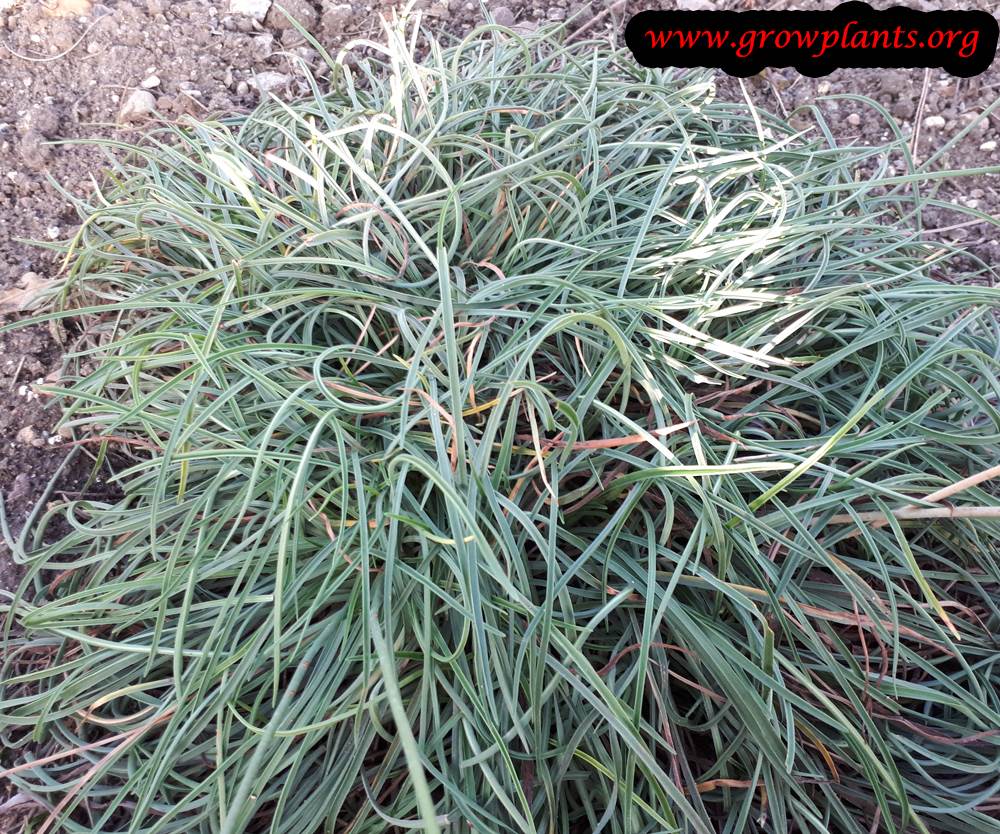
- Leaves & Foliage: Linear, grass-like green leaves, held in a dense evergreen tuft.
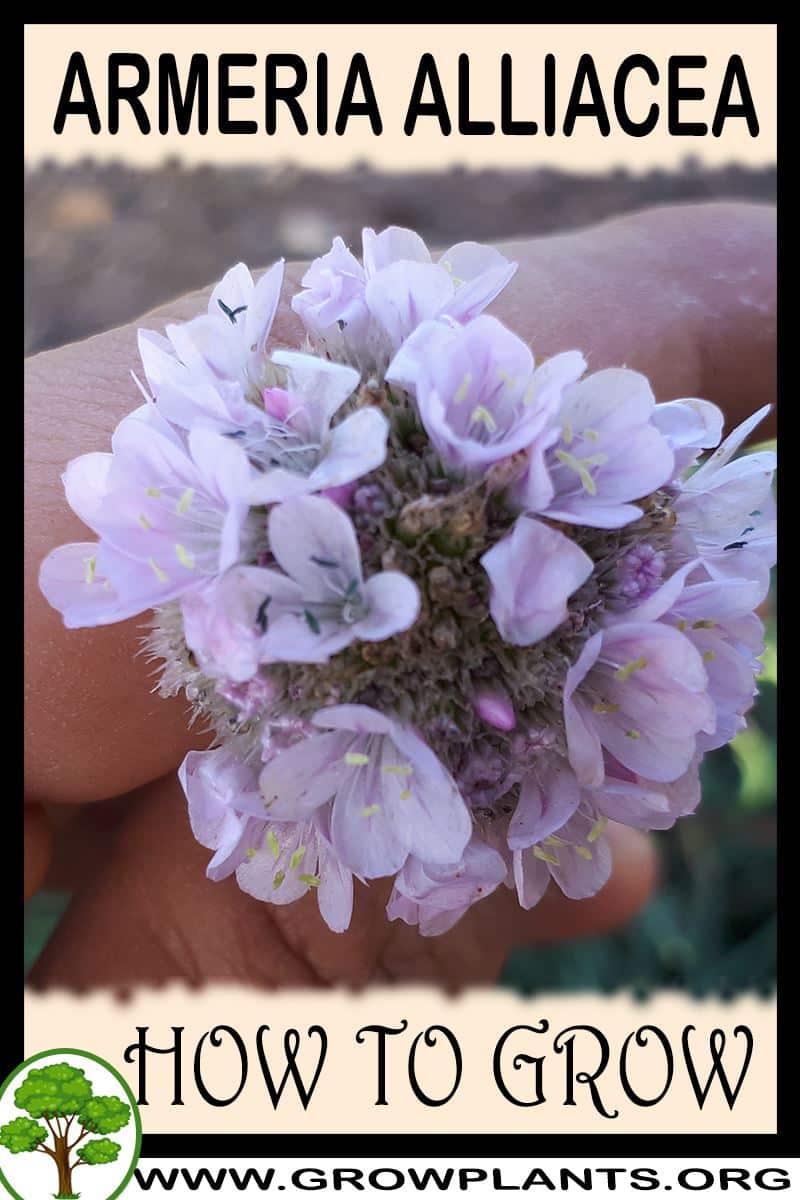
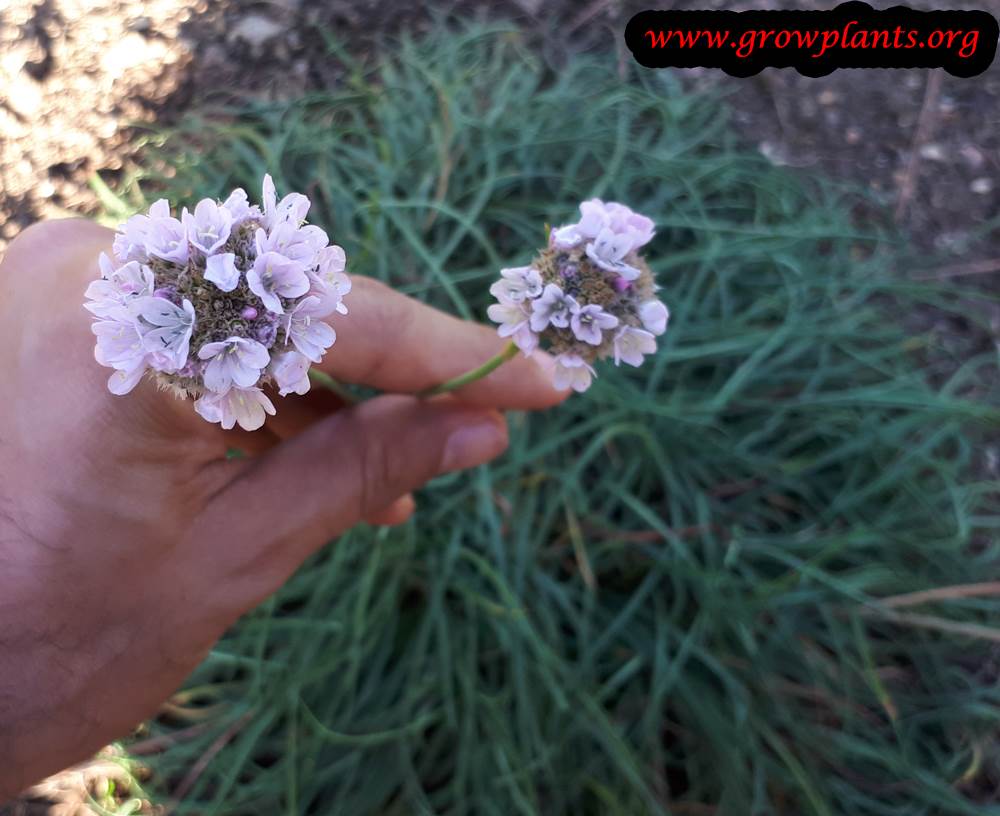
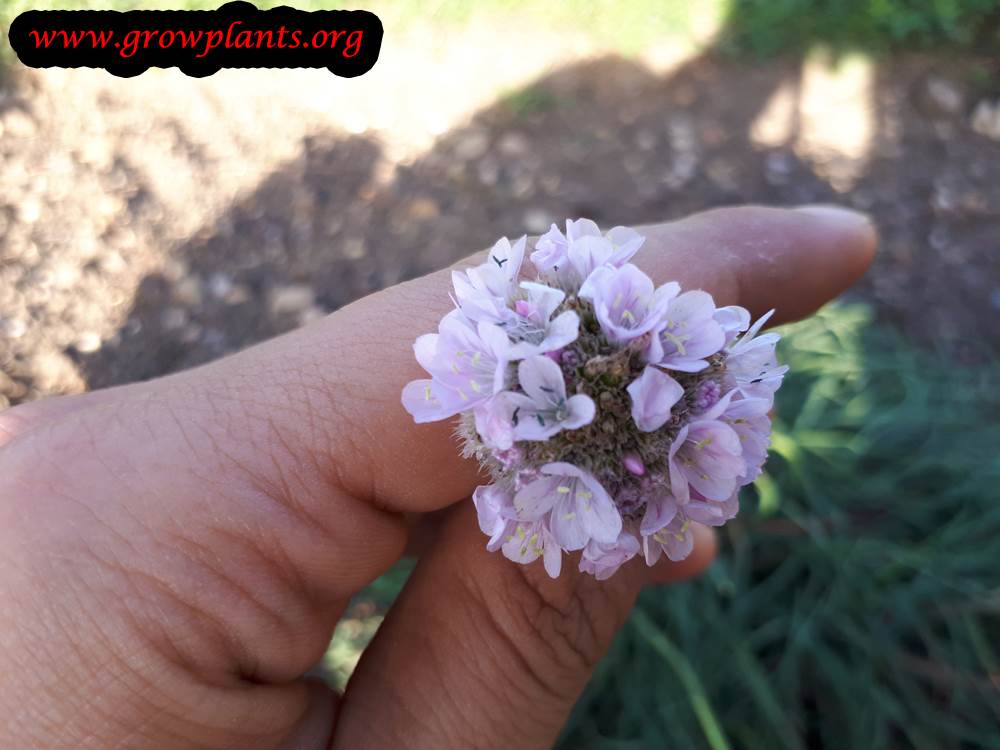
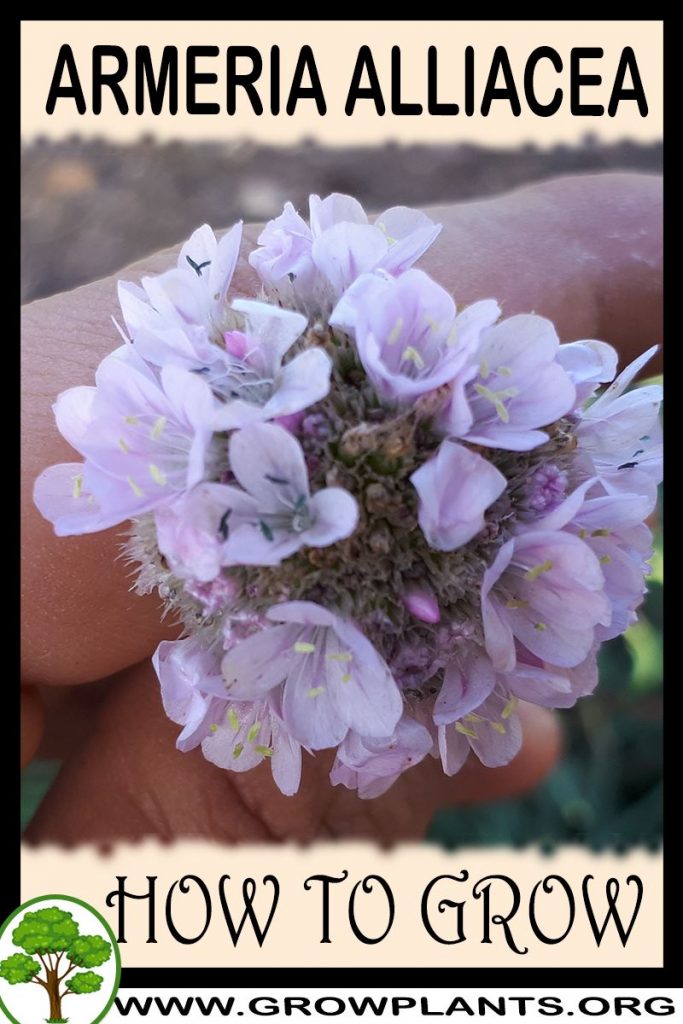
- Flower Characteristics: Small purple, white or pink flowers fused into a rounded pompom head on slender stems; good for cutting (see the Blooming guide for detail).
Primary Uses & Landscape Value
- Functional & Ornamental Roles: Ornamental groundcover, rock and gravel gardens, path and border edging, and coastal or seaside plantings; also well suited to troughs and containers, and grown for cut flowers.
Care Guide: Planting, Soil & Watering
Overview: Sea thrift thrives in full sun and sharply drained, sandy, gritty or rocky soil, and once established it is notably drought-tolerant. It dislikes wet feet, so free drainage matters far more than rich, moisture-holding ground.
Quick Care Requirements
| Requirement | Ideal Condition |
|---|---|
| Planting Season | Cool-season planting — spring in colder zones, spring through autumn in milder zones, and autumn or spring where summers are hot |
| Growth Rate | Moderate to Fast |
| Soil Type | Well-draining sandy, gritty or rocky soil; tolerates poor, dry ground |
| Water Need | Low to Moderate — drought-tolerant once established; let the soil dry between waterings |
Planting & Establishment
- Best Planting Season: Plant in spring in zone 6, spring to summer in zone 7-8, spring to autumn 9, autumn or spring in zone 10a. Aim for the cooler shoulders of the year so plants settle in before summer heat.
- How to Plant:
- Hole Preparation: Dig a hole a little larger than the root ball on a sunny, free-draining spot.
- Soil Amendments: Mix a little organic matter into the backfill; on heavy or rainy ground add grit or coarse sand and plant on a slightly raised bed or mound so water never sits around the crown.
- Planting Depth: Set the crown level with the soil surface and cover the roots only lightly — never bury the leafy rosette.
- Growth Speed & Expectations: Moderate to fast for a low, cushion-forming evergreen – it soon knits into a tidy groundcover mat about 5-25 cm 2-10 inch tall, topped with pompom flower stems in the warm season.
Soil, Watering & Drainage Care
- Soil Mix & Drainage Needs: Give it gritty, fast-draining soil; sandy or rocky ground is ideal, and in pots a sandy or loam-based potting mix with plenty of drainage holes works well. Sharp drainage is the single most important factor — standing moisture around the crown is the main cause of rot.
- Watering Schedule & Technique:
- Young / Newly Planted: Water regularly to settle it in and keep the soil lightly moist while new roots establish.
- Established: Water deeply but sparingly, letting the top few centimetres dry out between waterings; established clumps shrug off drought.
- Seasonal Adjustments: Cut back watering in winter and during wet spells, and water a little more only in prolonged heat — avoid overwatering at any time of year.
Climate, Light & Hardiness
Armeria alliacea is a low, evergreen, mound-forming perennial suited to Mediterranean, subtropical, and temperate climates in full sun (tolerating half shade with reduced flowering), and it is cold-hardy through USDA zones 3–9, extending to 10a with attentive care.
Quick Climate Specifications
| Climate Zones | Mediterranean, subtropical, temperate |
| USDA Hardiness Zones | Approximately 3–9, extending to 10a with care |
| Approx. Survival Minimum | Established plants typically tolerate briefly down to roughly −40 to −34°C (−40 to −30°F) at the cold edge of their range |
| Frost Tolerance | High |
| Light Conditions | Full sun; half shade tolerated but flowering is reduced |
| Wind Tolerance | High (low, tuft-forming coastal-cliff and rock-garden habit) |
Sunlight & Light Exposure
Optimal Light Setup
Full sun gives the tightest mounded habit and the most flowers.
Shade & Heat Management
Tolerates half shade, with reduced flowering as the main trade-off; not prone to heat scorch in its Mediterranean/subtropical/temperate range.
Best Exposure / Orientation
Open, sunny beds, rock gardens, borders, or coastal plantings suit its low tufted habit; it is not grown as a houseplant.
Temperature Extremes & Hardiness
USDA Hardiness & Regional Limits
Reliable outdoors in zones 3–9, extending into 10a with attentive siting and care.
Cold Damage & Winter Protection
Established plants need no special winter protection within their hardy range; well-drained soil matters more for winter survival than added protection.
Frost Sensitivity
Frost-hardy; not considered frost-sensitive within its rated zones.
Extreme Heat Tolerance
Good; it is well adapted to Mediterranean and subtropical summer heat.
Wind, Humidity & Microclimate
Wind Tolerance
High - its low, dense, tuft-forming habit is well suited to open, exposed sites.
Coastal / Salt Tolerance
Not well documented for this species specifically; unlike the coastal Armeria maritima ("sea thrift"), it is primarily an inland or montane species, so salt-spray tolerance should not be assumed.
Rainfall & Seasonal Moisture
Adapted to Mediterranean-type climates with a dry season; prefers well-drained soil and moderate moisture over constantly wet conditions.
Microclimate Recommendations
Open, sunny, sharply drained sites suit this species best.
Growing in Pots, Balconies & Indoors
Sea thrift (Armeria) is a tough, low cushion of grassy foliage topped with rounded flower heads, growing only 5-25 cm tall. The grower does not rate it as a houseplant, but it is a first-rate container, trough and balcony plant – a coastal native, it shrugs off wind and drought once established, provided the pot drains sharply.
Quick Details
- Container Size: At least 5 L (1.3 gal), better 10 L (2.6 gal) – the grower advises a wide, shallow pot, about 50-100% larger than the root ball
- Indoor Suitability: Not a houseplant – it needs full outdoor light and airflow
- Best Spot: Full sun to half shade (in the hottest zones half shade is better; it blooms less in shade)
- Soil & Drainage: Sharp-draining – sandy, loamy or potting mix with plenty of holes; the grower stresses good drainage
- Watering in Pots: Low to average – drought tolerant once established, but shallow pots still dry quickly; never let it stay wet
Indoors & On the Windowsill
- Houseplant limits: The grower marks it as no for indoor growing – it needs strong outdoor light and cannot cope with warm, still room air.
- Windowsill growing: Not suited to a room; grow it outside in a pot or trough.
- Cold-climate note: Hardy, but pot roots are more exposed than in the ground – shelter containers in a hard freeze.
On a Balcony or Patio
- Light & wind: Give it an open, bright spot; walls, railings and paving throw back heat and wind, so pots dry out fast – check moisture often in warm weather.
- Practicalities: Stand pots where drainage water can escape, and shelter taller stems from strong gusts.
Choosing the Pot, Soil & Long-Term Care
- Pot & drainage: A wide, shallow pot 50-100% larger than the root ball, with plenty of drainage holes; skip a standing-water saucer to avoid root rot.
- Potting mix: Sharp-draining – sandy, loamy or potting mix; a gritty top helps keep the crown dry.
- Feeding: Feed lightly – thrift thrives on lean soil; pots still leach faster than open ground.
- Repotting: The grower notes the mix stops draining well after a few years, so change it and refresh the plant every couple of years.
Grower’s Container Tip
- Wide, shallow pot & thin the clump: The grower advises a wide, shallow pot because the roots are not deep; in a small pot, grow fewer plants and cut back some of the roots each time you change the soil.
Fertilizing & Feeding
Armeria alliacea is a light feeder by nature – it comes from lean, sharply drained coastal or rocky habitat and grows best without rich soil or heavy fertilizing. A modest feeding at the start of spring growth is usually all this plant needs; more is not better here.
Quick Fertilizing Specs
| Feeding Level | Light – a lean-soil, drought-tolerant plant that does not want rich feeding. |
|---|---|
| Main Nutrient Priority | Balanced overall nutrition rather than any single high-dose nutrient; skip extra phosphorus for bloom. |
| Best Feeding Period | Spring, as new growth resumes, carrying through the bloom season. |
| Organic Options | A light top-dressing of compost or aged organic matter suits this plant’s natural sandy or rocky habitat better than a rich feed. |
| Soil pH | Adaptable, but performs best in soil that is not heavily alkaline or waterlogged. |
| Reduce/Stop Feeding | Taper off by late summer so the evergreen clump enters autumn and winter without soft new growth. |
Feeding by Growth Stage
Spring growth flush
Support fresh foliage and new flower stalks on this thrift-plant species, a slightly larger relative of Sea thrift as growth resumes after winter.
| Nutrient direction | A balanced, moderately nitrogen-adequate feed to support new foliage without pushing soft, oversized growth. |
|---|---|
| Timing | As new growth begins in spring, once the coldest weather has passed. |
| Frequency | A single light feeding at the start of active growth is typically enough for this light feeder. |
| Fertilizer types | A balanced, general-purpose garden fertilizer applied lightly, Compost or aged organic matter worked into the soil surface |
| Precautions | Avoid rich or frequent feeding – this plant is adapted to lean, sharply drained, sandy or rocky soil, and excess fertility tends to produce weak, floppy growth and fewer flowers. |
Bloom period
Maintain steady, modest nutrition through the bloom season so flower heads in purple, white, or pink form well.
| Nutrient direction | Continue with balanced nutrition rather than switching to a high-phosphorus ‘bloom booster’ – adequate overall feeding, not extra phosphorus, is what supports flowering in most garden soils. |
|---|---|
| Timing | Through the spring-into-summer bloom season. |
| Frequency | Established plantings usually coast on the spring feeding alone; a light top-up is optional if growth looks thin. |
| Fertilizer types | A balanced, general-purpose garden fertilizer, applied sparingly only if needed |
| Precautions | Skip high-phosphorus ‘bloom’ formulas, and keep nitrogen light late in the bloom period – lush new growth this late can reduce flowering and lower winter hardiness. |
Autumn–winter dormancy
Let the evergreen clump rest through autumn and winter without pushing new growth.
| Nutrient direction | None – withhold fertilizer through dormancy. |
|---|---|
| Timing | From autumn, once bloom has finished, through winter. |
| Frequency | No feeding at this stage; resume only once spring growth begins. |
| Fertilizer types | No feeding at this stage – allow the plant to rest until spring growth resumes. |
| Precautions | Do not fertilize during autumn and winter dormancy; late-season feeding can push tender growth that is more vulnerable to cold damage. |
Nutrient Deficiency Signs & Corrections
New leaves turn pale yellow while the veins stay green (interveinal chlorosis).
| Possible causes | Iron deficiency, often induced by alkaline or poorly drained soil rather than a true lack of iron, Waterlogged or compacted soil restricting root uptake, Soil that stays wetter than this plant’s preferred sharp drainage, stressing the roots |
|---|---|
| Appears first on | Newest leaves first |
| What to check | Soil drainage, and whether water pools around the crown after rain or irrigation, Soil pH, if a test is available, Whether the planting site is heavier or more moisture-retentive than this plant prefers |
| Possible correction | Improve drainage first; if chlorosis persists, correct pH toward neutral and apply a chelated iron product per its label. |
Overall pale, yellow-green foliage with weak, sparse new growth.
| Possible causes | General nitrogen shortage in very lean, sandy or rocky soil, Poor root establishment in a recently divided or newly planted specimen, Extended dry spells limiting nutrient uptake even when nitrogen is present in the soil |
|---|---|
| Appears first on | Older, lower leaves first, spreading through the clump |
| What to check | How long it has been since the last feeding or soil amendment, Whether the plant was recently divided or transplanted, Overall soil fertility and organic matter content |
| Possible correction | Apply a balanced, general-purpose fertilizer at the start of the growing season and work compost into lean soil. |
Interveinal yellowing on older leaves, sometimes with a reddish or bronze tint, while veins stay green.
| Possible causes | Magnesium leaching from light, sandy, fast-draining soil after heavy rain or irrigation, General nutrient leaching in lean soil that rarely receives organic matter, Potassium or calcium imbalance interfering with magnesium uptake |
|---|---|
| Appears first on | Older, lower leaves first |
| What to check | Soil texture and how quickly it drains after rain, Whether the site receives heavy seasonal rainfall, Overall feeding history and soil organic matter |
| Possible correction | Work compost or a balanced fertilizer into the soil; if the pattern is confirmed, a magnesium-containing product can be applied per its label. |
Fewer flower stalks or smaller bloom heads than expected.
| Possible causes | Excess nitrogen from over-feeding, pushing foliage at the expense of flowers, Too much shade – this plant flowers best in full sun and blooms less in half shade, Overly rich or moisture-retentive soil in place of the lean, well-drained conditions it prefers |
|---|---|
| Appears first on | Whole-plant bloom count, most noticeable at the start of the bloom season |
| What to check | Recent feeding rate and fertilizer type used, Hours of direct sun the planting receives, Soil richness and drainage compared to this plant’s lean-soil preference |
| Possible correction | Cut back to a light, balanced feeding, thin nearby shade if possible, and avoid rich, water-retentive soil amendments. |
Pruning, Training & Seasonal Maintenance
Armeria alliacea is a low, evergreen cushion perennial – like other thrifts it has no woody framework, so maintenance is grooming rather than structural pruning. Deadhead the purple, white or pink pompom flower stems as they fade through spring and summer, and clear dead, papery leaves in autumn/winter. Because flowers arise fresh from the crown each year on new stems, none of this cutting reduces next season's bloom.
Quick Pruning & Maintenance Specs
| Pruning Tolerance | Low – grooming only, no woody tissue to prune into |
| Primary Pruning Window | Autumn / Winter – annual foliage clean-up |
| Secondary Maintenance Window | Spring / Summer – deadhead as flower stems fade |
| Typical Frequency | Deadhead every few weeks in bloom; one thorough autumn/winter tidy |
| Main Objective | Remove dead leaves & spent stems; keep the clump tight and dry over winter |
| Young Plant Priority | Let the rosette establish undisturbed, whether raised from seed or a division; remove only damaged leaves |
| Mature Plant Priority | Prevent dead-leaf thatch at the clump centre; watch for a thinning, woody centre as a cue to divide |
| Best Tool Type | Precision snips / fine scissors |
| Avoid Heavy Pruning During | Active spring/summer bloom, and waterlogged winter soil |
Pruning by Plant Age & Size
Newly Established
Whether the plant started from seed (which needs a chilling period and moist, light soil to germinate) or from a division, leave the crown alone in its first season and remove only leaves damaged during planting.
Young / Formative
No structural training applies to this mound/cushion habit – the only recurring task is cutting spent flower stems at their base once each head fades.
Mature / Established
Clear accumulated dead, papery leaves each autumn/winter, particularly from the older centre of the clump. A sparse or woody clump centre with reduced flowering signals it is time to divide, not to cut back harder.
Seasonal Pruning Schedule
| Stage | Objective | Remove | Do Not Remove | Impact on Flowering |
| Post-Flowering / Ongoing Summer | Keep the clump tidy; occasional light rebloom | Faded flower heads, cut at stem base | Green foliage; stems still in bud or colour | None – next year's flowers form on new crown growth, not this year's stems |
| Dormant / Winter | Annual clean-up ahead of spring growth | All dead/brown/papery leaves and leftover flower stalks | Living green leaves; crown and roots | Reduces rot risk over a wet winter and improves next spring's display |
Special Growth to Remove
- Spent flower stems – cut cleanly at the base once fully faded.
- Dead, papery basal leaves, especially at the clump's older centre – remove to limit rot risk.
Container & Small-Space Pruning
Compact size suits troughs and pots. Deadhead through the season for a tidy display; because container soil drainage declines after a couple of years, lifting and dividing at repotting resets vigour better than pruning would.
Tools
- Precision snips – flower scapes and dead leaves are fine and wiry; loppers, saws and hedge shears are unnecessary on a plant this size.
Tool Hygiene & Disease Risk
Routine. The species is generally pest- and disease-free, so clean, sharp snips are enough; no disinfection protocol is warranted.
Cut Placement & Technique
Cut faded flower stems at their base near the foliage rather than leaving stubs above the mound. Take dead leaves off close to their attachment point without tugging the shallow crown.
Heavy Pruning & Rejuvenation
There is no woody framework to hard-prune back for renewal. A clump that has gone bare or woody in the centre with reduced bloom should be lifted and divided in spring – handled gently to avoid cutting roots – discarding the old centre and replanting the vigorous outer rosettes.
Post-Pruning Care
Water lightly after the autumn/winter tidy only if conditions are dry; skip extra feeding, since this is light grooming rather than a hard cut needing a recovery feed. After dividing, prioritise drainage over extra watering – wet soil is this plant's main vulnerability.
Common Pruning Mistakes
- Cutting into living green foliage instead of only dead material.
- Skipping the autumn/winter tidy and letting dead-leaf thatch invite rot over winter.
- Trying to fix an old, thin-centred clump by cutting it back hard instead of dividing it.
- Using coarse shears that crush the fine stems instead of a clean snip cut.
When NOT to Prune
- Do not deadhead stems still in bud or colour during spring/summer bloom – wait for each head to fully fade.
- Avoid dividing or heavy clean-up in hot, dry mid-summer – established plants tolerate drought, but a freshly divided one does not.
- Avoid disturbing the crown while soil is waterlogged; good drainage is repeatedly the limiting factor for this plant.
Recommended Tools (by task)
- Deadheading spent flower stems → precision_snips – clean cut on the thin wiry scape without crushing it.
- Autumn/winter foliage clean-up near the shallow crown → precision_snips – same fine control needed close to the crown.
- Rejuvenating an old, thin clump by division → garden_spade – for lifting and splitting the root clump.
Propagation Guide
Armeria alliacea is easiest to increase by dividing established clumps, though as a true species it also comes reasonably true from seed; division is still preferred when you want to fix a particular flower color, since wild populations range from purple through white to pink. Propagation is easy.
Quick Propagation Specs
| Best Propagation Method | Division (clump/root division) |
| Alternative Methods | Seed |
| Propagation Difficulty | Easy |
| Seed True-to-Type | Usually true-to-type as a species, though flower color (purple, white or pink) can vary between seedlings |
| Vegetative True-to-Type | Yes (division is clonal) |
| Best Propagation Season | Spring for division; spring to summer for seed sowing |
| Seed Germination Time | 2–6 weeks |
| Germination Temperature | 15–20°C (59–68°F) |
| Seed Sowing Depth | About 5mm (0.25 in) |
Growing from Seed
Seed Handling & Viability
Keep collected seed dry and dark in a cool location such as a refrigerator until sowing.
Sowing Season
Sow in spring through summer.
Sowing Depth & Orientation
Sow about 5mm (0.25 in) deep and cover – the seed needs to be buried, not surface-sown.
Germination Conditions
Use light, moist, well-drained soil in a sunny spot at roughly 15–20°C (59–68°F), keeping the soil consistently moist with above-average humidity. Vermiculite works well as the sowing medium.
Germination Time
Typically 2–6 weeks, with some spread between seedlings.
Seedling Care
Grow on in well-drained, sunny conditions, keeping the soil moist. Start at about 2x2cm (1×1 in) spacing in cells before transplanting, or sow direct at roughly 20x20cm (8×8 in) spacing; expect the species’ natural purple/white/pink color range to show up among seedlings.
Division, Offsets, Pups & Suckers
Divide established clumps in spring. Water the soil well beforehand, then gently tease the crown apart by hand rather than cutting through the roots, and replant divisions promptly. Divide rather than sow from seed if you want to fix one particular flower color from this variably-colored species.
Bloom & Flower Guide
Quick Details
- Bloom Season: Spring and summer
- Time to First Bloom: Container plants and spring divisions usually flower the same spring or the following one; from seed, generally within a year or two
- Flower Appearance: Purple, white or pink flowers, in rounded pompom-like heads on slender leafless stalks
- Edibility: Ornamental – grown as a groundcover and cut flower; not an edible flower (the plant is generally regarded as non-toxic)
Detailed Blooming Overview
Armeria alliacea (Thrift) forms a neat evergreen tuft of grass-like foliage, and through spring and summer it sends up slender, leafless stalks each topped with a rounded pompom of many small flowers. In this variety the flowers are purple, white or pink. The little flowers are joined at the base and wrapped by papery bracts, so the heads are long-lasting and hold their shape well – which is why sea thrift is such a reliable cut flower and a favourite edging and rock-garden plant. Grown in full sun with sharp drainage it flowers freely; in shade it blooms less.
Flower Characteristics
- Colour: Purple, white or pink flowers
- Form: Small flowers joined at the base into a rounded, pompom-like head carried on a wiry, leafless stem
- Papery bracts: Each head sits on dry, papery bracts, so the blooms are long-lasting and work fresh or dried
- Pollinators: Nectar-rich heads that draw bees, butterflies and other pollinators
Bloom Care & Thinning
- Deadheading: Remove spent flower heads and their stalks (the grower cuts back dead bloom stems in autumn to winter) to keep the plant tidy and encourage further flowering.
- Feeding: A light feed at least once a year supports a good flush of bloom.
- Site for best bloom: Full sun and free-draining, even dry, soil give the most flowers; a crown that stays wet is the main thing to avoid.
- Dividing: Lift and divide clumps in spring every few years to keep them vigorous and free-flowering.
Pests, Diseases & Troubleshooting
Overview: Sea thrift is one of the most trouble-free perennials on the market – its natural home on wind-blasted coastal cliffs and dunes makes it tough, salt-tolerant and largely ignored by insect pests. By far the single greatest threat is crown and root rot from wet, heavy or poorly drained soil; nearly every failure traces to overwatering and winter wet rather than a bug. Manage it culturally with sharp drainage, lean soil, full sun and restraint with the watering can. Like all sea thrifts, it wants lean, sharply drained soil and full sun and asks for very little else.
Quick Troubleshooting Overview
| Issue / Pest | Main Symptom | Primary Solution |
|---|---|---|
| Crown / root rot | Centre of the cushion browns, softens and collapses at the base | Improve drainage; grow lean and on the dry side |
| Winter wet death | Whole clump rots away over a cold, wet winter | Add grit, plant on a raised gritty bed |
| Rust | Orange-brown powdery pustules on leaves and stems | Remove affected foliage; increase airflow |
| Aphids | Sticky, distorted new growth and flower stems | Blast off with water; insecticidal soap |
| Central dieback | Old cushions go bare and woody in the middle | Lift and divide every 2–3 years |
Common Pests & Management
- Aphids (Aphis spp. / Myzus persicae):
- Symptoms: Small green, grey or black soft-bodied insects clustering on tender new leaves and especially the flower stalks; growth becomes sticky with honeydew, sometimes with sooty mould, and buds may be distorted. Rarely serious on such a tough plant.
- Prevention & Control: Knock colonies off with a firm jet of water; encourage ladybirds, lacewings and hoverflies. Treat only persistent infestations with insecticidal soap or a light horticultural oil, spraying in the cool of evening to protect pollinators.
- Two-spotted spider mite (Tetranychus urticae):
- Symptoms: In hot, dry, stagnant conditions the tight cushions show fine pale stippling and a dull bronzed look, with faint webbing among the leaves in bad cases. Most common on plants stressed by drought or grown under cover.
- Prevention & Control: Raise humidity around the plant and hose the foliage; avoid dusty, baking-dry stress. Introduce predatory mites under cover, and use insecticidal soap or horticultural oil for heavy infestations, ensuring good coverage.
- Slugs and snails (Gastropoda (e.g. Deroceras, Cornu aspersum)):
- Symptoms: A minor, mostly seedling-stage nuisance in damp, mild weather – irregular holes chewed in young cushions and silvery slime trails, chiefly on new plantings.
- Prevention & Control: Grow hard and in gritty, open conditions that slugs dislike; use a gravel or grit mulch as a barrier. Hand-pick at night, set beer traps, or apply iron-phosphate pellets sparingly around vulnerable young plants.
Diseases & Fungal Issues
- Crown and root rot (Phytophthora / Rhizoctonia / Pythium spp.):
- Symptoms: The classic killer of sea thrift: the centre of the cushion yellows, browns and collapses, the crown softens and blackens, and roots turn dark and mushy. Driven almost entirely by waterlogged, airless or heavy soil and by mulch piled over the crown.
- Treatment & Management: This is a cultural, not a spray, problem. Plant in very free-draining, gritty soil, keep the crown proud of the surface with a collar of grit, and never mulch over it. Water sparingly and avoid winter wet – raised beds, troughs and rock gardens are ideal. Remove and destroy collapsed clumps; do not replant into the same wet spot.
- Rust (Uromyces armeriae):
- Symptoms: Orange to reddish-brown powdery pustules on the undersides of leaves and on flower stalks, sometimes with yellow spotting on the upper surface and general weakening of the clump.
- Treatment & Management: Remove and destroy affected leaves promptly and improve airflow by spacing plants and dividing crowded clumps. Avoid overhead watering. A sulphur-based fungicide can check severe outbreaks, but good siting usually prevents it.
- Leaf spot / powdery mildew (Ramularia / Golovinomyces spp.):
- Symptoms: Minor fungal issues in crowded, humid, or over-fed plantings – small brown leaf spots, or a white powdery film over foliage that dulls the cushion.
- Treatment & Management: Thin and divide to open up airflow, water at the base early in the day, and avoid rich, soft, sappy growth from overfeeding. Remove affected leaves; sulphur fungicide is rarely necessary.
Growing Difficulties & Abiotic Problems
- Waterlogging & winter wet:
- Cause & Symptoms: The number-one cause of death. Heavy, wet or poorly drained soil suffocates the roots and rots the crown, especially over a cold wet winter; the clump collapses from the centre.
- Correction Strategy: Plant in sharp, gritty, lean soil in full sun; add horticultural grit and consider raised beds, troughs or a scree. Keep the crown dry, and water only in prolonged drought once established.
- Central dieback of old clumps:
- Cause & Symptoms: Mature cushions naturally die out and go bare and woody in the middle while the edges stay green – a sign of an ageing, congested clump rather than disease.
- Correction Strategy: Lift and divide every two to three years in spring or early autumn, replanting the vigorous outer pieces into fresh gritty soil and discarding the dead centre.
- Floppy, sparse growth from rich soil or shade:
- Cause & Symptoms: In fertile soil, shade or with feeding, sea thrift produces soft, lax foliage, flops open, flowers poorly and becomes far more prone to rot and mildew.
- Correction Strategy: Grow hard: full sun, lean unimproved soil and no fertiliser. It thrives on neglect – mimic its cliff-top home for tight cushions and free flowering.
- Salt is not a problem – but drought stress can be:
- Cause & Symptoms: Highly salt- and wind-tolerant, but young or containerised plants baking dry in summer show browning leaf tips and weak growth that invites spider mite.
- Correction Strategy: Provide moderate, occasional water while establishing and for pot-grown plants; once settled in the ground it is very drought-tolerant and needs little.
What Helps – Products & Tools
For the rare pest, reach for the gentlest options first: a strong water jet, insecticidal soap, or light horticultural/neem oil for aphids and spider mites, plus iron-phosphate slug pellets for seedlings. Disease is best handled culturally – grit, drainage and airflow – with sulphur fungicide held in reserve for stubborn rust or mildew. The essential “tools” here are horticultural grit, a free-draining gritty mix and a raised or scree bed.