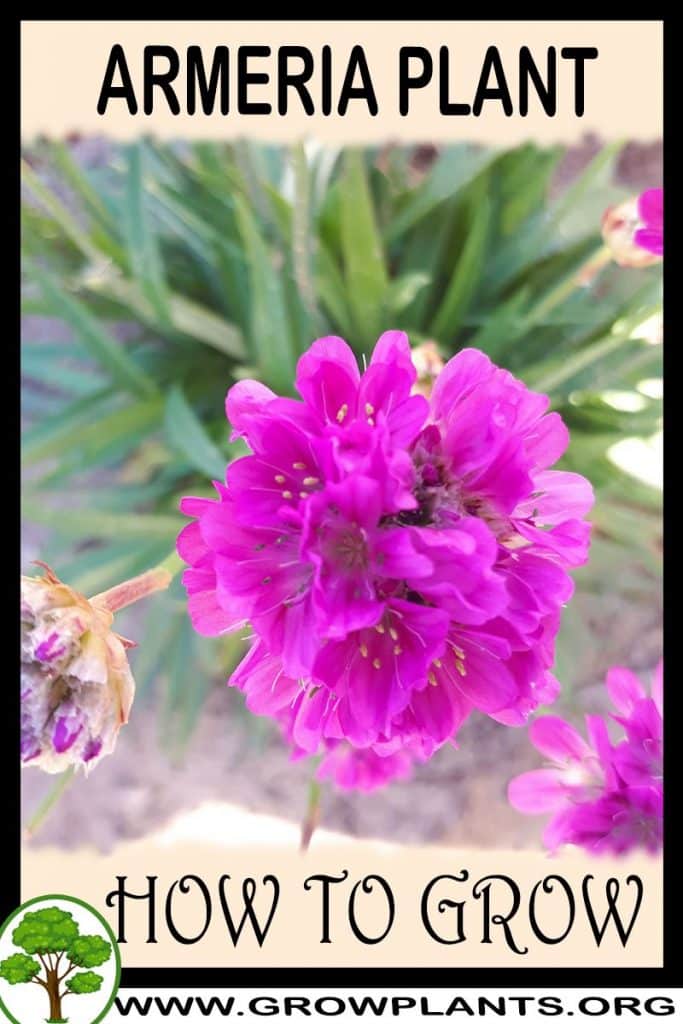
Plant Profile & Key Characteristics
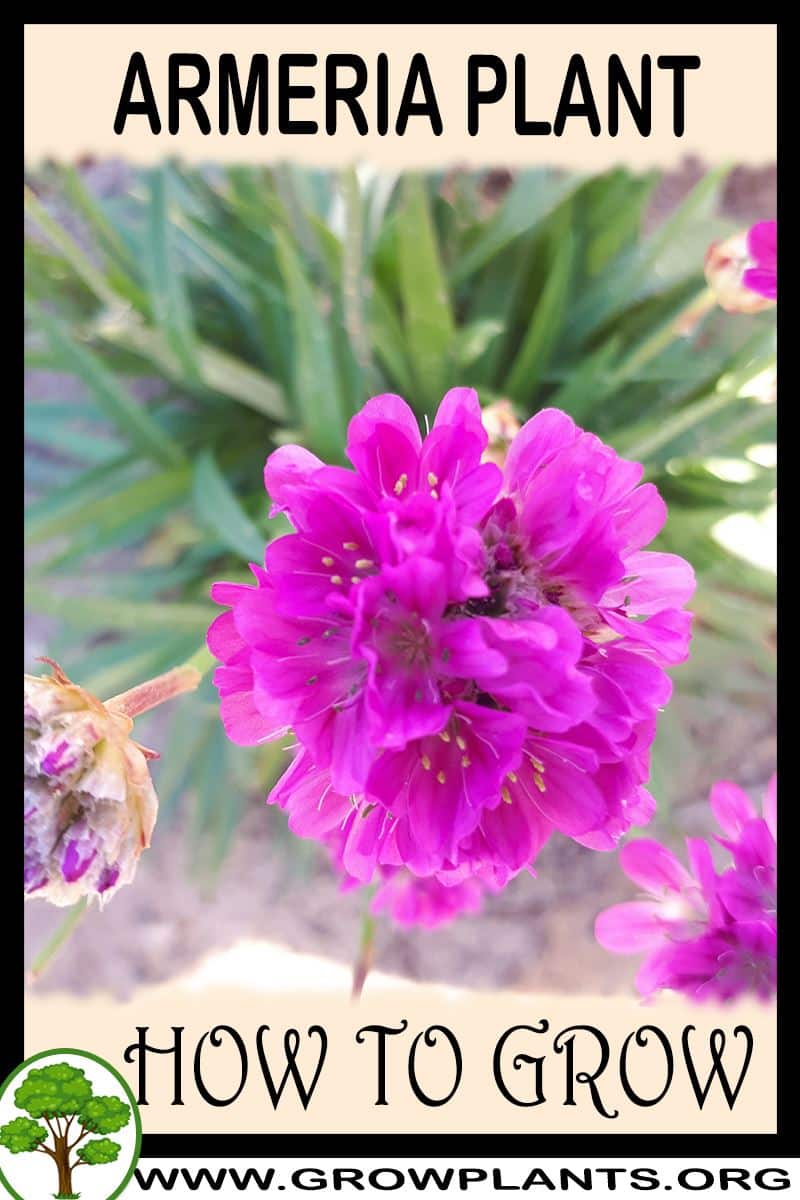
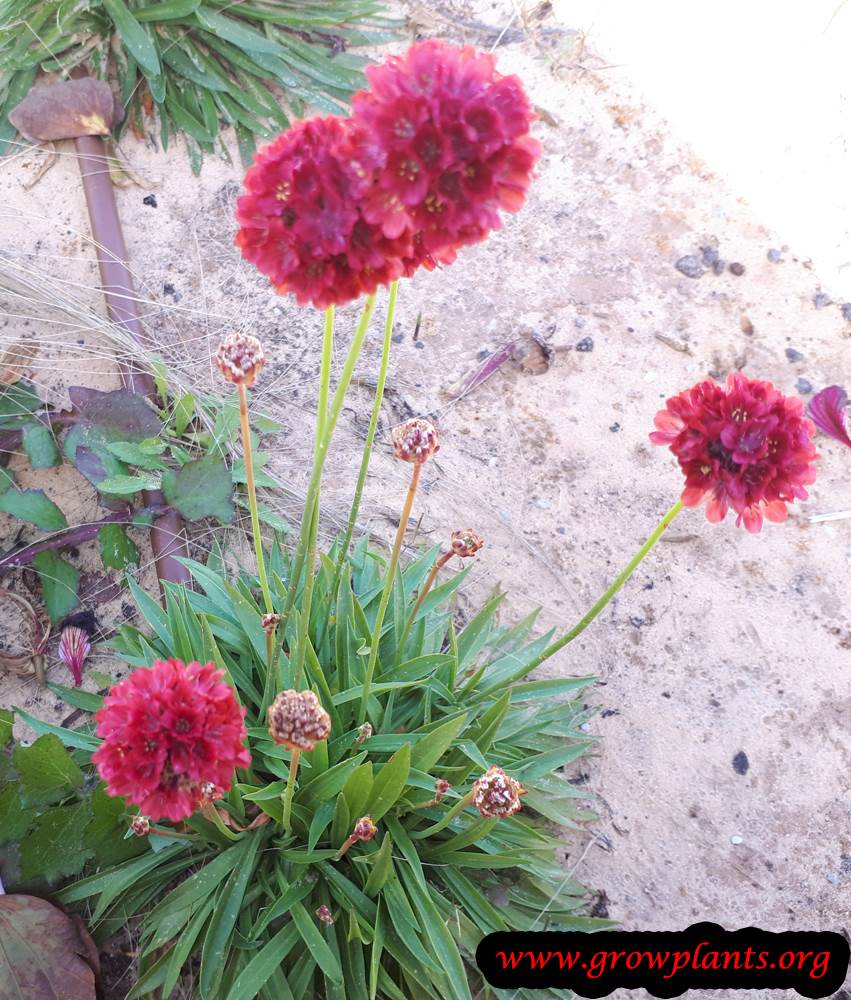
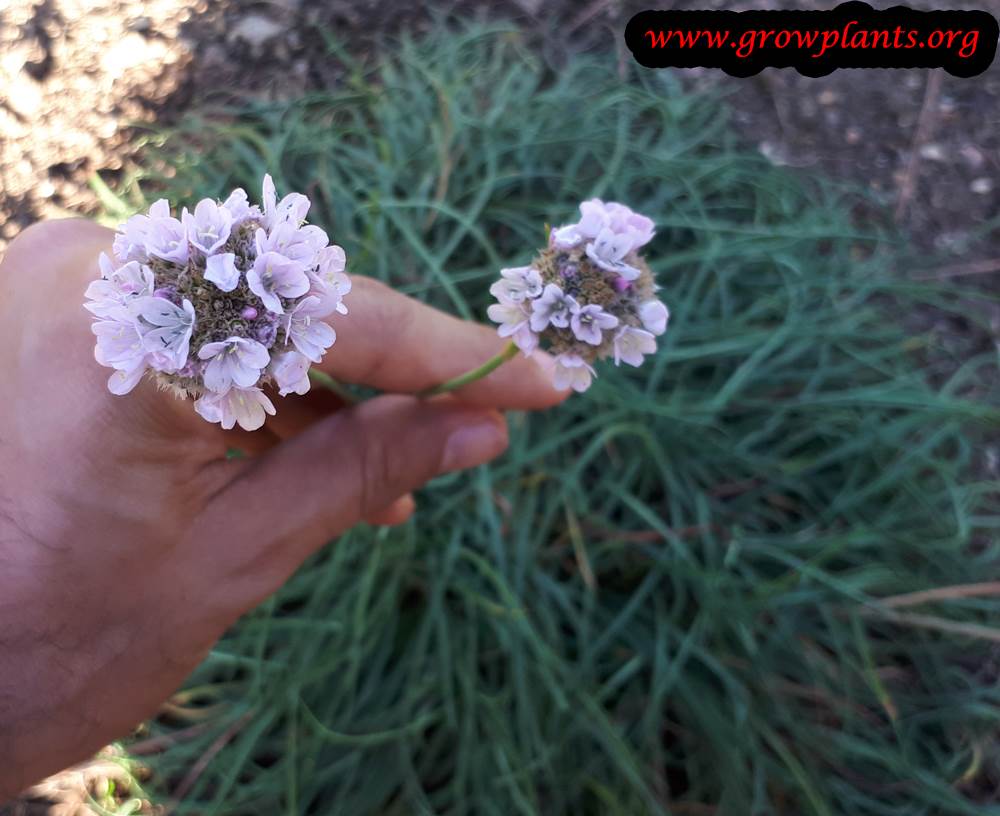
Overview: Armeria (thrift) is an evergreen perennial forming a low grassy tuft 5-25 cm tall, grown as an ornamental groundcover and for cut flowers. It bears rounded pompom flower heads on slender stems above the foliage.
Quick Specifications
| Specification | Attribute |
|---|---|
| Plant Type / Life Cycle | Perennial |
| Foliage Type | Evergreen |
| Mature Size | 5-25 cm tall (2-10 in) |
| Growth Rate | Moderate to fast |
| Root System | Taproot with a woody rootstock, forming a tufted cushion |
| Toxicity | Non-toxic |
| Hardiness | USDA zones 3-10a (zone 10b with care) |
Growth Form & Structure
- Height & Spread: 5-25 cm (2-10 in) tall, forming a dense cushion; grown in the ground or in wide, shallow containers (at least ~5-10 L).
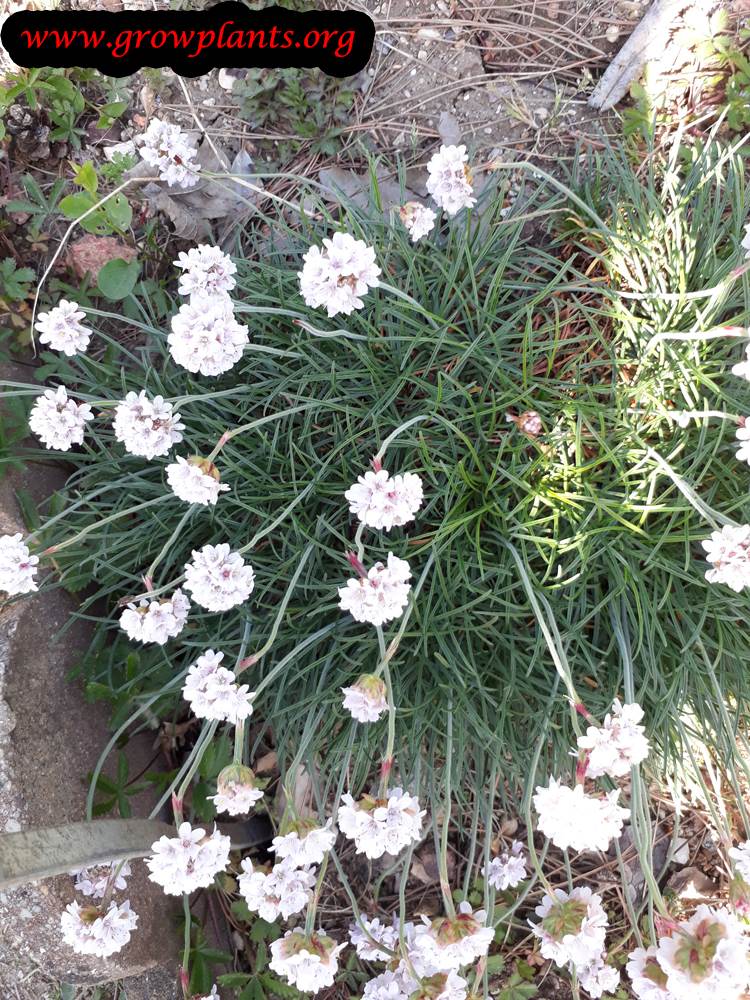
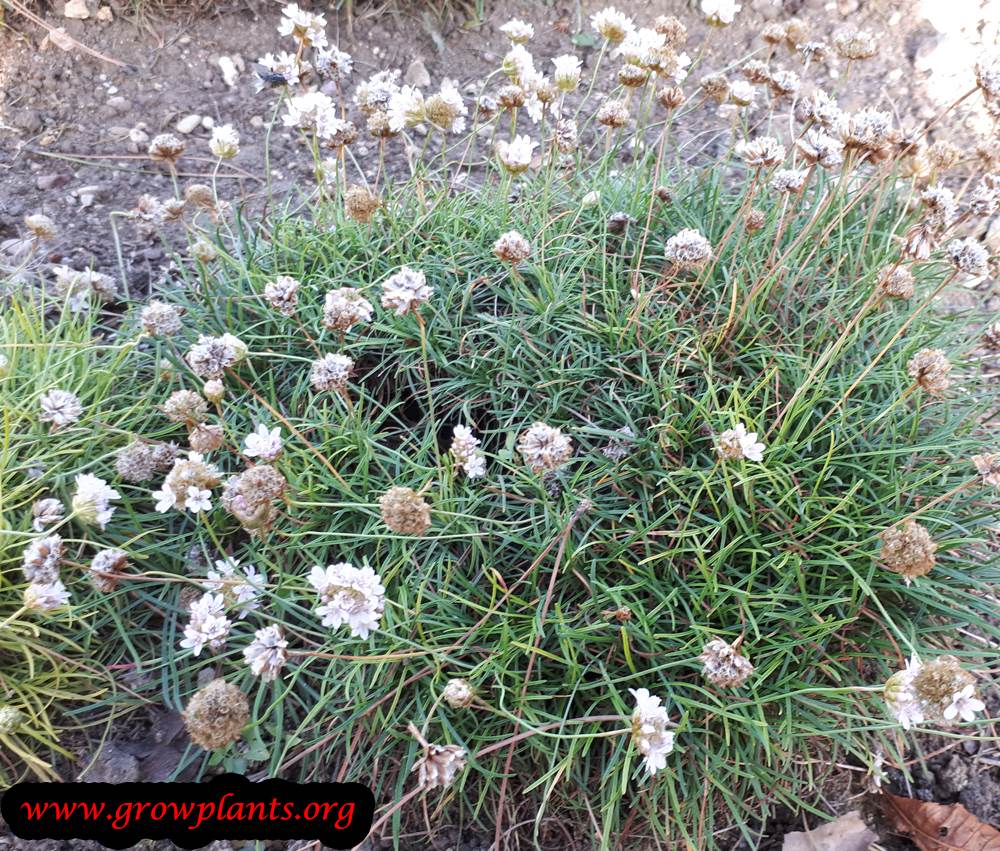
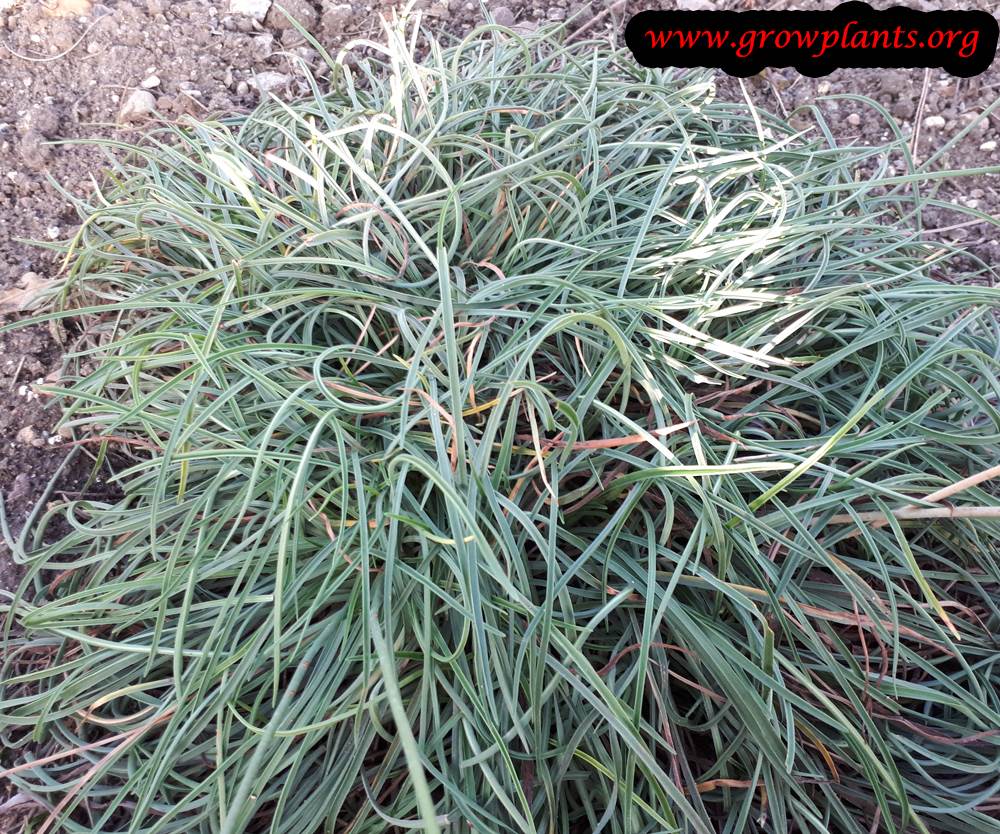
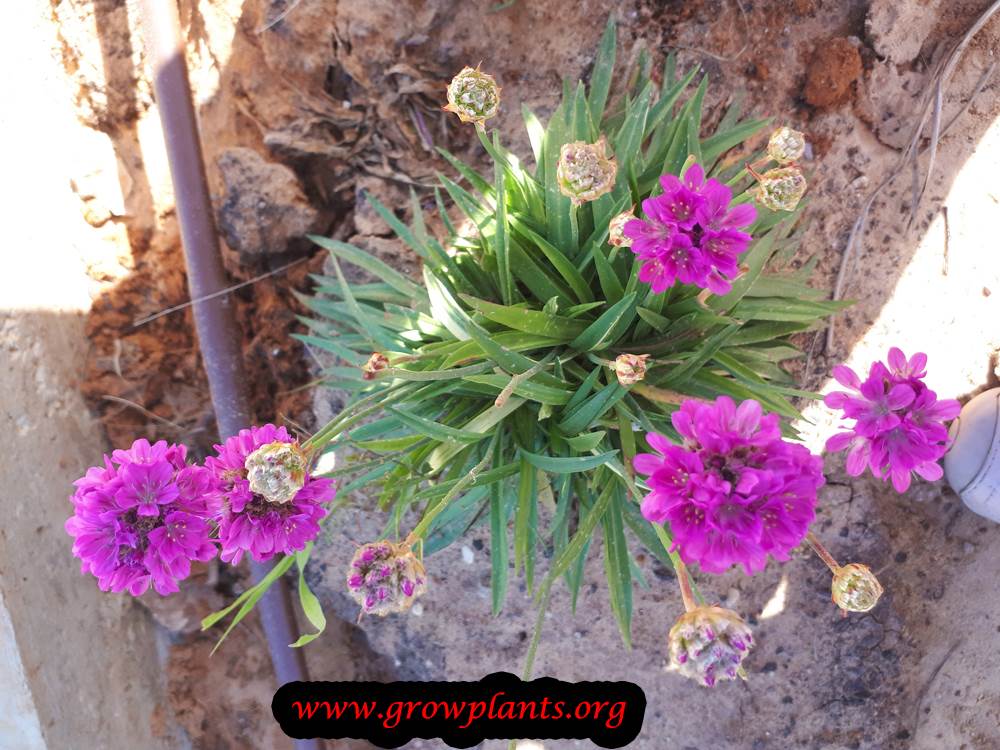
- Growth Habit & Form: Evergreen clump- or cushion-forming perennial with grass-like leaves and flower stems held above.
- Lifespan & Maturity: Long-lived evergreen perennial; benefits from division every few years.
Anatomy & Physical Features
- Leaves & Foliage: Green leaves (sometimes edged or flushed white, purple or red) in a linear, grass-like shape.
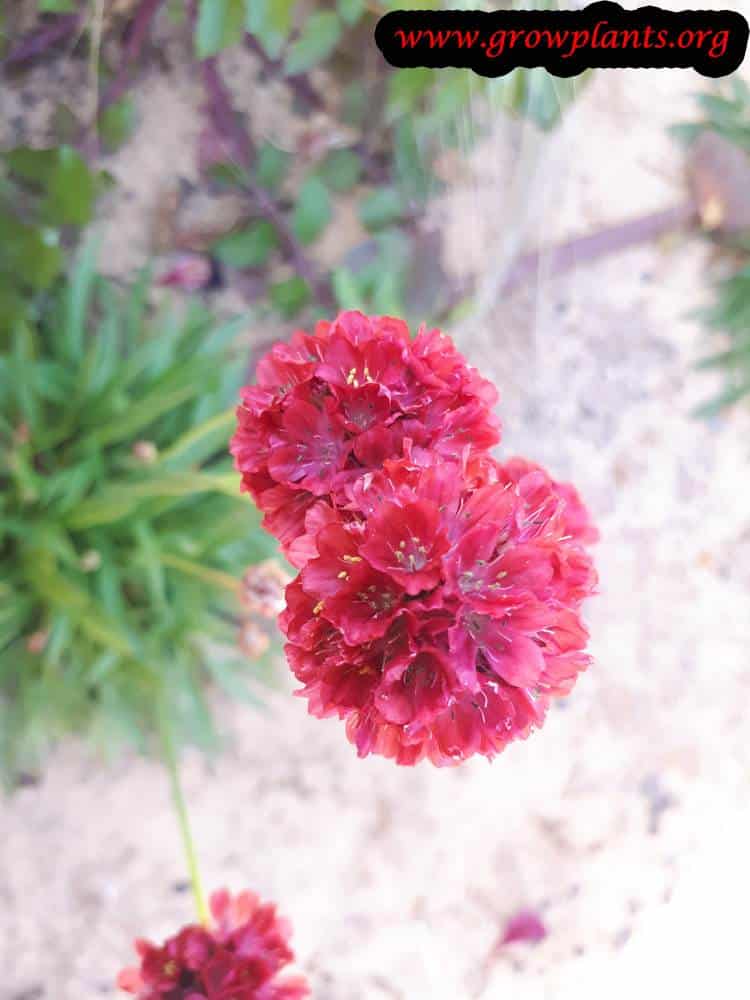
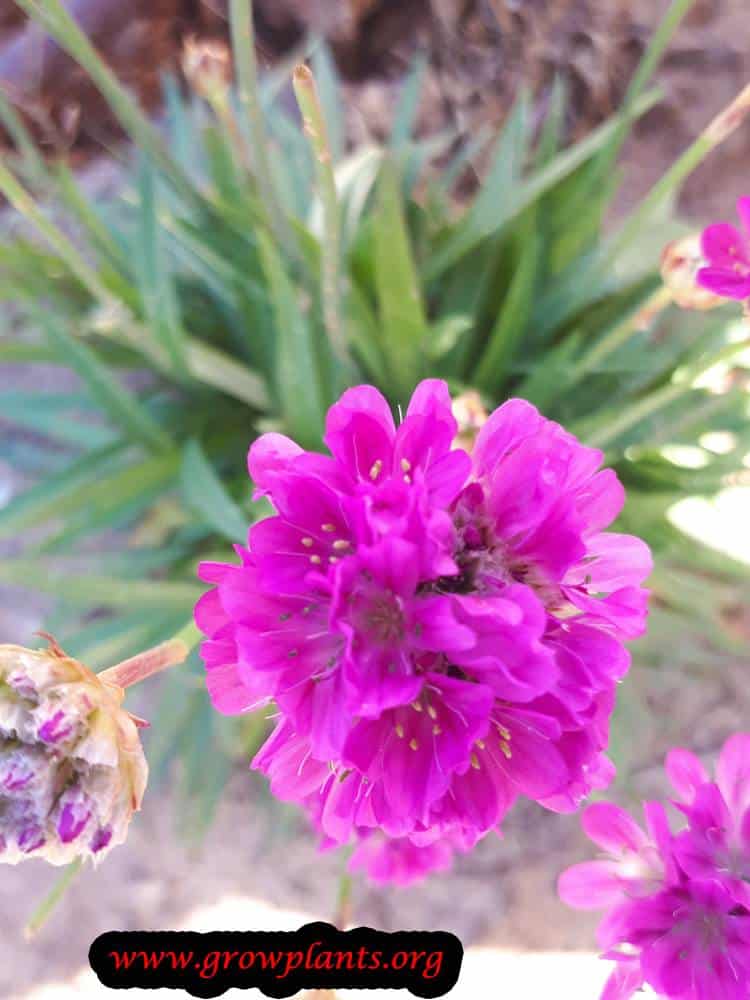
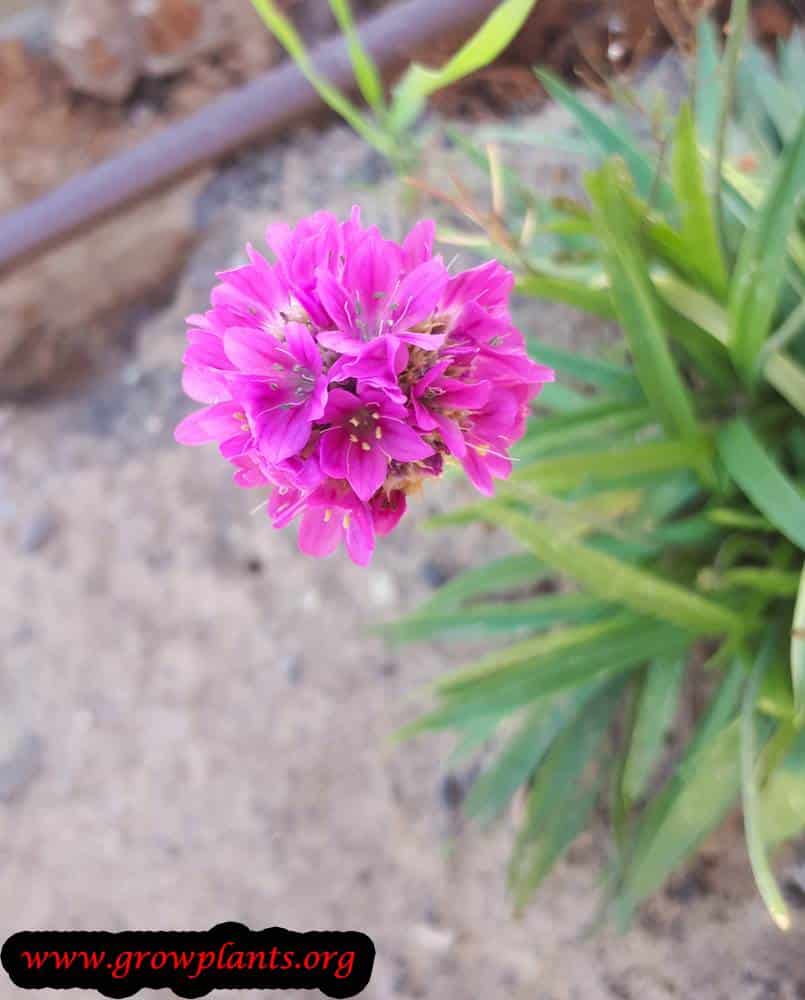
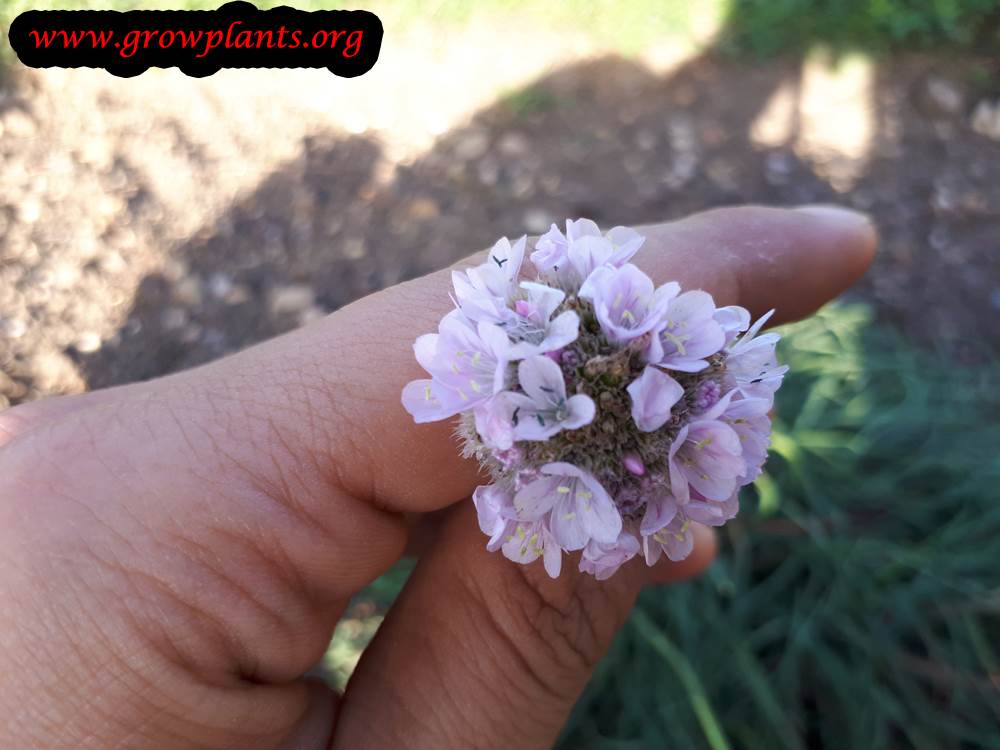
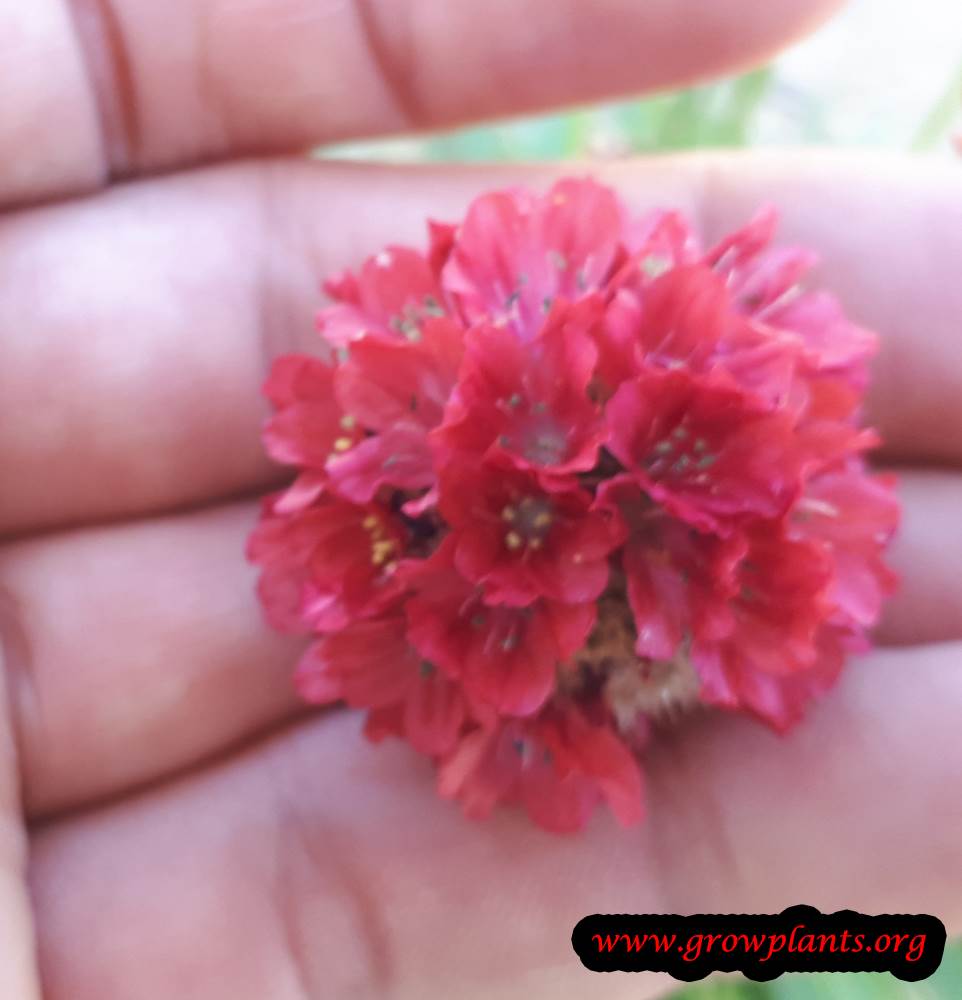
- Flower Characteristics: Purple, white, red or pink flowers, carried on slender stems as rounded pompom heads.
Primary Uses & Landscape Value
- Functional & Ornamental Roles: Ornamental groundcover, edging, rockery and coastal plant; flowers also used as cut flowers. Tolerant of poor, dry, sandy or rocky soils once established.
Care Guide: Planting, Soil & Watering
Overview: Sea thrift is a tough, mound-forming evergreen that thrives in full sun and dry, sharply drained, sandy or rocky soil. It is drought tolerant once established and rots in rich, wet ground.
Quick Care Requirements
| Requirement | Ideal Condition |
|---|---|
| Planting Season | In spring in cold zones (3-4); spring to summer in zones 5-8; spring to autumn in zone 9; the cooler autumn-spring window in warm zones (10) |
| Growth Rate | Moderate to Fast |
| Soil Type | Lean, sandy or rocky, sharply drained |
| Water Need | Low to Moderate; let the soil dry between waterings |
Planting & Establishment
- Best Planting Season: Plant in spring in the coldest zones (3-4); from spring into summer in zones 5-8; spring through autumn in zone 9; and in the cool autumn-to-spring window in warm zones (10).
- How to Plant:
- Hole Preparation: Dig a hole a little larger than the root ball in a sunny, free-draining spot; in high-rainfall areas plant in a raised bed to keep the crown dry.
- Soil Amendments: Mix a little organic matter into the backfill, but keep the soil lean and gritty; add sand or vermiculite to lighten heavy ground.
- Planting Depth: Set the crown level with the surface and cover lightly; never bury the tuft, which invites rot.
- Growth Speed & Expectations: A moderate-to-fast grower that stays low (5-25 cm / 2-10 in), forming neat, grassy cushions.
Soil, Watering & Drainage Care
- Soil Mix & Drainage Needs: It demands sharp drainage; lean, sandy or rocky soil is ideal, and it dislikes rich or wet ground. Raised beds and gritty container mixes suit it well.
- Watering Schedule & Technique:
- Young / Newly Planted: Water lightly to settle the roots and keep the soil just moist while the plant establishes.
- Established: Once established it is drought tolerant; water only when the soil has dried out, and always let excess drain away.
- Seasonal Adjustments: Water occasionally in summer heat and keep it dry in winter, especially in wet climates.
Climate, Light & Hardiness
Armeria (thrift) is a low, evergreen, mound-forming perennial suited to Mediterranean, subtropical, and temperate climates in full sun (tolerating half shade with reduced flowering), and it is cold-hardy through USDA zones 2–9, extending to 10 with attentive care.
Quick Climate Specifications
| Climate Zones | Mediterranean, subtropical, temperate |
| USDA Hardiness Zones | Approximately 2–9, extending to 10 with care |
| Approx. Survival Minimum | Established plants typically tolerate briefly down to roughly −45 to −40°C (−50 to −40°F) at the cold edge of their range |
| Frost Tolerance | High |
| Light Conditions | Full sun; half shade tolerated but flowering is reduced |
| Wind Tolerance | High (low, tuft-forming coastal-cliff and rock-garden habit) |
| Salt / Coastal Tolerance | High (many Armeria species, including the widely grown sea thrift, are native to coastal cliffs and salt marshes) |
Sunlight & Light Exposure
Optimal Light Setup
Full sun gives the tightest mounded habit and the most flowers.
Shade & Heat Management
Tolerates half shade, with reduced flowering as the main trade-off; not prone to heat scorch in its Mediterranean/subtropical/temperate range.
Best Exposure / Orientation
Open, sunny beds, rock gardens, borders, or coastal plantings suit its low tufted habit; it is not grown as a houseplant.
Temperature Extremes & Hardiness
USDA Hardiness & Regional Limits
Reliable outdoors in zones 2–9, extending into 10 with attentive siting and care.
Cold Damage & Winter Protection
Established plants need no special winter protection within their hardy range; well-drained soil matters more for winter survival than added protection.
Frost Sensitivity
Frost-hardy; not considered frost-sensitive within its rated zones.
Extreme Heat Tolerance
Good; it is well adapted to Mediterranean and subtropical summer heat.
Wind, Humidity & Microclimate
Wind Tolerance
High - its low, dense, tuft-forming habit is well suited to open, exposed sites.
Coastal / Salt Tolerance
Excellent - many Armeria species, including the widely grown sea thrift, are native to coastal cliffs and salt marshes, making it one of the more reliable choices for salt-spray-exposed seaside gardens.
Rainfall & Seasonal Moisture
Adapted to Mediterranean-type climates with a dry season; prefers well-drained soil and moderate moisture over constantly wet conditions.
Microclimate Recommendations
Open, sunny, sharply drained sites suit this species best - including exposed coastal positions.
Growing in Pots, Balconies & Indoors
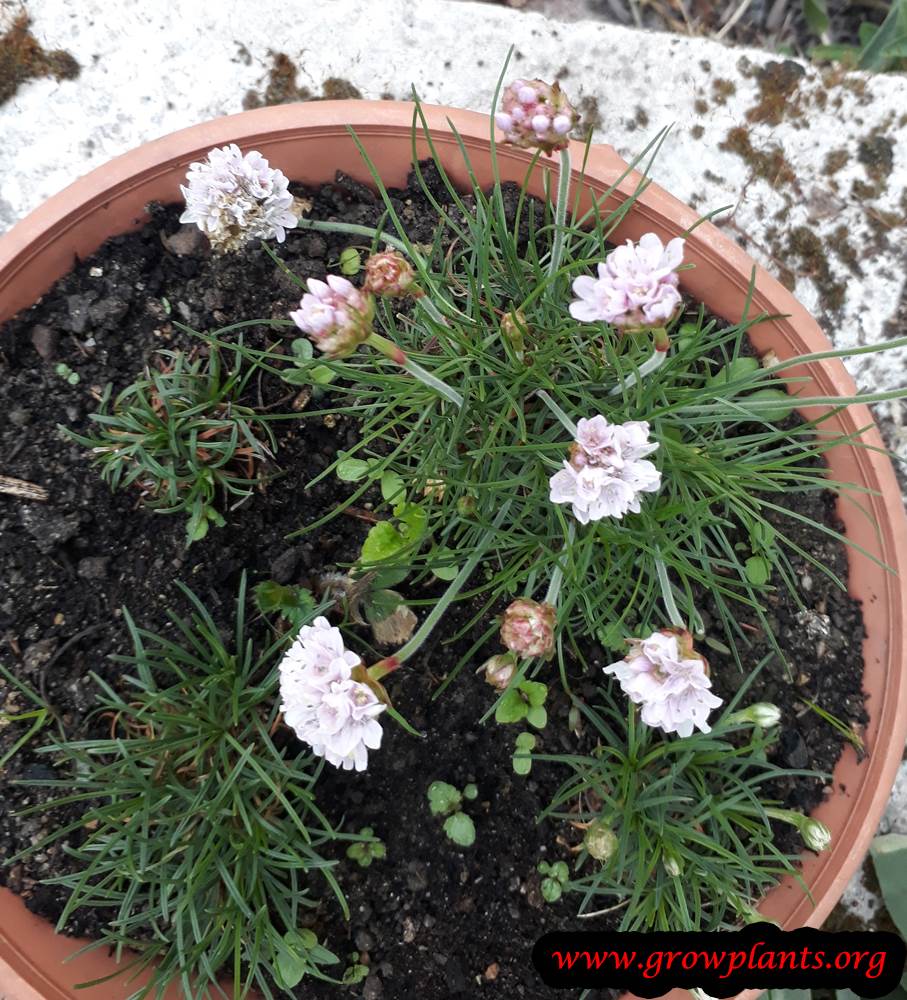
Sea thrift (Armeria) is a tough, low cushion of grassy foliage topped with rounded flower heads, growing only 5-25 cm tall. The grower does not rate it as a houseplant, but it is a first-rate container, trough and balcony plant – a coastal native, it shrugs off wind and drought once established, provided the pot drains sharply.
Quick Details
- Container Size: At least 5 L (1.3 gal), better 10 L (2.6 gal) – the grower advises a wide, shallow pot, about 50-100% larger than the root ball
- Indoor Suitability: Not a houseplant – it needs full outdoor light and airflow
- Best Spot: Full sun to half shade (in the hottest zones half shade is better; it blooms less in shade)
- Soil & Drainage: Sharp-draining – sandy, loamy or potting mix with plenty of holes; the grower stresses good drainage
- Watering in Pots: Low to average – drought tolerant once established, but shallow pots still dry quickly; never let it stay wet
Indoors & On the Windowsill
- Houseplant limits: The grower marks it as no for indoor growing – it needs strong outdoor light and cannot cope with warm, still room air.
- Windowsill growing: Not suited to a room; grow it outside in a pot or trough.
- Cold-climate note: Hardy, but pot roots are more exposed than in the ground – shelter containers in a hard freeze.
On a Balcony or Patio
- Light & wind: Give it an open, bright spot; walls, railings and paving throw back heat and wind, so pots dry out fast – check moisture often in warm weather.
- Practicalities: Stand pots where drainage water can escape, and shelter taller stems from strong gusts.
Choosing the Pot, Soil & Long-Term Care
- Pot & drainage: A wide, shallow pot 50-100% larger than the root ball, with plenty of drainage holes; skip a standing-water saucer to avoid root rot.
- Potting mix: Sharp-draining – sandy, loamy or potting mix; a gritty top helps keep the crown dry.
- Feeding: Feed lightly – thrift thrives on lean soil; pots still leach faster than open ground.
- Repotting: The grower notes the mix stops draining well after a few years, so change it and refresh the plant every couple of years.
Grower’s Container Tip
- Wide, shallow pot & thin the clump: The grower advises a wide, shallow pot because the roots are not deep; in a small pot, grow fewer plants and cut back some of the roots each time you change the soil.
Fertilizing & Feeding
A drought-tolerant, evergreen rock-garden and coastal perennial that naturally prefers rocky, sandy, dry-leaning soil; it flowers best and stays compact with light, restrained feeding rather than a rich feeding program.
Quick Fertilizing Specs
| Feeding Level | Light |
|---|---|
| Main Nutrient Priority | Balanced nutrition rather than a nitrogen-heavy or phosphorus-heavy program; extra nitrogen tends to favor leafy growth over the pompom flower heads |
| Best Feeding Period | As new growth resumes in spring, continuing lightly through the bloom period |
| Soil pH | Tolerant of a wide range; thrives in the well-drained, often sandy or rocky, near-neutral to slightly alkaline soil it is naturally suited to |
| Reduce/Stop Feeding | Feeding tapers off once flowering finishes and growth slows heading into the cooler part of the year |
| Organic Options | Working organic matter into the soil at planting time, followed by a light compost top-dressing, suits this lean-soil perennial well |
| Micronutrients | No routine micronutrient supplementation typically needed; watch for iron- or manganese-related yellowing in poorly drained or high-pH soil |
Feeding by Growth Stage
Spring Growth Flush
Support the flush of new grass-like foliage and emerging flower stems as growth resumes in spring
| Nutrient direction | A balanced feeding as new growth begins, without pushing excess leafy growth |
|---|---|
| Timing | As new growth resumes in spring |
| Frequency | A single light feeding at the start of spring growth is usually sufficient for this lean-soil perennial |
| Fertilizer types | A balanced, diluted liquid or granular fertilizer suited to perennials |
| Precautions | This coastal and rock-garden native thrives in lean, well-drained soil; avoid rich, heavily amended beds or containers, which favor floppy growth over its naturally tight, compact habit |
Pompom Bloom Period
Maintain steady nutrition through the flowering display without encouraging excess foliage at the expense of the flower stems
| Nutrient direction | Balanced feeding continues to be adequate; extra nitrogen is more likely to produce leafy growth than more flowers |
|---|---|
| Timing | Through the spring-to-summer bloom period |
| Frequency | Established plantings rarely need additional feeding once blooming is underway |
| Fertilizer types | A balanced fertilizer for flowering perennials, applied lightly if at all once plants are established and blooming |
| Precautions | Deadheading spent flower stems supports continued bloom more reliably than additional feeding |
Post-Bloom Rest
Let the plant rest after flowering without pushing new soft growth into cooler weather
| Nutrient direction | None – withhold fertilizer once flowering finishes |
|---|---|
| Timing | Autumn through winter, after the bloom period ends |
| Frequency | No feeding at this stage |
| Fertilizer types | No feeding at this stage; growth naturally slows once flowering finishes for the year |
| Precautions | Do not fertilize while the plant is resting; resume light feeding only once active spring growth begins |
Nutrient Deficiency Signs & Corrections
Foliage turning pale green to yellowish overall, with weaker growth and a thinner clump than expected
| Possible causes | Nitrogen deficiency in very lean or leached soil, Waterlogged or poorly drained roots limiting nutrient uptake, Overcrowding or an old clump overdue for division |
|---|---|
| Appears first on | Older, outer foliage first |
| What to check | Soil drainage around the root zone, since this plant strongly dislikes wet feet, Whether recent heavy rain or irrigation may have leached nutrients, Age and density of the clump |
| Possible correction | If drainage checks out, a light balanced feeding during active growth is usually enough to restore healthy color; divide old, crowded clumps |
New leaves yellowing between the veins while the veins themselves stay green
| Possible causes | High soil pH tying up iron or manganese, Poor drainage or waterlogged roots limiting micronutrient uptake, Root stress from heavy or compacted soil unlike this plant’s preferred sandy or rocky conditions |
|---|---|
| Appears first on | Newest growth at the center of the clump |
| What to check | Soil pH and texture, Drainage around the root zone, Whether the planting site holds more moisture than this drought-tolerant species prefers |
| Possible correction | Correct drainage and soil conditions first; a chelated iron or manganese product applied per its label can green up foliage while the underlying cause is addressed |
Few or no pompom flower heads despite otherwise healthy-looking foliage
| Possible causes | Too much shade reducing flowering, Excess nitrogen pushing leafy growth over blooms, An old, crowded clump overdue for division |
|---|---|
| Appears first on | Whole-plant bloom display rather than individual leaves |
| What to check | Hours of direct sun the planting receives, Recent fertilizer history, especially high-nitrogen products, Age of the planting and whether it needs dividing |
| Possible correction | Improve light exposure, avoid nitrogen-heavy feeding, and divide old, crowded clumps to renew bloom |
Pruning, Training & Seasonal Maintenance
Armeria (thrift) is a compact, evergreen, tuft-forming perennial grown as a groundcover and cut-flower plant; its pompom flowerheads – purple, red, white or pink depending on the plant – are carried on individual leafless scapes that arise fresh from the basal crown each year, not from persistent woody stems, so removing old growth never costs next season’s bloom. The plant’s own care guidance places the main seasonal clean-up in autumn/winter (dead leaves and spent flower stems), while deadheading through the spring–summer bloom season is also worthwhile, since cutting spent scapes as they fade typically prolongs flowering and keeps the tuft tidy.
Quick Pruning & Maintenance Specs
| Pruning Tolerance | Low (maintenance/deadheading only; no structural cuts) |
| Primary Pruning Window | Autumn / Winter (dead-leaf and spent-stem clean-up) |
| Secondary Maintenance Window | Spring / Summer (deadheading through the bloom season) |
| Typical Frequency | Deadhead as flowers fade; one seasonal tidy in autumn/winter |
| Main Objective | Prolong flowering and keep the evergreen tuft tidy |
| Young Plant Priority | None – let the young clump establish before any cutting |
| Mature Plant Priority | Deadhead spent scapes, remove tired foliage, divide congested clumps |
| Best Tool Type | Precision snips |
| Avoid Heavy Pruning During | Hot, dry summer stress; waterlogged soil conditions |
Pruning by Plant Age & Size
Newly Established
No pruning – remove only visibly dead material while the clump builds its root system and foliage.
Young / Formative
No structural training; the mounding, tuft-forming habit isn’t trained into a shape. A first-season flower scape can be left, or lightly pinched out if you’d rather the plant bulk up before flowering, but this is optional.
Mature / Established
Routine deadheading of spent scapes through the bloom season, an autumn/winter foliage clean-up, and periodic division (roughly every 2–3 years, in spring, per the plant’s own division guidance) once the clump’s centre thins or goes woody – division is the renewal tool for this species, not any hard cutback.
Seasonal Pruning Schedule
Post-Flowering (ongoing through Spring/Summer)
Objective: prolong flowering and keep the tuft tidy. Remove individual spent flower scapes, cut back to the foliage clump, as each flush fades. Do not remove healthy green foliage or unopened buds. Expected response: many plants push additional scapes through the season. Flowering impact: none on next year’s bloom – new scapes come from the crown, not from what’s cut.
Dormant/Winter
Objective: seasonal clean-up before the evergreen foliage carries the plant through winter. Remove dead/brown leaves and any flower stems left from the last flush. Do not strip healthy green leaves from the crown – over-thinning the evergreen tuft in winter exposes the crown to cold and wet. Expected response: a tidy clump ready for spring regrowth. Flowering impact: none; this is sanitary, not structural.
Structural Pruning & Training
Not applicable in the woody sense – the dense, mounding tuft is the desired form, so canopy thinning would only spoil it. The real renewal tool for an ageing, bare-centred clump is division (per the plant’s own spring-division guidance), not a structural cutback.
Special Growth to Remove
- Dead or browned evergreen leaves, as the tuft ages
- Spent flower scapes, cut at their base once a flush is finished – left in place they can rot into the crown, worth avoiding given this plant’s preference for sharp drainage
Container & Small-Space Pruning
Grows well in pots (the source recommends a wide, shallow container at least 5–10L, roughly 50–100% larger than the root ball, with good drainage) as readily as in open ground. In a container, deadheading and foliage clean-up matter more – spent growth left in a small soil volume raises crown-rot risk faster than in a bed. If a potted clump outgrows its container, divide and refresh at repotting rather than cutting the top growth back hard.
Tools
Precision snips only – every cut here is a soft flower scape or a thin evergreen leaf; nothing woody enough for secateurs.
Tool Hygiene & Disease Risk
Routine – the source notes this plant is generally pest-free, so clean, sharp snips are sufficient; no elevated disinfection is warranted between cuts or plants.
Cut Placement & Technique
Cut spent scapes down at their base near the foliage clump rather than partway up the stem, for a clean look. Remove dead leaves at their base without disturbing the central crown/growing point.
Heavy Pruning & Rejuvenation
Not tolerated or needed in the hard-cutback sense. If a mature clump thins or goes patchy/woody in the middle, the appropriate rejuvenation – per the plant’s own care guidance – is to lift and divide it in spring, replanting vigorous rooted sections and discarding the tired centre, rather than shearing the whole plant back.
Post-Pruning Care
After the autumn/winter clean-up, no extra feeding is needed beyond the plant’s normal once-yearly fertilizing. Water lightly if conditions are dry so the tidied clump isn’t stressed heading into winter, and watch the crown for rot if the site stays wet after cutting back old growth – this plant specifically wants sharp drainage.
Common Pruning Mistakes
- Shearing the whole evergreen tuft hard to “tidy” it, instead of deadheading scapes individually and removing only dead leaves – this strips healthy foliage the plant needs through winter
- Leaving spent flower stems on all season, which looks untidy and can let mixed-color plantings self-seed off-type
- Skipping division for many years, then finding the clump has a dead, woody centre
When NOT to Prune
- Before you’ve cut flowers for indoor use, if that’s a goal – this plant is grown as a cut flower
- In waterlogged soil – work the crown only once the site has dried, given its preference for sharp drainage
- Outside the recommended spring division window, if dividing
Recommended Tools (by task)
- precision_snips – deadheading soft scapes and trimming dead foliage at the crown; the only cut type this plant ever needs
Propagation Guide
Dividing an established clump in spring is the fastest and most reliable way to increase Armeria, and the site’s own guidance states this is easier than starting from seed. Seed is a perfectly workable alternative for plain, generic thrift and generally grows on reasonably true, though a particular flower color is not guaranteed to repeat exactly from seed – overall this is an easy genus to propagate by either route.
Quick Propagation Specs
| Best Propagation Method | Division of the clump |
| Alternative Methods | Seed |
| Propagation Difficulty | Easy |
| Seed True-to-Type | Usually true-to-type for the general species character; a specific flower color is not guaranteed |
| Vegetative True-to-Type | Yes |
| Best Propagation Season | Spring for division; spring/summer for sowing |
| Seed Germination Time | 2–6 weeks |
| Germination Temperature | 15–20°C (59–68°F) |
| Seed Sowing Depth | About 5mm (0.25 inch), seed needs to be buried |
Growing from Seed
Seed Handling & Viability
Store saved seed dry, dark, and in the refrigerator or another cold location until sowing.
Sowing Season
Sow in spring or summer.
Sowing Depth & Orientation
Sow about 5mm (0.25 inch) deep – the seed needs to be buried rather than left on the surface.
Germination Conditions
Use a light, moist soil with good drainage at a temperature of 15–20°C (59–68°F); keep the soil moist with high humidity in a sunny location once sown. The species has a recorded winter chilling requirement of at least a month, which mainly concerns the established plant’s seasonal cycle rather than a required seed pre-treatment, but plants raised in climates without adequate winter chill may show irregular vigor.
Germination Time
About 2–6 weeks.
Seedling Care
Grow seedlings on in well-drained soil in a sunny spot, keeping the soil moist. Start seedlings at roughly 2x2cm (1×1 inch) spacing before transplanting, or sow directly at about 20x20cm (8×8 inch) final spacing.
Division, Offsets, Pups & Suckers
Divide established clumps in spring: water the soil beforehand to ease lifting, then gently tease sections apart, trying not to cut through the roots. The site notes this is easier and more dependable than raising Armeria from seed, and it is the only way to guarantee that a specific flower color or named form comes through unchanged.
Bloom & Flower Guide
Quick Details
- Bloom Season: Spring and summer
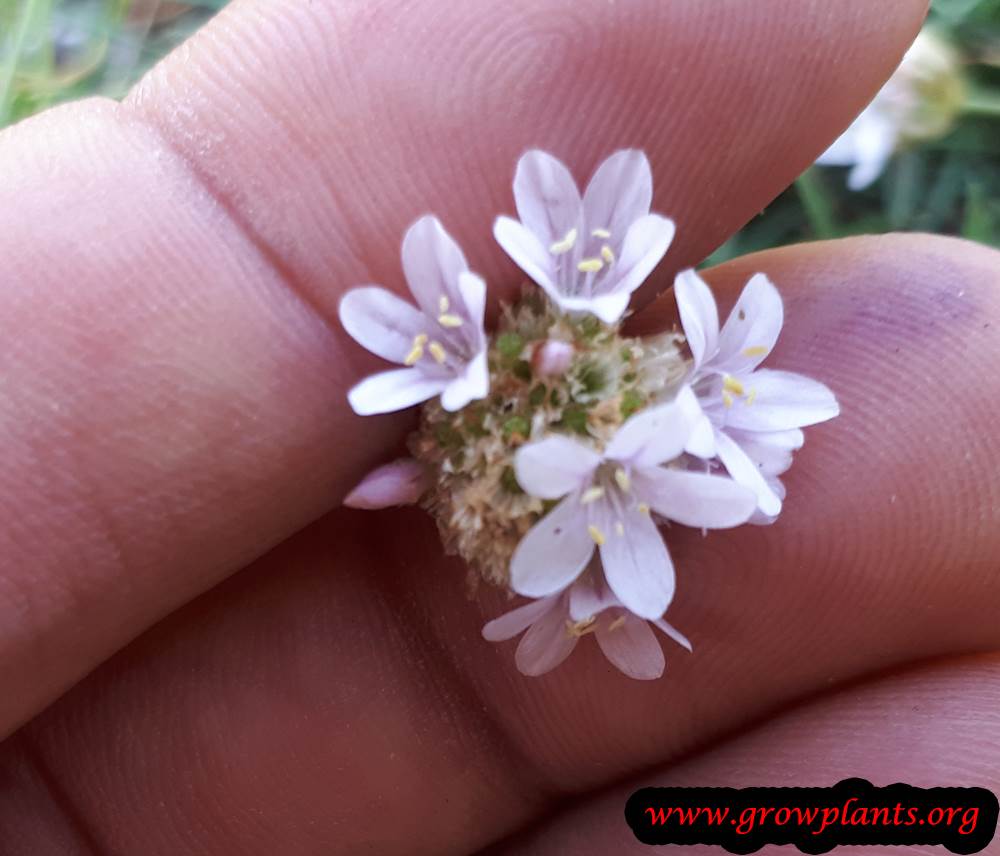
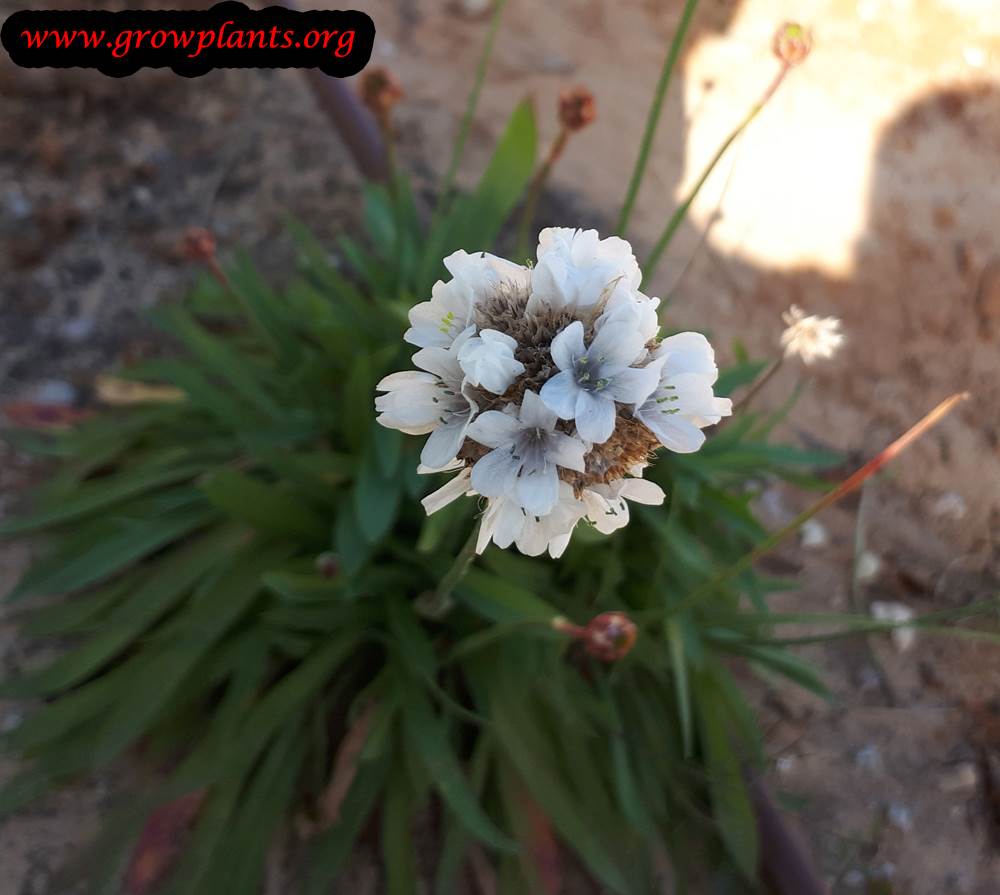
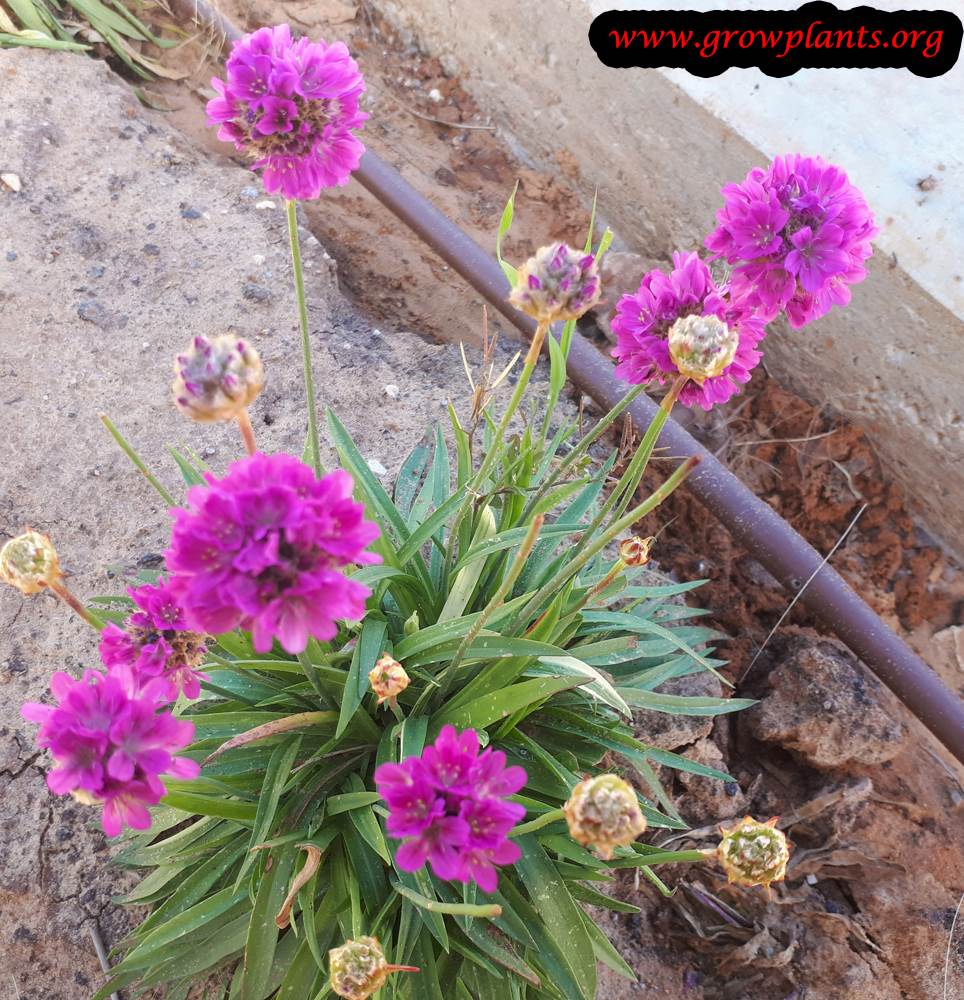
- Flower Appearance: Rounded pompom heads of small flowers in purple, red, white or pink, held on slender stalks above a grassy tuft
- Edibility: Ornamental only – grown for its flower heads and as a cut flower, not eaten
Detailed Blooming Overview
Thrift carries its many small flowers gathered into neat, rounded pompom heads, each lifted on a slim stalk well clear of the low tuft of narrow leaves. It flowers freely through spring and summer, the drumstick heads making a cheerful show over the mounded foliage, and they cut and dry well for arrangements.
Flower Characteristics
- Small flowers joined at the base into a rounded pompom head.
- Colours include purple, red, white and pink, borne on slender stalks above the foliage.
Bloom Care & Thinning
- Deadheading: Remove the spent flower stalks to keep the plant tidy and encourage further blooms.
- Cut flowers: The pompom heads make a good fresh or dried cut flower.
- Soil for good bloom: Flowers best in an open, well-drained soil in full sun.
Pests, Diseases & Troubleshooting
Overview: Sea thrift is a tough, salt- and wind-tolerant coastal cushion perennial that is remarkably pest-free; insects rarely trouble it. Its one real weakness is rot — crown and root rot, and centre die-out — in rich, heavy or wet soil, the opposite of the lean, sharp-drained, sunny conditions it evolved in. As a genus, thrifts share this near-pest-free, rot-averse profile, differing mainly in size and flower colour. Grow it hard and dry and it stays healthy for years; almost every ‘problem’ is over-kindness with water or feed.
Quick Troubleshooting Overview
| Issue / Pest | Main Symptom | Primary Solution |
|---|---|---|
| Aphids | Sticky new growth (occasional) | Water jet, insecticidal soap |
| Spider mites | Fine speckling in hot dry spells | Hose foliage, horticultural oil |
| Crown / root rot | Wilting, blackened, mushy crown | Sharp drainage, grit collar, less water |
| Centre die-out | Dead bare patch in cushion centre | Lean soil, divide, replant |
| Rust | Orange-brown pustules on leaves | Remove leaves, airflow, sulfur if needed |
| Floppy, sparse flowering | Lax leafy growth, few blooms | Full sun, poor lean soil, no rich feed |
Common Pests & Management
- Aphids (Aphididae):
- Symptoms: Occasional small colonies of green or black aphids on the flower stalks and tender growth, causing slight distortion, honeydew and sooty mould. A minor, infrequent pest on this wiry plant.
- Prevention & Control: Rinse them off with a jet of water and rely on ladybirds, lacewings and hoverflies. For the rare stubborn patch, spray insecticidal soap; chemical control is almost never necessary.
- Spider mites (Tetranychus urticae):
- Symptoms: Fine pale stippling and a dull, dry look to the grassy foliage with faint webbing during hot, dry, dusty weather — uncommon but possible in drought.
- Prevention & Control: Hose the foliage to raise humidity and dislodge mites, and avoid extreme drought stress. Horticultural oil or insecticidal soap controls any persistent colony.
Diseases & Fungal Issues
- Crown & root rot (Phytophthora / Rhizoctonia / Pythium):
- Symptoms: Wilting and yellowing, a soft, blackened, mushy crown, and collapse of the cushion, especially in rich, heavy, wet or poorly drained soil and in humid, still air. This is by far the main cause of death in sea thrift.
- Treatment & Management: Grow lean in gritty, sharply drained soil in full sun, top-dress the crown with grit to keep it dry, and water only in real drought. Avoid rich feeding and mulching over the crown. Remove and destroy rotted plants; propagate replacements from healthy divisions.
- Rust (Uromyces armeriae):
- Symptoms: Small orange to rusty-brown powdery pustules on the leaves and flower stalks, sometimes with yellowing and distortion, in damp, humid weather.
- Treatment & Management: Remove and destroy affected leaves and stalks, thin for airflow, and avoid wetting the foliage. Sulfur fungicide can be used if rust becomes persistent, but airy, dry-grown plants rarely need it.
- Leaf spot / grey mould (Botrytis / leaf-spot fungi):
- Symptoms: Brown leaf spots or fuzzy grey mould on soft, crowded or over-fed growth in cool, damp, still conditions, with tissue rotting and dying back.
- Treatment & Management: Improve airflow, avoid overhead watering and excess feeding, and remove affected growth. Keeping the plant lean, open and dry is the main preventive.
Growing Difficulties & Abiotic Problems
- Centre die-out:
- Cause & Symptoms: The classic sea-thrift problem: the middle of an older or over-lush cushion dies out, leaving a bare brown hole ringed by living growth, especially where soil is too rich or moist.
- Correction Strategy: Keep plants lean and firm in poor, sharp-drained soil, shear off spent flowers, and every few years lift, divide and replant healthy outer pieces to rejuvenate the cushion.
- Rot from rich or wet soil:
- Cause & Symptoms: Sea thrift is adapted to poor, gritty, sometimes saline coastal soils; rich, heavy or constantly wet ground makes it soft, floppy and prone to rotting at the crown.
- Correction Strategy: Plant in lean, gritty, free-draining soil in full sun, avoid feeding and heavy mulching, and water sparingly. A gravel collar around the crown keeps it dry and firm.
- Floppy growth & poor flowering:
- Cause & Symptoms: Too much shade, water or nitrogen gives lax, leafy cushions with few of the pompom flowers and open, sprawling habit.
- Correction Strategy: Give full sun and lean soil, withhold rich feed, and deadhead after flowering; grown hard, thrift stays tight, mounded and free-flowering.
What Helps — Products & Tools
Sea thrift needs almost nothing: a water jet and insecticidal soap for the rare aphid or mite, horticultural oil for any persistent spider mite, and sulfur fungicide only if rust appears. There is no product for crown rot — the tools that matter are cultural: lean gritty soil, a grit collar over the crown, full sun and sparing water, plus periodic division to prevent centre die-out.