

Plant Profile & Key Characteristics
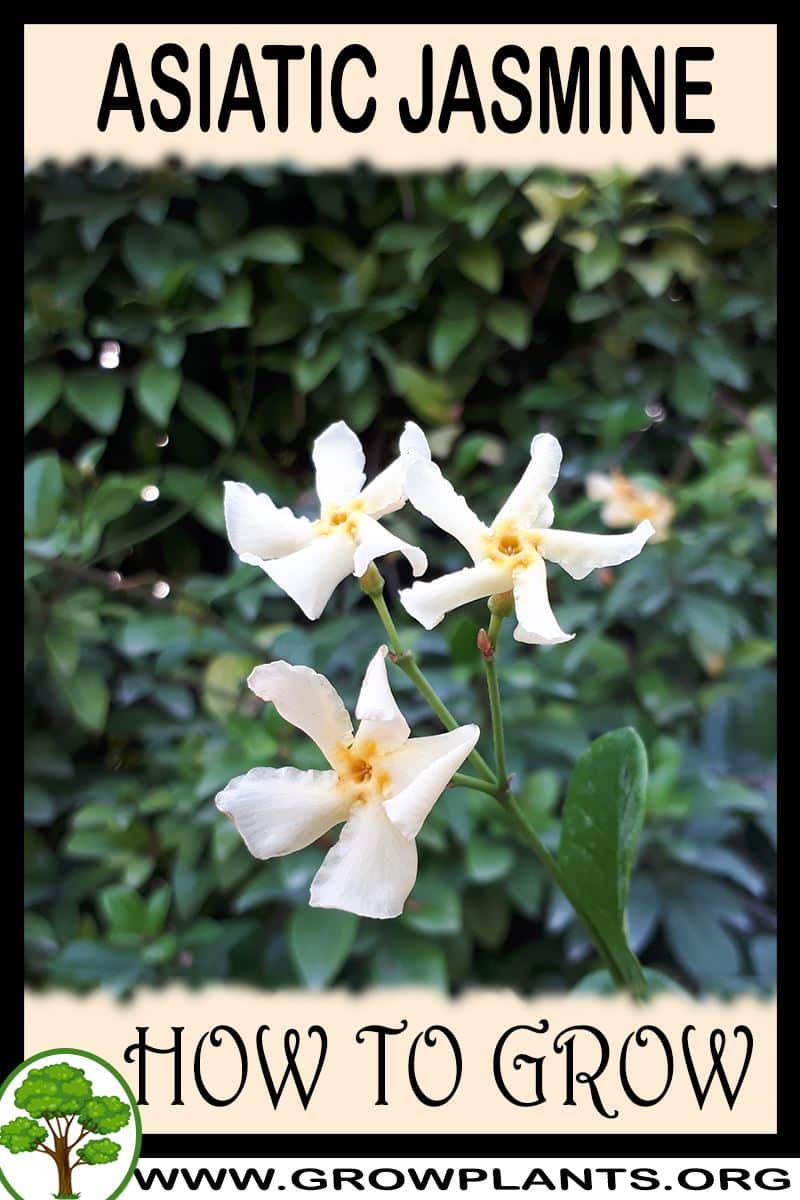
Overview: Asiatic jasmine (Trachelospermum) is an evergreen twining vine reaching 0.5-5 m (2-15 ft), grown as a fragrant ornamental climber, hedge or groundcover. It is a hardy perennial with sweetly scented white flowers that attract pollinators.
Quick Specifications
| Specification | Attribute |
|---|---|
| Plant Type / Life Cycle | Perennial (evergreen vine) |
| Foliage Type | Evergreen |
| Mature Size | 0.5-5 m climbing or trailing (2-15 ft) |
| Growth Rate | Moderate to fast |
| Toxicity | Stems exude a milky sap that can irritate skin and eyes (dogbane family) |
| Hardiness | USDA zone 7 and warmer |
Growth Form & Structure
- Height & Spread: Climbs 0.5-5 m (2-15 ft) on supports, or spreads as a low mat when used as groundcover; also grown in containers, but not indoors
- Growth Habit & Form: Twining evergreen climber that can also be kept clipped as a hedge or allowed to trail as a dense groundcover
- Lifespan & Maturity: Long-lived perennial that reaches full spread over a few seasons
Anatomy & Physical Features
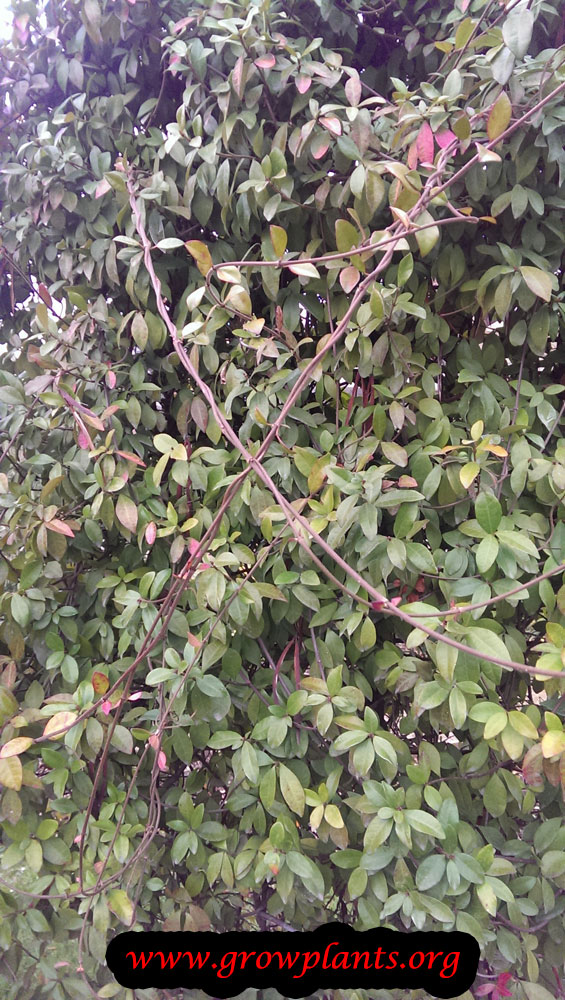
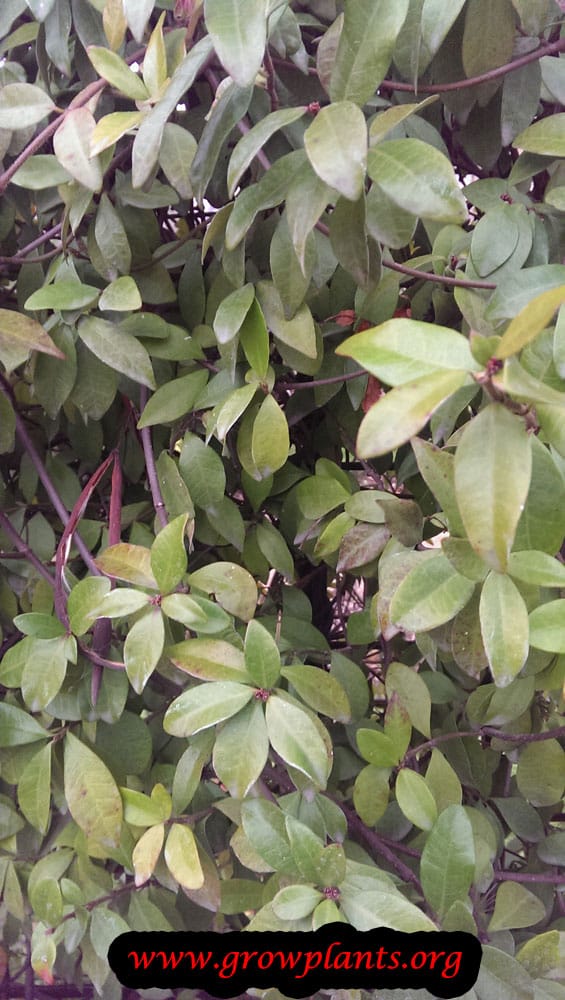
- Leaves & Foliage: Elliptic leaves, dark green or variegated (green with pink, red, white or yellow markings)
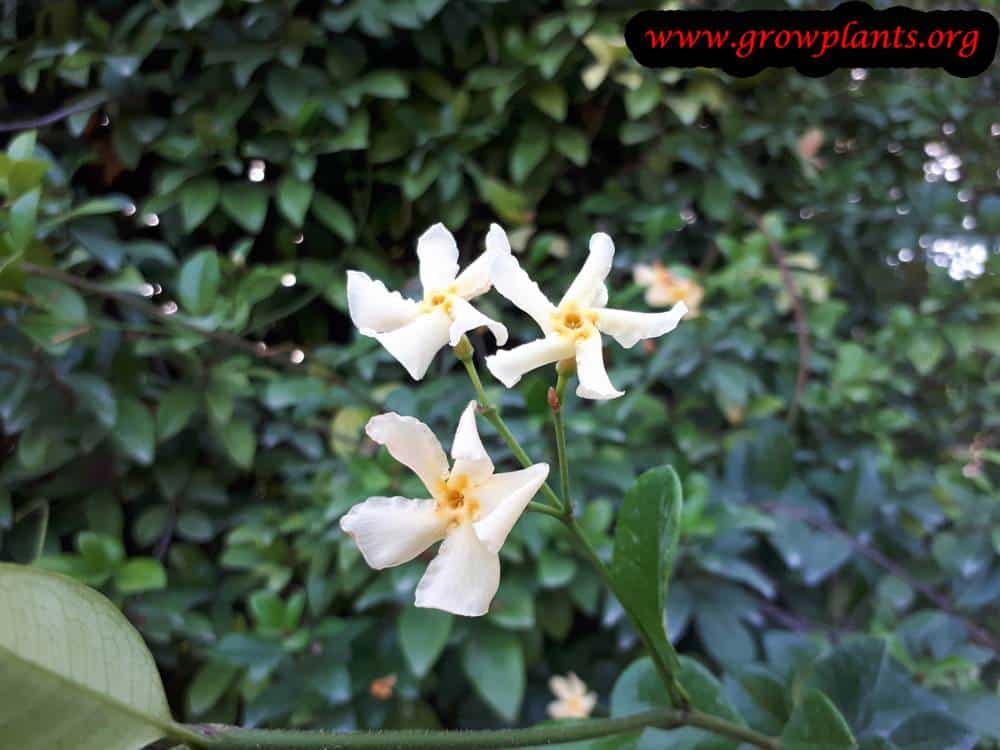
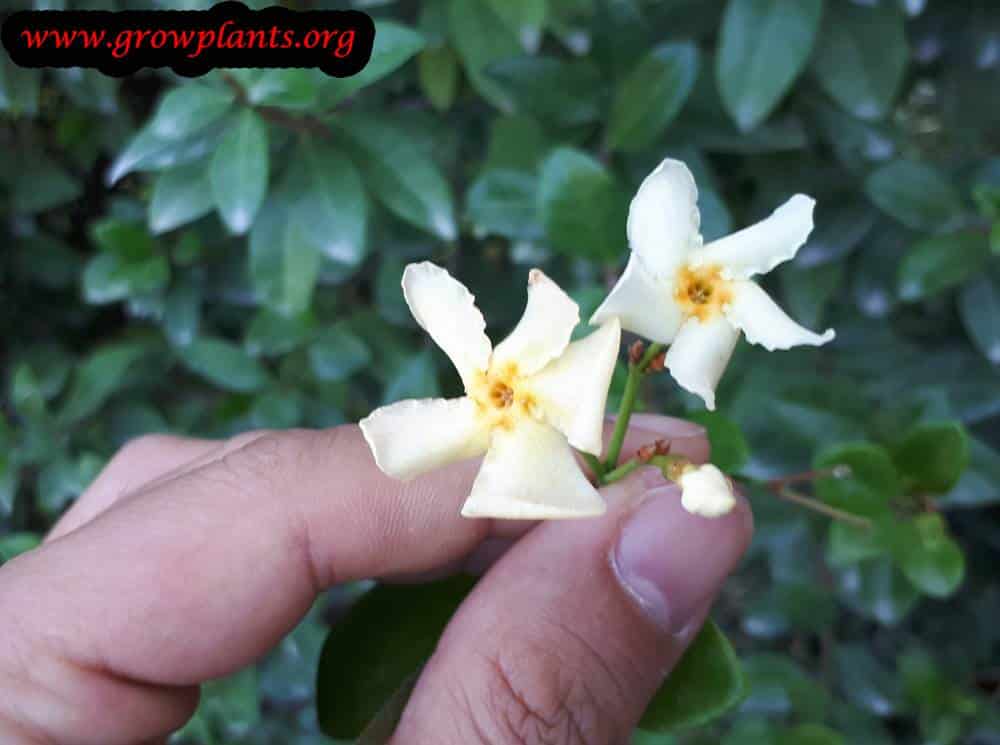
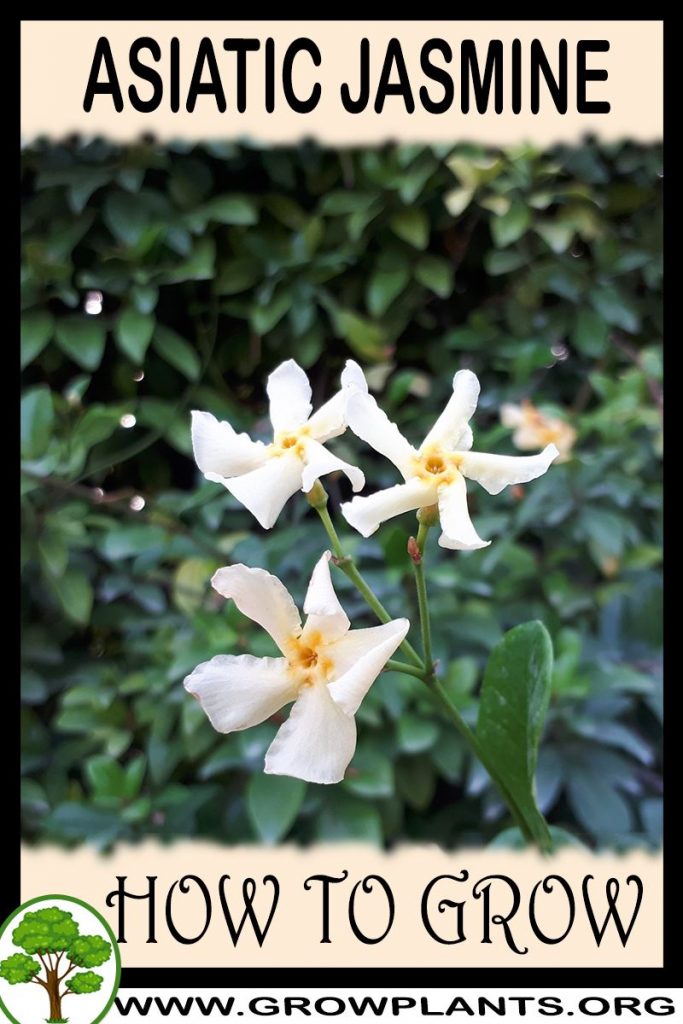
- Flower Characteristics: Fragrant white-to-yellow five-petalled flowers borne in clusters
Primary Uses & Landscape Value
- Functional & Ornamental Roles: Fragrant climber for trellises and walls, evergreen groundcover, clipped hedge and container plant; a good pollinator attractant
Care Guide: Planting, Soil & Watering
Overview: Asiatic jasmine (Trachelospermum) is a vigorous evergreen climber or ground cover with fragrant white-to-yellow flowers, hardy to about zone 7. It grows best in full sun to part shade in fertile, well-drained soil with moderate, even moisture, and can be trained up a support or left to spread.
Quick Care Requirements
| Requirement | Ideal Condition |
|---|---|
| Planting Season | In spring, summer or autumn, avoiding frost |
| Growth Rate | Fast |
| Soil Type | Fertile, well-drained soil |
| Water Need | Moderate; keep evenly moist, letting the surface dry between waterings |
Planting & Establishment
- Best Planting Season: Plant in the milder parts of the year – spring, summer or autumn – avoiding hard frost.
- How to Plant:
- Hole Preparation: Dig a hole a little wider than the root ball; set a trellis or support in place at planting if you want it to climb, or space plants out to spread as ground cover.
- Soil Amendments: Improve the soil with compost or organic matter for fertility and moisture retention.
- Planting Depth: Set the root ball level with the surrounding soil, firm and water in.
- Growth Speed & Expectations: A fast, vigorous grower reaching up to several metres that quickly covers a support or spreads as dense cover; train young stems onto the trellis.
Soil, Watering & Drainage Care
- Soil Mix & Drainage Needs: Prefers fertile, free-draining soil; in pots use a quality, free-draining potting mix. Mulch to conserve moisture but avoid waterlogged ground.
- Watering Schedule & Technique:
- Young / Newly Planted: Water regularly to establish a strong root system.
- Established: Water moderately and evenly, letting the surface dry slightly between waterings; established plants tolerate short dry spells.
- Seasonal Adjustments: More in summer heat, less over winter.
Climate, Light & Hardiness
Asiatic jasmine grows across a wide range of warm climates - temperate, Mediterranean, subtropical, and tropical - and is reliably hardy from about zone 7 upward. It prefers full sun to half shade and tolerates a fair range of winter cold for an evergreen vine.
Quick Climate Specifications
| Climate Zones | Temperate, Mediterranean, subtropics, tropics |
|---|---|
| USDA Hardiness Zones | 7+ |
| Frost Tolerance | Moderate |
| Light Conditions | Full Sun to Half Shade |
Sunlight & Light Exposure
Grows well from full sun to half shade; full sun brings the heaviest, most fragrant bloom, while half shade is well tolerated as a groundcover or on hedges.
Temperature Extremes & Hardiness
USDA Hardiness & Regional Limits
Hardy outdoors from about zone 7 upward, tolerating light winter freezes once established; north of this range it is not reliably winter–hardy.
Cold Damage & Winter Protection
Foliage and new growth can be damaged by hard freezes; siting against a warm wall or providing winter mulch helps at the colder edge of its range.
Frost Sensitivity
Established plants tolerate brief light frost, but prolonged or hard freezes damage foliage and stems.
Wind, Humidity & Microclimate
Wind Tolerance
Its use as a hedge and ground–cover plant indicates reasonably good wind tolerance once established.
Growing in Pots, Balconies & Indoors
Asiatic jasmine is not a houseplant – the grower marks it unsuitable indoors – and this evergreen climber and ground-cover (0.5-5 m / 2-15 ft) needs full sun to part shade to flower well. It grows nicely in containers on a sunny patio or balcony, trained up a support or left to trail, but it is not a windowsill plant.
Quick Details
- Container Size: A pot of about 15-25 L (4-6 gal), with a support if you want it to climb
- Indoor Suitability: Not an indoor plant; grow it outdoors in sun
- Best Spot: Full sun to part shade – more sun means more flowers
- Soil & Drainage: Free-draining, organic-rich mix
- Watering in Pots: Keep evenly moist in growth; established plants tolerate short dry spells
Indoors & On the Windowsill
- Not a houseplant: It needs real outdoor light to flower and simply grows thin and shy of bloom indoors.
- Windowsill: Not practical – it wants sun and room to spread.
- Overwintering: Fairly tough, but in cold areas a pot can be moved to a sheltered spot over the coldest weather.
On a Balcony or Patio
- Light & wind: A sunny wall, railing or trailing pot suits it; it takes wind well once established.
- Practicalities: Versatile – let it cascade from a raised pot or train it up a trellis; clip after flowering to keep it neat.
Choosing the Pot, Soil & Long-Term Care
- Pot & drainage: A 15-25 L pot with strong drainage holes; skip a standing-water saucer to avoid root rot. Terracotta breathes and dries faster; glazed or plastic holds moisture longer.
- Potting mix: A light, aerated, organic-rich mix – potting compost or peat/coir with added perlite or vermiculite for drainage.
- Feeding: Nutrients wash out of pots faster than open ground, so feed potted the jasmine more often – a balanced liquid feed through the active growing season.
- Repotting: Refresh the top layer of mix each year and renew it or pot up every couple of years; lightly trim the roots and top growth when you do.
Fertilizing & Feeding
A fast-spreading fragrant flowering vine grown as a hedge or groundcover: moderate feeding through spring growth and bloom supports coverage and flowering, with feeding held back during cooler rest periods.
Quick Fertilizing Specs
| Feeding Level | Moderate feeder |
|---|---|
| Main Nutrient Priority | Balanced feeding with adequate nitrogen to establish dense coverage and support fragrant bloom |
| Best Feeding Period | Spring growth through the summer bloom period |
| Organic Options | Compost or organic mulch worked into the root zone |
| Reduce/Stop Feeding | Hold off fertilizing during cooler, slow-growth periods |
| Micronutrients | Usually met by a complete fertilizer; correct only diagnosed deficiencies |
| Soil pH | Tolerates a wide range but does best in near-neutral, well-drained soil |
Feeding by Growth Stage
Spring growth and coverage
Push vigorous new growth so the vine fills in as a hedge or groundcover.
| Nutrient direction | A balanced complete fertilizer with adequate nitrogen encourages dense, spreading growth. |
|---|---|
| Timing | As new growth resumes in spring. |
| Frequency | A light feeding at the start of active growth is usually enough. |
| Fertilizer types | A balanced complete fertilizer, Compost or organic mulch as a top-dressing |
| Precautions | Avoid overfeeding on an already vigorous, spreading vine, which can push growth beyond where it is wanted. |
Fragrant summer bloom
Support the clustered, fragrant flowers that attract pollinators.
| Nutrient direction | Continued balanced feeding supports flowering; a high-phosphorus product is not needed to drive bloom. |
|---|---|
| Timing | Through the summer flowering period. |
| Frequency | Minimal feeding is usually enough if spring feeding was already applied. |
| Fertilizer types | A balanced complete fertilizer if growth or flowering looks weak |
| Precautions | Ease off nitrogen-heavy feeding during bloom, which can favor leafy growth over flowers. |
Cool-season rest
Let the evergreen vine coast through cooler weather without pushing tender new growth.
| Nutrient direction | None – withhold fertilizer while growth is slow. |
|---|---|
| Timing | Through autumn and winter or other cool, slow-growth periods. |
| Frequency | No feeding at this stage. |
| Fertilizer types | No feeding at this stage; do not fertilize until spring growth resumes. |
| Precautions | Do not fertilize now; late feeding can trigger tender growth that is vulnerable to cold snaps. |
Nutrient Deficiency Signs & Corrections
Older leaves fade to pale green or yellow and coverage growth slows.
| Possible causes | low available soil nitrogen, nitrogen leaching from heavy rain or watering, competition from surrounding turf or weeds |
|---|---|
| Appears first on | older, lower leaves |
| What to check | recent feeding history, soil organic matter and drainage, competing vegetation nearby |
| Possible correction | Apply a balanced fertilizer with nitrogen and work in organic matter, watering evenly afterward. |
New leaves show yellowing between the veins while veins stay green.
| Possible causes | alkaline or high-pH soil limiting iron availability, poor drainage or compacted soil, irrigation water high in carbonates |
|---|---|
| Appears first on | newest growth |
| What to check | soil pH, drainage, irrigation water quality |
| Possible correction | Correct soil pH where practical and apply a chelated iron product per its label. |
Vigorous foliage growth but few or no fragrant flowers.
| Possible causes | excess nitrogen favoring leafy growth over flowering, insufficient light for a plant that flowers best in fuller sun, immature growth that has not yet reached flowering maturity |
|---|---|
| Appears first on | whole-plant flowering pattern |
| What to check | recent fertilizer nitrogen level, sun exposure, plant age and vine maturity |
| Possible correction | Ease off nitrogen, confirm adequate sun exposure, and allow more time for a young vine to mature before expecting heavy bloom. |
Pruning, Training & Seasonal Maintenance
Asiatic jasmine is a vigorous, evergreen twining vine most often grown low as a spreading groundcover or edging plant rather than trained tall; it tolerates frequent shearing and hard cutback without harm. Flowers form on the current season’s new growth, so the safest and most effective pruning period is late winter to early spring, before that new growth begins, which shapes the planting without sacrificing the coming summer bloom; the main objective is controlling spread, maintaining an even mat height, and periodically renewing growth that has become woody and thin at the base.
Quick Pruning & Maintenance Specs
| Pruning Tolerance | High – shears and hard-cuts back reliably |
| Primary Pruning Window | Late winter – early spring (before new growth) |
| Secondary Maintenance Window | Light edging/trim during the growing season as runners spread |
| Typical Frequency | 1–2 shearings a year as groundcover, plus ongoing edge control |
| Main Objective | Contain spread; keep an even, dense mat |
| Young Plant Priority | Encourage lateral spread and rooting-in of runners to fill in |
| Mature Plant Priority | Contain boundaries; renew thin, woody patches |
| Best Tool Type | Hedge shears for mat trimming; bypass secateurs for boundary/renewal cuts |
| Avoid Heavy Pruning During | Summer bloom period |
Pruning by Plant Age & Size
Newly Established
Minimal cutting; let runners spread and root in to fill the bed, removing only damaged growth.
Young / Formative
No structural training system is needed for groundcover use; instead, periodically pinch or trim runner tips to encourage denser branching and faster fill-in rather than a few long unbranched strands.
Mature / Established
Shear or trim to keep an even planting height and contain the edges against lawns, paths and neighboring beds; thin and cut back sections that have become woody and sparse at the base to force fresh, denser regrowth.
Seasonal Pruning Schedule
Pre-Growth/Early-Spring
Objective: shape and contain before the growth surge. Remove winter-damaged growth, cut the mat back to an even height, and trim back any runners that have rooted outside the intended bed. Do not remove all of the prior season’s growth on a young planting that hasn’t fully filled in. Expected response: a flush of dense new growth. Flowering impact: minimal, since flowers form on the growth produced after this cut, through summer.
Ongoing Sanitary
Trim back runners escaping the bed edge through the growing season, and remove any scale-insect-affected stems noticed (a documented pest for this species).
Flowering & Fruiting Wood
Flowers form on the current season’s new growth, so a dormant-season (late winter/early spring) cutback does not remove the coming bloom; heavy shearing done later, once the new season’s growth is underway and budding, will remove developing flowers.
Structural Pruning & Training
Grown as a spreading groundcover, so there is no vertical framework to manage; control is mainly about density (thickening thin, woody patches) and containing the spreading edge, since this species roots as it spreads and can escape its bed if left untrimmed.
Special Growth to Remove
Remove runners rooting outside the intended planting area before they establish independently; cut back any dead or winter-damaged sections in cooler parts of its hardiness range (zone 7).
Container & Small-Space Pruning
In a container or as a trailing edge plant, trim more frequently and lightly rather than waiting for one hard annual cut, since confined roots make it slower to recover from a severe reduction than an in-ground planting.
Tools
Hedge shears for routine mat trimming and edging on larger plantings; bypass secateurs for selective renewal cuts and boundary control in smaller areas.
Tool Hygiene & Disease Risk
Routine – clean, sharp tools; no significant tool-transmissible disease documented, though the plant’s sap can be irritating to skin (noted as poisonous in its care profile), so wear gloves when shearing or handling cut material.
Cut Placement & Technique
Shear to an even, level height for groundcover use; where selective renewal is needed, cut individual woody stems back to a low healthy node rather than shearing the same section repeatedly, which thins it further over time.
Heavy Pruning & Rejuvenation
Tolerates hard rejuvenation well given its vigorous, fast-to-medium growth rate; an overgrown or patchy planting can be cut back hard in late winter and will typically regenerate a full dense mat within one growing season.
Post-Pruning Care
Water normally through the regrowth period; avoid heavy feeding immediately after a hard cutback, since the plant’s own vigor drives the recovery; watch the fresh flush for scale insects.
Common Pruning Mistakes
Letting runners escape the bed for a full season before trimming, making containment much harder; shearing repeatedly at the same height every time, which thins and woodies the planting from below; cutting hard once flower buds have already formed in spring.
When NOT to Prune
Avoid hard cutback once the plant is budding or in bloom through summer; avoid pruning a newly planted or transplanted specimen until it has rooted in; use caution handling the poisonous sap, wearing gloves regardless of season.
Recommended Tools (by task)
- Routine mat trimming/edging: hedge_shears – efficient for the even, dense shearing this groundcover use calls for.
- Selective renewal of woody, thin patches: bypass_secateurs – clean cuts on individual stems for targeted renewal.
Propagation Guide
Asiatic jasmine (Trachelospermum asiaticum) is most easily propagated vegetatively from stem cuttings or by layering. These methods reproduce the parent plant directly and are more practical than seed for routine garden propagation.
Quick Propagation Specs
| Best Propagation Methods | Stem cuttings and layering |
| Alternative Method | Seed where available |
| Propagation Difficulty | Easy to moderate |
| Best Time | Warm active-growth period |
Stem Cuttings
Take healthy young to semi-mature stem sections with several nodes. Remove the lower leaves and place the lower nodes into a moist, well-drained rooting medium.
Layering
Low flexible stems can be pinned against the soil while still attached to the parent plant. Once a section has formed a healthy root system, cut it free and transplant it.
Aftercare
Keep newly rooted plants evenly moist while they establish, then gradually adapt them to normal garden conditions.
Bloom & Flower Guide
Quick Details
- Bloom Season: Summer
- Flower Appearance: Fragrant five-petalled pinwheel flowers, cream ageing to pale yellow, in small clusters
- Edibility: None — despite the jasmine name this is not true jasmine; it has a toxic milky sap and the flowers are not edible
Detailed Blooming Overview
Asiatic jasmine is grown as a fragrant evergreen groundcover, and in summer it carries small pinwheel flowers that open cream and age toward soft yellow, scenting the air around them. It is not a true jasmine, though — it belongs to the dogbane family, with a milky sap that is toxic if eaten.
Flower Characteristics
- Five-petalled, pinwheel-shaped flowers, cream to yellow and fragrant, borne in small clusters.
Bloom Care & Thinning
- Encouraging bloom: Full sun to part shade suits it; it flowers in summer on established growth.
- Safety: The milky sap is an irritant and the plant is toxic if eaten — do not confuse it with edible true jasmine.
Bloom Health & Protection
- Scale insects: Scale can settle on stems and lead to sooty mould that spoils the display; horticultural oil helps keep them down.
Pests, Diseases & Troubleshooting
Overview: Trachelospermum asiaticum (Asiatic jasmine) is a tough, low-maintenance groundcover with very few pest, disease, or weed problems. Its main vulnerabilities are occasional scale insects or whiteflies (followed by sooty mould) and, in over-watered or poorly drained conditions, fungal aerial blight (Rhizoctonia). Good drainage, moderate watering, and occasional pruning for airflow keep it largely trouble-free.
Quick Troubleshooting Overview
| Issue / Pest | Main Symptom | Primary Solution |
|---|---|---|
| Scale insects | Small bumps on stems/leaves, sticky honeydew, sooty mould | Prune for airflow; horticultural oil |
| Whiteflies | Tiny white flies rising when disturbed; honeydew, sooty mould | Prune for airflow; insecticidal soap |
| Aerial blight (Rhizoctonia) | Fungal blighting/rot in wet, over-irrigated conditions | Reduce irrigation; improve drainage and airflow |
Common Pests & Management
- Scale insects & whiteflies:
- Symptoms: An occasional, minor problem rather than a common one: small immobile bumps (scale) or tiny white flies (whiteflies) on stems and leaf undersides, with sticky honeydew and resulting sooty mould.
- Prevention & Control: Routine pruning improves airflow and reduces the chance of buildup. For active infestations, horticultural oil or insecticidal soap on affected growth is generally sufficient.
Diseases & Fungal Issues
- Aerial blight (Rhizoctonia spp.):
- Symptoms: A fungal infection favoured by over-irrigation and consistently wet conditions; this is the species’ single notable disease risk.
- Treatment & Management: Avoid over-watering once established – this species tolerates drought well and rarely needs supplemental irrigation once settled in. Improve drainage and airflow if the disease appears.
Growing Difficulties & Abiotic Problems
- Overly vigorous growth:
- Cause & Symptoms: Too much water, sun, or fertilizer can push this groundcover into aggressive, unruly growth.
- Correction Strategy: Keep watering and feeding moderate once established; prune as needed to control spread.
What Helps — Products & Tools
This species needs very little intervention. Routine pruning for airflow is the main preventive tool; horticultural oil or insecticidal soap addresses occasional scale or whitefly. The most important safeguard is avoiding over-irrigation, which is what triggers this plant’s one notable disease risk, aerial blight.
Frequently Asked Questions
How do you plant asiatic jasmine?
Plant in the milder parts of the year – spring, summer or autumn – avoiding hard frost. Dig a hole a little wider than the root ball; set a trellis or support in place at planting if you want it to climb, or space plants out to spread as ground cover. Improve the soil with compost or organic matter for fertility and moisture retention, then set the root ball level with the surrounding soil, firm and water in.
Is asiatic jasmine toxic to pets or children?
Yes – asiatic jasmine is toxic if eaten, and its stems exude a milky sap that can irritate skin and eyes (dogbane family), so keep pets and children from chewing on it. Despite the jasmine name, it is not true jasmine, and it has a toxic milky sap and the flowers are not edible.
Can asiatic jasmine be grown indoors?
No – asiatic jasmine is not a houseplant. It needs real outdoor light to flower and simply grows thin and shy of bloom indoors. It grows nicely in containers on a sunny patio or balcony, trained up a support or left to trail, but it is not a windowsill plant.
When should you prune asiatic jasmine?
The safest and most effective pruning period is late winter to early spring, before that new growth begins. Flowers form on the current season’s new growth, so a dormant-season (late winter/early spring) cutback does not remove the coming bloom. Avoid hard cutback once the plant is budding or in bloom through summer.
How often should you water asiatic jasmine?
Water regularly to establish a strong root system while it’s young and newly planted. Once established, water moderately and evenly, letting the surface dry slightly between waterings; established plants tolerate short dry spells. Water more in summer heat, less over winter.