![[Medicinal Korean Herb] Hovenia dulcis Fruits / Shuiguozhijuzi / 헛개열매 Dried Bulk Herbs 4oz / 113g](https://m.media-amazon.com/images/I/516I6o9xkRL._SL160_.jpg)


Plant Profile & Key Characteristics
Overview: A deciduous tree reaching roughly 7-30 m (21-100 ft), grown both as an ornamental and for its sweet, edible swollen fruit-stalks. It is hardy across temperate to subtropical climates.
Quick Specifications
| Specification | Attribute |
|---|---|
| Plant Type / Life Cycle | Perennial (tree) |
| Foliage Type | Deciduous |
| Mature Size | 7-30 m (21-100 ft) tall |
| Growth Rate | Slow to moderate (slow until established) |
| Toxicity | Non-toxic / edible (fruit-stalks eaten; also used medicinally) |
| Hardiness | USDA zone 5-10 |
Growth Form & Structure
- Height & Spread: 7-30 m (21-100 ft) tall in the ground; can be container-grown while young but not indoors.
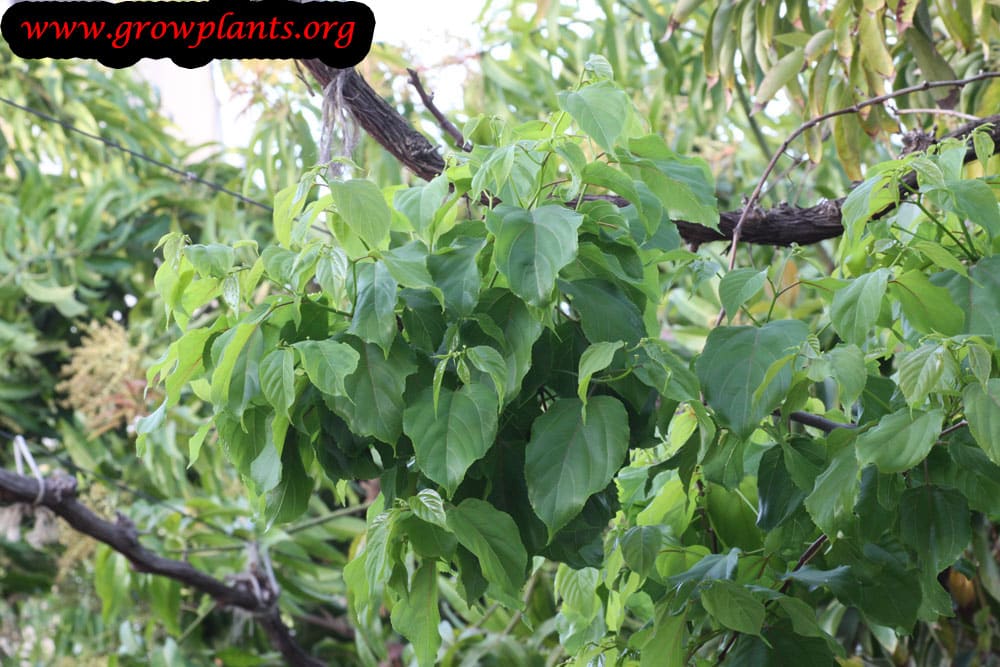
- Growth Habit & Form: Upright deciduous shade tree with a spreading crown; some branch drop in winter.
- Lifespan & Maturity: Long-lived tree; slow to establish over several years and begins bearing in about 4-6 years.
Anatomy & Physical Features
- Trunk & Bark: Woody single-trunked tree suited to shade and specimen use.
- Flower Characteristics: Small white flowers on stalks, bee- and fly-pollinated (full detail in the Bloom section).
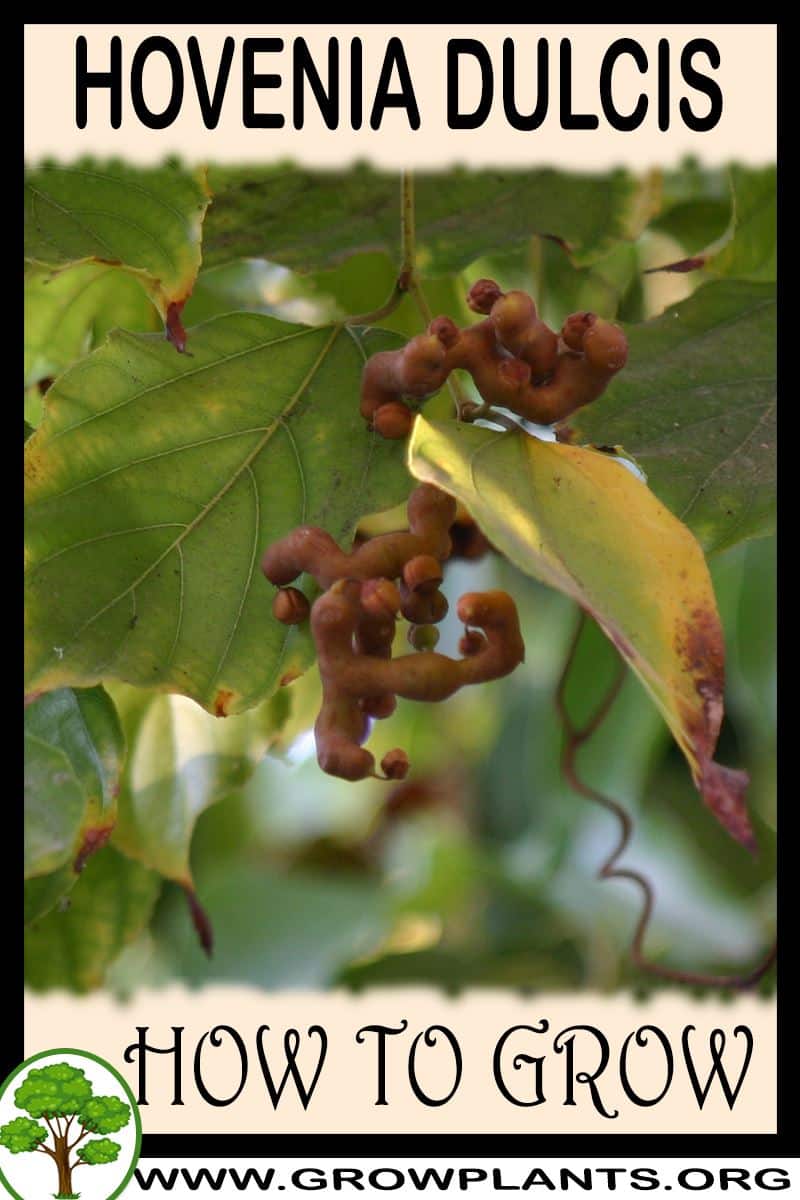
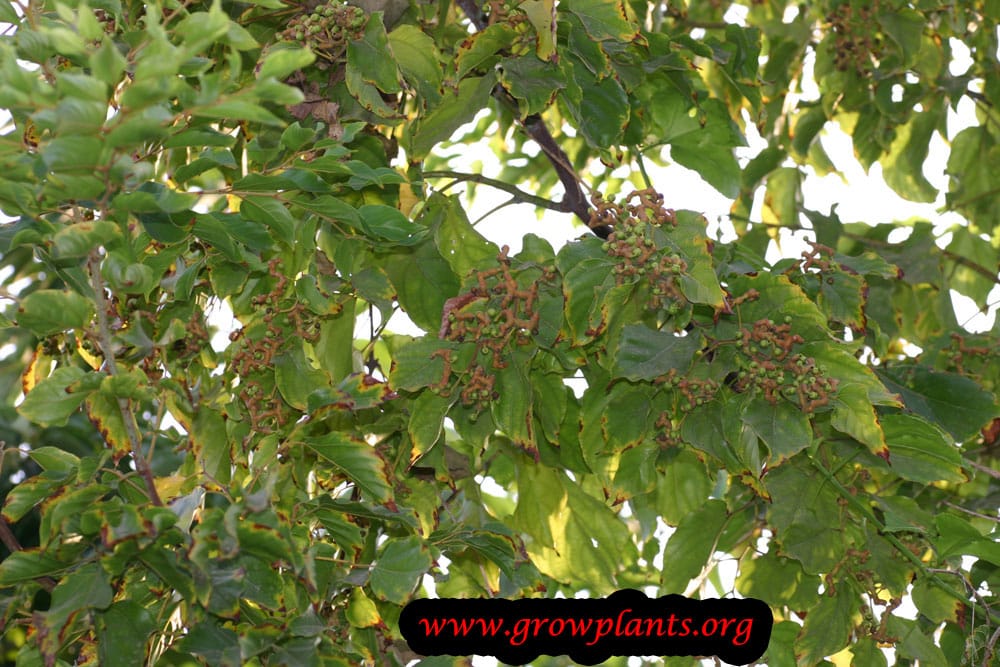
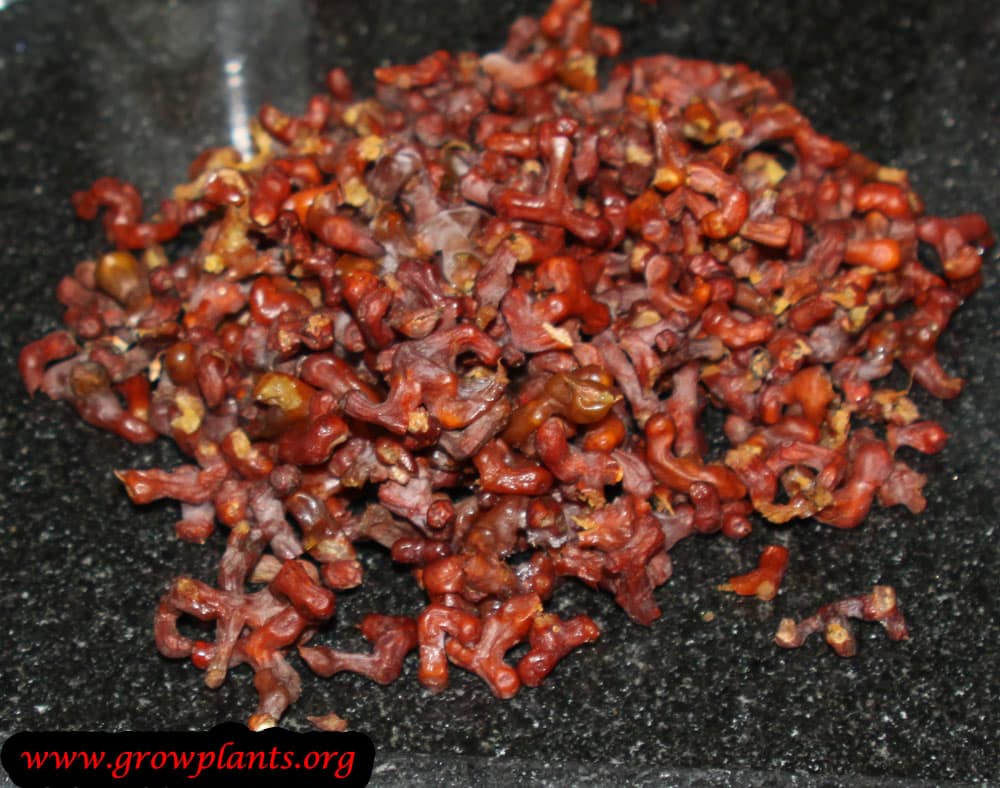
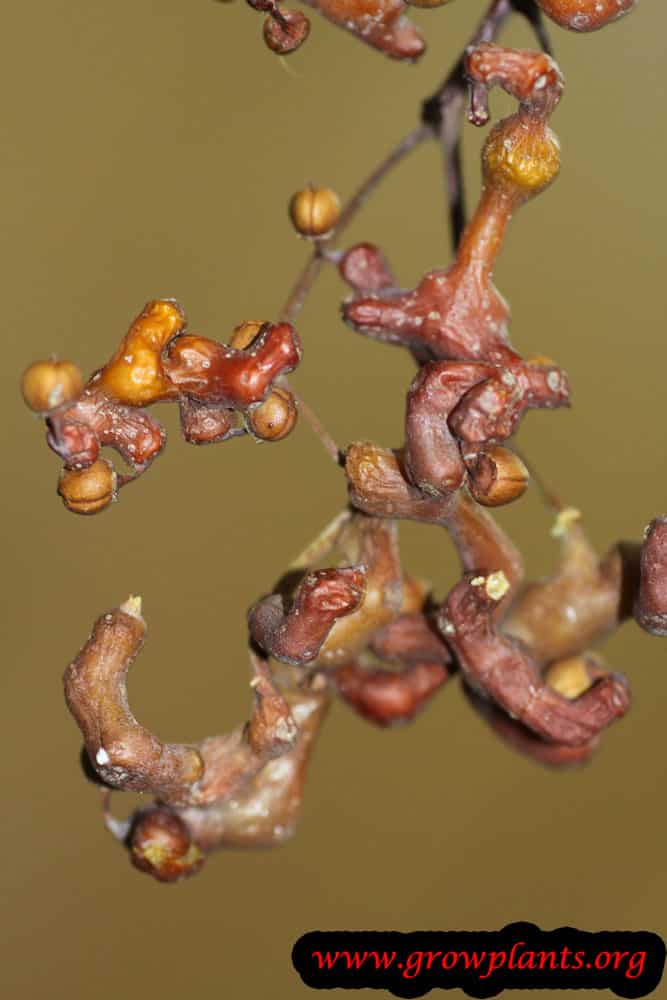
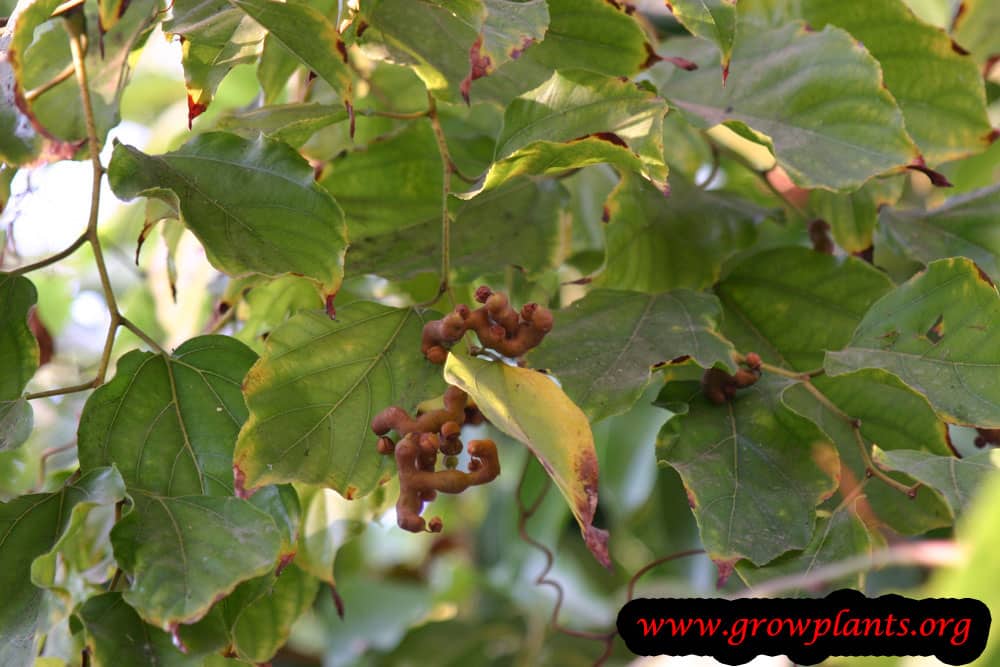
- Fruit Profile: Sweet, dry brown swollen fruit-stalks bearing small seeds, tasting of carob and date (full detail in the Fruit section).
Primary Uses & Landscape Value
- Edible Uses: Fleshy fruit-stalks eaten raw or used in cakes and juice.
- Functional & Ornamental Roles: Ornamental and shade tree grown for its unusual edible crop.
Care Guide: Planting, Soil & Watering
Overview: Hovenia dulcis is a hardy, deciduous tree (zones 5–10) that grows best in full sun across temperate to subtropical climates. It likes deep, moist but well-drained soil and, once established, is fairly undemanding, needing only modest watering.
Quick Care Requirements
| Requirement | Ideal Condition |
|---|---|
| Planting Season | Dormant to warm season — from winter through spring and summer |
| Growth Rate | Slow to Moderate (slow to establish, can take a few years) |
| Soil Type | Deep, moist but well-drained soil |
| Water Need | Low to Moderate once established |
Planting & Establishment
- Best Planting Season: Plant while dormant or early in the growing season — from winter through spring and into summer — so roots settle before hot, dry weather; as a deciduous tree it transplants most easily during dormancy.
- How to Plant:
- Hole Preparation: Dig a hole about twice the width of the root ball and no deeper, loosening the surrounding soil so roots can spread.
- Soil Amendments: Work in compost or organic matter to enrich the soil and hold moisture while keeping drainage free.
- Planting Depth: Set the tree so the root collar sits at soil level; do not bury the trunk.
- Growth Speed & Expectations: Growth is slow to moderate and the tree may take a few years to establish before speeding up; note it can sucker and become invasive in some areas.
Soil, Watering & Drainage Care
- Soil Mix & Drainage Needs: Grows in most soils that drain freely; avoid waterlogged ground, which harms the roots.
- Watering Schedule & Technique:
- Young / Newly Planted: Water regularly to keep the soil evenly moist while the young tree establishes its root system.
- Established: Once established it needs only occasional deep watering and tolerates short dry spells.
- Seasonal Adjustments: Water more during prolonged summer heat and little to none through winter dormancy.
Climate, Light & Hardiness
Japanese raisin tree is a deciduous fruit and ornamental tree adapted to temperate, mediterranean, subtropical, and tropical climates. It needs full sun and is hardy through cold temperate winters.
Quick Climate Specifications
| Climate Zones | Temperate, Mediterranean, subtropical, tropical |
|---|---|
| USDA Hardiness Zones | 5–10 |
| Frost Tolerance | High |
| Light Conditions | Full Sun |
Sunlight & Light Exposure
Optimal Light Setup
Full sun is required for best growth.
Temperature Extremes & Hardiness
USDA Hardiness & Regional Limits
Hardy across USDA zones 5–10, tolerating cold temperate winters through to warmer subtropical and tropical conditions.
Cold Damage & Winter Protection
As a deciduous species, it naturally drops some branches over winter as part of its dormancy; this is normal seasonal behavior rather than cold damage.
Growing in Pots, Balconies & Indoors
Japanese raisin tree (Hovenia dulcis) is a large tree, 7-30 m (21-100 ft), but the grower confirms it can be grown in a container. Expect to keep a potted specimen on the smaller side; it makes a hardy patio tree while young and needs a generous pot.
Quick Details
- Container Size: A large, deep container; expect to keep it compact and pot up as it grows
- Indoor Suitability: Not a houseplant; a hardy container tree while young
- Best Spot: Full sun
- Soil & Drainage: Aerated, organic-rich mix that drains freely
- Watering in Pots: Let the top of the mix dry between waterings; even so, pots dry faster than open ground, so check regularly.
Indoors & On the Windowsill
- Houseplant limits: Not a houseplant – it grows large and needs full sun and a winter chill.
- Windowsill growing: Too big for a sill; grow it in a large pot outdoors.
- Overwintering: Hardy and deciduous – it drops some branches in winter and is content to stand outside through the cold season.
On a Balcony or Patio
- Light & wind: Give it full sun. It is drought-tolerant once settled, but potted roots still dry faster than open ground, so check moisture. Being large, it needs a heavy, stable pot on a balcony.
- Plan ahead: A vigorous tree will eventually outgrow container life and do best planted out.
Choosing the Pot, Soil & Long-Term Care
- Pot & drainage: A deep pot with strong drainage holes; skip a standing-water saucer to avoid root rot. Terracotta breathes and dries faster, while glazed or plastic hold moisture longer.
- Potting mix: Well-aerated, organic-rich mix – peat or coir with perlite and a little organic matter; it must drain freely.
- Feeding: Potted plants use up their food faster because nutrients leach out with each watering, so feed a little more often than plants in open ground.
- Repotting: Refresh part of the mix and pot up every couple of years; for established plants, lightly prune the root ball and top growth when you repot.
Fertilizing & Feeding
A tough, adaptable deciduous tree grown as much for shade and ornamental interest as for its sweet fruit stalks, so it needs only a light, standard fruit-tree feeding routine.
Quick Fertilizing Specs
| Feeding Level | Light – an undemanding tree once established. |
|---|---|
| young_feeding | A nitrogen-forward complete fertilizer while the tree builds its framework. |
| mature_feeding | A balanced fertilizer once the tree is flowering and developing its fruit stalks. |
| Main Nutrient Priority | Balanced feeding, with some potassium and boron support around bloom and fruit development. |
| Best Feeding Period | The growing season, from spring leaf-out through summer. |
| Organic Options | Compost or aged organic matter worked into moist, well-draining soil. |
| Micronutrients | Iron and manganese are typically covered by a complete fruit-tree fertilizer. |
| Soil pH | Adaptable, but does best in consistently moist, well-drained soil. |
| Reduce/Stop Feeding | Taper feeding well before the tree drops its leaves for dormancy in the cooler months. |
Feeding by Growth Stage
Newly Planted Tree
Help a young tree establish roots without pushing top growth ahead of the root system.
| Nutrient direction | Keep feeding light and balanced while the roots settle in. |
|---|---|
| Timing | The first growing season after planting, once new growth resumes. |
| Frequency | A few light feedings spread across the active growing season is enough. |
| Fertilizer types | A balanced, complete fertilizer for young trees, Compost worked into consistently moist soil |
| Precautions | This species can take a while to establish, so avoid pushing growth too hard with heavy feeding early on. |
Young, Non-Bearing Tree
Support steady canopy development while the tree is still establishing before it bears fruit.
| Nutrient direction | Favor a nitrogen-forward, complete fertilizer to encourage steady vegetative growth. |
|---|---|
| Timing | Through the tree’s active growing seasons, before it reaches bearing age. |
| Frequency | Regular light feedings during the growing season, easing off as leaves begin to change in autumn. |
| Fertilizer types | A nitrogen-forward complete fertilizer for young trees, Composted organic matter |
| Routine trace nutrients | iron, manganese |
| Precautions | Some branch dieback in winter is normal for this species and isn’t necessarily a feeding issue. |
Established, Approaching Fruiting
Shift the tree onto balanced feeding as it matures toward flowering and fruit stalk development.
| Nutrient direction | Move to a balanced, complete fertilizer rather than a heavily nitrogen-leaning one. |
|---|---|
| Timing | As the tree matures, in the growing seasons leading up to its first bloom. |
| Frequency | A modest, evenly spaced feeding routine through the growing season. |
| Fertilizer types | A balanced, complete fruit-tree fertilizer, Mulch renewed around, not against, the trunk |
| Routine trace nutrients | iron, manganese |
| Precautions | Keep soil consistently moist rather than letting it dry out between feedings. |
Mature, Fruit-Bearing Tree
Support flowering and the development of the sweet, edible fruit stalks.
| Nutrient direction | Keep a balanced feeding approach with some potassium support as the fruit stalks develop. |
|---|---|
| Timing | Around spring bloom, continuing through fruit stalk development into autumn. |
| Frequency | A light, balanced feeding routine through the growing season, tapering before leaf drop. |
| Fertilizer types | A balanced, complete fruit-tree fertilizer with modest potassium emphasis, Organic mulch to build soil fertility over time |
| Routine trace nutrients | iron, manganese |
| Precautions | Stop feeding with enough time for the tree to harden off before autumn leaf drop and dormancy. |
Nutrient Deficiency Signs & Corrections
New leaves turn yellow between the veins while the veins remain green.
| Possible causes | High soil pH limiting iron availability, Waterlogged or compacted soil restricting root uptake, A genuine iron shortfall in poor soil |
|---|---|
| Appears first on | the newest leaves |
| What to check | Soil pH if testable, Drainage and moisture consistency around the roots, Whether older leaves stay green while new ones yellow |
| Possible correction | Improve drainage and moisture consistency first; if pH is elevated, correct it gradually and consider a chelated iron product per its label. |
Overall pale green foliage and slower-than-expected shoot growth during the growing season.
| Possible causes | Insufficient nitrogen in the soil, Nitrogen leaching in consistently moist soil, Root stress limiting nutrient uptake |
|---|---|
| Appears first on | older leaves first |
| What to check | Growth rate versus previous seasons, Soil moisture and drainage balance, Recent feeding history |
| Possible correction | Apply a balanced or nitrogen-leaning fertilizer during the growing season and monitor new growth color. |
Scorching or browning along the edges of older leaves later in the season.
| Possible causes | Potassium depletion during fruit stalk development, Drought stress reducing nutrient movement, Soil salt buildup interfering with uptake |
|---|---|
| Appears first on | older leaves, at the margins |
| What to check | Whether scorch coincides with fruit stalk development, Watering consistency through summer, Soil salinity if irrigated with hard water |
| Possible correction | Feed with a balanced, potassium-inclusive fertilizer and keep soil moisture consistent. |
Pruning, Training & Seasonal Maintenance
Hovenia dulcis is pruned mainly for form rather than for cropping – the source guidance is simply to prune for design – but a detail worth taking seriously is that the species is noted to shed some branches on its own in winter, a sign that branch attachment can be brittle and that structural pruning has a real safety role, not just a cosmetic one. The dormant autumn–winter window suits this deciduous tree well, allowing structural correction and removal of weak or dropping branches before spring growth resumes.
Quick Pruning & Maintenance Specs
| Pruning Tolerance | Moderate |
| Primary Pruning Window | Autumn–Winter dormancy |
| Typical Frequency | Annual to biennial structural check, more often while young and slow to establish |
| Main Objective | Shape the tree and proactively remove weakly attached or self-shedding branches before they drop on their own |
| Young Plant Priority | Establish a strong central leader and well-attached scaffold, since establishment is described as slow |
| Mature Plant Priority | Remove weak or brittle-looking limbs, control height on a tree that can eventually reach considerable size |
| Best Tool Type | Loppers and a pruning saw for scaffold work; pole pruner once the tree approaches its larger mature sizes |
| Avoid Heavy Pruning During | Active spring growth flush, especially on young trees already noted to establish slowly |
Pruning by Plant Age & Size
Newly Established
Remove only damaged growth; given the noted slow, multi-year establishment period, avoid any structural cuts that would add stress while the root system is still developing.
Young / Formative
Central-leader training with attention to branch attachment angles, since the species’ tendency to shed branches in winter suggests weak crotches are worth correcting early – favour wide-angled, well-attached scaffold limbs over narrow, included-bark unions.
Mature / Established
Periodically inspect for and remove branches with poor attachment or early signs of the self-shedding the species is known for, rather than waiting for them to drop; otherwise minimal design-driven shaping as the source guidance describes.
Seasonal Pruning Schedule
Dormant/Winter
Objective: structural correction and pre-emptive removal of weak branches. Remove: dead wood, poorly attached or clearly brittle limbs, and any branches that dropped naturally the previous winter but left ragged stubs. Do not remove: well-attached scaffold branches that form the tree’s permanent framework. Expected response: a sounder structure with fewer surprise branch failures. Flowering/fruiting impact: minimal, since flowers form on the following spring’s new growth rather than on the older wood being corrected.
Flowering & Fruiting Wood
Flowers form on stems produced during the spring growth flush, so dormant-season structural pruning of the prior year’s wood does not remove already-set flower buds; it shapes the framework that the next flush of flowering growth will arise from.
Structural Pruning & Training
Prioritise branch attachment quality given the species’ documented tendency to drop branches in winter – remove or correct narrow, weak, or included-bark unions before they fail on their own, and keep the framework simple rather than densely branched.
Special Growth to Remove
Weak or brittle-looking limbs, and any ragged stubs left from branches that dropped naturally the previous winter; dead wood at the dormant pruning pass.
Container & Small-Space Pruning
Growth in a container is supported, but given the tree’s potential to reach considerable height (7–30 m in the ground), container specimens need regular height and leader control from a young age to stay manageable, more aggressive than the light design-pruning a full-sized landscape specimen receives.
Tools
Loppers and a pruning saw handle scaffold-sized branch work; a pole pruner becomes worthwhile as the tree approaches its larger mature sizes, for height control and removal of weak upper branches without climbing.
Tool Hygiene & Disease Risk
Routine – aphids are the only pest noted, with no documented transmissible disease, so clean, sharp tools are sufficient; the main risk with this species is structural (branch failure), not pathogen spread.
Cut Placement & Technique
Cut back to the branch collar rather than leaving stubs, particularly when cleaning up after a naturally dropped branch; stage the removal of larger limbs (undercut, then finish from above) to avoid bark tearing, since brittle attachment can make tear-outs more likely than on a tree with sound crotches.
Heavy Pruning & Rejuvenation
Not a rejuvenation candidate in the usual sense – because the concern with this species is weak branch attachment rather than overgrowth, hard whole-canopy cutback is not indicated; instead, correct structural weak points individually as they’re found.
Post-Pruning Care
Inspect remaining scaffold branches after any winter branch drop for related damage; otherwise routine watering and care, with no special aftercare indicated beyond monitoring wound closure on larger structural cuts.
Common Pruning Mistakes
Waiting for weakly attached branches to fail and drop on their own instead of correcting attachment issues proactively while the tree is young; heavy structural work on a young tree during its slow establishment period, adding stress on top of an already gradual start.
When NOT to Prune
Avoid major structural work during the spring growth flush, particularly on young trees still in their slow establishment phase.
Recommended Tools (by task)
- Correcting weak branch attachments while young – loppers: sized to the pencil-to-thumb wood typical at the formative stage
- Removing larger weak, brittle, or dropped-branch stubs on a mature tree – pruning_saw: for scaffold-sized wood beyond lopper capacity
- Height and upper-canopy control once the tree nears its larger mature size – pole_pruner: reaches upper growth without climbing on a tree that can eventually exceed 20 m
Propagation Guide
Hovenia dulcis is most easily and most commonly grown from seed; grafting is not necessary. The seed has a hard coat that is part of what lets it persist and self-seed readily – consistent with the site’s own note that the tree can be invasive – so scarification or an extended stratification period is commonly used to improve germination. Propagation is Easy to Moderate, the extra step being the seed’s dormancy.
Quick Propagation Specs
| Best Propagation Method | Seed |
| Propagation Difficulty | Easy to Moderate (hard-seed-coat dormancy is the main hurdle) |
| Seed True-to-Type | Usually true-to-type – this species is grown as a species plant rather than named cultivars |
| Best Propagation Season | Sow treated seed in late winter to spring, within the site’s winter-spring-summer planting season; fresh seed can be collected after the autumn fruit harvest |
| Seed Germination Time | Not documented on site; can be slow and uneven without pre-treatment, more even after scarification or stratification |
Growing from Seed
Seed Handling & Viability
Extract the small, hard seeds from the capsules attached to the sweet, fleshy stalks. The hard seed coat lets seed remain viable in the soil for a long time, consistent with the site’s note that the species can behave invasively.
Dormancy & Pre-Sowing Treatment
The hard seed coat is the main barrier to germination; scarification (nicking or lightly abrading the coat) or a period of cold stratification is commonly recommended to improve and speed germination. This is general species-level practice rather than a site-documented figure.
Sowing Season
Sow treated seed in late winter to spring, within the site’s winter-spring-summer planting season; seed can be collected after the autumn fruit harvest.
Sowing Depth & Orientation
Cover lightly, about the seed’s own thickness.
Germination Conditions
An ordinary moist, well-drained propagation mix; no special humidity requirement is noted for this temperate-climate tree.
Germination Time
Can be slow and uneven without pre-treatment; scarified or stratified seed germinates more readily, though exact timing is not well documented for this species.
Seedling Care
Grow seedlings on in a sheltered spot; the site notes the tree can be slow to establish in its first few years before settling into a more moderate growth rate.
Bloom & Flower Guide
Quick Details
- Bloom Season: Spring
- Flower Appearance: Small white flowers in branched clusters
- Edibility: The flowers are not eaten
Detailed Blooming Overview
The Japanese raisin tree flowers in spring, carrying small, lightly fragrant white flowers in branched clusters on their own stems. The bloom is understated, but it is the source of the sweet, curiously swollen flower stalks the tree is grown for.
Flower Characteristics
- Small and white, borne on distinct flowering stems.
- Held in loose, branched clusters.
Bloom Care & Thinning
- Pruning for bloom: Prune in autumn or winter for shape; spring flowering follows on the established wood.
- Pollination: The flowers are worked by bees and flies.
- Light: Full sun gives the best flowering.
Fruit & Uses
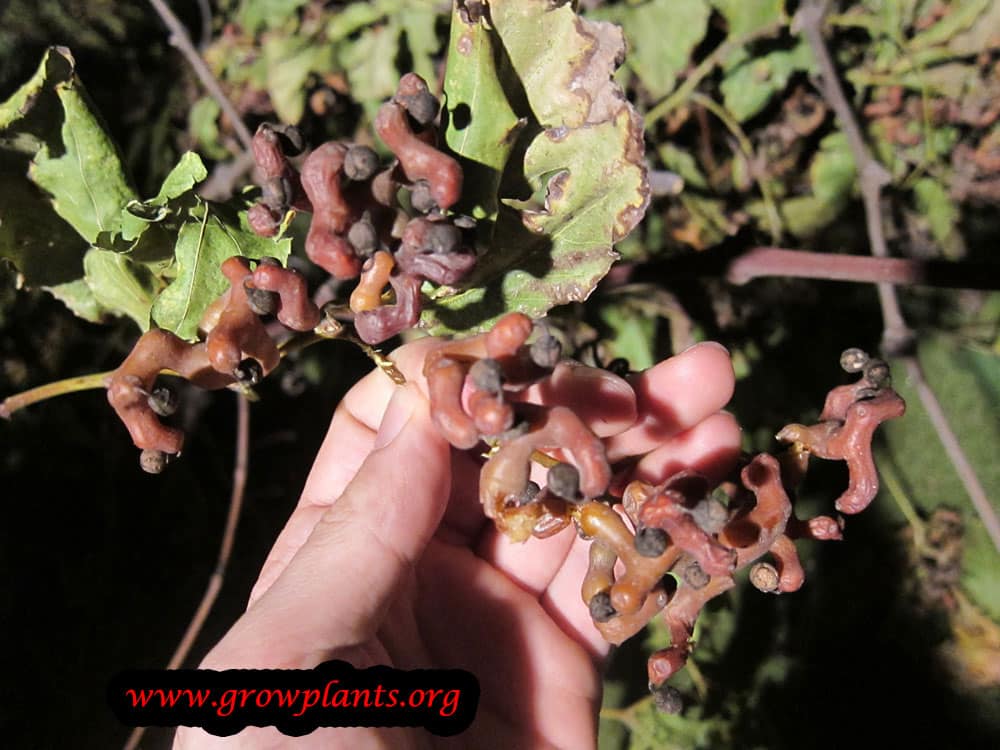
Note on which part is eaten: in Hovenia dulcis the sweet, edible part is the swollen, twisted fleshy stalk (peduncle) that the small dry fruit capsules sit on – not the hard capsule or its seeds, which are not eaten. The fleshy stalks are eaten fresh, raisin–like, or cooked into cakes and juice.
Quick Edible Specs
| Edible Parts | Fruit stalk / peduncle (the fleshy, swollen stem below the fruit capsule) |
|---|---|
| Main Use(s) | Culinary – fresh eating, cakes, juice |
| Eaten Raw or Cooked | Raw; also cooked into cakes and juice |
| Preparation Required | Remove the dry, non–edible seed capsules from the fleshy stalk before eating |
| Harvest Season | Autumn |
| Time to First Harvest | A slow tree to reach bearing size (see Propagation) |
| Storage | Dries somewhat like a raisin and keeps reasonably once dried |
| Safety/Toxicity Caveat | Only the fleshy stalk is eaten – the hard seed capsules and the seeds themselves are not eaten |
Fruit
What looks like the “fruit” is actually a small, dry, brown, pea–sized capsule holding the seeds, attached to a swollen, contorted, fleshy stalk. It is this stalk – not the capsule – that turns sweet and edible as it matures, with a flavour often compared to raisins, dates, or carob. Once the stalks have browned and sweetened in autumn, they are picked (with the attached dry capsules) and the capsules are removed before eating.
Harvesting
Harvest in autumn once the fleshy stalks have browned, sweetened, and started to shrivel slightly, which is the cue that they are ready; birds and aphids will also go after the ripe stalks, so picking promptly once ready helps secure the crop.
Preparation, Uses & Safety
After picking, the dry seed capsules are removed from the fleshy stalks, which are then eaten fresh out of hand, baked into cakes, or pressed for juice. The capsules and seeds themselves are not eaten.
Pests, Diseases & Troubleshooting
Overview: The Japanese raisin tree is a hardy Rhamnaceae tree that is generally trouble-free; documented, species-specific pest and disease pressure is light, so this profile is drawn at the family and general ornamental-tree level and should be verified locally. Its main real-world risks are occasional sap-sucking insects and, more seriously, root and collar rot where soil stays wet.
Quick Troubleshooting Overview
| Issue / Pest | Main Symptom | Primary Solution |
|---|---|---|
| Scale insects | Bumps on twigs and branches with honeydew and sooty mould | Horticultural oil, prune affected wood |
| Aphids | Colonies on new shoots, sticky honeydew, curled leaves | Insecticidal soap, encourage predators |
| Leaf-chewing beetles | Skeletonised or holed leaves in summer | Hand-pick, tolerate light damage on a vigorous tree |
| Root / collar rot | Dieback, thin canopy and poor vigour in wet soil | Improve drainage, avoid waterlogging and trunk injury |
| Leaf spot | Fungal spots and blotches in wet seasons | Rake up litter, improve airflow |
| Waterlogging stress | Yellowing and dieback in heavy, wet ground | Plant in well-drained soil, mulch, water evenly |
Common Pests & Management
- Scale insects (Coccidae / Diaspididae):
- Symptoms: Brown, tan or greyish bumps fixed to twigs and branches, feeding on sap; soft scale exudes honeydew that leaves foliage sticky and blackened with sooty mould, and heavy infestations cause dieback of small branches.
- Prevention & Control: Prune out and destroy badly encrusted wood, spray dormant or horticultural oil to smother crawlers, and encourage parasitic wasps and ladybirds; healthy, unstressed trees rarely suffer serious damage.
- Aphids (various species):
- Symptoms: Clusters of soft insects on new shoots and leaf undersides in spring, curling growth and producing honeydew and sooty mould.
- Prevention & Control: Tolerate light infestations, which predators usually control; blast off or treat hotspots with insecticidal soap, and avoid heavy nitrogen feeding that drives soft growth.
- Leaf-chewing beetles (incl. Japanese beetle) (Popillia japonica and allies):
- Symptoms: Adults chew holes in or skeletonise the leaves in warm weather, sometimes in aggregations, where these beetles occur.
- Prevention & Control: Hand-pick or knock beetles into soapy water in the cool morning, keep pheromone traps well away from the tree, and rely on the tree’s vigour to outgrow moderate feeding.
- Wood borers (various (opportunistic)):
- Symptoms: Boring larvae may tunnel the trunk or branches of trees already stressed by drought, injury or waterlogging, causing dieback and weakened limbs.
- Prevention & Control: Keep the tree healthy and well watered, avoid bark wounds from mowers and trimmers, prune out and destroy infested wood, and address the underlying stress that invites borers.
Diseases & Fungal Issues
- Root & collar rot (Phytophthora spp. / Armillaria):
- Symptoms: Decline, sparse yellowing canopy and branch dieback caused by root and crown rots in poorly drained, waterlogged soil; the tree may fail slowly or, with Armillaria, show fungal growth beneath the bark at the base.
- Treatment & Management: Prevention is key – plant in well-drained soil, keep the root collar unmulched and free of standing water, and avoid trunk and root injury; there is no easy cure once established, so improve drainage and remove severely affected trees.
- Fungal leaf spot / anthracnose (various fungi):
- Symptoms: Brown or dark spots and blotches on the leaves, sometimes with premature leaf fall, in wet seasons and crowded, shaded canopies.
- Treatment & Management: Rake up and destroy fallen leaves, improve airflow with sensible pruning, and avoid overhead wetting; the damage is usually cosmetic and rarely needs fungicide on an established tree.
- Powdery mildew (Erysiphales):
- Symptoms: Occasional white powdery growth on leaves in humid, still conditions, mostly cosmetic.
- Treatment & Management: Improve airflow and light; remove badly affected growth, and treat valued young trees with sulfur only if it recurs.
- Sooty mould (Capnodium spp.):
- Symptoms: A black film over honeydew from scale or aphids, blocking light rather than infecting the tree.
- Treatment & Management: Control the sap-sucking pests producing the honeydew; the mould weathers away once the source is gone.
Growing Difficulties & Abiotic Problems
- Waterlogging & root stress:
- Cause & Symptoms: Yellowing leaves, poor growth and dieback where the tree sits in heavy, wet, poorly drained soil, which also predisposes it to root rot.
- Correction Strategy: Plant in deep, well-drained soil, improve heavy ground with organic matter, and avoid low, waterlogged spots; water young trees evenly rather than keeping them sodden.
- Transplant & drought stress:
- Cause & Symptoms: Wilting, leaf scorch and dieback on newly planted or drought-stressed trees with limited root systems.
- Correction Strategy: Water deeply and mulch during establishment and dry spells, and avoid root disturbance; a well-established raisin tree is quite drought-tolerant.
- Frost damage to young growth:
- Cause & Symptoms: Blackened soft new shoots after late frosts on young trees.
- Correction Strategy: Site away from frost pockets, avoid late feeding that pushes tender growth, and protect young trees in hard-frost areas.
- Chlorosis in alkaline soil:
- Cause & Symptoms: Interveinal yellowing of leaves in very high-pH soils from iron or manganese lock-out.
- Correction Strategy: Improve soil with organic matter, and apply chelated iron or micronutrients where alkaline soils cause persistent yellowing.
- Self-seeding / invasiveness:
- Cause & Symptoms: The tree can seed freely and naturalise, becoming weedy in some warm-temperate regions.
- Correction Strategy: Remove unwanted seedlings and manage seed spread where the species is known to naturalise locally.
What Helps – Products & Tools
Management is light-touch: horticultural or dormant oil and insecticidal soap for scale and aphids, hand-picking for beetles, and – most importantly – good drainage and even watering to prevent the root and collar rot that is the tree’s main real threat. A copper fungicide and leaf-litter clean-up handle occasional leaf spot; verify local pest pressures, as species-specific data is limited.