Plant Profile & Key Characteristics
Also known as: Chocolate sapote tree, Chocolate Pudding fruit, Black persimmon
Overview: Large evergreen tropical tree reaching 10-25 m with dark, glossy foliage. Grown for its ‘chocolate pudding’ edible fruit (eaten only when fully soft-ripe) and as a handsome ornamental shade tree.
Quick Specifications
| Specification | Attribute |
|---|---|
| Plant Type / Life Cycle | Perennial (evergreen tree) |
| Foliage Type | Evergreen |
| Mature Size | 10-25 m tall (30-75 ft) |
| Growth Rate | Moderate (faster once established) |
| Toxicity | Ripe fruit edible; unripe fruit is astringent and toxic |
| Hardiness | USDA zone 10b+ |
Growth Form & Structure
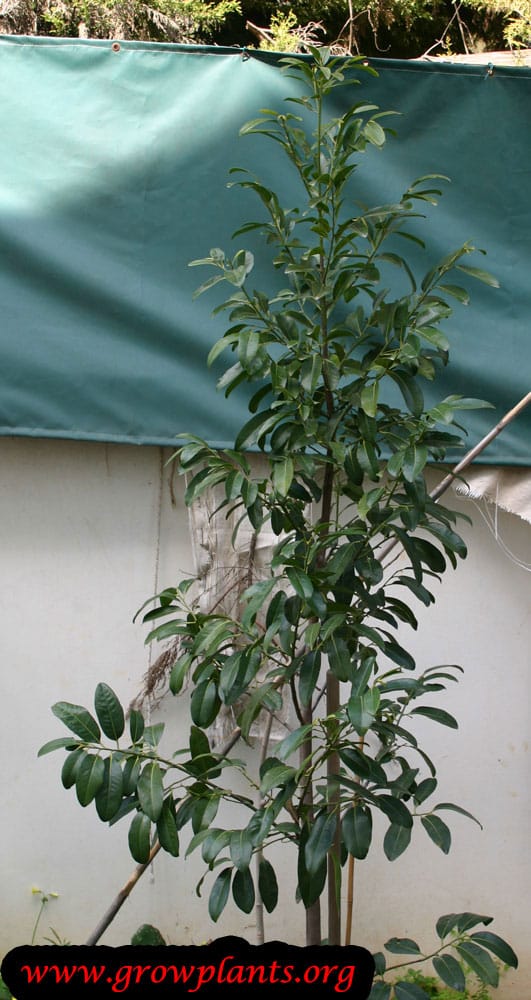
- Height & Spread: A large tree, 10-25 m (30-75 ft) tall; not suited to container growing.
- Growth Habit & Form: Evergreen tree with a dense, rounded canopy; can shoot up fast and may need height-reduction while young.
- Lifespan & Maturity: Long-lived; bears fruit about 4-6 years from planting, often needing a second cultivar for good fruit set.
Anatomy & Physical Features
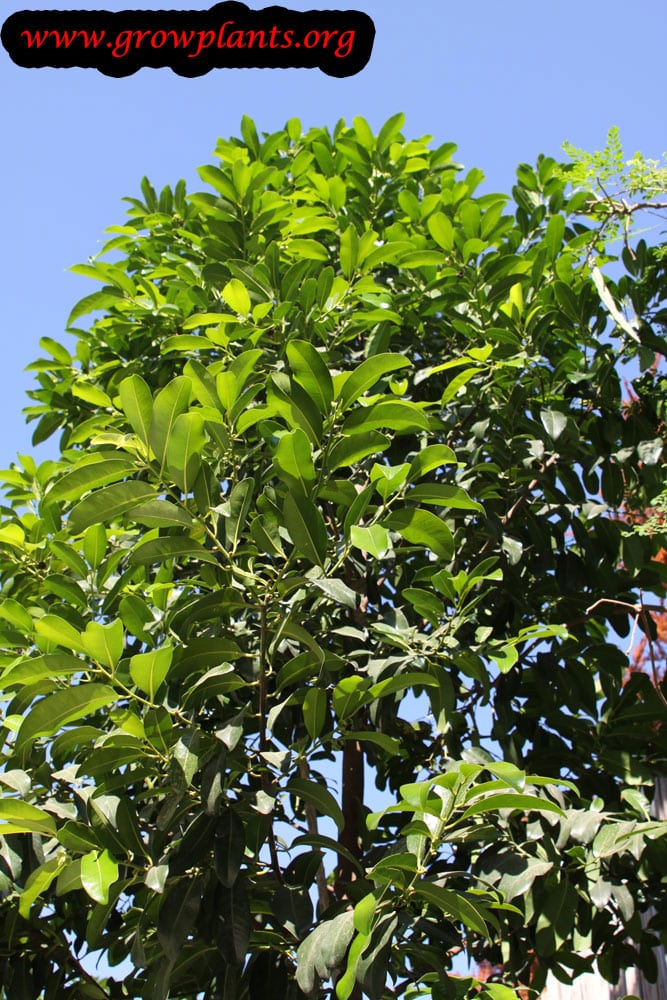
- Leaves & Foliage: Dark, glossy green, elliptic leaves.
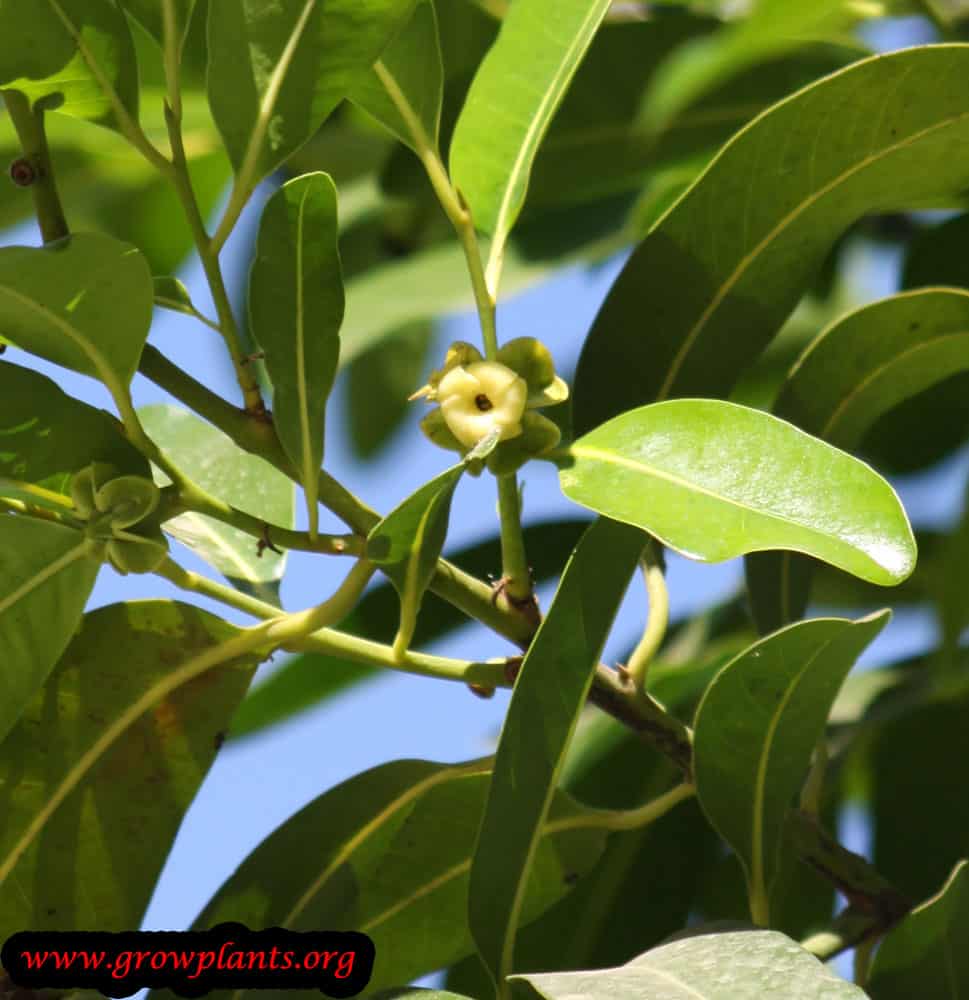
- Flower Characteristics: Small green flowers with green petals; pollinated by bees and wasps.
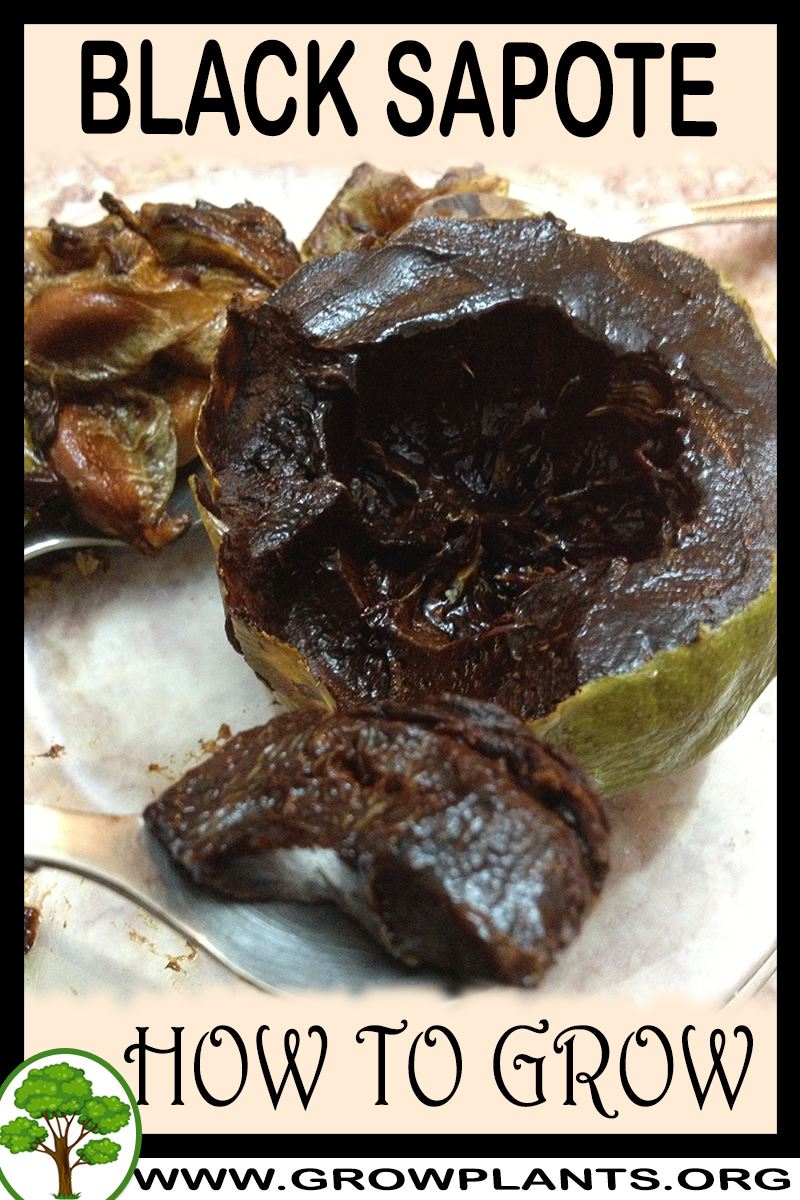
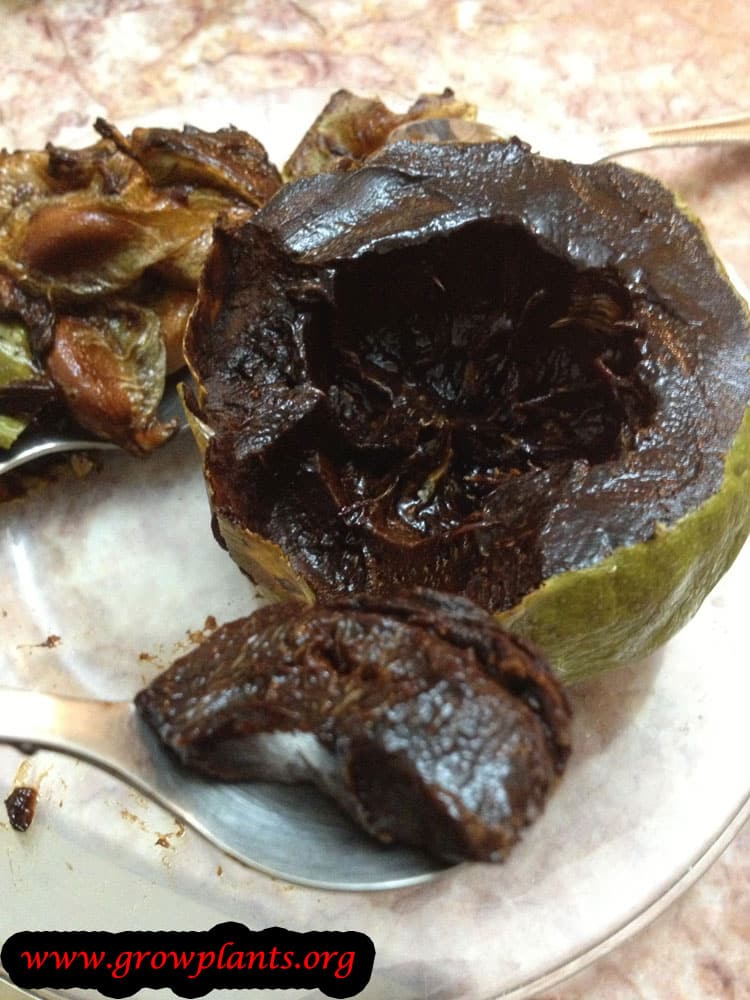
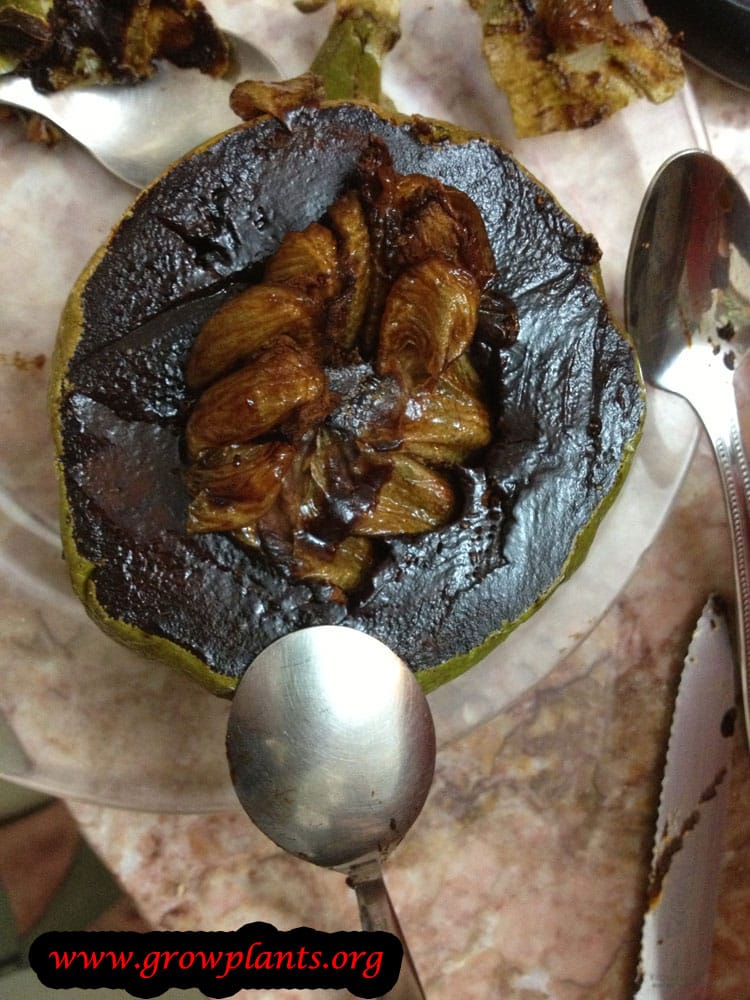
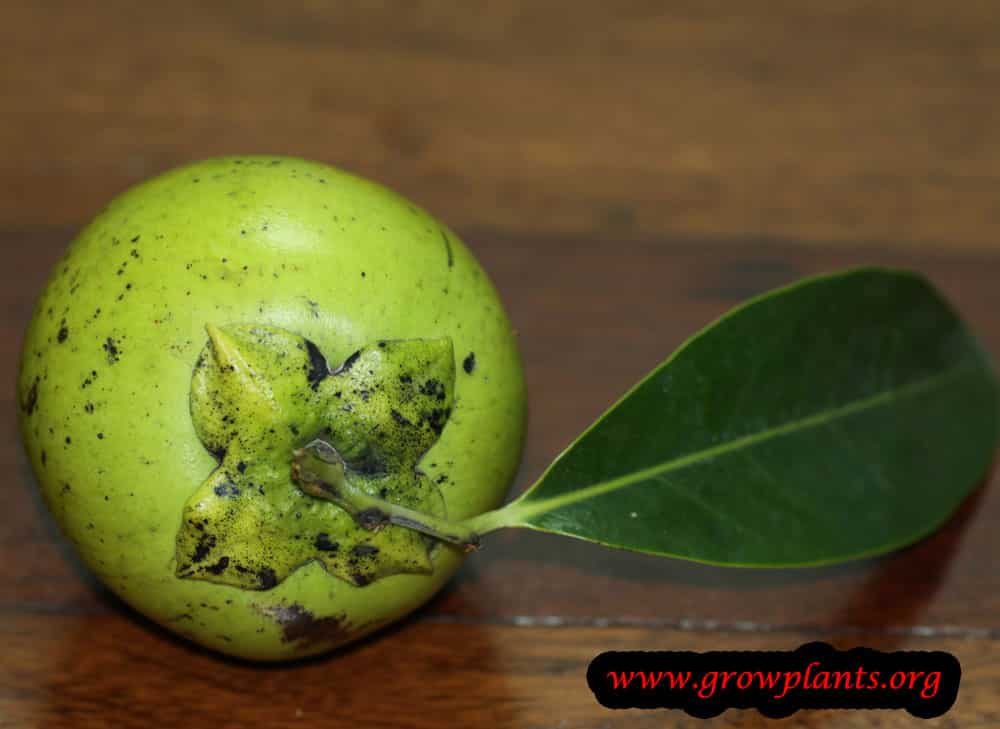
- Fruit Profile: Round, green-skinned fruit turning olive-black, with soft dark-brown flesh and a chocolate-pudding flavour when fully ripe.
Primary Uses & Landscape Value
- Edible Uses: Ripe pulp eaten fresh (often chilled or frozen), in ice cream and desserts.
- Functional & Ornamental Roles: Fruit tree and ornamental evergreen shade tree.
Care Guide: Planting, Soil & Watering
Overview: Black sapote (Diospyros nigra) is a tropical fruit tree that grows best in full sun in rich, well-draining soil with steady moisture. It appreciates regular, moderate-to-generous watering and is happiest in a warm, frost-free spot.
Quick Care Requirements
| Requirement | Ideal Condition |
|---|---|
| Planting Season | Spring to summer in zones 10b–11a; spring to autumn in zone 11b; year-round in zone 12 |
| Growth Rate | Moderate (faster once established) |
| Soil Type | Rich, well-draining soil |
| Water Need | Moderate to high — keep evenly moist with good drainage |
Planting & Establishment
- Best Planting Season: Time planting to the warm season by zone: spring to summer in zones 10b–11a, spring to autumn in zone 11b, and year-round in zone 12.
- How to Plant:
- Hole Preparation: Dig a hole wider than the root ball in a sunny position so the roots can spread into loosened soil.
- Soil Amendments: Mix plenty of compost and organic matter into the planting area to build the rich soil this tree favours.
- Planting Depth: Set the tree with the top of the root ball level with the surrounding soil, keeping the trunk base and any graft union above the soil line.
- Growth Speed & Expectations: Grows at a moderate pace at first, then noticeably faster once established; note that a single tree may not fruit well, so more than one cultivar is often needed.
Soil, Watering & Drainage Care
- Soil Mix & Drainage Needs: Provide rich, deep, well-draining soil; this large tree is not suited to containers, so choose an open ground position where excess water drains freely and roots have room to spread.
- Watering Schedule & Technique:
- Young / Newly Planted: Water regularly to keep the soil evenly moist while the young tree establishes.
- Established: Give the established tree deep, regular watering — moderate to generous — keeping the soil consistently moist through the warm season.
- Seasonal Adjustments: Water more in hot, dry weather and reduce it during cooler, wetter periods.
Climate, Light & Hardiness
Black sapote is a tropical, mediterranean, and subtropical fruit tree needing warm, essentially frost-free conditions. It grows best in full sun and is only suited to the mildest winter climates.
Quick Climate Specifications
| Climate Zones | Tropical, Mediterranean, subtropical |
|---|---|
| USDA Hardiness Zones | Approximately 10b and warmer |
| Frost Tolerance | Low |
| Light Conditions | Full Sun |
Sunlight & Light Exposure
Optimal Light Setup
Full sun is required for healthy growth and fruiting.
Temperature Extremes & Hardiness
USDA Hardiness & Regional Limits
Grown outdoors in roughly USDA zone 10b and warmer; this tropical tree needs a largely frost-free climate to thrive.
Frost Sensitivity
As with many tropical fruit trees, cold tolerance varies by cultivar, plant age, and exposure duration; young trees are typically more cold-sensitive than established specimens.
Growing in Pots, Balconies & Indoors
Black sapote is a large tree, 10-25 m (30-75 ft), and the grower says it is neither a houseplant nor a long-term container plant. A young tree can spend a few years in a big pot, but it really belongs in the ground.
Quick Details
- Container Size: Not suited to long-term pots; a large pot only while young
- Indoor Suitability: Not a houseplant and not a container tree – too large
- Best Spot: Full sun
- Soil & Drainage: Aerated, organic-rich mix that drains freely
- Watering in Pots: Keep the mix consistently moist and water freely in warm weather – pots dry fast; make sure drainage is sharp so roots never sit wet.
Indoors & On the Windowsill
- Houseplant limits: No – far too big and light-hungry to grow indoors.
- Windowsill growing: Not possible; this is a full-sized fruit tree.
- Overwintering: In cold areas a young potted tree can be sheltered frost-free over winter, but it will soon outgrow any pot.
On a Balcony or Patio
- Only while young: A young tree can stand on a patio in a large pot for a season or two; plan to plant it out, as it will not stay small.
Choosing the Pot, Soil & Long-Term Care
- Pot & drainage: A deep pot with strong drainage holes; skip a standing-water saucer to avoid root rot. Terracotta breathes and dries faster, while glazed or plastic hold moisture longer.
- Potting mix: Well-aerated, organic-rich mix – peat or coir with perlite and a little organic matter; it must drain freely.
- Feeding: Potted plants use up their food faster because nutrients leach out with each watering, so feed a little more often than plants in open ground.
- Moving on: Refresh part of the mix and pot up every couple of years; for established plants, lightly prune the root ball and top growth when you repot. This tree will outgrow container life within a few years.
Fertilizing & Feeding
Black sapote is a slow-to-establish tropical fruit tree that grows faster once settled in; steady balanced feeding while young supports that establishment, tapering to lighter, potassium-leaning feeding as the tree matures and bears fruit.
Quick Fertilizing Specs
| Feeding Level | Moderate |
|---|---|
| young_feeding | Steady, balanced feeding through the growing season while the tree establishes and builds its framework. |
| mature_feeding | Lighter feeding, leaning to potassium as fruit develops. |
| Main Nutrient Priority | Balanced nutrition while young; potassium emphasis as the tree matures and fruits. |
| Best Feeding Period | Through the warm growing season. |
| Organic Options | Compost, aged manure and mulch worked around the root zone. |
| Reduce/Stop Feeding | Ease off feeding as the tree matures and after fruit harvest. |
Feeding by Growth Stage
Newly planted
Help a newly planted Black sapote establish roots in warm, well-drained soil.
| Nutrient direction | Go easy at planting; rely on organic matter and a light balanced feed once new growth begins. |
|---|---|
| Timing | At and just after planting. |
| Frequency | Minimal feeding at first; let the roots establish before feeding more. |
| Fertilizer types | Organic matter or compost mixed into the planting area, A light balanced complete fertilizer once new growth begins |
| Precautions | Avoid strong fertilizer against fresh roots, which can scorch them. |
Young, pre-bearing tree
Build a strong trunk and branch framework while the tree grows slowly at first, before speeding up once established.
| Nutrient direction | Balanced feeding with a nitrogen lean to support steady leafy growth during this slower establishment period. |
|---|---|
| Timing | Through the active growing season while the tree is young. |
| Frequency | Light, regular feeding across the growing season. |
| Fertilizer types | A balanced fruit-tree fertilizer with a nitrogen lean, Compost or other organic matter |
| Precautions | Very lush, soft growth pushed by excess nitrogen can be more cold-sensitive; keep feeding moderate. |
Established tree approaching bearing
Keep the maturing tree in steady health as its growth speeds up and it approaches fruit production.
| Nutrient direction | A balanced complete fruit-tree fertilizer with the minor nutrients such a blend usually supplies. |
|---|---|
| Timing | During the active growing season. |
| Frequency | Steady, moderate feeding through the season. |
| Fertilizer types | A balanced complete fruit-tree fertilizer, Compost or other organic matter |
| Routine trace nutrients | iron, manganese, zinc |
| Precautions | Watch for pale new leaves, which can signal a micronutrient shortage such as iron. |
Mature, fruit-bearing tree
Support flowering and fruit development, keeping in mind that some plantings need a second tree or compatible cultivar nearby for reliable fruit set.
| Nutrient direction | A balanced fertilizer leaning toward potassium as fruit develops; a settled mature tree needs only light feeding. |
|---|---|
| Timing | From before flowering through fruit development. |
| Frequency | Light, well-timed feeding around the fruiting period. |
| Fertilizer types | A balanced complete fertilizer with adequate potassium, Compost or other organic matter |
| Routine trace nutrients | iron, manganese, zinc |
| Precautions | Excess nitrogen at this stage favors leafy growth over fruit; keep feeding light and balanced. |
Nutrient Deficiency Signs & Corrections
New leaves are pale or yellow between green veins while the veins themselves stay green.
| Possible causes | High (alkaline) soil pH locking up iron, Waterlogged or cold soil reducing root uptake, A genuine iron shortage in the soil |
|---|---|
| Appears first on | Youngest leaves at the shoot tips. |
| What to check | Soil pH and whether the soil is alkaline, How well the soil drains and whether symptoms follow wet spells, Whether only new growth is affected |
| Possible correction | Correct soil pH where possible, improve drainage, and apply a chelated iron product per its label. |
The tree flowers but sets little to no fruit.
| Possible causes | Lack of a compatible second tree or cultivar nearby for pollination, Excess nitrogen favoring leaf growth over fruiting, Young tree age, since this species takes some years to begin bearing |
|---|---|
| Appears first on | Overall fruit set across the canopy. |
| What to check | Whether a second compatible tree is nearby, Recent nitrogen-heavy feeding, Tree age and maturity |
| Possible correction | Confirm pollination needs are met, ease back on nitrogen, and be patient with a young tree that has not yet reached bearing age. |
Overall growth stays slow and stems stay thin well beyond the establishment period.
| Possible causes | General nutrient shortage in poor soil, Cold, wet, or compacted roots limiting uptake, Insufficient sun |
|---|---|
| Appears first on | New shoots across the tree. |
| What to check | Feeding history, Soil drainage and temperature, Sun exposure |
| Possible correction | Improve drainage and sun exposure, then apply a balanced fruit-tree fertilizer at a moderate rate. |
Pruning, Training & Seasonal Maintenance
Black sapote is a large, vigorous tropical evergreen tree that can reach 10–25 m unpruned, and it tolerates moderate structural pruning – especially while young. Juvenile growth is often tall and poorly branched, so the key intervention is heading back the leader while the tree is young to force a lower, sturdier branching framework and a manageable, harvestable canopy height, with the main structural work done in the autumn–winter rest period.
Quick Pruning & Maintenance Specs
| Pruning Tolerance | Moderate |
| Primary Pruning Window | Autumn–winter |
| Typical Frequency | More active in the early formative years, then occasional maintenance |
| Main Objective | Height control on a naturally tall tree, open manageable framework |
| Young Plant Priority | Head back the leader to stabilize the tree’s fast, leggy early growth and set scaffold height |
| Mature Plant Priority | Hold the established height ceiling, remove crossing/crowded limbs, watch for rootstock suckers on grafted trees |
| Best Tool Type | Loppers and pruning saw for structural cuts, pole pruner for height maintenance |
| Avoid Heavy Pruning During | Active flowering and young fruit set |
Pruning by Plant Age & Size
Newly Established
Minimal – remove only damage and allow the root system to establish.
Young / Formative
The central priority, grounded directly in the species’ growth habit, is heading back the leader/height to stabilize a fast, leggy young tree into a lower, sturdier framework rather than letting it run up unchecked.
Mature / Established
Maintain the height ceiling set when young, thin crowded or crossing limbs to let light into the canopy, and remove rootstock suckers below the graft union if the tree is grafted.
Seasonal Pruning Schedule
| Stage | Objective | Remove | Do Not Remove | Expected Response | Flowering/Fruiting Impact |
| Dormant/Autumn-Winter | Structural and height-control cuts | Excess height on young trees; crossing/crowded limbs | Well-placed lower scaffold branches | Cuts heal before the next flowering-fruiting cycle | Minimal if kept light-to-moderate |
| Post-Harvest | Cleanup after a harvest flush | Damaged wood, spent fruiting twigs | Healthy current-season wood | Cleaner canopy going into the next cycle | None |
Flowering & Fruiting Wood
As with other Diospyros species, black sapote fruits on the current season’s new growth that emerges from the previous year’s wood, so light-to-moderate annual pruning that stimulates fresh flushes actually supports the next crop. Very heavy pruning removes too much of the wood that would carry the next flush and further delays cropping – a real cost on a tree that already takes 4–6 years to begin bearing.
Structural Pruning & Training
Remove crossing or rubbing branches to keep an open, light-filled canopy for even fruiting. Height and spread control is the single biggest structural task given the species’ large potential size; canopy thinning helps light penetration for fruit set on a tree this size.
Special Growth to Remove
- Rootstock suckers below the graft union, since grafting is commonly used for reliable fruit set and quality.
- Watersprouts and overly vigorous upright shoots following any hard structural cut – thin to well-placed shoots rather than keeping them all.
Tools
Loppers and a pruning saw for the structural cuts a tree this size requires; a pole pruner to maintain the height ceiling on a mature tree without climbing; bypass secateurs for small twig and dead-wood cleanup.
Tool Hygiene & Disease Risk
Routine – known issues are aphids and worms, with no vascular disease flagged; clean, sharp tools are sufficient.
Cut Placement & Technique
Heading cuts on the young leader to set framework height; thinning cuts on mature crossing limbs, made just outside the branch collar; avoid flush cuts.
Heavy Pruning & Rejuvenation
Moderate rejuvenation is tolerated, especially while young, but heavy rejuvenation on a mature bearing tree costs a season or more of cropping since it removes the current fruiting-wood supply – spread any significant size reduction over more than one season on a mature tree.
Post-Pruning Care
After a height-reduction cut on a young tree, watch for sunburn on newly exposed bark and branches in full tropical sun; water normally. No automatic extra feeding after pruning.
Common Pruning Mistakes
- Letting a young tree run up tall and lanky without the recommended height-check.
- Heavy pruning a bearing tree and losing a season’s crop.
- Missing rootstock suckers on grafted trees.
When NOT to Prune
Avoid heavy structural cuts during active flowering and young fruit set, and avoid pruning right before or during any unusual cold snap at the cool edge of the tree’s zone 10b+ range.
Recommended Tools (by task)
- loppers – medium structural and crossing-limb cuts.
- pruning_saw – larger limbs on an established tree.
- pole_pruner – height maintenance on a tree that can reach 10–25 m.
- bypass_secateurs – small twig and dead-wood cleanup.
Pruning Troubleshooting
| Problem | Possible Cause | What to Check | Corrective Action |
| Tall, leggy, unstable young tree | Leader never headed back | Height-to-branching ratio | Head back the leader to force lower branching |
| Delayed or reduced fruiting after pruning | Pruning too heavy or too late, removing the flush that would fruit | Severity and timing of the last cut relative to flowering | Keep future cuts light-to-moderate, done in the autumn–winter window |
| Watersprouts after a hard cut | Heading cuts stimulate vigorous upright regrowth | Base of major cuts | Thin to a few well-placed shoots, remove the rest |
Propagation Guide
For fruiting quality, black sapote is best propagated by grafting a known, good-fruiting cultivar onto seedling rootstock, or by air layering; seed is easy to raise but produces trees of variable fruit quality and, since some trees need a different cultivar nearby to bear well, is less predictable for fruiting purposes. Overall propagation is Moderate, ranging from Easy by seed to more involved by grafting or air layering.
Quick Propagation Specs
| Best Propagation Method | Grafting onto seedling rootstock (for a known fruiting cultivar) |
| Alternative Methods | Seed (for rootstock or non-cultivar trees); air layering; stem cuttings |
| Propagation Difficulty | Moderate |
| Seed True-to-Type | Variable – seedling trees can differ in fruit quality, size and bearing habits; the site notes some trees need a different cultivar nearby to fruit well |
| Vegetative True-to-Type | Yes |
| Best Propagation Season | Spring to summer in hardiness zone 10b-11a, spring to autumn in zone 11b, all year in zone 12+ |
| Seed Germination Time | 3–8 weeks, but can be longer |
| Germination Temperature | 26–30°C (78–86°F) |
| Seed Sowing Depth | 2–4cm (1–1.7in) |
Growing from Seed
Seed Handling & Viability
Store seed in a dry, dark place at room temperature until sowing; as with many tropical fruit seed, germination tends to be more reliable when seed is not held for a long time.
Dormancy & Pre-Sowing Treatment
The site does not specify a pre-treatment; soaking seed for roughly 24 hours before sowing may aid water uptake and is a reasonable, low-risk step, though not confirmed as required.
Sowing Season
Spring to summer in hardiness zone 10b-11a, spring to autumn in zone 11b, and all year in zone 12+.
Sowing Depth & Orientation
Sow 2–4cm (1–1.7in) deep, ideally in a vermiculite-based mix.
Germination Conditions
Moist soil, high humidity and a sunny location, at 26–30°C (78–86°F); water an average to large amount and keep the medium from drying out.
Germination Time
3–8 weeks, but can take longer.
Seedling Care
Grow seedlings on in a sunny spot with organic-matter-rich soil. Sow each seed in its own pot; when moving seedlings on, allow about 50x50cm (20x20in) spacing before final transplant, with 4x5m (12x15ft) spacing if planting directly at the growing site.
Grafting & Budding
Why Grafting Is Used
Many black sapote trees will not bear well on their own and need a different cultivar nearby for good fruit set; grafting also secures fruit quality and size and, qualitatively, tends to bring a tree into production sooner than growing from seed.
Preferred Grafting Methods
Cleft or whip grafting onto vigorous seedling rootstock, similar to related Diospyros species, is commonly used.
Rootstock
Seedling black sapote is the typical rootstock choice.
Scion Selection
Take scion wood from a healthy, known, good-fruiting cultivar tree.
Best Grafting Season
During the plant’s active growing/planting window, spring to summer (extending to autumn or year-round in warmer zones as above).
Graft Aftercare
Protect the graft union from drying out, acclimate the grafted plant gradually, and remove any rootstock suckers that appear below the union.
Air & Ground Layering
Select a healthy, semi-mature branch and wound or girdle a small section of bark, then wrap it in moist rooting medium (such as sphagnum moss) sealed with plastic to hold humidity. Do this during the warm growing season. Rooting a woody tropical tree like this typically takes some months rather than weeks; once a good root mass has formed, sever the layer and pot it up, keeping it humid and shaded until it is established.
Bloom & Flower Guide
Quick Details
- Bloom Season: Mainly the warmer months – spring, and again autumn into winter in tropical areas
- Flower Appearance: Small green flowers with green petals
- Edibility: The flowers are small and insignificant and are not eaten
Detailed Blooming Overview
Black sapote is grown for its fruit, and its flowers are modest by comparison – small, green, and easy to overlook among the dark glossy leaves. Their structure hints at the fruit to come, and reliable pollination is what leads to a good crop later in the season.
Flower Characteristics
- Small, with green petals, the flower’s form resembling a miniature of the fruit’s calyx.
Bloom Care & Thinning
- Pollination: The flowers are worked by bees and wasps.
- Cross-pollination: More than one tree of different cultivars is sometimes needed for good flowering-to-fruit set.
- Light: Full sun gives the strongest flowering.
Fruit & Uses
Black sapote is grown for its round fruit, whose black, custard-like flesh has a flavour often compared to chocolate pudding and is eaten raw with a spoon once fully soft. The site’s own notes are explicit that the fruit is toxic while unripe, so it must be allowed to fully ripen – on the tree or afterward – before it is safe to eat.
Quick Edible Specs
| Edible Parts | Fruit (flesh only, once fully ripe) |
| Main Use(s) | Culinary – eaten fresh, frozen and eaten like a dessert, or made into ice cream |
| Eaten Raw or Cooked | Raw, once fully ripe (also commonly frozen before eating) |
| Preparation Required | Fully ripen before eating (on the tree, or off it using nearby ripening produce such as banana or potato, or by freezing); peel; deseed |
| Harvest Season | Spring / Summer / Winter, with the fruit then needing further ripening before use |
| Storage | Fruit can be ripened in a freezer and eaten after thawing |
| Safety/Toxicity Caveat | the site describes unripe fruit as toxic/poisonous – never eat fruit that has not fully ripened, and eat only the flesh, not the peel or seeds |
Fruit
The fruit is round with a green-black peel; inside, the fully ripe flesh turns black and soft with a texture and flavour often likened to chocolate pudding. Per the site’s own growing notes, this is very much a wait-for-ripeness fruit: unripe fruit is flagged as poisonous, so it should never be tasted until it has fully softened. Ripening can be left to happen naturally on or off the tree, sped up by placing the fruit alongside other ripening produce such as banana or potato, or achieved by freezing the fruit and letting it thaw. Once ready, only the soft black flesh is eaten – the peel and seeds are discarded, typically by spooning the flesh out like a pudding. Harvest is noted across spring, summer and winter depending on when fruit reaches maturity on the tree.
Preparation, Uses & Safety
Safety first: the site is explicit that black sapote fruit is toxic before it is fully ripe, so under-ripe, still-firm fruit should never be eaten – wait for the flesh to turn fully soft and black, or ripen it off the tree (alongside banana/potato, or by freezing and thawing) before use. Once properly ripe, the flesh is eaten raw with a spoon, frozen as a simple dessert, or blended into ice cream; only the flesh is used, with peel and seeds removed. Note that more than one tree/cultivar may be needed for reliable fruiting (see Propagation for grafting/pollination details) – that is a cropping note, not a safety one.
Pests, Diseases & Troubleshooting
Overview: Diospyros nigra (black sapote, ‘chocolate pudding fruit’) is a tropical evergreen relative of the persimmon whose main pests are fruit fly, mealybugs and scale, trunk borers and thrips, while its key diseases are anthracnose, leaf spots, crown gall and Botryosphaeria dieback. It is fairly trouble-free in a warm, frost-free, well-drained site; most problems come from fruit fly, wet-weather fruit and leaf diseases, and physiological fruit drop. Note: it is a tropical tree with little cold tolerance, and even a light frost damages the foliage while a hard freeze can kill young trees.
Quick Troubleshooting Overview
| Issue / Pest | Main Symptom | Primary Solution |
|---|---|---|
| Fruit fly | Stung, maggot-ridden, prematurely dropping fruit | Bait traps, bag fruit, sanitation of fallen fruit |
| Mealybugs / scale | Honeydew, sooty mould, encrusted twigs and fruit calyx | Prune, horticultural oil; control ants; conserve predators |
| Trunk / branch borers | Frass, gum and holes in trunk and limbs; dieback | Keep trees vigorous, protect bark; remove and destroy prunings |
| Anthracnose | Dark spots on leaves, shoots and fruit; fruit rot | Airflow, sanitation; copper fungicide in wet weather |
| Circular leaf spot | Round dark spots then heavy early leaf and fruit drop | Rake and destroy fallen leaves; timed protectant spray |
| Fruit drop | Young fruit yellow and drop; poor set | Even water and feeding; ensure pollination where needed |
Common Pests & Management
- Fruit fly (Bactrocera / Ceratitis spp.):
- Symptoms: Adult flies sting the ripening fruit to lay eggs, and the maggots tunnel the flesh, causing soft, discoloured, prematurely dropping and rotting fruit with tiny puncture marks; a major pest of persimmon and its relatives in warm climates.
- Prevention & Control: Practise strict sanitation by collecting and destroying all fallen and infested fruit, hang protein-bait or lure traps to monitor and mass-trap, and bag developing fruit where practical. Time any approved bait sprays to the flies’ activity and protect pollinators.
- Mealybugs and scale (Planococcus / Pseudaulacaspis pentagona / Coccus spp.):
- Symptoms: White cottony mealybugs and brown, white or waxy scale (including white peach scale) on twigs, leaf undersides and around the fruit calyx, with honeydew and black sooty mould, often tended by ants.
- Prevention & Control: Prune to open the canopy, wash and prune out colonies, and band trunks and control ants that farm and spread them. Horticultural or neem oil smothers scale and mealybug, and dormant oil helps; conserve ladybirds, lacewings and parasitic wasps.
- Trunk and branch borers (cerambycid / buprestid beetles):
- Symptoms: Larvae that tunnel under the bark and into the trunk and branches, leaving entry holes, frass and gumming, weakening and killing limbs and, in bad cases, whole trees, especially where the bark is stressed or wounded.
- Prevention & Control: Keep trees vigorous and well-watered to resist attack, avoid trunk wounds and sunburn that invite egg-laying, and paint or protect exposed bark. Cut out and destroy infested wood, probe or wire out grubs from holes, and remove badly affected limbs.
- Thrips (Frankliniella / Scirtothrips spp.):
- Symptoms: Silvery scarring, russeting and flecking on young leaves and on the fruit skin around the calyx, with distorted new growth, downgrading the appearance of the fruit though rarely threatening the tree.
- Prevention & Control: Monitor with sticky traps, keep the orchard floor weed-free, and tolerate light cosmetic damage. Spinosad or a suitable product controls heavy pressure at the susceptible fruit stage, applied to protect pollinators.
- Aphids (Aphis / Myzus spp.):
- Symptoms: Colonies on the soft new flush and shoot tips, causing curling, distortion and sticky honeydew that leads to sooty mould, mainly a problem on young trees and vigorous new growth.
- Prevention & Control: Hose off and conserve the many natural predators, which usually keep aphids in check on established trees. Insecticidal soap or neem clears heavy colonies on young trees; avoid broad-spectrum sprays that flare up scale and mites.
Diseases & Fungal Issues
- Persimmon anthracnose (Colletotrichum gloeosporioides / C. horii):
- Symptoms: Dark brown to black sunken spots and blights on leaves, shoots and fruit, with shoot-tip dieback and sunken, rotting lesions on the fruit that spread in storage; worst in warm, wet, humid weather.
- Treatment & Management: Prune for airflow, remove and destroy infected shoots, leaves and mummified fruit, and avoid overhead irrigation. Protect new growth and developing fruit with a copper or suitable fungicide in wet seasons, and handle fruit carefully to limit post-harvest rots.
- Circular leaf spot (Mycosphaerella nawae / Cercospora kaki):
- Symptoms: Round, dark, sharply defined spots on the leaves that develop from midseason, causing yellowing, early and heavy leaf drop, and in turn premature fruit drop and poor fruit maturity; a distinctive and damaging persimmon disease.
- Treatment & Management: Rake up and destroy fallen leaves, which carry the fungus over to the next season, and prune for airflow. Apply a protectant fungicide at the susceptible period timed to local guidance, and remove nearby unmanaged host trees that act as sources.
- Crown gall (Agrobacterium tumefaciens):
- Symptoms: Rough, woody, tumour-like galls at the crown, on the roots and sometimes on the lower trunk, entering through wounds and, when severe, girdling and weakening young trees so they grow poorly.
- Treatment & Management: Avoid wounding the crown and roots, plant clean, gall-free nursery stock, and disinfect pruning and grafting tools. Remove and destroy badly galled young trees; there is no cure, so prevention through clean stock and careful handling is essential.
- Cercospora leaf spot and Botryosphaeria dieback (Cercospora / Botryosphaeria spp.):
- Symptoms: Angular or rounded leaf spots and premature leaf drop (Cercospora), and branch cankers, dieback and wood staining (Botryosphaeria), the latter entering through wounds and sunburnt or stressed bark.
- Treatment & Management: Maintain tree vigour and even watering, prune out and destroy cankered and dead wood in dry weather, and protect the bark from sunburn. Rake up fallen leaves and, under heavy pressure, apply a protectant fungicide to the foliage; seal or avoid large wounds.
Growing Difficulties & Abiotic Problems
- Physiological fruit drop and poor set:
- Cause & Symptoms: Young fruit that yellows and drops in waves, and poor set, from heat and drought stress, over-cropping, erratic water or nutrition, and, in some cultivars, from pollination requirements not being met.
- Correction Strategy: Keep soil moisture and feeding even, especially through fruit set and sizing, mulch to buffer swings, and avoid excess nitrogen that favours a heavy drop. Where the cultivar needs a pollinator, ensure one is present; thin very heavy sets to steady cropping.
- Alternate (biennial) bearing:
- Cause & Symptoms: A heavy crop one year followed by a light or missed crop the next, an inherent persimmon tendency worsened by over-cropping, stress and poor nutrition in the ‘on’ year.
- Correction Strategy: Thin fruit in heavy years to reduce the load, feed and water consistently, and prune to maintain steady new growth. Evening out the crop from year to year keeps the tree in reliable bearing.
- Sunburn on fruit and bark:
- Cause & Symptoms: Bleached, scalded patches on exposed fruit and on the trunk and main limbs, especially after summer pruning or defoliation opens the canopy, and the damaged bark then invites borers and canker fungi.
- Correction Strategy: Maintain enough canopy to shade the fruit and limbs, avoid heavy summer pruning that suddenly exposes bark, and paint exposed trunks with white tree paint or wrap them in intense-sun climates. Keep trees well-watered to reduce heat stress.
- Cold and frost sensitivity (tropical):
- Cause & Symptoms: it is a tropical tree with little cold tolerance, and even a light frost damages the foliage while a hard freeze can kill young trees.
- Correction Strategy: Match the site to the tree’s cold tolerance, use frost protection for young trees, and plant in a warm, sheltered spot out of cold hollows; remove frost-damaged wood only after the danger has passed.
What Helps — Products & Tools
For persimmon and its relatives the useful kit is protein-bait and lure fruit-fly traps plus fruit bagging and sanitation, horticultural and dormant oil (with ant control) for scale and mealybug, and spinosad for heavy thrips. On the disease side, canopy airflow, leaf-litter sanitation and a copper or protectant fungicide manage anthracnose and circular leaf spot, clean stock and careful handling prevent crown gall, and vigorous, sun-protected bark resists borers and Botryosphaeria dieback. Even water and feeding curb fruit drop. The source pest names are unreliable and were not used.