Plant Profile & Key Characteristics
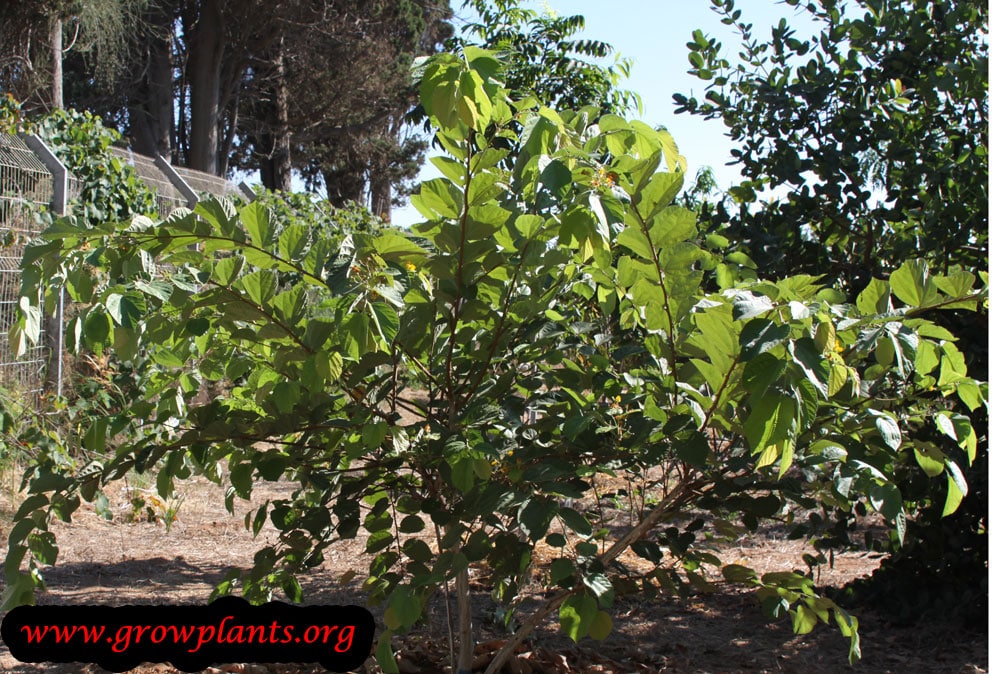
Overview: A vigorous perennial shrub or small tree (Grewia asiatica, phalsa) reaching 3-7 m, evergreen to deciduous depending on climate. Grown mainly for its small, sweet-sour, blueberry-like edible berries and also as an ornamental in subtropical to Mediterranean gardens.
Quick Specifications
| Specification | Attribute |
|---|---|
| Plant Type / Life Cycle | Perennial (woody shrub or small tree) |
| Foliage Type | Evergreen to deciduous (climate-dependent) |
| Mature Size | 3-7 m tall (10-21 ft) |
| Growth Rate | Moderate to fast |
| Toxicity | Non-toxic / fruit edible |
| Hardiness | USDA zone 10+ |
Growth Form & Structure
- Height & Spread: 3-7 m in the ground; stays more compact and manageable when container-grown, which the source notes suits it well.
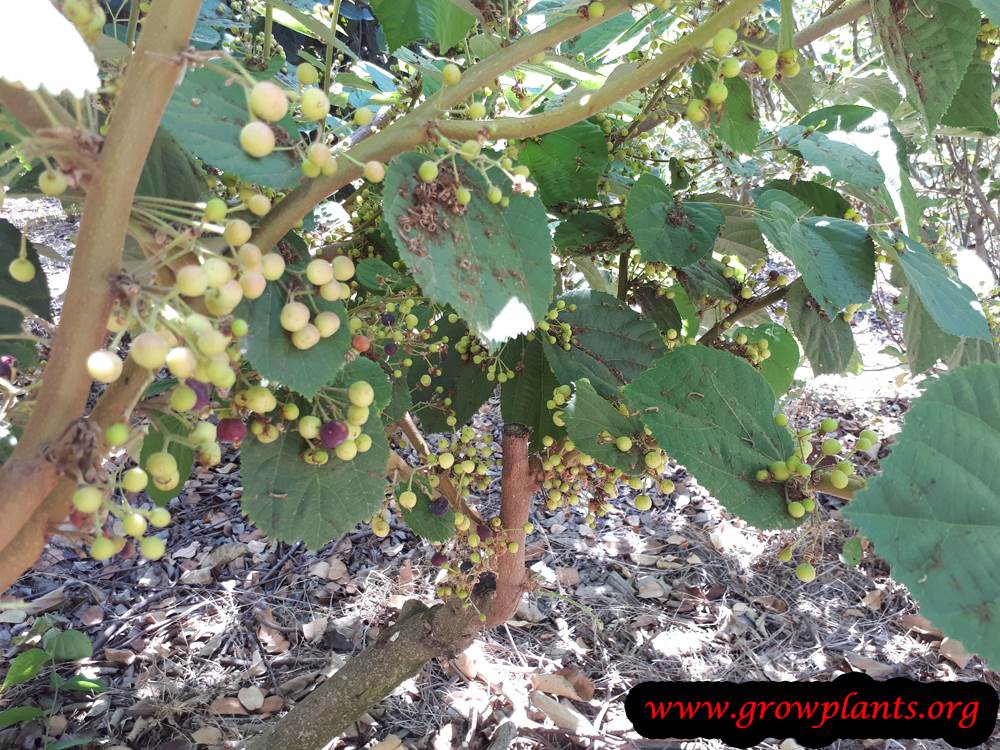
- Growth Habit & Form: Multi-stemmed shrub, or trainable to a small single-trunk tree; pruned open so the fruit stays accessible.
- Lifespan & Maturity: Fast to establish and begins bearing fruit in about 2-3 years.
Anatomy & Physical Features
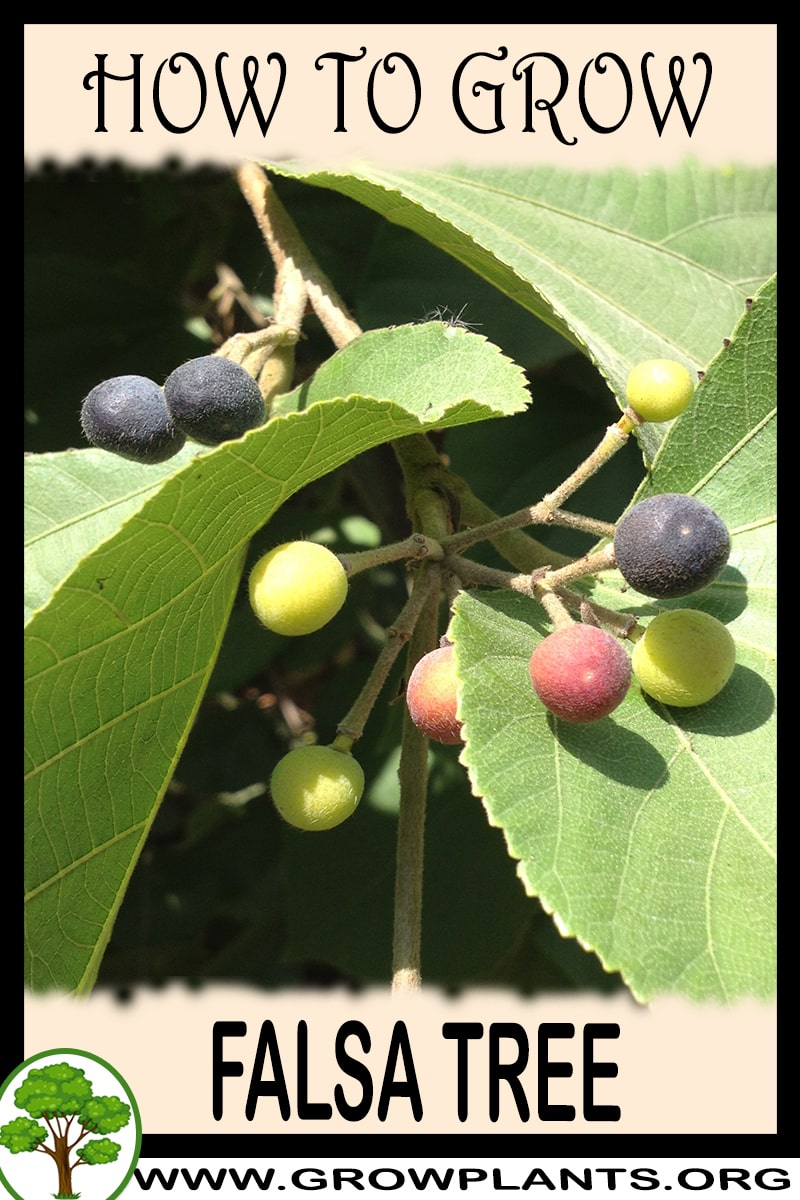
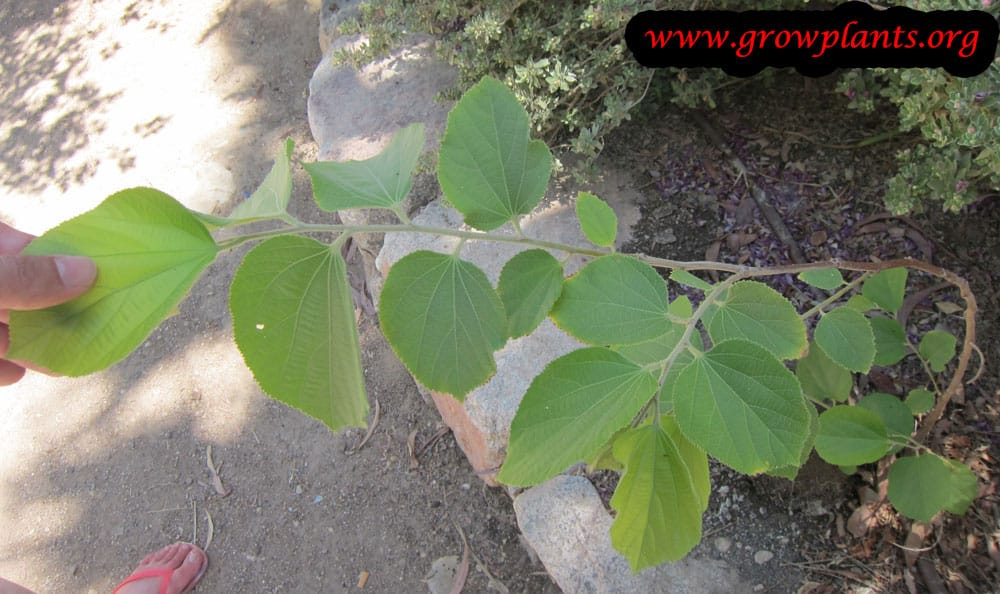
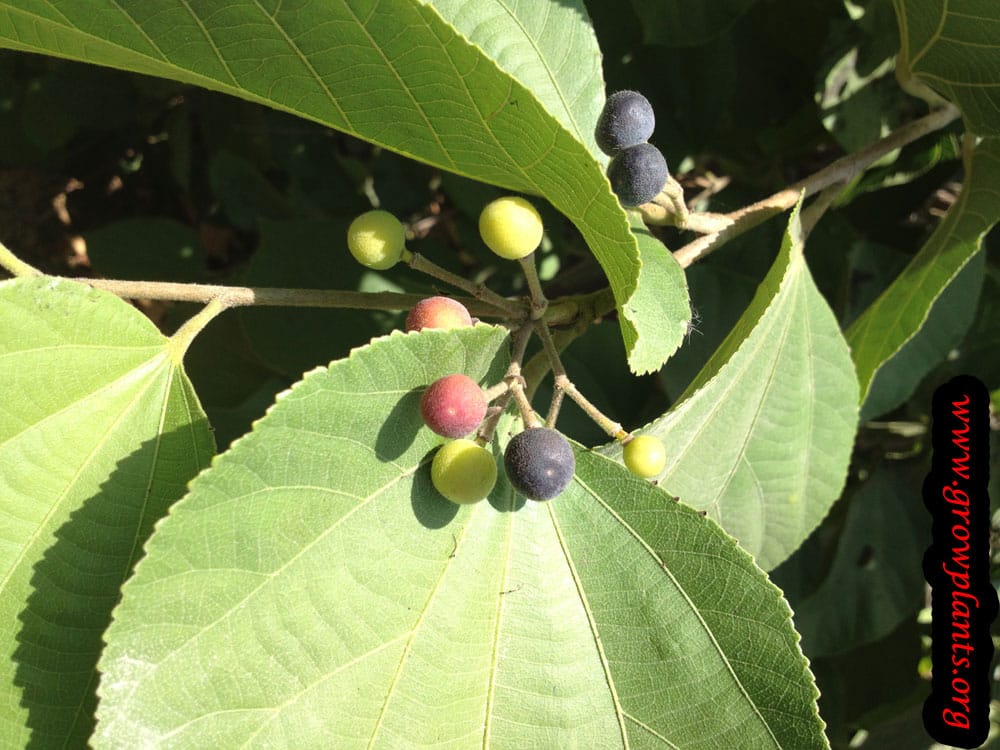
- Leaves & Foliage: Green, orbicular (rounded) leaves.
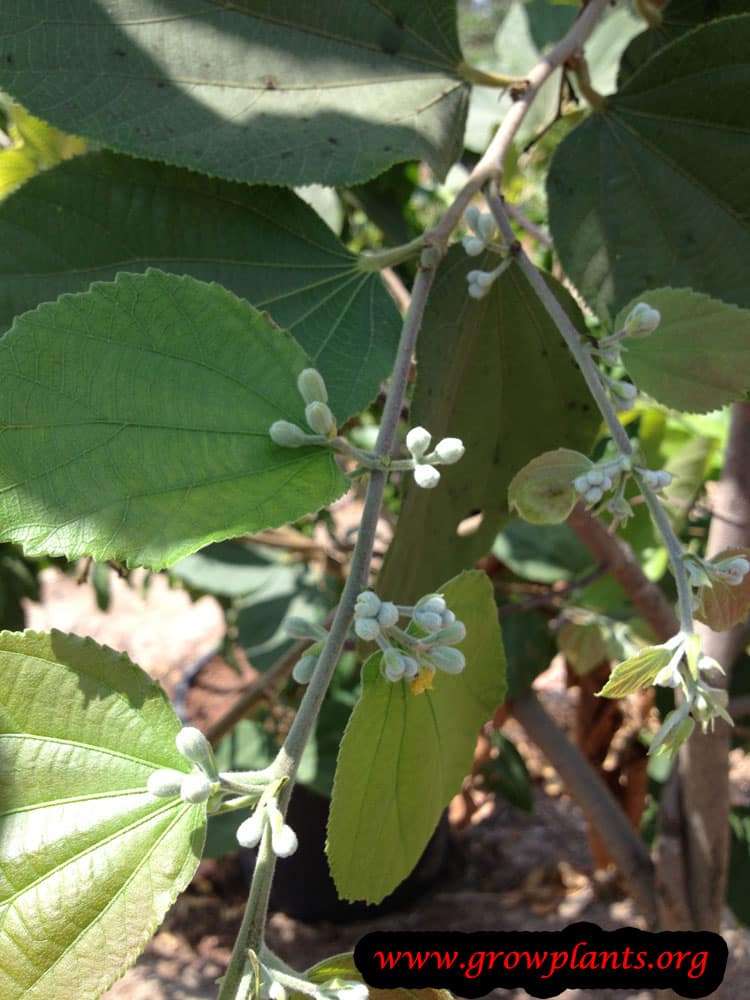
- Flower Characteristics: Small yellow to orange or red-orange flowers borne in clusters; bee-pollinated.
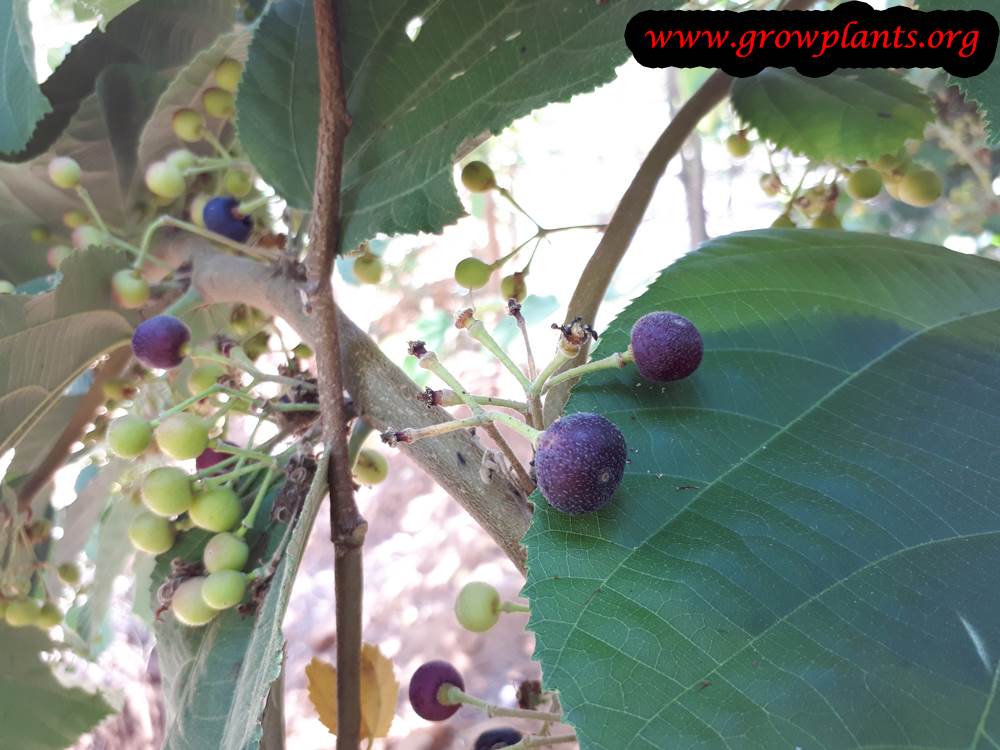
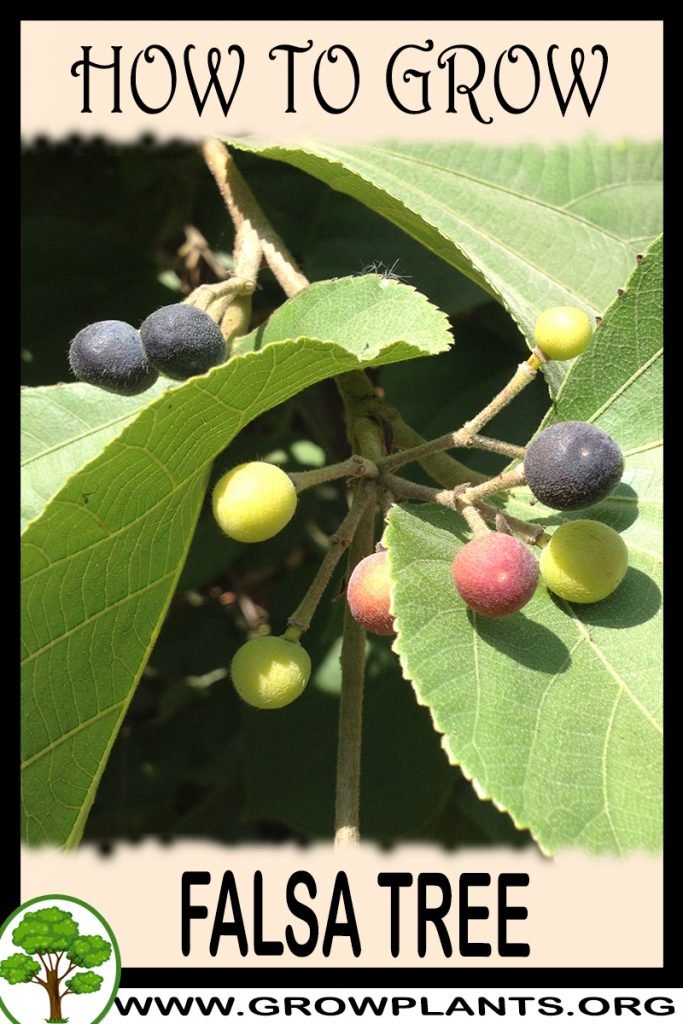
- Fruit Profile: Small round berry-like drupe, purple to black with a hairy skin and a large seed; sweet-sour, reminiscent of blueberry.
Primary Uses & Landscape Value
- Edible Uses: Eaten fresh; also made into juice, sherbet/ice-pops and jams.
- Functional & Ornamental Roles: Backyard fruiting shrub, also grown ornamentally; well suited to large containers.
Care Guide: Planting, Soil & Watering
Overview: Falsa (Grewia asiatica) is a fast-growing, sun-loving shrub or small tree that likes rich, well-draining, slightly acidic soil. It is adaptable about water — fairly drought tolerant once established, though regular moisture supports better growth and fruiting.
Quick Care Requirements
| Requirement | Ideal Condition |
|---|---|
| Planting Season | In the warm season (spring, summer or autumn; also winter in frost-free zone 12) |
| Growth Rate | Moderate to Fast |
| Soil Type | Rich and well-draining |
| Soil pH | Slightly acidic |
| Water Need | Moderate; drought tolerant once established, more water improves fruiting |
Planting & Establishment
- Best Planting Season: Plant during the warm season, from spring through autumn (and even winter in frost-free, zone-12 climates).
- How to Plant:
- Hole Preparation: Dig a hole a little wider than the root ball and set the plant at the same depth it grew; young plants are sensitive to wind, so choose a sheltered spot or stake them until established.
- Soil Amendments: Enrich the planting soil with compost or organic matter for fertility and structure, and mulch around young plants to conserve moisture and protect the roots.
- Planting Depth: Plant so the root collar sits at soil level; avoid burying the stem.
- Growth Speed & Expectations: Moderate to fast, soon forming a spreading shrub or small tree.
Soil, Watering & Drainage Care
- Soil Mix & Drainage Needs: Prefers rich but freely draining soil; avoid waterlogged ground while still providing reasonable moisture for fruiting.
- Watering Schedule & Technique:
- Young / Newly Planted: Water regularly and keep newly planted, wind-sheltered plants evenly moist while they root in, and keep them mulched.
- Established: Once established it tolerates dry spells well — water deeply but let the soil dry somewhat between waterings; more generous watering improves growth and fruit.
- Seasonal Adjustments: Increase watering in hot, dry weather and during fruiting; reduce in cool weather.
Climate, Light & Hardiness
Falsa is a warm-climate shrub or small tree, evergreen to deciduous, suited to subtropical, tropical, and Mediterranean gardens. It grows best in full sun and, once established, has only limited cold tolerance.
Quick Climate Specifications
| Climate Zones | Subtropical, tropical, Mediterranean |
|---|---|
| USDA Hardiness Zones | 10+ |
| Frost Tolerance | Low |
| Light Conditions | Full Sun |
Sunlight & Light Exposure
Optimal Light Setup
Full sun is needed for strong growth and reliable fruiting; the plant is not suited to shaded sites.
Shade & Heat Management
As a plant of subtropical and tropical origin, falsa tolerates hot, sunny conditions without special shading.
Temperature Extremes & Hardiness
USDA Hardiness & Regional Limits
Falsa is rated for USDA zone 10 and warmer, reflecting its subtropical-to-tropical origins.
Cold Damage & Winter Protection
Young plants are noted as sensitive to wind, and by extension to cold exposure, so shelter is especially important while the plant is getting established.
Frost Sensitivity
Frost tolerance is low, so falsa is best suited to frost-free or near frost-free gardens; in the warmest zone 12 areas it can even be planted through winter.
Wind, Humidity & Microclimate
Wind Tolerance
Young falsa plants are sensitive to wind and need a sheltered position until established; mature plants are more tolerant.
Microclimate Recommendations
A warm, wind-sheltered planting site benefits young plants both for frost protection and general establishment.
Growing in Pots, Balconies & Indoors
Falsa (phalsa) is a large shrub or small tree and not a houseplant, but the grower notes it actually does better in a container – making it a strong choice for a sunny patio or balcony.
Quick Details
- Container Size: Grows well – even preferably – in a large pot; keep it pruned to size
- Indoor Suitability: Not a houseplant; an excellent outdoor container shrub
- Best Spot: Full sun
- Soil & Drainage: Free-draining mix; it tolerates a wide range of watering
- Watering in Pots: Small to generous – adaptable, but pots dry fast so do not let it bake dry
Indoors & On the Windowsill
- Not a houseplant: The grower does not grow falsa indoors – it wants full sun that a room cannot provide.
- Overwintering under cover: Where winters are cold, a potted falsa can be moved to a bright, frost-free spot for the cold season, then back outside – one reason the grower likes it in a pot.
On a Balcony or Patio
- Light & wind: Give it the sunniest spot; regular pruning keeps a potted plant compact and productive.
- Reflected heat & drying: Walls and paving dry pots quickly, so check moisture in warm weather.
Choosing the Pot, Soil & Long-Term Care
- Pot & drainage: A pot with strong drainage holes is essential; skip a permanently full water saucer to avoid root rot, and empty any tray the same day it collects water.
- Potting mix: Use a free-draining, aerated mix – peat or coir with perlite or vermiculite and some organic matter.
- Feeding: Potted plants exhaust their soil faster than those in the ground, so feed a little more often as nutrients leach out with watering.
- Repotting: Refresh the mix or pot up about every couple of years, with a light root and top prune to keep it in bounds.
Fertilizing & Feeding
Falsa is a moderate feeder overall: keep new plantings on a light, balanced diet, lean toward nitrogen while the shrub fills out, then shift toward a balanced-to-potassium feed as it flowers and fruits.
Quick Fertilizing Specs
| Feeding Level | moderate |
|---|---|
| young_feeding | Young plants want light, balanced feeding while roots establish, then a nitrogen-leaning feed once they are settled and branching out. |
| mature_feeding | Flowering and fruiting plants do better on a balanced feed that leans toward potassium as berries develop. |
| Main Nutrient Priority | Nitrogen while building the shrub framework, shifting to balanced-to-potassium during flowering and fruiting. |
| Best Feeding Period | The warm active growing season. |
| Organic Options | Compost and organic mulch support gentle, steady feeding and help hold moisture around the root zone. |
| Soil pH | Prefers rich, slightly acidic soil; watch for iron chlorosis if conditions turn more alkaline. |
Feeding by Growth Stage
Newly Planted Falsa
Help a young falsa settle into rich, slightly acidic soil after transplanting.
| Nutrient direction | Keep feeding light and balanced while roots establish; avoid pushing fast top growth on a plant that is still vulnerable to wind. |
|---|---|
| Timing | Once clear new growth confirms the plant has taken hold. |
| Frequency | Feed lightly and only as needed through the first growing season. |
| Fertilizer types | A balanced, general-purpose shrub or berry fertilizer used sparingly, Compost or well-aged organic matter worked into the planting area and renewed as mulch |
| Precautions | Young falsa plants are sensitive to wind and stress easily; avoid stacking fertilizer stress on top of exposure stress by feeding lightly until the plant is well rooted. |
Vegetative Growth
Build a full, well-branched shrub or small tree framework before fruiting begins.
| Nutrient direction | Lean toward nitrogen to support vigorous branching and canopy fill. |
|---|---|
| Timing | During the warm active growing season as new shoots extend. |
| Frequency | Regular light-to-moderate feedings through the growing season support steady branching. |
| Fertilizer types | A nitrogen-leaning general shrub or fruiting-plant fertilizer, Organic mulch renewed periodically to feed the root zone gently |
| Precautions | Falsa can seed itself readily and spread; avoid over-feeding vigorous young growth in areas where volunteer seedlings are already a nuisance. |
Flowering and Fruiting
Support flower and berry-like fruit development on an established plant.
| Nutrient direction | Shift toward a balanced feed with more potassium support as fruit forms, rather than continuing a nitrogen-forward routine. |
|---|---|
| Timing | As flowering begins and continuing lightly through fruit development. |
| Frequency | Moderate feeding through the flowering and fruiting window, easing off once harvest winds down. |
| Fertilizer types | A balanced to potassium-leaning fertilizer suited to fruiting shrubs, Fresh organic mulch refreshed around the root zone each season |
| Precautions | Avoid heavy nitrogen right at bloom, which can favor leafy growth over the flowers bees need to pollinate for fruit set. |
Nutrient Deficiency Signs & Corrections
Younger leaves yellow between the veins while veins stay green
| Possible causes | Iron deficiency triggered by soil that has drifted more alkaline than this acid-preferring plant likes, Poor drainage or waterlogged roots limiting nutrient uptake, Compacted soil restricting root growth and nutrient access |
|---|---|
| Appears first on | New leaves toward the shoot tips |
| What to check | Whether the soil has moved away from the slightly acidic range this plant prefers, Drainage and how quickly water moves through the root zone, Whether older leaves are unaffected, which points toward a localized iron issue rather than general decline |
| Possible correction | Work toward a slightly acidic soil condition and improve drainage before applying a chelated iron product per its label. |
Pale, uniformly light-green foliage and weak shoot extension
| Possible causes | Nitrogen deficiency from insufficient feeding during active growth, Root stress from wind damage or transplant shock reducing nutrient uptake, Competition from nearby self-seeded falsa volunteers pulling nutrients from the same area |
|---|---|
| Appears first on | Whole-plant color, most visible on older leaves first |
| What to check | Recent feeding history relative to the plant’s growth stage, Presence of volunteer seedlings crowding the root zone, General shoot growth compared to a typical season |
| Possible correction | Resume stage-appropriate feeding and clear competing volunteer growth before increasing fertilizer rates. |
Pruning, Training & Seasonal Maintenance
Falsa (Grewia asiatica) is a fast-to-medium-growing subtropical shrub or small tree that tolerates substantial pruning, including hard annual cutback. Pruning decides whether it develops as a single-trunk tree or a multi-stemmed shrub, and because flowers and fruit form on the new growth produced after cutting, pruning timing and severity directly shape the next crop. The safest and most productive window for structural or renewal cuts is during the dormant/leafless period or right after the summer harvest, ahead of the spring flush.
Quick Pruning & Maintenance Specs
| Pruning Tolerance | High – tolerates hard cutback and topping |
| Primary Pruning Window | Dormant/leafless period or immediately after the summer fruit harvest |
| Secondary Maintenance Window | Light shaping and sanitary cuts, year-round on young plants |
| Typical Frequency | One annual structural/renewal prune, plus occasional light shaping |
| Main Objective | Set tree-vs-shrub form, keep fruit within reach, stimulate new fruiting wood |
| Young Plant Priority | Establish trunk (tree form) or topping height (shrub form); protect from wind |
| Mature Plant Priority | Renewal-cut old wood, control height for harvest access |
| Best Tool Type | Bypass secateurs and loppers on young wood; pruning saw on older trunks |
| Avoid Heavy Pruning During | Spring flowering/fruit set and right after transplanting |
Pruning by Plant Age & Size
Newly Established
Remove only wind- or transplant-damaged growth. The source notes Falsa is sensitive to wind while young, so shelter or stake rather than cutting back hard in the first season.
Young / Formative
Choose the form early: for a tree, select one central trunk and remove competing low branches; for a shrub, top the main stem at about 1 m (3 ft) as the source specifies, to force multi-stem branching. This decision is hard to reverse once the plant matures, so make it in the first 1–2 years.
Mature / Established
Keep the canopy at a height that stays accessible for picking fruit (per source guidance). Renewal-cut older, less productive wood each dormant season and thin crowded interior growth, since the plant can reach 3–7 m if left unchecked.
Seasonal Pruning Schedule
Dormant / Leafless Period
Objective: main structural and renewal cut. Remove: old unproductive wood, dead or crossing branches. Do not remove: all growth at once on plants under 2 years old, which have not yet built a fruiting framework. Response: a vigorous new flush that carries the spring bloom. Flowering/fruiting impact: this flush is what flowers and fruits, making this the highest-leverage cut of the year.
Post-Harvest (Summer)
Objective: tidy and renew right after fruit picking ends. Remove: spent fruiting twigs and pest- or wind-damaged wood. Do not remove: healthy foliage needed to recharge a young plant before the next dormant prune. Response: regrowth before the following dormant season.
Ongoing Sanitary
Per source (“pruning season: all year”), remove dead, wind-snapped, or pest-damaged wood (caterpillar, termite) as it appears, without waiting for a seasonal window.
Flowering & Fruiting Wood
Falsa blooms in spring and fruits by summer on new growth produced after pruning, not on old permanent wood. A dormant-season cutback removes old wood but triggers the vigorous new flush that becomes the flowering and fruiting wood; skipping it leads to a smaller, twiggier flush and a lighter crop. Because plants take 2–3 years to first bear fruit, hold off on hard structural cutback until the framework is established.
Structural Pruning & Training
The tree-vs-shrub decision is the main structural choice. Height and spread control matter because the plant can reach 3–7 m – keep fruiting wood within reach. Thinning the interior canopy helps on this fast-growing shrub, since dense growth shades fruit and slows drying after rain.
Special Growth to Remove
The source notes Falsa “takes over the garden” by self-seeding, so remove unwanted volunteer seedlings around the base – this is a self-seeding issue, not a sucker issue. If a grafted cultivar is used (uncommon per source, since grafted fruit stock is hard to find), remove any rootstock growth below the graft union. Remove wind-snapped branches promptly given the plant’s documented wind sensitivity while young.
Container & Small-Space Pruning
Source notes Falsa grows “better” in containers. In a container, keep it in shrub form (topped low) rather than tree form – restricted roots won’t support a 3–7 m single trunk. Prune more conservatively for size than an in-ground plant and expect slower recovery from hard cuts due to limited root reserves.
Tools
- Bypass secateurs – young shoots and fruiting twigs
- Loppers – mid-size branches when forming young structure
- Pruning saw – thick older trunk wood on mature plants
Tool Hygiene & Disease Risk
Routine – clean, sharp tools between plants. The documented pests (caterpillar, ants, termite) are not typically tool-vectored, so heightened disinfection isn’t warranted from the available facts.
Cut Placement & Technique
Use thinning cuts to open the canopy for fruit access rather than indiscriminate heading. For the shrub-form topping cut, cut cleanly just above a bud near the 1 m mark. For tree-form training, remove competing leaders back to the trunk rather than leaving stubs.
Heavy Pruning & Rejuvenation
Well tolerated – Falsa responds to hard annual cutback with vigorous regrowth, consistent with its fast/medium growth rate, typically producing a full new flowering flush the same season if timed to the dormant or post-harvest window. Avoid hard rejuvenation in the first two years, before the plant has reliably fruited.
Post-Pruning Care
Water to support the new flush after the main cutback. Shield young regrowth from wind given the documented sensitivity. Avoid heavy feeding right after hard pruning, since the stimulated flush already draws on stored reserves. Watch new soft growth for caterpillar activity.
Common Pruning Mistakes
- Delaying the tree-vs-shrub decision until the plant is already mature and multi-stemmed
- Pruning during spring flowering/fruit set and losing the current crop
- Leaving fruiting wood too tall to harvest comfortably
- Hard-pruning a plant under 2 years old before it has built a fruiting framework
When NOT to Prune
Avoid major cuts during spring flowering and fruit set, which removes the current crop, and avoid hard pruning of newly planted, wind-exposed young plants until they are established and sheltered.
Recommended Tools (by task)
- bypass_secateurs – formative shaping and sanitary cuts on young shoots and fruiting twigs
- loppers – mid-diameter branch removal when forming the young tree or shrub structure
- pruning_saw – thicker trunk cuts on mature plants kept in tree form
Pruning Troubleshooting
| Problem | Possible Cause | What to Check | Corrective Action |
| Little or no fruiting after pruning | Hard prune done too late, removing the current season’s flowering flush | Timing relative to spring bloom/summer harvest | Shift heavy structural cuts to the dormant/post-harvest window |
| Weak, twiggy regrowth | Old, exhausted wood never renewed | Age and vigor of retained branches | Renewal-cut older unproductive stems each dormant season |
| Wind-snapped branches | Young plant pruned or left exposed without shelter | Plant age and wind exposure | Provide temporary shelter/staking while young; delay hard pruning until established |
| Volunteer seedlings crowding the base | Self-seeding (documented easy spread by seed) | Base of plant and surrounding bed | Remove unwanted seedlings; don’t mistake them for desired suckers |
Propagation Guide
Falsa grows easily from seed, which the site notes can even become a bit of a garden takeover on its own; stem cuttings and air layering are the practical alternatives for holding onto a good cultivar with large fruit and small seeds, since grafted falsa material is hard to find. Overall difficulty is Easy from seed and Moderate from cuttings or air layering.
Quick Propagation Specs
| Best Propagation Method | Seed (for a standard plant) or stem cuttings/air layering (to keep a chosen large-fruit, small-seed selection) |
| Alternative Methods | Stem cuttings (brown or green wood), air layering, grafting (uncommon) |
| Propagation Difficulty | Easy (seed) – Moderate (cuttings/air layering) |
| Seed True-to-Type | Variable – fruit size and seed size differ between seedlings |
| Vegetative True-to-Type | Yes |
| Best Propagation Season | Spring to summer for seed; take cuttings when suitable brown or green wood is available |
| Seed Germination Time | 2–6 weeks, mostly 2–3 weeks |
| Cutting Rooting Time | Generally several weeks under warm, humid conditions |
| Germination Temperature | Warm conditions suit this subtropical/tropical shrub, roughly 25–30°C (77–86°F) |
| Seed Sowing Depth | 1–2 cm (0.5–1 in) |
Growing from Seed
Seed Handling & Viability
Store seed in a dark, dry spot at room temperature until sowing.
Sowing Season
Spring to summer.
Sowing Depth & Orientation
Sow about 1–2 cm (0.5–1 in) deep in rich, peat-based, well-drained soil in full sun.
Germination Conditions
Keep the soil moist without overwatering; misting/spraying the seeds with water rather than soaking works well.
Germination Time
2–6 weeks, mostly 2–3 weeks.
Seedling Care
Keep seedlings in moist, humid, rich soil with a mulch layer, and shelter young plants from wind – falsa is noted as wind-sensitive while young.
Stem Cuttings
Cutting Type
Either brown (hardwood) or green (softwood) wood can be used; each type calls for a different, matched rooting hormone.
Rooting Setup
Keep humidity high and the rooting medium consistently moist; if enclosed in a closed propagation box, ventilate at least twice a day and water by misting/spraying rather than soaking.
Rooting Hormone
Beneficial – use the hormone type suited to whether the cutting is brown or green wood.
Rooting Time
Not precisely specified; generally several weeks under warm, humid conditions.
Grafting & Budding
Grafting is uncommon for falsa and grafted material can be hard to source, but it is worth pursuing to preserve a superior cultivar with large fruit and small seeds.
Air & Ground Layering
Air layering is a more accessible alternative to grafting for propagating a chosen falsa selection true-to-type.
Bloom & Flower Guide
Quick Details
- Bloom Season: Spring
- Flower Appearance: Small yellow-orange to red-orange flowers, borne in clusters
- Edibility: Grown for its fruit; the flowers are not eaten
Detailed Blooming Overview
Falsa (phalsa) opens small warm-toned flowers in spring, in shades of yellow-orange to red-orange, gathered in clusters along the branches. They are modest but bright, and they draw bees that go on to set the small berries the plant is grown for.
Flower Characteristics
- Small flowers in yellow-orange to red-orange
- Carried in clusters
- Open in spring
Bloom Care & Thinning
- Pollination: pollinated by bees.
Fruit & Uses
Falsa is grown for its small, berry-like fruit, which is eaten fresh off the tree or processed into drinks and preserves. The ripe fruit is eaten raw, while surplus harvests are typically turned into juice, ice-pops, or jam.
Quick Edible Specs
| Edible Parts | Fruit |
|---|---|
| Main Use(s) | Fresh eating, juice, ice-pop, jam |
| Eaten Raw or Cooked | Raw (fresh fruit); also processed into juice/jam |
| Preparation Required | None for fresh eating; cook down for jam |
| Harvest Season | Summer |
| Time to First Harvest | Several years after planting (see Propagation for detail) |
| Storage | Best used fresh soon after picking; excess is preserved as juice or jam |
| Safety/Toxicity Caveat | None known; fruit contains one large seed that is not eaten |
Fruit
The fruit is a small, berry-like drupe that ripens from green to purple or near-black, with a thin, hairy peel and one large central seed. The pulp has a sweet-sour to sour flavor often compared to blueberry. Ripe fruit is picked by hand once fully colored; because birds are a common problem, netting the plant and checking daily for any birds caught in the net is recommended during fruiting.
Harvesting
Fruit ripens through summer and is picked as it colors, generally in repeated pickings rather than all at once, since fruit does not ripen uniformly. No curing or special post-harvest handling is needed beyond netting against birds.
Preparation, Uses & Safety
Ripe fruit is eaten out of hand, with the seed discarded. Larger harvests are commonly juiced, frozen into ice-pops, or cooked down into jam. No toxicity or preparation hazards are noted for the fruit itself.
Pests, Diseases & Troubleshooting
Overview: Phalsa (Grewia asiatica) is a tough, deciduous fruiting shrub that is largely trouble-free in a sunny, well-drained spot, but its soft new growth and ripening berries draw sap-feeders and fruit flies, while humid, crowded canopies invite leaf-spot fungi. Manage it culturally first – open pruning for airflow, orchard sanitation, and prompt harvest – and reserve sprays for real outbreaks, always protecting the bees that pollinate the flowers.
Quick Troubleshooting Overview
| Issue / Pest | Main Symptom | Primary Solution |
|---|---|---|
| Mealybugs | White cottony clusters on shoot tips, sticky honeydew, sooty mould | Wash off, release predators, spot-treat with horticultural oil |
| Scale insects | Brown/waxy bumps on stems, yellowing, sticky leaves | Scrape/prune, horticultural oil on crawlers |
| Fruit flies | Maggots in ripening berries, premature drop | Sanitation, bait/lure traps, timely harvest |
| Aphids | Curled, distorted new growth, honeydew | Water jet, insecticidal soap, encourage ladybirds |
| Leaf spot / powdery mildew | Dark blotches or white powder on leaves | Prune for airflow, remove litter, sulphur/copper if needed |
Common Pests & Management
- Mealybugs (Maconellicoccus hirsutus and relatives):
- Symptoms: Cottony white masses in leaf axils and on tender shoot tips; sticky honeydew and black sooty mould on leaves below; distorted, stunted new growth. The pink hibiscus mealybug can cause bunched, malformed shoots.
- Prevention & Control: Inspect new growth regularly; dislodge colonies with a firm water spray or a cotton bud dipped in dilute alcohol. Encourage and protect ladybirds and lacewings. For persistent infestations, spray horticultural or neem oil to coat the insects, repeating as new crawlers hatch.
- Scale insects (Coccidae / Diaspididae):
- Symptoms: Immobile brown, tan or waxy bumps clustered along stems and leaf undersides; leaf yellowing and dieback of heavily infested twigs; honeydew and sooty mould from soft scales.
- Prevention & Control: Prune out and destroy badly encrusted twigs; scrape off light infestations. Time a horticultural-oil spray to the vulnerable crawler stage to smother them, ensuring thorough coverage of stems and leaf undersides.
- Fruit flies (Bactrocera / Ceratitis spp.):
- Symptoms: Females sting ripening berries; larvae (maggots) tunnel the pulp, causing soft, oozing spots and premature fruit drop, spoiling the crop.
- Prevention & Control: Practice strict sanitation – collect and destroy fallen and infested fruit to break the cycle. Harvest berries promptly as they colour. Hang protein-bait or pheromone lure traps during fruiting; bag clusters where practical.
- Aphids (Aphis spp.):
- Symptoms: Soft green or black colonies on the newest shoots and flower buds; curled, distorted leaves and sticky honeydew; can spread viruses.
- Prevention & Control: Blast off with water, avoid over-feeding with nitrogen (which pushes soft growth), and let natural predators build up. Insecticidal soap or neem knocks down heavy colonies.
Diseases & Fungal Issues
- Leaf spot (Cercospora / Alternaria spp.):
- Symptoms: Small brown to dark angular spots that enlarge and may coalesce in wet weather, causing premature leaf yellowing and drop on crowded plants.
- Treatment & Management: Improve airflow with open pruning, avoid overhead watering, and rake up and destroy fallen leaves. A copper-based fungicide can protect new foliage during prolonged wet spells.
- Powdery mildew:
- Symptoms: White powdery patches on leaves and shoots, most common in warm days with humid nights and poor airflow; heavy infection distorts young leaves.
- Treatment & Management: Prune to open the canopy and plant in full sun. Apply a sulphur or potassium-bicarbonate fungicide at first signs, avoiding sulphur in extreme heat.
Growing Difficulties & Abiotic Problems
- Root rot from waterlogging:
- Cause & Symptoms: Heavy, poorly drained soil that stays wet causes wilting, yellowing and dieback despite adequate moisture; roots turn brown and mushy. Phalsa strongly prefers well-drained ground.
- Correction Strategy: Plant on a mound or in free-draining soil, water deeply but let the topsoil dry between waterings, and never let the base sit in standing water.
- Chlorosis (nutrient / iron deficiency):
- Cause & Symptoms: Yellowing between green veins on new leaves, often on alkaline or waterlogged soils where iron uptake is impaired.
- Correction Strategy: Correct drainage, mulch with organic matter, and apply a chelated iron/micronutrient feed if symptoms persist.
- Poor fruiting / sunburn:
- Cause & Symptoms: Shade and hard frost reduce flowering and fruit; exposed bark and fruit can scald in intense heat. Phalsa fruits best in full sun in a warm, frost-free position.
- Correction Strategy: Site in full sun with wind shelter, prune annually after harvest to stimulate fruiting wood, and protect young plants from frost.
What Helps — Products & Tools
For phalsa, keep a small toolkit: horticultural/neem oil and insecticidal soap for mealybugs, scale and aphids; protein-bait or pheromone fruit-fly traps during fruiting; and a copper or sulphur fungicide in reserve for leaf spot and powdery mildew. Cultural steps – open pruning, orchard sanitation and prompt harvest – do most of the work.
Frequently Asked Questions
How do you grow falsa from seed?
Falsa grows easily from seed. Sow seed in spring to summer, about 1–2 cm (0.5–1 in) deep in rich, peat-based, well-drained soil in full sun. Keep the soil moist without overwatering — misting the seeds rather than soaking works well — and expect germination in 2–6 weeks, mostly 2–3 weeks. Once seedlings appear, keep them in moist, humid, rich soil with a mulch layer and shelter young plants from wind, since falsa is wind-sensitive while young. Bear in mind that fruit size and seed size differ between seedlings, so if you want to keep a specific large-fruit, small-seed selection true to type, stem cuttings and air layering are the practical alternatives for holding onto a good cultivar, since grafted falsa material is hard to find.
Can falsa be grown in a container?
Yes — falsa is a large shrub or small tree and not a houseplant, but it actually does better in a container, making it a strong choice for a sunny patio or balcony. Use a pot with strong drainage holes, since a permanently full saucer risks root rot, and note that walls and paving dry pots quickly so check moisture often in warm weather. Because potted plants exhaust their soil faster than those in the ground, feed a little more often, and refresh the mix or pot up about every couple of years with a light root and top prune to keep it in bounds. Where winters are cold, a potted falsa can be moved to a bright, frost-free spot for the cold season, then back outside.
How long does it take for falsa to start fruiting, and how is the fruit harvested?
Falsa is fast to establish and begins bearing fruit in about 2-3 years. Once it is fruiting, the berries ripen through summer and are picked as they color, generally in repeated pickings rather than all at once, since fruit does not ripen uniformly. Because birds are a common problem, netting the plant and checking daily for any birds caught in the net is recommended during fruiting.
When is the best time to prune falsa, and should it be trained as a tree or a shrub?
Falsa tolerates substantial pruning, including hard annual cutback, and the safest and most productive window for structural or renewal cuts is during the dormant/leafless period or right after the summer harvest, ahead of the spring flush. In the first year or two, decide the form: for a tree, select one central trunk and remove competing low branches; for a shrub, top the main stem at about 1 m (3 ft) to force multi-stem branching. Avoid major cuts during spring flowering and fruit set, which removes the current crop.
What pests and diseases commonly affect falsa?
Falsa is largely trouble-free in a sunny, well-drained spot, but its soft new growth and ripening berries draw sap-feeders and fruit flies, while humid, crowded canopies invite leaf-spot fungi. Fruit flies are a particular concern: females sting ripening berries, and larvae (maggots) tunnel the pulp, causing soft, oozing spots and premature fruit drop, spoiling the crop. Manage it culturally first – open pruning for airflow, orchard sanitation, and prompt harvest – and reserve sprays for real outbreaks, always protecting the bees that pollinate the flowers.