

Plant Profile & Key Characteristics
Overview: Viola odorata (sweet / wood violet) is a low fragrant perennial (sometimes grown as an annual) reaching 15–30 cm tall. It is planted as a scented, edible ornamental groundcover and can spread aggressively by runners.
Quick Specifications
| Specification | Attribute |
|---|---|
| Plant Type / Life Cycle | Perennial (sometimes grown as annual) |
| Foliage Type | Evergreen |
| Mature Size | 15–30 cm (6–12 in) tall |
| Growth Rate | Moderate |
| Root System | Rhizomatous, spreading by stolons / runners |
| Toxicity | Non-toxic / edible (flowers and leaves) |
| Hardiness | USDA zones 2–10 |
Growth Form & Structure
- Height & Spread: Low mound 15–30 cm tall that creeps outward by runners to form colonies; suits shady borders and containers.
- Growth Habit & Form: Stemless rosette-forming groundcover spreading by above-ground stolons, which can make it invasive.
- Lifespan & Maturity: Moderate-growing perennial that establishes and self-spreads quickly.
Anatomy & Physical Features
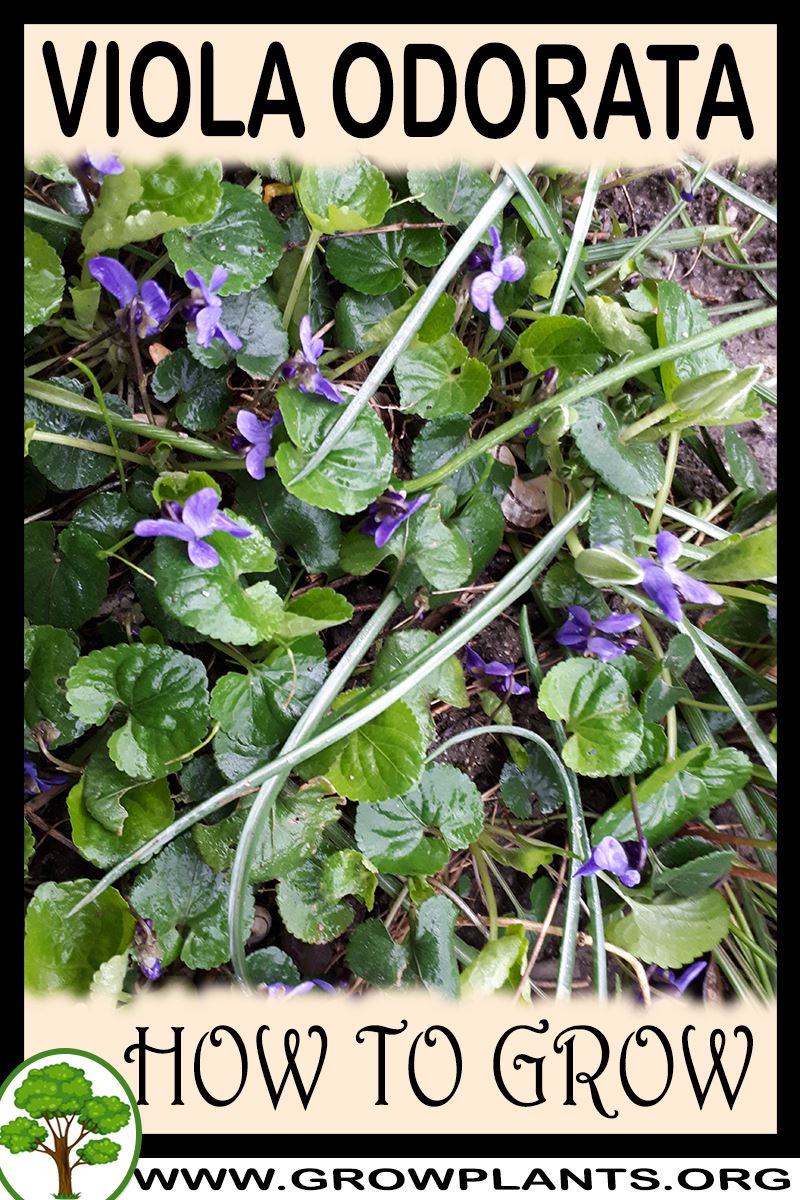
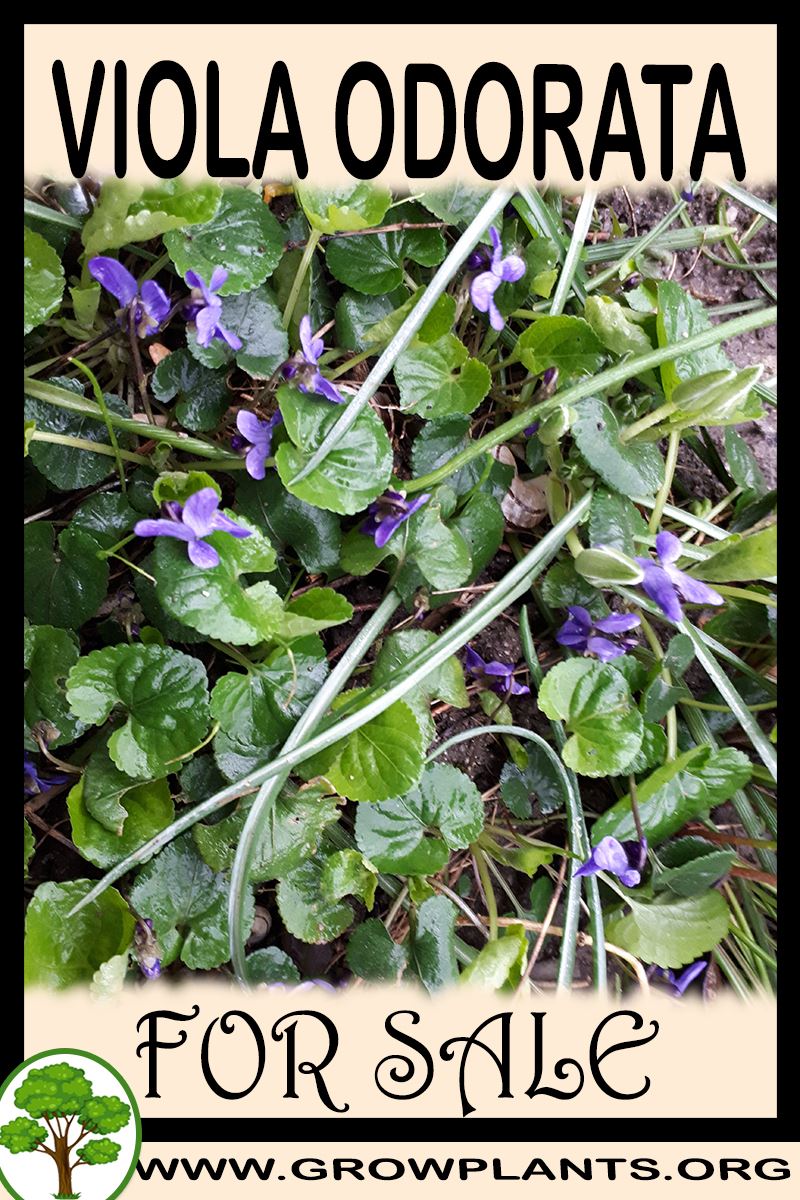
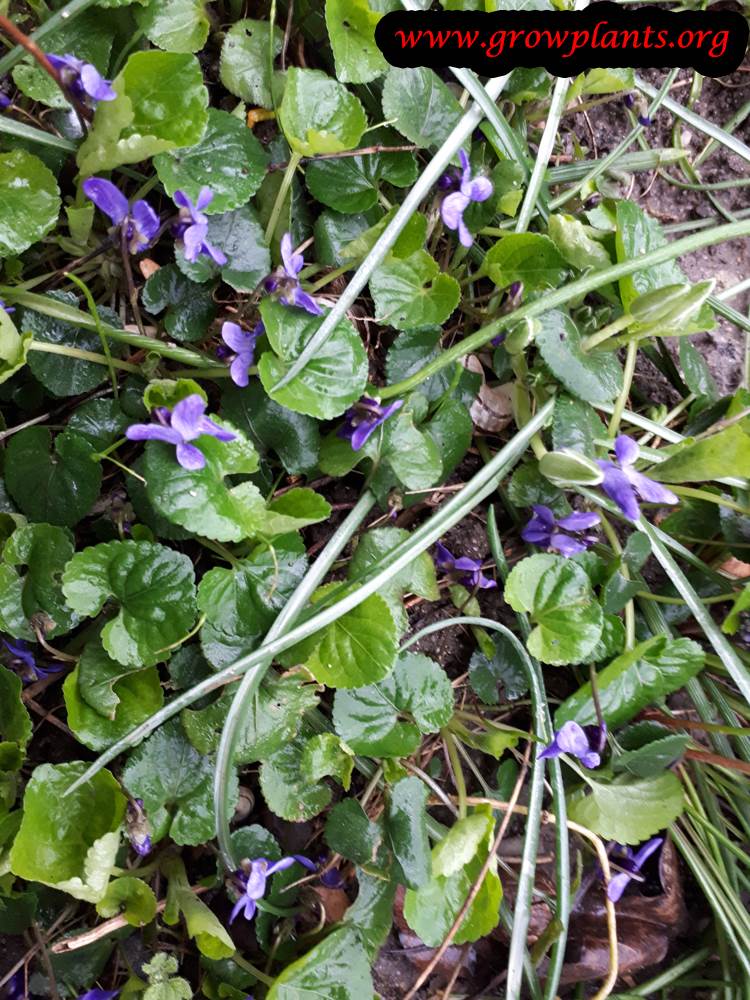
- Leaves & Foliage: Green heart- to oval-shaped leaves, sometimes toothed at the edges.
- Flower Characteristics: Fragrant violet flowers 2–4 cm across, dark purple outer and lighter inner petals.
Primary Uses & Landscape Value
- Edible Uses: Flowers are used for fragrance and syrup; young leaves are eaten raw in salads or cooked.
- Functional & Ornamental Roles: Fragrant flowering groundcover for shade, borders and containers.
Care Guide: Planting, Soil & Watering
Overview: Viola odorata (sweet violet) is a low, cool-season perennial (zone 2-10) for part to full shade. It grows in well-drained soil kept reliably moist, dislikes heat, and spreads readily once happy.
Quick Care Requirements
| Requirement | Ideal Condition |
|---|---|
| Planting Season | In cool weather – spring in cold climates, autumn-winter in warm climates |
| Growth Rate | Moderate |
| Soil Type | Well-draining, moisture-retentive |
| Water Need | Moderate to High |
Planting & Establishment
- Best Planting Season: Plant in cool conditions – spring where winters are cold, or autumn to winter where summers are hot – in part to full shade.
- How to Plant:
- Hole Preparation: Dig a hole slightly wider than the root ball in loosened, free-draining soil.
- Soil Amendments: Work in compost and leaf mould to hold moisture in a shady spot.
- Planting Depth: Set the root ball level with the surface and keep the crown at soil level.
- Growth Speed & Expectations: A moderate spreader 15-30 cm tall, forming a fragrant, mat-like clump.
Soil, Watering & Drainage Care
- Soil Mix & Drainage Needs: Needs moist but well-drained soil; keep the roots cool and damp with a mulch while excess water drains.
- Watering Schedule & Technique:
- Young / Newly Planted: Keep evenly moist while establishing.
- Established: Water regularly and fairly generously so the soil stays reliably moist; it dislikes drying out.
- Seasonal Adjustments: More frequent water in warm spells; growth eases in summer heat.
Climate, Light & Hardiness
Viola odorata (sweet violet) is a cool-season plant, grown as an evergreen perennial in mild climates, that prefers cool weather and half to full shade. It is sensitive to heat, which limits its growing season in warm climates, while cold tolerance across its broad hardiness range is good.
Quick Climate Specifications
| Climate Zones | Temperate, mediterranean, subtropical |
| USDA Hardiness Zones | 2–10 |
| Frost Tolerance | Moderate to High (as a cool-season plant) |
| Light Conditions | Half Shade / Full Shade |
Sunlight & Light Exposure
Optimal Light Setup
Prefers half to full shade - more shade-tolerant than many Viola species.
Shade & Heat Management
Shade helps protect it from heat stress in warmer climates.
Temperature Extremes & Hardiness
USDA Hardiness & Regional Limits
Cold hardy across a broad zone 2–10 range. In cold climates it persists as a perennial through winter; in warm climates it is best grown through the cool season (autumn to spring) since it struggles once summer heat sets in.
Frost Sensitivity
Good cold and frost tolerance as a cool-season perennial.
Extreme Heat Tolerance
Sensitive to heat - this, not cold, is what limits where and when it can be grown successfully.
Wind, Humidity & Microclimate
Microclimate Recommendations
A shaded, cool spot suits it best, particularly in warmer climates; note it can spread aggressively (it is flagged as weedy/invasive in favorable conditions), so site accordingly.
Growing in Pots, Balconies & Indoors
Sweet violet (Viola odorata) is a low, shade-loving perennial grown for its fragrant flowers – and the grower confirms it can be grown indoors as well as in containers. Its tolerance of shade and cool, moist conditions makes it one of the easier violas to keep as a pot plant on a windowsill or shady patio.
Quick Details
- Container Size: A small-to-medium pot or basket of about 2-4 L (0.5-1 gal); it spreads by runners
- Indoor Suitability: A good little houseplant for a cool, bright-but-not-sunny spot
- Best Spot: Half to full shade; it dislikes hot, direct sun
- Soil & Drainage: Moisture-retentive but free-draining mix; keep it from drying out
- Watering in Pots: Keep evenly moist (average to generous); do not let it dry out
Indoors & On the Windowsill
- A true houseplant: The grower confirms it as an indoor plant. Being shade-tolerant, it suits cooler, dimmer sills that would starve sun-lovers – keep it moist and cool for the best scent.
- Windowsill growing: An east- or north-facing sill is ideal; avoid hot, dry air near radiators.
- Overwintering: It is hardy and comes back each year; potted plants simply need a cool, sheltered, frost-protected spot.
On a Balcony or Patio
- Shade & moisture: A shaded, sheltered balcony corner suits it well; keep the pot moist, as it resents drying out in reflected heat.
- Practicalities: Allow for the weight of a filled pot and for drainage runoff onto the balcony below – stand pots on feet or a tray you can empty.
Choosing the Pot, Soil & Long-Term Care
- Pot & drainage: A 2-4 L pot or basket with good drainage; it will fill it with spreading runners. Use strong drainage holes and skip a standing water saucer, which invites root rot; terracotta breathes and dries fast, while glazed or plastic pots hold moisture longer.
- Potting mix: A light, aerated mix – potting compost, or peat/coir with added perlite or vermiculite for drainage.
- Feeding: A light regular feed in growth keeps it lush; pots leach nutrients faster than open ground.
- Repotting: Divide and refresh the mix every couple of years – the runners make new plants easily.
Fertilizing & Feeding
A light-to-moderate feeder – steady, balanced feeding through its active growth and winter-to-spring bloom period is enough to keep it healthy, and since the fragrant flowers and leaves are often harvested, a food-garden-safe product is worth choosing.
Quick Fertilizing Specs
| Main Nutrient Priority | Balanced feeding with adequate nitrogen to support foliage and its extended bloom period |
|---|---|
| Best Feeding Period | Active growth ahead of and during its winter-to-spring bloom |
| Organic Options | Compost worked into the bed supports steady feeding, especially valuable since the fragrant flowers and leaves are often harvested |
| Reduce/Stop Feeding | Stop feeding once summer heat sets in and growth slows, since this plant is sensitive to heat |
Feeding by Growth Stage
Active Growth
Build strong foliage and root growth ahead of the bloom period, in the shaded, cool conditions this plant prefers
| Nutrient direction | Balanced feeding to support healthy foliage development |
|---|---|
| Timing | As active growth begins ahead of the winter-to-spring bloom – spring in cold climates, or autumn-winter in warm climates |
| Frequency | Feed lightly and regularly through this growth phase |
| Fertilizer types | A balanced, complete fertilizer suited to cool-season flowering plants |
| Precautions | Because the fragrant flowers and leaves are often harvested, favor a fertilizer labeled for edible or food-garden use and follow its label directions |
Winter-to-Spring Bloom
Sustain fragrant flowering through its main bloom window
| Nutrient direction | Balanced feeding with adequate nitrogen supports strong bloom – a high-phosphorus product is not needed for more flowers |
|---|---|
| Timing | During its winter-to-spring bloom period |
| Frequency | Continue light, regular feeding while flowers are forming and being picked |
| Fertilizer types | A balanced, complete fertilizer suited to cool-season flowering plants |
| Precautions | Keep the planting in half to full shade as recommended and avoid heavy feeding, which can favor leaves over flowers |
Summer Heat Rest
Let the plant rest through the summer heat it finds stressful
| Nutrient direction | None – withhold fertilizer while the plant is heat-stressed |
|---|---|
| Timing | During hot summer conditions |
| Frequency | No feeding at this stage |
| Fertilizer types | No feeding at this stage – withhold fertilizer until cooler weather returns and active growth resumes. |
| Precautions | Do not fertilize a heat-stressed plant; feeding during stress can do more harm than good. |
Nutrient Deficiency Signs & Corrections
Overall pale, yellow-green foliage with reduced vigor and fewer flowers
| Possible causes | Insufficient nitrogen in the soil, Cold, waterlogged soil limiting root uptake, Root stress from a cramped container |
|---|---|
| Appears first on | Older, lower leaves first |
| What to check | Review feeding history and soil drainage, Check whether the plant is pot-bound in a container |
| Possible correction | Apply a balanced, complete fertilizer suited to flowering plants |
New leaves turn yellow between the veins while the veins remain green
| Possible causes | High soil pH limiting iron availability, Overly wet, poorly drained soil, Naturally low soil iron content |
|---|---|
| Appears first on | Newest leaves first |
| What to check | Check soil drainage and moisture, Consider a soil pH test through a local extension lab |
| Possible correction | Correct soil pH toward a more favorable range and apply a chelated iron product per its label if a pH test confirms the cause |
Fewer flowers than expected during its normal bloom window
| Possible causes | Too much direct sun for a plant that prefers half to full shade, Excess nitrogen favoring foliage over flowers, Heat stress outside its cool-weather preference |
|---|---|
| Appears first on | Whole-plant flowering response rather than a specific leaf location |
| What to check | Review the planting site’s light exposure, Review recent feeding balance and overall growing conditions |
| Possible correction | Move or shade the planting toward its preferred half- to full-shade exposure and keep feeding balanced rather than nitrogen-heavy |
Pruning, Training & Seasonal Maintenance
Viola odorata is a low, spreading, semi-evergreen subshrub grown for fragrant winter–spring flowers and foliage, with no woody framework to prune. Its own care notes single out an autumn tidy of old leaves as the main scheduled cut, and – unlike its relative Viola tricolor in this batch – explicitly do not recommend deadheading, which fits a plant that is recorded as spreading aggressively by runners and is treated more as a naturalizing groundcover than a tidy deadhead-and-rebloom bedding plant. The other real task here is controlling that spread, since the plant is noted as invasive as a weed in some settings.
Quick Pruning & Maintenance Specs
| Pruning Tolerance | Moderate |
| Primary Pruning Window | Autumn – cut back old and dead leaves |
| Secondary Maintenance Window | Ongoing through the growing season – control spreading runners |
| Typical Frequency | One annual foliage tidy; runner control as needed |
| Main Objective | Refresh foliage ahead of winter–spring bloom and contain its spread |
| Young Plant Priority | Minimal – clear only damaged leaves while it establishes as a groundcover |
| Mature Plant Priority | Autumn leaf tidy plus ongoing runner containment |
| Best Tool Type | Precision snips |
| Avoid Heavy Pruning During | The winter–spring bloom and fragrance display, and during summer heat stress |
Pruning by Plant Age & Size
Newly Established
A newly planted specimen needs only damaged-leaf removal while it establishes and begins spreading as a low mat.
Young / Formative
There is no structural training on this spreading groundcover – the earliest task is simply watching where its runners head and containing them within the intended bed from the start.
Mature / Established
Once established, the main ongoing task shifts to containing spread: trim or pull runners that cross into lawn or neighbouring beds, in line with its recorded tendency to become weedy if left unchecked. Deadheading is not part of the routine here, unlike many other violas.
Seasonal Pruning Schedule
Autumn: cut old and tattered leaves back near the stem, per its own care notes, tidying the plant ahead of its winter–spring bloom.
Ongoing Runner Control (through the growing season): trim or remove stolons/runners that extend beyond the intended planting area, since this species is recorded as aggressive enough to behave as a weed if left unmanaged.
Structural Pruning & Training
There is no height or branch structure to manage on this low mat – the only “structural” control is containing lateral spread via its runners, by edging the bed or removing runners that cross the boundary.
Special Growth to Remove
Runners/stolons that spread beyond the intended area – the standout item here, reflecting this species’ recorded invasive/weedy tendency. Old, tattered leaves are cut back in autumn. Spent flowers are specifically not recommended for removal, per its own care notes.
Container & Small-Space Pruning
Growing it in a container is an effective way to manage its spreading habit, since it physically stops runners reaching open ground; it still benefits from the same autumn leaf tidy as an in-ground planting.
Tools
Precision snips for both the autumn leaf tidy and trimming runners – nothing heavier is needed on this soft, low plant.
Tool Hygiene & Disease Risk
Increased. Mildew and aphids are recorded issues on this plant, so use a clean tool and avoid working on wet foliage, which helps spread fungal spores.
Cut Placement & Technique
Cut old leaves next to the stem, as its own care notes specify, rather than partway up the leaf blade. Trim runners back before they root down, or remove them at their point of origin if they already have.
Heavy Pruning & Rejuvenation
An old, tatty clump can be sheared back harder in autumn to refresh the foliage entirely before winter–spring bloom; the plant regrows readily from its spreading base.
Post-Pruning Care
Keep the soil evenly moist after a heavier autumn cutback, matching its preference for consistent moisture, and watch tender regrowth for its recorded slug and aphid pressure.
Common Pruning Mistakes
- Deadheading out of habit – unlike many other violas, this is specifically not recommended here, and the effort is better spent on runner control.
- Letting runners establish unchecked into surrounding lawn or beds, given this species’ documented weedy tendency.
- Cutting back hard during the winter–spring bloom and fragrance display, or during summer heat given its recorded heat sensitivity.
When NOT to Prune
Avoid cutting during its winter–spring flowering and fragrance period, and avoid a heavy cutback during summer heat stress, since this plant is recorded as sensitive to heat.
Recommended Tools (by task)
- precision_snips – the autumn leaf tidy and ongoing runner control.
Propagation Guide
Unlike its annual relative, sweet violet is a spreading perennial that produces rooted stolon (runner) plantlets, so dividing these off is the easiest and fastest way to increase it true to type; seed is also viable and simple, but named fragrant selections are best kept true by division since seedlings can vary. Overall difficulty is easy.
Quick Propagation Specs
| Best Propagation Method | Division of rooted stolons/runners |
| Alternative Methods | Seed |
| Propagation Difficulty | Easy |
| Seed True-to-Type | Variable – seedlings can differ from the parent, especially named fragrant selections |
| Vegetative True-to-Type | Yes |
| Best Propagation Season | Spring in cold climates or autumn–winter in warm climates for seed; stolon plantlets can be divided once well rooted, generally outside peak heat |
| Seed Germination Time | Typically a few weeks in cool conditions |
| Germination Temperature | Cool, roughly 15–20°C (59–68°F) |
| Seed Sowing Depth | Shallow, lightly covered |
Growing from Seed
Sowing Season
Spring in cold climates, or autumn–winter in warm climates, per the site’s own planting-season notes.
Sowing Depth & Orientation
Sow shallowly and cover lightly.
Germination Conditions
Cool, roughly 15–20°C (59–68°F), kept consistently moist.
Germination Time
Typically a few weeks.
Seedling Care
Keep out of intense heat, as the site notes this species is heat-sensitive.
Runners & Stolons
Sweet violet spreads by aboveground stolons that root and form new plantlets at their tips or nodes – the habit behind the site’s own note that it can become aggressive or weedy. Once a runner-tip plantlet has developed its own root system it can be severed from the parent stolon and transplanted independently; avoid separating it before it has adequate roots of its own.
Bloom & Edible Flower Guide
Quick Details
- Bloom Season: Winter into spring
- Flower Appearance: Small (2-4 cm) sweetly scented flowers, typically dark purple on the outer ring shading to lighter purple within
- Edibility: Yes – the flowers are edible and prized for fragrance, syrups and crystallising
Detailed Blooming Overview
Sweet violet is loved as much for its scent as its looks. The small purple flowers open in winter and spring, filling the air with their famous perfume. They are a classic edible flower, used to flavour and colour syrups, to crystallise (candy) for decorating, and to scent all manner of treats. Later in the season the plant also produces hidden, closed flowers near the base that quietly self-pollinate to set seed.
Flower Characteristics
- Small flowers, about 2-4 cm across, sweetly fragrant.
- Colour is mostly a dark purple outer ring with a lighter purple centre.
Bloom Care & Thinning
- Thinning: Not recommended – let the plant flower freely.
- Pollination: The open, scented spring flowers are visited by bees and butterflies; later closed flowers self-pollinate.
- Harvesting for the kitchen: Pick fully open, dry flowers for syrups, crystallising or fragrance.
Fruit & Uses
Viola odorata (sweet violet) is grown mainly for fragrance and ornament, but both its flowers and young leaves are genuinely edible. The fragrant flowers are the more prized part, used fresh as a garnish or made into syrup, while the leaves are used as a mild, occasionally mucilaginous salad or cooked green.
Quick Edible Specs
| Edible Parts | Flowers; leaves |
|---|---|
| Main Use(s) | Culinary – fragrant garnish and flavouring, violet syrup (flowers); salad or cooked green (leaves) |
| Eaten Raw or Cooked | Flowers: raw, or infused/cooked into syrup. Leaves: raw (salad) or cooked. |
| Preparation Required | None for flowers beyond picking and rinsing, or simmering with sugar/water for syrup; leaves are cut from the stem and washed before use |
| Harvest Season | Flowers: during bloom, winter–spring. Leaves: through the plant’s leafy growing season (trimmed spring/summer/autumn). |
| Time to First Harvest | Flowers and leaves can be picked once the plant is established and actively growing/blooming, without a long wait |
| Storage | Best used fresh; flowers can be preserved longer-term as syrup or candied |
| Safety/Toxicity Caveat | Generally regarded as safe in normal culinary amounts; leaves have a mild mucilaginous quality and, like many wild greens, are best eaten in moderate quantity rather than in bulk |
Flowers & Flower Buds
The fragrant flowers are the signature edible part – small (about 2–4 cm), with a darker purple outer band and lighter purple inner circle. Picked once open, they are used fresh as a garnish, crystallised/candied, or gently simmered into the classic violet syrup used to flavour drinks and desserts.
Leaves & Greens
The green, orbicular leaves are cut from the plant close to the stem during its active growing season. They can be eaten raw in salads or cooked as a mild green; texture is more tender on younger leaves, and, as with the flowers, they are typically used in modest quantities alongside other ingredients rather than as a bulk vegetable.
Preparation, Uses & Safety
No cooking is strictly required for either part – flowers and young leaves are commonly eaten raw – but flowers are also traditionally cooked briefly with sugar and water to make violet syrup. As with other edible Viola species, keep portions modest and only eat plant material you know has not been treated with pesticides.
Pests, Diseases & Troubleshooting
Overview: Violas and pansies are cool-season plants whose soft, low foliage is most troubled by sap-sucking insects and by foliar fungal diseases in warm, humid, or crowded conditions. Sweet violet’s fragrant, spreading clumps are tough but attract slugs in the damp shade it prefers, and its runners can harbor mites and leaf-rollers. Manage them culturally first: good spacing for airflow, morning watering at the base, and prompt removal of spotted or spent leaves keep most problems from taking hold.
Quick Troubleshooting Overview
| Issue / Pest | Main Symptom | Primary Solution |
|---|---|---|
| Aphids | Sticky, curled new growth; clusters on buds | Blast with water; insecticidal soap; encourage ladybirds |
| Slugs & snails | Ragged holes in leaves, slime trails, seedlings vanish | Hand-pick at night; iron-phosphate bait; barriers |
| Powdery mildew | White powdery film on leaf surfaces | Improve airflow; sulfur or potassium-bicarbonate spray |
| Pansy leaf spot / rust | Brown/tan spots, orange pustules underneath | Remove infected leaves; copper or sulfur fungicide |
| Spider mites | Fine stippling and webbing in hot, dry spells | Raise humidity; hose foliage; horticultural oil |
Common Pests & Management
- Aphids (Myzus persicae / Aphis spp.):
- Symptoms: Small green, black, or peach-colored insects clustered on shoot tips, flower buds, and leaf undersides; new growth curls and is coated in sticky honeydew that later turns black with sooty mold. They also spread viruses.
- Prevention & Control: Knock colonies off with a firm jet of water and squash the rest by hand. Protect ladybirds, lacewings, and hoverflies. For persistent outbreaks use insecticidal soap or a light horticultural oil, coating the undersides of leaves.
- Slugs & snails (Deroceras / Helix spp.):
- Symptoms: Irregular holes with smooth edges chewed from soft leaves and flowers, silvery slime trails, and whole seedlings grazed to the ground overnight. Damage is worst in damp, shaded, mulched beds.
- Prevention & Control: Hand-pick after dark or after rain, clear damp hiding places, and water in the morning so the surface dries by night. Copper tape or grit rings protect containers; scatter iron-phosphate pellets sparingly where pressure is high.
- Violet gall midge / leaf-rollers (Dasineura affinis / Lepidoptera larvae):
- Symptoms: On sweet violet, small caterpillars and midge larvae roll or fold leaves and graze the foliage; folded, tented leaves and chewed edges are the sign.
- Prevention & Control: Pick off rolled leaves and any larvae inside, keep beds tidy, and encourage birds and parasitic wasps. Bacillus thuringiensis targets caterpillars without harming beneficials.
- Spider mites (Tetranychus urticae):
- Symptoms: Fine pale stippling that gives leaves a bronzed, dusty look, with delicate webbing on undersides during hot, dry weather. Foliage dulls and dries from the tips.
- Prevention & Control: Keep plants cool and evenly moist and hose the undersides of leaves regularly. Encourage predatory mites; treat stubborn colonies with insecticidal soap or horticultural oil in the cool of evening.
- Western flower thrips (Frankliniella occidentalis):
- Symptoms: Silvery flecking and distorted petals, with tiny black frass specks; thrips also transmit tomato spotted wilt virus, which causes ringspots and stunting.
- Prevention & Control: Use blue sticky traps to monitor, remove weeds that harbor them, and remove virus-suspect plants promptly. Insecticidal soap or spinosad helps, applied in the evening to spare pollinators.
Diseases & Fungal Issues
- Powdery mildew (Podosphaera / Erysiphe spp.):
- Symptoms: A white to grey powdery coating spreading across upper leaf surfaces and stems, often late in the season or on crowded plants; leaves yellow and drop.
- Treatment & Management: Space plants for airflow, avoid overhead evening watering, and remove affected leaves. Sprays of sulfur, potassium bicarbonate, or diluted neem check spread; do not apply sulfur in high heat.
- Pansy leaf spot (Ramularia / Cercospora / Colletotrichum spp.):
- Symptoms: Round tan to dark-brown spots, sometimes with concentric rings or a yellow halo; heavy infection browns and collapses the foliage in wet weather.
- Treatment & Management: Pick off and bin spotted leaves, water at the base, and avoid working plants while wet. A copper-based fungicide slows outbreaks; rotate planting sites between seasons.
- Viola rust (Puccinia violae):
- Symptoms: Bright orange to brown powdery pustules on leaf undersides with yellow blotches above; severe cases distort and kill leaves.
- Treatment & Management: Remove and destroy infected foliage at first sign, improve air movement, and avoid wetting leaves. Sulfur or an appropriate fungicide gives control where rust is chronic.
- Gray mold (Botrytis cinerea):
- Symptoms: Fuzzy grey-brown mold on faded flowers and soft, water-soaked leaf rot in cool, humid, still air.
- Treatment & Management: Deadhead promptly, thin for airflow, and clear fallen petals and debris. Reduce overhead moisture; a fungicide is rarely needed if sanitation is good.
- Crown & root rot (Pythium / Fusarium / Rhizoctonia spp.):
- Symptoms: Sudden wilting, blackened stem bases, and mushy roots, usually in waterlogged or reused, un-sterilized soil.
- Treatment & Management: Plant in free-draining soil, never overwater, and discard collapsed plants with their soil. Start with clean media and space to keep the crown dry.
Growing Difficulties & Abiotic Problems
- Heat stress & decline:
- Cause & Symptoms: Violas are cool-season plants; in prolonged heat they stop flowering, stretch, and yellow, becoming far more prone to mildew and mites. Its preference for cool, moist shade makes damp-loving slugs and foliar fungi the most persistent nuisances.
- Correction Strategy: Grow in the cooler parts of the year, give afternoon shade in warm climates, and mulch to keep roots cool and evenly moist. Replace worn plants as the warm season arrives rather than nursing them through.
- Damping off (seedlings):
- Cause & Symptoms: Newly emerged seedlings topple with a pinched, dark, water-soaked stem at soil level, caused by soil fungi in cold, wet, overcrowded trays.
- Correction Strategy: Sow thinly in sterile mix, provide gentle airflow and light, and let the surface dry between waterings. Bottom-water and avoid heavy, cold soils.
- Leaf yellowing (nutrient/waterlogging):
- Cause & Symptoms: Pale, yellowing leaves from waterlogged roots, poor drainage, or nitrogen shortage in exhausted potting soil.
- Correction Strategy: Improve drainage, ease off watering, and feed lightly with a balanced fertilizer during active growth. Refresh container media each season.
What Helps – Products & Tools
For this plant the useful, gentle tools are insecticidal soap and light horticultural or neem oil for aphids, mites, and thrips; iron-phosphate slug bait plus copper tape or grit for mollusks; blue sticky traps for thrips; and sulfur, potassium-bicarbonate, or copper fungicides for mildew, leaf spot, and rust. Apply oils and soaps in the cool of the evening to protect pollinators, and always follow the label.