Plant Profile & Key Characteristics
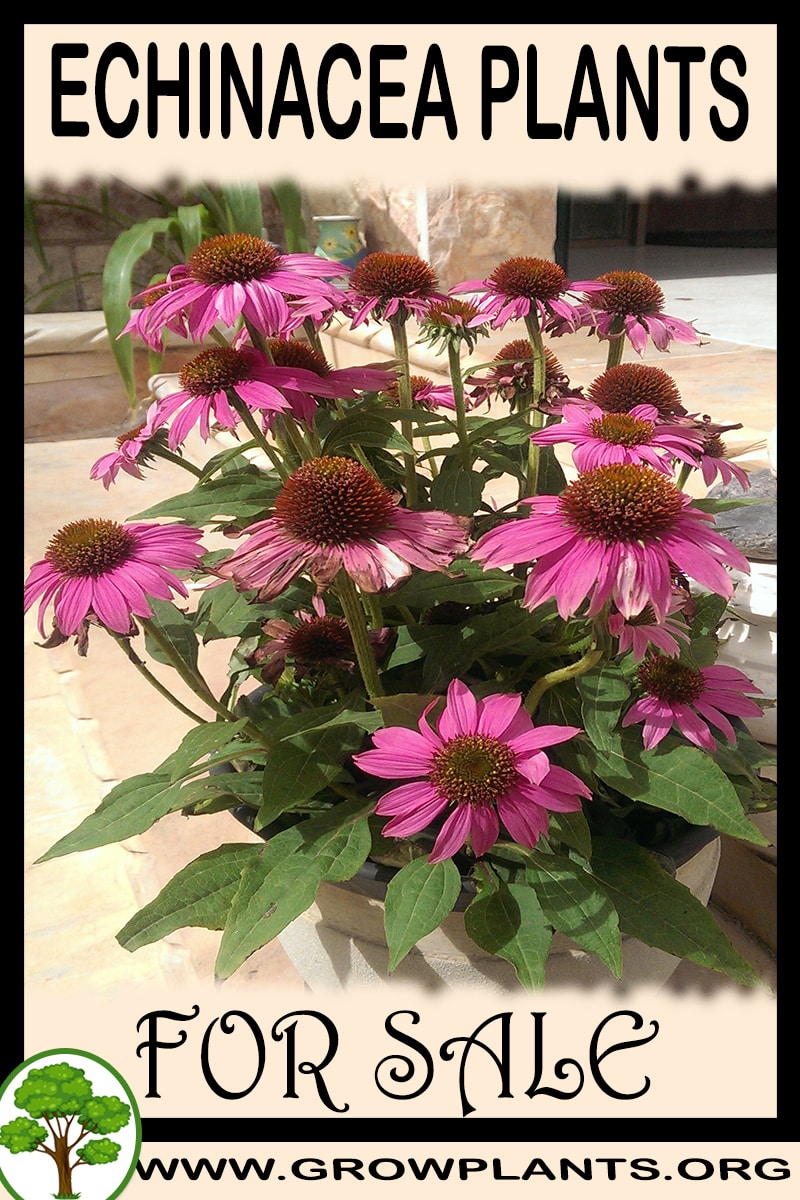
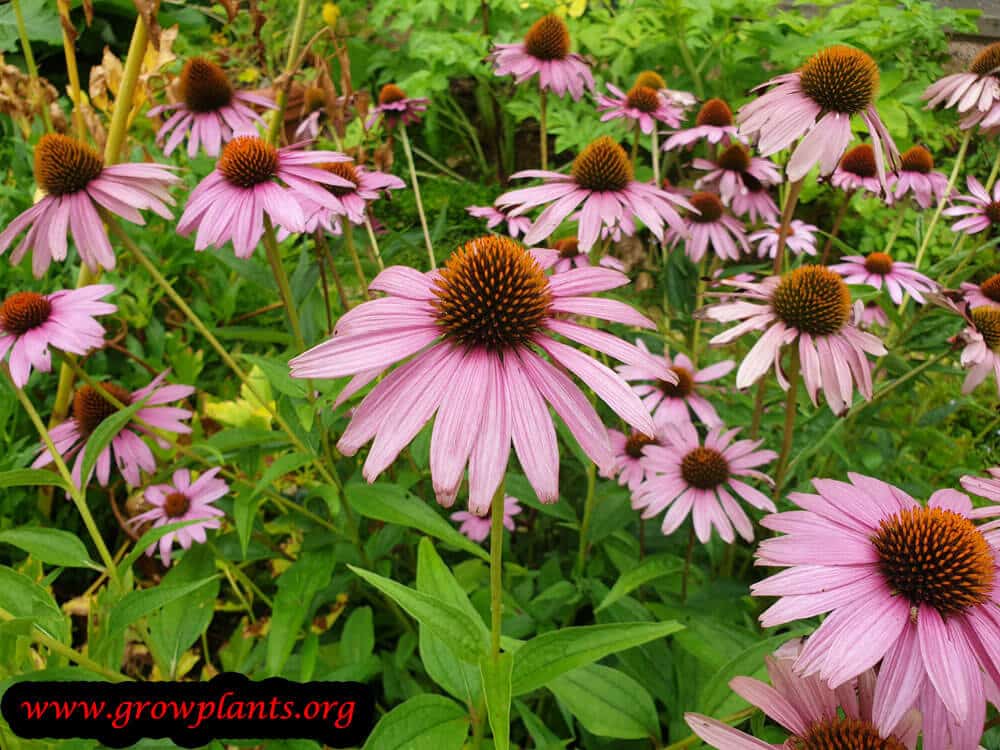
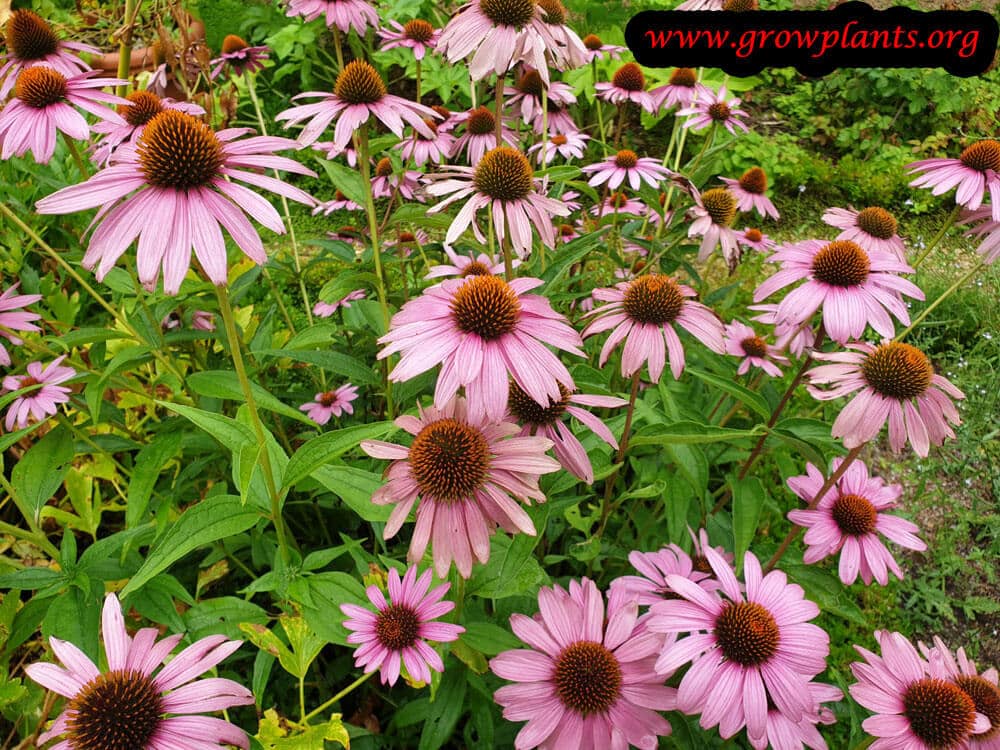
Overview: A clump-forming herbaceous perennial (the Coneflower) reaching about 0.4-1.4 m tall, grown for its large daisy-like flowers with raised cone centres. It is used as an ornamental and cut flower, valued in herbal medicine and for attracting pollinators.
Quick Specifications
| Specification | Attribute |
|---|---|
| Plant Type / Life Cycle | Perennial (herbaceous; sometimes grown as an annual) |
| Foliage Type | Herbaceous / semi-evergreen in mild climates, dying back in cold winters |
| Mature Size | 0.4-1.4 m tall (1.3-4.7 ft) |
| Growth Rate | Moderate to fast |
| Toxicity | Non-toxic (widely used as a medicinal herb) |
| Hardiness | USDA 2-10 |
Growth Form & Structure
- Height & Spread: Upright clumps 0.4-1.4 m (1.3-4.7 ft) tall; grows well in beds or in large containers.
- Growth Habit & Form: Clump-forming herbaceous perennial with upright, wiry flower stems rising above a basal leaf clump.
- Lifespan & Maturity: Reaches flowering size within a season or two and returns for many years from the crown.
Anatomy & Physical Features
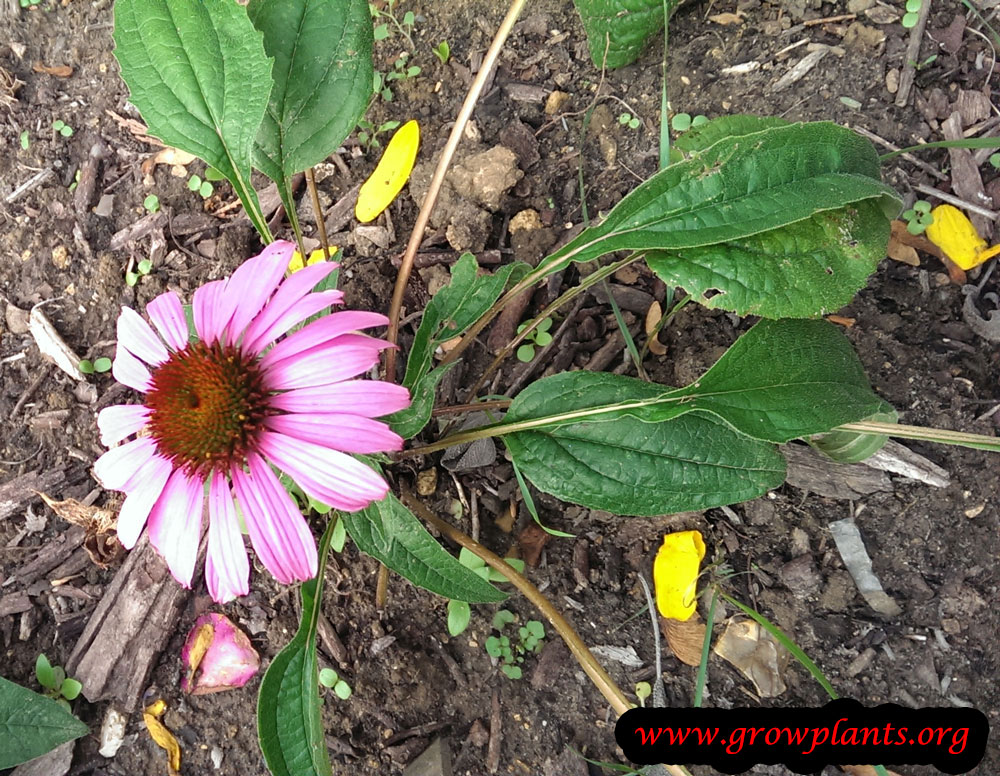
- Leaves & Foliage: Green, oval, somewhat coarse leaves.
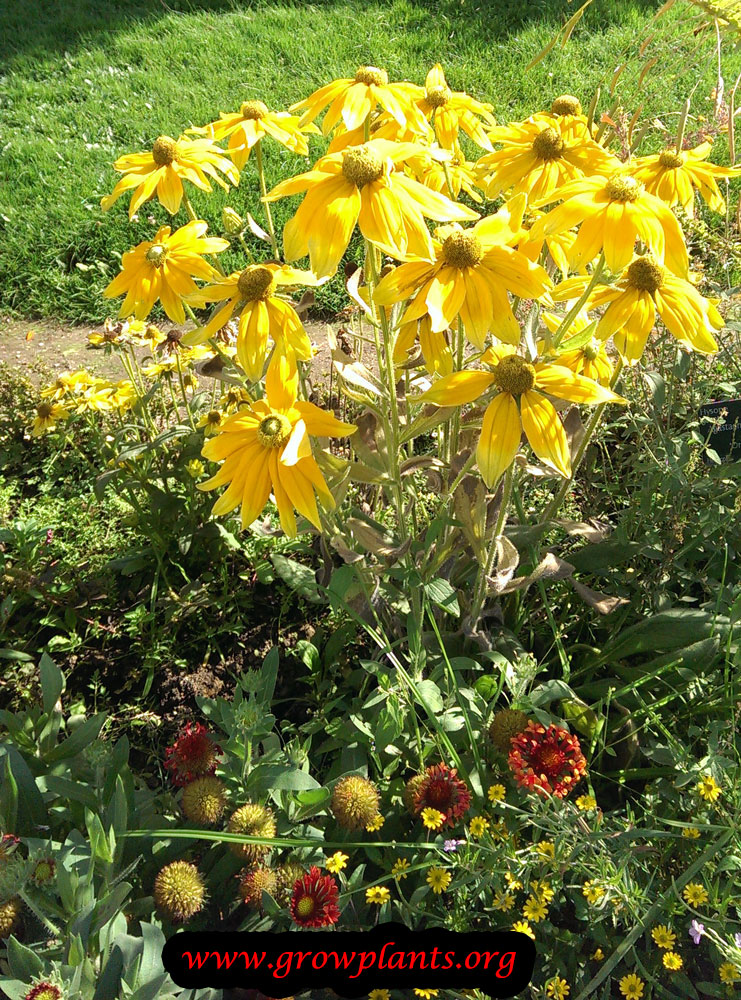
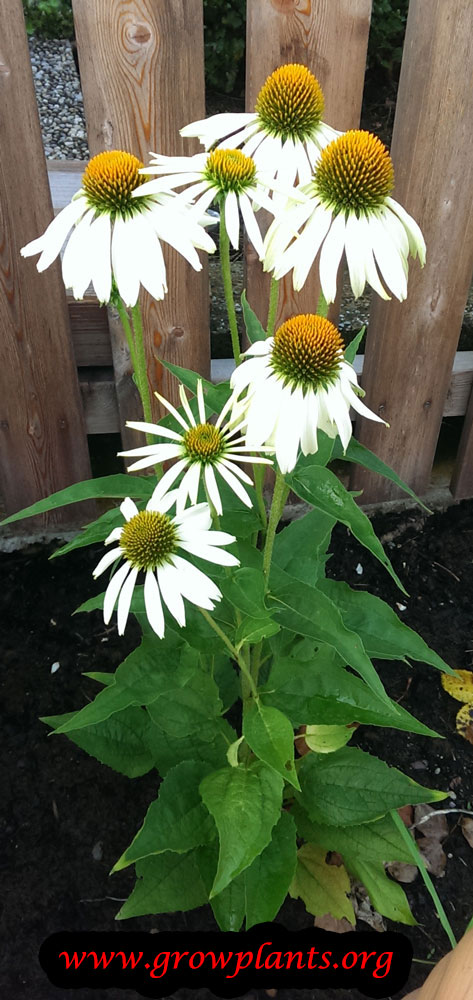
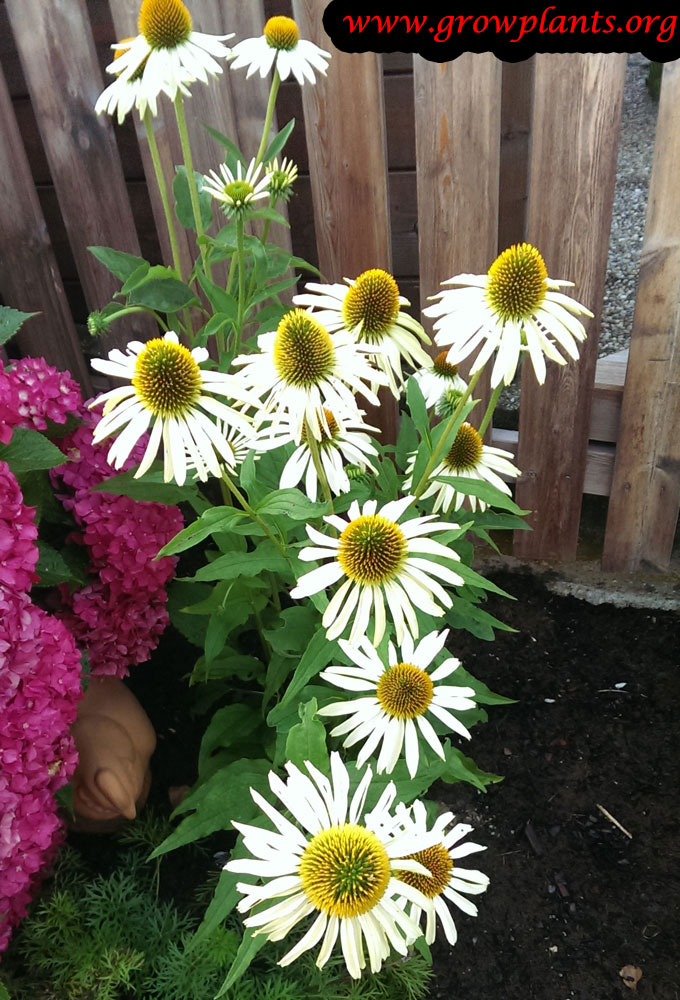
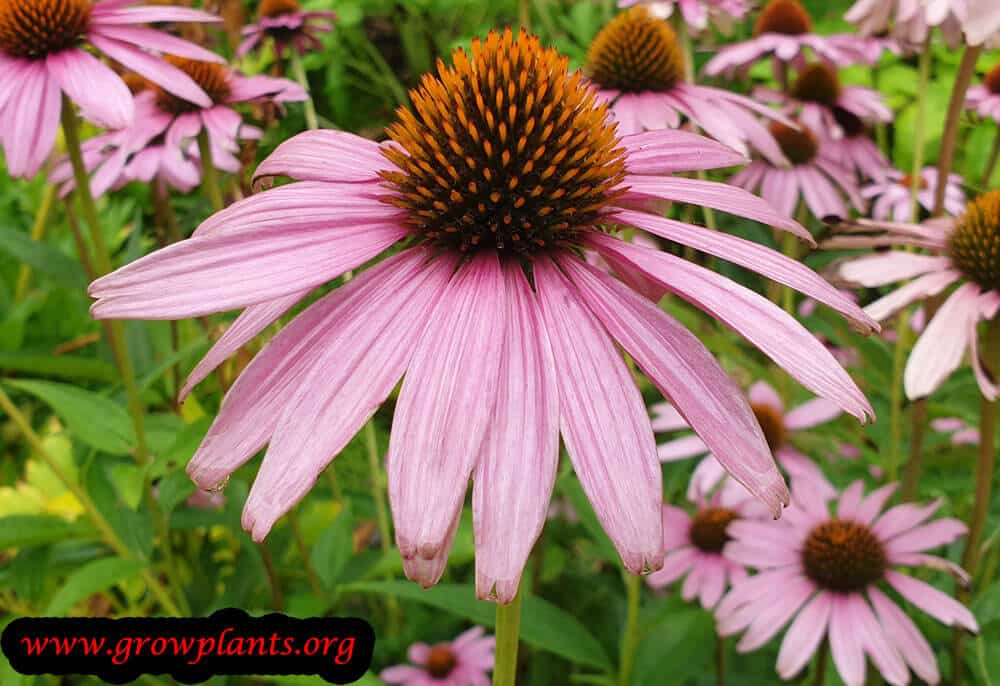
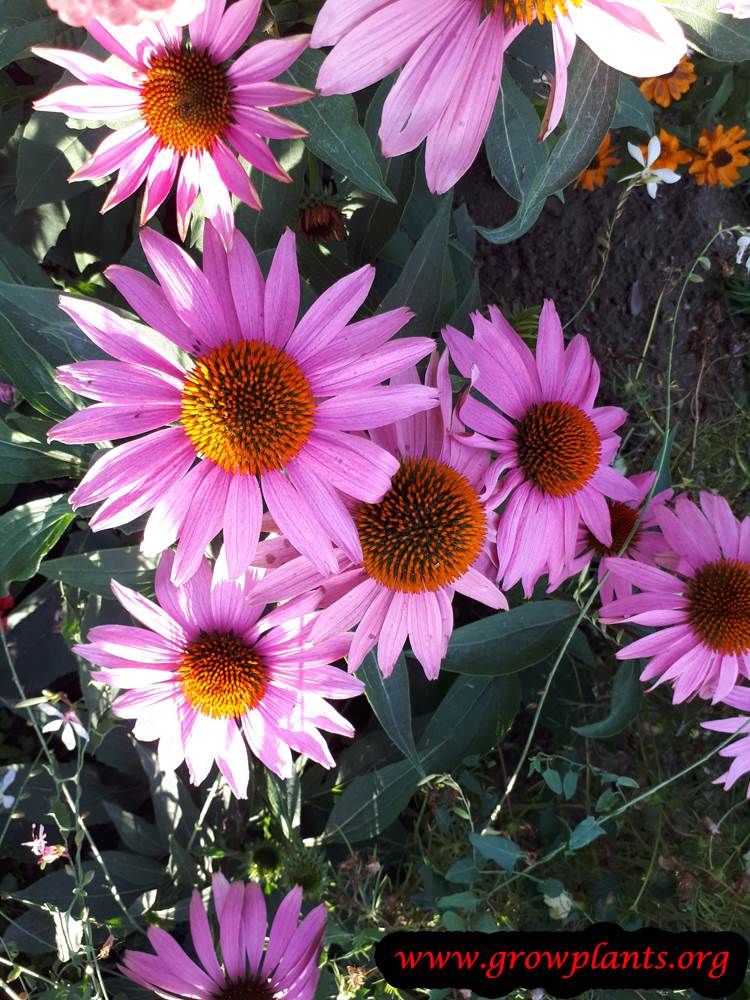
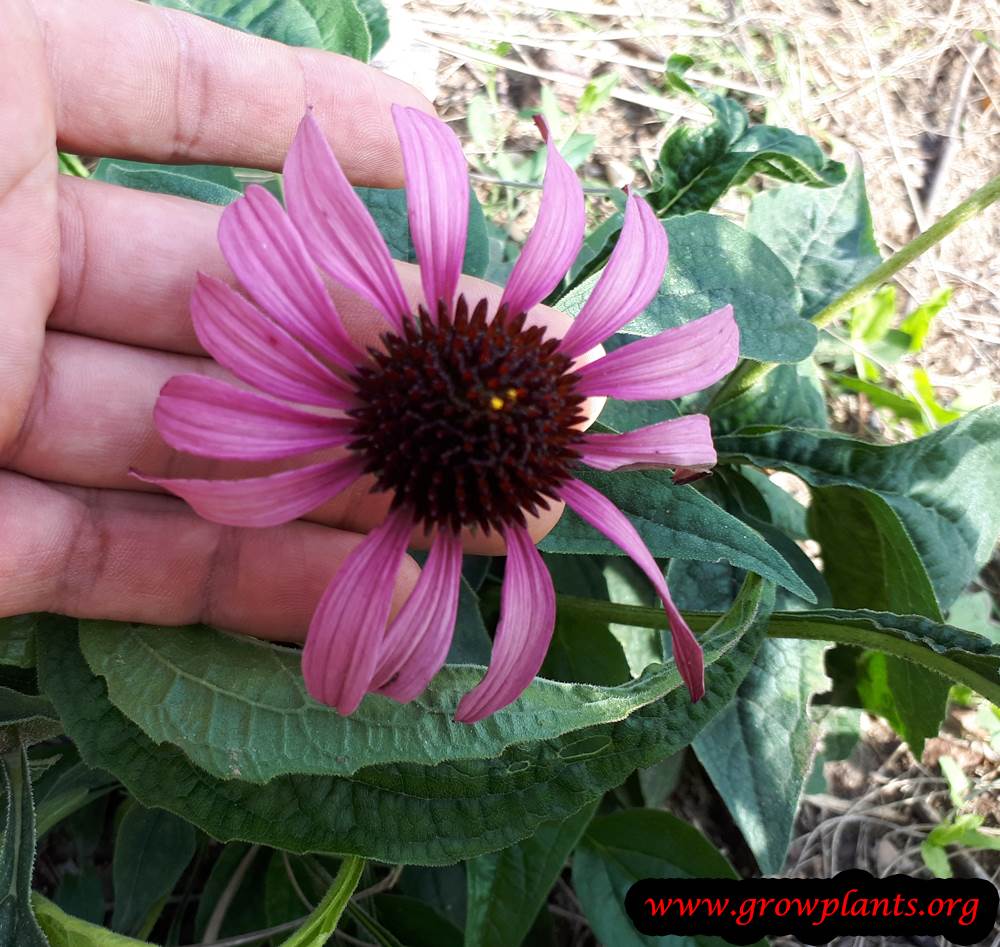
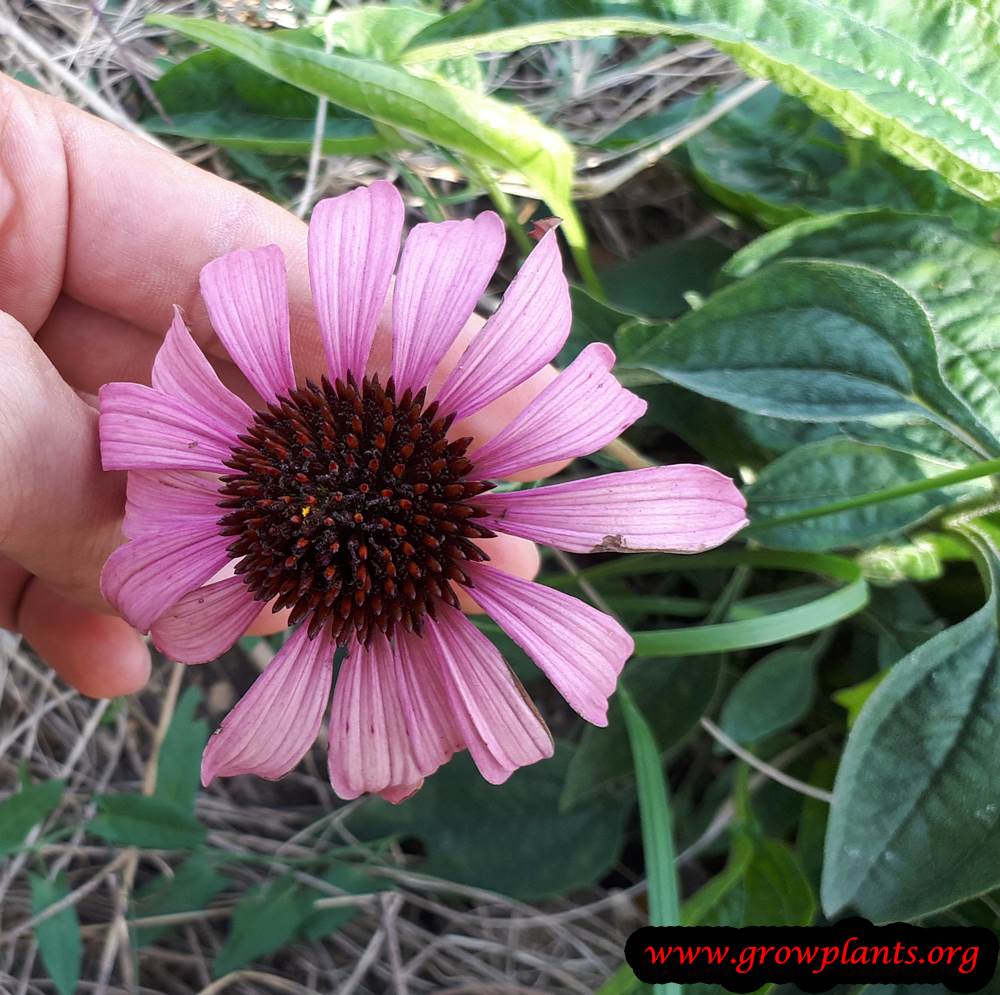
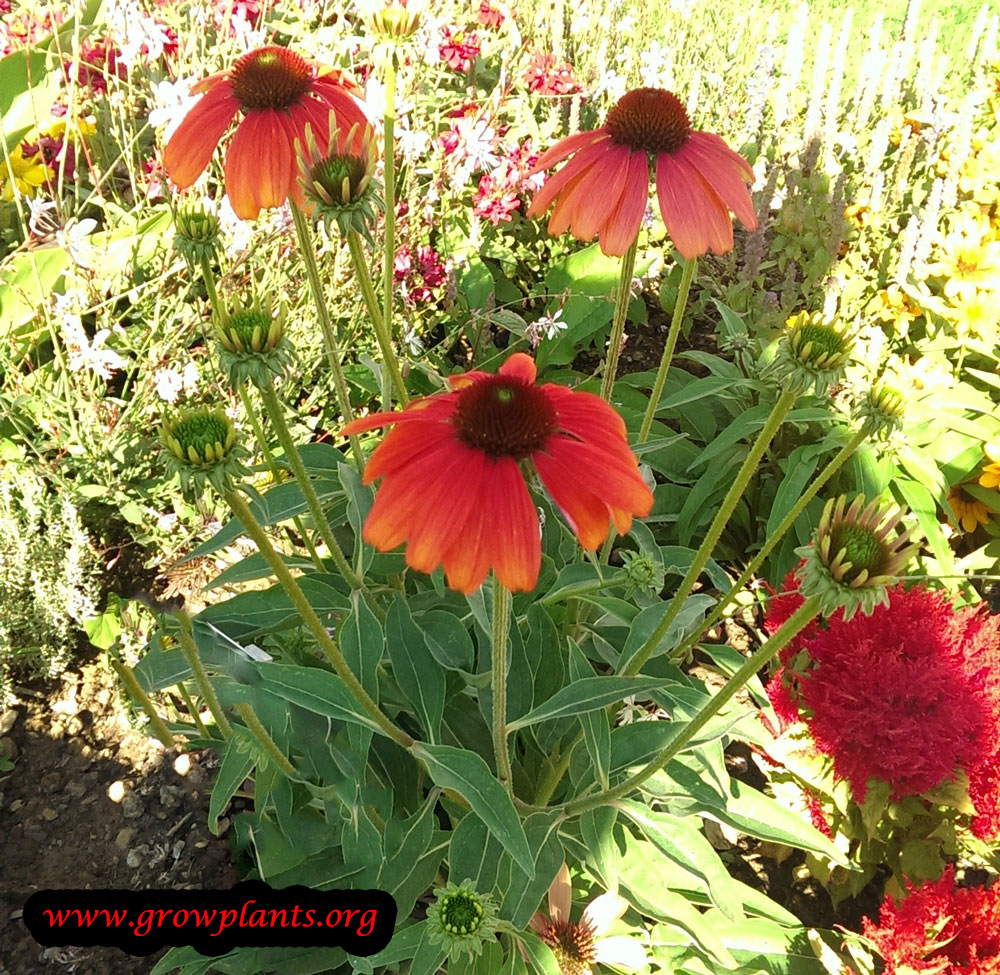
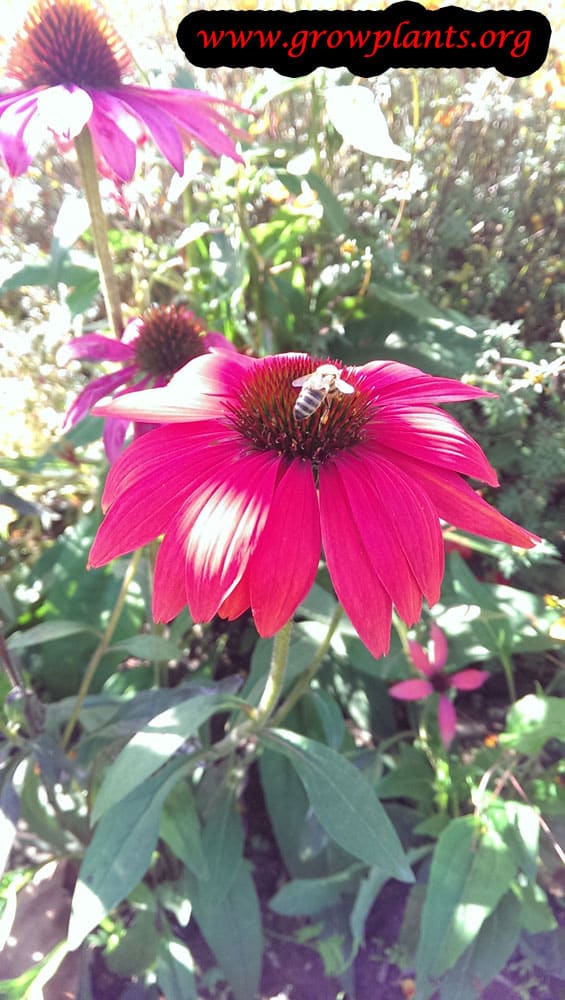
- Flower Characteristics: Large daisy-like flowers in purple, white, pink, orange, red, yellow, green or blue, developing a raised cone centre and drawing in pollinators.
Primary Uses & Landscape Value
- Functional & Ornamental Roles: Ornamental border and prairie perennial, long-lasting cut flower, pollinator plant, and a well-known medicinal herb.
Care Guide: Planting, Soil & Watering
Overview: Echinacea (coneflower) is a hardy, sun-loving perennial that grows best in full sun in fertile, well-drained soil kept lightly moist. It is a fast-to-moderate grower that tolerates some dryness once established but flowers best with steady moisture.
Quick Care Requirements
| Requirement | Ideal Condition |
|---|---|
| Planting Season | In spring after the last frost (grown as an annual in cold zones); spring–summer in zones 8–10a, spring–autumn in 10b |
| Growth Rate | Moderate to Fast |
| Soil Type | Fertile, well-draining soil rich in organic matter, kept lightly moist |
| Water Need | Low to Moderate — tolerates short dry spells once established |
Planting & Establishment
- Best Planting Season: Plant in spring once frost has passed; in milder zones it can also go in through summer into autumn. In very hot regions give it a little afternoon shade.
- How to Plant:
- Hole Preparation: Dig a hole as deep as, and a little wider than, the root ball in an open, sunny spot, spacing plants about 30–40 cm apart.
- Soil Amendments: Enrich the bed with compost or other organic matter and make sure it drains freely; coneflower likes fertility but resents waterlogging.
- Planting Depth: Set the crown level with the soil surface — don’t bury it deeper than it grew in its pot.
- Growth Speed & Expectations: A fast-to-moderate grower that establishes quickly and reaches about 40–140 cm.
Soil, Watering & Drainage Care
- Soil Mix & Drainage Needs: Fertile, well-drained soil kept lightly moist is ideal; in containers use a rich potting or peat mix opened up with perlite or vermiculite, and mulch to hold moisture and cut evaporation.
- Watering Schedule & Technique:
- Young / Newly Planted: Keep the soil evenly moist while plants root in, watering whenever the surface starts to dry.
- Established: Water moderately and deeply rather than lightly; established plants tolerate short dry spells but bloom best with steady moisture.
- Seasonal Adjustments: Increase watering in summer heat and reduce it in cool, wet weather when the plant slows.
Climate, Light & Hardiness
Echinacea (coneflower) is a tough, sun-loving herbaceous perennial of open prairie origin, grown in full sun for its long-lasting flowers. The site data lists hardiness zones 2–10: it is very cold-hardy, dying back to the ground in cold winters and returning from a hardy crown, and it also tolerates summer heat.
Quick Climate Specifications
| Climate Zones | Temperate, Mediterranean, subtropical |
|---|---|
| USDA Hardiness Zones | Approximately 2–10 |
| Optimal Temp Range | ~18–28°C (64–82°F) |
| Cold Damage Begins | Foliage dies back in cold; the crown is very cold-hardy |
| Frost Tolerance | Foliage moderate; dormant crown high |
| Light Conditions | Full sun |
| Wind Tolerance | Moderate to high |
Sunlight & Light Exposure
Optimal Light Setup
Full sun gives the strongest stems and best flowering; in too much shade plants grow lax and bloom poorly.
Best Exposure / Orientation
An open, sunny position suits its prairie nature and keeps growth sturdy.
Temperature Extremes & Hardiness
USDA Hardiness & Regional Limits
Very cold-hardy across a wide range (about zone 2 to 10). It is sometimes grown as an annual in some settings, but that is a cultivation choice, not a limit on its hardiness - as a perennial it dies back and resprouts.
Cold Damage & Winter Protection
The top growth is knocked back by hard frost while the crown and roots survive severe winters with little or no protection; in the coldest zones a light winter mulch is ample.
Extreme Heat Tolerance
Good - it stands up to hot summers well, holding its flowers over a long season.
Wind, Humidity & Microclimate
Wind Tolerance
Moderate to high - the stiff stems generally stand without support in open, breezy sites.
Microclimate Recommendations
An open, sunny, freely drained bed suits it; it is adaptable and needs no special microclimate.
Growing in Pots, Balconies & Indoors
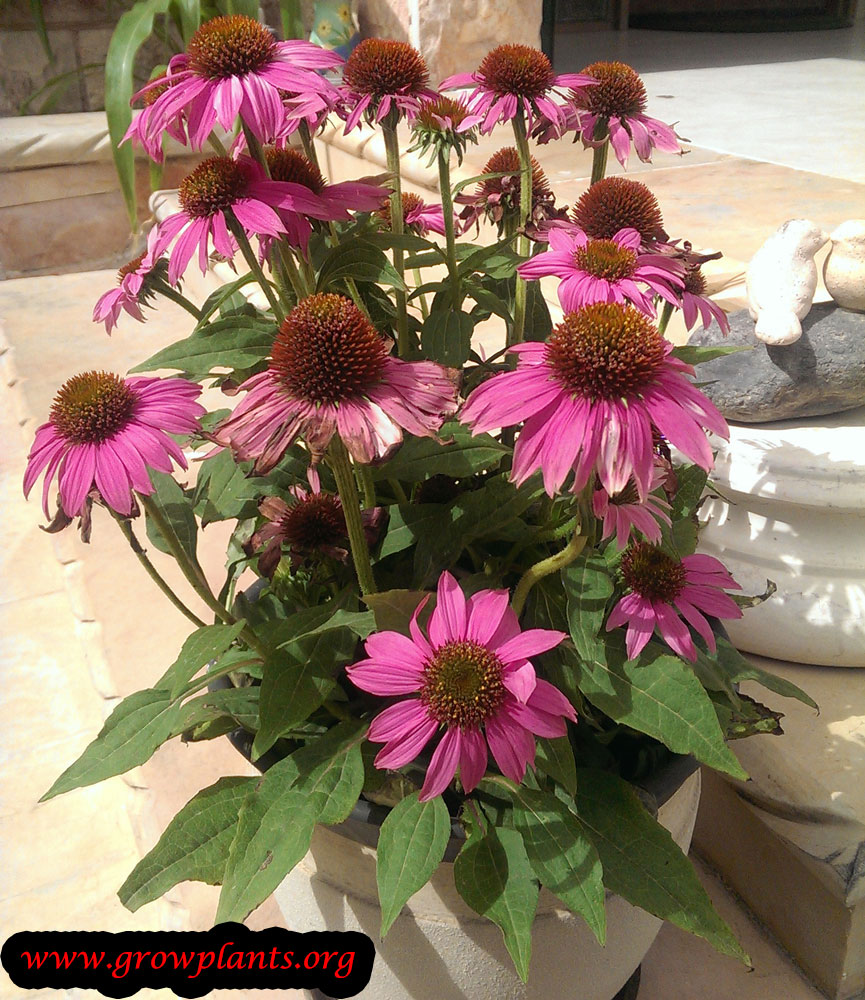
Coneflower (Echinacea) is a sun-loving prairie perennial, not a houseplant – it needs strong light and open air to flower well. But it grows very happily in a good-sized container on a sunny patio or balcony, and the grower gives clear pot instructions for it.
Quick Details
- Container Size: 8-18 L (2-5 gal), per the grower
- Indoor Suitability: Not a houseplant – a full-sun perennial that won’t flower indoors
- Best Spot: Full sun
- Soil & Drainage: Well-ventilated mix with good drainage, rich in organic matter – potting mix or peat with perlite or vermiculite (the grower’s spec)
- Watering in Pots: Average watering – keep the soil moist; a layer of mulch cuts evaporation
Indoors & On the Windowsill
- Houseplant limits: It needs full sun to bloom, so it won’t perform as a room plant.
- Windowsill growing: Even a bright sill falls short for a flowering perennial – keep it outdoors on a sunny patio.
- Overwintering: A hardy perennial; in a very cold climate, a potted plant appreciates a sheltered spot or some root protection over winter.
On a Balcony or Patio
- Light & wind: Give it the sunniest position; it is drought-tolerant once established but a pot in reflected wall heat dries quickly, so check moisture in summer.
- Practicalities: Allow for the pot’s weight and let drainage water run clear of the balcony floor.
Choosing the Pot, Soil & Long-Term Care
- Pot & drainage: An 8-18 L pot (the grower’s size) with strong drainage holes; Choose a pot with strong drainage holes and skip a standing-water saucer, which invites root rot. Terracotta breathes and dries quickly, which suits these sun-lovers; glazed or plastic pots hold moisture longer if you can’t water often.
- Potting mix: Well-ventilated and free-draining, rich in organic matter – potting mix or peat soil with perlite or vermiculite.
- Feeding: Potted plants use up their food faster because watering leaches nutrients away, so feed a little more often through the growing season than you would in open ground.
Grower’s Container Tip
- Keep it moist, mulched and refreshed: The grower advises average watering to keep the soil moist, with a layer of mulch to reduce evaporation. Every two years, switch out the soil – you can replace just part of it – so the old mix never turns stale or rotten.
Fertilizing & Feeding
A tough, long-blooming perennial that prefers rich, lightly moist soil but stays a light feeder overall; an occasional light feeding during the growing season supports its cut-flower and pollinator-attracting bloom without overdoing it.
Quick Fertilizing Specs
| Feeding Level | Light feeder |
|---|---|
| Main Nutrient Priority | Balanced feeding kept light; this species does not need frequent fertilizing to bloom well |
| Best Feeding Period | Spring growth through the summer-into-autumn bloom |
| Organic Options | Compost or other organic matter worked into the soil to build the rich, well-drained bed this plant prefers |
| Micronutrients | Generally supplied by a complete fertilizer; treat specific deficiencies only when diagnosed |
| Soil pH | Prefers well-drained, moderately rich soil; tolerant of a range of pH |
Feeding by Growth Stage
Spring growth and clump establishment
Support fresh basal foliage and stem growth as the clump comes out of winter dieback.
| Nutrient direction | A balanced, general-purpose fertilizer applied lightly, with organic matter to build soil richness. |
|---|---|
| Timing | As new growth begins in spring. |
| Frequency | An occasional light feeding during the growing season is usually enough for this easy-care perennial. |
| Fertilizer types | A balanced, general-purpose garden fertilizer, Compost or other organic matter worked into the soil |
| Precautions | Keep feeding light; this species is naturally vigorous and can self-seed aggressively, and overfeeding only adds to that vigor without improving bloom. |
Summer-into-autumn flowering
Support the long-lasting, pollinator-attracting cone-shaped flower heads through their extended bloom.
| Nutrient direction | Continue light, balanced feeding only if growth looks weak; established clumps flower well on their own. |
|---|---|
| Timing | Summer into autumn as flower heads form and open in succession. |
| Frequency | Established plants rarely need more than an occasional light feeding through the bloom season. |
| Fertilizer types | A balanced fertilizer used sparingly on established clumps |
| Precautions | Avoid heavy feeding, which favors leafy growth and aggressive spreading over strong flowering. |
Winter dieback and rest
Let the clump die back and rest through winter, whether it behaves as a perennial or is grown as an annual in colder climates.
| Nutrient direction | None – withhold fertilizer while the plant is dormant or has died back. |
|---|---|
| Timing | After flowering ends through winter, once foliage dies back. |
| Frequency | No feeding at this stage. |
| Fertilizer types | No feeding at this stage; resume light feeding when new spring growth appears. |
| Precautions | Do not fertilize dormant or dying-back growth. |
Nutrient Deficiency Signs & Corrections
Older leaves turn pale or yellow-green and flowering is sparse.
| Possible causes | low soil nitrogen, thin or heavily leached soil, an extended period without any feeding |
|---|---|
| Appears first on | older, lower leaves |
| What to check | feeding history, soil quality, overall clump vigor |
| Possible correction | Apply a balanced, general-purpose fertilizer at a light rate. |
New leaves turn yellow between the veins while the veins stay green.
| Possible causes | high soil pH limiting iron availability, poorly drained or compacted soil restricting root uptake, root stress unrelated to fertility |
|---|---|
| Appears first on | newest growth |
| What to check | soil pH, drainage, recent watering pattern |
| Possible correction | Improve drainage and, if pH is the cause, correct it or apply a chelated iron product per its label. |
Lush, leafy growth with fewer or smaller flower heads than expected, and increased self-seeding.
| Possible causes | excess nitrogen from overfeeding, too-rich soil beyond what this species needs, crowded plantings reducing light and airflow |
|---|---|
| Appears first on | overall plant habit and flower count |
| What to check | recent feeding rate, soil richness, planting density and sun exposure |
| Possible correction | Reduce feeding, avoid nitrogen-heavy products, and thin crowded plantings. |
Pruning, Training & Seasonal Maintenance
Echinacea (coneflower) is a herbaceous perennial that regrows each year from a persistent crown, so it tolerates a full cutback of old growth without harm. Its two pruning tasks work against each other on purpose: deadhead spent blooms through the growing season to encourage rebloom and curb the self-seeding this plant is noted to be aggressive about, but leave the final flush of seed heads standing through autumn and winter, since their spiny cones give winter garden structure and are valued forage for finches – then cut all old flowering stems back to the base in late winter, just before new growth emerges.
Quick Pruning & Maintenance Specs
| Pruning Tolerance | Moderate–High – cutting stems to the base does not harm the crown |
| Primary Pruning Window | Late winter/very early spring, before new basal growth emerges |
| Secondary Maintenance Window | Spring–autumn bloom – selective deadheading |
| Typical Frequency | Deadhead every 1–2 weeks in bloom; one late-winter cutback |
| Main Objective | Prolong bloom, curb self-seeding, preserve winter seed-head interest, tidy before the spring flush |
| Young Plant Priority | None beyond removing damaged leaves – let first-year plants build root reserves |
| Mature Plant Priority | Selective deadheading through the season + late-winter cutback |
| Best Tool Type | Bypass secateurs (stiff, fibrous stems) |
| Avoid Heavy Pruning During | Peak summer heat stress, and while new spring basal growth is emerging |
Pruning by Plant Age & Size
Newly Established
Remove only damaged or yellowing leaves; avoid cutting the crown so the plant can put its first-year energy into establishing roots.
Young / Formative
No structural training applies – growth is a basal rosette with upright bloom stalks; pinching is not typically needed.
Mature / Established
Deadhead spent blooms through the season for repeat flowering and reduced self-seeding, but leave the last bloom flush uncut into autumn/winter for seed-head interest; cut all old stems to the basal foliage in late winter, before new shoots appear.
Seasonal Pruning Schedule
| Ongoing Sanitary (Spring–Autumn bloom) | Extend bloom, limit reseeding | Spent flower heads as each fades | The final flush late in the season, if winter interest/bird forage is wanted | Repeat flowering from side buds | More blooms, fewer volunteer seedlings |
| Dormant/Late-Winter | Clear old growth before the spring flush | All dead flowering stems/foliage, cut to base | The crown and roots | Fresh basal growth in spring | None – fully dormant |
Special Growth to Remove
- Spent flower stems, deadheaded selectively during the season (leaving the final flush for winter)
- Dead or tattered foliage, cleared in late winter
Container & Small-Space Pruning
The plant’s own care notes call for refreshing the potting soil roughly every two years – a good time to also divide a congested crown and remove any old, unproductive centre growth. In pots, deadhead more diligently than in open ground, since container plants have less reserve capacity to spend on excess seed production.
Tools
Bypass secateurs or sturdy hand snips – stems are fibrous and wiry, not soft like an annual; no loppers or saw are needed.
Tool Hygiene & Disease Risk
Routine: clean, sharp tools are sufficient. Aphids are the only pest noted, with no major transmissible disease risk requiring special disinfection.
Cut Placement & Technique
Deadhead just above the next lateral bud or leaf junction to encourage branching rebloom; make the late-winter cutback close to the basal foliage without nicking emerging new shoots.
Heavy Pruning & Rejuvenation
Tolerates a full cutback of all top growth in late winter without harming the crown, since it regrows entirely from the root each year. If a clump becomes congested or less floriferous with age, lift and divide the crown – a root-level renewal, not a pruning cut.
Post-Pruning Care
No extra feeding is needed beyond the plant’s normal once-a-year fertilizing; resume normal watering after deadheading and watch fresh regrowth for aphids.
Common Pruning Mistakes
- Deadheading away every single spent bloom and losing the valuable winter seed-head display and bird forage
- Cutting back stems while they are still green and feeding the crown in early autumn
- Nicking new basal shoots when doing the late-winter cutback
When NOT to Prune
Avoid cutting back stems that are still green in autumn; avoid a hard cutback during summer heat; hold the late-winter cutback until the worst frost risk to any early new growth has passed.
Recommended Tools (by task)
- bypass_secateurs – fibrous flowering stems and the late-winter base cutback
- precision_snips – fine deadheading of individual spent blooms
- soft_ties_stakes – taller cultivars (up to 140cm) in exposed spots can flop and benefit from light staking
Propagation Guide
Echinacea is most practically grown from seed, though it also roots easily from cuttings – the site notes vegetative reproduction is not required but that cuttings take readily. Wild-type seed comes reasonably true, but named colour cultivars must be propagated vegetatively to keep their exact flower colour; overall this is an easy plant to propagate.
Quick Propagation Specs
| Best Propagation Method | Seed (species type) or clump division (named colour cultivars) |
| Alternative Methods | Root cuttings |
| Propagation Difficulty | Easy |
| Seed True-to-Type | Usually true-to-type for the species; cultivar-dependent for named hybrids |
| Vegetative True-to-Type | Yes |
| Best Propagation Season | Spring (sowing and division) |
| Seed Germination Time | 2-4 weeks |
| Germination Temperature | Best 20-25°C (68-77°F); possible from 15°C up to 29°C (59-84°F) but germination is slower and lower-percentage |
| Seed Sowing Depth | 3-6mm (0.2-0.4 inch) |
Growing from Seed
Seed Handling & Viability
Store harvested seed dry, in a cool, dark spot – the site recommends refrigeration for best results, and keeping seed cool until sowing.
Sowing Season
Sow in spring in hardiness zones 2-9, or spring into summer in zone 10, avoiding sowing during hot summer days.
Sowing Depth & Orientation
Sow at 3-6mm (0.2-0.4 inch) deep – seed does not need deep burying, just light covering. If growing on in rows or trays, space plants at roughly 30x40cm (12×16 inches).
Germination Conditions
Keep the sowing medium moist and humid in a sunny location. Best germination occurs at 20-25°C (68-77°F); germination is still possible between 15-29°C (59-84°F) but will be slower and less complete outside the preferred range.
Germination Time
Germination typically takes 2-4 weeks.
Seedling Care
Keep seedlings in a sunny spot with evenly moist soil (average water, never letting it dry out); increase watering if seedlings are growing through summer heat.
Leaf & Root Cuttings
Echinacea is easy to start from cuttings, as the site notes; root cuttings are the standard vegetative technique for this genus – sections of root are lifted while the plant is dormant and laid horizontally in a moist, well-drained rooting medium to sprout new shoots. This preserves the exact character of a named plant, unlike seed.
Division, Offsets, Pups & Suckers
Established clumps can be lifted and divided, ideally in spring; each division should retain healthy roots and at least one growth crown. This is the simplest way to multiply a specific named colour form true to the parent plant.
Bloom & Edible Flower Guide
Quick Details
- Bloom Season: Late spring through summer, and into autumn in warm climates
- Time to First Bloom: A perennial that usually flowers from the second year; plants set from established stock or started early may bloom the first season
- Flower Appearance: Large daisy heads with a raised, cone-shaped center; petals in purple, pink, white, orange, red, yellow, green or blue
- Edibility: The petals are edible as a garnish, and the flowers and roots are widely used in herbal teas and traditional medicine
Detailed Blooming Overview
Coneflowers are a long-blooming backbone of the pollinator garden. The domed central cone draws bees and butterflies through the warm months, and if you leave the late heads standing they feed finches and other seed-eating birds into winter.
Flower Characteristics
- Broad ray petals surrounding a firm, bristly cone that rises as the flower matures.
- Wide color range across modern cultivars, from classic purple to warm sunset shades.
Bloom Care & Thinning
- Managing the bloom: Deadhead through summer for a longer show, or leave the final flush to set seed for birds.
- Pollination: Pollinated by bees and butterflies.
- Using the flowers: Fresh petals make a colorful garnish, and the blooms are commonly dried for herbal tea.
Bloom Health & Protection
- Aster yellows: This phytoplasma disease causes distorted, greenish, tufted flowers; there is no cure, so remove and destroy affected plants promptly and control the leafhoppers that spread it.
- Powdery mildew: In humid, crowded conditions a white film can coat the foliage; improving airflow and applying a sulfur-based or neem-oil treatment helps.
- Japanese beetles: These may chew on the petals; hand-picking them in the cool of the morning keeps numbers down.
Fruit & Uses
Echinacea is grown mainly for traditional herbal tea rather than as a food crop: the flower heads, leaves and root are dried and steeped to make an infusion. None of these parts are typically eaten raw as food – they are used only after drying and steeping.
Quick Edible Specs
| Edible Parts | Flowers, leaves, root |
|---|---|
| Main Use(s) | Medicinal-note: traditional herbal tea / tisane; not a culinary food |
| Eaten Raw or Cooked | Not eaten raw as food; consumed as a steeped infusion |
| Preparation Required | Dry, then steep in hot water; root is typically cleaned and sliced before drying |
| Harvest Season | Flowers cut at full bloom (see Bloom season); root lifted once plants are well established, usually in autumn |
| Time to First Harvest | Flowers as soon as they open fully; root only from mature, established plants |
| Storage | Dry thoroughly and store airtight, away from light, for later use as tea |
| Safety/Toxicity Caveat | this is a traditional herbal use, not a food; people with plant/pollen allergies (this genus is related to ragweed) may react; do not rely on home-grown material for medicinal dosing |
Flowers & Flower Buds
The cone-shaped flower heads (see Blooming) are cut once fully open and dried for tea, sometimes with the petals separated from the central cone. Dried flowers add colour and a mildly bitter, aromatic note to herbal blends.
Leaves & Greens
Leaves can be picked and dried through the growing season for the same traditional tea use. Light leaf picking does not require sacrificing the whole plant, but heavy removal will reduce its vigour and flowering.
Roots & Tubers
The root is the part most associated with traditional Echinacea preparations. It is lifted from mature, well-established plants (not young first-year plants), cleaned, sliced and dried before use. Digging the root ends that plant’s growth, so root harvest is generally done from plants being retired or thinned rather than ones grown mainly for flowers.
Preparation, Uses & Safety
Flowers, leaves and root are used only after drying, steeped in hot water as a traditional tisane; they are not eaten fresh as food. This is a folk/traditional use only – treat any wellness claims cautiously, avoid it if you have allergies to ragweed or other Asteraceae plants, and do not rely on home-grown material for medicinal dosing.
Pests, Diseases & Troubleshooting
Coneflowers are tough, drought-tolerant prairie perennials that shrug off most problems, but they have a few signature enemies: the incurable aster-yellows phytoplasma spread by leafhoppers, which produces bizarre deformed green cones; foliar fungal leaf spots and powdery mildew in humid, crowded plantings; and sap-suckers on soft new growth. Good spacing, airflow, sensible watering, and prompt removal of diseased plants keep them healthy the organic way.
Quick Troubleshooting Overview
| Issue / Pest | Main Symptom | Primary Solution |
|---|---|---|
| Aster yellows | Deformed, leafy green cones; yellow witches’-broom growth | No cure — dig and destroy infected plants promptly |
| Aphids | Sticky colonies on buds and new shoots | Water jet; insecticidal soap; encourage predators |
| Japanese beetle | Skeletonized leaves and chewed petals | Hand-pick into soapy water; row cover |
| Leaf spot | Dark brown/black angular spots on leaves | Remove debris; improve airflow; copper if severe |
| Powdery mildew | White dusty coating on leaves in humid air | Space plants; sulfur or potassium bicarbonate |
| Crown / root rot | Wilting, blackened crown in wet heavy soil | Improve drainage; avoid overwatering |
Common Pests & Management
- Aster leafhopper (Macrosteles quadrilineatus):
- Symptoms: Small, wedge-shaped, greenish leafhoppers that jump and fly when disturbed. Their direct feeding is minor, but they are the vector that transmits the aster-yellows phytoplasma, making them the most consequential coneflower pest.
- Prevention & Control: Manage weeds that host the phytoplasma, use floating row cover over young plants in high-pressure areas, and support predators. Insecticidal soap or neem reduces numbers, but the real goal is removing infected plants fast so leafhoppers cannot pick up and spread the pathogen.
- Aphids (Aphis spp., Myzus persicae):
- Symptoms: Green, black, or yellow colonies cluster on buds, flower stems, and the undersides of new leaves, sucking sap and leaving sticky honeydew and sooty mould; ants often tend them.
- Prevention & Control: Blast colonies off with water, then use insecticidal soap or neem on stubborn groups. Conserve ladybirds, lacewings, and hoverflies, which usually control aphids on coneflowers without intervention. Avoid over-feeding with nitrogen.
- Japanese beetle (Popillia japonica):
- Symptoms: Metallic green-and-copper beetles feed in groups in warm weather, skeletonizing leaves between the veins and chewing ragged holes in petals and cones.
- Prevention & Control: Hand-pick beetles into soapy water in the cool morning when they are sluggish, and protect prized plants with fine netting. Avoid pheromone traps, which draw in more beetles than they catch; treat turf for grubs only if larvae are a proven problem.
- Eriophyid / coneflower rosette mite (Aceria spp.):
- Symptoms: Microscopic mites feed inside developing flower buds, producing tufted, distorted “rosette” growth and green leafy proliferation from the cone that can be mistaken for aster yellows.
- Prevention & Control: Cut off and bin affected flower heads well below the cone to remove the mites, and clean up old heads at season’s end. Miticidal oils give limited help; sanitation is the main tool. If deformity is widespread, rule out aster yellows.
- Sweet potato / silverleaf whitefly (Bemisia tabaci):
- Symptoms: Tiny white flies rise in a cloud when foliage is disturbed and their nymphs suck sap on leaf undersides, causing yellowing, honeydew, and sooty mould, mainly in warm climates and greenhouses.
- Prevention & Control: Use yellow sticky traps to monitor and reduce adults, spray insecticidal soap or horticultural oil onto leaf undersides, and support parasitic wasps (Encarsia) and other natural enemies.
Diseases & Fungal Issues
- Aster yellows (phytoplasma):
- Symptoms: The signature coneflower disease: infected plants throw grotesque, deformed flower heads with green, leafy, tufted cones and witches’-broom shoots, yellowed distorted foliage, and stunting. It is a phytoplasma spread by leafhoppers, not a fungus, and there is no cure.
- Treatment & Management: Dig up and destroy affected plants immediately (do not compost) to stop leafhoppers spreading it further, and control leafhoppers and weedy hosts. There is no spray that cures it; prevention and prompt roguing are the only management.
- Septoria & Alternaria leaf spot (Septoria spp., Alternaria spp.):
- Symptoms: Dark brown-to-black spots, sometimes angular or with yellow halos, develop on the leaves in warm wet weather and can merge until foliage browns and dies from the bottom up.
- Treatment & Management: Water at the base to keep foliage dry, space and thin for airflow, and clear fallen debris where spores overwinter. Remove the worst leaves; a copper-based fungicide protects new growth in a severe, recurring case.
- Powdery mildew (Erysiphe/Golovinomyces spp.):
- Symptoms: A white-to-grey powdery coating spreads over leaves and stems in humid conditions with poor airflow, especially on crowded or shaded plants, dulling and distorting foliage.
- Treatment & Management: Improve spacing, sun, and air movement, and avoid overhead watering late in the day. Sulfur or potassium-bicarbonate sprays, or a milk-based home spray, check mild cases; choose mildew-tolerant selections where it recurs.
- Sclerotinia stem & crown rot (Sclerotinia sclerotiorum):
- Symptoms: Plants wilt suddenly, with a soft, water-soaked rot at the stem base draped in white cottony mould that contains hard black resting bodies (sclerotia).
- Treatment & Management: Remove and destroy infected plants along with surrounding soil, improve drainage and spacing, and avoid mulch piled against the crown. Rotate away from other susceptible perennials; there is no effective cure once a plant is infected.
- Root & crown rot (Phytophthora, Rhizoctonia spp.):
- Symptoms: In heavy, wet, poorly drained soil the crown and roots blacken and rot, causing wilting, stunting, and collapse, especially over a wet winter.
- Treatment & Management: Plant in well-drained soil, avoid overwatering and winter waterlogging, and do not bury the crown. Improve drainage with grit or raised beds; badly rotted plants rarely recover and should be removed.
Growing Difficulties & Abiotic Problems
- Poor drainage & winter wet:
- Cause & Symptoms: Coneflowers are prairie plants that resent soggy soil; in heavy clay or wet winters the crown rots and plants are short-lived, dwindling after a year or two.
- Correction Strategy: Plant in full sun in free-draining soil, improve clay with grit and organic matter or use raised beds, and ease off watering once established. Good drainage is the single biggest factor in longevity.
- Flopping & weak stems:
- Cause & Symptoms: In over-rich soil, shade, or after heavy feeding, stems grow soft and tall and splay open, dropping the flowers to the ground.
- Correction Strategy: Grow in full sun and lean, unimproved soil without extra nitrogen, choose sturdier compact selections, and support or pinch tall types early rather than staking a collapsed clump.
- Failure to establish / poor bloom:
- Cause & Symptoms: New plants that are too shaded, too wet, or repeatedly divided may sulk, stay small, and flower poorly.
- Correction Strategy: Give at least six hours of sun, avoid disturbing the deep roots once settled, and be patient in the first year as the plant builds its root system before blooming freely.
What Helps — Products & Tools
Lead with cultural tools: full sun, wide spacing, base watering, and clean-up of diseased foliage. For insects, insecticidal soap or neem oil handles aphids and whitefly, hand-picking and fine netting deal with Japanese beetles, and yellow sticky traps monitor leafhoppers and whitefly. For foliar disease, sulfur or potassium-bicarbonate sprays suppress powdery mildew and a copper-based fungicide protects against leaf spots, but the decisive action against aster yellows is simply digging out and destroying infected plants promptly.