

Plant Profile & Key Characteristics
Overview: A clump-forming herbaceous perennial 30-60 cm tall, growing from tuberous roots and evergreen in mild climates. Grown as an ornamental and long-lasting, lightly fragrant cut flower in a wide range of colours.
Quick Specifications
| Specification | Attribute |
|---|---|
| Plant Type / Life Cycle | Perennial |
| Foliage Type | Evergreen in mild climates (herbaceous) |
| Mature Size | 30-60 cm (12-24 in) tall |
| Growth Rate | Moderate |
| Root System | Tuberous, fleshy rhizomes (can spread) |
| Toxicity | Mildly toxic — sap can irritate skin (contact dermatitis) and ingestion may cause mild stomach upset |
| Hardiness | USDA zone 7 and warmer |
Growth Form & Structure
- Height & Spread: Forms spreading clumps 30-60 cm tall; suited to borders and containers rather than indoors.
- Growth Habit & Form: Clump-forming herbaceous perennial with upright leafy stems rising from tuberous roots.
- Lifespan & Maturity: Long-lived perennial that spreads steadily from its tuberous roots.
Anatomy & Physical Features
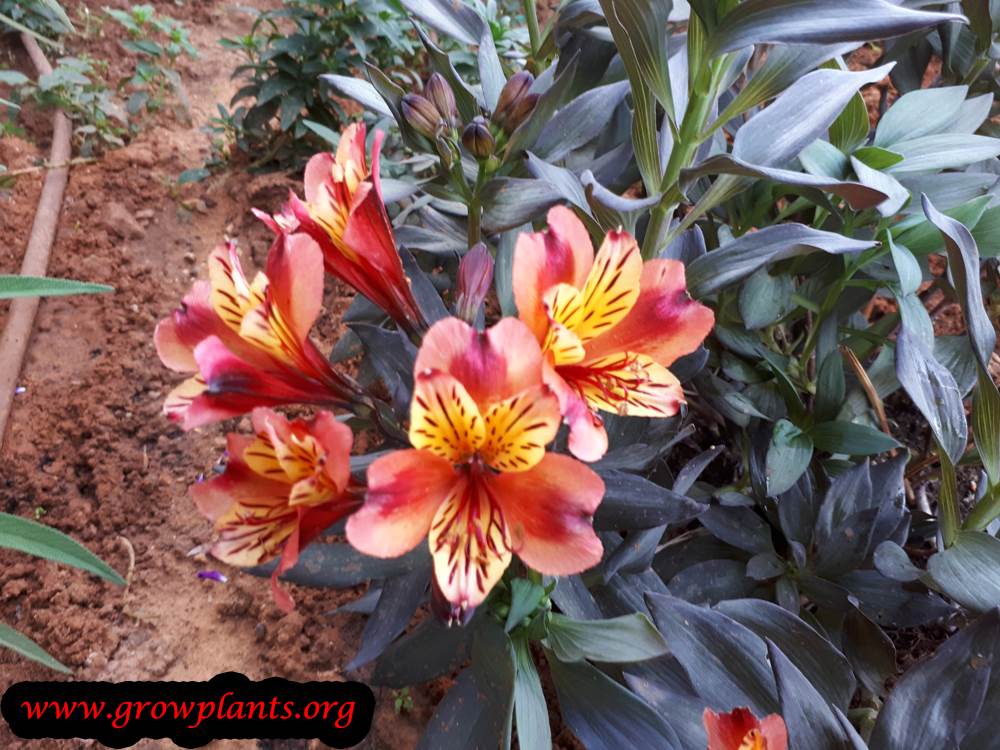
- Leaves & Foliage: Green (some cultivars white-marked or grey-toned) linear-to-oval leaves that characteristically twist (resupinate) on the stems.
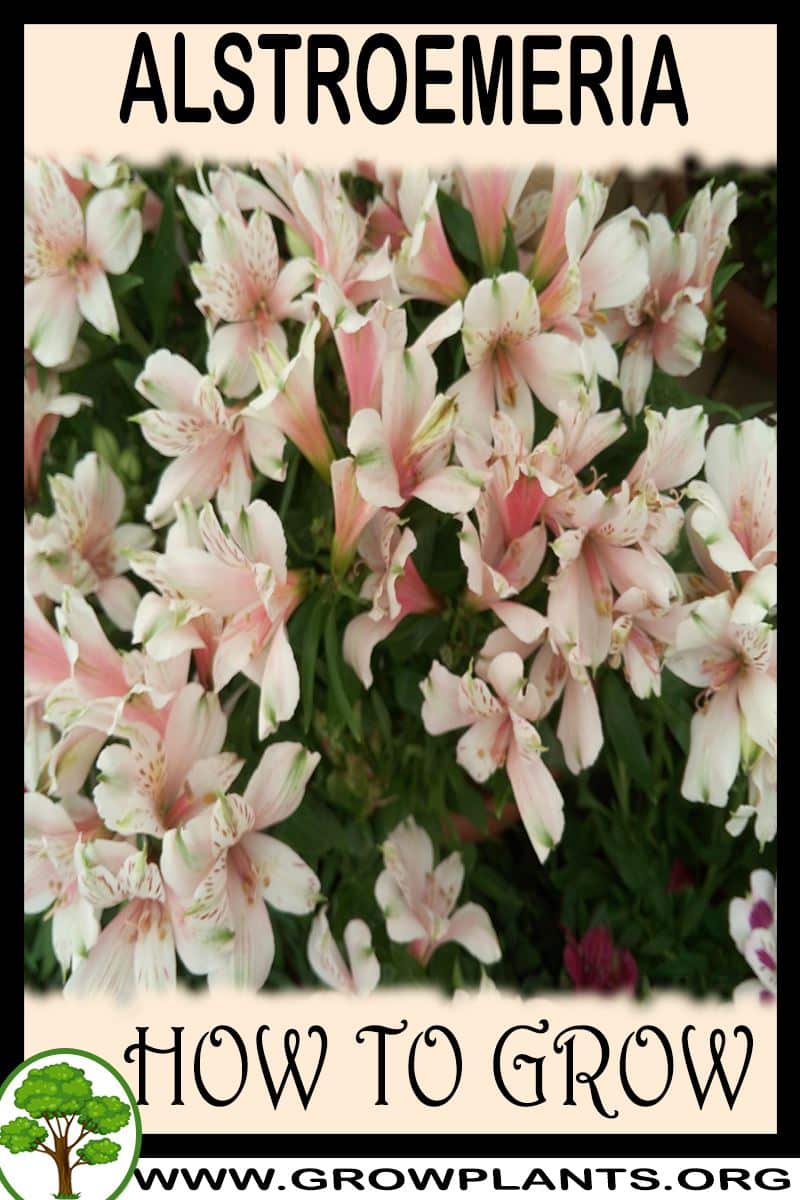
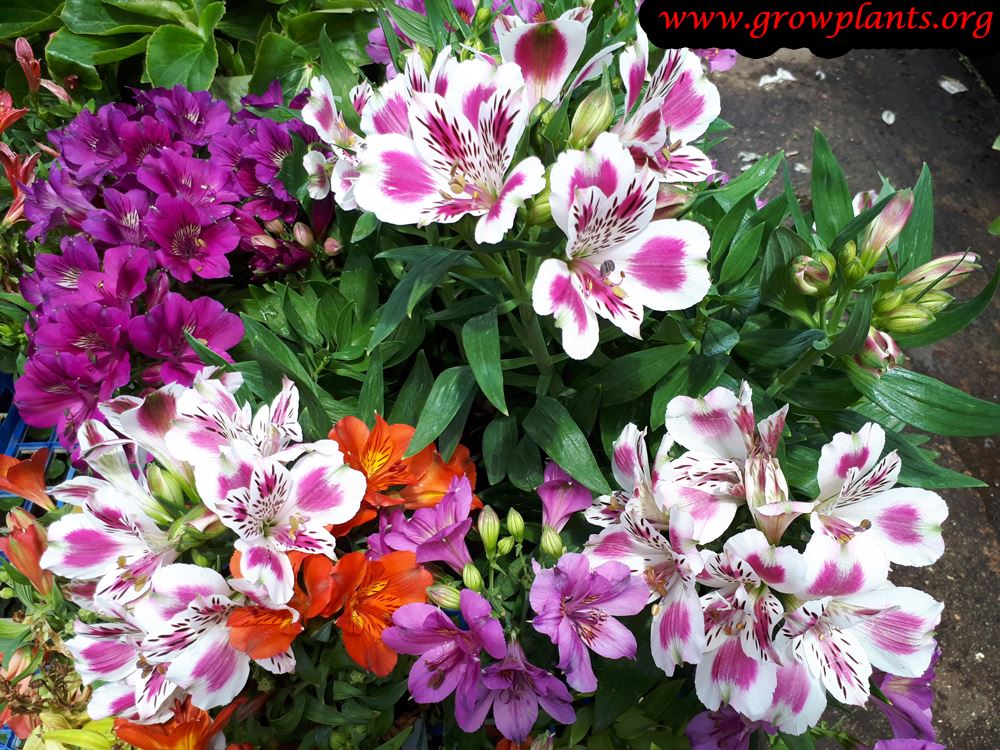
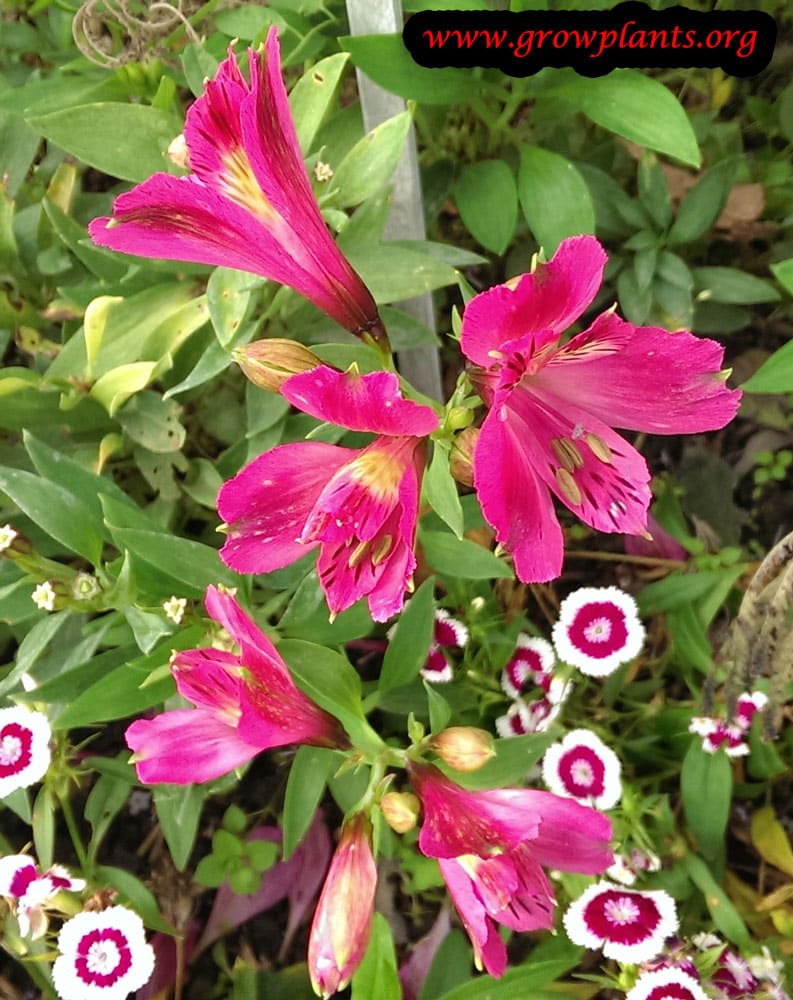
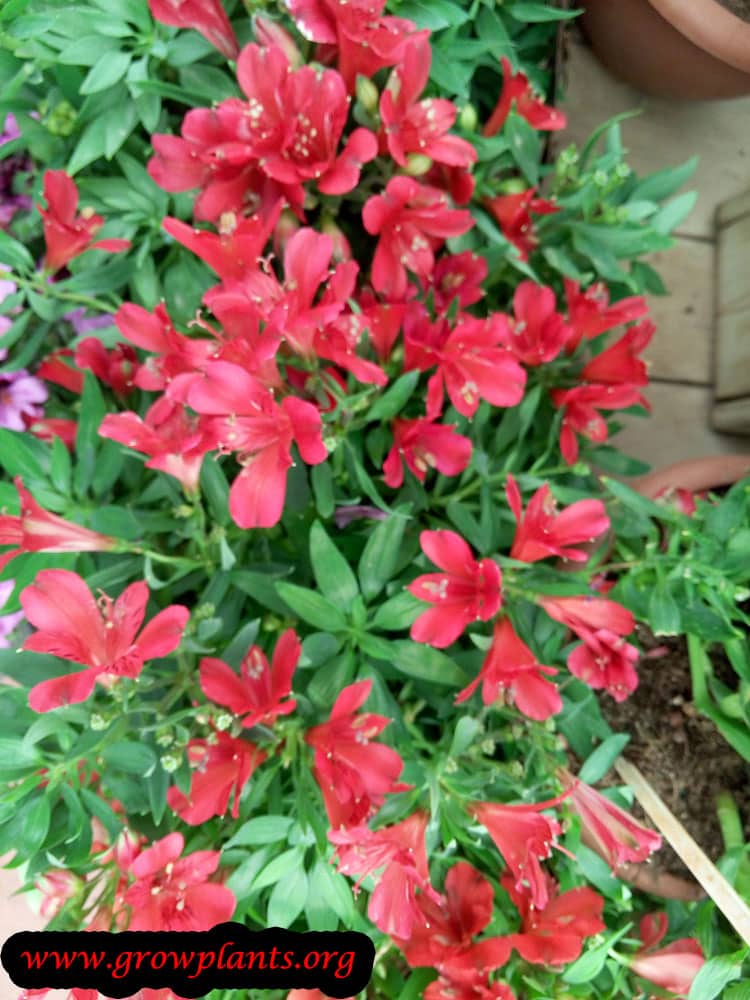
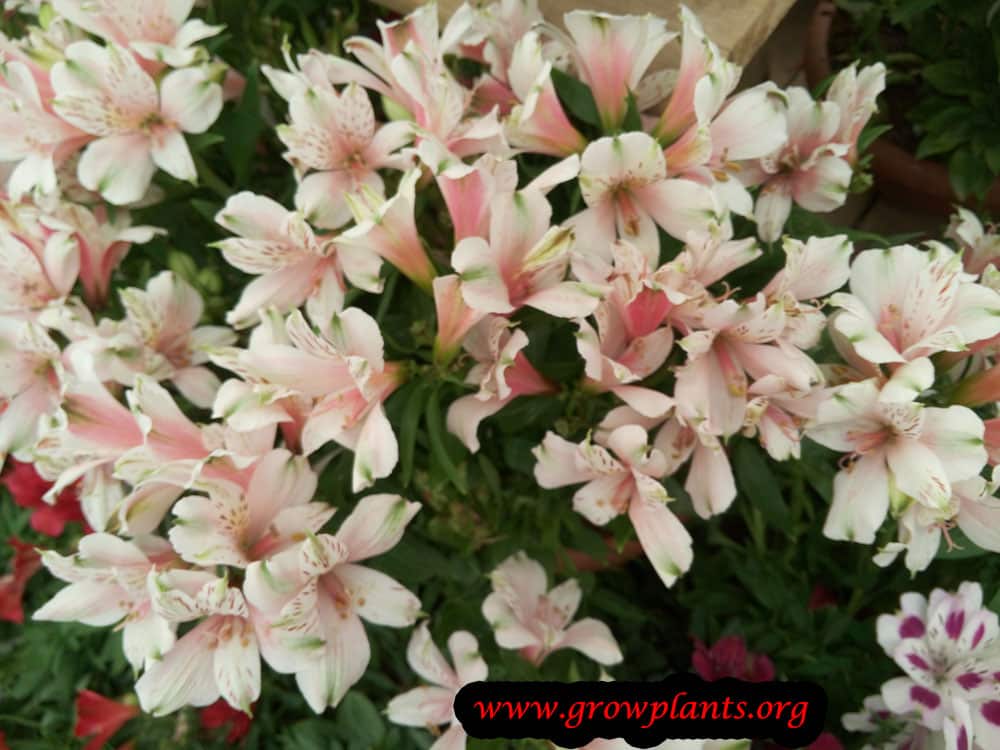
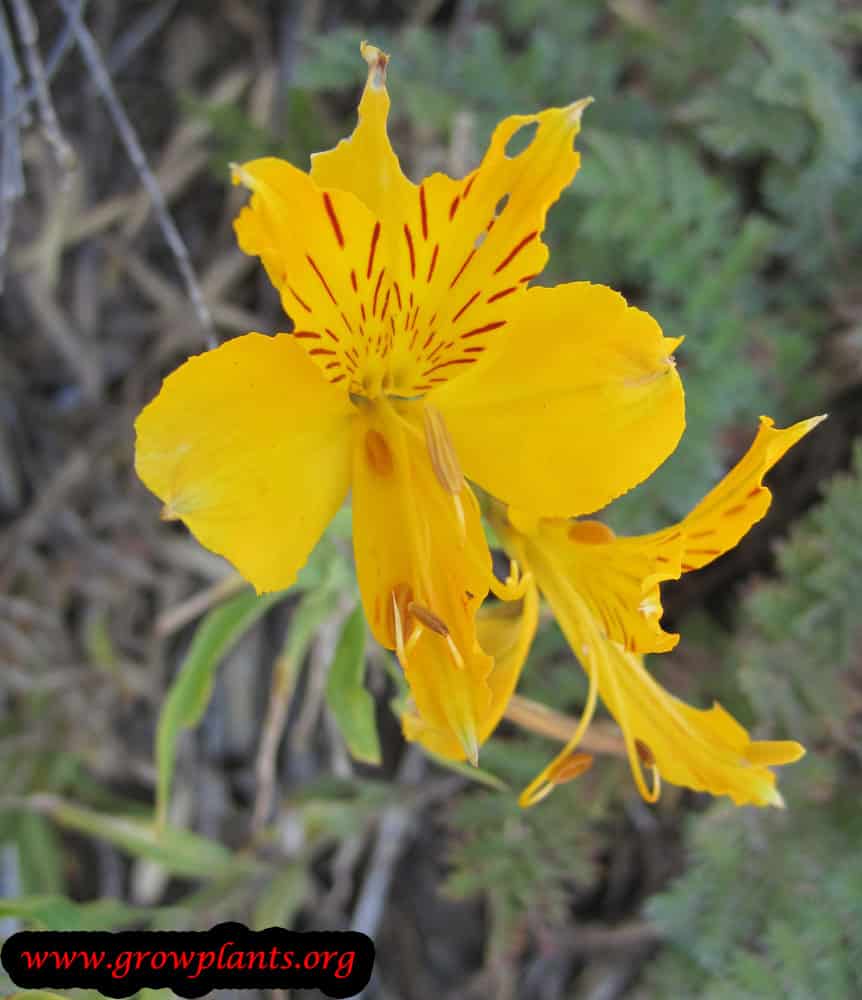
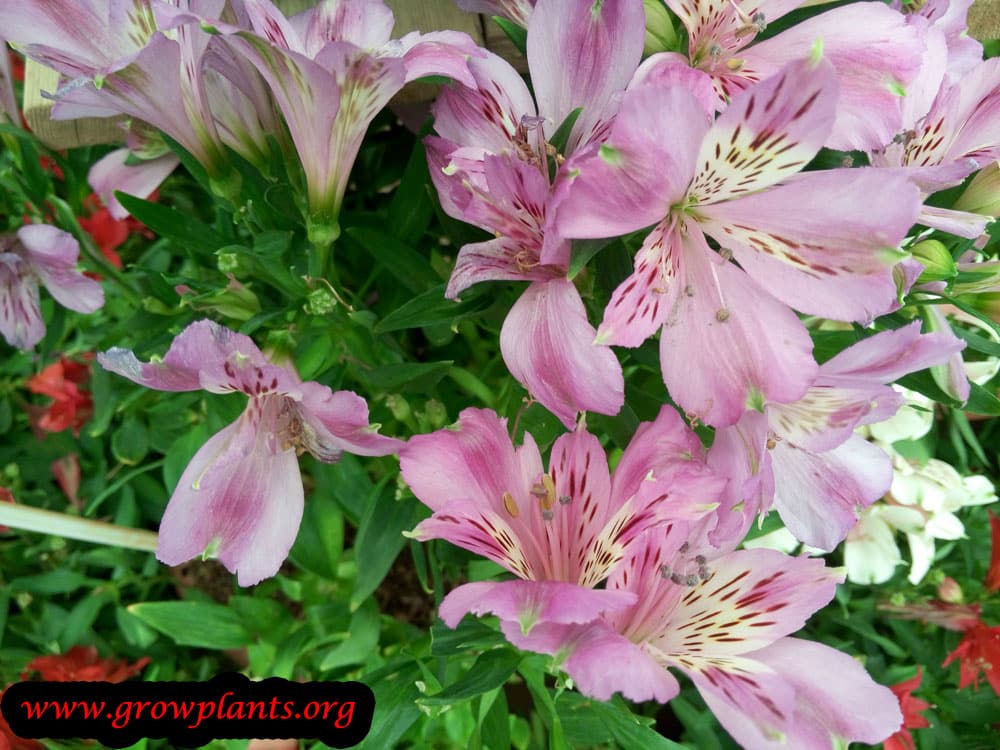
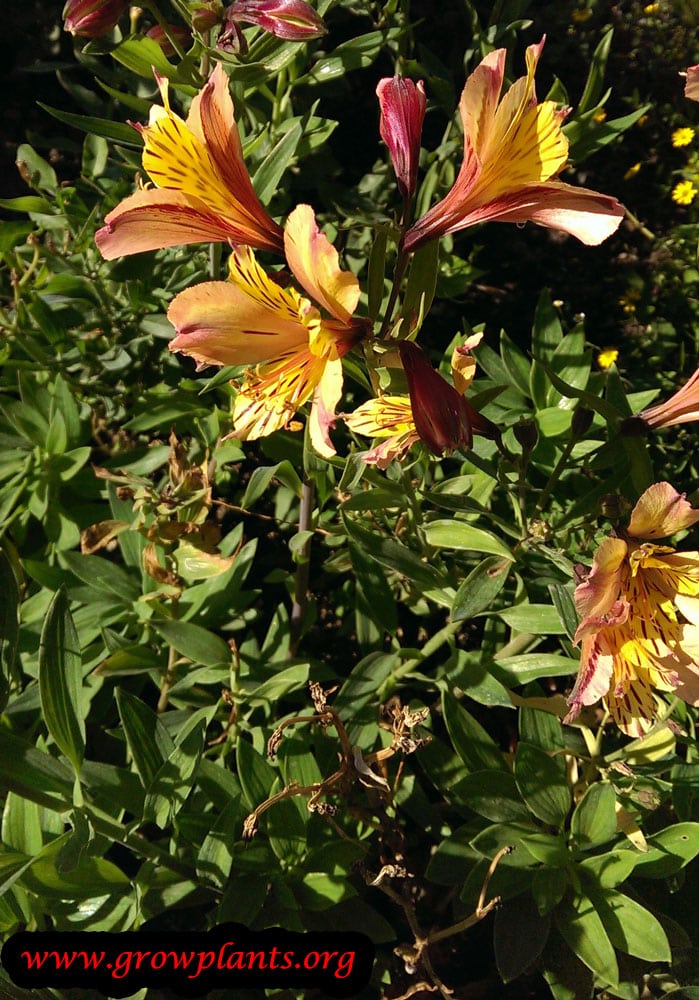
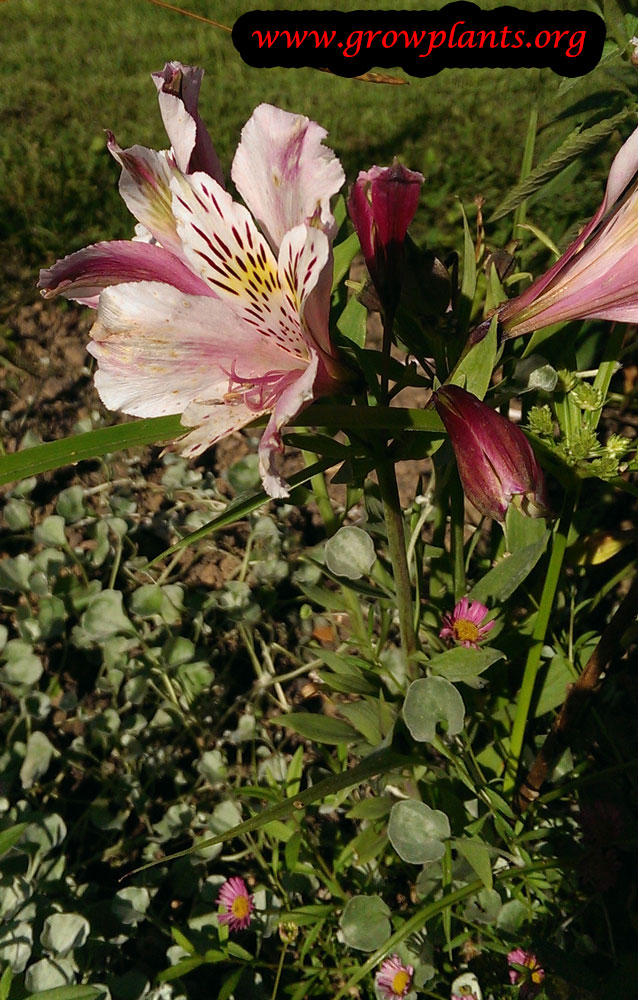
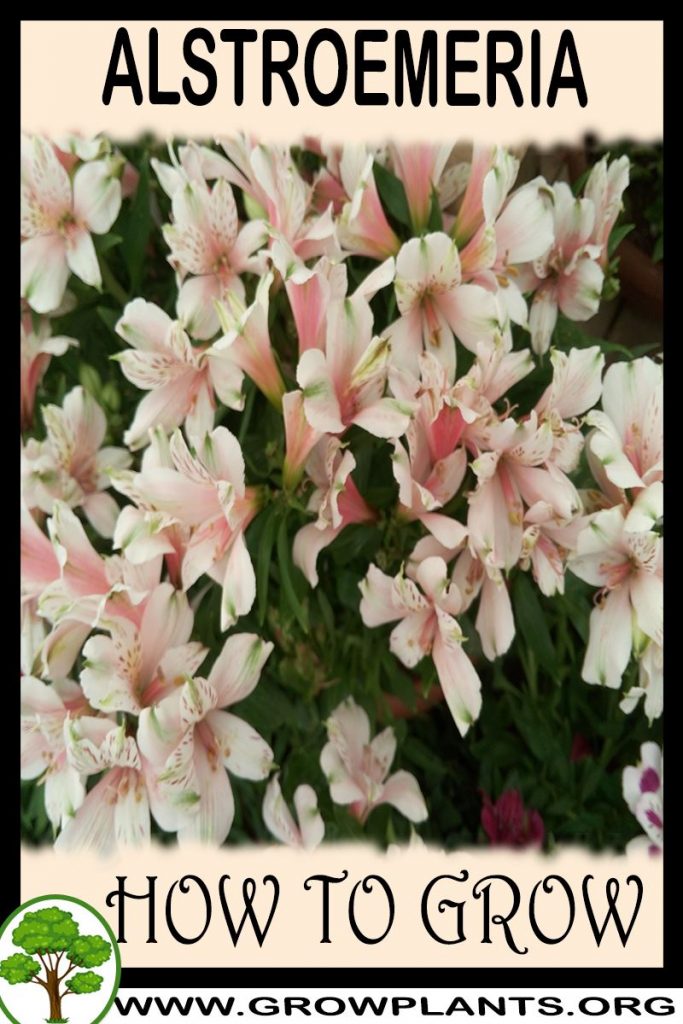
- Flower Characteristics: Showy flowers in purple, red, pink, white, orange, yellow or green, often multi-coloured with stripes or dots, 4-6 petals, at the stem tips (spring to summer).
Primary Uses & Landscape Value
- Functional & Ornamental Roles: Ornamental border plant and premium, long-lasting cut flower.
Care Guide: Planting, Soil & Watering
Overview: Alstroemeria (Peruvian lily) is a tuberous perennial that flowers best in full sun to light shade and fertile, well-draining soil. It grows at a moderate pace and likes steady, even moisture without ever becoming waterlogged.
Quick Care Requirements
| Requirement | Ideal Condition |
|---|---|
| Planting Season | From late winter through spring and summer, once hard frost has passed |
| Growth Rate | Moderate |
| Soil Type | Fertile, humus-rich and well-draining |
| Water Need | Moderate — keep evenly moist in active growth, letting the surface dry slightly between waterings |
Planting & Establishment
- Best Planting Season: Plant the tuberous roots from the end of winter through spring and into summer, once the ground is workable and hard frosts have passed.
- How to Plant:
- Hole Preparation: Dig a hole wide enough to spread the fragile tuberous roots without cramping them and loosen the soil around it.
- Soil Amendments: Improve the bed with plenty of compost or well-rotted organic matter for fertility and moisture retention, while keeping the drainage sharp.
- Planting Depth: Plant the tubers several centimetres deep and handle them gently, as they are brittle; set them at the depth they were previously growing.
- Growth Speed & Expectations: A moderate grower reaching about 30–60 cm that spreads into a clump over time and can be lifted and divided to propagate.
Soil, Watering & Drainage Care
- Soil Mix & Drainage Needs: Grow in fertile, well-draining soil enriched with organic matter; avoid heavy, waterlogged ground, which can rot the tubers. In containers use a rich, free-draining potting mix with good drainage holes.
- Watering Schedule & Technique:
- Young / Newly Planted: Keep the soil evenly moist after planting to help the roots establish, without letting it become soggy.
- Established: Water regularly through the growing and flowering season so the soil stays lightly moist, letting the surface dry a little between waterings.
- Seasonal Adjustments: Water more in hot, dry weather to prolong flowering, and reduce watering in winter when the plant rests.
Climate, Light & Hardiness
Alstroemeria grows best in Mediterranean, subtropical, temperate, or tropical climates with full sun to half shade and consistently well-drained soil. It is rated to USDA zone 7 and warmer, with the fleshy root system considerably more cold-hardy than the top growth, which dies back with hard frost.
Quick Climate Specifications
| Climate Zones | Mediterranean, subtropical, temperate, tropical |
| USDA Hardiness Zones | 7 and warmer, per site data (no upper limit specified) |
| Cold Damage Begins | Top growth (stems and leaves) is damaged by hard frost well before the below-ground rhizome is threatened; site pruning guidance to remove old and dead leaves in autumn/winter reflects this seasonal dieback. |
| Approx. Survival Minimum | Approximately -18–-12°C (0–10°F) - the average annual minimum for USDA zone 7, the coldest zone in this plant's rated range. This describes the cold-hardy rhizome; unprotected top growth is lost well above this figure. |
| Frost Tolerance | Moderate (root system, within its rated zone); Low (top growth) |
| Light Conditions | Full Sun / Half Shade |
| Wind Tolerance | Moderate |
Sunlight & Light Exposure
Optimal Light Setup
Full sun to half shade; site data lists both as suitable rather than favoring one strongly over the other.
Direct Sun Requirement
Full sun gives the strongest flowering in climates with mild-to-moderate summer heat; where summers run hot, half shade is the safer choice.
Shade & Heat Management
In hot-summer climates, half shade (particularly in the afternoon) reduces heat stress on the foliage and helps sustain bloom quality through the growing season.
Best Exposure / Orientation
Open beds suit cooler climates; part shade, such as an east-facing exposure, suits hot-summer regions.
Temperature Extremes & Hardiness
USDA Hardiness & Regional Limits
Alstroemeria is rated to USDA zone 7 and warmer on this site, with no upper zone limit given - consistent with a plant grown across Mediterranean, subtropical, temperate, and tropical climates alike. The fleshy, rhizomatous root system persists below ground through winters that kill back the top growth, resprouting the following spring; cold tolerance can vary by cultivar and is reduced in heavy, poorly drained soil that stays wet and cold over winter.
Cold Damage & Winter Protection
Foliage and flowering stems are damaged or killed by hard frost; site pruning guidance to remove old and dead leaves in autumn or winter reflects this normal seasonal dieback. A dry winter mulch over the root zone is a reasonable precaution toward the colder end of the rated range.
Frost Sensitivity
Top growth is frost-sensitive and reliably damaged by a hard freeze; the below-ground root system is considerably more resilient within the plant's rated zone.
Extreme Heat Tolerance
Generally good, given its native and cultivated range extends through subtropical and tropical climates. In very hot, dry conditions, some afternoon shade and steady soil moisture (covered further under watering) help sustain flower quality.
Wind, Humidity & Microclimate
Humidity Preferences
No strong preference is indicated; the plant is grown successfully across climates ranging from dry Mediterranean summers to humid subtropical and tropical conditions.
Dry-Air Tolerance
Reasonably tolerant, though prolonged heat combined with very dry air can shorten bloom quality and hasten wilting of cut flowers.
Wind Tolerance
Moderate; the slender flowering stems benefit from a somewhat sheltered position, or nearby companion planting for informal support, in consistently windy sites.
Rainfall & Seasonal Moisture
Adaptable to a range of rainfall regimes given its broad climate range; well-drained soil matters more than rainfall amount, particularly for the root system's winter survival in the cooler part of its range.
Microclimate Recommendations
A sheltered, well-drained bed protects both the flowering stems from wind damage and the dormant root system from the combination of winter wet and cold that is more damaging than cold alone.
Growing in Pots, Balconies & Indoors
Alstroemeria (Peruvian lily) is a tuberous perennial grown for its long-lasting flowers. The grower notes it is not a houseplant – it wants the full sun to part shade that indoor light cannot match – but it grows well in a planter or container on a sunny balcony or patio.
Quick Details
- Container Size: A large, deep container – the fleshy, tuberous roots spread and resent cramping
- Indoor Suitability: Not a houseplant; grow it outdoors in sun
- Best Spot: Full sun to half shade
- Soil & Drainage: Rich but free-draining mix
- Watering in Pots: Average, even moisture – pots dry faster than open ground; avoid waterlogging
Indoors & On the Windowsill
- Not for indoors: The grower marks it as not a houseplant – it needs more sun than a room offers, and would grow leggy and flower poorly.
- Brightest sill only: At most a very sunny windowsill could hold a pot briefly, but it belongs outdoors through the growing season.
- Overwintering: The tubers are frost-tender in cold climates; growing in a pot lets you move it somewhere bright and frost-free for winter, or mulch it heavily.
On a Balcony or Patio
- Light & wind: Give it a sunny, sheltered spot; tall flowering stems can flop, so provide light support on windy balconies. Walls and paving reflect heat and dry pots quickly – check moisture often.
- Practicalities: A large, filled pot is heavy – position it before filling, and let drainage water run off freely.
Choosing the Pot, Soil & Long-Term Care
- Pot & drainage: A large, deep pot with strong drainage holes; skip a standing-water saucer to avoid rotting the tubers. Terracotta breathes and dries faster; glazed or plastic holds moisture longer.
- Potting mix: A rich, aerated, free-draining mix, for example a quality potting mix with added perlite.
- Feeding: Feed potted plants more regularly than those in the ground, as watering leaches nutrients away – this fuels the long flowering season.
- Refreshing & dividing: Refresh the mix and divide the spreading tubers every couple of years to keep the clump healthy and free-flowering.
Safety: Alstroemeria sap can irritate skin – wear gloves when cutting stems, and keep plants away from pets that might chew them.
Fertilizing & Feeding
A moderate feeder while producing its long run of multicolored cut-flower blooms, then feeding tapers off and stops as the rhizomatous clump moves into its post-bloom rest.
Quick Fertilizing Specs
| Feeding Level | Moderate feeder |
|---|---|
| Main Nutrient Priority | Balanced feeding with adequate nitrogen for foliage and potassium to support flowering |
| Best Feeding Period | Spring into summer, through the main bloom season |
| Organic Options | Compost or well-rotted organic matter worked into the bed |
| Reduce/Stop Feeding | Taper off and stop feeding as the foliage yellows and the clump heads into its rest |
| Micronutrients | Usually met by a complete fertilizer and organic matter; correct only a diagnosed deficiency |
| Soil pH | Prefers well-drained soil; tolerates a fairly wide range |
Feeding by Growth Stage
Spring shoot and foliage growth
Build strong stems and foliage as new shoots emerge from the rhizome ahead of flowering.
| Nutrient direction | A balanced, complete fertilizer with adequate nitrogen supports the flush of new stems and leaves. |
|---|---|
| Timing | As new shoots emerge in spring. |
| Frequency | Regular light feedings support the developing clump through this stage. |
| Fertilizer types | A balanced complete fertilizer, Compost or well-rotted organic matter worked into the bed |
| Precautions | Keep nitrogen moderate; overly lush, soft growth can flop and becomes more attractive to slugs and snails. |
Main flowering season
Sustain the long, colorful bloom display prized for cutting.
| Nutrient direction | Continue a balanced, complete fertilizer with adequate potassium; a high-phosphorus product is not needed to drive flowering. |
|---|---|
| Timing | Through the spring-to-summer bloom season. |
| Frequency | Regular light feeding keeps flower production going through the bloom season. |
| Fertilizer types | A balanced complete fertilizer, A light top-dressing of compost |
| Precautions | Deadhead spent stems by pulling rather than cutting where practical, and avoid heavy feeding that produces weak, floppy stems. |
Post-bloom rest
Let the rhizome store energy and rest as the foliage yellows and dies back after flowering.
| Nutrient direction | None – withhold fertilizer while the clump is dying back and resting. |
|---|---|
| Timing | As foliage yellows and dies back after the bloom season, typically into autumn and winter. |
| Frequency | No feeding during this rest; resume only once new spring shoots appear. |
| Fertilizer types | No feeding at this stage; hold off fertilizing until spring shoots resume. |
| Precautions | Do not fertilize a resting or dying-back clump; feeding now wastes nutrients and will not revive yellowing foliage that is naturally shutting down. |
Nutrient Deficiency Signs & Corrections
Older, lower leaves pale to light green or yellow and stem growth is thin and weak.
| Possible causes | low available soil nitrogen, nitrogen leaching from heavy watering or rain, thin, low-organic-matter soil |
|---|---|
| Appears first on | older, lower leaves |
| What to check | recent feeding history, soil organic matter content, watering and drainage |
| Possible correction | Apply a balanced complete fertilizer and work in organic matter, then confirm drainage is adequate. |
Interveinal yellowing appears on older leaves while the veins themselves stay green.
| Possible causes | low soil magnesium, heavy potassium feeding competing with magnesium uptake, leaching in light, sandy soils |
|---|---|
| Appears first on | older, lower leaves |
| What to check | soil magnesium status, how potassium-heavy recent feeding has been, soil texture and leaching |
| Possible correction | Apply a labeled magnesium source such as Epsom salt and rebalance the feeding routine. |
Leaf margins brown or scorch and stem growth stalls despite adequate watering.
| Possible causes | fertilizer salt buildup in the root zone, feeding too often or too heavily, under-watering that concentrates salts |
|---|---|
| Appears first on | leaf margins and tips |
| What to check | recent fertilizer amounts, watering consistency, drainage, especially in containers |
| Possible correction | Ease off feeding, water thoroughly to flush accumulated salts, then return to lighter feeding. |
Pruning, Training & Seasonal Maintenance
Alstroemeria (Peruvian lily) is a rhizomatous herbaceous perennial that tolerates frequent stem removal well – in fact, regularly removing spent flowering stems is the single most important maintenance task, since it directly triggers the rhizome to push up a fresh flowering shoot. There is no woody framework to train; the main objective is renewing flower production and tidying dieback, done throughout the bloom period plus a fuller clean-up of old foliage in autumn/winter.
Quick Pruning & Maintenance Specs
| Pruning Tolerance | High (regenerates readily from the rhizome) |
| Primary Pruning Window | Ongoing through the flowering season (pull spent stems as they finish) |
| Secondary Maintenance Window | Autumn/Winter general tidy of old & dead leaves |
| Typical Frequency | Every 1–2 weeks during bloom; one seasonal clean-up |
| Main Objective | Stimulate new flowering shoots; remove old & dead leaves |
| Young Plant Priority | Leave undisturbed to establish; remove only damaged growth |
| Mature Plant Priority | Continual spent-stem removal; periodic clump division |
| Best Tool Type | Bare hands (pulling); precision snips for brittle dead leaves only |
| Avoid Heavy Pruning During | Peak active flowering if a display is wanted; hot/dry summer stress |
Pruning by Plant Age & Size
Newly Established
In the first season let the clump build its rhizome network; remove only visibly damaged or slug-chewed foliage. Don’t start pulling stems for flowers until the clump is established.
Young / Formative
No structural training applies. Once flowering reliably, begin the pull-don’t-cut routine (see Special Growth to Remove) so the plant puts energy into new shoots rather than spent ones.
Mature / Established
Ongoing spent-stem pulling is the main task; every 3–4 years lift and divide congested clumps in autumn/winter to renew vigor and flowering.
Seasonal Pruning Schedule
Spring/Summer (bloom period): Objective: sustain flowering. Remove: individual stems once each has finished blooming, pulled from the base. Do not remove: stems still in bud or flower. Expected response: a fresh shoot emerges from the rhizome within a few weeks. Flowering impact: positive – this is what keeps the clump producing new flowers.
Autumn/Winter (dieback clean-up): Objective: sanitation and next-season vigor. Remove: yellowed, dried or frost-damaged foliage and any remaining spent stems. Do not remove: green, still-active foliage in mild (zone 8+) gardens where the plant stays evergreen. Expected response: tidier clump, less slug shelter, clean base for spring regrowth.
Special Growth to Remove
Spent flowering stems – always pull with a firm twist at the base rather than cutting; a cut stub can rot and yields fewer replacement shoots than a pulled one. Old & dead leaves – remove at the base once fully yellow/brown.
Container & Small-Space Pruning
Grows well in pots (not recommended as an indoor houseplant). The same pull technique applies; container clumps become pot-bound faster than in-ground plantings, so divide every 2–3 years rather than 3–4 to keep flowering strong.
Tools
No cutting tool is needed for the primary task – spent stems are pulled by hand. Keep precision snips or bypass secateurs on hand only for dried leaves that resist pulling cleanly.
Tool Hygiene & Disease Risk
Routine – the reported problems (slugs, snails, aphids) are pests, not transmissible pathogens, so ordinary clean tools are sufficient.
Cut Placement & Technique
Grip the stem low, near the soil, and pull upward with a slight twist rather than snapping or cutting; this draws the stem cleanly away from the rhizome. Where a stem must be trimmed instead (e.g. wind damage), cut as close to the base as possible.
Heavy Pruning & Rejuvenation
Well tolerated: cutting the whole clump back near ground level in late winter, before new spring growth starts, is a standard annual tidy and is followed by vigorous regrowth. Lifting and dividing an overcrowded clump every few years serves as this plant’s rejuvenation pruning.
Post-Pruning Care
Water normally after routine stem pulling. After a full winter cutback at the cooler edge of its zone 7+ range, a light mulch over the crown protects it until new shoots appear; watch emerging shoots for slug and snail feeding.
Common Pruning Mistakes
Cutting spent stems with shears instead of pulling them (fewer replacement shoots); pulling stems still in flower or bud purely to tidy the bed (sacrifices bloom); leaving spent yellow stems in place, which looks untidy and shelters slugs.
When NOT to Prune
Don’t pull a stem still in flower unless harvesting for a vase – wait until blooms fade. Avoid a heavy clump cutback during hot, dry summer stress; wait for cooler autumn/winter conditions.
Recommended Tools (by task)
- precision_snips – for tidying dried, brittle leaves that won’t pull away cleanly.
- soft_ties_stakes – taller stems can flop or twist in open borders; light staking keeps flowering stems upright for cutting.
Pruning Troubleshooting
| Problem | Possible Cause | What to Check | Corrective Action |
| Fewer new flowering stems each year | Stems cut instead of pulled | Cut stubs vs. clean pulled bases at the crown | Switch to pulling spent stems; divide an overcrowded clump |
| Stems flopping or lodging | Tall growth, wind, or rich soil | Stems leaning after rain/wind | Add stakes/link-stakes early in the season; avoid excess nitrogen |
| Declining flower count | Old, congested clump | Bloom count vs. previous years; root crowding | Lift and divide the clump in autumn/winter |
Propagation Guide
Alstroemeria is most reliably propagated by dividing the clumping tuberous rhizomes of an established plant, since this is the only way to guarantee the exact flower color and pattern of the parent. Growing from seed is possible for the species but seedlings are genetically variable in flower color and can be slow to establish, so propagation is easy by division while raising named color forms from seed is a slower, less predictable route.
Quick Propagation Specs
| Best Propagation Method | Division of the tuberous rhizome clump |
| Alternative Methods | Seed (species types; not recommended for keeping a particular color form) |
| Propagation Difficulty | Easy by division; Moderate by seed |
| Seed True-to-Type | Variable – seedlings do not reliably repeat the parent’s exact flower color |
| Vegetative True-to-Type | Yes |
| Best Propagation Season | Spring, or end of winter into early spring, while the clump is dormant or just breaking dormancy |
| Seed Germination Time | Often slow and uneven – commonly several weeks, sometimes longer |
| Germination Temperature | Cool conditions, roughly 10–15°C (50–59°F); alternating cooler/warmer periods can help trigger germination |
| Seed Sowing Depth | Shallow, lightly covered, about 1 cm (0.4 in) |
Growing from Seed
Seed Handling & Viability
Use fresh seed where possible; viability declines with prolonged storage.
Dormancy & Pre-Sowing Treatment
Germination can be irregular; a period of cool stratification or alternating warm/cool temperatures is often used to improve and even out germination.
Sowing Season
Aligns with the plant’s recommended planting window – spring, or end of winter into early spring.
Sowing Depth & Orientation
Sow shallow and lightly cover, about 1 cm (0.4 in).
Germination Conditions
Cool, roughly 10–15°C (50–59°F); keep the sowing medium moist but not waterlogged.
Germination Time
Slow and can be uneven – commonly several weeks, sometimes longer.
Seedling Care
Alstroemeria roots, including the fleshy contractile roots, are brittle; handle seedlings gently and avoid disturbing the root system more than necessary when potting on.
Rhizomes, Tubers, Bulbs & Corms
Rhizome Division
Divide in spring, or after flowering while the clump is semi-dormant. Ease the clump out of the ground or pot with a fork rather than pulling, since the fleshy contractile roots snap easily. Split the clump into sections, each with several growth buds (eyes) and a portion of root attached, and replant promptly so the roots don’t dry out. This is also the only reliable way to keep a particular flower color true to the parent, matching the plant’s own note that vegetative propagation is recommended for getting the desired color variety.
Bloom & Flower Guide
Quick Details
- Bloom Season: Spring and summer (often continuing into autumn)
- Flower Appearance: Purple, red, pink, white, orange, yellow or green (often bicoloured, streaked or dotted), with 4-6 petals borne at the stem tips
- Edibility: Not edible – the sap and foliage can cause skin irritation, so handle with care
Detailed Blooming Overview
Peruvian lily is one of the great long-season cut flowers, carrying its clustered, lily-like blooms at the tips of the stems from spring through summer and often well into autumn. The flowers are frequently streaked, dotted or flushed with a second colour, and they last a remarkably long time both on the plant and in the vase.
Flower Characteristics
- 4 to 6 petals in purple, red, pink, white, orange, yellow or green.
- Often marked with stripes, dots or a second colour.
- Blooms are borne in clusters at the ends of the stems.
Bloom Care & Thinning
- Keep them blooming: Rather than cutting the flowering stems, pull them away from the base with a gentle tug – pulling stimulates the plant to send up new flowering shoots.
- Deadheading: Remove spent blooms to keep the display tidy and prolonged.
- Handling: Wear gloves if you are sensitive – the sap can cause contact dermatitis.
Bloom Health & Protection
- Aphids and thrips: These can gather on buds and open flowers; a spray of insecticidal soap or neem oil usually keeps them down.
- Grey mould (Botrytis): In damp, still conditions the blooms can spot and rot; improving airflow and removing affected flowers helps.
Pests, Diseases & Troubleshooting
Overview: Alstroemeria (Peruvian lily) is a vigorous rhizomatous perennial whose main pest problems are sap-sucking insects – aphids and thrips above all – that also spread damaging viruses, together with two-spotted mites, whitefly, slugs and caterpillars. Its diseases are the wet-soil rots and grey mould, and it slows into heat-induced dormancy in high summer; cool roots, good drainage, airflow and virus-free stock keep it flowering. The garden Peruvian lily; aphid- and thrips-borne viruses and grey mould are its chief limits, alongside heat dormancy.
Quick Troubleshooting Overview
| Issue / Pest | Main Symptom | Primary Solution |
|---|---|---|
| Aphids | Colonies on buds/shoots, distortion, honeydew; spread virus | Hose off, insecticidal soap; conserve predators |
| Thrips | Silvery flecking, streaked/deformed flowers; spread INSV/TSWV | Blue sticky traps; remove weeds, biocontrols |
| Two-spotted mite | Stippling, bronzing, webbing in hot dry conditions | Raise humidity, hose; horticultural oil, predatory mites |
| Slugs & snails | Ragged holes in new shoots and leaves, slime trails | Hand-pick at night, traps, iron-phosphate bait |
| Botrytis (grey mould) | Fuzzy grey rot on flowers/leaves in cool damp air | Airflow, remove spent blooms; avoid wet foliage |
| Root / rhizome rot | Wilting, yellowing, collapse in wet heavy soil | Sharp drainage; water carefully, cool but not soggy |
Common Pests & Management
- Aphids (Myzus persicae / Aulacorthum / Macrosiphum spp.):
- Symptoms: Colonies of green, pink or black soft-bodied insects on buds, flower stems and shoot tips, causing distortion, honeydew and sooty mould; critically, they transmit the viruses that disfigure Alstroemeria.
- Prevention & Control: Monitor buds and tips, hose off and squash small colonies, and conserve ladybirds, lacewings, hoverflies and parasitic wasps. Use insecticidal soap or neem for build-ups, and control aphids promptly precisely because they spread virus.
- Thrips (Frankliniella occidentalis):
- Symptoms: Tiny slender insects that rasp the tissue, leaving silvery flecking and speckled streaks on leaves and petals, deformed or scarred flowers, and black specks of frass; western flower thrips also spread the serious tospoviruses INSV and TSWV.
- Prevention & Control: Hang blue sticky traps to monitor, remove weeds and spent blooms that harbour them, and release predatory mites (Amblyseius) or minute pirate bugs under cover. Spray spinosad or insecticidal soap for heavy pressure, protecting pollinators and rotating actives to slow resistance.
- Two-spotted spider mite (Tetranychus urticae):
- Symptoms: Fine pale stippling, bronzing and dulling of the leaves with webbing on the undersides, worst in hot, dry conditions and under glass.
- Prevention & Control: Raise humidity and hose the foliage, avoiding drought stress and dust. Treat with horticultural oil or insecticidal soap, and conserve or release predatory mites (Phytoseiulus), avoiding broad-spectrum sprays that trigger flare-ups.
- Whitefly (Trialeurodes vaporariorum):
- Symptoms: Tiny white flies that rise in clouds when disturbed, with scale-like nymphs, honeydew and sooty mould on leaf undersides; mainly a greenhouse problem.
- Prevention & Control: Use yellow sticky traps to monitor and thin adults, and release the parasitic wasp Encarsia formosa under cover. Spray insecticidal soap or horticultural oil to the undersides, repeating to catch emerging adults.
- Slugs & snails (Deroceras / Helix spp.):
- Symptoms: Ragged holes and stripped young shoots and leaves, especially on emerging spring growth, with tell-tale slime trails and worst damage in damp, sheltered, mulched conditions.
- Prevention & Control: Hand-pick after dark, set beer traps, and use barriers of grit or copper; keep the crown clear of dense wet debris. Scatter iron-phosphate pellets, which are safe around pets and wildlife, where pressure is high.
- Caterpillars (loopers, cutworms, Spodoptera spp.):
- Symptoms: Chewed leaves, notched buds and holed petals, with droppings on the foliage; cutworms sever young shoots at the base.
- Prevention & Control: Hand-pick at dusk, remove weeds and debris, and encourage birds and predatory insects. Use a targeted Bacillus thuringiensis (Bt) spray for heavy infestations, which spares bees and beneficials.
- Root-knot nematode (Meloidogyne spp.):
- Symptoms: Unexplained stunting, yellowing and poor flowering, with swollen galls and knots on the roots that impair uptake, most troublesome in warm sandy soils.
- Prevention & Control: Plant clean, nematode-free stock in fresh or solarised soil, rotate, and build soil organic matter and beneficial microbes. Discard heavily galled clumps rather than dividing and spreading them.
Diseases & Fungal Issues
- Grey mould / Botrytis (Botrytis cinerea):
- Symptoms: Fuzzy grey-brown mould rotting flowers, buds and leaves, with water-soaked spots and collapse in cool, damp, still, crowded conditions; spent blooms and dense growth are the usual starting points.
- Treatment & Management: Improve air movement and spacing, deadhead and remove faded blooms and dead leaves promptly, and avoid wetting the foliage or overhead watering late in the day. Remove infected material; a fungicide is only needed under persistent damp pressure.
- Root, rhizome & stem rot (Pythium / Rhizoctonia / Phytophthora spp.):
- Symptoms: Wilting, yellowing and collapse despite moist soil, damping-off of young shoots, and dark decayed roots and rhizomes – the result of heavy, wet, poorly drained soil and overwatering.
- Treatment & Management: Prevention is key: plant in rich but sharply drained soil or raised beds, keep roots cool but never waterlogged, and space for airflow. Remove and destroy rotted clumps and improve drainage before replanting; Rhizoctonia and Pythium persist in wet soil.
- Viruses (Alstroemeria mosaic virus, INSV, TSWV, CMV):
- Symptoms: Mottled, streaked or mosaic-patterned leaves, colour-breaking and distortion in the flowers, ring spots, stunting and poor vigour; incurable and spread by aphids and thrips or through infected divisions.
- Treatment & Management: There is no cure. Start with certified virus-free stock, rogue out and destroy symptomatic plants, control the aphid and thrips vectors rigorously, and sterilise cutting tools. Never propagate divisions from a virused plant.
Growing Difficulties & Abiotic Problems
- Heat-induced dormancy & poor flowering:
- Cause & Symptoms: In hot summers Alstroemeria naturally slows, stops flowering and can die back as the tuberous roots go dormant; high soil temperatures also reduce bud set and shorten stems.
- Correction Strategy: Keep the roots cool with mulch and even moisture, give afternoon shade in hot climates, and be patient – growth and flowering resume as temperatures ease. Do not overwater dormant clumps, which invites rot.
- Flower & bud blast / drop:
- Cause & Symptoms: Buds that fail to open, brown or drop, from heat and drought stress, sudden temperature swings, or erratic watering; petals may also scorch in fierce sun.
- Correction Strategy: Provide steady moisture, cool roots and light shade in extreme heat, and feed for strong growth. Remove spent stems by pulling rather than cutting to encourage fresh flowering shoots from the rhizome.
- Chlorosis & nutrient issues:
- Cause & Symptoms: Yellowing leaves and weak, pale growth from waterlogged or cold roots, poor drainage, or nutrient shortage during heavy flowering.
- Correction Strategy: Improve drainage, feed with a balanced fertiliser through the growing season, and correct iron with a chelate on alkaline soils. Even moisture and cool, free-draining soil restore healthy green growth.
- Winter cold & waterlogging:
- Cause & Symptoms: Hard frost damages top growth, and cold, wet, poorly drained soil rots the tuberous rhizomes over winter – the main cause of losses in cool climates.
- Correction Strategy: Mulch the crown for winter protection, ensure sharp drainage so the roots never sit in cold water, and lift or protect tender types in hard-frost areas. Growth returns from the rhizome in spring.
What Helps – Products & Tools
For Alstroemeria the useful kit is insecticidal soap and neem for aphids, spinosad or predatory mites for thrips, horticultural oil and predatory mites for spider mites, yellow/blue sticky traps for monitoring whitefly and thrips, iron-phosphate slug bait, and Bt for caterpillars. On the disease side, airflow and sanitation beat grey mould, sharp drainage prevents the root rots, and there is no spray for viruses – only clean stock and vector control. Aphid and thrips control matters most because they spread the incurable viruses; the source pest names are unreliable and should be ignored.
Frequently Asked Questions
How do you grow alstroemeria?
Alstroemeria flowers best in full sun to light shade and fertile, well-draining soil. Plant the tuberous roots from late winter through spring and into summer once hard frosts have passed, and water regularly through the growing and flowering season so the soil stays lightly moist, letting the surface dry a little between waterings.
Should you pull or cut spent alstroemeria flower stems?
Pull spent flowering stems from the base with a firm twist rather than cutting them. Pulling triggers the rhizome to send up a fresh flowering shoot, while a cut stub can rot and produces fewer replacement shoots, making regular stem pulling the single most important maintenance task for keeping the clump in bloom.
Is alstroemeria toxic or safe to touch?
Alstroemeria is mildly toxic: the sap can irritate skin and cause contact dermatitis, and ingestion may cause mild stomach upset. It is not edible, so wear gloves when handling stems and keep it away from pets that might chew it.
Can alstroemeria be grown indoors as a houseplant?
No. Alstroemeria is not a houseplant because it needs more direct sun than an indoor spot can provide, and would grow leggy and flower poorly inside. It does grow well in a large container on a sunny, sheltered balcony or patio instead.
How do you propagate alstroemeria and keep the same flower color?
Divide the tuberous rhizome clump, easing it apart in spring so each section keeps several growth buds and a portion of root, then replant promptly. This is the only reliable way to guarantee the exact flower color and pattern of the parent, since growing from seed produces variable, unpredictable flower colors.