
Plant Profile & Key Characteristics
Also known as: Echinocactus pruinosus, Cactus pruinosus, Cereus pruinosus, Lemaireocereus pruinosus, Ritterocereus pruinosus, Rathbunia pruinosa, Pitaya fruits, Cereus repandus
Overview: Stenocereus pruinosus is a slow-growing columnar cactus reaching 3-10 m, grown ornamentally and for its edible pitaya fruit. It is a long-lived perennial of desert, Mediterranean and subtropical climates.
Quick Specifications
| Specification | Attribute |
|---|---|
| Plant Type / Life Cycle | Perennial (columnar cactus) |
| Mature Size | 3-10 m (10-30 ft); smaller in a pot |
| Growth Rate | Slow |
| Toxicity | Non-toxic (edible fruit); stems are spined |
| Hardiness | USDA zones 9b-12 |
Growth Form & Structure
- Height & Spread: 3-10 m (10-30 ft) in ground; stays smaller in a container (shallow, well-drained cactus mix).
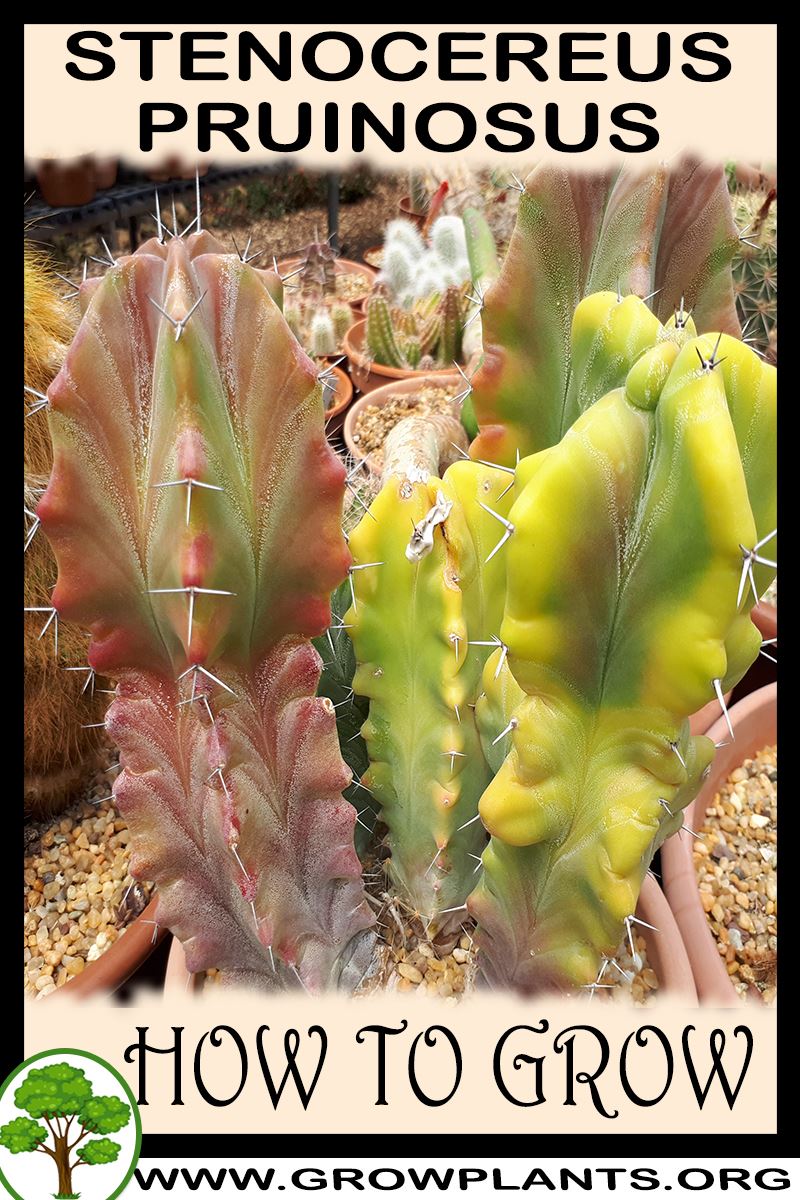
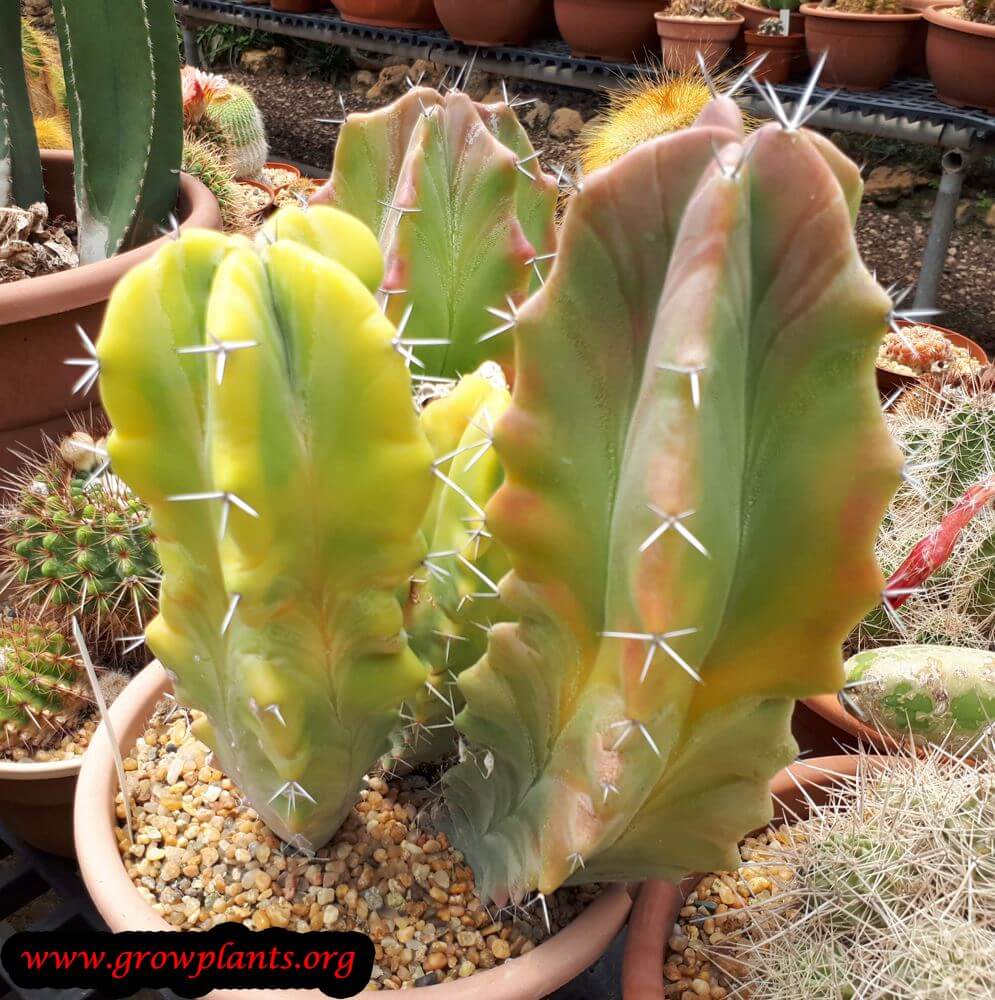
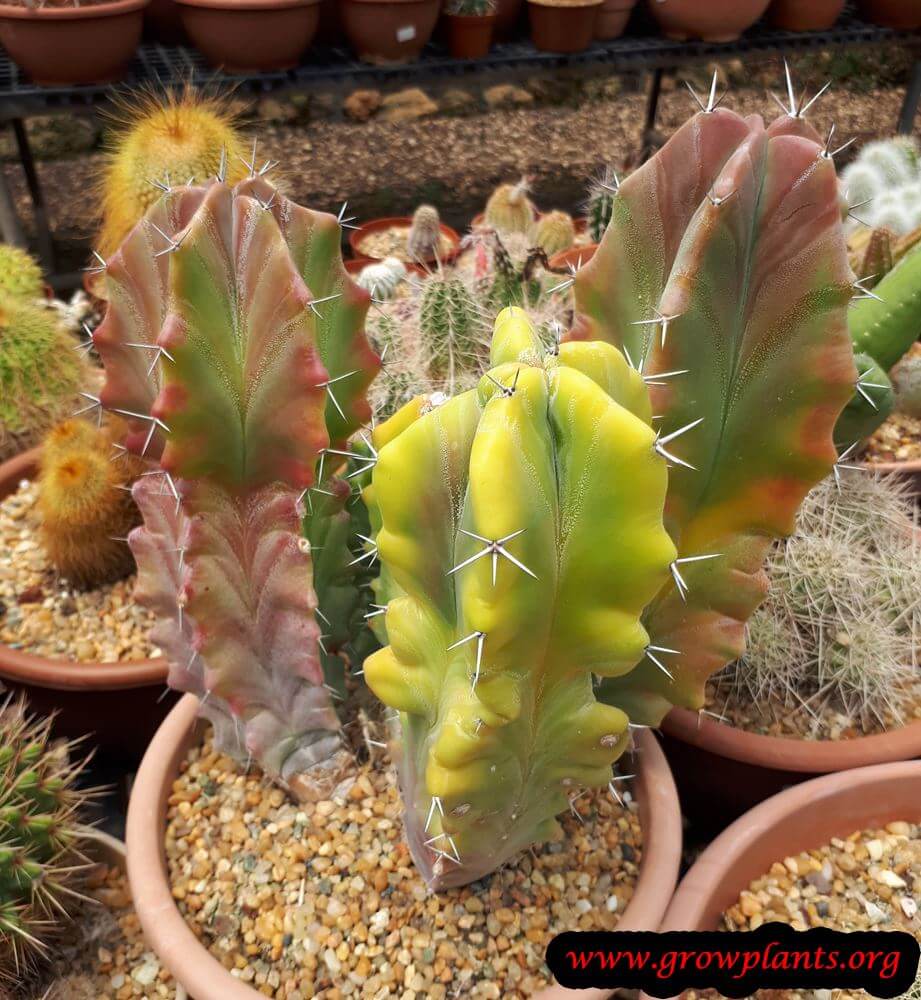
- Growth Habit & Form: Erect, branching columnar cactus; stems can grow in a spiralled form.
- Lifespan & Maturity: Slow-growing and long-lived; fruit typically after 5-10 years.
Anatomy & Physical Features
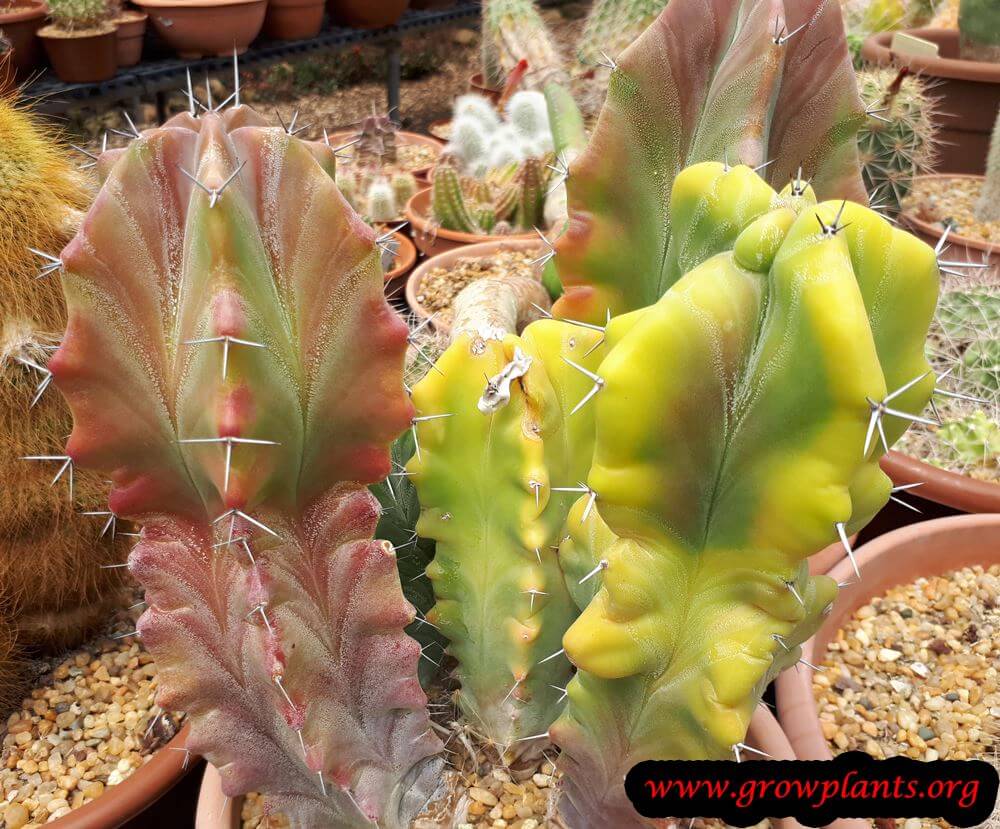
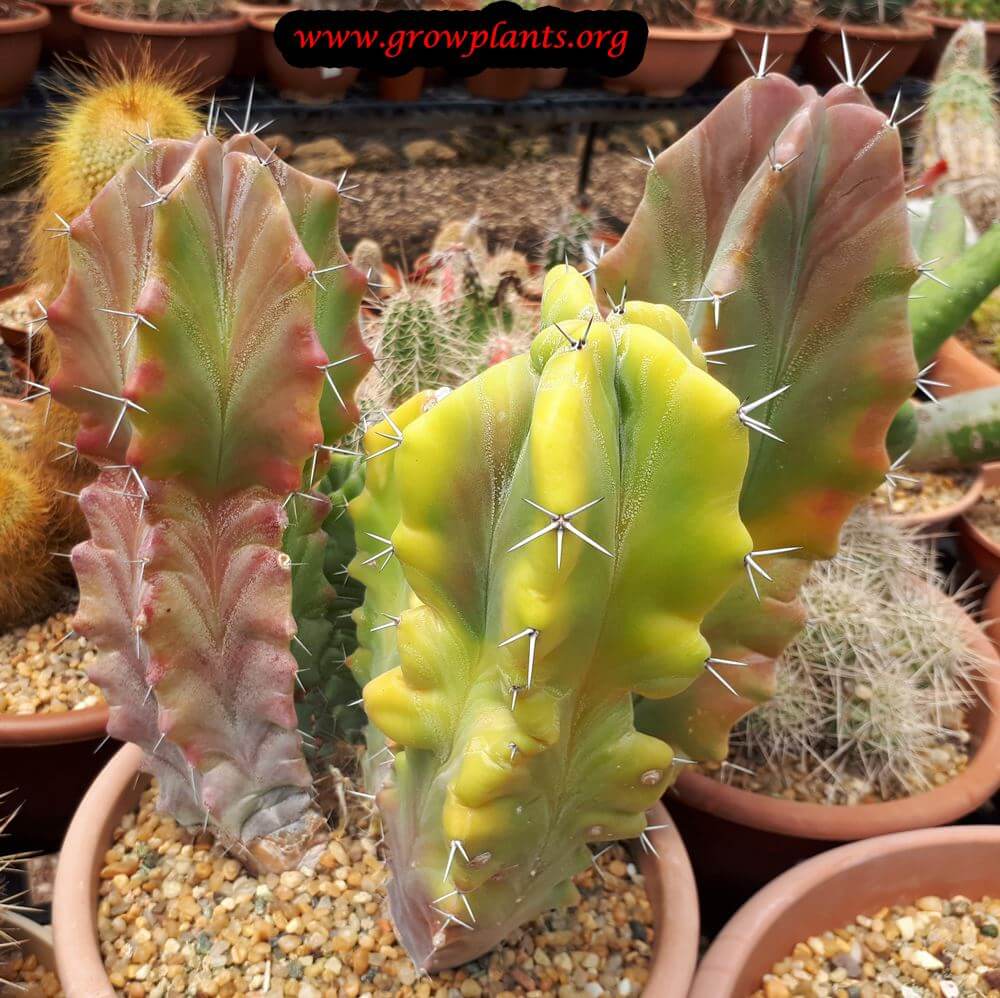
- Leaves & Foliage: Leafless succulent; green ribbed stems, some cultivars variegated in orange, yellow, pink or purple, bearing spines.
- Flower Characteristics: Large white flowers with pink edges, 10+ cm across, opening near dusk (full detail in the Bloom guide).
- Fruit Profile: Pitaya with red, pink, purple or orange skin and edible white, yellow, orange or purple flesh; seeds also edible (full detail in the Fruit guide).
Primary Uses & Landscape Value
- Edible Uses: Fruit eaten raw, juiced or made into jams.
- Functional & Ornamental Roles: Ornamental desert / xeriscape cactus and fruit plant; suits large pots.
Care Guide: Planting, Soil & Watering
Overview: This columnar cactus thrives in full sun in dry, sharply draining, sandy or gritty soil. It stores water and is drought-tolerant, so water sparingly and let the soil dry out well between waterings.
Quick Care Requirements
| Requirement | Ideal Condition |
|---|---|
| Planting Season | In spring to autumn (spring to summer in cooler zones; year-round in zone 12) |
| Growth Rate | Slow |
| Soil Type | Sandy, gritty cactus mix with sharp drainage |
| Water Need | Low; drought-tolerant, let the soil dry between waterings |
Planting & Establishment
- Best Planting Season: Plant in spring to summer in zones 9b–10a, spring to autumn in 10b–11, and year-round in zone 12.
- How to Plant:
- Hole Preparation: Handle the plant with wrapped hands or padding to avoid the spines; set it in gritty, free-draining soil with support until it roots.
- Soil Amendments: Use a sandy or gritty cactus potting mix; add gravel, lava rock or pebbles at the base for drainage.
- Planting Depth: Set the plant so the base sits at soil level, cover lightly, and firm the soil gently around it – do not plant it too deep.
- Growth Speed & Expectations: A slow grower that can eventually reach 3–10 m in the ground (smaller in a pot); be patient, as it takes years to establish and fruit.
Soil, Watering & Drainage Care
- Soil Mix & Drainage Needs: Sharp drainage is essential: use a cactus mix over a layer of gravel or lava rock, in a pot with drainage holes, to prevent rot; the roots are shallow, so a deep pot is not needed.
- Watering Schedule & Technique:
- Young / Newly Planted: Water sparingly after planting, keeping the soil barely moist while it roots.
- Established: Water lightly and only once the soil has dried out; it is very drought-tolerant and rots if overwatered.
- Seasonal Adjustments: A little more in the warm growing season, almost none in winter.
Climate, Light & Hardiness
Stenocereus pruinosus is a large columnar desert cactus (Pitaya) adapted to hot, arid to semi-arid climates, needing full sun and very well-drained, dry soil to thrive. Per site data it is hardy across USDA zones 9b–12, giving it generally good but not absolute cold tolerance once established.
Quick Climate Specifications
| Climate Zones | Desert, Mediterranean, subtropical |
|---|---|
| USDA Hardiness Zones | 9b–12 (site data) |
| Approx. Survival Minimum | Approximately −4°C to −1°C (25–30°F) for an established plant, briefly, consistent with the site's zone 9b rating |
| Frost Tolerance | Low to Moderate (brief, light frost once established; not suited to hard-freeze climates) |
| Light Conditions | Full Sun |
| Wind Tolerance | Moderate to High once established (young or newly planted specimens are more vulnerable) |
Sunlight & Light Exposure
Optimal Light Setup
Full, direct sun all day is required per site data; this species needs maximum light to grow, flower, and fruit well.
Direct Sun Requirement
Essential; site data specifies full sun with no shade tolerance noted.
Shade & Heat Management
Thrives in intense heat as long as the soil is kept dry; shade is not needed and can cause weak, stretched growth.
Best Exposure / Orientation
Open, south-facing sites in desert or Mediterranean-climate gardens with maximum sun exposure.
Temperature Extremes & Hardiness
USDA Hardiness & Regional Limits
Site data rates this species for zones 9b–12, suited to hot, essentially frost-free to lightly frosty climates; it is not suitable for regions with hard freezes.
Cold Damage & Winter Protection
Site data's zone-staggered planting timing - spring-to-summer only in zones 9b–10a, spring-to-autumn in 10b–11, and year-round in zone 12 - indicates reduced cold tolerance while the plant is young or newly planted. Keep soil dry heading into any cool weather, since cold combined with wet soil is far more damaging to cacti than cold alone.
Frost Sensitivity
Tolerates only brief, light frost; hard or prolonged freezes are likely to cause serious damage or death, and young plants are typically more vulnerable than mature, established specimens.
Extreme Heat Tolerance
Excellent; well adapted to intense desert heat provided the soil is allowed to stay dry, consistent with the site data's drought-tolerant, minimal-water profile.
Wind, Humidity & Microclimate
Humidity Preferences
Prefers dry, low-humidity air typical of desert and Mediterranean climates.
Dry-Air Tolerance
High.
Wind Tolerance
Generally good for a sturdy, mature columnar cactus; site data's mention of staking newly planted specimens for support indicates young plants benefit from wind shelter until well established.
Rainfall & Seasonal Moisture
Adapted to low-rainfall, seasonally dry climates; sharp drainage is essential, and site data explicitly calls for dry soil that is not kept too moist.
Microclimate Recommendations
Open, sun-baked planting sites with excellent drainage, such as gravelly or sandy slopes; in marginal cold zones, a south-facing wall or similar warm microclimate can extend the plant's cold margin.
Growing in Pots, Balconies & Indoors
This is a large, full-sun columnar cactus – in the ground it can tower several metres, but in a pot it stays much smaller and slower. The grower says it is not a houseplant; grow it in a well-drained container on your brightest, sunniest sill or on a hot patio, and it takes years to outgrow a pot.
Quick Details
- Container Size: A container or clay pot 20-50% bigger than the plant; it need not be deep, as the roots are shallow
- Indoor Suitability: Not a true houseplant – only viable on the sunniest, hottest window with maximum direct light
- Best Spot: Full sun – the more direct sun and heat, the better
- Soil & Drainage: Cactus potting mix over a base layer of gravel, lava rock, or pebbles; pot must have drainage holes
- Watering in Pots: Water sparingly – it is drought-tolerant and needs only a small amount; keep nearly dry in the cool, low-light season
Indoors & On the Windowsill
- Not a deep-room houseplant: The grower says no. It craves full sun that a room interior cannot supply, so keep it right against your brightest, hottest window.
- Sunniest windowsill: A south-facing sill or sunroom is the only indoor spot it will hold form in; weak light makes it thin, pale, and weak.
- Overwintering: Where winters are cold it can be potted and brought into a bright, cool, frost-free room and kept nearly dry until warmth returns.
On a Balcony or Patio
- Light & heat: A hot, sunny, sheltered balcony or patio suits it perfectly – it revels in reflected wall heat and full exposure.
- Practicalities: A tall column can be top-heavy; use a stable, weighted pot and keep it out of hard rain that could waterlog the shallow roots.
Choosing the Pot, Soil & Long-Term Care
- Pot & drainage: A wide, not-too-deep pot with strong drainage holes and a stone base layer; never use a standing-water saucer.
- Potting mix: Cactus/succulent mix opened up with grit; fast drainage is everything.
- Feeding: A weak cactus feed once or twice in the warm growing season is plenty.
- Repotting: Pot on only every few years as it fills the container; handle the spines with folded cardboard or thick gloves.
Grower’s Container Tip
- Wide, shallow pot & grit base (grower’s method): The grower uses a container or clay pot 20-50% bigger than the plant – it need not be deep, as the roots are shallow. Put a layer of small stones (gravel, lava rock, or pebbles) in the base for drainage, fill with cactus potting mix, and make sure the pot has drainage holes.
Fertilizing & Feeding
A large, slow-growing columnar cactus grown for its spined stems and, in maturity, edible fruit; like most columnar cacti it needs only light, occasional feeding, and over-feeding produces soft tissue that is more prone to rot and less structurally sound.
Quick Fertilizing Specs
| Feeding Level | Light |
|---|---|
| Main Nutrient Priority | Low-nitrogen feed that supports firm, well-formed stem growth rather than rapid soft growth |
| Best Feeding Period | The warm growing season while the columnar stem is actively elongating |
| Organic Options | Not typically needed; this cactus is adapted to lean, sandy or well-drained soil |
| Soil pH | Tolerates a wide range in sharply drained soil |
| Reduce/Stop Feeding | Stop feeding as growth slows heading into cooler weather |
Feeding by Growth Stage
Warm-Season Active Growth
Support firm, well-proportioned stem elongation and overall vigor without producing soft tissue that is prone to rot or that cannot support the plant’s eventual size
| Nutrient direction | A light, low-nitrogen cactus-formulated feed |
|---|---|
| Timing | During the warm season while the stem is actively growing |
| Frequency | Occasional light feedings through the active season rather than frequent or strong applications |
| Fertilizer types | A diluted, low-nitrogen cactus fertilizer suited to fast-draining, sandy potting mixes |
| Precautions | Avoid feeding at full label strength, and keep fertilizer away from the base near the spines to make later handling and inspection safer |
Cool-Season Dormant Rest
Let the plant rest through cooler weather without pushing soft new growth that could be damaged by cold or more prone to rot
| Nutrient direction | None – withhold fertilizer during the cool rest period |
|---|---|
| Timing | Through the coolest months when stem growth visibly stops |
| Frequency | No feeding at this stage |
| Fertilizer types | No feeding at this stage; the resting plant does not need nutrient input |
| Precautions | Do not fertilize until active growth is clearly visible again in the warm season |
Nutrient Deficiency Signs & Corrections
Yellowing of newer stem growth near the growing tip while older, lower stem tissue stays green
| Possible causes | High pH or alkaline potting mix, Waterlogged, poorly drained soil limiting root function, Old, nutrient-poor potting mix, Root stress from overwatering or early rot |
|---|---|
| Appears first on | Newest growth near the stem tip |
| What to check | Drainage and moisture of the current mix, Age of the potting mix, Root and base condition for early signs of rot |
| Possible correction | Correct drainage and watering first, then apply a chelated iron product per its label if yellowing persists |
Pale, unusually slow stem growth for the season, with new growth thinner than expected
| Possible causes | Nutrient-depleted potting mix, Insufficient direct sun reducing overall vigor, Waterlogged roots limiting nutrient uptake, No feeding for an extended period in container culture |
|---|---|
| Appears first on | Newest stem growth at the tip |
| What to check | Stem color and growth rate compared to previous seasons, Hours of direct sun the plant receives, Time since any feeding or soil refresh |
| Possible correction | Apply a light, diluted low-nitrogen feed during the next active growth period and refresh old potting mix if needed |
Yellowish banding or blotching on older, lower sections of stem while newer growth stays green
| Possible causes | Sandy, heavily leached potting mix low in magnesium, Excess potassium or heavy feeding interfering with magnesium uptake, Persistently low soil pH, Poor root function from waterlogging |
|---|---|
| Appears first on | Older, lower stem sections |
| What to check | Pattern and location of discoloration on the stem, Soil composition and feeding history, General drainage of the current mix |
| Possible correction | Correct with a chelated or complete cactus fertilizer product per its label and confirm drainage is adequate |
Pruning, Training & Seasonal Maintenance
Stenocereus pruinosus is a large, tree-forming columnar cactus that, unlike small pot cacti, does branch and can need real management as it matures. Pruning is mainly reactive rather than routine: removing rotten tissue promptly, and thinning branches once they crowd each other or block access to fruit. Flowers and fruit form on mature stem tissue rather than on distinct fruiting wood, so it does not depend on one- or two-year-old wood the way a deciduous fruit tree does, but removing large sections of established growth still cuts into the near-term crop. Because the plant is very slow growing, cuts are made only when needed, not for routine shaping, and any access-thinning is best timed outside active spring–summer flowering and fruit set so that season’s harvest isn’t sacrificed.
Quick Pruning & Maintenance Specs
| Pruning Tolerance | Moderate – tolerates branch removal but is slow to replace lost structure |
| Primary Pruning Window | As needed, year-round for rot/disease |
| Secondary Maintenance Window | Outside spring–summer bloom/fruit-set, for access-thinning of crowded branches |
| Typical Frequency | Infrequent – only when branches crowd, new-branch growth stalls, or fruit access is blocked |
| Main Objective | Maintain fruit accessibility, remove diseased tissue, manage crowded branching |
| Young Plant Priority | Minimal – let the plant establish its own branching framework |
| Mature Plant Priority | Thin overcrowded/crossing branches for airflow and harvest access; remove rot promptly |
| Best Tool Type | Pruning saw for mature, woody-based branches; sterile blade for rot |
| Avoid Heavy Pruning During | Active flowering/fruit set, if protecting that season’s crop |
Pruning by Plant Age & Size
Newly Established
Minimal intervention; remove only clearly damaged tissue and let the young plant establish its own branching.
Young / Formative
No imposed training system – branching is naturally candelabra-like/columnar. Formative work is limited to removing any obviously damaged or crossing young branches.
Mature / Established
Thin or remove branches that grow into each other once fruiting begins, both for airflow and so ripening fruit stays reachable; a branch that has stopped producing new growth and is crowding neighbors is a cue for a structural removal cut.
Seasonal Pruning Schedule
Post-Harvest (Summer – Autumn)
Objective: check for harvest-related damage. Remove: any rot or split tissue found around picked fruit. Do not remove: healthy fruiting branches that are simply a bit crowded, until crowding is confirmed by stalled new growth. Expected response: reduced rot spread; no impact on the harvest already taken.
Ongoing Sanitary
Objective: catch rot before it spreads. Remove: rotten or diseased tissue, cutting a few centimeters into clearly healthy tissue past the infected area, as soon as it’s noticed. Do not remove: healthy tissue beyond that margin. Expected response: the infection is contained rather than spreading through the plant.
Structural Pruning & Training
Because established plants can reach 3–10m (10–30ft) and branch as they mature, the main structural task is thinning branches that cross or grow into each other – both for airflow, which reduces rot risk, and so ripening fruit stays reachable. Height and spread are better controlled by growing the plant in a container, which naturally restrains its ultimate size, than by attempting to head back a mature columnar stem.
Special Growth to Remove
- Rotten or diseased tissue – cut a few centimeters into clean, healthy tissue past the infected zone.
- Branches that have stopped producing new growth and are crowding neighboring branches or blocking fruit access.
Container & Small-Space Pruning
The plant can be grown deliberately smaller in a container than its in-ground 3–10m size; container-grown specimens naturally need far less branch-thinning, but rot inspection still applies the same way.
Tools
- Pruning saw for removing mature, thick branches with a lignified base.
- A sterile knife or blade for cutting out rot with a clean margin.
Tool Hygiene & Disease Risk
Increased – cuts here are frequently made through rot or diseased tissue, so disinfect the blade between cuts to avoid spreading infection to healthy tissue or other plants. Handle with care around the spines noted for this species when making any cut.
Cut Placement & Technique
For rot, cut well past the visible infection into clearly healthy tissue, as specified for this species; for branch removal, cut at the branch’s base rather than mid-branch to avoid leaving a stub that can rot.
Heavy Pruning & Rejuvenation
Not recommended as routine rejuvenation – being very slow growing, this plant will take years to replace structure lost to hard pruning. Only necessary crowding or rot cuts should be made, not speculative heavy pruning for shape.
Post-Pruning Care
Let cuts callus and dry in a shaded spot before any water reaches the wound, mirroring the healing period used for propagation cuttings of this species; watch the cut face for any sign of secondary rot in the weeks after.
Common Pruning Mistakes
- Cutting rot without going far enough into clean tissue, so the infection returns.
- Wetting a fresh cut immediately instead of letting it dry/callus first.
- Removing branches for looks despite the plant’s very slow regrowth.
When NOT to Prune
Avoid removing productive branches during active flowering or fruit set if that season’s harvest matters; avoid pruning during the coolest part of its range, near its hardiness limit, when wounds heal more slowly.
Recommended Tools (by task)
- Pruning saw – for thick, mature branch removal on a large, tree-form specimen.
- Grafting knife – a sterile blade sized for clean rot-removal cuts.
- Blade disinfectant – needed between cuts given how often this species is cut for rot/disease rather than routine shaping.
Pruning Troubleshooting
| Problem | Possible Cause | What to Check | Corrective Action |
| Rot spreading after a cut | Cut didn’t clear all infected tissue, or the blade was contaminated | Inspect the cut face for discoloration; check tool hygiene | Re-cut further into clean tissue; disinfect the blade between cuts |
| Branches crowding, fruit hard to reach | Natural branching left unthinned for years | Look for branches rubbing or crossing near fruiting zones | Selectively thin or remove crossing branches at their base |
| No new branch growth | Natural pause point in a slow-growing mature plant, or stress from watering/nutrition | Check growing conditions and plant age | Usually normal in mature plants; investigate only if paired with other stress signs |
Propagation Guide
Stenocereus pruinosus (pitaya) is most practically propagated from stem cuttings or rooted offset (daughter) plants, which keep a specific plant’s stem colouring and fruit traits true; seed is also documented on-site and useful for raising new plants, while grafting onto an established rootstock is a specialist technique the site notes is used to bring a plant into fruiting production sooner. Overall difficulty is easy to moderate by cutting or offset, moderate from seed, and specialist for grafting.
Quick Propagation Specs
| Best Propagation Method | Stem cuttings (or rooted offsets/daughter plants) |
| Alternative Methods | Seed; grafting onto an established rootstock |
| Propagation Difficulty | Easy–Moderate (cuttings/offsets); Moderate (seed); Specialist (grafting) |
| Seed True-to-Type | Variable – the site notes different-coloured cultivars benefit from cross-pollination, so seedlings from garden-grown plants are unlikely to match a specific parent’s stem or fruit colouring |
| Vegetative True-to-Type | Yes |
| Best Propagation Season | Spring through autumn depending on hardiness zone (all year in zone 12) |
| Seed Germination Time | 2–6 weeks |
| Seed Sowing Depth | About 0.5cm (0.25in) |
Growing from Seed
Seed Handling & Viability
Store seed dry, in a dark place, at room temperature until sowing.
Sowing Season
Mainly spring, though also workable in autumn or winter in hot climates (give full shade if sowing in summer heat). By hardiness zone: spring–summer in zone 9b–10a, spring–autumn in zone 10b–11, and all year in zone 12.
Sowing Depth & Orientation
About 0.5cm (0.25in) deep.
Germination Conditions
Keep the soil moist but not overwatered, and don’t let it dry out – a careful middle ground, since the mature plant is otherwise drought-tolerant and prefers dry soil.
Germination Time
2–6 weeks.
Seedling Care
Full sun, taking care not to overwater. Space young plants roughly 20–30cm (8–12in) apart in nursery rows.
Stem Cuttings
Cutting Type
A whole segmented section of the cactus rather than a small tip cutting – the site recommends cutting the plant into pieces, or a straight cut across the stem, to produce a strong new plant.
Cutting Preparation
Cut with a sterile knife, then let the cut surface cure/callus in the shade before planting; for a plant this size, healing can take anywhere from a few weeks to a few months.
Rooting Setup
Once callused, set the cutting into soil with a stake or other support so it doesn’t fall while rooting. Cover only lightly and from the sides – don’t bury the healed cut face – and water sparingly.
Rooting Hormone
Not indicated as necessary for this type of stem cutting.
Rooting Time
Beyond the initial weeks-to-months callusing period, root and stem establishment after planting is a slow, patient process typical of large columnar cacti.
Grafting & Budding
Why Grafting Is Used
The site notes grafting is used specifically because it brings a scion into fruiting production faster than growing it on its own roots from a cutting or seed.
Rootstock
Not specified on-site; commercial growers commonly use a vigorous, compatible columnar cactus as rootstock. Treat this as general practice rather than site-verified detail.
Division, Offsets, Pups & Suckers
When removing a daughter (offset) plant, take care to lift it with its full root system intact. Gently uncover the roots using a plastic spatula or another tool suited to the soil type, or expose them with an air blower or a stream of water – if roots are washed, let them dry out afterward before replanting.
Bloom & Flower Guide
Quick Details
- Bloom Season: Spring into summer
- Flower Appearance: Large flowers over 10 cm across, white with a pink flush at the petal edges
- Edibility: Ornamental at the flower stage – grown for its striking blooms (the plant is a columnar cactus)
Detailed Blooming Overview
Stenocereus pruinosus is a tall, columnar cactus that opens big, funnel-shaped flowers in spring and summer. The blooms are large – well over 10 cm across – white with a soft pink edge, and open around dusk into the night. They are worked by bees in the last light before sunset and by moths after dark, the classic pattern for these evening-opening desert flowers.
Flower Characteristics
- Large, funnel-shaped and over 10 cm across.
- White with a pink flush toward the petal tips.
- Open from dusk into the night, then close by the next day.
Bloom Care & Thinning
- Encouraging bloom: Full sun, a mature stem and a cool, dry winter rest set the plant up to flower.
- Pollination: Bees visit around sunset and moths after dark – useful to know if you hope for fruit to follow.
Fruit & Uses
Stenocereus pruinosus produces a pitaya-type cactus fruit that is eaten fresh, seeds and all — the small seeds embedded in the pulp are eaten along with the flesh rather than removed. The fruit is eaten raw out of hand, and when harvests are plentiful it is also made into juice or jam.
Quick Edible Specs
| Edible Parts | Fruit flesh, including the edible seeds embedded in it |
|---|---|
| Main Use(s) | Culinary — fresh eating, juice, jam |
| Eaten Raw or Cooked | Primarily raw; also processed into juice or jam when abundant |
| Preparation Required | None to eat fresh (seeds are eaten with the flesh); light processing only for juice or jam |
| Harvest Season | Summer to autumn |
| Time to First Harvest | This cactus needs several years of growth before it begins fruiting (see Propagation/Care) |
| Storage | Not specified on site; best used fresh, as with other cactus fruit |
| Safety/Toxicity Caveat | No toxicity concern with the ripe fruit or seeds; the plant itself carries spines, so handle stems with care when harvesting |
Fruit
Fruit colour varies by cultivar: the peel can be red, pink, purple, or orange, and the flesh inside can be white, yellow, orange, or purple. Ripening and harvest occur in summer through autumn. The small seeds distributed through the flesh are edible and are eaten along with the pulp rather than removed. Snails and slugs are noted as pests of the ripening fruit, so check fruit before eating.
Preparation, Uses & Safety
Fruit needs no special preparation to eat — it is simply cut open and eaten raw, seeds included. When harvests are plentiful, the fruit is also processed into juice or jam. The main hazard around this plant is handling the spined stems while harvesting; use gloves, tongs, or folded paper as when repotting the cactus. The ripe fruit and seeds themselves carry no noted toxicity.
Pests, Diseases & Troubleshooting
Overview: Stenocereus pruinosus is a robust columnar desert cactus with few insect enemies, dominated instead by scale and mealybugs and, above all, by rot from excess moisture. Management is mostly cultural – sharp drainage, careful watering and clean tools – with gentle oils and manual removal handling the occasional pest.
Quick Troubleshooting Overview
| Issue / Pest | Main Symptom | Primary Solution |
|---|---|---|
| Cochineal scale | White cottony tufts on stems, yellowing patches | Blast off, dab with alcohol, horticultural oil |
| Mealybugs | White fluff in ribs, areoles and at soil line/roots | Alcohol swab, systemic if severe, repot root mealies |
| Spider mites | Rusty stippled corky patches on stem surface | Rinse, raise humidity, miticidal oil if severe |
| Stem / root rot | Soft, brown, mushy, foul-smelling tissue | Cut back to firm tissue, dry, correct drainage |
| Sunburn / scald | Bleached tan scarring on the sun-facing side | Acclimatise to sun gradually, shade in extreme heat |
| Corking | Brown woody bark from the base up | Usually normal ageing – no action needed |
Common Pests & Management
- Cochineal & cactus scale (Dactylopius spp. / diaspidid scale):
- Symptoms: White cottony tufts on the stem that reveal a deep crimson stain when crushed (cochineal), or hard grey-brown scale bumps; feeding causes yellow chlorotic patches, sunken scars and weakened columns.
- Prevention & Control: Dislodge with a strong water jet, then dab remaining insects with a cotton bud soaked in rubbing alcohol. Isolate infested plants, and for persistent scale apply horticultural oil to thorough coverage, repeating to reach protected crevices; avoid oil in peak heat or full sun.
- Mealybugs (Pseudococcus spp., incl. root mealybugs):
- Symptoms: White cottony masses tucked into ribs, areoles and around the base, with a sticky honeydew film; root mealybugs form white deposits on roots and in the soil, stunting the plant despite good care.
- Prevention & Control: Swab visible colonies with alcohol and rinse. For root mealybugs, unpot, wash all soil off the roots, remove infested medium, and repot into fresh dry mix; treat serious or repeated infestations with a systemic soil drench and quarantine new plants before adding them to a collection.
- Spider mites (Tetranychus spp.):
- Symptoms: Fine rusty stippling and later corky tan scarring, usually near the growing tip, with faint webbing in hot dry air; the damage is permanent on the succulent skin.
- Prevention & Control: Rinse the plant periodically and improve air movement, since mites thrive in hot stagnant dry conditions. Treat active infestations with a miticidal horticultural oil or soap, covering the growing tip and folds.
- Cactus longhorn beetle & boring larvae:
- Symptoms: Chewed notches on the epidermis by the black adult beetle, and internal tunnelling by larvae that can introduce rot.
- Prevention & Control: Handpick beetles at night, inspect for entry holes and frass, and cut out and destroy tunnelled sections; keep the plant vigorous so wounds callus quickly.
- Snails and slugs:
- Symptoms: Grazed scars and slime trails on new growth and near the base in damp conditions.
- Prevention & Control: Keep the base dry and free of debris, hand-collect after dark, and use iron-phosphate bait or a diatomaceous-earth ring around vulnerable plants.
Diseases & Fungal Issues
- Stem & crown rot (Phytophthora, Erwinia soft rot):
- Symptoms: Soft, water-soaked, browning or blackening tissue that turns mushy and foul-smelling, often starting at the base or an injury and spreading upward; the column can collapse.
- Treatment & Management: This is the cactus’s deadliest problem and is driven by excess water and poor drainage. Cut away all soft tissue back to firm green flesh with a clean blade, dust the wound with sulphur, let it callus dry, and re-root the sound top if the base is lost. Prevent it with a gritty free-draining mix, careful watering, and by never letting the plant sit wet or cold.
- Fungal stem spots (Botryosphaeria, Alternaria and others):
- Symptoms: Sunken brown or black corky spots and lesions on the stem surface, worse in humid, poorly ventilated conditions.
- Treatment & Management: Improve airflow and reduce humidity, avoid wetting the body of the plant, and cut out or excise localised lesions. A copper or sulphur fungicide protects fresh wounds where fungal spotting is a recurring problem.
- Root rot (Pythium, Fusarium):
- Symptoms: Failure to plump up, greying and shrivelling despite watering, and dark rotten roots when unpotted.
- Treatment & Management: Unpot and cut away dead roots, repot into fresh sharply drained mineral mix, and withhold water until new roots form; increase pot drainage and reduce watering frequency.
Growing Difficulties & Abiotic Problems
- Overwatering / edema:
- Cause & Symptoms: Soft basal rot, splitting or blistered corky patches from water taken up faster than it is used, especially in cool weather.
- Correction Strategy: Water only when the mix is thoroughly dry and reduce it sharply in cool or dormant periods; use a mineral, fast-draining substrate and unglazed pots with generous drainage.
- Sunburn / scald:
- Cause & Symptoms: A bleached tan or white scarred patch on the side suddenly exposed to intense sun, permanent once formed.
- Correction Strategy: Acclimatise plants to strong sun gradually, provide light afternoon shade in extreme heat, and avoid moving a shaded plant abruptly into full desert sun.
- Etiolation:
- Cause & Symptoms: Pale, thin, stretched growth reaching for light indoors or in shade.
- Correction Strategy: Provide bright light or full sun; the stretched section will not thicken again but new growth returns to normal in good light.
- Cold damage:
- Cause & Symptoms: Water-soaked, then blackened collapsing tissue and scarring after frost or prolonged cold.
- Correction Strategy: Keep the plant warm and completely dry in cold spells, protect from frost, and hold it on the dry side through winter to maximise cold tolerance.
- Corking:
- Cause & Symptoms: Brown, woody, bark-like tissue advancing up from the base – usually a normal sign of maturity, not disease.
- Correction Strategy: No action needed if the tissue is firm and dry; only be concerned if it is soft, spreading and moist, which indicates rot instead.
What Helps – Products & Tools
This cactus needs very little: rubbing alcohol and horticultural oil for scale and mealybugs, a systemic drench for stubborn root mealybugs, sulphur or copper fungicide for wound protection, iron-phosphate slug bait, and above all a gritty free-draining mineral mix. Correct watering and drainage prevent more losses than any product.