Plant Profile & Key Characteristics
Overview: The giant red shrimp plant, a tender evergreen shrub 1-2 m (3-6 ft) tall, grown as a tropical ornamental for its showy red-to-orange flower spikes. It suits warm gardens or a large container.
Quick Specifications
| Specification | Attribute |
|---|---|
| Plant Type / Life Cycle | Evergreen perennial shrub |
| Foliage Type | Evergreen |
| Mature Size | 1-2 m (3-6 ft) tall |
| Growth Rate | Moderate |
| Hardiness | USDA zone 10b+ |
Growth Form & Structure
- Height & Spread: Upright shrub 1-2 m (3-6 ft) tall; can be grown in a large container and, with enough light, kept as a houseplant.
- Growth Habit & Form: Soft-wooded evergreen shrub with upright, leafy stems topped by bold flower spikes.
- Lifespan & Maturity: Long-lived evergreen perennial reaching flowering size quickly in warmth.
Anatomy & Physical Features
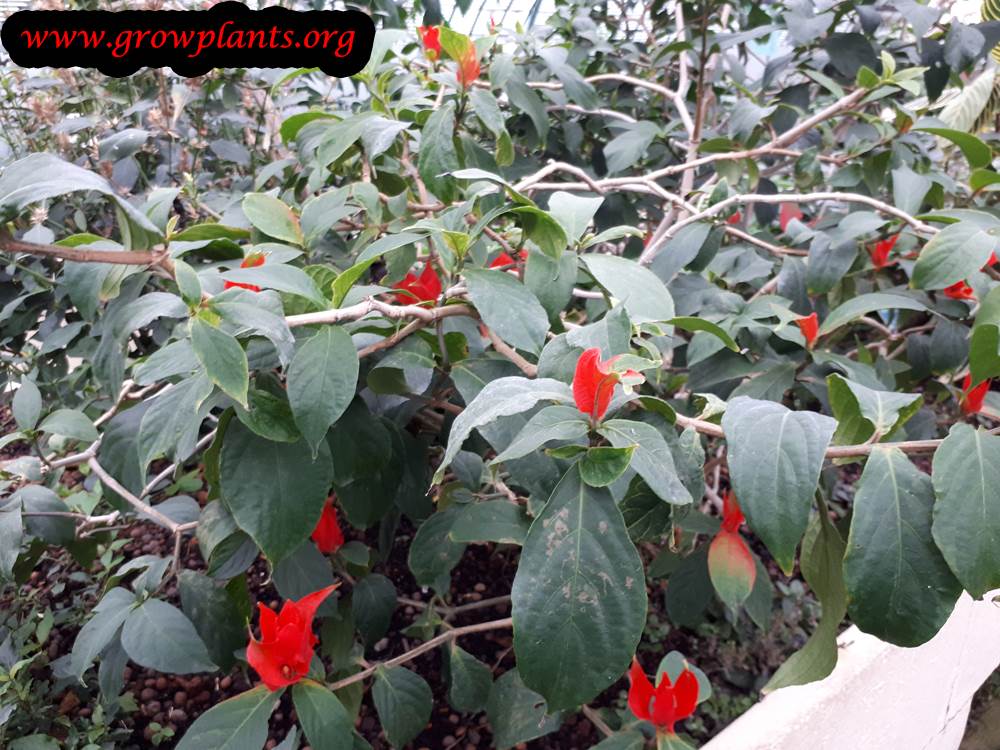
- Leaves & Foliage: Green, elliptic leaves, sometimes with a curled surface.
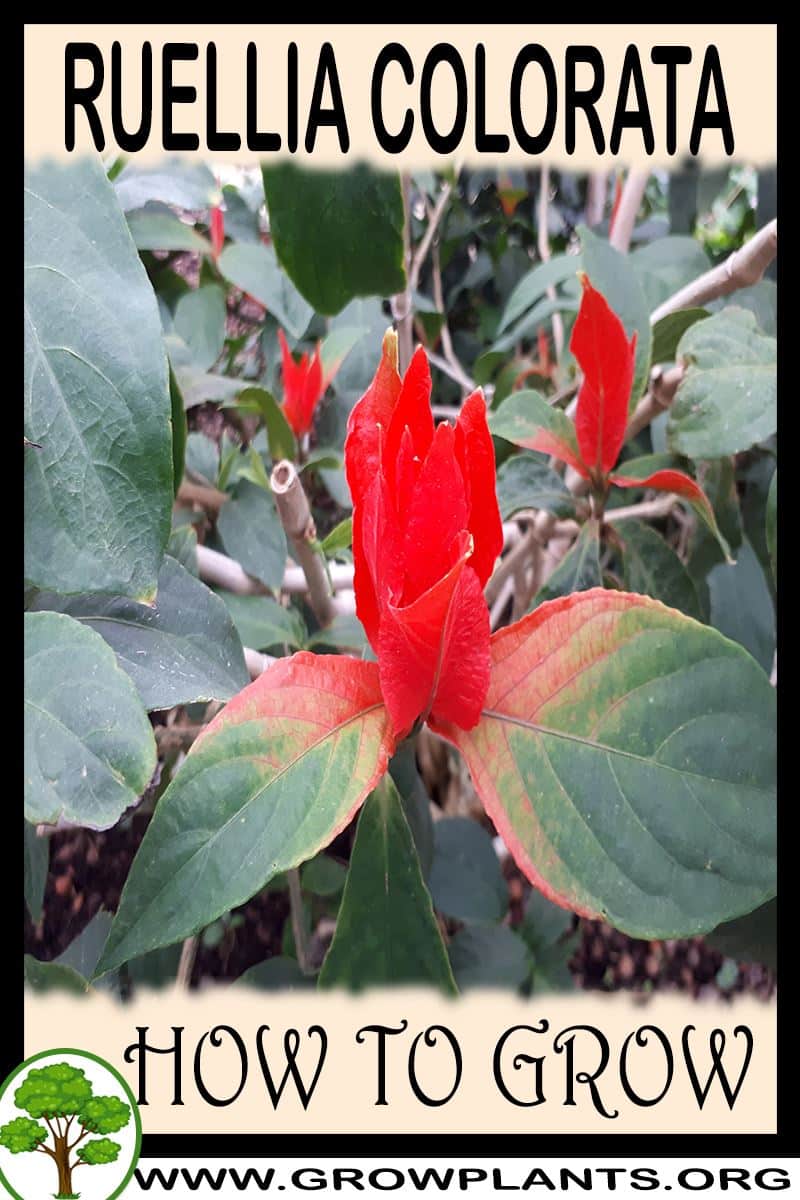
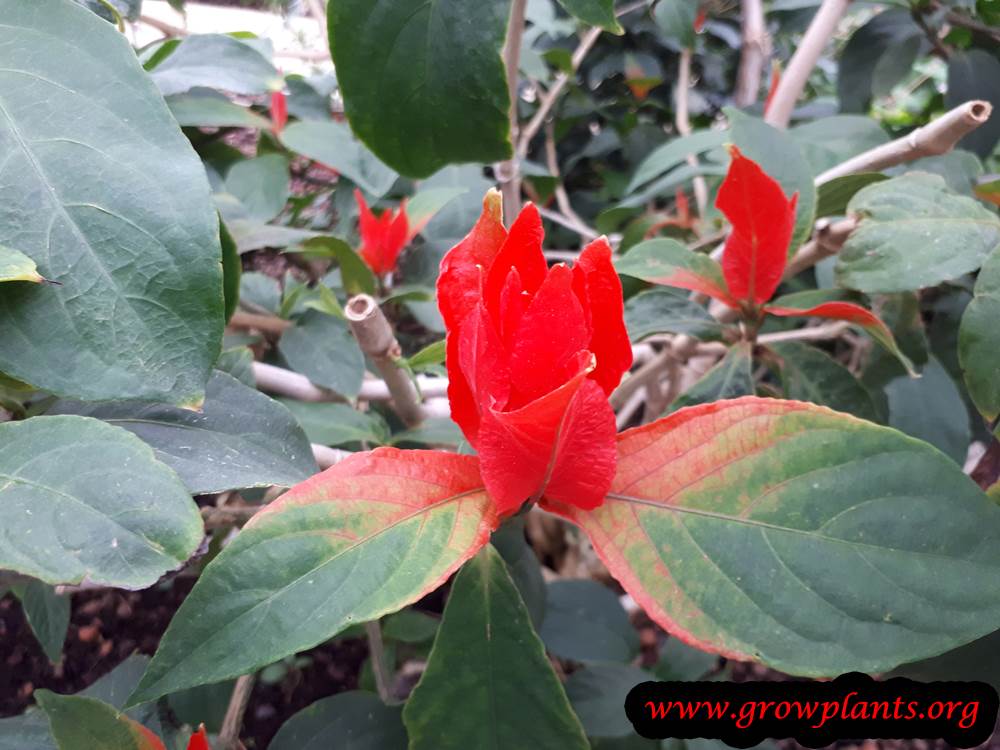
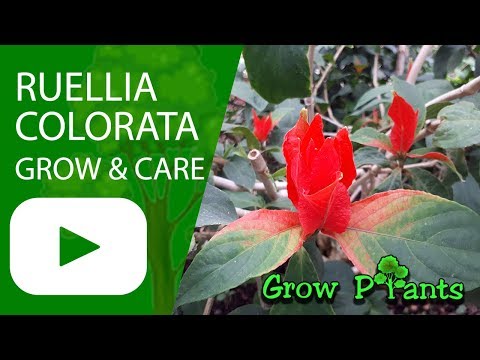
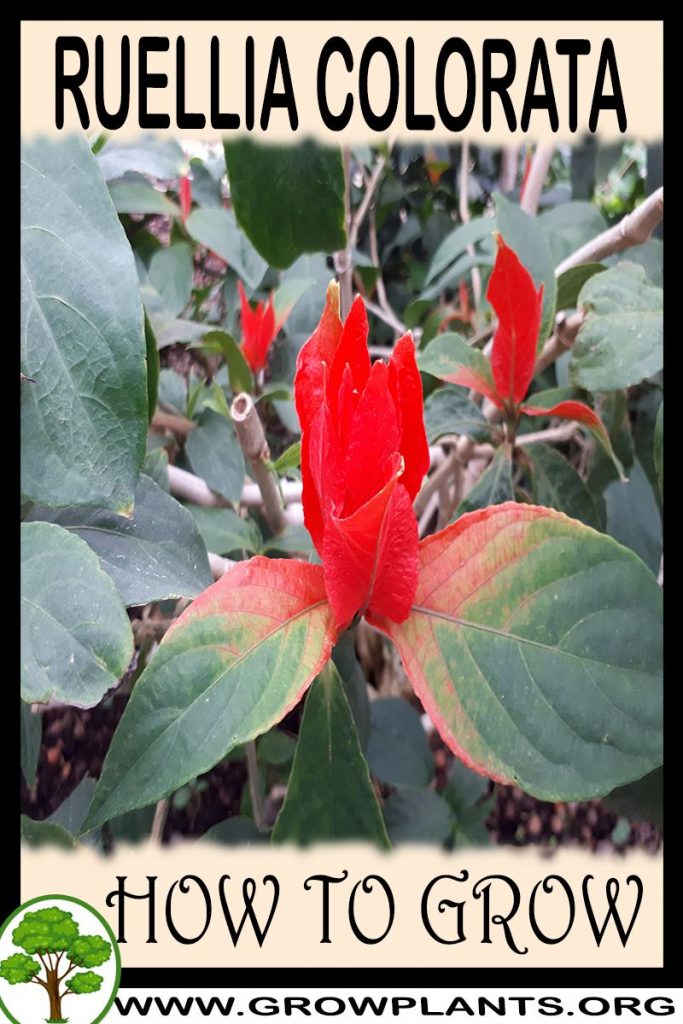
- Flower Characteristics: Red or orange flowers whose overlapping bracts build a pyramid-shaped spike.
Primary Uses & Landscape Value
- Functional & Ornamental Roles: Tropical border and container ornamental grown for its long-lasting, pollinator-friendly flower spikes.
Care Guide: Planting, Soil & Watering
Overview: Ruellia colorata (Ruellia colorata), a giant red shrimp plant, is an evergreen tropical shrub grown for its showy bracts and flowers, suited to warm, frost-free climates (hardiness zone 10b and above). It grows in full sun to part shade in rich, consistently moist soil and dislikes drying out.
Quick Care Requirements
| Requirement | Ideal Condition |
|---|---|
| Planting Season | Year-round in warm, frost-free conditions |
| Growth Rate | Moderate |
| Soil Type | Rich, moisture-retentive; well-draining |
| Water Need | Moderate to high; keep the soil moist and do not let it dry out |
Planting & Establishment
- Best Planting Season: In its warm, frost-free range it can be planted year-round; establish new plants during the warm growing season for the fastest start.
- How to Plant:
- Hole Preparation: Dig a hole a little wider than the root ball and loosen the surrounding soil so the roots settle in easily.
- Soil Amendments: Enrich the backfill with compost and organic matter to build a moisture-retentive, fertile root zone, and mulch to conserve moisture.
- Planting Depth: Set the plant at the depth it grew in its pot, keeping the crown level with the soil surface.
- Growth Speed & Expectations: A moderate grower reaching about 1-2 m, forming an upright, leafy shrub that flowers over a long warm season.
Soil, Watering & Drainage Care
- Soil Mix & Drainage Needs: Give it rich soil that holds moisture yet still drains, so the roots stay damp without waterlogging; it grows well in containers with a good potting mix.
- Watering Schedule & Technique:
- Young / Newly Planted: Water frequently after planting to keep the soil consistently moist while the shrub establishes.
- Established: Keep the soil evenly moist year-round; this is a thirsty plant that should not be allowed to dry out between waterings.
- Seasonal Adjustments: Water generously through heat and active growth, and only slightly less in cooler weather – it still wants steady moisture.
Climate, Light & Hardiness
Ruellia colorata (wild petunia, giant red shrimp plant) is a frost-tender tropical/subtropical shrub suited to USDA zone 10b and warmer. It grows well in full sun to half shade with consistent warmth.
Quick Climate Specifications
| Climate Zones | Mediterranean, subtropical, tropic |
|---|---|
| USDA Hardiness Zones | 10b+ |
| Light Conditions | Full sun to half shade |
| Frost Tolerance | None to very low |
Sunlight & Light Exposure
Optimal Light Setup
Full sun to half shade both suit this shrub, which flowers over a long season given consistent warmth.
Temperature Extremes & Hardiness
USDA Hardiness & Regional Limits
Reliably grown outdoors only in zone 10b and warmer, frost-free climates; in cooler areas it needs container culture with winter protection.
Frost Sensitivity
Frost-tender – cold below its comfort range causes leaf and stem damage, and a hard freeze can kill the plant.
Wind, Humidity & Microclimate
Humidity Preferences
Suited to the warm, humid conditions typical of tropical and subtropical climates.
Growing in Pots, Balconies & Indoors
This tropical wild petunia is a striking, moisture-loving foliage-and-flower plant. The grower rates it as a borderline houseplant (yes/no) – it can be grown indoors in strong light but really wants warmth and brightness, so a very sunny windowsill or a warm patio pot suits it best.
Quick Details
- Container Size: 15-30 L (4-8 gal) for a plant reaching 1-2 m
- Indoor Suitability: Borderline – possible in a very bright indoor spot, best on a sunny sill or warm patio
- Best Spot: Full sun to half shade; strong light indoors
- Soil & Drainage: Rich, moisture-retentive but free-draining mix
- Watering in Pots: Keep moist – do not let it dry out; average to plentiful water
Indoors & On the Windowsill
- Borderline houseplant: The grower’s record reads yes/no – it can live indoors but only in strong light and warmth. In a dim room it sulks; on a bright, sunny windowsill it does much better.
- Warmth & humidity: A tropical, it wants steady warmth, humidity and no cold draughts; keep it well away from cold glass in winter.
- Overwintering: Frost-tender, so bring it into a warm, bright room over winter in cold climates.
On a Balcony or Patio
- Light & warmth: Give it a warm, bright, sheltered spot; it enjoys sun but appreciates shelter from fierce midday heat and wind. Keep the pot moist – it dislikes drying out.
- Practicalities: A filled pot is heavy once watered – check the balcony can take the load, and stand it where drainage runoff will not be a nuisance.
Choosing the Pot, Soil & Long-Term Care
- Pot & drainage: A 15-30 L pot with strong drainage holes and never leave it standing in a saucer of water, or the roots rot. Terracotta breathes and dries faster; glazed or plastic holds moisture longer.
- Potting mix: A well-aerated, organic-rich mix – potting compost, or peat/coir with perlite or vermiculite. It likes a moisture-holding but open mix.
- Feeding: Potted plants use up their feed quickly as nutrients leach away with each watering, so feed more often than plants in open ground through the growing season.
- Repotting: Refresh the top layer of mix and pot up roughly every couple of years; for perennials, lightly trim the root ball and top growth when you do.
Fertilizing & Feeding
As a continuously blooming tropical shrub grown in consistently moist soil, this Ruellia benefits from steadier feeding than a typical seasonal bloomer, though it still does not need heavy rates.
Quick Fertilizing Specs
| Feeding Level | Moderate – a continuous-bloom tropical shrub with steady nutrient demand. |
|---|---|
| Main Nutrient Priority | A balanced complete fertilizer with reliable nitrogen keeps foliage full and supports its near-constant flowering. |
| Best Feeding Period | The main warm growing season, with lighter, less frequent feeding through cooler months. |
| Soil pH | Tolerates a wide range; not a demanding factor for this species. |
| Micronutrients | Watch iron availability in heavy or waterlogged soil, where interveinal yellowing can show up on new growth. |
Feeding by Growth Stage
Establishment After Planting
Help a newly planted Ruellia establish its roots and begin steady foliage growth.
| Nutrient direction | A balanced, nitrogen-forward fertilizer to support root establishment and early foliage growth. |
|---|---|
| Timing | In the weeks after planting, during active warm-season growth. |
| Frequency | A light feeding shortly after planting, followed by steady light feeding through the first growing season as the plant fills in. |
| Fertilizer types | Balanced, nitrogen-forward fertilizer for establishing tropical ornamentals, Light organic feed such as compost or aged manure |
| Precautions | Avoid heavy feeding right after planting; let new roots establish before pushing growth hard. |
Active Growth and Bloom
Sustain continuous foliage growth and flowering through the main warm growing season.
| Nutrient direction | A balanced complete fertilizer with steady nitrogen keeps foliage full and supports continuous flower production; there is no need to shift toward a high-phosphorus bloom formula. |
|---|---|
| Timing | Through the main warm growing season, when growth and flowering are most active. |
| Frequency | Regular light feedings through the active growing season keep this continuous bloomer well supplied. |
| Fertilizer types | Balanced complete fertilizer, Slow-release granular feed suited to continuous bloomers |
| Precautions | Reduce feeding if growth becomes leggy or floppy rather than increasing the rate further. |
Cooler-Season Repeat Bloom
Maintain light, steady nutrition during cooler months when growth and flowering slow but rarely stop entirely.
| Nutrient direction | Ease off to a lighter, less frequent feeding as growth slows with shorter days and cooler temperatures. |
|---|---|
| Timing | During the cooler part of the year when day length and temperature drop and growth naturally slows. |
| Frequency | Feeding needs drop off noticeably here – light, infrequent feeding is usually enough, and skipping a feeding cycle is fine if growth has clearly slowed. |
| Fertilizer types | Light balanced fertilizer at a reduced rate, Diluted liquid feed for light maintenance |
| Precautions | This stage rarely needs feeding; resume normal feeding once warm-season growth picks back up. |
Nutrient Deficiency Signs & Corrections
Pale, small leaves and noticeably reduced new growth.
| Possible causes | Nitrogen deficiency in poor or heavily leached soil, Waterlogged roots limiting nutrient uptake, Insufficient light reducing overall vigor |
|---|---|
| Appears first on | Older leaves first, then overall canopy |
| What to check | Leaf color trend over recent weeks, Soil richness and feeding history, Drainage and root health |
| Possible correction | Apply a balanced, nitrogen-forward feeding at the start of active growth and reassess leaf color as new growth appears. |
Yellowing between the veins of new leaves while the veins stay green.
| Possible causes | High soil pH limiting iron availability, Waterlogged or poorly drained soil, Root stress from a recent transplant |
|---|---|
| Appears first on | Newest leaves |
| What to check | Soil pH and drainage, Watering frequency relative to drainage, Root health |
| Possible correction | Improve drainage and soil pH first, then apply a chelated iron product per its label if the pattern persists. |
Yellowing or browning along the margins and tips of older leaves.
| Possible causes | Potassium deficiency in sandy or heavily leached soil, Drought stress reducing nutrient movement, Salt buildup from over-fertilizing |
|---|---|
| Appears first on | Older leaves |
| What to check | Soil type and leaching history, Recent drought or watering stress, Fertilizer history and any salt crust on the soil surface |
| Possible correction | Apply a balanced fertilizer that includes potassium, and flush the root zone with water if salt buildup is suspected. |
Pruning, Training & Seasonal Maintenance
Ruellia colorata (Wild Petunia, Giant Red Shrimp Plant) is a soft-wooded, evergreen shrub that grows and blooms almost continuously in its warm-climate range (hardiness zone 10b+), which is why it tolerates pruning at any time of year. Its main pruning need is frequent, light tip pinching – without it the plant grows tall and cane-like with foliage and flowers clustered only at the stem tips, leaving the lower two-thirds bare. Regular tipping keeps it branched, bushy, and flowering along more of the stem rather than just at the top.
Quick Pruning & Maintenance Specs
| Pruning Tolerance | Moderate–High |
| Primary Pruning Window | Year-round light pinching and shaping (matches its continuous growth/bloom cycle) |
| Secondary Maintenance Window | None distinct – maintenance is ongoing rather than seasonal |
| Typical Frequency | Pinch/tip every few weeks during active growth; deadhead as flowers fade |
| Main Objective | Prevent legginess; keep flowering along the stem, not just at the tips |
| Young Plant Priority | Pinch early and often to build multiple branching points low on the plant |
| Mature Plant Priority | Periodic hard cutback if the base has gone bare and cane-like |
| Best Tool Type | Precision snips / bypass secateurs for soft stems |
| Avoid Heavy Pruning During | Peak summer heat stress in marginal parts of its range |
Pruning by Plant Age & Size
Newly Established
Pinch out the growing tip once the young plant has a few sets of leaves to encourage low branching from the start, rather than letting it run up as a single cane.
Young / Formative
No formal training system (no leader/vase framework) – instead, repeated tip pinching is the “training” this shrub needs to build a full, multi-branched shape.
Mature / Established
Continue routine tipping and deadheading; if the plant has become tall, sparse, and woody at the base, a hard rejuvenation cutback resets it to a compact, well-branched form.
Seasonal Pruning Schedule
Ongoing Sanitary
Objective: maintain shape and continuous flowering. Remove: spent flower spikes and any leggy, overextended shoots, tipping them back to a leaf node. Do not remove: more than a third of any stem at a time on a plant that hasn’t been rejuvenated in a while. Expected response: prompt new branching and repeat bloom within a few weeks, since flowers form on new growth. Flowering impact: pinching sacrifices a few days of bloom at that tip but produces multiple new flowering shoots shortly after.
Structural Pruning & Training
The main structural issue is legginess: unpinched stems shoot upward and become sparse lower down. Periodic renewal – cutting overly tall, bare canes back by half to two-thirds – restores a fuller shape; canopy thinning for airflow is not generally needed on this size of shrub.
Special Growth to Remove
Spent flower spikes (deadhead to tidy and to prevent excessive self-seeding, since this Ruellia can seed around readily); any overly long, leaning canes that have outgrown the rest of the plant.
Container & Small-Space Pruning
In a container, pinch more assertively and more often than an in-ground plant to keep growth compact relative to the pot – container specimens that aren’t pinched regularly get top-heavy and floppy faster than garden-grown ones.
Tools
Precision snips or bypass secateurs for pinching tips and deadheading; light bypass secateurs are enough even for the occasional rejuvenation cut, since stems stay soft-wooded rather than becoming thick and hard.
Tool Hygiene & Disease Risk
Routine – clean, sharp tools are sufficient. Aphids are the main pest risk noted for this species; they are not spread by pruning tools, so no special disinfection protocol is needed.
Cut Placement & Technique
Pinch or cut just above a leaf node or pair of leaves to encourage two new shoots to branch from that point; deadhead individual spent flower stalks back to the nearest leaf node rather than leaving bare stubs.
Heavy Pruning & Rejuvenation
Tolerated well – an overgrown, leggy plant can be cut back hard (to roughly a third of its height) in warm weather and will typically reflush from the base within weeks, given its evergreen, continuously-growing habit in its zone.
Post-Pruning Care
Water normally after pinching or rejuvenation; avoid heavy feeding immediately after a hard cutback since the plant already regrows vigorously on its own. Watch new soft regrowth for aphids.
Common Pruning Mistakes
Never pinching, which leaves a bare-legged plant with flowers only at the very top; deadheading too infrequently, which lets it put energy into seed set instead of repeat bloom and can lead to unwanted self-seeding.
When NOT to Prune
Hold off on a hard rejuvenation cutback during the most stressful heat of summer in the warmer parts of its range; otherwise this shrub’s continuous growth habit makes timing fairly forgiving.
Recommended Tools (by task)
- Any age – routine tip pinching, soft new growth: precision_snips – clean nip that encourages branching without crushing soft stems.
- Mature, leggy plant – rejuvenation cutback, stems to ~1cm: bypass_secateurs – enough cutting power for the occasional harder renewal cut on this soft-wooded shrub.
Pruning Troubleshooting
| Problem | Possible Cause | What to Check | Corrective Action |
| Bare, leggy lower stems | Infrequent or no tip pinching | How long since the last pinch/shape | Cut leggy stems back by half to two-thirds to force low branching |
| Flowers only at stem tips | Unbranched, uncut stems | Number of branching points per stem | Resume regular pinching through the growing season |
| Excessive self-seeding around the plant | Spent flowers left to set seed | Presence of seed pods after bloom | Deadhead more promptly after each flush |
Propagation Guide
The easiest and fastest way to propagate this shrub is by stem cuttings, which root readily; growing from seed is also possible and, since this is a species rather than a named cultivar, seedlings should come true to type. Overall this is an easy plant to propagate by either method.
Quick Propagation Specs
| Best Propagation Method | Stem cuttings |
| Alternative Methods | Seed |
| Propagation Difficulty | Easy |
| Seed True-to-Type | Yes (true species) |
| Vegetative True-to-Type | Yes |
| Best Propagation Season | Warm months, spring through summer (this species grows in hardiness zone 10b+ and tolerates warmth well) |
| Seed Germination Time | Typically a couple to a few weeks |
| Cutting Rooting Time | Typically a few weeks |
| Germination Temperature | Warm, roughly 21–27°C (70–80°F) |
| Seed Sowing Depth | Shallow, just covering the seed |
Growing from Seed
Sowing Season
Warm months of the year, consistent with this species’ tropical/subtropical nature.
Sowing Depth & Orientation
Shallow, lightly covered.
Germination Conditions
Warm, consistently moist, and bright without scorching sun.
Germination Time
Typically a couple to a few weeks.
Seedling Care
Keep evenly moist and warm, growing seedlings on in bright, humid conditions typical of this tropical species.
Stem Cuttings
Cutting Type
Softwood or semi-hardwood tip cuttings.
Best Timing
Warm growing season, spring to summer.
Cutting Preparation
Take 10–15cm (4–6 inch) tip cuttings and remove the lower leaves.
Rooting Setup
Root in moist potting mix or even in plain water, kept warm and humid.
Rooting Hormone
Optional — Ruellia generally roots readily without hormone, though it can speed rooting along.
Rooting Time
Typically a few weeks.
Bloom & Flower Guide
Quick Details
- Bloom Season: Year-round in warm, frost-free climates
- Flower Appearance: Red-to-orange tubular flowers emerging from overlapping bracts that stack into a pyramid or shrimp-like shape
- Edibility: Grown as an ornamental
Detailed Blooming Overview
The giant red shrimp plant flowers almost non-stop in the warmth, its vivid red-orange tubes pushing out from overlapping bracts arranged in a bold, pyramid-like cluster. The colour and tubular form make it a strong draw for hummingbirds.
Flower Characteristics
- Red or orange flowers whose petals and bracts build a pyramid shape, as the grower notes.
- Long-lasting bracts extend the display well beyond the individual flowers.
Bloom Care & Thinning
- Keep it flowering: Pinch or deadhead old flower clusters to keep new ones forming.
- Conditions: Warmth, humidity and regular feeding sustain near-continuous bloom.
- Shape: Pinch growing tips to build a fuller, more floriferous plant.
Pests, Diseases & Troubleshooting
Overview: Red-bracted Ruellia (Ruellia colorata) is a resilient Ruellia in the Acanthaceae, generally pest-tolerant and grown easily; its few real problems are sap-feeding insects – chiefly whiteflies, aphids, spider mites and mealybugs – and root rot in soggy soil, rather than serious disease. A tropical flowering shrub-type Ruellia with the usual pest-tolerant, wet-soil-sensitive profile. Grow it in good light with steady but well-drained moisture, keep foliage open and clean, and rely on cultural methods and gentle sprays; it rarely needs strong chemicals.
Quick Troubleshooting Overview
| Issue / Pest | Main Symptom | Primary Solution |
|---|---|---|
| Whiteflies | Tiny white flies rising from disturbed leaves; sticky honeydew | Yellow sticky traps, insecticidal soap/oil undersides |
| Aphids | Curled tips, honeydew, sooty mould | Water jet, beneficials, insecticidal soap |
| Spider mites | Fine stippling, bronzing, webbing in dry heat | Raise humidity, hose foliage, horticultural oil |
| Mealybugs | White cottony tufts in leaf axils | Dab with alcohol, insecticidal soap/oil |
| Root rot | Wilting, yellowing, mushy base in wet soil | Improve drainage, ease off watering |
| Leaf spot | Brown/black spots in humid, crowded growth | Remove leaves, improve airflow, avoid wet foliage |
Common Pests & Management
- Whiteflies (Bemisia / Trialeurodes spp.):
- Symptoms: Clouds of tiny white moth-like insects fly up when foliage is disturbed; nymphs on leaf undersides suck sap, causing yellowing, weak growth, sticky honeydew and sooty mould, and can transmit viruses.
- Prevention & Control: Hang yellow sticky traps to monitor and catch adults, hose down foliage, and support whitefly parasitoids and lacewings. Spray insecticidal soap or light horticultural/neem oil on leaf undersides, repeating to catch newly hatched nymphs; avoid over-feeding with nitrogen.
- Aphids (Aphis / Myzus spp.):
- Symptoms: Small soft green, black or yellow insects cluster on tender shoots and buds, distorting new growth and coating leaves in honeydew and sooty mould.
- Prevention & Control: Knock them off with a water jet, encourage lady beetles and hoverflies, and pinch out badly infested tips. Insecticidal soap or a light oil clears persistent colonies; keep growth steady rather than lush and soft.
- Two-spotted spider mite (Tetranychus urticae):
- Symptoms: Fine pale stippling, dull bronzed leaves and delicate webbing on undersides in hot, dry conditions; heavy attacks cause leaf drop, most often on stressed or indoor plants.
- Prevention & Control: Raise humidity and rinse foliage regularly, keep plants well watered and unstressed, and conserve predatory mites by avoiding harsh insecticides. Treat hot-spots with insecticidal soap or horticultural oil, coating leaf undersides.
- Mealybugs (Planococcus / Pseudococcus spp.):
- Symptoms: White, cottony, waxy tufts gather in leaf axils, along stems and leaf undersides, sucking sap and leaving honeydew; growth becomes weak and sticky, especially on indoor and sheltered plants.
- Prevention & Control: Dab colonies with a cotton swab dipped in rubbing alcohol, wash plants and isolate new arrivals, and encourage or introduce natural enemies. Spray insecticidal soap or horticultural oil thoroughly and repeat, as the waxy coat resists single treatments.
- Scale insects (Coccus / Saissetia spp.):
- Symptoms: Small brown or tan limpet-like bumps fixed along stems and leaf veins, sucking sap and producing honeydew and sooty mould; heavy scale weakens the plant and yellows leaves.
- Prevention & Control: Scrape off light infestations or prune out badly encrusted stems, and encourage parasitic wasps and lady beetles. Treat crawlers with horticultural oil or insecticidal soap, repeating; the oil smothers both scale and their eggs.
Diseases & Fungal Issues
- Fungal / bacterial leaf spot (Cercospora / Xanthomonas spp.):
- Symptoms: Brown, black or water-soaked spots, sometimes with yellow halos, appear on leaves in warm, humid, crowded or overhead-watered conditions and may merge, causing leaves to yellow and drop.
- Treatment & Management: Remove and destroy spotted leaves, water at the base to keep foliage dry, and open up the planting for airflow; avoid working among wet plants. A copper-based product helps if spotting is severe and persistent.
- Root and stem rot (Pythium / Phytophthora / Rhizoctonia spp.):
- Symptoms: Lower stems and roots blacken and rot, plants wilt and yellow despite moist soil, and cuttings damp off – all driven by waterlogged, poorly drained soil or overwatering.
- Treatment & Management: Plant in free-draining soil or a gritty mix, water only when the surface has dried, and never leave pots standing in water. Remove and destroy rotted plants; there is no cure once the crown collapses, so prevention through drainage is essential.
- Powdery mildew (minor) (Erysiphales):
- Symptoms: A light white powdery film may appear on leaves in shade with poor airflow and damp nights, causing minor yellowing; uncommon and rarely serious on Ruellia.
- Treatment & Management: Improve light and airflow, avoid overhead watering, and remove affected leaves. Sulphur or potassium bicarbonate handles rare stubborn cases.
Growing Difficulties & Abiotic Problems
- Root rot from overwatering:
- Cause & Symptoms: Wilting, yellow lower leaves and a soft, blackened base develop in constantly wet or poorly drained soil.
- Correction Strategy: Let the soil surface dry between waterings, improve drainage, and lift the crown above standing water; in pots, use a free-draining mix and empty saucers.
- Leggy, sparse growth in low light:
- Cause & Symptoms: Stems stretch, leaves space out and flowering is poor when the plant is grown in too much shade.
- Correction Strategy: Move to brighter light or full sun for most Ruellia, and pinch or cut back leggy stems to encourage bushy, floriferous regrowth.
- Cold damage:
- Cause & Symptoms: Leaves blacken and stems die back after chilling or light frost, as these are warm-climate plants.
- Correction Strategy: Protect from frost, mulch the crown where marginally hardy, or grow tender species in containers to bring under cover; many resprout from the roots after mild cold.
What Helps – Products & Tools
Handy solutions for Ruellia are yellow sticky traps for whitefly monitoring; insecticidal soap and light horticultural or neem oil for whiteflies, aphids, mites, mealybugs and scale; rubbing alcohol on a swab for spot-treating mealybugs and scale; and, only if leaf spot is severe, a copper-based fungicide. Most trouble is prevented by good drainage and airflow. Apply oils in the evening to protect pollinators.