





Plant Profile & Key Characteristics
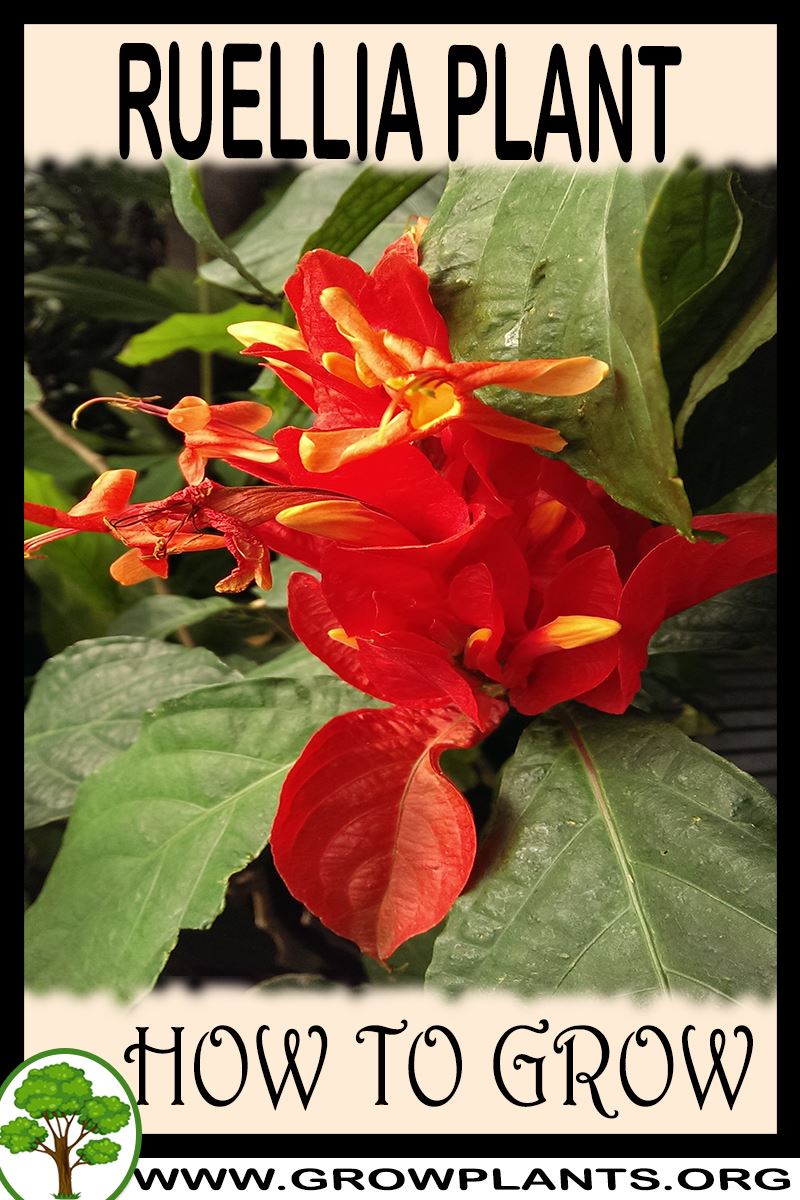
Overview: Ruellia is a genus of flowering plants commonly called wild petunias. This is a genus-level page, so size, cold tolerance and growth habit vary by species; the ornamental Ruellia types represented here are warm-climate herbaceous perennials grown for colorful trumpet-shaped flowers.
Quick Specifications
| Botanical Scope | Ruellia spp. |
| Plant Type | Mostly herbaceous perennials in ornamental cultivation |
| Foliage | Often evergreen in frost-free climates |
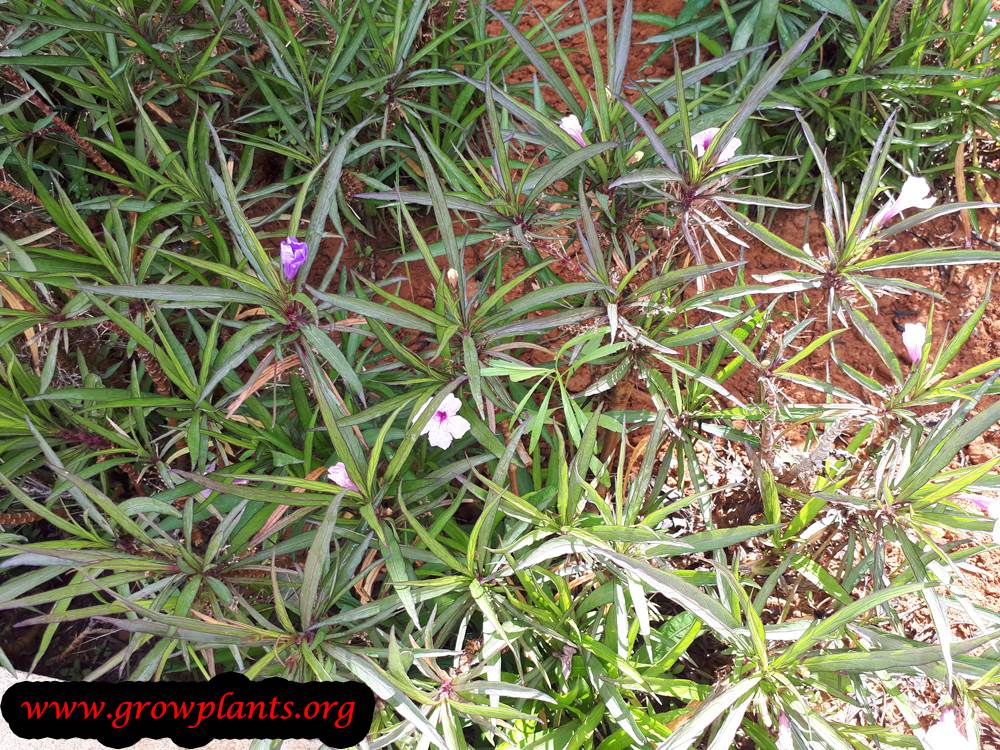
| Growth Habit | Clumping, spreading or groundcover depending on species |
| Light | Full sun to part shade for many garden forms |
| Water Need | Low to moderate once established for many garden forms |
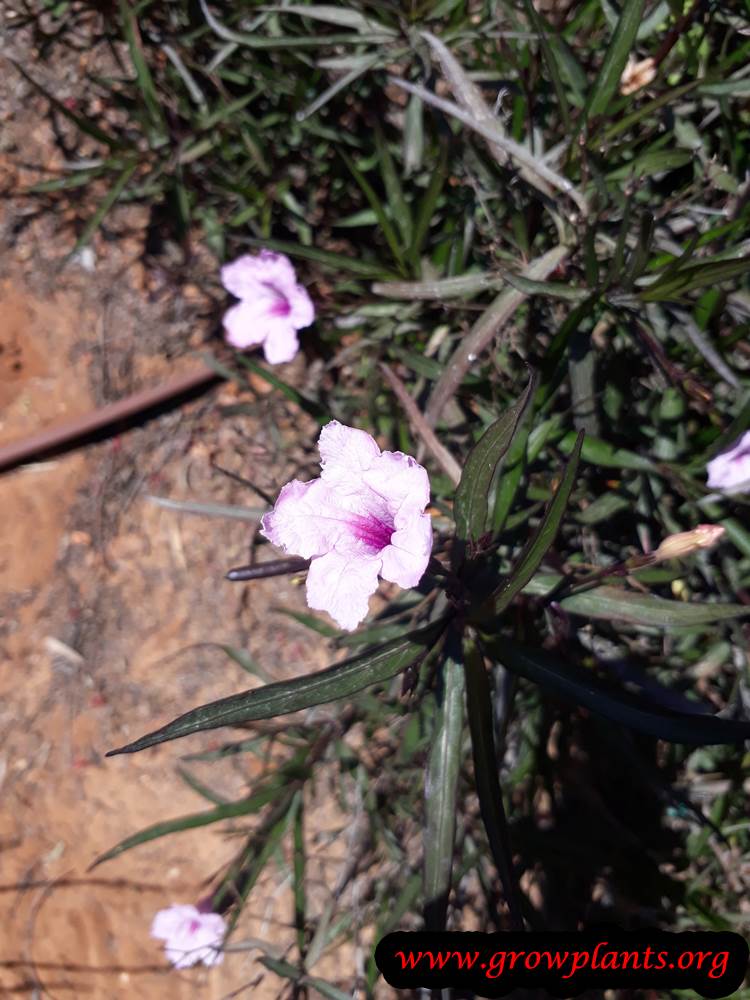
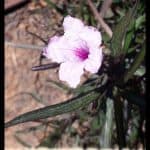
| Flower | Trumpet-shaped; commonly purple, blue, pink or white |
Important Genus-Level Note
Do not apply a single exact mature size or hardiness value to every Ruellia species. Some ornamental forms also spread aggressively, so local behavior should be checked for the exact species being grown.
Care Guide: Planting, Soil & Watering
Overview: Ruellia (Ruellia), the wild petunias, is a tough, evergreen groundcover grown for its trumpet-shaped flowers in warm climates (hardiness zone 9 and above). It grows in full sun to part shade in well-draining soil and, once established, is fairly drought-tolerant with only modest water needs.
Quick Care Requirements
| Requirement | Ideal Condition |
|---|---|
| Planting Season | Warm season – spring through autumn |
| Growth Rate | Moderate to Fast |
| Soil Type | Well-draining; adaptable |
| Water Need | Low to moderate; let the soil dry somewhat between waterings |
Planting & Establishment
- Best Planting Season: Plant during the warm growing season, from spring through autumn, once any frost risk has passed.
- How to Plant:
- Hole Preparation: Dig a hole a little wider than the root ball and loosen the surrounding soil to help the roots settle in.
- Soil Amendments: Work some organic matter into the backfill on poor soils, though this adaptable plant is not fussy; ensure the site drains freely.
- Planting Depth: Set the plant at the depth it grew in its pot, with the crown level with the soil surface.
- Growth Speed & Expectations: A moderate to fast grower reaching about 30-50 cm and spreading readily – it can be invasive and aggressive, so give it a contained spot or manage its spread.
Soil, Watering & Drainage Care
- Soil Mix & Drainage Needs: Give it well-draining soil so the roots never stand in water; it copes with a range of soils and grows well in containers too.
- Watering Schedule & Technique:
- Young / Newly Planted: Water regularly after planting to settle the roots and keep the soil lightly moist while the plant establishes.
- Established: Once established it is drought-tolerant and needs only modest water; let the top of the soil dry before watering again.
- Seasonal Adjustments: Water a little more through the hottest, driest spells and cut back in cool or wet weather.
Climate, Light & Hardiness
Ruellia (the wild petunias) are warm-climate herbaceous perennials for subtropical, tropical, Mediterranean, desert and warm-temperate climates, grown in full sun to half shade as flowering groundcover. As a group they are heat-loving and cold-tender - the site data gives hardiness zone 9 and warmer - evergreen where winters stay near frost-free and dying back to resprouting roots at the cold edge of their range. Cold tolerance varies by species.
Quick Climate Specifications
| Climate Zones | Subtropical, tropical, Mediterranean, desert and warm-temperate |
|---|---|
| USDA Hardiness Zones | Zone 9 and warmer (site data; varies by species) |
| Optimal Temp Range | Warm to hot conditions |
| Cold Damage Begins | Foliage is damaged by frost around freezing (0 °C / 32 °F) |
| Approx. Survival Minimum | In zone 9 top growth dies back in frost but established roots typically resprout; not reliably root-hardy in colder zones |
| Frost Tolerance | Low (foliage); roots Moderate within zone 9+ |
| Light Conditions | Full sun to half shade |
| Wind Tolerance | Moderate |
Sunlight & Light Exposure
Optimal Light Setup
Full sun gives the densest, most free-flowering cover; half shade is also tolerated, with slightly fewer blooms.
Direct Sun Requirement
Plenty of direct sun drives the heaviest flowering and strongest spread.
Shade & Heat Management
Very heat-tolerant; full sun is taken readily in hot climates and light shade is optional.
Best Exposure / Orientation
A warm, sunny aspect is ideal. Several species are vigorous and can be aggressive, so choose a position where spread can be managed.
Temperature Extremes & Hardiness
USDA Hardiness & Regional Limits
The site data gives zone 9 and warmer. These are warm-climate plants: evergreen and perennial where winters stay near or above freezing, and die-back perennials at the cold edge of their range.
Cold Damage & Winter Protection
Frost blackens the top growth; within zone 9 the roots usually survive and reshoot in spring, helped by a winter mulch. Below their zone they are not reliably hardy in the ground.
Frost Sensitivity
Foliage is frost-tender and damaged near freezing (0 °C / 32 °F); hardiness rests in the roots within their zone, and varies by species.
Extreme Heat Tolerance
Excellent - the group thrives in prolonged summer heat.
Wind, Humidity & Microclimate
Humidity Preferences
Adaptable across humid subtropical and drier Mediterranean/desert climates.
Dry-Air Tolerance
Good once established, consistent with use across desert and Mediterranean climates.
Wind Tolerance
Moderate; the low, flexible stems cope with ordinary wind.
Rainfall & Seasonal Moisture
Tolerates a wide range of rainfall regimes; spread is most vigorous where warmth and moisture combine.
Microclimate Recommendations
A warm, sunny pocket lengthens the evergreen season; near the cold limit a sheltered, mulched position improves winter survival and spring regrowth.
Growing in Pots, Balconies & Indoors
Ruellia (Mexican petunia) is a tough, free-flowering tender perennial. The grower does not list it as a houseplant, but in a bright spot it grows easily in a pot, and it is one of the better choices here for a sunny windowsill. Reaching about 30-50 cm (12-20 in), it is drought-tolerant and happy on a hot patio or balcony – and because some Ruellia spread aggressively, a container is a good way to enjoy it while keeping it in check.
Quick Details
- Container Size: About 10-20 L (3-5 gal) with strong drainage (general guidance – the grower confirms containers work)
- Indoor Suitability: Not listed as a houseplant, but it tolerates a bright, sunny windowsill well
- Best Spot: Full sun to part shade (most flowers in sun)
- Soil & Drainage: Undemanding, well-aerated mix that drains freely
- Watering in Pots: Low to moderate – it is drought-tolerant; let the top of the mix dry between waterings
Indoors & On the Windowsill
- Houseplant note: The grower marks it as not a houseplant, but with strong light it does far better indoors than most – give it the brightest, sunniest sill for steady flowering.
- Containment: Keep it potted (and deadhead) if you are in a region where Mexican petunia is invasive, so it cannot seed or run into the garden.
- Overwintering: It is frost-tender; in cold climates bring the pot into a bright, frost-free spot over winter.
On a Balcony or Patio
- Light & wind: Full sun and heat bring the most flowers, and it shrugs off dry, breezy spots; water when the pot dries in high summer.
- Practicalities: An easy, low-fuss pot plant – just cut it back if it gets leggy to keep it tidy and blooming.
Choosing the Pot, Soil & Long-Term Care
- Pot & drainage: About a 10-20 L pot with strong drainage holes. Skip a standing-water saucer, which keeps the roots wet and invites rot. Terracotta breathes and dries faster; glazed or plastic pots hold moisture longer.
- Potting mix: Well-aerated and organic-rich – a quality potting mix, or peat/coir with perlite or vermiculite for drainage.
- Feeding: Potted plants need feeding more often than those in the ground, since frequent watering leaches nutrients away – feed through the growing season with a balanced, organic-rich fertilizer.
- Repotting: Every couple of years refresh the mix and pot on a size; for perennials, lightly prune the root ball and top growth at the same time to keep them vigorous.
Growing this plant in a greenhouse
A greenhouse can give ruellia frost protection, cold protection, humidity control and extra warmth.
Greenhouse at a glance
| Greenhouse suitability | Conditional - depends on your climate |
|---|---|
| Main benefits | frost protection, cold protection, humidity control, extra warmth |
| Season extension | earlier spring & later autumn |
| Outdoor protection advisable below | about 5°C |
| Maintain greenhouse minimum | around 5°C for active growth |
| Suitable types | unheated greenhouse, polycarbonate greenhouse |
| Heating | Heating is optional - useful mainly for winter growing in cold areas. |
Related greenhouse guides
- Greenhouses: How to Choose the Right Greenhouse
- Polycarbonate Greenhouses: What to Look for Before Buying
Fertilizing & Feeding
A light feeder: this adaptable, vigorous groundcover needs little fertilizer and grows well even in poor soil.
Quick Fertilizing Specs
| Feeding Level | light |
|---|---|
| Main Nutrient Priority | A little balanced nutrition; it needs very little |
| Best Feeding Period | During warm-season active growth |
| Reduce/Stop Feeding | Stop feeding in the cool season |
| Soil pH | Adapts to a wide range of soils |
| Organic Options | A little compost or mulch |
Feeding by Growth Stage
Warm-season growth resumes
Support the flush of new shoots and foliage as warm weather begins.
| Nutrient direction | A light, balanced feed as active growth resumes. |
|---|---|
| Timing | As growth picks up in spring. |
| Frequency | Light feeding as growth resumes; this tough groundcover rarely needs much. |
| Fertilizer types | Balanced complete fertilizer used lightly, Compost or mulch |
| Precautions | Feed sparingly; rich feeding makes this vigorous spreader even more aggressive. |
Long warm-season bloom
Sustain the long spring-to-autumn flowering.
| Nutrient direction | A balanced feed supports continued bloom; avoid high-phosphorus additives. |
|---|---|
| Timing | Through the long warm-season bloom. |
| Frequency | Occasional light feeding is enough to keep it blooming. |
| Fertilizer types | Balanced complete fertilizer used lightly |
| Precautions | Overfeeding drives leafy growth and spread at the expense of tidy flowering. |
Cool-season slowdown
Growth pauses when temperatures drop; no nutrients are needed.
| Nutrient direction | None – withhold fertilizer while the plant is not in active growth. |
|---|---|
| Timing | During cool winter weather when growth slows or stops. |
| Frequency | No feeding at this stage. |
| Fertilizer types | No feeding at this stage – hold off on fertilizer until warm-season growth resumes |
| Precautions | Do not fertilize during the cool-season slowdown; resume only when active growth returns. |
Nutrient Deficiency Signs & Corrections
Older, lower leaves fade to pale green or yellow and overall growth is slow and weak.
| Possible causes | Low or leached soil nitrogen, Cold or waterlogged soil limiting root uptake |
|---|---|
| Appears first on | Older, lower leaves |
| What to check | Recent feeding history and soil organic matter, Soil drainage and root health |
| Possible correction | Apply a complete nitrogen-bearing fertilizer during active growth and build soil with compost. |
Youngest leaves yellow between still-green veins (interveinal chlorosis).
| Possible causes | High soil pH reducing iron availability, Waterlogged or cold roots, Often not a true shortage of soil iron |
|---|---|
| Appears first on | Youngest leaves |
| What to check | Soil pH, Soil drainage and watering |
| Possible correction | Correct soil pH and, where needed, apply a chelated iron product per its label. |
Interveinal yellowing on older leaves while the veins stay green.
| Possible causes | Low soil magnesium, High potassium competing with magnesium uptake, Sandy, leached soils |
|---|---|
| Appears first on | Older leaves |
| What to check | Soil test for magnesium, Balance of recent fertilizer use |
| Possible correction | Apply a magnesium source such as a labeled Epsom-salt drench if a soil test confirms the need. |
Pruning, Training & Seasonal Maintenance
Ruellia (wild petunias) are herbaceous perennials that bloom over a long spring-to-autumn season on current-season growth, so cutting them back renews both foliage and flowers rather than sacrificing bloom. They are not pruned for structure; the practical reasons to cut are to contain the more aggressive, freely self-seeding species (such as Mexican petunia), to remove seed capsules before they scatter, and to refresh tired clumps. They tolerate hard cutting, and several are poisonous, so handle prunings with care.
Quick Pruning & Maintenance Specs
| Pruning Tolerance | High — tolerates cutting to the ground |
| Primary Pruning Window | Late winter/early spring hard cutback to renew clumps |
| Secondary Maintenance Window | Growing season for containment and seed-head removal |
| Typical Frequency | Annual renewal cutback plus as-needed containment trims |
| Main Objective | Contain spread, limit self-seeding, refresh foliage and bloom |
| Young Plant Priority | Pinch for bushiness; edge spreading types early |
| Mature Plant Priority | Cut back and divide to control vigorous, seeding stands |
| Best Tool Type | Shears for cutback; snips for seed heads; spade to divide |
| Avoid Heavy Pruning During | Right after transplanting; otherwise few constraints |
Pruning by Plant Age & Size
Newly Established
Remove damaged shoots and pinch tips for a fuller clump; with spreading species, start edging or barriering the rhizomes before they run.
Young / Formative
No structural training on these soft-stemmed plants — pinch for density and begin removing spent flower/seed stems to keep self-seeding in check.
Mature / Established
Shear the clump back to contain and refresh it, and lift and divide congested or spreading plants to control them and renew vigour.
Seasonal Pruning Schedule
Dormant / Late Winter
Cut spent stems to near ground level (deciduous in cool zones) or cut back hard (evergreen in warm zones) to reset the plant; expect a fresh flush and renewed bloom.
Summer Canopy Management & Containment
Trim stems overstepping their space and, for the seedy species, remove spent flowers and seed capsules before they scatter. Leave seed heads only where you actively want volunteers.
Ongoing Sanitary
Remove damaged or aphid-infested shoots as needed.
Structural Pruning & Training & Renewal
Renewal and containment, not structure, are the levers. Shear to hold size and density, and lift-and-divide as the main renewal and control method — particularly for rhizomatous species, where removing the running roots is how you contain them. Because bloom is on new growth, hard cuts are quickly followed by fresh flowering shoots.
Special Growth to Remove
Target spreading rhizomes on the running species (edge, barrier or dig out) and spent flower/seed stems on the free-seeders. Deadheading here is aimed at preventing seed set rather than at appearance.
Container & Small-Space Pruning
Containers are an excellent way to enjoy the vigorous, spreading species without letting them invade. Cut back hard when leggy, pinch for compactness, remove seed heads, and refresh soil and divide when the pot fills.
Tools
Shears cut the soft-stemmed clumps back en masse; precision snips remove individual and seed-bearing stems; a garden spade lifts, divides and severs rhizomes. No saw or loppers are required.
Tool Hygiene & Disease Risk
Routine for disease. The key caution is that several Ruellia are poisonous — wear gloves, keep sap off skin and away from children and pets, and wash up afterwards. Bag seed-bearing prunings rather than composting them.
Cut Placement & Technique
For renewal, cut stems to a few centimetres above the crown; pinch tips for branching; and snip finished flower/seed stems at the base.
Heavy Pruning & Rejuvenation
Fully tolerated — these plants can be cut or mown to the ground and regenerate quickly from the crown (and rhizomes on running types). Hard cutback is the standard renewal method for a tired stand.
Post-Pruning Care
Water a divided or hard-cut clump to settle it; no feeding is needed to force regrowth. Where containment matters, watch for shoots re-emerging beyond the intended area.
Common Pruning Mistakes
Allowing the free-seeding species to set seed and colonise; not containing the rhizomes; composting seed-bearing material; and handling poisonous species bare-handed.
When NOT to Prune
Avoid hard cutting straight after transplanting until the plant roots; otherwise there is little seasonal constraint.
Recommended Tools (by task)
- hedge_shears — fast mass cutback of soft-stemmed clumps for renewal and containment.
- precision_snips — removing spent flower and seed stems to limit self-seeding.
- garden_spade — lifting, dividing and severing rhizomes to control spreading species.
Propagation Guide
Ruellia is one of the easiest perennials to propagate: soft stem cuttings root readily in water or moist soil, clumps divide well, and most species self-seed freely. Several are aggressive spreaders, so their prolific seeding is more often a control issue than a propagation aim; cuttings and division give predictable, contained results.
Quick Propagation Specs
| Best Propagation Method | Stem cuttings and clump division |
| Alternative Methods | Seed (many species self-sow abundantly) |
| Propagation Difficulty | Easy |
| Seed True-to-Type | Species come fairly true; can seed weedily |
| Vegetative True-to-Type | Yes |
| Best Propagation Season | Warm growing season, spring through autumn |
| Cutting Rooting Time | Often roots within a couple of weeks in warm moist conditions |
Stem Cuttings
Cutting Type & Setup
Root soft to semi-firm shoot cuttings a few nodes long in moist soil or a jar of water in warmth and bright light; the submerged or buried nodes root quickly. Rooting hormone is unnecessary.
Division, Offsets, Pups & Suckers
Split established clumps in the warm season into rooted divisions and replant at once; spreading species re-establish fast.
Growing from Seed
Seed Handling & Sowing
Many species fling seed from ripe capsules and self-sow widely. Surface-sow the fine seed on warm, moist mix if raising deliberately, and deadhead the aggressive species to limit unwanted spread.
Bloom & Flower Guide
Quick Details
- Bloom Season: Spring through autumn (nearly year-round where winters are frost-free)
- Time to First Bloom: Usually in its first season once the plant is established
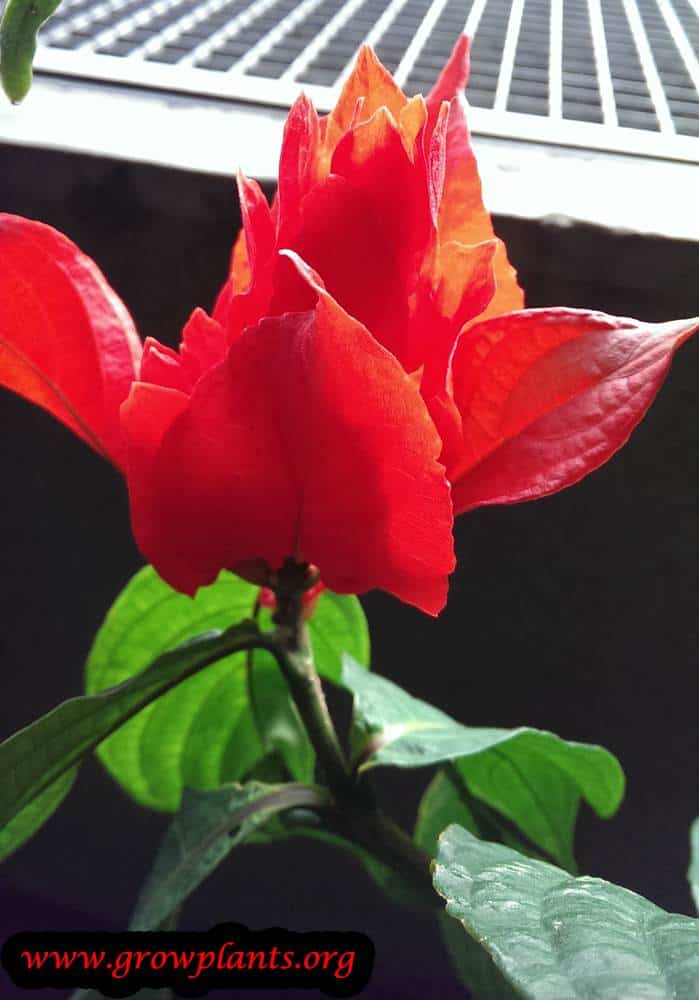
- Flower Appearance: Trumpet-shaped flowers in purple, blue, white or pink
- Edibility: Ornamental – grown for its flowers and as a butterfly plant; not eaten
Detailed Blooming Overview
Ruellia (wild petunia) blooms freely over a long season. Each individual trumpet is short-lived, often lasting only a single day, but the plant opens a steady succession of fresh flowers, so the display carries on for months and keeps the butterflies coming.
Flower Characteristics
- Trumpet-shaped blooms in purple, blue, white or pink, carried along the stems.
- Each flower is fleeting – typically open for about a day – but replaced continuously.
Bloom Care & Thinning
- Keeping it flowering: Give it full sun for the best show; it is largely self-cleaning, so no fussy deadheading is needed.
- Managing spread: Some Ruellia self-seed enthusiastically – remove spent flowers and seed pods if you want to keep it in bounds.
- Pollination: Visited by bees and butterflies.
Pests, Diseases & Troubleshooting
Overview: Ruellia (wild petunia) (Ruellia) is a resilient Ruellia in the Acanthaceae, generally pest-tolerant and grown easily; its few real problems are sap-feeding insects – chiefly whiteflies, aphids, spider mites and mealybugs – and root rot in soggy soil, rather than serious disease. Applied at genus level, this covers the shared profile of wild and Mexican petunias. Grow it in good light with steady but well-drained moisture, keep foliage open and clean, and rely on cultural methods and gentle sprays; it rarely needs strong chemicals.
Quick Troubleshooting Overview
| Issue / Pest | Main Symptom | Primary Solution |
|---|---|---|
| Whiteflies | Tiny white flies rising from disturbed leaves; sticky honeydew | Yellow sticky traps, insecticidal soap/oil undersides |
| Aphids | Curled tips, honeydew, sooty mould | Water jet, beneficials, insecticidal soap |
| Spider mites | Fine stippling, bronzing, webbing in dry heat | Raise humidity, hose foliage, horticultural oil |
| Mealybugs | White cottony tufts in leaf axils | Dab with alcohol, insecticidal soap/oil |
| Root rot | Wilting, yellowing, mushy base in wet soil | Improve drainage, ease off watering |
| Leaf spot | Brown/black spots in humid, crowded growth | Remove leaves, improve airflow, avoid wet foliage |
Common Pests & Management
- Whiteflies (Bemisia / Trialeurodes spp.):
- Symptoms: Clouds of tiny white moth-like insects fly up when foliage is disturbed; nymphs on leaf undersides suck sap, causing yellowing, weak growth, sticky honeydew and sooty mould, and can transmit viruses.
- Prevention & Control: Hang yellow sticky traps to monitor and catch adults, hose down foliage, and support whitefly parasitoids and lacewings. Spray insecticidal soap or light horticultural/neem oil on leaf undersides, repeating to catch newly hatched nymphs; avoid over-feeding with nitrogen.
- Aphids (Aphis / Myzus spp.):
- Symptoms: Small soft green, black or yellow insects cluster on tender shoots and buds, distorting new growth and coating leaves in honeydew and sooty mould.
- Prevention & Control: Knock them off with a water jet, encourage lady beetles and hoverflies, and pinch out badly infested tips. Insecticidal soap or a light oil clears persistent colonies; keep growth steady rather than lush and soft.
- Two-spotted spider mite (Tetranychus urticae):
- Symptoms: Fine pale stippling, dull bronzed leaves and delicate webbing on undersides in hot, dry conditions; heavy attacks cause leaf drop, most often on stressed or indoor plants.
- Prevention & Control: Raise humidity and rinse foliage regularly, keep plants well watered and unstressed, and conserve predatory mites by avoiding harsh insecticides. Treat hot-spots with insecticidal soap or horticultural oil, coating leaf undersides.
- Mealybugs (Planococcus / Pseudococcus spp.):
- Symptoms: White, cottony, waxy tufts gather in leaf axils, along stems and leaf undersides, sucking sap and leaving honeydew; growth becomes weak and sticky, especially on indoor and sheltered plants.
- Prevention & Control: Dab colonies with a cotton swab dipped in rubbing alcohol, wash plants and isolate new arrivals, and encourage or introduce natural enemies. Spray insecticidal soap or horticultural oil thoroughly and repeat, as the waxy coat resists single treatments.
- Scale insects (Coccus / Saissetia spp.):
- Symptoms: Small brown or tan limpet-like bumps fixed along stems and leaf veins, sucking sap and producing honeydew and sooty mould; heavy scale weakens the plant and yellows leaves.
- Prevention & Control: Scrape off light infestations or prune out badly encrusted stems, and encourage parasitic wasps and lady beetles. Treat crawlers with horticultural oil or insecticidal soap, repeating; the oil smothers both scale and their eggs.
Diseases & Fungal Issues
- Fungal / bacterial leaf spot (Cercospora / Xanthomonas spp.):
- Symptoms: Brown, black or water-soaked spots, sometimes with yellow halos, appear on leaves in warm, humid, crowded or overhead-watered conditions and may merge, causing leaves to yellow and drop.
- Treatment & Management: Remove and destroy spotted leaves, water at the base to keep foliage dry, and open up the planting for airflow; avoid working among wet plants. A copper-based product helps if spotting is severe and persistent.
- Root and stem rot (Pythium / Phytophthora / Rhizoctonia spp.):
- Symptoms: Lower stems and roots blacken and rot, plants wilt and yellow despite moist soil, and cuttings damp off – all driven by waterlogged, poorly drained soil or overwatering.
- Treatment & Management: Plant in free-draining soil or a gritty mix, water only when the surface has dried, and never leave pots standing in water. Remove and destroy rotted plants; there is no cure once the crown collapses, so prevention through drainage is essential.
- Powdery mildew (minor) (Erysiphales):
- Symptoms: A light white powdery film may appear on leaves in shade with poor airflow and damp nights, causing minor yellowing; uncommon and rarely serious on Ruellia.
- Treatment & Management: Improve light and airflow, avoid overhead watering, and remove affected leaves. Sulphur or potassium bicarbonate handles rare stubborn cases.
Growing Difficulties & Abiotic Problems
- Root rot from overwatering:
- Cause & Symptoms: Wilting, yellow lower leaves and a soft, blackened base develop in constantly wet or poorly drained soil.
- Correction Strategy: Let the soil surface dry between waterings, improve drainage, and lift the crown above standing water; in pots, use a free-draining mix and empty saucers.
- Leggy, sparse growth in low light:
- Cause & Symptoms: Stems stretch, leaves space out and flowering is poor when the plant is grown in too much shade.
- Correction Strategy: Move to brighter light or full sun for most Ruellia, and pinch or cut back leggy stems to encourage bushy, floriferous regrowth.
- Cold damage:
- Cause & Symptoms: Leaves blacken and stems die back after chilling or light frost, as these are warm-climate plants.
- Correction Strategy: Protect from frost, mulch the crown where marginally hardy, or grow tender species in containers to bring under cover; many resprout from the roots after mild cold.
What Helps – Products & Tools
Handy solutions for Ruellia are yellow sticky traps for whitefly monitoring; insecticidal soap and light horticultural or neem oil for whiteflies, aphids, mites, mealybugs and scale; rubbing alcohol on a swab for spot-treating mealybugs and scale; and, only if leaf spot is severe, a copper-based fungicide. Most trouble is prevented by good drainage and airflow. Apply oils in the evening to protect pollinators.