

Plant Profile & Key Characteristics
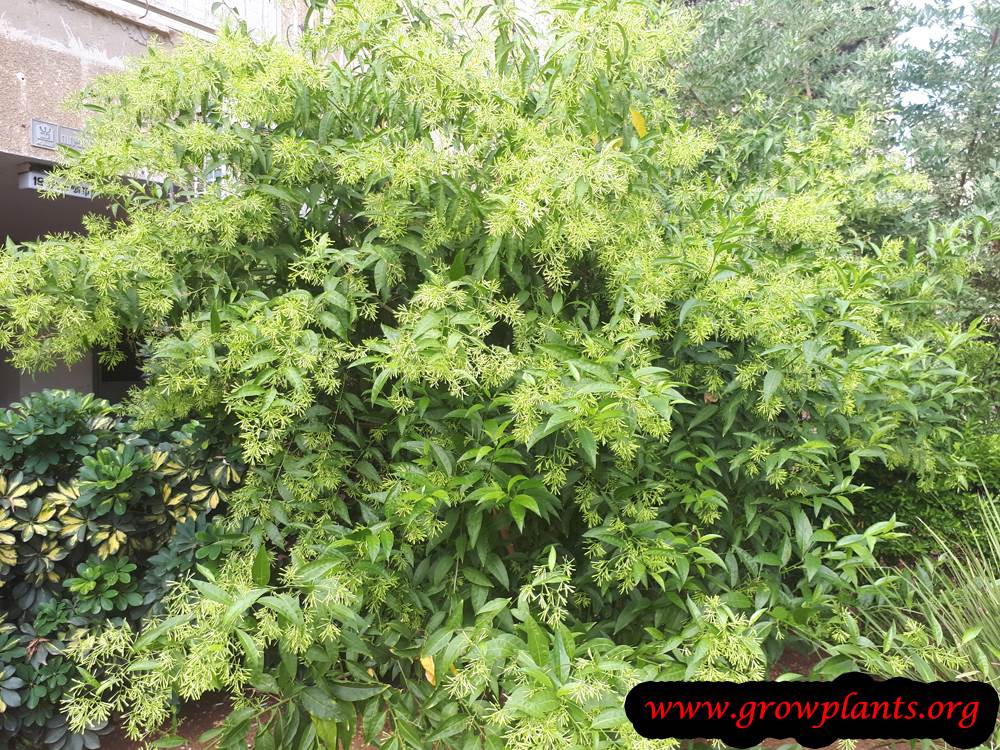
Overview: An evergreen shrub, 2-4 m (about 6.5-13 ft) tall, grown as a hedge and prized for its intensely sweet night-time fragrance. It is a fast-growing perennial that attracts pollinators in subtropical, tropical and Mediterranean gardens.
Quick Specifications
| Specification | Attribute |
|---|---|
| Plant Type / Life Cycle | Perennial (evergreen shrub) |
| Foliage Type | Evergreen |
| Mature Size | 2-4 m (6.5-13 ft) tall |
| Growth Rate | Fast to moderate |
| Toxicity | Toxic – foliage and berries contain toxic compounds (Solanaceae) |
| Hardiness | USDA zone 8+ |
Growth Form & Structure
- Height & Spread: 2-4 m (6.5-13 ft) tall; can also be grown in containers.
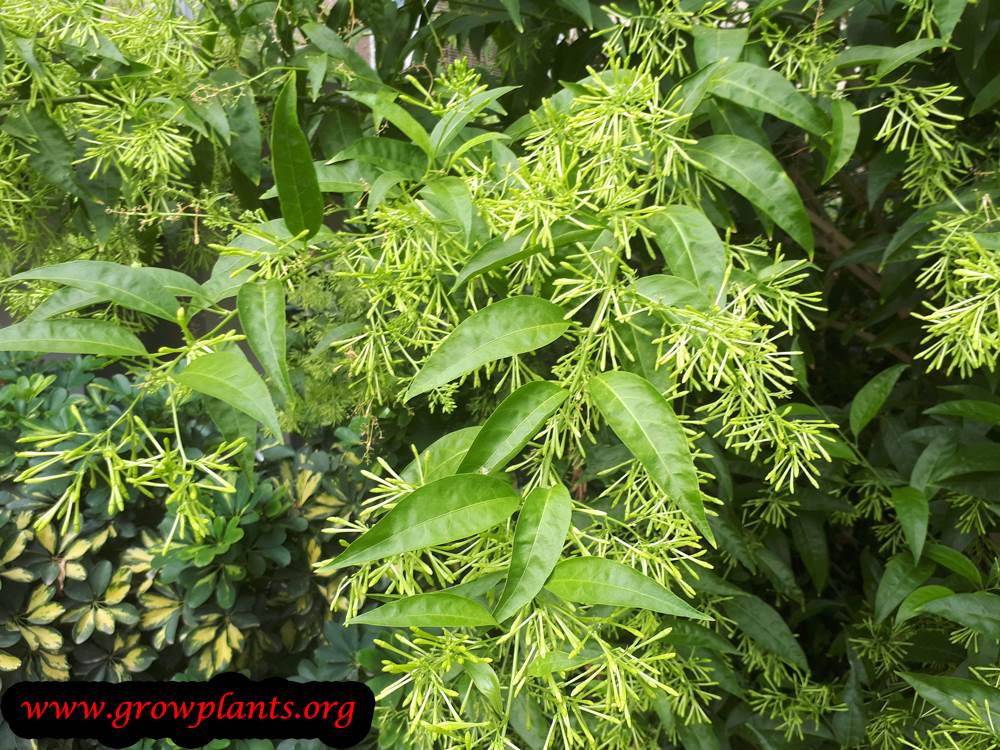
- Growth Habit & Form: Bushy evergreen shrub grown as a fragrant hedge.
- Lifespan & Maturity: Fast-to-moderate perennial that quickly reaches hedge size.
Anatomy & Physical Features
- Leaves & Foliage: Green, elliptic to lanceolate leaves.
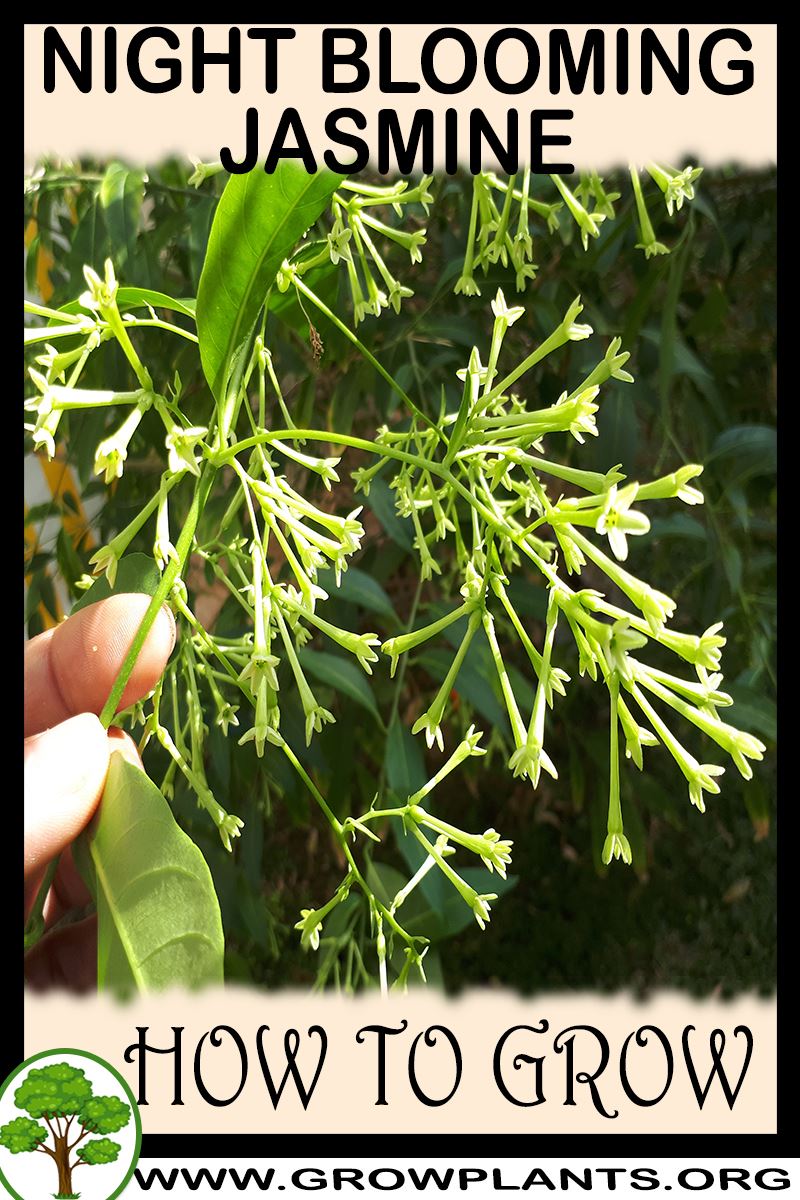
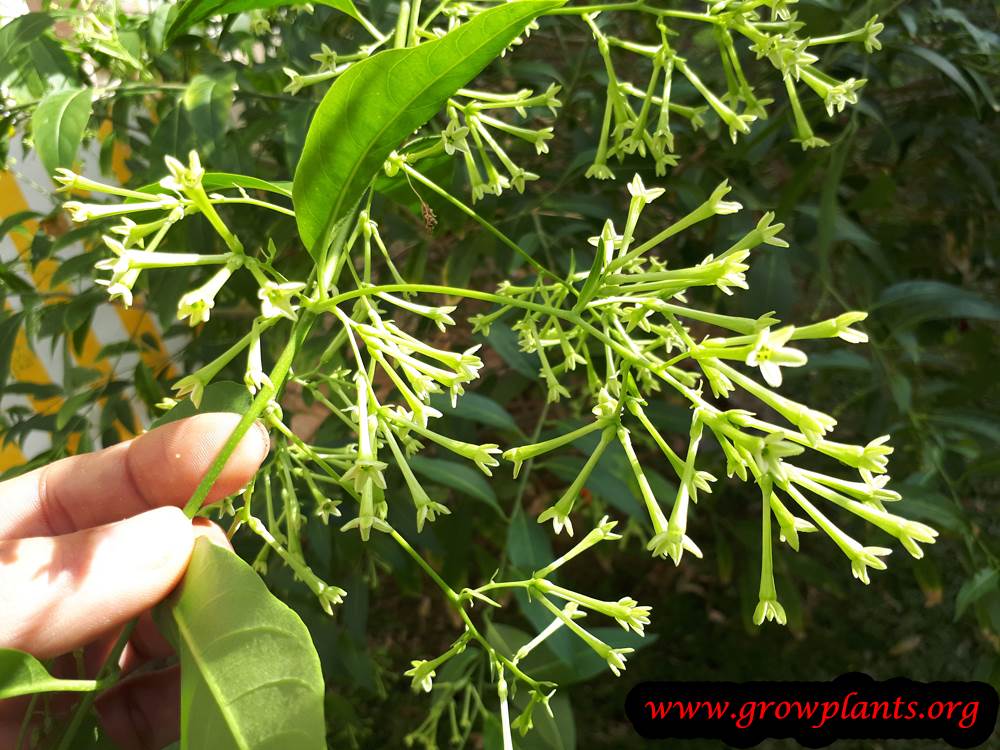
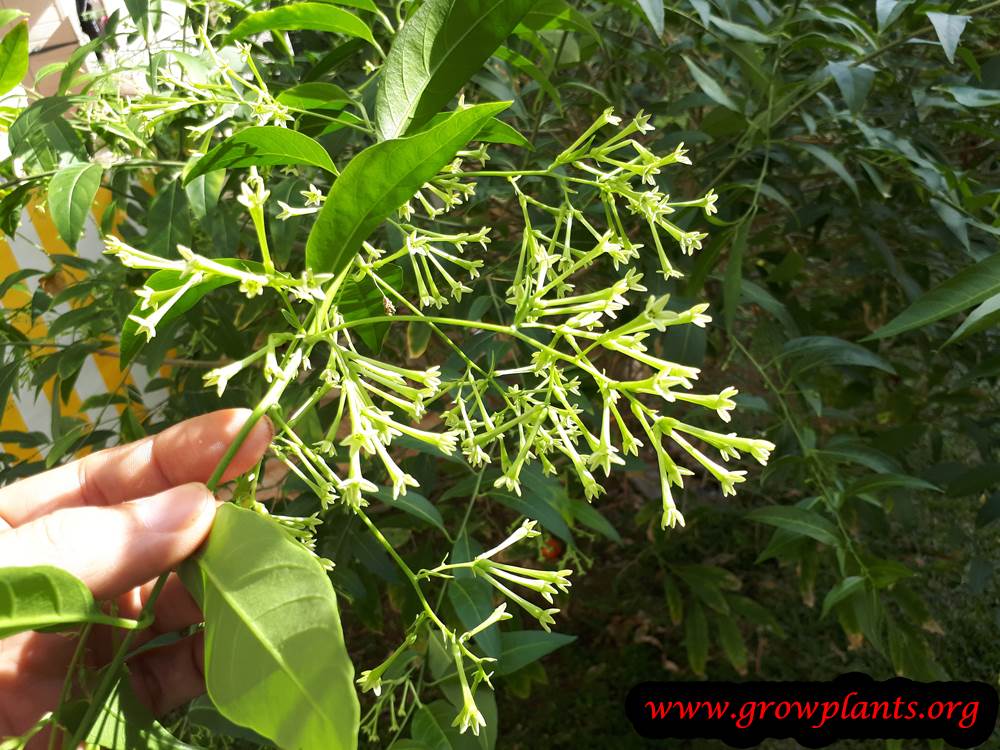
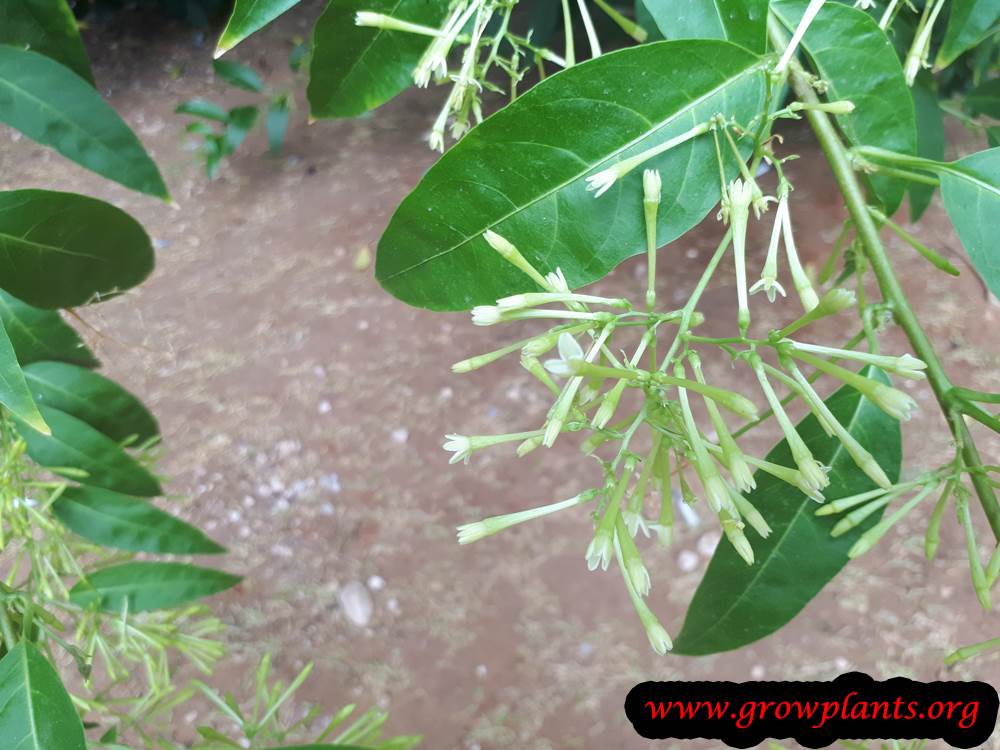
- Flower Characteristics: Yellow-green tubular flowers in clusters, intensely sweet-scented at night (full detail in the Bloom section).
Primary Uses & Landscape Value
- Functional & Ornamental Roles: Fragrant ornamental hedge and screen that perfumes the evening garden and attracts pollinators.
Care Guide: Planting, Soil & Watering
Overview: This fragrant evergreen shrub grows best in full sun to part shade in warm, frost-free gardens. It suits fertile, well-draining soil and a moderate, steady supply of water.
Quick Care Requirements
| Requirement | Ideal Condition |
|---|---|
| Soil Type | Fertile, well-draining |
| Water Need | Moderate – keep evenly moist, letting the surface dry between waterings |
Planting & Establishment
- Best Planting Season: In spring, once the danger of frost has passed, in warm or frost-free regions.
- How to Plant:
- Hole Preparation: Dig a hole about twice the width of the root ball and just as deep, loosening the sides so young roots spread easily.
- Soil Amendments: Mix a few handfuls of compost or well-rotted organic matter into the backfill, adding grit or perlite if drainage is slow.
- Planting Depth: Set the plant so the root collar sits level with the surrounding soil; never bury the stem or trunk base.
- Growth Speed & Expectations: A fast-growing shrub in warm conditions, best kept shaped by pruning.
Soil, Watering & Drainage Care
- Soil Mix & Drainage Needs: Give it fertile, free-draining soil enriched with organic matter; standing water around the roots invites rot. It grows well in a large container of good potting mix but is not suited to life as a houseplant.
- Watering Schedule & Technique:
- Young / Newly Planted: Keep the soil evenly moist for the first several weeks, watering whenever the surface begins to dry.
- Established: Water deeply and let the top few centimetres dry before watering again, rather than giving frequent shallow sips.
- Seasonal Adjustments: Water more often through summer heat and reduce it in winter as growth slows.
Climate, Light & Hardiness
Night blooming jasmine (Cestrum nocturnum) is a fast-growing, fragrant evergreen shrub for subtropical, mediterranean, tropical, and temperate climates, doing best in full sun to half shade. It is reliably hardy outdoors from USDA zone 8 and warmer.
Quick Climate Specifications
| Climate Zones | Subtropical, mediterranean, tropical, temperate |
|---|---|
| USDA Hardiness Zones | 8+ |
| Frost Tolerance | Low to Moderate |
| Light Conditions | Full Sun / Half Shade |
Sunlight & Light Exposure
Optimal Light Setup
Full sun to half shade both suit it well, with full sun typically giving the densest growth.
Direct Sun Requirement
Several hours of direct sun daily is beneficial, though it also performs in partial shade.
Best Exposure / Orientation
Because its flowers release scent mainly at night, siting it near a patio, window, or path lets the fragrance be enjoyed in the evening.
Temperature Extremes & Hardiness
USDA Hardiness & Regional Limits
Grown outdoors year-round from USDA zone 8 and warmer; in the tropics it grows and can be planted essentially all year.
Cold Damage & Winter Protection
In the cooler part of its range (zone 8), hard freezes can cut the shrub back, though it often resprouts from the base if roots are protected with mulch; young plants are more vulnerable to cold than established ones.
Frost Sensitivity
Moderately frost-sensitive; foliage and stems are damaged by hard frost.
Extreme Heat Tolerance
Good, particularly with the average water the plant is noted to need.
Wind, Humidity & Microclimate
Humidity Preferences
Adapts across the humidity range of the subtropical, mediterranean, tropical, and temperate climates it is grown in.
Wind Tolerance
Moderate; as a 2–4 m shrub it can be lightly sheltered in exposed sites for tidier growth.
Microclimate Recommendations
A warm, sheltered spot near outdoor seating maximizes enjoyment of its strong night fragrance while also offering some protection at the cold edge of its range.
Growing in Pots, Balconies & Indoors
Night-blooming jasmine (Cestrum nocturnum) is an intensely fragrant shrub of 2-4 m (80-160 in). The grower notes it is not an indoor houseplant, but it grows well in a container on a sunny balcony or patio, where its powerful evening scent can be enjoyed.
Quick Details
- Container Size: A large, sturdy pot for its shrubby growth
- Indoor Suitability: Not a houseplant – and its heavy night scent can be overpowering in a closed room
- Best Spot: Full sun to half shade
- Soil & Drainage: Free-draining, organic-rich mix
- Watering in Pots: Average water; keep evenly moist, never waterlogged
Indoors & On the Windowsill
- Houseplant limits: The grower marks it as not for indoors – it wants full sun and its overpowering night fragrance is too much for an enclosed room.
- Safety: All parts, especially the berries, are highly toxic if eaten – keep it well away from children and pets, and site pots out of a child’s reach. Never treat any part as edible.
- Overwintering: Tender to frost – in cold climates keep it potted and move it to a bright, frost-free place over winter.
On a Balcony or Patio
- Light & wind: Give it a warm, sunny, sheltered spot; the scent carries best on still, warm evenings. Pots dry fast against warm walls – check moisture regularly.
Choosing the Pot, Soil & Long-Term Care
- Pot & drainage: A pot with strong drainage holes is essential; skip a permanently full standing-water saucer to avoid root rot. Terracotta breathes and dries faster, while glazed or plastic holds moisture longer.
- Potting mix: A well-aerated, organic-rich mix – potting mix or peat/coir with perlite or vermiculite – works best.
- Feeding: Potted plants need feeding more often than those in the ground, since watering steadily leaches nutrients out of the container.
- Repotting: Refresh the mix or pot up about every two years, lightly pruning the root ball and top growth to keep it in scale.
Fertilizing & Feeding
A moderate feeder as a fast-growing hedge shrub: balanced feeding through the growing season supports the dense foliage and fragrant flower clusters this plant is grown for, with feeding eased off once cooler weather slows growth.
Quick Fertilizing Specs
| Feeding Level | Moderate feeder |
|---|---|
| Main Nutrient Priority | Balanced feeding with adequate nitrogen for dense hedge foliage and fragrant bloom |
| Best Feeding Period | Spring through the summer-into-autumn bloom season |
| Organic Options | Compost or well-rotted organic matter worked into the soil, especially for hedge plantings |
| Reduce/Stop Feeding | Ease off as growth slows going into cooler weather |
| Micronutrients | Usually met by a complete fertilizer and organic matter; correct only a diagnosed issue |
| Soil pH | Tolerates a wide range; performs best in well-drained soil |
Feeding by Growth Stage
Spring growth flush
Build the dense, leafy framework this plant needs whether grown as a specimen shrub or a hedge.
| Nutrient direction | A balanced, nitrogen-forward fertilizer supports vigorous new growth and thick foliage. |
|---|---|
| Timing | As new growth resumes in spring or after any hard pruning. |
| Frequency | A feeding at the start of active growth, with organic matter renewed at the same time. |
| Fertilizer types | A balanced complete fertilizer with adequate nitrogen, Compost or well-rotted organic matter worked into the soil |
| Precautions | For hedge plantings, feed the full root zone evenly rather than concentrating fertilizer near individual trunks, which can lead to uneven growth. |
Fragrant bloom period
Support the clustered, sweetly fragrant flowers that open through the summer and autumn and draw in pollinators.
| Nutrient direction | Continued balanced feeding, with attention to potassium, supports strong flowering without sacrificing the foliage density that gives the plant its hedge value. |
|---|---|
| Timing | Through the summer-into-autumn bloom window. |
| Frequency | An occasional feeding through the bloom season is usually sufficient. |
| Fertilizer types | A balanced fertilizer with attention to potassium for bloom quality, Container-grown plants may need a container-formulated feeding routine |
| Precautions | Avoid heavy nitrogen applications late in the bloom season, which can push new soft growth at the expense of flowering. |
Cool-season rest
Let growth ease as the season cools, avoiding tender new growth that cold weather would damage.
| Nutrient direction | None – no supplemental feeding is needed once growth has slowed for the cool season. |
|---|---|
| Timing | During the cooler part of the year when growth naturally slows or the plant is protected overwinter in marginal climates. |
| Frequency | No feeding during this rest period. |
| Fertilizer types | No feeding at this stage; do not fertilize until active growth resumes in spring. |
| Precautions | Feeding during this slow period wastes nutrients and can encourage frost-tender growth in climates near the cold edge of its range. |
Nutrient Deficiency Signs & Corrections
Older leaves fade to pale green or yellow and hedge growth thins out.
| Possible causes | low soil nitrogen, common in dense hedge plantings competing for nutrients, nitrogen leaching after heavy watering or rain, thin, low-organic-matter soil |
|---|---|
| Appears first on | older, lower leaves |
| What to check | recent feeding history, soil organic matter, how densely the hedge is planted and competing for nutrients |
| Possible correction | Apply a balanced, nitrogen-containing fertilizer evenly across the hedge row and build soil organic matter. |
New leaves turn yellow while the veins stay green.
| Possible causes | high soil pH tying up available iron, poorly drained or compacted soil, root stress limiting nutrient uptake |
|---|---|
| Appears first on | newest growth at the shoot tips |
| What to check | soil pH and drainage, recent watering pattern, root health |
| Possible correction | Improve drainage where possible and apply a chelated iron product per its label. |
Leaf margins scorch or brown and flowering becomes sparse.
| Possible causes | low soil potassium, heavy nitrogen feeding without balance, drought stress limiting nutrient uptake |
|---|---|
| Appears first on | older leaf margins |
| What to check | recent fertilizer balance, watering consistency, flower production compared to prior seasons |
| Possible correction | Switch to a balanced, potassium-inclusive fertilizer and maintain even watering. |
Leaf edges brown or scorch on container-grown plants despite regular watering.
| Possible causes | fertilizer salt buildup in a container with limited drainage, under-watering that concentrates salts, excessive or too-frequent feeding |
|---|---|
| Appears first on | leaf tips and margins |
| What to check | container drainage, recent feeding amounts, visible salt crust on the soil surface |
| Possible correction | Ease back on feeding, flush the container thoroughly with water, then resume with lighter applications. |
Pruning, Training & Seasonal Maintenance
Night blooming jasmine is a vigorous, fast-growing evergreen shrub commonly grown as a fragrant hedge or screen, and it tolerates frequent, fairly hard pruning very well. The main objective is size and density control – since its sweetly-scented flower clusters form on new growth, cutting back does not sacrifice long-term bloom, only temporarily reducing the current flush until fresh growth reflowers. Shaping and hedge maintenance can be done through most of the growing season, with the heaviest structural or renewal cuts best timed for spring before the main summer growth surge.
Quick Pruning & Maintenance Specs
| Pruning Tolerance | High |
| Primary Pruning Window | Spring, before the main growth flush |
| Secondary Maintenance Window | Light shaping through summer |
| Typical Frequency | Hedge maintenance 2–3 times per growing season; informal specimens once or twice |
| Main Objective | Hedge density/shape and overall size control (can reach 2–4 m) |
| Young Plant Priority | Pinch tips to encourage branching from the base |
| Mature Plant Priority | Maintain hedge line or renew leggy, bare-based growth |
| Best Tool Type | Hedge shears (formal hedge) or loppers/secateurs (informal specimen) |
| Avoid Heavy Pruning During | Peak summer heat stress; right before a rare frost in marginal zones |
Pruning by Plant Age & Size
Newly Established
Pinch soft tips to encourage low branching; avoid hard cuts while the plant is still rooting in.
Young / Formative
If grown as a clipped hedge, begin shearing to the desired line early so the base fills in densely. If grown as an informal specimen shrub, select 3–5 well-spaced main stems rather than shearing.
Mature / Established
Hedge form: routine surface shearing plus periodic renewal cuts into older wood so the hedge does not go hollow at the base. Informal specimen: renewal-cut one or two of the oldest stems each year to keep the whole shrub youthful and full.
Seasonal Pruning Schedule
Pre-Growth / Early-Spring
- Objective: shape and, where needed, rejuvenate before the vigorous spring–summer growth surge
- Remove: winter-damaged tips, overly long or leggy stems, one or two of the oldest basal canes on mature plants
- Do not remove: the whole plant’s foliage at once – keep some green growth for recovery
- Expected response: a strong flush of new growth
- Flowering impact: current-season buds are sacrificed short-term, but the plant reflushes and reblooms on the new growth
Summer Canopy Management
- Objective: maintain hedge line or shrub shape during vigorous active growth
- Remove: overly exuberant new growth spoiling the form
- Do not remove: growth right at the peak of the fragrant bloom display if scent/flowering is the priority that week
- Expected response: continued dense, bushy regrowth
- Flowering impact: minor, temporary reduction in flush, quickly recovered
Flowering & Fruiting Wood
Flowers form in clusters on current-season growth, so pruning timing is fairly flexible – a hedge shearing or cutback removes some of that flush’s buds, but the fast-growing new wood that follows carries the next flowers. Unlike shrubs that bloom only on old wood, there is no risk of losing an entire year’s flowering by pruning at the wrong time, only a short lull until regrowth catches up.
Structural Pruning & Training
Hedge form: maintain a slightly tapered profile, wider at the base, so lower growth is not shaded out by the top. Informal specimen form: remove congested interior growth periodically to prevent the fast-growing shrub from turning into a dense, untidy thicket, and control height/spread with heading cuts given its vigorous growth rate.
Special Growth to Remove
- Leggy, bare-based older stems – renewal-cut one or two of the oldest each year to keep the shrub full from the ground up
- Spent flower clusters, mainly for tidiness and to limit berry set
All parts of this plant, especially the berries, are considered toxic if ingested – wear gloves when pruning, and keep clippings and berries away from children and pets.
Container & Small-Space Pruning
Grows successfully in containers; because it is naturally a 2–4 m shrub, container specimens need more frequent, harder tip pruning to stay compact, and benefit from repotting with light root pruning every couple of years to sustain vigour in a restricted root zone.
Tools
- Hedge shears for specimens maintained as a clipped hedge, matching its documented hedge use
- Bypass secateurs for selective renewal cuts and deadheading on informal specimens
- Loppers for removing older, thicker basal canes on mature plants
Tool Hygiene & Disease Risk
Routine – no specific transmissible disease is flagged beyond aphid pest pressure, which is an insect issue rather than a blade-transmitted one; clean, sharp tools are sufficient. Gloves are recommended for personal safety given the plant’s toxicity, not disease control.
Cut Placement & Technique
Angle hedge-shear cuts slightly to shed rain and let light reach the lower canopy. Make renewal cuts at the base of old canes. For informal shaping, head back to just above an outward-facing node.
Heavy Pruning & Rejuvenation
Well tolerated – an overgrown or leggy specimen, or a neglected hedge, can be cut back hard by roughly a third to a half in early spring. Expect a vigorous regrowth flush and a temporarily reduced bloom that season, recovering fully by the next flowering cycle.
Post-Pruning Care
Water normally to support the regrowth flush and watch for aphids on the resulting tender new growth. No extra feeding is needed beyond a normal seasonal schedule.
Common Pruning Mistakes
- Shearing only the outer hedge surface repeatedly without ever renewal-cutting old wood, leading to a hollow, bare-centred hedge over time
- Handling toxic clippings and berries around children or pets without care
- Letting this fast-growing shrub go unpruned until it becomes floppy and leggy
When NOT to Prune
Avoid major cuts right before a rare cold snap at the cooler edge of its range, since fresh new growth is frost-tender. Avoid heavy shearing during the peak of the fragrant night-time bloom if the display and scent are the main reason it is grown.
Pruning Troubleshooting
| Problem | Possible Cause | What to Check | Corrective Action |
| Bare, hollow-looking hedge base | Shearing the surface repeatedly without ever renewing old wood | Age and density of growth low down in the hedge | Renewal-cut one or two of the oldest canes back hard each year |
| Reduced flowering after a hard prune | Normal temporary vegetative response to a heavy cutback | Timing and severity of the last prune | Allow the plant to reflush; avoid repeated hard cuts in the same season |
| Legginess / flopping growth | Insufficient pruning for a naturally fast-growing shrub | How long since the last shaping cut | Resume routine seasonal shaping/hedge maintenance |
Recommended Tools (by task)
- hedge_shears – for specimens maintained as a formal clipped hedge, matching this species’ documented hedge use
- bypass_secateurs – selective shaping cuts and deadheading on informal specimens
- loppers – removing thicker old basal canes during renewal pruning
Propagation Guide
Night blooming jasmine is most commonly and reliably increased from stem cuttings, which root readily for this soft-wooded shrub; seed is also a workable option, though vegetative propagation is not strictly required. Propagation is easy overall.
Quick Propagation Specs
| Best Propagation Method | Stem cuttings |
| Alternative Methods | Seed |
| Propagation Difficulty | Easy |
| Seed True-to-Type | Yes (species, not a hybrid) |
| Vegetative True-to-Type | Yes |
| Best Propagation Season | Spring to summer; year-round in tropical climates |
| Cutting Rooting Time | Often within a few weeks under warm, humid conditions |
| Germination Temperature | Typically warm, roughly 20–27°C (68–80°F) |
| Seed Sowing Depth | Shallow — just covering the seed |
Growing from Seed
Sowing Season
Spring to summer; year-round in tropical climates.
Sowing Depth & Orientation
Sow shallowly, just covering the seed.
Germination Conditions
Moist soil in full sun to half shade, at warm temperatures (roughly 20–27°C / 68–80°F is typical for a warm-climate shrub of this kind, though the site does not give an exact figure).
Germination Time
Not specified by site data; germination can be somewhat slow and uneven, often taking several weeks.
Seedling Care
This species produces seed generously and its berries are readily spread by birds; it is documented as invasive in some regions, so gardeners in warm climates may want to deadhead spent flowers or otherwise manage volunteer seedlings rather than let self-sowing go unchecked.
Stem Cuttings
Cutting Type
Semi-hardwood tip cuttings.
Best Timing
Spring through summer, during active growth.
Cutting Preparation
Take a cutting with a few nodes and remove the lower leaves before inserting it into the rooting medium.
Rooting Setup
A moist, well-drained rooting medium in a warm environment with elevated humidity, consistent with this plant’s general preference for well-drained soil and average watering.
Rooting Hormone
Optional — this shrub typically roots easily without one, though a rooting hormone can speed the process.
Rooting Time
Often within a few weeks under warm, humid conditions.
Bloom & Flower Guide
Quick Details
- Bloom Season: Summer into autumn
- Flower Appearance: Slender yellow-green trumpet flowers in clusters, powerfully scented at night
- Edibility: None – this is a nightshade-family plant and is toxic; the flowers and berries are not for eating
Detailed Blooming Overview
Night blooming jasmine is grown above all for its perfume. The small yellow-green trumpet flowers appear in clusters through summer and autumn and release an intense sweet fragrance after dark, carrying far on a still evening. The scent is famously strong – so much so that in a closed room it can be overpowering for sensitive people – so it is best enjoyed outdoors.
Flower Characteristics
- Yellow-green, trumpet-shaped flowers borne in clusters.
- Strongly sweet-scented, especially at night.
Bloom Care & Thinning
- Pollination: The night fragrance draws in moths, the plant’s natural pollinators.
- Managing the bloom: A trim after a flush of flowers keeps the shrub bushy and encourages repeat blooming.
Pests, Diseases & Troubleshooting
Overview: Cestrum is a vigorous, soft-wooded flowering shrub that mostly attracts sap-sucking insects – aphids, whitefly, mealybug and scale – with fungal leaf spot in humid conditions; it is not usually badly troubled but honeydew and sooty mould can make it look poor. Note that all parts of Cestrum are toxic if eaten, so site it away from children and grazing animals and wash hands after pruning.
Quick Troubleshooting Overview
| Issue / Pest | Main Symptom | Primary Solution |
|---|---|---|
| Aphids | Sticky new growth, curled tips | Water jet; soap |
| Whitefly | White flies rise from undersides | Sticky traps; soap/oil |
| Mealybugs | Cottony tufts in leaf joints | Alcohol swab; oil |
| Scale | Bumps on stems, sooty mould | Scrape; horticultural oil |
| Spider mites | Stippled, dusty leaves in dry heat | Rinse; humidity; oil |
| Leaf spot | Brown blotches in humid weather | Airflow; remove leaves |
Common Pests & Management
- Aphids (Aphidoidea):
- Symptoms: Clusters of small green, black or grey soft-bodied insects on new shoots, buds and leaf undersides; curled distorted growth, honeydew and sooty mould.
- Prevention & Control: Blast off with a strong jet of water and squash colonies early. Encourage ladybirds, lacewings and hoverflies; avoid excess nitrogen that fuels soft growth. Use insecticidal soap or neem for stubborn outbreaks, sprayed in the evening to spare pollinators.
- Whitefly (Trialeurodes / Bemisia spp.):
- Symptoms: Tiny white moth-like insects that flutter up in clouds when foliage is disturbed; honeydew, sooty mould and yellowing weaken the plant.
- Prevention & Control: Hang yellow sticky traps to monitor and trim heavy populations; encourage Encarsia parasitic wasps under cover. Spray insecticidal soap or horticultural oil to leaf undersides, repeating to catch new hatches.
- Mealybugs (Pseudococcus / Planococcus spp.):
- Symptoms: White cottony tufts in growth tips, leaf joints and along stems; sticky honeydew and sooty mould follow. On succulents/cacti check the root zone too, where root mealybugs coat roots in white powder.
- Prevention & Control: Wipe or dab colonies with a cotton swab dipped in dilute alcohol; rinse plants and encourage predators (ladybirds, lacewings). For root mealybug, bare-root, wash the roots and repot in fresh mix. Follow up with horticultural oil or insecticidal soap.
- Scale insects (Coccidae / Diaspididae):
- Symptoms: Immobile brown, tan or white bumps on stems and leaf undersides; sticky honeydew and blackish sooty mould on soft scale. Growth slows and leaves yellow.
- Prevention & Control: Scrape off light infestations by hand and prune heavily-encrusted stems. Smother the rest with horticultural or neem oil, covering undersides; repeat to catch mobile crawlers. Conserve parasitic wasps and ladybirds.
- Spider mites (Tetranychus urticae):
- Symptoms: Fine pale stippling on leaves, a dull bronzed look, and fine webbing on undersides in hot, dry conditions. Leaves dry and drop as numbers build.
- Prevention & Control: Raise humidity and hose down foliage to break the cycle; mites thrive on dry, dusty plants. Release predatory mites where practical, and treat with insecticidal soap or horticultural oil, coating leaf undersides over repeat applications.
Diseases & Fungal Issues
- Fungal leaf spot (Fungal (various)):
- Symptoms: Brown or purplish spots and blotches on leaves in warm, humid, crowded conditions, sometimes with leaf yellowing and drop.
- Treatment & Management: Thin and prune for airflow, clear fallen leaves and avoid overhead watering. A copper spray helps only in persistent wet-weather outbreaks.
- Sooty mould (Capnodium spp.):
- Symptoms: Black sooty coating on leaves growing on honeydew from aphids, whitefly, scale or mealybug.
- Treatment & Management: Control the underlying sap-suckers and the mould weathers away; rinse foliage to speed things up.
- Root & crown rot (Phytophthora / Pythium / Rhizoctonia spp.):
- Symptoms: Wilting despite moist soil, blackened mushy roots or stem base, yellowing lower leaves and collapse. Cestrum dislikes cold, waterlogged soil over winter.
- Treatment & Management: This is a water-management disease first: plant in free-draining soil, avoid waterlogging and never let pots stand in saucers of water. Remove and destroy collapsed plants, improve drainage, and drench with a labelled biofungicide only as a support measure.
Growing Difficulties & Abiotic Problems
- Frost damage / dieback:
- Cause & Symptoms: Blackened, wilted shoots after cold snaps – Cestrum is tender and cut by frost.
- Correction Strategy: Shelter or mulch in cold areas, delay hard pruning until spring, and cut back to live wood once growth resumes.
- Chlorosis:
- Cause & Symptoms: Yellowing leaves with green veins on alkaline or waterlogged soils.
- Correction Strategy: Improve drainage, mulch with organic matter and apply chelated iron if needed.
- Legginess / poor flowering:
- Cause & Symptoms: Sparse bloom and open, straggly growth in too much shade or without pruning.
- Correction Strategy: Grow in full sun to light shade and prune after flowering to keep the plant bushy and floriferous.
What Helps – Products & Tools
Keep it simple and organic-first: strong water jets, insecticidal soap and neem/horticultural oil handle the sap-suckers, yellow sticky traps monitor whitefly, and copper fungicide is an occasional aid for leaf spot. Remember the toxicity when handling and disposing of prunings.