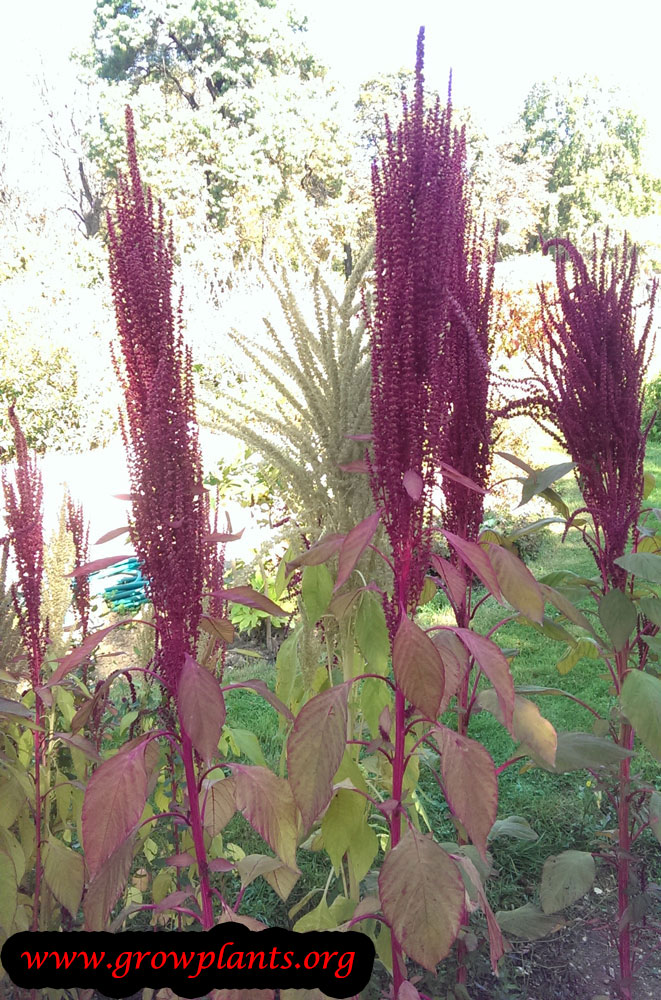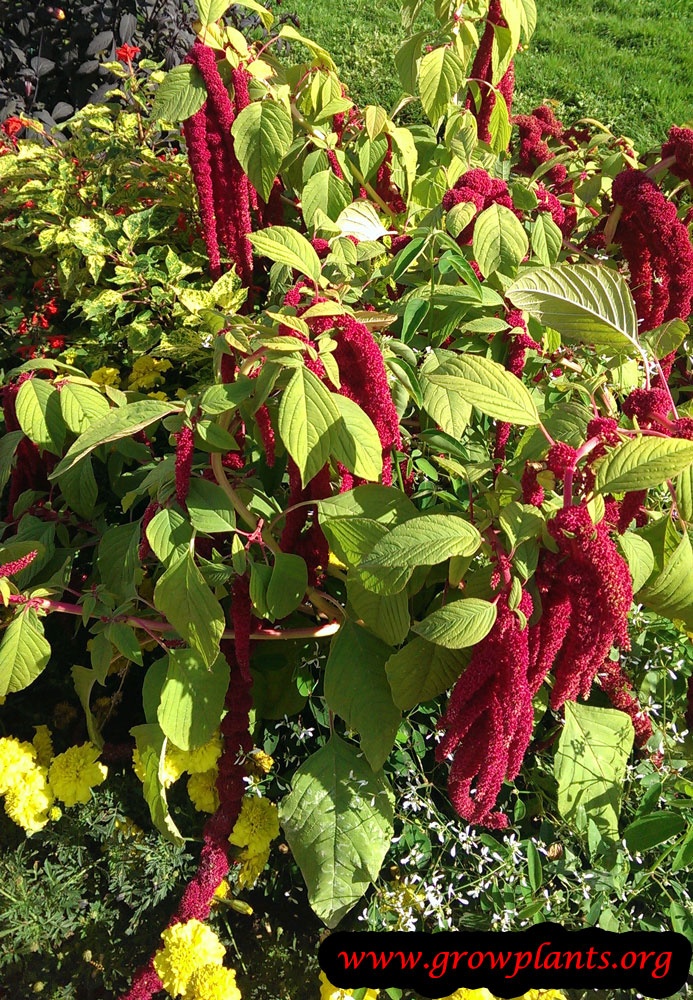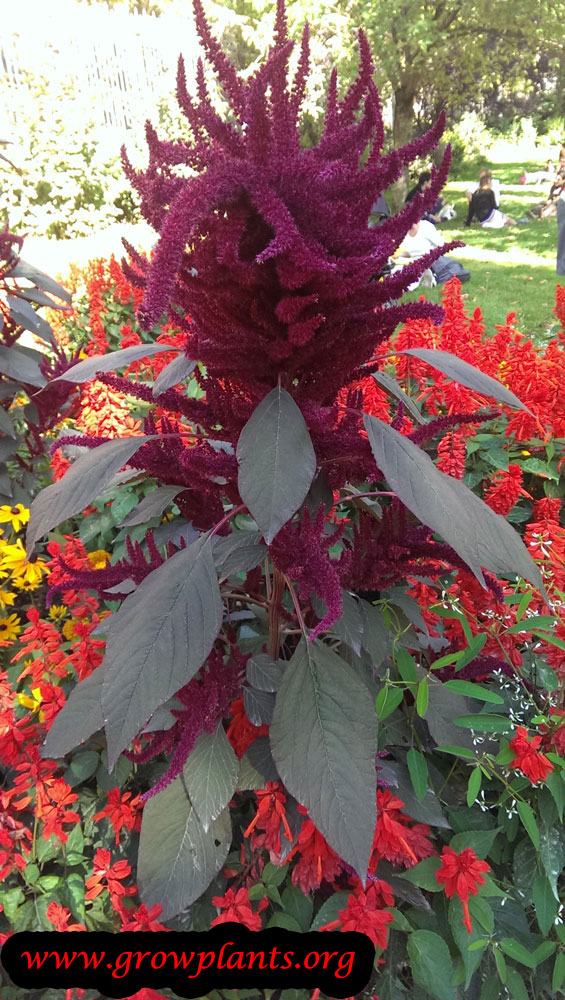

Plant Profile & Key Characteristics
Overview: Amaranth (Amaranthus) is a fast-growing, mostly annual herbaceous plant ranging widely from 0.1 to 2.5 m (4-100 in) tall depending on species. It is grown both as an edible leaf-and-grain crop and as a bold ornamental.
Quick Specifications
| Specification | Attribute |
|---|---|
| Plant Type / Life Cycle | Annual (short-lived perennial in warm climates) |
| Foliage Type | Evergreen (herbaceous; dies back in cold) |
| Mature Size | 0.1-2.5 m (4-100 in) tall, species dependent |
| Growth Rate | Fast to moderate |
| Root System | Taproot |
| Toxicity | Non-toxic / edible (leaves and seeds both edible) |
| Hardiness | USDA zone 2+ |
Growth Form & Structure
- Height & Spread: 0.1-2.5 m (4-100 in) tall in the ground; in containers a 5-8 litre (1.5-2 gal) pot suits most types
- Growth Habit & Form: Upright herbaceous plant, sometimes needing a cane for support; can self-seed and become invasive
- Lifespan & Maturity: Completes its cycle in a single warm season, flowering and setting seed the same year
Anatomy & Physical Features
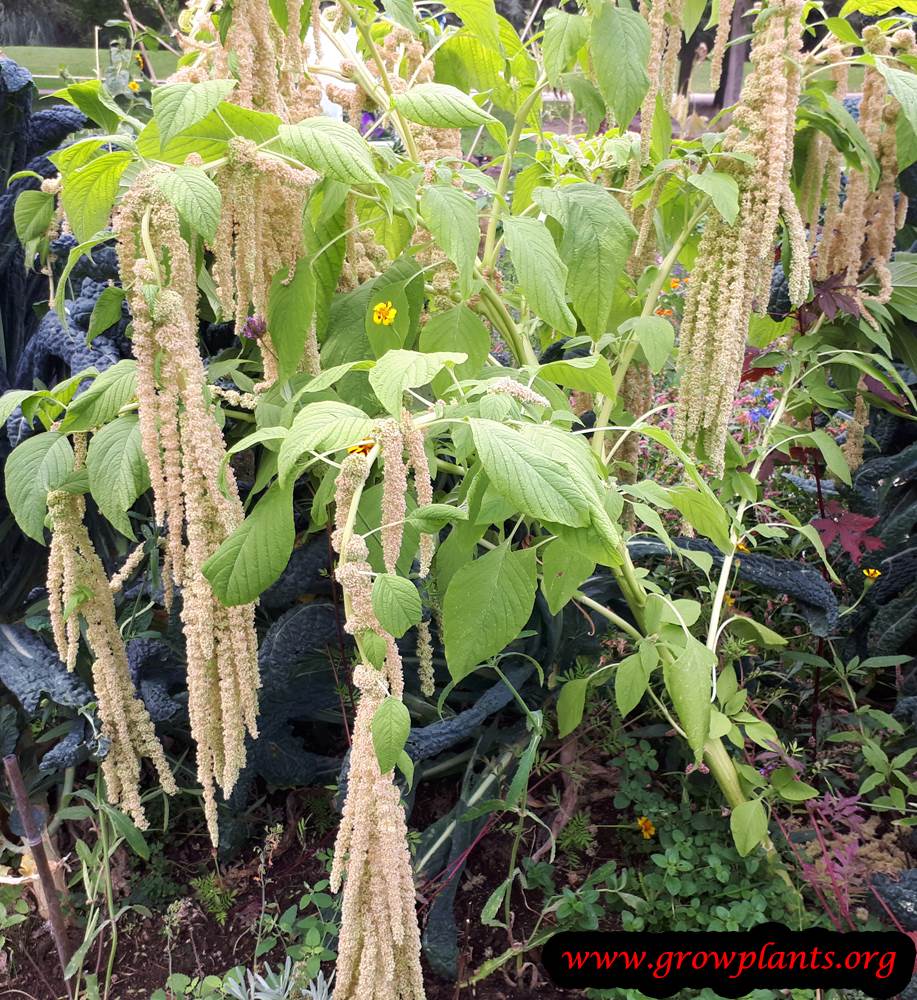
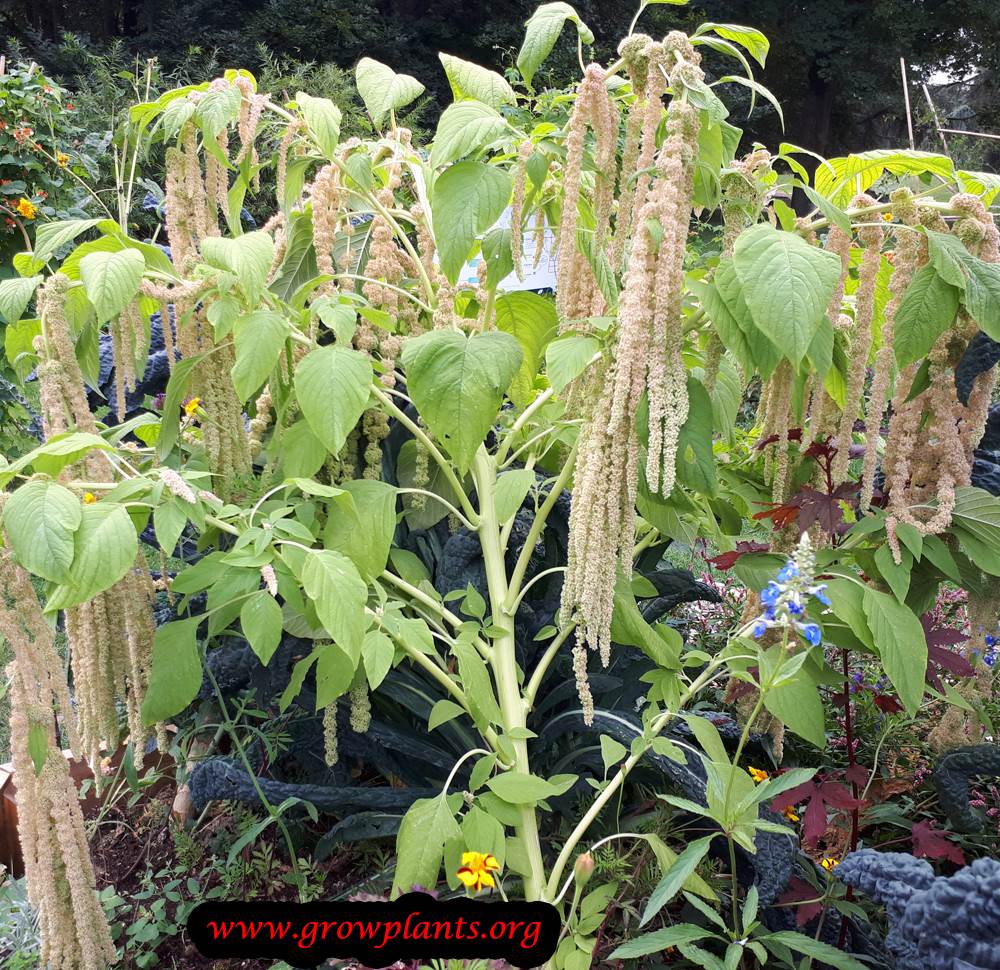
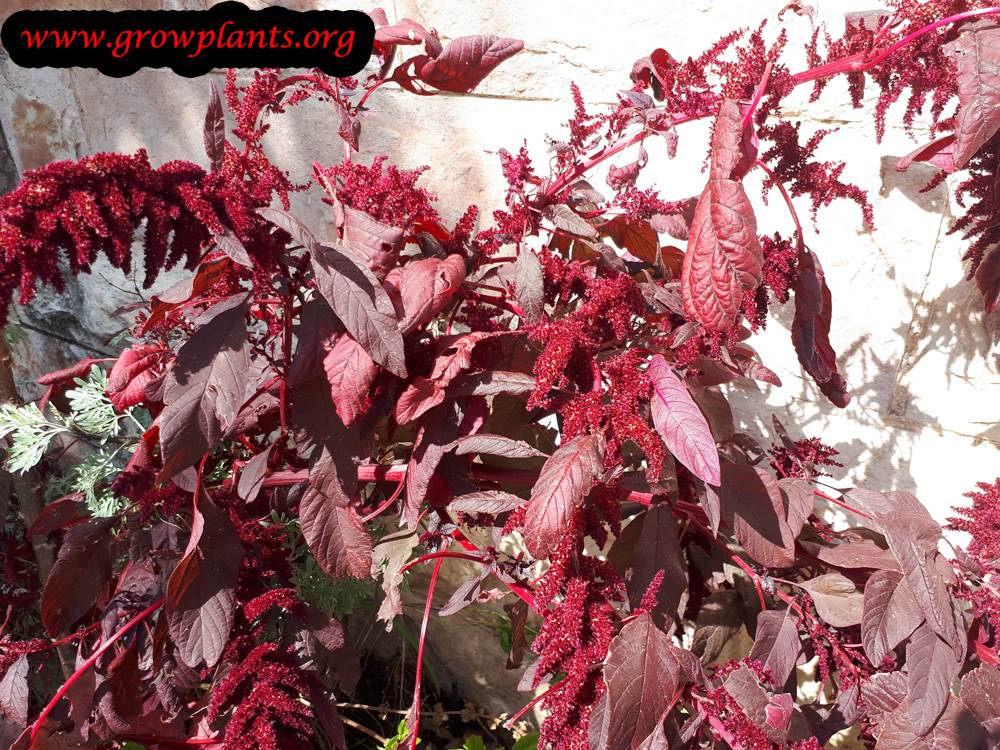
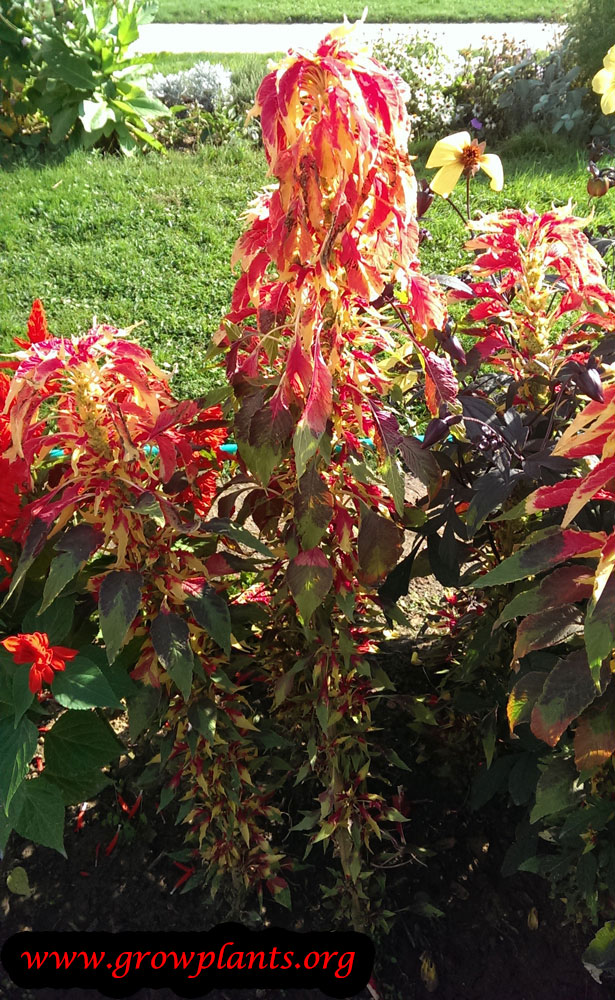
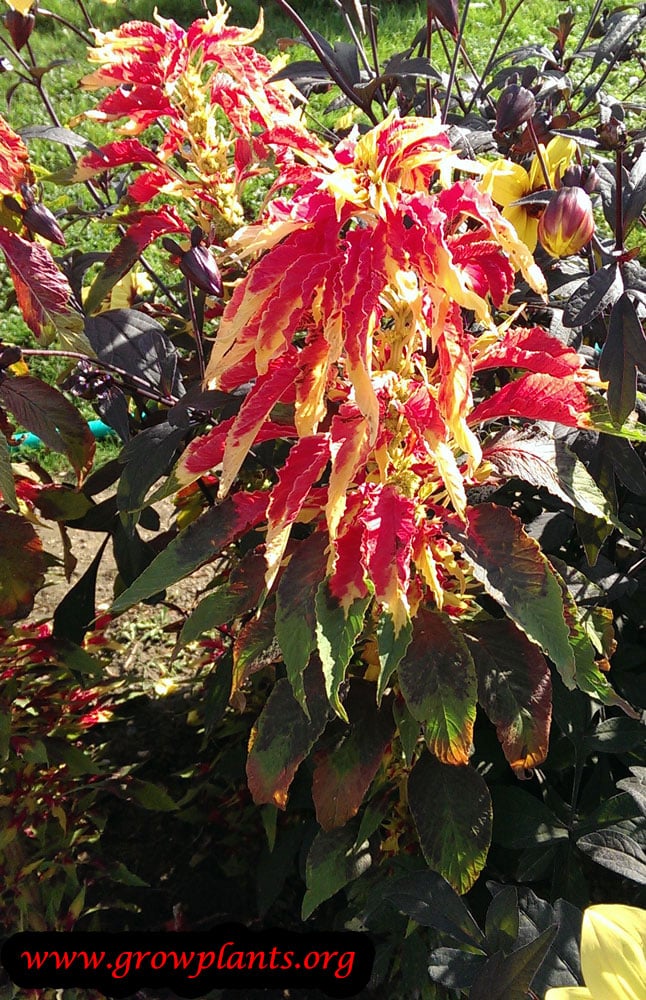
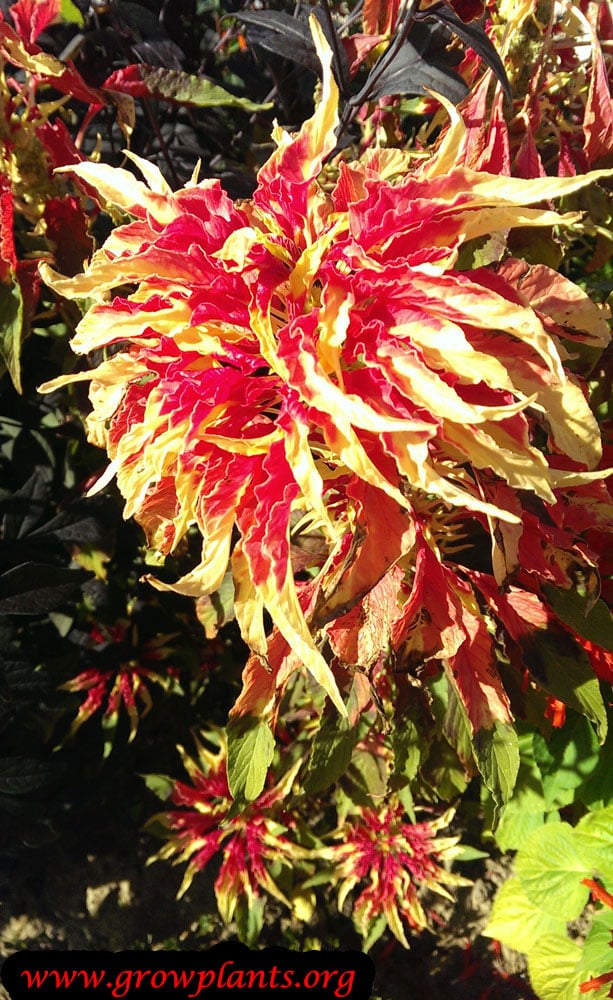
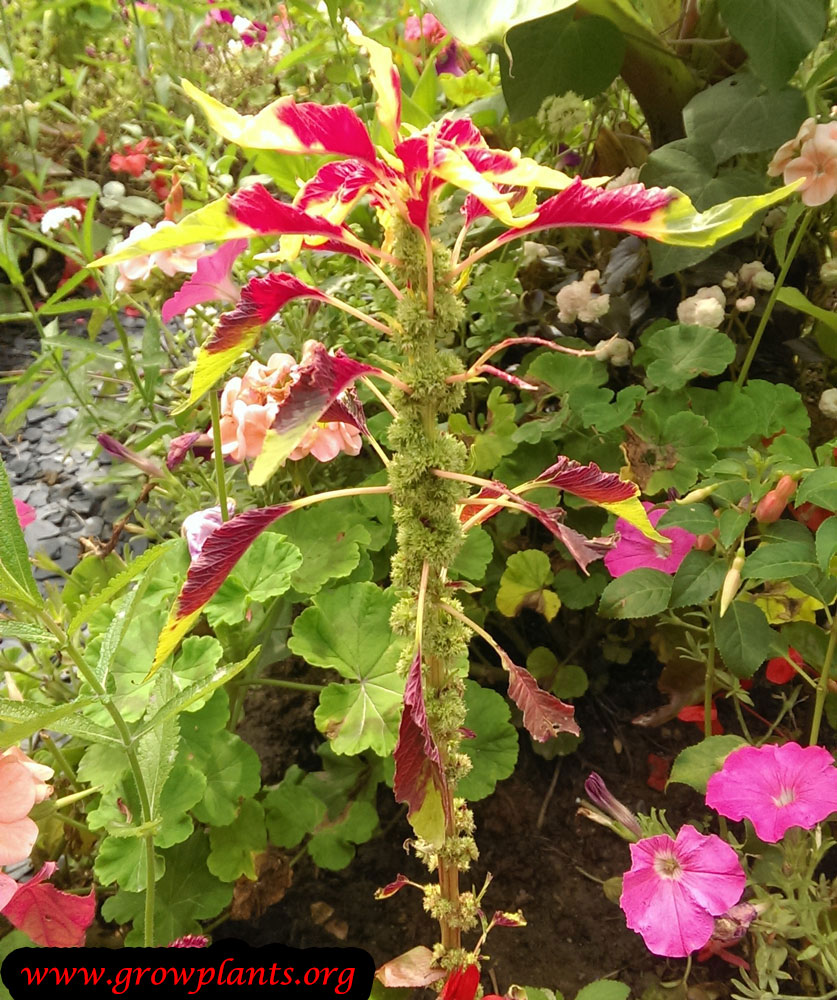
- Leaves & Foliage: Oval, edible leaves in green or variegated yellow, red or purple tones
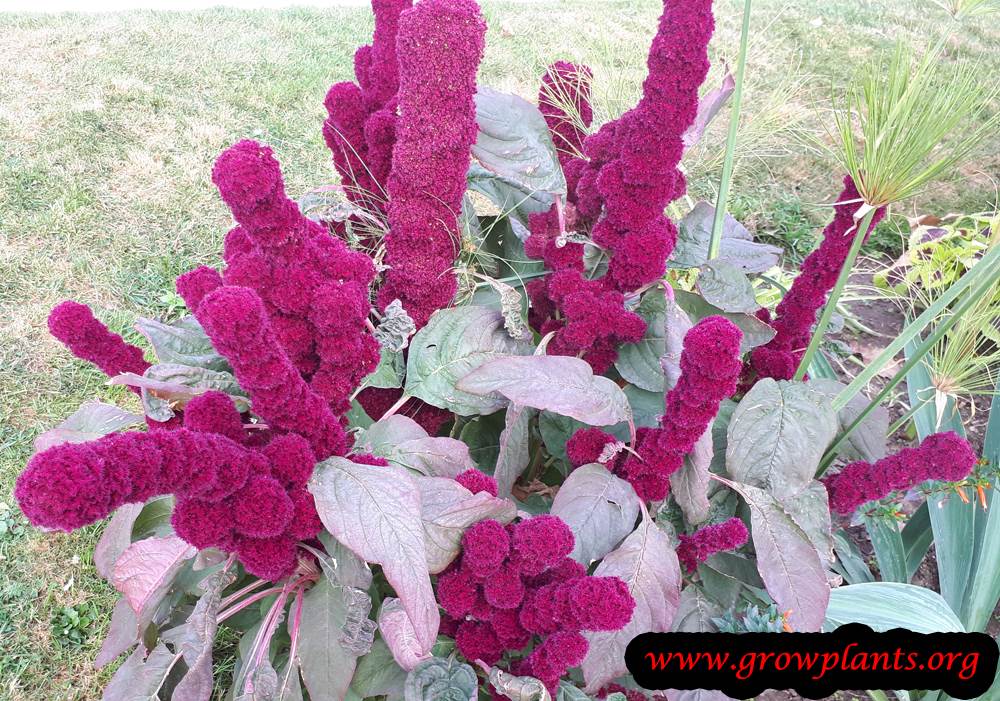
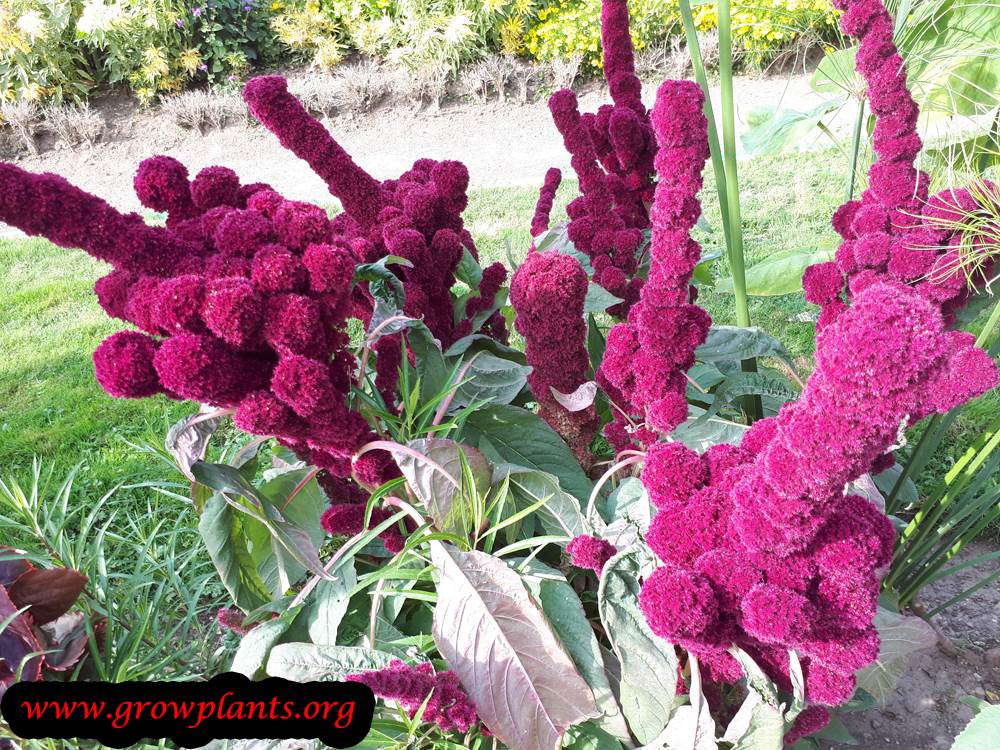
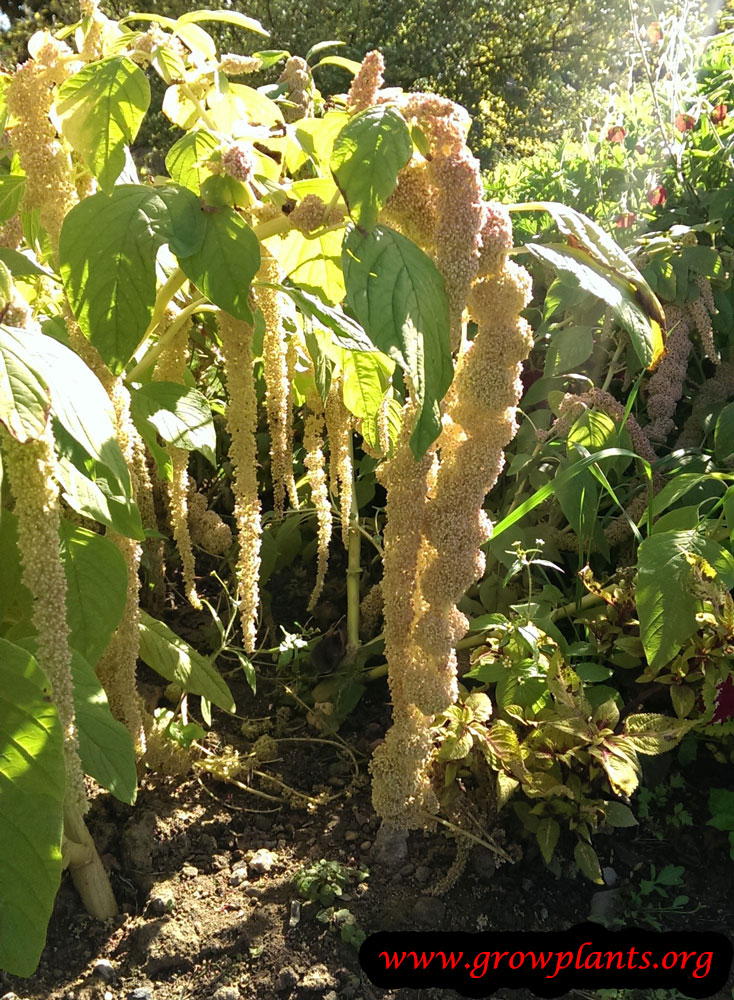
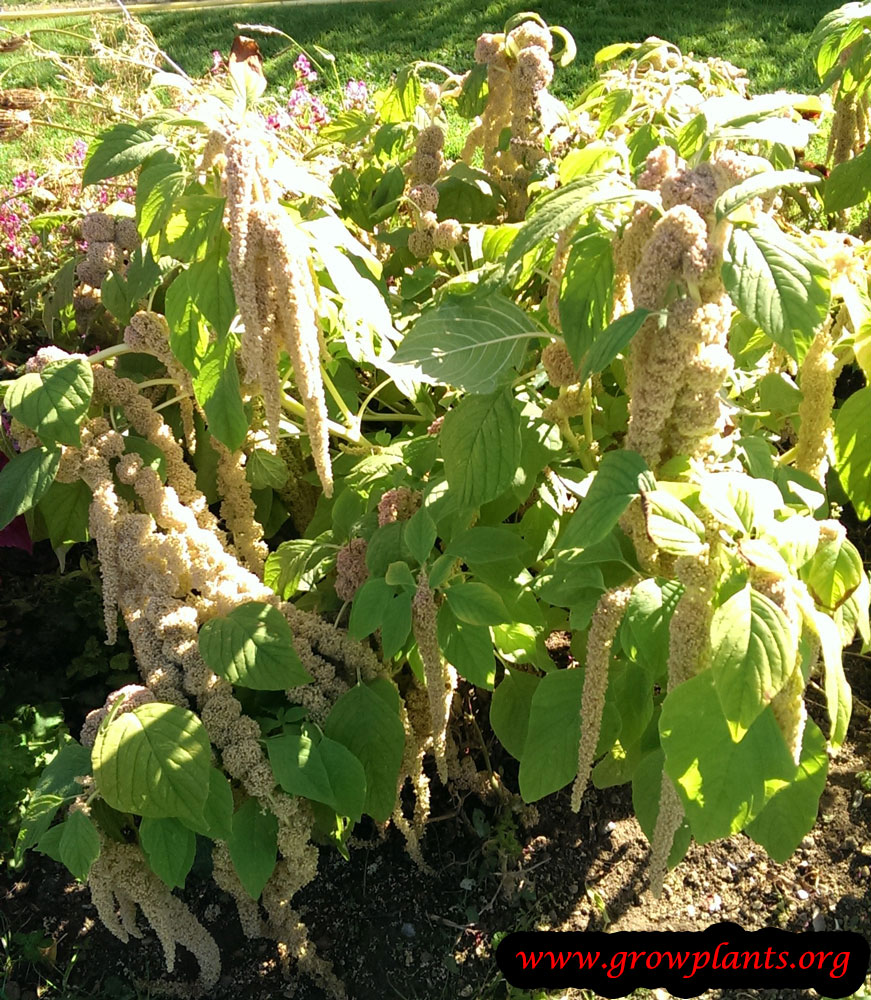
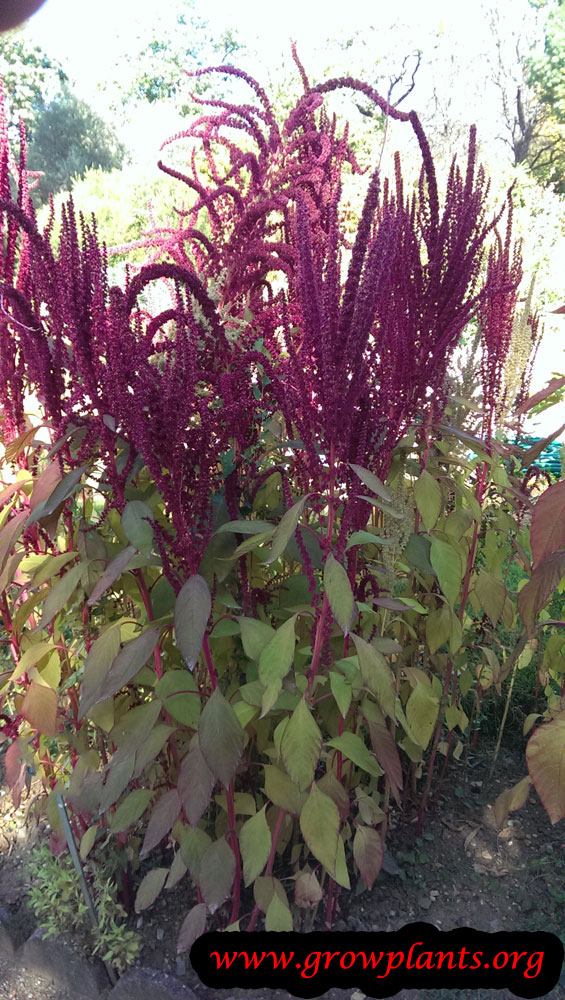
- Flower Characteristics: Small flowers in purple, yellow, white, red, green or orange, borne on upright inflorescence spikes; seeds are also edible (see the Bloom guide)
Primary Uses & Landscape Value
- Edible Uses: Leaves eaten raw, in salad, stir-fried or cooked; the seeds are an edible grain
- Functional & Ornamental Roles: Bold ornamental for beds and borders as well as a food crop
Care Guide: Planting, Soil & Watering
Overview: Amaranth (Amaranthus) is a fast-growing, warm-season annual (occasionally a short-lived perennial) that thrives in full sun across a very wide climate range (hardiness zone 2+). It grows best in moist, rich soil with plenty of organic matter, and taller types may need a cane for support.
Quick Care Requirements
| Requirement | Ideal Condition |
|---|---|
| Planting Season | In spring after the last frost; start indoors at winter’s end in cold regions, or plant in summer in warm areas |
| Growth Rate | Moderate to Fast |
| Soil Type | Moist, fertile soil rich in organic matter |
| Water Need | Moderate – keep the soil evenly moist |
Planting & Establishment
- Best Planting Season: Plant out in spring after frost has passed; in cold climates start seedlings indoors at the end of winter and transplant once frost risk is over, while in warm regions small plants can go out into summer.
- How to Plant:
- Hole Preparation: Dig a hole slightly larger than the root ball and loosen the surrounding soil.
- Soil Amendments: Enrich the soil with compost or other organic matter, and mulch to keep it moist.
- Planting Depth: Set the seedling at the same depth it grew, with the root collar at soil level; stake tall varieties so they do not topple.
- Growth Speed & Expectations: A quick grower that shoots up in warm weather, reaching from around 0.1 m up to 2.5 m depending on the type, so allow space and support for the taller kinds.
Soil, Watering & Drainage Care
- Soil Mix & Drainage Needs: Give it rich, well-aerated soil that holds moisture yet drains freely; in containers (about 5-8 L) use a potting or peat-based mix with perlite or vermiculite and good drainage holes.
- Watering Schedule & Technique:
- Young / Newly Planted: Keep the soil evenly moist and weed-free while seedlings establish and put on early growth.
- Established: Provide a steady, moderate supply of water; mulch helps hold moisture and cuts evaporation.
- Seasonal Adjustments: Water more during hot, dry spells; the plant naturally winds down in autumn as it flowers and sets seed.
Climate, Light & Hardiness
Amaranth grows in mediterranean, subtropical, temperate, tropical, or desert climates in full sun, and while it can be a short-lived evergreen perennial in warm climates, cold weather generally forces annual treatment. The site lists it hardy from about USDA zone 2 upward, which reflects where it can be grown as a warm-season annual rather than where it survives winter as a perennial.
Quick Climate Specifications
| Climate Zones | Mediterranean, subtropical, temperate, tropical, desert |
|---|---|
| USDA Hardiness Zones | 2+ (annual in cold-winter climates; short-lived perennial in warm ones) |
| Frost Tolerance | Low |
| Light Conditions | Full Sun |
Sunlight & Light Exposure
Optimal Light Setup
Needs full sun for the strongest growth; reduced light lowers flowering, though the ornamental colored-leaf types are usually grown mainly for foliage.
Temperature Extremes & Hardiness
USDA Hardiness & Regional Limits
Grown from about zone 2 upward as a warm-season annual almost everywhere, since freezing winters kill the top growth. In genuinely frost-free, warm climates it can behave as a short-lived evergreen perennial instead - hardiness and lifecycle are separate here: cold determines whether it survives winter, while its inherent habit (annual vs. short perennial) depends on the local climate.
Frost Sensitivity
Frost-tender; a freeze ends the growing season, so in cold-winter areas seed is typically started indoors in late winter and transplanted out only after the last frost.
Frost-Free Growing Season
As a fast-growing warm-season crop grown mostly as an annual, the length of the frost-free window determines how large and productive the plants can become before the season ends.
Wind, Humidity & Microclimate
Rainfall & Seasonal Moisture
Prefers consistently moist, rich soil through the growing season.
Growing in Pots, Balconies & Indoors
Amaranth is a fast, sun-loving annual ranging from 0.1 up to 2.5 m. The grower notes it is not an indoor houseplant, but it grows well in a pot on a sunny balcony or patio.
Quick Details
- Container Size: 5-8 L (1.5-2 gal)
- Indoor Suitability: Not a houseplant – it needs full sun
- Best Spot: Full sun; it will grow in a little less but with fewer flowers
- Soil & Drainage: Well-aerated, well-drained mix rich in organic matter – potting mix or peat with perlite or vermiculite
- Watering in Pots: Average water; keep the soil moist
Indoors & On the Windowsill
- Houseplant limits: The grower marks it as not for indoors – it is a sun-hungry annual that grows leggy in weak light.
- Windowsill note: Only the very sunniest sill could hold a young pot, and it is far happier outside.
On a Balcony or Patio
- Light & wind: Give it the sunniest spot; tall types may need staking on an exposed balcony. Pots against warm walls dry fast – check moisture regularly and a mulch helps cut evaporation.
Choosing the Pot, Soil & Long-Term Care
- Pot & drainage: A pot with strong drainage holes is essential; skip a permanently full standing-water saucer to avoid root rot. Terracotta breathes and dries faster, while glazed or plastic holds moisture longer.
- Potting mix: Well-aerated and organic-rich – potting mix or peat with perlite or vermiculite; a mulch keeps it moist.
- Feeding: Potted plants need feeding more often than those in the ground, since watering steadily leaches nutrients out of the container.
Fertilizing & Feeding
A vigorous leafy crop with a steady nitrogen appetite through its harvest period, tapering to lighter, balanced feeding if plants are left to flower and produce seed.
Quick Fertilizing Specs
| Feeding Level | Moderate – a leafy crop that benefits from steady nitrogen through the harvest period. |
|---|---|
| Main Nutrient Priority | Nitrogen while leaves are being produced and harvested, easing to balanced feeding if plants are grown on for seed. |
| Best Feeding Period | Warm-season vegetative growth through repeated leaf harvest. |
| Organic Options | Compost, well-rotted manure, or fish emulsion worked into the soil or applied through the season. |
| Reduce/Stop Feeding | Ease off heavy nitrogen once plants are allowed to flower and set seed. |
Feeding by Growth Stage
Seedling and early establishment
Get young amaranth plants off to a strong start with steady leafy growth right from the seedling stage.
| Nutrient direction | A balanced, nitrogen-adequate feed to support quick early leaf and root development. |
|---|---|
| Timing | Once seedlings are transplanted out or true leaves appear on direct-sown plants. |
| Frequency | A light initial feeding is usually enough to get plants growing steadily; avoid overfeeding very young seedlings. |
| Fertilizer types | A balanced, general-purpose vegetable fertilizer worked into the soil before planting or applied lightly around young seedlings., Compost or well-rotted organic matter mixed into the bed to build overall fertility. |
| Precautions | Keep any fertilizer away from direct contact with tender seedling stems and water in thoroughly after feeding. |
Leafy vegetative growth
Drive the vigorous leaf production that amaranth is grown for, whether harvested for greens or grown on toward seed.
| Nutrient direction | A nitrogen-leaning feed to support strong, continuous leaf growth, since this is a leafy crop. |
|---|---|
| Timing | Through the main warm-season growth period as plants bulk up before and during repeated leaf harvest. |
| Frequency | Several light feedings spaced through the growing season help sustain leaf production, especially where leaves are being repeatedly cut for eating. |
| Fertilizer types | A nitrogen-forward vegetable fertilizer or fish emulsion / composted manure for an organic approach., A refreshed mulch layer to help retain the moist, rich soil this plant prefers. |
| Precautions | Very rich or fast-release nitrogen feeding right before harvest is best avoided on a crop grown for fresh eating – favor steady, moderate feeding instead. |
Flowering and seed set
Support plants that are being allowed to flower and produce their edible seed heads rather than being kept cut back for leaves.
| Nutrient direction | Ease off heavy nitrogen and let a balanced, more moderate feed carry the plant through flowering and seed fill. |
|---|---|
| Timing | Late summer into autumn as inflorescences form and seed begins to fill. |
| Frequency | Feeding needs taper here; a lighter application as flowering begins is usually enough to carry the plant through seed development. |
| Fertilizer types | A balanced, moderate-strength feed rather than continued heavy nitrogen once flowering starts. |
| Precautions | Continuing a heavy nitrogen-leaning feed into flowering can delay seed set and encourage weak, floppy growth that needs staking. |
Nutrient Deficiency Signs & Corrections
Leaves are smaller and paler than expected, and overall growth lags.
| Possible causes | Nitrogen shortage from light or previously depleted soil., Cool weather temporarily slowing growth regardless of feeding., Inconsistent watering limiting nutrient uptake. |
|---|---|
| Appears first on | Whole-plant growth and the newest leaves. |
| What to check | Recent feeding history for the bed., Soil moisture consistency., Weather and temperature trends, since amaranth is a warm-season plant. |
| Possible correction | Step up to a nitrogen-leaning feed once temperatures are reliably warm and keep watering consistent. |
Leaves take on an unusual purple-red tint beyond the plant’s normal coloring for its variety.
| Possible causes | Phosphorus shortage, sometimes worsened by cool soil temperatures early in the season., Cold stress from a late-season chill, which can cause similar coloring independent of nutrition., Naturally colored cultivars, since some amaranth varieties are bred to show purple or red foliage. |
|---|---|
| Appears first on | Older, lower leaves first when it is nutrient-related. |
| What to check | Whether the coloring matches the expected look of the specific variety grown., Recent overnight temperatures., Soil fertility and feeding history. |
| Possible correction | If the coloring is not simply the variety’s normal look, warm the soil and apply a balanced vegetable fertilizer to address a possible phosphorus shortfall. |
Stems grow tall but thin and weak, needing support to stay upright.
| Possible causes | Excess nitrogen late in the season pushing soft, fast growth., Crowded spacing causing plants to stretch for light., Insufficient direct sun. |
|---|---|
| Appears first on | Main stem and upper growth. |
| What to check | Spacing between plants., Recent feeding rate and nitrogen content., Hours of direct sun the bed receives. |
| Possible correction | Thin crowded plants, ease back on nitrogen as the season progresses, and stake plants that are already leaning. |
Pruning, Training & Seasonal Maintenance
Amaranth needs only light, optional pruning – it is grown mostly as a short-lived annual (occasionally a short perennial in mild climates), and its own care guidance says shaping cuts usually aren’t necessary. The main choices growers make are: whether to pinch a young plant for a bushier, fuller habit, and whether to deadhead spent flower spikes at all, since this plant’s edible seed head means removing the flowers can mean removing the harvest. There is no woody framework here, so timing is about growth stage and purpose (ornamental vs. grain/leaf harvest) rather than a fixed dormant season.
Quick Pruning & Maintenance Specs
| Pruning Tolerance | Moderate |
| Primary Pruning Window | Spring, after the young plant is established and before flowering, for a tip pinch |
| Secondary Maintenance Window | Ongoing through summer/autumn for leaf harvest and optional deadheading |
| Typical Frequency | One optional formative pinch, then routine leaf/stem harvest as needed |
| Main Objective | Compact, fuller habit and/or a steady edible-leaf supply – not structural framework |
| Young Plant Priority | Let it establish before any cutting; pinch the growing tip once established if a fuller plant is wanted |
| Mature Plant Priority | Routine leaf/stem harvest; conditional deadheading depending on whether seed is wanted |
| Best Tool Type | Precision snips (soft, herbaceous stems) |
| Avoid Heavy Pruning During | Just before flowering if seed/grain harvest is the goal; peak heat stress |
Pruning by Plant Age & Size
Newly Established
No pruning while the seedling is settling in – premature cutting weakens a plant that hasn’t built up leaf area yet.
Young / Formative
Once established, pinching the growing tip in spring, before flowering, encourages a bushier plant with more stems – useful for ornamental colored-leaf types or where more leaf-harvest surface is wanted. This is optional, not required.
Mature / Established
Ongoing edible-leaf harvest by cutting stems or individual leaves from the base. Whether to deadhead spent flower spikes depends on purpose: for a tidier ornamental display or to prolong flowering, spent spikes can be cut back; if grain/seed is wanted, leave the flower heads on the plant to mature instead.
Special Growth to Remove
Spent flower stems: remove for tidiness and continued flowering only if seed harvest is not the goal – the plant’s own facts specifically caution against deadheading when the seed head is wanted for eating. Edible leaves and stems are harvested by cutting from the base through spring, summer and autumn; this doubles as the plant’s main routine “pruning.”
Container & Small-Space Pruning
In a container, the same light tip-pinch keeps growth compact and manageable in a confined pot, and regular leaf harvest naturally limits size – no root pruning or hard cutback is needed at this scale.
Tools
Precision snips for pinching tips, harvesting leaves/stems, and deadheading. For thicker basal stems on a tall, mature plant (this species can reach up to 2.5m), bypass secateurs are a better fit than snips.
Tool Hygiene & Disease Risk
Routine: clean tools are sufficient. The pests noted for this plant (aphids, prodenia caterpillars, slugs) are not tool-transmitted, so no special disinfection is needed.
Cut Placement & Technique
Pinch the growing tip just above a leaf node to force branching below the cut. For leaf/stem harvest, cut at the base of the stem or leaf. For deadheading (ornamental use only), cut the spent flower stalk back to just above a lower leaf or side shoot.
Post-Pruning Care
Water after a leaf harvest or pinch to support regrowth. No special disease-risk monitoring is needed beyond routine pest watch.
Common Pruning Mistakes
Deadheading every flower spike indiscriminately when seed/grain harvest was actually the goal, losing the crop; harvesting too much foliage from a young, not-yet-established plant; pinching so late that the main flower spike has already formed, losing most of the benefit; cutting during peak heat stress.
When NOT to Prune
Avoid heavy cutting or deadheading during active flowering if seed/grain is wanted – this is the key decision point for this plant. Avoid pruning unestablished young seedlings, and avoid cutting during extreme heat.
Recommended Tools (by task)
- precision_snips – pinching, leaf/stem harvest, and deadheading on this plant’s soft, herbaceous growth.
- bypass_secateurs – thicker basal stems on a tall, mature plant where snips aren’t enough.
Propagation Guide
Amaranth is grown almost entirely from seed, which the site itself recommends over cuttings; stem cuttings are possible but the site notes they generally have low success. Seed germinates readily and the plant self-seeds freely, making this an easy plant to start from seed, though named colored-leaf selections may not always come true given how easily this genus cross-pollinates.
Quick Propagation Specs
| Best Propagation Method | Seed (direct sow or started as seedlings) |
| Alternative Methods | Stem cuttings (site notes generally low success) |
| Propagation Difficulty | Easy |
| Seed True-to-Type | Variable for colored-leaf or named selections, since plantings cross-pollinate easily |
| Vegetative True-to-Type | Yes, when cuttings do succeed |
| Best Propagation Season | Spring; in cold climates start indoors at the end of winter and move plants out after the last frost, while in warm regions small plants can be set out in summer |
Growing from Seed
Sowing Season
Spring is the main sowing window. In cold areas, start seed indoors at the end of winter and transplant outdoors after the last frost; in warm regions, small plants can also be set out in summer.
Sowing Depth & Orientation
Amaranth seed is very fine and tiny; sow shallowly, just barely covering the seed.
Germination Conditions
Warm soil kept consistently moist gives the most even germination; the site does not give an exact temperature, but this follows general practice for a warm-season annual with this hardiness range.
Germination Time
Commonly within one to two weeks in warm soil, though timing varies with temperature and seed freshness.
Seedling Care
Thin seedlings to give them room to grow, and harden off indoor-started seedlings before moving them outdoors.
Stem Cuttings
Cutting Type
Cut a stem at a point of active new growth; if the plant isn’t producing new growth, cut back the top first to force fresh shoots to use as cutting material.
Best Timing
Avoid taking cuttings while the plant is in bloom.
Rooting Setup
Set the cutting into moist soil and keep humidity high, taking care the soil never dries out.
Rooting Time
Not specified; the site cautions that cuttings of this plant are generally not very successful, so seed remains the more dependable method.
Bloom & Flower Guide
Quick Details
- Bloom Season: Summer into autumn
- Time to First Bloom: In its single season — this annual flowers from mid to late summer
- Flower Appearance: Many tiny flowers packed into bold, often drooping tassel-like plumes in purple, yellow, white, red, green or orange
- Edibility: The plant is grown for its edible leaves and grain (both covered elsewhere); the flower plumes themselves are ornamental rather than a flower you eat
Detailed Blooming Overview
Amaranthus is one of the most dramatic flowering annuals you can grow, sending up thick, tassel-like plumes of countless tiny flowers that may stand erect or spill down in long ropes. The plumes hold their colour for a very long time and are superb both in the garden and dried. The flowers later give way to nutritious seed, which is why growers often leave the plumes to mature rather than removing them.
Flower Characteristics
- Individual flowers are minute, but they are massed into large, showy plumes.
- Colours span purple, yellow, white, red, green and orange.
- The plumes are long-lasting and dry well for arrangements.
Bloom Care & Thinning
- Deadheading: Not usually recommended — the flower plumes ripen into edible grain, so most growers leave them to mature.
- Pollination: Amaranth is mainly wind-pollinated (its tiny flowers do not depend on bees), so it sets seed freely on its own.
- Support: The heavy plumes can weigh tall stems down; a stake keeps top-heavy plants upright while they flower.
Fruit & Uses
Amaranth is grown both as a leafy green and as a grain: the oval leaves are eaten fresh or cooked, and the tiny seeds produced after flowering are a nutritious pseudocereal. Leaves are cut through the growing season, while seeds are gathered later once the flower heads have dried.
Quick Edible Specs
| Edible Parts | Leaves (greens) and seeds (grain) |
|---|---|
| Main Use(s) | Culinary – leafy green vegetable and a grain/pseudocereal |
| Eaten Raw or Cooked | Leaves: raw or cooked; Seeds: cooked, not eaten raw |
| Preparation Required | Leaves: wash, use raw in salad or cook (stir fry); Seeds: thresh/winnow from dried flower heads, then cook |
| Harvest Season | Leaves: spring, summer, autumn (cut-and-come-again); Seeds: later in the season once flower heads dry |
| Time to First Harvest | Leaves can be cut soon after the plant is established; a seed harvest follows later, after flowering and seed-head drying |
| Storage | Leaves best used fresh; dried seeds store well in a sealed container |
| Safety/Toxicity Caveat | Like other leafy greens, raw leaves contain natural oxalates – fine in normal amounts, cook if eating large quantities regularly |
Leaves & Greens
The oval leaves (green or purple-tinged) are cut from the stem, or trimmed off at the base, through spring, summer, and autumn for a continual harvest. They are used fresh in salads or cooked – stir-fried or otherwise cooked – much like spinach or other leafy greens.
Seeds, Pods & Nuts
If the plant is left to flower and go to seed rather than deadheaded, its inflorescence produces a large number of tiny edible seeds – this is why deadheading is not recommended when a seed harvest is wanted. The seed heads are left to dry on the plant, then the ripe seeds are threshed/rubbed out and winnowed to remove the chaff. The tiny seeds are cooked as a grain – boiled into a porridge, added to soups, or popped like popcorn – rather than eaten raw.
Preparation, Uses & Safety
Harvesting leaves and harvesting seed compete somewhat on the same plant: regularly picking leaves for greens reduces flowering and seed production, while leaving the plant to flower and seed (not deadheading) favors a grain harvest. As with other leafy greens, amaranth leaves contain natural oxalates; ordinary fresh or cooked use is not a concern, but cooking reduces oxalate content for anyone eating large quantities regularly. Seeds should always be cooked before eating.
Pests, Diseases & Troubleshooting
Overview: Amaranth is a fast, warm-season Amaranthaceae grown as a grain, leafy vegetable and ornamental. Its soft, protein-rich foliage draws a broad insect complex – aphids, flea beetles, Lygus/tarnished plant bugs, leaf miners, cutworms, armyworms and weevils – while damping-off, leaf spots, white rust and wet-weather stem rot are the key diseases. Because leaves are often eaten, management leans on sanitation, rotation, resistant timing and selective, low-residue products.
Quick Troubleshooting Overview
| Issue / Pest | Main Symptom | Primary Solution |
|---|---|---|
| Aphids | Curled sticky leaves, sooty mould, virus spread | Water-blast, beneficials, insecticidal soap |
| Flea beetles | Tiny ‘shot-hole’ pits in leaves | Row cover, kaolin clay, trap crops |
| Tarnished/Lygus bug | Deformed shoots, blasted flowers/seed | Weed control, row cover, monitor with traps |
| Armyworms (prodenia) | Chewed leaves and dark frass | Hand-pick, Bt, spinosad if severe |
| Leaf miner | Pale winding tunnels inside leaves | Remove mined leaves, row cover, sanitation |
| Damping-off / leaf spot | Seedling collapse; brown leaf spots | Clean seed, airflow, avoid wet foliage |
Common Pests & Management
- Aphids (Myzus persicae / Aphis spp.):
- Symptoms: Colonies of soft green, grey or black insects on shoot tips and leaf undersides, causing curling, honeydew and sooty mould; they also transmit plant viruses.
- Prevention & Control: Dislodge with a water jet, conserve ladybirds, lacewings and parasitic wasps, control ants, and use insecticidal soap or neem for heavy colonies – favouring these on leaf crops.
- Flea beetles (Phyllotreta / Systena spp.):
- Symptoms: Tiny jumping beetles that pit leaves with numerous small round ‘shot-holes’; most damaging to seedlings and young leafy plantings.
- Prevention & Control: Protect seedlings with floating row cover until established, use kaolin-clay film or trap crops, keep beds weed-free, and treat severe attacks with spinosad or neem.
- Tarnished / Lygus plant bug (Lygus lineolaris / Lygus spp.):
- Symptoms: Mottled brown bugs whose feeding distorts shoot tips, blasts flowers and shrivels developing seed; damage often shows as blackened, deformed growing points.
- Prevention & Control: Keep surrounding weeds (their reservoir) mown, use row cover on young plants, monitor with white sticky traps, and encourage big-eyed bugs and damsel bugs; spot-treat hotspots if needed.
- Armyworms & cutworms (Spodoptera spp. / Agrotis spp.):
- Symptoms: Ragged, chewed leaves with dark frass (‘prodenia’ of the source is the armyworm Spodoptera); cutworms sever young seedlings at the soil line overnight.
- Prevention & Control: Hand-pick, use cardboard collars against cutworms, encourage birds and predatory wasps, and apply Bacillus thuringiensis (Bt) or spinosad – both suitable for leaf crops.
- Amaranth leaf miner (Liriomyza / Amauromyza spp.):
- Symptoms: Pale, winding serpentine tunnels mined inside the leaf blade, with reduced quality of leafy harvests.
- Prevention & Control: Pick off and destroy mined leaves, use row cover to exclude egg-laying flies, keep plants vigorous, and conserve the parasitic wasps that naturally control miners.
- Amaranth / stem weevils (Hypolixus truncatulus / Conotrachelus spp.):
- Symptoms: Grubs tunnel inside stems causing swellings, wilting and lodging; adults notch leaves and stems, mainly on grain amaranth.
- Prevention & Control: Remove and destroy infested stems and crop residue after harvest, rotate away from amaranth, encourage natural enemies, and avoid carrying larvae over in stubble.
Diseases & Fungal Issues
- Damping-off & root/stem rot (Pythium / Rhizoctonia / Fusarium spp.):
- Symptoms: Seedlings rot and topple at the soil line; older plants show water-soaked, girdling lesions and collapse in wet, cool, crowded stands.
- Treatment & Management: Sow clean seed in warm, well-drained soil, avoid overcrowding and overwatering, thin for airflow, and rotate; drench only if a specific pathogen warrants it.
- Leaf spots (Alternaria / Cercospora spp.):
- Symptoms: Brown to grey angular or circular spots, sometimes with concentric rings or yellow halos, that merge and defoliate in warm, humid weather.
- Treatment & Management: Space plants and weed for airflow, avoid overhead watering, remove infected debris and rotate crops; a copper fungicide can be used on severe outbreaks with attention to harvest intervals.
- White rust (Albugo bliti):
- Symptoms: Chalky-white, blister-like pustules on leaf undersides with yellowing above; spreads in cool, wet, humid conditions.
- Treatment & Management: Improve airflow, avoid leaf wetness, remove infected leaves, rotate, and use resistant lines; copper or a labelled fungicide for persistent pressure.
- Wet rot / choanephora (Choanephora cucurbitarum):
- Symptoms: Soft, blackening rot of shoot tips and inflorescences with whiskery fungal growth in hot, very humid, wet weather.
- Treatment & Management: Improve drainage and spacing, avoid overhead irrigation, and remove affected tissue promptly.
Growing Difficulties & Abiotic Problems
- Lodging (falling over):
- Cause & Symptoms: Tall grain and ornamental types topple in wind or after heavy rain, especially in rich soil or crowding.
- Correction Strategy: Avoid excess nitrogen, thin to sensible spacing, choose sturdier or dwarf types in exposed sites, and stake tall ornamentals.
- Nitrate accumulation:
- Cause & Symptoms: Amaranth foliage can concentrate nitrates under heavy nitrogen feeding and drought stress – relevant for leaf crops.
- Correction Strategy: Feed moderately, keep plants evenly watered, and harvest young leaves from unstressed plants.
- Bolting / poor leaf quality:
- Cause & Symptoms: Heat and long days push early flowering, toughening leaves of vegetable types.
- Correction Strategy: Grow leaf types in the cooler part of the season, harvest young, and keep soil moisture steady.
- Iron/manganese chlorosis:
- Cause & Symptoms: Interveinal yellowing of young leaves in cold, wet or alkaline soils.
- Correction Strategy: Improve drainage and warmth, add organic matter, and correct extreme pH; a chelated micronutrient feed helps short-term.
What Helps – Products & Tools
Because the leaves are frequently eaten, favour selective, low-residue tools: insecticidal soap and neem for aphids and beetles; Bacillus thuringiensis (Bt) and spinosad for caterpillars and armyworms; floating row cover and kaolin clay to exclude flea beetles, Lygus bugs and leaf-mining flies; and yellow/white sticky traps for monitoring. For disease, rely on clean seed, rotation and airflow, with a copper fungicide for leaf spot or white rust if needed. Observe harvest intervals and follow all labels.