Plant Profile & Key Characteristics
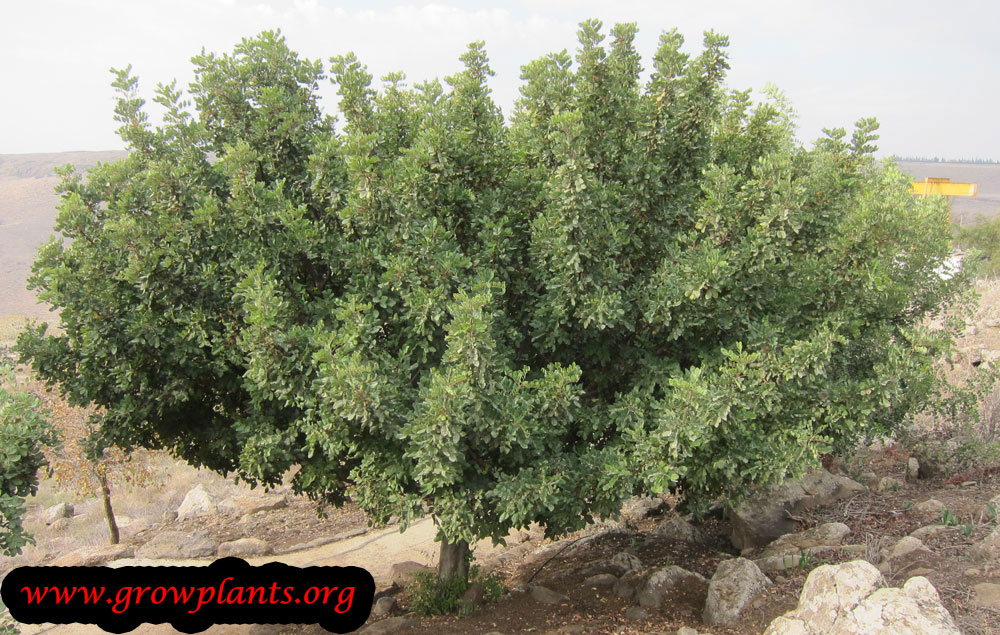
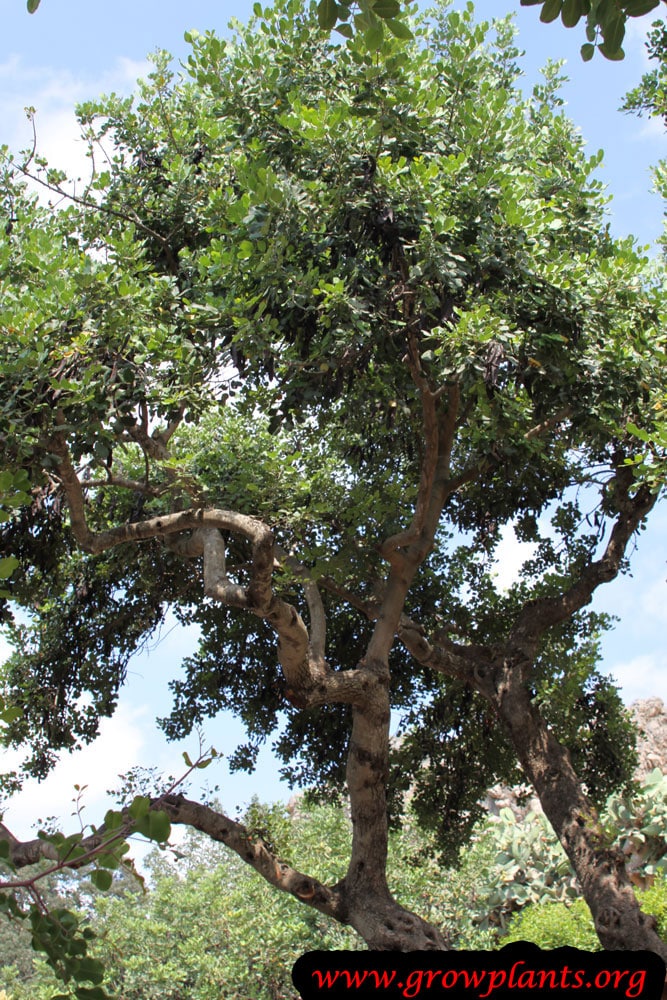
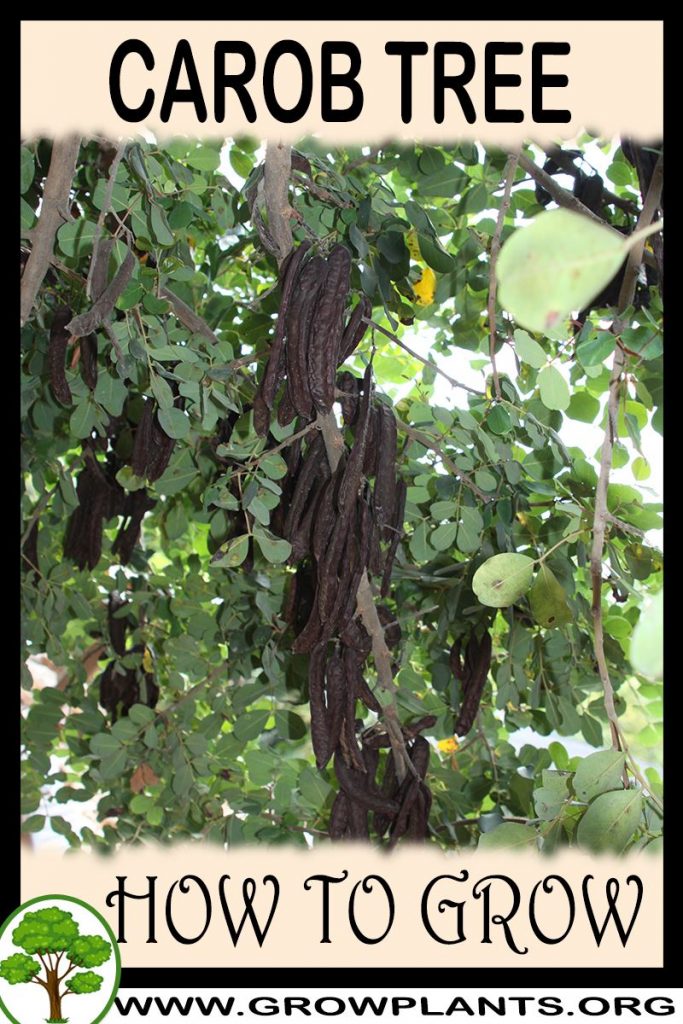
Overview: Ceratonia siliqua (carob tree) is a long-lived evergreen to semi-deciduous tree, 5-15 m (15-50 ft), grown as a drought-tolerant shade and ornamental tree and for its edible pods. This Mediterranean perennial yields sweet brown pods used as a chocolate substitute and is also trained as bonsai.
Quick Specifications
| Specification | Attribute |
|---|---|
| Plant Type / Life Cycle | Perennial tree |
| Foliage Type | Evergreen to semi-deciduous |
| Mature Size | 5-15 m tall (15-50 ft) |
| Growth Rate | Moderate to slow |
| Root System | Deep taproot, giving strong drought tolerance. |
| Toxicity | Non-toxic – pods are edible. |
| Hardiness | USDA zones 9-11 |
Growth Form & Structure
- Height & Spread: 5-15 m (15-50 ft) as a spreading shade tree; not a houseplant, though it can be grown in a container as bonsai.
- Growth Habit & Form: Broad, densely branched evergreen tree with a rounded canopy.
- Lifespan & Maturity: Very long-lived and slow-to-moderate growing; begins bearing pods in about 3-9 years (much longer from seed), with mature trees yielding around 80-100 kg.
Anatomy & Physical Features
- Leaves & Foliage: Leathery green leaves of elliptic, slightly serrated leaflets arranged in an even-pinnate structure; evergreen.
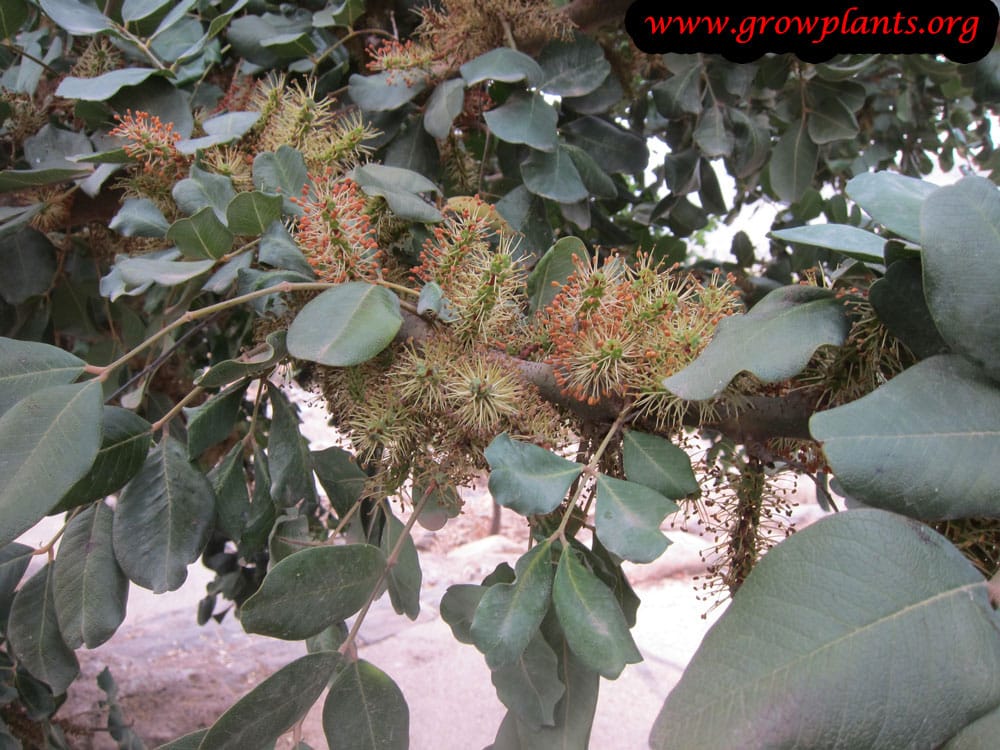
- Flower Characteristics: Small yellow, orange or red flowers, with male and female usually on separate trees (dioecious); bee-pollinated, blooming in autumn.
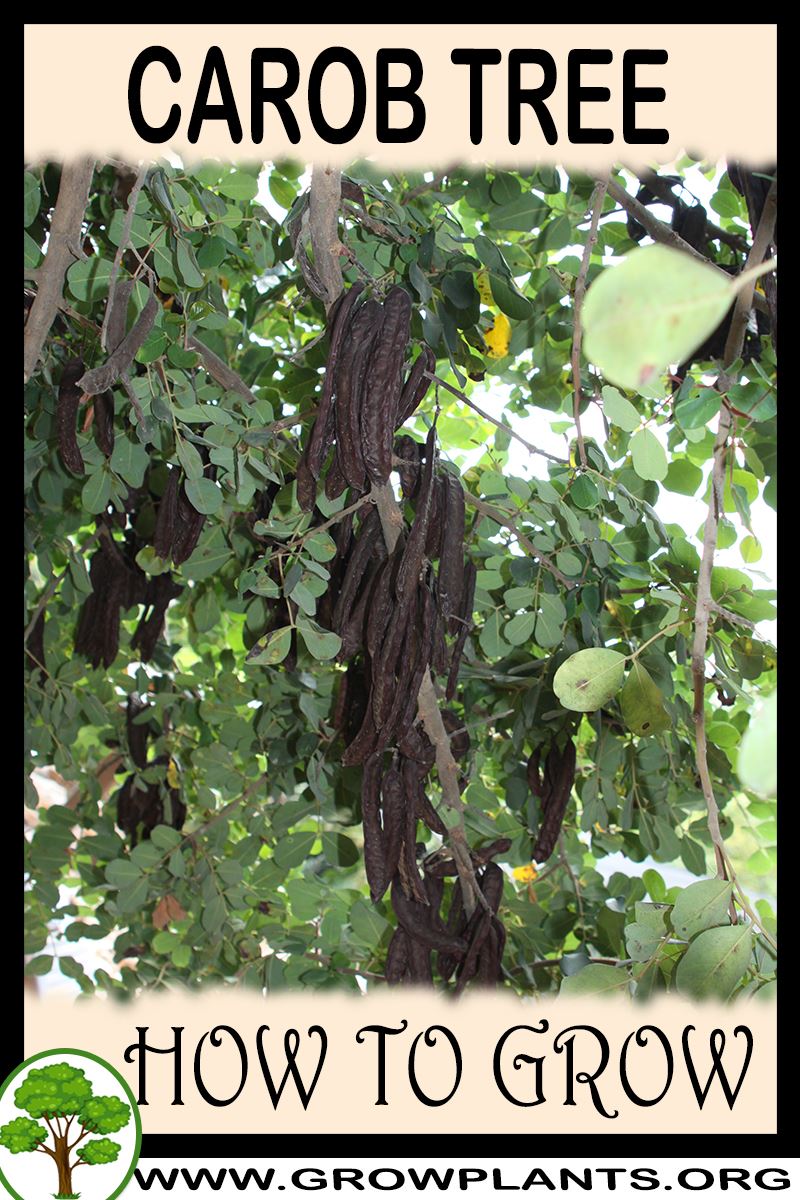
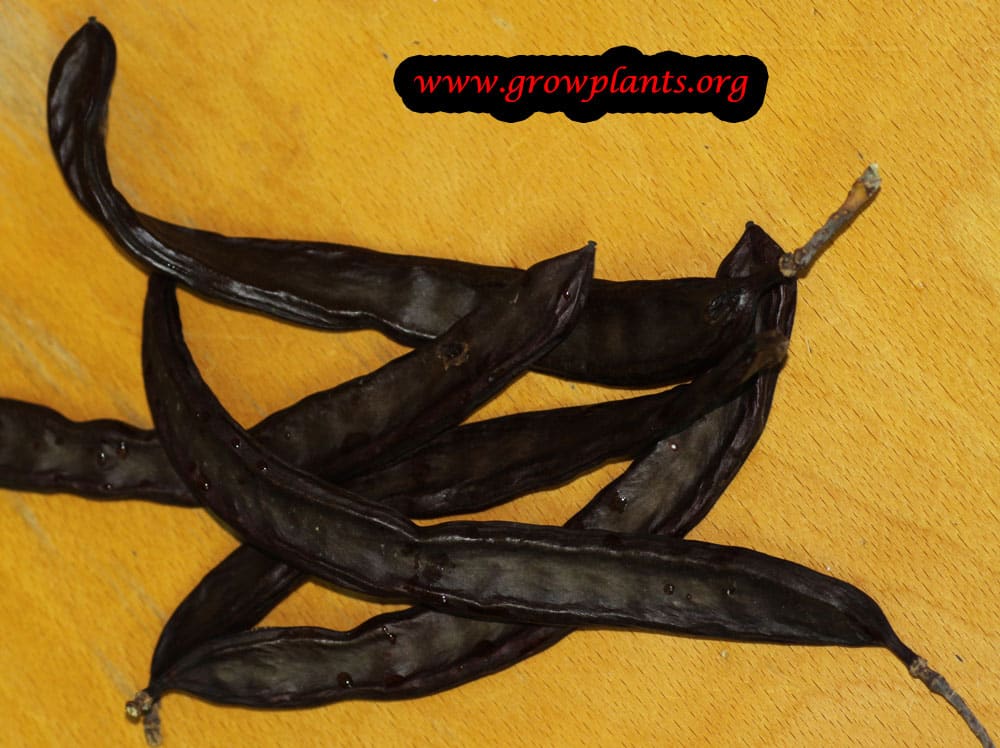
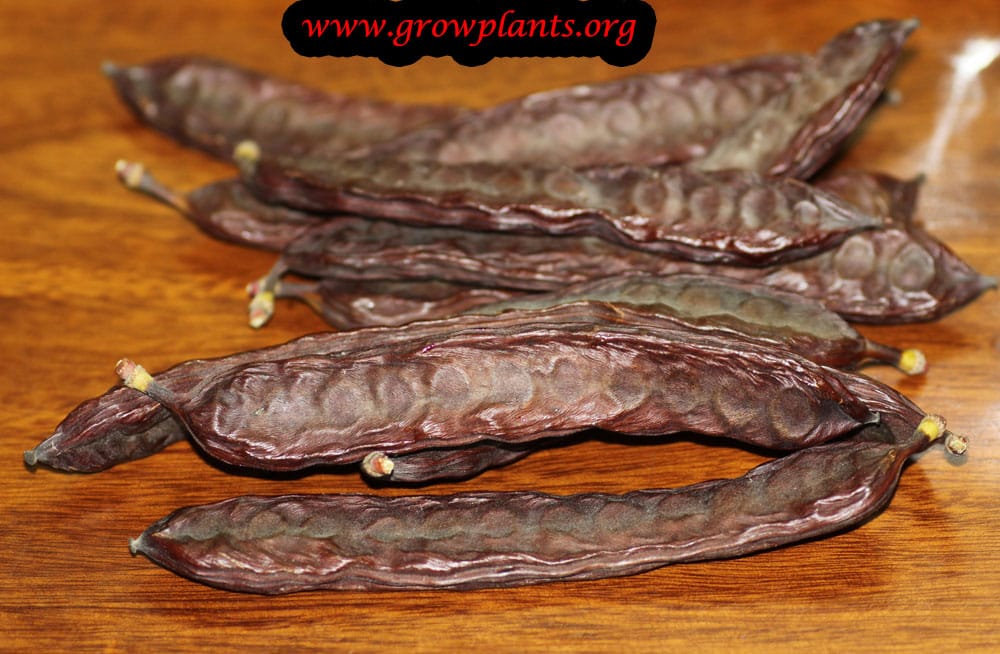
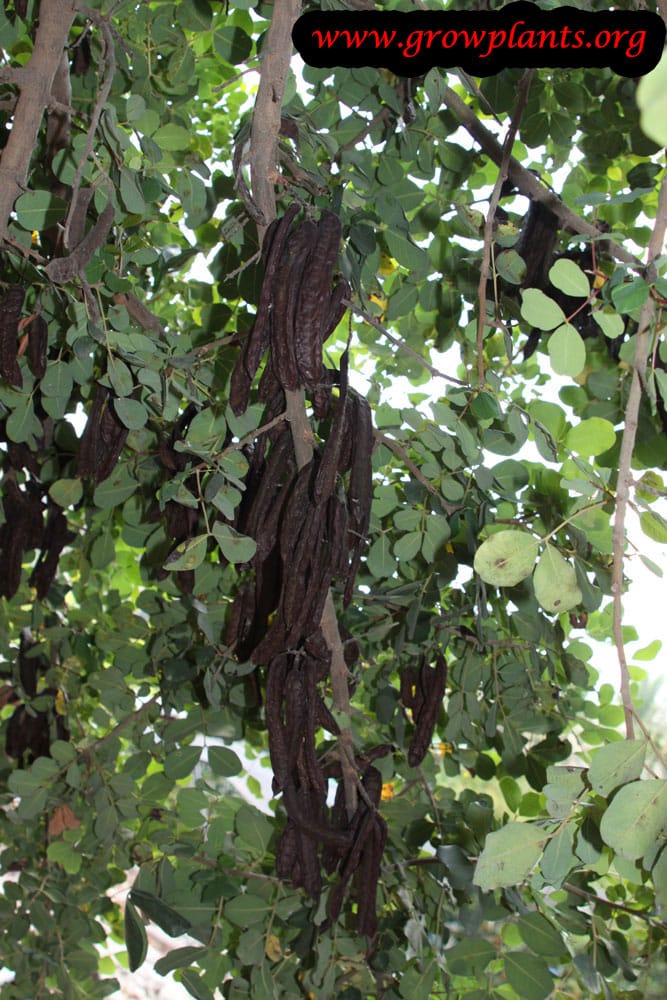
- Fruit Profile: Flat, leathery brown pods 5-20 cm long containing 5-15 hard round inedible seeds; the dry pod pulp is sweet.
Primary Uses & Landscape Value
- Edible Uses: Sweet pod pulp is eaten raw, dried and ground into carob powder as a caffeine-free chocolate substitute; it also has traditional medicinal uses for digestion and cholesterol.
- Functional & Ornamental Roles: Drought-tolerant shade and ornamental tree for Mediterranean and subtropical gardens; also grown as bonsai.
Care Guide: Planting, Soil & Watering
Overview: Carob is a slow-to-moderate-growing, highly drought-tolerant evergreen tree for Mediterranean and subtropical climates (hardiness zone 9-11), needing full sun. It thrives in a deep, well-drained, preferably slightly alkaline soil and survives long dry periods once established.
Quick Care Requirements
| Requirement | Ideal Condition |
|---|---|
| Planting Season | In spring or autumn; autumn plantings in cooler zones benefit from mulch and protection |
| Growth Rate | Slow to moderate |
| Soil Type | Deep, well-drained soil |
| Soil pH | Prefers slightly alkaline soil |
| Water Need | Low once established (tolerates about 200 mm/year); more while young – always with good drainage |
Planting & Establishment
- Best Planting Season: Plant in spring or autumn; in zone 9 an autumn planting should be mulched or lightly covered for protection. Where planting without irrigation, autumn is best.
- How to Plant:
- Hole Preparation: Dig a hole about twice the width of the root ball and no deeper than it, loosening the sides.
- Soil Amendments: It needs no rich soil; on heavy ground add grit for the sharp drainage it requires in wet winters. Young trees can be given some fertiliser to speed growth.
- Planting Depth: Set the root collar level with the soil surface; do not bury the trunk base.
- Growth Speed & Expectations: A slow to moderate grower reaching 5-15 m (15-45 ft); it can also be trained as a bonsai.
Soil, Watering & Drainage Care
- Soil Mix & Drainage Needs: Deep, free-draining soil is important, especially in rainy winters, to avoid root rot; it is not suited to long-term container growing except as bonsai.
- Watering Schedule & Technique:
- Young / Newly Planted: Water regularly through the first years until the deep root system establishes.
- Established: Water deeply but infrequently, letting the soil dry well between waterings; mature trees are very drought-tolerant.
- Seasonal Adjustments: Occasional deep watering in summer drought; little or none in a wet winter, but ensure drainage.
Climate, Light & Hardiness
The carob is a classic Mediterranean evergreen (to semi-deciduous) tree built for hot, dry summers, full sun and mild, largely frost-free winters. It is one of the hardier subtropical trees - the site data places it in roughly USDA zone 9–11, doing best where winters stay above about −3°C (27°F) while established trees can take somewhat lower.
Quick Climate Specifications
| Climate Zones | Mediterranean, subtropical, occasionally warm-temperate |
|---|---|
| USDA Hardiness Zones | Approximately 9–11 (site data) |
| Optimal Temp Range | Approximately 20–30°C (68–86°F) |
| Cold Damage Begins | Best kept above about −3°C (27°F); soft new growth is nipped by light frost |
| Approx. Survival Minimum | Established trees can survive somewhat below −3°C (27°F) briefly; tolerance varies by cultivar, age, exposure duration, and conditions |
| Frost Tolerance | Low to moderate |
| Light Conditions | Full sun (young trees tolerate light shade) |
| Wind Tolerance | Moderate to high |
| Salt / Coastal Tolerance | Moderate |
Sunlight & Light Exposure
Optimal Light Setup
Full sun gives the densest canopy and best cropping. Young trees will grow in half shade and then reach up toward the light, but the mature tree is a sun lover.
Direct Sun Requirement
Direct sun and summer heat drive flowering and pod ripening - a shaded position reduces both.
Shade & Heat Management
Its own broad crown makes it a valued shade tree; the foliage takes intense Mediterranean sun without scorching.
Best Exposure / Orientation
A warm, open, sunny aspect suits it and helps ripen the late-season pods.
Temperature Extremes & Hardiness
USDA Hardiness & Regional Limits
The site classes it around zone 9–11. It is happiest in frost-free to lightly-frosted Mediterranean and subtropical areas; in zone 9 and autumn plantings it benefits from mulch or a light cover through the first winters.
Cold Damage & Winter Protection
Keep it above roughly −3°C (27°F) for comfort; harder or prolonged freezes damage foliage and young wood, and seedlings are far more vulnerable than mature trees. Good drainage matters in cold, wet winters.
Frost Sensitivity
Light frost browns tender tips but mature trees generally recover; cold hardiness varies with cultivar, age and exposure.
Extreme Heat Tolerance
Excellent - it is adapted to long, hot, arid summers and copes with intense heat and reflected warmth.
Chilling Requirement
Carob is a low-chill Mediterranean species with no meaningful winter-chill requirement for flowering or fruiting, so inadequate winter cold is not a limiting factor as it is for temperate fruit trees.
Wind, Humidity & Microclimate
Dry-Air Tolerance
Very good - it is at home in dry Mediterranean air and low summer humidity.
Wind Tolerance
A sturdy, deep-rooted tree that stands up well to wind once established, and is often used as a shelter or shade tree.
Coastal / Salt Tolerance
Moderately tolerant of coastal exposure and salt-laden air, suiting many Mediterranean seaside gardens; this differs from tolerance of saline irrigation water or salty soil.
Rainfall & Seasonal Moisture
Adapted to a winter-wet, summer-dry climate; it can get by on low annual rainfall but needs free drainage so its roots are not waterlogged through a wet winter.
Microclimate Recommendations
At the cool edge of its range, a warm, sunny, well-drained slope or a south-facing wall (northern hemisphere) helps ripen pods and buffers winter cold.
Growing in Pots, Balconies & Indoors
The carob is a large, long-lived Mediterranean tree – not a houseplant and not really a container plant. The grower’s one exception is bonsai: kept as a bonsai it can live in a pot, and even on a bright windowsill.
Quick Details
- Container Size: Only as a bonsai – a shallow, very free-draining bonsai pot
- Indoor Suitability: No, except as a bonsai on a bright, sunny window
- Best Spot: Full sun (young trees take half shade)
- Soil & Drainage: Gritty and sharply free-draining – vital through wet winters
- Watering in Pots: Low – drought tolerant once established, but a shallow bonsai pot dries fast
Indoors & On the Windowsill
- Not a houseplant: Far too large for a room; the only indoor option the grower gives is a bonsai on a bright, sunny window.
- Overwintering: Hardy to light frost once established; young potted or bonsai trees are more tender and benefit from shelter.
On a Balcony or Patio
- Bonsai only: As a full tree it will not work in a balcony pot; kept as a bonsai it can sit in full sun on a patio or balcony with sharp drainage.
- Drought tolerant: Once established it needs little water, but a shallow bonsai pot dries quickly – do not let it fully parch.
Choosing the Pot, Soil & Long-Term Care
- Bonsai pot & drainage: For bonsai use a shallow, very free-draining pot with a gritty mix; strong drainage is essential, especially through wet winters.
- Feeding & repotting: Feed sparingly in growth; root-prune and refresh the soil in the dormant season, as for any bonsai.
Growing this plant in a greenhouse
A greenhouse can give carob tree frost protection, cold protection, humidity control and extra warmth. In the right climate it may also be kept growing through winter, depending on how much warmth and light are provided.
Greenhouse at a glance
| Greenhouse suitability | Conditional - depends on your climate |
|---|---|
| Main benefits | frost protection, cold protection, humidity control, extra warmth |
| Season extension | earlier spring & later autumn |
| Outdoor protection advisable below | about -3°C |
| Suitable types | heated greenhouse, glass greenhouse, polycarbonate greenhouse |
| Heating | Heating is optional - useful mainly for winter growing in cold areas. |
Related greenhouse guides
- Greenhouses: How to Choose the Right Greenhouse
- Best Greenhouse Heaters
- Greenhouse Climate Control: Temperature, Ventilation and Humidity
- Polycarbonate Greenhouses: What to Look for Before Buying
Fertilizing & Feeding
A moderate feeder that responds to steady, balanced feeding while young and only light feeding once mature; as a nitrogen-fixing legume it needs little added nitrogen, and a complete fruit-tree fertilizer covers the minor nutrients.
Quick Fertilizing Specs
| Feeding Level | Moderate |
|---|---|
| young_feeding | Steady, balanced feeding through the growing season |
| mature_feeding | Light feeding, leaning to potassium around fruiting |
| Main Nutrient Priority | Balanced nutrition; potassium as fruit develops |
| Best Feeding Period | Spring through fruit development |
| Organic Options | Compost, aged manure, mulch |
| Soil pH | Prefers well-drained soil; tolerates neutral to slightly alkaline conditions |
| Micronutrients | A complete fruit-tree fertilizer usually supplies iron, manganese and zinc |
| Reduce/Stop Feeding | Ease off as the tree matures and after harvest |
Feeding by Growth Stage
Newly planted
Help the young tree establish its roots after planting.
| Nutrient direction | Go easy at planting; rely on organic matter and a light balanced feed after the tree settles in rather than heavy fertilizer. |
|---|---|
| Timing | At and just after planting. |
| Frequency | Minimal feeding at first; let the roots establish. |
| Fertilizer types | Organic matter or compost mixed into the planting area, A light balanced complete fertilizer after growth begins |
| Precautions | Avoid strong fertilizer against fresh roots, which can scorch them. |
Young, pre-bearing tree
Build a strong framework of trunk and branches in the years before fruiting.
| Nutrient direction | A balanced complete fertilizer supports steady growth; as a nitrogen-fixing legume this tree makes much of its own nitrogen, so added nitrogen can stay modest. |
|---|---|
| Timing | Through the active growing season in the young years. |
| Frequency | Light, regular feeding across the growing season. |
| Fertilizer types | A balanced complete fertilizer, Compost or other organic matter |
| Precautions | Do not overfeed nitrogen; lush soft growth is weak and delays fruiting. |
Established tree approaching bearing
Keep the maturing tree in steady health as it nears fruit production.
| Nutrient direction | A balanced complete fertilizer with the minor nutrients a fruit-tree blend usually supplies. |
|---|---|
| Timing | During the active growing season. |
| Frequency | Steady, moderate feeding through the season. |
| Fertilizer types | A balanced complete fruit-tree fertilizer, Compost or other organic matter |
| Routine trace nutrients | iron, manganese, zinc |
| Precautions | Watch for pale new leaves that can signal a micronutrient shortage such as iron. |
Mature, fruit-bearing tree
Support flowering and fruit while keeping the tree in balance.
| Nutrient direction | A balanced complete fertilizer, leaning toward potassium as fruit develops; a settled mature tree needs only light feeding. |
|---|---|
| Timing | From before flowering through fruit development. |
| Frequency | Light, well-timed feeding around the fruiting period. |
| Fertilizer types | A balanced complete fertilizer with adequate potassium, Compost or other organic matter |
| Routine trace nutrients | iron, manganese, zinc |
| Precautions | Excess nitrogen at this stage favours leaves over fruit; keep feeding moderate. |
Nutrient Deficiency Signs & Corrections
New leaves are pale or yellow between green veins while the veins stay green.
| Possible causes | High (alkaline) soil pH locking up iron, Waterlogged or cold soil reducing root uptake, A genuine iron shortage in the soil |
|---|---|
| Appears first on | Youngest leaves at the shoot tips |
| What to check | Soil pH and whether the soil is chalky or alkaline, How well the soil drains and whether symptoms follow wet spells, Whether only the new growth is affected |
| Possible correction | Correct soil pH where possible and apply a chelated iron product according to its label; improve drainage. |
Older, lower leaves turn uniformly pale or yellow and overall growth is weak.
| Possible causes | Low soil nitrogen or poor root-nodule activity on this legume, Waterlogged or compacted roots limiting uptake, Very sandy, low-fertility soil |
|---|---|
| Appears first on | Older, lower leaves |
| What to check | How wet the root zone stays and whether the soil drains freely, Whether the plant has been fed at all this season, General soil fertility and organic matter |
| Possible correction | Improve drainage, work in organic matter, and apply a balanced complete fertilizer at a modest rate. |
Older leaves develop browning, scorched margins.
| Possible causes | Potassium shortage in the soil, Fertilizer or soil salt build-up in the root zone, Drought stress between waterings |
|---|---|
| Appears first on | Margins of older leaves |
| What to check | Recent fertilizer use and any salt crust on the soil surface, Soil moisture and the watering pattern, Whether only leaf edges, not whole leaves, are affected |
| Possible correction | Water thoroughly to rinse excess salts through, even out watering, and use a balanced fertilizer with adequate potassium at a modest rate. |
Pruning, Training & Seasonal Maintenance
Carob is a slow-growing, long-lived evergreen that needs very little pruning once its framework is set — the goal is to build a strong, well-spaced scaffold on the young tree and then do only light maintenance for decades. Because carob is cauliflorous, with flowers and pods borne on short spurs directly on old branches and even the trunk, cutting back mature wood removes fruiting sites, so established trees are pruned only for deadwood, clearance and access. Work in the cool, dry autumn–winter window after harvest, when the tree is least active.
Pruning & the Edible Harvest
Carob is grown for its edible pods, and pruning’s main job is to protect that crop rather than boost it. Because the tree is cauliflorous — flowering and podding on long-lived spurs on old branches and the trunk — heading back mature wood removes the very spurs that carry pods, so established trees are pruned only lightly, for access and deadwood. On grafted trees, keeping the male branch small and subordinate preserves pollination and pod set.
Quick Pruning & Maintenance Specs
| Pruning Tolerance | Low–Moderate (slow to rebuild after hard cuts) |
| Primary Pruning Window | Autumn–Winter, after harvest |
| Typical Frequency | Formative years only; then occasional (every few years) |
| Main Objective | Sound scaffold when young; deadwood & clearance when mature |
| Young Plant Priority | Single clear trunk, 3–5 well-spaced limbs, reduce crowded branches at the trunk |
| Mature Plant Priority | Retain fruiting spur wood; remove only dead, crossing or hazardous limbs |
| Best Tool Type | Bypass secateurs and loppers for young wood; saw for scaffold limbs |
| Avoid Heavy Pruning During | Autumn flowering and periods of drought stress on unirrigated trees |
Pruning by Plant Age & Size
Newly Established
Minimal. Remove only damaged or broken shoots after planting and let the young tree build root and leaf area; young trees tolerate part shade and will lean to the light, so no hard formative cutting yet.
Young / Formative
This is the one stage where structural pruning matters. Develop a single clear trunk, then select 3–5 well-spaced scaffold limbs and reduce the number of branches arising from the same point on the trunk so no weak cluster forms. Train the trunk high for a shade tree, or keep the head lower for an orchard tree that is easier to harvest. On grafted trees carrying both female and male wood, keep the male branch small and subordinate so the fruiting female framework dominates.
Mature / Established
Very little is needed. Remove deadwood, crossing or rubbing limbs, and any growth blocking access, and keep the grafted male branch in check. Do not head back the productive old wood, which carries the flowering spurs.
Seasonal Pruning Schedule
Autumn–Winter (Dormant/Cool, main window)
Objective: structural correction on young trees and deadwood removal on mature ones. Remove dead, damaged and crossing wood; on young trees make scaffold-selection cuts. Do NOT strip the old spur-bearing wood on a fruiting tree. Expected response is slow, measured regrowth. Flowering/fruiting impact is minimal if you avoid cutting old fruiting wood.
Ongoing Sanitary
Through the year, cut out twigs fouled by scale or aphids and any dead tips. This does not affect cropping and keeps pests from building up.
Flowering & Fruiting Wood
Carob is cauliflorous: flowers and the resulting pods form on short spurs on older branches and the trunk, not on the current season’s soft shoots. The species is largely dioecious, so a pollen source is needed — either a separate male tree (roughly one male to twenty to twenty-five females) or a grafted male branch kept subordinate on the same tree. Pods take about a year to mature (autumn flowers to the following autumn), so two crop stages can be present at once. Trees also tend toward biennial bearing, cropping heavily one year and lightly the next. The practical rule: never hard-head a mature tree, or you cut off the spur system, and never remove the pollinator.
Structural Pruning & Training
Focus on limb selection when young — suppress co-dominant limbs and crossing branches. Choose canopy height for the tree’s use (shade versus harvest). Only modest thinning is ever needed; carob does not require routine canopy opening.
Special Growth to Remove
On grafted trees, remove rootstock/below-graft suckers, and prevent the grafted male branch from overtaking the female framework. Ungrafted seedling trees rarely produce problem suckers.
Container & Small-Space Pruning
Carob is not an indoor plant but is a classic bonsai subject. Bonsai work is different from orchard pruning: a low trunk chop builds taper, then ramification is developed by pinching new shoots, and roots are pruned at repotting. A containerised or bonsai carob is grown for form, not fruit, so spur-retention logic does not apply.
Tools
Match the tool to the cut: bypass secateurs for spurs and twigs, loppers for branches roughly 2–4 cm, and a pruning saw for scaffold limbs. On tall old trees a pole pruner reaches high deadwood and doubles for pod harvest (long-handled poles are the usual harvest tool). Hedge shears are not appropriate — carob needs selective cuts.
Tool Hygiene & Disease Risk
Routine. Carob is not troubled by readily pruning-transmitted diseases; keep tools clean and sharp for clean cuts. In poorly drained ground, root rots are a concern, but these are a soil-drainage issue rather than a tool-borne one.
Cut Placement & Technique
Use thinning cuts back to the branch collar rather than random heading; avoid flush cuts and long stubs. Stage-remove any heavy limb with an undercut first to prevent bark tearing on this slow-healing wood.
Heavy Pruning & Rejuvenation
Carob will accept a crown reduction or rejuvenation, but it rebuilds slowly because it is a slow grower, and you sacrifice several years of cropping while the spur system re-forms. If a reduction is unavoidable, spread it over several seasons rather than cutting hard in one pass.
Post-Pruning Care
Little is needed. Mature carobs do not require feeding, so do not push fertiliser after pruning. In hot climates, watch newly exposed bark for sunburn after opening the canopy, and keep an eye on scale and aphids on any soft regrowth.
Common Pruning Mistakes
- Hard-heading a mature, cauliflorous tree and destroying the spur system that carries the crop.
- Removing the male tree or grafted male branch, leaving the female with no pollen source.
- Over-thinning the evergreen canopy and exposing bark to sunscald in a hot climate.
- Expecting fast recovery — carob is slow, so heavy cuts set the tree back for years.
When NOT to Prune
Avoid cutting during the autumn flowering period, during drought stress on unirrigated trees, and immediately after transplanting a young tree while it is still establishing.
Recommended Tools (by task)
- bypass_secateurs — clean thinning of spurs, twigs and young formative shoots without crushing the wood.
- loppers — scaffold-selection cuts on young trunks and branches up to a few centimetres.
- pruning_saw — removing occasional dead or crossing scaffold limbs on a mature tree.
- pole_pruner — reaching high deadwood on tall old trees and long-reach pod harvest.
Pruning Troubleshooting
| Problem | Possible Cause | What to Check | Corrective Action |
| Few or no pods after pruning | Old spur wood was headed back, or the pollinator was removed | Whether fruiting spurs on old wood were cut; presence of a male tree/branch | Stop heading old wood; add or graft in a male; wait for spurs to rebuild |
| Heavy crop one year, almost none the next | Natural biennial bearing, worsened by stress | Irrigation and general vigour; over-cropping the “on” year | Keep light, steady maintenance and consistent water; do not hard-prune to “fix” it |
| Bark cracking/scald on limbs after thinning | Too much canopy removed, exposing bark to sun | How much interior was opened in a hot season | Thin conservatively; whitewash or shade newly exposed bark |
| Vigorous male branch shading the female framework | Grafted male allowed to outgrow the female | Relative size of male vs female wood on grafted trees | Cut the male branch back hard each year to keep it small and subordinate |
Propagation Guide
Carob grows easily from seed once the hard coat is softened, but seedlings are variable and — because the tree is dioecious — roughly half turn out to be non-fruiting males whose sex is unknown until they flower; to guarantee a productive female of a known cultivar it is grafted or budded onto seedling rootstock. Seed is the practical route for rootstock and for ornamental or shade trees, making this a moderate plant to propagate depending on the goal.
Quick Propagation Specs
| Best Propagation Method | Seed (rootstock/ornamental); grafting or budding for a known fruiting cultivar |
| Alternative Methods | Air layering; cuttings (difficult) |
| Propagation Difficulty | Moderate (grafting needed for a reliable fruiting female) |
| Seed True-to-Type | Variable; dioecious — sex unknown until flowering |
| Vegetative True-to-Type | Yes (grafting fixes cultivar and sex) |
| Best Propagation Season | Spring (sowing); growing season (grafting) |
| Seed Germination Time | About 2 weeks up to a year, depending on freshness/dormancy (site) |
| Germination Temperature | About 22–27°C (72–81°F); site sows at 25°C (77°F) |
| Seed Sowing Depth | About 2–3 cm (1 in) (site) |
Growing from Seed
Seed Handling & Viability
Store at room temperature in a dry, dark place; fresh seed is preferred (site).
Dormancy & Pre-Sowing Treatment
The very hard seed coat must be softened: the site soaks the seed for 2–4 days, changing the water several times a day (a hot-water soak or nicking the coat works similarly).
Sowing Season
Spring is best; late winter or autumn is also possible (site).
Sowing Depth & Spacing
About 2–3 cm (1 in) deep, preferably into individual pots (site).
Germination Conditions
Moist, well-drained soil in a sunny spot at about 22–27°C (72–81°F); the site sows at 25°C (77°F).
Germination Time
From about 2 weeks up to a year — fresh seed is fastest, while older seed enters dormancy and germinates slowly and erratically (site).
Seedling Care
Keep young plants protected from wind and frost; a heavy mulch (or light cover) protects seedlings that emerge in winter (site).
Grafting & Budding
Why Grafting Is Used
To secure a known female fruiting cultivar — better yield, juicier and larger pods, smaller seed — and to fix sex, since about half of unsexed seedlings are male (site).
Rootstock
Vigorous carob seedlings.
Pollination & Male Ratio
The site keeps roughly one male tree to every 20–25 females, or grafts male and female branches onto the same tree — grafting the male lower and preventing it from overgrowing the female.
Best Grafting Season
During the active growing season.
Air & Ground Layering / Cuttings
The site also lists air layering and cuttings; both are slower and less reliable than seed or grafting for carob and remain secondary methods.
Bloom & Flower Guide
Quick Details
- Bloom Season: Autumn – unusual among trees
- Flower Appearance: Small yellow, orange or reddish flowers in short catkin-like sprays along the branches; trees are usually male or female
- Edibility: Not eaten – the flowers have a strong musky scent; the pod is the crop
Detailed Blooming Overview
Carob flowers in autumn, unusually for a tree. It is dioecious, so male and female flowers are borne on separate trees, though some cultivars are self-fruitful. The small flowers give off a distinctive musky scent.
Flower Characteristics
- Small yellow, orange or red flowers on short catkin-like spikes.
- Male and female flowers are usually on separate trees.
Bloom Care & Thinning
- Pollination: By bees and wind.
- For pods: A female tree needs a male (or a self-fertile cultivar) nearby to set fruit.
Fruit & Uses
The carob tree is grown for its long, flat brown pods, whose dried pulp is naturally sweet and is milled into carob powder — a caffeine-free substitute for cocoa. The ripe dried pod is eaten as-is or processed, while the hard round seeds inside are not eaten.
Quick Edible Specs
| Edible Parts | Pods (dried pulp). The seeds are not eaten. |
|---|---|
| Main Use(s) | Culinary — eaten raw/dried, ground into carob flour, used as a chocolate substitute; traditionally used for digestive complaints. |
| Eaten Raw or Cooked | The ripe, fully dried pod can be eaten raw; the pulp is also dried and milled. |
| Preparation Required | Dry the pods; split and discard the inedible seeds before milling. |
| Harvest Season | Autumn, about one year after flowering. |
| Time to First Harvest | Several years from planting; grafted trees crop much sooner than seed-grown ones (see the growing notes for bearing age). |
| Storage | Dried pods and carob powder keep well in a dry, dark place. |
| Safety/Toxicity Caveat | No significant toxicity in the pods; seeds are simply not eaten. |
Seeds, Pods & Nuts
The edible part is the leathery brown pod (5–20 cm), which becomes sweet as it dries on the tree. Pods are ready in autumn once they have turned fully brown and dry. Each pod holds about 5–15 hard round seeds; these are not eaten as food. The dried pulp is eaten out of hand or ground into carob flour for baking, drinks and as a cocoa substitute.
Harvesting
Harvest in autumn, roughly a year after the flowers appear. Knock the pods down with a pole or by shaking the tree. A mature tree can carry a heavy crop (the site records around 80–100 kg), and a very heavy year tends to be followed by a lighter one or none at all, so yields swing from year to year.
Preparation, Uses & Safety
To use the pods, dry them fully, split them and discard the hard seeds, then grind the sweet pulp into powder. Carob is eaten raw, dried, or as a chocolate substitute. The pods are also traditionally used for digestive problems, diarrhea and heartburn — noted here only as a traditional use, not as health advice. The pods carry no notable toxicity.
Pests, Diseases & Troubleshooting
Overview: The carob is a rugged, drought-hardy Mediterranean evergreen that is remarkably pest-tolerant once established; most trouble is cosmetic sap-sucking or, more seriously, root rot on heavy wet soils. Manage it culturally – good drainage, sensible watering and orchard hygiene – and chemical intervention is rarely needed.
Quick Troubleshooting Overview
| Issue / Pest | Main Symptom | Primary Solution |
|---|---|---|
| Scale & mealybug | Bumps/cottony tufts, sticky honeydew, sooty mould | Horticultural oil; conserve natural enemies |
| Carob moth | Bored, frassed and mouldy pods | Sanitation, prompt harvest, pheromone traps |
| Leaf miner | Pale winding tunnels or blotches in leaves | Tolerate light damage; remove affected leaves |
| Root/crown rot | Wilt, dieback on wet heavy soil | Improve drainage; avoid overwatering |
| Aphids | Curled new growth, honeydew | Water jet; soap only if severe |
Common Pests & Management
- Scale insects (Coccidae / Diaspididae):
- Symptoms: Immobile brown, tan or white bumps on stems and leaf undersides; sticky honeydew and blackish sooty mould on soft scale. Growth slows and leaves yellow.
- Prevention & Control: Scrape off light infestations by hand and prune heavily-encrusted stems. Smother the rest with horticultural or neem oil, covering undersides; repeat to catch mobile crawlers. Conserve parasitic wasps and ladybirds.
- Mealybugs (Pseudococcus / Planococcus spp.):
- Symptoms: White cottony tufts in growth tips, leaf joints and along stems; sticky honeydew and sooty mould follow. On succulents/cacti check the root zone too, where root mealybugs coat roots in white powder.
- Prevention & Control: Wipe or dab colonies with a cotton swab dipped in dilute alcohol; rinse plants and encourage predators (ladybirds, lacewings). For root mealybug, bare-root, wash the roots and repot in fresh mix. Follow up with horticultural oil or insecticidal soap.
- Carob moth (Ectomyelois ceratoniae):
- Symptoms: Caterpillars bore into ripening and stored pods, leaving frass, webbing and secondary mould; a major cause of pod loss and downgrading.
- Prevention & Control: Harvest promptly and clear fallen and mummified pods that harbour larvae. Monitor with pheromone traps and store dried pods cool and dry. Orchard sanitation is the main lever; targeted sprays are timed to egg-lay only in commercial settings.
- Leaf miners (Lepidoptera / Diptera larvae):
- Symptoms: Pale serpentine tunnels or blotches mined between leaf surfaces; largely cosmetic on a vigorous tree.
- Prevention & Control: Pick off and destroy mined leaves on small trees and tolerate light damage, which rarely affects a healthy carob. Encourage parasitic wasps; systemic products are seldom justified.
- Aphids (Aphidoidea):
- Symptoms: Clusters of small green, black or grey soft-bodied insects on new shoots, buds and leaf undersides; curled distorted growth, honeydew and sooty mould.
- Prevention & Control: Blast off with a strong jet of water and squash colonies early. Encourage ladybirds, lacewings and hoverflies; avoid excess nitrogen that fuels soft growth. Use insecticidal soap or neem for stubborn outbreaks, sprayed in the evening to spare pollinators.
Diseases & Fungal Issues
- Root & crown rot (Phytophthora / Pythium / Rhizoctonia spp.):
- Symptoms: Wilting despite moist soil, blackened mushy roots or stem base, yellowing lower leaves and collapse. Carob is most at risk on poorly drained clay or with heavy irrigation.
- Treatment & Management: This is a water-management disease first: plant in free-draining soil, avoid waterlogging and never let pots stand in saucers of water. Remove and destroy collapsed plants, improve drainage, and drench with a labelled biofungicide only as a support measure.
- Leaf spot & anthracnose (Fungal (various)):
- Symptoms: Brown to black spots or blotches on leaves, sometimes with minor leaf drop in wet seasons.
- Treatment & Management: Rake up fallen leaves, prune for airflow and avoid overhead watering. A copper spray is only warranted in persistent wet-season outbreaks; a healthy tree usually needs none.
- Sooty mould (Capnodium spp.):
- Symptoms: Black powdery film coating leaves and pods, growing on honeydew from scale, mealybug or aphids.
- Treatment & Management: Control the sap-suckers producing the honeydew and the mould clears on its own; rinse foliage to speed recovery.
Growing Difficulties & Abiotic Problems
- Root rot from overwatering / poor drainage:
- Cause & Symptoms: Yellowing, thinning canopy and branch dieback where roots sit in wet soil – the carob’s main weakness.
- Correction Strategy: Plant high in free-draining ground, water deeply but infrequently once established, and never keep the root zone soggy.
- Salt & wind exposure:
- Cause & Symptoms: Marginal leaf scorch and browning on very exposed coastal or over-fertilised sites.
- Correction Strategy: Leach salts with occasional deep irrigation, ease off feeding, and shelter young trees until established.
- Poor pod set:
- Cause & Symptoms: Light cropping where only one sex is present (the tree is largely dioecious) or pollinators are scarce.
- Correction Strategy: Ensure a male or hermaphrodite tree is nearby for fruit set and support pollinator activity.
What Helps – Products & Tools
A carob rarely needs more than the gentlest tools: horticultural or neem oil and insecticidal soap for scale, mealybug and aphids; the odd copper fungicide only in a wet leaf-spot year; pheromone traps and strict pod hygiene for carob moth; and above all free-draining soil to keep root rot away.
Frequently Asked Questions
What is a carob tree?
The carob tree is a drought-hardy Mediterranean evergreen grown for its sweet edible pods, used as a chocolate substitute, and valued as a long-lived shade tree. It’s a long-lived evergreen to semi-deciduous tree, 5-15 m (15-50 ft) tall, with a broad, densely branched canopy and a rounded crown.
Does a carob tree need both a male and a female tree to produce pods?
Yes—carob flowers have male and female usually on separate trees (dioecious), so a female tree needs a male (or a self-fertile cultivar) nearby to set fruit. Some growers avoid needing two trees by using one that grafts male and female branches onto the same tree.
How long does it take for a carob tree to start producing pods?
A carob tree begins bearing pods in about 3-9 years (much longer from seed), with mature trees yielding around 80-100 kg. Grafted trees crop much sooner than seed-grown ones.
Can carob trees be grown in containers or pots?
Not really—the carob is a large, long-lived Mediterranean tree – not a houseplant and not really a container plant. The one exception is bonsai: kept as a bonsai it can live in a pot, and even on a bright windowsill, using only as a bonsai – a shallow, very free-draining bonsai pot.
Are carob seeds safe to eat?
The pods themselves are non-toxic and edible, but the hard round seeds inside are not eaten. There is no significant toxicity in the pods; the seeds are simply not eaten, and only the sweet dried pulp is used.