
Plant Profile & Key Characteristics
Overview: Sweet viburnum is a moderate-growing evergreen shrub or small tree reaching 2-6 m (about 6-20 ft), widely grown as a dense, fragrant flowering hedge. Hardy in USDA zones 8-10, it bears clusters of scented white spring flowers followed by small ornamental berries.
Quick Specifications
| Specification | Attribute |
|---|---|
| Plant Type / Life Cycle | Perennial (evergreen shrub / small tree) |
| Foliage Type | Evergreen |
| Mature Size | 2-6 m (about 6-20 ft) tall |
| Growth Rate | Moderate |
| Hardiness | USDA zones 8-10 |
Growth Form & Structure
- Height & Spread: 2-6 m (about 6-20 ft) tall, dense and bushy; responds well to hedging and can be container-grown.
- Growth Habit & Form: Dense, upright evergreen shrub or small tree.
- Lifespan & Maturity: Long-lived perennial shrub.
Anatomy & Physical Features
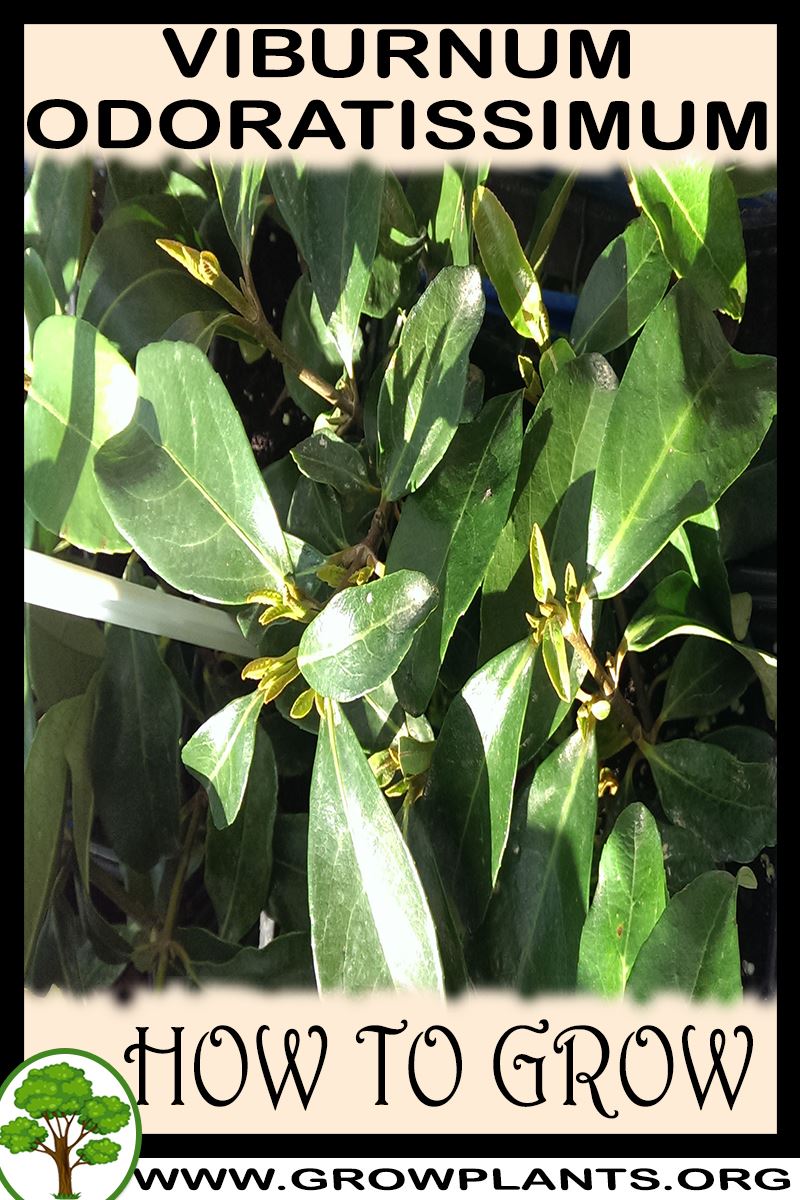
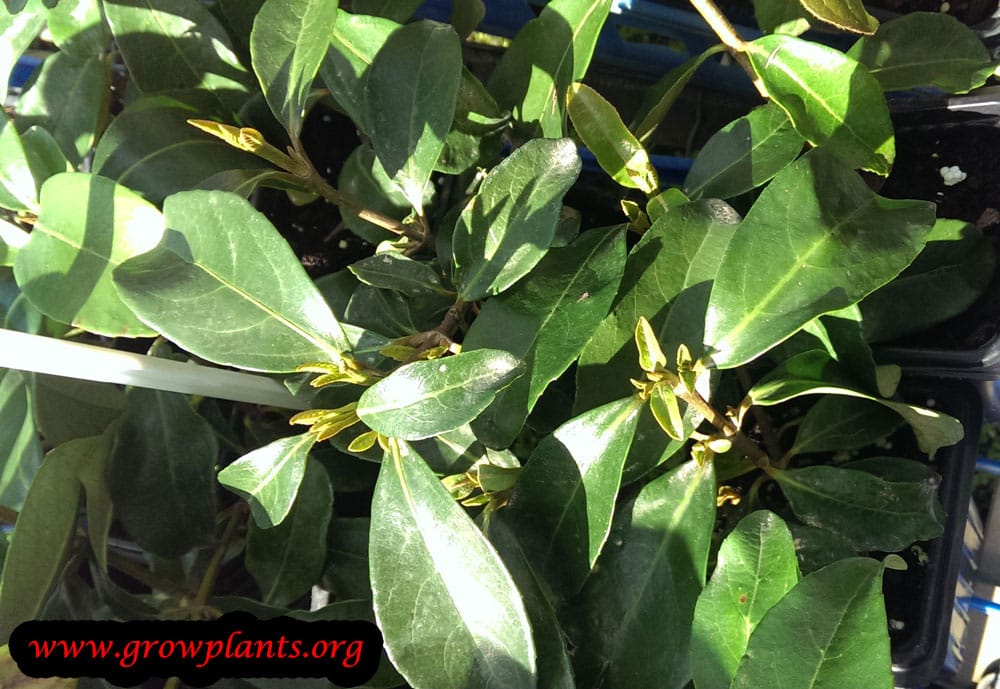
- Leaves & Foliage: Large, glossy green elliptic leaves about 10-20 cm long.
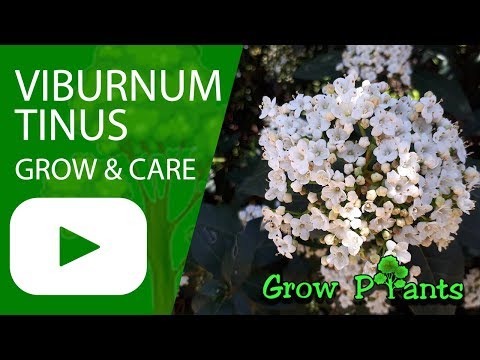
- Flower Characteristics: Small fragrant white flowers borne in showy clusters.
- Fruit Profile: Small (~0.5 cm) red-then-black ornamental berries (not eaten).
Primary Uses & Landscape Value
- Functional & Ornamental Roles: Fragrant evergreen hedge, screen and specimen; the flowers attract pollinators.
Care Guide: Planting, Soil & Watering
Overview: Viburnum odoratissimum (sweet viburnum) is an evergreen hedging shrub or small tree (zone 8-10) for sun or part shade that likes a cool winter. It grows in most moist, well-drained soils and prefers steady, moderate moisture.
Quick Care Requirements
| Requirement | Ideal Condition |
|---|---|
| Planting Season | In the cooler seasons – autumn through spring |
| Growth Rate | Moderate |
| Soil Type | Moist, well-draining |
| Water Need | Moderate |
Planting & Establishment
- Best Planting Season: Plant in the cooler months, autumn through spring, so it roots before summer.
- How to Plant:
- Hole Preparation: Dig a hole about twice the width of the root ball in loosened soil.
- Soil Amendments: Work in compost or organic matter to hold moisture and get the hedge established.
- Planting Depth: Set the root ball level with the surface and keep the stem base at its original depth.
- Growth Speed & Expectations: A moderate grower reaching 2-6 m (6-20 ft), good for a screen or hedge.
Soil, Watering & Drainage Care
- Soil Mix & Drainage Needs: Give moist but well-drained soil; a mulch keeps the roots cool and evenly damp while excess water drains away.
- Watering Schedule & Technique:
- Young / Newly Planted: Keep evenly moist while establishing, especially through the first summer.
- Established: Water regularly and deeply so the soil stays moderately moist; avoid drought stress.
- Seasonal Adjustments: More water in summer heat, less over the cool winter.
Climate, Light & Hardiness
Sweet viburnum (Viburnum odoratissimum) is a vigorous evergreen shrub-to-small-tree for subtropical, Mediterranean and warm-temperate climates, grown in full sun to half shade as a fragrant, fast screening hedge. It is moderately cold-hardy - the site data gives roughly USDA zones 8–10 - taking a cool winter and light frost while remaining evergreen.
Quick Climate Specifications
| Climate Zones | Subtropical, Mediterranean and warm-temperate |
|---|---|
| USDA Hardiness Zones | Approximately zones 8–10 (site data) |
| Optimal Temp Range | Mild to warm conditions with a cool winter |
| Cold Damage Begins | Evergreen foliage is nipped by hard frost; light frost is generally tolerated |
| Approx. Survival Minimum | Hardy to about zone 8; harder freezes below that damage foliage and stems |
| Frost Tolerance | Moderate |
| Light Conditions | Full sun to half shade |
| Wind Tolerance | Moderate–High |
| Salt / Coastal Tolerance | Moderate |
Sunlight & Light Exposure
Optimal Light Setup
Full sun to half shade both suit it; full sun gives the densest hedge, while it also screens well in part shade.
Direct Sun Requirement
Good sun encourages tight, fast growth and free flowering, ideal for a formal evergreen screen.
Shade & Heat Management
Tolerates part shade well; in very hot, exposed sites part shade and steady soil moisture reduce foliage stress.
Best Exposure / Orientation
An open, sunny to lightly shaded aspect suits it as a hedge or specimen; airflow helps keep the dense foliage healthy.
Temperature Extremes & Hardiness
USDA Hardiness & Regional Limits
The site data gives roughly zones 8 to 10. As an evergreen it suits mild-winter regions; its care notes point to a cool winter as beneficial, and it is not adapted to severe continental cold.
Cold Damage & Winter Protection
Light frost is generally taken in stride, but harder or prolonged freezes near its cold limit can scorch the evergreen foliage; a sheltered position reduces winter leaf burn and cold-wind desiccation.
Frost Sensitivity
Moderate; established plants handle light frost, while sharp freezes damage foliage and soft growth.
Extreme Heat Tolerance
Good; it handles warm subtropical and Mediterranean summers well, especially with steady soil moisture.
Wind, Humidity & Microclimate
Humidity Preferences
Adaptable across humid subtropical and drier Mediterranean climates.
Dry-Air Tolerance
Good once established; the leathery evergreen leaves cope with ordinary dry air.
Wind Tolerance
Moderate to high; the dense, sturdy growth makes it a good windbreak hedge, though cold winter winds can burn foliage near its cold limit.
Coastal / Salt Tolerance
Moderate; it is fairly tolerant of coastal exposure and salt spray, useful for milder seafront gardens. This refers to salt spray, not to saline irrigation water or soil.
Rainfall & Seasonal Moisture
Suited to climates with reasonable moisture; it grows fastest where warmth and moisture combine and appreciates a moist soil.
Microclimate Recommendations
An open, sunny to lightly shaded, moderately sheltered spot gives the best hedge; near its cold limit, shelter from cold winter wind protects the evergreen foliage.
Growing in Pots, Balconies & Indoors
Sweet viburnum is an evergreen shrub of 2-6 m, grown for glossy foliage and fragrant flowers – not a houseplant, as the grower confirms, but a fine patio or screening container plant while young and kept pruned.
Quick Details
- Container Size: A large tub, the bigger the better, with regular pruning to hold its size
- Indoor Suitability: Not a houseplant (per the grower) – it grows too large for indoors
- Best Spot: Full sun to half shade
- Soil & Drainage: Rich, aerated, free-draining mix
- Watering in Pots: Average and steady; don’t let a potted shrub dry out
Indoors & On the Windowsill
- Houseplant limits: The grower marks it no for indoors; it’s a full-size evergreen shrub that needs outdoor light and space.
- Overwintering: Reasonably hardy, but a potted specimen is easy to move to a sheltered spot in the coldest weather.
On a Balcony or Patio
- Light & wind: Makes a good evergreen screen in a large pot; give it sun to part shade and shelter from harsh wind. Reflected heat dries pots fast, so water regularly, and note the weight of a big tub. Its berries are ornamental, not for eating.
Choosing the Pot, Soil & Long-Term Care
- Pot & drainage: Use a pot with strong drainage holes and skip a standing-water saucer, which invites root rot; terracotta breathes and dries faster, while glazed or plastic holds moisture longer.
- Potting mix: A light, aerated organic mix – peat or coir with perlite or vermiculite – gives the roots both moisture and air.
- Feeding: Potted plants use up their feed faster because each watering leaches nutrients away, so feed a little more often than plants in open ground.
- Repotting: Refresh the top of the mix and pot up every couple of years; a light root and top prune at repotting keeps established plants vigorous.
Fertilizing & Feeding
A light feeder: an occasional light balanced feeding through the warm season plus organic matter is plenty, with feeding held off while growth is slow.
Quick Fertilizing Specs
| Feeding Level | Light feeder |
|---|---|
| Main Nutrient Priority | Balanced feeding with adequate nitrogen for healthy foliage |
| Best Feeding Period | Spring through the warm active growing season |
| Organic Options | Compost, humus, and other organic matter |
| Reduce/Stop Feeding | Hold off feeding through cool weather and dormancy |
| Micronutrients | Usually met by organic matter and a complete fertilizer; correct only diagnosed issues |
| Soil pH | Adaptable, from slightly acidic to near neutral |
Feeding by Growth Stage
Spring flush of growth
Support the new flush of growth as the shrub wakes for the season.
| Nutrient direction | A balanced complete fertilizer to fuel healthy new shoots and leaves. |
|---|---|
| Timing | As growth resumes in spring. |
| Frequency | A light feeding at the start of active growth. |
| Fertilizer types | A balanced complete fertilizer, Compost and organic matter as a top-dressing |
| Precautions | Keep feeding light; established shrubs need little and overfeeding forces weak growth. |
Warm-season active growth
Maintain steady, healthy growth through the growing season.
| Nutrient direction | Occasional light balanced feeding sustains foliage without forcing soft growth. |
|---|---|
| Timing | Through the warm active growing season. |
| Frequency | An occasional light feeding, with organic matter renewed as needed. |
| Fertilizer types | A balanced complete fertilizer, Compost or humus as a top-dressing |
| Precautions | Avoid overfeeding, which produces weak, floppy growth and stresses an established shrub. |
Cool-season rest
Let the shrub rest through cool weather without pushing new growth.
| Nutrient direction | None – withhold fertilizer while the plant is not in active growth. |
|---|---|
| Timing | During cool weather and winter dormancy. |
| Frequency | No feeding at this stage. |
| Fertilizer types | No feeding at this stage; do not fertilize until active growth resumes. |
| Precautions | Do not fertilize now; feeding a plant that is not actively growing wastes nutrients and can cause salt buildup. |
Nutrient Deficiency Signs & Corrections
Older, lower leaves fade to pale green or uniform yellow and overall growth slows.
| Possible causes | low available soil nitrogen, nitrogen leaching from heavy watering or rain, thin, low-organic-matter soil |
|---|---|
| Appears first on | older, lower leaves |
| What to check | recent feeding history, soil organic matter, watering and drainage |
| Possible correction | Apply a nitrogen-containing complete fertilizer and build soil organic matter, then water evenly. |
Interveinal yellowing on older leaves while the veins stay green.
| Possible causes | low soil magnesium, potassium-heavy feeding competing with magnesium uptake, leaching in light, sandy soils |
|---|---|
| Appears first on | older, lower leaves |
| What to check | soil magnesium status, how potassium-heavy recent feeding has been, soil texture and leaching |
| Possible correction | Apply a labeled magnesium source such as Epsom salt or a dolomitic amendment and rebalance feeding. |
Leaf margins brown or scorch and growth stalls despite adequate watering.
| Possible causes | fertilizer salt buildup in the root zone, under-watering that concentrates salts, excessive or too-frequent feeding |
|---|---|
| Appears first on | leaf margins and tips |
| What to check | recent fertilizer amounts, watering consistency, drainage, especially in containers |
| Possible correction | Ease off feeding, water thoroughly to flush accumulated salts, then return to lighter feeding. |
Pruning, Training & Seasonal Maintenance
Viburnum odoratissimum is a large, fragrant-flowered evergreen shrub or small tree (2–6 m) that sets its spring flower buds on the previous year’s growth. That makes timing the single most important decision: the recommended pruning window is summer, right after the fragrant spring flowers (and the red/black berries that follow) have finished, so the plant has the rest of the season to form next year’s buds before it is cut again.
Quick Pruning & Maintenance Specs
| Pruning Tolerance | Moderate–High |
| Primary Pruning Window | Summer, immediately after flowering/fruiting |
| Secondary Maintenance Window | Light hedge trims through the growing season if formally clipped |
| Typical Frequency | Once a year for shape/size; more often if kept as a clipped hedge |
| Main Objective | Control size, keep form, without sacrificing next spring’s flowers/fruit |
| Young Plant Priority | Build a full, well-branched framework or hedge base |
| Mature Plant Priority | Renew and thin, control size, keep flowering/fruiting wood productive |
| Best Tool Type | Bypass secateurs and loppers; hedge shears only for formally clipped hedges |
| Avoid Heavy Pruning During | Late winter through spring bloom, when flower buds are already set and opening |
Pruning by Plant Age & Size
Newly Established
Remove only damaged or crossing growth; let a young plant put on frame growth before any shaping cuts.
Young / Formative
Either train as an open multi-stemmed shrub/small tree, or, if it’s being grown as a hedge (a common use for this species), begin regular light trims early to thicken growth from the base up.
Mature / Established
On specimen shrubs, thin out old or crowded interior wood after flowering to keep the plant productive; on hedges, clip to maintain the formal line while still allowing at least part of the plant to flower and fruit each year if berries are wanted.
Flowering & Fruiting Wood
Flowers form on wood set the previous summer, opening the following spring and followed by ornamental red or black berries. Pruning in summer – right after that year’s bloom/fruit – removes only spent wood and gives the plant the whole rest of the season to lay down next year’s flower buds. Pruning in winter or early spring instead cuts off the buds that are already formed and sacrifices that year’s flowers and berries.
Structural Pruning & Training
Thin crossing or rubbing branches to keep the canopy from becoming congested, and control height/spread with the annual summer cut so the shrub doesn’t outgrow its space at the top end of its 2–6 m range.
Special Growth to Remove
- Crossing or rubbing interior branches, removed to keep the canopy open.
- Spent flower/fruit clusters can be left in place rather than deadheaded, since the berries are part of the plant’s ornamental (and pollinator/bird) value.
Container & Small-Space Pruning
Suitable for large containers; prune a little harder each summer than an in-ground plant to keep it in proportion to the pot, and expect to trade off some flower/berry display for size control in a tightly restricted container.
Tools
Bypass secateurs for flower/twig-level cuts, loppers for thicker renewal wood, and hedge shears only where the plant is deliberately maintained as a formal clipped hedge rather than an informal flowering shrub.
Tool Hygiene & Disease Risk
Increased care around sap-sucking pests: aphids, mealy bug, mites and thrips are all recorded on this species and tend to build up on the soft new growth that follows pruning, so inspect regrowth and avoid repeated hard cuts that keep forcing tender flushes. No major wound-transmitted disease is flagged, so tool sterilising between plants isn’t required – just clean, sharp blades.
Cut Placement & Technique
Use thinning cuts back to a side branch or bud rather than shearing indiscriminately on specimen (non-hedge) plants, so the natural, slightly arching form is kept; on hedges, clip to a consistent line just outside the previous cut.
Heavy Pruning & Rejuvenation
Tolerates renewal pruning reasonably well for an evergreen shrub: an overgrown or leggy plant can be cut back hard in summer, with the trade-off of little or no flower/fruit that following spring while it regrows.
Post-Pruning Care
Water in during the recovery flush; no extra feeding is needed for a routine annual trim. Watch new soft growth for aphid/thrips build-up after any harder cut.
Common Pruning Mistakes
- Pruning in winter or early spring, which removes the flower buds already set the previous summer.
- Shearing a specimen (non-hedge) plant uniformly, which sacrifices its natural flowering form for no structural reason.
- Repeated hard cuts that keep forcing soft new growth, which draws aphids, mealy bug and thrips.
When NOT to Prune
Avoid pruning from winter through the spring flowering period, since that is exactly when the previous summer’s buds are opening; wait until flowering (and fruiting, if berries are wanted) has finished.
Recommended Tools (by task)
- Annual post-bloom cut-back, thinning (young & mature): bypass_secateurs – most cuts are on the previous season’s twiggy growth.
- Renewal cuts on older wood (mature): loppers – for thicker stems on a shrub that can reach 6 m.
- Formal hedge form only: hedge_shears – where it’s deliberately grown as a clipped hedge.
Pruning Troubleshooting
| Problem | Possible Cause | What to Check | Corrective Action |
| No flowers/berries this spring | Pruned too late (winter/early spring), removing set buds | Timing of the last cut relative to the previous summer | Shift future cuts to right after flowering, in summer |
| Heavy aphid/thrips build-up on new shoots | Repeated hard pruning forcing soft regrowth | Pest presence concentrated on the newest flush | Space out hard cuts; monitor and treat pests on regrowth |
| Dense, congested canopy | Interior crossing growth never thinned | Crowding/rubbing branches in the centre of the shrub | Selectively thin interior wood after the next bloom |
Propagation Guide
Sweet viburnum is propagated most practically from softwood or semi-hardwood cuttings, which root well and avoid the slow, complex germination of the seed. Viburnum seed typically has double dormancy — needing a warm period followed by a cold one — so it can take a very long time to germinate and is best left to the patient. Moderate overall.
Quick Propagation Specs
| Best Propagation Method | Semi-hardwood stem cuttings |
| Alternative Methods | Softwood cuttings, layering, seed |
| Propagation Difficulty | Moderate |
| Seed True-to-Type | Species comes fairly true |
| Vegetative True-to-Type | Yes |
| Best Propagation Season | Softwood in early summer; semi-hardwood in summer to early autumn |
| Cutting Rooting Time | Several weeks under warm, humid conditions |
Stem Cuttings
Cutting Type & Timing
Softwood cuttings in early summer root fastest; semi-hardwood cuttings of firmed current growth are the dependable choice into early autumn.
Cutting Preparation
Take 10–15 cm (4–6 in) cuttings below a node, remove the lower leaves and halve the large glossy leaves.
Rooting Setup
Root in a moist, free-draining mix under humidity and warmth in bright shade; a covered propagator helps softwood material.
Rooting Hormone
Beneficial for semi-hardwood cuttings.
Growing from Seed
Seed Handling & Dormancy
Clean the seed from the small red-to-black fruit. Expect double dormancy: a warm-moist period followed by a cold-moist period is generally needed, so germination is slow and staggered and can take the best part of a year or more — do not invent a fixed timetable.
Air & Ground Layering
Low branches can be wounded and layered into moist soil, then separated once rooted — a simple, reliable alternative to seed.
Bloom & Flower Guide
Quick Details
- Bloom Season: Spring
- Flower Appearance: Small fragrant white flowers massed in broad, showy clusters
- Edibility: Not eaten – grown as a fragrant ornamental hedge; the flowers are for scent and display, not the table
Detailed Blooming Overview
Sweet viburnum earns its name in spring, when its glossy evergreen canopy is topped with broad clusters of tiny white flowers that carry a sweet fragrance through the garden. The bloom is a strong draw for bees and other pollinators, and it is followed by small red-to-black fruits that are ornamental rather than for eating.
Flower Characteristics
- Tiny white five-lobed flowers, sweetly scented.
- Massed into broad, branching, cone- to dome-shaped clusters.
- Set against large, glossy evergreen leaves.
Bloom Care & Thinning
- Pruning and bloom: Frequent hedge clipping removes flower buds, so let the shrub grow more openly for the best bloom and trim right after flowering.
- Pollination: The fragrant flowers attract bees and other pollinators.
Pests, Diseases & Troubleshooting
Overview: Sweet viburnum is a vigorous evergreen hedging shrub whose main problems are the leaf-skeletonising viburnum leaf beetle and shoot-curling aphids, plus scale, thrips and whitefly on the dense foliage; downy mildew, bacterial leaf spot and root rot appear where it is crowded, wet or sheared too hard. Good airflow, sensible watering and drainage keep hedges clean.
Quick Troubleshooting Overview
| Issue / Pest | Main Symptom | Primary Solution |
|---|---|---|
| Viburnum leaf beetle | Skeletonised, lacy leaves | Prune out egg twigs in winter; spinosad on larvae |
| Viburnum aphid | Curled, crumpled shoot tips | Beneficials; soap/oil into curls early |
| Thrips | Silvery-grey, frass-flecked leaves | Hose off; oil/soap; sticky traps |
| Scale & whitefly | Bumps/cottony spots, sooty mould | Horticultural oil; beneficials |
| Powdery / downy mildew | White coating or grey underside mould | Airflow; spacing; bicarbonate/copper |
| Leaf spot & root rot | Brown spots; wilting in wet soil | Sanitation; drainage |
Common Pests & Management
- Viburnum leaf beetle (Pyrrhalta viburni):
- Symptoms: Both larvae and adults skeletonise leaves: yellowish larvae chew the undersides in the growing season leaving lacy, netted foliage, then adult beetles cut irregular holes later; heavy repeated attacks defoliate and can kill branches.
- Prevention & Control: Inspect stems in the dormant season for the rows of egg-laying pits on young twigs and prune out and destroy them — this is the single most effective control. Encourage predatory beetles and birds; on young larvae, spinosad or insecticidal soap works. Choose more resistant species where beetle pressure is high.
- Viburnum / snowball aphid (Ceruraphis eriophori / Aphis spp.):
- Symptoms: Tightly curled, crumpled and distorted new leaves at the shoot tips, sheltering dense colonies of aphids, with honeydew and sooty mould; the leaf-curl damage remains even after the aphids have gone.
- Prevention & Control: Tolerate light curling (the damage is mostly cosmetic), encourage ladybirds, lacewings and parasitic wasps, and prune out badly curled tips. A strong water jet or insecticidal soap/horticultural oil reaching inside the curls, applied early before leaves roll up, gives the best control.
- Thrips (glasshouse/greenhouse thrips) (Heliothrips haemorrhoidalis):
- Symptoms: Silvery-bronze then greyish, hardened patches on the leaves with black varnish-like frass spots, mainly on evergreen viburnums such as V. tinus; leaves lose colour and vigour.
- Prevention & Control: Hose down foliage, encourage predatory mites and pirate bugs, and remove badly affected leaves; use blue sticky traps to monitor. Where control is needed, horticultural oil, insecticidal soap or spinosad on the leaf undersides in the evening reduces populations.
- Scale insects (Coccoidea):
- Symptoms: Immobile brown, tan or waxy-white bumps along stems and leaf veins; yellowing, weak growth, honeydew and sooty mould with soft (unarmoured) scales. Hard scales sit tight and do not wipe off easily.
- Prevention & Control: Rub off light infestations by hand or with a soft brush; prune out heavily encrusted stems. Conserve parasitic wasps and predatory beetles that keep scale in check. For active crawlers, apply horticultural oil to smother them, repeating as new crawlers emerge; oils give the best organic control against the protective waxy shell.
- Whitefly (Aleyrodidae):
- Symptoms: Clouds of tiny white moth-like insects rising when foliage is disturbed; pale mottling, honeydew and sooty mould, with scale-like nymphs on leaf undersides. A vector of several plant viruses.
- Prevention & Control: Use yellow sticky traps to catch adults and monitor build-up; encourage Encarsia parasitic wasps and predatory beetles, especially under cover. Remove heavily infested lower leaves. Insecticidal soap or horticultural oil sprayed to leaf undersides, repeated every few days, breaks the life cycle.
Diseases & Fungal Issues
- Powdery mildew (Erysiphales):
- Symptoms: White to greyish powdery patches on upper leaf surfaces, stems and sometimes buds; leaves may yellow, distort and drop in severe cases. Worst in warm days, cool nights and crowded, shaded plantings.
- Treatment & Management: Improve airflow with correct spacing and thinning, site in good light, and avoid wetting foliage late in the day; water at the roots. Remove and destroy affected leaves and clean up debris. Resistant varieties help. Organic sprays of potassium bicarbonate, sulfur or a diluted horticultural oil check spread if applied early and repeated.
- Downy mildew (Peronosporaceae):
- Symptoms: Pale yellow angular blotches on upper leaf surfaces with a grey-purple downy growth on the undersides in damp weather; leaves brown and fall. Distinct from powdery mildew, which coats the upper surface.
- Treatment & Management: Space and prune for airflow, water early in the day at the base, and remove infected leaves promptly. Rotate plantings and clear debris. In persistent cases a copper-based fungicide, applied preventively before wet spells, limits spread; overhead watering should be avoided.
- Armillaria root rot / Phytophthora root rot (Armillaria / Phytophthora spp.):
- Symptoms: Overall decline, yellowing, undersized leaves and branch dieback, with dark rotting roots and (with Armillaria) white fungal fans under the bark at the base and honey-coloured toadstools; often fatal on wet or infected sites.
- Treatment & Management: Prevent by planting in well-drained soil, avoiding waterlogging and root injury, and not replanting into ground known to carry Armillaria. Improve drainage and remove dying plants with their roots; there is no cure, so siting and drainage are everything.
- Bacterial / fungal leaf spot (Pseudomonas / Cercospora etc.):
- Symptoms: Angular or round brown to black spots, sometimes water-soaked with yellow halos (bacterial) or with concentric rings (fungal), that merge and cause leaf drop in wet weather; common on hedged, crowded plants.
- Treatment & Management: Prune for airflow, avoid overhead watering and wetting the foliage, and clear fallen leaves; do not shear when foliage is wet. A copper spray helps against bacterial and fungal spots where persistent, but spacing and sanitation are the main controls.
- Fungal leaf spot (Cercospora / Septoria etc.):
- Symptoms: Round to angular brown or purple-bordered spots on the leaves, sometimes merging into blotches; heavy spotting causes yellowing and early leaf drop in warm, wet conditions.
- Treatment & Management: Remove and destroy spotted leaves and fallen debris, water at the base to keep foliage dry, and space plants for airflow. Rotate annual plantings. A copper fungicide gives protection where the disease is persistent, but sanitation is the first line of defence.
Growing Difficulties & Abiotic Problems
- Frost and cold damage to flowers/foliage:
- Cause & Symptoms: Browned, wilted flower trusses and scorched young leaves after frost or cold drying winds, notably on winter-flowering V. tinus and tender evergreen types.
- Correction Strategy: Site in a sheltered spot out of early-morning sun and cold wind, and protect tender or winter-flowering viburnums in hard frost; choose species matched to the local hardiness.
- Leaf scorch and drought stress:
- Cause & Symptoms: Brown, crispy leaf margins and leaf drop in hot, dry, windy spells or on newly planted shrubs with limited roots.
- Correction Strategy: Mulch and water deeply during dry periods, especially while establishing, and shelter from drying wind; steady moisture in free-draining soil keeps the evergreen foliage healthy.
- Chlorosis on alkaline soil:
- Cause & Symptoms: Yellowing between green veins on new leaves where the soil is very alkaline or waterlogged.
- Correction Strategy: Maintain a neutral to slightly acidic, well-drained soil enriched with organic matter, and correct persistent chlorosis with an iron/manganese chelate and appropriate feeding.
What Helps — Products & Tools
Viburnum care centres on the leaf beetle and aphids: dormant-season pruning of egg-laden twigs, horticultural oil and insecticidal soap for aphids, scale, thrips and whitefly, and spinosad for young beetle larvae. For foliage diseases use airflow, sanitation and, if needed, potassium bicarbonate/sulfur for mildew and a copper spray for leaf spots; good drainage is the defence against the root rots.