Plant Profile & Key Characteristics
Overview: Golden crownbeard is a fast-growing annual herb reaching 50-150 cm (20-60 in) tall, grown ornamentally and as a cut flower for its bright yellow daisy-like blooms. It self-seeds readily and can become weedy across warm and temperate climates (USDA zone 5+).
Quick Specifications
| Specification | Attribute |
|---|---|
| Plant Type / Life Cycle | Annual |
| Mature Size | 50-150 cm (20-60 in) tall |
| Growth Rate | Fast to moderate |
| Toxicity | Toxic – foliage is poisonous to livestock and poultry |
| Hardiness | USDA zone 5+ |
Growth Form & Structure
- Height & Spread: 50-150 cm (20-60 in) tall, erect and branching; container-friendly.
- Growth Habit & Form: Upright, branching annual herb.
- Lifespan & Maturity: Annual – completes its life cycle in one season and self-seeds.
Anatomy & Physical Features
- Leaves & Foliage: Grey-green, elliptic leaves with toothed margins.
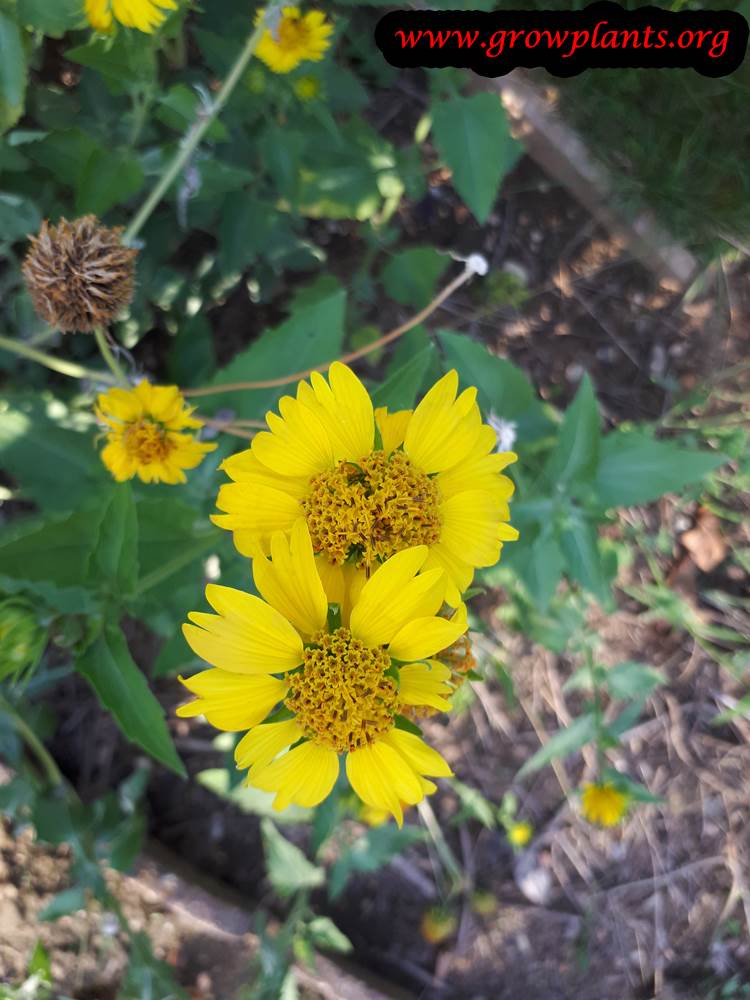
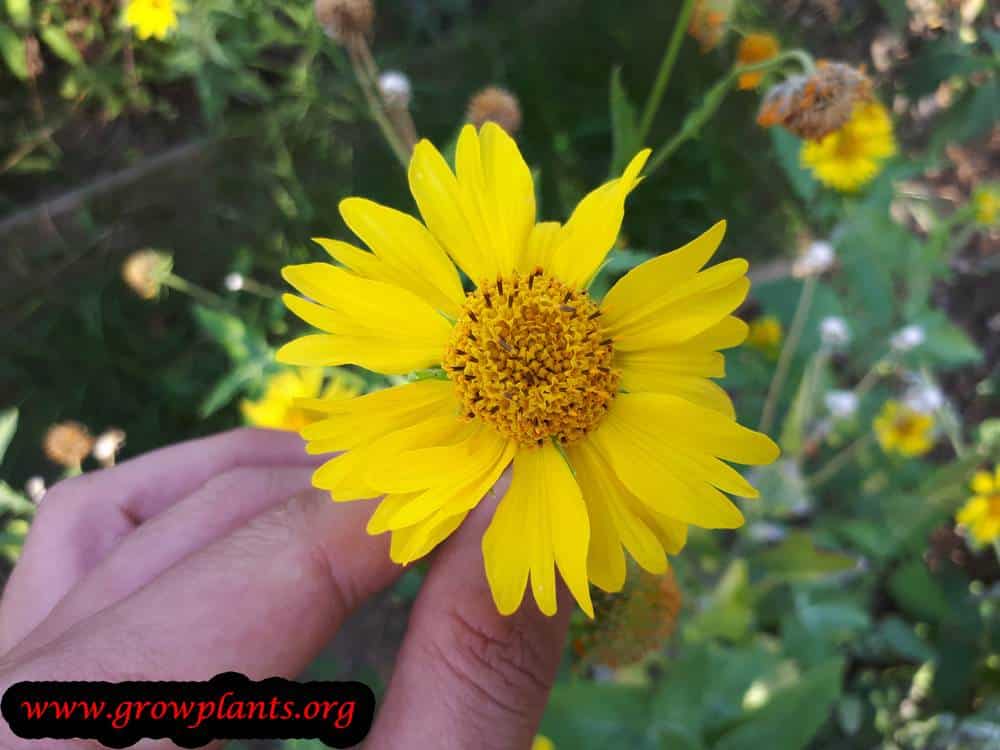
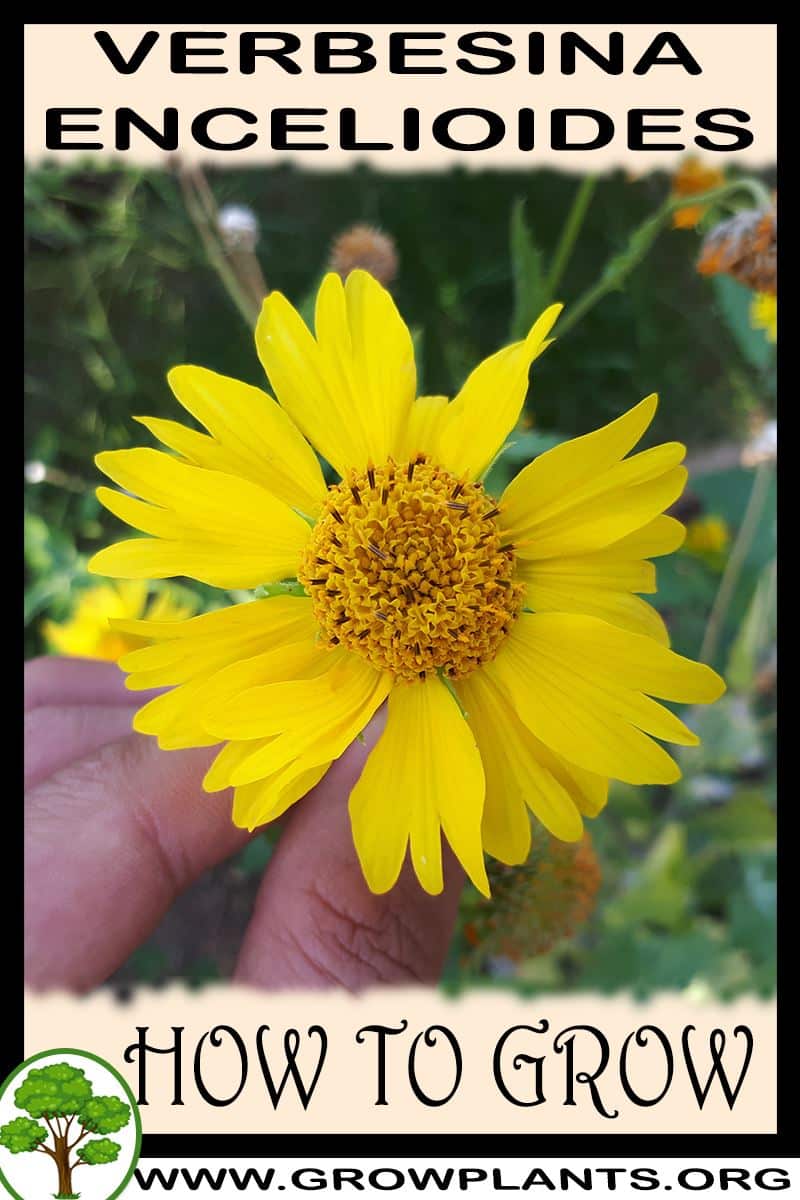
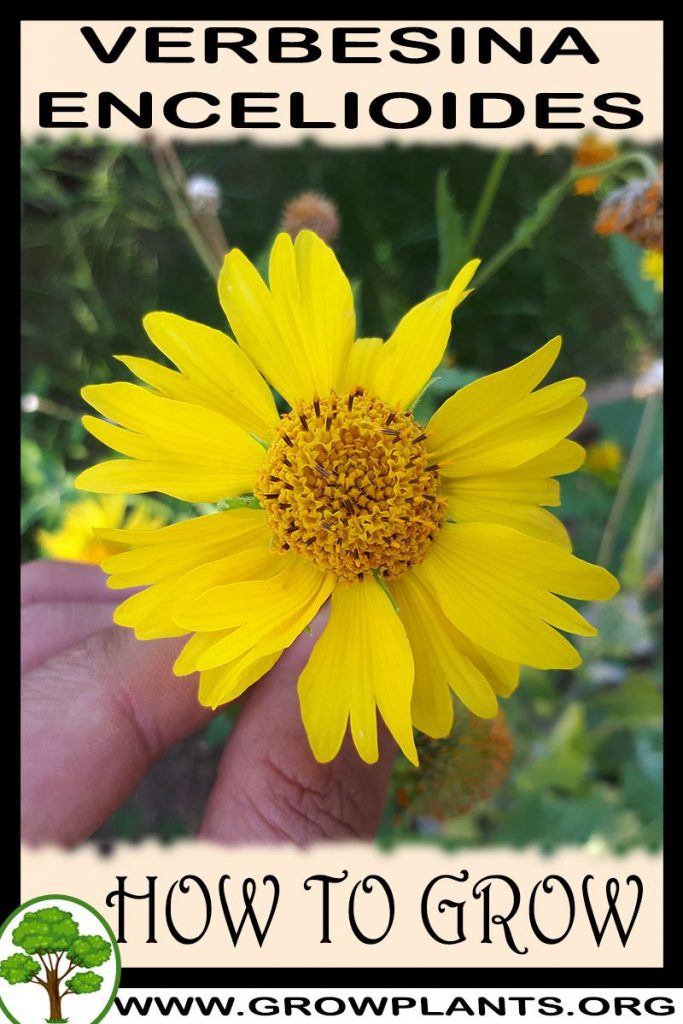
- Flower Characteristics: Bright yellow daisy-like flower heads.
Primary Uses & Landscape Value
- Functional & Ornamental Roles: Ornamental and cut flower; note it self-seeds aggressively and its foliage is toxic to grazing animals.
Care Guide: Planting, Soil & Watering
Overview: Verbesina encelioides (golden crownbeard) is a tough, fast-growing annual (zone 5+) for full sun that is undemanding about soil. It is drought tolerant and needs only light watering, thriving even on poor, dry ground.
Quick Care Requirements
| Requirement | Ideal Condition |
|---|---|
| Planting Season | In spring to summer during warm weather |
| Growth Rate | Moderate to Fast |
| Soil Type | Adaptable, well-draining |
| Water Need | Low to Moderate |
Planting & Establishment
- Best Planting Season: Plant or sow in spring to summer once the weather is warm; note it self-seeds freely.
- How to Plant:
- Hole Preparation: Set into loosened, free-draining soil in a hole slightly wider than the root ball.
- Soil Amendments: Little is needed – it grows in poor soil; add grit to improve drainage in heavy ground.
- Planting Depth: Keep the root ball level with the surface and the crown at soil level.
- Growth Speed & Expectations: A moderate-to-fast annual reaching 50-150 cm (20-60 in) in a season.
Soil, Watering & Drainage Care
- Soil Mix & Drainage Needs: Undemanding but needs free drainage; it tolerates dry, lean soil better than wet ground.
- Watering Schedule & Technique:
- Young / Newly Planted: Water lightly to get seedlings established.
- Established: Drought tolerant – water sparingly and let the soil dry between waterings.
- Seasonal Adjustments: Occasional water in peak summer heat; little needed otherwise.
Climate, Light & Hardiness
Verbesina encelioides (golden crownbeard) is a sun-loving annual adapted to Mediterranean, desert, subtropical, temperate, and tropical climates. It grows quickly in full sun and, as an annual, its very broad USDA range reflects that it completes its life cycle within a single warm season rather than overwintering.
Quick Climate Specifications
| Climate Zones | Mediterranean, Desert, Subtropical, Temperate, Tropical |
|---|---|
| USDA Hardiness Zones | 5 and warmer (grown as an annual) |
| Frost Tolerance | Low |
| Light Conditions | Full Sun |
Sunlight & Light Exposure
Optimal Light Setup
Needs full sun for vigorous, fast growth and abundant daisy-like blooms.
Temperature Extremes & Hardiness
USDA Hardiness & Regional Limits
Grown as an annual across USDA zone 5 and warmer, sown or planted out in spring to summer once frost danger has passed.
Frost Sensitivity
Frost-tender; freezing weather ends the growing season.
Growing in Pots, Balconies & Indoors
Golden crownbeard (Verbesina encelioides) is a tall, sun-hungry annual of 50-150 cm (20-60 in) that the grower grows in containers but not indoors. It is best on an open, sunny patio; note it can be invasive, so containers help keep its self-seeding in check.
Quick Details
- Container Size: A roomy 15-30 L (4-8 gal) pot for a full-size plant
- Indoor Suitability: Not a houseplant; it demands full sun
- Best Spot: Full sun – an open, bright patio or balcony
- Soil & Drainage: Free-draining mix; it is not fussy and tolerates lean soil
- Watering in Pots: Modest – let the top of the mix dry between waterings; it takes some drought
Indoors & On the Windowsill
- Houseplant limits: Not suitable indoors – it needs full sun and grows too large and lanky for a windowsill.
- Containing self-seeding: Growing it in a pot and removing spent flowers helps stop this vigorous seeder from spreading.
On a Balcony or Patio
- Light & wind: Give it the sunniest spot; walls, railings and paving throw back heat so pots dry quickly – check moisture often and shelter or stake it on an exposed, windy balcony.
- Practicalities: Account for the weight of a full pot and make sure drainage water can run away freely without staining the balcony.
Choosing the Pot, Soil & Long-Term Care
- Pot & drainage: Use a pot with strong drainage holes and skip a standing-water saucer to avoid root rot; terracotta breathes and dries faster, while glazed or plastic holds moisture longer.
- Potting mix: Well-aerated and organic-rich – a quality potting mix, or peat/coir with perlite or vermiculite.
- Feeding: Potted plants use up their soil faster as nutrients leach out with each watering – feed lightly through the growing season.
- Repotting: An annual – simply start fresh each season with new mix.
Fertilizing & Feeding
A light feeder: this fast-growing, self-sufficient wildflower needs little more than modest balanced feeding to grow and bloom well, and can be overfed more easily than underfed.
Quick Fertilizing Specs
| Feeding Level | Light feeder |
|---|---|
| Main Nutrient Priority | Balanced feeding, used sparingly on a plant that grows readily on its own |
| Best Feeding Period | Spring into the summer bloom season |
| Organic Options | Compost worked into the bed at planting |
| Reduce/Stop Feeding | Ease off once the plant is established and flowering; extra feeding adds little benefit |
| Micronutrients | Rarely an issue in this vigorous, adaptable plant; correct only a diagnosed deficiency |
| Soil pH | Tolerates a wide range of soil conditions |
Feeding by Growth Stage
Early growth after planting
Give young plants a light boost as they establish and begin their naturally fast growth.
| Nutrient direction | A modest balanced feeding is enough for this vigorous, self-reliant grower. |
|---|---|
| Timing | At planting and through early spring growth. |
| Frequency | A single light feeding at or shortly after planting is usually sufficient. |
| Fertilizer types | A balanced complete fertilizer at a light rate, Compost worked into the bed |
| Precautions | This plant spreads readily on its own; avoid heavy feeding, which can make an already vigorous grower harder to contain. |
Summer daisy-flower bloom
Support the display of yellow daisy-like flowers, whether left in the garden or cut.
| Nutrient direction | Light, balanced feeding maintains flower production without encouraging rangy, floppy growth. |
|---|---|
| Timing | Through the summer flowering period. |
| Frequency | Rarely needs more than an occasional light feeding through the season. |
| Fertilizer types | A balanced complete fertilizer at a light rate |
| Precautions | Deadhead spent flowers to extend bloom rather than relying on extra feeding. |
End-of-season decline
Let this annual finish its natural cycle and set seed rather than pushing new growth.
| Nutrient direction | None – withhold fertilizer as the plant finishes its annual cycle. |
|---|---|
| Timing | Late in the season as the plant matures, sets seed, and declines. |
| Frequency | No feeding at this stage. |
| Fertilizer types | No feeding at this stage; a mature annual finishing its cycle will not respond with useful new growth. |
| Precautions | Do not fertilize a plant that is finishing its annual cycle; withhold feeding and remove or let it self-seed as desired. |
Nutrient Deficiency Signs & Corrections
Older leaves turn pale green or yellow and overall growth looks stunted for such a normally vigorous plant.
| Possible causes | very low available soil nitrogen, extremely poor, sandy or gravelly soil, roots damaged or restricted |
|---|---|
| Appears first on | older, lower leaves |
| What to check | soil quality and texture, any recent root disturbance, whether nearby volunteer plants of the same species look healthier |
| Possible correction | Apply a light, balanced complete fertilizer; this vigorous plant usually needs very little to recover. |
New leaves turn yellow with the veins staying green, mainly on the newest growth.
| Possible causes | strongly alkaline soil limiting iron availability, waterlogged or compacted roots, naturally low soil iron |
|---|---|
| Appears first on | newest growth |
| What to check | soil pH, drainage after rain or watering, whether the pattern matches nearby plants in the same bed |
| Possible correction | Correct soil pH toward the acidic side where practical and apply a chelated iron product per its label. |
Leaf edges brown or scorch and growth stalls despite this normally easygoing plant’s reputation for thriving with little care.
| Possible causes | fertilizer salts building up from feeding more than this light feeder needs, irregular watering concentrating salts, poor drainage holding salts near the roots |
|---|---|
| Appears first on | leaf margins and tips |
| What to check | how much and how often fertilizer has been applied, watering consistency, soil drainage |
| Possible correction | Stop supplemental feeding, water thoroughly to flush salts, and rely on this plant’s naturally low nutrient needs going forward. |
Pruning, Training & Seasonal Maintenance
Golden crownbeard (Verbesina encelioides) is a fast, soft-stemmed annual grown as an ornamental and cut flower — it tolerates cutting well, but the real priority here is different from most ornamentals: because the species is noted as invasive, the single most important "pruning" task is deadheading before seed matures, to stop it self-sowing beyond where it’s wanted. Cutting stems for use as a cut flower doubles as this deadheading.
Quick Pruning & Maintenance Specs
| Pruning Tolerance | Moderate–High (soft annual tissue) |
| Primary Pruning Window | Throughout the growing season, spring–autumn |
| Typical Frequency | Deadhead every 1–2 weeks while flowering |
| Main Objective | Prevent unwanted self-seeding; secondary goal is bushier growth for cutting |
| Young Plant Priority | Pinch tips for branching if grown for cut-flower stems |
| Mature Plant Priority | Deadhead promptly before seed heads mature |
| Best Tool Type | Precision snips |
| Avoid Heavy Pruning During | No major restriction — this fast annual recovers quickly |
Pruning by Plant Age & Size
Newly Established
No pruning needed while seedlings establish.
Young / Formative
If growing it for cut flowers, pinch the growing tip early to encourage side branching and more stems; otherwise no training is needed for this upright annual wildflower.
Mature / Established
Deadhead spent daisy-like flower heads continuously — this is both the plant’s own stated pruning method and the key control measure given its invasive tendency, since unremoved heads will set and disperse seed.
Seasonal Pruning Schedule
Ongoing Sanitary
Objective: extend bloom and, critically, prevent seed dispersal. Remove: spent flower heads before petals drop and seed sets; damaged or leggy stems. Do not remove: unopened buds. Expected response: continued flushes of bloom through spring, summer and autumn. Flowering/seeding impact: prompt deadheading both extends flowering and is the main way to stop this species escaping cultivation.
Special Growth to Remove
- Spent flower heads — remove before seed matures; this is the priority task given the plant’s documented invasiveness.
- Leggy or flopping stems, which are common on this fast, soft-stemmed grower.
Container & Small-Space Pruning
Can be grown in a container; the same deadhead-focused routine applies, with regular pinching to keep a compact, less floppy habit in the smaller root run of a pot.
Tools
- Precision snips — for deadheading and harvesting cut-flower stems; no larger tool is needed for this soft annual.
Tool Hygiene & Disease Risk
Routine: no notable wood-borne disease risk on this soft annual; clean tools are sufficient.
Cut Placement & Technique
Deadhead or harvest by cutting the flower stem back to just above a leaf node or side shoot to encourage further branching and bloom.
Heavy Pruning & Rejuvenation
If plants become leggy or sprawling mid-season, cutting back by up to a third rejuvenates a fuller, more compact habit; this fast-growing annual recovers within a couple of weeks.
Post-Pruning Care
Water as normal; no extra feeding is required for routine deadheading.
Common Pruning Mistakes
- Leaving spent flower heads on the plant, allowing seed to mature and disperse — the single biggest issue with this species given its invasive tendency.
- Composting deadheaded material with mature seed heads rather than disposing of it, which can spread the plant further.
When NOT to Prune
There is no strong biological restriction on timing for this fast annual; the caution runs the other way — do not delay deadheading, since waiting risks seed set and unwanted spread.
Recommended Tools (by task)
- precision_snips — the only tool needed, for deadheading spent flower heads and cutting stems for use.
Propagation Guide
Verbesina encelioides is propagated primarily from seed; propagation copy should emphasize self-seeding and spread without forcing a hard life-cycle label.
Quick Propagation Specs
| Primary Method | Seed |
| Life-Cycle Treatment | Avoid hard life-cycle claim |
Propagation
Use mature viable seed for seed propagation. Where division is listed, divide only established rooted perennial growth with viable shoots.
Spread Control
Remove unwanted seedlings before they mature if self-seeding beyond the intended area is not desired.
Aftercare
Keep newly propagated plants evenly moist but not waterlogged until established.
Bloom & Flower Guide
Quick Details
- Bloom Season: Spring, summer and autumn
- Time to First Bloom: In its first season, a couple of months from sowing
- Flower Appearance: Bright yellow, daisy-like flowerheads with toothed ray petals
- Edibility: Not edible – the plant is toxic to grazing livestock and should not be eaten
Detailed Blooming Overview
Golden crownbeard is a fast, free-flowering annual that carries cheerful yellow daisies over a long season from spring into autumn. The flowerheads sit above grey-green, toothed leaves on upright stems and make a good, if short-lived, cut flower. It is vigorous and can self-sow enthusiastically, so many gardeners keep it in check.
Flower Characteristics
- Yellow, daisy-like composite heads with notched ray florets.
- Carried singly on upright stems above greyish foliage.
- Free-flowering and readily self-seeding.
Bloom Care & Thinning
- Safety first: The foliage and flowers are toxic to livestock, so keep it away from grazing animals and out of food.
- Managing the bloom: Deadhead to extend flowering and to limit self-seeding.
Pests, Diseases & Troubleshooting
Overview: Golden crownbeard is a tough, fast-growing annual (indeed a weed in many regions) with no serious specialist pests. Common sunflower-family issues — aphids, spider mites, leaf beetles and caterpillars, plus powdery mildew, rust and leaf spot in humid weather — are usually cosmetic on so vigorous a plant.
Quick Troubleshooting Overview
| Issue / Pest | Main Symptom | Primary Solution |
|---|---|---|
| Aphids | Curled tips, honeydew | Beneficials; water jet; soap |
| Spider mites | Stippling in hot dry spells | Humidity; oil/soap |
| Leaf/flea beetles | Shot-holes, chewed leaves | Tolerate; row cover; neem if heavy |
| Powdery mildew | White coating on leaves | Airflow; spacing; bicarbonate/sulfur |
| Rust | Orange pustules under leaves | Remove leaves; sulfur if valued |
Common Pests & Management
- Aphids (Aphidoidea):
- Symptoms: Clusters of small soft-bodied green, black or grey insects on new shoots, buds and leaf undersides; curled or distorted young growth, sticky honeydew and a black sooty mould film; ants farming the colonies. Look-alikes include whitefly nymphs (flat, static) and psyllids.
- Prevention & Control: Encourage and protect ladybirds, lacewings, hoverflies and parasitic wasps; knock colonies off with a strong jet of water and pinch out badly infested tips. Avoid excess nitrogen, which drives soft aphid-prone growth. If numbers stay high, treat with insecticidal soap or a horticultural/neem oil, spraying leaf undersides in the cool of the evening to protect pollinators.
- Spider mites (two-spotted mite) (Tetranychus urticae):
- Symptoms: Fine pale stippling or bronzing on upper leaf surfaces, later a dull sandblasted look; delicate webbing on undersides and shoot tips in hot dry spells. Confirm by tapping foliage over white paper and watching for moving specks.
- Prevention & Control: Mites thrive in hot, dusty, drought-stressed conditions, so keep plants well watered and raise humidity where practical; hose down foliage and remove badly affected leaves. Introduce predatory mites (Phytoseiulus) under cover. If needed, apply insecticidal soap or horticultural oil, ensuring thorough coverage of leaf undersides and repeating to catch newly hatched mites.
- Leaf beetles and flea beetles (Chrysomelidae):
- Symptoms: Small round shot-holes and chewed, lacy leaves from flea beetles, and larger chewing damage from leaf beetles; the plant is grazed but rarely killed.
- Prevention & Control: Vigorous plants outgrow light damage; keep them healthy, remove weeds that harbour beetles, and use floating row cover on young plants where needed. Diatomaceous earth or neem deters heavy feeding, but this robust sunflower relative usually tolerates beetles without intervention.
- Caterpillars (loopers, cutworms) (Noctuidae larvae):
- Symptoms: Chewed, holed or ragged leaves and eaten flower heads, with frass; various caterpillars feed on this daisy-family plant.
- Prevention & Control: Hand-pick where practical and encourage birds and parasitic wasps. For heavier attacks, an organic Bacillus thuringiensis spray on young larvae is effective; the plant’s vigour means light feeding can usually be tolerated.
Diseases & Fungal Issues
- Powdery mildew (Erysiphales):
- Symptoms: White to greyish powdery patches on upper leaf surfaces, stems and sometimes buds; leaves may yellow, distort and drop in severe cases. Worst in warm days, cool nights and crowded, shaded plantings.
- Treatment & Management: Improve airflow with correct spacing and thinning, site in good light, and avoid wetting foliage late in the day; water at the roots. Remove and destroy affected leaves and clean up debris. Resistant varieties help. Organic sprays of potassium bicarbonate, sulfur or a diluted horticultural oil check spread if applied early and repeated.
- Rust (Pucciniales):
- Symptoms: Powdery orange, brown or rust-coloured pustules on leaf undersides with corresponding yellow spots above; severe attacks cause yellowing and early leaf fall in humid conditions.
- Treatment & Management: Remove and destroy infected leaves, avoid wetting foliage, and improve spacing and airflow; clear fallen debris where spores overwinter. Choose resistant varieties where available. Sulfur or a suitable fungicide, applied early, slows progress on valued plants.
- Fungal leaf spot (Cercospora / Septoria etc.):
- Symptoms: Round to angular brown or purple-bordered spots on the leaves, sometimes merging into blotches; heavy spotting causes yellowing and early leaf drop in warm, wet conditions.
- Treatment & Management: Remove and destroy spotted leaves and fallen debris, water at the base to keep foliage dry, and space plants for airflow. Rotate annual plantings. A copper fungicide gives protection where the disease is persistent, but sanitation is the first line of defence.
Growing Difficulties & Abiotic Problems
- Weediness and self-seeding:
- Cause & Symptoms: Prolific seeding and rapid spread; it is an aggressive weed in many warm regions and can crowd out other plants (and is toxic to livestock).
- Correction Strategy: Deadhead before seed sets and remove volunteer seedlings to keep it in bounds; be aware of its weedy, invasive tendencies before planting.
- Drought and heat wilting:
- Cause & Symptoms: Temporary wilting in extreme heat and drought, though it is well adapted to hot, dry sites.
- Correction Strategy: Water occasionally in prolonged drought; the plant is otherwise very heat- and drought-tolerant and needs little help.
What Helps — Products & Tools
This robust annual rarely warrants treatment: keep insecticidal soap or neem for occasional aphids, mites or heavy beetle feeding, Bacillus thuringiensis for caterpillars, and a bicarbonate or sulfur spray for powdery mildew or rust in a humid spell. Managing its self-seeding matters more than pest control.