


Plant Profile & Key Characteristics
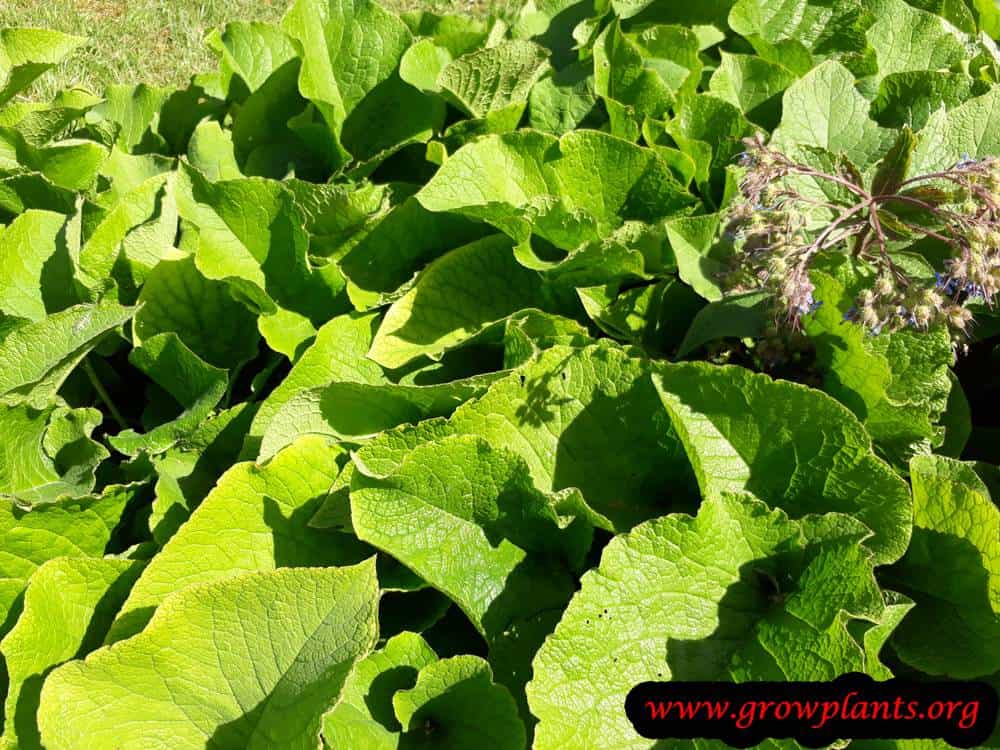
Overview: Trachystemon orientalis (Early-flowering borage) is a 30-50 cm (12-20 in) herbaceous perennial grown as an ornamental groundcover for shady positions. It is deciduous, dying back over winter and re-emerging in spring with large, heart-shaped leaves and early borage-like flowers.
Quick Specifications
| Specification | Attribute |
|---|---|
| Plant Type / Life Cycle | Perennial (herbaceous) |
| Foliage Type | Deciduous |
| Mature Size | 30-50 cm (12-20 in) high, spreading wider |
| Growth Rate | Moderate to fast |
| Root System | Rhizomatous – spreads by creeping rhizomes to form dense colonies |
| Toxicity | Non-toxic / edible – young leaves and stalks are cooked as a vegetable in its native region |
| Hardiness | USDA zones 6-10a |
Growth Form & Structure
- Height & Spread: In the ground it reaches 30-50 cm (12-20 in) high and spreads steadily by rhizomes into a broad, weed-smothering carpet. It can also be grown in a large container or as a houseplant, where its spread is naturally restricted by the pot.
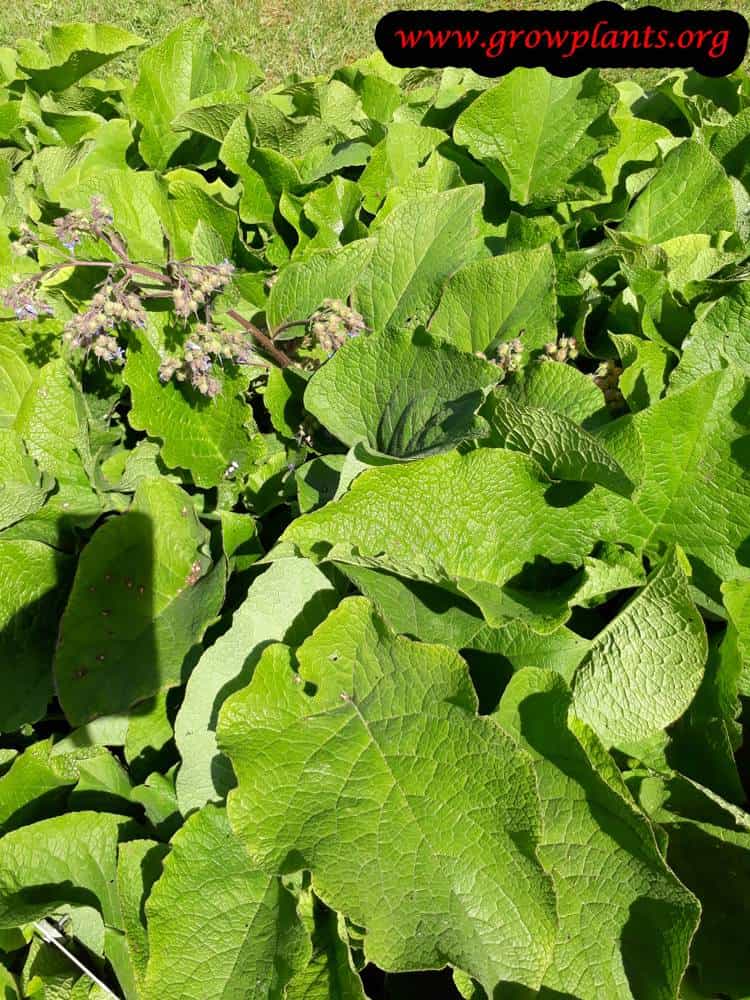
- Growth Habit & Form: Low, clump-forming to spreading herbaceous groundcover with bold, rough-textured, heart-shaped basal leaves on long stalks.
- Lifespan & Maturity: A long-lived perennial that establishes quickly and reaches full ground-covering size within a season or two.
Anatomy & Physical Features
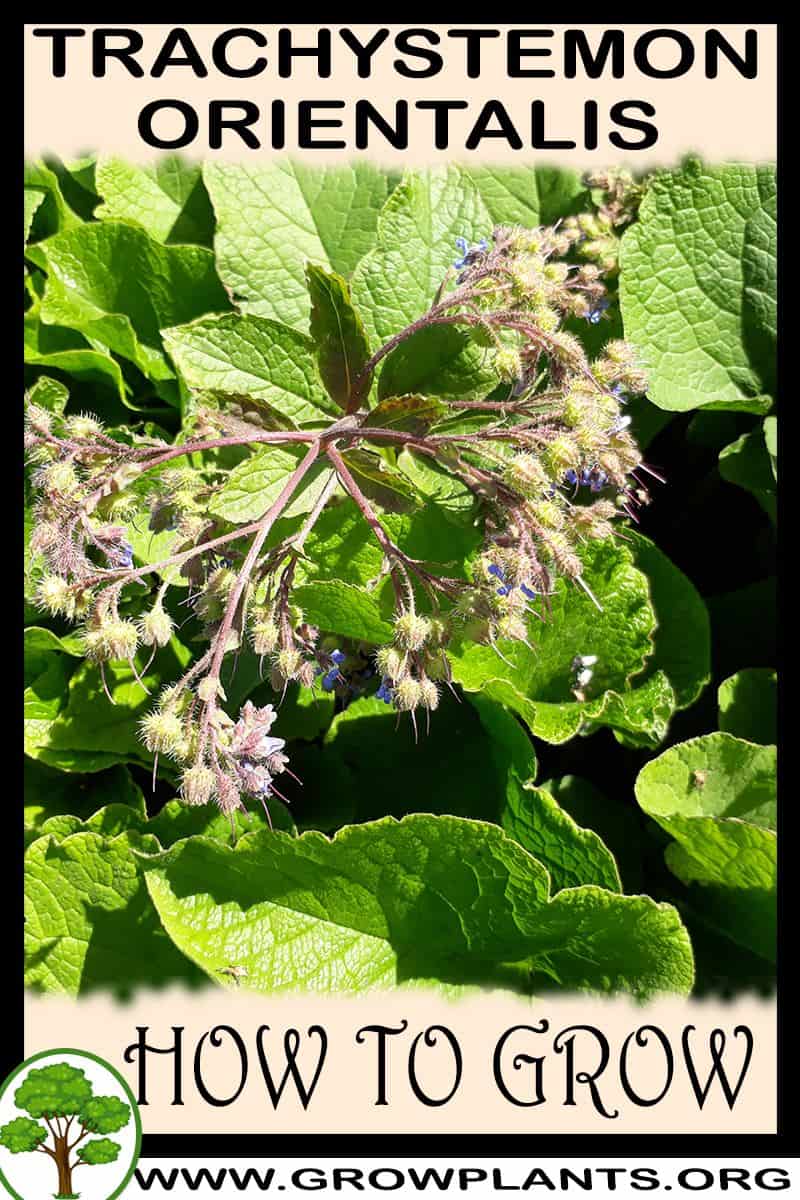
- Leaves & Foliage: Leaves are green, heart-shaped. The leaves are large, rough and hairy, giving a bold, coarse-textured groundcover effect.
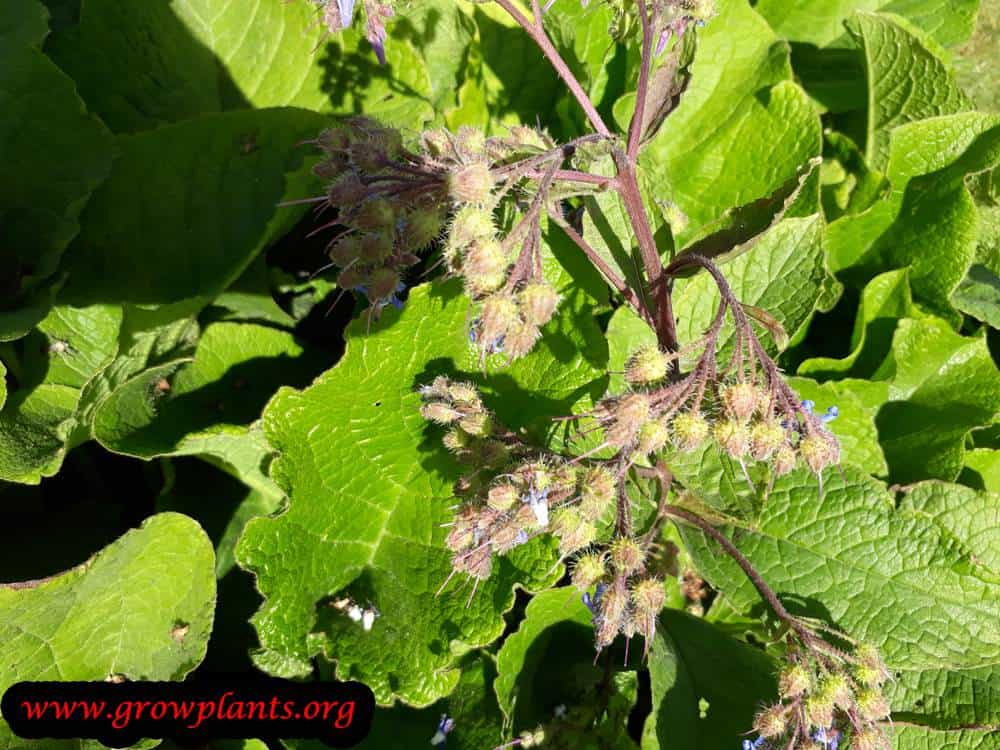
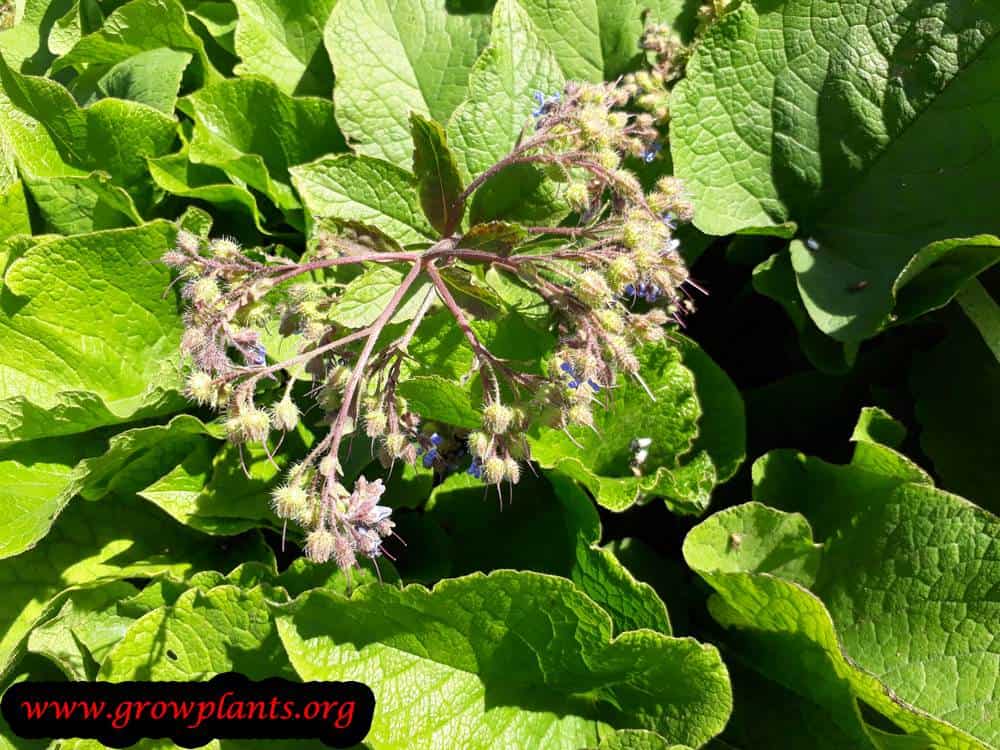
- Flower Characteristics: Early spring, blue-purple star-shaped flowers with five reflexed petals and prominent stamens, much like borage flowers and highly attractive to pollinators.
Primary Uses & Landscape Value
- Edible Uses: The young leaves and stalks are edible and are traditionally cooked as a vegetable in its native Black Sea / Anatolian region.
- Functional & Ornamental Roles: An excellent groundcover for full to part shade and difficult dry-shade areas, a valuable early pollinator and bee plant, and an ornamental woodland-garden filler. Vigorous and listed as invasive in the source, so give it room or keep it contained.
Care Guide: Planting, Soil & Watering
Overview: Early-flowering borage is a tough deciduous woodland groundcover that grows best in cool, rich, humus-laden soil kept reliably moist. It thrives in partial to full shade and needs moderate to generous watering, resenting any prolonged drying out.
Quick Care Requirements
| Requirement | Ideal Condition |
|---|---|
| Planting Season | Spring or autumn, during the cool, moist part of the growing season |
| Growth Rate | Moderate to Fast |
| Soil Type | Rich, moist, humus-rich woodland soil |
| Water Need | Moderate to High – keep the soil consistently moist; it dislikes drying out |
Planting & Establishment
- Best Planting Season: Plant in spring, summer, or autumn while the soil is cool and moist; in hot-summer regions avoid planting during the peak of midsummer heat. It is hardy to roughly zone 6.
- How to Plant:
- Hole Preparation: Dig a hole about twice the width of the root ball and no deeper, loosening the surrounding soil so the spreading roots settle in easily.
- Soil Amendments: Mix in plenty of compost, leaf mould or well-rotted organic matter to enrich the soil and help it hold moisture.
- Planting Depth: Set the crown level with the soil surface and avoid burying it.
- Growth Speed & Expectations: Growth is moderate to fast and the plant spreads to form a dense groundcover; it can be vigorous to the point of invasive, so give it room.
Soil, Watering & Drainage Care
- Soil Mix & Drainage Needs: It prefers rich, moisture-retentive soil that still drains – heavy, waterlogged ground can rot the roots. It also grows well in containers of humus-rich potting mix kept evenly moist.
- Watering Schedule & Technique:
- Young / Newly Planted: Water frequently after planting to keep the soil evenly moist while the roots establish.
- Established: Continue watering regularly and deeply; this is a moisture-lover that should not be left to dry out for long, especially in sunnier or warmer spots.
- Seasonal Adjustments: Water generously through the warm, dry months and cut back in winter when growth slows and the plant dies back.
Climate, Light & Hardiness
This deciduous groundcover perennial suits temperate, subtropical, and mediterranean climates and is reliably hardy outdoors from about USDA zone 6 through 10a. It tolerates full sun in cooler climates but needs half to full shade wherever summers run hot.
Quick Climate Specifications
| Climate Zones | Temperate, Subtropical, Mediterranean |
|---|---|
| USDA Hardiness Zones | 6–10a |
| Frost Tolerance | Moderate–High |
| Light Conditions | Full Sun (cooler climates only) to Half/Full Shade |
Sunlight & Light Exposure
Optimal Light Setup
Takes full sun where summers are mild but should be given half to full shade in hot-summer climates.
Shade & Heat Management
In the warmer parts of its range (zone 9–10a), shade protects the foliage from summer heat and sun scorch.
Temperature Extremes & Hardiness
USDA Hardiness & Regional Limits
Hardy outdoors zone 6–10a. Being deciduous, it naturally dies back to the ground each winter and regrows from the rootstock, which helps it shrug off cold that would trouble evergreen foliage.
Cold Damage & Winter Protection
Top growth is expected to die back with autumn/winter cold - this is normal dieback rather than damage, and the plant regrows from below ground in spring.
Frost Sensitivity
Low once dormant, since the plant has typically already shed its above-ground growth by the time hard frost arrives in most of its range.
Wind, Humidity & Microclimate
Rainfall & Seasonal Moisture
Prefers reliably moist, humus-rich conditions rather than a long dry season, matching its natural woodland-edge, groundcover habit.
Growing in Pots, Balconies & Indoors
Trachystemon orientalis (Abraham-Isaac-Jacob) is a tough, shade-loving groundcover perennial, 30-50 cm, with big, coarse leaves and early blue borage-like flowers. The grower confirms it grows both as a houseplant and in containers – a good choice for a shady spot indoors or out.
Quick Details
- Container Size: A medium to large pot (10-25 L) for its spreading rootstock
- Indoor Suitability: A houseplant option – it tolerates low light well and grows in a shaded indoor spot
- Best Spot: Part to full shade; it takes full sun only in cooler climates, not hot summers
- Soil & Drainage: Rich, moisture-retentive but free-draining mix
- Watering in Pots: Average to generous – it likes steady moisture; pots dry faster than the ground
Indoors & On the Windowsill
- A shade houseplant: The grower confirms ‘Yes’ – unusually for indoor plants it thrives in shade and low light, so it suits a darker corner.
- Windowsill / room: Keep it out of hot direct sun, which scorches the big leaves; steady moisture and cool shade keep it lush.
- Containment: It spreads by a creeping rootstock, so a pot is a tidy way to enjoy it without it colonising a bed.
On a Balcony or Patio
- Light & shelter: A shaded, sheltered balcony corner is ideal; it is one of the few container plants happy in deep shade.
- Moisture: Keep the mix reliably moist – the large leaves wilt quickly if the pot dries out; a drip irrigation kit with a timer helps avoid that.
Choosing the Pot, Soil & Long-Term Care
- Pot & drainage: A medium to large pot with good holes; skip a standing water saucer to avoid root rot. Glazed or plastic holds the moisture it likes.
- Potting mix: A rich, organic, moisture-retentive blend – loam-based mix with added compost.
- Feeding: Potted plants exhaust their food faster because watering leaches nutrients, so feed lightly through the growing season – more often than plants in open ground.
- Repotting: Divide congested clumps and refresh the mix every couple of years to keep it vigorous.
Fertilizing & Feeding
A light feeder – this vigorous, spreading groundcover generally thrives on rich, moist soil and needs only modest feeding in spring to support growth and bloom.
Quick Fertilizing Specs
| Feeding Level | Light feeder |
|---|---|
| Main Nutrient Priority | Balanced feeding in spring paired with consistently moist, rich soil |
| Best Feeding Period | Early spring as growth resumes ahead of flowering |
| Organic Options | Compost or well-rotted organic matter worked into rich, moist soil |
| Micronutrients | Usually adequate from rich soil; correct specific issues only when diagnosed |
| Soil pH | Tolerates a wide range provided the soil stays moist and fertile |
| Reduce/Stop Feeding | Stop feeding as foliage dies back into dormancy |
Feeding by Growth Stage
Spring growth and early bloom
Support fresh leaf growth and the plant’s early spring flowering as it emerges from winter dormancy.
| Nutrient direction | A balanced fertilizer worked into moist, rich soil as growth resumes. |
|---|---|
| Timing | In early spring as new growth and flower stems emerge. |
| Frequency | A light feeding as growth resumes is usually enough for this vigorous groundcover. |
| Fertilizer types | A balanced complete fertilizer, Compost or well-rotted organic matter worked into rich, moist soil |
| Precautions | This plant spreads readily as a groundcover and can be invasive; keep feeding light rather than encouraging even more vigorous spread. |
Bloom and pollinator season
Support the star-shaped, pollinator-attracting flower display through spring into summer.
| Nutrient direction | Continue light, balanced feeding rather than a specialty bloom formula. |
|---|---|
| Timing | Through the spring-to-summer bloom period. |
| Frequency | Rarely needs feeding beyond the earlier spring application. |
| Fertilizer types | Generally very little additional feeding beyond the earlier balanced application |
| Precautions | Avoid heavy or high-phosphorus feeding for bloom; consistent moisture matters more to this plant’s flowering than extra fertilizer. |
Summer-to-winter dieback and dormancy
Let the plant die back and rest through its dormant period without pushing late growth.
| Nutrient direction | None – withhold fertilizer as foliage dies back and through dormancy. |
|---|---|
| Timing | From summer or autumn dieback through winter dormancy. |
| Frequency | No feeding at this stage. |
| Fertilizer types | No feeding at this stage – allow the plant to go fully dormant |
| Precautions | Do not fertilize once foliage begins dying back; the plant is not taking up nutrients during dormancy. |
Nutrient Deficiency Signs & Corrections
Leaves wilt or scorch at the edges, especially on plants in full sun during hot weather.
| Possible causes | insufficient soil moisture, too much direct sun or heat for this shade-tolerant plant, fast-draining soil |
|---|---|
| Appears first on | leaf margins and the most exposed plants |
| What to check | soil moisture, sun exposure, especially in hot summer conditions, soil’s moisture retention |
| Possible correction | Improve soil moisture retention with organic matter, provide afternoon shade in hot climates, and water consistently; feeding will not correct drought stress. |
Leaves yellow and wilt, and the crown may soften, despite generally moist soil.
| Possible causes | waterlogged or poorly drained soil, overwatering, root disease favored by constantly saturated conditions |
|---|---|
| Appears first on | lower leaves and the crown |
| What to check | soil drainage, recent watering, condition of the crown and roots |
| Possible correction | Improve drainage while keeping soil evenly moist rather than saturated. |
Leaves appear smaller and paler than expected and flowering is sparse.
| Possible causes | nutrient-poor or depleted soil, competition from surrounding plants in a dense groundcover planting, insufficient organic matter in the soil |
|---|---|
| Appears first on | overall leaf size and color |
| What to check | soil richness, planting density, recent feeding history |
| Possible correction | Work compost or well-rotted organic matter into the soil and apply a light balanced feed in spring. |
Pruning, Training & Seasonal Maintenance
Trachystemon orientalis is a deciduous, herbaceous groundcover with no woody structure, so its only real pruning is a seasonal foliage cutback once its leaves naturally die down, plus optional deadheading and edge control given its tendency to spread. It flowers early (spring/summer) and attracts pollinators, so the safest approach is to let the display finish and only cut back once the deciduous foliage has genuinely died back on its own, rather than tidying it away pre-emptively.
Quick Pruning & Maintenance Specs
| Pruning Tolerance | Low – limited to seasonal die-back cleanup and spread control |
| Primary Maintenance Window | Autumn/Winter, once the deciduous foliage has died back |
| Main Objective | Clear collapsed dead foliage; keep the spreading groundcover within its intended area |
| Best Tool Type | Precision snips |
| Avoid Heavy Handling During | Spring flowering, when the plant is at its main ornamental and pollinator-support value |
Pruning by Plant Age & Size
Newly Established
No cutting needed while the groundcover is filling in.
Mature / Established
Once established and spreading, the main task shifts from letting it fill in to keeping its edges within bounds, since it is noted as an invasive spreader in favorable conditions.
Seasonal Pruning Schedule
Dormant/Winter
Objective: clear the season’s foliage once it has died back naturally, as expected of a deciduous herbaceous plant. Remove: collapsed, dead leaves and stems. Do not remove: foliage that is still green and functional, since cutting it back early shortens the time the plant has to build reserves for next spring’s early bloom.
Special Growth to Remove
- Spent flower stems, if deadheading is wanted – weigh this against the plant’s value to early-season pollinators, which the flowers are specifically noted to attract.
- Runners/spreading growth at the bed’s edge, to contain its groundcover spread where it is not wanted to naturalize further.
Container & Small-Space Pruning
Growing it in a container is itself an effective way to contain its spreading habit; where grown this way, little to no edge-trimming is needed compared with open ground.
Tools
- Precision snips for foliage cutback, deadheading, and trimming spreading edges – all soft herbaceous tissue.
Tool Hygiene & Disease Risk
Routine: clean, sharp snips are sufficient; no transmissible pruning-borne disease is documented for this species.
Cut Placement & Technique
Cut dead foliage back near the base once it has collapsed; trim spreading edges at the point growth extends beyond the intended planting area.
Post-Pruning Care
No special aftercare beyond normal watering; no feeding is needed after a seasonal cutback.
Common Pruning Mistakes
- Cutting back foliage while it is still green and functional, rather than waiting for natural die-back.
- Deadheading before pollinators have had the benefit of the early bloom.
- Letting spreading edges go unchecked given this plant’s noted invasive tendency.
When NOT to Prune
Avoid cutting back during spring flowering, and avoid removing foliage while it is still green, since that is when the plant is building reserves for next season.
Recommended Tools (by task)
- precision_snips – covers seasonal foliage cutback, optional deadheading, and edge control for this spreading groundcover.
Propagation Guide
Trachystemon orientalis is most easily propagated by dividing its spreading rhizomatous clumps, which is faster and more reliable than starting from seed and matches its habit as a vigorous groundcover; it can also self-sow from seed, but division is the more practical method for most gardeners. Vegetative propagation isn’t strictly required, but it is the easy route, while seed germination is less predictable.
Quick Propagation Specs
| Best Propagation Method | Rhizome/clump division |
| Alternative Methods | Seed (self-sows readily) |
| Propagation Difficulty | Easy |
| Seed True-to-Type | Usually true-to-type |
| Vegetative True-to-Type | Yes |
| Best Propagation Season | Spring through autumn |
Growing from Seed
Seed can be sown in spring through autumn in moist, rich soil, matching the plant’s general growing preference; as with many woodland-groundcover Boraginaceae, germination can be slow or uneven, so allow extra time and don’t discard trays too early.
Division, Offsets, Pups & Suckers
Lift and divide an established clump during its spring-to-autumn growing season, replanting sections that carry both roots and at least one growing point into moist, rich soil. Because this plant is noted as spreading and can become invasive, keep divisions to where their spread is welcome or manageable.
Bloom & Edible Flower Guide
Quick Details
- Bloom Season: Late winter to spring (one of the earliest to flower)
- Flower Appearance: Blue-purple star-shaped flowers with swept-back petals and a pointed cone of stamens
- Edibility: Flowers are edible (borage-like), and the young leaf-stalks are a traditional vegetable — use unsprayed plants
Detailed Blooming Overview
One of the earliest flowers of the year, Trachystemon opens sprays of borage-blue stars before its big heart-shaped leaves take over as weed-smothering groundcover.
Flower Characteristics
- Blue-purple, five-petalled star flowers with reflexed petals and a prominent dark cone of stamens.
- Much like borage flowers, and much loved by early bees.
Bloom Care & Thinning
- Conditions: happy in shade and moist soil, with little care needed.
- Edible use: young flowering shoots and flowers can be cooked or used raw as a garnish (unsprayed).
Fruit & Uses
Young spring leaves and flowering stalks of Trachystemon orientalis have a traditional foraged food use as a cooked green, gathered before the coarse, bristly leaf texture develops. The leaves and stems are cooked rather than eaten raw and are typically used as a filling for savoury pastries or added to soups.
Quick Edible Specs
| Edible Parts | Young leaves; young flowering shoots/stalks |
|---|---|
| Main Use(s) | Culinary – cooked green, savoury pastry filling, soup |
| Eaten Raw or Cooked | Cooked (sauteed or steamed) – the hairy leaf texture makes raw eating unappealing |
| Preparation Required | Cook; harvest only young growth, as older leaves become coarse and bristly |
| Harvest Season | Early spring, around and before the plant’s flowering flush (see the site’s own Bloom season data) |
| Time to First Harvest | Harvestable from the early spring growth flush once the plant is established |
| Storage | Best used fresh, shortly after picking |
| Safety/Toxicity Caveat | No specific toxicity is documented for this species; as with other members of the borage family, treat it as a plant to enjoy in ordinary culinary quantities rather than in excess, and confirm identification before foraging |
Leaves & Greens
Young leaves are picked in early spring while still tender; as the season progresses the leaves toughen and become noticeably more bristly/hairy, so harvest is concentrated on the earliest flush of growth. Cooked leaves are used as a savoury green, including as a filling for pastries and in soups.
Shoots & Stems
The young flowering stalks and leaf petioles gathered alongside the spring leaves are prepared and cooked the same way as the leaves.
Preparation, Uses & Safety
Cook before eating – sauteing or steaming is typical. Traditional use is as a cooked filling for savoury pastries and in soups, using only the tender young spring growth. No specific toxicity is documented for this species, but as this section is a supplement not confirmed by the site’s own data, verify identification and edibility locally before relying on it.
Pests, Diseases & Troubleshooting
Eastern borage (Trachystemon orientalis) is a robust, coarse-leaved woodland ground cover in the borage family (Boraginaceae) and is one of the most trouble-free plants you can grow, being deer- and rabbit-resistant and largely ignored by pests. The few issues it does face are minor and cultural: slug damage on emerging spring foliage, the odd aphid on flower stems, and powdery mildew if the soil dries out in shade. Manage it with sound culture and organic controls; sprays are almost never needed.
Quick Troubleshooting Overview
| Issue / Pest | Main Symptom | Primary Solution |
|---|---|---|
| Slugs & snails | Holes in young spring leaves; slime trails | Clear debris, morning watering, iron-phosphate bait |
| Aphids | Clusters on flower stems and soft new growth | Water jet or insecticidal soap; encourage predators |
| Powdery mildew | White powdery film on leaves in dry shade, late season | Keep soil moist, improve airflow, remove affected leaves |
| Leaf scorch | Browned, crisped leaf edges in sun or dry soil | Site in shade with reliably moist soil; mulch |
Common Pests & Management
- Slugs & Snails (Deroceras reticulatum and others):
- Symptoms: The most likely pest. Ragged holes chewed in the large, emerging spring leaves in the damp shade this plant enjoys, with silvery slime trails over foliage and soil. Established, bristly mature leaves are largely left alone.
- Prevention & Control: Clear leaf litter and hiding places around the crowns, water in the morning, and protect fresh spring growth with beer traps, grit or copper barriers. Iron-phosphate pellets are an effective bait that is safer around wildlife and pets.
- Aphids (Aphis and Myzus persicae):
- Symptoms: Occasional colonies of soft green or black insects on the flower stems and tender new shoots in spring, sometimes leaving sticky honeydew. Rarely more than cosmetic on such a vigorous plant.
- Prevention & Control: Knock them off with a jet of water and let ladybirds, lacewings and hoverflies do the rest; a borage-family relative, this plant is a strong pollinator draw that feeds those predators. Use insecticidal soap only for heavy outbreaks, in the evening to spare bees.
- Vine Weevil (Otiorhynchus sulcatus):
- Symptoms: Chiefly a risk in containers. Adults notch the leaf margins at night, while the more damaging cream-coloured grubs eat the roots and crown, causing sudden wilting or collapse of potted plants.
- Prevention & Control: Check pots for grubs, remove adults by torchlight, and drench container plants with parasitic nematodes (Steinernema / Heterorhabditis) in warm soil. Garden-grown clumps are seldom troubled.
Diseases & Fungal Issues
Genuine disease is rare on this tough plant; the main risk is powdery mildew when it is grown too dry.
- Powdery Mildew (Erysiphe / Golovinomyces):
- Symptoms: A white to greyish powdery coating on the upper leaf surfaces, typically late in the season and worst where plants are dry at the root, crowded, or in still, shaded air. Like other Boraginaceae it is prone to this once the soil dries out.
- Treatment & Management: Keep the soil reliably moist with mulch, thin overcrowded clumps for airflow, and remove badly affected leaves. Cutting the whole clump back hard forces clean new growth; a sulphur or potassium-bicarbonate spray is a last resort.
- Root & Crown Rot (Pythium, Phytophthora):
- Symptoms: Wilting, blackening crowns and rotten roots where plants sit in cold, waterlogged, airless ground. Uncommon, since this species tolerates moist soil well, but possible in heavy, stagnant clay.
- Treatment & Management: Improve drainage and never let the crown stand in winter water; lift and divide congested clumps, discarding rotten sections and replanting healthy divisions in improved soil.
Growing Difficulties & Abiotic Problems
- Leaf Scorch in Sun or Dry Soil:
- Cause & Symptoms: A woodland shade plant, it browns and crisps at the leaf edges, wilts and looks tatty when grown in too much sun or in soil that dries out.
- Correction Strategy: Site it in partial to full shade in humus-rich, moisture-retentive soil, mulch well, and water through dry spells. It naturally dies back and can look shabby by late season, when it is fine to cut old foliage away.
- Aggressive Spread:
- Cause & Symptoms: Not a disease but a common complaint: the creeping rhizomes colonise steadily and can crowd out smaller neighbours in the conditions it likes.
- Correction Strategy: Use it where its vigour is an asset (banks, dry shade under trees), edge the planting or install a root barrier, and lift and divide every few years to keep it in bounds.
- Skin Irritation from Bristly Foliage (handling note):
- Cause & Symptoms: Like its borage relatives the leaves and stems are covered in stiff bristly hairs that can prickle and irritate bare skin during handling.
- Correction Strategy: Wear gloves and long sleeves when cutting back or dividing, and wash any exposed skin afterwards.
What Helps – Products & Tools
Very little is needed for this plant. Keep on hand iron-phosphate slug bait or beer traps for spring slug protection, insecticidal soap for the rare aphid flare-up, and parasitic nematodes if vine weevil grubs appear in pots. Should powdery mildew take hold in a dry season, a sulphur or potassium-bicarbonate spray clears it, but keeping the soil moist and mulched usually prevents it entirely. A good organic mulch is the single most useful tool for keeping this plant healthy.