
Plant Profile & Key Characteristics
Overview: Tibouchina urvilleana (Glory bush) is a large evergreen flowering shrub reaching 3-6 m (10-20 ft), grown as a showy ornamental and as a hedge. It is a fast-growing tropical/subtropical perennial prized for its velvety foliage and purple blooms.
Quick Specifications
| Specification | Attribute |
|---|---|
| Plant Type / Life Cycle | Perennial (evergreen shrub) |
| Foliage Type | Evergreen |
| Mature Size | 3-6 m x wide-spreading (10-20 ft) |
| Growth Rate | Fast |
| Hardiness | USDA zone 10b and warmer |
Growth Form & Structure
- Height & Spread: 3-6 m (10-20 ft) tall as an in-ground shrub; kept much smaller and bushier when container-grown, but it is not suited to indoor culture
- Growth Habit & Form: Upright, multi-stemmed evergreen shrub with soft, arching branches; responds well to pruning as a hedge or specimen
- Lifespan & Maturity: Fast-growing perennial that reaches flowering size within a few years
Anatomy & Physical Features
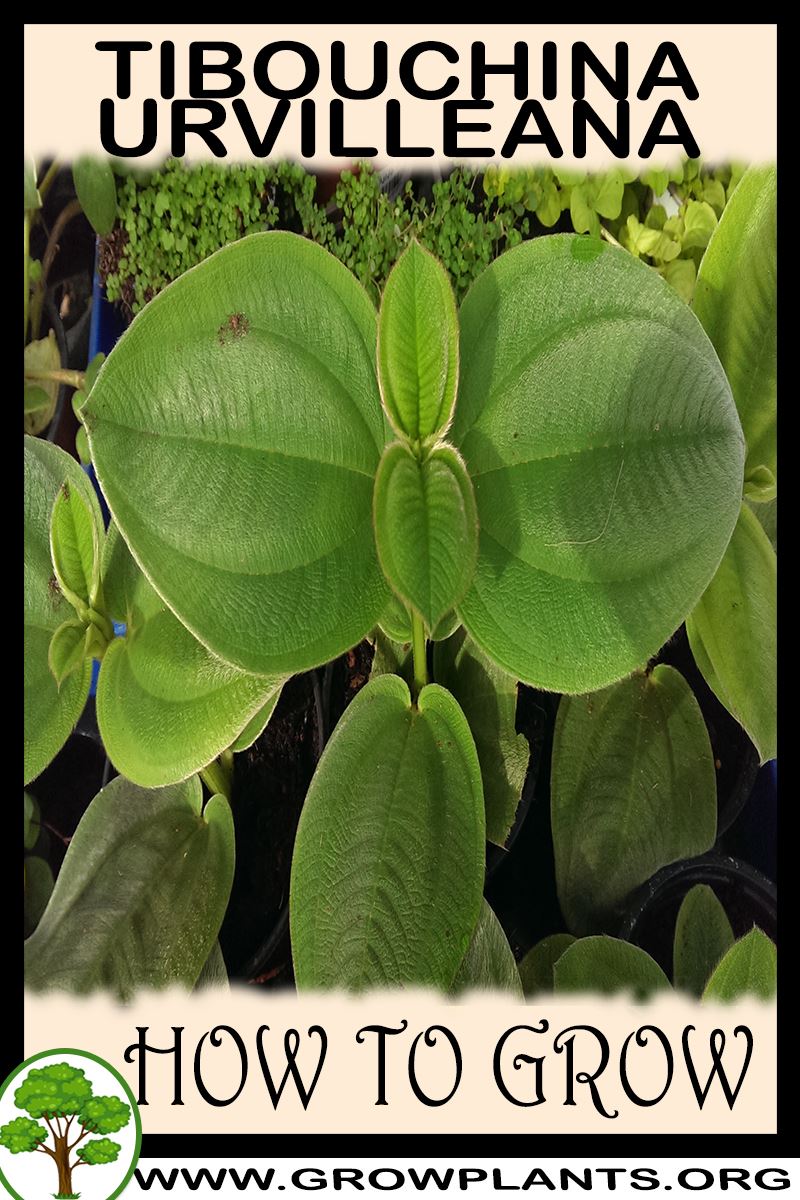
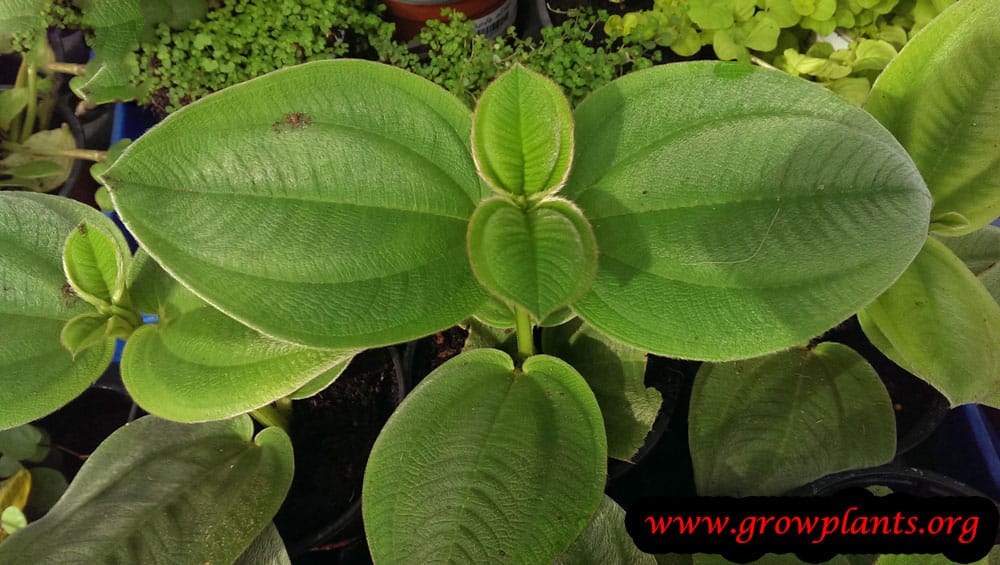
- Leaves & Foliage: Green, silvery-hairy (velvety) elliptic leaves; the hairiness is more pronounced in some cultivars
- Flower Characteristics: Large purple five-petalled flowers borne singly or in clusters
Primary Uses & Landscape Value
- Functional & Ornamental Roles: Flowering specimen shrub, informal flowering hedge or screen, and large patio container plant in frost-free gardens
Care Guide: Planting, Soil & Watering
Overview: Glory bush is a fast-growing evergreen shrub for warm, frost-free climates (hardiness zone 10b and up), grown in full sun with warm conditions and rich, well-drained soil. It takes moderate, steady watering and prefers a slightly acidic soil for its best purple blooms.
Quick Care Requirements
| Requirement | Ideal Condition |
|---|---|
| Planting Season | Spring or summer |
| Growth Rate | Fast |
| Soil Type | Rich, well-drained soil |
| Soil pH | Slightly acidic; prone to chlorosis in alkaline soil |
| Water Need | Moderate — keep evenly moist |
Planting & Establishment
- Best Planting Season: Plant in spring or summer during warm weather so it establishes before any cool spell; hardy only in zone 10b and warmer.
- How to Plant:
- Hole Preparation: Dig a hole about twice the width of the root ball and loosen the surrounding soil.
- Soil Amendments: Enrich the backfill with compost and organic matter; a rich, slightly acidic, free-draining bed suits it best.
- Planting Depth: Set the root ball level with the surrounding soil and keep the stem base unburied.
- Growth Speed & Expectations: Grows fast into a large shrub (3–6 m) and flowers freely; it can be aggressive, so prune to shape and contain.
Soil, Watering & Drainage Care
- Soil Mix & Drainage Needs: Rich, well-drained, slightly acidic soil is ideal; in alkaline soils it can suffer iron chlorosis. Use a quality free-draining mix in containers.
- Watering Schedule & Technique:
- Young / Newly Planted: Water regularly to keep the soil evenly moist while the shrub establishes.
- Established: Water moderately and consistently, keeping the soil from drying out fully but never waterlogged.
- Seasonal Adjustments: More water in summer heat and less in cool weather; protect from frost, which it will not tolerate.
Climate, Light & Hardiness
Glory bush (Tibouchina urvilleana) is an evergreen, warmth-loving flowering shrub for tropical, subtropical and mild Mediterranean climates, grown in full sun. It is decidedly frost-tender - the site data gives hardiness zone 10b and warmer - needing warm conditions and protection from any frost.
Quick Climate Specifications
| Climate Zones | Tropical, subtropical and mild Mediterranean |
|---|---|
| USDA Hardiness Zones | Zone 10b and warmer (site data) |
| Optimal Temp Range | Warm, frost-free conditions |
| Cold Damage Begins | Foliage and stems are damaged by even light frost around freezing (0 °C / 32 °F) |
| Approx. Survival Minimum | Little frost tolerance; established plants may resprout after a light frost that cuts top growth, but hard frost can kill them |
| Frost Tolerance | Very Low |
| Light Conditions | Full sun |
| Wind Tolerance | Low–Moderate |
Sunlight & Light Exposure
Optimal Light Setup
Full sun gives the strongest growth and the heaviest display of its vivid purple flowers.
Direct Sun Requirement
Plenty of direct sun is needed for dense growth and good flowering; too much shade makes it leggy and shy to bloom.
Shade & Heat Management
In the very hottest, driest sites light afternoon shade can reduce stress, but in most climates it wants full exposure.
Best Exposure / Orientation
A warm, sunny, sheltered aspect - against a warm wall in marginal areas - suits it best and buffers cold nights.
Temperature Extremes & Hardiness
USDA Hardiness & Regional Limits
The site data gives zone 10b and warmer, marking it as essentially frost-free-climate plant. It is grown outdoors year-round only where frost is rare or absent.
Cold Damage & Winter Protection
Cold quickly damages the soft foliage and stems; even a light frost causes dieback, and hard or prolonged frost can be fatal. In marginal areas a warm, sheltered microclimate or container culture that can be moved under cover is needed.
Frost Sensitivity
Very high - it is one of the most frost-sensitive plants in this group, damaged as temperatures approach freezing (0 °C / 32 °F).
Extreme Heat Tolerance
Good in warm, humid heat, in keeping with its tropical origins; steady soil moisture keeps it fresh in hot, dry spells.
Wind, Humidity & Microclimate
Humidity Preferences
Prefers warm, moderately humid air, reflecting its tropical/subtropical background.
Dry-Air Tolerance
Moderate; it grows in Mediterranean climates but appreciates some humidity and consistent moisture in dry heat.
Wind Tolerance
Low–moderate; the soft, brittle stems are easily damaged by strong wind, so a sheltered spot protects both growth and flowers.
Rainfall & Seasonal Moisture
Suited to climates with warm-season moisture; it grows most strongly where warmth and reasonable moisture coincide.
Microclimate Recommendations
A warm, sunny, wind-sheltered pocket - ideally frost-free - is essential; a warm wall or overhead shelter meaningfully improves survival at the cold edge of its range.
Growing in Pots, Balconies & Indoors
The princess flower is a showy, tender flowering shrub reaching 3-6 m – too big and too light-hungry to be a houseplant, as the grower notes. But it makes a spectacular container plant for a sunny patio when kept pruned, and potting means you can move it under cover before frost.
Quick Details
- Container Size: A large tub – the bigger the better – kept pruned to a manageable shrub
- Indoor Suitability: Not a houseplant (per the grower) – too large and needs strong light
- Best Spot: Full sun
- Soil & Drainage: Rich, aerated, free-draining, slightly acidic mix
- Watering in Pots: Average and steady; pots dry fast in sun and wind
Indoors & On the Windowsill
- Houseplant limits: The grower marks it no for indoors – it grows too large and wants full sun that a room can’t provide.
- Overwintering indoors: This is the main reason to pot it. In cold climates, grow it in a tub and move it into a bright, frost-free room or conservatory over winter, then back out in spring.
On a Balcony or Patio
- Light & wind: Give it the sunniest, most sheltered spot; its top-heavy flowering stems need staking and shelter from wind. Reflected heat from walls dries the pot fast, so check moisture often in summer, and mind the weight of a large tub on a balcony.
Choosing the Pot, Soil & Long-Term Care
- Pot & drainage: Use a pot with strong drainage holes and skip a standing-water saucer, which invites root rot; terracotta breathes and dries faster, while glazed or plastic holds moisture longer.
- Potting mix: A light, aerated organic mix – peat or coir with perlite or vermiculite – gives the roots both moisture and air.
- Feeding: Potted plants use up their feed faster because each watering leaches nutrients away, so feed a little more often than plants in open ground.
- Repotting: Refresh the top of the mix and pot up every couple of years; a light root and top prune at repotting keeps established plants vigorous.
Growing this plant in a greenhouse
A greenhouse can give tibouchina urvilleana frost protection, cold protection, humidity control and extra warmth. In the right climate it may also be kept growing through winter, depending on how much warmth and light are provided.
Greenhouse at a glance
| Greenhouse suitability | Conditional - depends on your climate |
|---|---|
| Main benefits | frost protection, cold protection, humidity control, extra warmth |
| Season extension | earlier spring & later autumn |
| Outdoor protection advisable below | about 10°C |
| Maintain greenhouse minimum | around 15°C for active growth |
| Suitable types | heated greenhouse, polycarbonate greenhouse, lean-to |
| Heating | Heating is recommended in cold climates for continuous growth. |
Related greenhouse guides
- Greenhouses: How to Choose the Right Greenhouse
- Best Greenhouse Heaters
- Greenhouse Climate Control: Temperature, Ventilation and Humidity
- Best Lean-To Greenhouses
Fertilizing & Feeding
A modest feeder: light balanced feedings from spring through the flowering season support both foliage and bloom, with feeding held off through the cool-season rest; balanced nutrition, not high phosphorus, drives flowering.
Quick Fertilizing Specs
| Feeding Level | Light to moderate feeder |
|---|---|
| Main Nutrient Priority | Balanced feeding with adequate nitrogen to support growth and bloom |
| Best Feeding Period | Spring through the warm flowering season |
| Organic Options | Compost, humus, and other organic matter |
| Reduce/Stop Feeding | Ease off and hold through cool-season rest |
| Micronutrients | Usually met by a complete fertilizer and organic matter; correct only diagnosed issues |
| Soil pH | Slightly acidic to near neutral |
Feeding by Growth Stage
Spring flush of growth
Fuel fresh growth as the plant wakes up for the season.
| Nutrient direction | A balanced complete fertilizer to support healthy stems and leaves. |
|---|---|
| Timing | As growth resumes in spring or the start of the warm season. |
| Frequency | A light feeding at the start of active growth. |
| Fertilizer types | A balanced complete fertilizer, Compost and organic matter worked in |
| Precautions | Keep feeding moderate; lush overfed growth flowers poorly and flops. |
Bloom
Carry the plant through flowering with steady, balanced nutrition.
| Nutrient direction | A balanced complete fertilizer; adequate nitrogen and balanced nutrition drive bloom. |
|---|---|
| Timing | As buds form and through the flowering period. |
| Frequency | Light feedings that sustain flowering. |
| Fertilizer types | A balanced complete fertilizer |
| Precautions | Skip high-phosphorus bloom boosters; balanced feeding with adequate nitrogen drives flowering. |
Repeat flushes of bloom
Keep a repeat-blooming plant flowering through the warm season.
| Nutrient direction | Continued light, balanced feeding to sustain successive flushes. |
|---|---|
| Timing | Between and through repeat flushes across the warm season. |
| Frequency | Ongoing light feedings during active flowering. |
| Fertilizer types | A balanced complete fertilizer |
| Precautions | Keep feeding light and steady; overfeeding pushes leaves over flowers. |
Cool-season rest or dormancy
Let the plant coast through its cool-season rest without pushing growth.
| Nutrient direction | None – withhold fertilizer while the plant is not in active growth. |
|---|---|
| Timing | During cool weather or dormancy when growth has slowed or stopped. |
| Frequency | No feeding at this stage. |
| Fertilizer types | No feeding at this stage; do not fertilize until active growth resumes. |
| Precautions | Do not fertilize now; feeding a plant that is not actively growing wastes nutrients and can cause salt buildup. |
Nutrient Deficiency Signs & Corrections
Older, lower leaves fade to pale green or uniform yellow and overall growth slows.
| Possible causes | low available soil nitrogen, nitrogen leaching from heavy watering or rain, thin, low-organic-matter soil |
|---|---|
| Appears first on | older, lower leaves |
| What to check | recent feeding history, soil organic matter, watering and drainage |
| Possible correction | Apply a nitrogen-containing complete fertilizer and build soil organic matter, then water evenly. |
Youngest leaves yellow between the veins while the veins themselves stay green.
| Possible causes | low iron availability in alkaline soil, waterlogged or poorly drained roots, high soil alkalinity tying up iron |
|---|---|
| Appears first on | new, young leaves |
| What to check | soil alkalinity and drainage, whether symptoms start on the newest leaves, watering habits |
| Possible correction | Correct soil alkalinity and drainage and, if needed, apply a chelated iron product per its label. |
Leaf margins brown or scorch and growth stalls despite adequate watering.
| Possible causes | fertilizer salt buildup in the root zone, under-watering that concentrates salts, excessive or too-frequent feeding |
|---|---|
| Appears first on | leaf margins and tips |
| What to check | recent fertilizer amounts, watering consistency, drainage, especially in containers |
| Possible correction | Ease off feeding, water thoroughly to flush accumulated salts, then return to lighter feeding. |
Pruning, Training & Seasonal Maintenance
Tibouchina urvilleana is a fast, vigorous evergreen shrub (to 3–6 m) that flowers on new growth, so it tolerates – and generally needs – fairly firm annual pruning to stay shapely and keep producing its long spring-to-autumn flush of purple blooms. The safest time to cut hard is late autumn/winter, before the next flowering flush of new wood begins; pruning later, once new growth is underway, sacrifices developing flower buds.
Quick Pruning & Maintenance Specs
| Pruning Tolerance | High |
| Primary Pruning Window | Autumn – Winter (before the spring flush) |
| Secondary Maintenance Window | Light shaping after each bloom flush |
| Typical Frequency | At least once a year; more for hedge-trained plants |
| Main Objective | Control the plant’s naturally vigorous (‘aggressive’) size and renew flowering wood |
| Young Plant Priority | Pinch/tip young growth to build a bushy, multi-stemmed frame |
| Mature Plant Priority | Annual cut-back to size, remove leggy old wood |
| Best Tool Type | Bypass secateurs and loppers; hedge shears only if grown as a clipped hedge |
| Avoid Heavy Pruning During | Peak flowering flush |
Pruning by Plant Age & Size
Newly Established
Remove only damaged growth in the first season; pinch the growing tips once to encourage low branching rather than a single leggy stem.
Young / Formative
Train as an open, multi-stemmed shrub (or, if grown as a hedge, begin light shearing early to build density from the base). Pinching the tips of new shoots through the first year or two builds a fuller framework before the plant is left to flower freely.
Mature / Established
Because this species is a fast, ‘aggressive’ grower, mature plants need a real annual cut-back – not just tidying – to hold their size and keep replacing old, twiggy wood with vigorous new flowering shoots.
Seasonal Pruning Schedule
| Stage | Objective | Remove | Do Not Remove | Response / Impact |
| Dormant/Winter | Reset size and renew flowering wood | Up to a third (or more, on overgrown plants) of the previous season’s growth; weak, crossing or leggy stems | Healthy framework stems needed to rebuild the canopy | Vigorous new shoots follow, and since flowers form on this new growth, bloom is not reduced – it’s usually improved |
| Post-Flowering flush | Light tidy between bloom cycles | Spent flower clusters and any straggly shoots | Developing buds on other branches | Encourages the next of the season’s repeat flowering flushes |
Flowering & Fruiting Wood
Tibouchina urvilleana flowers on current-season growth, blooming in repeated flushes through spring, summer and autumn. Because next season’s flowers come from wood the plant has not yet produced, a hard winter cut-back removes only old growth, not future flowers – it instead stimulates the fresh growth the plant will flower on. Pruning after new growth is already underway, by contrast, removes buds that are forming and delays or reduces bloom.
Structural Pruning & Training
Thin out crossing or overly dense interior stems on mature plants to keep the naturally floppy, fast-growing habit from becoming a tangled thicket, and control height/spread with an annual cut-back rather than letting it reach its full 3–6 m unchecked.
Container & Small-Space Pruning
In a container, prune harder and more often than an in-ground specimen to compensate for the restricted root zone and keep this vigorous shrub in scale; regular tip-pinching through the growing season helps keep a compact, floriferous shape instead of a few long, leggy canes.
Tools
Bypass secateurs for routine shoot and flower-truss removal, loppers for thicker old stems during the annual cut-back, and hedge shears only on plants deliberately maintained as a clipped hedge (this species is also grown that way).
Tool Hygiene & Disease Risk
Routine: aphids are the main pest noted for this species, not a wound-transmitted disease, so clean, sharp tools are sufficient. Heavy pruning does push out soft new growth that can attract more aphids, so keep an eye on flushes of regrowth after a hard cut.
Cut Placement & Technique
Use thinning cuts back to a healthy pair of buds or a side branch rather than leaving stubs, and angle cuts just above an outward-facing bud to keep the centre of the shrub open.
Heavy Pruning & Rejuvenation
Tolerates hard rejuvenation pruning well given its vigour – an overgrown or leggy plant can be cut back hard in winter and will rebound with strong new growth and a full flowering flush the same season.
Post-Pruning Care
After a hard cut-back, water to support the coming flush of regrowth; no extra feeding is needed since the pruning itself is already forcing vigorous new shoots. Watch new soft growth for aphids.
Common Pruning Mistakes
- Pruning after the spring growth flush has started, which removes developing flower buds and delays bloom.
- Under-pruning a plant known to be ‘aggressive,’ letting it become leggy, sparse-flowering and top-heavy.
- Shearing a specimen shrub uniformly like a hedge when it isn’t grown as one, which reduces flower display versus selective thinning.
When NOT to Prune
Avoid heavy pruning while the plant is in full flower if a continuous bloom display is wanted, and avoid pruning right as the spring flush of new growth (and buds) is emerging.
Recommended Tools (by task)
- Annual cut-back, thinning (young & mature): bypass_secateurs – most cuts are on soft-to-semi-woody current growth.
- Renewal cuts on older stems (mature): loppers – needed for the thicker wood built up on a fast-growing shrub of this size.
- Formal hedge form only: hedge_shears – where the plant is deliberately kept as a clipped hedge rather than an informal shrub.
Pruning Troubleshooting
| Problem | Possible Cause | What to Check | Corrective Action |
| Few flowers after pruning | Pruned too late, after new growth/buds had already formed | Timing of the last cut relative to the spring flush | Move the main cut-back earlier, to late autumn/winter |
| Leggy, sparse plant | Under-pruning a naturally vigorous (‘aggressive’) grower | How much of the previous year’s growth was removed | Increase the severity of the annual cut-back |
| Excess soft, aphid-covered regrowth | Very hard pruning forcing a flush of tender new shoots | Aphid presence on new tips | Monitor and treat aphids; avoid repeated over-hard cuts in one season |
Propagation Guide
Glory bush is propagated most readily from softwood or semi-hardwood stem cuttings, which is the usual nursery method and roots well in warmth and humidity. The dust-fine seed is possible but slower and needs surface sowing with heat. As a tropical to subtropical shrub it wants warmth throughout. Easy from cuttings.
Quick Propagation Specs
| Best Propagation Method | Softwood / semi-hardwood stem cuttings |
| Alternative Methods | Seed |
| Propagation Difficulty | Easy (cuttings) |
| Seed True-to-Type | Species comes fairly true |
| Vegetative True-to-Type | Yes |
| Best Propagation Season | Warm season, spring to summer |
| Germination Temperature | Warm — steady warmth around room temperature |
| Seed Sowing Depth | Surface — dust-fine seed, do not cover |
Stem Cuttings
Cutting Type & Timing
Take softwood tip cuttings or firmer semi-hardwood cuttings during the warm growing season.
Cutting Preparation
Use short shoots a few nodes long, remove the lower leaves and reduce the large, hairy upper leaves to cut water loss.
Rooting Setup
Root in a moist, free-draining mix in a warm, humid, brightly shaded propagator; steady warmth speeds rooting.
Rooting Hormone
Beneficial, especially for semi-hardwood cuttings.
Growing from Seed
Seed Handling & Germination
Surface-sow the very fine seed on moist mix and do not cover it, as it needs light; keep warm and humid. Germination is slow and uneven, and seedlings are tiny and fragile at first.
Bloom & Flower Guide
Quick Details
- Bloom Season: Spring, summer and autumn – and nearly year-round in frost-free climates
- Flower Appearance: Large, satiny royal-purple flowers with five petals, singly or in small clusters
- Edibility: Not a culinary flower – grown as an ornamental for its spectacular blooms
Detailed Blooming Overview
The glory bush is grown for one thing above all: its extravagant, satiny purple flowers, which open in succession over a very long season against velvety silver-green leaves. Each bloom is short-lived, but the shrub carries a steady relay of them, and the curled purple stamens give the flowers their distinctive spidery look.
Flower Characteristics
- Large, five-petaled flowers of deep, satiny royal purple.
- Distinctive curved purple stamens at the center.
- Borne singly or in small clusters at the branch tips.
Bloom Care & Thinning
- Pruning for bloom: It flowers on new growth, so a tidy-up after a flush encourages fresh flowering shoots and a bushier plant.
- Encouraging bloom: Full sun to light shade, shelter from strong wind and slightly acid soil bring the fullest flowering.
Pests, Diseases & Troubleshooting
Overview: Tibouchina is a tender tropical shrub that stays healthiest in warm, humid, frost-free conditions and slightly acidic soil; most of its troubles are sap-sucking insects and nutrient/soil problems rather than serious disease. Iron and manganese chlorosis on alkaline soil is its signature complaint. Keep it vigorous with acidic, well-drained soil and steady feeding, and lead with cultural and organic pest controls.
Quick Troubleshooting Overview
| Issue / Pest | Main Symptom | Primary Solution |
|---|---|---|
| Aphids & whiteflies | Sticky new growth, honeydew, sooty mould | Water blast; insecticidal soap; encourage beneficials |
| Mealybugs & scale | White cottony or brown bumps, sticky residue | Alcohol swab; horticultural oil; prune heavy infestations |
| Spider mites | Stippled, bronzed leaves, fine webbing | Raise humidity; rinse; insecticidal soap or oil |
| Iron/manganese chlorosis | Yellow leaves with green veins on new growth | Acidify soil; apply chelated iron; correct pH |
| Root rot | Wilting, yellowing, collapse in wet soil | Improve drainage; ease off watering |
Common Pests & Management
- Aphids (Aphidoidea):
- Symptoms: Clusters of soft green or black insects on new shoots and flower buds, producing honeydew, distorted tips and sooty mould. Tibouchina’s soft new growth is especially attractive to them.
- Prevention & Control: Blast off with water and pinch out infested tips. Encourage ladybirds and lacewings. Treat persistent colonies with insecticidal soap or light neem oil, sprayed in the evening to protect pollinators.
- Whiteflies (Trialeurodes / Bemisia spp.):
- Symptoms: Tiny white moth-like insects that fly up in clouds when disturbed, with yellowing, sticky leaves and sooty mould from their honeydew.
- Prevention & Control: Use yellow sticky traps to monitor and reduce numbers, encourage parasitic wasps, and spray insecticidal soap or horticultural oil to leaf undersides, repeating to catch new hatchlings.
- Mealybugs (Pseudococcidae):
- Symptoms: White cottony masses in leaf axils and on stems, with sticky honeydew and weakened, stunted growth – common on greenhouse and container plants.
- Prevention & Control: Dab with alcohol-dipped cotton buds, isolate affected plants, and improve airflow. Follow with horticultural oil or insecticidal soap; introduce mealybug destroyer beetles under glass.
- Scale Insects (Coccidae / Diaspididae):
- Symptoms: Immobile brown, tan or waxy bumps along stems and leaf veins, with sticky residue and sooty mould; heavy infestations cause yellowing and dieback.
- Prevention & Control: Scrape off light infestations and prune out badly affected stems. Smother with horticultural oil, thoroughly coating stems and leaf undersides, and repeat as crawlers emerge.
- Spider Mites (Tetranychus urticae):
- Symptoms: Fine pale stippling, a bronzed dull cast to the leaves and delicate webbing, worst in hot, dry or indoor conditions.
- Prevention & Control: Raise humidity and rinse foliage regularly; introduce predatory mites indoors. Treat with insecticidal soap or horticultural oil, covering leaf undersides.
Diseases & Fungal Issues
- Root & Crown Rot (Phytophthora / Pythium spp.):
- Symptoms: Wilting and yellowing that does not respond to watering, browning at the base, and dark mushy roots – triggered by heavy, waterlogged soil.
- Treatment & Management: Plant in acidic, humus-rich but free-draining soil, water when the surface dries, and never let containers stand in water. Remove badly affected plants; improve drainage before replanting.
- Leaf Spot (Cercospora / fungal leaf-spot spp.):
- Symptoms: Brown or purplish spots and blotches on leaves, sometimes with yellow haloes, in warm humid weather or where foliage stays wet.
- Treatment & Management: Avoid overhead watering, improve airflow, and clear fallen leaves. Remove spotted foliage; a copper fungicide helps where it recurs.
- Grey Mould (Botrytis cinerea):
- Symptoms: Fuzzy grey mould on faded flowers and soft growth in cool, damp, still air, spreading into rotting patches.
- Treatment & Management: Deadhead spent blooms, improve ventilation, and avoid wetting flowers. Remove affected material promptly.
Growing Difficulties & Abiotic Problems
- Iron / Manganese Chlorosis:
- Cause & Symptoms: Tibouchina’s hallmark problem: new leaves turn yellow while the veins stay green, caused by alkaline soil locking up iron and manganese. Severe cases scorch and drop leaves.
- Correction Strategy: Acidify the soil with elemental sulfur or an ericaceous regime, apply chelated iron and a manganese-containing feed, and mulch with acidic organic matter. Use rainwater rather than hard tap water.
- Frost & Cold Damage:
- Cause & Symptoms: As a tropical, foliage blackens and drops below about freezing, and prolonged cold can kill the plant outright.
- Correction Strategy: Grow in a frost-free spot or container that can be moved under cover in winter; protect with fleece in marginal climates and cut back frost-damaged growth once warmth returns.
- Leaf Drop & Stress:
- Cause & Symptoms: Sudden leaf drop follows cold draughts, drought, waterlogging or a move to lower light.
- Correction Strategy: Keep conditions stable – even moisture, warmth, and bright light – and avoid sudden changes. Feed regularly through the growing season with an acid-plant fertiliser.
- Nutrient Deficiency:
- Cause & Symptoms: Overall yellowing, poor flowering and weak growth on hungry or wrongly-fed plants.
- Correction Strategy: Feed with a balanced acid-loving-plant fertiliser through the growing season, correcting soil pH so nutrients remain available.
What Helps – Products & Tools
Reach first for organic tools – a water rinse, insecticidal soap and neem or horticultural oil handle aphids, whitefly, mealybugs, scale and mites. For the chlorosis this plant is prone to, keep chelated iron, elemental sulfur and an acid-plant (ericaceous) fertiliser on hand, plus a copper fungicide for leaf spot and yellow sticky traps for monitoring whitefly.