Plant Profile & Key Characteristics
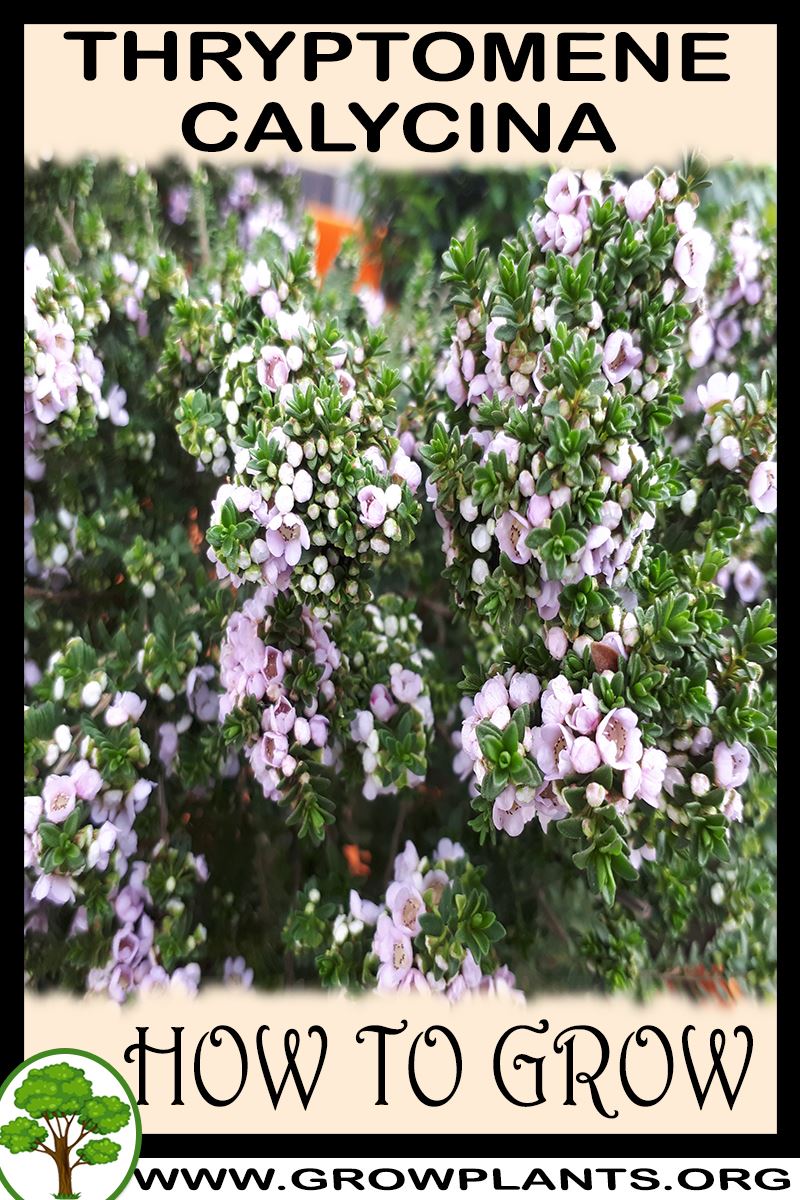
Overview: A fine-textured Australian evergreen shrub reaching about 0.5-2 m (1.5-6.5 ft), smothered in tiny pink, purple or white flowers from mostly pink buds. It is grown as an ornamental and long-lasting cut flower, and is drought tolerant and suitable for bonsai.
Quick Specifications
| Specification | Attribute |
|---|---|
| Plant Type / Life Cycle | Woody perennial (shrub) |
| Foliage Type | Evergreen |
| Mature Size | 0.5-2 m (1.5-6.5 ft) tall |
| Growth Rate | Moderate to slow |
| Hardiness | USDA zones 8-10 |
Growth Form & Structure
- Height and Spread: In the ground a shrub of 0.5-2 m (1.5-6.5 ft); also grown in containers and, at small scale, trained as bonsai.
- Growth Habit and Form: Dense, twiggy, fine-leaved shrub with arching flower-laden stems.
- Lifespan and Maturity: A moderate-to-slow-growing evergreen that builds into a dense, floriferous bush.
Anatomy & Physical Features
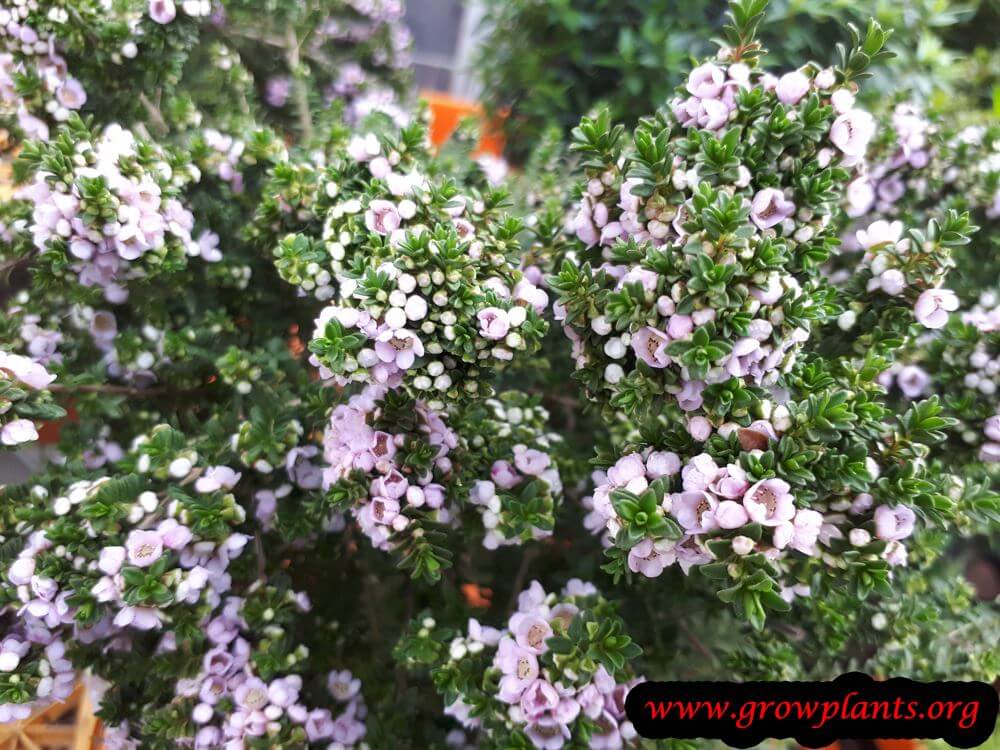
- Leaves and Foliage: Small green oval leaves only 0.5-1 cm long, giving a fine, heath-like texture.
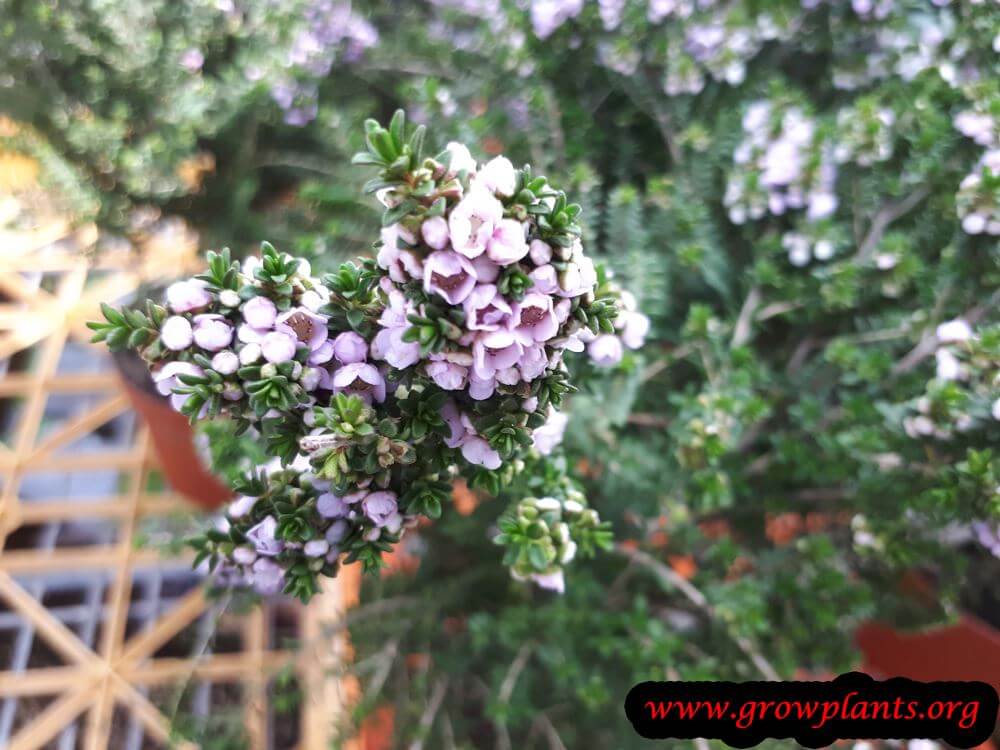
- Flower Characteristics: Masses of tiny purple, pink or white rounded flowers opening from mostly pink buds.
Primary Uses & Landscape Value
- Functional and Ornamental Roles: Drought-tolerant flowering ornamental, prized long-lasting cut flower, and a bonsai subject for containers and dry gardens.
Care Guide: Planting, Soil & Watering
Overview: Grampians thryptomene is a drought-tolerant Australian evergreen shrub for full sun to shade and sharply drained sandy, clay or loamy soil (hardiness zone 8–10). It grows at a moderate to slow pace and, once established, gets by on modest watering.
Quick Care Requirements
| Requirement | Ideal Condition |
|---|---|
| Planting Season | Spring to summer (to autumn in zone 10b) |
| Growth Rate | Moderate to slow |
| Soil Type | Well-drained sandy, clay or loamy soil |
| Water Need | Low to moderate — let the soil dry between waterings |
Planting & Establishment
- Best Planting Season: Plant in spring to summer in zones 8–10a, or spring to autumn in zone 10b, so roots establish in mild weather.
- How to Plant:
- Hole Preparation: Dig a hole a little wider than the root ball and loosen the surrounding soil; in a container, choose one 30–50% larger than the root ball.
- Soil Amendments: Keep the soil free-draining — sandy, clay or loamy ground all work — and avoid over-enriching, since sharp drainage is what matters most.
- Planting Depth: Set the root ball level with the surrounding soil and keep the stem base clear.
- Growth Speed & Expectations: Grows at a moderate to slow pace into a rounded shrub; well suited to cut flowers and even bonsai.
Soil, Watering & Drainage Care
- Soil Mix & Drainage Needs: Well-drained sandy, clay or loamy soil, or a free-draining potting mix in containers, is essential; refresh container soil every few years as drainage declines.
- Watering Schedule & Technique:
- Young / Newly Planted: Water regularly after planting to establish the roots, keeping the soil lightly moist but never soggy.
- Established: Once established, water sparingly and let the soil dry between waterings; it prefers a little more water but is genuinely drought tolerant.
- Seasonal Adjustments: A little extra water in summer heat and much less in cool, wet weather.
Climate, Light & Hardiness
Grampians thryptomene suits temperate, Mediterranean, desert and subtropical climates with well-drained soil, growing outdoors year-round in warmer zones. It wants full sun to part shade and is genuinely drought-tolerant once established, with moderate winter cold tolerance typical of Australian heath shrubs.
Quick Climate Specifications
| Climate Zones | Temperate, Mediterranean, desert, subtropical; also grown as a houseplant in some species |
|---|---|
| USDA Hardiness Zones | 8–10 |
| Frost Tolerance | Moderate – established plants tolerate light frost; young plants are more tender |
| Light Conditions | Full sun to full shade, though flowering is best in full sun to half shade |
| Wind Tolerance | Moderate |
Sunlight & Light Exposure
Optimal Light Setup
Full sun to half shade gives the densest flowering; the plant tolerates full shade but blooms more sparsely there.
Shade & Heat Management
Tolerates desert and subtropical heat well when soil drains freely; being drought-tolerant, it copes with dry, sun-baked positions better than most flowering shrubs.
Best Exposure / Orientation
An open, sunny bed or rockery with sandy, clay or loamy well-drained soil suits it best.
Temperature Extremes & Hardiness
USDA Hardiness & Regional Limits
Hardy in USDA zones 8–10; planting season shifts from spring–summer in zone 8–10a to nearly year-round (spring–autumn) in the milder 10b, reflecting its comfort with mild-winter climates.
Cold Damage & Winter Protection
As an Australian native shrub it is not built for hard freezes; expect foliage damage below its zone 8 limit, and give young plants extra winter shelter until established.
Frost Sensitivity
Tolerates occasional light frost once mature, but is not suited to prolonged or hard freezes.
Extreme Heat Tolerance
Strong heat tolerance, helped by its drought-tolerant nature - suitable for desert and dry subtropical gardens with well-drained soil.
Wind, Humidity & Microclimate
Dry-Air Tolerance
Good; it is a genuinely drought-tolerant shrub that performs well in low-humidity, arid conditions.
Wind Tolerance
Moderate – typical of low, twiggy heath shrubs; benefits from some shelter in very exposed sites while young.
Microclimate Recommendations
Choose an open, well-ventilated, well-drained spot; avoid heavy, waterlogged soils that combine poorly with its drought-adapted root system.
Growing in Pots, Balconies & Indoors
This is a fine-leaved, wiry flowering shrub prized for its long-lasting sprays of tiny blooms. The grower says it can be grown as a houseplant, though not all species suit it; in a pot it stays compact (0.5-2 m (20-80 in) in the ground), wants bright light and very sharp drainage, and makes a lovely container and patio shrub.
Quick Details
- Container Size: A pot 30-50% bigger than the root ball – or a smaller pot with the roots trimmed to keep it compact
- Indoor Suitability: Possible as a houseplant (not every species) in a bright, airy spot; it needs strong light and excellent drainage
- Best Spot: Full sun to shade, but bright light gives the best flowering; a very bright window indoors
- Soil & Drainage: Sharp-draining – sandy, loamy, or clay soil, or potting mix; drainage is critical
- Watering in Pots: Small to average water; it prefers a little more but tolerates dryness well and is fairly drought-tolerant – never waterlogged
Indoors & On the Windowsill
- Possible houseplant: The grower says yes for some species. Give it the brightest, airiest spot you have and sharp drainage; it is a woody shrub, so it wants more light than a typical foliage houseplant.
- Windowsill growing: A very bright window or sunroom suits a compact plant; good airflow helps prevent the fine foliage from staying damp.
- Choose the right type: The grower notes not all species make good houseplants – a naturally compact, tolerant form is the one to try indoors.
On a Balcony or Patio
- Light & shelter: A bright, sunny, airy balcony or patio brings the best flowering; shelter the wiry stems from harsh wind and let the pot drain fast after rain.
- Practicalities: It is an evergreen shrub, so it earns its space year-round; keep the pot draining sharply, as it hates wet feet.
Choosing the Pot, Soil & Long-Term Care
- Pot & drainage: A pot with strong drainage holes and no standing-water saucer; sharp drainage is the single most important thing for this shrub.
- Potting mix: A free-draining sandy, loamy, or potting mix; open heavy soil with grit.
- Feeding: Feed lightly through the growing season with a low-phosphorus feed, as many of its relatives dislike rich phosphorus.
- Refreshing the mix: As the grower notes, the mix loses its drainage after a few years – replace it with fresh soil and root-prune to keep the plant in bounds.
Grower’s Container Tip
- Right-sized pot & root pruning (grower’s method): The grower chooses a container 30-50% bigger than the root ball, or grows it in a smaller pot and trims the roots at planting to keep it compact. Good drainage is essential; a sandy, clay, loamy, or potting-mix soil works. After a few years the mix stops draining well, so replace it with fresh soil.
Fertilizing & Feeding
A light feeder overall – this drought-tolerant native shrub thrives on lean, well-drained soil and can be set back by over-fertilizing, particularly with high-phosphorus products.
Quick Fertilizing Specs
| Feeding Level | Light feeder – needs only modest, infrequent feeding. |
|---|---|
| Main Nutrient Priority | Balanced feeding with restrained phosphorus; avoid high-phosphorus products. |
| Best Feeding Period | Spring through the summer-to-autumn bloom period. |
| Soil pH | Tolerates a wide range but does best when the soil is not strongly alkaline. |
| Reduce/Stop Feeding | Ease off and stop feeding once growth slows heading into the cooler months. |
Feeding by Growth Stage
Spring Growth Flush
Support steady new foliage growth heading into the bloom period without pushing soft growth this drought-tolerant shrub can’t sustain.
| Nutrient direction | A light, balanced feeding to support new growth; avoid heavy nitrogen that produces soft, weak growth. |
|---|---|
| Timing | As new growth resumes in spring. |
| Frequency | A single light feeding as growth resumes in spring is usually enough; more is rarely needed. |
| Fertilizer types | A balanced, slow-release fertilizer formulated for native or drought-tolerant shrubs, Well-composted organic matter worked lightly into the surrounding soil |
| Precautions | Keep feeding light – this drought-tolerant native shrub is sensitive to over-fertilizing, especially with high-phosphorus products, which can scorch foliage or reduce later flowering. |
Bud Set and Bloom
Support strong bud formation and a full flush of purple, pink, or white blooms without encouraging leafy regrowth at the expense of flowers.
| Nutrient direction | Continue light, balanced feeding; avoid nitrogen-heavy products so energy goes toward flowering rather than foliage. |
|---|---|
| Timing | Ahead of and during the summer-to-autumn bloom period. |
| Frequency | One light feeding is usually enough to carry the plant through its bloom cycle. |
| Fertilizer types | A balanced, slow-release fertilizer for flowering native shrubs, A potassium-leaning organic feed to support bud and flower development |
| Precautions | Avoid high-phosphorus formulas; Australian native shrubs are often sensitive to excess phosphorus, which can damage roots and foliage. |
Post-Bloom Rest
Let the plant rest through the cooler, slower-growing months after flowering without pushing new growth it can’t sustain.
| Nutrient direction | None – withhold fertilizer while growth slows for the cooler months. |
|---|---|
| Timing | Autumn through winter, after the bloom period ends. |
| Frequency | No feeding at this stage. |
| Fertilizer types | No feeding at this stage; resume light feeding only once active spring growth returns. |
| Precautions | Do not fertilize a dormant or slow-growing plant – it cannot take up nutrients efficiently and excess salts can build up around the roots. |
Nutrient Deficiency Signs & Corrections
New leaves turn pale yellow between darker green veins.
| Possible causes | High soil pH tying up available iron, Poorly drained or waterlogged roots limiting nutrient uptake, Very low native soil fertility |
|---|---|
| Appears first on | Newest growth at branch tips |
| What to check | Test soil pH, Check drainage and root health, Confirm the yellowing pattern is between the veins rather than overall pale leaves |
| Possible correction | Correct the underlying soil pH or drainage issue, and consider a chelated iron product applied per its label if the pattern points to iron specifically. |
Overall pale, weak growth and reduced flowering.
| Possible causes | Low native soil fertility, Excess phosphorus from a high-phosphorus fertilizer locking out other nutrients, Root stress from waterlogged or compacted soil |
|---|---|
| Appears first on | Older, lower leaves and overall plant vigor |
| What to check | Review recent fertilizer history for high-phosphorus products, Check soil drainage, Assess overall plant vigor and new growth |
| Possible correction | Switch to a balanced, low-phosphorus fertilizer formulated for native or drought-tolerant shrubs and improve drainage if needed. |
Browning or scorching at leaf tips and margins.
| Possible causes | Fertilizer or salt buildup in the root zone, Drought stress beyond what this drought-tolerant shrub can handle, Root damage from overly rich, heavy soil |
|---|---|
| Appears first on | Leaf tips and margins, often on the most recent growth |
| What to check | Check soil salinity and recent fertilizer applications, Assess watering consistency, Inspect roots and soil drainage |
| Possible correction | Flush the root zone with plain water to leach excess salts and shift to a lighter feeding approach going forward. |
Pruning, Training & Seasonal Maintenance
Thryptomene calycina (Grampians thryptomene) is a fine, heath-leaved Australian flowering shrub grown for its profuse small blooms, usable as a cut flower or even as a bonsai subject. Like many fine-leaved Myrtaceae/heath-type Australian natives, it tolerates only light-to-moderate tip and shape pruning and does not reliably reshoot from bare, leafless old wood, so the safest and most effective approach is regular light trimming right after flowering rather than occasional hard cuts into old growth.
Quick Pruning & Maintenance Specs
| Pruning Tolerance | Moderate (tip/shape pruning only – avoid cutting into bare old wood) |
| Primary Pruning Window | Autumn/Winter, immediately after the Summer/Autumn bloom finishes |
| Secondary Maintenance Window | Light tipping during the growing season to maintain shape |
| Typical Frequency | One light-to-moderate trim per year, after flowering |
| Main Objective | Maintain a dense, compact habit and maximize next season’s flower buds |
| Young Plant Priority | Tip-prune young growth to build a bushy framework from the start |
| Mature Plant Priority | Trim back the past season’s flowering growth by up to about a third right after bloom, always leaving green foliage on every cut stem |
| Best Tool Type | Bypass secateurs/hand shears for routine trims |
| Avoid Heavy Pruning During | Any cut that would need to go into bare, leafless wood |
Pruning by Plant Age & Size
Newly Established
Pinch/tip-prune young plants lightly to encourage branching and a dense habit from early on, rather than leaving a single leggy stem.
Young / Formative
No formal leader/vase system; the goal is an even, bushy multi-stemmed shape achieved by repeated light tipping rather than one hard structural cut.
Mature / Established
Annual post-bloom trim to maintain density and shape and to set up the next flush of flowering growth. For bonsai use, the same light, frequent trimming plus wiring holds a miniature form rather than the harder cuts used on more forgiving bonsai subjects.
Seasonal Pruning Schedule
Post-Flowering
Objective: tidy and rejuvenate for the next flowering flush. Remove: spent flowering shoots, trimmed back into this season’s green growth, plus any dead tips. Do not remove: bare wood with no live foliage – never cut back that far. Expected response: dense new growth that will carry the next season’s flower buds. Flowering impact: trimming promptly after bloom, rather than waiting, gives new growth the longest time to mature buds before the next flowering season.
Flowering & Fruiting Wood
Thryptomene calycina flowers on the current-to-recent season’s growth produced after the previous trim, so pruning right after flowering (rather than in spring, right before the next bud cycle) gives the plant the maximum time to grow and set the next season’s flower-bearing shoots. Delaying the cut into late winter/spring risks removing developing flower buds for that year.
Structural Pruning & Training
Keep an open, even branch structure by lightly tipping rather than making a few heavy cuts. Because this shrub does not resprout reliably from bare wood, any renewal or size-reduction pruning must be done in stages, cutting back only into growth that still carries live leaves, never into fully bare old stems.
Special Growth to Remove
- Spent flowering stems – the main task.
- Any dead, frost- or heat-damaged tips.
Container & Small-Space Pruning
Well suited to container and bonsai-style culture per its own data. In a pot, prune a little more frequently and lightly than an in-ground shrub to hold a compact shape, and combine with light root-pruning at repotting – always cutting top growth back into live green tissue rather than bare stems, given this species’ poor regrowth from old wood.
Tools
Bypass secateurs for routine post-bloom trimming and tipping; precision snips for fine bonsai-style work or cut-flower harvesting.
Tool Hygiene & Disease Risk
Routine – clean, sharp tools; no specific high transmissible-disease risk is documented for this species beyond general good sanitation, given its noted aphid susceptibility.
Cut Placement & Technique
Always cut back into a section of stem that still carries live leaves, just above a leaf node or side-shoot, never into completely bare wood, since that wood is unlikely to resprout on this species.
Heavy Pruning & Rejuvenation
Not well tolerated – like many fine-leaved Australian heath-type shrubs, Thryptomene calycina generally will not reshoot from hard cuts into leafless old wood, so there is no true rejuvenation cut available once a plant has become bare and leggy. The practical prevention is the regular light post-bloom trim described above, done every year so the shrub never reaches that overgrown, bare-wood state.
Post-Pruning Care
Water normally; no extra feeding is needed beyond the plant’s usual light care, since regrowth is not being forced from a hard cut. Watch new growth for aphids, this species’ documented pest.
Common Pruning Mistakes
- Cutting back into bare, leafless wood expecting it to reshoot, which this species generally will not do.
- Delaying the annual trim until late winter/spring, removing developing flower buds for the coming season instead of just spent growth.
- Letting the shrub go several years without any trim, after which a safe renewal cut may no longer be possible.
When NOT to Prune
Do not cut back into bare wood at any time. Avoid pruning during the Summer/Autumn flowering display if the bloom or cut flowers are wanted first. Avoid heavy pruning going into cold winter weather.
Recommended Tools (by task)
- bypass_secateurs – the main annual post-bloom trim and general shaping on this fine-branched shrub.
- precision_snips – detailed bonsai-style trimming or harvesting stems for cut flowers.
Pruning Troubleshooting
| Problem | Possible Cause | What to Check | Corrective Action |
| Bare, leggy shrub with foliage only at the tips | Trimming skipped for multiple seasons, or prior cuts always made too high | How long since the last trim; whether prior cuts left long bare stubs | Begin annual light post-bloom trims going forward; do not attempt a hard cut into the existing bare wood, as it likely will not reshoot |
| Cut stem fails to resprout | Cut made into fully bare, leafless wood | Whether the cut point had any live leaves below it | In future, always leave live foliage on every pruned stem |
| Reduced flowering after a late prune | Trim performed too close to the next bloom cycle, removing developing buds | Timing of the last cut relative to the Summer/Autumn bloom season | Move the annual trim to immediately after flowering finishes (Autumn/Winter) instead of spring |
Propagation Guide
Thryptomene calycina is most reliably grown from semi-hardwood tip cuttings, which is also the preferred method to keep an individual plant’s flower colour consistent, since seed-grown plants can vary. Propagation is moderately easy: cuttings need warmth and humidity to root, while seed germinates over a fairly wide, unpredictable window.
Quick Propagation Specs
| Best Propagation Method | Semi-hardwood stem cuttings |
| Alternative Methods | Seed |
| Propagation Difficulty | Moderate |
| Seed True-to-Type | Variable (flower colour not guaranteed) |
| Vegetative True-to-Type | Yes |
| Best Propagation Season | Cuttings: early spring. Seed: spring to summer in hardiness zone 8-10a, spring or autumn in zone 10b |
| Seed Germination Time | 2-8 weeks |
| Cutting Rooting Time | A few weeks |
| Seed Sowing Depth | 0.5-1cm (0.25-0.5in) |
Growing from Seed
Seed Handling & Viability
Store seed in a dry, dark place, and refrigerate before sowing to help maintain viability.
Dormancy & Pre-Sowing Treatment
Seeds benefit from a brief cold period before sowing (light chilling/stratification), matching the refrigerated storage above.
Sowing Season
Spring to summer in hardiness zone 8-10a; spring or autumn in zone 10b.
Sowing Depth & Orientation
Sow at 0.5-1cm (0.25-0.5in) deep in a sunny, well-drained spot; nursery-row spacing around 20x30cm.
Germination Conditions
Moist soil with light humidity.
Germination Time
Germination is slow and can be uneven, typically 2-8 weeks.
Seedling Care
Grow seedlings on in full sun with regular watering.
Stem Cuttings
Cutting Type
Semi-hardwood tip cuttings.
Best Timing
Best started in early spring.
Cutting Preparation
Take firm, non-flowering tip growth and prepare for insertion into a moist, peaty rooting mix.
Rooting Setup
Use moist, peat-based soil with high humidity – a small covered propagator, greenhouse, or perforated plastic box works well. Warmth around 26°C (78°F) speeds rooting.
Rooting Hormone
A rooting hormone is recommended to improve strike rate.
Rooting Time
Roots typically form within a few weeks under these conditions.
Bloom & Flower Guide
Quick Details
- Bloom Season: Summer to autumn
- Flower Appearance: Masses of small, round, five-petalled flowers in pink, purple or white, opening from mostly pink buds along the stems
- Edibility: Ornamental — a long-lasting cut flower; not eaten
Detailed Blooming Overview
Grampians thryptomene is grown for its profuse, waxy little flowers, which line the arching stems and last exceptionally well when cut — a big part of why it is a florist favourite. The buds are usually pink, opening to pink, purple or white blooms.
Flower Characteristics
- Small, rounded flowers in pink, purple or white; buds mostly pink.
- Carried densely along the stems and excellent for cutting.
Bloom Care & Thinning
- Managing the bloom: A light trim after flowering keeps the shrub compact and encourages the next flush.
- Position: Full sun and free-draining soil suit flowering best.
- Pollination: The small flowers attract bees and other insects.
Pests, Diseases & Troubleshooting
Overview: Grampians thryptomene is a fine-foliaged Australian shrub in the myrtle family, grown for its long-lasting sprays of tiny flowers; it is generally hardy and low-pest, its main watchpoints being scale, aphids and webbing caterpillars, and – as a member of Myrtaceae – the serious threat of myrtle rust, plus root rot in wet soil. It demands sharp drainage.
Quick Troubleshooting Overview
| Issue / Pest | Main Symptom | Primary Solution |
|---|---|---|
| Scale / aphids | Bumps or sticky new growth | Horticultural oil, soap |
| Webbing caterpillars | Webbed, frassy twigs | Prune out, Bt |
| Myrtle rust | Yellow-orange pustules on new growth | Remove, protective fungicide |
| Root rot | Dieback in wet soil | Sharp drainage |
| Legginess | Bare, woody old stems | Light tip prune after flowering |
Common Pests & Management
- Scale Insects (Coccoidea):
- Symptoms: Small immobile brown, tan or waxy white bumps clamped to stems, twigs and leaf undersides. They exude honeydew that blackens with sooty mould; heavy infestations cause yellowing, dieback and reduced vigour.
- Prevention & Control: Scrub off light infestations with a soft brush or a cotton bud dipped in dilute alcohol, and prune out badly encrusted twigs. Conserve predatory ladybirds and parasitic wasps. Smother the vulnerable crawler stage with horticultural oil, timing repeat sprays for when young scales are active.
- Aphids (Aphidoidea):
- Symptoms: Clusters of tiny soft-bodied green, black or grey insects on new shoots, flower buds and leaf undersides. Feeding causes puckered, curled or yellowing young growth, and a sticky honeydew that fosters sooty mould and attracts ants.
- Prevention & Control: Knock colonies off with a firm jet of water and pinch out badly infested tips. Encourage ladybirds, lacewings and hoverflies, and avoid excess nitrogen that pushes soft sappy growth. For persistent outbreaks apply insecticidal soap or a light horticultural/neem oil, coating leaf undersides and spraying in the cool of evening to protect pollinators.
- Mealybugs (Pseudococcidae):
- Symptoms: White cottony masses tucked in leaf axils, growing points and along veins; feeding weakens the plant and leaves sticky honeydew followed by sooty mould. Some species also attack roots.
- Prevention & Control: Dab visible colonies with a cotton bud dipped in dilute alcohol and isolate affected plants. Avoid over-feeding with nitrogen. Encourage predators such as the mealybug destroyer ladybird, and treat with insecticidal soap or horticultural/neem oil, repeating until clear.
- Webbing Caterpillars (Lepidoptera larvae):
- Symptoms: Fine silken webbing binding twigs and foliage, with frass and dead leaves caught inside where caterpillars shelter and feed on the fine foliage of this wiry shrub.
- Prevention & Control: Prune out and destroy the webbed clusters, which removes the larvae directly, and encourage predatory wasps and birds. Bacillus thuringiensis (Bt) applied to young larvae gives selective control if webbing is widespread.
Diseases & Fungal Issues
- Myrtle Rust (Austropuccinia psidii):
- Symptoms: Bright egg-yellow to orange powdery pustules on young leaves, shoots, buds and flowers of Myrtaceae; new growth becomes buckled, brown and killed, and repeated infection can kill the plant. A serious disease of this family.
- Treatment & Management: Inspect soft new growth closely and remove infected material carefully (bag it to avoid spreading spores). Avoid working with plants when wet. Reduce overhead watering and improve airflow; protective fungicides registered for myrtle rust may be warranted on valued plants, and report notifiable outbreaks where required.
- Root & Crown Rot (Phytophthora / Pythium spp.):
- Symptoms: Wilting despite moist soil, yellowing lower leaves, and dark, soft, decayed roots or a rotted stem base; a slow decline or sudden collapse in heavy, wet ground follows.
- Treatment & Management: Prevention is decisive: plant in free-draining soil (or raised beds), never let the crown sit wet, and water only when the topsoil dries. Remove and destroy badly affected plants and improve drainage before replanting; biological drenches (Trichoderma) can help protect healthy roots.
- Fungal Leaf Spot (Cercospora / Colletotrichum spp.):
- Symptoms: Brown, tan or black spots, often with a yellow halo or concentric rings, that enlarge and merge in warm humid weather; severe spotting causes leaves to yellow and fall.
- Treatment & Management: Remove and destroy spotted leaves and fallen litter to reduce spores, and avoid overhead watering. Improve spacing and airflow. Copper-based fungicides can protect new growth if the problem recurs each season.
Growing Difficulties & Abiotic Problems
- Overwatering & Root Rot:
- Cause & Symptoms: Yellowing lower leaves, wilting despite wet soil, and a soft, foul-smelling root ball or stem base result from waterlogged, airless soil that suffocates and rots the roots.
- Correction Strategy: Let the soil dry appropriately between waterings, plant in free-draining media, and ensure pots have working drainage holes. Ease off water in cool or dormant periods and never leave the plant standing in a saucer of water.
- Woodiness & Legginess:
- Cause & Symptoms: Sprawling, bare-based stems with sparse leaves and fewer flowers as the plant ages, especially if left unpruned or grown in too much shade.
- Correction Strategy: Shear or prune lightly and regularly to keep growth dense and young, grow in full sun, and avoid over-rich feeding. Hard renovation pruning of old woody plants is best done cautiously, as some resent cutting into bare wood.
- Frost & Cold Damage:
- Cause & Symptoms: Blackened, water-soaked, limp new growth and leaf tips after a cold snap; this tender or tropical plant is damaged or killed by frost and by prolonged cold.
- Correction Strategy: Site in a warm, sheltered spot, delay planting until the cold has passed, and protect with fleece or bring container plants under cover when frost threatens. Avoid feeding late so growth hardens off before cold weather.
What Helps – Products & Tools
As a lean, Mediterranean-style Australian shrub, Thryptomene wants sharp drainage more than any spray; insecticidal soap and horticultural oil cover scale and aphids, and Bt the webbing caterpillars. The one disease to take seriously is myrtle rust – inspect soft new growth, remove infected material carefully, and use a registered protective fungicide on valued plants.