Plant Profile & Key Characteristics
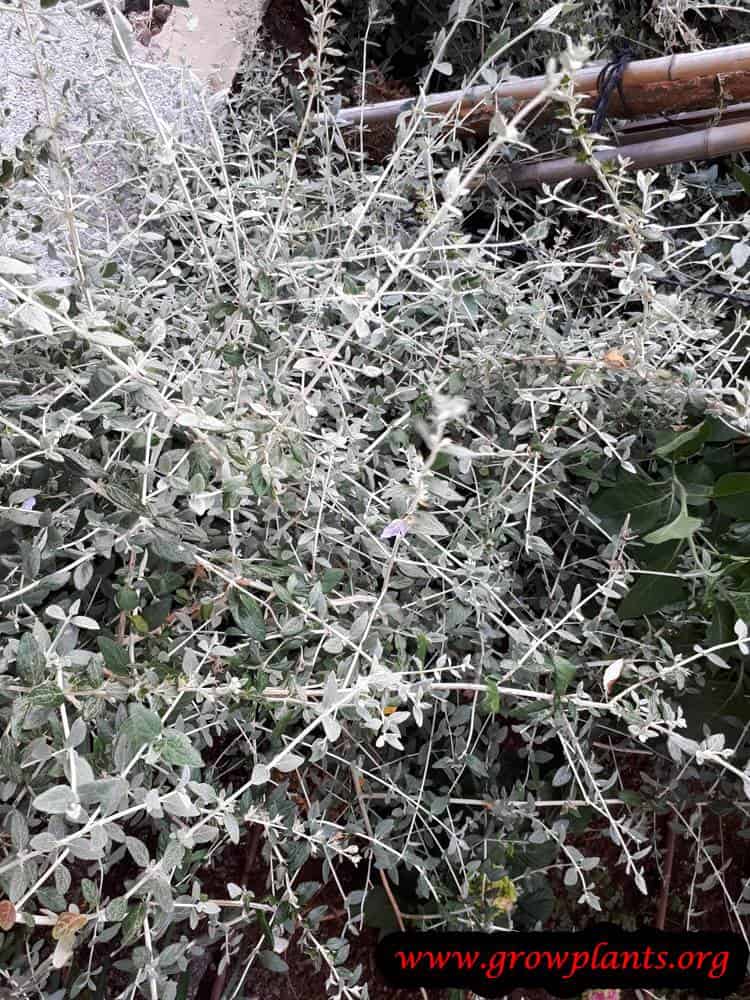
Overview: An evergreen Mediterranean shrub reaching 1-2 m (3-6 ft), grown for its silvery green-grey foliage and pale purple flowers. Tough and drought tolerant, it is used as an ornamental and clipped hedge in dry gardens.
Quick Specifications
| Specification | Attribute |
|---|---|
| Plant Type / Life Cycle | Woody perennial (shrub) |
| Foliage Type | Evergreen |
| Mature Size | 1-2 m (3-6 ft) tall |
| Growth Rate | Fast to moderate |
| Hardiness | USDA zones 8-11a |
Growth Form & Structure
- Height and Spread: In the ground a rounded shrub of 1-2 m (3-6 ft); also grown in containers, which keeps it compact.
- Growth Habit and Form: Dense, bushy, twiggy shrub that takes clipping well for hedging and shaping.
- Lifespan and Maturity: A fast-establishing, drought-hardy evergreen that quickly fills out into a solid mound.
Anatomy & Physical Features
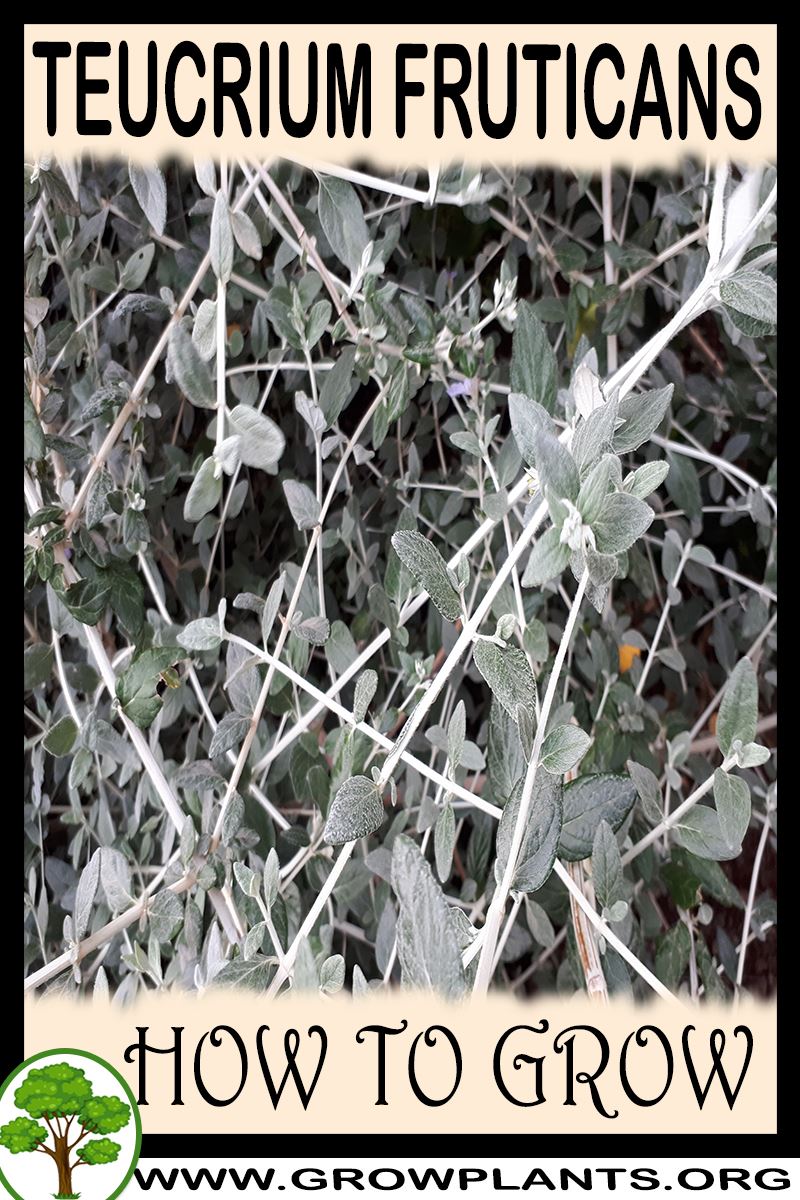
- Leaves and Foliage: Elliptic leaves that are green above and silvery grey beneath, giving the shrub a soft grey sheen.
- Flower Characteristics: Pale purple-to-white two-lipped flowers with a distinctive splayed, insect-like form.
Primary Uses & Landscape Value
- Functional and Ornamental Roles: Drought-tolerant ornamental and low clipped hedge for Mediterranean, gravel and coastal gardens; valued for its grey foliage and long flowering.
Care Guide: Planting, Soil & Watering
Overview: Tree germander is a drought-tolerant evergreen Mediterranean shrub for full sun to part shade and well-drained soil (hardiness zone 8–11a). It needs only light to moderate watering once established and makes an easy, water-wise hedge.
Quick Care Requirements
| Requirement | Ideal Condition |
|---|---|
| Planting Season | Spring, summer or autumn |
| Growth Rate | Fast to moderate |
| Soil Type | Well-drained soil |
| Water Need | Low to moderate — let the soil dry between waterings |
Planting & Establishment
- Best Planting Season: Plant through the warm season from spring to autumn; hardy in zones 8 to 11a.
- How to Plant:
- Hole Preparation: Dig a hole about twice the width of the root ball and loosen the sides.
- Soil Amendments: Mix a little compost into free-draining backfill; sharp drainage matters more than richness for this Mediterranean shrub.
- Planting Depth: Set the root ball level with the surrounding soil, keeping the stem base clear.
- Growth Speed & Expectations: Grows fast to moderately, quickly forming a bushy shrub or informal hedge.
Soil, Watering & Drainage Care
- Soil Mix & Drainage Needs: Well-drained soil is essential; in containers use a free-draining mix. It tolerates poor, dry soils and dislikes soggy ground.
- Watering Schedule & Technique:
- Young / Newly Planted: Water regularly after planting to establish the roots, keeping the soil lightly moist.
- Established: Once established, water sparingly and deeply, letting the soil dry between waterings — it is genuinely drought tolerant.
- Seasonal Adjustments: A little extra water in extreme heat and very little in cool, wet weather.
Climate, Light & Hardiness
Teucrium fruticans (tree germander) is a Mediterranean-climate shrub equally at home in desert, subtropical, and temperate gardens, thriving in full sun to half shade. It is reliably hardy from USDA zone 8 through the warmer part of zone 11, tolerating both winter cold at its northern limit and summer heat and drought.
Quick Climate Specifications
| Climate Zones | Mediterranean, Desert, Subtropical, Temperate |
|---|---|
| USDA Hardiness Zones | 8–11a |
| Frost Tolerance | Moderate |
| Light Conditions | Full Sun to Half Shade |
Sunlight & Light Exposure
Optimal Light Setup
Full sun brings out its best silvery-green foliage color and heaviest bloom; half shade is tolerated but growth is looser.
Temperature Extremes & Hardiness
USDA Hardiness & Regional Limits
Hardy in USDA zones 8–11a, a typical Mediterranean-climate range that covers both light winter frost and hot, dry summers.
Frost Sensitivity
Tolerates light, brief frost once established; extended or hard freezes outside zone 8 can damage or kill the shrub.
Wind, Humidity & Microclimate
Dry-Air Tolerance
Well adapted to dry Mediterranean and desert air, consistent with its drought-tolerant nature.
Growing in Pots, Balconies & Indoors
Tree germander is a silvery-leaved Mediterranean shrub, excellent in a sunny patio or balcony pot but not a houseplant – it wants full sun, sharp drainage and airy conditions. Clippable and drought-proof, it makes a fine evergreen container specimen and can be shaped or grown informally.
Quick Details
- Container Size: 20-40 L (5-10 gal) for a shrub reaching 1-2 m
- Indoor Suitability: Not a houseplant – a full-sun Mediterranean shrub
- Best Spot: Full sun to half shade
- Soil & Drainage: Gritty, sharply drained mix; it dislikes winter wet
- Watering in Pots: Small to average – drought-tolerant; let it dry between waterings
Indoors & On the Windowsill
- Houseplant limits: Not a houseplant – it needs full sun and free-moving air to keep its silver foliage tight and healthy; indoors it grows soft and leggy.
- Overwintering: It is only half-hardy, so in cold-winter areas move the pot into a bright, frost-free, airy spot over winter and return it to full sun once frosts pass.
On a Balcony or Patio
- Light & heat: Give it the sunniest, most sheltered spot; it loves reflected heat from walls and lean, dry conditions. Clip it after flowering to keep it neat.
- Practicalities: A filled pot is heavy once watered – check the balcony can take the load, and stand it where drainage runoff will not be a nuisance.
Choosing the Pot, Soil & Long-Term Care
- Pot & drainage: A 20-40 L pot with strong drainage holes and never leave it standing in a saucer of water, or the roots rot. Terracotta breathes and dries faster; glazed or plastic holds moisture longer.
- Potting mix: A gritty, free-draining mix – potting compost with added grit, perlite or coarse sand.
- Feeding: Feed only lightly; too rich a diet gives soft growth and fewer flowers.
- Repotting: Refresh the top layer of mix and pot up roughly every couple of years; for perennials, lightly trim the root ball and top growth when you do.
Fertilizing & Feeding
A light feeder typical of drought-tolerant Mediterranean shrubs: a modest balanced feeding as spring growth resumes and light support through summer bloom is enough, with no feeding needed once growth slows for the cooler months.
Quick Fertilizing Specs
| Feeding Level | Light feeder |
|---|---|
| Main Nutrient Priority | Balanced feeding with adequate nitrogen in spring, shifting toward support for bloom through summer |
| Best Feeding Period | Spring into early summer as growth and flowering ramp up |
| Organic Options | Compost or organic matter worked into the soil at planting |
| Reduce/Stop Feeding | Stop feeding as growth slows heading into the cooler, less active part of the year |
| Micronutrients | Usually met by a complete fertilizer and organic soil; correct only if a specific deficiency is diagnosed |
Feeding by Growth Stage
Spring growth flush
Support fresh stem and foliage growth as this evergreen shrub resumes active growth in spring.
| Nutrient direction | A balanced, nitrogen-adequate feeding fuels new stem and leaf growth without overdoing it on a naturally lean-loving shrub. |
|---|---|
| Timing | As new growth resumes in spring. |
| Frequency | A single light feeding at the start of active spring growth is usually enough. |
| Fertilizer types | A balanced complete fertilizer used at a light rate, Compost or organic matter worked into the soil |
| Precautions | Keep feeding light; this drought-tolerant shrub is adapted to lean, well-drained soil and overfeeding can produce weak, floppy growth. |
Spring-to-summer bloom
Support the purple-to-white flower display through spring and into summer.
| Nutrient direction | Continued light, balanced feeding supports flowering without favoring leafy growth over blooms. |
|---|---|
| Timing | Through the spring-to-summer flowering period. |
| Frequency | Minimal feeding is usually enough for an established shrub; a light supplemental feeding can help if growth looks thin. |
| Fertilizer types | A balanced complete fertilizer used sparingly, Compost as an occasional top-dressing |
| Precautions | Avoid heavy nitrogen during bloom, which favors leafy growth over flowers and can soften growth used for hedging. |
Cool-season rest
Let the shrub coast through the cooler, slower part of the year without pushing new growth.
| Nutrient direction | None – withhold fertilizer while growth is slow. |
|---|---|
| Timing | During the cooler months when growth is minimal. |
| Frequency | No feeding at this stage. |
| Fertilizer types | No feeding at this stage; resume only once active spring growth returns. |
| Precautions | Do not fertilize while growth is slow; unused fertilizer salts simply accumulate in the soil without benefit. |
Nutrient Deficiency Signs & Corrections
Older leaves fade to pale green or yellow and overall growth and flowering slow.
| Possible causes | low available soil nitrogen, very poor, depleted soil, heavy rain or watering leaching nutrients from fast-draining soil |
|---|---|
| Appears first on | older, lower leaves |
| What to check | recent feeding history, soil organic matter level, overall vigor and leaf color |
| Possible correction | Apply a light, balanced fertilizer and work in organic matter, then monitor for improvement. |
Leaves yellow or drop and growth stalls despite otherwise favorable conditions.
| Possible causes | poorly drained soil holding excess moisture, overwatering a drought-adapted shrub, root rot from prolonged wet conditions |
|---|---|
| Appears first on | lower leaves and stems |
| What to check | soil drainage and recent watering, root condition if the plant can be inspected, signs of rot at the base |
| Possible correction | Improve drainage and reduce watering before considering any fertilizer adjustment, since feeding will not fix a drainage problem. |
Leaf margins brown or scorch even with adequate watering.
| Possible causes | fertilizer salt buildup in the root zone, over-fertilizing a naturally low-demand shrub, under-watering that concentrates salts |
|---|---|
| Appears first on | leaf margins and tips |
| What to check | recent fertilizer amounts, watering consistency, soil drainage |
| Possible correction | Ease off feeding and water thoroughly to help flush excess salts from the root zone. |
Pruning, Training & Seasonal Maintenance
Teucrium fruticans (tree/shrubby germander) is a fast-to-medium growing, drought-tolerant Mediterranean shrub often grown as a clipped or informal hedge; it takes regular shaping well during its autumn/winter pruning window, but like many Mediterranean, grey-leaved shrubby subshrubs it does not reliably resprout from very old, leafless wood, so cuts should generally stay within the plant’s actively leafy growth rather than into bare interior stems.
Quick Pruning & Maintenance Specs
| Pruning Tolerance | Moderate (avoid cutting into old bare wood) |
| Primary Pruning Window | Autumn to winter |
| Secondary Maintenance Window | Light trim after spring-summer bloom to tidy shape |
| Typical Frequency | 1-2 times a year |
| Main Objective | Maintain hedge/shrub shape and density |
| Young Plant Priority | Pinch/tip-prune to build a dense, multi-branched base |
| Mature Plant Priority | Shape/renew without cutting into bare old wood |
| Best Tool Type | Hedge shears (formal hedge) or bypass secateurs (informal shaping) |
| Avoid Heavy Pruning During | Flowering (spring-summer), and any cutting into bare, leafless old wood at any time |
Pruning by Plant Age & Size
Newly Established
Pinch tips early to encourage branching from low down, building the dense base a good hedge or shrub needs rather than a single leggy stem.
Young / Formative
Repeated light tipping/shearing while young establishes the dense, twiggy structure this species is valued for as a hedge plant; there is no central-leader training – it is trained purely as a multi-branched shrub or clipped hedge form.
Mature / Established
Routine shape-maintenance shearing or selective cuts, always staying within leafy wood; avoid letting a formal hedge get wider each year by always cutting to the same outer line rather than progressively deeper.
Seasonal Pruning Schedule
Dormant / Winter
The main structural/shape cut, done while the plant is not actively flowering.
Post-Flowering
A light trim after the spring-summer bloom removes spent flower spikes and tidies shape without waiting for autumn, and is safe because flowers form on current-season growth.
Flowering & Fruiting Wood
Flowers form on the current season’s new growth, so an autumn/winter or post-flowering trim does not remove next year’s flowering wood – next season’s flowers will come from whatever fresh growth follows the cut.
Structural Pruning & Training
Light, regular shearing/tipping keeps the naturally twiggy growth dense; because this and related Mediterranean subshrubs can decline if cut back hard into bare wood, favor frequent light trims over occasional severe cuts to control size and shape.
Special Growth to Remove
- Dead or frost-damaged tips.
- An occasional overly vigorous shoot on informal specimens, thinned to keep the shrub’s outline even.
Container & Small-Space Pruning
Trim more frequently and lightly in a container to keep a compact hedge-in-a-pot form, since the same avoid-old-wood caution applies and a container specimen has less room to recover from a miscalculated hard cut.
Tools
Hedge shears for a clipped formal hedge line; bypass secateurs for informal shaping, spent-flower removal and any selective renewal cuts within leafy wood.
Tool Hygiene & Disease Risk
Routine – aphids are the only reported pest and are not tool-transmitted; clean, sharp tools are sufficient.
Cut Placement & Technique
Shear to a consistent hedge line, always leaving some leafy growth on every cut stem; for informal shaping, cut just above a leafy node and avoid heading cuts that leave only bare wood behind.
Heavy Pruning & Rejuvenation
Use caution – unlike more forgiving shrubs, Teucrium fruticans (in common with many grey-leaved Mediterranean subshrubs) may not reliably resprout if cut back hard into completely bare, leafless wood, so avoid severe rejuvenation cuts; instead, renew an overgrown specimen gradually over a couple of seasons, always cutting back into wood that still carries some leaves.
Post-Pruning Care
Water normally, though this is a drought-tolerant species so avoid overwatering after a trim; no extra feeding is needed.
Common Pruning Mistakes
- Cutting back hard into bare, leafless interior wood expecting it to resprout, which can leave permanent gaps.
- Letting a formal hedge creep wider each year by shearing progressively deeper instead of holding a consistent line.
- Pruning during full bloom and losing the current flower display unnecessarily.
When NOT to Prune
Avoid cutting into old bare wood at any time of year; avoid pruning during peak spring-summer flowering if the display is wanted; avoid pruning during prolonged wet weather, since this well-drained-soil species can be disease-prone if kept damp.
Recommended Tools (by task)
- hedge_shears – maintaining a clipped formal hedge line.
- bypass_secateurs – informal shaping, deadheading and careful renewal cuts that must stay within leafy wood.
Pruning Troubleshooting
| Problem | Possible Cause | What to Check | Corrective Action |
| Bare patches / no regrowth after a hard cut | Cutting into old, leafless wood that won’t reliably resprout | Whether cuts were made into bare interior stems | In future, prune only into wood that still carries leaves; allow surrounding growth to fill in |
| Hedge getting progressively wider or taller each year | Shearing to a slightly wider line each time instead of holding a fixed shape | Whether the same outer line is used each cut | Shear back to the same outer line consistently |
| Reduced flowering | Pruned too late, removing the current season’s developing flower buds | Timing of the last cut relative to the spring-summer bloom | Shift the main structural cut to autumn/winter dormant season, with only a light post-bloom trim |
Propagation Guide
Teucrium fruticans is most commonly and reliably propagated from semi-hardwood stem cuttings, the standard nursery method for this Mediterranean hedging shrub, which the site confirms is not required (seed also works) but which best preserves a uniform, compact growth habit for hedging. Propagation is easy by cuttings.
Quick Propagation Specs
| Best Propagation Method | Semi-hardwood stem cuttings |
| Alternative Methods | Seed |
| Propagation Difficulty | Easy |
| Vegetative True-to-Type | Yes |
| Best Propagation Season | Spring through autumn, matching this plant’s planting season |
| Cutting Rooting Time | Typically a few weeks under warm conditions |
Growing from Seed
Seed is a secondary option for this species; germination can be slow and uneven, which is one reason cuttings are more commonly used to raise new plants, especially for hedging where uniformity matters. The site does not give detailed sowing figures for this plant.
Stem Cuttings
Cutting Type
Semi-hardwood tip cuttings from the current season’s growth.
Best Timing
Summer, once new growth has begun to firm up, through into autumn.
Cutting Preparation
Take cuttings from healthy, non-flowering shoots and remove the lower leaves before inserting.
Rooting Setup
A free-draining cutting mix suits this drought-tolerant, well-drained-soil-loving shrub.
Rooting Hormone
Optional – often speeds and evens rooting but is not strictly required for this shrub.
Rooting Time
Typically a few weeks under warm conditions.
Bloom & Flower Guide
Quick Details
- Bloom Season: Spring into summer, with scattered flowers at other times in mild climates
- Time to First Bloom: Once the shrub is established, within a year or two
- Flower Appearance: Pale blue to lilac lipped flowers with a prominent lower lip and long, arching stamens
- Edibility: Ornamental / none
Detailed Blooming Overview
Tree germander is a tough, grey-leaved Mediterranean shrub that flowers mainly from spring into summer, often with a scattering of blooms at other times where winters are mild. Each pale blue to lilac flower has a single, spreading lower lip and long stamens that arch out – the “four arms and a body” the grower describes – giving the bush a soft, hazy look when it is covered in bloom. Bees work the flowers readily.
Flower Characteristics
- Lipped flowers in pale blue to soft lilac.
- A broad lower lip with conspicuous, arching stamens.
- Set against silvery, grey-green foliage; drought-tolerant and bee-friendly.
Bloom Care & Thinning
- Managing the bloom: A trim after the main flush keeps the shrub dense and encourages more flowers; it takes well to clipping as a low hedge.
- Pollination & wildlife: Leave the flowers to feed bees through spring and summer.
Pests, Diseases & Troubleshooting
Overview: Shrubby germander is an aromatic, grey-leaved Mediterranean shrub built for hot, dry, lean conditions and is almost entirely pest-free; its foliage deters most insects, and its only real enemies are root rot and dieback in wet, heavy soil. Full sun, sharp drainage and light shearing keep it healthy and dense.
Quick Troubleshooting Overview
| Issue / Pest | Main Symptom | Primary Solution |
|---|---|---|
| Root rot | Wilting, dieback in wet soil | Sharp drainage, ease watering |
| Aphids | Occasional sticky new tips | Water jet, insecticidal soap |
| Powdery mildew | White coating in humid shade | Improve airflow and sun |
| Legginess | Bare, sprawling old stems | Shear lightly and regularly |
| Frost damage | Blackened tips after cold | Shelter, avoid late feeding |
Common Pests & Management
- Aphids (Aphidoidea):
- Symptoms: Clusters of tiny soft-bodied green, black or grey insects on new shoots, flower buds and leaf undersides. Feeding causes puckered, curled or yellowing young growth, and a sticky honeydew that fosters sooty mould and attracts ants.
- Prevention & Control: Knock colonies off with a firm jet of water and pinch out badly infested tips. Encourage ladybirds, lacewings and hoverflies, and avoid excess nitrogen that pushes soft sappy growth. For persistent outbreaks apply insecticidal soap or a light horticultural/neem oil, coating leaf undersides and spraying in the cool of evening to protect pollinators.
- Spider Mites (Tetranychus urticae):
- Symptoms: Fine pale stippling or bronzing of leaves, with delicate silken webbing on undersides and between stems; worst in hot, dry, dusty conditions. Heavily fed leaves dry, curl and drop.
- Prevention & Control: Raise humidity and hose foliage regularly to break the dry microclimate mites favour. Remove and destroy the worst leaves, and conserve predatory mites and other natural enemies. Treat with insecticidal soap or horticultural/neem oil, thoroughly wetting leaf undersides and repeating every 5-7 days to catch new hatchlings.
- Mealybugs (Pseudococcidae):
- Symptoms: White cottony masses tucked in leaf axils, growing points and along veins; feeding weakens the plant and leaves sticky honeydew followed by sooty mould. Some species also attack roots.
- Prevention & Control: Dab visible colonies with a cotton bud dipped in dilute alcohol and isolate affected plants. Avoid over-feeding with nitrogen. Encourage predators such as the mealybug destroyer ladybird, and treat with insecticidal soap or horticultural/neem oil, repeating until clear.
Diseases & Fungal Issues
- Root & Crown Rot (Phytophthora / Pythium spp.):
- Symptoms: Wilting despite moist soil, yellowing lower leaves, and dark, soft, decayed roots or a rotted stem base; a slow decline or sudden collapse in heavy, wet ground follows.
- Treatment & Management: Prevention is decisive: plant in free-draining soil (or raised beds), never let the crown sit wet, and water only when the topsoil dries. Remove and destroy badly affected plants and improve drainage before replanting; biological drenches (Trichoderma) can help protect healthy roots.
- Powdery Mildew (Erysiphales):
- Symptoms: A white to greyish powdery coating on leaves and shoots, usually starting on the upper surface; affected leaves may yellow, distort and drop. Worst in crowded plantings with warm days, cool nights and poor airflow.
- Treatment & Management: Space and prune for good air movement and sun, and avoid wetting foliage late in the day. Remove affected leaves and clear fallen debris. Where needed, apply a sulphur or potassium-bicarbonate fungicide, or a horticultural oil, at first signs and repeat per label.
- Fungal Leaf Spot (Cercospora / Colletotrichum spp.):
- Symptoms: Brown, tan or black spots, often with a yellow halo or concentric rings, that enlarge and merge in warm humid weather; severe spotting causes leaves to yellow and fall.
- Treatment & Management: Remove and destroy spotted leaves and fallen litter to reduce spores, and avoid overhead watering. Improve spacing and airflow. Copper-based fungicides can protect new growth if the problem recurs each season.
Growing Difficulties & Abiotic Problems
- Overwatering & Root Rot:
- Cause & Symptoms: Yellowing lower leaves, wilting despite wet soil, and a soft, foul-smelling root ball or stem base result from waterlogged, airless soil that suffocates and rots the roots.
- Correction Strategy: Let the soil dry appropriately between waterings, plant in free-draining media, and ensure pots have working drainage holes. Ease off water in cool or dormant periods and never leave the plant standing in a saucer of water.
- Woodiness & Legginess:
- Cause & Symptoms: Sprawling, bare-based stems with sparse leaves and fewer flowers as the plant ages, especially if left unpruned or grown in too much shade.
- Correction Strategy: Shear or prune lightly and regularly to keep growth dense and young, grow in full sun, and avoid over-rich feeding. Hard renovation pruning of old woody plants is best done cautiously, as some resent cutting into bare wood.
- Frost & Cold Damage:
- Cause & Symptoms: Blackened, water-soaked, limp new growth and leaf tips after a cold snap; this tender or tropical plant is damaged or killed by frost and by prolonged cold.
- Correction Strategy: Site in a warm, sheltered spot, delay planting until the cold has passed, and protect with fleece or bring container plants under cover when frost threatens. Avoid feeding late so growth hardens off before cold weather.
What Helps – Products & Tools
This aromatic shrub needs almost no chemical help; insecticidal soap or neem oil covers the rare aphid, and good drainage and airflow prevent the rot and mildew that are its only real threats. Regular light shearing does more for its health and shape than any product.