Plant Profile & Key Characteristics
Overview: A herbaceous annual about 15-50 cm (6-20 in) tall, grown for both its edible spinach-like leaves and its edible red mulberry-like fruit clusters. It is also grown as an unusual ornamental edible.
Quick Specifications
| Specification | Attribute |
|---|---|
| Plant Type / Life Cycle | Annual |
| Mature Size | 15-50 cm (6-20 in) tall |
| Growth Rate | Fast to moderate |
| Toxicity | Leaves contain oxalates (eat in moderation) |
| Hardiness | USDA zone 2-10 |
Growth Form & Structure
- Height & Spread: 15-50 cm (6-20 in) tall; grows in the ground or in containers.
- Growth Habit & Form: Upright leafy annual bearing rounded fruit clusters along the stems.
- Lifespan & Maturity: Fast-growing annual; leaves and fruit are harvested within the season.
Anatomy & Physical Features
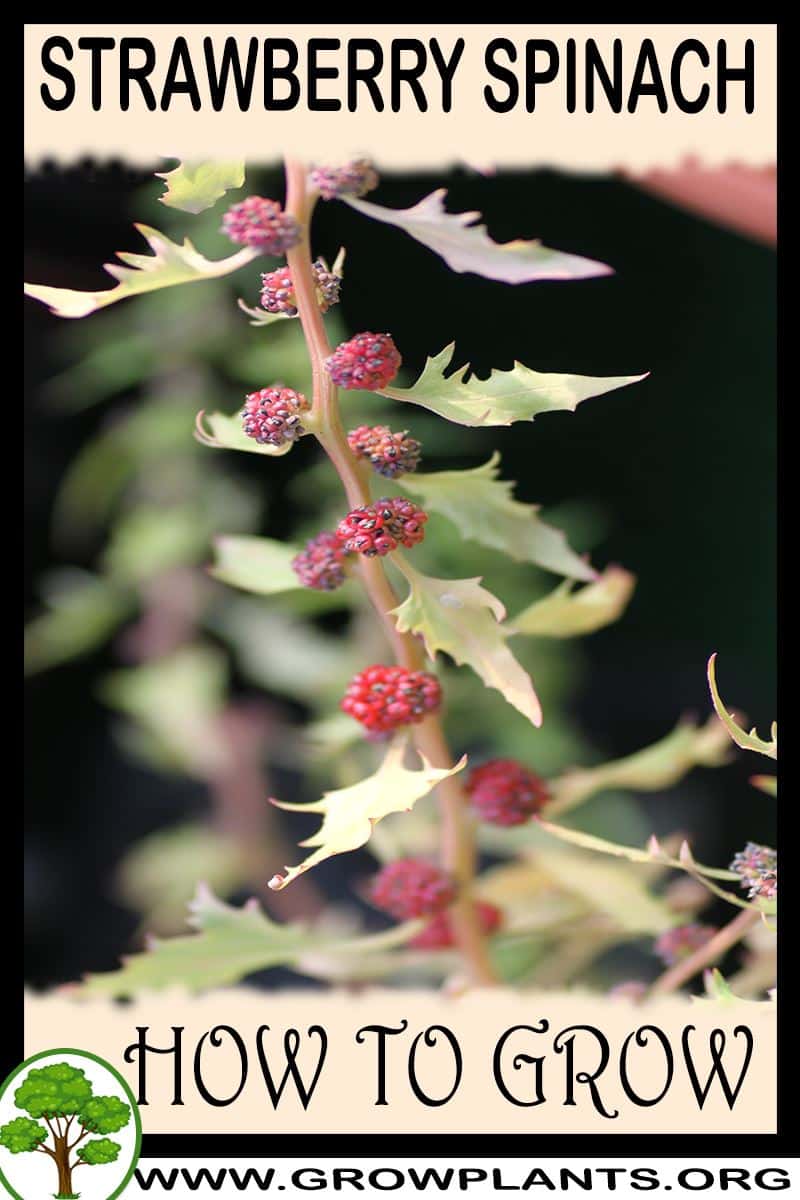
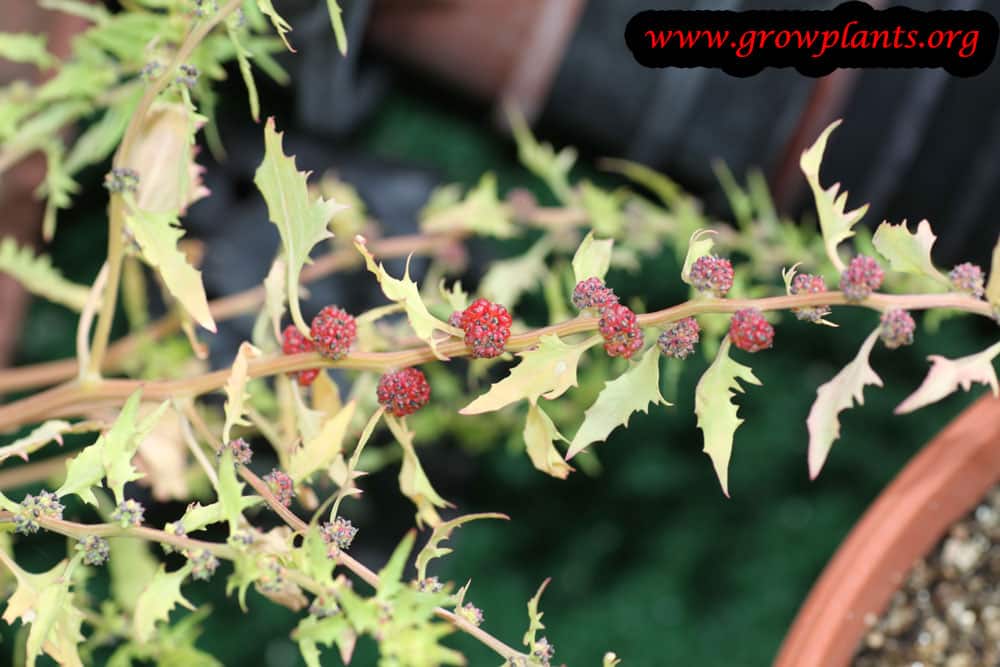
- Leaves & Foliage: Light green, hastate to linear leaves with entire to serrate edges.
- Flower Characteristics: Tiny green flowers, 1-2 mm, borne on the stems (full detail in the Bloom section).
- Fruit Profile: Edible red mulberry-like clusters of small cells, mild in flavour (full detail in the Fruit section).
Primary Uses & Landscape Value
- Edible Uses: Leaves eaten raw, in salads or stir-fried; the red fruit clusters eaten raw or made into jams and juice.
- Functional & Ornamental Roles: Grown as an ornamental edible; the colourful fruit is decorative.
Care Guide: Planting, Soil & Watering
Overview: Strawberry spinach is an easy, fast-growing cool-season annual for full sun to part shade, thriving in a moist, fertile, well-drained soil. It likes cool conditions and steady moisture, and can self-seed freely.
Quick Care Requirements
| Requirement | Ideal Condition |
|---|---|
| Planting Season | In spring in temperate climates; in autumn in frost-free areas (it favours cool weather) |
| Growth Rate | Moderate to fast |
| Soil Type | Moist, fertile and well-draining |
| Water Need | Moderate to high – keep evenly moist for tender leaves |
Planting & Establishment
- Best Planting Season: Sow or plant in spring in cooler climates, or in autumn where frost-free.
- How to Plant:
- Hole Preparation: Loosen and rake the bed to a fine tilth and clear weeds.
- Soil Amendments: Work in compost or organic matter for fertility and moisture retention.
- Planting Depth: Sow shallowly and set transplants with the crown at soil level.
- Growth Speed & Expectations: Moderate to fast; a 15–50 cm (6–20 in) plant that matures quickly and readily self-seeds.
Soil, Watering & Drainage Care
- Soil Mix & Drainage Needs: Moisture-retentive but well-drained soil; in pots use a free-draining mix.
- Watering Schedule & Technique:
- Young / Newly Planted: Keep the seedbed consistently moist.
- Established: Water regularly to keep the leaves tender; do not let it dry out fully.
- Seasonal Adjustments: More in warm, dry spells; less in cool, damp weather.
Climate, Light & Hardiness
Strawberry spinach is a cool-climate hardy annual that thrives in the mild conditions of spring and autumn in full sun or light shade. It tolerates cold well, while summer heat shortens the leaf season and pushes it to flower and set its berry-like fruit.
Quick Climate Specifications
| Climate Zones | Temperate, cool-Mediterranean and cool-subtropical; a cool-season crop |
| USDA Hardiness Zones | 2–10 |
| Optimal Temp Range | Cool to mild, roughly 13–22°C (55–72°F) |
| Cold Damage Begins | Tolerates light frost; foliage damaged by harder freezes below about −4°C (25°F) |
| Approx. Survival Minimum | As a self-seeding annual it dies back with hard freezes but returns readily from seed |
| Frost Tolerance | Moderate to High |
| Light Conditions | Full sun to half shade |
| Wind Tolerance | Moderate |
Sunlight & Light Exposure
Optimal Light Setup
Full sun produces the best leaf and fruit yield; in warm areas light shade slows bolting and keeps the young leaves tender for longer.
Temperature Extremes & Hardiness
USDA Hardiness & Regional Limits
Grown as a cool-season annual across a wide range: sown in autumn where winters are frost-free and in spring in temperate areas. The zone span (about 2–10) reflects that it needs only a mild growing window and self-seeds freely, so it reappears year after year.
Cold Damage & Winter Protection
Young plants shrug off light frost. Hard freezes end the plant for the season, but ripe seed dropped beforehand overwinters in the soil and germinates the following spring.
Extreme Heat Tolerance
Hot weather triggers early flowering and coarser, less palatable leaves, so the crop is best enjoyed before high summer in warm regions.
Wind, Humidity & Microclimate
Microclimate Recommendations
A cool, open, sunny bed suits it; be aware it can self-sow aggressively, so a spot where volunteer seedlings are welcome is ideal.
Growing in Pots, Balconies & Indoors
Strawberry spinach is an easy leafy annual grown for its edible leaves and berry-like fruits. The grower does not rate it as a houseplant, but it does well in containers and can crop on a bright, sunny sill.
Quick Details
- Container Size: A pot or trough at least 15-20 cm (6-8 in) deep (general guide)
- Indoor Suitability: Not a houseplant, but a very sunny windowsill grows leaves
- Best Spot: Full sun to part shade
- Soil & Drainage: Rich, moisture-retentive mix that still drains
- Watering in Pots: Keep steadily moist; average to generous needs
Indoors & On the Windowsill
- Houseplant: The grower’s answer is No – it is a sun-loving annual, not a foliage houseplant.
- Windowsill growing: A very sunny windowsill can still raise a compact plant for a few pickings of leaves – give it the brightest light you have.
On a Balcony or Patio
- Light & wind: Happy in sun on a balcony or patio; taller plants may need a little shelter from strong wind. Pots against warm walls dry quickly, so check moisture in summer.
- Practicalities: Easy in wide, shallow containers and simple to move.
Choosing the Pot, Soil & Long-Term Care
- Pot & drainage: Use a pot with strong drainage holes and skip a standing-water saucer to avoid root rot; terracotta breathes and dries out faster, while glazed or plastic pots hold moisture longer.
- Potting mix: Fill with a well-aerated, organic-rich medium – a quality potting mix, or peat/coir blended with perlite or vermiculite for free drainage.
- Feeding: Potted plants use up their soil quickly because watering leaches nutrients away, so feed a little more often than plants in open ground through the growing season.
- Season: As an annual it finishes in one season, so start each new crop in fresh mix rather than repotting.
Growing this plant in a greenhouse
A greenhouse can give strawberry spinach cold protection, a longer growing season, winter growing and a head start for propagation.
Greenhouse at a glance
| Greenhouse suitability | Good - clearly useful |
|---|---|
| Main benefits | cold protection, a longer growing season, winter growing, a head start for propagation |
| Season extension | can grow through winter |
| Outdoor protection advisable below | about -4°C |
| Suitable types | unheated greenhouse, polycarbonate greenhouse |
| Heating | No added heat is normally needed. |
Related greenhouse guides
- Greenhouses: How to Choose the Right Greenhouse
- Polycarbonate Greenhouses: What to Look for Before Buying
- Greenhouse Propagation Equipment
Fertilizing & Feeding
A moderate feeder grown for its leaves: steady, light nitrogen-forward feeding through the growing season, backed by organic matter, keeps foliage tender and productive. A fertilizer formulated for tomatoes and vegetables supports that feeding pattern through harvest.
Quick Fertilizing Specs
| Feeding Level | Moderate feeder |
|---|---|
| Main Nutrient Priority | Nitrogen-forward, balanced overall |
| Best Feeding Period | Through active leafy growth in the growing season |
| Organic Options | Compost, well-rotted manure, and nitrogen-rich amendments |
| Micronutrients | Usually supplied by compost and a complete fertilizer; correct specific issues only when diagnosed |
| Soil pH | Slightly acidic to near neutral |
Feeding by Growth Stage
Establishment after sowing or transplanting
Support quick rooting and early leaf development as young plants take hold.
| Nutrient direction | A balanced complete fertilizer with steady nitrogen to start leafy growth. |
|---|---|
| Timing | From sowing or transplanting through early establishment. |
| Frequency | A light feeding as growth begins, refreshed gently as the young plants settle in. |
| Fertilizer types | A balanced complete garden fertilizer, Compost or well-rotted organic matter worked into the bed |
| Precautions | Keep feeding light on tender seedlings and water in well to avoid salt burn. |
Active leafy growth and harvest
Drive lush, tender leaves, which are the harvested part of the crop.
| Nutrient direction | Lean nitrogen-forward, since the leaves are the yield, while keeping other nutrients adequate. |
|---|---|
| Timing | Through the main leafy growth and repeated cut-and-come-again harvest. |
| Frequency | Several light feedings across the growing season, easing off as weather turns unfavorable. |
| Fertilizer types | A nitrogen-forward complete or leafy-green fertilizer, Side-dressing with compost or a nitrogen-rich organic amendment |
| Precautions | Avoid heavy single doses that push soft growth or scorch leaves; regular harvest keeps plants productive. |
Nutrient Deficiency Signs & Corrections
Older, lower leaves fade to pale green or uniform yellow and overall growth slows.
| Possible causes | low available soil nitrogen, nitrogen leaching from heavy watering or rain, thin, low-organic-matter soil |
|---|---|
| Appears first on | older, lower leaves |
| What to check | recent feeding history, soil organic matter, watering and drainage |
| Possible correction | Apply a nitrogen-containing complete fertilizer and build soil organic matter, then water evenly. |
Interveinal yellowing on older leaves while the veins themselves stay green.
| Possible causes | low soil magnesium, high potassium feeding competing with magnesium uptake, leaching in light, sandy soils |
|---|---|
| Appears first on | older, lower leaves |
| What to check | soil magnesium status, how potassium-heavy recent feeding has been, soil texture and leaching |
| Possible correction | Apply a labeled magnesium source such as Epsom salt or a dolomitic amendment and rebalance feeding. |
Leaf margins brown or scorch and growth stalls despite adequate watering.
| Possible causes | fertilizer salt buildup in the root zone, under-watering that concentrates salts, excessive or too-frequent feeding |
|---|---|
| Appears first on | leaf margins and tips |
| What to check | recent fertilizer amounts, watering consistency, drainage, especially in containers |
| Possible correction | Ease off feeding, water thoroughly to flush accumulated salts, then return to lighter feeding. |
Pruning, Training & Seasonal Maintenance
Strawberry spinach is an annual grown for two things at once – tender young leaves and the red, strawberry-like fruiting clusters along the stems – so pruning choices depend on which you want. It needs no structural pruning; the real jobs are cut-and-come-again leaf harvest, tidying old and dead leaves, and controlling its prolific self-seeding, since it can become invasive. Because the fruit forms on the flowering stems, removing flower stalks trades away the fruit crop.
Pruning & the Edible Harvest
Strawberry spinach carries two edible crops at once – tender young leaves and red, strawberry-like fruit clusters – and pruning decides between them. Regular picking keeps young leaves coming, but because the fruit forms on the flowering stems, cutting those stalks (for leaf quality or to curb self-seeding) trades away the fruit.
Quick Pruning & Maintenance Specs
| Pruning Tolerance | Moderate–High for leaf harvest; no structural pruning |
| Primary Pruning Window | Spring–summer (leaf harvest and flowering) |
| Typical Frequency | Pick young leaves as needed; deal with seed heads once fruiting ends |
| Main Objective | Young leaves and/or fruit; prevent unwanted self-seeding |
| Young Plant Priority | Harvest young leaves; thin crowded seedlings |
| Mature Plant Priority | Decide leaf vs fruit; remove seed heads before drop |
| Best Tool Type | Precision snips |
Pruning by Plant Age & Size
Newly Established
Thin self-sown or crowded seedlings and let the plant establish before harvesting; remove only damaged growth.
Young / Formative
No framework to train. Harvest young leaves at the base for the best flavour and texture – regular picking of young leaves keeps them coming.
Mature / Established
Once flowering and fruiting begin, either leave the stems to develop the edible red clusters, or keep cropping young leaves. As the season ends, deal with seed heads before they scatter.
Seasonal Pruning Schedule
Spring–summer, ongoing: pick young leaves and remove old, tough or dead leaves to keep tender growth coming.
Late season (seed control): before the fruit/seed clusters dry and drop, cut and remove them to prevent aggressive self-seeding – this is the single most important cut for keeping the plant in bounds.
Structural Pruning & Training
None. Management is spacing and harvest, not shaping.
Special Growth to Remove
The key removal is the fruiting/seed spikes – keep them if you want to eat the berries or save seed, but cut them off before they mature and shed if you want to prevent a carpet of seedlings next year. Remove old and dead leaves routinely.
Container & Small-Space Pruning
In a container, self-seeding is easier to control – simply remove spent fruit spikes before they drop. Harvest young leaves lightly to match the smaller root system.
Tools
Precision snips handle both leaf harvest and cutting off the slender fruiting stems; no heavier tool is needed.
Tool Hygiene & Disease Risk
Routine. No significant tool-borne disease is associated with this plant; keep snips clean and sharp.
Cut Placement & Technique
Cut leaves at the leaf base; cut fruiting stems back to a main stem or to the base once cropping is done.
Heavy Pruning & Rejuvenation
Not applicable – this is an annual and does not rejuvenate from hard cutting. Manage by successive sowing rather than cutting back.
Post-Pruning Care
Keep soil moist to support fresh leaf growth after picking. No feeding is needed purely because of harvesting.
Common Pruning Mistakes
- Letting seed heads mature and drop, then finding it self-seeds everywhere.
- Cutting off all flowering stems when you actually wanted the edible fruit.
- Harvesting only old, tough leaves – the young leaves are the quality crop.
When NOT to Prune
Do not remove the flowering stems if you want the fruit that season. Avoid stripping a young plant before it is established.
Recommended Tools (by task)
- precision_snips – young-leaf harvest and clean removal of slender seed/fruit spikes for self-seeding control.
Propagation Guide
Strawberry spinach is grown only from seed, sown directly in the bed; it self-sows freely and can become weedy, so no vegetative method is needed. It is Easy.
Quick Propagation Specs
| Best Propagation Method | Seed (direct-sown) |
| Propagation Difficulty | Easy |
| Seed True-to-Type | Comes largely true as an open-pollinated annual; self-sown seedlings reproduce the plant readily |
| Best Propagation Season | Autumn in frost-free areas; spring in temperate climates |
Growing from Seed
Seed Handling & Viability
Store seed dry and dark; fresh seed germinates readily.
Sowing Season
Sow in spring in temperate climates and in autumn in frost-free areas.
Sowing Depth & Orientation
Surface-sow and barely cover the small seed, then thin the seedlings.
Seedling Care
Seedlings establish quickly. Because the plant self-seeds prolifically and can be invasive, remove spent seed heads if you want to limit its spread.
Bloom & Flower Guide
Quick Details
- Bloom Season: Spring to summer
- Time to First Bloom: In its first year (annual)
- Flower Appearance: Very small green flowers, 1–2 mm, borne along the stems
- Edibility: Not eaten as a flower – the leaves, and the red fruit clusters that follow, are the edible parts
Detailed Blooming Overview
Strawberry spinach produces tiny green flowers packed along its stems in spring and summer. As they mature they swell into the bright red, berry-like clusters the plant is named for.
Flower Characteristics
- Minute 1–2 mm green flowers clustered along the stems.
Bloom Care & Thinning
- Pollination & fruit set: Bees and flies (wind also plays a part).
Fruit & Uses
Strawberry Spinach is a dual-purpose annual: the light-green leaves are eaten like spinach, and the small berry-like fruiting clusters are edible too. Leaves are used raw or cooked and the fruit is eaten raw.
Quick Edible Specs
| Edible Parts | Leaves; fruit (fruiting clusters) |
|---|---|
| Main Use(s) | Culinary |
| Eaten Raw or Cooked | Leaves both; fruit raw |
| Preparation Required | Wash; cook or moderate the leaves (oxalate) |
| Harvest Season | Leaves and fruit spring to summer |
| Time to First Harvest | Within the first growing season |
| Storage | Use fresh |
| Safety/Toxicity Caveat | Leaves contain oxalates (per the site) — eat in moderation and cook to reduce them; fruit is edible but mild and bland |
Leaves & Greens
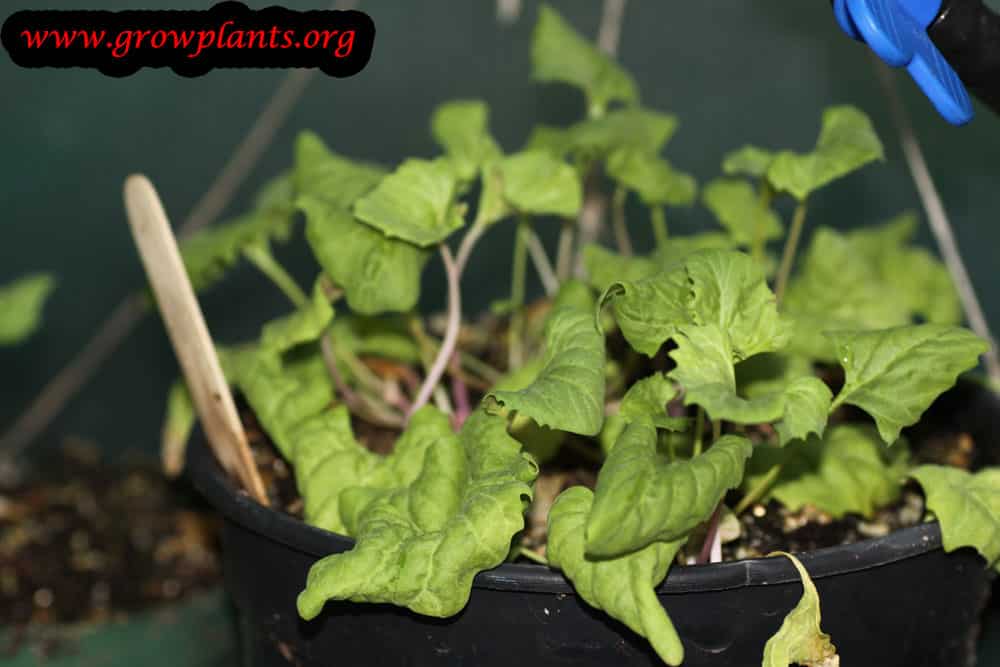
The light-green leaves are hastate to linear with entire-to-serrate edges. Harvest by cutting at the base of the leaf. Use them raw in salad or stir-fried like spinach.
Fruit
The fruit is a soft, round-to-oval cluster of many small cells, ripening purple, red or orange with a mild taste. Pick when well coloured and soft; birds compete for the ripe clusters. Eat raw, or use for jams and juice — the flavour is gentle rather than sweet.
Preparation, Uses & Safety
Wash leaves and fruit. As the site notes, the leaves contain oxalates: eat them in moderation and cook them to reduce oxalate content, and anyone told to limit dietary oxalate should be cautious. The plant self-seeds readily and can be invasive, so picking the fruit also helps limit its spread.
Pests, Diseases & Troubleshooting
Overview: Strawberry spinach is a leafy chenopod (Amaranthaceae, once Chenopodium) closely related to spinach and beet, and it shares their easy-going but predictable pest set. Leaf miners tunnel the foliage, aphids and flea beetles attack the leaves, and downy mildew or leaf spot appear in cool, wet, crowded conditions. Birds strip the red berry-like fruit. It is generally simple to grow; clean seed, row covers and airflow handle most issues.
Quick Troubleshooting Overview
| Issue / Pest | Main Symptom | Primary Solution |
|---|---|---|
| Leaf miner | Pale winding mines inside the leaves | Squash mines, remove leaves, floating row cover |
| Aphids | Colonies on leaf undersides, honeydew | Insecticidal soap, predators, control weeds |
| Flea beetles | Small shot-holes in seedling leaves | Row covers, kaolin clay, vigorous growth |
| Downy mildew | Yellow patches, grey mould beneath | Airflow, resistant seed, remove debris |
| Birds | Red fruiting spikes stripped | Net if fruit is wanted; otherwise a minor issue |
Common Pests & Management
- Leaf miner (spinach/beet leaf miner) (Pegomya spp.):
- Symptoms: Larvae mine between the leaf surfaces, forming pale winding tunnels that blister into papery brown patches on the edible leaves.
- Prevention & Control: Crush mines, remove and destroy affected leaves, cover with floating row cover from emergence, and clear chenopod weeds that host them.
- Aphids (green peach & black bean) (Myzus persicae / Aphis fabae):
- Symptoms: Colonies on leaf undersides and shoots curl and yellow the foliage, leave honeydew, and can spread viruses.
- Prevention & Control: Blast with water, spray insecticidal soap or neem on undersides, control weeds, and support ladybirds and lacewings.
- Flea beetles (Chaetocnema / Phyllotreta spp.):
- Symptoms: Tiny jumping beetles pit seedling leaves with numerous small shot-holes, stunting young plants.
- Prevention & Control: Protect seedlings with row cover, use kaolin clay, and keep plants growing fast with good moisture.
- Caterpillars (armyworm / loopers) (Spodoptera / Trichoplusia spp.):
- Symptoms: Chewed holes and skeletonised patches on the leaves.
- Prevention & Control: Handpick and use Bacillus thuringiensis on young larvae; clear weedy egg-laying sites.
Diseases & Fungal Issues
- Downy mildew (Peronospora spp.):
- Symptoms: Yellow patches on the upper leaf surface with grey-violet mould beneath in cool, wet weather.
- Treatment & Management: Improve airflow and drainage, water early, space plants, remove affected leaves, and choose resistant seed where available.
- Leaf spot (Cercospora / Ascochyta spp.):
- Symptoms: Small tan to brown spots that enlarge and merge on the leaves in humid conditions.
- Treatment & Management: Remove spotted leaves, water at the base, improve airflow, and rotate.
- White rust (Albugo spp.):
- Symptoms: White blister-like pustules on leaf undersides with pale patches above – a disease of spinach-family crops.
- Treatment & Management: Remove affected leaves, avoid overhead watering, improve airflow, and rotate away from chenopod crops.
- Damping-off (Pythium / Rhizoctonia spp.):
- Symptoms: Seedlings collapse at the soil line in cold, wet, over-crowded seedbeds.
- Treatment & Management: Sow into warm, well-drained soil, avoid overwatering and crowding, and do not sow too early.
Growing Difficulties & Abiotic Problems
- Bolting in heat:
- Cause & Symptoms: Long days and heat push it quickly to flower, ending leaf production.
- Correction Strategy: Sow in cool conditions, harvest young leaves promptly, and make succession sowings.
- Nitrate accumulation:
- Cause & Symptoms: Like other leafy chenopods, heavy nitrogen feeding raises leaf nitrate.
- Correction Strategy: Feed moderately and avoid excess nitrogen, especially on leaves harvested for eating.
- Chlorosis:
- Cause & Symptoms: Poor or waterlogged soil yellows the leaves.
- Correction Strategy: Improve soil and drainage and feed lightly with a balanced fertiliser.
What Helps – Products & Tools
For strawberry spinach keep insecticidal soap or neem for aphids, floating row covers and kaolin clay against flea beetles and leaf miners, Bacillus thuringiensis for caterpillars, and copper fungicide only if downy mildew or leaf spot takes hold. Clean seed, rotation and airflow do most of the work.
Frequently Asked Questions
What is strawberry spinach (Blitum capitatum)?
Strawberry spinach (Blitum capitatum) is an annual leaf vegetable grown for its edible, spinach-like foliage and ornamental clusters of red, berry-like fruits.
How do you grow strawberry spinach?
Strawberry spinach is an easy, fast-growing cool-season annual for full sun to part shade, thriving in a moist, fertile, well-drained soil. Sow or plant in spring in cooler climates, or in autumn where frost-free, working compost into the bed first. Once established, water regularly to keep the leaves tender and do not let it dry out fully.
How do you grow strawberry spinach from seed?
Strawberry spinach is grown only from seed, sown directly in the bed; it self-sows freely, so no vegetative method is needed and it is easy to propagate. Surface-sow and barely cover the small seed, then thin the seedlings, sowing in spring in temperate climates or in autumn in frost-free areas.
Is strawberry spinach invasive or prone to self-seeding?
Yes, it self-seeds prolifically and can become invasive if left unchecked. Before the fruit/seed clusters dry and drop, cut and remove them – this is the single most important step for keeping the plant in bounds and limiting its spread.
Are the leaves and berries of strawberry spinach safe to eat?
Both parts are edible – the leaves are eaten raw or cooked like spinach, and the fruit clusters are eaten raw. The leaves do contain oxalates, so eat them in moderation and cook them to reduce the oxalate content.