Plant Profile & Key Characteristics
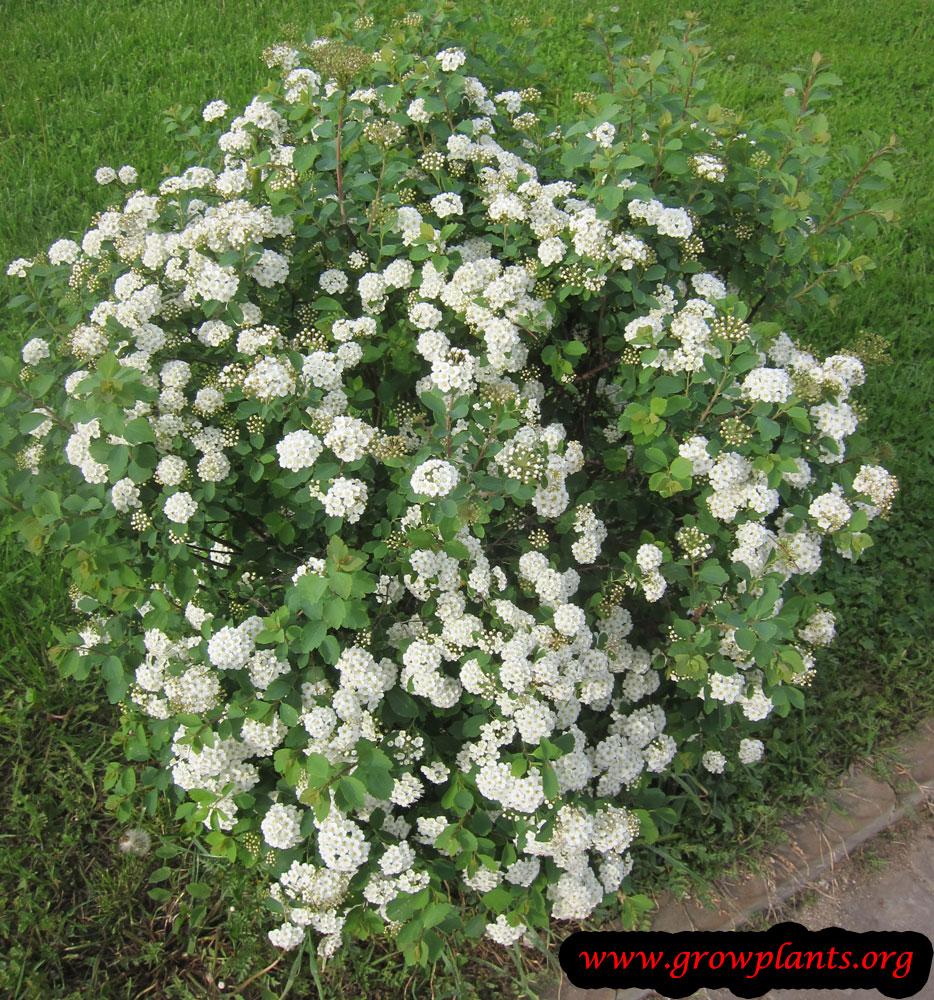
Overview: Van Houtte spiraea (Spiraea vanhouttei) is a deciduous ornamental shrub 1-2.5 m tall with arching stems. It is a perennial hedge and specimen plant that attracts pollinators.
Quick Specifications
| Specification | Attribute |
|---|---|
| Plant Type / Life Cycle | Perennial (deciduous shrub) |
| Foliage Type | Deciduous |
| Mature Size | 1-2.5 m (3-8 ft) |
| Growth Rate | Moderate to fast |
| Hardiness | USDA zones 4-8 |
Growth Form & Structure
- Height & Spread: 1-2.5 m (3-8 ft) in ground; also grows in a large container.
- Growth Habit & Form: Multi-stemmed shrub with gracefully arching branches forming a fountain shape.
- Lifespan & Maturity: Fast to fill out; long-lived once established.
Anatomy & Physical Features
- Leaves & Foliage: Green elliptic leaves with serrated margins.
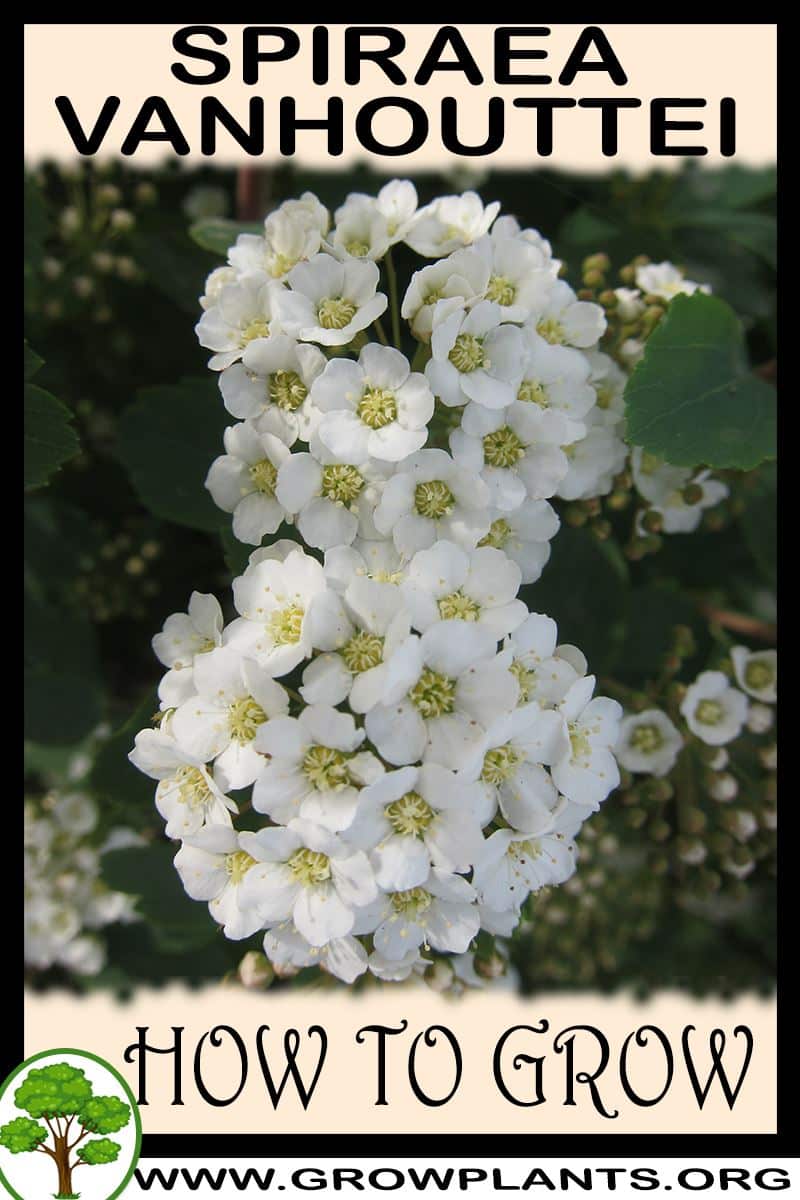
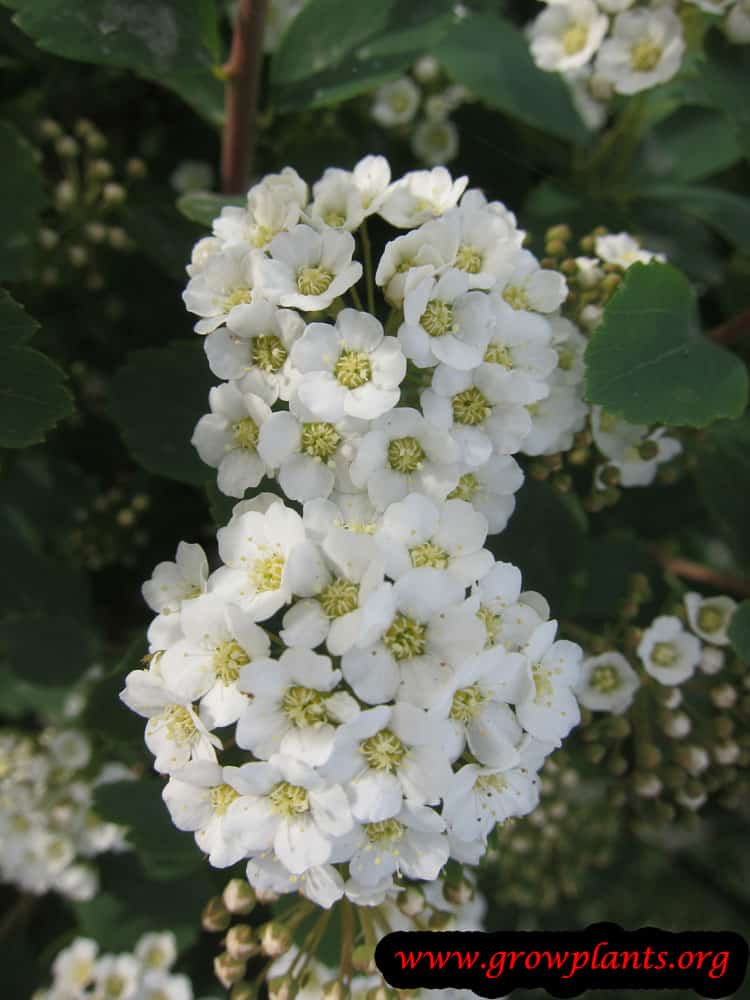
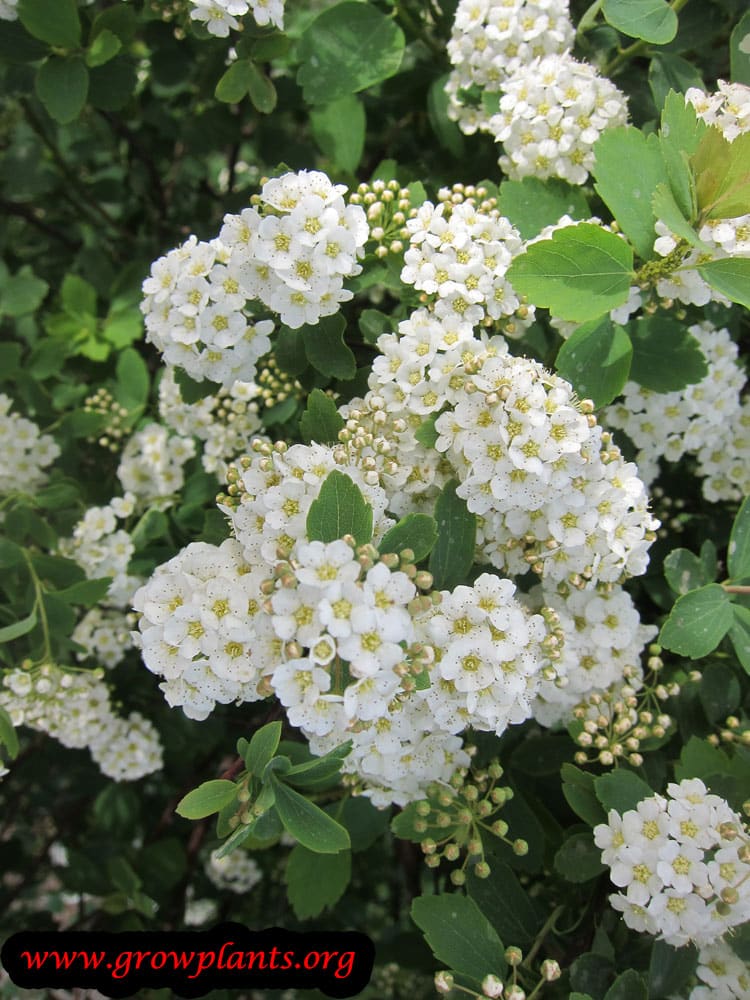
- Flower Characteristics: Masses of small white five-petalled flowers with yellow centres in clusters along the arching stems in spring (full detail in the Bloom guide).
Primary Uses & Landscape Value
- Functional & Ornamental Roles: Flowering hedge, screen or specimen shrub; pollinator plant, and useful for cut stems and containers.
Care Guide: Planting, Soil & Watering
Overview: Van Houtte spiraea is a hardy, fast-growing deciduous shrub for full sun to part shade that grows in well-draining soil. It appreciates a cold winter and steady moisture, so keep the soil evenly moist during the growing season.
Quick Care Requirements
| Requirement | Ideal Condition |
|---|---|
| Planting Season | In spring to summer |
| Growth Rate | Moderate to fast |
| Soil Type | Well-draining |
| Water Need | Moderate; keep the soil evenly moist |
Planting & Establishment
- Best Planting Season: Plant in spring to summer; it is fully hardy and needs a cold winter to thrive (zones 4–8).
- How to Plant:
- Hole Preparation: Dig a hole wider than the root ball in well-draining soil.
- Soil Amendments: Mix in organic matter to enrich and help retain moisture.
- Planting Depth: Set the root ball level with the surrounding soil and firm gently.
- Growth Speed & Expectations: A fast grower reaching about 1–2.5 m; prune after flowering to keep the arching, hedge-like shape.
Soil, Watering & Drainage Care
- Soil Mix & Drainage Needs: Adaptable but needs well-draining soil; it also grows in containers.
- Watering Schedule & Technique:
- Young / Newly Planted: Keep the soil evenly moist while the shrub establishes.
- Established: Water regularly and deeply in dry spells; established plants are fairly tolerant.
- Seasonal Adjustments: More in summer heat, less in winter when it is dormant and leafless.
Climate, Light & Hardiness
Spiraea vanhouttei is a cold-hardy deciduous flowering shrub for temperate climates, growing best in full sun to half shade. It thrives with a proper cold winter and is well suited to zone 4–8 gardens.
Quick Climate Specifications
| Climate Zones | Temperate |
|---|---|
| USDA Hardiness Zones | 4–8 |
| Frost Tolerance | High |
| Light Conditions | Full Sun / Half Shade |
Sunlight & Light Exposure
Optimal Light Setup
Full sun gives the heaviest spring flowering; half shade is tolerated with somewhat reduced bloom.
Temperature Extremes & Hardiness
USDA Hardiness & Regional Limits
Hardy through zones 4–8, and the source data specifically favors a cold winter climate for good performance.
Cold Damage & Winter Protection
As a deciduous cold-climate shrub, normal winter dormancy within its zone range causes no harm and needs no protection.
Frost Sensitivity
Very frost tolerant once established.
Wind, Humidity & Microclimate
Wind Tolerance
Generally tolerant of open, exposed sites typical of hedge and border shrubs.
Growing in Pots, Balconies & Indoors
Bridal-wreath spiraea (Spiraea vanhouttei) is a hardy, arching deciduous shrub (1-2.5 m) that foams with white spring flowers. The grower says it is not a houseplant but can be grown in a container – a fine large-pot patio shrub outdoors.
Quick Details
- Container Size: A large, sturdy pot for its arching habit
- Indoor Suitability: Not a houseplant – a hardy outdoor shrub
- Best Spot: Full sun to half shade, outdoors
- Soil & Drainage: Free-draining mix
- Watering in Pots: Average to big amount – steady moisture in growth
Indoors & On the Windowsill
- Not a houseplant: The grower confirms it will not grow indoors; it is a hardy outdoor shrub.
- Windowsill: Too large for a sill – grow it outside.
On a Balcony or Patio
- Light, wind & heat: Give it the brightest spot it will tolerate; walls and railings reflect heat and dry pots quickly, so check moisture often and shelter or stake exposed growth.
- Arching form: Give it room for its fountain-like stems and full sun for best flowering; shelter tall growth from strong wind.
Choosing the Pot, Soil & Long-Term Care
- Pot & drainage: A large, sturdy pot with strong drainage holes. Use strong drainage holes and skip a standing-water saucer to avoid root rot. Terracotta breathes and dries faster; glazed or plastic holds moisture longer.
- Potting mix: A well-aerated, organic-rich mix – potting soil or peat/coir with perlite or vermiculite for free drainage.
- Feeding: Potted plants use up their soil faster as nutrients leach out with watering – feed lightly and regularly through the growing season.
- Repotting & pruning: Refresh the mix every couple of years and prune after flowering to keep it shapely and in scale.
Fertilizing & Feeding
A moderate feeder: this cold-hardy, pollinator-friendly hedge shrub benefits from balanced feeding through its spring growth and single spring bloom flush, then a full rest through winter dormancy.
Quick Fertilizing Specs
| Feeding Level | Moderate feeder |
|---|---|
| Main Nutrient Priority | Balanced feeding with adequate nitrogen to support hedge growth and spring bloom |
| Best Feeding Period | Spring growth through the spring bloom period |
| Organic Options | Compost or other organic matter worked into well-drained soil |
| Reduce/Stop Feeding | Ease off after bloom finishes and stop as the plant enters winter dormancy |
| Micronutrients | Usually supplied by a complete fertilizer; correct only a diagnosed deficiency |
| Soil pH | Prefers well-drained soil; tolerant of typical garden conditions |
Feeding by Growth Stage
Spring growth flush
Fuel the new stem and leaf growth this hedge shrub puts on as it breaks winter dormancy, ahead of its spring flower show.
| Nutrient direction | A balanced, nitrogen-forward feeding supports strong new hedge growth. |
|---|---|
| Timing | As new growth begins after the cold winter dormant period. |
| Frequency | A light feeding as growth resumes, tapering off as flower buds begin to form. |
| Fertilizer types | A balanced complete fertilizer with available nitrogen, Compost or other organic matter worked into the soil |
| Precautions | Ease off nitrogen as flower buds form; too much late feeding can push leafy growth at the expense of bloom. |
Spring bloom
Support the clusters of small white, yellow-centered flowers that this pollinator-friendly shrub produces in its single spring flush.
| Nutrient direction | Balanced feeding with adequate nitrogen supports the bloom without needing to push growth further once flowering starts. |
|---|---|
| Timing | During the spring bloom period. |
| Frequency | Minimal additional feeding is usually needed while the shrub is in flower. |
| Fertilizer types | A balanced complete fertilizer used sparingly |
| Precautions | Do not reach for a high-phosphorus formula for a bigger bloom; balanced feeding earlier in spring is what actually supports flowering. |
Winter dormancy
Let the shrub rest through its cold winter dormant period without pushing tender new growth.
| Nutrient direction | None – withhold fertilizer while the plant is dormant. |
|---|---|
| Timing | During the cold winter dormant season. |
| Frequency | No feeding at this stage; resume only as spring growth begins. |
| Fertilizer types | No feeding at this stage; hold off fertilizing until the plant breaks dormancy in spring. |
| Precautions | Do not fertilize a dormant plant; unused nutrients can leach away over winter or encourage cold-sensitive growth. |
Nutrient Deficiency Signs & Corrections
Older leaves fade to pale green or yellow and new hedge growth slows.
| Possible causes | low available soil nitrogen, nitrogen leached by heavy rain or watering, thin, low-organic-matter soil |
|---|---|
| Appears first on | older, lower leaves |
| What to check | recent feeding history, soil organic matter, watering and drainage |
| Possible correction | Apply a nitrogen-containing complete fertilizer and build soil organic matter, then water evenly. |
New leaves turn yellow while their veins stay green.
| Possible causes | high soil pH limiting iron availability, waterlogged or compacted soil restricting root uptake, naturally low soil iron |
|---|---|
| Appears first on | newest growth at the shoot tips |
| What to check | soil pH and drainage, root health and compaction, recent fertilizer history |
| Possible correction | Correct pH toward the plant’s preferred range and apply a chelated iron product per its label. |
Lush leafy growth but sparse flowering in spring.
| Possible causes | excess nitrogen from overfeeding, heavy shade reducing flower bud formation, aggressive pruning removing the previous season’s flowering wood |
|---|---|
| Appears first on | the whole shrub at bloom time |
| What to check | recent fertilizer amounts and timing, how much direct sun the shrub gets, pruning timing relative to bloom |
| Possible correction | Cut back on nitrogen feeding, confirm adequate sun, and time any pruning to right after flowering rather than before. |
Pruning, Training & Seasonal Maintenance
Vanhoutte spirea flowers in spring on wood formed the previous year, so the timing of any shaping or heading cut matters: prune it in winter dormancy the way many shrubs are pruned and you remove most of that spring’s flower buds along with the cut growth. The safe, effective rule for this species is to shape and thin it right after the spring bloom finishes; winter is reserved only for removing a few of the oldest whole canes at the base, which does not meaningfully cost flowers.
Quick Pruning & Maintenance Specs
| Pruning Tolerance | High overall, but timing-sensitive because it blooms on old wood |
| Primary Pruning Window | Immediately after spring flowering (shaping, deadheading, thinning) |
| Secondary Maintenance Window | Dormant winter – basal removal of the oldest canes only |
| Typical Frequency | One post-bloom shaping per year; renewal cane removal every 2–3 years |
| Main Objective | Maintain the arching, fountain-like form; renew old canes; preserve next spring’s bloom |
| Young Plant Priority | Minimal shaping; let the arching multi-cane habit establish |
| Mature Plant Priority | Post-bloom shaping plus periodic oldest-cane renewal |
| Best Tool Type | Bypass secateurs for shaping; loppers for old cane removal at the base |
| Avoid Heavy Pruning During | Winter/early spring dormancy for general shaping (removes flower buds) |
Pruning by Plant Age & Size
Newly Established
In the first couple of seasons (spring/summer planting) do little more than remove damaged growth; let the naturally arching, multi-caned habit develop before shaping it.
Young / Formative
No formal training system – it is grown as a multi-caned, open, arching shrub; simply avoid crowding by removing the very weakest new shoots at the base if the clump is producing far more canes than needed.
Mature / Established
After bloom, shorten any wayward or overlong shoots to maintain the graceful arching form; every 2–3 years remove one or two of the oldest, least productive canes at ground level in winter to keep the shrub renewing itself.
Seasonal Pruning Schedule
| Post-Flowering | Main pruning window – shape, lightly thin and deadhead once the spring flowers fade; new wood grown this season will carry next spring’s flower buds, so this timing does not sacrifice next year’s bloom. |
| Dormant/Winter | Secondary, limited task – remove only whole oldest canes at the base for renewal. Because each cane is a small fraction of the total bloom, this does not noticeably reduce the coming spring’s flower display, unlike a general dormant heading cut would. |
Flowering & Fruiting Wood
Flowers form on one-year-old (previous season’s) wood. Cutting the shrub back hard or shaping it in winter/early spring removes those already-formed flower buds and sacrifices that year’s bloom; pruning right after flowering instead allows a full season for new wood to grow and set next year’s buds before winter.
Structural Pruning & Training
Maintain an open, multi-caned, arching form rather than a dense hedge shape; thin out crossing or crowded interior canes right after bloom; renewal pruning of the oldest 1–2 canes every couple of winters keeps a steady supply of vigorous, floriferous younger wood.
Special Growth to Remove
Remove weak, spindly basal shoots that are unlikely to become productive canes; deadhead spent flower clusters after bloom mainly for a tidier appearance, since this species does not reliably rebloom from deadheading alone.
Container & Small-Space Pruning
Can be grown in a large planter; keep post-bloom shaping a little more conservative than an in-ground shrub to manage its ultimate size (up to about 2.5m/8ft), and prioritize renewal-cane removal over height reduction to avoid heading cuts that remove next year’s buds.
Tools
- Bypass secateurs – post-bloom shaping and thinning
- Loppers – removing thicker old canes at the base during winter renewal
Tool Hygiene & Disease Risk
Routine care is sufficient – keep tools clean and sharp; aphids are the only notable pest and are not spread by pruning cuts.
Cut Placement & Technique
Remove renewal canes flush at ground level rather than leaving stubs; make post-bloom shaping cuts just above an outward-facing bud to keep the arching habit open.
Heavy Pruning & Rejuvenation
Tolerates a hard rejuvenation cutback of the whole shrub to near ground level if it becomes very overgrown, but this should be done right after flowering (not in winter) and will sacrifice most or all of the following spring’s bloom while the plant rebuilds its cane structure – better spread as a staged renewal (removing a third of old canes each of three years) than an all-at-once cutback if uninterrupted bloom matters.
Post-Pruning Care
Water in after post-bloom shaping or renewal cuts to support regrowth; no special feeding is needed, since the cut itself stimulates the new growth that will bear next year’s flowers.
Common Pruning Mistakes
- Pruning or hard-shaping in winter/early spring, which removes the already-formed flower buds and reduces that year’s bloom
- Shearing into a tight, formal hedge shape, which destroys the naturally arching, fountain-like habit that is the plant’s main ornamental feature
- Never removing old canes, leading to a congested clump with declining bloom on worn-out wood
When NOT to Prune
Avoid general shaping or heading cuts during winter and early spring dormancy, since this removes the flower buds already set on last year’s wood; wait until immediately after the spring bloom instead.
Recommended Tools (by task)
- bypass_secateurs – post-bloom shaping, thinning and deadheading
- loppers – removing old, thick canes at the base during winter renewal
Pruning Troubleshooting
| Problem | Possible Cause | What to Check | Corrective Action |
| Little or no spring bloom | Shrub was pruned/sheared in winter or early spring, removing flower buds | When the last significant cut was made relative to bloom time | Move all shaping to immediately after flowering in future years |
| Congested clump with declining flower quality | Old canes never removed/renewed | Age and thickness of the oldest canes at the base | Remove one or two of the oldest canes at ground level each winter |
| Sparse, twiggy growth after hard shearing | Shrub sheared into a formal hedge shape rather than thinned | Uniform, flat-cut surface versus natural arching form | Switch to selective thinning cuts after bloom instead of overall shearing |
Propagation Guide
Spiraea vanhouttei grows readily from seed, and the site notes vegetative propagation is not required; softwood cuttings root very easily and are a fast, reliable alternative, useful because this is a hybrid shrub whose seedlings can vary somewhat from the parent plant. Division of rooted base suckers is also a simple option. This is overall an easy shrub to propagate.
Quick Propagation Specs
| Best Propagation Method | Softwood stem cuttings |
| Alternative Methods | Seed; division of base suckers |
| Propagation Difficulty | Easy |
| Seed True-to-Type | Hybrid offspring vary – as a hybrid shrub, seedlings may not exactly match the parent |
| Vegetative True-to-Type | Yes |
| Best Propagation Season | Spring (seed); late spring to summer (softwood cuttings); dormant season (suckers/division) |
| Seed Germination Time | Typically a few weeks |
| Cutting Rooting Time | Often just a couple of weeks under humid conditions – Spiraea is known for rooting easily |
| Germination Temperature | Around 15–21°C (59–70°F) |
| Seed Sowing Depth | Shallow – just covered |
Growing from Seed
Sowing Season
Spring.
Sowing Depth & Orientation
Sow shallowly in a free-draining seed mix.
Germination Conditions
Cool to mild temperatures with even light moisture suit germination.
Germination Time
Generally within a few weeks.
Seedling Care
Pot on established seedlings and grow in full sun to half shade.
Stem Cuttings
Cutting Type
Softwood tip cuttings.
Best Timing
Late spring to summer, during active growth.
Cutting Preparation
Take cuttings a few nodes long, remove lower leaves, and trim just below a node.
Rooting Setup
Insert into a free-draining, gritty mix and keep humidity moderate; Spiraea is one of the easier shrubs to root from cuttings.
Rooting Hormone
Not necessary for this easy-rooting shrub, though it can speed things along.
Rooting Time
Often just a couple of weeks under humid conditions.
Division, Offsets, Pups & Suckers
Spiraea vanhouttei can produce suckers from the base of the plant. Rooted suckers with their own root system can be dug in the dormant season and transplanted; suckers without their own roots are not viable on their own and should be left attached until they root.
Bloom & Flower Guide
Quick Details
- Bloom Season: Late spring
- Time to First Bloom: Usually within a year or two of planting
- Flower Appearance: Small white flowers with a pale yellow center and five petals, gathered in rounded clusters that line the arching branches
- Edibility: Not eaten – grown as an ornamental hedge
Detailed Blooming Overview
Bridalwreath spirea is a spring classic, its arching stems smothered in clusters of small white flowers so that the whole shrub looks like cascading foam.
Flower Characteristics
- Small white flowers with a pale yellow center and five petals.
- Borne in rounded clusters all along the arching branches.
Bloom Care & Thinning
- Pruning: It flowers on old wood, so prune right after blooming rather than in winter, or you will cut off next year’s flowers.
- Pollinators: The blooms are a good early nectar source for bees.
Bloom Health & Protection
- Aphids: Soft new growth around the flowers can attract aphids; a strong jet of water or an insecticidal soap usually keeps them down.
- Powdery mildew: In crowded, humid spots a white powdery film can appear on leaves and buds – better airflow and, if needed, a neem oil or sulfur-based fungicide help.
Pests, Diseases & Troubleshooting
Overview: Vanhoutte spirea is a hardy, deciduous flowering shrub that is remarkably trouble-free. Its main issues are sap-sucking aphids and, in hot dry sites, spider mites, plus occasional foliar fungal spotting in crowded damp plantings. Good siting with sun and airflow, and simple hygiene, prevent nearly every problem – chemical intervention is rarely warranted.
Quick Troubleshooting Overview
| Issue / Pest | Main Symptom | Primary Solution |
|---|---|---|
| Spirea aphid | Curled, sticky new shoot tips with clustered green insects | Water blast, insecticidal soap, encourage lady beetles |
| Spider mites | Fine stippling and webbing on leaves in hot dry spells | Hose foliage, raise humidity, horticultural oil if severe |
| Leafrollers | Leaves rolled and tied with silk, chewed inside | Handpick rolled leaves, Bt while larvae are small |
| Powdery mildew | White powdery film on leaves in humid shade | Improve airflow and sun, avoid overhead watering |
| Scale | Bumps on stems, sticky honeydew and sooty mould | Prune out, horticultural oil, dormant-season oil |
Common Pests & Management
- Spirea aphid (Aphis spiraecola):
- Symptoms: Dense colonies of small green aphids on the tender new shoot tips and flower buds; growth curls and puckers, becomes sticky with honeydew and blackens with sooty mould. This aphid is specifically associated with spirea and is the shrub’s most common pest.
- Prevention & Control: Tolerate light numbers, which natural enemies usually control. Knock colonies off with a strong water spray, and conserve lady beetles, lacewings and hoverflies by avoiding broad-spectrum insecticides. For heavy early-season pressure, spray insecticidal soap on the shoot tips and repeat as needed.
- Spider mites (Tetranychus urticae):
- Symptoms: Fine pale stippling that gives leaves a dull bronzed look, with fine webbing on undersides in hot, dry, dusty conditions; heavy feeding causes leaf drop.
- Prevention & Control: Hose down foliage regularly to knock off mites and raise humidity, avoid drought stress and dusty edges. Conserve predatory mites; treat serious outbreaks with horticultural oil or insecticidal soap, covering leaf undersides.
- Leafrollers & leaftiers (Archips / Choristoneura spp.):
- Symptoms: Leaves rolled or webbed together with silk and chewed from inside; small green caterpillars shelter within.
- Prevention & Control: Pick off and crush rolled leaves. Where numbers justify it, spray Bacillus thuringiensis (Bt) while caterpillars are small and before they seal themselves inside the rolls; natural parasites usually keep this pest minor.
- Scale insects (armoured & soft scale):
- Symptoms: Small immobile brown or waxy bumps on stems and leaf undersides; soft scales produce honeydew and sooty mould, and heavy infestations weaken branches.
- Prevention & Control: Prune out badly encrusted stems. Apply horticultural oil in the growing season to smother crawlers and a dormant-season oil on bare wood; conserve the parasitic wasps and lady beetles that attack scale.
Diseases & Fungal Issues
- Powdery mildew (Podosphaera / Erysiphe spp.):
- Symptoms: A white to grey powdery coating on leaves and shoots, mainly in humid, shaded, crowded plantings; heavy cases distort young growth.
- Treatment & Management: Site in full sun with good air movement, avoid overhead watering, and thin crowded stems. Remove affected growth; the disease is rarely damaging enough to need a sulphur or potassium-bicarbonate fungicide, which is reserved for severe cases.
- Leaf spot (Cylindrosporium / Septoria spp.):
- Symptoms: Small brown to purplish spots on leaves that may merge and cause early leaf yellowing and drop in wet seasons.
- Treatment & Management: Rake up and destroy fallen leaves, improve airflow, and water at the base. Fungicides are seldom necessary on this vigorous shrub; sanitation is enough in most gardens.
- Fire blight (Erwinia amylovora):
- Symptoms: Occasional in this rose-family shrub – sudden blackening and “shepherd’s crook” wilting of shoot tips, mainly after warm wet bloom periods.
- Treatment & Management: Prune out blighted shoots well below the damage, disinfecting tools between cuts, and avoid heavy nitrogen that pushes soft susceptible growth. Remove nearby heavily infected pome hosts if fire blight is active locally.
- Root and crown rot (Phytophthora, Armillaria):
- Symptoms: Wilting, poor colour and dieback in soils that stay wet; roots and crown darken and decay.
- Treatment & Management: Plant in well-drained soil, never bury the crown, and avoid overwatering. There is no cure once advanced – improve drainage and remove severely affected plants.
Growing Difficulties & Abiotic Problems
- Lime-induced chlorosis:
- Cause & Symptoms: Yellow leaves with green veins on very alkaline soils where iron becomes unavailable.
- Correction Strategy: Confirm with a soil test, add organic matter, and correct with a chelated iron foliar feed; acidify slightly if soil pH is very high.
- Poor bloom / legginess:
- Cause & Symptoms: Sparse flowering or an open, woody shape from too much shade or wrong-timed pruning.
- Correction Strategy: Grow in full sun and prune this spring-blooming shrub right after flowering, since it flowers on old wood; renewal-prune a few oldest canes to the base each year.
- Drought and heat stress:
- Cause & Symptoms: Leaf scorch and wilting on the margins during hot dry spells, especially on young plants.
- Correction Strategy: Mulch the root zone, water deeply during establishment, and avoid hot reflected sites; established plants are quite drought-tolerant.
What Helps – Products & Tools
Spirea rarely needs more than the basics: insecticidal soap and horticultural oil handle aphids, mites and scale, Bacillus thuringiensis (Bt) covers leafrollers, and a dormant-season oil cleans up overwintering scale. For the odd fungal issue, improved airflow plus sulphur or potassium-bicarbonate fungicide is enough. Chelated iron corrects chlorosis on alkaline soils.